Home Blog Page 77

Palace readies measures as peso tumbles to record; House eyes bills

PHILSTAR FILE PHOTO

By Chloe Mari A. Hufana and Kenneth Christiane L. Basilio, Reporters

THE Presidential Palace on Tuesday signaled that it is prepared to roll out additional measures to soften the economic impact of a weakening peso, as escalating war in the Middle East continues to weigh on the currency and fuel inflation risks.

Palace Press Officer Clarissa A. Castro said the peso’s fall to historic lows reflects external pressures linked to the conflict and warned that volatility could persist if hostilities drag on, though she stressed that the administration is working to contain the fallout.

“We know what the President and the administration are doing to mitigate the impact of the Middle East conflict and to do everything possible to address the situation, including helping our fellow Filipinos,” she told reporters in Filipino, without providing details.

She said the peso’s slide to successive record lows might continue as long as the war drags on. “This is the possible outcome while the conflict is not contained.”

The peso has posted multiple sharp declines this month as the conflict disrupts global energy markets, stoking fears of imported inflation and renewed strain on financial stability in an economy heavily reliant on foreign fuel supplies.

In a separate video message, President Ferdinand R. Marcos, Jr. said his administration would continue providing intervention and relief to Filipinos as the economic effects of the war weigh on households, citing government aid measures aimed at cushioning consumers.

He said an inter‑agency committee is coordinating efforts to stabilize prices and speed up the delivery of assistance. These include a planned price cap of P50 per kilo on imported rice and the expansion of subsidized P20 rice outlets nationwide.

The committee met on Monday to discuss additional measures in response to the war. The Development Budget Coordination Committee is scheduled to meet later this week to submit its assessment on the possible suspension or reduction of excise taxes on petroleum products.

“As long as there is even one Filipino who needs help, we will continue to work to reach them,” Mr. Marcos said in Filipino. “We will not stop taking action until this is felt in every household.”

Mr. Marcos has said the government would not exhaust the country’s foreign exchange reserves solely to defend the peso, noting that there is a limit to state intervention against market forces driving the dollar higher.

He said a degree of peso weakness would be tolerated, reflecting a policy stance focused on curbing excessive volatility rather than targeting a specific exchange rate level.

The peso closed at an all‑time low of P60.748 to the dollar on Tuesday, breaching its previous record of P60.69 set a day earlier, according to Bankers Association of the Philippines data posted on its website.

Bangko Sentral ng Pilipinas Governor Eli M. Remolona, Jr. has said the central bank sees no need for aggressive market intervention, reiterating that it steps in only during periods of excessive volatility rather than defending a fixed exchange rate.

Currency depreciation raises the cost of imported goods, particularly petroleum products, heightening inflation risks at a time when global oil prices remain elevated due to supply concerns linked to the Middle East war.

The administration has rolled out subsidies and transport discounts as part of efforts to cushion households and workers from higher fuel and transport costs.

The Philippines is under a one‑year national state of energy emergency, the first such declaration globally, as the war threatens fuel supply chains and exposes vulnerabilities in the country’s energy system.

‘UNIFIED RESPONSE’
At the House of Representatives, lawmakers are moving to draft a package of measures aimed at shielding the economy from oil shocks that could deepen inflation and weaken growth.

The chamber would form a joint congressional panel composed of 13 committees to craft proposals to blunt the impact of oil price spikes, including improving subsidy-targeting and possibly expanding assistance through budget realignments, Marikina Rep. Romero “Miro” S. Quimbo told a news briefing.

“We want something very comprehensive that will make the economy more resilient, so we don’t suddenly stumble whenever there are drastic increases in oil prices,” he said in mixed English and Filipino.

Urgency has grown as the month‑long conflict involving the US, Israel and Iran has underscored how exposed the country’s import‑dependent economy is to geopolitical disruptions.

Now in its fifth week, the conflict has already prompted President Marcos to reopen talks with China on joint energy exploration in the South China Sea.

“The sole purpose is to have an orchestrated and unified response to confront and examine the urgent steps we can take to address this oil price crisis,” Mr. Quimbo said.

The Philippines, a net crude importer sourcing most supplies from the Middle East, is facing record pump prices, with gasoline in Metro Manila nearing P115 per liter and diesel climbing to as high as P156 per liter.

Mr. Quimbo said the 13 House committees, including those on budget, taxation, economic affairs, transport and agriculture, will meet on April 8 for briefings by economic managers before forming subcommittees to develop proposals.

The key objective is to identify which sectors and industries are immediately affected, he said. “We want to know what industries will have deep, threatening effects on the entire economy.”

He recommended tax incentives and subsidies for electric vehicle manufacturers to encourage adoption and reduce dependence on oil, and called for faster renewable energy investments by cutting bureaucratic bottlenecks.

“The role of the government is to create a climate where investments are easily attracted and protected,” Mr. Quimbo said.

The joint panel will also review the 1998 Oil Deregulation Law and examine proposals to establish a national petroleum reserve, while studying options to reallocate funds for aid programs without disrupting existing spending commitments.

“The first step is really to have an aid program — identifying available cash and looking for new sources,” he added.

Children’s council backs push to restrict Filipino minors’ social media use

A person using a smartphone is seen in front of displayed social media logos in this illustration taken on May 25, 2021. — REUTERS

By Kaela Patricia B. Gabriel

THE Council for the Welfare of Children (CWC) on Tuesday backed proposals to restrict minors’ access to social media platforms, saying such measures could help protect children’s mental health and overall well-being.

In a statement sent via Facebook chat, CWC Undersecretary Angelo M. Tapales said safeguarding children in the digital space is a shared responsibility, and laws must evolve alongside technological change.

Protecting children in the digital space is an “obligation of every Filipino,” Mr. Tapales said. “This is not about restriction, but about meaningful child protection during a stage where children are still developing judgment and resilience.”

The statement followed renewed calls by Senator Sherwin T. Gatchalian to bar minors from using social media platforms to improve online safety, citing the prevalence of online sexual abuse and exploitation of children.

In a statement on Monday, Mr. Gatchalian cited Australia’s ban on social media use for those aged 16 and below, the first nationwide policy of its kind globally. He also cited the 2022 Programme for International Student Assessment, which linked lower mathematics scores among 15-year-old students to distractions caused by recreational use of digital devices.

Separately, Senator Ana Theresia N. Hontiveros‑Baraquel filed a Senate resolution calling for an inquiry into several online gaming platforms including Roblox, Minecraft, Fortnite, Call of Duty and Free Fire.

The resolution seeks the adoption of strict age verification mechanisms modeled after practices in Australia, the Netherlands and New Zealand to prevent minors’ exposure to sexual predators online.

However, an analyst warned that implementing foreign age‑verification systems might be difficult in the Philippine setting due to gaps in cybersecurity infrastructure and digital literacy.

“In other countries, age verification tools include facial recognition or the presentation of valid identification cards,” Maria Elize H. Mendoza, an assistant political science professor at the University of the Philippines, told BusinessWorld. “Both are unreliable in our context.”

Ms. Mendoza also noted that social media platforms serve as essential communication tools for students and parents, particularly through messaging apps and group chats.

“An outright ban could disrupt these practices,” she said in an e-mailed reply to questions, adding that users might try to bypass restrictions, such as through virtual private networks, if alternatives are not provided.

Instead of a total prohibition, Ms. Mendoza recommended stronger content moderation, wider digital literacy programs for children and adults, and greater accountability for platforms hosting minors.

She cited child‑focused versions of apps such as YouTube Kids and Messenger Kids as possible models.

She further suggested requiring explicit parental consent alongside age checks and encouraging schools to promote education‑focused tools such as Google Workspace and Microsoft Office.

Telecommunications companies, she added, could support these efforts by offering affordable data packages for learning platforms.

A 2024 report by the United Nations Children’s Fund estimated that about 2 million Filipino children aged 12 to 17 are subjected to online sexual abuse each year, with 23% to 38% of victims choosing not to report the incidents.

Last week, Indonesia began enforcing regulations deactivating accounts of users aged 16 and below on platforms deemed high risk, including TikTok and Roblox.

In the House of Representatives, Party‑list Rep. Eduardo C. Villanueva earlier filed a bill proposing a minimum age requirement for social media users to strengthen child protection online.

Marcos orders use of Philippine names for SCS features

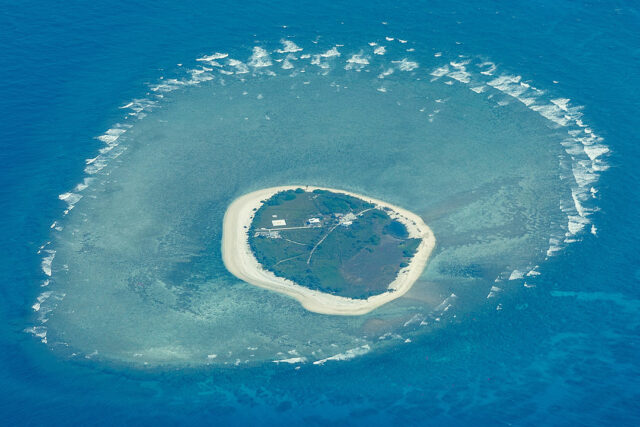
AN AERIAL view shows the Nanshan Island, locally known as Lawak, one of the nine features the Philippines occupies in the disputed Spratly Islands, in the South China Sea, March 9, 2023. — REUTERS

PRESIDENT Ferdinand R. Marcos, Jr. has ordered the adoption of Philippine names for 131 maritime features in the Spratly Islands, a move aimed at reinforcing governance and strengthening the country’s sovereignty claims in the South China Sea (SCS).

Under Executive Order (EO) No. 111 signed on March 26, the Philippines will adopt a standardized set of local names for maritime features located in Kalayaan, Palawan province following recommendations from the National Maritime Council.

Malacañang said the directive is consistent with existing maritime laws and policies and underscores state efforts to assert the country’s maritime rights.

“President Marcos issued the EO last March 26 in line with existing maritime laws and policies,” the Palace said in a statement.

The council said a unified naming system is essential to improving administrative coordination and reinforcing the country’s assertion of sovereignty and jurisdiction over its maritime zones.

Guo Wei, deputy spokesman of the Chinese Embassy in Manila, did not immediately reply to a Viber chat seeking comment.

The order comes amid geopolitical tensions between the Philippines and China over competing claims in the South China Sea. Beijing continues to assert expansive sovereignty claims through its so-called nine-dash line, which overlaps with areas claimed by Manila.

The Philippines has repeatedly invoked the 2016 South China Sea arbitration ruling, which voided China’s sweeping claims under international law. Despite the ruling, confrontations between Chinese and Philippine vessels in contested waters have persisted.

Executive Order No. 111 builds on existing legal frameworks, including the Philippine Maritime Zones Act, which defines the country’s western maritime areas — covering the Luzon Sea, Bajo de Masinloc (Scarborough Shoal) and the Kalayaan Island Group (Spratlys) — as collectively forming the West Philippine Sea.

Under the directive, the National Mapping and Resource Information Authority is tasked with updating official charts and maps to reflect the newly adopted names.

All government agencies and state-run institutions must use the standardized names in official documents, reports and communications.

The order also directs education agencies — including the Department of Education, Commission on Higher Education and Technical Education and Skills Development Authority — to integrate the standardized maritime names into teaching materials, research and academic publications. — Chloe Mari A. Hufana

Manila seeks Iran assurance on oil transit

A 3D-printed oil pump jack and a map showing the Strait of Hormuz and Iran appear in this illustration taken March 2, 2026. — REUTERS

THE Philippine government is preparing to engage Iran in diplomatic talks to help ensure the safe passage of vessels bound for the country through the Strait of Hormuz, amid growing concerns over potential disruptions to the vital shipping route.

President Ferdinand R. Marcos, Jr. ordered the move after a meeting of a government task force that is coordinating responses to global oil supply risks, Palace Press Officer Clarissa A. Castro told a news briefing on Tuesday.

She said Foreign Affairs Secretary Ma. Theresa P. Lazaro is set to meet with Iran’s ambassador, possibly as early as this week or by next week at the latest.

Relations between the Philippines and Iran remain “good,” she pointed out.

Senator Sherwin T. Gatchalian over the weekend urged the Executive branch to pursue high‑level discussions with Iran to safeguard the transit of Philippine‑bound oil tankers through the Strait of Hormuz. He cited Thailand’s direct engagement with Iran as a potential model.

The Strait of Hormuz, a narrow waterway separating Iran and Oman that links the Persian Gulf to the Arabian Sea, is one of the world’s most critical oil chokepoints, handling a significant share of global crude shipments.

Asked whether Philippine‑bound vessels are scheduled to pass through the Strait, Ms. Castro said Ms. Lazaro did not provide details.

Mr. Marcos has said the government continues to diversify the country’s petroleum supply to reduce exposure to geopolitical risks, including exploring government‑to‑government arrangements with nontraditional suppliers.

Potential sources being considered include Russia, Indonesia and India, the President said.

At an event last week, Mr. Marcos said Petron Corp., the country’s only oil refiner, has assured the government that domestic supply is sufficient until June 30.

The conflict involving Iran erupted on Feb. 28 after coordinated airstrikes by the US and Israel targeted Iranian military, nuclear and leadership facilities, triggering retaliatory missile and drone attacks across the Middle East.

The war marked the most direct confrontation to date between the long‑standing adversaries, expanding beyond proxy conflicts and drawing in regional actors while disrupting key energy routes.

It has since rattled global markets, as attacks on infrastructure and threats to shipping lanes heightened concerns over oil supply disruptions and contributed to sharp swings in energy prices. — Chloe Mari A. Hufana

Marcos opens CLLEX Cabanatuan link

PCO

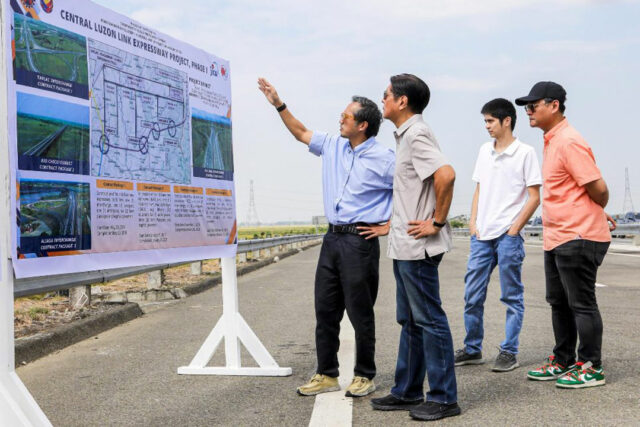
PRESIDENT Ferdinand R. Marcos, Jr. on Tuesday opened a new segment of the Central Luzon Link Expressway (CLLEX) connecting the Tarlac-Pangasinan-La Union Expressway to Cabanatuan City, cutting travel time to about 20 minutes from 90 and easing fuel use and transport costs amid rising global oil prices.

Speaking after the inauguration of the Aliaga-Cabanatuan section, Mr. Marcos said the project supports the government’s push to build connector roads to decongest highways and improve mobility across Luzon.

“This is significant because fuel consumption is one of our major concerns today, and by reducing travel time, fuel use will also decline,” he said in Filipino, according to a Palace transcript.

The project is expected to lower transport costs for goods from Nueva Ecija, the country’s rice granary, helping stabilize rice prices as Middle East tensions threaten to push up commodity costs.

About 11,400 vehicles are projected to use the segment daily, easing congestion on MacArthur Highway. The toll-free section will be open until December to encourage use, including by trucks carrying agricultural products.

The newly opened stretch links the San Juan Interchange in Aliaga to the Cabanatuan exit, completing Phase 1 of the 29.2‑kilometer, four-lane expressway. The P10‑billion first phase was financed through official development assistance from the Japan International Cooperation Agency. — Chloe Mari A. Hufana

Half-day work on April 1 declared

BW FILE PHOTO

MALACAÑANG announced a half-day work for government employees on April 1, giving them the full opportunity to properly observe Maundy Thursday and Good Friday.

Memorandum Circular No. 116, published on Tuesday and signed by Executive Secretary Ralph G. Recto, also provides them time to travel home to their respective provinces.

The order noted agencies tasked to deliver basic and health services, disaster or calamity response, and other vital services will continue with operations under usual working arrangements.

Meanwhile, President Ferdinand R. Marcos, Jr. will return to his home province of Ilocos Norte for Holy Week.

According to Palace Press Officer Clarissa A. Castro, the President’s move does not mean he is vacationing.

Mr. Marcos will continue to work despite the holiday break, she noted. — Chloe Mari A. Hufana

SMC prepares for traffic surge

Motorists are seen entering and exiting South Luzon Expressway (SLEX) at Nichols toll gate in Pasay City, Dec. 27, 2025. — PHILIPPINE STAR/NOEL PABALATE

SMC INFRASTRUCTURE, a unit of San Miguel Corp. (SMC), said it is preparing for the expected traffic surge across its tollways network this Holy Week by deploying traffic and safety measures.

In a media release, the company said all traffic personnel along South Luzon Expressway, Southern Tagalog Arterial Road, the Skyway System, NAIA Expressway, and Tarlac-Pangasinan-La Union Expressway have been ordered to coordinate with both national and local authorities to ensure moving traffic particularly in major exits and interchanges.

Roadworks and construction activities are also suspended from 12 p.m. on March 28 until 10 p.m. on April 5, SMC said, adding that emergency response teams were also deployed to key areas to assist motorists.

“Motorists are also advised to make sure their vehicles are in good condition before traveling, including checking the pressure, brakes, and engine condition, and to wear seatbelts and maintain a safe following distance from the vehicle in front of them,” the company said.

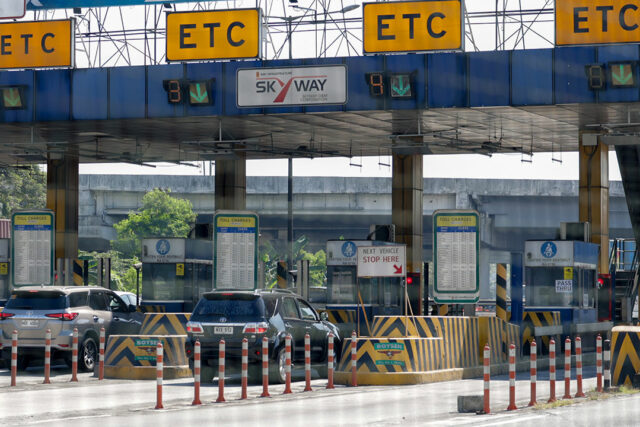
The company also reminded motorists to observe expressway speed limits and encouraged them to shift to its cashless toll collection system, Autosweep RFID. — Ashley Erika O. Jose

Visa relief for foreigners extended

BW FILE PHOTO

THE Department of Justice has extended the visa relief for foreign nationals stranded in the Philippines due to the ongoing conflict in the Middle East until May 1.

Under the new department order, signed by Justice Secretary Fredderick A. Vida on March 30, the government moved the original April 1 deadline to accommodate travelers who remain unable to secure return flights to their home countries.

“A number of foreign nationals remain stranded and have been unable to secure flights to return to their home countries,” Mr. Vida stated in the order. “In light of this, the grant of visa relief is hereby extended until 01 May 2026.”

The extension follows an initial directive issued earlier this month, which provided a reprieve for those whose authorized stay expired on or after Feb. 28.

Under the current rules, affected individuals are allowed to remain in the Philippines legally without the burden of overstaying fees, motion for extension costs, or other administrative penalties.

In a clarifying memorandum, Bureau of Immigration (BI) Commissioner Joel Anthony M. Viado noted that the relief applies to all departing passengers affected by mass flight cancellations, regardless of their nationality. This includes temporary visitors and tourists whose stay lapsed during the disruption, provided they were scheduled to depart but were prevented from doing so by the conflict.

To avail of the waiver, foreign nationals are required to present proof of their disrupted travel, such as original boarding passes, confirmed flight itineraries, or notifications of cancellation from their respective airlines. The BI has been directed to implement the order immediately to ensure that stranded travelers do not face legal prejudice while arranging their exit from the country. — Erika Mae P. Sinaking

Law on eased tax payment pushed

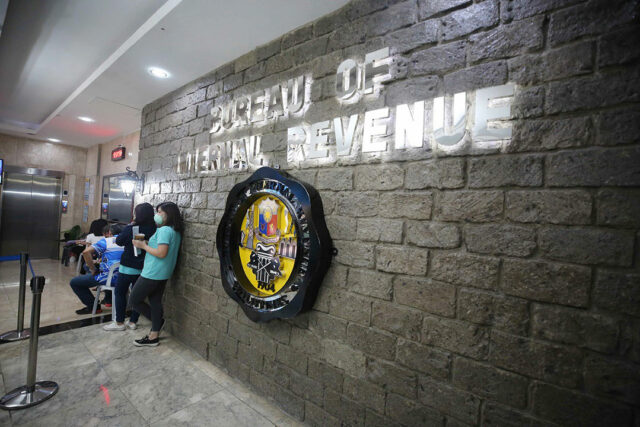
TAXPAYERS line up at the Bureau of Internal Revenue office in Intramuros, Manila, April 18, 2022. — PHILIPPINE STAR/RUSSELL PALMA

THE Bureau of Internal Revenue should ensure full implementation of the Ease of Paying Taxes (EOPT) Act, a senator said on Tuesday ahead of the deadline for income taxes.

“We should promote the EOPT because simplifying the tax payment process is key to strengthening government revenue collection,” Senator Sherwin T. Gatchalian said in a statement in Filipino.

Republic Act No. 11976 seeks to make income tax compliance easier and protect taxpayer rights, by introducing a file-and-pay-anywhere system and enabling most transactions to be completed online.

Mr. Gatchalian said that government agencies must ensure that reforms under the law must be felt by taxpayers.

The law also classifies taxpayers into micro, medium, and large categories based on gross sales, allowing for a more responsive tax system tailored to each segment.

It also mandates a simplified registration system that expedites the processing of value-added refunds. — Adrian H. Halili

PITX goes full RE, ensures uninterrupted operations

Passengers flock to the Parañaque Integrated Terminal Exchange (PITX) to catch trips to their respective provinces, Oct. 27, 2025. — PHILIPPINE STAR/RYAN BALDEMOR

THE Parañaque Integrated Terminal Exchange (PITX) said its terminal is now fully powered by renewable energy (RE) to ensure uninterrupted operations amid the national energy crisis.

“Our operations are anchored on stability and sustainability. By utilizing geothermal energy, PITX can maintain continuous service while contributing to a cleaner and more resilient energy future,” PITX Chief Operating Officer Mohit Malhi said in a media release on Tuesday.

The terminal is being energized by geothermal power supplied by First Gen Corp., the company said.

It added that while there are no indications of widespread power interruptions, it has further strengthened its operations by ensuring continuity through the advancement of sustainable mobility solutions.

PITX is the country’s first landport and is operated by Megawide’s MWM Terminals, Inc. under a 35-year build-transfer-operate contract. For this year, it expects to accommodate up to 60 million passengers, as it manages capacity and sustains traffic across existing routes.

Meanwhile, PITX is also boosting its sustainability initiatives by making Xpress EV, an electric-powered transport option available, within its terminal.

This will complement its renewable energy efforts as Xpress EV offers commuters sustainable options, PITX said.

“Integrating renewable energy with electric mobility allows us to future-proof the commuter experience. At PITX, sustainability and service reliability go hand in hand,” Mr. Malhi said. — Ashley Erika O. Jose

BoC-NAIA seizes P956-M drugs in Q1

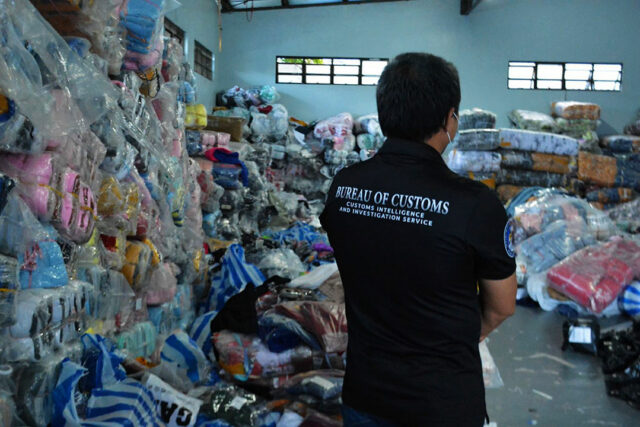
MEMBERS of the Bureau of Customs-Customs Intelligence Investigation Service inspect various counterfeit shirts, perfumes and other luxury goods at a warehouse in Las Piñas City. — PHILIPPINE STAR/MIGUEL DE GUZMAN

THE Bureau of Customs-Ninoy Aquino International Airport (BoC-NAIA) said that it recorded P955.89 million worth of anti-drug operations in the first three months.

These include the seizure of illegal drugs worth P38 million in warehouse facilities in Pasay City.

“These successive interceptions demonstrate our firm resolve to detect and stop illicit shipments,” Customs Commissioner Ariel F. Nepomuceno said in a statement on Tuesday.

“We will continue to strengthen our risk management systems, enhance coordination with partner agencies, and ensure that all suspicious cargo and mail are thoroughly examined to protect the Filipino people from the dangers posed by illegal drugs,” he added.

According to BoC-NAIA, it intercepted illegal drugs concealed in various shipments after several inbound parcels were flagged due to suspicious x-ray images, resulting in the recovery of 5,691 grams of methamphetamine hydrochloride, or “shabu.”

District Collector Atty. Yasmin Obillos-Mapa said that the success of the operations were made possible “through strengthened risk profiling and the vigilance of frontline personnel.”

Meanwhile, the BoC said that its nationwide anti‑drug campaign has resulted in the seizure of P1.87 billion worth of illegal drugs from Jan. 1 to Mar. 29. — Justine Irish D. Tabile

Filipino migrants in Japan to be impacted by new child custody policy

A JAPANESE policy allowing joint custody of children for divorcees will put Filipinos in Japan under stricter monitoring on tax, insurance, financial compliance, and language proficiency, the Commission on Filipinos Overseas (CFO) said on Tuesday.

The joint child custody, which will take effect in April, may pose challenges to foreign residents in Japan due to stricter immigration standards which may lead to deportation or ban from re-entry if violated.

“JFBA [Japan Federation of Bar Association] representative Atty. Keiko Kato warned that navigating the new legal landscape remains a massive hurdle for Filipinos due to severe language barriers among local Japanese lawyers,” the CFO statement read. “Because of the high volume of cross-border unions, Filipino migrants are disproportionately affected by shifts in Japanese family and civil law, particularly when those marriages dissolve.”

To address the looming challenges, the CFO said it has also proposed a memorandum of understanding (MoU) with the JFBA to protect Filipinos from the repercussions of changes in Japanese laws.

The MoU will provide legal aid for Filipinos in Japan, including information and legal rights campaigns and improvement of the CFO’s pre-departure orientation and guidance and counseling program.

According to the CFO, there are about 300,000 Filipino migrants in Japan as reported by the government.

The CFO noted that this population was initially composed of overseas Filipino workers, until it evolved into a community of permanent residents, second-generation youth, and marriages between Filipinos and the Japanese people. — Kaela Patricia B. Gabriel