Oil crisis to drive more Filipinos into poverty — PIDS
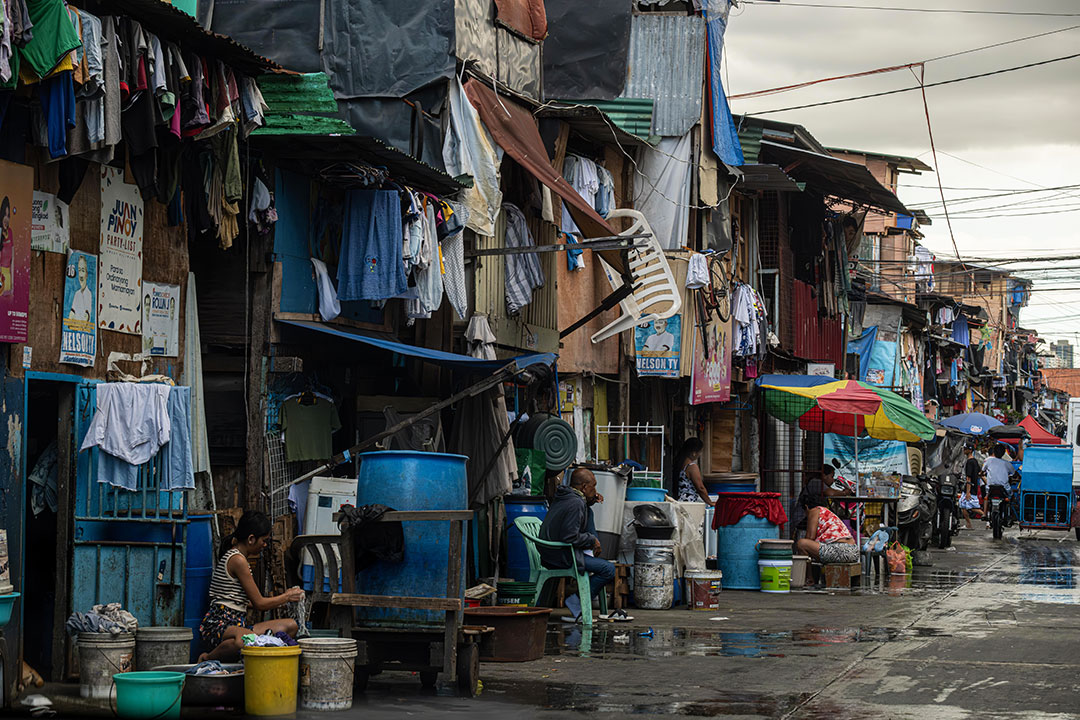
THE PHILIPPINE Institute for Development Studies (PIDS) projects an additional 1.34 million Filipinos will be pushed into poverty this year amid surging oil prices due to the Middle East war.
In a policy note, PIDS Senior Research Fellow Jose Ramon G. Albert said the national poverty rate is projected to go up to 14.4% this year under the current scenario where oil is at around $105 per barrel and a 35% pass-through effect. The poverty rate stood at 13.2% in 2025.
“The poverty impact is substantial and immediate. The current scenario has already pushed an estimated 1.34 million Filipinos into poverty, reversing much of the progress made since 2023. Fuel price stability must be treated as a priority for social protection,” he said.
In a “prolonged crisis” scenario where oil prices hit $125 per barrel, Mr. Albert projects the poverty rate to go up to 15.3% with 2.35 million considered as “newly poor.”
Under a severe disruption where oil goes up to $145 per barrel, the poverty rate could hit 16.3% as an additional 3.5 million Filipinos are pushed into poverty.
All these newly poor individuals come from low-income but not poor households.
The PIDS policy note drew on three fuel price shock scenarios developed by the Asian Development Bank in the context of Middle East conflict risks.
Mr. Albert said rural areas will see a sharper increase in poverty rates — 20% under the current scenario and up to 22.5% in the most severe scenario.
“Under (the current scenario), rural poverty rises by 1.5 percentage points (compared to 0.9 percentage point in urban areas), reflecting a heavier reliance on fuel-intensive agriculture, limited income diversification, and higher food expenditure shares,” he said.
He noted the Bangsamoro Autonomous Region in Muslim Mindanao, other regions in Mindanao (excluding the Davao Region), as well as all regions in the Visayas, Bicol, and Mimaropa will see the biggest incremental increase in poverty from an already high base.
“While all households experience roughly similar price impacts (3.2-3.3%) under current conditions, the welfare consequences are regressive. Because poor households allocate over 57% of their spending on food, and food supply chains are highly energy intensive, the transmission of cost increases through food prices disproportionately affects low-income households,” Mr. Albert said.
The PIDS’ microsimulations on the impact of the oil shocks showed poor households will lose 16.2% of their annual income in real purchasing power, compared with 3.4% for the richest households.
Mr. Albert said universal fuel subsidies, such as the proposed reduction or suspension of excise tax on fuel products, can worsen inequity.
“A fuel excise tax cut that reduces prices uniformly provides roughly four times more in absolute pesos to a rich household than to a poor household,” Mr. Albert said.
Soaring fuel prices and dwindling oil reserves — driven by the Middle East conflict — have already prompted the government to declare a national energy emergency and suspend excise taxes on kerosene and liquefied petroleum gas (LPG).
Instead of fuel subsidies, Mr. Albert said targeted emergency cash transfers “can partially reverse poverty impacts at a manageable cost.”
“A P6,000-per-household tranche (P1,500 per individual) delivered through vertical expansion of existing programs, horizontal extension to waitlists, and emergency transfers to persons with disabilities, minimum-wage workers, and newly identified poor households would reduce poverty from 16.4% to 15.8%, protecting 754,000 persons, at an estimated P64.6 billion after deduplication,” he said.
As part of its coordinated response under the Unified Package for Livelihoods, Industry, Food, and Transport (UPLIFT) framework, the government is considering the rollout of the Suplementaryong Ayuda Para sa Apektadong Tahanan (SAPAT) program.
PIDS estimates SAPAT would cost P32 billion if implemented as a one-time P6,000 transfer to existing program beneficiaries or four million households.
Expanding coverage to recently graduated Pantawid Pamilyang Pilipino Program (4Ps) households would add P11.4 billion, while including persons with disabilities, minimum-wage households, and local government unit-identified poor households would raise the total by P43 billion to P84 billion.
However, Mr. Albert said that if the oil crisis worsens into the severe scenarios, quarterly tranches at higher amounts — P7,500 per household, or more for hard-hit regions — would be warranted.
Earlier, the World Bank said the Philippines’ limited fiscal space leaves little room for a fuel excise pause, which could cost over 0.5% of gross domestic product in foregone revenue if extended through 2026.
The multilateral lender said that the country should go for a targeted response, such as providing an additional P600 per month to 3.9 million 4Ps beneficiaries. — Justine Irish D. Tabile