From criminal penalties to civil remedies: Reexamining libel and cyberlibel in the Philippines
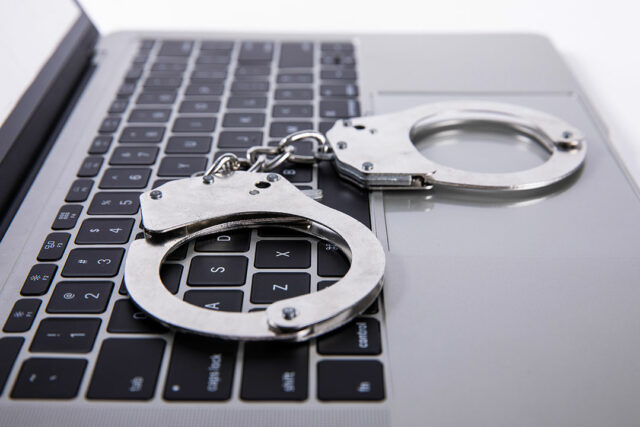
Cyberlibel remains the top recorded cybercrime in the Philippines in 2025, according to recent data from the Department of Information and Communications Technology and the Cybercrime Investigation and Coordinating Center. Undoubtedly, cyberlibel cases have contributed to the congestion not only of court dockets but also of prosecutorial offices.
Against this backdrop, lawmakers and human rights advocates continue to question whether the criminalization of cyberlibel and libel in general remains appropriate. Over the years, several proposals have been filed in Congress seeking to decriminalize libel. To date, however, none of the bills have been enacted into law.
In 2012, Senate Bill No. 3244 was introduced, proposing the decriminalization of libel. The bill invoked the right to freedom of expression under the International Covenant on Civil and Political Rights, which the Philippines has ratified. It also cited the United Nations Human Rights Committee’s position, urging states to consider the decriminalization of defamation, emphasizing that imprisonment is not an appropriate penalty for it. This bill has not been passed into law.
Instead, in the same year, Republic Act No. 10175, otherwise known as the Cybercrime Prevention Act of 2012, was signed into law. It expressly defined cyberlibel as a crime and imposed a heavier penalty. This law on cyberlibel faced criticism both locally and internationally, for being violative of the Filipinos’ rights to free expression and for being incompatible with the Philippine government’s obligations under international law.
However, in the landmark case of Disini v. Secretary of Justice [G.R. No. 203355, Feb. 18, 2014], the Supreme Court upheld the constitutionality of penalizing cyberlibel, ruling that libel is not a constitutionally protected speech. It recognized the unique nature of libel in the cyberspace, where defamatory statements can spread rapidly and cause harm with just a single click.
The ruling, however, was not unanimous. In his Dissenting Opinion, Justice Marvic Leonen opined that criminal libel should be struck down as infringing upon the guarantee of freedom of expression under the Philippine Constitution. He emphasized that declaring criminal libel as unconstitutional does not mean that the state countenances private defamation; instead, the state’s interest is better served with laws providing for civil remedies for the affected party.
The Dissenting Opinion further stated that a survey of libel cases during the past two decades will reveal that the libel cases that have gone up to the Supreme Court and pursued to their conclusion generally involved notable personalities for parties — electoral candidates, ambassadors, and business tycoons, lawyers, actors or celebrities, corporations, and public officers. Libel cases filed by private persons, on the other hand, are usually settled amicably. According to the Dissenting Opinion, this attests to the propensity to use the advantages of criminal libel by those who are powerful and influential to silence their critics.
In 2022, Senate Bill No. 1593 was filed, proposing the decriminalization of libel and cyberlibel. The bill noted that the rise and prevalence of social media as a primary medium of communication has led to the further weaponization of libel laws against the press and active citizenship. It pointed out that the abundance of cyberlibel cases spurred by scorned private citizens all collectively contribute to the overburdening of both the executive and judicial branches of the government and the draining of their respective resources. The National Prosecution Service and the courts of justice are now at the mercy of private litigants who fail to think before they type, and the trigger-happy citizens who deem themselves entitled to pursue litigation for every minor inconvenience. However, this bill has also not been passed into law.
Currently, there are several bills pending in Congress, pushing for the decriminalization of libel and cyberlibel and a shift toward civil remedies instead. Among them is Senate Bill No. 250 filed in 2025, which clarifies that decriminalizing libel does not mean that people can say anything without consequences. False and malicious statements should still carry consequences. However, instead of sending people to jail, violators should be held civilly liable. Libel should be treated as a civil matter and not a crime, ensuring justice without compromising free expression or disproportionately punishing speech.
Ultimately, the persistence of cyberlibel as the country’s most prevalent cybercrime, together with the continuing push for reform, underscores the need to reexamine the country’s approach to libel and cyberlibel. While the State undeniably has an interest in protecting reputations and curbing misinformation, the continued reliance on criminal penalties raises serious concerns about fairness, proportionality, and freedom of expression. The more appropriate legal remedy may be civil in nature, as it still provides accountability, but without the arguably disproportionate threat of imprisonment. As with many other countries in the world, it may be time to treat libel and cyberlibel as a civil matter rather than a criminal offense.
The views and opinions expressed in this article are those of the author. This article is for general informational and educational purposes only and not offered as and does not constitute legal advice or legal opinion.
April Jane S. Sillada is an associate of the Angara Abello Concepcion Regala & Cruz Law Offices (ACCRALAW), Davao Branch.
(6382) 224-0996