Home Blog Page 3097

Father’s Day reflections: Globe’s Ernest Cu on valuing relationships at home and work

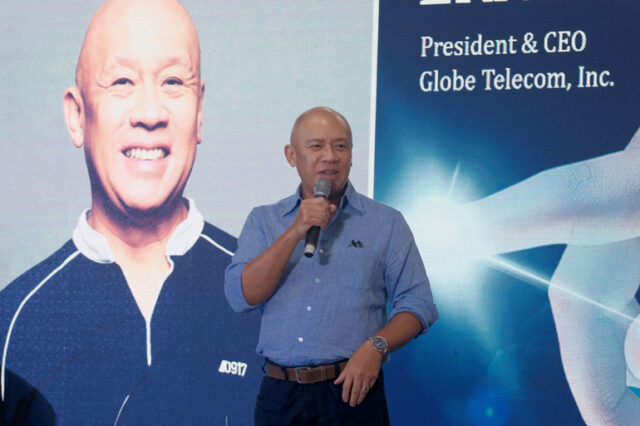
Globe President and CEO Ernest Cu

The most successful leaders tend to share a common trait: they commit their entire being to every endeavor. For Ernest Cu, there is no separating his role as a devoted family man from his position at the helm of one of the nation’s largest companies. His two lives are deeply intertwined.

As President and CEO, Cu’s stewardship led to Globe’s meteoric rise to becoming the country’s top mobile service provider. At home, the father of three has helped raise a tight-knit brood teeming with diverse talents and ambitions.

Cu’s steady hand at the boardroom is an extension of the nurturing heart beating within the home. These parallel universes aren’t separate silos for the long-time executive, but rather a seamless coalescence.

Ernest, the executive who works at The Globe Tower is the same loving father who cherishes annual out-of-the-country vacations, summer beach trips, and showing up for his children’s life milestones, no matter how demanding his job is.

The profound intersection of family and leadership forms the very fabric of Ernest’s legacy. Being a relationship-driven person, this deep reverence for human connections has been his guiding principle, a counterweight to the corporate world’s oft-singular pursuit of the bottom line.

In photo are (standing, from left) Ari Cu, daughter in-law; Martin Cu, second child; Arianna Cu, youngest child; Henry Maccready, boyfriend of Arianna; Cris Cu-Seisa, eldest child; and Tristan Seisa, son in-law. Seated are Arlene Cu; Parker Cu, son of Martin & Ari; and Ernest Cu.

“Keeping the family together is as important as keeping the whole team together. There’s a lot of similarities. You motivate your kids, you also motivate your colleagues and the people who work for you. You always want the best for everybody in the same way you want the best for your family,” he shared.

Cu’s most crucial lessons about cultivating strong bonds were handed down to his ultimate mentees — his kids. His children — Cristina Victoria, Martin Angelo and Arianna Marie — may have been raised under the same roof, yet each blossomed into distinct individuals with unique personalities. He would adapt his communication style depending on who he’s talking to, and this has proven effective in creating and strengthening relationships.

This hard-earned wisdom about recognizing individuality within a group has been invaluable for the CEO when collaborating with Globe’s thousands of employees. Just as Cu aims to foster an enriching environment at home, he works tirelessly to maximize every team member’s potential and create conditions for them to thrive professionally.

For Cu, focused leadership isn’t about cold domination from an ivory tower. It’s about creating authentic relationships, rich legacies, and a nurturing environment that empowers each individual to flourish and unite the group as one.

As Father’s Day 2024 dawns, Cu looks forward to creating special moments with his children and grandchildren, including a trip to his favorite place in Italy this month. In these precious interludes, the truth he’s learned through fatherhood rings clearest — that investing wholeheartedly in relationships, whether personal or professional, is the greatest undertaking of all.


Spotlight is BusinessWorld’s sponsored section that allows advertisers to amplify their brand and connect with BusinessWorld’s audience by publishing their stories on the BusinessWorld Web site. For more information, send an email to online@bworldonline.com.

Join us on Viber at https://bit.ly/3hv6bLA to get more updates and subscribe to BusinessWorld’s titles and get exclusive content through www.bworld-x.com.

Time to treat the Man of the Hour: A Rockwell Father’s Day celebration

Dads: our guides and champions, teaching us how to navigate life’s challenges. It’s that time of year again to celebrate and honor their legacy. This Father’s Day at Rockwell, show Dad how much you appreciate him and treat him to timeless pleasures from June 10-16, 2024.

Dad’s Ride 

Take Dad on an adventure at the R1 Level, North Court, featuring the JLR car exhibit. This display not only showcases the iconic Land Rover Defender but also amps up the fun with a special Father’s Day kids’ activity. To add to the excitement, explore the Poler pop-up shop for a selection of outdoor gear and camping essentials, perfect for your next adventure.

Dad’s Lounge

Join us at the R1 Level South Court, transformed into a luxurious lounge featuring brands tailored to your dad’s taste. shop.TheRockwellist.com‘s pop-up is returning, showcasing elegant timepieces and artisanal beverages. Don’t miss out on Felipe & Sons, Mav Furniture, and Signet for everything you need to spoil him and create an exceptional experience.

Dad’s Gear

Head to the R1 Level, Lifestyle Hallway, as Outdoorsy makes its debut with a collection of stylish and functional active gear and essentials. Rockwell Atletica will also be presenting the ultimate fitness experience, featuring Technogym equipment. With free consultations from expert coaches, Dad can explore and find the perfect fit for his fitness goals.

The Celebration Continues Beyond Rockwell Center

For the Rockwell community in Bacolod, take advantage of double sticker redemption promos for The Rockwellist x Nara Retail Loyalty Card holders. From June 14th to 16th only, spend PHP 1,000 and earn two (2) stickers on your dine-in purchases at The Pavilions at Nara. Collect these stickers to claim exclusive Rockwellist rewards!

This year, Rockwell has something special for every dad. Celebrate the special man in your life with an experience that blends cherished traditions with exciting new discoveries. Make this Father’s Day memorable by treating Dad to the celebration he deserves.

Learn more on Power Plant Mall’s Facebook and Instagram pages.


Spotlight is BusinessWorld’s sponsored section that allows advertisers to amplify their brand and connect with BusinessWorld’s audience by publishing their stories on the BusinessWorld Web site. For more information, send an email to online@bworldonline.com.

Join us on Viber at https://bit.ly/3hv6bLA to get more updates and subscribe to BusinessWorld’s titles and get exclusive content through www.bworld-x.com.

Sta. Lucia Land income up 7.5% on higher sales

LISTED property developer Sta. Lucia Land, Inc. recorded a 7.5% increase in its first-quarter (Q1)  net income to P1.35 billion from P1.26 billion last year, driven by higher real estate sales.

First-quarter revenue rose by 6.8% to P3.8 billion from P3.55 billion in 2023, Sta. Lucia Land said in a recent stock exchange disclosure.

Real estate sales during the period rose by 5.6% to P3.19 billion from P3.02 billion a year ago. Rental income dropped by 12.6% to P174.53 million from P199.69 million last year.

“The decrease in rental income can be attributed to a reduction in the number of tenants occupying the company’s properties,” Sta. Lucia Land said.

Interest income also fell by 0.74% to P123.95 million compared with P124.88 million in 2023.

“Overall, the group’s financial performance reflects positive growth driven by the introduction of new projects for sale in the market. This strong performance highlights the group’s strategic effectiveness in both expanding its real estate portfolio and enhancing its revenue streams through efficient marketing and sales operations,” Sta. Lucia Land said.

“The company’s new projects for sale have played a significant role in this increase in real estate sales,” it added.

Total costs of sales and services for the first quarter fell by 5.8% to P983.83 million from P1.04 billion last year.

“The group has expressed its commitment to closely monitoring its cost structure to ensure sustainable growth and profitability. To attain this objective, the company is actively considering strategies to diversify its revenue streams,” Sta. Lucia Land said.

“Additionally, the group acknowledges the importance of maintaining a prudent approach to borrowing. These efforts are expected to be crucial in successfully navigating the financial challenges presented by these factors,” it added.

Sta. Lucia Land’s property portfolio consists of residential estates, residential towers, commercial spaces, and golf and country clubs.

Its subsidiaries include Sta. Lucia Homes, Inc. (SLHI) and Santalucia Ventures, Inc. (SVI). SLHI is engaged in property development and construction, while SVI is engaged in marketing and advertising.

On Thursday, Sta. Lucia Land shares fell by 0.65% or two centavos to P3.06 per share. — Revin Mikhael D. Ochave

EastWest Bank targets to increase credit cards in force to 1.4 million

EAST WEST Banking Corp. (EastWest Bank) is aiming to grow its credit cards in force to 1.4 million this year as it plans to introduce more products targeting the young population.

The bank currently has 1.3 million active credit cards, EastWest Bank Senior Vice-President Credit Cards Head Mia P. Tamayo said at a media briefing on Thursday.

“This year, we intend to grow. Expect more launches. What we want to target is the mass — the younger, very young Filipino market,” she said.

Discount promotions for select restaurants for credit card holders will also help boost the bank’s card segment, she added.

EastWest Bank will also be partnering with more merchants in provinces to expand its reach, Ms. Tamayo said.

This comes as the Gotaniun-led bank on Thursday launched discounts for its cardholders for purchases made this month in celebration of Father’s Day, including food, fuel and groceries, in partnership with select establishments.

Meanwhile, Ms. Tamayo said the bank is looking to launch more products for the mass affluent and high net worth segments.

The bank’s credit card clients are currently made up of about 40% in mass affluent individuals, including middle income earners and professionals, while 30% are from the mass segment and about 20% are from the affluent sector, she said.

“It is really more of mass affluent, only because the population in the Philippines is the highest in the mass and mass affluent. So, the majority are mass affluent. But we do cater to all segments,” Ms. Tamayo said.

Credit card billings mostly come from grocery purchases, dining, and travel, she added, noting that commerce billings have also grown since the coronavirus pandemic.

EastWest Bank’s attributable net income grew by 7.74% year on year to P1.7 billion in the first quarter.

Its shares closed at P9.39 apiece on Thursday, down by seven centavos or 0.74% from the previous day’s finish. — A.M.C. Sy

Inside Out 2 explores new feelings for teenager Riley

IMDB
IMDB

LOS ANGELES — The filmmakers behind Inside Out 2 believe it is important for the animated Pixar film to get people talking about how they have wrestled with and processed complicated emotions.

“This movie is for anyone that has ever felt feelings. No matter what your age or gender, we all have these emotions. It’s what connects us as humans,” producer Mark Nielsen said.

Inside Out 2, which opens in theaters on Friday, is the sequel to the Oscar-winning 2015 hit directed by Pete Docter. (It is already open in Philippine cinemas with an MTRCB rating of PG. — Ed.)

Kelsey Mann took over as director of the sequel, which continues the story of lead character Riley as she turns 13 and begins puberty, signaling the development of new emotions and obstacles.

Amy Poehler reprises her voice role as Joy, a yellow happy emotion along with Phyllis Smith as Sadness, a blue sad emotion.

Joining the cast are Maya Hawke as Anxiety, Ayo Edebiri as Envy, Paul Walter Hauser as Embarrassment, and Adèle Exarchopoulos as Ennui.

Inside Out 2 is expected to open with the highest box office sales of the year so far, with a domestic US debut predicted to be at least $90 million, said Shawn Robbins, founder and owner of Box Office Theory.

He said the movie has a chance at becoming the first film since last summer’s Barbie to open with more than $100 million in US and Canadian ticket sales over its first weekend.

Movie box offices have been in a slump since last year’s writers and actors strikes delayed the release of several films.

Newcomer Ms. Hawke said she channeled her own experiences with anxiety to connect to Riley’s journey.

“It’s not a crime to be irrational,” she said.

“That’s thrown around at people so often, so cruelly. ‘You’re being irrational!’ It’s not a crime. I think it’s about awareness. I’m aware that I’m being irrational but I know it would help me do this thing. I know I don’t need my special blanky (blanket) to sleep but it helps me sleep so isn’t that okay to have it?,” she added.

Ms. Poehler said it was vital not to tell the same story as the first film where Joy saves the day and everyone is happy. Playing more serious scenes “was a cool acting challenge,” she said.

For Liza Lapira, who replaced Mindy Kaling as the voice of Disgust, seeing the emotions transform over time added a new dimension to the animated film.

“These emotions are not good/bad. They are there as protectors, they are there to teach us,” she said.

“Envy, you know, points me in the direction of what I might want, and I don’t know that I want it, and it’s just manifesting as an envy. Fear obviously protects me, Disgust protects me, Anger can be righteous anger, standing up for what’s right against injustice. These emotions are not bad, they can instruct and inform us,” she added.

While the film explores the personal struggles of Riley as she grows older, Black said he felt the original and the sequel promoted mental health.

“What you got are two major mental health films disguised as animations. I mean, that’s what it is and that to me also takes it to a different level,” he added. — Reuters

Nokia, Globe partner to upgrade network infrastructure

STOCK PHOTO | Image by David Arrowsmith from Unsplash

NOKIA Corp. said it is working with Globe Telecom, Inc. to modernize the telecommunications company’s network infrastructure.

Nokia said its solution would help Globe lower network cost and provide a way for easy deployment of fixed wireless access.

It said the Ayala-led telecommunications company is set to replace its existing legacy solution with Nokia’s broadband network gateway (BNG) solution, which will modernize network infrastructure to enhance connectivity performance.

According to Nokia, BNG solutions help deliver services using fiber-to-the-node and fiber-to-the-premises technology.

These solutions can interwork with back-end operations support systems.

“We are committed to continuously improving our network infrastructure to provide the best possible broadband experience to our subscribers. Nokia’s new BNG solution introduces the capability to evolve into a flexible multi-access gateway that can combine wireline and wireless access technologies,” said Globe Senior Vice-President and Head of network planning and engineering Joel R. Agustin.

The new solution will allow Globe to introduce capabilities to support fixed wireless access services, boosting its residential wireline postpaid and prepaid broadband services.

Separately, Globe said it has deployed 27 new fifth-generation (5G) technology sites across the Philippines, increasing its outdoor coverage in the country.

This development boosted Globe’s 5G outdoor coverage to 98.35% in the National Capital Region and 92.86% in Visayas and Mindanao in the first quarter, the company said. — Ashley Erika O. Jose

Driving growth and inclusion: the transformation of Land Bank of the Philippines

At the 5th FINEX General Membership Meeting, Ma. Lynette V. Ortiz, president and chief executive officer of Land Bank of the Philippines (LANDBANK), delivered the keynote address that resonated deeply with FINEX’s 2024 theme of “Transformational Growth through Sustainability, Digitalization, and Diversity.” Invited to speak at this event, Ms. Ortiz highlighted the transformative journey of LANDBANK under her leadership, emphasizing the bank’s pivotal role in driving national development through innovative and inclusive financial strategies, and a change in the bank’s culture.

BALANCING PUBLIC MANDATES WITH FINANCIAL SUSTAINABILITY
From the outset, her shift to a public sector role brought challenges and profound learning experiences. Unlike global banks focused on revenue and market expansion, LANDBANK’s core mission is deeply rooted in public interest, prioritizing financial inclusion, rural development, and support for underserved sectors such as agriculture and micro, small, and medium enterprises (MSMEs). The challenge lies in balancing these socioeconomic goals with financial sustainability — a task that LANDBANK has embraced by consistently surpassing its financial targets while expanding its developmental impact.

The past year has seen LANDBANK achieve unprecedented financial milestones, including a record net income exceeding P40 billion, driven by robust growth in loans and investments. This financial strength has enabled the bank to be the largest lender to the agriculture, fisheries, and rural development sectors, with loans reaching over P716 billion. Additionally, LANDBANK has significantly supported MSMEs, providing P48.4 billion in loans to more than 6,000 borrowers.

LANDBANK’s commitment to financial inclusion is evident in its extensive reach across the Philippines. With a presence in 82 provinces and 1,439 cities and municipalities, the bank has adopted a “phygital” strategy, combining physical branches with digital channels to serve even the most remote areas. Programs like LANDBANKasama, which partners with local cooperatives and stores, extend banking services to underserved communities, ensuring no Filipino is left behind.

LANDBANK serves as a vital partner in various government initiatives. It efficiently disburses cash grants for social welfare, transportation, and agriculture programs, with recent remittances totaling P32.119 billion in cash dividends to the National Government, the highest in LANDBANK’s history.

These efforts support priority infrastructure projects and socioeconomic programs, demonstrating LANDBANK’s commitment to national development.

DRIVING DIGITAL TRANSFORMATION
Digital innovation is at the forefront of LANDBANK’s strategy, enhancing the accessibility and convenience of banking services. The bank’s digital platforms facilitated over 30.8 million transactions worth P1.95 trillion in the first quarter alone, reflecting a significant year-on-year growth of 31%. This digital push aligns with the government’s broader digitalization efforts, positioning LANDBANK as a key player in the nation’s economic infrastructure.

Ms. Ortiz emphasized the need for continuous adaptation and innovation in a rapidly changing environment, drawing inspiration from the words of R. Buckminster Fuller, an American architect, systems theorist, author, designer, inventor, and futurist: “You can never change things by fighting against the existing reality. To change something, build a new model that makes the old model obsolete.”

LANDBANK’s new model begins with focusing on the diverse needs of its clients, supported by technology and increased collaboration both within the bank, and with its ecosystem of partners. This transformative strategy aims to cultivate a banking experience that is not only dynamic and responsive, but also ensures that its services remain pertinent and accessible to all.

Lynette also shared her plan to change the culture at LANDBANK to achieve its transformational goals. She advocates for a growth mindset and innovative approach, encouraging employees to embrace change and disrupt traditional ways of working. Ms. Ortiz promotes empowerment and distributed leadership, urging leaders to take control and accountability for the bank’s objectives. By fostering a culture of communication, collaboration, openness, and moving away from hierarchical structures, LANDBANK aims to become a more agile and client-centric organization. This vision includes transforming LANDBANK into a proactive, dynamic, and responsive institution, aligning with its mandate to serve the Filipino people effectively and efficiently.

A CALL FOR COLLABORATION
Ms. Ortiz’s message was clear: business leaders and financial executives play a crucial role in steering the nation’s progress. By mobilizing capital, allocating resources, and fostering investments in key sectors, they can significantly contribute to economic growth and job creation. The evolving and dynamic LANDBANK invites the private sector to join in building a stronger, inclusive, and more resilient Philippines.

In conclusion, the transformational growth of LANDBANK is not just a testament to its leadership, but a call to action for all stakeholders. Together, through collaboration and innovation, we can uplift communities, drive economic development, and ensure a prosperous future for our nation.

The views and opinions expressed above are those of the author and do not necessarily represent the views of Ayala Land, Inc., and FINEX


Augusto “Toti” D. Bengzon is the CFO, chief compliance officer & treasurer of Ayala Land, Inc., and the 2024 FINEX president.

Small-business focus seen as key to raising labor standards in PHL

RIO LECATOMPESSY-UNSPLASH

THE Department of Labor and Employment (DoLE) said at an international conference in Switzerland that it sees improving compliance by small businesses as key to raising overall labor standards in the Philippines.

Speaking at the International Labour Conference (ILC) in Geneva, Labor Secretary Bienvenido E. Laguesma was discussing the department’s strategies with Manuela Tomei, the International Labour Organization’s (ILO) assistant director general for the Governance, Rights, and Dialogue Cluster.

The Philippines is in the process of implementing ILO Convention 190 or the Violence and Harassment Convention of 2019.

Mr. Laguesma also discussed collaboration with Malaysia’s Minister of Human Resources Steven Sim Chee Keong on an upcoming worker rehabilitation center in Tanay, Rizal. Malaysia operates a Health and Rehabilitation Center with a similar mission.

Malaysia and the Philippines are open to working together to support workers with special needs and ensure smooth reintegration into the workforce, DoLE said in a statement.

Meanwhile, the SENTRO Deputy Secretary-General and the head of the Philippine Workers’ Delegation to the ILC Joanna Bernice S. Coronacion alleged that the government is showing “blatant disregard” for worker welfare.

“This ongoing crisis has been made possible by the government’s unwillingness to dismantle the architecture of impunity established under (former President Rodrigo R.) Duterte,” she said in her speech in Geneva.

Ms. Coronacion said poor labor conditions in the Philippines threaten to undermine the government’s efforts to attract investment.

“Investors are looking for stable, fair, and just environments to place their capital. Our continued poor ranking undermines these efforts and could potentially drive away much-needed economic opportunities,” she added.

She urged the government to face the reality of labor rights violations, such as the killing of trade unionists, so called red-tagging (the practice of linking activists to the Communist movement), abductions, surveillance, and various forms of harassment.

The 112th International Labour Conference requires countries to send a tripartite delegation representing the government, employers, and workers.

It started on June 2 and will conclude on June 15.

The ILC acts as the International Parliament of Labor, establishing policies and labor standards for the ILO. — Chloe Mari A. Hufana

Film The Bikeriders recreates heyday of 1960s motorcycle clubs

AUSTIN BUTLER and Jodie Comer in a scene from The Bikeriders. — IMDB

LONDON — Actors Austin Butler, Jodie Comer and Tom Hardy immersed themselves in 1960s American motorcycle culture for their new film The Bikeriders.

The drama’s writer and director Jeff Nichols was inspired to make the movie after becoming obsessed with photojournalist Danny Lyon’s photography and oral history of 1960s Midwestern biker subculture.

The Bikeriders recounts the rise of the Vandals, a fictional Chicago motorcycle club, and its evolution from a family-oriented outfit to a band of outlaws.

The story of the club and its colorful members is told through the eyes of Ms. Comer’s Kathy, who narrates her first encounter and relationship with the wild and mysterious Benny, played by Mr. Butler, and the club’s founder Johnny (Mr. Hardy).

Experienced motorcyclists Mr. Butler and Mr. Hardy did their own riding in the movie but operating vintage motorcycles from the era was a novelty for both.

“We had months beforehand to get used to the particular motorcycles we were riding because new bikes are very different from these old bikes,” said Mr. Butler at the film’s premiere in London on Tuesday.

“There was an orientation with the bikes so you understood that they’re a piece of machinery that will do what it wants, when it wants. They were difficult to operate when they wanted to be,” added Mr. Hardy.

All of the motorcycles used in the movie were period-correct, said Mr. Nichols, but staying committed to authenticity while shooting the riding scenes was a challenge, he said.

“It was incredibly scary because the truth is, there’s no way to entirely make a human being without a helmet on, riding at speed on a 60-year-old motorcycle safe, in a pack, no less,” he said.

Arkansas-born Mr. Nichols, 45, whose previous films include Loving and Mud, said the subjects of Lyon’s work were at the heart of the movie.

“Danny had a beautiful gift for getting people to open up and talk about themselves, people that maybe a lot of people don’t want to talk to, maybe people that some people don’t feel need to be talked to,” he said. “And I really wasn’t obsessed with motorcycle culture, I was obsessed with the people that Danny recorded in 1965.”

The Bikeriders begins its global cinematic rollout on June 19. The MTRCB has rated the film R16. — Reuters

Novotel, WWF sign pact to protect oceans in hotel operations

WORLDWILDLIFE.ORG

NOVOTEL said it has partnered with World Wide Fund for Nature (WWF) to support ocean conservation across its global hotel network.

The two groups signed a three-year agreement in which WWF France will provide technical expertise to Novotel, guiding its 580 hotels worldwide in initiatives for ocean protection, according to a statement e-mailed by Novotel on June 12.

Novotel, the midscale hotel brand of the French hospitality company Accor Group, will also sponsor several WWF ocean-related conservation projects worldwide as part of the partnership.

“Novotel’s commitment and investment in ocean preservation, alongside the WWF, represent a major turning point in its history. It demonstrates the determination of the brand and the Accor Group to act resolutely in favor of biodiversity and fight climate change, while inspiring the entire sector,” Accor Chief Sustainability Officer Brune Poirson said.

“Tourism has a major impact on marine resources. Yet, it is also very dependent on them,” she added.

Under the partnership, Novotel will create a three-year science-based action plan to rebalance its impact on the planet.

These include reducing plastic, water, and carbon footprint impact; making sustainable food choices by reducing food waste; enhancing education and ocean awareness; and contributing to research and innovation.

WWF is conducting site visits to Novotel hotels to understand property-level operations and practices, assess procurement data, and make recommendations.

“The oceans are an essential resource of biodiversity that must be protected. WWF is committed to strategic and innovative partnerships with the largest international and national companies in the world to help them reduce their ecological footprint in a concrete way and to make a positive contribution to the environment,” WWF France Conservation Director Yann Laurans said.

Meanwhile, Novotel will also support WWF France conservation projects such as the protection of the Posidonia flowering plant; removal of ghost gear or discarded fishing gear; as well as support to WWF France’s Blue Panda boat that carries out scientific dives.

The hotel brand will also help track and trace marine turtles in Asia-Pacific and protect sea turtles in Western Atlantic.

Novotel is Accor’s founding brand. It has more than 580 hotels across 64 countries.

In the Philippines, Accor has presence in various areas such as Makati, Manila, Mandaluyong, Clark, Cebu City, and Boracay. — Revin Mikhael D. Ochave

That challenge of external debt sustainability again

Keeping our external payments position stable is one of the key factors that the last week’s Fitch credit rating report identified as a strong point, a good pillar of sustainable economic growth. The premise of course is that the vital reforms will continue to make a positive dent on both the overall balance of payments position and our reduced propensity to borrow from the global capital markets.

Fair enough for Fitch to also zero in on the need to constantly improve external debt metrics relative to our gross domestic product (GDP) as a rating sensitivity. This means that if we succeed in keeping our external debt sustainable, together with parallel macroeconomic improvements, good public finance management, and better, not just good, governance, the likelihood of a positive, rather than merely stable, outlook, is higher. This could ultimately lead to a credit rating upgrade to BBB+ or even A-.

Can the Philippines deliver on this one important credit watch target?

We have a long, painful history of having to incur enormous external debt, the Philippines being a developing then an emerging economy. Our domestic savings are significantly less than our requirements for investment and growth. Either we tax our people dry or borrow from the capital markets and face a formidable debt servicing challenge. We learned our lessons, and they are still fresh, and we need to continue learning from such lessons of history.

It should still be fresh in the minds of the Baby Boomers among us that in 1960s, due to the post-war reconstruction efforts, expansionary fiscal and monetary policy was imperative to accommodate higher capital spending on infrastructure to accelerate growth. As a result, we accumulated a large volume of foreign debt that led to Congress passing RA 4860 or the Foreign Borrowings Act on Aug. 8, 1966 for regulatory purposes. Foreign borrowing was an easier option than to shepherd tax bills through two houses of Congress and convince civil society of its merit.

Thus, in the 1970s, the public sector continued to bloat while the private sector incurred more foreign loans following the balance of payments crisis in the latter part of the 1960s. Debt service ratios peaked at 30% although they moderated towards the 1980s.

External debt transformed into a virtually existential issue in the 1980s when oil prices hit the sky in the previous decade and oil companies demanded accelerated payments on oil imports. Counter-cyclical measures were put in place to encourage public investment programs, including putting up better banking infrastructure for more effective capture of OFW incomes, and tightening the foreign loan monitoring system. But the balance of payments (BOP) crisis following the weakening of external trade and reduction of external credit lines forced the Philippines to declare a 90-day moratorium, on Oct. 17, 1983, on the payments of the then $25-billion total foreign debt, followed by debt restructuring from 1983 to 1992.

In the 1990s, after a temporary decline in external debt, natural and man-made disasters triggered another round of escalation of foreign debt including a major earthquake in 1990, the Mt. Pinatubo eruption in 1991, and the electric power crisis in the first few years of the decade. While the IMF-supported adjustment program helped rationalize our external debt in the early 1990s, the Asian Financial Crisis starting 1997 pushed external debt higher.

Of recent memory, in the 2000s, we had the Great Financial Crisis and the European Debt Crisis. The last 20 years saw the rapid increase of foreign borrowings attributed to both public and private sector debtors, as well as the significant FX revaluation with the strengthening of the Japanese yen against the US dollar. More than half was public sector debt while maturities were skewed toward the long-term.
It was only during the last 20 years that the Philippines managed to lengthen its maturity structure and sustain its robust economic growth and improving external payments position. In fact, we managed to prepay our debt obligations with the IMF in December 2006 and exit it after 44 years of sustained borrowings. In fact, both the government and some corporate borrowers continued to prepay their foreign loans through most of the 2000s. Good growth performance and a stable peso allowed this debt breakthrough that made the Philippines a creditor to the IMF until today.

One embarrassing outcome in the past of being highly indebted in this part of the world, where most of our neighbors had better external debt metrics, is that we were often associated with our Latin American friends like Argentina and Mexico.

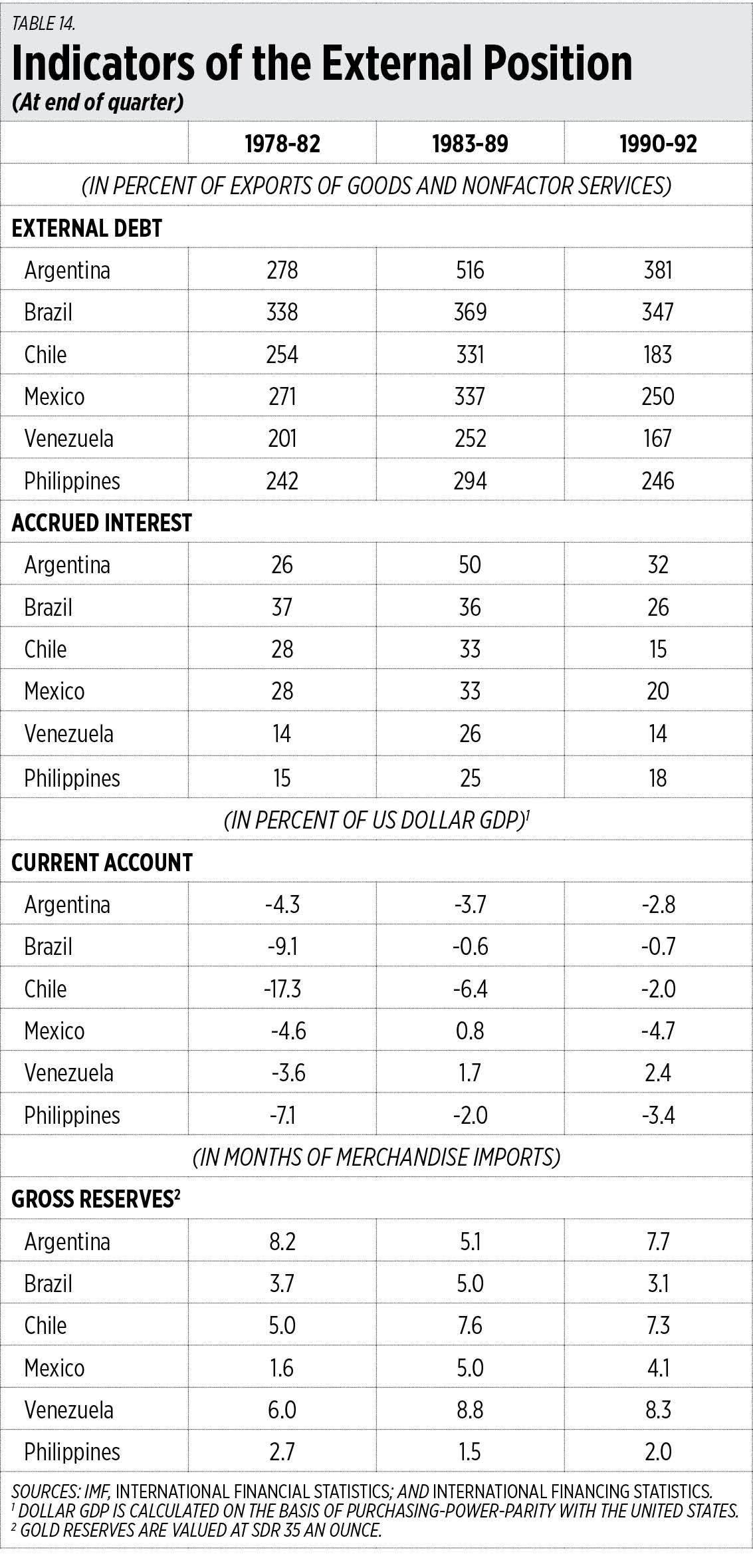
The Philippines was one of six heavily indebted countries in this list, together with Argentina, Brazil, Chile, Mexico, and Venezuela. While our public and private borrowings as a percent of GDP were mostly comparable, our foreign investment and other flows paled in comparison during certain periods. In short, while we borrowed increasingly for both public and private sectors, the compensatory inflows of foreign investment and other flows were not growing enough to lessen our reliance on foreign borrowings.

In the 1970s and 1980s, our external debt level was high relative to our exports of goods and non-factor services. The same applied to accrued interest. Our current account deficit was high relative to our GDP in dollars while our FX reserves were rather low in terms of import cover. There was very little in the quality of our debt ratios while our current account somehow improved, with better merchandise trade and OFW remittances providing a better ratio to our GDP. Reserve cover continued to be far from comfortable up to the 1990s.

How did the Philippines turn the corner?

To begin with, it was a wise idea that external debt management be handled by the central bank. By law, many central banks are autonomous and independent. Therefore, they can be perceived as a good referee of external debt statistics and management in terms of data and policy integrity.

In the Philippines, the Bangko Sentral ng Pilipinas (BSP) is empowered in its charter to keep debt data and regulate the country’s external debt covering both public and private sector credits. Debt statistics are compiled consistent with international best practices and data standards.

The BSP’s role in ensuring external debt sustainability is closely related to its primary mandate of maintaining price stability and promoting the international convertibility of the Philippine peso. The BSP implements this mandate by ensuring that proper answers to three conditions are addressed: knowing one’s debt, deciding how much to borrow, and deciding how to fund the financing gap. It has the appropriate mechanisms to determine the borrowing requirements of the economy and the protocols to ensure that none of the terms of borrowings could compromise the country’s debt servicing capacity.

The point is to ensure that the country is not trapped in debt servicing difficulties. To augment domestic savings, it is best to set a pecking order: grants and foreign loans on concessional terms would be first best. Loans from foreign banks could be quicker and more flexible — key considerations would be to get the highest grant element, minimum market finance, maximum rollover financing feature, and minimum debt repayments for the next five years. Exchange rate fluctuations should also be considered to avoid FX risk and debt servicing difficulty.

What had been the results at least prior to the COVID-19 pandemic?

As the Philippine economy transitioned into a more resilient economy after its restructuring experience in the 1980s, and key policy and structural reforms were put in place, its external debt burden, while growing steadily, has gone down relative to GDP. This is a classic case of outgrowing our debt — not only by positive economic performance but also by judicious external debt management.

These two pillars are what we need today.

While total outstanding external debt continued to expand as the needs of the economy for capital grew, the country’s total output also rose significantly over the years since the BOP and debt crises of the 1980s.

At the same time, with diligent external debt management, two major external debt sustainability measures have improved significantly over the years.

The external debt to GDP ratio, as a measure of solvency, has gone down from 75.5% in 1985, to 57.3% in 2005, and down to 28.7% in 2023.

The gross international reserves (GIR) coverage ratio in terms of imports of goods and services has also perked up sharply: 38.4% in 1985, up to 246.6% in 2005, and up to 703.3% in 2023. This means improved liquidity.

If we go by the key debt metrics in the Philippines compared to 20 and 40 years ago, we should be capable of sustaining this trend over the long haul.

Indeed, we had thought, and thought wrongly, that the rolling years with debt-financed growth would never end; it was easy to finance growth. But the hefty increase in oil prices and decline in commodity prices were wake-up calls to us. It was good we managed to institute policy reforms and gained economic resiliency.

Debt is indeed like any other trap, easy to get into, but hard to get out of. Yet good governance will allow us to consider other options like tough reforms in the fiscal arena, in infrastructure, and in agriculture, as well as diligent external debt management. This is how we can avoid a repeat of the past.


Diwa C. Guinigundo is the former deputy governor for the Monetary and Economics Sector, the Bangko Sentral ng Pilipinas (BSP). He served the BSP for 41 years. In 2001-2003, he was alternate executive director at the International Monetary Fund in Washington, DC. He is the senior pastor of the Fullness of Christ International Ministries in Mandaluyong.


Basic deposit accounts grow to 24.2M in 2023

BW FILE PHOTO

BASIC deposit accounts (BDAs) in the country rose to 24.2 million at end-2023, data from the Bangko Sentral ng Pilipinas (BSP) showed.

The number of BDAs jumped by 58% as of the fourth quarter of 2023 from the 15.3 million accounts recorded a year prior, the BSP said in a social media post.

It was also 2.5% higher than the 23.6 million recorded as of end-September 2023.

Meanwhile, the total value of BDA deposits more than tripled (207%) to P36.7 billion at end-2023 from P11.96 billion in the comparable year-ago period.

This was also up by 3% from the P35.6 billion recorded at the end of the third quarter of 2023, central bank data showed.

BDAs were introduced in 2018 and are meant to promote financial inclusion and address the needs of unbanked and underserved Filipinos.

This type of account has a low opening amount of P100 or less, no maintaining balance requirement, no dormancy charges, a maximum balance of P50,000, and requires only simple identification documents.

Basic deposit accounts can also earn interest of up to 4% per annum in select banks.

In 2022, the central bank directed lenders to limit BDAs to one per depositor.

The BSP targeted to bring at least 70% of Filipino adults into the formal financial system by end-2023. Officials earlier said they were confident the target was met amid the rising adoption of e-wallets and online payments.

The share of Filipinos with bank accounts reached 65% of the adult population in 2022, central bank data showed. — L.M.J.C. Jocson

ADVERTISEMENT
ADVERTISEMENT