Home Blog Page 6915

StanChart hikes PHL economic growth outlook for 2022
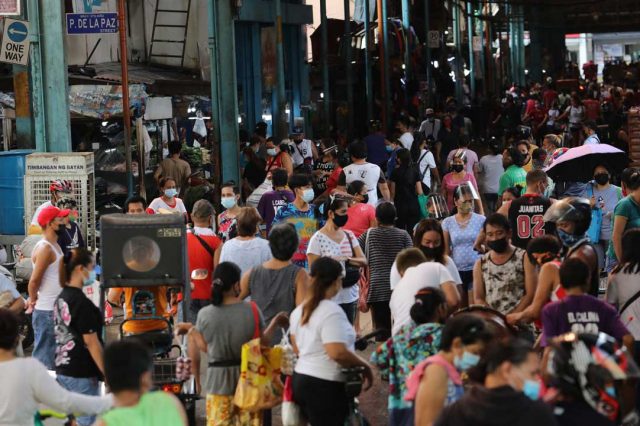
A crowded market in Marikina City is seen in this file photo. -- Photo by Michael Varcas, The Pilippine Star

By Jenina P. Ibañez, Senior Reporter  

Standard Chartered Bank raised its economic growth outlook for the Philippines this year in response to the lower base effect seen after slower-than-expected growth in 2021. 

The bank expects the Philippine gross domestic product (GDP) to expand by 7.5% in 2022, up from 6.6% set in July last year.  

“I think we originally probably expected Philippines’ recovery to be strong (last year),” Standard Chartered Bank Economist Jonathan Koh said in a virtual event on Friday. “I think the whole of ASEAN region was really hit by the Delta variant quite badly.” 

The economy grew by 7.1% in the third quarter amid lockdown restrictions declared to curb a Delta-driven surge in coronavirus disease 2019 (COVID-19) cases, slower than the 12% growth in the April to June period. 

The bank expects Philippine GDP to have grown 5% in 2021, from its previous 4.6% forecast. The government is scheduled to release fourth quarter GDP data on Jan. 27. 

“I think on the back of a lower base effect in 2021 as well as the pretty strong recovery that we saw in Q3 and probably going forward, our growth forecast was revised higher to 7.5%” 

The bank’s outlook is on the lower end of the government’s 7-9% growth target for 2022. 

Breaking down the components of GDP, Mr. Koh said only government consumption has been above pre-pandemic levels, while private consumption and investments still fall short. 

He noted that the unemployment rate has been improving. 

Preliminary data showed that unemployment eased to 6.5% in November compared with 7.4% a month earlier. In absolute terms, there were 3.159 million unemployed Filipinos in November, down from 3.504 million in October.   

This was the lowest jobless rate since the government started releasing data monthly in 2021. Including the quarterly releases, the November figure was the lowest since the 5.3% logged in January 2020. 

The unemployment rate hit a record high of 17.6% in April 2020, when the government implemented the strictest lockdown to contain the pandemic. 

“I think there’s still some room for improvement,” Mr. Koh said. 

For 2022, Mr. Koh said remittances will contribute to private consumption growth, along with investments. 

“Firstly, on the public side, clearly we see that the latest budget for 2022, there’s been a shift in focus to infrastructure spending, increasing the share of GDP for capex spending. And we have seen that in the increasing capital goods imports. And we do expect that to actually provide support on the investments front,” he said. 

“And for the private sector, we have seen that business loan growth has really brought up and has started to turn positive and pick up over the past few months. And as sentiment actually improves and as the economy reopens further, we do expect loan credit growth to continue to pick up.” 

About a fifth or P1.019 trillion of the P5-trillion national budget this year will go to capital outlays, which includes infrastructure spending. 

October wholesale price growth fastest in 7 years

PHILIPPINE STAR/ MICHAEL VARCAS

The Philippines’ wholesale price growth of general goods climbed to its highest level in seven years in October as global and domestic price pressures caught up.  

Preliminary data from the Philippine Statistics Authority (PSA) showed the general wholesale price index (GWPI) accelerated to 3.9% annually in October, picking up from 3.3% in September and 2% recorded in the same month of 2020.  

The October figure was the fastest reading in seven years or since the 4.1% print in October 2014, the statistics agency’s data showed.  

In the 10 months to October, the GWPI averaged 2.9%, higher than the 2.4% during the same period in 2020.  

The GWPI is used to monitor the wholesale trade sector and serves as a basis for price adjustments in business contracts and projects.  

The PSA said the acceleration in bulk prices during the month to the following commodities: crude materials, inedible except fuels (34.4% from 21.6% in September); mineral fuels, lubricants, and related materials (30.1% from 22.8%); chemicals including animal and vegetable oils and fats (5.2% from 4.3%); manufactured goods classified chiefly by materials (6.4% from 5.8%); and food (1.7% from 1.3%).  

However, price growth slowed down for beverages and tobacco at 4.7% in October from 5.3% in the previous month.  

Machinery and transport equipment as well as miscellaneous manufactured articles were unchanged at 1.2% and 0.5%, respectively.  

By island group, Luzon’s GWPI rose by 4.1% in October, following a 3.4% in September. It was faster than 2.2% in October 2020.  

In the Visayas, the bulk prices inched up 0.8%, from 0.4% the previous month and a rebound from the 0.1% contraction seen in October 2020.  

Growth in Mindanao’s GWPI, meanwhile, eased to 4.8% from the 4.9% in September 2021 but still higher than 1.9% growth seen a year ago.  

While lagging consumer price trends for a bit, the wholesale price index data “are finally starting to catch up as both global and domestic price pressures continue to mount,” Bank of the Philippine Islands Lead Economist Emilio S. Neri, Jr. said in a Viber message.  

Headline inflation in October slowed to three-month low of 4.6% as food costs eased. This was the third straight month that it exceeded the central bank’s 2-4% target. It was slower than the 4.8% in September but faster than 2.5% in October 2020.  

This easing headline inflation trend continued for the remaining months of 2021, bringing the full-year inflation to 4.5%, still above the 2-4% target band and missing the 4.4% central bank forecast for the year.  

“Rising cost to producers are likely to be aggravated by the weakening peso as imports continue to soar as part of the [Philippines’] reopening and recovery story in 2022,” Mr. Neri said.  

Balance of trade in goods reached a record $4.71-billion deficit in November as imports continue to outpace exports, latest preliminary data from the PSA showed.  

This brought the trade balance to a $37.92-billion shortfall from January to November last year, wider than the $22.15-billion deficit recorded in the same period in 2020. — Ana Olivia A. Tirona  

Community-managed shelter recovery pushed

PHILIPPINE COAST GUARD FACEBOOK PAGE

The government should provide shelter that speeds up recovery and ensures the safety of families affected by disasters, mostly by supporting local community-based plans, the World Bank said in its disaster recovery framework for the Philippines.

The World Bank on Friday released its Post-Disaster Shelter Recovery Policy Framework (PDSF) done in partnership with the Department of Human Settlements and Urban Development (DHSUD).

“The PDSF is an instrument to help the government and stakeholders systematically address the shortcomings in the current approaches to shelter recovery and to put in place a more predictable, efficient, and effective shelter recovery system. Over time, it also should reduce the need for major shelter recovery programs as the vulnerability of the housing stock is reduced and community resilience grows,” the World Bank said.

The framework emphasizes that shelter recovery should be community-managed, not contractor-driven.

“A priority of the PDSF is to put the Philippines on a path away from overemphasis on contractor-driven resettlement toward a more integrated, community-based approach to shelter recovery (in situ, whenever possible),” the World Bank said.

Under a community-based recovery model, there should be capacity-building and support for households to allow them to

“work collectively and to make repairs and oversee shelter reconstruction.”

The Department of Human Settlements and Urban Development (DHSUD) will coordinate with agencies that have experience in community-driven shelter, such as the Philippines Red Cross and UN Habitat.

The Philippines is the site of climate-related and other natural disasters, including tropical storms, earthquakes, and volcanic eruptions.

“It has been estimated that, on average, 300,000 shelter units are affected by disasters each year,” the World Bank said, noting an annual housing loss that worsens the country’s shelter deficit.

The World Bank said the government should promote disaster risk reduction by using building practices that mitigate hazards and reduce the risk of further damage.

The framework also promotes national and local shelter recovery plans, which means that local government units need to develop clear guidelines on funding sources.

As for funding, the framework said that shelter assistance should be targeted to households, not shelter units.

“(The framework) supports developing transparent procedures for registering affected households that ensure complete coverage while reducing duplication and free riders. Existing rules and procedures will be streamlined and strengthened.” — J.P.Ibañez

IATF raises alert levels in more areas until the end of Jan.

PHILIPPINE STAR/ MICHAEL VARCAS

THE INTER-AGENCY Task Force for the Management of Emerging Infectious Diseases (IATF) has raised the alert levels of several areas in the country beginning today until the end of the month to better manage the rising number of coronavirus cases in the country, according to the Presidential Palace.

Alert Level 4 was raised in Kalinga, Ifugao, Mt. Province, and Northern Samar, meaning establishments or activities there will only be allowed to operate at a maximum of 10% capacity for indoor venues and only for fully vaccinated individuals, and 30% capacity for outdoor venues.

It also disallows people under the age of 18 and over 65 from going outside the house. People with underlying illnesses and pregnant women are likewise prohibited from leaving their homes.

Health Undersecretary Maria Rosario S. Vergeire noted during an online news briefing that in these areas, the healthcare utilization rate has hit over 70%.

She pointed out that there are other areas in the country which have reach similar utilization rates but whose Alert Level has not been increased. This was because they also looked at the bed utilization rates and saw that these were only around 30% to 50% for COVID patients.

In comparison, the areas now under Alert Level 4 were allocating close to 80% of their beds to COVID patients and were having a difficult time coping.

ALERT LEVEL 3

Other areas have now been placed under Alert Level 3. They are: Apayao, Puerto Princesa City, Masbate, Siquijor, Zamboanga del Norte, Zamboanga Sibugay, Lanao del Norte, Davao de Oro, Davao Oriental, North Cotabato, Sarangani, Sultan Kudarat, Surigao del Norte, Basilan, and Maguindanao.

Under the third of the five alert levels, establishments will be allowed to operate or activities be undertaken at a maximum capacity of 30% for indoor venues and only for fully vaccinated individuals, and 50% capacity for outdoor venues.

“We urge all those who reside in these areas to please follow the protocols of your corresponding alert levels,” said Acting Presidential Spokesman and Cabinet Secretary Karlo Alexei B. Nograles during the same briefing.

“For our fellowmen who are under a lower alert level classification, remain assured but do not be complacent. You can help keep the number of COVID cases low in your areas by continuing to be vigilant,” he added in a mix of English and Filipino.

Mr. Nograles also reminded the public to continuously follow minimum health protocols and promote vaccination.

RULES FOR TRAVELLERS

Also on Friday, the IATF began allowing the entry of international Filipino passengers who have recently recovered from COVID-19 but who still test positive in the required pre-departure RT-PCR test.

However, the cabinet secretary said they must present their test results and show a medical certificate proving their completion of the mandatory isolation period, that says they are no longer infectious, and that they have been allowed free movement or travel.

Upon their entry into the Philippines, they will have to undergo the facility-based quarantine applicable to them based on the classification of the territory they came from and their vaccination status. — Alyssa Nicole O. Tan

32,744 new COVID cases bring total to 3.4 million

PHILIPPINE STAR/ MICHAEL VARCAS

THE DEPARTMENT of Health (DoH) on Friday reported 32,744 coronavirus 2019 (COVID-19) cases, bringing the total number of cases since the pandemic started in early 2020 to 3.4 million.

The death toll rose to 53,309 after 156 more patients died, while recoveries increased by 16,385 to 3 million, the DoH said in a bulletin.

It also said 44% of 75,353 samples taken on Jan. 19 tested positive for COVID-19, way above the 5% threshold set by the World Health Organization (WHO).

The health department said there are now 291,618 active cases, 9,015 of whom do not show symptoms, 277,833 are mild, 2,979 are moderate, 1,487 are severe, and 304 are critical.

The DoH said 96% of the latest cases occurred from Jan. 8 to 21. The top regions with new cases in the past two weeks were Metro Manila with 6,917, Calabarzon with 6,398, and Central Luzon with 4,122 infections.

It added that 42% of deaths occurred in January, 6% in December, and 4% in November.

The agency said 139 duplicates had been removed from the tally, 82 of which were reclassified as recoveries, while 108 recoveries were relisted as deaths. Three laboratories failed to submit data on Jan. 19.

The health department said 51% of intensive care unit beds in the country are being used, while the rate for Metro Manila is 49%. — Alyssa Nicole O. Tan

NBI catches five people involved in BDO hacking incident

The NBI presents the suspects in the BDO “Mark Nagoyo” hacking.

The National Bureau of Investigation (NBI) on Friday announced the arrest of five individuals it said were involved in hacking over 700 bank accounts of Banco De Oro (BDO).

It said the five people — three Filipinos and two Nigerians — were part of the Mark Nagoyo Heist Group, which was responsible for making unauthorized transactions in the BDO clients’ accounts.

NBI Director Eric B. Distor identified the suspects as Ifesinachi Fountain Anaekwe, Chukwuemeka Peter Nwadi, Jherom Anthony Taupa y Diawan, Ronelyn Panaligan and Clay S. Revillosa.

Using intel provided by an informant who had transactions with the two Nigerians, the Cybercrime Division was able to catch Mr. Anaekwe and Mr. Nwadi in an entrapment operation in Mabalacat, Pampanga on Tuesday.

The Nigerians were also reported to be selling devices that could cash out money that was illegally obtained.

The informant also provided information about other people who were believed to be connected to the Mark Nagoyo Group.

Mr. Taupa was arrested in a buy-bust operation in Floridablanca, Pampanga where he was found selling a phishing website.

A phishing website is a fake website that is made to look similar to an official one in order to fool users into thinking they are using a legitimate website. It collects user data like credit card numbers or other banking details.

Another informant said that Mr. Taupa was one of the masterminds behind the heist and was also selling an imitation GCash web page. According to the informant, Mr. Taupa had created the page to collect the data of victims who thought it was the official GCash site. Mr. Taupa was also found to be sending an e-mail list of bank clients’ personal details which was used by the hacking group to access the banking accounts.

Ms. Panaligan and Mr. Revillosa were identified as the web developer and downloader in a separate operation.

In December 2021, a group was able to illegally access bank accounts by allegedly bypassing the One-Time-Pin requirement, resulting in the draining of those accounts’ funds. The e-mail confirmations received by the victims for most of the bank transfers showed that they had been made by “Mark D. Nagoyo.” “Nagoyo” is a Filipino word that can be loosely translated as “swindled.”

In a statement released to the press, GCash commended the NBI’s Cybercrime Division for the arrests it made.

“May this serve as a warning to other fraudsters: We do not tolerate the use of GCash for illegal and unlawful activities, and the long arm of the law will eventually catch up with you,” Ingrid Berona, Chief Risk Officer of GCash was quoted as saying in the release.

In the statement, GCash assured customers of the integrity and security of its platform, saying it employs up-to-date security technologies and global best practices on its system and its app.

“GCash would also like to clarify that it is not party to incidents from other financial institutions,” it said, and advised its customers “to be very careful and vigilant, as scammers are now using phishing techniques through official-looking SMS, emails, and even social networking sites to steal sensitive information like MPINs and one-time passwords (OTPs).” — Jaspearl Emerald D. Tan

Robredo to focus on infrastructure projects for water resources, public transport, and calamity-stricken areas

OVP/Charlie Villega

If Vice-President Maria Leonor G. Robredo becomes president after the elections in May, she is planning to prioritize infrastructure projects for water resources management, public transport and rural development, and reconstruction of public infrastructure and housing projects in calamity-stricken areas.

During the Meet the Presidentiables forum on Friday, she explained that infrastructure development must not be done just for the sake of it, rather be done for a purpose and with a proper strategy.

The Metropolitan Waterworks and Sewerage System has already raised concerns that water levels in Angat dam might go below the minimum by April, she noted, which could lead to a water shortage in the capital and surrounding areas. If she becomes president, she seeks to ensure there is an adequate water supply.

The long-term solution is definitely to invest in the country’s water systems and ensure that they are well maintained, she added.

As for her transport development agenda, Ms. Robredo said that the country has long had a problem with traffic as its “mass transport system remains inefficient.”

She called the issue a “stumbling block to growth” as time is more often than not wasted on the road rather than used more productively.

Her third program is to have a proper solution to what she said was a “cycle of devastation and reconstruction” experienced by areas that are regularly hit by typhoons.

Ms. Robredo proposes building permanent resettlement sites with climate-resilient public housing for those whose houses are completely destroyed and who live in climate-vulnerable areas.

In her economic platform, Ms. Robredo plans to create “a fully functioning national competitiveness council” to bridge the gap between government and the private sector, and craft a comprehensive strategy that involves all stakeholders to make the country more globally competitive.

“Spaces for dialogue, sectoral feedback, and consensus building will be created, enabling continued sustainable collaboration,” she said.

“Through the entire process, the imperative will be to unlock the energies of the entire economy, ensuring that the Ease of Doing Business Act is implemented, for example, or that roadblocks in the form of outdated policies and laws are removed,” she added.

In the same way, she is eyeing to accelerate the digital transition and reduce the amount of human intervention that can often be an avenue for corruption. “Under a more transparent, ethical, more trustworthy government, the right national priorities necessarily open the gates to progress,” she said at the forum.

“My commitment to the business community — we will create an environment where enterprises have a chance to compete fairly, we will not fixate on restrictions or merely a way to pounce or penalize those who set an inch out of line,” she added. “Your voice will be heard as we work for the common good.”

The presidential aspirant also said that she will encourage more private-public partnerships for critical projects including roads, expressways, airports, seaports, water concession projects, and hybrid models for mass transportation, among others.

“The leader you can trust beyond the elections is the one who should have already earned your trust today through their track record, and through the unshakable proof of what we have so far done in our time in public service, and in fact our entire lives,” Mr. Robredo said. — Alyssa Nicole O. Tan

6-hour work day under a Ka Leody presidency

Labor leader and presidential hopeful Leodegario de Guzman (L) and the non-partisan Pandesal Forum’s moderator Wilson Lee Flores (R).

LABOR LEADER Leodegario de Guzman said on Friday that if he is elected president, he would reduce the maximum number of work hours in a day to six from the current eight hours. This, he said, will open opportunities for others to work.

“Despite the working hours being less, the worker’s wage and benefits will not decrease and will remain the same,” the labor activist said in Filipino during the Pandesal Forum.

This, he noted, will not be immediately implemented after he win, but it will be pushed once the economy recovers.

He said that for every two to three hours that will be taken from one worker, that time would be given to another worker. In this way, more jobs will be opened and created.

“What we are fighting for is ‘labor first’ not ‘labor only.’ The next-in-line beneficiary of substantial wage hikes and regularization will be the micro, small, and medium enterprises (MSMEs) sector because Filipinos will have more purchasing power to buy from local businesses” he said.

“The demand for their goods and services will correspondingly increase. To counter the tendency to increase prices with higher demand, the other pressing concerns of small businesses have to be addressed through government intervention, regulation, and control of power rates and fuel prices,” he added.

Another one of his plans to increase employment is to focus on exporting agricultural produce. To do so, he plans to double the current funds of the agricultural and fisheries sector which he calls “too small” despite its “feeding the whole nation.”

Mr. De Guzman also said that he seeks to develop the post-harvest system by increasing cold storage facilities to ensure that vegetables remain fresh. This will serve as a backup plan to control prices from sudden changes.

He also set out his plan to institute a People’s Sovereign Wealth Fund to finance local industrialization through investing in MSMEs where importation is highest. He plans to initially finance this with $50 billion (P2.57 trillion) from the Central Bank’s Gross International Reserves which has already reached $107.9 billion (P5.55 trillion) as of October 2021, due to a decade’s worth of overseas Filipino workers remittance inflow.

“Let us view the country’s Gross International Reserves as a fund for our workers. After all, it was pooled from the collective sweat and blood of OFWs. Utilize the fund to create opportunities for decent lives and decent jobs, which forces our fellow Filipinos to seek for them abroad,” Mr. De said.

“Let us invest in ‘working class enterprises,’ rather than use our dollar reserves to protect the foreign exchange rates and the interests of big importers,” he added.

Among the presidential aspirants’ other proposals are the imposition of a one-time 20% wealth tax on the country’s top 500 families to finance his P1 trillion Philippine economic recovery plan. This recovery plan shall focus on ₱475 billion for public jobs generation program, ₱400 billion for health stimulus and ₱125 billion to be provided as assistance for MSMEs. He also advocates progressive taxation — taxing the rich more and lessening regressive taxes on ordinary workers like the VAT. He also proposes to nationalize basic and strategic public utilities like water and power services.

MANDATORY MILITARY SERVICE

At the forum, the presidential aspirant also called out Davao City Mayor Sara Duterte-Carpio, who is running for vice-president, on her plan to push for mandatory military service for Filipinos 18 years and above.

“The country has a lot of problems that it needs to face,” he said. “Why is she focusing on obligating the youth to have military training?”

The labor activist noted that there are several other problems that need to be given priority instead of her suggested military training, noting concerns regarding health, the pandemic, unemployment, rising commercial prices, and contractual workers, among others.

“They should answer what the people need instead of inventing over and over again programs that the people are not asking for or are not perceived as a problem by the people,” Mr. De Guzman said.

His running mate, former party-list lawmaker Walden Flores Bello, had also called Ms. Duterte’s plan a revelation of her being a “dictator-in-waiting.”

“Like father, like daughter. Duterte’s legacy was to arm people and tell them to kill. Now his daughter wants to do it to the youth as well,” Mr. Bello said in a tweet.

In response, the Davao mayor said in a statement that “only the likes of Mr. Bello would think of mandatory military service for its citizens as arming them and telling them to kill — instead of looking at it as something that inspires patriotism in the youth.

“If only Mr. Bello did not stop at what he has been so stuck in over the past many years — dictatorship in the Philippines, something that we know is a lie in the present time — he would have a better understanding of what I truly stand for,” she added. — Alyssa Nicole O. Tan

PDP-Laban’s Cusi bloc adopts Sara Duterte as VP bet

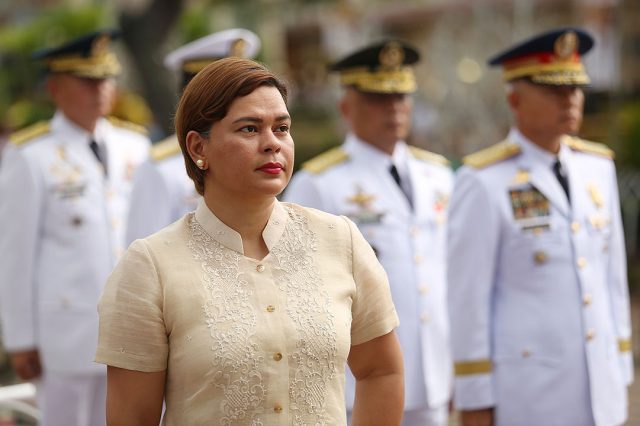
DAVAO City Mayor Sara Duterte-Carpio

THE PARTIDO Demokratiko Pilipino-Lakas ng Bayan (PDP-Laban) bloc led by Energy Secretary Alfonso G. Cusi on Friday said they will adopt Davao City Mayor Sara Duterte-Carpio as their vice-presidential bet for the upcoming May elections.

PDP-Laban is finalizing the terms of its alliance agreement with Lakas-Christian Muslim Democrats (Lakas-CMD), which is currently chaired by Ms. Duterte.

“The decision to adopt Mayor Sara has been made by the PDP-Laban National Executive Committee based on her credentials, advocacies, and vision for our Nation,” the group said in a statement.

“Based on these, the PDP-Laban has decided that the quality of her advocacies and vision are strongly aligned with that of the party,” they added.

The group also commended her quality of leadership and track record which made her the “most qualified for the position.”

“The party believes that Mayor Sara’s election to the vice-presidency will help ensure the continuity of the vital programs of the current administration which now constitute the legacy to our Nation of PDP-Laban Chairman, President Rodrigo Duterte,” they said.

Lakas-CMD Co-Chairman and Senator Ramon Bautista “Bong” Revilla, Jr. welcomed PDP-Laban’s decision.

“The two most dominant political parties coming together is a very welcome development in ensuring a better and brighter future for the country and our fellowmen,” he said in a mix of English and Filipino in a statement released on Friday.

Meanwhile, the other PDP-Laban bloc – the political party currently has two separate groups which claim that they are the “true” party and leadership – released a statement on the adoption of Ms. Duterte as the party’s candidate for Vice-President.

“This announcement of the PDP Laban usurpers that they are adopting Mayor Sara Duterte’s Vice-Presidential candidacy shows their desperation to hold to power,” the statement, released by Lutgardo Barbo, said. “Mayor Duterte has rejected them many times and has even made pronouncements throwing insults to the party which used to be chaired by her father, President Duterte.”

The statement continues by saying, “As far as the real and genuine PDP-Laban is concerned, our Vice-presidential candidate is former Manila Mayor and now Congressman Lito Atienza and our Presidential candidate [is] Senator Manny Pacquiao. Matagal nang Pacquiao-Atienza ang PDP Laban sa simula pa lang (the PDP-Laban party has long been backing Pacquiao-Ateinza since the start) ) because we are a disciplined party with a clear vision and program of government.” — Alyssa Nicole O. Tan

Bayan Muna files resolution to probe IATF orders against the unvaccinated

PHILIPPINE STAR/ MICHAEL VARCAS

A party list group filed a House resolution on Thursday seeking to investigate whether orders given by the government task force that manages infectious diseases goes against human rights.

Bayan Muna filed House Resolution 2460 which calls on the House of Representatives’ Committee of Human Rights to look into the policies issued by the Inter-Agency Task Force for the Management of Emerging Infectious Diseases (IATF-EID) that limit the movement of unvaccinated individuals and prevent them from leaving their homes. The orders are part of the IATF-EID efforts to contain the surge of COVID-19 cases.

The resolution was introduced by Bayan Muna Representatives Ferdinand R. Gaite, Carlos Isagani T. Zarate, and Eufemia C. Cullamat, ACT Teachers Representative France L. Castro, Gabriela Women’s Party Representatives Arlene D. Brosas, and Kabataan Representatives Sarah Jane I. Elago.

In the resolution, the solons condemned several orders by the government agency targeting unvaccinated Filipinos, including ordering them to stay home except for when they need to buy essential goods, not allowing them to eat at restaurants, prohibiting them from using public transportation, and not allowing them to get a job.

They also noted in the resolution that President Rodrigo R. Duterte had directed officials to arrest unvaccinated people who disobey the IATF policies. They said that the government was using a “militaristic approach” in implementing health and safety protocols.

The lawmakers said that instead of using threats and police violence to enforce COVID-19 rules, the government should follow the advice of Coalition for People’s Right to Health (CRPH) spokesperson Joshua L. San Pedro, who said that rather than monitoring and restricting the unvaccinated, the government should address the reasons for their vaccine hesitancy and review the effectivity and reach of the Department of Health’s and other agencies’ vaccine information campaigns.

“While vaccinating the people could be important in the pandemic, Congress should take the side of the people against policies that curtail constitutional rights, [are] discriminatory and [are an] unnecessary burden [on] the workers and other poor people, especially in this time of pandemic and severe hardship,” the lawmakers said in their resolution. — Jaspearl Emerald G. Tan

Solon pushes for bill granting benefits to health workers

IMAGE COURTESY OF ST. LUKE’S MEDICAL CENTER.

A lawmaker has called on the House of Representatives to approve measures for the benefit of health workers who have been fighting against COVID-19.

Congressman Luis Raymund F. Villafuerte, representative of the 2nd District of Camarines Sur, is urging the chamber to okay a consolidated bill, of which he is a principal author, that seeks to grant medical frontliners additional benefits including insurance coverage, an increase in overtime pay, and a provision for a daily allowance.

“The Congress can go one step further by passing the bill institutionalizing this allowance and other benefits for our medical frontliners,” Mr. Villafuerte said in a statement released on Thursday.

The consolidated bill includes House Bill (HB) 10365, which Mr. Villafuerte authored, which would provide more benefits to both public and private health workers during the state of national calamity caused by the pandemic.

Meanwhile, HB 9670, another bill authored by Mr. Villafuerte, aims to amend the Magna Carta of Public Workers Health Workers by increasing the rates of their overtime pay and other incentives.

Under the bill, medical workers will receive a daily allowance of P300 and a P10,000 monthly allowance. Health workers who are required to wear uniforms will also be granted a higher monthly laundry allowance of P500 or more.

The bill states that the Health Secretary may increase the amounts of the allowances as they see fit.

The proposed measure, which is a combination of several bills that aim to address additional needs of health workers, is currently pending in the House at the committee level. — Jaspearl Emerald G. Tan

Ayala Corp, ALI forge property-for-share swap deal

Ayala Corp. (AC) and its top stockholder, Mermac, Inc., will transfer P17.5-billion worth of properties into Ayala Land, Inc. (ALI) in exchange for additional shares.  

The boards of AC and ALI, in separate meetings, approved the property-for-share swap deal on Jan. 20.  

In a disclosure on Friday, AC said the company and Mermac will transfer five assets to ALI in exchange for 311,580,000 primary common shares valued at P55.80 each. 

AC will subscribe to 309,597,711 primary common shares for assets valued at P17.27 billion. Mermac, on the other hand, will subscribe to 1,982,289 primary common shares for assets worth P110.61 million. 

The biggest asset is AC’s 50% ownership in Ayala Hotels, Inc. worth P13.2 billion.  AHI owns the Manila Peninsula property and is ALI’s partner in the Park Central Towers project. 

Other assets include a P1.72-billion property in Darong, Sta. Cruz, Davao del Sur, and office units and parking lots in Tower One, Makati City worth P1.39 billion.  

Also included are AC’s P993-million Honda Pasig property along C-5, and a P78 million property in Calauan, Laguna.  

ALI in a separate disclosure said the primary common shares to be issued to AC and Mermac will come from the unissued shares in the 1-Billion Common Shares Carve Out, which was approved by its shareholders in 2014. The shares are not subject to pre-emptive rights and do not require stockholders’ approval. 

“We are delighted about this transaction. We view ALI as the natural owner of these properties and is in the best position to optimize their value. In addition, this deal is consistent with Ayala’s initiative to increase its ownership of ALI, similar to the block purchases of ALI shares we have done over the past year,” said Fernando Zobel de Ayala, who is president and CEO of AC, as well as chairman of ALI. 

ALI President and CEO Bernard Vincent O. Dy said the properties will further expand the company’s landbank and commercial assets.  

“We are confident that the inclusion of these assets will further create value for our stakeholders,” he added. 

AC, ALI, and Mermac aim to complete the requirements within the year.  

Once the deal is approved, AC will increase its ownership in ALI to 47.2%, from the current 46.07%.  

On Friday, shares in ALI rose 1.61% to close at P34.65 each, while AC shares jumped 2.72% to end the session at P868 apiece. 

ADVERTISEMENT
ADVERTISEMENT