Home Blog Page 4928

SEC extends amnesty for filing reports until June 30

THE Securities and Exchange Commission (SEC) has extended the deadline for amnesty applications for late and non-filing of annual financial statements, general information sheets, official email addresses, and mobile phone numbers.

In Memorandum Circular No. 6 of 2023, the regulator said on Friday that eligible companies have until June 30 to complete the requirements for amnesty application under Memorandum Circular No. 2.

The commission extended the deadline for amnesty applications due to the number of companies expressing interest in availing of the program and an overlap in submission dates with the Bureau of Internal Revenue.

“The SEC launched the amnesty program for non-compliant corporations, as well as those whose certificates of registration have been suspended or revoked, in the middle of March through SEC Memorandum Circular No. 2, Series of 2023,” it said in a statement.

The regulator has also extended to 90 days from the date of payment to submit companies’ latest financial statements. It previously set the date of submission to 45 days.

“The amnesty program is part of the commission’s efforts to encourage its supervised entities to comply with their reportorial requirements under Republic Act No. 11232 or the Revised Corporation Code of the Philippines,” the SEC added.

Additionally, the SEC seeks to identify active and inactive corporations by enhancing and organizing its digital database.

After the deadline passes updated penalties and fines will be implemented for noncompliance with the requirements on July 1.

The regulators had previously disclosed that it was considering an increase in fines and penalties imposed on corporations for the late and non-filling of reportorial requirements.

The SEC said that it will raise penalties by 20% from the base penalty per offense. These will be imposed on a per report and per year basis with an additional monthly fine until the requirements are submitted.

Corporations may be fined up to 27,000 and P54,000 with an additional monthly fine of P500 up to P1,000 depending on their retained earnings. — Adrian H. Halili


Dibs on the Lexus RZ 450e

The first battery electric vehicle of Lexus, the RZ 450e, will be officially unveiled in the Philippines tomorrow. — PHOTO BY KAP MACEDA AGUILA

TOMORROW is quite the momentous day for Lexus Philippines as it presents to our market the very first pure-electric model of the luxury brand: the Lexus RZ. We don’t want to preempt all the good stuff you’ll get to know at the launch, but we can tell you this much: The sole (for now) 450e variant is engaging to drive and yes, very Lexus. “Velocity” was invited last week to join only a handful of media practitioners given dibs on a couple of fresh-smelling RZs. We got to ride and drive a Sonic-Iridium-colored vehicle.

We think the RZ will be a game-changer — not in the least because Lexus has already established itself in the electrified mobility arena through its hybrids, long before everyone else went that route. Now, it has opened the lid on full electrification. We think Toyota won’t be far behind. — Kap Maceda Aguila

Toyota recalls select Lexus units due to safety issue 

PHILSTAR FILE PHOTO

TOYOTA Motor Philippines Corp. (TMP) has issued a product recall on select Lexus units because of an issue with its vehicle safety system.

The car manufacturer said the customer satisfaction campaign in the Philippine market would cover 115 officially sold vehicles consisting of 40 Lexus NX models with a production period of Nov. 15, 2021 to Dec. 20, 2022 and 75 Lexus NX HEV (hybrid electric vehicle) models with a production period of Nov. 17, 2021 to Dec. 6, 2022.

For the global market, the production period of the affected vehicles is from April 15, 2021 to Feb. 1, 2023. The Lexus brand is a luxury vehicle owned by Toyota.

“In line with its corporate commitment to product safety and quality, Toyota has initiated a customer satisfaction campaign for Lexus Safety System (LSS) 3.0 forward recognition on certain Lexus NX and NX HEV,” TMP said in an advisory dated March 14 uploaded on the Department of Trade and Industry website.

Under the recall campaign, TMP said the dealers will perform reprogramming on the affected vehicles to update the proactive driving assist (PDA) software in the forward recognition camera, which would be at no charge to the owners.

“Due to the programming of the PDA software within the forward recognition camera, when a subject vehicle passes a line of stopped or parked vehicles, there is a possibility of a discrepancy on detected objects between the PDA and LSS + system,” TMP said.

“If this occurs, the camera will be rebooted and LSS+ functions will be inoperative for approximately four seconds, during which time the pre-collision system (PCS) will be inoperative and the PCS warning light will be illuminated. After rebooting, the functions will be restored and operative,” it added. — Revin Mikhael D. Ochave

New bags for old

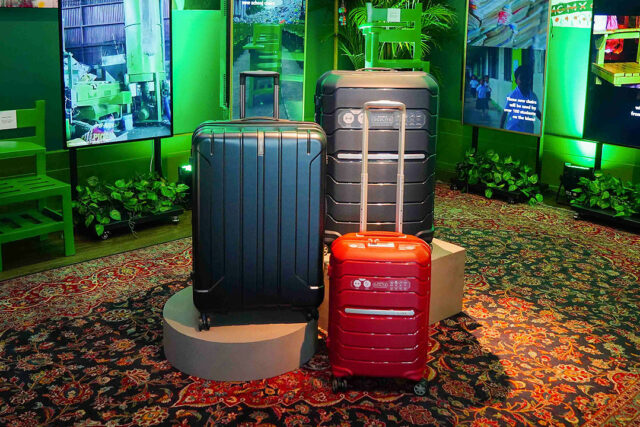
SAMSONITE’s launch of its first ever Luggage Trade-In campaign in the Philippines, in support of the World Wide Fund for Nature

Samsonite is holding a luggage trade-in campaign

WOULDN’T you like to get a new suitcase at 35% off and help the environment at the same time?

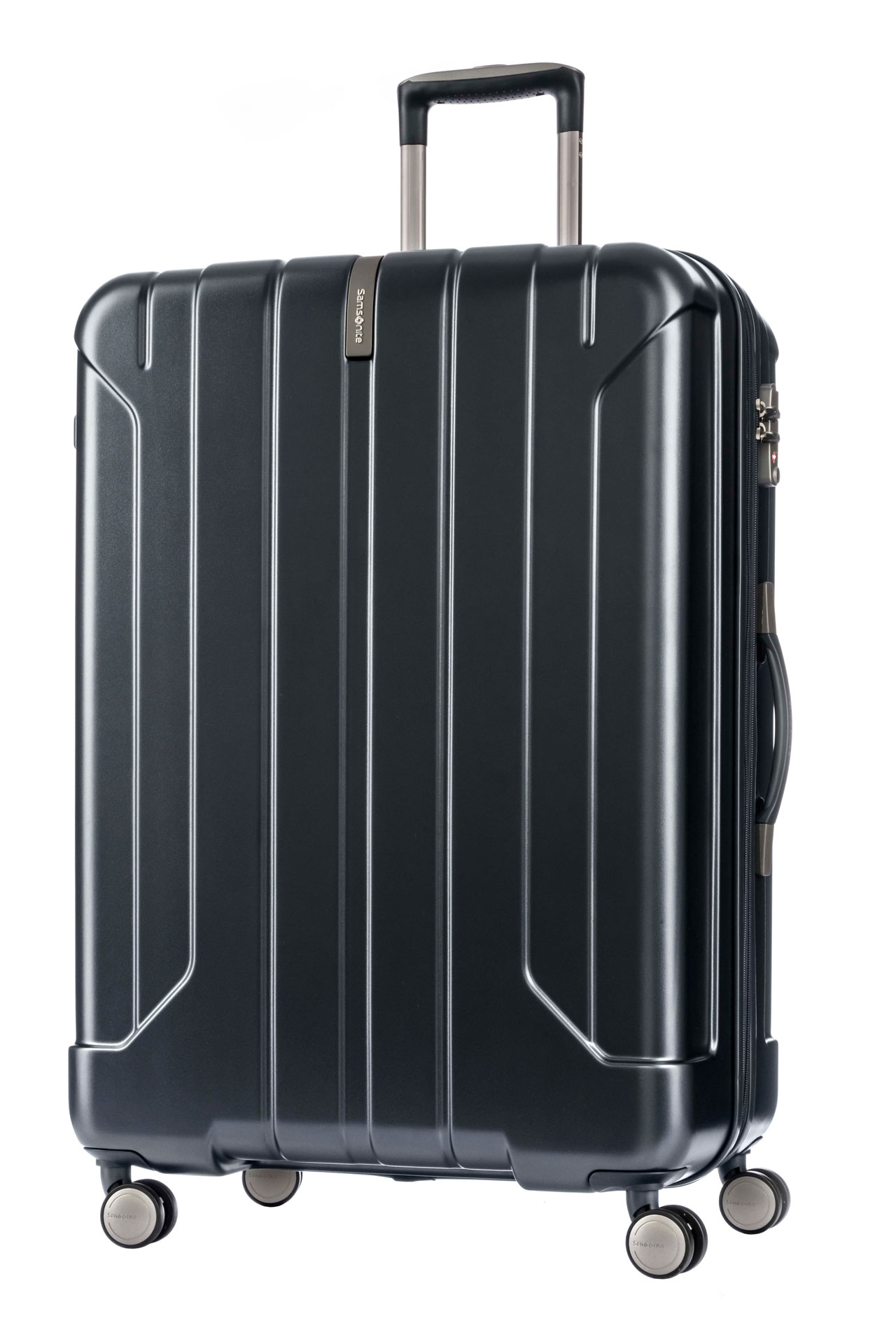
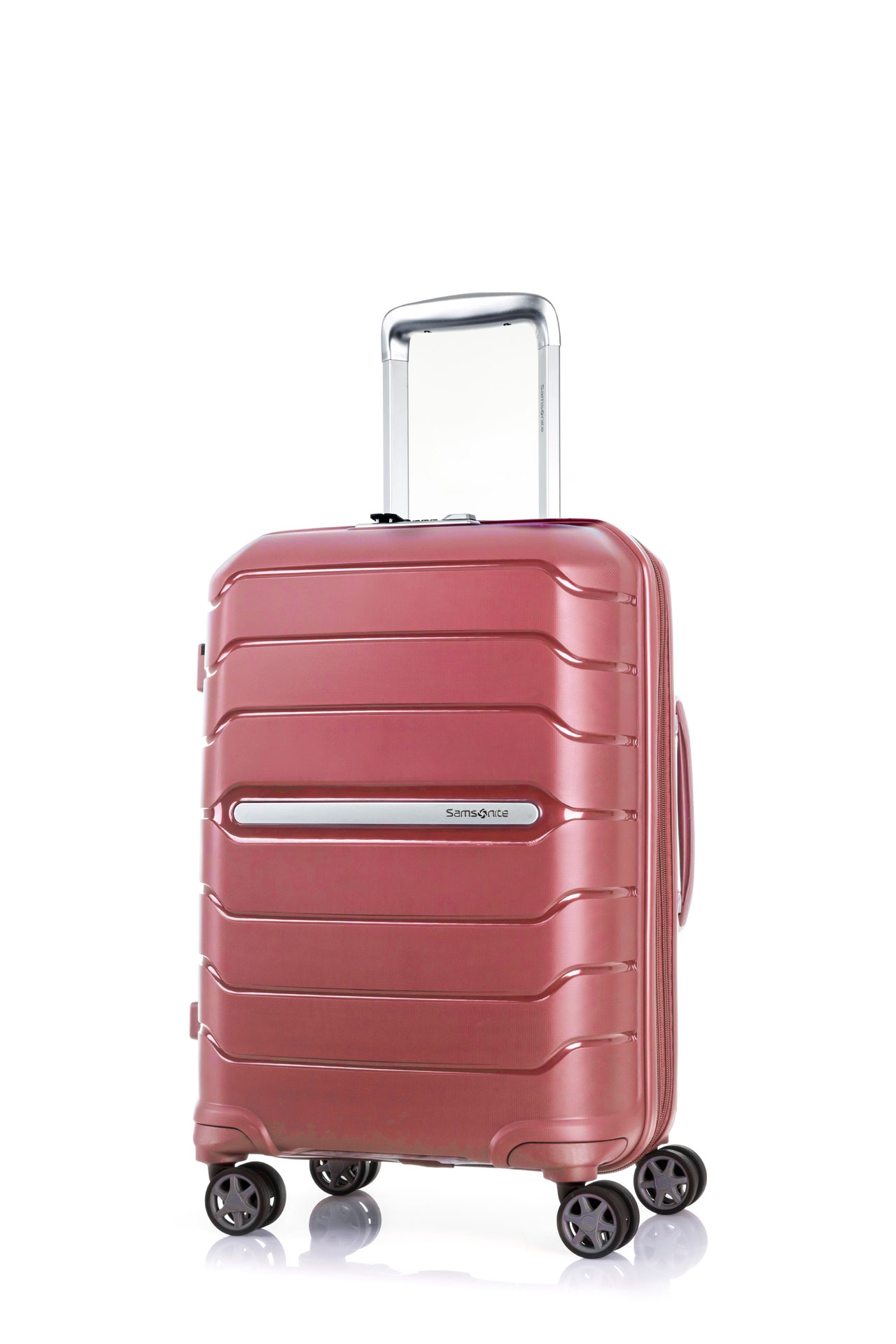
American luggage company Samsonite unveiled its Luggage Trade-in campaign in the Philippines during a press conference in BGC on April 25. One can pop into stores Samsonite suitcases are sold (the list is below) with any old piece of luggage of any brand or size, and get 35% off the Niar and Oc2Lite models.

The Niar has features such as double wheels, integrated carry handles, a dual-tube trolley puller, compression straps, a TSA combination lock, and an expander, and is available in graphite and silver. The Oc2Lite is a bit more exciting with deep red, navy blue, and jade gold colors.

The bags that are traded in will be sent to Envirotech, a Davao-based recycling company, which will process the suitcases to be made into desks which will then be forwarded to selected schools. Furthermore, with every trade-in purchase, Samsonite will donate ₱100 to WWF-Philippines. Michael Corpuz, Country Head for Samsonite Philippines told BusinessWorld, “Our shift is more towards giving back, and what [gives back] more than in education,” he said. He points out that the campaign started in Asia a few years ago, but is only being launched in the Philippines now for the first time.

The luggage industry straddles two fields: fashion and travel, and both are huge contributors to pollution. Mr. Corpuz told BusinessWorld about initiatives Samsonite is taking towards sustainability. He talked about Recyclex, a fabric made from recycled water bottles. This material is used in some suitcase linings and also in backpacks.

“Considering the size of Samsonite, it’s considerable,” he said when asked about the waste generated by discarded luggage. But he says that the sustainability efforts of Samsonite are able to offset that. “What we do now is the same program that we do now, that it doesn’t end up in landfills but rather, put to good use.” He said that the company plans to become carbon-neutral by 2025. “We’re on track with that.”

The Luggage Trade-in offer runs until May 31. Participating stores include Samsonite stores in Greenbelt 5, Glorietta 3, Central Square Mall, Podium, Shangri-La Plaza, Trinoma, SM Mall of Asia, SM Megamall, SM North EDSA, SM Southmall, Robinsons Magnolia, Paseo de Sta Rosa, Outlets at Lipa, and SM Clark; and department stores such as SM Makati, SM Megamall, SM Mall of Asia, SM North EDSA, SM Aura, Rustan’s Makati, Rustan’s Shangri-La, Rustan’s Alabang, Rustan’s Gateway, Rustan’s Cebu, Robinsons Ermita, and Landmark Trinoma. — Joseph L. Garcia

BPI’s seven-year pitch

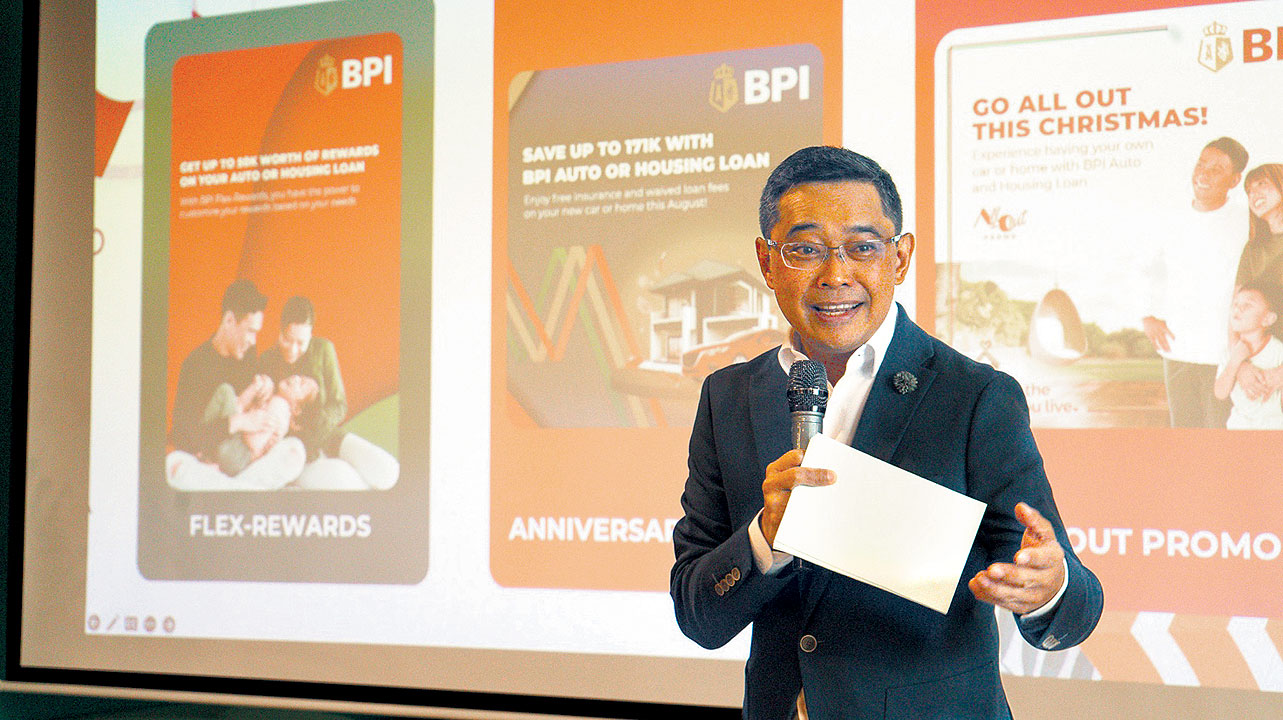
BPI Retail Lending and Bancassurance Group Head Dennis Fronda — PHOTO BY KAP MACEDA AGUILA

You can pay for that car loan over seven years

By Kap Maceda Aguila

IF YOU DIDN’T know it yet, a car loan is key to realizing mobility for a great majority — up to some 80% — of us. But, to be honest, things can get a little dicey when the monthly payments need to be met. Depending on your financial capability and the regular demand on your budget, servicing a car loan can cause a great deal of anxiety.

That’s exactly what the folks at the Bank of the Philippine Islands (BPI) were thinking when they cooked up the aptly named “Hot Summer Promo” — it is literally scorching out here, and these deals are coming in hot. “Today, we are introducing another innovation in auto loans (through the) MyKotse which extends the loan term beyond the usual 60 months to 72 to 84 months, which will make owning a car even more affordable. We understand that the monthly amortization is a deterrent to many. To address this, we have stretched the loan term to reduce the monthly payments to fit the family budget of more Filipinos,” said BPI Executive Vice-President and Head of Consumer Banking Ginbee Go in a recorded statement last week, played back during the program’s launch event. BPI is also offering extended payment terms on its housing loans (branded MyBahay).

Through MyKotse, BPI now becomes the only bank in the country to offer “extended loan tenors of six years and seven years, depending on the car’s engine displacement,” up over the industry standard of five years.

BPI offers a minimum auto loan amount of P500,000 and a minimum loan term of three years — applicable to brand-new passenger cars (including SUVs and pickups) and big bikes. These must be for personal or private use. To illustrate how lengthening the payment period affects the monthly servicing of the loan, BPI Retail Lending and Bancassurance Group Head Dennis Fronda said during his presentation that a Honda City may typically entail a monthly payment of P18,000 over five years. This sum will be trimmed down to P15,000 per month over seven years. Another benefit is the ability to go upmarket in vehicle class for the same monthly spend.

For housing loan clients under the MyBahay program, the minimum loan amount is P1 million, with a minimum loan term of 10 years. Packaged in its “Hot Summer Promo,” BPI is also raffling off free all-expenses-paid trips to a local or international destination for clients and partner brokers/dealer agents.

According to Mr. Fronda, vehicles (with the exception of several brands) with an engine displacement of above 1.4 liters are eligible for the full 84-month term. He added to “Velocity” that BPI is still in the process of finalizing its list of qualified brands for the six-year term. “Six years is still not bad,” he underscored.

Notably, those looking at getting electrified vehicles will be pleased to note that BPI is putting them (hybrids and battery electrics) in the mix. “Even before all the noise on EVs, we had been including these vehicles and making them available to our customers,” added the executive.

The “Hot Summer Promo,” runs from April 24 to May 31, 2023 for online, branch, and dealer/developer-referred accounts. Qualified individual and corporate clients include those whose applications “are received within the promo period and booked on or before June 30, 2023 for auto loans, and on or before July 31, 2023 for housing loans.”

Through the program, BPI expects “to generate 30% higher business volume for (its) auto and housing (loan portfolio).” Tucked in the programs are all-in offers of low rates, free insurance, and waived bank fees.

“With the continuous recovery of the economy and upbeat consumer confidence in spending, we will continue to explore new opportunities to capture a wider market share. This will be done through remarkable payment solutions and exciting offers such as the ‘Hot Summer Promo’ to our clients,” concluded Mr. Fronda.

BEXCS Logistics sets Hong Kong, Taiwan expansion

BULACAN-BASED BEXCS Logistics Solutions, Inc. is set to expand its footprint in Asian neighbors Hong Kong and Taiwan by partnering with logistics groups in these territories.

“We’ve partnered with numerous companies and organizations from Taiwan and Hong Kong, and we hope that through this fruitful partnership, we will open more financial stream for the company while staying committed to our goals of providing opportunities to many people,” BEXCS Chairperson Marjorey Rubio said in a media briefing on Friday.

Ms. Rubio said that the expansion in Hong Kong and Taiwan was possible due to the company’s local partners.

“We have local partners in each country because I always believe that collaboration is better than competition. We don’t want to waste the resources that the current players have,” she said.

“For us to be able to cater [to] Southeast Asia including Hong Kong and Taiwan, we are partnering with local logistics while integrating our system to them so that we can be at par with the competition in Hong Kong and Taiwan,” she added.

BEXCS said that its expansion received support from logistics companies such as GTS Express, Kanway Global, Fujitrans, DNP Logistics Co. Ltd., and Gothong-Suzue Philippines, Inc.

Meanwhile, the company is planning to strengthen its ties with Taiwan’s XTurn, Xmart, BXBase, 3S Biotech, EAK Engineering Consultants & Technology Co., Ltd., Royal Global Business Center Corp., Cloud8 Taiwan Restaurant, and Taiwan Chamber of Commerce.

By the second or third quarter of the year, the logistics company is aiming to open 278 branches nationwide. Of the planned new branches, 81 will be owned by the company and the rest will be franchised.

“We already have our blueprint. As a matter of fact, all of these branches, in total, will be at about 1,300 plus to cover the entire archipelago,” Ms. Rubio said.

“It is a combination of franchise and company-owned branches. We are looking at opening in the second to third quarter,” she added.

Aside from the new branches, the company will be opening three major hubs in Luzon, Visayas, and Mindanao, while strengthening its partnerships with local players such as Mindatrans, Isend and FAST Logistics.

“We will also have 37 sorting facilities, which will be distributed across the Philippines,” Ms. Rubio added.

In 2022, the company was said to have generated about $168,000 in revenues from logistics alone. It is planning to fund its aggressive expansion through its franchise line, support from its headquarters in Hong Kong — BEXCS International, Ltd. — and partners.

In the past three years, the company has expanded to three lines of business, which are BEXCS Franchise, BEXCS Logistics, and BEXCS Worldwide. — Justine Irish D. Tabile

Inventor of blue jeans channels a new water-saving idea

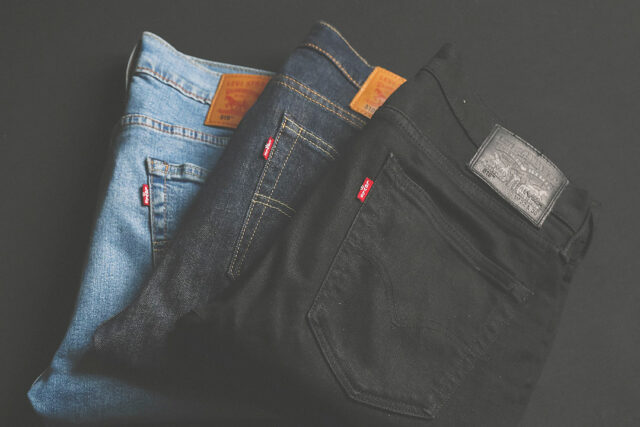
MNZ—UNSPLASH

THE GARMENT industry is infamous for wasting water. One of its biggest names is now using a more rigorous method to tackle the problem in the far reaches of its supply chain. Levi Strauss & Co. has been forced to address water scarcity more aggressively than most, thanks to the great thirst of the jeans-making process. In the journey from cotton field to factory to closet, a single pair of jeans has been known to consume up to 3,800 liters of water. Not a good look for a consumer-facing brand.

As part of a wider water-saving effort, the San Francisco-based company, which invented blue jeans in 1873, has become an early pioneer of a method known drily as “contextual water targets.” The idea is that saving a liter of water where it’s plentiful is less important than saving a liter where it’s scarce. It means Levi Strauss must move more forcefully to curb water use at its Egyptian factories, say, than its US plants, even though saving water in the US may be easier to achieve.

Water scarcity is appearing across the world. The Colorado River is drying up, rainfall levels plunged in China’s Yunnan province this January, and scientists are predicting another ruinous drought for Europe this summer.  As the planet warms and populations grow, the United Nations expects a 40% shortfall in the world’s water supply just seven years from now.

That grim outcome will directly affect billions of people. It will also challenge a swath of industries. About three quarters of publicly traded companies say they are exposed to water risk that could significantly alter their business.

For a multinational, the first step is to identify where in its vast, far-flung supply chain the danger lurks. It must then find smart ways to curb water use without hurting production targets. Finally, it has to ensure that the local water supply — often down to the nearest basin — will continue to flow for decades to come.

To set local water targets for scores of suppliers, Levi Strauss first maps the locations of its mills and factories against the World Resources Institute’s Aqueduct Water Risk Atlas. By doing this every two years, it can keep tabs on which local suppliers face the greatest water stress. The most vulnerable facilities are then pushed to innovate by reusing water during production, or by devising new, low-water finishes. The idea took a while to percolate.

“Whenever an idea is radical, it takes time to change the mindset,” says Jennifer DuBuisson, Levi Strauss’ senior director of sustainability. “But once facilities realized these techniques weren’t only saving water, they’re saving money, people quickly came on board.”

Levi Strauss decided to avoid being overly prescriptive. It yielded 20 new water-saving techniques, some of which were broached at a mill or factory and which the C-suite hadn’t considered.

One idea was to ditch the use of detergents and instead use a thimble of water and ozone gas. Another was to soften jeans by tumbling them with bottle caps and golf balls, instead of using fabric softener and water. A third, used at a South African facility, was to create a stone-washed finish using artificial pumice stones (good for 3,000 washes) instead of traditional pumice, which is good for only three. This was less to save water and more to avoid the pollution impacts from mining materials like pumice. The company says it also pushed to reuse and recycle water, a major source of savings.

Many clothing companies are shrinking their water footprint using established methods, such as growing cotton with regenerative agriculture, recycling wastewater, and changing dyeing chemicals. But because many companies give each factory in the supply chain the same target — to cut water use 20% over five years, say, — there’s little nuance to the process. It’s taken time for companies to consider the context.

H&M, the world’s second largest apparel company, has teamed up with the World Wildlife Fund (WWF), and is rolling out contextual water targets to 1,100 suppliers in 24 countries. Another WWF partner, Ralph Lauren, is setting similar targets “in priority water-stressed locations” with the aim of cutting water use at least 20% by 2025.

Levi Strauss wants all key mills and factories, representing 80% of production volume, to meet contextual water targets by 2025. Its broader goal is to halve water use in areas of high water stress over the same period. So far, the jeans maker has cut water use by 22% against a 2018 baseline. Levi Strauss still has work to do.

But even contextual targets have shortcomings. A more precise measure is the science-based target, or SBT. Such goals are based on hydrological data and lay out the quantity and quality thresholds required to make a freshwater basin sustainable. It can more narrowly define what an individual company must do to improve a local water system.

“Contextual targets represent a concrete starting point for businesses seeking to take the first step towards water SBTs,” says the WWF.

Currently there is no globally agreed methodology to establish SBTs for water, although a group called Science Based Targets Network has set out initial guidance. The network has said it plans to release the first SBTs for nature in early 2023, “which will include initial target-setting resources on freshwater as well as land.” — Bloomberg

Idemitsu PHL introduces line of premium engine oils

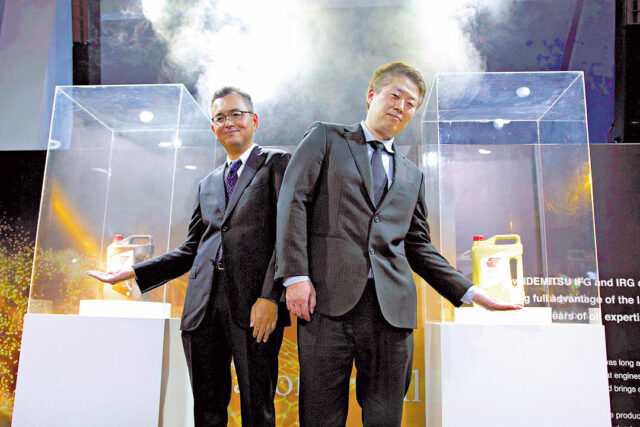
Idemitsu Lubricants Philippines President Ryohei Itamoto (left) and Idemitsu Kosan Global Marketing Manager Toshihiro Sato pose with bottles of the newly launched Idemitsu oils at the recent Manila International Auto Show. — PHOTO FROM IDEMITSU

IDEMITSU LUBRICANTS Philippines, Inc., a subsidiary of Idemitsu Kosan Co., recently unveiled new engine oils: the Idemitsu Four-wheelers Gasoline (IFG), Idemitsu Four-wheelers Dual (IFD) and Idemitsu Riders Gasoline (IRG) series for cars and motorcycles during the Manila International Auto Show.

Idemitsu Philippines opened in 2018 as a lubricant sales and marketing company “to offer best-in-class products and unique formulations” to major Japanese OEMs in the country. The new IFG and IRG series of engine oils feature unique and tailor-made formulations that “deliver the best engine protection in the market,” according to the company in a release.

“We feel pride and honor in launching these refined series of oils for our discerning customers today. The much-awaited, all-new Idemitsu IFG, IFD, and IRG series engine oils are a result of thorough research and hard work of our team. We are committed to providing the best engine oil products for cars and motorcycles for a high-performance driving experience. A lot of testing has been done from the perspective that engines are the heart of vehicles and engine oil is the lifeblood that protects and brings out their full, lively potential,” said Idemitsu Lubricants Philippines President Ryohei Itamoto.

Idemitsu IFG- and IFD-series engine oils will be available in three categories: Flagship (IFG7/IFD7 series), High Premium (IFG5 series), and Premium (IFG3/IFD3 series); while the Idemitsu IRG series engine oil will also be available in three categories: Flagship (IRG7 series), High Premium (IRG5 series), and Premium (IRG3 series). The new oils are available in all Unioil Stations nationwide, as well as the Idemitsu Philippines Official Shopee Store at www.shopee.ph/shop/971643876.

Meralco to power Maynilad projects

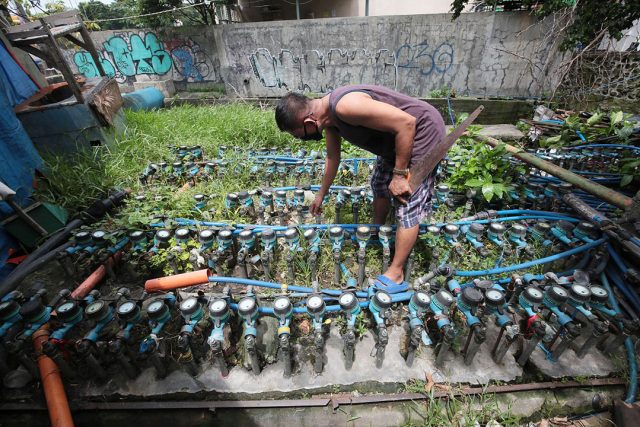
PHILIPPINE STAR/ MICHAEL VARCAS

MANILA Electric Co. (Meralco) is set to supply power to Maynilad Water Services, Inc.’s major projects, the power distribution company said on Sunday.

“Meralco shares the goal of Maynilad to continuously improve the delivery of essential services like water and power to consumers, which is our way of contributing to our country’s inclusive development and economic progress,” Ronnie L. Aperocho, Meralco’s senior vice-president and head of networks, said in a media release.

Meralco said it had committed to working closely with Maynilad to ensure the timely completion of its 76 projects that would require a total of 87 megawatts (MW) of new power capacity.

Meralco said these projects include Maynilad’s Anabu modular treatment plant in Imus City, Cavite, and several water facilities in Muntinlupa City such as the Poblacion water treatment plant, Tunasan sewage treatment plant, the Muntinlupa conveyance system, and the proposed Bayanan pumping station.

Last year, Meralco energized 41 facilities of Maynilad, which include pump stations, treatment plants, and distribution network facilities, with a total capacity of about 3.1 MW.

The power utility giant also conducts power quality reviews of Maynilad’s facilities allowing the west zone water concessionaire to avoid possible revenue losses and higher costs due to equipment damage and service interruptions.

Meralco said Maynilad’s participation in the electricity seller’s peak/off program, which is designed to help partners lower their electricity expenses through rates based on peak and off-peak periods, has resulted in P2 million in annual savings for the water provider. 

Separately, Maynilad announced that at least 167,500 lifeline customers in Pasay, portions of Makati, Parañaque, Muntinlupa, Las Piñas, and Cavite will receive a rebate on their May water bill. Lifeline customers are those who consume less than 10 cubic meters (cu.m.) per month.

Maynilad said customers who were severely affected by the water service interruptions due to the reduced output of the Putatan water treatment plants will receive a rebate equivalent to the cost of the unused portion of the lifeline customers’ 10-cu.m in March.

This means that if lifeline customers consumed only 1 cu.m. in March but had to pay the P136 minimum charge for 10 cu.m., they will be entitled to a rebate of 9 cu.m., or P121.98.

“Hence, the rebate amount will vary, depending on the customers’ actual March 2023 consumption below 10 cu.m.,” Maynilad said, adding that the total rebate to be given amounts to P10.81 million.

Metro Pacific Investments Corp., which has a majority stake in Maynilad, is one of three Philippine units of Hong Kong-based First Pacific Co. Ltd., the others being Philex Mining Corp. and PLDT Inc.

Meralco’s controlling stakeholder, Beacon Electric Asset Holdings, Inc., is partly owned by PLDT Inc. Hastings Holdings, Inc., a unit of PLDT Beneficial Trust Fund subsidiary MediaQuest Holdings, Inc., has an interest in BusinessWorld through the Philippine Star Group, which it controls. — Ashley Erika O. Jose

Puma: attracting the youth and helping the planet

MANILA got an advanced view of Puma’s Autumn Winter 2023 collection, which will hit stores by August, via a fashion show at Whitespace on April 19.

On the catwalk were a lot of whites, some neons, and even items in lilac, and of course, black. Walking the runway were celebrities like former motorsports and racing driver Marlon Stöckinger, Miss International 2016 Kylie Versoza, and actor Daniel Matsunaga, and Santino Rosales, the son of actor Jericho Rosales.

PUMA South East Asia General Manager Sanjay Roy said in a statement, “Sports is at the heart of Puma. We are eager to play our part and help nurture it in the country, with emphasis on youth development. For 75 years, Puma continues to push sports and culture forward by challenging conventions, innovating through design, and supporting the next generation.”

Puma, based in Germany, was founded by Rudolf Dassler (the brother of Adidas founder Adolf “Adi” Dassler) in 1948. While several Olympians have worn Puma over the years, names that are not sporty at first glance have also been connected with the brand. One is entrepreneur and singer Rihanna, who stepped in as Creative Director in 2014, and revived her collaboration with Puma and her brand, Fenty, earlier this year. Asked about the faces for the Autumn Winter Campaign,  Mr. Roy said, “There’s going to be Rihanna, globally.”

“Each of these celebrities stand for something unique. They have a very strong style proposition of their own, they have their own personality,” he said. Rapper and Beyonce’s husband Jay-Z is another celebrity attached to the brand, being named Creative Director in 2018. “When they collaborate with Puma, they bring that to Puma. They bring that element of design, their personality… and that’s how it helps us,” said Mr. Roy.

“The youngsters do look up to them, and when we collaborate with them, these youngsters do look at Puma from that lens,” he added. “I think the Puma DNA is something that is young, colorful, joyful, and passionate.”

Perhaps it’s this touch on the pulse of the youth that is leading Puma to take sustainability seriously. Earlier this year, it announced that it would stop using kangaroo leather in its products, and won the German Sustainability Award in 2010. It also ranked as the Most Sustainable Brand on the Sustainability Index for 2022 by publication Business of Fashion. “We are one of the most sustainable companies in Europe,” said Mr. Roy.

“It used to be a gimmicky word,” he said. “Now we find that consumers actually resonate (with that), and are willing to pay that extra to wear the most sustainable product.

“I think that’s a fantastic thing happening for the planet.” — Joseph L. Garcia

Global Dominion’s Go Dreamer Raffle Promo winner announced

From L-R: Aian Guanzon (GDFI Business Development Head), Marielle Apan, and Patricia Poco-Palacios (GDFI President & COO)

By Aian Guanzon

Global Dominion Financing, Inc. (GDFI) announced the winner of the #GoDreamerRafflePromo. Marielle Apan, 23 years old, won a Mitsubishi L300 (light truck for business) in March 2023.

The #GoDreamerRafflePromo was launched in October 2022 and ran until March 2023. It was open to all (except GDFI employees and their families), and the registration was online. The company’s aim was to further help families achieve their goals and dreams.

“Building and growing a business is not easy, but we hope that we can help make at least one business dream a reality through this promo,” said GDFI President & COO Patricia Poco-Palacios, pertaining to her vision in line with having a light truck as a prize for the raffle promo.

In a short interview with James Deakin, the program host & brand ambassador of GDFI, Ms. Apan shared that it was her first time winning in a raffle promo. The draw was done in the presence of a DTI representative and with Global Dominion’s business development officers.

“Thank you GDFI!,” Ms. Apan said, adding, “Keep it up. Super ganda na ng mga programs and for sure in the future marami pa yan.”

Businesses avail GDFI products to get/add a car or truck (Financing), or get immediate cash (Sangla OR/CR). Visit gdfi.com.ph for more info about GDFI.


Global Dominion Financing, Inc.
SEC Registration No. CS200305834
Certificate of Authority No. 530

Important: Please study the Loan Terms and Conditions in the disclosure statement before proceeding with any loan transaction.


Spotlight is BusinessWorld’s sponsored section that allows advertisers to amplify their brand and connect with BusinessWorld’s audience by enabling them to publish their stories directly on the BusinessWorld Web site. For more information, send an email to online@bworldonline.com.

Join us on Viber at https://bit.ly/3hv6bLA to get more updates and subscribe to BusinessWorld’s titles and get exclusive content through www.bworld-x.com.

Moody’s affirms UnionBank’s credit rating

BW FILE PHOTO

MOODY’S Investors Service has affirmed its investment grade rating on Union Bank of the Philippines, Inc. (UnionBank), citing the lender’s improved capitalization and expectations of stable asset quality and higher profitability over the next two years.

However, Moody’s outlook for the bank’s rating remains “negative” amid uncertainties over its core capital ratio.

The credit rater said in a statement on Friday that they have affirmed UnionBank’s long-term local and foreign currency issue ratings of “Baa2,” a notch above the minimum investment grade and at par with the country’s credit rating.

It also affirmed the lender’s foreign currency senior unsecured rating of “Baa2,” long-term local and foreign currency counterparty risk ratings of “Baa2,” long-term counterparty risk assessment of “Baa2(cr),” and baseline credit assessment (BCA) and adjusted BCA of “baa3.”

The debt watcher said it based its ratings and BCA affirmation on the bank’s improved solvency position following the P12-billion capital increase in February. This was after a significant capital decrease when UnionBank bought the retail business of Citigroup, Inc. last year.

However, the outlook on the rating remains “negative” as there are uncertainties on how the bank can improve its core capital ratio to a level equal to those of its domestic and regional peers, Moody’s said.

“UBP’s capital ratio, as denoted by tangible common equity to risk weighted assets, is estimated to stand at a moderate 12.6% as of end of 2022 on a pro-forma basis, including the benefit of the P12-billion capital raise in February 2023, net of declared dividends,” it said.

“While the bank targets a higher capital ratio in 2023, the execution of this plan is subject to inherent uncertainty around the level of profitability and asset growth,” it said.

Moody’s said it will also need to see improvements in the bank’s net interest margin and profitability before it can raise the rating outlook to “stable.”

Meanwhile, Moody’s expects the bank’s asset quality to stabilize amid the economy’s continued recovery from the coronavirus pandemic, with its nonperforming loan ratio seen at about 4.5% in the next 12 to 18 months.

“Post-acquisition of Citigroup assets, retail loans accounted for about 50% of UBP’s gross loans, making this bank one of the most retail-focused banks in the Philippines. The inherently higher risk nature of the acquired unsecured credit card and consumer loans compared to corporate loans, is partially balanced by the very high margins of these products,” Moody’s said.

It also expects the lender to post high earnings in the next one to two years amid “cost synergies from the recent acquisition and the bank’s expansion into the higher-yielding retail loans.”

UnionBank’s acquisition of Citi’s Philippine consumer banking business was completed in August 2022.

The transaction, valued at P55 billion, covers Citi’s credit card, unsecured lending, deposit and investment businesses, as well as Citicorp Financial Services and Insurance Brokerage Philippines, Inc., which provides insurance and investment products and services to its retail clients.

The bank’s sustainable return on assets, excluding trading gains, is also expected to increase in 2023 from 1.3% as of end-2022, but “the extent of improvements will depend on the bank’s ability to grow the book, and control the related credit risk, as well as funding and operating costs,” Moody’s said.

Funding and liquidity will also be broadly stable, the credit rater said.

“UBP’s deposit franchise has improved over the past three years, because of the bank’s strong focus on retail business that was further strengthened by the acquisition of Citigroup’s retail deposits,” it added.

UnionBank booked a net profit of P3.4 billion in the first quarter of 2023, a 30% jump from the comparable year-ago level.

The bank’s shares closed at P82.9 apiece on Friday, down by 1.07% or 90 centavos from its previous close. — KBT

ADVERTISEMENT
ADVERTISEMENT