Home Blog Page 4920

Inventor of blue jeans channels a new water-saving idea
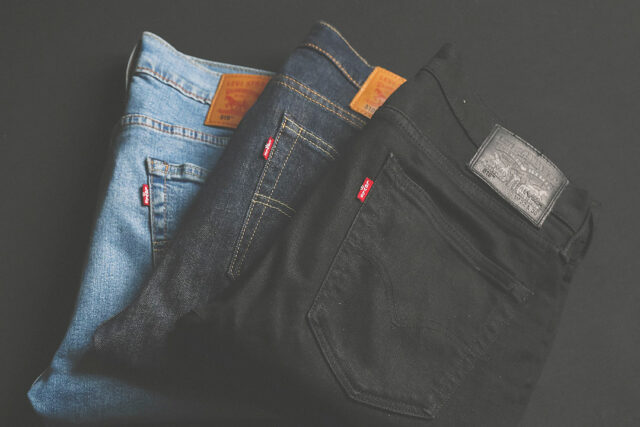
MNZ—UNSPLASH

THE GARMENT industry is infamous for wasting water. One of its biggest names is now using a more rigorous method to tackle the problem in the far reaches of its supply chain. Levi Strauss & Co. has been forced to address water scarcity more aggressively than most, thanks to the great thirst of the jeans-making process. In the journey from cotton field to factory to closet, a single pair of jeans has been known to consume up to 3,800 liters of water. Not a good look for a consumer-facing brand.

As part of a wider water-saving effort, the San Francisco-based company, which invented blue jeans in 1873, has become an early pioneer of a method known drily as “contextual water targets.” The idea is that saving a liter of water where it’s plentiful is less important than saving a liter where it’s scarce. It means Levi Strauss must move more forcefully to curb water use at its Egyptian factories, say, than its US plants, even though saving water in the US may be easier to achieve.

Water scarcity is appearing across the world. The Colorado River is drying up, rainfall levels plunged in China’s Yunnan province this January, and scientists are predicting another ruinous drought for Europe this summer.  As the planet warms and populations grow, the United Nations expects a 40% shortfall in the world’s water supply just seven years from now.

That grim outcome will directly affect billions of people. It will also challenge a swath of industries. About three quarters of publicly traded companies say they are exposed to water risk that could significantly alter their business.

For a multinational, the first step is to identify where in its vast, far-flung supply chain the danger lurks. It must then find smart ways to curb water use without hurting production targets. Finally, it has to ensure that the local water supply — often down to the nearest basin — will continue to flow for decades to come.

To set local water targets for scores of suppliers, Levi Strauss first maps the locations of its mills and factories against the World Resources Institute’s Aqueduct Water Risk Atlas. By doing this every two years, it can keep tabs on which local suppliers face the greatest water stress. The most vulnerable facilities are then pushed to innovate by reusing water during production, or by devising new, low-water finishes. The idea took a while to percolate.

“Whenever an idea is radical, it takes time to change the mindset,” says Jennifer DuBuisson, Levi Strauss’ senior director of sustainability. “But once facilities realized these techniques weren’t only saving water, they’re saving money, people quickly came on board.”

Levi Strauss decided to avoid being overly prescriptive. It yielded 20 new water-saving techniques, some of which were broached at a mill or factory and which the C-suite hadn’t considered.

One idea was to ditch the use of detergents and instead use a thimble of water and ozone gas. Another was to soften jeans by tumbling them with bottle caps and golf balls, instead of using fabric softener and water. A third, used at a South African facility, was to create a stone-washed finish using artificial pumice stones (good for 3,000 washes) instead of traditional pumice, which is good for only three. This was less to save water and more to avoid the pollution impacts from mining materials like pumice. The company says it also pushed to reuse and recycle water, a major source of savings.

Many clothing companies are shrinking their water footprint using established methods, such as growing cotton with regenerative agriculture, recycling wastewater, and changing dyeing chemicals. But because many companies give each factory in the supply chain the same target — to cut water use 20% over five years, say, — there’s little nuance to the process. It’s taken time for companies to consider the context.

H&M, the world’s second largest apparel company, has teamed up with the World Wildlife Fund (WWF), and is rolling out contextual water targets to 1,100 suppliers in 24 countries. Another WWF partner, Ralph Lauren, is setting similar targets “in priority water-stressed locations” with the aim of cutting water use at least 20% by 2025.

Levi Strauss wants all key mills and factories, representing 80% of production volume, to meet contextual water targets by 2025. Its broader goal is to halve water use in areas of high water stress over the same period. So far, the jeans maker has cut water use by 22% against a 2018 baseline. Levi Strauss still has work to do.

But even contextual targets have shortcomings. A more precise measure is the science-based target, or SBT. Such goals are based on hydrological data and lay out the quantity and quality thresholds required to make a freshwater basin sustainable. It can more narrowly define what an individual company must do to improve a local water system.

“Contextual targets represent a concrete starting point for businesses seeking to take the first step towards water SBTs,” says the WWF.

Currently there is no globally agreed methodology to establish SBTs for water, although a group called Science Based Targets Network has set out initial guidance. The network has said it plans to release the first SBTs for nature in early 2023, “which will include initial target-setting resources on freshwater as well as land.” — Bloomberg

Idemitsu PHL introduces line of premium engine oils

Idemitsu Lubricants Philippines President Ryohei Itamoto (left) and Idemitsu Kosan Global Marketing Manager Toshihiro Sato pose with bottles of the newly launched Idemitsu oils at the recent Manila International Auto Show. — PHOTO FROM IDEMITSU

IDEMITSU LUBRICANTS Philippines, Inc., a subsidiary of Idemitsu Kosan Co., recently unveiled new engine oils: the Idemitsu Four-wheelers Gasoline (IFG), Idemitsu Four-wheelers Dual (IFD) and Idemitsu Riders Gasoline (IRG) series for cars and motorcycles during the Manila International Auto Show.

Idemitsu Philippines opened in 2018 as a lubricant sales and marketing company “to offer best-in-class products and unique formulations” to major Japanese OEMs in the country. The new IFG and IRG series of engine oils feature unique and tailor-made formulations that “deliver the best engine protection in the market,” according to the company in a release.

“We feel pride and honor in launching these refined series of oils for our discerning customers today. The much-awaited, all-new Idemitsu IFG, IFD, and IRG series engine oils are a result of thorough research and hard work of our team. We are committed to providing the best engine oil products for cars and motorcycles for a high-performance driving experience. A lot of testing has been done from the perspective that engines are the heart of vehicles and engine oil is the lifeblood that protects and brings out their full, lively potential,” said Idemitsu Lubricants Philippines President Ryohei Itamoto.

Idemitsu IFG- and IFD-series engine oils will be available in three categories: Flagship (IFG7/IFD7 series), High Premium (IFG5 series), and Premium (IFG3/IFD3 series); while the Idemitsu IRG series engine oil will also be available in three categories: Flagship (IRG7 series), High Premium (IRG5 series), and Premium (IRG3 series). The new oils are available in all Unioil Stations nationwide, as well as the Idemitsu Philippines Official Shopee Store at www.shopee.ph/shop/971643876.

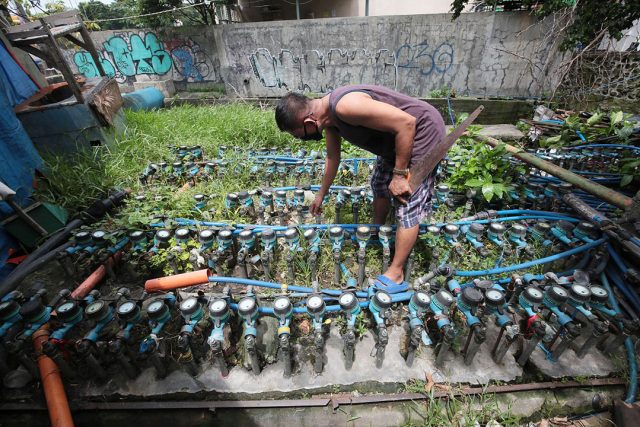
Meralco to power Maynilad projects

PHILIPPINE STAR/ MICHAEL VARCAS

MANILA Electric Co. (Meralco) is set to supply power to Maynilad Water Services, Inc.’s major projects, the power distribution company said on Sunday.

“Meralco shares the goal of Maynilad to continuously improve the delivery of essential services like water and power to consumers, which is our way of contributing to our country’s inclusive development and economic progress,” Ronnie L. Aperocho, Meralco’s senior vice-president and head of networks, said in a media release.

Meralco said it had committed to working closely with Maynilad to ensure the timely completion of its 76 projects that would require a total of 87 megawatts (MW) of new power capacity.

Meralco said these projects include Maynilad’s Anabu modular treatment plant in Imus City, Cavite, and several water facilities in Muntinlupa City such as the Poblacion water treatment plant, Tunasan sewage treatment plant, the Muntinlupa conveyance system, and the proposed Bayanan pumping station.

Last year, Meralco energized 41 facilities of Maynilad, which include pump stations, treatment plants, and distribution network facilities, with a total capacity of about 3.1 MW.

The power utility giant also conducts power quality reviews of Maynilad’s facilities allowing the west zone water concessionaire to avoid possible revenue losses and higher costs due to equipment damage and service interruptions.

Meralco said Maynilad’s participation in the electricity seller’s peak/off program, which is designed to help partners lower their electricity expenses through rates based on peak and off-peak periods, has resulted in P2 million in annual savings for the water provider. 

Separately, Maynilad announced that at least 167,500 lifeline customers in Pasay, portions of Makati, Parañaque, Muntinlupa, Las Piñas, and Cavite will receive a rebate on their May water bill. Lifeline customers are those who consume less than 10 cubic meters (cu.m.) per month.

Maynilad said customers who were severely affected by the water service interruptions due to the reduced output of the Putatan water treatment plants will receive a rebate equivalent to the cost of the unused portion of the lifeline customers’ 10-cu.m in March.

This means that if lifeline customers consumed only 1 cu.m. in March but had to pay the P136 minimum charge for 10 cu.m., they will be entitled to a rebate of 9 cu.m., or P121.98.

“Hence, the rebate amount will vary, depending on the customers’ actual March 2023 consumption below 10 cu.m.,” Maynilad said, adding that the total rebate to be given amounts to P10.81 million.

Metro Pacific Investments Corp., which has a majority stake in Maynilad, is one of three Philippine units of Hong Kong-based First Pacific Co. Ltd., the others being Philex Mining Corp. and PLDT Inc.

Meralco’s controlling stakeholder, Beacon Electric Asset Holdings, Inc., is partly owned by PLDT Inc. Hastings Holdings, Inc., a unit of PLDT Beneficial Trust Fund subsidiary MediaQuest Holdings, Inc., has an interest in BusinessWorld through the Philippine Star Group, which it controls. — Ashley Erika O. Jose

Puma: attracting the youth and helping the planet

MANILA got an advanced view of Puma’s Autumn Winter 2023 collection, which will hit stores by August, via a fashion show at Whitespace on April 19.

On the catwalk were a lot of whites, some neons, and even items in lilac, and of course, black. Walking the runway were celebrities like former motorsports and racing driver Marlon Stöckinger, Miss International 2016 Kylie Versoza, and actor Daniel Matsunaga, and Santino Rosales, the son of actor Jericho Rosales.

PUMA South East Asia General Manager Sanjay Roy said in a statement, “Sports is at the heart of Puma. We are eager to play our part and help nurture it in the country, with emphasis on youth development. For 75 years, Puma continues to push sports and culture forward by challenging conventions, innovating through design, and supporting the next generation.”

Puma, based in Germany, was founded by Rudolf Dassler (the brother of Adidas founder Adolf “Adi” Dassler) in 1948. While several Olympians have worn Puma over the years, names that are not sporty at first glance have also been connected with the brand. One is entrepreneur and singer Rihanna, who stepped in as Creative Director in 2014, and revived her collaboration with Puma and her brand, Fenty, earlier this year. Asked about the faces for the Autumn Winter Campaign,  Mr. Roy said, “There’s going to be Rihanna, globally.”

“Each of these celebrities stand for something unique. They have a very strong style proposition of their own, they have their own personality,” he said. Rapper and Beyonce’s husband Jay-Z is another celebrity attached to the brand, being named Creative Director in 2018. “When they collaborate with Puma, they bring that to Puma. They bring that element of design, their personality… and that’s how it helps us,” said Mr. Roy.

“The youngsters do look up to them, and when we collaborate with them, these youngsters do look at Puma from that lens,” he added. “I think the Puma DNA is something that is young, colorful, joyful, and passionate.”

Perhaps it’s this touch on the pulse of the youth that is leading Puma to take sustainability seriously. Earlier this year, it announced that it would stop using kangaroo leather in its products, and won the German Sustainability Award in 2010. It also ranked as the Most Sustainable Brand on the Sustainability Index for 2022 by publication Business of Fashion. “We are one of the most sustainable companies in Europe,” said Mr. Roy.

“It used to be a gimmicky word,” he said. “Now we find that consumers actually resonate (with that), and are willing to pay that extra to wear the most sustainable product.

“I think that’s a fantastic thing happening for the planet.” — Joseph L. Garcia

Global Dominion’s Go Dreamer Raffle Promo winner announced

From L-R: Aian Guanzon (GDFI Business Development Head), Marielle Apan, and Patricia Poco-Palacios (GDFI President & COO)

By Aian Guanzon

Global Dominion Financing, Inc. (GDFI) announced the winner of the #GoDreamerRafflePromo. Marielle Apan, 23 years old, won a Mitsubishi L300 (light truck for business) in March 2023.

The #GoDreamerRafflePromo was launched in October 2022 and ran until March 2023. It was open to all (except GDFI employees and their families), and the registration was online. The company’s aim was to further help families achieve their goals and dreams.

“Building and growing a business is not easy, but we hope that we can help make at least one business dream a reality through this promo,” said GDFI President & COO Patricia Poco-Palacios, pertaining to her vision in line with having a light truck as a prize for the raffle promo.

In a short interview with James Deakin, the program host & brand ambassador of GDFI, Ms. Apan shared that it was her first time winning in a raffle promo. The draw was done in the presence of a DTI representative and with Global Dominion’s business development officers.

“Thank you GDFI!,” Ms. Apan said, adding, “Keep it up. Super ganda na ng mga programs and for sure in the future marami pa yan.”

Businesses avail GDFI products to get/add a car or truck (Financing), or get immediate cash (Sangla OR/CR). Visit gdfi.com.ph for more info about GDFI.


Global Dominion Financing, Inc.
SEC Registration No. CS200305834
Certificate of Authority No. 530

Important: Please study the Loan Terms and Conditions in the disclosure statement before proceeding with any loan transaction.


Spotlight is BusinessWorld’s sponsored section that allows advertisers to amplify their brand and connect with BusinessWorld’s audience by enabling them to publish their stories directly on the BusinessWorld Web site. For more information, send an email to online@bworldonline.com.

Join us on Viber at https://bit.ly/3hv6bLA to get more updates and subscribe to BusinessWorld’s titles and get exclusive content through www.bworld-x.com.

Moody’s affirms UnionBank’s credit rating

BW FILE PHOTO

MOODY’S Investors Service has affirmed its investment grade rating on Union Bank of the Philippines, Inc. (UnionBank), citing the lender’s improved capitalization and expectations of stable asset quality and higher profitability over the next two years.

However, Moody’s outlook for the bank’s rating remains “negative” amid uncertainties over its core capital ratio.

The credit rater said in a statement on Friday that they have affirmed UnionBank’s long-term local and foreign currency issue ratings of “Baa2,” a notch above the minimum investment grade and at par with the country’s credit rating.

It also affirmed the lender’s foreign currency senior unsecured rating of “Baa2,” long-term local and foreign currency counterparty risk ratings of “Baa2,” long-term counterparty risk assessment of “Baa2(cr),” and baseline credit assessment (BCA) and adjusted BCA of “baa3.”

The debt watcher said it based its ratings and BCA affirmation on the bank’s improved solvency position following the P12-billion capital increase in February. This was after a significant capital decrease when UnionBank bought the retail business of Citigroup, Inc. last year.

However, the outlook on the rating remains “negative” as there are uncertainties on how the bank can improve its core capital ratio to a level equal to those of its domestic and regional peers, Moody’s said.

“UBP’s capital ratio, as denoted by tangible common equity to risk weighted assets, is estimated to stand at a moderate 12.6% as of end of 2022 on a pro-forma basis, including the benefit of the P12-billion capital raise in February 2023, net of declared dividends,” it said.

“While the bank targets a higher capital ratio in 2023, the execution of this plan is subject to inherent uncertainty around the level of profitability and asset growth,” it said.

Moody’s said it will also need to see improvements in the bank’s net interest margin and profitability before it can raise the rating outlook to “stable.”

Meanwhile, Moody’s expects the bank’s asset quality to stabilize amid the economy’s continued recovery from the coronavirus pandemic, with its nonperforming loan ratio seen at about 4.5% in the next 12 to 18 months.

“Post-acquisition of Citigroup assets, retail loans accounted for about 50% of UBP’s gross loans, making this bank one of the most retail-focused banks in the Philippines. The inherently higher risk nature of the acquired unsecured credit card and consumer loans compared to corporate loans, is partially balanced by the very high margins of these products,” Moody’s said.

It also expects the lender to post high earnings in the next one to two years amid “cost synergies from the recent acquisition and the bank’s expansion into the higher-yielding retail loans.”

UnionBank’s acquisition of Citi’s Philippine consumer banking business was completed in August 2022.

The transaction, valued at P55 billion, covers Citi’s credit card, unsecured lending, deposit and investment businesses, as well as Citicorp Financial Services and Insurance Brokerage Philippines, Inc., which provides insurance and investment products and services to its retail clients.

The bank’s sustainable return on assets, excluding trading gains, is also expected to increase in 2023 from 1.3% as of end-2022, but “the extent of improvements will depend on the bank’s ability to grow the book, and control the related credit risk, as well as funding and operating costs,” Moody’s said.

Funding and liquidity will also be broadly stable, the credit rater said.

“UBP’s deposit franchise has improved over the past three years, because of the bank’s strong focus on retail business that was further strengthened by the acquisition of Citigroup’s retail deposits,” it added.

UnionBank booked a net profit of P3.4 billion in the first quarter of 2023, a 30% jump from the comparable year-ago level.

The bank’s shares closed at P82.9 apiece on Friday, down by 1.07% or 90 centavos from its previous close. — KBT

ACEN expects to spend $8B on clean energy projects

ACEN Corp. has estimated to spend up to $8 billion for the rollout of its 8 gigawatts (GW) portfolio of clean energy projects in the Philippines by 2030.

“If you look at the rough average cost of solar and wind per megawatt (MW), it is about $1 million per MW, approximately. Solar is about $700,000 per MW at least in the Philippines, then wind is in the $1.4 million to $1.6 million per MW,” Eric T. Francia, president and chief executive officer of ACEN, said during a media briefing last week

“So 8 GW would mean around $8 billion if you just applied that rule of thumb,” he said.

Mr. Francia noted that around 600 megawatts (MW) of the capacity are already operating and around 1,000 MW or 1 gigawatt (GW) are under construction.

“Seventy percent of that [under-construction projects are] soon to be operating. We’re still looking at well over 6 GW of incremental capacity beyond our operating and under-construction plants. So, if you take all of that, that would be around six and a half or $7 billion of incremental capex (capital expenditure) that we would be requiring to roll out the 8-GW assumption or outlook that we have,” Mr. Francia said.

He added that ACEN would also need to ramp up the rollout of renewable energy projects as it is targeting to have 20 GW by 2030.

“Today, we already have over 4 GW of capacity both operating and under construction,” Mr. Francia said. “Remember we aspired for 5 GW of RE by 2025. I certainly hope that within the next 12 months or so that we would go past that 5-GW mark,” Mr. Francia said.

“If we stay at 1 GW, we’re not going to get to 20 GW. At some point, we need to step up the pace,” he said, adding that it would “probably” happen at the middle or end part of the decade.

He said ACEN would have to hasten the pace closer to at least 2 GW per year. — Ashley Erika O. Jose

Adidas hit with investor suit over broken Ye partnership

REUTERS

ADIDAS AG was sued by investors who claim the German sports giant knew about risks of its partnership with the rapper known as Ye long before his anti-Semitic comments were made public.

Adidas in October cut ties with Ye, formerly known as Kanye West, after he unleashed a string of hateful rhetoric. Investors claim in a lawsuit, filed Friday in federal court in Oregon, that as early as 2018 senior executives at the company discussed the risks Adidas faced continuing its relationship with the rapper.

In a 2018 annual report, released in March of the following year, Adidas ignored serious issues of partnering with Ye – and the risk to shareholders — by “generally alluding” to the risks “rather than stating that the company had actually considered ending the partnership as a result of West’s personal behavior,” according to the complaint.

Reports in subsequent years failed to disclose that Mr. West made anti-Semetic comments to Adidas staff, at one point suggesting that he might name an album after Adolf Hitler, according to the complaint. As the relationship with Ye eroded, so did Adidas shares, until the deal was terminated, according to the filing.

Adidas didn’t immediately respond to a request for comment.

After ending the deal, Adidas kept accepting shipments of Yeezy gear from suppliers still producing it. The company is considering selling Yeezy products and donating the profit to charity, as it tries to offset the financial hit from the collapse of the alliance with Ye. The last of the Yeezy products, some of which only recently arrived at Adidas warehouses, have a retail value of €1.2 billion ($1.3 billion).

The lawsuit, which seeks to represent investors who bought Adidas securities between May 3, 2018 and Feb. 21, also names ousted former CEO Kasper Rorsted as a defendant. — Bloomberg

Try out a Honda at the Auto Focus Test Drive Fest

IMAGE FROM HONDA CARS PHILIPPINES, INC.

CAR SHOPPING entails a lot of checking, and that includes performing test drives to ensure that one gets the best value and satisfaction for the major purchase decision. For those looking for a new vehicle, Honda Cars Philippines, Inc. (HCPI) will be at this year’s Auto Focus Summer Test Drive Festival from May 4 to 7. The event is organized by Sunshine Television (STV), and will take place at Block 16, SM Mall of Asia Grounds, Pasay City from 11 a.m. to 9 p.m. Admission is free, and is open to the public.

Available models at the Honda booth are the BR-V, City, Brio, Civic, and HR-V. Aside from a “safe and fun” test of Honda’s latest models, treats and exclusive offers await those who will register, test drive, and reserve during the event.

“Filipino customers, for many years now, have proven the safety, superior value, efficiency and reliability of their Honda. And Honda will continue to design and improve our vehicles in a way that will give our customers more joy and confidence in their decision to choose us. This is why we look forward to participating in events such as the Auto Focus Summer Test Drive Festival where we have more opportunities for the motoring public to experience the advanced technology, safety, driving feel, and comfort of our models,” said HCPI President Rie Miyake.

For more information about Honda vehicles and latest offers, including periodic maintenance services and a cost guide for all models, visit www.hondaphil.com and check out the virtual showroom, or visit any of the 37 authorized Honda Cars dealerships nationwide.

Smart Citi, Hong Kong’s Silkwave to launch satellite broadband service

PHILIPPINE information technology company Smart Citi Teknologi and Hong Kong’s Silkwave, Inc. have tied up to launch a satellite broadband internet service in the Philippines that will pilot-testing in remote areas covered by the Armed Forces of the Philippines.

“We plan to stage a trial commencing very soon,” Silkwave Founder, Director and Chief Executive Officer Charles C. Wong said in a media launch on Thursday.

Mr. Wong said that the trial will involve vigorous equipment testing, which will be recorded and serve as a gauge of the technology’s importance to industry players, consumers, and government agencies.

Smart Citi Founder, President, and Chief Executive Officer Mario P. Marcos said the initial focus on the AFP is meant to maximize the testing of the service with military forces.

“This will be done soon because based on our discussions, everybody approved that we can start the testing in the AFP areas, especially in the Philippine Marine Corps,” Mr. Marcos said.

The trial period is expected to run within 30 to 60 days, which Mr. Marcos said is more than enough to measure the capability of the technology.

Aside from far-flung areas under the AFP, the company is also planning to conduct a pilot test in Pasig City and areas in Ilocos, Bicol, Palawan, and Mindoro.

“Details, guidelines, and installation proceedings will be in strict adherence to the prescribed government policy,” the partner companies said.

They will make use of Silkwave’s regional satellite Asia-Star, which aims to offer “last mile digital connectivity” up to the most remote rural villages in the country.

The satellite makes use of L-ban whose range of frequencies in the radio spectrum is from 1 to 2 gigahertz. Its waves can penetrate clouds, fog, rain, storms and vegetation, making it suitable for various weather conditions.

By 2025, the companies plan to streamline and formalize various strategic services and long-term arrangements to support the completion of a second satellite called Silkwave-1, which will replace Asia-Star. — Justine Irish D. Tabile

BPI Wealth’s assets under management reach P950B as of March

A view of a bank building in Manila, July 1, 2014. — REUTERS/ROMEO RANOCO

THE ASSET MANAGEMENT arm of listed Bank of the Philippine Islands (BPI) saw its assets under management rise to P950 billion at end-March.

BPI Wealth saw a significant growth in the first quarter compared with the P875 billion managed assets as of end-2022, BPI Wealth President and Chief Executive Officer Maria Theresa D. Marcial said at a press briefing on Thursday.

She added that BPI Wealth will be rebranding its private banking segment into BPI Private Wealth within the year.

“There’s more in store because we have also integrated the private wealth relationship management into BPI Wealth, and that is to make advice and investment portfolio management more seamless as we offer many investment opportunities for our affluent and high-net-worth segment,” she said.

BPI Wealth recently lowered the minimum amount for peso-denominated investments to P1,000 from P50,000 and to $100 from $1,000 for dollar-denominated investments as part of its financial inclusion efforts.

“With these product enhancements, we should be able to see more clients open more investment accounts and make investments more accessible… This is what we call democratizing access to investments,” Ms. Marcial said.

“We have seen some interesting responses over our 6,500 investment accounts that have been opened digitally,” she added.

While the level of funding is at about 20% upon opening, over 80% of those that are engaged funded their investment accounts, Ms. Marcial said.

“All of this is really to show the market that we are really increasing our customer obsession mindset towards investment products that will cater to a whole range of customers so they can rely on a company they trust,” she added. — AMCS

Agri dep’t sets eligibility rules for biofertilizer distribution program

ATLASFERTILIZER.COM

THE Department of Agriculture (DA) said it has determined the criteria for farmers eligible to receive biofertilizer grants, adding that the volume to be distributed is equivalent to at least two bags of inorganic urea fertilizer.

In a memorandum order dated April 27, the program covers the 2023-2024 rice crop. It is designed to complement the use of inorganic fertilizer, the supply of which has tightened after the Russian invasion of Ukraine. Russia is the world’s leading fertilizer producer but has been hampered from exporting by sanctions.

“The quantity of biofertilizer to be distributed or received by the farmer-beneficiary will be based on the area to be planted that was provided with seed under the seed assistance program,” the DA said.

The Palace has said President Ferdinand R. Marcos, Jr., who is also the secretary of Agriculture, wants to increase biofertilizers to reduce dependence on imported fertilizer.

“High prices of inputs, especially fertilizer pose a great threat to our rice production. To conquer this threat, the use of alternative inputs such as biofertilizer can be done to mitigate the impacts,” according to a DA memo.

According to the DA, biofertilizer will be distributed to registered members of the Irrigators’ Association, farm cooperatives and associations, and agrarian reform beneficiaries.

The DA said that it will prioritize distribution to farmers cultivating hybrid seed and certified seed under the National Rice Program or the Rice Competitive Enhancement Fund, and other government seed assistance programs.

Meanwhile, farmers who are not registered may receive biofertilizers through their respective local governments.

Biofertilizer will be procured via public bidding from a pool of suppliers registered with the Fertilizer and Pesticide Authority or the Bureau of Agriculture and Fisheries Standards.

Specific types of biofertilizer will be selected by regional DA offices, which will weigh their local suitability based on likely effectiveness, price, savings to be generated from reduced use of inorganic fertilizer, local production, and access to technical support.

Roehl M. Briones, a senior research fellow from the Philippine Institute for Development Studies, has told BusinessWorld that using biofertilizer helps long-term sustainability of agricultural production while addressing climate change.

He said biofertilizer can sequester more carbon which can mitigate the impact of greenhouse gases.

Lauro Diego, member of Duale Masipag Organic Farmers Association said via phone that “If the soil is healthy, you can plant anything and this can also provide resistance to pests and diseases,” he added.

“We organic farmers, do not have huge production costs because we manage to maintain soil fertility (using organic inputs),” he said.

Mr. Diego estimated organic farmers’ yields at said that they were able to harvest 80-100 cavans per hectare, sufficient to generate a liveable income for farmers.

A cavan is a traditional measure of volume and mass, which varies depending on location and period. The current standard for a sack of rice is 50 kilograms.

“What good is the high yield if farm inputs cost a lot and farmers aren’t able to earn,” he said. — Sheldeen Joy Talavera