Emerging Asia needs ‘narrowly targeted’ policies vs energy shocks — IMF
By Katherine K. Chan, Reporter
WASHINGTON, D.C. — Policymakers in Emerging Asia markets such as the Philippines should implement “narrowly targeted” measures to weather current energy shocks from the Middle East war, the International Monetary Fund (IMF) said.
This, as officials from the multilateral lender noted that the ongoing crisis will test the region’s established resilience in the past decades, especially countries with high debt levels and limited fiscal space.
“The last 10, 15, 20 years have been a period where emerging market economies have really improved their macroeconomic policy making, their frameworks, and that resilience is likely to be tested,” IMF Economic Counselor and Research Director Pierre-Olivier Gourinchas told a press briefing on Tuesday.
“They don’t have a lot of room on the fiscal side,” he said. “And therefore, whatever measures they would need to deploy in order to protect the most vulnerable part of the population as a result of energy and food price increases will have to be very, very narrowly targeted and very much within their budgetary minimum.”
Based on its latest World Economic Outlook released on Tuesday, the IMF projects gross domestic product (GDP) growth for Emerging Asia to slow to 5% this year from 5.6% in 2025. It sees the region, which includes China, India, Indonesia, Malaysia, the Philippines, Thailand and Vietnam, growing by 4.8% in 2027.
Emerging Asian economies that rely heavily on oil imports have been hit by soaring oil prices and threats to their energy supply after the war in the Middle East, which erupted in late February, disrupted global oil trade and damaged key energy infrastructure.
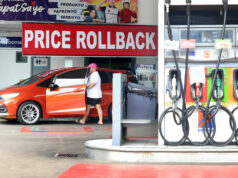
In the Philippines, back-to-back pump price hikes and dwindling oil reserves prompted the National Government to declare a national energy emergency and suspend the excise tax on kerosene and liquefied petroleum gas (LPG).
The levies on gas and diesel were left unchanged as the Development Budget Coordination Committee said suspending it as well would bring insignificant relief to consumers compared with kerosene and LPG.
Similarly, the IMF earlier noted that domestic demand in several South and Southeast Asian economies will likely remain muted this year as the Middle East war is expected to dampen tourism and remittance flows to the region.
For the ASEAN-5, or Indonesia, Malaysia, the Philippines, Singapore and Thailand, the multilateral lender trimmed its growth forecast to 4.1% for this year from its 4.2% estimate in January.
“In several South and Southeast Asian economies, disruptions in the Middle East are expected to reduce tourism and remittance inflows, thereby weakening domestic demand,” the IMF said.
Still, it kept its GDP growth projection for the region next year at 4.4%.
The IMF cut its Philippine GDP forecast to 4.1% from 5.6% in January and maintained its 2027 projection at 5.8%.
The regional slowdown mirrors the global trend, in which IMF Managing Director Kristalina Georgieva earlier noted that even their most optimistic scenario calls for a growth forecast cut due to the war’s toll on energy sectors worldwide.
According to the IMF, the world is losing about 13 million oil barrels daily as the Middle East war drags on, more than double the 5-6 million barrels recorded during the 1970s energy crisis.
Tobias Adrian, financial counselor and director of the IMF’s Monetary and Capital Markets Department, said Asia-Pacific (APAC) countries dependent on oil and food imports emerge as the most vulnerable to balance of payments or refinancing stress.
“It’s the most vulnerable countries that tend to be hit the hardest with this kind of shock,” he told a separate briefing on Tuesday. “And within those countries, you know, macro policies for stability are important, but it’s also first order to protect the most vulnerable among the population that are hit by the higher food and energy prices.”
However, Jason Wu, assistant director at the IMF’s Global Markets division, noted that there has not been any acute stress in APAC financial markets, even as the war caused volatility in the region’s foreign exchange market.
“There have been pronounced exchange rate movements, but those appear to be managed in an orderly fashion,” he added.
Safe-haven demand for the US dollar amid growing uncertainties from the war have weighed on most Asian currencies, including the Philippine peso.
Meanwhile, the World Bank has cautioned that the Philippines’ limited fiscal space leaves little room for broad tax relief, and called for more targeted approach to shield vulnerable households from rising oil prices.
“A targeted response, such as providing an additional P600 per month to 3.9 million 4Ps beneficiaries, could protect the most vulnerable without substantially widening the deficit,” the World Bank said in its Macro Poverty Outlook released on Monday.
“In contrast, a fuel excise pause is less targeted and could cost over 0.5% of GDP in foregone revenue if maintained through 2026,” it added.
The World Bank projects the country’s fiscal deficit to narrow from -5.6% of GDP in 2025 to -4.8% in 2026, -4.7% in 2027, and -4.4% in 2028.
The Development Budget and Coordination Committee (DBCC) projects the deficit to account for -5.3% of GDP in 2026, -4.8% in 2027, and -4.4% in 2028. It also sees the gap further narrowing to -3.7% in 2029 and -3.1% in 2030. — with reports from Justine Irish D. Tabile