Home Blog Page 455

Sun Life Philippines eyes continued growth despite weak economic prospects

SUNLIFE.COM.PH

SUN LIFE of Canada (Philippines), Inc. (Sun Life Philippines) is looking to position insurance as an “essential” expense as it targets continued growth despite weak consumption amid the economic fallout from a wide-ranging corruption scandal.

“I was thinking, if we are able to position life insurance as an essential spend, that’s probably where we’ll be able to get a little bit more of some growth from that side,” Sun Life Philippines President and incoming Chief Executive Officer (CEO) and Country Manager Jonathan Juan “JJ” D. Moreno told reporters at an event on Saturday.

Philippine gross domestic product (GDP) sharply slowed to 4% in the third quarter of 2025 as a graft scandal linked to government flood control and infrastructure projects hit consumer and investor confidence, stalling both public and private spending.

Mr. Moreno said the economic impact of the issue has affected businesses in varying degrees.

“I did a bit of research with my fellow presidents and CEOs in various industries, and I’ve been told that in retail, they’re growing approximately the same as GDP — more or less GDP or beating GDP. Construction obviously is down, logistics is down — so, different industries are affected differently. Basically, the more resilient ones are the ones that are going into the more essential side of the business.”

Sun Life Philippines outgoing Country Manager and CEO Benedict C. Sison said the insurance industry is still positioned to grow this year despite this challenging operating environment, noting how premiums have shown steady growth since 2019 despite the coronavirus pandemic and geopolitical risks.

“That tells you how resilient the industry is. It’s very resilient. So, in regard to whether it will grow, I think it will. It is very resilient. Because at the end of the day it (insurance) is essential,” he said.

For its part, Sun Life Philippines expects its ongoing digital transformation to help its business, Mr. Moreno said.

“We have, as of the fourth quarter last year, moved three major systems to a new system… We are now going to fully experience the benefits of that by the second quarter this year.”

Mr. Sison added he expects their customer base to “inch up” this year from 2025 as the insurer focuses on building client relationships to grow premiums.

He said they are confident that they ended 2025 as the country’s top life insurer in premium terms for the 15th straight year.

At end-September, Sun Life Philippines topped the sector with a premium income at P44.73 billion. — A.M.C. Sy

Industrial property sector seen sustaining growth in 2026

A RENDERING of the RLX Calamba-Phase 2 Warehouses. — JGSUMMIT.COM.PH

By Beatriz Marie D. Cruz, Reporter

THE Philippines’ industrial property sector is expected to maintain growth this year amid strong demand, although corruption and red tape concerns pose risks to the outlook, analysts said.

Mindanao-based developer Damosa Land, Inc. (DLI) expects a “positive” year for the sector, driven by interest from both local and international investors, according to President and Chief Executive Officer (CEO) Ricardo F. Lagdameo.

“The Philippines’ industrial property market has shown high occupancy rates and rising demand for space, especially in logistics, manufacturing, and distribution facilities,” he said in an e-mailed reply to questions.

“This trend suggests continued momentum for the sector as economic activities expand and companies seek efficient locations for production and supply-chain operations,” Mr. Lagdameo added.

DLI owns Anflo Industrial Estate, a 63-hectare agro-industrial hub in Panabo City, Davao del Norte. As of end-2025, it hosts 24 locators from six countries, covering industries such as agro-processing, packaging, warehousing, cold storage, and manufacturing.

Gokongwei-led Robinsons Land Corp. (RLC) expects industrial space take-up to grow this year amid e-commerce demand and the need for modern facilities.

The developer’s subsidiary, Robinsons Logistix & Industrials, Inc. (RLX), plans to expand its modern warehouse portfolio nationwide, RLC Chief Strategy Officer Ramon S. Rivero said in an e-mail.

RLX currently operates 13 industrial facilities across Calamba, Laguna; Sucat and Muntinlupa City; Pampanga; and Rizal.

The continued promotion of the country’s economic zones by investment promotion agencies — including the Philippine Economic Zone Authority (PEZA), Board of Investments (BoI), Department of Trade and Industry (DTI), and Mindanao Development Authority (MinDA) — will also support industrial growth this year, Mr. Lagdameo said.

However, the recent corruption scandal involving government officials and private contractors could slow foreign expansions in the industrial property sector, according to property consultant PRIME Philippines.

“The resurfaced probe into infrastructure quality, alongside persistent concerns around corruption and red tape, has further weighed on multinational interest as reflected in the investment decline,” PRIME Philippines Founder and CEO Jettson P. Yu said in an e-mail.

“While domestic expansions from key warehousing demand drivers continued through 2025, softer foreign manufacturing appetite will put a dent on the expansion of the industrial sector in the Philippines,” he added.

Approved foreign investment pledges in the third quarter fell by 48.7% to P73.68 billion, Philippine Statistics Authority data showed.

Other challenges for the industrial sector this year include the lack of reliable power and utilities, competition for prime industrial land, and fluctuations in construction costs, Mr. Lagdameo said.

“To navigate these risks, we are emphasizing long-term infrastructure planning, leveraging strategic location advantages, and strengthening partnerships with government, utility providers, and industry stakeholders to create a reliable, investment-ready environment for locators,” he noted.

Lynk & Co 01 PHEV, 02 EV shine in DoE Fuel Eco-Run

The Lynk & Co 02 EV (left) and Lynk & Co 01 PHEV — IMAGES FROM LYNK & CO PHILIPPINES

THE DEPARTMENT of Energy (DoE) recently released the results of the 2025 DoE Fuel Eco-Run, where Lynk & Co’s entries, the 01 PHEV (plug-in hybrid electric vehicle) and 02 EV (electric vehicle) “demonstrated significant energy efficiency,” according to a Lynk & Co Philippines release. “To provide a scientific basis for comparing diverse powertrains, DoE scientists utilized a specialized parameter known as ‘Liter of Gasoline Equivalent’ (Lge). According to the DoE, this unit of energy content is defined as being equal to the chemical energy contained in one liter of standardized gasoline liquid fuel, allowing for a precise measurement of new energy vehicle efficiency against traditional fossil fuel consumption,” continued the statement.

The Lynk & Co 01 PHEV emerged as a top performer in the plug-in hybrid category, achieving a validated efficiency of 58.06 km/Lge — on the way to a promised driving range of 800km, making it “a practical solution for long-distance travel without the constraints of charging infrastructure.”

The 01 PHEV features three distinct driving modes: Pure EV, Hybrid, and Standard ICE (internal combustion engine). The model received a 5-Star Euro NCAP safety rating, ensuring that its high-efficiency output “is matched by a robust safety architecture designed to protect occupants in diverse road scenarios.”

In the battery electric vehicle (BEV) segment, the Lynk & Co 02 EV recorded a superior efficiency of 71.71 km/Lge. The all-electric SUV is said to provide a pure electric driving range of up to 435km on a single charge. The 02 also benefits from a low drag coefficient (Cd) of approximately 0.25, “which significantly aids in improving energy efficiency and extending its electric driving range.” The model also earns a 5-Star Euro NCAP safety rating, notably becoming the highest-rated compact SUV tested by the organization in 2025.

The 2025 DoE Fuel Eco-Run was conducted in Q3 2025 along a designated 156-kilometer stretch of the Tarlac-Pangasinan-La Union Expressway (TPLEX). Spearheaded by the DoE, the event featured nearly 70 vehicles, including internal combustion engine (ICE), hybrid (HEV), plug-in hybrid (PHEV), and battery electric vehicles (BEV). “The data gathered serve as a transparent benchmark for consumers, highlighting the role of advanced vehicle technologies in fostering a more sustainable and energy-efficient transport landscape,” concluded Lynk & Co Philippines.

Zamboanga del Sur pitches tie-up with Agriculture dep’t to fast-track farm roads

DA.GOV.PH

THE Department of Agriculture (DA) said it has been approached by Zamboanga del Sur on a partnership to fast-track farm-to-market road (FMR) projects in the province.

Agriculture Secretary Francisco P. Tiu Laurel, Jr. said in a statement that he is “looking favorably” at the request of Zamboanga del Sur Governor Divina Grace C. Yu to jointly implement the province’s 26 priority FMR projects.

The roads, which have a combined budget of P370 million, are set to be built in 21 municipalities, including Pagadian City.

“Local government units (LGUs) coming forward to help the DA fast-track farm-to-market road projects are a welcome development. We need all the support we can get to build infrastructure that opens access, lowers production costs, raises farmer incomes, and delivers real development in the countryside,” Mr. Laurel said.

The DA took over FMR projects from the Department of Public Works and Highways (DPWH) this year. However, the department may still construct roads in partnership with the DPWH, LGUs or private entities via public-private partnerships.

The FMR program has been allocated P33 billion in this year’s budget, which will fund the construction of over 1,600 roads.

Ms. Yu was quoted as saying in the statement that the proposed partnership will strengthen oversight while accelerating project delivery.

“This collaboration will reinforce transparency and accountability, while ensuring the efficient and timely completion of FMR projects that improve accessibility and advance the welfare of our farmers,” she said in a letter to the DA. — Vonn Andrei E. Villamiel

Payrex taps Billease to bring Buy Now, Pay Later to Philippine merchants

Payment gateway startup Payrex is teaming up with Billease, one of the Philippines’ fastest-growing Buy Now, Pay Later (BNPL) platforms, to make flexible payment options available to thousands of online and offline merchants through a single API integration.

The partnership lets merchants using Payrex instantly activate Billease at checkout, giving consumers access to installment-based payments while helping small businesses boost conversions and average order value.

“Our goal has always been to make payments simple for developers and accessible for businesses of any size. With Billease built right into our platform, we’re giving merchants the ability to offer flexible credit at scale — no heavy lifting required,” Edwin Lacierda, co-founder and CEO of Payrex, said.

Payrex, founded to make payment infrastructure more developer-friendly, has quickly positioned itself as the go-to gateway for startups and SMEs that want to launch payment experiences without complex compliance or integrations. Billease, operated by First Digital Finance Corp. (FDFC), is the country’s leading BNPL service with millions of active users and a growing network of merchants across retail, electronics, and lifestyle.

Kurt Molina, head of POS Product at Billease, said, “This partnership brings the best of both worlds — Payrex’s simple payment stack and Billease’s trusted consumer credit engine. It’s a frictionless way for merchants to capture more sales and for customers to pay how they want.”

The BNPL market in Southeast Asia continues to accelerate, driven by young, digital-first consumers and the region’s booming e-commerce growth. By embedding Billease directly into its payment rails, Payrex is betting on flexibility as the new default for how Filipinos shop online.


SparkUp is BusinessWorld’s multimedia brand created to inform, inspire, and empower the Philippine startups; micro, small and medium enterprises (MSMEs); and future business leaders. This section will be published every other Monday. For pitches and releases about startups, e-mail to bmbeltran@bworldonline.com (cc: abconoza@bworldonline.com). Materials sent become BW property.

Solitaire on New Year’s Day

STOCK PHOTO | Image from Freepik

The New Year’s Eve extravaganza of screaming fireworks and whistling firecrackers bursting in the dark sky competed with the boisterous exuberance of family and friends welcoming the new year. The countdown to midnight was a loud chorus, after which 12 grapes were consumed by each — to ensure peace, happiness, and prosperity in the coming 12 months of 2026.

After the din, only the singer Barry Manilow’s mentholated baritone rose (called forth by Siri), to soothe hoarse throats from all the shouting and cheering, and calm the agitation of minds and hearts over what the new year might bring:

“It’s just another New Year’s Eve, it’s just another Auld Lang Syne/ But when we’re through, this New Year, you’ll see/ will be just fine.”

How can you be sure, you say to yourself, even as the festive table must not (yet) be immediately cleared and cleaned after the New Year’s Eve overload of food, good-luck goodies and symbols to sustain good luck and prosperity throughout the year? Barry Manilow appeases our anxieties:

“We’re not alone, we’ve got the world, you know; and it won’t let us down… just wait and see…”

But don’t you feel more “alone” after New Year’s Eve, as the mood pendulum swings from the rowdy early evening hours to after midnight when the merry making disperses into the darkness of the unknown future? It is still a few hours before the bright morning, but you can’t immediately sleep. Maybe a few relaxing rounds of Solitaire on your iPad will ease the over-stimulation of the evening.

Solitaire, by its very name, is a game played alone — you against yourself. It is a strategy game — where you analyze and prioritize your options towards achieving your goal of ordering your chances for life and survival. Isn’t it poetically, and practically, the meditative inventory-taking of one’s successes and failures at year-end, and the serious planning of what to do to maximize resources and abilities for the new year?

The game starts with a 28-card tableau of seven columns topped by an open card each, with each column starting with the second column having one face-down card behind the top card, the second, two; the third, three; etc. until six face-down cards are behind the open card of column No. 7 in the tableau. This tableau symbolizes uncertainty. The remaining 24 cards are face-down on the stockpile, from which you can draw to help you in your calculated moves towards organizing the seven-column tableau in descending ranking of King to Deuce, alternating colors black and red. The final goal is to complete the four-column “Foundations” where you are to arrange the four suits — Hearts, Diamonds, Spades and Clubs — in their individual ranking of Ace to King.

Oh, this convoluted exercise of card numbers and suits, ranking according to face cards King, Queen, and Jack, and the descending numbers cards, leading to Ace (Number One), the most valuable card! The Ace is the top card in Solitaire, because it starts the foundation stack for each suit — the end goal of the game.

Solitaire urges the mind to systematically plan and rank recognized options in life, aided, of course, by fate and luck, but based more on self-discipline and the choices made. There is a parallel to the “textbook” common steps in a planning cycle:

1. Analyze and Observe: Understand the current situation, identify problems or opportunities, and gather relevant information.

2. Set Goals and Objectives: Define what you want to achieve, making goals specific, measurable, achievable, relevant, and time-bound.

3. Develop Options: Brainstorm and explore different strategies or paths to reach your goals, considering resources and potential risks.

4. Select Best Option: Choose the most viable strategy, often involving detailed planning for tasks, timelines, and responsibilities.

5. Implement the Plan: Put the detailed plan into action, allocating resources and executing tasks.

6. Monitor and Evaluate: Track progress, assess outcomes against goals, identify what works (and what doesn’t), and gather lessons learned.

7. Review and Adapt: Use evaluation insights to make necessary adjustments, leading back to the analysis stage for continuous improvement.

This iterative process ensures plans remain relevant and effective over time, adapting to changing circumstances. A SWOT analysis, business strategists say, is a strategic planning tool used to assess the company or project’s (or an individual’s) strengths, weaknesses, opportunities, and threats (uk.indeed.com).

It is urgent and imperative in this new year that we Filipinos seriously examine our options and strategize our moves in fighting to restore peace, and exacting justice upon our corrupt and dishonest government officials who have stolen so much from the country. The 2024 Corruption Perceptions Index scored the Philippines at 33 out of 100 points. When ranked by score, the Philippines ranked 114th among the 180 countries in the Index, where the country ranked first is perceived to have the most honest public sector. The Philippines’s score was significantly worse than the regional average of 44 and the worldwide average score of 43 (Transparency.org., March 15, 2025.).

The Philippine Institute for Development Studies (PIDS) and various watchdogs estimated in October, that the country loses at least P700 billion to P1.4 trillion annually to corruption across all levels of government — from procurement and ghost projects to bribery, smuggling, and political patronage. Over the last decade, that translated to trillions siphoned off, enough to build thousands of schools, hospitals, and flood control systems that the nation still lacks.

The flood control corruption scandal, which first came to light during President Ferdinand R. Marcos, Jr.’s 2025 State of the Nation Address, centers on the alleged loss of P118 billion in government funds which went to a web of favored contractors, lawmakers, and other officials involved in the construction of government flood projects in the last three years, ABS CBN reported on Sept. 11. The controversy centers on billions of pesos allocated for flood management initiatives, reports of “ghost” projects, substandard construction, and the alleged cornering of contracts by a small group of favored contractors with the Department of Public Works and Highways (DPWH). In September 2025, Finance Secretary Ralph Recto said that anomalous ghost flood control projects were estimated to have cost the Philippine economy as much as P118 billion ($2.4 billion) between 2023 and 2025.

Senators alleged that a small group of contractors had cornered contracts worth around P100 billion ($2.03 billion), raising concerns over competition and transparency. Marcos revealed that of 2,409 accredited contractors, 15 were awarded P100 billion, or 18% of the entire P545.6-billion ($11.08 billion) flood mitigation budget allocated by his administration from July 2022 to May 2025.

Investigations into the flood control projects were launched, first in the Senate Blue Ribbon Committee which invited the participation of House Representatives and other government agencies and commissions, until the Independent Commission for Infrastructure (ICI) was officially created by President Marcos Jr. to officially prepare reports to be submitted to the Ombudsman.

A total of 48 officials have been implicated in the preliminary investigations on the corruption scam: six from the Executive Department; three Undersecretaries; nine Senators; 30 from the House of Representatives; one from a Constitutional Commission (Commission on Audit); and eight whistleblowers, contractors, and members of the DPWH.

The lack of regulation in campaign donations and a weak public procurement system have left public funds vulnerable to corruption. In 2022, at least 30 contractors who gave campaign donations to senators and representatives had or were given government projects. From 2022 to 2025, the number of public works contracts that went to those campaign donors rose significantly.

On Dec. 25, the Makabayan bloc, made up of progressive lawmakers at the House of Representatives, called out President Marcos Jr. for his supposed unfulfilled promise to arrest and jail high-ranking government officials involved in the flood control corruption scandal before Christmas Day.

Mr. Marcos had indeed told reporters at a Malacañang press conference on Nov. 13 that “Authorities are looking to file criminal and administrative cases against 37 individuals, including lawmakers, contractors, and other government officials implicated in flood control anomalies.

Bago mag-Pasko marami dito sa napangalanan dito, palagay ko matatapos na ang kaso nila, buo na yung kaso nila” (Before Christmas, many of those named here, I think their cases will be over, their cases will be complete), he said. “Makukulong na sila, wala silang Merry Christmas” (They will be jailed, there will be no Merry Christmas for them), he said. But there were no arrests before Christmas.

It was an anxious Christmas for Filipinos. Veteran journalist Vergel Santos said in Rappler on Jan. 10: “2025 may well have been the year of our rudest awakening, the year we were roused to the ultimate challenge to our values as a people.”  He warned, “Being jolted awake is only the first requirement; the next is staying awake. And we all know only too well ourselves how easily and quickly we manage to go back to sleep and stay asleep through the worst of times.”

And so, we do not sleep after the passing euphoria of saying goodbye to 2025 and half-heartedly welcoming the unpromising 2026. We play serious Solitaire to discern our options and moves for peace and justice in our country, our hoarse protests soothed by the cool voice of Barry Manilow:

“Don’t look so sad, it’s not so bad you know./ It’s just another night, that’s all it is./ It’s not the first, it’s not the worst you know./ We’ve come through all the rest, we’ll get through this.”


Amelia H. C. Ylagan is a doctor of Business Administration from the University of the Philippines.

ahcylagan@yahoo.com

Musk’s X sues music publishers over alleged licensing conspiracy

REUTERS

WASHINGTON — Elon Musk’s X Corp. sued 18 major music publishers and a leading US music industry trade association on Friday, alleging they conspired to block competition and force the social media platform to purchase licenses for musical works at inflated rates.

The lawsuit, filed in federal district court in Texas, accused the National Music Publishers’ Association, Sony Music, Universal Music, Warner Chappell, and other music publishers of violating federal antitrust law by refusing to negotiate individual licensing deals with X.

“X has been denied the ability to acquire a US musical-composition license from any individual music publisher on competitive terms,” the lawsuit said.

David Israelite, the president and chief executive officer of the National Music Publishers’ Association, said in a statement that X is the only major social media company that does not license the songs on its platform.

“We allege that X has engaged in copyright infringement for years, and its meritless lawsuit is a bad faith effort to distract from publishers’ and songwriters’ legitimate right to enforce against X’s illegal use of their songs,” Mr. Israelite said.

Sony Music referred Reuters to the association’s statement and declined further comment. Universal Music and Warner Chappell did not immediately respond to requests for comment. X did not immediately respond to a similar request.

The lawsuit alleges that publishers representing more than 90% of US copyrighted music joined forces through the National Music Publishers’ Association in conspiring against X.

X said the publishers have flooded the platform with weekly takedown notices targeting thousands of posts containing copyrighted music — including content from high-profile accounts — to pressure the platform into accepting industrywide licensing terms.

The complaint said X has removed thousands of posts and suspended more than 50,000 users, harming its user base and advertising revenue. It asked the court to restore competitive conditions in music licensing and compensate X for lost advertising revenue.

In 2024, X won dismissal of most of a lawsuit filed in 2023 by 17 music publishers, including Sony and Universal, that accused it of infringing copyrights on nearly 1,700 songs by letting people post music online without permission. The publishers sought more than $250 million in damages.

X said in Friday’s lawsuit that some of the publishers who sued have been willing to negotiate a settlement on individual terms. — Reuters

BSP securities fetch lower rates as offer attracts strong demand

BW FILE PHOTO

THE BANGKO SENTRAL ng Pilipinas’ (BSP) one-month securities fetched a lower average rate on Friday as the offer was met with strong demand.

The 28-day BSP bills attracted bids amounting to P111.393 billion, exceeding the P90 billion on offer and the P68.714 billion in tenders for the P100 billion placed on the auction block the prior week.

“The BSP reduced the offer volume from P100 billion in the previous week to P90 billion, while total tenders reached P111.4 billion, resulting in a bid-to-cover ratio of 1.24x,” the central bank said in a statement on Friday.

This bid-to-cover ratio was nearly double the 0.6871 times seen a week prior.

The central bank made a full P90-billion award of the one-month papers.

Accepted yields were from 4.665% to 4.94%, narrower than the 4.65% to 5.05% band seen in the previous auction. With this, the weighted average accepted rate of the 28-day bill fell by 3.14 basis points to 4.8208% from 4.8516%.

The BSP has not auctioned off the 56-day bills for more than two months or since Nov. 3.

The central bank uses the BSP securities and its term deposit facility to mop up excess liquidity in the financial system and to better guide short-term market yields towards its policy rate.

The BSP bills also contribute to improved price discovery for debt instruments while supporting monetary policy transmission.

In August 2025, BSP Governor Eli M. Remolona, Jr. said they are gradually shifting away from the issuance of short-term papers to manage liquidity as they want to boost activity in the money market.

The central bank started auctioning off short-term securities weekly in 2020, initially offering only a 28-day tenor and adding the 56-day bill in 2023.

Data from the central bank showed that around 50% of its market operations are done through its short-term securities. — Katherine K. Chan

SC blocks P3.58-B tax collection vs Robinsons Convenience Stores

BW FILE PHOTO

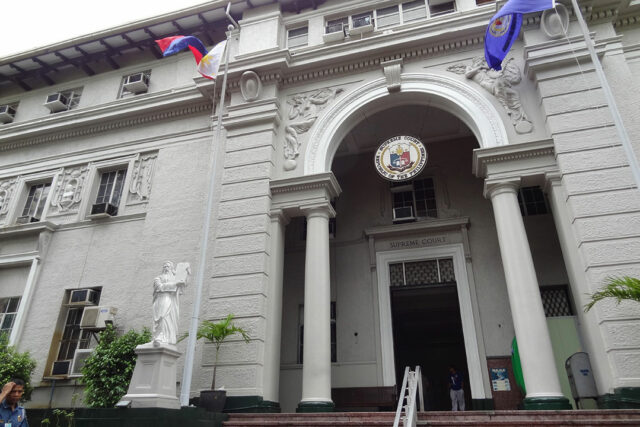
THE Supreme Court (SC) has ruled in favor of Robinsons Convenience Stores, Inc., dismissing a petition by the Commissioner of Internal Revenue (CIR) and barring the government from collecting P3.58 billion in alleged deficiency taxes for the 2010 taxable year.

In a decision promulgated on Aug. 27, 2025, and made public on Jan. 8, the high court’s Third Division found no grave abuse of discretion on the part of the Court of Tax Appeals (CTA), which had earlier halted the Bureau of Internal Revenue (BIR) from enforcing collection measures against the retailer.

The SC said the tax assessments were void and could no longer be enforced.

The court noted that most assessments were issued beyond the prescriptive period, and all were invalid because the revenue officers conducting the audit lacked proper authority. These defects, the SC ruled, rendered the assessments “patently illegal.”

The tax dispute traces back to a 2010 audit of Robinsons’ accounts, during which the BIR assessed the retailer for income tax, VAT, expanded withholding tax, and withholding tax on compensation, totaling P3,583,693,014.79, including surcharges and interest.

Because the assessments were void, the Supreme Court upheld the CTA’s decision to suspend tax collection without requiring Robinsons to post a bond, rejecting the CIR’s argument that a bond was mandatory.

“The Court finds no grave abuse of discretion on the part of the CTA Division,” the ruling said.

The tribunal also noted that even assuming the assessments were valid, the BIR’s right to collect through summary remedies had already expired. The warrant of distraint and levy was issued after the government’s five-year collection period had lapsed, making it void for lack of legal basis. — Erika Mae P. Sinaking

Hyundai partners with Knowell to donate school bags

Hyundai Motor Philippines (HMPH) President Jiho Son and Taguig City Mayor Maria Laarni L. Cayetano join LGU representatives and Eusebio Santos School administrators in a turnover ceremony of bags to students. — PHOTO FROM HYUNDAI MOTOR PHILIPPINES, INC.

HYUNDAI MOTOR Philippines, Inc. (HMPH) successfully concluded its “Hope in a Bag” project in collaboration with Knowell PH, a local brand that produces bags from sustainable materials. Throughout 2025, Hyundai partnered with Knowell during events such as the Hyundai Mobility Experience, where customers redeemed exclusive Hyundai-branded Knowell bags as part of on-site promotions.

For every bag redeemed during its events, Hyundai pledged an equivalent donation of one school bag, “innovating the customer experience by allowing customers to be a part of a good cause.” Last December, HMPH in partnership with Knowell gave out a total of 1,130 bags filled with school materials to children across several local communities and schools.

Invasive mussel species deemed viable ingredient in poultry, animal feed

ARTEM BELIAIKIN-UNSPLASH

AN INVASIVE mussel species spreading in Philippine waters could serve as an alternative ingredient for poultry and aquaculture feed, according to a study by Mindanao State University at Naawan.

The study, funded by the Department of Science and Technology’s Philippine Council for Agriculture, Aquatic and Natural Resources Research and Development (PCAARRD), examined the use of Mytella strigata, a non-indigenous mussel species, as dry feed for broiler chickens and wet feed for mangrove crabs.

Native to Central and South America, M. strigata is believed to have entered Philippine waters through ballast water in ships.

Also known as charru or black mussel, the species spreads rapidly, forming dense populations that disrupt marine ecosystems and cause biofouling in aquaculture and fishing operations.

In a statement, PCAARRD said laboratory analysis showed that M. strigata contains high levels of protein and minerals. Mussel meat recorded up to 77.68% crude protein, while unshucked mussels contained 33.56%.

Processed mussel shells also contained about 33.43% calcium, a nutrient used in poultry feed formulations, the council said.

Feeding trials showed that mussel meat can partially replace fishmeal in broiler diets at inclusion levels ranging from 6% to 15% without affecting growth or health performance.

In mangrove crabs, the trial subjects also recorded higher weight gain, improved survival rates, and increased reproduction. The study showed that a 15-day fattening cycle for mangrove crabs generated higher returns than a longer 60-day cycle.

PCAARRD said the findings of the study could guide feed formulation strategies while helping manage the spread of the invasive mussel.

“A cost-benefit analysis showed that mussel meal inclusion could reduce reliance on expensive fishmeal … Farmers can therefore reduce feeding costs by integrating M. strigata into their feed formulations, while managing the uncontrollable spread of this invasive species,” the council said. — Vonn Andrei E. Villamiel

Clinical trials are the cornerstone of medical progress

STOCK PHOTO | Image by Vectorjuice from Freepik

In 1747, Scottish physician Dr. James Lind conducted an experiment aboard a British naval vessel to find a cure for scurvy, then a devastating cause of illness and death among sailors. He divided 12 afflicted sailors into six groups and administered different remedies such as cider, vinegar, seawater, spice paste, and citrus fruits. Within a week, the group receiving oranges and lemons recovered and returned to duty, while the others showed little improvement.

Lind’s experiment, now recognized as the first controlled clinical trial in history, generated crucial evidence that citrus fruits prevented and cured scurvy. More importantly, his methodology marked a breakthrough in medical research and laid the groundwork for modern clinical trials.

A clinical trial is a research study involving human participants to evaluate the safety, efficacy, and broader effects of an intervention, whether a medicine, vaccine, medical device, behavioral change, or new standard of care. Clinical trials are indispensable to the research-based pharmaceutical industry’s drug development process. They ensure that innovation is rooted in rigor, safety, and efficacy before new therapies reach the market. They also provide healthcare professionals with the scientific evidence needed to care for patients and improve quality of life.

The global response to COVID-19 powerfully demonstrated the value of clinical trials. When the pandemic hit, the biopharmaceutical industry worked with governments, regulators, and scientific institutions at unprecedented speed and scale. New and repurposed treatments were tested, and vaccines were developed on groundbreaking technological platforms, deployed, and continuously monitored that were all enabled by clinical trials that were rapidly launched in the face of uncertainty.

National Regulatory Authorities (NRAs) played a pivotal role.

To overcome the exceptional challenges of the pandemic, regulators adopted a range of flexibilities and innovations in clinical trial processes. Some approaches were new, while others were accelerated from pre-existing tools, including the digitalization of trial conduct, remote monitoring, and decentralized trial models. These adaptations not only advanced the global COVID-19 response, but also offered lasting insights into how clinical trials could evolve to better integrate science, regulatory agility, and patient needs.

Data sharing has likewise emerged as a key enabler of scientific progress. Responsible clinical trial data sharing expands scientific understanding, improves patient outcomes, reduces duplicative research, and fosters public trust. The biopharmaceutical industry seeks to enhance public health through data sharing that is grounded in three principles: safeguarding patient privacy; upholding the integrity of NRAs; and sustaining investment in biomedical research and innovation.

The momentum for reform continues. In September 2025, 11 major global medical research funding bodies signed a joint statement supporting World Health Organization (WHO) standards to strengthen clinical trial systems. The signatories are committed to improving trial design, ensuring representative trial populations, integrating clinical trials into sustainable national infrastructure, and embedding best practices in transparency, data management, and public engagement.

Building clinical trial capacity also relies on regulatory convergence and harmonization. Encouraging reliance and work-sharing among NRAs can accelerate patient access to new therapies, reduce fragmentation, and promote evidence-based decision-making. Patient engagement and responsible data sharing are equally vital in building trust, supporting transparency, and ensuring that innovation translates into public health impact.

Another critical dimension is diversity and inclusion in clinical trials. Patient populations should reflect the epidemiology and demographics of those who stand to benefit from new treatments. Diverse participation is both a matter of equity and scientific rigor. It helps determine the right treatment for the right patient. The biopharmaceutical industry is committed to advancing diversity in clinical research and ensuring equal opportunity to participate in relevant trials.

Transparency also remains a cornerstone of accountability and public trust. Biopharmaceutical companies routinely collaborate with academic researchers, publish clinical research, and share trial information at recruitment, completion, and, depending on applicable rules, post-approval or program discontinuation. Increasingly, efforts are underway to provide lay summaries of clinical trial results so that research participants can better understand the studies in which they took part.

Clinical trials are thus more than a procedural step in drug development. They are the engine of medical progress. They generate the evidence needed to develop innovative medicines and vaccines that save and improve lives. As the world continues to invest in science, data, and regulatory modernization, we reiterate our commitment to transparency, ethical and regulatory compliance, and enhancing diversity in clinical trials. Ultimately, strengthening clinical trial systems is an investment in public health, innovation, and patients worldwide.


Teodoro B. Padilla is the executive director of Pharmaceutical and Healthcare Association of the Philippines, which represents the biopharmaceutical medicines and vaccines industry in the country. Its members are at the forefront of developing, investing and delivering innovative medicines, vaccines, and diagnostics for Filipinos to live healthier and more productive lives.

ADVERTISEMENT
ADVERTISEMENT