Home Blog Page 5222

DoE, UK exploring offshore wind collaboration

REUTERS

THE PHILIPPINES and the UK are exploring the development of a competitive offshore wind industry, the Energy department said on Thursday.

In a statement, the Department of Energy (DoE) said representatives from the UK Department for Business and Trade and the Foreign, Commonwealth, and Development Office with the British Embassy in Manila discussed the establishment of regulatory frameworks and industry development plans ahead of their offshore wind collaboration.

Undersecretary Rowena Cristina L. Guevara said in a Viber message that offshore wind generation is potentially lower-cost than diesel or coal.

Ms. Guevara said that additional offshore wind energy capacity can be integrated to the grid via submarine cables linking wind farms to transmission network.

She said that an offshore wind regulator is needed to facilitate the development of the offshore wind industry.

“As a pioneer in the industry, the UK has a depth of expertise and capabilities in offshore wind, a key (component of its) agenda under its energy transition and security strategy,” the DoE said in a statement.

The DoE quoted Ashley Ibbett, director general for Energy Infrastructure in the UK Department of Energy Security and Net Zero, as saying: “Renewable energy sources such as wind have a critical role in the fight against climate change.”

Mr. Ibbett said that the government of the UK will share its experiences to help bring forward the Philippines’ own energy transition.

“Through the UK-led Energy Transition Council, the UK is providing technical assistance to the DoE on marine spatial planning, licensing, and permitting, which will be delivered by the Southeast Asia Energy Transition Partnership,” the DoE said.

The DoE said that to date it has awarded a total of 55 offshore wind service contracts with a combined capacity of 40.68 gigawatts.

Under the Philippine Energy Plan, the government hopes to increase the share of renewable energy to 35% by 2030 and to 50% by 2040. — Ashley Erika O. Jose

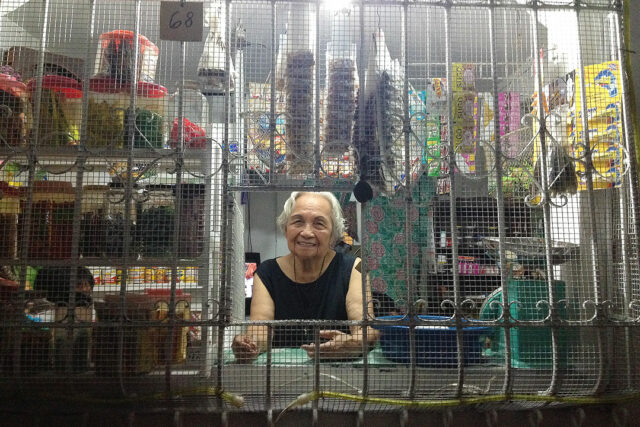
Prices of food bought from small retailers up 15.62% in Jan.

BW FILE PHOTO

THE price of food items purchased from small retailers in the Philippines rose 15.62% in January, according to a startup supplying data systems to small stores.

Packworks said the small-retailer category, known as sari-sari stores, faced supply challenges, with inflation in food sold via this channel exceeding the official estimates for food price growth.

Packworks said in a statement on Thursday that the estimate was based on a study conducted in collaboration with analytics company Fourth Wall using data from the startup’s Sari IQ business intelligence tool.

Food price inflation overall was 11.2% in January, the Philippine Statistics Authority (PSA) reported last month.

The inflation in ready-made food (16.9%) prices was most at variance with the official statistics (9.2%), followed by milk, dairy, and egg products, and cereals, Packworks said.

Packworks said store owners were under pressure to raise their mark-ups and profit margins amid supply issues in the food industry caused by egg shortages due to bird flu, among others.

“It is important for Filipino consumers to be aware of these discrepancies because the products (ready-to-eat food, egg) whose inflation rate at the sari-sari store exceeds that of PSA are also the ones that the lower class typically consume due to their association with convenience and cheap price,” Fourth Wall Research Director John Brylle L. Bae said.

“In a socio-cultural context, we tend to measure how well off or worse off we are through inflation — that is, inflation is the primary metric of poverty and economic performance, which becomes even more relevant if what is being discussed is food,” he added.

Packworks Head of Data Andres Montiel said that the company generates data that can be used to improve customer engagement.

“Official statistics are limited in capturing grassroots patterns, which makes it crucial to cross-check them with data at the sari-sari store level to obtain a more precise understanding of micro-level dynamics,” Mr. Montiel said.

Packworks said that its analysis replicated the PSA’s consumer price approach and applied it to products available in Sari IQ’s data. The products included were only those that were available in sari-sari stores, and the calculation was based on 2020 prices. — Revin Mikhael D. Ochave

Philippine-Australia defense ties can be game changer — analysts

By Kyle Aristophere T. Atienza, Reporter

THE PHILIPPINES and Australia could initiate game-changing norms in the Indo-Pacific region amid increasing Chinese assertiveness in the South China Sea, security analysts said on Thursday.

“Australia and the Philippines are two middle powers in the Indo-Pacific region that could propel game-changing norms on the rules of engagement in case of any eventuality of open war,” Chester B. Cabalza, founding president of Manila-based International Development and Security Cooperation, said in a Facebook Messenger chat.

“This is now the new beginning of regional interoperability and the elevation of the network of alliances.”

Manila and Canberra on Wednesday committed to boost their defense ties, eyeing joint patrols in the South China Sea, which is being claimed by China almost in its entirety.

Aside from the South China Sea dispute, the Indo-Pacific region has also been beset by escalating tensions between China and self-ruled Taiwan and North Korea’s nuclear threats.

Australian Deputy Prime Minister and Defense chief Richard Marles told reporters on Wednesday Australia would boost its Indo-Pacific endeavor with more naval components, with the Philippines being a central component of it.

He met with President Ferdinand R. Marcos, Jr. on Wednesday, during which they talked about ways to boost the Philippine-Australia alliance. He also met with Defense Secretary Carlito G. Galvez, Jr. to discuss possible joint patrols in the South China Sea.

“The naval exercises of the two strategic partners are important to simulate maritime warfares,” Mr. Cabalza said. “It would also boost the familiarity of the incident command system, forward bases, and hard and soft military hardware of the two allies.”

He said Australia and the Philippines could stand on a moderate amount of economic and military strengths “and will not play the zero-sum game” — a situation where one’s gain is equivalent to another’s loss, so the net change in wealth or benefit is zero.

“Rather, they will achieve a win-win solution by safeguarding the regional security architecture.” 

“Middles powers are known as balancers of powers between two opposing superpowers,” Mr. Cabalza said. “They are regarded as bridge builders for the US and China, and can become brokers and facilitators in maritime disputes.” 

“Sustained engagements between the Philippines and Australia, including joint patrols in Philippine-claimed areas in the South China Sea, will significantly contribute to the national security of the two countries, as well as the collective maritime security of the Indo-Pacific region,” Victor Andres C. Manhit, president of local think tank Stratbase ADR, said in a Facebook Messenger chat.

He noted that Canberra has constantly supported a 2016 United Nations-backed arbitral ruling that voided China’s claim to more than 80% of the South China Sea.

“Australia is consistently one of Filipinos’ most trusted countries and remains a consistent partner for peace, stability, and security,” he added.

Michael Henry Ll. Yusingco, a policy analyst who is now living in Australia, said the Philippines should always take into consideration China’s reaction to plans for joint sea patrols.

“We have to see the complete picture here, regardless of partner or ally in this effort,” he said in a Messenger chat.

“The hope is that this will deter China from being aggressive in their movements in this area of the world,” he said. “That can happen obviously, but we also have to be prepared for the possibility that China will become even more aggressive than they already are.”

“So the possibility of armed confrontation must be part of the discourse regarding joint sea patrols,” he added.

The possibility of joint patrols between the Philippines and Australia comes on the heels of similar discussions between Manila and Washington about holding joint coast guard patrols, including in the South China Sea.

The Philippines has also given the US access to more military bases under their Enhanced Defense Cooperation Agreement.

“The sequence of developments here genuinely reflect that the US and its global allies are gunning for a ramped-up presence in the Indo-Pacific to contain risks of Chinese expansion,” said Halsey A. Juliano, a political economy researcher studying at Japan’s Nagoya University’s Graduate School of International Development.

‘IRONCLAD’
“The question now is whether China will try to find its allies in the Pacific as well as leverage its economic ties to Australia, East Asia and Southeast Asia,” he said via Messenger chat. “Or, will it go belligerent like Japan on the eve of Pearl Harbor or Russia right now in Ukraine?”

Meanwhile, the US Chief of Naval Operations has called Washington’s alliance with Manila ironclad, reiterating a commitment to strengthen security cooperation in the Indo-Pacific, the US Navy said in a statement.

“Our alliance with the Philippines is ironclad and indispensable, we have shared values and interests and are both committed to preserving a free and open Indo-Pacific,” Navy Officer Michael Martin Gilday said.

“We will continue to build on our strong alliance and strengthen our interoperability and mutual defense posture,” he added.

The naval chief met with US Ambassador to the Philippines MaryKay Carlson, Armed Forces of the Philippines Chief of Staff General Andres C. Centino and Philippine Navy Flag Officer in Command Vice Admiral Toribio D. Adaci, Jr. in Manila this week.

Discussions revolved around the maritime domain awareness and naval capabilities of both nations, as well as the value of the alliance to the regional’s peace and stability.

“We remain focused on enhanced security cooperation, combined training, humanitarian assistance and disaster relief operations,” Mr. Gilday said.

The two navies operate together regularly through exercises like the Pacific Partnership, Rim of the Pacific, Balikatan and SamaSama.

Mr. Gilday’s first visit to Manila was part of a regional tour that included a visit to Australia, another major security ally of the US. — with Alyssa Nicole O. Tan


Amnesty International seeks De Lima release

PHILIPPINE STAR/MIGUEL DE GUZMAN

AMNESTY International on Thursday urged the government of Philippine President Ferdinand R. Marcos, Jr. to drop “fabricated charges” against a former senator who’s been one of ex-President Rodrigo R. Duterte’s fiercest critics.

In a statement, the global human rights watchdog said the state has violated former Senator Leila M. de Lima’s right to a fair trial through her “arbitrary detention.” She has been in jail since February 2017 on drug trafficking charges.

“It is a travesty that Leila de Lima has endured six years in detention after bogus charges were brought against her in cases that have utterly collapsed,” Rachel Chhoa-Howard, Southeast Asia researcher for Amnesty International, said in the statement.

She cited key witnesses who have recanted their testimonies against the former lawmaker about her involvement in the illegal drug trade. Four witnesses claimed to have been coerced by the government of Mr. Duterte into testifying against Ms. De Lima.

“The authorities must also conduct a thorough, independent, transparent and effective investigation into the attacks against her, Amnesty International said.

“The new administration has been transparent since the time we inherited this case,” Justice spokesman Jose Dominic F. Clavano said a Viber message. “The mantra of Justice Secretary Jesus Crispin C. Remulla has always been to follow the evidence, nothing more and nothing less.”

Amnesty International said it was concerned for the former senator’s safety in prison, citing an incident in October when she was taken hostage by a knife-wielding inmate.

On Feb. 10, former prison chief Rafael Z. Ragos in open court took back his allegations that the former lawmaker had abetted the illegal drug train inside the national jail when she was still justice secretary.

He earlier claimed to have delivered P10 million in drug money to Ms. De Lima’s bodyguard that she allegedly used to finance her senatorial candidacy in 2016.

One of the three drug charges against her has been dismissed, while two are pending in court.

In August last year, the Ombudsman dismissed bribery charges against Ms. De Lima and her former aide as it found no probable cause for their indictment.

The former lawmaker has asserted her innocence, saying she was being tried for criticizing the government’s deadly drug war.

In 2016, Ms. De Lima led a Senate probe into the vigilante-style killings in Davao when Mr. Duterte was still mayor and vice mayor of the city. She was arrested a year later after allegations of her involvement in the illegal drug trade.

Human Rights Watch said last month her imprisonment showed the continuation of human rights abuses in the country. It urged the Marcos government to drop what it called trumped-up charges against her.

“De Lima should never have spent a day in prison, but instead she’s languished there for six years,” Ms. Howard said.

“The government must urgently give her the freedom and justice she deserves after such an appalling ordeal.” — John Victor D. Ordoñez

EU lawmakers told not to tie Philippine trade perks to human rights

REUTERS

By Beatriz Marie D. Cruz and John Victor D. Ordoñez,  Reporter

PHILIPPINE congressmen on Thursday asked visiting lawmakers from the European Union (EU) not to tie Manila’s tariff privileges from the world’s largest trading block to the country’s human rights situation.

“Do not dangle to us the carrot then afterwards if you do not like our answers you’re going to [punish] us with a stick,” Manila Rep. Bienvenido M. Abante, Jr. told reporters after the meeting.

The congressman, who heads the House of Representatives human rights committee, said the EU parliamentarians had brought up the Generalized System of Preferences Plus or GSP+, which allows the duty-free entry of more than 6,000 Philippine products to Europe.

The agreement is set to expire later this year.

“Our farmers, our fisherfolk need that,” Mr. Abante said “They should not tie the trade agreement with the Philippines to the human rights investigation.”

He said the EU lawmakers had nothing to say at first during the closed-door meeting at the House. “I said they shouldn’t do that.”

Albay Rep. Jose Ma. Clemente S. Salceda said he is optimistic that the Philippines could renew its GSP+ status.

“We need places where we can export at preferential rates at an advantage compared with our Regional Comprehensive Economic Partnership partners,” he said in a statement. “The GSP+ regime is one of those advantages.”

Michael L. Ricafort, chief economist at Rizal Commercial Banking Corp., cited the need to improve the Philippines’ foreign relations and adhere to environmental, social and governance standards to help attract more foreign investments.

“The GSP+ status is important because of perks to the country’s exporters, including agricultural exports that include some local farmers that benefit from them,” he said in a Facebook Messenger chat.

“We need the EU market access, but the government can also choose to go elsewhere if it doesn’t work now,” Ruben Carlo O. Asuncion, chief economist at Union Bank of the Philippines said in a Viber message.

The meeting took place amid a probe by the International Criminal Court (ICC) of the government’s deadly drug war.

During the meeting, congressional allies of ex-President Rodrigo R. Duterte insisted that the ICC does not have the authority to investigate the Philippines since it has a working justice system, Deputy Minority Leader and Party-list Rep. France L. Castro told reporters.

The EU lawmakers said “they didn’t want to get minerals from mining sites where the youth are used for child labor,” Ms. Castro said in Filipino. The trade bloc did not want to participate in trade deals with the Philippines if it meant allowing human rights abuses in the country to happen, she added.

Hannah Neumann, vice chairperson of the European Parliament subcommittee on human rights, told reporters that they had a “very constructive, fruitful meeting.” “The frank and vivid discussion we have shows how vibrant democracy is here in the Philippines.”

At a separate meeting with the EU delegates, minority congressmen “highlighted the cases of (human rights violations against) women and children,” Assistant Minority Leader and Party-list Rep. Arlene D. Brosas told reporters in Filipino.

“We have to deliver to the EU what the real situation is here in the Philippines,” she said, adding that a report they submitted to the EU lawmakers included the 127 drug-related killings under President Ferdinand R. Marcos, Jr.

‘NOT ARGUMENTATIVE’
Party-list Rep. Raoul Danniel A. Manuel said majority lawmakers seemingly have an “allergy with the attempts of the ICC to hold accountable top officials involved in the anti-poor and bloody drug war.”

The Philippine government said more than 6,000 suspected drug dealers were killed in police operations, but human rights groups have said as many as 30,000 people died.

Meanwhile, Philippine Justice Secretary Jesus Crispin C. Remulla told the EU lawmakers at a separate meeting later in the day the government could investigate extrajudicial killings under the war on drugs without the ICC’s intervention.

“We are fixing the justice system,” he told reporters in Filipino after the meeting. “If the ICC really has a problem that they want to investigate, they should let us handle it since these are crimes committed in the Philippines by Filipinos.”

Mr. Remulla met with the six EU lawmakers to discuss reforms in the justice system, human rights and the spread of fake news in the country. The country’s GSP+ privileges were not discussed, he said.

The European Parliament in February last year passed a resolution asking the Philippines to act on human rights abuses or face losing trade perks under GSP+.

GSP+ requires the Philippines to uphold commitments to 27 international conventions on human rights, labor, good governance and climate action.

“They were not argumentative since they saw our reforms on prosecution and on bail and everything else we are working on to uphold human rights,” Mr. Remulla said.

He said he would visit Geneva on Feb. 27 to discuss human rights with representatives from the United Nations.

The EU lawmakers were concerned about the extralegal killings committed during the government’s deadly war on drugs, Ms. Neumann said on Wednesday. They also backed the ICC’s probe of Mr. Duterte’s anti-illegal drug campaign.

Last month, the ICC pre-trial chamber reopened its investigation of the killings and so-called crimes against humanity under Mr. Duterte’s war on drugs.

The Hague-based tribunal said it was not satisfied with Philippine efforts to probe the deaths.

More than 30 member-states of the United Nations Human Rights Council in November urged the Philippine government to do something about extralegal killings in connection with Mr. Duterte’s anti-illegal drug campaign.

The Philippines has accepted 200 recommendations from the UN Human Rights Council, including investigating extralegal killings and protecting journalists and activists.

“We are in command of our own human resources and the programs that we have are really geared towards solving the problems of our judicial system,” Mr. Remulla said.

Marcos declares eve of ‘People Power’ day a special holiday  

PHILSTAR FILE PHOTO

PHILIPPINE President Ferdinand R. Marcos, Jr. has declared Feb. 24 a special nonworking holiday to commemorate the street uprising that toppled the regime of his late father and namesake.

Under Proclamation No. 167, Mr. Marcos said the holiday would allow Filipinos to “avail [themselves] of the benefits of a longer weekend,” citing his government’s holiday economics. 

The order signed by Executive Secretary Lucas P. Bersamin is on top of the order issued last year that also declared Feb. 25, a Saturday, a special nonworking holiday. 

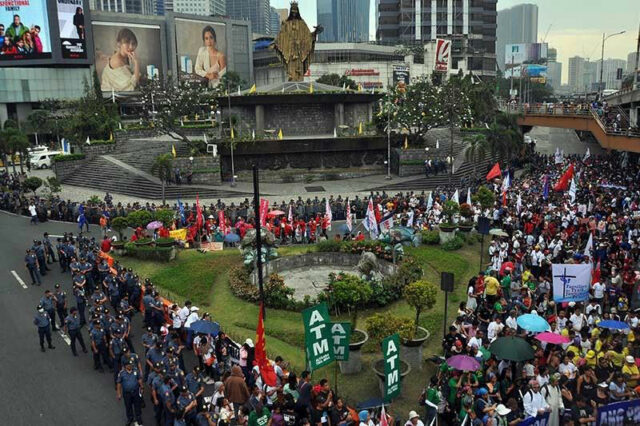
Civic groups are set to commemorate the 37th anniversary of the People Power uprising on the main EDSA highway with various activities, including information drives.  

The no-work, no-pay policy covers special nonworking holidays unless there are company rules or agreements “granting payment on a special day,” according to a Labor department order.  

Employees asked to work on a special nonworking day should be paid 30% more of their daily pay for the first eight hours of work. Workers who work overtime should receive 30% more of their hourly rate. — Kyle Aristophere T. Atienza

PHL Coast Guard wants revision of response rules  

PCG

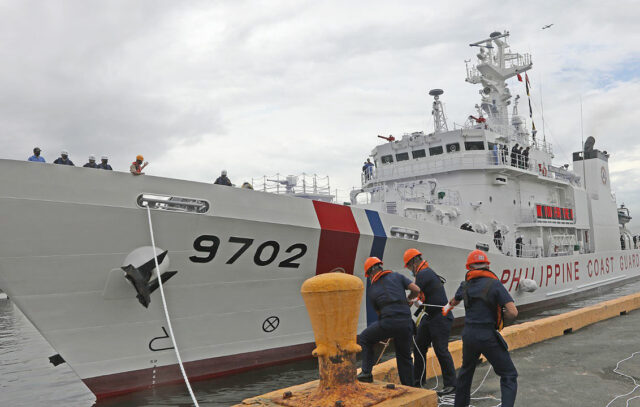
THE PHILIPPINE Coast Guard (PCG) is pushing for the revision of rules governing its response protocols to potential aggression or attacks at sea.  

The proposal comes after the Chinese Coast Guard endangered the crew of a Philippine resupply ship at the Second Thomas Shoal by pointing a military-grade laser at it on Feb. 6.  

In a public briefing on Thursday, PCG spokesperson Jay T. Tarriela said the agency is not considering equipping its vessels with military-grade lasers, but wants clearcut guidelines on how it should respond to such situations.   

What we are saying is for us to revise the rules for the use of force, where we have yet to include how would the Philippine Coast Guard respond to these kinds of threat towards the Philippine Coast Guard vessel,” he said partly in Filipino.   

“Definitely, the PCG is not considering putting laser weaponry onboard our Coast Guard vessels.”  

The Second Thomas Shoal, which Manila calls Ayungin, is within the Philippinesexclusive economic zone.   

As of Wednesday, around 30 Chinese vessels were still moored in Philippine-claimed areas in the South China Sea, Mr. Tarriela said. Of these, 26 were in Sabina Shoal and four were in Second Thomas Shoal.   

The PCG official said they are intensifying their patrols in the West Philippine Sea, the maritime area within the countrys territory, by deploying one offshore patrol vessel and 144 multi-role response vessels.   

Last week, the Philippinesforeign affairs agency protested the Chinese Coast Guards use of military-grade laser. But China has maintained that its action was meant to ensure navigation safety.”  

Mr. Marcos Jr. has said the laser incident is not enough for him to invoke the Philippines1995 mutual defense treaty with the United States. Kyle Aristophere T. Atienza 

PHL condemns North Korea’s missile test launch over Japanese waters 

DEPARTMENT OF FOREIGN AFFAIRS FACEBOOK PAGE

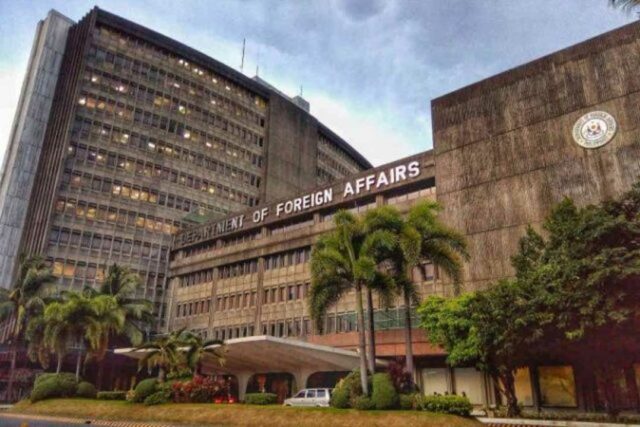
THE PHILIPPINESDepartment of Foreign Affairs (DFA) has denounced North Korea for testing missiles which provoke tension and undermine peace and stabilityin the region and globally. 

The Philippines condemns the test of an intercontinental ballistic missile on 18 Feb. 2023 by the Democratic Peoples Republic of Korea, as well as the other ballistic missile tests,the DFA said in a statement Wednesday evening. 

North Korea has fired more than one long-range missile off the waters of Japan as a threat against joint military exercises between South Korea and the United States. 

Japanese government spokesperson Hirokazu Matsuno has said no damage have been reported from the missile, which landed within Japan’s exclusive economic zone.

The Philippines reiterates its call for the Democratic Peoples Republic of Korea to immediately put a stop to these missile tests, comply with UNSC (United Nations Security Council) resolutions and resort to diplomacy and peaceful dialogue with the Republic of Korea,the DFA said. Alyssa Nicole O. Tan 

WHO: Coronavirus cases, deaths continue to fall amid declining testing output 

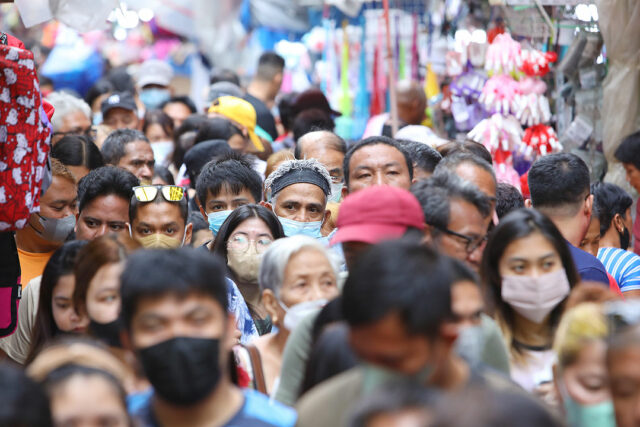
Shoppers head to Divisoria, Manila, Dec. 26, 2022. — PHILIPPINE STAR/WALTER BOLLOZOS

THE WESTERN Pacific Region, which covers the Philippines, posted a more than 90% decline in reported coronavirus infections from Jan. 23 to Feb. 19 amid a decline in testing output, according to the World Health Organization (WHO). 

In its latest COVID-19 report, the international body said the region saw a 94% decline in its reported cases and a 77% decrease in deaths. 

Globally, nearly 5.3 million new cases were reported from Jan. 23 to Feb. 19, an 89% drop from the previous 28 days, it said. 

More than 48,000 new deaths were also reported during the Jan. 23-Feb. 19 period, a decline of 62% compared to the previous 28 days, it added. 

As of Feb. 19, more than 757 million confirmed cases and more than 6.8 million deaths have been reported globally, WHO said.  

Current trends in reported COVID-19 cases are underestimates of the true number of global infections and reinfections as shown by prevalence surveys,it said. This is partly due to the reduction in testing and delays in reporting in many countries. 

The global body said data presented in its latest report may be incomplete and should, therefore, be interpreted with caution.”  

Additionally, data from previous weeks are continuously updated to incorporate retrospective changes in reported COVID-19 cases and deaths made by countries.”  

On Wednesday night, WHO Director-General Tedros Ghebreyesus called on countries to boost surveillance and sequencing so that as the virus evolves, vaccines, therapeutics and diagnostics can be evaluated and updated quickly as needed.”  

As of Feb. 21, more than 66,000 Filipinos have died due to COVID-19 since the pandemic struck in 2020, according to a recent report from Manilas health agency. 

VIROLOGY INSTITUTE
Meanwhile, a senator has filed a bill to establish a virology institute in the Philippines, noting the need for increased research and development on virology and infectious diseases. 

The Philippines continues to face challenges in responding to public health emergencies,Senator Manuel LitoM. Lapid said in Filipino in a statement on Thursday.

Therefore, as a region known to be a hotspot for emerging infectious diseases, including pandemics, the establishment of a research institution focused on virology research is essential to better prepare our country against such health calamities,” he added.

If passed, Senate Bill 1890, otherwise known as the Virology Institute of the Philippines Act, will allow Filipino researchers to conduct studies on emerging infectious diseases as quickly as possible, the senator said. 

The bill will require the government to invest more in research advancement, develop a secure national research framework, improve public awareness on similar initiatives, and develop stronger international collaboration. 

A counterpart bill in the House of Representatives was approved on final reading in December. Kyle Aristophere T. Atienza and Alyssa Nicole O. Tan

Most senators cool to Charter change 

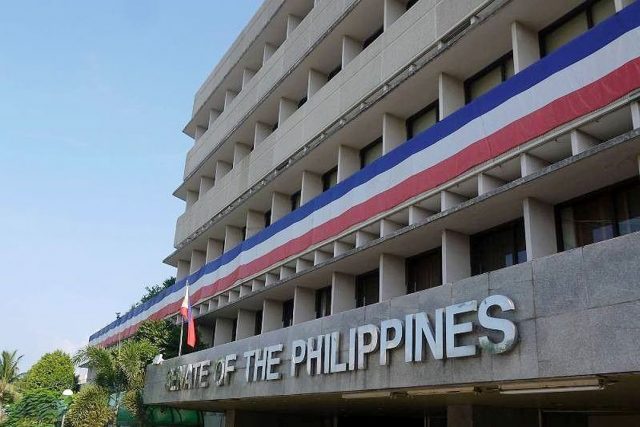
SENATE.GOV.PH

MOST senators are not keen on amending the 1987 Philippine Constitution, seeing no urgency in the proposition being pushed by lawmakers in the House of Representatives, the upper chambers majority leader said.   

Majority of the Senators agree with the President that it is not urgent or timely for the Charter change,Senate Majority Leader Emmanuel Joel J. Villanueva told BusinessWorld in a Viber message.

We have already passed laws so that the country can attract more foreign investors, and the Senate is still continuing this work,he added. 

On Monday, a House committee approved a measure calling for changes to the charter through a constitutional convention. 

Senator Robin C. Padilla earlier filed a resolution seeking to amend the Constitution through a constituent assembly, eyeing in particular the economic provisions to make it more investor-friendly. 

Right now, we first need to study the effect of the amendment to the Retail Trade Liberalization Act, the Foreign Investments Act and the Public Services Act on foreign direct investment in the country,Mr. Villanueva said. 

The majority leader, however, did not immediately respond to Viber messages seeking comment on Senate Minority Leader Aquilino Martin KokoD. Pimentel III’s recommendation to amend political provisions in the Constitution.  

Mr. Pimentel sought to change the countrys party-list system and introduce safeguards against political dynasties. 

He also proposed a shift in the countrys form of government to parliamentary with a unicameral system. 

On the other hand, we will continue our work here in the Senate and that includes the hearings on the committee on constitutional amendments,Mr. Villanueva said. Alyssa Nicole O. Tan 


PAL to resume Clark flights to Boracay and Coron by April 

PHILIPPINEAIRLINES.COM

PHILIPPINE Airlines, Inc. (PAL) will be reopening flights from Clark to Boracay and Coron in April, a move that aims to help further boost the recovery of domestic tourism, the flag carrier said on Thursday. 

The revival of these direct flights will give travelers from Central and Northern Luzon a convenient new way to access Boracay and Coron, demonstrating Clark Airport’s position as a key jump off point to the country’s prime island destinations,” PAL President and Chief Operating Officer Stanley K. Ng said in a press release on Thursday.  

Starting April 1, PAL will offer thrice weekly flights between Clark International Airport and Caticlan Airport, the gateway to Boracay.  

The Clark-Coron flights will be four times a week starting April 4.  

Luzon International Premiere Airport Development Corp. (LIPAD), the private consortium that manages the Clark Airport, welcomed the resumption of the two routes.  

We are proud to be PALs partner in making Clark Airport the gateway to these destinations, not only for travelers from Northern and Central Luzon, but also for foreign tourists wishing to experience the beauty of the Philippines,LIPAD President and Chief Executive Officer Noel F. Manankil said.   

PAL currently operates daily flights between Clark and Mactan-Cebu International Airport, and international services from Clark to Seoul and Busan in Korea. Justine Irish D. Tabile

Retrieval operations underway for 4 bodies in Mayon plane crash 

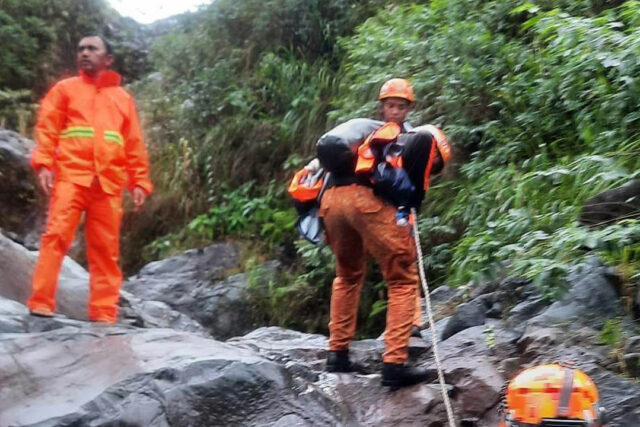
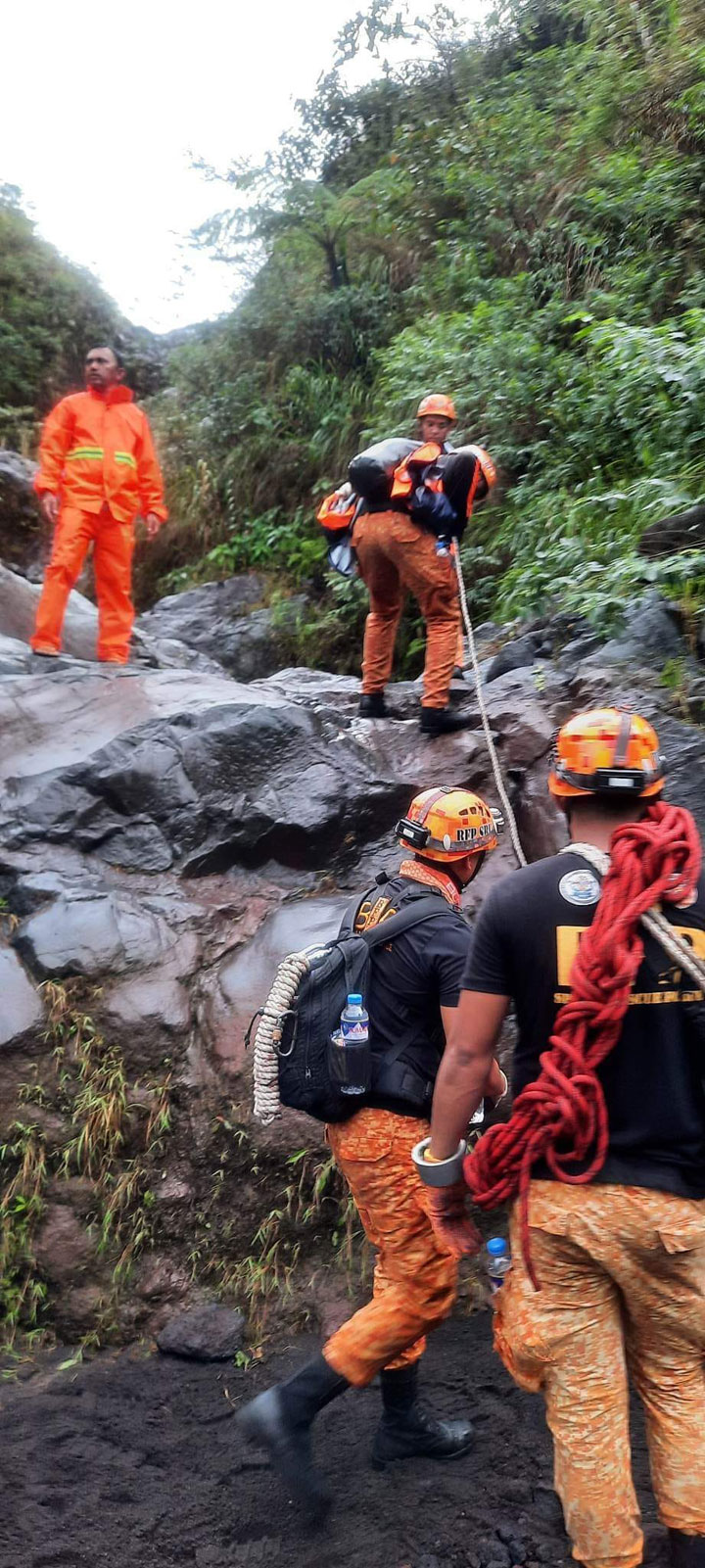
BUREAU OF FIRE PROTECTION

RETRIEVAL operations were underway Thursday after authorities confirmed that the bodies of four people on board the Cessna aircraft that crashed on the slope of Mayon Volcano have been found.   

Camalig Mayor Carlos CaloyIrwin G. Baldo, Jr., the rescue operations ground commander, said they were hoping to conclude the retrieval by Thursday despite challenges due to Mayons tricky terrain.”  

Mayon is an active volcano that is currently under the second lowest alert level in a five-tier system. Under alert level 2, sudden steam explosions and rockfall are possible, according to state seismologists.  

The aircraft went missing in Camalig, Albay at 6:46 a.m. on Feb. 18, just three minutes after taking off from the Bicol International Airport, according to the Civil Aviation Authority of the Philippines (CAAP).    

The flight, bound for Manila, had four people on board a pilot and one crew member, both Filipinos, and two Australian passengers, CAAP said in a statement on Saturday.     

All four worked for Energy Development Corp., which own the plane.  

We stand in compassion and deep sorrow with the families of our fallen Kapamilyas in this unthinkable tragedy. We are working with authorities to bring them home to their loved ones where they may rest in peace,the company said in a statement on Thursday posted on its Facebook page.  

CAAP is investigating the incident. The agency earlier noted that the aircraft had an airworthiness certification.    

Cessna (now Textron Aviation) aircraft has recorded 13 accidents, 10 incidents, and 11 serious incidents over the last four years (2019-2023),CAAP said citing data from its investigation board.  

The Mayon incident comes after a Cessna 206 type aircraft crashed in Isabela on Jan. 24 and has yet to be found. MSJ 

ADVERTISEMENT
ADVERTISEMENT