Home Blog Page 5170

Peso drops ahead of inflation data

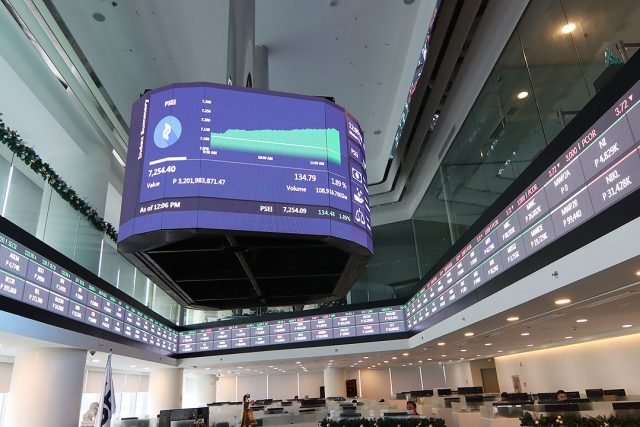
BW FILE PHOTO

THE PESO declined against the dollar on Monday due to expectations of faster February inflation.

The local currency closed at P54.88 versus the greenback on Monday, dropping by six centavos from Friday’s finish of P54.82, data from the Bankers Association of the Philippines’ website showed.

The peso opened Monday’s trading session at P54.80 per dollar. Its intraday best was at P54.76, while its worst showing was at P55.915 against the greenback.

Dollars traded dropped to $810.1 million on Monday from the $1.287 billion recorded on Friday.

The peso weakened ahead of the release of the February consumer price index (CPI) report on Tuesday, Rizal Commercial Banking Corp. Chief Economist Michael L. Ricafort said in a Viber message.

Mr. Ricafort said the market expects inflation to have reached a fresh peak last month.

“​The peso weakened due to some caution ahead of the Philippine inflation report tomorrow,” a trader said in an e-mail.

A BusinessWorld poll of 17 analysts yielded a median estimate of 8.9% for February headline inflation, within the 8.5% to 9.3% forecast of the Bangko Sentral ng Pilipinas (BSP) for the month.

If realized, this will be faster than the 14-year high of 8.7% seen in January and the 3% a year earlier. It will also exceed the BSP’s 2-4% target for the year.

The trader said the peso-dollar trading on Tuesday will be driven by the release of February inflation data.

The trader expects the peso to move between P54.80 and P55 per dollar on Tuesday, while Mr. Ricafort sees the peso trading at P54.75 to P54.95. — AMCS

Shares inch up as market awaits inflation report

PHILIPPINE SHARES eked out gains on Monday as investors awaited the release of February inflation data.

The benchmark Philippine Stock Exchange index (PSEi) went up by 15.75 points or 0.23% to close at 6,671.12 on Monday, while the broader all shares index rose by 8.64 points or 0.24% to end at 3,573.06.

“Philippine shares climbed up slightly as investors await the release of the February inflation report on Tuesday. [Tuesday]’s CPI (consumer price index) release may have a huge influence in the direction of the BSP (Bangko Sentral ng Pilipinas) policy stance for the subsequent meetings,” Regina Capital Development Corp. Head of Sales Luis A. Limlingan said in a Viber message.

Mr. Limlingan added that the market was also looking ahead to the release of other economic data at home and in the United States this week.

“Investors opted to stay on the sidelines ahead of the release of key February inflation data. The BSP has warned that inflation will remain elevated and could lead to tighter monetary policy in the near term,” AB Capital Securities, Inc. Vice-President Jovis L. Vistan said in a Viber message.

A BusinessWorld poll of 17 analysts yielded a median estimate of 8.9% for February headline inflation, within the 8.5% to 9.3% forecast given by the BSP.

If realized, this will be faster than the 14-year high of 8.7% seen in January and the 3% a year earlier.

BSP Governor Felipe M. Medalla last week said the central bank may raise rates by another 50 basis points (bps) this month if February inflation exceeds 9%.

The Monetary Board will hold its second policy meeting for this year on March 23.

At its Feb. 16 review, the BSP hiked benchmark interest rates by 50 bps for a second straight meeting, bringing its key rate to 6%, the highest in nearly 16 years.

The central bank has increased borrowing costs by 400 bps since May 2022 as it seeks to bring inflation down.

Almost all sectoral indices closed higher on Monday. Services gained 20.59 points or 1.26% to end at 1,644.21; property went up by 15.28 points or 0.53% to 2,864.77; mining and oil climbed by 39.57 points or 0.35% to 11,112.46; industrials rose by 19.28 points or 0.20% to 9,574.99; and financials increased by 0.03 point to 1,836.20.

Meanwhile, holding firms declined by 6.60 points or 0.1% to 6,427.64.

Value turnover dropped to P4.75 billion on Monday with 659.95 million shares changing hands from the P6.48 billion with 828.96 million issues traded on Friday.

Net foreign buying stood at P5.60 million on Monday versus the P501.96 million in net selling seen on Friday.

AB Capital’s Mr. Vistan placed the PSEi’s support at 6,570 and resistance at its 20-day moving average of 6,758, while Regina Capital’s Mr. Limlingan put support 6,602.88 and resistance at 6,744.31. — Ashley Erika O. Jose

Manila asks ICC to block court testimony of victims’ families

PHILIPPINE STAR/ MIGUEL DE GUZMAN

By John Victor D. Ordoñez, Reporter

THE PHILIPPINE government has asked the International Criminal Court (ICC) to reject separate pleas by the families of drug war victims and the ICC’s Office of Public Counsel for Victims (OPCV) to testify in court.

The public counsel’s motion and the anonymous request from the victims “fall foul however of procedural and substantive requirements, which are necessary in these proceedings before the Appeals Chamber,” state lawyers including Solicitor General Menardo I. Guevarra said in an eight-page pleading dated March 2.

He said the ICC office did not have a role in the collection of views and concerns of victims of the government’s anti-illegal drug campaign.

“The OPCV does not aver that it has been in contact with any victim in relation to the situation in the Republic of the Philippines and it fails to establish which specific victims the OPCV seeks to advance the views of,” he said.

The move came after 90 anonymous relatives of drug war victims objected to a state appeal to halt the ICC’s probe of ex-President Rodrigo R. Duterte’s war on drugs.

“As the appellant, the Philippine government cannot effectively exercise its rights if it is precluded from scrutinizing the submissions of all other participants,” the solicitor general said.

In January, the ICC pre-trial chamber reopened its investigation into killings and so-called crimes against humanity under Mr. Duterte’s drug war. The Hague-based tribunal said it was not satisfied with Philippine efforts to probe the deaths.

President Ferdinand R. Marcos, Jr. has called the ICC’s probe a threat to the country’s sovereignty, saying the court does not have jurisdiction over the Philippines.

He said the country’s justice system could punish erring officials.

Neri J. Colmenares, chairman of the National Union of Peoples’ Lawyers (NUPL) and a lawyer for families of drug war victims, accused the government of delaying the case.

“The government should now face the music and submit evidence rather than delaying proceedings through attempts to deny the victims their opportunity to answer them during the investigation and demand accountability for their crimes,” he said in a Viber message.

Citing the treaty that created the ICC, Mr. Colmenares said it is “hypocritical” for the government to claim that the participation of the victims in the ICC proceedings violated its rights, saying the Rome Statute gives Mr. Duterte and other government agents the right to defend themselves.

“In the same manner that they have undermined, gaslit, generalized and name-called victims of the war on drugs, it is characteristic of the Philippine government to oppose the participation of the victims in the proceedings before the ICC,” Maria Kristina C. Conti, secretary general of the NUPL in Metro Manila and legal counsel for several victims of the drug war, said in an e-mail.

She said the ICC would likely allow the victims’ families to participate in the lawsuit, describing it as a “victim-centered” court that adheres to international criminal laws.

The Philippines will not tolerate “external interference” by the ICC because it does not have the power to probe the country’s anti-illegal drug campaign, Justice Secretary Jesus Crispin C. Remulla told the United Nations (UN) Human Rights Council on March 1.

“We draw the line, as any sovereign state must, when an international institution overreaches and departs from the boundaries of its creation,” he said in a speech before the UN in Geneva, according to a video posted on the UN website. 

‘DESPERATE DEMAND’
The tribunal, which tries people charged with crimes against humanity, genocide, war crimes and aggression, suspended its probe of Mr. Duterte’s deadly war on drugs in 2021 upon the Philippine government’s request. 

It was also set to probe vigilante-style killings in Davao City when Mr. Duterte was still its vice mayor and mayor.

Lawmakers from the European Union (EU) have urged the Philippine government to rejoin the ICC to show its commitment to human rights.

“We’d be very happy to see the Philippines rejoin the Rome Statute of the ICC as it would clearly reinforce the government’s commitment to fighting impunity,” Hannah Neumann, a vice chairperson of the European Parliament subcommittee on human rights, told a news briefing in Manila last month.

Philippine police arrested 8,183 drug suspects in 6,044 illegal drug operations from the start of the year to Feb. 11, national police chief General Rodolfo S. Azurin, Jr. said on Feb. 13. 

Human rights abuses continued under the first six months of the Marcos government, Human Rights Watch said in a report on Jan. 12.

The Philippine government estimates that at least 6,117 suspected drug dealers had been killed in police operations. Human rights groups say as many as 30,000 suspects died.

The UN Human Rights Committee has said the Philippines should comply with international human rights mechanisms and cooperate with the ICC’s drug war probe.

The Commission on Human Rights has said the Duterte government had encouraged a culture of impunity by impeding independent probes and failing to prosecute rogue cops.

Ex-President Duterte and the current administration are losing the ICC case as shown by their belated and desperate demand for the ouster of the victims from the ICC proceedings,” Mr. Colmenares said.


House passes Charter change bill via con-con

PHILIPPINE STAR/MICHAEL VARCAS

By Beatriz Marie D. Cruz

THE HOUSE of Representatives on Monday approved on final reading a resolution seeking to change economic provisions of the 1987 Philippine Constitution through a constitutional convention (con-con).

At a plenary session, 301 congressmen voted yes, six voted no and one abstained.

“Extensive studies show that particular economic provisions of the 1987 Constitution need to be revisited and recrafted so that the Philippines may become globally competitive and attuned with the changing times,” according to a copy of the resolution.

Albay Rep. Edcel C. Lagman, Basilan Rep. Mujiv S. Hataman, Camarines Sur Rep. Gabriel H. Bordado, Jr. and Party-list Reps. Arlene D. Brosas, France L. Castro and Raoul Danniel A. Manuel voted no to Charter change.

The House is debating a separate bill detailing how the convention will operate. House Bill 7352 provides for a hybrid constitutional convention composed of elected and appointed members. They will be paid P10,000 a day and enjoy travel and lodging allowances.

The Senate president and Speaker will jointly choose the appointed delegates — retired Judiciary members, academic professors, economists and lawyers.

There should also be delegates from the medical and science and technology field, labor, urban poor, farmers, fisherfolk and business sectors.

Indigenous cultural communities, women, youth, veterans, persons with disabilities, senior citizens and other sectors will be represented as well.

To qualify as a delegate, a person must be a natural-born Filipino citizen aged at least 25 years and a registered voter.

They must also have a college degree, except poor delegates. Ex-convicts are disqualified.  The convention will run from Nov. 21 to June 30, 2024.

“Our economic maladies had never been because of economic limitations of the 1987 Constitution,” Terry L. Ridon, a former lawmaker and convener of think tank Infrawatch PH, said in an e-mail. “It had always been because of continuing governance issues at all levels of government.”

“Without question, Congress is railroading Charter change despite the clear policy pronouncement of President Ferdinand R. Marcos, Jr. that the measure is not among his priorities at this time,” he added.

 Mr. Ridon said Mr. Marcos should clarify his position on constitutional amendments.

Gov’t says 8,000 villages still affected by drug menace

PHILIPPINE STAR/MIGUEL DE GUZMAN

ILLEGAL drugs remained a menace in more than 8,000 villages in the Philippines as of January, the presidential palace said on Monday.

A quarter or 8,585 out of 42,046 villages nationwide remained affected by illegal drugs, the Presidential Communications Office said in a statement, citing the Philippine Drug Enforcement Agency (PDEA).

“A total of 6,109 barangays were declared [drug-]free as of January this year, the majority of which were from Eastern Visayas with 1,380 barangays,” it said. 

Metro Manila had the highest number of drug cases, accounting for 53.9% of the total. The Mimaropa region in southern Luzon had the lowest number of cases at 2.8%.

Authorities seized about P590 million worth of illegal drugs, arrested 4,499 drug suspects and filed 7,720 cases in January, it added.

Among illegal drugs seized during PDEA operations in January were crystal meth worth P403.4 million, cocaine powder worth P15.9 million, ecstasy tablets worth P19.9 million and kush worth P19.8 million. Also seized were millions of pesos worth of marijuana, the palace said.

Crystal meth or shabu was the most frequently used drug in the country, accounting for 94.6% or 4,258 of arrests nationwide, it said. It was followed by marijuana, with 5.3% or 240 drug cases.

“Authorities have intensified their surveillance and monitoring of the country’s airports, seaports, as well as mail and parcel services to prevent the smuggling of illegal drugs and controlled precursors and essential chemicals into the country,” the palace said.

It said PDEA had been boosting international cooperation to fight the illegal drug trade. It has partnered with the US, South Korea, Japan, Vietnam, Malaysia, Australia, Saudi Arabia, Hong Kong and the United Nations to combat the plague, it added. — Kyle Aristophere T. Atienza

Transport strike day 1 causes minimal disruption, says gov’t  

MEMBERS of transport groups rally along Commonwealth Avenue in Quezon City on March 6, 2023. — PHILIPPINESTAR/WALTER BOLLOZOS

THE FIRST day of a week-long strike by traditional jeepney drivers and operators to protest a modernization plan did not cause major disruption in public transport services, government officials said on Monday.   

The Department of Transportation (DoTr) said it monitored only two routes in the capital region that were paralyzed. 

Based on our monitoring, two routes — Monumento to Malanday and Monumento to Navotas — were paralyzed,DoTr Undersecretary for Legal Affairs, Road Transport and Infrastructure Mark Steven C. Pastor said in mixed English and Filipino in an ambush interview on Monday morning.  

But for other routes, the operations remained normal and there is sufficient transport supply,he added. 

Land Transportation Franchising and Regulatory Board (LTFRB) Chairman Teofilo Guadiz III, for his part, said in a press briefing that only about 10% of jeepney owners joined the strike in Metro Manila, and 5% nationwide.  

Transport Secretary Jaime J. Bautista, meanwhile, said the minimal impact of the strike is partly due to contingency measures implemented by both the national and local governments in affected areas.  

We deployed free rides using government assets in those areas,said Mr. Bautista.   

Local governments in major urban areas outside the capital region prepositioned vehicles to avoid commuters getting stranded.   

Mr. Pastor, in an interview with One Balita Pilipinas Monday afternoon, said there were no longer paralyzedareas anywhere in the country.

In fact, in regions 9, 10, 11, and 12, no one participated in the strike,Mr. Pastor said.    

He was referring to the regions of Zamboanga Peninsula, Northern Mindanao, Davao, and Soccsksargen, all in southern Philippines.   

The presidential palace said the EDSA Busway Carousel had not felt the strikes impact as of 10 a.m., with operations running smoothly with a low passenger volume observed at all stations.”  

It cited efforts from state agencies to manage the situation.  

Although Malacañang had downplayed the impact of the transport strike, Vice President and Education Secretary Sara Duterte-Carpio maintained an earlier statement that the act poses threats to learning recovery efforts.  

We oppose it because it is problematic, it will hurt our learners, and the inconvenience that it may cause comes with an enormous price deleterious to learning recovery efforts and this is a price that learners will have to pay,she said in a statement on Monday. Justine Irish D. Tabile and Kyle Aristophere T. Atienza 


Mindoro oil spill could reach Palawan waters, says UP-MSI 

DENR PHOTO

THE OIL spill from motor tanker MT Princess Empress that sank off the coast of Naujan, Occidental Mindoro last week could possibly reach some vicinity waters of northern Palawan, according to marine experts.  

In its latest bulletin on Monday, the University of the Philippines-Marine Science Institute (UP-MSI) showed images of projected oil slick from March 5 to 12 towards the southwest of Cuyo Islands and closer to northern Palawan.  

The UP-MSI noted that the results are only model forecasts based on prevailing weather patterns and conditions, and on recent information on the location of the slicks.” 

Its previous bulletin also reported that the oil slick could possibly affect over 36,000 hectares of coral reefs, mangroves, and seagrass across Occidental Mindoro, Oriental Mindoro, Palawan, and Antique, all within the central-western part of the Philippines.   

Fideles D. Sallidao, director of the Philippine Coast Guards (PCG) National Operations Center for Oil Pollution, said they have found sightings of oil slick in Cuyo Island and Caluya town in the province of Antique.  

He noted, however, that they were yet to confirm from laboratory results if it was from the oil spill in Mindoro. 

The motor tanker carried 800,000 liters of industrial fuel from SL Harbor Bulk Terminal in Limay, Bataan and was en route to Iloilo City.   

The PCG initially reported that the oil spillage was from the diesel fuel that powered the vessel. Later on, it confirmed the presence of industrial fuel in the waters off Naujan.  

According to Mr. Sallidao, the coast guard units under the Western Visayas district are already coordinating with local government units in the region to contain the spill.  

We will continue our response, we have sent a ship to conduct dispersal, and the sea condition would be favorable, they will install booms to contain the oil that is coming out,he added.  

The same day in the afternoon, the PCG reported that its patrol vessel BRP Bagacay has applied 1,000 liters of oil dispersant in the waters off Naujan.  

The Department of Environment and Natural Resources (DENR), meanwhile, said that it has divided the operation into three parallel workstreams: disaster forensic; clean up, mitigation and remediation; and actual protection activities. 

DENR said these are jointly being undertaken by national and local government agencies, the UP-MSI, academe, and local communities. 

Authorities may have already found the current location of the oil tanker, according to DENR.  

The possible site was northeast of Pola town in Oriental Mindoro, the agency said, citing efforts of a state survey vessel. That site is about 1,200 feet or approximately 400 meters below sea level.”  

DENR said it will deploy a remotely-operated vehicle to verify the location and to completely model the way the oil will be spilling from the vessel.”  

[It] will allow us to complete visualization should the currents and weather permit, it said. Sheldeen Joy Talavera and Kyle Aristophere T. Atienza 

Marcos orders police to identify political ‘hotspots’ as charges filed vs Degamo shooters 

@HOUSEOFREPSPH

PRESIDENT Ferdinand R. Marcos, Jr. has ordered police authorities to identify hotspots of political violence, days after the murder of a local official in broad daylight at his residence where eight civilians were also killed and 16 others wounded. 

On the sidelines of a Malacañang event on Monday, Mr. Marcos said he told Interior Secretary Benjamin C. Abalos, Jr. as well as the Philippine National Police to make an examinationof areas that can be considered political hotspots, an assessment activity that is normally done during election season.  

I told them to make it again. Dont think of the election first but think of the hotspots and lets look into them,he added.  

Mr. Marcos Jr. said authorities should identify areas where there are illegal firearms, and reiterated the need to dismantleprivate armies.    

Gunmen shot Roel R. Degamo, governor of Negros Oriental province, while distributing aid at his home in Pamplona town on March 4.  

CHARGES
Multiple murder and illegal gun complaints have been filed by police against three suspects involved in the shooting, according to Mr. Abalos, while several other possible suspects are being tracked.    

“We are still in hot pursuit of these individuals and we’d thank the Philippine National Police’s quick actions on the case,” he said at a news briefing on Monday.   

“We also need to look at all possible angles and motives for the murder but I assure everyone that we have good progress with our investigation.”  

The governor was shot by one of six men wearing military uniforms who barged into his residential compound.  

Meanwhile, Senator Ana Theresia N. Hontiveros-Baraquel filed a resolution seeking a probe on politically motivated killings following Mr. Degamo’s murder.  

“These killers are so emboldened, the violence happens in broad daylight,” she said in Senate Resolution No. 518.  

Mr. Degamos death came a month after Rommel G. Alameda, vice mayor of Aparri in the country’s north, and five of his companions were killed by gunmen riding a government car in February. Kyle Aristophere T. Atienza and John Victor D. Ordoñez 

PHL welcomes international treaty on conserving marine biodiversity  

DENR DAVAO

THE PHILIPPINES has affirmed its commitment to uphold an international treaty on the conservation of marine biological diversity, the country’s foreign affairs secretary said on Monday. 

“This international legally binding agreement will provide holistic and equitable management of human activities impacting ocean life beyond national boundaries to safeguard global ocean health,” Foreign Affairs Secretary Enrique A. Manalo said in a tweet.  

He was referring to the so-called High Seas Treaty,with the legal framework agreed upon by United Nations (UN) member countries on March 4 after more than two decades of talks.  

The agreement would place 30% of the worlds oceans into protected areas, put more money into marine conservation, and covers access to and use of marine genetic resources,according to the UN.  

Mr. Manalo said the treaty would improve global efforts on climate resilience and help countries increase food security.  

“The Philippines has consistently underlined the principle of the common heritage of humankind and the importance of giving due regard to the rights and jurisdiction of adjacent coastal states, which are heavily dependent on the sea,” Mr. Manalo said. John Victor D. Ordoñez

2 earthquakes rattle Davao de Oro early Monday morning 

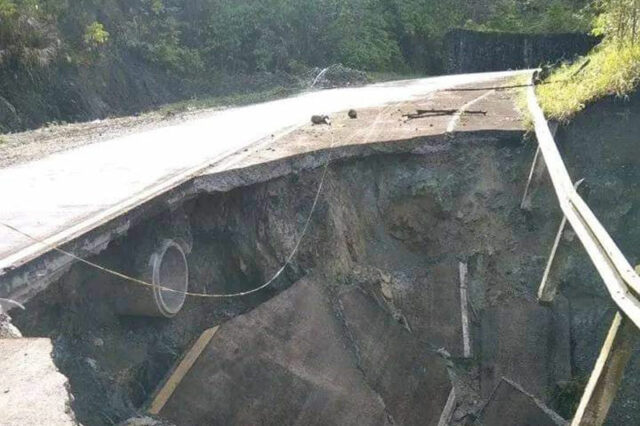
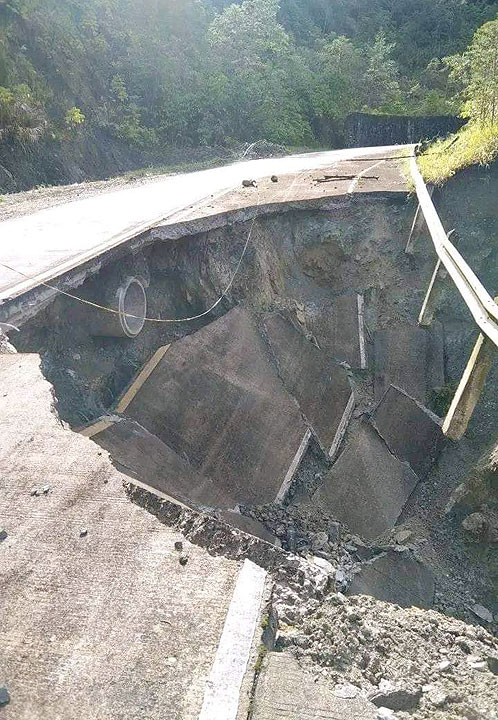
A SECTION of the Maragusan-New Bataan Road in Davao de Oro caved in on March 6 following two early morning earthquakes. — RUEBIL GARCIA VIA LGU-MARAGUSAN 
A SECTION of the Maragusan-New Bataan Road in Davao de Oro caved in on March 6 following two early morning earthquakes. — RUEBIL GARCIA VIA LGU-MARAGUSAN

TWO earthquakes, with magnitudes 4.5 and 5.2 rattled Davao de Oro province in southern Philippine early Monday morning, prompting the local government to suspend physical classes.   

The first tremor was recorded at 12:49 a.m. with epicenter at Compostela town, followed by the stronger earthquake at 4:43 a.m., based on data from the Philippine Institute of Volcanology and Seismology (Phivolcs). 

Both of these are still considered aftershocks of the magnitude 6 earthquake that struck the province on Feb. 1.   

School and work were canceled on Feb. 2 to give way to building inspection and damage assessment.   

Mondays class suspension for all levels meant an automatic shift to online or modular learning schemes, the provincial government said.

Marcos ‘hopes’ young Filipino farmers in the future will have modern tech 

BW FILE PHOTO

PRESIDENT Ferdinand R. Marcos, Jr. on Monday said he hopes young Filipino farmers would have more access to “best” technologies in the future.  

He made the statement at the ceremonial signing of a private sector-led program seeking to integrate small farmers and agri-entrepreneurs into the value chain of large companies.  

I hope that one day we will be able to say our millennial farmers are using the best technologies with the complete support of a value chain that supports them and that supports their needs,he said in a speech during the event.   

Mr. Marcos, who designated himself as head of the Agriculture department, said empowering millennial farmers with access to various technologies would make the Philippines a viable player in the international market.” 

The President also acknowledged the importance of micro, small and medium enterprises in the countrys economic growth.  

Their role is crucialin the “creation of new ideas, jobs, and wealth,he said. 

The value chain program is led by Go Negosyo, the advocacy arm of the Philippine Center of Entrepreneurship. Kyle Aristophere T. Atienza 

House gives final reading nod to bill ensuring sailors’ rights 

THE HOUSE of Representatives has approved on 3rd and final reading a bill seeking to institute the magna carta for seafarers. 

During Mondays plenary session, 304 lawmakers voted in favor of House Bill No. 7325, while four said no, and none abstained. The bill is one of the Houses priority measures for 2023. 

The bill also aims to address the Philippinesfailure to comply with the international training standards set by the European Maritime Safety Association, which audited 13 shortcomings and 23 grievances. 

Under the proposed measure, sailors should be given a safe and secure workplace based on international standards; fair employment conditions; decent working and living conditions; and medical care and other forms of social protection.  

They should also be given affordable education and training.  

Assistant Minority Leader Arlene D. Brosas, one of the lawmakers who voted no to the bill, said [it] is not in line with the demands of seafarers themselves. This version of the bill does not include our two main demands: the inclusion of fishing vessels and the provision of security of tenure for those who have worked for a cumulative one year with their employer or manning agency.  

Worse, this bill contains qualified inclusion of domestic merchant ships, excluding the application of provisions regarding standard employment contracts, payment of wages, among others on domestic seafarers,Ms. Brosas added. Beatriz Marie D. Cruz 

ADVERTISEMENT
ADVERTISEMENT