Home Blog Page 4951

No revamp just yet, says new police chief

SCREENGRAB FROM PNP FACEBOOK PAGE

THE NEW police chief is not planning an immediate organizational revamp even as he assumes the post amid a controversy linking high-ranking cops in the illegal drug trade.   

New appointments and changes in the Philippine National Police (PNP) would be based on merits and the moral ascendancy of its members, Philippine National Police chief Benjamin C. Acorda said in a news briefing on Tuesday streamed live on Facebook. 

He said the promotion of police officers will be done based on the policies and guidelines, based on merit, ability, and of course moral ascendancy of our officers.” 

This will be the basic set of qualifications that the Senior Officers Placement and Promotion Board (SOPB) will set,he said.  

This SOPB will be empowered to make sure that no policies are violated and also the candidates are scrutinized,he added.  

Mr. Acorda formally assumed his post on Monday, vowing to serve with transparency, dignity and professionalism.  

He replaced Rodolfo S. Azurin, Jr., who reached the mandatory retirement age of 56 on Monday.  

Mr. Acordas appointment came weeks after 49 policemen were found to have committed lapses in connection with the Oct. 8, 2022 drug bust where 990 kilos of crystal meth worth P6.7 billion were seized from a lending firm owned by a dismissed anti-narcotics officer.  

In January, Secretary Benjamin C. Abalos, Jr. of the Interior and Local Government department, which has supervisory control over the police force, asked hundreds of high-ranking officers to file a courtesy resignation to cleanse their ranks of the deep infectionof the illegal drug trade.  

A five-man panel is undertaking an evaluation of the officers.   

At the Tuesday briefing, Mr. Acorda said his marching orders during his command conference with the police force were to address illegal drugs, insurgency, and scalawags.  

The new PNP chief urged commanders to treat all PNP personnel with respect.   

He said upholding transparency is the best way to gain public trust. Kyle Aristophere T. Atienza

ERC says it acted promptly on power supply deals for Occidental Mindoro 

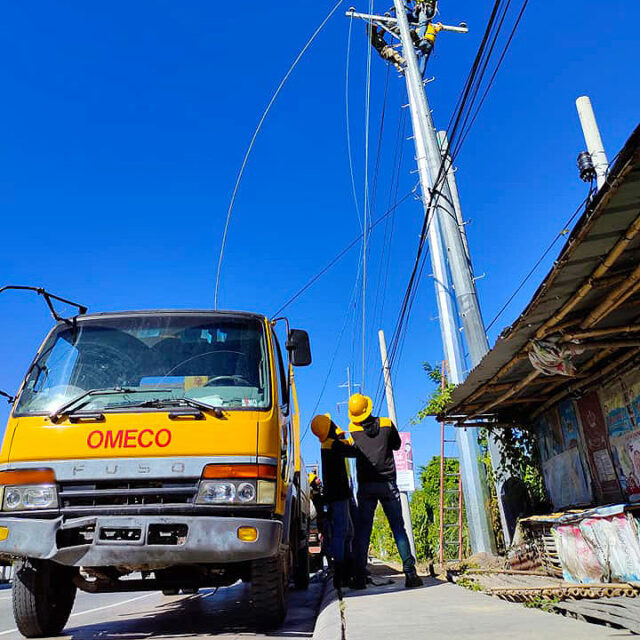
OMECO FACEBOOK PAGE

THE ENERGY Regulatory Commission (ERC) has denied that the ongoing power crisis in Occidental Mindoro is due to the agency’s inaction, saying it acted promptly on the power supply agreements (PSA) filed by the supplier and distributor.   

“The ERC wishes to emphasize that the PSAs filed by OMECO (Occidental Mindoro Electric Cooperative, Inc.) and OMCPC (Occidental Mindoro Consolidated Power Corp.) were provisionally resolved within 75 days from the day of filing in accordance with ERCs rules, contrary to allegations of delay in matters regarding the PSAs,” ERC said in a statement on Tuesday.   

Occidental Mindoro has been placed under state of calamity as the province experiences 20-hour daily power outages.  

Based on OMECOs website, the daily power supply available is only 13 MW while demand ranges from 27.78 to 28.73 MW.  

In its statement, the regulatory body said that only two of the PSAs signed between OMECO and OMCPC were filed to the commission.  

“These PSAs were already granted provisional authorities on 26 March 2022 and 10 June 2022. The provisional authorities allow the supply of around 12 MW (megawatts) from OMCPC to OMECO, and permit the flow of subsidies from the National Power Corporation (NPC) to OMCPC based on the ERC-approved rates,” the ERC said.  

The ERC also said that it is ramping up efforts to resolve the applications of National Power Corp. (Napocor) for a Universal Charge for Missionary Electrification (UCME) hike.  

“The ERC is mindful of the need to balance the subsidy requirements of off-grid customers, including Mindoro residents, with the impact of funding the subsidy collected from on-grid customers, given the increasing power rates also in the on-grid areas,” ERC said.  

Napocor has proposed a hike in UCME to sustain off-grid services as diesel prices increase.  

UCME funds Napocors operations, including those of its Small Power Utilities Group, which serves remote areas not connected to the grid.  

Occidental Mindoro is one of two provinces on the island of Mindoro, located south of the northern mainland Luzon.  

SENATE PROBE
Meanwhile, a senator has filed a resolution to probe and find solutions to the province’s power crisis.   

“Due to the power supply deficit, OMECO has been announcing daily rotational power schedule in the province, with a cluster of towns only getting electricity for three and a half hours in a day,” Senator Sherwin T. Gatchalian said in Senate Resolution No. 576.

Mr. Gatchalian also noted that the provincial government has been compelled to tap into its emergency funds, made possible by the declaration of a state of calamity, to ensure that operations of public services, like healthcare, continue.  

The provincial government, in a statement on Tuesday, said it is spending P10 million of its calamity fund to purchase fuel for generator sets for seven public hospitals.

Operations at the provincial capitol has also been temporarily cut to four days a week instead of five to help lessen electricity demand.  

“Despite all announced efforts of various government agencies, the power crisis in Occidental Mindoro has been ongoing for years with no end in sight,” Mr. Gatchalian said, noting that the investigation should produce short, medium, and long-term solutions.—Ashley Erika O. Jose and Beatriz Marie D. Cruz

13 new Bangsamoro villages get farm machines, boats worth P80M

SOME of the farm machinery handed over to 13 villages during a ceremony on April 24 at the Bangsamoro regional government center in Cotabato City. — JOHN M. UNSON

THE BANGSAMORO government has distributed P80 million worth of farm machines and fishing boats in 13 formerly conflict-affected villages in Midsayap, Cotabato, with ex-Moro guerrillas among the beneficiaries.      

In separate messages during Mondays turnover ceremony, Chief Minister Ahod B. Ebrahim and Local Government Minister Naguib G. Sinarimbo said the agricultural intervention is part of the Bangsamoro regional governments commitment to address poverty and underdevelopment in barangays impoverished by decades of secessionist activities.   

The 13 Muslim-majority barangays are part of the Bangsamoros special geographic area, which comprise villages in neighboring towns that voted to become part of the region in 2019.   

The town of Midsayap remains under Soccsksargen or Region 12, which is composed of South Cotabato, Cotabato, Sultan Kudarat, Sarangani, and General Santos City.   

Midsayap Mayor Rolly C. Sacdalan said his municipal government will continue to support the initiatives of the Bangsamoro Autonomous Region in Muslim Mindanao (BARMM) in helping these villages bounce back from the impact of armed conflicts.  

These barangays that originally belonged to Midsayap that are now under the autonomous region are lucky. The local government unit of Midsayap, which is under Region 12, will support these development efforts of BARMM,Mr. Sacdalan said.   

Farmers in these special geographic area barangays sell their farm products to traders in the center of Midsayap. There is correlation among them obviously, he said.   

The farm equipment released included 10 tractors for rice and corn production, 10 rice and corn harvesters, eight combine harvesters, and 300 motorized fishing boats with gears.  

Some of the barangay beneficiaries are located along the 220,000-hectare Liguasan Delta, a major source of fresh water fish for central Mindanao provinces.  

The project was under the Interior ministrys Bangsamoro Integrated Rehabilitation and Development (BIRD) program.  

BARMM is composed of the provinces of Maguindanao del Norte, Maguindanao del Sur, Lanao del Sur, Basilan, Sulu, and Tawi-Tawi. John M. Unson 

Group of farmers, scientists warn Mindanao local governments against GM crops 

IRRI

A NETWORK of farmer groups and scientists on Tuesday called on local governments in Mindanao, the southern Philippine islands, to act against the commercial release of genetically modified (GM) crops. 

The entry of GM crops into farmers fields threatens the rich genetic diversity in the region,Leo XL Y. Fuentes, Mindanao regional coordinator of Magsasaka at Siyentipiko para sa Pag-unlad ng Agrikultura (MASIPAG), said in a statement.   

For years, thousands of traditional varieties of crops have been developed and taken care of by small-scale farmers and indigenous people,he added.  

Last week, the Supreme Court issued a Writ of Kalikasan sought by the group against the commercial cultivation of Golden Rice and Bacillus thuringiensis Eggplant (Bt Eggplant).  

Golden Rice was developed by the Philippine Rice Institute (PhilRice) and the International Rice Research Institute while Bt eggplant was made by the Institute of Plant Breeding in the University of the Philippines – Los Baños.  

Golden rice is fortified with beta-carotene or vitamin A intended to address deficiencies in children, while Bt eggplant is designed to be resistant to pests.  

The group said that the rices beta-carotene content is measlyand inconsistent,and there are other crops such as vegetables and fruits that are more dependable sources of nutrition.  

Mr. Fuentes underscored the dangers of irreversible damage to the environment, biodiversity of rice and eggplant, and human health.” 

The group cited the opposition of organic farmers in Davao City, located in southeastern Mindanao, in conducting field testing for Bt Talong in 2010 due to possible contamination.” 

According to PhilRice, provinces designated as Malusog Rice distribution areas are: Quirino and Catanduanes in Luzon; Samar and Antique in the Visayas; and Lanao del Norte, Agusan del Sur, and Maguindanao in Mindanao.   

Seed production for Golden Rice is underway in Isabela, Ilocos Norte, Pangasinan, Cagayan, Nueva Ecija, Albay, Samar, Iloilo, Antique, and Agusan del Sur.  

MASIPAG Mindanao said that GM crops do not represent genuine developmentand called on the promotion of sustainable food production.  

Mindanao is a major source of agricultural products and fisheries, producing high-value export commodities. Sheldeen Joy Talavera 

Belga suspended for 15 days without pay from Elasto Painters

BEAU BELGA — PBA MEDIA

For playing in three ‘ligang labas’ unsanctioned leagues

RAIN or Shine’s Beau Belga is sinking fast in the quicksand he himself created by playing in not just one, but three “ligang labas” or unsanctioned leagues.

In a decision brought about by the internal probe it recently conducted, the Elasto Painters management cracked the whip on Mr. Belga with a 15-day suspension with no pay for suiting up in pickup games in Cebu, Davao and Laguna.

“Rain or Shine Team Management has concluded its internal investigation and found that Beau Belga breached his PBA Uniform Players’ Contract by participating in exhibition games in Cebu, Davao and Laguna. A fine of fifteen (15) days worth of salary has been imposed on Beau,” the franchise announced on its official social media page yesterday.

The day before, the team had already meted out a six-day suspension also without pay on the controversial big man, whose salary is pegged at the league maximum P420,000 a month, for his involvement in a “basketbrawl” that happened in Carmen, Cebu a few days back.

It turned out he played more outside Cebu.

The punishment was apart from more sanctions he and others would receive if also found guilty of the same offense.

PBA commissioner Willie Marcial said he would personally talk to Mr. Belga, NLEX’s JR Quinahan and Robert Bolick, Magnolia’s Jio Jalalon, and Converge’s Alec Stockton and Barkley Ebona early May if they would be slapped with more fines.

Messrs. Quinahan, Bolick and Jalalon were in the Cebu fracas with Mr. Belga while Messrs.  Stockton and Ebona allegedly played in Laguna.

Mr. Marcial said he is also talking with Games and Amusement Board officials that could put the offending players in deeper trouble. — Joey Villar

CCP Complex will house the Philippine Olympic Committee headquarters

PRESIDENT Bongbong Marcos vowed to help find the Philippine Olympic Committee (POC) a place that it can call home.

And it looked like it will be in the Cultural Center of the Philippines (CCP) in Pasay.

“The Philippine Olympic Committee, [who] I understand is still squatting in the environs of the CCP,” said the Chief Executive in his speech during Monday’s send off of the Phnom Penh Southeast Asian Games-bound national team at the PICC.

The POC never had its own office building since its creation almost a century ago and is currently maintaining offices at the PhilSports Complex in Pasig City that the government owns.

And Marcos’ recent statement should end its long wait soon.

“With the President himself promising his support, particularly in the POC office, we can now say that the House of POC would no longer be a dream,” said POC President Abraham Tolentino. “It will sooner or later be a reality with the promise of our President.”

Mr. Tolentino hopes the permanent POC headquarters would not only house the organization’s staff but also have space for a museum and a multi-purpose hall.

The Tagaytay City mayor picked the CCP Complex as the most ideal location because of the government and private-sector landmarks and offices, proximity to the airport, hotels as well as the consistent congregation of people in the area who could be visiting the museum. — Joey Villar

NU Lady Bulldogs battle Golden Tigresses for twice-to-beat advantage in Final Four cast

THE UAAP

Games Today
(Filoil EcoOil Center, San Juan)
9 a.m. — NU vs UST (men)
11 a.m. — NU vs UST (women)
3 p.m. — UP vs UE (women)
5 p.m. — UP vs UE (men)

REIGNING champion National University (NU) and tormentor University of Santo Tomas (UST) slug it out in an all-important duel for an inside track to the second seed in the final week of the UAAP Season 85 women’s volleyball tournament at the FilOil EcoOil Center.

Revenge versus mastery will be the name of the game at 11 a.m. as the Lady Bulldogs seek to return the favor on the Golden Tigresses for a chance to move one foot inside the coveted No. 2 spot that comes with a twice-to-beat advantage in the Final Four.

The Final Four, with De La Salle (12-1) at No. 1, is already set in stone except for the rankings from second to fourth, with NU and UST currently tied at 9-3. Adamson University (AdU) is not far behind at 9-4.

NU still has Ateneo or ADMU (4-9), Santo Tomas has University of the Philippines or UP (1-11) and Adamson has FEU (6-7) as their final assignments in a mad dash to the finish.

And a win today for either the Golden Tigresses or the Lady Bulldogs would certainly move them closer to that bid.

“We’re in the Final Four and we should aim higher but it will not be easy,” said UST coach Kungfu Reyes, whose wards look for a repeat feat on NU.

The Golden Tigresses in the first round hacked out a 25-23, 27-25, 17-25, 22-25, 15-11 win to end the Lady Bulldogs’ 20-game win streak highlighted by a 16-0 sweep of Season 84.

But as much as NU wants all the smoke for a desired vengeance, Season 84 MVP Mhicaela Belen warned against emotions as possible hindrance to their game plan.

Meanwhile in the second match at 3 p.m., UP and UE aim a graceful exit. NU (12-0) and UST (10-2), as well as UP (1-11) and UE (4-8) also clash in men’s division at 9 a.m. and 5 p.m., respectively. — John Bryan Ulanday

Team Philippines raring for Southeast Asian Games action

WITH no less than President Ferdinand R. Marcos, Jr. vowing full support, backed by top sports officials of the country, the 840-man Philippine delegation is exuding confidence as it prepares to do battle 10 days from now in the 32nd Southeast Asian Games in Phnom Penh, Cambodia.

The enthusiasm felt by the Philippine athletes was overwhelming.

In his message, Mr. Marcos Jr.  wished the Philippine contingent good luck during the send-off ceremony held at the Philippine International Convention Center (PICC) in Pasay City last Monday, April 24.

“One of the greatest pleasures I have found, being the leader, is to be able to give honor and to recognize, hopefully to inspire, and to provide support to our athletes, who are in fact our ambassadors in sport and play a very, very important part beyond just their participation in such important sporting events,” the President said in his speech.

“If there is anything more that this government can do, that this administration can do, that I personally can do, please make sure to tell me because we are all rooting for you. And we all want to do everything that we can do to make you as successful as you possibly can in your chosen events,” added Mr. Marcos.

Philippine Sports Commission (PSC) Chairman Richard Bachmann expressed gratitude to President Marcos for the overwhelming support for Filipino athletes, “It’s always good that the President and the country support our athletes. That’s a good morale booster and hopefully we all do well compared to last year. We’re all praying for that,” said Mr. Bachmann who is on his first major international games as PSC chief.

“The PSC is behind all our national athletes. All the commissioners and myself will be there to watch all the games,” assured Mr. Bachmann.

Team Philippines will be vying in 38 sports from May 5 to 17.

Swiss Army Knife

Heading into Game Four of the Knicks’ first round series against the Cavaliers, head coach Tom Thibodeau was determined to keep in check All-Star Donovan Mitchell. Even as the latter posted modest numbers in the previous outing (a win for the blue and orange), the bench tactician wanted to keep the pressure from the get-go. And so he did the obvious: He made erstwhile sixth man Josh Hart part of the First Five in place of usual starter Quentin Grimes.

Granted, part of the reason was the need for Grimes to sit out the match due to a right shoulder contusion he sustained in the first half of the Knicks’ Game Three triumph. Then again, there can be no discounting the impact Hart has made on the best-of-seven affair. Thibodeau, a noted taskmaster, has been effusive in his praise of the midseason pickup, and with ample cause. As Mitchell’s poor Game Four outing the other day proved, the proclaimed Swiss Army Knife is up to the task typically reserved for lockdown defenders.

Significantly, Hart has, in fact, upped his output since the postseason began last week. In four contests versus the Cavaliers, he has put up a line of 13.5 points (on 60% and 55.6% shooting from the field and three-point line, respectively), 6.8 rebounds, and 1.5 steals — all while hounding Mitchell from end to end. As he noted in a tweet early this year, “I can play 35 mins in an NBA game and be good but I’ll always be out of breath going up steps” — if nothing else, a reflection of his resiliency.

In any case, Thibodeau clearly trusts Hart to make the right plays at the right time. And it bears noting that Cavaliers counterpart J.B. Bickerstaff is of like mind, referring to the 30th pick in the 2017 draft as a player who “impacts winning,” and who needs to be kept “out of the stat sheet.” That didn’t happen in Game Four, and whether or not it does from here on may well decide the series.


Anthony L. Cuaycong has been writing Courtside since BusinessWorld introduced a Sports section in 1994. He is a consultant on strategic planning, operations and human resources management, corporate communications, and business development.

The ADR in all of us

BW FILE PHOTO

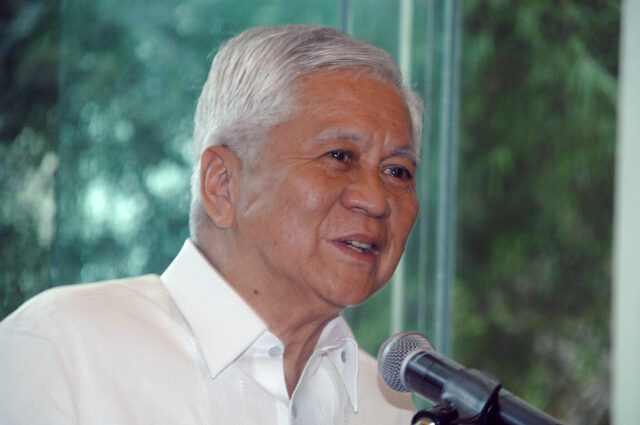
Former Ambassador to the United States and former Secretary of Foreign Affairs Albert del Rosario was on his way to San Francisco on the early morning of April 18 with his wife and his son-in-law when he suffered a massive heart attack and passed away.

For a week now, the tributes have been flowing nonstop, from various individuals, civil society, the public and private sectors, foreign governments, the international diplomatic community, and other organizations. All agree that the late ambassador — ADR to many of us who knew and worked with him — was a foreign policy titan, a consummate patriot, and a decent human being.

As many of you know, Ambassador del Rosario is the ADR in our Stratbase ADR Institute. He was our chairman, guiding and steering us in our pursuit of what we believed was right and just. We were inspired by his passion, guided by his wisdom, kept on our toes by his rigor and acumen — and warmed, truly warmed, by his friendship.

We mourn the loss of a man who did not only announce his convictions but lived them.

Today, in adding my voice to the chorus of tributes to a great man, I will repeat the words he himself said on various occasions as he advanced the Philippines’ interest, first and foremost, and at times at great peril and inconvenience to himself.

ADR was a fierce champion of the rule of law. Just earlier this month, he wrote in an opinion piece in the Philippine Star: “We believe that any Filipino leader inevitably has to confront the serious and critical challenges confronting our nation with respect to the West Philippine Sea. Nonetheless, as we have said before, there is but one anchor that will guide us in successfully resolving the situation, and that is the Rule of Law.”

Then again, defending and advancing the Philippines’ territorial rights had been his advocacy for a long time. In 2015, even before we obtained our legal victory at the Permanent Court of Arbitration in The Hague, ADR wrote about China’s so-called nine-dash line in Foreign Policy:

“Let me review the core issue, which is China’s claim that they have indisputable sovereignty over nearly the entire South China Sea as represented by their ‘nine-dash line.’ This is in contradiction to international law. If this position were not challenged, the Philippines would stand to lose our right to fish in our exclusive economic zone and our right to our hydrocarbon resources. Moreover, we are not allowed to enforce our laws in our exclusive economic zones, [we have] no right to fish, no right to our natural resources.”

He continued: “There would be no adherence to the rule of law. If the rule of law is not adhered to, you will have chaos and anarchy. It will be the rule of law versus the rule of the jungle. Effectively, you will have a region where might is right and where coercion is an acceptable dispute settlement mechanism.”

He had no ambiguities whatsoever when it came to what we should do amid the threats of China, which he unabashedly called a bully. “Standing up is what Filipinos must do to uphold the Rule of Law and prevent bullies from having their way. In the South China Sea, China is the bully because it has no right to hijack an entire sea. Yet China remains adamant in forcing its unjustified claims against the world,” he wrote two years ago.

In December last year, the comparison went beyond that with a bully. He wrote in the Philippine Daily Inquirer: “The West Philippine Sea is ours under the law and the 2016 Arbitral Award under the United Nations Convention on the Law of the Sea or UNCLOS. Thus, we do not need China’s consent or permission to use our own resources in the West Philippine Sea. Talking to China to give us access to the West Philippine Sea is like talking to a thief to give back what the thief stole from us.”

Of course, being a paragon of decency and propriety, ADR asked former President Rodrigo Duterte: “Mr. President, our respectful plea is the same: may we urge you to enforce the Arbitral Award and protect the West Philippine Sea for our country and our people? May we urge you, Mr. President, not to trade our lands and waters for prospects of money given by China?”

The struggle continues. Duterte has gone, we have a new set of leaders, but the threat posed by China and the boldness by which it makes these threats remain. In his mind, Ambassador ADR may have had a clear and unequivocal picture of how all countries are supposed to abide by the rules-based international order, and how the broader international community should respond to transgressions made by some counties, as China is doing now.

At the same time, he had a firm grasp of the realities of politics and geopolitics, the nature of the behavior of different leaders, and the role that people and societies play in helping shape decisions that affect their lives. He was as firmly grounded in reality as he was idealistic and optimistic.

We at Stratbase believe that we can best celebrate ADR’s well-lived life and carry on his legacy by continuing the work that we have begun. We will remain laser-focused on the issues that he was passionate about, dissecting them, making conversations happen among stakeholders — decision-makers, government and corporate leaders, analysts and observers — and then bringing them to the consciousness of the Filipino public, occasioning collaboration toward our goal.

The people have lost an indefatigable fighter in ADR. Those of us who had the privilege of knowing and working with him could attest that his zeal was contagious. His love for country — not a vague, abstract notion but one that was concretized in his life’s work — fortified our own.

Our heartfelt sympathies to the family. ADR will be on our minds as we continue our work from day to day.


Victor Andres “Dindo” C. Manhit is the president of the Stratbase ADR Institute.

Will the banking busts hurt clean tech?

DMITRY DEMIDKO-UNSPLASH

THE COLLAPSE of Silicon Valley Bank (SVB) last month seemed to bode ill for the global clean-energy race. Just as recently enacted US investment packages and the rest of President Joe Biden’s climate dreams were about to take off, the high-tech startup sector’s bank of choice went bust, and commentators are warning of a looming slowdown in “the transition to clean energy.”

Yet, rather than hampering the clean-energy race, this episode should be a teachable moment. Yes, the initial handwringing over the banking fallout and its implications for climate policy were justified. SVB occupied an important place in the startup sector, and it was especially tapped in to clean-tech firms (its website still boasts “over 1,550 prominent clients” among clean-tech and sustainability startups). But if we learn the right lesson here, SVB’s bust may become a godsend.

First and foremost, SVB’s fate ought to bury the silly idea, peddled by some of the tech sector’s loudest voices, that technology alone will save us from society’s ills. It helps that SVB has “Silicon Valley” in its name. Recall how the Valley’s self-styled “libertarians” snickered at the bank bailouts of 2008 and the automaker bailouts of 2008-09, regarding it as obvious that big staid Wall Street and boring old Detroit would need taxpayer cash. If only tech CEOs had been in charge, innovative and independent-minded thinking would have prevented the whole mess. We now know how fanciful such arguments were.

In fact, those earlier bank and automotive industry bailouts also offered important lessons. One is that ever-present moral hazard will make future bailouts both more likely and more costly. But while deposit insurance and more implicit state-backed guarantees against systemic risk bear some of the blame, that doesn’t mean bailouts aren’t sometimes justified. As Jeffrey Frankel of Harvard University famously quipped in 2008, “They say there are no atheists in foxholes. Perhaps, then, there are also no libertarians in financial crises.” Silicon Valley needs Washington as much as Washington needs the Valley.

That brings us to another, subtler lesson of the SVB episode. While the size of an institution obviously matters for financial stability, it must not be the only criterion. After 2018, SVB was not subjected to regular bank stress tests, because the Trump administration had reclassified banks with assets under $250 billion as systemically unimportant. (SVB’s CEO, Greg Becker, was a strong supporter of that regulatory rollback.)

There are, of course, good reasons why smaller institutions should not be subject to all the same rules as big ones. A solo entrepreneur cannot and need not face the same regulations as large multinationals. But a balance must be struck. Just as banks with assets under $250 billion should not have been excluded from stress tests, the world cannot afford to ignore small polluters by exempting them from rules merely requiring disclosures of greenhouse-gas emissions.

As matters stand, the US Environmental Protection Agency sets a minimum reporting threshold of 25,000 metric tons of carbon dioxide per year. This benchmark raises obvious problems. Suppose you are on the board of a company with emissions just above the threshold, or perhaps one that’s twice as large. What should you do? One option is simply to split into two (or more) corporate entities.

The number 25,000 shows up elsewhere, too, perhaps with more bite. New York City now requires buildings larger than 25,000 square feet (roughly 2,300 square meters) to meet strict decarbonization targets. With fines potentially reaching millions of dollars per building as soon as next year, building managers might now think twice about approving that penthouse expansion.

Globally, most countries that are not among the largest dozen polluters can and often do hide behind the claim that they are “too small to matter.” But, together, these economies account for around 25% of annual CO2 emissions. Being small does not mean your actions are irrelevant. To keep emissions and global warming in check, we will need to maintain a nuanced understanding of individual contributions and obligations.

Fortunately, supporting clean, lean, and green ventures is no longer the narrow purview of a scrappy community bank that is going out on a limb. Every major financial institution now wants in on the action, and SVB’s failure may well mean that they can step in with more vigor (and financing) than they otherwise would have done.

HSBC, for example, gained a foothold in a growing multibillion-dollar tech sector overnight when it bought SVB’s UK arm for £1 ($1.25). Moreover, those 1,500-plus clean-tech clients mentioned on SVB’s website are now looking for new bankers. Most will opt for larger institutions with deeper pockets. Wherever they take their business, they will teach one another new tricks in the process.

Equally important, these other banks and financial institutions presumably will not follow SVB in touting as a core competency their expertise at overcoming “regulatory hurdles.” The goal now will be to take advantage of the new regulatory and investment environment at a time when the US federal government alone is spending hundreds of billions of dollars on decarbonization. Rather than fighting the good fight against Big Government, clean-tech startups are vying for the state’s largess. These market changes all call for an unprecedented level of cooperation between risk-takers and regulators.

Will we see a congenial, well-executed public-private minuet, or will there be more faceplants for big stars? Most likely, there will be plenty of both. When it comes to an economic transformation on the scale of the transition to net-zero emissions, it could hardly be otherwise.

PROJECT SYNDICATE


Gernot Wagner, a climate economist at Columbia Business School, is the author of Geoengineering: The Gamble (Polity, 2021).

Probing proby 2

KATEMANGOSTAR-FREEPIK

In August 2022, I wrote an article on probationary employment. The discussions centered mainly on the issues arising from the essential requirements under Article 296 of the Labor Code, i.e., that the employee must be apprised of the regularization standards at the time of his/her engagement, and that the probationary period must not exceed six months. I did mention, however, that there are other issues surrounding probationary employment but, due to space constraints, the same were not discussed in the said article. Hence, this sequel.

SUCCESSIVE PROBATIONS
There may be a situation where the employee is put on probation for five months and then separated, only to be rehired for another five months of probationary employment, and again separated, and so on and so forth. This scheme, according to the Supreme Court, is clearly intended to avoid the onset of regular employment, and thus, should not be allowed.

In Lina B. Octaviano vs. NLRC, et al. (G.R. No. 88636, Oct. 3, 1991), the employee therein was hired as a component mechanic and issued temporary employment as such from Nov. 21, 1984 up to May 21, 1985. She was, however, made to work, in fact, as a secretary and parts clerk. On May 22, 1985, she was extended another contract of employment providing a probationary period of six months. On Nov. 21, 1985, she was separated, as management decided to end her probationary employment. On Jan. 20, 1986, she was rehired as a parts clerk and was issued a six-month probationary employment. On June 5, 1986, she was again dismissed. The Court saw “these successive hirings and firings as a ploy to avoid the obligations imposed by law on employers for the protection and benefit of probationary employees xxx.”

Octaviano involved successive probations. What if there was a gap in the hirings, say three months?

FIXED-TERM AND PROJECT EMPLOYMENTS NOT SUBJECT TO PROBATION?
Manalo, et al. vs. TNS Philippines, Inc. (G.R. No. 208567, Nov. 26, 2014) was direct in saying that “project employment and probationary employment are distinct from one another and cannot co-exist with each other.”

How about fixed-term employment? In Servidad vs. NLRC, Innodata Philippines, Inc., et al. (G.R. No. 128682, March 19, 1999), the Court held that if the contract was really for a fixed term, the company should not be given the discretion to dismiss the employee during the agreed period of employment for reasons other than the just and authorized causes under the law. The language of the contract in Servidad is a double-bladed scheme to block the acquisition of the employee of tenurial security. Thereunder, the company has two options — separate the employee by reason of expiration of contract, or it may use “failure to meet work standards” as the ground for the employee’s dismissal. In either case, the tenor of the contract jeopardizes the right of the worker to security of tenure. The Court, however, was not as direct in Servidad as in Manalo.

OJT/TRAINING
May an employer engage someone as a trainee prior to engaging him/her as a probationary employee? The answer is yes and no.

If the training takes the form of an apprenticeship (under the Technical Education and Skills Development Authority or TESDA, or the Department of Labor and Employment) or training under the Dual Training System Act (Republic Act No. 7686), or even a Student Internship Program (pursuant to Commission on Higher Education Memorandum Order 104-17), the employer may subsequently engage the trainee as a probationary employee. The training, being valid and authorized, is separate and distinct from employment.

However, if the training is not under any of the foregoing, even if the employee agrees, the employer cannot engage him/her first as a trainee and thereafter a probationary employee. In Holiday Inn Manila vs. NLRC (Holiday Inn) (G.R. No. 109114, Sept. 14, 1993), the Court considered the complainant’s three-week on-the-job training (OJT) period as her probationary employment period. The Court said that the complainant was certainly under observation during her OJT such that if her services proved unsatisfactory, she could have been dropped anytime during said period; and when her services were continued after her training, the employer effectively recognized that she had passed probation and was qualified to be a regular employee. Thus, the complainant attained regular employment status when she was formally placed under probation after her OJT. Similarly, in Oyster Plaza Hotel, et al. vs. Melivo (G.R. No. 217455, Oct. 5, 2016), the training period of three months was considered as the employee’s probationary employment period.

Given the foregoing, can the employer subsume the training period within the probationary period of six months, effectively making the training as part of the probationary employment and consider satisfactory performance during the training as one of the standards for regularization? This is an interesting topic to discuss.

This article is for informational and educational purposes only. It is not offered and does not constitute legal advice or legal opinion.


Neptali B. Salvanera is a partner of the Labor and Employment department of the Angara Abello Concepcion Regala & Cruz Law Offices or ACCRALAW.

(632) 8830-8000

nbsalvanera@accralaw.com

ADVERTISEMENT
ADVERTISEMENT