Home Blog Page 4952

Towards a more sustainable transportation sector in the Philippines
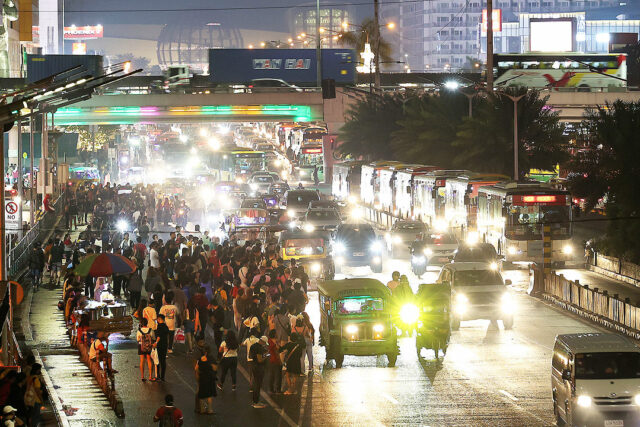
COMMUTERS occupy a lane as they wait for available public transport while motorists endure heavy traffic on the northbound lane of EDSA in Pasay City. — PHILIPPINE STAR/ MIGUEL DE GUZMAN

There has been a lot of talk about a more sustainable future in the Philippines. Policies have been developed by the government to ensure sustainability in resource management. The private sector has also taken the lead in designing and implementing sustainability projects in their respective business operations. And yet there seems to be some consensus that we are far from ensuring a sustainable future — especially in the transport sector.

With a population of over 100 million people spread over more than 7,000 islands, transportation infrastructure is often inadequate or inaccessible to many people. The country’s transportation sector is a significant contributor to greenhouse gas emissions, with the transportation sector accounting for around 35% of the country’s energy-related emissions. It does not take rocket science to conclude that the current transportation system in the Philippines is not sustainable as it continues to be heavily reliant on private cars, which contribute to air pollution and traffic congestion.

There are several challenges that the Philippines faces in terms of sustainable transportation.

One of the challenges is the lack of an adequate public transportation infrastructure. Many people rely on privately owned vehicles, which are often inefficient and polluting. The Philippines has a relatively underdeveloped public transportation system, which makes it difficult for people to get around without a car. This is especially true in rural areas, where public transportation is often non-existent. A study by the World Bank found that the Philippines could save $1.4 billion per year by investing in public transportation.

However, there are initiatives underway to address this issue, such as the Bus Rapid Transit (BRT) system in Metro Manila. The BRT system is designed to provide a fast, efficient, and environmentally friendly transportation option for commuters. The system includes dedicated bus lanes, modern buses, and other amenities to make commuting by public transportation more attractive. According to a study by the University of the Philippines, the BRT system has the potential to reduce carbon emissions by up to 200,000 metric tons annually.

Other examples of sustainable transportation include:

• Public transportation: This includes buses, trains, subways, and streetcars. Public transportation is a great way to reduce emissions and traffic congestion.

• Walking and biking: These are two of the most sustainable forms of transportation. They are also great for our health.

• Carpooling and vanpooling: These are great ways to reduce the number of cars on the road.

• Telecommuting: This is the practice of working from home. Telecommuting can help to reduce traffic congestion and pollution.

• Shared mobility: This includes services like Grab, Joyride and the like. These services allow you to use a vehicle when you need it, without having to own one.

• Electric vehicles: Electric vehicles produce zero emissions. They are becoming more and more affordable, and they are a great way to reduce your environmental impact.

Despite the challenges, there are several reasons to be optimistic about the future of sustainable transportation in the Philippines. The government has made a commitment to investing in public transportation with the goal of reducing greenhouse gas emissions from transportation by 20% by 2030. There is also growing awareness of the need for sustainable transportation among the public.

The Philippines has several examples of sustainable transportation. In the city of Makati, for example, there is a well-developed network of pedestrian walkways and bike lanes. The city also has a number of public transportation options, including buses, jeepneys, and taxis. In the city of Marikina, there is an extensive network of bike lanes that is used by both residents and tourists. The city also has several public transportation options, including buses, jeepneys, and tricycles.

Here are some additional examples of sustainable transportation in the Philippines:

• The city of Cebu has a bike-sharing program that allows residents and visitors to rent bicycles for a fee.

• The city of Iloilo has a river ferry service that connects the city’s different districts.

• The province of Palawan has electric vehicles that are used for public transportation.

Another example of a sustainable transportation solution that is being adopted in the Philippines is the use of electric vehicles. Electric vehicles produce zero emissions, and they are becoming more and more affordable. The government is providing subsidies to help people buy electric vehicles, and there are a number of charging stations being installed around the country.

Another initiative is the public utility vehicle (PUV) modernization program, which aims to replace traditional jeepneys with electric vehicles. Jeepneys are a common mode of public transportation in the Philippines, but they are often poorly maintained and emit significant amounts of pollutants. The PUV modernization program seeks to address these issues by providing a cleaner, more efficient alternative. According to a study by the Asian Development Bank, the PUV modernization program has the potential to reduce carbon emissions by up to 260,000 metric tons annually. Additionally, the program provides economic benefits by creating jobs in the production and maintenance of the vehicles.

Another promising initiative in the Philippines is the Bike-Friendly Cities program, which aims to promote cycling as a sustainable mode of transportation. The program includes infrastructure improvements such as bike lanes, parking facilities, and other amenities to make cycling safer and more convenient. This initiative has the potential to provide a low-cost, low-emission transportation option to many people who may not have access to traditional modes of transportation.

A study by the Institute for Transportation and Development Policy found that investing in cycling infrastructure can provide a significant return on investment. For every dollar invested in cycling infrastructure, up to $24 in economic benefits can be generated. Additionally, promoting cycling can have a positive impact on public health by encouraging physical activity and reducing air pollution.

Corollary to this is use of bike-sharing programs being adopted in some cities in the Philippines. Bike-sharing programs allow people to rent bicycles for a fee, which makes it easy and affordable to get around without a car. There are several bike-sharing programs operating in the Philippines, and the government is providing funding to expand these programs.

Other initiatives that have the potential to provide multiple benefits, including reducing emissions, improving air quality, and creating economic opportunities are the following:

• Electric tricycles: In addition to electric jeepneys, the Philippines is also promoting the adoption of electric tricycles, which are a common mode of transportation in many rural areas. The Department of Energy has launched several initiatives to promote the adoption of electric tricycles, including a loan program to help tricycle operators purchase electric tricycles.

• Green energy charging stations: As electric vehicles become more prevalent in the Philippines, there is a need for more charging infrastructure. Several companies and organizations have launched green energy charging stations that use renewable energy sources like solar power to charge electric vehicles. These charging stations not only provide a clean and sustainable way to charge electric vehicles but also promote the adoption of renewable energy sources.

In addition to these examples, there are several other initiatives in the Philippines aimed at promoting the adoption of more sustainable transportation vehicles, including tax incentives for electric vehicles, research and development programs, and awareness campaigns. These initiatives are crucial to achieving a more sustainable transportation sector in the Philippines and reducing the country’s carbon footprint.

These are just a few examples of the many ways that the Philippines is working to make its transportation system more sustainable. By promoting alternative modes of transportation, improving the efficiency of the transportation system, and making the transportation system more environmentally friendly, the Philippines can create a transportation system that is sustainable for the future.


Ron F. Jabal, APR, is the chairman and CEO of PAGEONE Group (www.pageonegroup.ph) and founder of Advocacy Partners Asia (www.advocacy.ph).

ron.jabal@pageone.ph

rfjabal@gmail.com

S. Korea economy averts recession, faces headwinds

STREET VENDORS wait for customers at Myeongdong shopping district in Seoul, South Korea, Jan. 9, 2023. — REUTERS

SEOUL — South Korea’s heavily trade-reliant economy barely averted a recession posting slim growth in the first quarter, but the outlook remained clouded by weak exports due to a cooling global economy, even with China’s reopening.

South Korea’s gross domestic product (GDP) in the first quarter expanded by 0.3% over the previous three-month period, official advance estimates showed on Tuesday, compared with a median 0.2% rise tipped in a Reuters survey.

Still, economists saw it as little more than a technical rebound after a 0.4% contraction during the final quarter of 2022, which was the first decline in 2-1/2 years and reinforced their view that the central bank’s tightening cycle is over.

“I don’t see any sign of strength from the detailed figures about the future path of the economy,” said Oh Suk-tae, economist at Societe Generale Securities in Seoul, adding he retains his forecast for 0.8% growth for the whole year.

The biggest contributor to GDP during the first quarter was private consumption, posting growth of 0.5%, while capital investment dented economic growth, dropping 4.0%. Exports rose 3.8%, while imports grew 3.5%.

There is high uncertainty both externally and internally, but a recovery in the IT sector and the Chinese economy is likely to stoke a rebound in the second half of the year, a central bank official said at a media briefing.

The Bank of Korea said earlier this month that this year’s economic growth would be weaker than its earlier projection of 1.6%, as the central bank left interest rates steady for the second consecutive meeting in a row.

Economists now expect the Bank of Korea not to hike interest rates further after having raised them by 300 basis points since late 2021.

Over a year earlier, the country’s gross domestic product (GDP) expanded 0.8% during the January-March period, according to the Bank of Korea’s estimates, compared with gains of 1.3% in the prior quarter and 0.9% tipped in the survey. — Reuters

Inflation, slow demand are still top concerns for retailers globally — survey

People shop at a UNIQLO store in New York City, New York, U.S., March 15, 2019. — REUTERS/BRENDAN MCDERMID/FILE PHOTO

BARCELONA — Despite initial signs that price rises are slowing, retailers globally are still worried about inflation dampening consumer spending, according to a survey of retail decision-makers conducted by Boston Consulting Group.

In Europe retailers are contending with slowing sales as consumers, squeezed by high energy bills, spend less on clothes and buy cheaper food.

Overall, the rising cost of goods, declining consumer spending, and unpredictable supply chains were the top-ranked concerns for the 561 global retail executives, directors, and managers surveyed by BCG for a report published Tuesday as the World Retail Congress conference begins.

Passing higher costs on to shoppers is likely to become harder: 72% of respondents said they expected consumers to be more price-sensitive this year.

“This limits the options retailers have to recover and combat high input costs, and it creates new difficulties that retailers must combat, such as shifting consumer behavior towards specific products and customer segments,” BCG said in the report.

When buying groceries, for example, consumers in Britain have been prioritizing affordability over other qualities, with negative knock-on impacts on nutrition.

As well as hiking prices and renegotiating with suppliers, retailers are having to get creative to keep shoppers coming back, with many investing in loyalty programs, price promotions, and improvements to the online customer experience, the survey found.

The authors of the report said retailers should invest in artificial intelligence (AI) to hone their pricing and marketing strategies using algorithms and machine learning.

“Most retailers outside Asia are neglecting AI and missing out on the potential additional benefits it offers,” they said.

Asia was a bright spot in terms of retailers’ expectations, with 76% of survey respondents expecting the region’s economy to grow this year after China’s reopening following lengthy COVID-19 lockdowns.

Retailers were more optimistic about North America than Europe, with 68% predicting growth in the former and 54% in the latter. — Reuters

US deploys more cyber forces abroad to help fight hackers

A man holds a laptop computer as cyber code is projected on him in this illustration picture taken on May 13, 2017. — REUTERS

SAN FRANCISCO — The United States is sending more of its cyber forces abroad to help foreign governments fight hackers, a top US military official said at the RSA cybersecurity conference in San Francisco.

In the last three years, the US military’s Cyber National Mission Force (CNMF) has conducted 47 such “hunt forward” defensive operations across 20 countries at the invitation of those nations, US Army Major General William Hartman said on Monday.

“The demand for that only increases, and they are not all the same,” Mr. Hartman, CNMF’s commander, said of the missions, speaking on the sidelines of the conference.

The initiative reflects a broader push by the US government to improve collaboration with foreign allies on combating cyber crimes, which often cross borders. Some of the largest known ransomware criminal gangs, for instance, have targeted multiple countries, including the United States.

Mr. Hartman said CNMF had dispatched 43 specialists to Ukraine, which has been battling Russian cyber onslaughts amid the war there, which Russia calls a “special operation”.

“Those are defense teams we send, and (they) hunt for shared adversaries, find tools and capabilities,” Mr. Hartman said.

He said the CNMF was working closely with the top US cyber body, the Cybersecurity and Infrastructure Security Agency (CISA).

Both agencies had collaborated on thwarting potential attacks against three US federal agencies by foreign adversaries, said Eric Goldstein, CISA’s executive assistant director.

“We notified the agencies, gave them guidance, and kicked off incident response. Simultaneously, we gathered all the information on the adversary infrastructure and shared it with CNMF,” he said. Mr. Goldstein and Mr. Hartman declined to offer further details on the incident.

A separate incident they disclosed during a joint presentation at the conference involved an Iranian hacking group that had breached voting systems in a U.S. city that were used to report the 2020 election results. 

The CNMF feared the hackers could make the system’s website “look like the vote had been tampered with,” but the agency revoked access, Mr. Hartman said.

“There was no impact to any election infrastructure,” Mr. Goldstein added.

“We want to make this a model – find the technical evidence to hand over to CNMF,” he said, adding that securing the 2024 U. presidential election is a “top priority”. — Reuters

Crab cakes, beef and banana splits: Biden’s South Korea state dinner menu unveiled

The dessert course; a banana split featuring lemon bar ice cream, fresh berries, mint ginger snap cookie crumble and doenjang caramel is displayed during a media preview ahead of Wednesday evening’s White House State Dinner for South Korean President Yoon Suk Yeol and his wife, Kim Keon Hee in the State Dining Room at the White House in Washington, U.S., April 24, 2023. — REUTERS/LEAH MILLIS

WASHINGTON — Guests at President Joseph R. Biden’s and First Lady Jill Biden’s state dinner with their South Korean counterparts will feast on Maryland crab cakes and braised beef short ribs followed by banana splits for dessert, the White House said on Monday.

The Bidens are hosting South Korean President Yoon Suk Yeol and his wife Kim Keon Hee for a state visit on Wednesday that will conclude with dinner in the East Room, which will feature tables decorated with large vases filled with boughs of blooming cherry blossoms that tower six feet into the air.

The meal itself will kick off with crab cakes along with cabbage, kohlrabi, fennel and cucumber slaw. A chilled yellow squash soup will round out the first course.

The main course features beef, butter bean grits, sorghum-glazed carrots and pine nuts.

The dessert is a deconstructed banana split with lemon bar ice cream, fresh berries, mint ginger snap cookie crumble and “Doenjang caramel.”

“Joe’s favorite will be the last,” Jill Biden quipped to reporters about her husband, whose love of ice cream is well documented.

“We hope to showcase the harmony of our cultures and our people intertwined,” at the dinner, she said.

The first lady worked with Chef Edward Lee, author of Smoke & Pickles and Buttermilk Graffiti, along with the White House chefs to design the menu.

“The first person I called was my mother,” Mr. Lee said, noting she had immigrated to the United States from Korea. “To come full circle and to give back and be able to do this was … a very proud moment for me and also for my mom.”

Asked what advice she gave, Mr. Lee said: “She just said don’t mess it up.” — Reuters

India to surpass China as world’s most populous country by end-April – UN

A WORKER folds an Indian flag at a workshop in India, Aug. 11, 2005. — REUTERS

NEW DELHI — India’s population is expected to match China’s by the end of April and then to surpass it as the world’s most populous country, the United Nations (UN)  said on Monday.

The announcement by the UN’s Department of Economic and Social Affairs (DESA) comes days after the UN Population Fund said last week India would have 2.9 million more people than China by the middle of 2023.

India’s population is expected to reach 1,425,775,850 by the end of this month, DESA said, based on the latest UN estimates and projections of the global population.

“China will soon cede its long-held status as the world’s most populous country,” it said, adding that “due to the uncertainty associated with estimating and projecting populations, the specific date on which India is expected to surpass China in population size is approximate and subject to revision.”

Last year, some population experts had used UN data to project India’s population would touch 1,425,775,850 on April 14, 2023.

But UN population officials had said it was not possible to pinpoint a date because of uncertainty relating to data from India and China, with India’s last census held in 2011 and the next, which had been due in 2021, being delayed by the COVID-19 pandemic.

“China’s population reached its peak size of 1.426 billion in 2022 and has started to fall. Projections indicate that the size of the Chinese population could drop below 1 billion before the end of the century,” DESA said.

“By contrast, India’s population is expected to continue growing for several decades.”

Between 2023 and 2050, the number of people aged 65 or over was expected to nearly double in China and to more than double in India, DESA said.

“Nevertheless, as a proportion of the total population, the growth of the older population in India will be much slower than in China,” it added.

While there was no official reaction from India to the UNFPA report last week, China said dividends from population growth did not only depend on quantity but also on quality and that China’s talent dividend was booming.

Indian analysts and economists said there was no cause for alarm in becoming the world’s most populous country as India’s growth in that regard has been slowing and its majority-young population could be a boon if it creates more opportunities for education and employment. — Reuters

InLife’s Secure 5 offers frequent cash payouts for 5 years

For a limited time, Insular Life (InLife) is offering Secure 5, an insurance product that provides life protection, guaranteed quarterly cash payouts on the plan’s second year, and the return of total premiums upon maturity in 5 years.

“The circumstances of the past three years have made some people risk-averse. They are uncomfortable with market movements that may impact the fund values of variable universal life policies. We kept this in mind when we developed Secure 5,” said Gae Martinez, chief marketing officer of InLife.

Secure 5 is a five-year guaranteed issue offer (GIO) insurance plan available to individuals between the ages of 0-65. It is best suited for individuals who want their financial assets placed in long-term investments.

“Many Filipinos are avoiding or postponing making financial decisions in the light of all the issues affecting markets. But Secure 5 lets you protect your loved ones while guaranteeing attractive payouts over a 5-year period,” Ms. Martinez noted.

Secure 5 has two annual premium payments that start at P250,000 (with a maximum of P12,500,000). Policyholders have the option to place a second annual premium in a premium deposit fund (PDF).

The guaranteed cash payouts or anticipated endowments are up to 4% per annum. The first cash payout is given on the first year of the policy. The subsequent payouts are given quarterly. Once the plan reaches its five-year maturity, the policyholder will receive back the total premiums paid, regardless of economic or market conditions.

Meanwhile, InLife continues to be one of the country’s top five insurers in terms of net worth, net income, and assets, according to recent figures from the Insurance Commission.

“As we move forward, we will introduce innovations and develop new products that address the current needs of our customers. In fact, our latest VUL fund strategy, the Systematic Global Sustainable Income Fund, seeks attractive regular income while investing in a global portfolio that also achieves a lower carbon intensity compared to benchmarks. Available in both our Peso and US Dollar plans, the fund has paid close to 6% p.a. in its latest income distribution. This is proof that sustainable investing makes good financial sense,” said Ms. Martinez.

She added that this is consistent with the Company’s firm commitment to make significant investments in renewable projects and sustainable initiatives. “InLife has been a trusted insurance company for more than 112 years. With our new sustainable fund and the recent launch of Secure 5, we further strengthen our commitment to advancing financial security for Filipinos and their loved ones,” Ms. Martinez said.

Talk to an InLife financial advisor to learn more about the benefits of Secure 5 or visit https://www.insularlife.com.ph/secure5. Follow InLife’s Facebook Fan page for product updates, events, and promotions.


Spotlight is BusinessWorld’s sponsored section that allows advertisers to amplify their brand and connect with BusinessWorld’s audience by enabling them to publish their stories directly on the BusinessWorld Web site. For more information, send an email to online@bworldonline.com.

Join us on Viber at https://bit.ly/3hv6bLA to get more updates and subscribe to BusinessWorld’s titles and get exclusive content through www.bworld-x.com.

SIM Registration now available via GCash app; deadline to register extended for 90 days

As the government extends the deadline for SIM registration, Globe and TM subscribers may now register their SIMs on the GCash app.

Globe and TM customers who are GCash users will receive a prompt to register their SIMs and they just need to follow the instructions. Once successful they will get free 1GB of data which they can use right away.

By registering their SIMs, customers will avoid SIM deactivation and have uninterrupted access to their e-wallet accounts.

Customers who fail to register their SIMs that are linked to their accounts can still access their funds by requesting a transfer to a new registered mobile number from the GCash Help Center. The process, however, will take several days.

“That’s why we encourage SIM users with GCash wallets to register their SIMs before the deadline to avoid this inconvenience. We remind our customers to register their SIMs only with the GCash app or through the official portals of their respective telco providers,” said GCash President and CEO Martha Sazon.

GCash will NEVER ask its customers to share their OTP, MPIN, or other sensitive information. SIM registration is mandated by the Philippine government under Republic Act 11934 or the SIM Registration Act. The law was enacted to combat online fraud and other forms of cybercrime.


Spotlight is BusinessWorld’s sponsored section that allows advertisers to amplify their brand and connect with BusinessWorld’s audience by enabling them to publish their stories directly on the BusinessWorld Web site. For more information, send an email to online@bworldonline.com.

Join us on Viber at https://bit.ly/3hv6bLA to get more updates and subscribe to BusinessWorld’s titles and get exclusive content through www.bworld-x.com.

Philippines’ Marcos may discuss Taiwan in US but trade tops agenda – envoy

PHILIPPINE STAR/KRIZ JOHN ROSALES

Philippine President Ferdinand Marcos Jr may discuss tensions over Taiwan with US counterpart Joe Biden at the White House next week but the focus of talks will be on trade and investment, a top diplomat said on Tuesday.

Philippine ambassador to the United States Jose Manuel Romualdez told Reuters that Mr. Marcos would prioritize economic discussions on energy, climate and trade during his first official visit to Washington on May 1.

“China, of course, is our number one trading partner,” said Mr. Romualdez, a cousin of Marcos who also held the post in the previous administration.

“Japan is also a trading partner. And so the United States is one of those countries that we would like to be able to have more trade.”

He said the Philippines wanted the US Congress to renew its access to US trade preferences for developing economies, which expired in 2020.

The talks will be the latest in a series of high-level meetings the Philippines has held with leaders of the United States and China, which are jostling for strategic advantage in the region.

Mr. Marcos met China’s President Xi Jinping in Beijing in January and the foreign minister last week.

He may or may not discuss Taiwan with Mr. Biden, Mr. Romualdez said, but is focused on avoiding conflict.

“On a clear day, from the northern most part of the country, you can see Taiwan,” he said. “So that’s how close it is.

“Obviously it will affect us… If anything happens in Taiwan, everybody will be affected, most especially in the ASEAN (Southeast Asia) region, but the whole world.”

He said the Philippines did not want China to “feel that we are out on an offensive because of our relationship with the United States… Everything that we’re doing is purely for the defense of our country.”

China has accused the Philippines of stoking tensions by almost doubling the number of its bases that the US military can access under their defense agreement. Some of those bases face north towards Taiwan.

The treaty allies have enjoyed warmer ties since Mr. Marcos took office last June, reversing his predecessor’s anti-US stance. More than 17,000 Philippine and US soldiers are conducting their largest ever joint military drills.

Concerns are also rising about a military buildup by Beijing in the South China Sea.

Mr. Marcos said on Monday he would press Mr. Biden to make clear the extent of Washington’s commitment to protect the Philippines under a 1951 Mutual Defense Treaty, citing the “heating up” of regional tensions. – Reuters

15th Philippine Food Expo: Bringing cooking, culture, and celebrity chefs together

Catch Celebrity chefs Myke “Tatung” Sarthou, Sheilla Lopez, and Boy Logro as they share their love for Filipino cooking and showcase their latest culinary creations at the 15th Philippine Food Expo set on April 28-30 at the Mall of Asia SMX Convention Center in Pasay City.

Organized by the Philippine Food Processors and Exporters Organization (Philfoodex), the Expo is the country’s only All-Filipino Food Show which makes a much-awaited comeback after a three-year hiatus with bigger and more diverse exhibitors.

Award-winning chef and cookbook author Tatung Sarthou will talk on Food Tourism on April 28, 3:00 p.m. at a forum presented by the Far Eastern University in collaboration with the Council of Hotel and Restaurant Educators of the Philippines (COHREP). An advocate of the country’s culinary heritage, he will share his passion on preserving and defining Filipino cooking as an integral part of the tourism industry.

Meanwhile, the tandem of chefs Sheilla Lopez and Boy Logro will sizzle with cooking demos on April 30, 1:00 p.m. at their sought-after long-running Baguio Oil Cooking Series TV program.

Themed Emerging Trends in Food Trade, the biennial Expo will gather over 300 micro, small, medium to large-scale exporters involved in food manufacturing, growing, export, equipment, packaging, ingredients, additives, and allied industries in a remarkable effort to help the food & beverage industry bounce back post-pandemic.

Also championing the vital role of agriculture in the Philippine food industry, Philfoodex has tapped Mayani as the expo’s first agri-tech partner.

“Food security remains to be a pressing issue in the country. With Mayani’s presence in the expo, we hope to not just highlight the importance of sustainable food ecosystems, but also make accessible affordable produce cultivated by our local farmers. Afterall, they are our food security frontliners in this post-pandemic era,” shares Philfoodex President Ruben See.

He also noted that new home-grown medium and small enterprises born out during the pandemic, will also exhibit for the first time to expand their market reach.

“The demand for new food products and technologies in Southeast Asia has increased exponentially, which local manufacturers must be able to meet. In line with this, we are working out measures to improve our exports and manufacturing sector by partnering with our ASEAN countries for the steady supply of raw materials,” he added.

Supported by the Department of Agriculture, the event is in conjunction with the Filipino Food Month which celebrates the country’s rich culinary treasures. It will also feature the Young Farmers Challenge Program, which engages young farmers and fisherfolk in the national drive for food security and agricultural modernization.

Also slated is series of seminars on trends and updates in the hospitality industry, food tourism, and food security to help medium, small and micro enterprises improve their product, and optimize business opportunities.

Spicing up the Expo is the Culinary Challenge competition which will showcase the skills of students and faculty in the categories of Food Styling and Photography, Philippine Regional Table Setting, Kitchen Masters, PINASarap Breakfast, Healthy Pasta, Modern Filipino Dessert, and Mystery Ingredient. Judging the entries of our country’s future chefs are renowned industry experts including Chef Martin Bower, Chef Daryl Vance Sy, and Chef Robert Davis, among others.

The 15th Philippine Food Expo is backed by the Department of Trade and Industry, Union Bank of the Philippines, and the Philippine Exporters Confederation, Inc. (PHILEXPORT).


It is also in partnership with the Inquirer Group of Companies, Philippine Daily Inquirer, Inquirer.net, Inquirer Mobile, BusinessWorld, Business Mirror, Chinese Commercial News, Net 25, Exhibits Today, Digiboards, Inc., WhenInManila.com, Take Off Philippines, Eat Well ‘Pinas, Oracle Media Group, and Village Pipol Magazine.

For more information, visit www.phillippinefoodexpo.ph, search #philippinefoodexpo2023 on social media, or contact Cut Unlimited at (02) 8363-5192, 8363-4900, 8362-2266 or cut.eventsph@gmail.com.


Spotlight is BusinessWorld’s sponsored section that allows advertisers to amplify their brand and connect with BusinessWorld’s audience by enabling them to publish their stories directly on the BusinessWorld Web site. For more information, send an email to online@bworldonline.com.

Join us on Viber at https://bit.ly/3hv6bLA to get more updates and subscribe to BusinessWorld’s titles and get exclusive content through www.bworld-x.com.

Netflix to invest $2.5-B in South Korea to make TV shows, movies

STOCK PHOTO | Image by Tumisu from Pixabay

Netflix Inc. said on Tuesday it plans to invest $2.5 billion in South Korea over the next four years to produce Korean TV series, movies and unscripted shows, doubling the amount the company has invested in the market since 2016.

The US streaming service made the announcement after a meeting between South Korean President Yoon Suk Yeol and Netflix co-CEO Ted Sarandos. Yoon arrived in Washington on Monday for a six-day state visit.

President Yoon welcomed the investment as a “major opportunity” for South Korea‘s content industry and Netflix as the country seeks to increase cultural exports and soft power.

Shares of South Korean production and entertainment companies rallied on Tuesday with Showbox and Studio Dragon up 8.75% and 2.26%, respectively, compared to the country’s smaller Kosdaq index’s 2.21% drop.

Known as the “Korean Wave” or Hallyu, South Korea‘s entertainment industry has enjoyed a global boom in recent years. Its music market, led by K-pop groups such as BTS and Blackpink, have been leading the charge.

In 2021, exports of content including music, video games and films reached a record high of $12.4 billion, according to the latest government data, leaving behind home appliances and rechargeable batteries in export volume.

“We were able to make this decision because we have great confidence that the Korean creative industry will continue to tell great stories,” Sarandos said in a statement, citing the streaming platform’s global hits produced by South Korean creators such as “Squid Game”, “The Glory” and “Physical:100”.

“Squid Game”, a 2021 release, remains Netflix‘s most-watched series of all-time, having racked up 1.65 billion hours of streaming in the first 28 days.

Netflix offered a lighter-than-expected forecast last week, as it looks to crack down on unsanctioned password sharing into the second quarter to make improvements, delaying some financial benefits. – Reuters

GM, Samsung SDI plan to build EV battery plant in US -sources

STOCK PHOTO | Image by Nerijus jakimavičius from Pixabay

 – General Motors Co. and Samsung SDI are set to announce as early as Tuesday they plan to build a joint venture electric vehicle battery manufacturing plant in the US, as the automaker diversifies its component suppliers, sources said.

An announcement would come as South Korean President Yoon Suk Yeol is in Washington to meet with US President Joe Biden.

Mr. Yoon, who has made business opportunities a cornerstone of his foreign policy visits, is accompanied on the US visit by more than 100 executives from South Korea’s biggest companies, including Samsung Electronics Executive Chairman Jay Y. Lee and Hyundai Motor Group Executive Chair Euisun Chung.

GM is diversifying its battery vendors to better secure capacity of the crucial components to support its electrification goals, as the Detroit-based company attempts to catch up with Tesla Inc..

Reuters reported in January that GM and LG Energy Solution would not move forward with a fourth US battery manufacturing plant. GM and LG Energy Solution are building a $2.6 billion plant in Michigan, set to open in 2024, one of three joint venture Ultium Cells LLC plants.

The new GMSamsung SDI plant is expected to cost more than the Michigan battery plant, the sources said, but no location will be immediately announced.

GM and Samsung SDI did not comment.

GM and LG Energy Solution have agreed on building three battery JV plants in the United States, and we would also likely have more than one battery JV plant with GM in the United States to better meet GM‘s EV battery demand and electrification goals,” a Samsung SDI source, who declined to be named because he was not authorized to speak to media, told Reuters.

The source added that the two companies are considering having a couple of battery JV plants in North America.

In August, GM and LG Energy Solution’s joint venture said it was considering a site in New Carlisle, Indiana, for a fourth US battery plant. In January, Reuters reported that GM and a new partner could still pick that Indiana site for a battery plant.

GM said last year it expects to build 400,000 EVs in North America from 2022 through mid-2024 and increase capacity to 1 million units annually in North America in 2025. Sources said GM is considering whether it will eventually need at least two additional EV plants to meet future EV demand.

South Korean media reported the potential GMSamsung SDI announcement in early March.

In May 2022, Stellantis NV and Samsung SDI announced they would invest more than $2.5 billion to build a new joint venture battery plant in Kokomo, Indiana. Stellantis and LG Energy Solution said in 2022 they would invest $4.1 billion for a joint venture battery plant in Canada.

In 2022, Biden, during a visit to Samsung in South Korea, urged the companies to “enter into partnerships” with “American union members” and said joint ventures “that manufacture electric vehicle batteries would be made stronger by collective bargaining relationships” with U.S. unions.

Shares of Samsung SDI rose as much as 1.6% on Tuesday morning versus the benchmark KOSPI’s .KS11 0.1% gain. – Reuters

ADVERTISEMENT
ADVERTISEMENT