Home Blog Page 4949

Pandemic recovery seen driving growth in private infra investment

PHILIPPINE STAR/ RUSSELL PALMA

THE rise of private participation in infrastructure (PPI) in East Asia and the Pacific last year was driven by economic recovery from the pandemic, the World Bank said.

Investment commitments in the region rose 57% year on year to $43.4 billion in 2022.

“This indicates a full recovery to pre-pandemic investment, with levels reaching 18% higher than the previous five-year average of $36.9 billion,” it said in a report.

“Association of Southeast Asian Nations (ASEAN) member states have fared relatively well, with PPI investments increasing to pre-pandemic levels. Vietnam, Indonesia and the Philippines were among the top 10 destinations for PPI in 2022,” it added.

However, the World Bank said that the number of projects in the region hit a 10-year low.

Overall, total PPI hit $91.7 billion last year, equivalent to 0.25% of the gross domestic product of all low- and middle-income countries.

In terms of investment commitments in infrastructure projects in low-and middle-income countries, the Philippines ranked fifth with 3% of the total. China was the top recipient of investment (33%), followed by Brazil (19%), India (13%) Vietnam (5%), and Indonesia (5%).

Last year, the transport sector bagged the most PPI investment with $66.2 billion or 68% of the total.

In particular, investment commitments in airports amounted to $6.5 billion across seven projects in Brazil, India, Peru, and the Philippines.

“With the easing of most travel restrictions, these private sector-led airport projects began to show growth in the post-pandemic period in 2021. Investment commitments in airport projects through public-private partnerships recorded a notable level in 2022, albeit not as high as in 2021,” it said.

Investment commitments in information and communication technology (ICT) also rose to $545 million across eight projects in six countries.

“However, this is a significant decrease from the previous five-year average of $1.1 billion. Investment commitments in ICT were made in the Democratic Republic of Congo, Jordan, Maldives, Nigeria, the Philippines and South Africa,” it added.

Meanwhile, investment commitments in the water supply and sanitation sector fell 48% to $2.3 billion across 25 projects in nine countries.

Investment commitments in WSS were made in Benin, Brazil, Cambodia, China, Gabon, India, Indonesia, Mali, and the Philippines.

The World Bank also noted an increase in development and export finance institution (DEFI) support.

“This accounted for 26% of all PPI projects, marking an increase from both 2020 and 2021. By investment value, projects with DEFI support accounted for 22% of total investment commitments. There were four megaprojects that received DEFI support as well, in Brazil, the Philippines, Senegal and Colombia,” it added. — Luisa Maria Jacinta C. Jocson

Drought, heat-resistant crops in pipeline as El Niño looms

PHILSTAR FILE PHOTO

CROP VARIETIES adapted to drought and hotter temperatures are being developed to help farmers deal with climate change, the Bureau of Plant Industry (BPI) said.

“These are varieties that can live despite minimal (access to) water or excessive heat,” BPI Spokesman Jose Diego E. Roxas said at a Laging Handa briefing on Tuesday.

“Even though El Niño is threatening, these varieties (are available) because of expected severe changes in climate,” he said, adding that some of them are also resistant to pests and disease that may emerge due to the changing climate.

“Plant breeders have a lot of strategies for adapting crops to climate change,” Mr. Roxas said.

Asked whether the El Niño will have an outsized impact on certain parts of the country, he said the BPI is awaiting the evaluation of the government weather service, known as PAGASA.

“In the succeeding months, we will know from them what areas will be severely affected, but it is safe to say that we need to prepare for the effects on the whole country,” he said.

The Department of Agriculture, through the High Value Crops Development Program, will be providing pump irrigation and seed for affected farmers, said Mr. Roxas.  

Mr. Roxas also advised adjusting the crop calendar depending on the supply of water available. — Sheldeen Joy Talavera

Marcos may discuss Taiwan in US visit, but trade tops agenda 

OPS/ROBERTSON NINAL

PHILIPPINE President Ferdinand R. Marcos, Jr. may discuss tensions over Taiwan with US counterpart Joseph R. Biden at the White House next week, but the focus of talks will be on trade and investment, a top diplomat said on Tuesday.

Philippine Ambassador to the United States Jose Manuel Romualdez told Reuters Mr. Marcos would prioritize economic discussions on energy, climate and trade during his first official visit to Washington on May 1.

“China, of course, is our number one trading partner,” said Mr. Romualdez, a cousin of Marcos who also held the post in the previous administration.

“Japan is also a trading partner. And so, the United States is one of those countries that we would like to be able to have more trade.”

He said the Philippines wanted the US Congress to renew its access to US trade preferences for developing economies, which expired in 2020.

The talks will be the latest in a series of high-level meetings the Philippines has held with leaders of the United States and China, which are jostling for strategic advantage in the region.

Mr. Marcos met Chinese President Xi Jinping in Beijing in January and his Foreign minister last week.

He may or may not discuss Taiwan with Mr. Biden, Mr. Romualdez said, but is focused on avoiding conflict.

“On a clear day, from the northernmost part of the country, you can see Taiwan,” he said. “So that’s how close it is.”

“Obviously it will affect us… If anything happens in Taiwan, everybody will be affected, most especially in the ASEAN (Association of Southeast Asian Nations) region, but the whole world.”

He said the Philippines did not want China to “feel that we are out on an offensive because of our relationship with the United States… Everything that we’re doing is purely for the defense of our country.”

China has accused the Philippines of stoking tensions by almost doubling the number of its bases that the US military can access under their defense agreement. Some of those bases face north toward Taiwan.

The treaty allies have enjoyed warmer ties since Mr. Marcos took office in June, reversing his predecessor’s anti-US stance. More than 17,000 Philippine and US soldiers are holding their largest ever joint military drills.

Concerns are also rising about a Chinese military buildup in the South China Sea.

Mr. Marcos said on Monday he would press Mr. Biden to make clear the extent of Washington’s commitment to protect the Philippines under a 1951 Mutual Defense Treaty, citing the “heating up” of regional tensions.

The presidential palace on Monday said Mr. Marcos would seek a review of the treaty during his visit.

Officials from both countries would discuss their commitments to the 70-year-old accord, he told DZRB radio, based on a transcript sent by the Presidential Communications Office.

“It has to evolve,” Mr. Marcos said, citing the changing geopolitical landscape because of tensions in the South China Sea, the conflict between China and self-ruled Taiwan and nuclear threats from North Korea.

In February, Mr. Marcos widened US access to military bases in the Philippines under their 2014 Enhanced Defense Cooperation Agreement.

He said he would also meet with top US officials to discuss “green bonds,” which are financial instruments linked to climate change solutions and are specific projects to help reduce carbon emissions.

He will meet with Mr. Biden at the White House on May 1.

In a statement last week, the White House said the two leaders would “review opportunities” to deepen economic cooperation, invest in the clean energy transition and ensure respect for human rights.

“The two leaders will also discuss regional matters and coordinate efforts to uphold international law and promote a free and open Indo-Pacific,” it added. — Reuters

Philippines extends SIM registration by 90 days

PEOPLE are seen using their mobile phones in Divisoria, Manila, Dec. 27. — PHILIPPINE STAR/EDD GUMBAN

THE PHILIPPINE government has extended the deadline for SIM (subscriber identity modules) card registration by 90 days, according to the Department of Information and Communications Technology (DICT).

Three months should be enough for Filipinos to register, DICT Secretary Ivan John E. Uy told a news briefing on Tuesday.

The extension of the deadline, originally set for April 26, is meant to avoid disrupting critical mobile services, Senator Mary Grace S. Poe-Llamanzares said in a separate statement.

She urged telecommunication companies to “mobilize and go down to the grassroots to reach out to more of their subscribers.”

Only 49.3% or 82.8 million of 168 million active SIMs in the Philippines have been registered as of April 23.

The government managed to get many SIM cards registered by not announcing the extension until Tuesday, Mr. Uy said, noting that registrations averaged more than a million daily recently. 

“Earlier, for several months, we were only registering about a hundred thousand SIM cards” he said. “But in the last two weeks, we were averaging more than a million SIM card registrations per day.”

“That just goes to show that the issue is not really limited ID or anything; it’s just our bad habit of delaying to the last-minute compliance with the law.”

Mr. Uy said the government is in talks with telecommunication companies to gradually cut services for users of unregistered SIM cards.

Mobile phone users who fail to register within the 60-day mark of the 90-day extension might lose access to some of their social media accounts such as Facebook or TikTok, he said.

The government also wants to limit their ability to make or receive calls as the new deadline approaches, he added.

He said the gradual removal of services would make Filipinos feel the urgency of SIM registration. “Clearly, our countrymen are just hard-headed.”

Members of civic groups have called the SIM card registration law anti-poor, saying it does not consider the situation of Filipinos who do not have state IDs and internet connection.

Among those who struggle to comply with the registration are indigenous groups, majority of whom do not have any IDs required for registration.

Many of them still use basic phones, making online registration difficult. There are also communities where internet access is limited or nonexistent.

Mr. Uy said people who have difficulty registering their SIM cards should coordinate with their village leaders. They may use their village ID for the registration process.

Telecommunication companies and the government will continue deploying mobile services to areas with low registration rates, such as Tawi-Tawi in southern Philippines, to give support and internet access.

The SIM Registration Act allows an extension of as long as 120 days.

Thirty days after the deadline, the DICT may deactivate all unregistered SIM cards and conduct a “catch-up registration” to allow reactivation, Mr. Uy said.

As this developed the Supreme Court ordered the government to comment on a lawsuit seeking to void the registration law. It has 10 days to do so, court spokesman Brian Keith Hosaka told a news briefing on Tuesday.

Name respondents in the lawsuit filed by the Union of Journalists of the Philippines this month were DICT, the Education and Interior and Local Government departments. Also sued were the National Telecommunication Commission, National Privacy Commission and telecommunication companies Globe Telecom, Inc., Smart Communications, Inc., PLDT, Inc., DITO Telecommunity Corp., Digitel Mobile Philippines, Inc. and Cherry Mobile Communications.

A group of journalists, activists, human rights defenders and civil society leaders filed on April 17 a petition seeking to stop SIM card registration and void the law for being illegal.

They said the registration is a form of prior restraint and violates freedom of speech and privacy. Norman P. Aquino and Kyle Aristophere T. Atienza

Philippines confirms first Omicron XBB.1.16 case

THIS SCANNING electron microscope image shows SARS-CoV-2 (round gold objects) emerging from the surface of cells cultured in the lab. SARS-CoV-2, also known as 2019-nCoV, is the virus that causes COVID-19. — NIAID-RML

THE PHILIPPINES has confirmed its first case of the Omicron coronavirus subvariant XBB.1.16, which is spreading fast around the world, the Department of Health said on Tuesday.

The patient is from Western Visayas in central Philippines, it said in a report.

Also called Arcturus, the suvbariant comes from XBB, a recombinant of two BA.2 descendent lineages.

The subvariant was first reported on Jan. 9 and designated a variant under monitoring on March 22. It was designated a variant of interest on April 17.

“The variant was initially flagged due to its increasing global prevalence and for having mutations which may lead to an increase in infectivity or pathogenicity,” the Department of Health (DoH) said.

“However, currently available evidence for XBB.1.16 does not suggest any differences in disease severity and/or clinical manifestations compared with the original Omicron variant,” it added.

As of April 17, 3,648 sequences of Omicron XBB.1.16 have been reported from 33 countries, the World Health Organization (WHO) said on April 17. 

About 63% or 2,314 of the infections came from India, it said. The other countries with at least 50 cases at the time included the US, (10.9% or 396), Singapore (6.9% or 250), Australia (3.9% or 143), Canada (2.6% or 94), Brunei (2.4% or 89), Japan (2% or 73) and the United Kingdom (2.1% or 75). 

“Globally, there has been a weekly rise in the prevalence of XBB.1.16,” WHO said, noting that from March 27 to April 2, the global prevalence of XBB.1.16 was 4.15%, an increase from 4 weeks earlier, when the global prevalence was 0.52%.

“XBB.1.16 has a similar genetic profile as the VOI XBB.1.5, with the additional E180V and K478R amino acid mutations in the spike protein compared to their parent XBB.1,” the WHO said.

Meanwhile, the DoH has also detected 84 other Omicron offshoots including 13 XBB.1.5 and 14 XBB.1.9.1 infections.

The list also included 28 cases of BA.2.3.20, 12 cases of BA.5, two cases of BQ.1, three cases of XBC and 3 cases of other Omicron sublineages. — Kyle Aristophere T. Atienza

No revamp just yet, says new police chief

SCREENGRAB FROM PNP FACEBOOK PAGE

THE NEW police chief is not planning an immediate organizational revamp even as he assumes the post amid a controversy linking high-ranking cops in the illegal drug trade.   

New appointments and changes in the Philippine National Police (PNP) would be based on merits and the moral ascendancy of its members, Philippine National Police chief Benjamin C. Acorda said in a news briefing on Tuesday streamed live on Facebook. 

He said the promotion of police officers will be done based on the policies and guidelines, based on merit, ability, and of course moral ascendancy of our officers.” 

This will be the basic set of qualifications that the Senior Officers Placement and Promotion Board (SOPB) will set,he said.  

This SOPB will be empowered to make sure that no policies are violated and also the candidates are scrutinized,he added.  

Mr. Acorda formally assumed his post on Monday, vowing to serve with transparency, dignity and professionalism.  

He replaced Rodolfo S. Azurin, Jr., who reached the mandatory retirement age of 56 on Monday.  

Mr. Acordas appointment came weeks after 49 policemen were found to have committed lapses in connection with the Oct. 8, 2022 drug bust where 990 kilos of crystal meth worth P6.7 billion were seized from a lending firm owned by a dismissed anti-narcotics officer.  

In January, Secretary Benjamin C. Abalos, Jr. of the Interior and Local Government department, which has supervisory control over the police force, asked hundreds of high-ranking officers to file a courtesy resignation to cleanse their ranks of the deep infectionof the illegal drug trade.  

A five-man panel is undertaking an evaluation of the officers.   

At the Tuesday briefing, Mr. Acorda said his marching orders during his command conference with the police force were to address illegal drugs, insurgency, and scalawags.  

The new PNP chief urged commanders to treat all PNP personnel with respect.   

He said upholding transparency is the best way to gain public trust. Kyle Aristophere T. Atienza

ERC says it acted promptly on power supply deals for Occidental Mindoro 

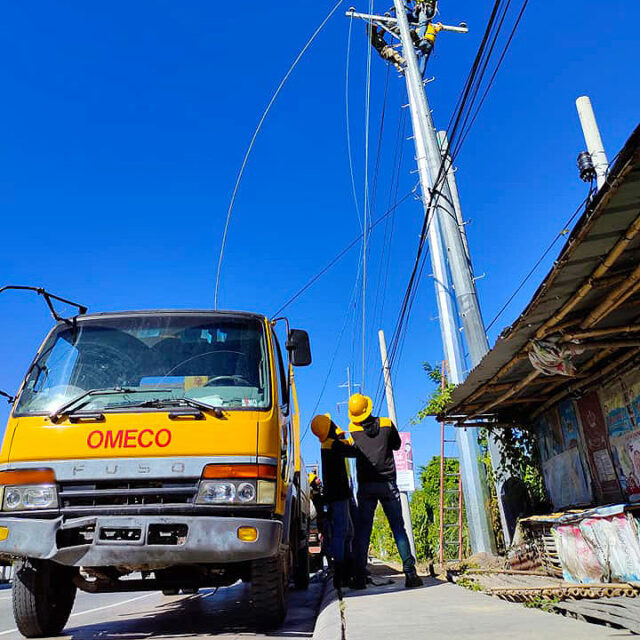
OMECO FACEBOOK PAGE

THE ENERGY Regulatory Commission (ERC) has denied that the ongoing power crisis in Occidental Mindoro is due to the agency’s inaction, saying it acted promptly on the power supply agreements (PSA) filed by the supplier and distributor.   

“The ERC wishes to emphasize that the PSAs filed by OMECO (Occidental Mindoro Electric Cooperative, Inc.) and OMCPC (Occidental Mindoro Consolidated Power Corp.) were provisionally resolved within 75 days from the day of filing in accordance with ERCs rules, contrary to allegations of delay in matters regarding the PSAs,” ERC said in a statement on Tuesday.   

Occidental Mindoro has been placed under state of calamity as the province experiences 20-hour daily power outages.  

Based on OMECOs website, the daily power supply available is only 13 MW while demand ranges from 27.78 to 28.73 MW.  

In its statement, the regulatory body said that only two of the PSAs signed between OMECO and OMCPC were filed to the commission.  

“These PSAs were already granted provisional authorities on 26 March 2022 and 10 June 2022. The provisional authorities allow the supply of around 12 MW (megawatts) from OMCPC to OMECO, and permit the flow of subsidies from the National Power Corporation (NPC) to OMCPC based on the ERC-approved rates,” the ERC said.  

The ERC also said that it is ramping up efforts to resolve the applications of National Power Corp. (Napocor) for a Universal Charge for Missionary Electrification (UCME) hike.  

“The ERC is mindful of the need to balance the subsidy requirements of off-grid customers, including Mindoro residents, with the impact of funding the subsidy collected from on-grid customers, given the increasing power rates also in the on-grid areas,” ERC said.  

Napocor has proposed a hike in UCME to sustain off-grid services as diesel prices increase.  

UCME funds Napocors operations, including those of its Small Power Utilities Group, which serves remote areas not connected to the grid.  

Occidental Mindoro is one of two provinces on the island of Mindoro, located south of the northern mainland Luzon.  

SENATE PROBE
Meanwhile, a senator has filed a resolution to probe and find solutions to the province’s power crisis.   

“Due to the power supply deficit, OMECO has been announcing daily rotational power schedule in the province, with a cluster of towns only getting electricity for three and a half hours in a day,” Senator Sherwin T. Gatchalian said in Senate Resolution No. 576.

Mr. Gatchalian also noted that the provincial government has been compelled to tap into its emergency funds, made possible by the declaration of a state of calamity, to ensure that operations of public services, like healthcare, continue.  

The provincial government, in a statement on Tuesday, said it is spending P10 million of its calamity fund to purchase fuel for generator sets for seven public hospitals.

Operations at the provincial capitol has also been temporarily cut to four days a week instead of five to help lessen electricity demand.  

“Despite all announced efforts of various government agencies, the power crisis in Occidental Mindoro has been ongoing for years with no end in sight,” Mr. Gatchalian said, noting that the investigation should produce short, medium, and long-term solutions.—Ashley Erika O. Jose and Beatriz Marie D. Cruz

13 new Bangsamoro villages get farm machines, boats worth P80M

SOME of the farm machinery handed over to 13 villages during a ceremony on April 24 at the Bangsamoro regional government center in Cotabato City. — JOHN M. UNSON

THE BANGSAMORO government has distributed P80 million worth of farm machines and fishing boats in 13 formerly conflict-affected villages in Midsayap, Cotabato, with ex-Moro guerrillas among the beneficiaries.      

In separate messages during Mondays turnover ceremony, Chief Minister Ahod B. Ebrahim and Local Government Minister Naguib G. Sinarimbo said the agricultural intervention is part of the Bangsamoro regional governments commitment to address poverty and underdevelopment in barangays impoverished by decades of secessionist activities.   

The 13 Muslim-majority barangays are part of the Bangsamoros special geographic area, which comprise villages in neighboring towns that voted to become part of the region in 2019.   

The town of Midsayap remains under Soccsksargen or Region 12, which is composed of South Cotabato, Cotabato, Sultan Kudarat, Sarangani, and General Santos City.   

Midsayap Mayor Rolly C. Sacdalan said his municipal government will continue to support the initiatives of the Bangsamoro Autonomous Region in Muslim Mindanao (BARMM) in helping these villages bounce back from the impact of armed conflicts.  

These barangays that originally belonged to Midsayap that are now under the autonomous region are lucky. The local government unit of Midsayap, which is under Region 12, will support these development efforts of BARMM,Mr. Sacdalan said.   

Farmers in these special geographic area barangays sell their farm products to traders in the center of Midsayap. There is correlation among them obviously, he said.   

The farm equipment released included 10 tractors for rice and corn production, 10 rice and corn harvesters, eight combine harvesters, and 300 motorized fishing boats with gears.  

Some of the barangay beneficiaries are located along the 220,000-hectare Liguasan Delta, a major source of fresh water fish for central Mindanao provinces.  

The project was under the Interior ministrys Bangsamoro Integrated Rehabilitation and Development (BIRD) program.  

BARMM is composed of the provinces of Maguindanao del Norte, Maguindanao del Sur, Lanao del Sur, Basilan, Sulu, and Tawi-Tawi. John M. Unson 

Group of farmers, scientists warn Mindanao local governments against GM crops 

IRRI

A NETWORK of farmer groups and scientists on Tuesday called on local governments in Mindanao, the southern Philippine islands, to act against the commercial release of genetically modified (GM) crops. 

The entry of GM crops into farmers fields threatens the rich genetic diversity in the region,Leo XL Y. Fuentes, Mindanao regional coordinator of Magsasaka at Siyentipiko para sa Pag-unlad ng Agrikultura (MASIPAG), said in a statement.   

For years, thousands of traditional varieties of crops have been developed and taken care of by small-scale farmers and indigenous people,he added.  

Last week, the Supreme Court issued a Writ of Kalikasan sought by the group against the commercial cultivation of Golden Rice and Bacillus thuringiensis Eggplant (Bt Eggplant).  

Golden Rice was developed by the Philippine Rice Institute (PhilRice) and the International Rice Research Institute while Bt eggplant was made by the Institute of Plant Breeding in the University of the Philippines – Los Baños.  

Golden rice is fortified with beta-carotene or vitamin A intended to address deficiencies in children, while Bt eggplant is designed to be resistant to pests.  

The group said that the rices beta-carotene content is measlyand inconsistent,and there are other crops such as vegetables and fruits that are more dependable sources of nutrition.  

Mr. Fuentes underscored the dangers of irreversible damage to the environment, biodiversity of rice and eggplant, and human health.” 

The group cited the opposition of organic farmers in Davao City, located in southeastern Mindanao, in conducting field testing for Bt Talong in 2010 due to possible contamination.” 

According to PhilRice, provinces designated as Malusog Rice distribution areas are: Quirino and Catanduanes in Luzon; Samar and Antique in the Visayas; and Lanao del Norte, Agusan del Sur, and Maguindanao in Mindanao.   

Seed production for Golden Rice is underway in Isabela, Ilocos Norte, Pangasinan, Cagayan, Nueva Ecija, Albay, Samar, Iloilo, Antique, and Agusan del Sur.  

MASIPAG Mindanao said that GM crops do not represent genuine developmentand called on the promotion of sustainable food production.  

Mindanao is a major source of agricultural products and fisheries, producing high-value export commodities. Sheldeen Joy Talavera 

Belga suspended for 15 days without pay from Elasto Painters

BEAU BELGA — PBA MEDIA

For playing in three ‘ligang labas’ unsanctioned leagues

RAIN or Shine’s Beau Belga is sinking fast in the quicksand he himself created by playing in not just one, but three “ligang labas” or unsanctioned leagues.

In a decision brought about by the internal probe it recently conducted, the Elasto Painters management cracked the whip on Mr. Belga with a 15-day suspension with no pay for suiting up in pickup games in Cebu, Davao and Laguna.

“Rain or Shine Team Management has concluded its internal investigation and found that Beau Belga breached his PBA Uniform Players’ Contract by participating in exhibition games in Cebu, Davao and Laguna. A fine of fifteen (15) days worth of salary has been imposed on Beau,” the franchise announced on its official social media page yesterday.

The day before, the team had already meted out a six-day suspension also without pay on the controversial big man, whose salary is pegged at the league maximum P420,000 a month, for his involvement in a “basketbrawl” that happened in Carmen, Cebu a few days back.

It turned out he played more outside Cebu.

The punishment was apart from more sanctions he and others would receive if also found guilty of the same offense.

PBA commissioner Willie Marcial said he would personally talk to Mr. Belga, NLEX’s JR Quinahan and Robert Bolick, Magnolia’s Jio Jalalon, and Converge’s Alec Stockton and Barkley Ebona early May if they would be slapped with more fines.

Messrs. Quinahan, Bolick and Jalalon were in the Cebu fracas with Mr. Belga while Messrs.  Stockton and Ebona allegedly played in Laguna.

Mr. Marcial said he is also talking with Games and Amusement Board officials that could put the offending players in deeper trouble. — Joey Villar

CCP Complex will house the Philippine Olympic Committee headquarters

PRESIDENT Bongbong Marcos vowed to help find the Philippine Olympic Committee (POC) a place that it can call home.

And it looked like it will be in the Cultural Center of the Philippines (CCP) in Pasay.

“The Philippine Olympic Committee, [who] I understand is still squatting in the environs of the CCP,” said the Chief Executive in his speech during Monday’s send off of the Phnom Penh Southeast Asian Games-bound national team at the PICC.

The POC never had its own office building since its creation almost a century ago and is currently maintaining offices at the PhilSports Complex in Pasig City that the government owns.

And Marcos’ recent statement should end its long wait soon.

“With the President himself promising his support, particularly in the POC office, we can now say that the House of POC would no longer be a dream,” said POC President Abraham Tolentino. “It will sooner or later be a reality with the promise of our President.”

Mr. Tolentino hopes the permanent POC headquarters would not only house the organization’s staff but also have space for a museum and a multi-purpose hall.

The Tagaytay City mayor picked the CCP Complex as the most ideal location because of the government and private-sector landmarks and offices, proximity to the airport, hotels as well as the consistent congregation of people in the area who could be visiting the museum. — Joey Villar

NU Lady Bulldogs battle Golden Tigresses for twice-to-beat advantage in Final Four cast

THE UAAP

Games Today
(Filoil EcoOil Center, San Juan)
9 a.m. — NU vs UST (men)
11 a.m. — NU vs UST (women)
3 p.m. — UP vs UE (women)
5 p.m. — UP vs UE (men)

REIGNING champion National University (NU) and tormentor University of Santo Tomas (UST) slug it out in an all-important duel for an inside track to the second seed in the final week of the UAAP Season 85 women’s volleyball tournament at the FilOil EcoOil Center.

Revenge versus mastery will be the name of the game at 11 a.m. as the Lady Bulldogs seek to return the favor on the Golden Tigresses for a chance to move one foot inside the coveted No. 2 spot that comes with a twice-to-beat advantage in the Final Four.

The Final Four, with De La Salle (12-1) at No. 1, is already set in stone except for the rankings from second to fourth, with NU and UST currently tied at 9-3. Adamson University (AdU) is not far behind at 9-4.

NU still has Ateneo or ADMU (4-9), Santo Tomas has University of the Philippines or UP (1-11) and Adamson has FEU (6-7) as their final assignments in a mad dash to the finish.

And a win today for either the Golden Tigresses or the Lady Bulldogs would certainly move them closer to that bid.

“We’re in the Final Four and we should aim higher but it will not be easy,” said UST coach Kungfu Reyes, whose wards look for a repeat feat on NU.

The Golden Tigresses in the first round hacked out a 25-23, 27-25, 17-25, 22-25, 15-11 win to end the Lady Bulldogs’ 20-game win streak highlighted by a 16-0 sweep of Season 84.

But as much as NU wants all the smoke for a desired vengeance, Season 84 MVP Mhicaela Belen warned against emotions as possible hindrance to their game plan.

Meanwhile in the second match at 3 p.m., UP and UE aim a graceful exit. NU (12-0) and UST (10-2), as well as UP (1-11) and UE (4-8) also clash in men’s division at 9 a.m. and 5 p.m., respectively. — John Bryan Ulanday