ACEN Corp. has estimated to spend up to $8 billion for the rollout of its 8 gigawatts (GW) portfolio of clean energy projects in the Philippines by 2030.
“If you look at the rough average cost of solar and wind per megawatt (MW), it is about $1 million per MW, approximately. Solar is about $700,000 per MW at least in the Philippines, then wind is in the $1.4 million to $1.6 million per MW,” Eric T. Francia, president and chief executive officer of ACEN, said during a media briefing last week
“So 8 GW would mean around $8 billion if you just applied that rule of thumb,” he said.
Mr. Francia noted that around 600 megawatts (MW) of the capacity are already operating and around 1,000 MW or 1 gigawatt (GW) are under construction.
“Seventy percent of that [under-construction projects are] soon to be operating. We’re still looking at well over 6 GW of incremental capacity beyond our operating and under-construction plants. So, if you take all of that, that would be around six and a half or $7 billion of incremental capex (capital expenditure) that we would be requiring to roll out the 8-GW assumption or outlook that we have,” Mr. Francia said.
He added that ACEN would also need to ramp up the rollout of renewable energy projects as it is targeting to have 20 GW by 2030.
“Today, we already have over 4 GW of capacity both operating and under construction,” Mr. Francia said. “Remember we aspired for 5 GW of RE by 2025. I certainly hope that within the next 12 months or so that we would go past that 5-GW mark,” Mr. Francia said.
“If we stay at 1 GW, we’re not going to get to 20 GW. At some point, we need to step up the pace,” he said, adding that it would “probably” happen at the middle or end part of the decade.
He said ACEN would have to hasten the pace closer to at least 2 GW per year. — Ashley Erika O. Jose
ADIDAS AG was sued by investors who claim the German sports giant knew about risks of its partnership with the rapper known as Ye long before his anti-Semitic comments were made public.
Adidas in October cut ties with Ye, formerly known as Kanye West, after he unleashed a string of hateful rhetoric. Investors claim in a lawsuit, filed Friday in federal court in Oregon, that as early as 2018 senior executives at the company discussed the risks Adidas faced continuing its relationship with the rapper.
In a 2018 annual report, released in March of the following year, Adidas ignored serious issues of partnering with Ye – and the risk to shareholders — by “generally alluding” to the risks “rather than stating that the company had actually considered ending the partnership as a result of West’s personal behavior,” according to the complaint.
Reports in subsequent years failed to disclose that Mr. West made anti-Semetic comments to Adidas staff, at one point suggesting that he might name an album after Adolf Hitler, according to the complaint. As the relationship with Ye eroded, so did Adidas shares, until the deal was terminated, according to the filing.
Adidas didn’t immediately respond to a request for comment.
After ending the deal, Adidas kept accepting shipments of Yeezy gear from suppliers still producing it. The company is considering selling Yeezy products and donating the profit to charity, as it tries to offset the financial hit from the collapse of the alliance with Ye. The last of the Yeezy products, some of which only recently arrived at Adidas warehouses, have a retail value of €1.2 billion ($1.3 billion).
The lawsuit, which seeks to represent investors who bought Adidas securities between May 3, 2018 and Feb. 21, also names ousted former CEO Kasper Rorsted as a defendant. — Bloomberg
CAR SHOPPING entails a lot of checking, and that includes performing test drives to ensure that one gets the best value and satisfaction for the major purchase decision. For those looking for a new vehicle, Honda Cars Philippines, Inc. (HCPI) will be at this year’s Auto Focus Summer Test Drive Festival from May 4 to 7. The event is organized by Sunshine Television (STV), and will take place at Block 16, SM Mall of Asia Grounds, Pasay City from 11 a.m. to 9 p.m. Admission is free, and is open to the public.
Available models at the Honda booth are the BR-V, City, Brio, Civic, and HR-V. Aside from a “safe and fun” test of Honda’s latest models, treats and exclusive offers await those who will register, test drive, and reserve during the event.
“Filipino customers, for many years now, have proven the safety, superior value, efficiency and reliability of their Honda. And Honda will continue to design and improve our vehicles in a way that will give our customers more joy and confidence in their decision to choose us. This is why we look forward to participating in events such as the Auto Focus Summer Test Drive Festival where we have more opportunities for the motoring public to experience the advanced technology, safety, driving feel, and comfort of our models,” said HCPI President Rie Miyake.
For more information about Honda vehicles and latest offers, including periodic maintenance services and a cost guide for all models, visit www.hondaphil.com and check out the virtual showroom, or visit any of the 37 authorized Honda Cars dealerships nationwide.
PHILIPPINE information technology company Smart Citi Teknologi and Hong Kong’s Silkwave, Inc. have tied up to launch a satellite broadband internet service in the Philippines that will pilot-testing in remote areas covered by the Armed Forces of the Philippines.
“We plan to stage a trial commencing very soon,” Silkwave Founder, Director and Chief Executive Officer Charles C. Wong said in a media launch on Thursday.
Mr. Wong said that the trial will involve vigorous equipment testing, which will be recorded and serve as a gauge of the technology’s importance to industry players, consumers, and government agencies.
Smart Citi Founder, President, and Chief Executive Officer Mario P. Marcos said the initial focus on the AFP is meant to maximize the testing of the service with military forces.
“This will be done soon because based on our discussions, everybody approved that we can start the testing in the AFP areas, especially in the Philippine Marine Corps,” Mr. Marcos said.
The trial period is expected to run within 30 to 60 days, which Mr. Marcos said is more than enough to measure the capability of the technology.
Aside from far-flung areas under the AFP, the company is also planning to conduct a pilot test in Pasig City and areas in Ilocos, Bicol, Palawan, and Mindoro.
“Details, guidelines, and installation proceedings will be in strict adherence to the prescribed government policy,” the partner companies said.
They will make use of Silkwave’s regional satellite Asia-Star, which aims to offer “last mile digital connectivity” up to the most remote rural villages in the country.
The satellite makes use of L-ban whose range of frequencies in the radio spectrum is from 1 to 2 gigahertz. Its waves can penetrate clouds, fog, rain, storms and vegetation, making it suitable for various weather conditions.
By 2025, the companies plan to streamline and formalize various strategic services and long-term arrangements to support the completion of a second satellite called Silkwave-1, which will replace Asia-Star. — Justine Irish D. Tabile
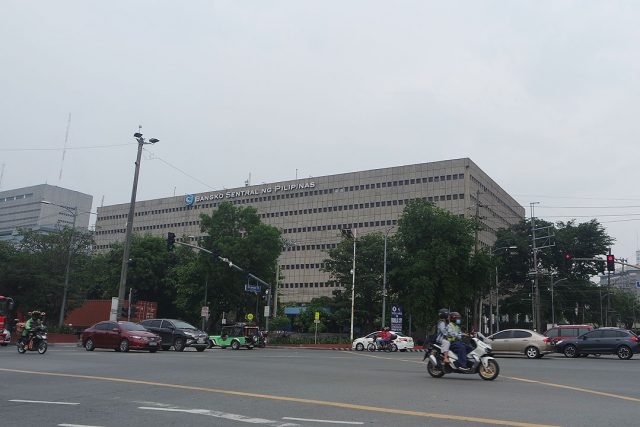
A view of a bank building in Manila, July 1, 2014. — REUTERS/ROMEO RANOCO
THE ASSET MANAGEMENT arm of listed Bank of the Philippine Islands (BPI) saw its assets under management rise to P950 billion at end-March.
BPI Wealth saw a significant growth in the first quarter compared with the P875 billion managed assets as of end-2022, BPI Wealth President and Chief Executive Officer Maria Theresa D. Marcial said at a press briefing on Thursday.
She added that BPI Wealth will be rebranding its private banking segment into BPI Private Wealth within the year.
“There’s more in store because we have also integrated the private wealth relationship management into BPI Wealth, and that is to make advice and investment portfolio management more seamless as we offer many investment opportunities for our affluent and high-net-worth segment,” she said.
BPI Wealth recently lowered the minimum amount for peso-denominated investments to P1,000 from P50,000 and to $100 from $1,000 for dollar-denominated investments as part of its financial inclusion efforts.
“With these product enhancements, we should be able to see more clients open more investment accounts and make investments more accessible… This is what we call democratizing access to investments,” Ms. Marcial said.
“We have seen some interesting responses over our 6,500 investment accounts that have been opened digitally,” she added.
While the level of funding is at about 20% upon opening, over 80% of those that are engaged funded their investment accounts, Ms. Marcial said.
“All of this is really to show the market that we are really increasing our customer obsession mindset towards investment products that will cater to a whole range of customers so they can rely on a company they trust,” she added. — AMCS
THE Department of Agriculture (DA) said it has determined the criteria for farmers eligible to receive biofertilizer grants, adding that the volume to be distributed is equivalent to at least two bags of inorganic urea fertilizer.
In a memorandum order dated April 27, the program covers the 2023-2024 rice crop. It is designed to complement the use of inorganic fertilizer, the supply of which has tightened after the Russian invasion of Ukraine. Russia is the world’s leading fertilizer producer but has been hampered from exporting by sanctions.
“The quantity of biofertilizer to be distributed or received by the farmer-beneficiary will be based on the area to be planted that was provided with seed under the seed assistance program,” the DA said.
The Palace has said President Ferdinand R. Marcos, Jr., who is also the secretary of Agriculture, wants to increase biofertilizers to reduce dependence on imported fertilizer.
“High prices of inputs, especially fertilizer pose a great threat to our rice production. To conquer this threat, the use of alternative inputs such as biofertilizer can be done to mitigate the impacts,” according to a DA memo.
According to the DA, biofertilizer will be distributed to registered members of the Irrigators’ Association, farm cooperatives and associations, and agrarian reform beneficiaries.
The DA said that it will prioritize distribution to farmers cultivating hybrid seed and certified seed under the National Rice Program or the Rice Competitive Enhancement Fund, and other government seed assistance programs.
Meanwhile, farmers who are not registered may receive biofertilizers through their respective local governments.
Biofertilizer will be procured via public bidding from a pool of suppliers registered with the Fertilizer and Pesticide Authority or the Bureau of Agriculture and Fisheries Standards.
Specific types of biofertilizer will be selected by regional DA offices, which will weigh their local suitability based on likely effectiveness, price, savings to be generated from reduced use of inorganic fertilizer, local production, and access to technical support.
Roehl M. Briones, a senior research fellow from the Philippine Institute for Development Studies, has told BusinessWorld that using biofertilizer helps long-term sustainability of agricultural production while addressing climate change.
He said biofertilizer can sequester more carbon which can mitigate the impact of greenhouse gases.
Lauro Diego, member of Duale Masipag Organic Farmers Association said via phone that “If the soil is healthy, you can plant anything and this can also provide resistance to pests and diseases,” he added.
“We organic farmers, do not have huge production costs because we manage to maintain soil fertility (using organic inputs),” he said.
Mr. Diego estimated organic farmers’ yields at said that they were able to harvest 80-100 cavans per hectare, sufficient to generate a liveable income for farmers.
A cavan is a traditional measure of volume and mass, which varies depending on location and period. The current standard for a sack of rice is 50 kilograms.
“What good is the high yield if farm inputs cost a lot and farmers aren’t able to earn,” he said. — Sheldeen Joy Talavera
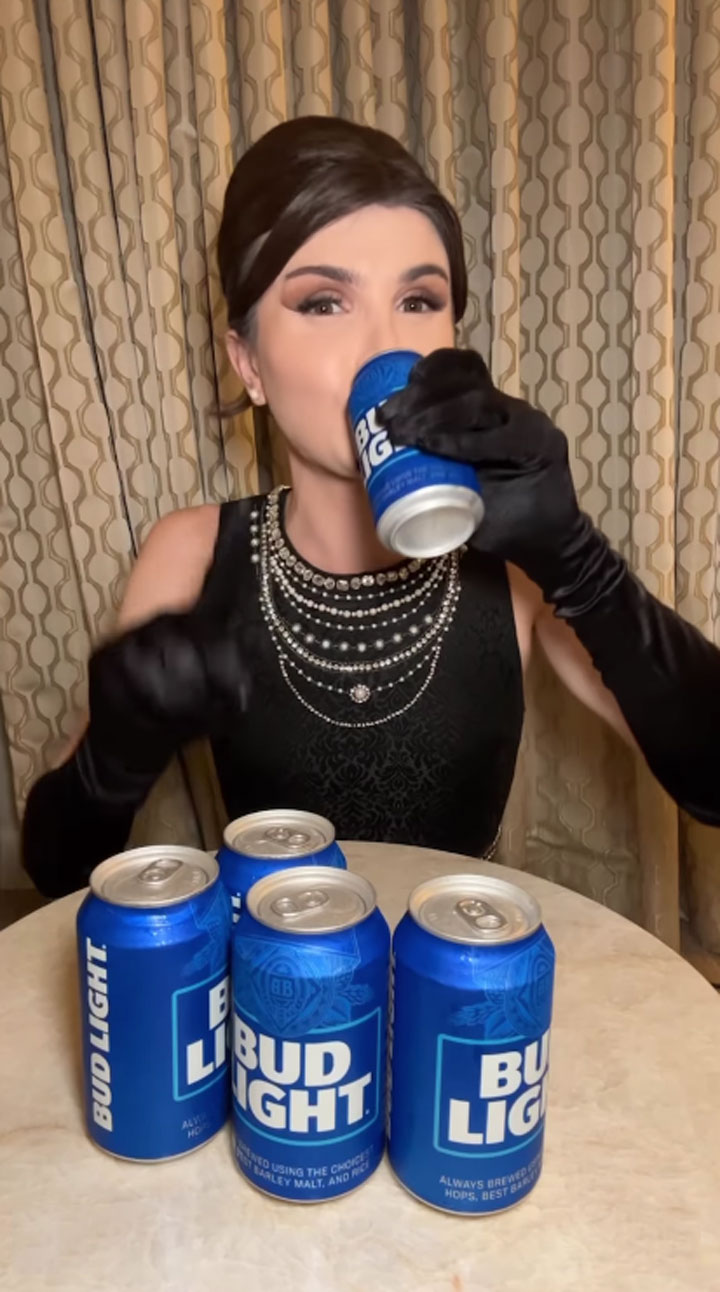
EARLIER this month, influencer and trans woman Dylan Mulvaney promoted Bud Light beer on their social media and received vicious backlash from the conservative public. The TikTok star, known for documenting their gender transition in daily videos for their 10.8 million followers, showed a commemorative beer can with their face on it, which led to calls for a boycott of the brand.
Scandals surrounding celebrity endorsements are not new. In the mid-1980s, Pepsi paid Madonna a massive $5 million to use Madonna’s hit song “Like A Prayer” in its commercials. The commercial ran only twice before scandal was sparked by the religious imagery in Madonna’s music video, leading Pepsi to drop her as an endorser.
Decades later, Tiger Woods was notoriously stripped of $22 million in endorsement deals when his extramarital affairs were revealed.
While the outrage looks the same in the cases of Woods and Mulvaney, it occurred for very different reasons and prompted very different reactions from the companies involved.
In the case of Woods, the public objected to his transgressions and brands dropped him to protect their own reputations. In the case of Mulvaney, the criticism was targeted at them, as a member of the transgender community, and Bud Light, for implicitly supporting trans rights with this partnership.
How then does celebrity endorsement work as a marketing strategy? Why is a specific celebrity selected by a brand, and why does outrage sometimes occur? And how should we look upon brands using celebrities to signal a higher purpose?
Human memory can be conceived as a network consisting of nodes connected by associative links. A celebrity and a brand are two nodes that become linked in peoples’ minds by appearing together in advertising campaigns. This can be imagined as a mind map — when a consumer thinks of a celebrity endorser, they may automatically think of the endorsed brand and vice versa.
The goal is for brands to “borrow” favorable associations from the celebrity’s personality. Our research showed that when a celebrity endorser is perceived as credible, the brand’s credibility is boosted, too.
Yet, undesirable associations with the celebrity can also spill over to the brand. This explains why brands are quick to distance themselves from celebrities behaving badly.
In 2021, clothes designer and influencer Nadia Bartel allegedly broke Melbourne’s COVID lockdown and snorted a white substance off a Kmart plate. Her partnerships with JSHealth and other brands were swiftly ended. Despite Bartel’s transparency and apology, the risk of her negative associations transferring to these brands was too great.
Typically, companies seek famous personalities that are congruent with their brand image and target market.
There may also be an aspirational element — the celebrity should fit with the brand but offer the benefit of new, more desirable associations.
It should come as no surprise that brands would not consider celebrities that have a checkered reputation or even celebrities that endorse many different brands. Brands want a salient, unsullied celebrity connection.
With brands under pressure to demonstrate their purpose, the nature of celebrity endorsements is evolving. Brands can communicate their values by partnering with public figures who identify as part of a historically marginalized group or who demonstrate support of or opposition to a partisan issue.
Bud Light’s choice of Mulvaney as a celebrity endorser was likely for both business and societal reasons — a boundary that more and more brands are traversing.
Alissa Heinerscheid, Bud Light’s vice-president of marketing, has said the brand’s financial performance has been steadily declining and that reversing this trend requires new, younger customers and leaving behind “fratty and out-of-touch humor.”
The backlash happened because Bud Light’s parent company, Anheuser-Busch InBev, was accused of “woke-ifying” the beer and turning it into a political statement — one that doesn’t resonate with its target audience. Bud Light did not cut ties with Mulvaney even as the controversy erupted.
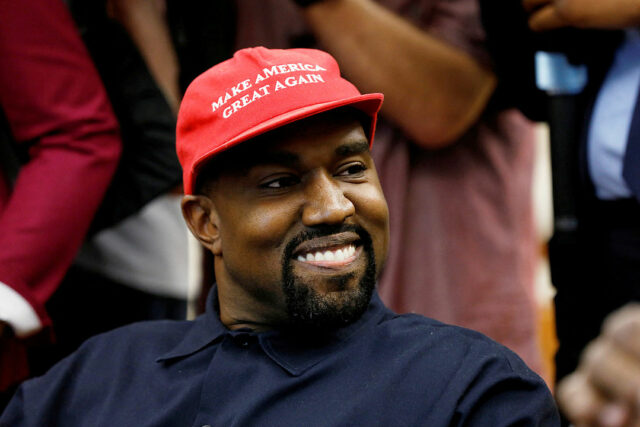
Brands can also take a stand by choosing not to work with certain celebrities. Kanye West — now known as Ye — was dumped by Adidas and Gap, among others, after his abhorrent behavior, which included wearing a White Lives Matter T-shirt and publishing antisemitic remarks on Twitter.
This was not just an instance of bad behavior. Ye’s actions were hateful and dangerous at a societal level. Adidas terminated the partnership and stopped production of Yeezy-branded items. While Adidas no doubt wished to avoid being cancelled by consumers, they also took the responsibility required for inclusive marketing and copped the significant financial cost of doing so.
Authentic action is paramount when brands take a stand.
Not all celebrity scandals are the same. In the past, celebrities have made egregious mistakes and brands have severed ties because it was the most profitable, least risky business decision.
Now, as celebrity endorsements are becoming part of the strategic toolbox for signaling brand purpose, more often than not, outrage will still occur. This provocation is anticipated and perhaps, even cultivated.
A worthwhile question to ask of brands like Bud Light is: beyond this provocation, how else is being in partnership with influential celebrities driving genuine change? — The Conversation via Reuters Connect
Amanda Spry is a Lecturer of Marketing at RMIT University.
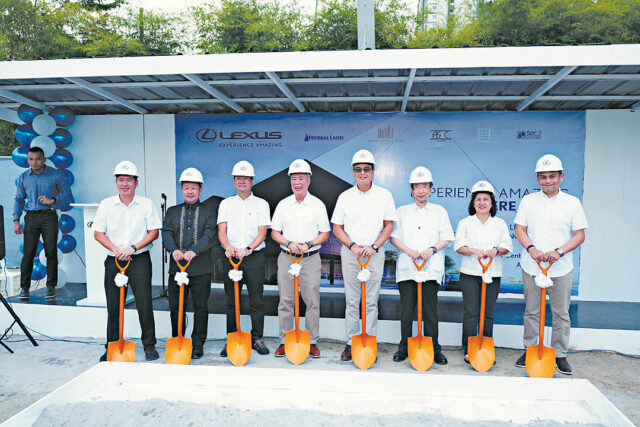
At the ground-breaking ceremony for the new Lexus Manila showroom are (from left): Federal Land Vice-President Alvin Ty, Mitsui & Co. Philippines General Manager and Country Chairman Kazuhiro Nomura, Lexus Philippines President Atsuhiro Okamoto, Lexus Manila Vice-Chairman Vince Socco, Lexus Manila President Raymond Rodriguez, Lexus Philippines Vice-Chairman Dr. David Go, ASEC Development and Construction Corp. President Theresa Esquivel, and Federal Land Senior Vice-President for Project Development Group Stephen Comia. — PHOTO FROM LEXUS PHILIPPINES
A NEW SHOWROOM will soon rise, as Lexus Manila readies to move to a different address — while still at the Bonifacio Global City. “This will be able to accommodate (our) growing clientele as the brand further expands its business in the country; showcasing Lexus’ unique design language, while providing increased service capacity to better serve valued customers better,” said Lexus Philippines in a release.
Its present location on 34th Street was opened in 2009. “Soon, the upgraded Lexus Manila showroom will further embody that philosophy with integrated new technologies to fit the changing luxury market,” hinted the company. The new Lexus Manila facility will be located along 8th Avenue in Grand Central Park.
The building’s façade will follow the Lexus L-Finesse design philosophy, like the newest brand and guest experience center of Lexus at Mitsukoshi BGC. This signature style draws heavily on the deeply rooted principles of Japanese hospitality and aesthetics, while simultaneously having the ability to expand into a highly dynamic, evolving concept. The design is distinctly Japanese: formal and minimalist with horizontal and clean lines. This straightforward approach evokes beauty and simplicity.
Meanwhile, a “relaxing sensory experience” is said to be at the heart of every Lexus showroom. The ground floor where the main showroom is located will have a full-height curtain wall glazing accentuated by wood-finished elements — contributing to the “lightness and softness of the façade.”
The new facility is expected to open in the first half of 2024. For more information, visit lexus.com.ph or the brand’s social media pages on Facebook and Instagram (@lexusmanila). To arrange a consultation with a personal sales consultant, visit the Lexus Remote page at https://fal.cn/3eSWW. The MyLexus app is also available on both Android and iOS platforms for premium services and updates.
FOUR regional trading centers posted higher average retail prices for well-milled rice at mid-April, according to the Philippine Statistics Authority (PSA).
In a report, the PSA said prices rose during the period it calls the second phase of April (April 15-17), relative to the first phase of the month (April 1-5).
The average price of well-milled rice increased in Butuan City by P2.90 to P40, in Digos City by 50 centavos to P45, in Pagadian City by 12 centavos to P42.65, and in the National Capital Region (NCR) by P0.11 to P43.27.
Retail prices declined in Tuguegarao City by P3.25 to P41 and in Legazpi City by five centavos to P42.08.
The average retail price of bone-in pork rose in eight regional trading centers during the period.
Prices rose in Cabanatuan City by P25 to P300, in San Fernando City by P20 to P320, in Baguio City by P10 to P279, and in Tuguegarao City by P10 to P285.
Increases were also reported in Cagayan de Oro City by P10 to P232.50, in NCR by P5.63 to P316.13, in Legazpi City by P5 to P294.50, and in Iloilo City by P3 to P267.
Prices dropped by P10 each in Cebu City to P215 and in Butuan City to P315.
The average retail price of galunggong (round scad) fell in seven regional trading centers.
They were down P35 to P315 in Calapan City, P20 to P180 in San Fernando City, P20 to P180 in Tacloban City, and P20 to P140 in Pagadian City.
Prices also slipped in Baguio City by P12.50 to P240, in Kidapawan City by P5 to P225, and in NCR by P4.57 to P243.75.
Of the trading centers reporting gains, increases were registered in Tuguegarao City by P25 to P245, in Cabanatuan City by P20 to P200, in Legazpi City by P10 to P237.50, and in Digos City by P5 to P190. — Sheldeen Joy Talavera
DOMESTIC CLAIMS of non-bank financial firms climbed year on year in the last quarter of 2022, the Bangko Sentral ng Pilipinas (BSP) said.
Preliminary data from the BSP’s Other Financial Corporations Survey (OFCS) showed domestic claims of nonbanks rose to P7.86 trillion in the fourth quarter of 2022, 8.1% higher than the P7.28 trillion seen in the same period in 2021.
This was also faster than the 3.1% growth logged in the previous quarter.
“The rise in the OFCs’ domestic claims in Q4 2022 was due to their higher claims on depository corporations (DCs), on central government and on other sectors,” the BSP said in a statement released late Friday.
Other sectors include the state and local government, public nonfinancial firms, and the private sector.
By component, claims on other sectors, particularly the private sector, made up bulk of OFCs’ domestic claims during the quarter, followed by claims on DCs and the central government.
Net claims on the central government increased by 11.7% to P1.88 trillion in the fourth quarter of 2022 but slipped by 0.2% from the prior three-month period.
Meanwhile, claims on depository corporations climbed by 21.2% year on year to P1.89 trillion. This was also 17.9% higher compared with the third-quarter level.
“In particular, the OFCs’ claims on DCs expanded owing mainly to the growth in the sector’s deposits in banks and holdings of bank-issued equity securities,” the BSP said.
“Likewise, the OFCs’ claims on central government grew on account of increased holdings of government securities. Similarly, the OFCs’ claims on other sectors, particularly, the private sector, rose slightly as loans extended to households and nonfinancial corporations increased,” it said.
BSP data showed net foreign assets (NFA) held by other financial corporations fell by 2.3% to P261.1 billion year on year but rose by 3.9% versus the previous quarter.
NFAs held by nonbank financial firms declined year on year as the sector’s liabilities grew faster than its claims on nonresidents, the BSP said.
“The increase in the OFCs’ foreign liabilities was due mainly to higher loans payable to nonresidents,” the central bank said.
Claims of liabilities to non-residents grew by 23.5% to P192.99 billion year on year but dipped by 5.2% from the third quarter of 2022.
On the other hand, OFCs on non-residents rose by 7.2% to P454.09 billion and slipped by 0.1% quarter on quarter.
“The growth in foreign claims was primarily on account of increased investments in debt securities issued by nonresidents,” the BSP said.
“The expansion in the OFCs’ gross assets was funded mainly by its issuances of shares and other equity to other sectors,” it added.
The OFCS is an analytical survey of the assets and liabilities of the OFC sector.
It uses standardized report forms as required by the International Monetary Fund. These include individual financial statements from insurance firms, holding companies, government financial institutions, investment companies, and other financial intermediaries, as well as consolidated financial statements from trust institutions. — Keisha B. Ta-asan
MOTORCYCLE taxi company MOVE IT launched an industry-first “advertiser vest” program as part of its initiatives to offer more livelihood opportunities to its riders.
The program will allow riders to have an alternative income stream through earnings from advertising campaign materials on their safety vests.
“MOVE IT is deeply committed to creating a better life for our rider-partners and their families, and key to that is ensuring that our rider-partners earn a decent and viable living from our platform,” MOVE IT General Manager Wayne Jacinto said in a press release.
“By providing them access to various income opportunities, we are optimistic that they can earn more, and succeed in their pursuits,” he added.
MOVE IT will be offering the mobile ad channel to its brand partners.It will be also taking charge of the production, management, and deployment of the vest ads.
“Select rider-partners will be issued with the campaign materials for hassle-free onboarding. Earnings of rider-partners will vary depending on the period of the ad campaign,” the company said.
Meanwhile, the motorcycle taxi company said that it will continue its commitment to ensuring optimum earning capability for its riders. It plans to do this through the implementation of low commission rates and a post-service tipping mechanism in its application.
The company will also financially incentivize its rider-partners based on passenger ratings and total bookings accomplished.
“In any event that a MOVE IT rider-partner meets an untoward incident on the road, they can make claims for benefits and financial assistance as they are equipped with insurance packages,” it said.
MOVE IT has also committed to working closely with various brand partners that will be able to provide riders with exclusive deals on motorcycle parts and accessories, fuel, maintenance, medicines, and end-to-end registration packages.
Its brand partners include Shell, Caltex, Mobil, Tyremart, and Generika.
“MOVE IT is also intensifying efforts to attract more rider-partners into its platform as it seeks to serve more Filipino commuters and support the Philippine government in its goal of improving the state of the transport industry in the country, and creating viable livelihood opportunities — at scale, for Filipinos,” the company said. — Justine Irish D. Tabile
Happy Labor Day! Today, AboitizPower honors the hardworking individuals who are building a better future for all of us. AboitizPower is proud to power up the livelihoods of Filipinos with reliable and sustainable energy. The company believes that we can all work together towards a brighter tomorrow.
Spotlight is BusinessWorld’s sponsored section that allows advertisers to amplify their brand and connect with BusinessWorld’s audience by enabling them to publish their stories directly on the BusinessWorld Web site. For more information, send an email to online@bworldonline.com.
Join us on Viber at https://bit.ly/3hv6bLA to get more updates and subscribe to BusinessWorld’s titles and get exclusive content through www.bworld-x.com.