Home Blog Page 456

Majority of Filipinos still hopeful, but doubt growing on flood scam justice

PHILIPPINE STAR/MIGUEL DE GUZMAN

By Adrian H. Halili, Reporter

FEWER Filipinos have expressed confidence that officials implicated in the multibillion-peso flood control scandal will be punished, according to a December survey by Pulse Asia Research, Inc., reflecting growing public skepticism over the government’s handling of one of the country’s biggest corruption controversies.

In a statement on Monday, Pulse Asia said 59% of Filipinos remain optimistic that those accused in the flood control projects will be held accountable. While still a majority, this marked a sharp drop from the 71% confidence level recorded in September 2025.

“The rest of Filipino adults are either ambivalent on the matter or doubtful that the guilty government officials will be punished,” the pollster said.

Confidence varied sharply by region. Respondents in Mindanao were the most optimistic, with 65% saying they expect accountability, followed by Luzon at 62% and the Visayas at 57%.

In contrast, only 42% of respondents in the National Capital Region said they believed those implicated would face punishment.

The waning confidence reflects frustration over the slow pace of investigations and prosecutions, said Hansley A. Juliano, a political science lecturer at Ateneo de Manila University.

“The slow pace of prosecution, the back and forth on the budget, as well as the unwillingness to crack down on politicians of either camp has once again drained credibility on this,” he said in a Facebook Messenger chat.

The government’s response has fallen short of restoring trust, even if it has helped temper public anger, said Anthony Lawrence A. Borja, an associate political science professor at De La Salle University in Manila.

“The gravity, speed, extent and overall effectiveness of the government’s response was enough to ease discontent but not enough to outweigh generations’ worth of disappointment,” he said via Messenger.

“Many assume that the entire campaign would fail and be selective, and many might end up justified in their lack of optimism,” he added.

The Marcos administration has faced mounting public outrage since senior lawmakers, Department of Public Works and Highways officials and private contractors were accused of siphoning billions of pesos from funds earmarked for flood control infrastructure beginning in 2022.

The anomalies involve overvalued, underbuilt or “ghost” projects in flood-prone areas.

President Ferdinand R. Marcos, Jr. earlier vowed that all those involved would be jailed before the end of 2025, amid investigations by the Office of the Ombudsman and the Independent Commission for Infrastructure.

Authorities have since filed cases against several officials and initiated administrative proceedings. Critics, however, said these actions have yet to convince the public that accountability will extend to high-ranking political figures.

Mr. Borja said restoring confidence would require structural reforms rather than isolated prosecutions.

“We need the Ombudsman and the Sandiganbayan to be effective, functioning bodies that are developed enough to avoid backlogs, and powerful enough to confront all types of offenders,” he said.

Beyond expectations of punishment, the Pulse Asia survey also gauged broader trust in the justice system. About 44% of Filipinos said they believe the country’s courts can handle high-level corruption cases.

“The plurality sentiment in the country is one of confidence in the ability of the justice system to successfully prosecute high-level corruption cases,” Pulse Asia said.

Still, doubts remain widespread. About 24% of respondents said they were not confident in the justice system’s ability to prosecute those accused of corruption, while 33% said they were undecided.

Views were similarly mixed on the effectiveness of legislative investigations. About 36% of Filipinos said Senate inquiries into anomalous flood control projects sometimes reveal the truth but have limited impact.

About three of 10 respondents said such probes are likely to uncover evidence and hold those involved accountable. Meanwhile, 21% said legislative investigations rarely produce meaningful outcomes.

“For a little more than a tenth of Filipino adults (12%), legislative investigations like those being done by the Senate Blue Ribbon Committee are primarily for show or political theater,” Pulse Asia said.

Most respondents also expressed concern over the influence of powerful officials on judicial outcomes. About 51% of Filipinos said high-ranking officials could use their influence to affect court decisions and avoid conviction.

“The primary factor that will affect court decisions regarding cases involving corrupt government officials is the use of influence of such officials to avoid being convicted,” the pollster said.

This perception was strongest in Luzon, where 57% shared this view, followed by the Visayas at 51%, Metro Manila at 49% and Mindanao at 43%.

The Pulse Asia survey was conducted through face-to-face interviews with 1,200 Filipinos aged 18 and above from Dec. 12 to 15. It has a ±2.8 percentage-point margin of error.


Palace confident Marcos has votes to thwart ouster

Philippine President Ferdinand Marcos Jr. meets with US President Donald Trump (not pictured), in the Oval Office at the White House in Washington, DC, July 22, 2025. — REUTERS/KENT NISHIMURA

MALACAÑANG is confident President Ferdinand R. Marcos, Jr. will have enough support in the House of Representatives to stop any impeachment bid from advancing, while stressing that the chief executive will respect any move by lawmakers to revive impeachment efforts against Vice-President Sara Duterte-Carpio.

Palace Press Officer Clarissa A. Castro said there is, so far, no impeachment complaint filed against Mr. Marcos, dismissing talk of an ouster bid as premature and speculative.

“There is no complaint yet, so how can the President prepare?” she told a news briefing in Filipino. “If there is one, it will be read and addressed accordingly.”

Ms. Castro said Malacañang is ready to review any complaint should one be formally lodged, adding that the President respects constitutional processes and the separation of powers.

She said reports of an impeachment move stem from efforts by supporters of the Vice-President, citing remarks by a lawmaker who said groups linked to the Duterte camp were seeking to build a case against Mr. Marcos. Ms. Castro did not name the lawmakers involved.

House Senior Deputy Minority Leader Edgar R. Erice on Sunday said the President could face an impeachment complaint anchored on betrayal of public trust, particularly over the administration’s handling of a multibillion-peso corruption scandal involving flood control projects.

He said a group approached him last week to seek his endorsement for such a complaint, which he declined.

Mr. Erice described the government’s response to the scandal as “messy” and lacking direction, amid accusations that officials, contractors and politicians diverted funds intended for flood mitigation in the disaster-prone country.

Under the 1987 Constitution, impeachment may be initiated on grounds including culpable violation of the Constitution, treason, bribery, graft and corruption, other high crimes or betrayal of public trust.

Any Filipino citizen may file an impeachment complaint with the House of Representatives. For it to advance, at least one-third of all lawmakers must endorse it, after which the case is transmitted to the Senate, which convenes as an impeachment court.

Ms. Castro rejected claims that Mr. Marcos breached public trust, including accusations linked to his signing of the General Appropriations Act. She added that the President did not steal public funds and had instead ordered investigations into anomalous flood control projects.

“The President respects the Constitution and the process,” she said. “He is ready for all contingencies.”

Malacañang also expressed confidence that Mr. Marcos retains solid backing in Congress, suggesting that any impeachment attempt would struggle to gain the required support.

Ms. Castro cited safeguards in the 2026 national budget, including conditional releases and items flagged for later release, as evidence of the administration’s effort to protect public funds.

“The President protected the budget,” she said, adding that lawmakers who are “principled and upright” would stand for accountability rather than corruption.

Mr. Marcos signed the P6.793-trillion 2026 spending plan on Jan. 5. While he vetoed P95.5 billion in unprogrammed or standby funds, the approved budget still allows for P150.9 billion in such allocations, which he said is the lowest since 2019.

Minority lawmakers have asked the Supreme Court to rule on the legality of unprogrammed appropriations, arguing that they weaken Congress’ power of the purse by authorizing spending without clearly defined projects or assured funding sources.

Unprogrammed funds may be released only if surplus revenues or foreign financing becomes available. Critics, however, have long warned that the mechanism gives the Executive broad discretion and weakens transparency.

Meanwhile, Ms. Castro said Mr. Marcos would respect any decision by lawmakers should they choose to refile an impeachment complaint against Ms. Duterte.

The Vice-President’s impeachment proceedings were halted last year after the Supreme Court ruled that the one-year bar on impeachment had been violated. A fresh complaint may be filed once that prohibition lapses on Feb. 6.

Asked about the apparent shift in the President’s stance — from opposing impeachment moves against Ms. Duterte to saying all those involved must be held accountable — Ms. Castro said the full scope of the issues may not have been clear earlier.

“If the President is now saying that everyone involved must be held accountable, there should be no exemptions,” she said. “If there were offenses committed, then accountability should apply to all.”

She added that at the time, “it may not have been seen how wide-ranging the issues could be.”

Ms. Duterte last year faced impeachment complaints over allegations that she misused confidential and intelligence funds during her stint as Education secretary, charges she has denied.

‘ONLY WITHIN MEDIA’
Meanwhile, Assistant Majority Leader and Bataan Rep. Antonino B. Roman III dismissed impeachment talks against the President, saying no such discussions are taking place among congressmen.

The House of Representatives would rather focus on legislating than dwell on possible impeachment talks, he told reporters.

“There is no whispering among congressmen,” he said in Filipino. The talks are only within the media.”

“The people need to understand what Congress is doing, with how busy we are with the bills we have to pass. Still, that does not prevent anyone from filing an impeachment complaint,” he added.

“The strength of an impeachment complaint rests on evidence,” Mr. Roman said. “Without evidence, the impeachment will go nowhere.”

But a group of minority congressmen said they think there is a basis for Mr. Marcos’ impeachment, arguing that corruption allegations could warrant his removal from office.

“We believe that there are grounds to impeach the President in relation to the massive and systematic plunder of the national budget, the bloated unprogrammed appropriations and the allegations of palace kickbacks involving infrastructure projects,” Party-list Reps. Antonio L. Tinio, Renee Louise M. Co and Sarah Jane Elago said in a joint statement.

In a separate statement, House Deputy Majority Leader and Lanao del Sur Rep. Ziaur-Rahman Alonto Adiong said impeachment talks against Mr. Marcos were aimed at slowing the government’s probe of the flood control mess.

“This… may be an indication of a partisan or politically motivated move in order to slow down any attempt of this current administration to run after those who have been named and those who are being charged with corruption,” he said. — Chloe Mari A. Hufana and Kenneth Christiane L. Basilio

Marcos leaves for United Arab Emirates to seal trade and defense agreements

REUTERS

PRESIDENT Ferdinand R. Marcos, Jr. flew to the United Arab Emirates (UAE) on Monday for a working visit aimed at deepening the Philippines’ economic and security ties with Abu Dhabi, as Manila seeks broader trade access and stronger defense partnerships beyond its traditional allies.

Malacañang said the President designated Executive Secretary Ralph G. Recto, Agrarian Reform Secretary Conrado M. Estrella III and Social Welfare Secretary Rexlon T. Gatchalian as government caretakers until Jan. 14 while he is overseas.

Mr. Marcos is attending the Abu Dhabi Sustainability Week at the invitation of UAE President Sheikh Mohamed bin Zayed Al Nahyan, joining other global leaders to discuss issues spanning energy transition, water management, food security, climate action and sustainable finance.

On the sidelines of the summit, the Philippine leader is expected to witness the signing of two major agreements between Manila and Abu Dhabi: a comprehensive economic partnership agreement (CEPA) and a memorandum of understanding on defense cooperation.

The CEPA would be the Philippines’ first free trade agreement with a Middle Eastern country and is intended to widen market access for Philippine goods and services in the region.

“We were among the first countries offered to conclude this agreement, and finally, we’re doing it,” Philippine Ambassador to the UAE Alfonso Ferdinand A. Ver told Radio Television Malacañang.

The planned defense memorandum will set out a framework for cooperation in developing defense capabilities and technologies, including joint training activities, officer exchanges and information sharing, Mr. Ver said.

He added that the agreement would complement existing cooperation on counterterrorism, transnational crime, illegal drugs and human trafficking.

Mr. Marcos is accompanied by senior Cabinet officials including Foreign Affairs Secretary Ma. Theresa P. Lazaro, Finance Secretary Frederick D. Go, Trade Secretary Ma. Cristina A. Roque, Migrant Workers Secretary Hans Leo J. Cacdac, Communications Secretary Dave M. Gomez and Overseas Workers Welfare Administrator Patricia Yvonne M. Caunan.

Mr. Ver said the President’s meeting with Mr. Al Nahyan would be their second in just over a year, underscoring renewed momentum in bilateral relations after a long gap in top-level engagements.

“This is the second meeting in about 14 months. Before that, it had been 15 years,” the envoy said. “Symbolically and substantively, it’s very significant.”

He said climate resilience is likely to be a key theme of the discussions, noting the Philippines’ exposure to extreme weather and its experience in adaptation efforts.

Emerging areas of cooperation include artificial intelligence, renewable energy and the digital economy, sectors where the Philippines is seeking to build stronger capabilities, Mr. Ver said.

The President is also scheduled to meet members of the Filipino community in the UAE and hold business engagements during the visit.

The Philippines and the UAE established diplomatic relations in 1974. The UAE is Manila’s biggest trading partner in the Gulf Cooperation Council, with non-oil trade reaching $1.85 billion (P110 billion) in 2022, according to UAE data. — Chloe Mari A. Hufana

DPWH to start Maharlika rehab

THE PHILIPPINE STAR

THE Department of Public Works and Highways (DPWH) said it targets to start the P16‑billion rehabilitation of the Maharlika Highway this year, as part of its broader infrastructure upgrade program for 2026.

“For this year, we will start the construction and completion of the Maharlika Highway. There will be massive rehabilitation starting this year,” Public Works and Highways Secretary Vivencio B. Dizon said during a media briefing on Monday.

The estimate for the rehabilitation of Maharlika Highway is projected to cost at a minimum of P16 billion, Mr. Dizon said, noting that it could be higher given the massive stretch of the road network.

“The Maharlika has not been rehabilitated since it was built; it has not seen major rehabilitation,” he said.

The Maharlika Highway, previously known as the Pan-Philippine Highway, is a road and bridge network linking Luzon, Visayas, and Mindanao. It is considered the longest road in the country stretching from Ilocos Norte, through Eastern Visayas and to Zamboanga City in Mindanao.

The agency did not provide a specific timeline for the Maharlika Highway upgrade, saying the planned rehabilitation is still under assessment.

DPWH is also targeting the rehabilitation of six additional key highways and bridges, including Circumferential Road 5 (C5) in Metro Manila, Andaya Highway, MacArthur Highway in Apalit, Pampanga, Buot-Taop Bridge in Cebu City, Oyungan Bridge in Iloilo, and Tubod-Nabuna Bridge in Aloran, Misamis Occidental.

“We will also work on C5, we are working on the design. This is the backbone used by trucks, which easily gets damaged. We are designing the rehabilitation of C5,” he said, adding that the rehabilitation work would commence within the first quarter of the year.

At present, the agency is also implementing the ongoing rehabilitation of Epifanio de los Santos Avenue (EDSA), which is expected to be fully completed by May.

The DPWH is confident to complete the EDSA rehabilitation by the May 31 target, Mr. Dizon said, adding that DPWH is working double time to finish the project by the deadline.

Meanwhile, the agency will also further strengthen its transparency portal to make machine readable files available online, he said.

Last year, the agency announced that it is ramping efforts to address corruption issues by creating a transparency portal that provides information on the agency’s projects.

Mr. Dizon said that he has also relieved eight regional and district officials from their post as part of the agency’s ongoing investigation into the flood control scandal. The agency has also implemented a major reshuffle among its regional and assistant regional directors.

At the same briefing, Mr. Dizon also announced that Ricardo P. Bernabe III will serve as the spokesperson of the department for all legal matters.

Currently, Mr. Bernabe serves as the undersecretary for the information management service, stakeholders relations service and legislative liaison office. — Ashley Erika O. Jose

Party-list reform bill filed

PHILIPPINE STAR/KJ ROSALES

A SENATOR on Monday filed a measure that will reform the country’s party-list system by barring political dynasties and contractors from running for elective positions, aimed at countering alleged corruption in the party-list system.

Senator Risa N. Hontiveros-Baraquel filed Senate Bill No. 1656, which proposes to bar spouses or relatives of an elected official within the fourth degree of consanguinity from running as a party-list member.

It also prohibits any party-list representatives from holding government contracts, serving as an official of a company that is involved in state projects, or possessing beneficial ownership of a firm involved in government projects.

“This bill aims to reclaim the voice of ordinary Filipinos who’ve been shut out of power because of abusive personalities who are using the party-list system as a backdoor to power,” Ms. Hontiveros said in a separate statement.

This followed findings in congressional inquiries that some party-list representatives were allegedly benefiting from government projects.

“This blatant conflict of interest has no place in a democracy. After decades of abuse and loopholes, the sweeping reforms proposed in these bills hope to hand the reins back to everyday Filipinos,” Ms. Hontiveros said.

The proposed measure also seeks to remove the three-seat limit for party-list representatives, enabling “full democratic and proportional representation.”

It also proposes a new formula for determining the allocation of seats for party-lists representatives. Under the proposal, the number of votes obtained by a party-list will be multiplied by the available seats and divided by the total number of valid votes cast.

The bill also bans the registration of party-list organizations that are patterned after television or radio programs, government assistance programs, or the names of public officials, celebrities, and other public figures.

The senator added that this would ensure that the system remains focused on genuine sectoral representation.

Meanwhile, a counterpart measure was filed by congressmen on Monday, which likewise removes the three-seat limit on party-list groups and ban nominees that have links to government deals, all while prohibiting representatives part of a political family.

“This measure seeks to re-establish the constitutional intent of the party-list system — a clear opportunity to democratize political power from the elite few to the people,” authors Party-list Reps. Jose Manuel Tadeo I. Diokno, Percival V. Cendaña, Dadah Kiram Ismula and Kaka Bag-ao said in the measure’s explanatory note.

The Philippine party-list system was created by the 1987 Constitution, with its framers seeing the system as allowing underrepresented sectors to participate in the lawmaking process. It has since been expanded in 2013 after the Supreme Court ruled that political parties could also participate in the party-list system. — Adrian H. Halili and Kenneth Christiane L. Basilio

BoC seizes P114.5-M illegal drugs

BUREAU OF CUSTOMS OFFICIAL FACEBOOK PAGE

OVER P100 million worth of illegal drugs disguised as malachite stones from Congo were seized by the Bureau of Customs-Ninoy Aquino International Airport (BoC-NAIA) on Thursday.

The Customs said its investigation with the Philippine Drug Enforcement Agency (PDEA) and the NAIA Inter-Agency Drug Interdiction Task Group revealed four boxes containing nearly 17 kilograms of suspected illegal drugs valued at P114.566 million.

“The shipment, declared as malachite stones and originating from Congo, was flagged during X-ray inspection after exhibiting suspicious images,” the BoC said in a statement on Monday. “It was subsequently subjected to verification and a 100% physical examination.”

The authorities did not specify the said drugs.

According to the BoC, the shipment violates Republic Act (RA) No. 9165, the Comprehensive Dangerous Drugs Act of 2002, as amended, and RA No. 10863, the Customs Modernization and Tariff Act.

“This is not just about enforcement. It is about protecting our communities,” Customs Commissioner Ariel F. Nepomuceno said in a statement. “The Bureau will remain relentless in screening, inspecting, and stopping illegal drugs at our borders,” the commissioner said.

Meanwhile, BoC-NAIA District Collector Yasmin O. Mapa noted that interagency coordination helped uncover the incident.

“This result highlights the value of strict risk profiling and close coordination among enforcement units and partner agencies,” she said. “Our personnel remain alert and ready to act on any shipment that poses a threat to public safety.”

The PDEA has taken custody of the confiscated drugs and involved parties, which it will manage for proper disposition and further investigation. — Katherine K. Chan

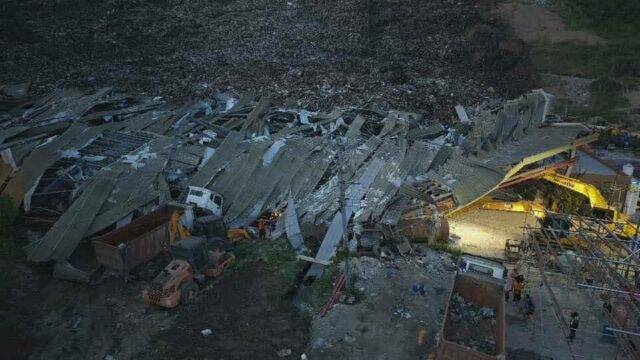
DENR orders shutdown of Binaliw landfill after deadly trash slide

Site of the landslide incident in Binaliw, Cebu City.— PHOTO: MAYOR NESTOR D. ARCHIVAL'S FB PAGE

THE Department of Environment and Natural Resources (DENR) said it has ordered the immediate suspension of operations at the Binaliw Sanitary Landfill in Cebu City following a trash slide on Jan. 8 that killed eight people and injured several others.

In a statement on Monday, the DENR said its Environmental Management Bureau office in Region VII imposed a cease-and-desist order (CDO) on Prime Integrated Waste Solutions, Inc. (PIWSI), which operates the landfill, following the findings of an inspection conducted on Jan. 9.

The CDO directs PIWSI to stop all landfill operations, including the acceptance of waste, except for rescue, retrieval, and cleanup activities undertaken in coordination with concerned agencies.

The DENR said PIWSI has been summoned to a technical conference to establish the facts surrounding the incident and to execute compliance measures within a period not exceeding 90 days.

In an earlier statement, the company said it is working with relevant government agencies and the local government unit to provide assistance and support to those affected by the incident.

The DENR said it is also coordinating with concerned local government units and will assess the status of their required 10-year solid waste management plans and existing oversight measures, as part of efforts to prevent similar incidents.

Meanwhile, the Philippine Navy said on Monday it had deployed rescuers to a central province to bolster search and rescue operations after a landfill avalanche killed and injured several others, four days after the incident.

The navy sent a search, rescue and retrieval team to Cebu to assist local authorities in looking for survivors, saying the unit is specially trained and equipped with technical rescue tools to augment operations.

“This deployment highlights the steadfast commitment to providing humanitarian assistance and disaster response in support of local government units and impacted communities,” it said in a statement.

A mound of garbage at a landfill in the village of Binaliw, Cebu City collapsed on Jan. 8, burying or trapping several people. Rescue efforts are underway, with local authorities saying the death toll has risen to eight while 28 remain missing. — Vonn Andrei E. Villamiel and Kenneth Christiane L. Basilio

Nearly 1.19M register for BSKE

PHILSTAR FILE PHOTO

THE Commission on Elections (Comelec) reported on Monday that voter registration for the 2026 Barangay and Sangguniang Kabataan Elections (BSKE) has reached almost 1.19 million as of Jan. 11.

The figures include both Sangguniang Kabataan (SK) applicants aged 15 to 17 and regular applicants aged 18 and above.

Among SK registrants, new applications totaled 266,993, while transfers from other cities or municipalities reached 1,093, transfers within the same locality were 363, and correction entries accounted for 3,604, bringing the total number of new youth registrants to 272,053.

For regular applicants, registration numbered 324,536, with transfers from other localities at 340,999, reinstatements at 1,320, transfers within the same locality at 73,582, and various other categories — including reactivation and correction of entries — adding up to a total of 915,062 new adult registrants.

Of the total, the gender breakdown shows a higher proportion of female registered voters with 629,863, compared to 557,252 males. These figures were recorded across all registration sites nationwide, according to the Comelec data.

Region-wise, the Calabarzon Region led with 244,836 new registered voters, followed by the Metro Manila with 141,005, and Central Luzon with 138,683 registrants.

Registration is ongoing nationwide and will close on May 18, 2026.

The village and youth council polls, originally slated for Dec. 1, 2025, was moved to the first Monday of November 2026 following the enactment of Republic Act No. 12232 signed by President Ferdinand R. Marcos, Jr. — Erika Mae P. Sinaking

Most of private sector’s 250,000 target units to be built this year, DHSUD says

PHILSTAR FILE PHOTO

THE Department of Human Settlements and Urban Development (DHSUD) expects a majority of the 250,000 housing units promised by private contractors to be built this year.

Senior Undersecretary Henry L. Yap said the private sector commitments made last year are scheduled for construction this year, after the DHSUD and the Department of Economy, Planning and Development jointly issued the price adjustment.

“We foresee that most of that will be implemented this year,” he told a Palace briefing.

Progress under the government’s Pambansang Pabahay para sa Pilipino (4PH) program has been slower than planned, with about 2,000 to 3,000 units completed or taken out over the past two years, Mr. Yap said.

The government aims to build 1.133 million housing units before President Ferdinand R. Marcos, Jr. ends his term in 2028.

Mr. Yap noted that delays often arise after construction due to beneficiary matching and documentation requirements before units can be delivered.

To address bottlenecks and expand coverage, the housing department has rolled out an “expanded” 4PH program that shifts from a production-driven to a beneficiary-centric model.

Under the revised framework, beneficiaries are no longer limited to vertical housing such as condominium units but may now choose horizontal house-and-lot packages or even lot-only options, provided they qualify for subsidies. — Chloe Mari A. Hufana

Senate bill backs local bidders in gov’t projects

A BILL seeking to give preference for domestic bidders participating in government projects has been filed at the Senate, aiming to channel billions of pesos in public spending toward domestic enterprises, workers, and communities.

“This measure aims to ensure that the billions spent annually by the government on procurement benefit not just public institutions but also local enterprises, workers, and communities,” Senator Emmanuel Joel J. Villanueva said in the explanatory note of Senate Bill No. 1602.

The measure seeks to create a certification program for local bidders and provide them with an advantage when participating in government procurement projects.

Mr. Villanueva added that there is a lack of a standardized system that would certify and prioritize domestic bidders.

The proposed domestic bidders’ certificate will be valid for two years and will be issued and regulated under the Trade department’s Competitiveness Bureau.

The regulator will conduct an ocular inspection on the sites where the goods for bidding were grown, produced or manufactured.

Prospective bidders may only be granted certificates when the goods, supplies, or materials offered for bidding are substantially grown, produced, or manufactured in the country.

“By giving preference to Filipino suppliers and producers, the State strengthens domestic industries, generates quality jobs, and builds economic resilience, especially in the countryside,” the senator added. — Adrian H. Halili

Baguio ushers in Panagbenga 2026 with renewed bloom

BAGUIO CITY — Again, Baguio City burst into bloom as it officially launched the 2026 Baguio Flower Festival, or Panagbenga, following the flag-raising ceremony at the Baguio City Hall grounds on Monday morning.

City officials, together with the Baguio Flower Festival Foundation, Inc. (BFFFI), unveiled an exciting lineup of activities for what marks the festival’s milestone 30th edition.

Carrying the theme “Blooming Without End,” Panagbenga 2026 celebrates three decades of collaboration between the local government, the BFFFI, and the people of Baguio.

Mayor Benjamin B. Magalong describes Panagbenga as a symbol of Baguio’s resilience and continuous renewal. “This festival shows that Baguio continues to grow, progress, and prosper — no matter the challenges,” Mr. Magalong said, inviting everyone to experience the city’s rich heritage and warm Cordilleran culture.

First held in 1996, Panagbenga was born in the aftermath of the devastating 1990 Luzon earthquake. Conceived by lawyer Damaso E. Bangaoet, Jr., the festival sought to revive Baguio’s tourism and economy and help the city rise from the rubble.

BFFFI “Chairman for Life” and Baguio City Congressman Mauricio G. Domogan reminded the public that despite its evolution into a world-class event, Panagbenga’s humble beginnings should never be forgotten.

Panagbenga 2026 officially opens on Feb. 1 with a vibrant opening parade. Festival highlights — the much-anticipated Grand Street Dancing Parade and Grand Float Parade — are set for Feb. 28 and March 1, respectively, promising color, creativity, and celebration.

PANAGBENGA’S QUIET HEART
City Councilor Jose Molintas says behind the Panagbenga spectacle is a timely question surfacing among them at the City Council — Which flower truly represents Baguio? The Ibaloi local legislator said “for many Cordillerans, the answer has always grown freely along mountain roads — the Wild Sunflower (Tithonia diversifolia).”

“Because more than a bloom, the wild sunflower is a survivor. It thrives without pampering, holds mountain soil in place, and turns the highlands gold and green from November to February.”

For locals, like him, Mr. Molintas said, the wild sunflower or “marapait” (in the local dialect) is “stitched into childhood memories — used to shine classroom floors, wax wooden sleds for downhill races, and even clean scraped knees after a fall.”

Its value goes beyond nostalgia, Mr. Molintas said. The wild sunflower protects steep slopes from erosion, enriches farms as natural fertilizer, and produces no waste — its leaves, stems, and even dried flower heads are all reused, he added. “It gives long after its petals fall.”

Ever blooming flowers may be what Panagbenga proudly shows the world, “but the wild sunflower is what quietly sustains the mountains,” Mr. Molintas said, insisting, as Panagbenga celebrates “Blooming Without End,” many are asking if it’s time this resilient flower finally receives the recognition it deserves. — Artemio A. Dumlao

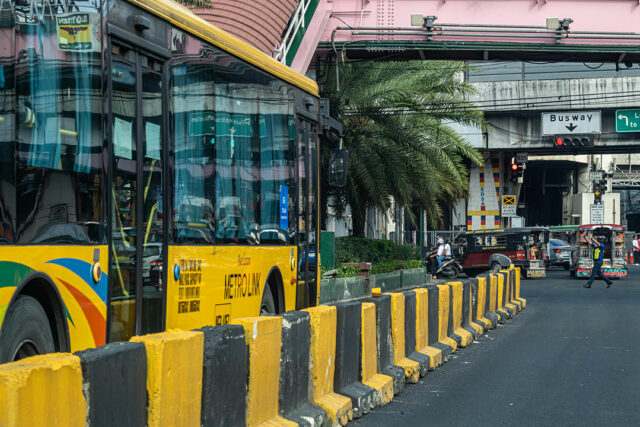
EDSA Busway seen carrying over 70 million riders this year

EDSA Busway — Taft Avenue in Pasay City — PHILIPPINE STAR/RYAN BALDEMOR

THE Department of Transportation (DoTr) expects the Epifanio de los Santos Avenue (EDSA) Busway to carry more than 70 million passengers this year, reflecting greater efficiencies due to modernization.

“We anticipate to increase the ridership by 5% to 10% in view of the new policies, programs and infrastructure that are set in place,” Transportation Acting Secretary Giovanni Z. Lopez said via Viber on Monday.

The DoTr reported rider volume of 66.67 million in 2025, up 5.79%.

“From 66 million passengers per annum, we are optimistic of breaching the 70 million mark this year,” he said.

The DoTr said that the EDSA Busway recorded a single-day peak of 321,186 in April, with December being the highest-volume month at 6.53 million.

The DoTr will continue modernizing and rehabilitating the EDSA Busway amid rising passenger demand, Mr. Lopez said.

Since its launch in June 2020, the EDSA Busway has served 341.31 million passengers.

The DoTr is also working on the expansion of the EDSA Busway, it said, with three more stations set to start construction within the first quarter.

The additional stations are in Cubao, Magallanes and Parañaque Integrated Terminal Exchange (PITX), the DoTr said, adding that the new stations are expected to be completed by the fourth quarter.

In a notice of award dated Dec. 29, 2025, the DoTr awarded the P251.06-million contract for the design and construction of the new busway stations and footbridges to Unimasters Conglomeration, Inc.

The EDSA Busway, a dedicated bus lane along Metro Manila’s main ring road, currently has 21 stations operating round-the-clock.

In a separate statement on Monday, the DoTr said it is also ramping up upgrades at PITX after the terminal recorded foot traffic of 60.28 million in 2025, up 16.91%.

In December, PITX served 5.69 million passengers, of which 3.43 million were logged during the Christmas and New Year Holiday period.

“The DoTr and PITX are fully prepared for the increase in the number of passengers using the terminal. We will ensure that there is an adequate supply of buses and smooth operations at PITX, along with strengthened security for a better travel experience for our passengers,” Mr. Lopez said. — Ashley Erika O. Jose

ADVERTISEMENT
ADVERTISEMENT