Home Blog Page 4498

TIP’s ‘Kabataang NEGOSYANTE’ Project trains 43 out-of-school youths

A total of 43 out-of-school youths (OSY) completed a months-long entrepreneurial training from the Technological Institute of the Philippines (TIP) Quezon City at the culmination of its “Kabataang NEGOSYANTE” project last June 30.

The project was accomplished through a United States Agency for International Development (USAID) grant under its Opportunity 2.0 program, which was designed to provide second-chance education for Filipino OSY in at least 15 cities across the country.

NEGOSYANTE stands for ‘Navigating, Engaging, and Gearing Out-of-School Youths As New Technology Entrepreneurs.’ Its objective was to teach underprivileged children how to use available technologies that can help them earn possible livelihood opportunities.

Under the mentorship of TIP faculty members, participants were provided with technical skills, business training, and values formation to help them set up their own online businesses through social media and other internet-based applications.

Dr. David Hall, chief of party for the USAID Opportunity 2.0 program and the Education Development Center (EDC), commended TIP for merging its commitment to entrepreneurship with its responsibility to the local community through the “Kabataang NEGOSYANTE” project.

“What we’re trying to do is to strengthen systems to help out-of-school youth in the Philippines back into education and employment. And perhaps, most significantly with this grant, into self-employment,” Dr. Hall said in a video message played at the closing ceremony.

The OSY learners belong to the communities of Barangays Batasan Hills, Commonwealth and Holy Spirit in Quezon City. The outreach program started in June 2022 and ran for about a year. It accommodated a total of 76 learners, 43 of whom were able to complete the training modules.

All participants were honored with certificates and special awards. Cash prizes were also handed out for the top teams that presented best outputs. TIP President Dr. Elizabeth Quirino-Lahoz also graced the concluding activity along with other school executives.

“The collective journey continues, and we should not doubt that together we will make a lasting and positive impact on the world,” said Dr. Angeles de Guzman, dean of TIP Quezon City College of Business Education and project manager for “Kabataang NEGOSYANTE.”

Growsari celebrates 7th year, aims to impact more MSMEs through two new business units

Business-to-business tech company Growsari commemorates its 7th year of empowering micro, small, and medium-sized enterprises (MSMEs) nationwide.

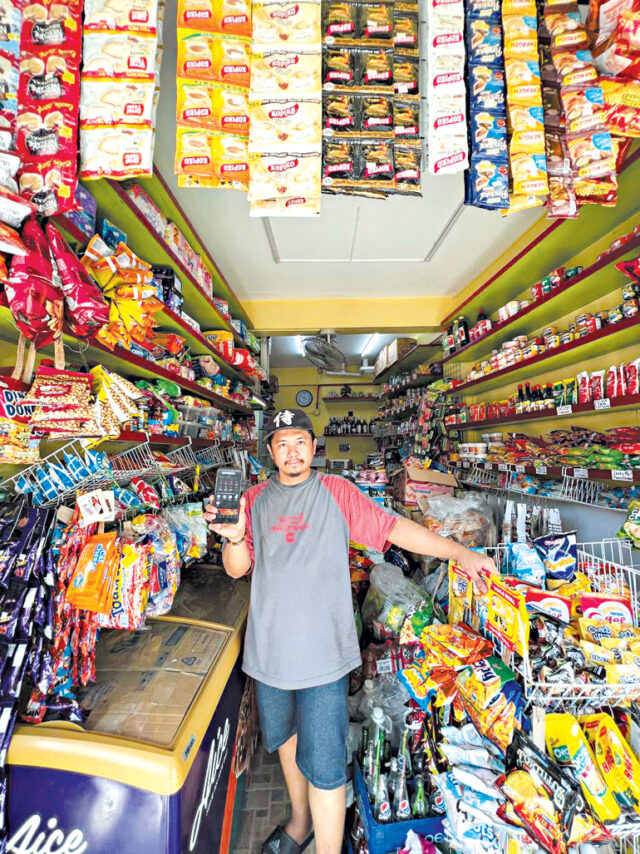
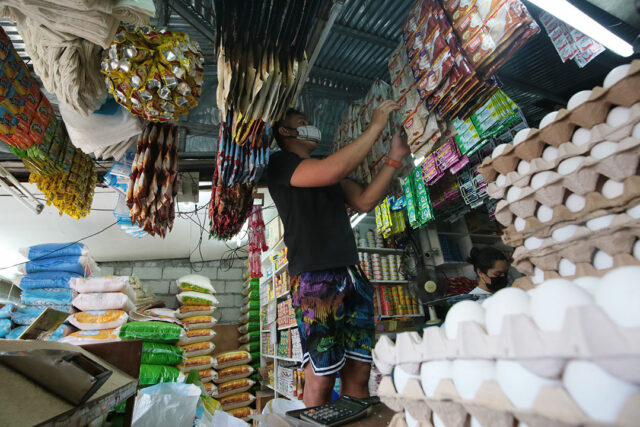
Since its inception in 2016, Growsari has been revolutionizing the retail ecosystem of mom-and-pop stores, more known as sari-sari stores, by providing comprehensive tech solutions to transform them into efficient and competitive retail establishments. Growsari’s vision started with a noble mission — to uplift the lives of local store owners and bridge the gap between traditional retail and modern technology.

Through their innovative platform, Growsari has been instrumental in enabling over 250,000 sari-sari stores across the country, spanning 24 key cities and 400 municipalities. Recently, Growsari has expanded its reach to previously untapped regions, including the provinces of Isabela in North Luzon and Bais, Dumaguete in Visayas, making their impactful presence felt in even more communities.

“We are thrilled with the expansion of Growsari and the opportunity it brings to more stores nationwide,” Growsari’s SariMart General Manager Maimai Madrid-Punzalan.

She added their e-commerce business arm, SariMart, provides customers with the fastest selling consumer goods at distributor prices with the convenience of next-day delivery.

“Now, even more MSMEs can benefit from our comprehensive range of quality goods, helping them compete and thrive in the market,” she added.

Through its financial services arm SariPay, Growsari continues its commitment to assist MSMEs to adapt to the age of digitalization and to modernize their store operation by providing local stores with cutting-edge QRPH payment solutions, enabling seamless and cashless transactions for their customers. Through SariPay, everyone in the community can easily scan and pay, revolutionizing the way business is conducted in traditional mom-and-pop stores. The initiative, in support of BSP’s goal for a cashless society, has already gained significant traction to sari-sari stores, with over 20,000 stores having their own Digital QR.

Growsari also extends a helping hand to entrepreneurs facing cash flow constraints with their innovative “buy now, pay later” program through Elista of SariPay. This forward-thinking approach allows store owners to stock up on inventory and grow their businesses without undue financial strain.

“We are delighted to witness a growing number of stores embracing digitalization with the help of SariPay’s payment solutions, including QRPH and Elista. As we continue to expand our reach and offerings, we are committed to help more than 100,000 stores adapt to digitalization by the end of the year. Together, we are shaping a more efficient and tech-savvy future for Filipino businesses,” SariPay General Manager Sandeep Bhalla added.

Growsari’s platform has garnered accolades for its transformative impact on small retail enterprises, streamlining inventory management, simplifying transactions, and providing access to a broader network of suppliers. By leveraging cutting-edge technology and a deep understanding of the needs of MSMEs, Growsari has earned its place as a trailblazer in the Philippine tech industry.

Gearing up for further expansion and impact, Growsari aims to extend their reach to even more underserved areas, empowering more MSMEs and creating lasting positive change in the lives of Filipino entrepreneurs.

“As we celebrate our 7th anniversary, we remain resolute in our mission. And with the launch of Growsari’s two business units, SariMart and SariPay, earlier this year, I am thrilled to see how we can scale our social impact and bring even more value to over 300,000 store partners by the end of the year,” Growsari CEO ER Rollan said.

Crypto community app ROLA.ai debuts in PHL

Chief Product Officer Rosalind Lee introduces ROLA.

ROLA.ai, the first-of-its-kind crypto community platform, unveiled groundbreaking Web3 features, marking its physical debut in the Philippines. Crypto enthusiasts, beginners, and experts gathered to experience the future of crypto engagement at an interactive event at Revel at The Palace in Bonifacio Global City in Taguig.

Developed by a team of visionary pioneers, ROLA.ai harmonizes with the rapidly evolving Web 3.0 landscape by bringing together a social media platform, gaming interface, metaverse features, non-fungible tokens (NFTs), and an advanced AI algorithm — providing an all-encompassing experience for users with varying levels of crypto knowledge.

“ROLA is not just a platform; it’s a community-centric movement,” said Rosalind Lee, chief product officer of ROLA. “Our goal is to create an environment where everyone has a chance to contribute, learn, and reap the benefits of the crypto world.”

Emphasizing its dedication to inclusivity, ROLA.ai aims to break down the barriers often associated with the crypto space. Its signature feature, Predict2Earn, rewards users with $ROLA tokens for accurately predicting crypto market trends, fostering a collaborative learning space, and democratizing access to crypto.

“We wanted to add an element of gamification to our platform, making it more interactive and exciting. The Predict2Earn feature allows our users to earn rewards while enhancing their market forecasting skills,” Ms. Lee further emphasized.

ROLAverse, another innovative feature, integrates metaverse attributes, such as gaming and NFTs, facilitating social interaction and collaboration.

Beyond simple profit metrics, ROLA.ai offers a unique, decentralized, and engaging experience for its users.

ROLA.ai revealed upcoming features, including “Answer & Earn” with Language Setting, allowing users to translate content into English for global accessibility. Currently, Answer & Earn boasts over 2.8 million monthly interactions and continues to thrive.

In celebration of reaching 100,000 active users, ROLA.ai has also introduced Mocha, an NFT that facilitates blockchain messaging, wherein messages are broadcasted securely through the blockchain network.

YGG’s Web3 Community Summit showcases new games, workshops, job opportunities

Mighty Action Heroes mini-tournament held at the 2nd day of the summit

Yield Guild Games (YGG), considered the world’s largest decentralized gaming guild network, brought together leaders, content creators, and community managers and members for the recent Web3 Community Summit. The summit featured a series of game demos & tournaments, upskilling workshops, and thought-provoking discussions that aimed to grow, support, and empower the country’s thriving Web3 community.

Over a thousand members of YGG’s community base had first-hand experience with brand new and upcoming Web3 games, including Gensokishi, Metacene, Mighty Action Heroes, SingSing as well as player one platform, XPLA. Attendees were given the chance as well to apply to over 100 job opportunities in Web3 with the support of Web3 Jobs Asia.

For YGG Co-Founder Gabby Dizon, the community’s support during the summit showed their relentless passion for Web3, regardless of market conditions.

“Despite the bear market, many builders in the space are continuing to foster community engagement. The hope is that by the time the bull market comes around, you have an empowered and well-informed core community that can teach and mentor others that are looking at coming into the space,” he explained.

Supporting and empowering the local Web3 communities has been the goal of YGG since it began in 2020. Throughout the years, community members were given a deeper understanding of how to participate in Web3 and were equipped with the knowledge they need to make the most of opportunities in the metaverse. Web3 Metaversity, YGG’s education and upskilling program, plays a key role in the education of the community.

Today, Filipinos that were introduced to Web3 through gaming are now an integral part of YGG’s core community, according to Mr. Dizon. He also expressed his excitement for what’s to come in the future, including the development of more Web3 games and experimentations in “tokenomics” and rewards.

“There are people who we’ve met then that are still with us now, regardless of how high we’ve peaked in the market or how low the market went. We are held together by the love of the game and the sheer enjoyment of playing with each other,” he said. “We are also on the cusp of the next wave of Web3 games, and now we have really good partners from all over the world. It’s important for us to have the community rally to see what games to explore and discover and know where to bring their community in the near future.”

For its part, YGG has been encouraging participation and facilitating growth among core community members with programs such as the Guild Advancement Program, where members can earn tokens and badges for their on-chain resumes by participating in the guild’s various activities. Most recently, YGG launched SuperQuests, a program that lets new users learn more about Web3 games as they play.

YGG is also preparing for the upcoming Web3 Games Summit in November, a week-long event featuring a two-day conference, e-sports tournament, hackathon, and more.

“We’re looking forward to showing the world why the best Web3 players in the world are coming from the Philippines,” Mr. Dizon said.

Market insights startup rakes in P27 million in revenue

Agile Data gathers the insights they provide their clients through their data collection app, Hustle PH.

In the technology startup landscape, characterized by rapid expansion often at the expense of burning capital and where profitability is commonly deferred, market insights startup Agile Data Solutions, Inc. distinctively positions itself against the prevailing trend. Notably, this unconventional strategy is proving not only feasible but also successful.

The tech startup has announced an annual net revenue of P27 million for 2023, with Cost of Goods Sold (COGS) conservatively sitting at 37%. Co-Founder and Chairman Jason Gaguan attributes the revenue growth to their sustained clientele of international fast-moving consumer goods (FMCG), telecommunications, and technology companies.

“It is our loyal base of customers, local and international companies, who want their consumer and market data fast and reliable that fuels our growth. Their continued trust and reliance on our services is what inspires us to continue to evolve quicker and better,” Mr. Gaguan said.

Agile Data gathers the insights they provide their clients through their data collection app, Hustle PH. The company boasts an active base of 50,000 users acquired organically without any social media marketing spend.

“Our thousands of… Hustle PH app users, continue to grow mainly through word of mouth and some kind-hearted influencers who share our story for free. We just suddenly see spikes in our users and find out a day or two after a famous content creator made a video about us. It just makes us very happy that people organically discover and grow to love our data-sharing and collection app,” Mr. Gaguan exclaimed.

The company started in 2021 and went into full operation in 2022, immediately going head to head with the giants of the market research field, leveraging their data gathering and data organization technology to deliver results faster, more accurately, and largely more cost-efficient.

When asked what makes Agile Data thrive in the ultra-competitive startup environment, Mr. Gaguan answered that it is their product-first mentality and fiscal discipline that powers them.

“We just follow two very basic business principles: always improve the product daily and always earn much more than what we spend. With those at the forefront of every decision we make, we are ensured that we can continue to delight our clients and thrive in any economic or business environment. We continue to find ways to scale our business through our technology rather than by spending massive amounts of cash. From my point of view, that is real sustainable growth,” he said.

Remolona sees upside risks to inflation outlook

A worker carries a sack of rice to a warehouse in Tondo, Manila. — PHILIPPINE STAR/EDD GUMBAN

POSSIBLE SUPPLY constraints affecting key food items threatens to reverse the downward trend in Philippine inflation, Bangko Sentral ng Pilipinas (BSP) Governor Eli M. Remolona said on Friday.

Mr. Remolona said the central bank sees inflation returning to the 2-4% target range by yearend, in the absence of supply shocks.

“We want to get to the target range without overshooting it too much,” he told reporters. “I think we will overshoot a little bit pero hindi kami madadapa [but we won’t trip].”
Asked if the Philippine economy would be able to handle another rate hike, Mr. Remolona said: “I think we’re very close to our full capacity at this point.”

The Monetary Board kept its key policy rate unchanged at a nearly 16-year high of 6.25% at its last two meetings. It has hiked borrowing costs by 425 basis points from May 2022 to March 2023 to tame inflation.

“If we’re going to hike, we have to be very careful not to hike too much. Siguro kaunti lang muna [maybe just a bit], but if we’re going to cut, there [should be] room to cut, so wait until Aug. 17 (Monetary Board meeting),” Mr. Remolona added.

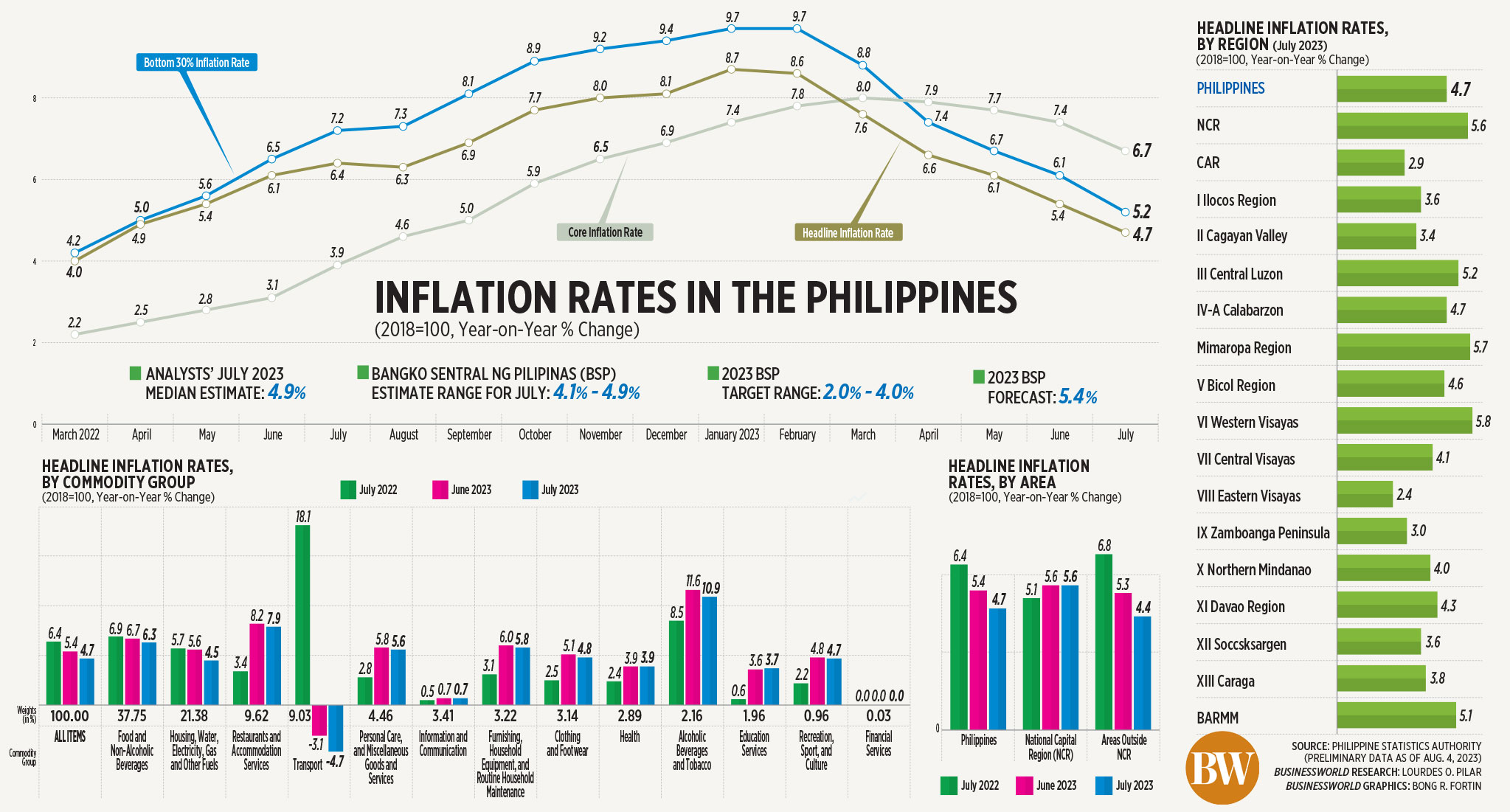
Headline inflation cooled to a 16-month low of 4.7% in July from 6.4% in the same month in 2022. Core inflation also eased to 6.7%, the lowest this year.

For the seven-month period, inflation averaged 6.8%, still higher than the 5.4% forecast by the central bank. It also marked the 16th straight month of inflation exceeding the BSP’s 2-4% target band.

Mr. Remolona said there are several risks to the inflation outlook.

“We are more worried about Vietnam, which is a big source [of the country’s rice imports]. El Niño is beginning to hit Vietnam, they’re experiencing droughts, so that’s more worrisome,” Mr. Remolona said in mixed English and Filipino.

Rice export prices have been going up as supply tightened due to India’s ban on white rice exports. India is the world’s biggest rice exporter, followed by Thailand and Vietnam.

The Philippines is one of the world’s biggest rice importers and usually buys rice mainly from Vietnam.

Jonathan L. Ravelas, senior adviser at Reyes Tacandong & Co., said Philippine inflation is seen to maintain its downward trend in the second half but upside risks remain.
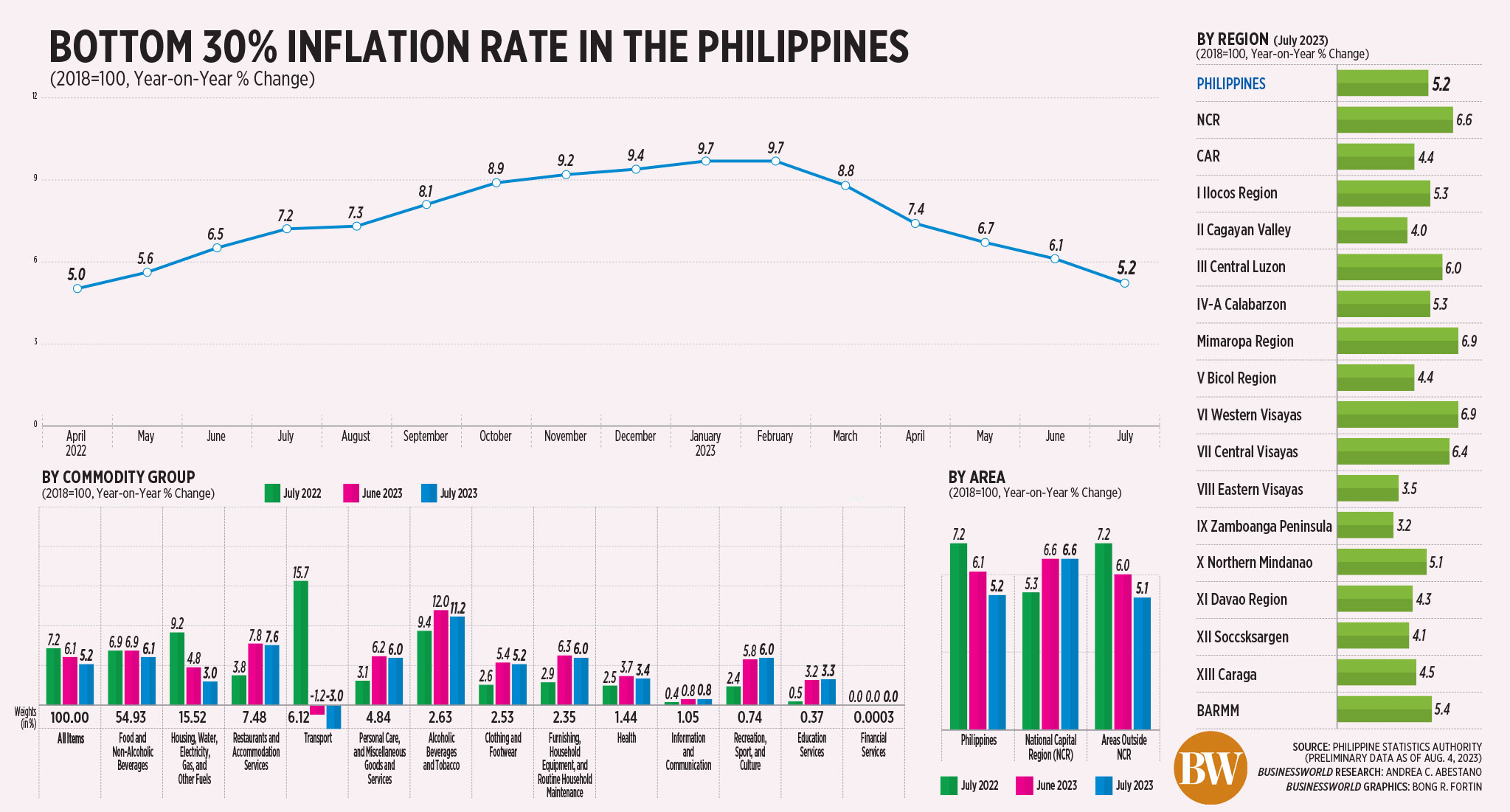
“The recent introduction of restrictive trade policies on certain food commodities by neighboring countries, the impact of typhoons Egay and Falcon in the country, as well as extended oil output and export cuts by major oil producers, have introduced new upside risks to near-term inflation,” he said.

“These risks add to existing concerns about potential changes in domestic price policies amid ongoing supply constraints of key food items and currency fluctuations,” he added.

Security Bank Corp. Chief Economist Robert Dan J. Roces said rising food prices in July are a red flag.

“The month-on-month increase in food prices picked up,” he said. “We view this development as a red flag of concern for the central bank, as the jump in costs took place prior to the recent typhoon.”

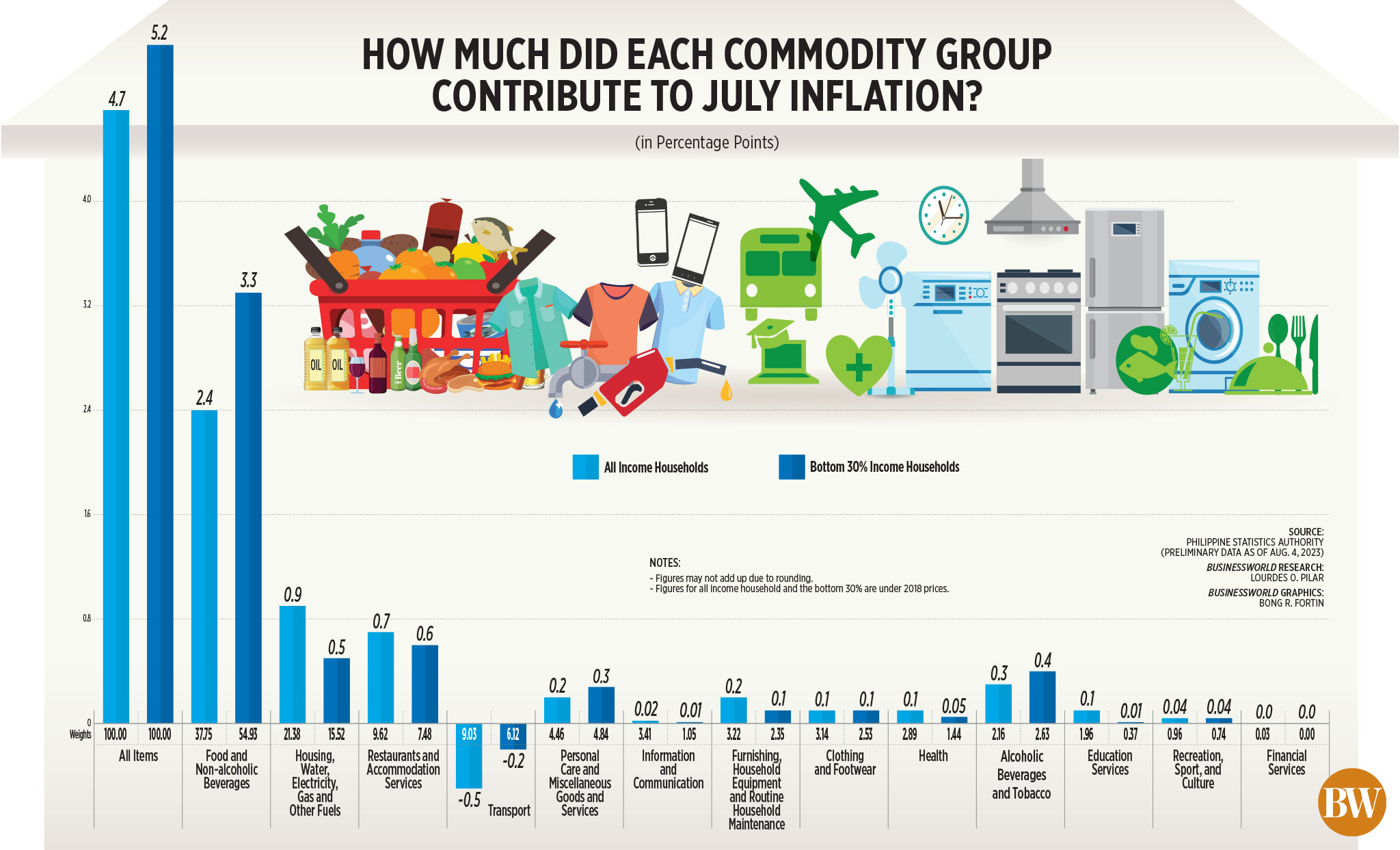
The index for food and non-alcoholic beverages eased to 6.3% in July from 6.7% in the previous month. However, month on month, food inflation rose to 0.5% from 0.3% in June. This was driven by monthly increases in prices of rice, corn, and vegetables.

Mr. Roces said it would be more concerning if high food prices will be sustained over the coming months following agricultural damage from Typhoon Egay (international name: Doksuri) and Typhoon Falcon (international name: Khanun).


Infrastructure damage from recent weather disturbances will also directly impact food costs, he said.

Agricultural damage due to the two recent typhoons reached P3.08 billion while infrastructure damage stood at P3.63 billion.

China Banking Corp. Chief Economist Domini S. Velasquez said August inflation will likely match or inch up from July due to the impact of the typhoons and higher transport costs.

“Some of the emerging upside risks (typhoon) are temporary and should be addressed by government interventions,” Ms. Velasquez said.
GOVERNMENT MEASURES
Meanwhile, Finance Secretary Benjamin E. Diokno said to ensure that inflation falls within the 2-4% target by fourth quarter this year, the government will further monitor potential impact of weather disturbances, external uncertainties, the El Niño, as well as transportation and wage hike petitions.

“To ensure that the country will have sufficient amounts of rice needed by the population, the government will intensify the proper utilization of the calamity fund and Quick Response Fund to help our farmers, particularly with the adverse impact of recent typhoons that afflicted the country,” he said.

The private sector is also encouraged to fill any supply deficits through importation during the lean season until September.

“Measures will also be implemented by the government to facilitate the issuance of sanitary and phytosanitary import clearance (SPSIC) and the enactment of a policy on the automatic approval of SPSIC application, and issuance of importation guidelines by the Sugar Regulatory Administration,” Mr. Diokno said.

Finance Undersecretary Zeno Ronald R. Abenoja said the Department of Agriculture believes the rice stock to be sufficient until the end of the year.   

“We are also looking at developments abroad especially as the spillover effects of India could affect rice prices from other exporters. Given those considerations, the government is preparing to implement several measures in anticipation of El Niño as well as the impact of recent weather disturbances,” he said. — Keisha B. Ta-asan


Farm output may have expanded in 2nd quarter

A FARMER prepares to plant rice in Malilipot, Albay province, June 16, 2023. — PHILIPPINE STAR/EDD GUMBAN

THE PHILIPPINES’ overall agricultural output likely saw an improvement in the second quarter due to favorable weather conditions and low base effects.

“I would think there was some improvement this year due to better (sunnier) weather in the second quarter,” Raul Q. Montemayor, national manager of Federation of Free Farmers, said in a Facebook Messenger chat.

He noted that agricultural output is coming from a “low base” as it shrank by 0.6% in the second quarter of 2022.

In the first quarter, the value of production in the agriculture and fisheries sector expanded by 2.1%. Agriculture contributes about a 10th of the country’s gross domestic product (GDP) and a fourth of jobs.

The Philippine Statistics Authority (PSA) is set to release second-quarter farm output data on Aug. 9, a day before the GDP data.

The Department of Agriculture set a 2.3%-2.5% agricultural output growth target for this year.

“The (gross value added) in real terms has been declining constantly since 2018. If ever there is an improvement this year, we would still end up lower in real terms compared with 2018,” he said.

In 2022, the gross value added (GVA) of the agriculture, forestry and fishing sector stood at P1.78 trillion or 8.9% of the GDP — the lowest contribution over the last five years. In 2018, agriculture accounted for 9.7% of GDP.

“Declining GVA in real terms (constant 2018 prices) means a decline in output. The hog and poultry sectors are still recovering from the (African swine fever), so any recovery will come up as an increase in output (compared with low base levels),” Mr. Montemayor said.

He noted that crops and fisheries output is also declining or stagnating.

“It may be due to the continuous entry of imports which depress farmgate prices and discourage farmers/fishers from expanding their production. Or the support being given is not enough, or the wrong one, or is not properly delivered,” Mr. Montemayor said.

Elias Jose M. Inciong, president of the United Broiler Raisers Association, said production volume may have been higher in the second quarter.

“There might be a decline in terms of value as farmgate prices were unusually low for a second quarter,” he said in a Viber message.

He noted that in April, the farmgate price of chicken on a liveweight basis reached P89 per kilogram which is below the production cost.

Alfred Ng, vice-president of the National Federation of Hog Farmers, Inc., said there was higher production in the second quarter amid hog repopulation efforts in areas which were stricken by the African swine fever.

Mr. Ng said there is currently a surplus in pork supply as reflected by the decline in liveweight prices.

“From P200 per kilogram during the first quarter, it had gone down to P150 backyard and P160-P170 commercial which some farmers claim they are losing money as feeds remain high and gas prices are up again,” he said.

Asis G. Perez, former director of the Bureau of Fisheries and Aquatic Resources and co-convenor of advocacy group Tugon Kabuhayan, said fisheries production likely saw improved numbers since there were no weather disturbances except for one typhoon in the second quarter.

“I anticipate good numbers since we noticed the price of fish has gone down, which is an indication that there is a lot of supply,” he said in mixed Filipino and English via Viber message.

Mr. Perez noted demand for fish appeared lower in the second quarter, which may have dampened prices. This month, he said fish prices have gone up again.

Meanwhile, Ateneo de Manila University economics professor Leonardo A. Lanzona said agricultural output may have declined in the second quarter due to unusually heavy rains in May and June.

“It is difficult to predict agricultural production in the second quarter. It may take a rocket scientist to accurately forecast the performance of the agricultural given its vulnerability to climate change changes,” he said in an e-mail.

Mr. Lanzona noted that the El Niño weather pattern does not bode well for agricultural production for the rest of the year.

In July, the Philippine Atmospheric, Geophysical and Astronomical Services Administration (PAGASA) declared the onset of El Niño. PAGASA earlier projected a high probability of more than 56% chance of moderate to strong occurrence of El Niño in the last quarter of the year.

“A much bigger issue is the lack of government action to counter the impact of climate change,” Mr. Lanzona said, adding the government should push for crop diversification.

“This is obviously a challenging task. However, when the disaster does come — a flood, another pandemic, or even some terrible geopolitical conflict — then the investment in resilience will pay off,” he said. — Sheldeen Joy Talavera

PHL faces challenges in securing ‘A’ credit rating

REUTERS

THE PHILIPPINES is still determined to secure an “A” sovereign credit rating before the end of the Marcos administration, although Finance Secretary Benjamin E. Diokno said it may be more challenging amid uncertainties in the global markets.

“Given the current global environment, getting an ‘A’ rating promises to be challenging,” he told reporters in a press chat on Friday.

Last week, Fitch Ratings downgraded the US debt rating to “AA+” from “AAA” due to a likely fiscal deterioration over the next three years and growing government debt burden.

“At a time of uncertainty in the global market, the Philippines is doing quite well,” Mr. Diokno said. “Our ultimate goal is to get an ‘A’ rating before the end of the President’s term.”

The Philippines currently falls short of the “A” rating across three major debt watchers, with Moody’s Investors Service rating the country at “Baa2,” S&P Global Ratings at “BBB+,” and Fitch Ratings at “BBB.”

All three have assigned a “stable outlook” for the Philippines, indicating that no rating changes may occur in the next 12 to 18 months. 

“An upgrade to ‘A’ rating will result in improved perception of the local and international business and financial communities on the country and will help reduce the government’s borrowing cost,” Mr. Diokno said.

“In turn, this will increase investment due to higher investor confidence and will eventually help in achieving the country in its long-term economic plans,” he added.   

The Philippines’ outstanding sovereign debt hit a record P14.15 trillion as of end-June.

Finance Undersecretary Zeno Ronald R. Abenoja said interest payments constitute about 10-11% of the government’s budget.

For next year, the government’s debt service program is set at P1.91 trillion, of which P670.47 billion will go to interest payments. 

“With the credit rating upgrade, it will lower the borrowing cost of the government that will provide savings for the National Government,” Mr. Abenoja said.   

He also said that the savings from lower borrowing costs could be allocated to the government’s priority projects.

Meanwhile, BSP Governor Eli M. Remolona said the credit default swap (CDS) spread of the Philippines on a five-year horizon is around 69-70 bps, which mirrors a CDS spread of a country with an “A” rating.   

The CDS spread is a market-based measure of a country’s likelihood of defaulting within a certain period of time.

“The CDS market is anticipating our single ‘A’ rating. Credit rating agencies look at the country’s governance and the fiscal policies to pursue [in deciding their debt ratings]. For the Philippines, they see our policies are good enough, including being able to help the poor,” Mr. Diokno said in mixed English and Filipino.   

Still, debt watchers are being careful in giving credit ratings due to the backlash they received during the global financial crisis, Mr. Diokno said.   

The three major agencies were criticized for exaggerated ratings of risky mortgage-backed securities back in 2008, which gave investors false confidence that they were safe for investing.

Mr. Remolona said the debt watchers are more “conservative” now.

To achieve the “A” credit rating, the BSP and the Department of Finance organized an InterAgency Committee on the Road to A Credit Rating Agenda in 2019.   

The body aims to coordinate the efforts of member agencies in implementing the Road to A Roadmap. It also aims to enhance engagements with analysts, investors, and credit rating agencies.

“It is important to note that we managed to maintain investor grade ratings even during the pandemic, while other countries were downgraded,” Mr. Diokno said.  “We’re fully aware that this is not going to be a walk in the park. But we are committed to work unceasingly to achieve our lofty goal.” — Keisha B. Ta-asan

Meralco expects 5% growth in energy sales in second half

MANILA ELECTRIC Co. (Meralco) expects its energy sales to grow by 5% in the second half of the year, boosted by an increase in residential and commercial sales volumes, an official said.

“We are projecting close to 5% growth for the second half, mainly driven by residential and commercial [segments] still,” Ferdinand O. Geluz, first vice-president and chief commercial officer of Meralco, said in a press briefing last week.

The power distributor’s full-year energy sales growth target is at 4%, Mr. Geluz said.

In the first half, Meralco’s energy sales went up by 3.4% year on year to 24,792 gigawatt-hours (GWh) from 23,968 GWh, boosted by a growth in the consumption of the commercial segment.

Meralco said it registered an all-time high commercial sales volume of 9,162 GWh in the period, 10.3% higher than 8,305 GWh previously, while residential sales volume rose by 1.4% to 8,629 GWh from 8,506 GWh. Industrial sales volume, however, decreased by 2.2% to 6,929 GWh from 7,085 a year prior.

Meanwhile, the power distributor’s chairman said they are looking at emerging technologies to help address the country’s power supply needs but noted that the Philippines cannot do away with “conventional” power sources like coal and gas.

“We get excited about new technologies right, simply because it’s new. Nuclear, hydrogen, ammonia, everything under the sun that scientists, or magicians can conjure up. But the reality is that is not what this country needs, and these are not quick fix solutions,” said Manuel V. Pangilinan, chairman and chief executive officer of Meralco.

Mr. Pangilinan said renewable energy sources alone cannot address supply-demand issues because of their intermittency problems.

“What this country needs where there is a very thin margin of supply to demand are very conventional power plants. Probably more gas than coal. We have to approach it on that basis. Everybody wants a quick fix solution, there is none,” he added.

As of end-2022, coal still dominates the country’s power generation mix at 59.57%, while natural gas accounts for 16.04% and renewable energy at 22.13%.

“These are the things that Meralco should be focusing on. New plants, new gas plants, existing gas plants, if you can buy into them, why not right? Because that is needed by the country as a very basic need,” Mr. Pangilinan said.

AUGUST GENERATION CHARGE
Meanwhile, Joe R. Zaldarriaga, Meralco’s vice-president and head of corporate communications, said the generation charge for August will likely decrease amid lower demand.

“While we have yet to receive the final billings from our suppliers, we expect a possible decrease in the generation charge this month. We’ve seen reduced demand in the last supply month, which likely led to lower Wholesale Electricity Spot Market (WESM) prices,” Mr. Zaldarriaga said.

The generation charge accounts for more than half of a consumer’s total monthly electricity bill.

In July, Meralco cut the overall electricity rate by P0.72 per kilowatt-hour (kWh) to P11.18 per kWh on lower generation charges.

Last month, the power distributor sourced 15% of its supply requirement from WESM.

“We are optimistic that these factors would be enough to bring down the overall electricity rate for this month,” Mr. Zaldarriaga said.

Meralco’s controlling stakeholder, Beacon Electric Asset Holdings, Inc., is partly owned by PLDT Inc.

Hastings Holdings, Inc., a unit of PLDT Beneficial Trust Fund subsidiary MediaQuest Holdings, Inc., has an interest in BusinessWorld through the Philippine Star Group, which it controls. — A.E.O. Jose

Rates of Treasury bills, bonds may climb

STOCK PHOTO | Image by RJ Joquico from Unsplash

RATES of Treasury bills and bonds on offer this week could rise as the market continues to react to Fitch Ratings’ downgrade of the United States last week.

The Bureau of the Treasury (BTr) will auction off P15 billion in Treasury bills (T-bills) on Monday, or P5 billion each in 91-, 182- and 364-day papers.

On Tuesday, it will offer P30 billion in reissued seven-year Treasury bonds (T-bonds) with a remaining life of six years and two months.

T-bill rates may track the increase seen in secondary market yields after Fitch downgraded the US’ credit rating, Rizal Commercial Banking Corp. Chief Economist Michael L. Ricafort said in a Viber message.

At the secondary market on Friday, the 91- and 364-day T-bills went up by 0.18 basis point (bp) and 7.87 bps week on week to end at 5.7015% and 6.1975%, respectively, based on the PHP Bloomberg Valuation (BVAL) Service Reference Rates data published on the Philippine Dealing System’s website.

Meanwhile, the 182-day T-bill inched down by 1.13 bps week on week to end at 5.9234%.

Fitch on Tuesday downgraded the US government’s top credit rating, a move that drew an angry response from the White House and surprised investors, coming despite the resolution of the debt ceiling crisis two months ago, Reuters reported.

Fitch downgraded the United States to “AA+” from “AAA,” citing fiscal deterioration over the next three years and repeated down-the-wire debt ceiling negotiations that threaten the government’s ability to pay its bills.

“Global markets are still in shock of the US downgrade and are still recalibrating,” a trader said, adding that the reissued seven-year T-bond could fetch yields of 6.4% to 6.5%.

“The upcoming six-year Treasury bond average auction yield could be similar to the comparable six-year PHP BVAL yield at 6.39% as of Aug. 4,” Mr. Ricafort said.

T-bill and T-bond yields could rise amid hawkish signals from the Bangko Sentral ng Pilipinas (BSP), he added.

The BSP said it was ready to tighten monetary policy as necessary to keep a lid on price pressures, Reuters reported.

Though prices cooled for a sixth straight month, the BSP said that upside risks from wage and transport fare hikes and bottlenecks in food supply remain.

BSP Governor Eli M. Remolona, in a television interview, reiterated the central bank’s readiness to act to bring inflation back to its target and anchor consumer price expectations.

“If supply-side shocks are large enough and they are not compensated by weaker demand, then yes we will have to raise again,” Mr. Remolona said. “We are not out of the woods yet.

The consumer price index rose 4.7% in July, slower than the 5.4% in June and 6.4% seen in July 2022. This marked the 16th month that inflation exceeded the central bank’s annual 2-4% target range.

Last week, the BTr raised P15 billion as planned via the T-bills it auctioned off, with total bids reaching P45.103 billion or more than three times the amount on the auction block.

Broken down, the Treasury made a full P5-billion award of the 90-day T-bills as tenders for the tenor reached P20.867 billion. The average rate for the three-month paper went down by 38.7 bps week on week to 5.224%, with accepted rates ranging from 5.123% to 5.34%.

The government also raised P5 billion as planned from the 182-day securities as bids stood at P13.309 billion. The average rate for the six-month T-bill was at 5.789%, down by 3.4 bps from the previous week, with accepted rates at 5.46% to 5.83%.

Lastly, the BTr borrowed P5 billion as programmed via the 364-day debt papers as demand reached P10.927 billion. The average rate of the one-year T-bill went up by 2.6 bps to 6.21%. Accepted yields were from 6.1% to 6.27%.

Meanwhile, the reissued seven-year bonds to be offered on Tuesday were last auctioned off on July 18, where the government raised the programmed P30 billion at an average rate of 6.299%.

The BTr wants to raise P225 billion from the domestic market this month, or P75 billion via T-bills and P150 billion via T-bonds.

The government borrows from local and foreign sources to help fund its budget deficit, which is capped at 6.1% of gross domestic product this year. — A.M.C. Sy with Reuters

Electric means business

Diamond Auto Group EV Corp. (DAGEVC) displays two of Dongfeng’s full-electric offerings, the Rich 6 pickup (P2.76 million), and EV30 panel van (P1.9 million). — PHOTO BY KAP MACEDA AGUILA

Diamond Auto Group EV Corp. is going all in on Dongfeng’s full electrics

IF YOU HAVEN’T gotten a whiff of it yet, full-electric vehicles are clearly not a passing fancy or a novelty. Just ask the folks of Diamond Auto Group EV Corp. (DAGEVC), who are going all in on the trend, excuse me, evolution of mobility.

The company, which was once a dealership group of Mitsubishi Motors Philippines Corp., now oversees the importation and local distribution of Chinese automotive brand Dongfeng — specifically its commercial electric vehicles. The company said in a release, “With a strong foundation of more than 50 years (and) excellent track record in the automotive industry, we are committed to bring in sustainable transportation, bring the latest and innovative electric vehicles that are revolutionizing the way we travel, and be the forerunner in the electrification of light commercial vehicles in the country.”

To reiterate, DAGEVC is not taking over importation and distribution of the Dongfeng portfolio here. It is zooming in on the latter’s full-electric offerings. In a recorded message, DAGEVC Chairman George Blaylock said, “For some time now, we’ve seen the growth in the EV market,” a development that is also “being seen locally.”

He continued, “This new group will be taking an active role and move into this (space). We hope we’ll be able to bring the EV experience to greater heights.”

Construction is ongoing on what will be the group’s flagship Dongfeng EV dealership — located in San Isidro, Cainta Rizal, along Marcos Highway. Eyed to open in September, this facility will showcase the lineup of vehicles the company is initially making available.

It is a complete and formidable one. Headlining the portfolio is the Rich 6, said to be the first fully electric pickup available in the local market. It can muster 350 kilometers on a full charge, with an electric motor that submits 161hp and 420Nm. The Rich 6, priced at P2.76 million, gets LED headlights, an LCD instrument cluster display, and rotary drive selector dial.

The EC36 (P1.78 million) is an eight-seater passenger van with an output of 80hp and a range of 300 kilometers. DAGEVC positions the model as ideal for shuttle services.

Enterprises looking for cargo delivery vans can be served by the EV30 panel van (boasting 94hp and 230Nm). The vehicle, priced at P1.9 million, can be loaded with up to 5.6 cubic meters of cargo through its wide barn doors. A light panel van, the EC35, is also available. This can dish out 80hp and 200Nm, and DAGEVC said this has a “strengthened chassis for greater load with a 5.1-cubic-meter cargo box space and 300 km (of) range.” It is priced at P1.75 million.

A light-duty cab and chassis product, the EC31 (P1.68 million) offers 80hp and 200Nm of torque and 300 kilometers of range; the medium-sized EV35 (P2.475 million), can carry 1,650kg and travel 280 kilometers per full charge. Its motor serves up 134hp and 230Nm. Lastly, the large EV45 (P3.35 million) can accommodate up to 2,200kg with its 161hp, 320Nm electric motor. It can travel up to 350 km, and gets keyless entry, power windows, and LCD instrument cluster display.

Replying to a question from “Velocity,” company officials said the company is looking into making the offerings more customizable to serve varied business applications — including, for instance, refrigeration or air-conditioning of the rear cargo hold.

The priority for now remains to be B2B customers, and the company is counting on the mandatory requirement to electrify government and corporate fleets per the Electric Vehicle Industry Development Act (EVIDA). Rule V, Section 20 states that industrial and commercial companies, public transport operators, and “government fleets,” “shall ensure that at least 5% of their fleet, whether owned or leased, shall be EVs within the timeframe indicated in the CREVI (Comprehensive Roadmap for the Electric Vehicle Industry).”

Besides, it makes sound business sense while being good for the environment, insisted DAGEVC. Aside from reducing a firm’s carbon footprint, going electric means “less moving parts, lower maintenance costs, and less downtime” while realizing savings on fuel.

Certainly, there are a couple of Dongfeng products that can appeal to B2C buyers as well (specifically the pickup and passenger van), and DAGEVC is also hoping that as the positive reputation of EVs continues to be established in the country, more people will look at these full-electric options not just as a novelty but a practical choice they can quickly fit into their lifestyle.

For more information, call Diamond Auto Group EV Corp. at (02) 8244-1544.