Home Blog Page 4460

Higher tourism budget sought 

CHRISTINA G. FRASCO — PHILIPPINE STAR/KRIZ JOHN ROSALES

THE DEPARTMENT of Tourism (DoT) on Tuesday asked congressmen to give it a P15.3-billion budget for next year, citing its big contribution to the Philippine economy. 

DoT is “in dire need of a budget that is equitable to its contribution to the coffers of the national economy,” Tourism Secretary Christina G. Frasco told a House of Representatives budget hearing. 

The agency was given a P2.99-billion budget for 2024, lower than its P3.73-billion budget this year. 

“The reduction in the budget of the department as well as our attached agencies will of course adversely affect the projects that we have forthcoming in 2024,” Ms. Frasco said. 

The Philippines has posted a 66% recovery rate based on international tourist arrivals, according to the Tourism chief.  

House Appropriations senior vice chairperson and Marikina Rep. Stella Luz A. Quimbo said the agency must show that it could “fully absorb” its budget. — Beatriz Marie D. Cruz

DA urged to boost rice stocks 

Workers load sacks of flour in a delivery truck in Manila, July 11, 2022. — PHILIPPINE STAR/ MIGUEL DE GUZMAN

THE SAMAHANG Industriya ng Agrikultura on Tuesday urged the Department of Agriculture (DA) to start buying palay or unmilled rice from local farmers to ensure ample stocks amid the El Niño threat.  

“Instead of resorting to imports that will only benefit importers and favored traders, the DA, through the [National Food Authority] should start buying palay from our rice farmers,” group Executive Director Jayson H. Cainglet said in a Viber message.  

He said the NFA’s P7-billion budget could buy about 5.6 million bags of palay with a farmgate price of P25 a kilo.  

The Rice Tariffication Law stripped the NFA of its power to import rice and has been reduced to maintaining an emergency inventory from local farmers.   

Earlier, some industry groups urged DA to visit warehouses as they accused rice traders of price manipulation to justify the increase in retail prices.  

“Visiting warehouses sends the wrong signal that there is an ongoing hoarding or shortage of rice,” Mr. Cainglet said. “No less than the President has assured us of enough stocks until the end of El Niño,” Mr. Cainglet said. — Sheldeen Joy Talavera

Locsin works assessed 

DAVAO CITY — The old Davao International Airport (DIA) building in Sasa and the Waterfront Insular Hotel Davao are important cultural properties, according to the Davao Historical Society, citing the National Commission for Culture and the Arts (NCCA). 

An NCAA team visited the city last week to look at the state of the works of the late Leandro V. Locsin, the late national artist for architecture (1990) who designed the buildings, Davao Historical Society Vice President Patricia Melizza Bello Ruivivar told reporters on Monday. 

These properties get priority government funding, protection and incentives for private support such as tax breaks, and a heritage marker, she added. 

Under the National Cultural Heritage Act of 2009, works of a national artist are presumed to be important cultural property, which means these have exceptional cultural, artistic and historical significance. 

“Even if it is not officially declared, it is presumed under the law as long as it was made by a national artist,” Ms. Ruivivar said. — Maya M. Padillo

Baguio councilors buck charter 

BAGUIO CITY — The 15-member Baguio City Council on Monday asked its legal office to draft a petition seeking to nullify the city’s revised charter. 

The revised Baguio City charter lapsed into law on April 11, 2022. 

The councilors have said the new charter puts Baguio at a disadvantage. For one, under the law, locators inside the Camp John Hay reservation are exempted from paying taxes to the city after it was transferred to the Bases Conversion Development Authority. 

Councilor Jose Molintas said some provisions of the new charter do not serve the city’s interests. Last year, the Baguio City Council passed a resolution asking then President Rodrigo R. Duterte to veto the bill. — Artemio A. Dumlao

CAVITEX raising tolls starting Aug. 21 following TRB approval

PHILSTAR FILE PHOTO

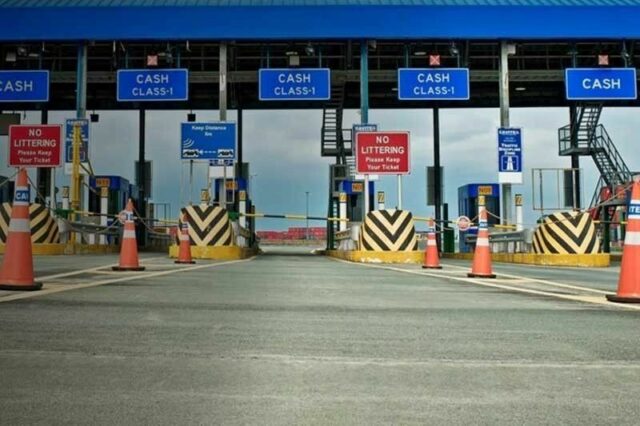
THE Toll Regulatory Board (TRB) approved a toll increase for the 14-kilometer Manila-Cavite Expressway (CAVITEX), which is to take effect on Aug. 21.

The decision clears the way to implement a 2017 periodic toll adjustment for the expressway.

Under the toll operation agreement between the TRB, Metro Pacific Tollways Corp. (MPTC) unit Cavitex Infrastructure Corp. and the Philippine Reclamation Authority, CAVITEX toll rates are allowed to be periodically adjusted every three years.

Starting Aug. 21, class 1 vehicles or cars and SUVs traversing CAVITEX from MIAA Exit to Longos, Bacoor will be charged P35, while class 2 vehicles or light trucks and buses and class 3 vehicles or trucks and lorries will have to pay P70 and P104, respectively.

Meanwhile, motorists traveling from Longos, Bacoor to Kawit Toll Plaza will pay P73 for class 1, P146 for class 2, and P219 for class 3. 

“We recognize the impact of the toll increase on public utility vehicle (PUV) drivers. That’s why we are reactivating our Abante Card program to provide some relief during this transition,” MPTC President and Chief Executive Officer Rogelio L. Singson said in a statement.

Under the program, class 1 and class 2 PUV drivers can enjoy the old toll rates for up to three months.

“We believe this program will help alleviate the financial burden on our valued PUV drivers and provide them with a smoother transition during this time. We remain committed to supporting the PUV community and ensuring their continued success on the road,” Mr. Singson said.

To make use of the relief program, operators will have to register for the toll road’s radio-frequency identification payments system.

“Once enrolled, the program will automatically apply the reprieve for a duration of 90 days, starting from the first day of the implementation of the new toll rates,” MPTC said.

MPTC is the tollways unit of Metro Pacific Investments Corp. one of three key Philippine units of Hong Kong-based First Pacific Co. Ltd., the others being Philex Mining Corp. and PLDT, Inc. 

Hastings Holdings, Inc., a unit of PLDT Beneficial Trust Fund subsidiary MediaQuest Holdings, Inc., has a majority stake in BusinessWorld through the Philippine Star Group, which it controls. — Justine Irish D. Tabile


Metro Pacific, San Miguel in partnership for P72 billion worth of expressway projects

METRO PACIFIC Tollways Corp. (MPTC) and San Miguel Corp. said they signed a memorandum of agreement to design, build and operate the Cavite-Batangas Expressway (CBEX) and Nasugbu-Bauan Expressway (NBEX) projects, which are valued at P72 billion.

“Together with San Miguel, we envisage a future where our CBEX and NBEX can help pave the way for connectivity and economic growth in the Calabarzon region,” MPTC Chairman Manuel V. Pangilinan said in a statement on Tuesday.

“We look forward to leveraging our respective strengths for the realization of this vital infrastructure project,” he said.

Under the agreement, the two companies will be developing an almost 80-kilometer toll road that will connect MPTC’s Cavite-Laguna Expressway (CALAX) to Bauan, Batangas.

The joint project will encompass the 27.06-kilometer CBEX that will link CALAX Silang (Aguinaldo) Interchange to Nasugbu, Batangas and the 60.9-kilometer NBEX which will connect Nasugbu, Batangas to Bauan, Batangas.

“Our shared commitment to nation-building has led us to this historic collaboration. This collaboration stands as a testament to what we can achieve when we are united in purpose,” San Miguel President and Chief Executive Officer Ramon S. Ang said.

The two companies expect to break ground on the project next year with CBEX and NBEX expected to be completed and operational three years after, or in 2027.

In 2018, MPTC was granted the original proponent status for the 50.4-kilometer Cavite-Tagaytay-Batangas Expressway (CTBEX) project by the Department of Public Works and Highways, some segments of which overlapped with San Miguel’s unsolicited proposal for CBEX and NBEX, which were approved by the Cavite and Batangas governments.

“Both projects share the common goal of connecting the provinces of Cavite and Batangas through Tagaytay City and MPTC and SMC have come together as partners in this significant venture,” MPTC said.

Meanwhile, the two companies said the closing of the deal is subject to completion of certain conditions, which include the execution of procurement approvals and definitive agreements. 

MPTC is the tollways unit of the Metro Pacific Investments Corp. one of three key Philippine units of Hong Kong-based First Pacific Co. Ltd., the others being Philex Mining Corp. and PLDT, Inc.

Hastings Holdings, Inc., a unit of PLDT Beneficial Trust Fund subsidiary MediaQuest Holdings, Inc., has a majority stake in BusinessWorld through the Philippine Star Group, which it controls. — Justine Irish D. Tabile

Easier procurement rules seen curbing underspending   

BUDGET SECRETARY AMENAH F. PANGANDAMAN — COURTESY OF DEPARTMENT OF BUDGET AND MANAGEMENT FACEBOOK PAGE

THE Department of Budget and Management (DBM) said on Tuesday that easier procurement laws, including an upcoming amendment to the procurement law, are expected to curb government underspending in 2024.

At the Development Budget Coordination Committee briefing of the proposed 2024 budget before the Senate finance committee, Budget Secretary Amenah F. Pangandaman said the Government Procurement Policy Board is working on simplifying the law’s implementing rules and regulations to address procurement bottlenecks.

“We are taking steps to address government spending and budget utilization,” M. Pangandaman said.

“We will be presenting our amendments to the Government Procurement Act to the President next week… We don’t have the bill yet, but we have the specific amendments.”

Senator Loren Regina B. Legarda had inquired about possible government underspending continuing into next year.

In his second address to Congress last month, President Ferdinand R. Marcos, Jr. called for changes to the procurement law.

Ms. Pangandaman said the proposed P5.768-trillion national budget for 2024 was optimized to put implementation-ready projects front and center.

The DBM estimates that in the first half, the government had failed to use P170.5 billion in budget allocations.

Ms. Pangandaman said procurement had been hindered by issues like the late delivery of goods due to disqualified bidders, and failure of suppliers and creditors.

Ms. Pangandaman said the DBM has been pressing agencies to procure as soon as possible to ensure the implementation of their flagship programs.

She added that the DBM plans to adopt a government purchase card for government agencies as an alternative payment solution for procuring goods and services.

The card aims to cut the time needed to liquidate government transactions and to promote reduced cash handling by government agencies.

The DBM will also fast-track the issuance of allotment orders to allow agencies to start the execution of programs as soon as the budget becomes effective, Ms. Pangandaman said.

The DBM said in July that it would seek to fully digitize public procurement to expedite the delivery of basic services and reducing costs.

Earlier this month, Ms. Pangandaman said the DBM will review the spending performance of government agencies and require them to submit “catch-up” plans to make up for delayed spending.

The National Government’s budget deficit narrowed 18% to P551.7 billion at the end of June due to the spending slowdown. Government spending rose 0.42% year on year to P2.41 trillion in the first half, missing the spending target by 6.6%. — John Victor D. Ordoñez

Updated DBM manual expected to ease LGU shift to digitalized budget process

BW FILE PHOTO

THE Department of Budget and Management (DBM) said its updated Budget Operations Manual (BOM) for local government units (LGUs) will help provinces, cities, and municipalities adopt an eBudget system developed with the Asian Development Bank (ADB).

The manual will help LGUs “improve and systematize the methods, techniques, and procedures employed in budget preparation, authorization, execution, and accountability,” as well as provide “technical assistance in local government budgeting,” the DBM said in a circular issued on Tuesday.

It said that the previous version of the manual is from 2016.

“However, there have been significant developments in local government budgeting which call for the need to update the BOM for LGUs, 2016 Edition,” the DBM added.

The manual will include discussions on local taxation and fiscal matters, an enhanced framework for policy-based budgeting, and updated local budget forms.

The DBM also said that the manual will introduce the cash budgeting system, which LGUs “may adopt to instill fiscal discipline and ensure efficient and timely delivery of public service.”

According to the DBM, the electronic Budget (eBudget) System for LGUs will assist local governments in preparing the different forms required in the budgeting process. The system will also facilitate the online submission of annual or supplemental budget reports and other reports.

The eBudget System for LGUs was developed with technical assistance from the ADB.

“The Budget System also facilitates the online submission of reports to the electronic Statement of Receipts and Expenditure (eSRE) System of the Department of Finance – Bureau of Local Government Finance by the Local Budget Officer,” it said. 

The system will be made available at no cost to LGUs interested in digitizing their budget processes. — Keisha B. Ta-asan

NTC trialing automated licensing, permit process

PHILSTAR FILE PHOTO

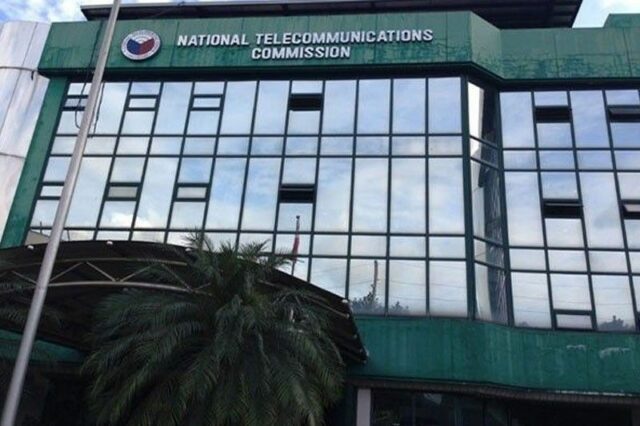
THE National Telecommunications Commission (NTC) said it launched pilot testing on an automated platform for licensing and permitting.

The pilot tests for the Online Processing System with Digital Payment System project cover the operations of the Licensing Management of the Network & Facilities Division (NFD) and the Services & Interconnection Division (SID) of NTC’s Regulation Branch. Services of the two divisions can be tapped via the NTC website.

“The project is aimed to streamline and expedite the processing and issuance of licenses, permits, certificates, authorizations, and clearances for telecommunications and internet infrastructure,” the NTC said in a statement. 

The NFD services that are being put on the platform are the permit to purchase, construction permit, radio station license, and permit to demonstrate and propagate.

Also on the platform are the SID’s certificate of registration for value-added service providers, public calling stations and telecenter service providers, among others.

The digital payment component of the project will launch in September, with full launch for the entire system expected in October. — Justine Irish D. Tabile
Packworks, Pascal Resources in refillable LPG canister venture

TECHNOLOGY startup Packworks said it partnered with Pascal Resources Energy, Inc. to supply refillable liquefied petroleum gas (LPG) canisters to micro-retail outlets in the Philippines.

“We are thrilled to be in joint hands with Gaz Lite (a Pascal Resources brand) … in making safer and more affordable cooking fuel a reality, while also contributing to a cleaner, healthier environment,” Packworks co-founder and chief executive officer Bing Tan, said in a statement on Tuesday. 

Packworks offers a business-to-business open platform for small variety stores, known as sari-sari in the Philippines allowing them to become more efficient in management their operations.

Gaz Lite comes in 330-gram refillable LPG canisters. The company claims it to be a clean-burning fuel that is smoke- and sulfur-free. The 330-gram size allows buyers to pratice “tingi,” or buying in small quantities.

Packworks said a dealer network of megastore partners in Cebu, and elsewhere in the Visayas, Batangas, and Quezon will serve as the distribution and refilling hubs for Gaz Lite.

It said one of the aims of the project is to curb the use of illegally refilled butane canisters, charcoal and wood. — Ashley Erika O. Jose

Delayed initial disbursement blamed for low RCEF usage

PHILIPPINE STAR/KRIZ JOHN ROSALES

PHILIPPINE Center for Postharvest Development and Mechanization (PhilMech) said that the low utilization levels for the Rice Competitiveness Enhancement Fund (RCEF) were caused by delayed initial disbursements.

PhilMech Senior Science Research Specialist Elijah Z. Davalos said that the low utilization for the first three years of the program is due to the “late downloading of funds” during its first year of implementation in 2019.

“It created a domino effect as another P5 billion for 2020 was added without the first allocation (having been spent),” Mr. Davalos was quoted as saying in a statement issued by the Department of Agriculture (DA).

Republic Act No. 11203 or the Rice Tariffication Law allocates P10 billion from rice import tariffs a year for six years to RCEF.

From this, PhilMech gets a P5-billion annual allocation to fund the farm mechanization component of RCEF. PhilMech is tasked with distributing farm equipment to qualified rice farmers, as well an additional P100 million for farm extension activities.

“Likewise, the pandemic largely restricted immediate machine distribution and rapid disbursement of funds during the first half of project implementation,” the DA said.

He said the backlog of unutilized funds from previous years is now “fully spent and accounted for.”

Mr. Davalos said that the Bids and Awards Committee has conducted bidding for fourth quarter spending items to fast-track fund disbursement.

PhilMech is constructing an assembly line in its Agricultural Mechanization Design and Prototyping Center, which is due to start operations by the fourth quarter, he said. — Sheldeen Joy Talavera

Marcos sees palay output rise keeping supply of rice ample until end of year

NEDA

PRESIDENT Ferdinand R. Marcos, Jr., said that the 3% increase in palay production in the first half will ensure adequate stocks of rice until the end of the year.

In a statement released by the Presidential Communications Office (PCO), Mr. Marcos, who is also the Secretary of Agriculture, made his remarks after hearing a presentation at a meeting with the Economic Development Group.

Citing the production report issued by the Philippine Statistics Authority, Agriculture Undersecretary Domingo F. Panganiban said production of palay, or unmilled rice, was 9 million metric tons (MT) during the period, up from 8.7 million MT a year earlier.

The first-half total exceeded the initial estimate of 8.7 million MT released by the Philippine Rice Information System.

Agriculture Undersecretary Leocadio S. Sebastian said that the palay volume translates to about 5.9 million MT in milled rice, which exceeds the initial projection of 5.7 million MT.

“With the 3% production growth in the first semester, we can expect that, barring the occurrence of destructive typhoons, the production for 2023 could surpass 20 million MT,” Mr. Sebastian said.

He expected the rice production to be encouraged by strong palay prices. Farmers are also benefiting from seed, fertilizer, biofertilizer, soil treatments, and farm machinery supplied by the Department of Agriculture.

Meanwhile, the PCO said private rice traders expect about 300,000 MT of rice to arrive this month.

About 2.05 million MT has been landed as of the first week of August, the PCO said. — Sheldeen Joy Talavera

ADVERTISEMENT
ADVERTISEMENT