Home Blog Page 3916

ALI unveils Arillo eco-tourism estate in Nasugbu

AN ARTIST’S RENDITION of Ayala Land, Inc.’s new eco-tourism estate Arillo. — COMPANY HANDOUT

By Miguel Hanz L. Antivola, Reporter

AYALA LAND, Inc. (ALI) broke ground on Thursday for its new 62-hectare eco-tourism estate called Arillo in Nasugbu, Batangas.

Arillo is ALI’s 52nd estate — its first commercial and residential development on a mountainside, aiming to expand its footprint in the Western Batangas region, May P. Rodriguez, senior estate head at ALI, told reporters on the sidelines of the groundbreaking ceremony.

With its name pared down from the Spanish word amarillo, meaning yellow, Arillo is inspired by Mt. Batulao’s two highest peaks that turn yellow in December, which the site overlooks, Ms. Rodriguez said.

It is envisioned to be “a nature haven for life and leisure,” and a jump-off point for visitors and residents in the Tagaytay-Nasugbu area, she noted.

“Once built with the overnight facilities, those who are going up to Tagaytay for a daytrip can extend their stay with our amenities and attractions, and maybe go to Nasugbu for swimming on the next day,” she added.

The property is about 75 kilometers away from the central business district of Makati — an almost two-hour drive via the SLEX-CALAX-Aguinaldo Highway, with the upcoming Cavite-Tagaytay-Batangas Expressway expected to reduce travel time by at least 30 minutes.

“By early next year, the leisure town center will be operational,” Anna Ma. Margarita B. Dy, president and chief executive officer of ALI, said on the first development phase, which also includes a café, horseback riding trails, and canyon trails for Mt. Batulao.

“We still want to activate the place first by selling the first few [12] lots,” Ms. Rodriguez said, adding that ALI is also eyeing six to eight restaurants to open along the facade of the property.

It has partnered with The Blue Leaf for a 5,000-square meter events place expected to be operational by 2026, and El Kabayo for horseback riding facilities in late first quarter of next year, Ms. Rodriguez said.

ALI may also tap Seda for the property’s first mountainside resort, she added.

“Only about 30% of the land is developable,” she noted on the need to maximize the site’s offerings and conserve the views through medium-rise buildings (MRBs), and not just residential lots.

“We are still talking to residential groups for [the construction of] MRBs… Our highest will be six floors.”

“It’s going to be very special,” Ms. Rodriguez noted that Arillo is selling its commercial lots at P100,000 per square meter, up from the P50,000-60,000 in Nuvali.

Additionally, Arillo has partnered with the Center for Conservation Innovation Philippines, Inc. to conduct biodiversity studies and implement sustainability programs in the area.

ALI is having conversations with Haribon Foundation for the Conservation of Natural Resources, Inc. for the adoption and conservation of five hectares in the Mt. Batulao area, which can be expanded in the future, according to Ms. Rodriguez.

D.M. Wenceslao takes majority stake in Bay Resources for P232M

LISTED D.M. Wenceslao & Associates, Inc. (DMW) subscribed to P232.17-million worth of shares in Bay Resources and Development Corp., providing fresh capital and securing a majority stake in the latter.

In a stock exchange disclosure on Monday, DMW said its board of directors approved the company’s subscription to 164,106 new common shares in BRDC at P1,414.74 per share.

“BRDC issued 164,106 new common shares to DMW, increasing DMW’s ownership in BRDC to 51% from 50%. This gives DMW a majority stake in BRDC,” the disclosure said.

In 1992, DMW entered into a joint venture agreement with the Armed Forces of the Philippines Retirement and Separation Benefits System to form BRDC, with each owning a 50% interest.

According to DMW, the latest transaction is set to infuse capital into BRDC for “general corporate purposes and developments.”

“DMW, through its increased stake in BRDC, is expected to benefit from BRDC’s developments and growth plans,” DMW said.

BRDC was established to acquire, develop, and market real estate properties. The company currently owns parcels of land in Aseana City, Parañaque, and has existing land lease contracts.

As of September, DMW logged a 13% increase in its net income to P1.3 billion from P1.1 billion a year earlier due to “robust leasing operations.”

The company’s leasing revenues surged 15% to P1.8 billion while residential revenues improved to P827 million.

Shares of DMW at the local bourse fell five centavos or 0.8% to P6.20 apiece. — Revin Mikhael D. Ochave

Damosa Land eyes new project in Davao City next year

DAVAO CITY — Damosa Land, Inc. (DLI) is planning to launch an exclusive community project in Puan, Davao City next year.

DLI President Ricardo “Cary” F. Lagdameo told BusinessWorld that the company will develop a high-end horizontal project with a commercial component on a 4-hectare property in Puan.

“The plan right now is to offer lot only. We are trying to see if we can consolidate it with the other properties around the area. It’s an exclusive community, not density,” he said.

He said the company is planning to offer more than 60 lots.

DLI is currently in the process of securing permits for the project.

“It will all depend on permits, we are ready to start,” Mr. Lagdameo said.

Meanwhile, DLI is accelerating the construction of the other projects.

For its Bridgeport project in Caliclic, Island Garden City of Samal, DLI is already constructing the first out of the four buildings.

“We’re already on the second floor, it’s coming up,” Mr. Lagdameo said.

DLI’s newest mixed-use development, Bridgeport, features low-density condominium buildings, premium open lots, a condotel, commercial and dining areas, and an exclusive marina.

In Agriya, Mr. Lagdameo said they are already turning over houses to homeowners in the subdivision component.

Agriya is an 88-hectare agritourism development located in Panabo City, Davao del Norte. Agriya Panabo has four components: residential, commercial, institutional, and agritourism. — Maya M. Padillo

Senator Gatchalian and the ARAL Bill

ANGELINA LITVIN-UNSPLASH

In a speech before the Management Association of the Philippines, Senator Sherwin Gatchalian spoke of an education crisis within an education crisis. By this he meant that even before the COVID-19 pandemic, the Philippines by October 2019 had a poverty learning rate of 69.5%. With the pandemic and the ensuing school closures, the poverty learning rate had deteriorated to 90.9%.

In response to this learning loss, Senator Sherwin Gatchalian had filed a bill entitled, “An Act Establishing an Academic Recovery and Accessible Learning Program, Appropriating Funds Therefor, and For Other Purposes” or ARAL Bill.

The measure aims to provide a national learning intervention program which will be grounded on systematic tutorial sessions, well-designed intervention plans and learning resources, and effective and accessible delivery modes for tutors and learners, among others.

Under the bill, the program will cover essential learning competencies under the K to 12 curriculum, including the subjects of language, mathematics, and science. Reading and numeracy will be prioritized under the proposed ARAL Program.

The Department of Education (DepEd) will coordinate with the Commission on Higher Education, Technical Education and Skills Development Authority, Department of Information and Communications Technology, and the Department of the Interior and Local Government for the program’s implementation.

In the interest of contributing to the discussion on the features of the bill, we are presenting our observations and proposals.

Our first observation is that the implementation of the bill is lodged primarily in the DepEd. We propose that this be lodged in the local government school boards.

First of all, when a crisis or huge problem arises, the management principle is to place the responsibility on another group so as to allow the present management to continue to focus on their primary responsibility, in this case basic education. This was the principle followed with respect to the National Power Corp. (Napocor). Faced with a staggering debt burden, Napocor was not given the responsibility for solving this crisis even as a new management team took over Napocor. Instead, the government created the Power Sector Assets and Liabilities Management Corp. (PSALM) to assume the bad assets and the huge liabilities of the Napocor, thus allowing Napocor to focus on its primary mission of expanding and deepening electricity coverage in the Philippines.

Secondly, unlike the existing education courses presently offered by DepEd, the ARAL Program calls for customized programs fitted to the learning levels of laggard students. This argues for the devolution of the implementation of the program to the local school boards. Moreover, as the program calls for exploration of different learning catch-up programs, there is need for a free market of ideas rather than a monolithic monopoly. The ARAL Program calls for the involvement of the parents and the local governments in the implementation of the program, arguing again for its devolution.

Lastly, we propose that the private sector be invited to be an active partner of the ARAL Program. There is a precedent for this. During the COVID-19 crisis, when vaccines against the disease were becoming available, the government was slow in importing the vaccines due to bureaucratic hurdles and indecision; the private sector took the lead.

More specifically, the business taipans took the initiative of importing the vaccines for the benefit of their employees. They were in a strong position to do so, as they had access to expert medical advice through the hospitals and medical clinics within their organizations.

We suggest that the business taipans can again take the lead in dealing with this crisis. In this case, they have access to educational development expertise through the human resources (HR) departments within their organization.

They could instruct their HR departments to first devise tests to evaluate the learning levels of the children of their employees. Once such tests have been designed and conducted, the next step would be to develop learning programs that would raise the learning levels in the areas of reading, writing, mathematics and science.

From the blooms of these thousand initiatives of the private sector, would arise the most effective programs for evaluation and learning. From this menu of learning alternatives, local school boards could choose what is most appropriate for the students within their school district. Furthermore, they could schedule special courses to which these programs could be delivered.

Our confidence in the viability of such an approach is based on personal experience. As the then Chairman of Guagua National Colleges (GNC) in Pampanga, we saw the rise of call centers in the Clark Economic Zone. These call centers started recruiting our graduates. In response, we met with their officials to thank them for employing our graduates and to explore further areas of partnership.

The officials informed us that with respect with GNC, as with other schools, only around 5% of our graduates met their English-speaking standards. However, they had developed special programs which could be given over an eight-week period so that the acceptance level of our graduates could rise to 15%. Moreover, they offered to conduct these special programs for free. Faced with such a munificent offer, we agreed. The eight-week course was offered at the tail end of the senior year of our students or right before graduation. The call center officials delivered on their promise and the acceptance rate of our graduates rose to 30%.

We believe that the program succeeded because the call centers were greatly motivated. They would benefit from its success in terms of more and better employees. Our school also benefitted as we provided more employment opportunities for our graduates.

We believe that the programs of the private sector will succeed as the employers will also be greatly motivated. The success of their program of helping the children of their employees would greatly increase morale and earn the gratitude of their employees.


Dr. Victor S. Limlingan is a retired professor of AIM and a fellow of the Foundation for Economic Freedom. He is presently chairman of Cristina Research Foundation, a public policy adviser and Regina Capital Development Corp., a member of the Philippine Stock Exchange.

MPT steps up proposal to ease traffic in Baguio

MPT Mobility Corp., the innovations arm of Metro Pacific Tollways Corp. (MPTC), secured original proponent status from the local government of Baguio for its technology-driven mobility solutions.

“It was given original proponent status [in August]. We are now undergoing negotiations. After we come up with the terms for the negotiations then we will proceed with the Swiss challenge,” Mark Richmund M. de Leon, vice-president for Smart Mobility Solutions, told reporters in a press chat on Monday.

In July, the company announced that it submitted an unsolicited proposal valued at P2.5 billion to provide smart urban mobility solutions to a local government unit.

“The current modality is a concession agreement but of course, everything will be undergoing negotiations [to determine] what’s the best on their side,” Mr. De Leon said.

According to Donald Saurombe, assistant vice-president for business development, the company’s proposal would deploy integrated and tailor-fit systems for Baguio, including traffic management solutions, area-based monitoring, smart command centers, parking systems, and transportation fleet management support.

The company is also looking at the replacement of the number-coding scheme by introducing a congestion fee in Baguio, Mr. Saurombe added.

“Instead of number coding, you will just have to pay a congestion fee if you choose to drive. It is supposed to shift the behavior of the motorist to be able to think about when they want to drive — during congested times or choose a less congested time to make a trip,” he said.

A congestion pricing scheme is a fee charged to drivers for traveling in certain key areas at a specific time, which is a concept aimed at easing traffic.

Mr. De Leon declined to say how much the congestion fee would be, noting that the company already surveyed the willingness of motorists to pay the charge.

“We came up with that magic number. We have that number that we proposed to Baguio, and the response was positive. Majority of the people are willing to pay,” he said, adding that the congestion pricing will only be implemented during peak hours.  

In 2020, the Department of Transportation said the National Economic and Development Authority’s technical working group was evaluating the proposal for a peak hours congestion pricing system in certain parts of Metro Manila.

“Congestion charging is very successful in other key cities. We’re not just addressing traffic [and] congestion per se, but addressing the whole transport system of the city. It’s only for Baguio for now,” Mr. De Leon added.

The pricing scheme is expected to reduce in Baguio by up to 15%, Mr. De Leon said.

MPTC is the tollways unit of Metro Pacific Investments Corp., one of three key Philippine units of Hong Kong-based First Pacific Co. Ltd., the others being Philex Mining Corp. and PLDT Inc.

Hastings Holdings, Inc., a unit of PLDT Beneficial Trust Fund subsidiary MediaQuest Holdings, Inc., has a majority stake in BusinessWorld through the Philippine Star Group, which it controls. — Ashley Erika O. Jose

Digital banks struggle with lending — BSP chief

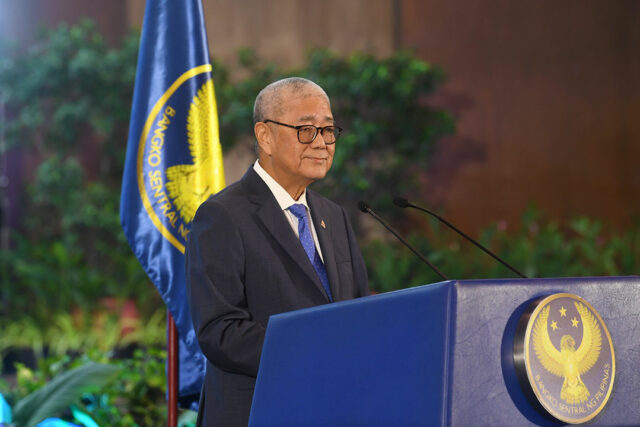
BANGKO SENTRAL ng Pilipinas Governor Eli M. Remolona, Jr. — BANGKO SENTRAL NG PILIPINAS

DIGITAL BANKS find it difficult to disburse loans and collect payments from borrowers, the Bangko Sentral ng Pilipinas (BSP) chief said, with the regulator continuing its close monitoring of the sector.

BSP Governor Eli M. Remolona, Jr. said they have placed digital banks in a regulatory sandbox to test innovations and minimize risks in the sector. 

“Digital banking is one of those in the sandbox. We’ve issued six licenses. These guys are actually very successful in collecting deposits just online. (But) they’re still struggling with figuring out how to make loans. That’s the hard part. That’s why they’re still in a sandbox,” he said during the Philippine economic briefing in Iloilo City on Monday.

In 2021, the BSP imposed a moratorium on the grant of digital banking licenses as it seeks to monitor the development of the sector, ensure competition among the new players, and boost its own capacity to regulate these new types of lenders.

The six online banks that secured licenses to operate in the country were Tonik Digital Bank, Inc.; GoTyme Bank of the Gokongwei group and Singapore-based Tyme; Maya Bank of Voyager Innovations, Inc.; Overseas Filipino Bank, a subsidiary of Land Bank of the Philippines; UNObank of DigibankASIA Pte. Ltd.; and UnionDigital Bank of Union Bank of the Philippines, Inc.

Mr. Remolona said during an event last week that digital banks are an “experiment.”

“A digital bank has to do everything digitally… Digital banks manage deposits easier than granting loans. The assets side is harder for digital banks,” he said in mixed English and Filipino.

“Lending through digital means is hard. According to some of these banks, collecting or asking borrowers to repay their loans still needs to be done through a person or a firm. It can’t be done purely through online platforms,” Mr. Remolona added.

He said digital banks having a high nonperforming loan (NPL) ratio is okay for now as it means they are becoming increasingly capable of lending to their clients.

Based on latest BSP data, the over NPL ratio of digital banks stood at 8.46% as of September, significantly higher than the 3.4% NPL ratio of the whole Philippine banking system. 

The amount of NPLs recorded by the sector increased by 3.75% to P2.49 billion at end-September from P2.4 billion as of August.

Meanwhile, the total assets of the digital banking group stood at P82.29 billion in the first nine months of the year.

Last week, debt watcher Fitch Ratings said digital banks in the Philippines might be unable to compete against lenders with brick-and-mortar presence in the medium term, and their impact on the banking sector may be limited as the segment is still growing.

Fitch said the market share of system deposits of all digital banks was still less than 0.4% as of end-June despite their rapid growth in the past two years.

Low average deposits per customer also suggest that digital lenders have yet to capture most of their depositors’ operating accounts, Fitch said.

However, robust economic growth for the Philippines should provide some support to borrowers’ repayment capacity and asset quality in 2024-2025 for both digital and incumbent banks, it said. — Keisha B. Ta-asan

Sanremo Oasis launches 8th building

SANREMO OASIS part of City di Mare along South Road Properties in Cebu City. — BW FILE PHOTO

FILINVEST LAND Corp.’s Aspire recently launched the eighth building of its residential project Sanremo Oasis in Cebu City.

Sanremo Oasis, a mid-rise condominium, is part of City di Mare (CDM) along South Road Properties in Cebu City.

The Italian-inspired Sanremo Oasis has seven existing buildings consisting of 1,096 units.

“The eighth tower completes the residential cluster that currently takes up 3.4 hectares of CDM,” the company said in a statement.

Units at Sanremo Oasis range from studio units (22 square meters), one-bedroom units (28 sq.m.), and two-bedroom units (32 sq.m.).

It offers residents a resort-like lifestyle with amenities such as a swimming pool, pocket parks, fitness gym, basketball court, jogging trail, kids’ playroom, and a clubhouse. The eighth building will have a roof deck garden and retail strip.   

“Sanremo’s new residential tower at CDM addresses the increasing demand for residential options within South Road Properties which is rapidly becoming the next economic hub in the Queen City of the South as the local government continues developments within the district,” the company said.

South Road Properties is also a registered economic zone with the Philippine Economic Zone Authority.

Sharing prosperity with stockholders

FREEPIK

On Nov. 5, 2020, at the height of the COVID-19 pandemic, the Management Association of the Philippines (MAP), as lead organization, launched the Covenant for Shared Prosperity as the response of the business community to the poverty and inequality which continues to plague Philippine society even before and after the pandemic.

To quote the Covenant “We support the vision of the government articulated in ‘Ambisyon Natin 2040’ which states that the Philippines shall be a country where all citizens are free from hunger, have equal opportunities, enabled by a fair and just society that is governed with order and unity. A nation where families live together, thriving in vibrant, culturally diverse, and resilient communities.”

EDUCATE, EMPOWER, EQUIP, ENGAGE
The Shareholder’s Association of the Philippines (SharePHIL) was one of 26 organizations, together with MAP, which pledged and committed to six action points.

As an organization whose mission is to protect and promote the interest of minority shareholders and retail investors, SharePHIL envisions a nation where every Filipino enjoys a quality life and financial security supported by a fair, accessible, and sustainable capital market system. Indeed, this vision is aligned with the 6th action point in the Covenant: “deliver reasonable and just returns to and fair treatment of our controlling and non-controlling shareholders.” SharePHIL’s contribution in this respect is to provide investors with financial literacy and investor education programs, and be a steadfast advocate of investor rights through its four pillars namely: Educate, Equip, Empower, and Engage.

To implement these pillars, SharePHIL organizes seminars and conferences, publishes research and advocacy papers, participates in policy dialogues and consultations, and establishes partnerships and collaborations. Two key projects in the process of implementation are Project RISE: “Retail Investor and Shareholder Empowerment” which seeks to educate and empower the Filipino investor to develop the confidence and make well-informed decisions to take control of their future, and “Investor Relations Circle,” which seeks to professionalize the Investor Relations profession, given its significant role in bridging the communication between the investors, particularly the retail investors and the Publicly Listed Companies or PLCs.

MAP SUMMIT ON SHARED PROSPERITY
Fast forward to Nov. 28, 2023, three years since the launch of the Covenant, when MAP convened the Summit on Shared Prosperity to craft a Blueprint for Shared Prosperity which will contain a roadmap of how the commitments can be realized and implemented. SharePHIL, which I represented, provided the background for the discussion on shareholders with a suggested metric of a percentage dividend rate in compliance with regulations.

While current Securities and Exchange Commission (SEC) and Philippine Stock Exchange (PSE) regulations do not prescribe a dividend rate which PLCs should follow, the SEC monitors compliance with the regulatory requirements for dividend declarations in the Securities Regulation Code, ensuring that dividends are declared out of unrestricted retained earnings, and that this must not impair the corporation’s ability to meet its financial obligations. On the other hand, the PSE monitors PLCs’ compliance with the Consolidated Listing Disclosure Rules which prescribe, among others, the disclosure of dividend policy by listed companies.

For Government-Owned and -Controlled Corporations (GOCCs), under RA 7656 or the Dividend Law, such corporations are required to declare and remit at least 50% of their annual earnings as cash, stock, or property dividends to the National Government.

ROADMAP TO STOCKHOLDER PROSPERITY
How can we encourage companies to declare dividends that will deliver fair and reasonable returns to stockholders? Some suggestions that emerged from the discussions are the following:

• Enhance public participation by encouraging consultation, advocacy and sharing of views and opinions;

• Educate and empower shareholders to influence dividend policies, demand transparency and file complaints of irregularities;

• Develop strong mechanisms for investor relations to provide accurate and timely information that will increase and sustain stockholder confidence;

• Promote good governance by having more independent-minded boards who can steer companies to establish clear and transparent dividend policies;

• Benchmark dividend policies with industry averages and best practices, and incentivize companies with notable dividend policies through proper recognition, such as awards and citations;

• Review and reform tax laws on dividends to align with public interest, as appropriate.

The payment of dividends reflects positively on a company’s image and reputation, and helps maintain investor trust. Thus, a high dividend rate, for example, indicates that the company is performing well and has generated good profits. Paying dividends sends a powerful message about a company’s future prospects, and its willingness and ability to pay steady dividends over time provides a solid demonstration of financial strength. Companies may not realize that such payouts are a means to thank investors and incentivize them to continue holding their stocks.

Importantly, for the small stockholders, dividends matter as such distributions directly translates to income and return on their investments. Investments in stocks, which pay dividends, is a way to build wealth as part of a long-term investment strategy. Dividends contribute to overall portfolio risk and volatility, by mitigating the risk resulting from a price decline. In addition, dividends help preserve the purchasing power of capital due to the effect of inflation on investment returns.

Businesses that share their prosperity with their stockholders will help the Filipino investing communities build their wealth, and thus is a powerful tool to reduce the persistent inequality in society. We need not wait for 20 years to make this happen.


Ma. Aurora “Boots” D. Geotina-Garcia is vice-chair of the MAP Committee on Private-Public Partnership and a member of the MAP Committee on Diversity, Equity & Inclusion. She is chair of SharePHIL, and president of Mageo Consulting, Inc., a corporate finance advisory consulting firm.

map@map.org.ph

magg@mageo.net

Meralco’s solar unit expects 60-MW capacity by yearend

STOCK PHOTO | Image from Pixabay

MSPECTRUM, Inc., the solar energy arm of Manila Electric Co. (Meralco), is targeting its power generation capacity to reach 60 megawatts (MW) by the end of the year.

“We will be ending this year [with] 60 MW. Next year, another 30 MW, so it would be 90 [MW],” Ma. Cecilia M. Domingo, president and chief executive officer of MSpectrum, told reporters in a recent interview.

To date, about 80-85% of the company’s portfolio is under Meralco’s franchise area.

“[That’s] hoping, praying, and declaring, and maybe half a billion in revenues by the end of the year from last year’s P300 million,” said Ms. Domingo, who is also a vice-president at Meralco,

The company is open to opportunities to install rooftop solar panels, she said, describing possible clients as “all those with roofs, rooftops that can be installed [with solar panels], new buildings that are ready for solar.”

“We’re expanding our footprint in the Visayas and Mindanao. That’s been our target since last year. They are included in the 30-MW target next year — commercial and industrial,” she said.

In April, the company installed a 976.8-kilowatt-peak solar panel system in the cold storage facility of Atkins Import and Export Resources, Inc. in Naic, Cavite.

Atkins, a subsidiary of First Atkins Holdings Corp., is primarily engaged in the importation and distribution of meat products mainly sourced from Europe.

MSpectrum provides tailor-fit solutions for industrial, commercial, and residential customers through an in-depth understanding of energy consumption behavior. It is backed by Meralco’s energy expertise and proven safety track record.

Meralco’s controlling stakeholder, Beacon Electric Asset Holdings, Inc., is partly owned by PLDT Inc.

Hastings Holdings, Inc., a unit of PLDT Beneficial Trust Fund subsidiary MediaQuest Holdings, Inc., has an interest in BusinessWorld through the Philippine Star Group, which it controls. — Sheldeen Joy Talavera

Testing love and fate in Hong Kong Star Cinema presents short film Toss Coin

A scene from Toss Coin. 

THREE short films featuring the iconic cosmopolitan scenery of Hong Kong make up “Hong Kong In The Lens By Asian Directors,” a project produced by CJ ENM and the Hong Kong Tourism Board (HKTB).

These films are Toss Coin, a Star Cinema-produced rom-com from the Philippines; Hong Kong, Within Me, a romantic fantasy from South Korea; and Zi Mui, a family drama from Thailand.

“HKTB never dictated what to do. They guided us based on our genres what areas of Hong Kong to shoot in, so that our three films wouldn’t all show the same places,” said Cathy Garcia-Sampana, who directed Toss Coin, at its special screening on Dec. 10.

This was familiar territory for Ms. Garcia-Sampana who shot her 2019 film Hello Love, Goodbye entirely in Hong Kong, making this the second time she would showcase the country’s culture in her work.

Toss Coin marks many firsts, however. It is her first short film following a long career of directing full-length Filipino rom-coms. It was also her first time working with the two leads, Alexa llacad and KD Estrada, a Gen Z love team known as KDLex.

Ms. Ilacad and Mr. Estrada play strangers who fall in love as they test their beliefs in fate and their courage to take chances. The film showcases a variety of buildings and art spaces as the two sort of play hide and seek with each other as they traverse Hong Kong.

“HKTB and CJ ENM toured us around and made me choose. When I saw the murals in Sai Kung, I decided we’d shoot there,” said Ms. Garcia-Sampana.

Other cultural points of interest shown in the film are M+ in the West Kowloon Cultural District, the Hong Kong Museum of Art, and the hip PMQ mall in Central.

Meanwhile, the other two films in the project showcase differing sides of the city. Korean director Kang Yunsung captures Victoria Harbour from various bayside restaurants as the leads of Hong Kong, Within Me make local delicacies. Thai director Nattawut Poonpiriya portrays Hong Kong at night as the two sisters in Zi Mui go bar hopping in Central and the Western District.

For Ms. Garcia-Sampana, it was a very memorable project to be a part of. “[HKTB] were very generous with giving us the freedom to make our own stories,” she said.

All three films will air on tvNAsia this month and on Viu starting Dec. 11, with Philippine premieres on A2Z and Kapamilya Channel to be announced. — Brontë H. Lacsamana

Loans used as reserves hit P8 billion

BW FILE PHOTO

SMALL BANKS lent out P8.01 billion to micro, small, and medium enterprises (MSMEs) and eligible large enterprises (LEs) as part of their alternative compliance with reserve requirements, the Bangko Sentral ng Pilipinas (BSP) said. 

“For the reserve week ending Oct. 19, TBs (thrift banks) and RCBs (rural and cooperative banks) allocated an aggregate of P8 billion and P6.5 million loans to MSMEs and LEs, respectively, for compliance with the reserve requirements,” it said in a report on recent trends in the Philippine financial system.

The central bank said these accounted for 0.6% and 0.0005% of the total required reserves for the said week. 

The BSP allowed MSMEs loans to be counted as part of banks’ reserve requirements in a bid to boost lending to the sector, which was hit severely by the coronavirus pandemic.

According to the BSP, banks’ availment of the relief measure declined in October this year due to the expiration of its effectivity for universal and commercial banks on June 30.

Smaller lenders can still count their loans to MSMEs and LEs as alternative compliance with reserve requirements until they are fully paid, but not later than Dec. 31, 2025.

Rizal Commercial Banking Corp. Chief Economist Michael L. Ricafort said MSME and LE loans counted as reserve requirements would allow smaller banks to earn more from their loanable funds.

“Given the extension of these regulatory relief requirements for smaller banks, so might as well maximize the returns through these additional MSME and LE loans used as alternative compliance by including the calculation of required reserves while still allowed,” Mr. Ricafort said.

In 2022, banks lent P493.5 billion to MSMEs as alternative compliance with reserve requirements. This was 6.6% higher than the P463.1 billion a year prior.

By banking group, universal and commercial banks extended P390.9 billion in loans to MSMEs, while rural and cooperative banks lent P52.7 billion.

In June, the BSP cut the reserve requirement ratios of big banks by 250 basis points (bps) to 9.5%, by 200 bps to 6% for digital banks, and by 100 bps for thrift banks, and rural and cooperative banks to 2% and 1%, respectively. — Keisha B. Ta-asan

Ube Express back at Robinsons Galleria

UBE EXPRESS has resumed its point-to-point bus service to the Ninoy Aquino International Airport (NAIA) terminals from Robinsons Galleria.

The Ube Express service gives travelers a convenient, and accessible way to go to the airport.

The UBE Express terminal is located along Robinsons Galleria EDSA driveway. Each bus can accommodate up to 39 passengers and their luggage.

The bus leaves Robinsons Galleria for NAIA Terminal 1,2, 3 or 4 starting at 7 a.m. The bus departs NAIA Terminal 3 to Robinsons Galleria as early as 5:45 a.m.

The P150 fare can be paid through cash or Beep Card.

UBE Express also operates its point-to-point airport services in Robinsons Manila and Robinsons Sta. Rosa Laguna.

Robinsons Manila terminal is located along Midtown driveway beside Arya, while Robinsons Sta. Rosa Laguna terminal is located at the bus bay in front of the mall.

Follow Robinsons Malls Official, Robinsons Galleria and Robinsons Manila social media pages for more information and updates on Ube Express services and dispatch schedules.

ADVERTISEMENT
ADVERTISEMENT