Home Blog Page 3820

PSE told to explain trading halts much sooner

REUTERS

By Revin Mikhael D. Ochave, Reporter

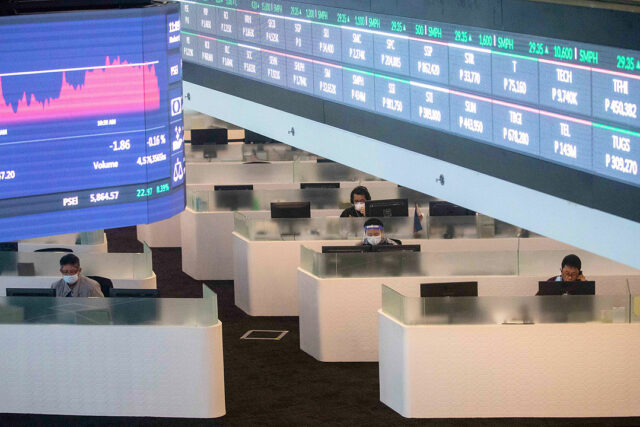
THE Philippine Stock Exchange (PSE) should promptly disclose the cause of trading halts to ensure confidence in local financial markets, analysts said at the weekend after the bourse halted trading for two hours on Jan. 3 due to a technical glitch.

“Prolonged trading halts are disruptive, so hopefully we do not see any recurrence,” Juan Paolo E. Colet, managing director at China Bank Capital Corp. said in a via Viber message. The PSE should have explained the glitch “much sooner.”  

“They should have explained the situation much sooner. Timely disclosure of information is essential to financial markets, and this is something we have to keep in mind if we want to ensure confidence in our local stock market,” he added.

The PSE provided more details about the glitch in a statement two days later.

It said the Jan. 3 trading halt from 9:32 to 11:55 a.m. was due to a glitch encountered by its mobile trading application and its process of authenticating all accounts. This affected at least a third of trading participants.

The main index closed 0.8% lower.

“The technical problem encountered was the inability of at least one-third of the trading participants to connect to PSE’s front-end order management system and for some of these the trading participants, the inability to send orders to the trading system,” the PSE said.

The front-end order management system sends buy-and-sell orders for processing to the trading system.

The PSE said the issue happened in one of the four silos in the system, which experienced stalled processes given the iterative authentication steps.

The bourse and front-end order management system developer have implemented a design optimization on the mobile trading application and were working on further enhancements to prevent the issue from happening again, it added.

“The PSE remains steadfast in its commitment to engage with all stakeholders and service providers towards continuously improving and future-proofing its products, systems, and services for the investing public,” the market operator said.

Any disruption in the local bourse does not look good “especially from the point of view of international professional fund managers,” Michael L. Ricafort, chief economist at Rizal Commercial Banking Corp. said in a Viber message.

“Reliability of the trading infrastructure is one of the criteria of international investors, especially the ability to freely buy or sell stocks during trading days,” he said. “This is also part of their market risk and operational risk assessment for investing in the local stock market.”

“The reliability, security, and integrity of the local stock market trading system and overall infrastructure would also determine the level of international investor confidence,” he added.

Technical issues also caused the PSE to open late in January 2023 and to cancel trading for an entire day in January 2022.

The bellwether Philippine Stock Exchange index on Friday gained 0.41% or 27.12 points to close at 6,629.64. The broader all-share index added 0.48% or 16.76 points to close at 3,502.52.

Shell, NEO unveil EV charging hub in Taguig

From left are Shell Real Estate Program Manager Pol Atuelan, Shell Real Estate EV Portfolio Asia Manager Millicent Ngo, Shell Engineering Manager Ronald Gatbonton, Shell Head of E-Mobility and Innovations Jolo Valdez, Shell Mobility Vice-President Randy Del Valle, NEO CEO Raymond Rufino, NEO President Charlie Rufino, NEO Co-Managing Director and Chief Sustainability Officer Gie Garcia, and NEO Co-Managing Director Carlo Rufino.

SHELL PILIPINAS CORP. and real estate firm NEO revealed the latest Shell Recharge electric vehicle (EV) facility late last year. Located at Seven/NEO Bonifacio Global City in Taguig, the charging service (as we go to press) is free of charge. This is the latest addition to the Shell Recharge network which now has ultra-rapid charging stations at Shell SLEX Mamplasan and at the recently opened Shell TPLEX exit in Rosario, La Union.

The Shell Recharge charging station has AC22kW charging points capable of charging two vehicles simultaneously. The EV charging location is 100% renewable as it is fully powered by geothermal energy — the first-ever for Shell globally.

At the opening event, the first EVs to be charged were Shell’s very own service vehicles used to transport Shell staff from Shell Business Operations Manila. Said Shell Vice-President for Mobility Randy Del Valle, “Shell is already a global leader in the EV space, and we are happy to work with our customers and partners across private and public sectors as we decarbonize mobility and power progress in the Philippines. NEO is a leader in sustainable real estate and shares Shell’s vision of a lower-carbon future.”

NEO has the country’s first net-zero portfolio of buildings certified by the Philippine Green Building Council’s (PhilGBC) Advancing Net Zero Philippines and the International Finance Corp.’s EDGE Zero Carbon. NEO is led by its CEO Raymond Rufino, who also sits in the Urban Land Institute FY24 advisory board.

JLL expects more property conversions this year

By Sheldeen Joy Talavera, Reporter

MORE Philippine real estate may be converted into housing and retail spaces this year as property developers repurpose out-of-date buildings, according to JLL.

“With many buildings now out of date — if not yet out of use — and others simply failing to generate suitable yields, conversions are increasingly on the cards,” Walid Goudiard, JLL head of project and development services, said in an e-mailed reply to questions last week.

Developers might diversify more property assets because of the conversion, JLL said.

Sean Coghlan, JLL’s global head of capital markets, said the diversification “will take different forms” depending on location. “Even for those sectors which are currently out of favor, we still see a place for global diversified portfolios.”

In a report, JLL said the conversion of existing office real estate into housing in the Asia-Pacific region is driven by high demand for urban living.

“We will see easing interest rates — estimated Q3 onwards — and construction costs should trend down in 2024,” JLL Philippines head of capital markets P. Ryan Isip said.

Construction prices in Metro Manila at the wholesale and retail levels fell by 1.7% and 1.1%, respectively, in November, data from the Philippine Statistics Authority showed.

Growth in the wholesale and retail segments remained steady for at least two straight months.

“We can expect expansion in both retail and residential property in 2024,” Mr. Isip said.

Juan Paolo E. Colet, managing director at China Bank Capital Corp. expects the residential and retail segments to perform well this year.

“Potential tailwinds for residential properties are lower borrowing costs, higher remittances from overseas Filipinos, and continued economic expansion,” he said in a Viber message.

“Meantime, malls and other retail real estate will benefit from increased foot traffic due to lower inflation and more experience-based offerings to attract consumers,” he added.

Philippine inflation eased to 3.9% in December — the slowest in 22 months — thanks to slower increases in the prices of key food items and utility costs.

December inflation was the slowest reading in 22 months or since the 3% print in February 2022.

A better year ahead for new hairdressers

NHELYRESSA DE GUZMAN

L’Oreal’s Beauty for a Better Life (BFBL) program gives hope

SOME people are entering 2024 in much better shape than they were in last year.

Ailene Solitas was spiraling into depression after her mother died, spending days in isolation. Then, as she told BusinessWorld in an interview, she heard about a program which was looking for applicants — L’Oreal’s Beauty for a Better Life program (BFBL), a free expert hairdressing training program given to people in vulnerable social or economic situations.

Pinalangin ko sa Diyos na may instrumento na gagamitin ang Panginoon na may darating sa akin na ganito (I prayed to God that there would be an instrument from the Lord that would come to me),” she said. “Answered prayer.”

Even before graduating, Ms. Solitas — the 2023 program’s Marikina valedictorian — has already found employment and further training with the Aura salon chain.

A WILLINGNESS TO LEARN
Last month, L’Oreal presented its BFBL graduates at a ceremony in Marikina. There were 54 graduates in total that year, 27 from Marikina and an equal number from Manila.

The pilot program was launched in 2017, in partnership with Philippine Business for Social Progress (PBSP). It has since had 423 graduates from various cities in Metro Manila, including Quezon City, Marikina, Taguig, Navotas, Manila, and Pateros. L’Oreal Philippines provides the materials, resources, knowledge, and training while PBSP coordinates with local government units (LGUs) to seek out the people most able to benefit from the program, and it runs the workshops.

Khairon-Niza Magundacan, Manager for Corporate Citizenship and Corporate Social Responsibility for PBSP gave BusinessWorld the profile of people joining BFBL: mostly women and LGBTQIA+ citizens apply for entry (but some men join as well); they are mostly unemployed, and they must be 18-45 years old (though some exceptions are made for some at 50); have a willingness to learn, and have the dedication to finish the program.

Elvin Uy, Executive Director for PBSP, explained why it’s important to focus particularly on women for the program. “The challenge for the Philippines is, overall, girls do better than boys in school,” Mr. Uy. said. By this he means that girls “learn better” compared to boys, and that they stay longer in school. However, “Despite their education — elementary, high school, maybe even college — not all of that translates to productivity in the workforce.”

According to their research, only about half of women and girls actually end up working, or look for work. “A lot of that would be (caused) not just because of a lack of training and education. There are other barriers to women and girls participating in economic opportunities,” he said.

CHANGED LIVES
Previous graduates from the program told BusinessWorld how much their lives have changed since receiving training from L’Oreal.

Nhelyressa de Guzman, a graduate from 2018, said that she had been a housewife since the store where she had worked closed. Then she joined the program. After training for three months, she first did house calls as a hairstylist, but found the guts to apply to David’s Salon, one of the biggest beauty salon chains in the country. She was accepted as a junior stylist and has since been offered an assistant manager position. But she told BusinessWorld that her heart was in hairstyling, so she’s currently training as a senior stylist.

While she credits L’Oreal for teaching her everything that she knew, a lesson that stood out was what her trainer said about earning money. The trainer told her that if somebody paid her P50 for a haircut, she’d have enough to buy some rice, and another haircut would mean P50 more for a dish to go with it. “Hindi ka magugutom (you will not go hungry),” she said. She recalls that when her husband was the household’s sole earner, his pay only went to paying off their debts. Now, they both have enough to save a little after every month.

Myra Binson, a graduate from the 2019 program, was emotional as she told BusinessWorld her story. A former street vendor, Myra now works with Toni & Guy, a salon chain known for serving celebrities. “Ito po ang una ko talagang trabaho (this is my first real job).”

Asked how her life has changed since graduating from the program, her voice broke as she answered: “Nagkaroon po ako ng pag-asa (I gained hope).”

She told us about raising her children in the same squatter’s area where she grew up. “Iyong mga bata po minsan makakakain, minsan hindi (Sometimes the children eat. Sometimes they didn’t).”

She had had a gambling problem, and had lost her way. Now she credits L’Oreal and PBSP for her new life.  Nagbago ang sarili ko. Iyong ugali ko; naging disiplinado po ako (I was changed. My character; I became more disciplined).

Binigyan ako ng opportunity para magbago ako ng buhay. Hindi lang ang sarili ko, pati pamilya ko (I was given an opportunity to change my life; not just my own, but my family’s too).” She has been able to get one of her children into college. Their house, once patched up with sacks and tarpaulins, has been renovated and will soon have a second floor. The other women around her in the group interview applauded after she told her story.

Kailangan mo mangarap (You need to hope),” said Ms. Binson. —  Joseph L. Garcia

‘Honor 911’ to pay tribute to iconic Porsche

Porsche Lifestyle Group Chairman of the Executive Board Stefan Buescher (left) and Honor CEO George Zhao — IMAGE FROM HONOR

TECHNOLOGY BRAND Honor and luxury lifestyle brand Porsche Design announced a strategic partnership to “create cutting-edge smart devices that combine exceptional design and advanced technology.”

“Honor’s human-centric design melds with Porsche Design’s brand philosophy to create intelligent luxury products that will accelerate the mobile lifestyle of tech enthusiasts and Porsche aficionados alike. This long-term collaboration between Honor and Porsche Design opens exciting new opportunities to bolster our growth in markets around the world,” said Honor Chief Executive Officer George Zhao.

News of the collaboration came with a teaser poster showcasing Professor Ferdinand Alexander Porsche, the original designer of the iconic Porsche 911, who also created the world’s first all-black wristwatch. According to Porsche Lifestyle Group Chairman of the Executive Board Stefan Buescher, the exclusive partnership with Honor is a milestone for the further expansion of Porsche Design’s iconic electronics product portfolio as Porsche and Honor share the same goal to become leaders in the modern luxury segment of smart devices.

Honor and Porsche Design will introduce their first jointly developed smart device in China this month. For more information, visit www.hihonor.com or Honor’s social media platforms on Facebook (HonorPhilippines), Instagram (honorph) and TikTok (honorphilippines). To check out Honor’s complete list of retail stores, go to https://www.hihonor.com/ph/retailers/.

Fashion’s plastics problem isn’t about packaging

REUTERS

UNTIL the rise of online retail, you might have been forgiven for thinking that all apparel was shipped in burlap sacks. Those wanting their garment spending to be sustainable these days can take comfort in reusable wooden hangers, paper shopping bags, and recycled fibers. The only glimpse of plastic in many fashion stores is the electronic equipment at the checkout.

Below that surface, however, the fashion industry is built on a mountain of artificial textiles. Global production of cotton and wool has barely increased since the early 1990s. Manufactured and synthetic fibers such as viscose, nylon, and, above all, polyester have roughly tripled.

That contradiction lies behind the sales-season fight between two of the rag trade’s biggest players. Inditex SA, the Spanish company that owns Zara, is at a stalemate in a battle over plastics with one of its biggest distributors, German online fashion giant Zalando SE, Bloomberg News reported last month.

Inditex is trying to cut its emissions in half by 2030 and wants to eliminate single-use plastics this year — but Zalando is balking at demands to stop distributing its clothing in polybags. These synthetic sacks are ubiquitous in the fashion trade, where they’re used to prevent items getting damaged on the way from the factory to the consumer. Brick and mortar retailers typically remove them before products are laid out in stores, so until recently you’d have been forgiven for not knowing they exist. It’s only the rise of online retailers searching for quicker, cheaper ways of doing business that’s forced them into customers’ consciousness.

Who’s right? Inditex is to be commended for its efforts to improve its carbon footprint — but Zalando isn’t wrong to smell hypocrisy in this crusade. Packaging of every type comprises only about 5% of the carbon footprint of Inditex competitor Hennes & Mauritz AB, according to its 2014 sustainability report, the last time it put a number on it. That figure is unlikely to be very different at Zara, or to have changed much since. More than 70% of H&M’s total carbon footprint comes from producing the clothing itself, according to its 2020 report, with about 8% coming from non-garment goods including packaging.

Polybags are popular because they stop all those emissions going to waste when moisture or dirt spoils clothing en route to the consumer. Patagonia, another climate-focused retailer, decided to keep using polybags in 2014 after an internal study found 30% of items that weren’t bagged became damaged to the point they were unsellable. Inditex itself isn’t planning to eliminate plastics, either — instead, it’s promising to reuse and recycle all its bags.

The Zara owner isn’t the best-placed company to cast the first stone. The biggest contributor to fashion’s rising carbon footprint is that we’re buying more clothes more frequently. Until the recent debut of online giants Shein and Temu, there was no company on the planet that had done more to advance that trend than Inditex itself.

Its fast-fashion philosophy focuses on matching catwalk trends within weeks, using rapid stock changes and cheap materials that are easier to throw away than repair. Zara offers dozens of new collections every year, compared to an average of two among European apparel companies in 2000. Per-capita production of textile fibers rose 82% between 1995 and 2018 as fast fashion rose to prominence, inducing consumers to view clothes as disposable.

It’s particularly ironic that the fight between Inditex and Zalando should be breaking out into the open now. The post-Christmas sales season has long been an emblem of the industry’s struggles with sustainability. Even before fast fashion encouraged consumers to fill their wardrobes with surplus clothes, retailers were filling their stores with excess inventory that needed to be cleared out in an orgy of discounting.

Across the industry, only about 40% of clothing is retailed at full price, with half of the remainder getting marked down and the rest never being sold at all. Reducing that wastage would do far more to cut carbon footprints than getting into fights with distributors to sustain the pretense that you don’t use polybags.

Fast fashion is often treated as the scapegoat for all the rag trade’s problems. That’s not entirely fair. Our mountain of clothing waste would probably be markedly smaller if Inditex’s competitors could match its legendarily efficient just-in-time supply chain. Inventory turnover, a measure of how much stock is sitting around on shelves unsold, is markedly better than at its major rivals.

Still, the best way to encourage a more sustainable garment industry will come from everyone buying a smaller amount of higher-quality apparel which can be mended rather than thrown away. In a world where more than half of clothes are made from cheap polyester, the disposable plastics you wear are a far bigger problem than the bags they’ve been delivered in.

BLOOMBERG OPINION

PISA 2018 and 2022

PHILIPPINE STAR/EDD GUMBAN

In March of 2012, Brother Armin Luistro, then the Secretary of the Department of Education (DepEd) was the Keynote Speaker at the Annual Membership meeting of the Philippine Business for Education. The theme was “The State of Basic Education: Gaining Ground.” In his speech, he articulated as his Vision for the Department of Education was that by 2030, the DepEd would be globally recognized for good governance and for developing functionally literate and God-loving Filipinos. Moreover, his mission statement read: “To provide quality basic education that is accessible to all and lays the foundation of lifelong learning and service for the common good.”

To achieve his vision and mission, he launched a reform program called, the Basic Education Sector Reform Agenda (BESRA) with five Key Reform Thrusts (KRT), namely: School-Based Management (SBM), Teacher Education and Development; National Learning Strategies, Quality Assurance and Accountability; and lastly, Organizational Development.

Of the five Key Reform Thrusts, Brother Luistro considered the 5th KRT, Organizational Development as the Key Reform Thrust which would determine the success of the first four KRTs. More specifically, under the 5th KRT, the DepEd must change its institutional culture towards greater responsiveness to the key reform thrusts of BESRA. If we may quote extensively from his speech, “If these reforms are to advance, take root, blossom and bear fruit, the institutional culture of DepEd will need to change… DepEd will need to move out of its worst centralized, bureaucratized, mechanistic, and simplistic mindsets and habits… for reforms to occur. The central insight of this reform thrust is that the culture of the institution behind the reform policies must change if the policies were to have a chance of eventually succeeding.”

Six years later in 2018, the DepEd joined the PISA Survey. The Program for International Student Assessment (PISA) is a triennial survey of 15-year-old students around the world that assesses the extent to which they have acquired the knowledge and skills in the core subjects of reading, mathematics, and science.

The results for the Philippines were devastating. Of the 79 countries participating, the Philippines ranked dead last (ranked 79) in reading and second to dead last in Mathematics and Science (ranked 78). More importantly, scores were rated at six levels of achievement with Level 1 being the lowest and Level 6 the highest. The Philippines scored 340 in Reading (Level 1a), 350 in Mathematic (Below Level 1), and 357 in Science (Level 1a).

The initial reaction of the DepEd was then Secretary Leonor Briones demanding — and getting — an apology from the World Bank for prematurely releasing the results of the survey. Talk about punishing the messenger!

Honor satisfied, the DepEd launched a program to improve our scores in the next PISA Survey.

On Dec. 3, 2019, the DepEd announced that it would lead the national effort for quality basic education through Sulong Edukalidad by implementing aggressive reforms in four key areas: 1.) K to 12 review and updating, 2.) Improvement of learning facilities, 3.) Teachers and school heads’ upskilling and reskilling through a transformed professional development program; and, 4.) engagement of all stakeholders for support and collaboration.

Ahead of the release of the PISA 2022 results and anticipating no significant improvement over the 2018 scores, DepEd Spokesperson Michael Poa said they had asked to realign the proposed P150 million in confidential funds to the National Learning Recovery Program (NLRP) to improve students’ skills in reading, mathematics and science — subjects covered by PISA and other global assessments.

As dreaded, the 2022 PISA results showed that the Philippines ranked third from the bottom in science with an average score of 356 (357 in 2018), sixth from the bottom in mathematics with an average score of 355 (350 in 2018), and sixth from the bottom in reading with an average score of 347 (340 in 2018).

When a crisis occurs, or in this case persists, certain principles of management apply.

In the first place, you do not assign the person or organization under whose watch the crisis occurred to solve the crisis. The fact that the crisis occurred under their watch is prima facie evidence of managerial incompetence. Secondly, assuming, without conceding, that there exists a modicum of managerial competence to deal with the crisis, if given the responsibility to solve the crisis, the organization will spend half the time explaining why they are not responsible for the crisis. The other half will be spent arguing that given more money and time they will solve the crisis.

Thus, one of the excuses for poor performance is a classroom shortage, 159,000 classrooms to be exact. The proposal is to be given a yearly budget of P100 billion for the next eight years and the crisis will be solved. This proposal would entail building schools over five years, costing twice as much as a private school and accommodating students who will learn less than in the private school. Using school vouchers will remove the need to spend P800 billion, cost half the price per student (public schools cost twice as much as private schools to teach students) and result in higher levels of learning.

School vouchers will also solve the other education crisis. The PISA survey highlights the poor performance of our students who are presently studying. The other education crisis is the out-of-school youth whose learning levels PISA does not measure. The Bergen Project shows that the Philippines has the highest drop-out rate in the ASEAN. For every 100 students who enter Grade 1, only 51 finish Grade 12.

Outstanding educators such as Brother Andrew Gonzalez, Dr. Edilberto De Jesus, and Brother Armin Luistro who served as DepEd Secretaries sought to reform DepEd, a lumbering bureaucratic behemoth of a million employees from within — to no avail.

The National Learning Recovery Program (NLRP) is the third attempt of the DepEd to solve the education crisis. The second attempt was the Sulong Edukalidad under Secretary Briones, and the first attempt was the Basic Education Sector Reform Agenda under Secretary Luistro. The first two attempts failed miserably, giving us no confidence that the third will succeed.

The DepEd seems to share our view. In 2019, when it launched Sulong Edukalidad, they promised improvement in the 2022 PISA scores. Now they are making no promises on the upcoming PISA surveys in 2025 and 2028. According to DepEd Undersecretary for curriculum and teaching Gina Gonong, “We may only start being at par with other Southeast Asian countries by 2029 onwards.”

In dealing with the education crisis, the Department of Education is the problem, not the solution.

As stated in our previous column (“LGUs: Dealing with the education crisis,” BusinessWorld, Sept. 3, 2023), the public elementary and high schools should be devolved to local government units. Transfer responsibility for solving the education crisis to them. Admittedly, some will perform poorly, but many will perform exceedingly well. We prefer islands of excellence to a vast ocean of mediocrity.

As also stated in our previous column (“From FAPE/PEAC to PhilEd,” BusinessWorld, Nov. 13, 2023), it is time to separate the financing of education from the DepEd by creating the Philippine Education Development Fund or PhilEd. This again involves transferring the responsibility for the crisis to another organization, in this case PEAC (Private Education Assistance Committee). PEAC has been the bright spot in the management of our school voucher program. The management of PEAC should be the incoming management of PhilEd.

As further stated in our previous column (“Senator Sherwin Gatchalian and the ARAL Bill,” BusinessWorld, Dec. 12, 2023), we plead with our business taipans to rescue the children of their employees from learning poverty.


Dr. Victor S. Limlingan is a retired professor of AIM and a fellow of the Foundation for Economic Freedom. He is presently chairman of Cristina Research Foundation, a public policy adviser and Regina Capital Development Corp., a member of the Philippine Stock Exchange.

All-new Hyundai Santa Fe on display in BGC

PHOTO FROM HYUNDAI MOTOR PHILIPPINES

LATE LAST YEAR, Hyundai Motor Philippines, Inc. (HMPH) unveiled a brand installation featuring the all-new Santa Fe at the Bonifacio Global City (BGC) — specifically the C1 Park Bonifacio High Street (BHS). Part of the festivities under “NYE At The 5th,” the City Government of Taguig’s 2024 countdown celebration, the all-new Santa Fe is set to be formally launched in the country this first quarter.

Noted HMPH General Manager for Sales Victor Vela, “Visually, the differences from its predecessor are dramatic. But this iteration still maintains the practicality and performance which we have grown to love with the Santa Fe. We wish to keep some things a little private until its official launch. So, please just wait a little longer as to the final pricing and specs.”

The Santa Fe unit in Terracotta Orange will be available for viewing until Jan. 12. Though only a static display, visitors have the opportunity to share what they are looking forward to this new year using the hashtag #OpenForMoreIn2024.

For more information visit https://www.hyundai.com/ph/en/hyundai-story/nye-2023. The HMPH social media accounts are HyundaiMotorPhilippines (Facebook) and hyundaimotorphilippines (Instagram).

DMCI Power to finish 12-MW Antique wind farm by yearend

MATT ARTZ–UNSPLASH

DMCI Power Corp. seeks to complete its 12-megawatt (MW) onshore wind project on Semirara Island in Antique province by yearend, its top official said.

The company, a unit of DMCI Holdings, Inc., has invested $1 million per megawatt for the construction of its first renewable energy project, DMCI Holdings Chairman and President Isidro A. Consuji told a news briefing last week. “The potential [of the onshore wind farm] is more than 100 MW.”

DMCI Power has said the wind corridors between Luzon and Panay, which include the Semirara and Cuyo islands, were found to have abundant wind power density and speed for a utility-scale wind project.

DMCI Power is also set to put up a 4-MW solar farm in Masbate and is awaiting approval from the Energy Regulatory Commission (ERC).

The company would soon seek approval for a power supply agreement DMCI Power President Antonino E. Gatdula, Jr. said.

The company is seeking to supply power to the Masbate Electric Cooperative, Inc.

Mr. Consuji said the capital expenditure per MW for both wind and solar projects is about the same. But wind power has a plant utilization rate of at least 30% compared with 17% for solar.

Meanwhile, DMCI Holdings is eyeing a leisure property development in Los Baños, Laguna as part of its expansion plans, Mr. Consunji said.

The listed Philippine company might develop a 40-hectare property in the province south of Manila, the capital, he said.

“We are designing a property overlooking the Laguna de Bay on the Mount Makiling side,” he said. “It is 40 hectares. It will have a condotel and villas. We have decided on a low-density development so that it is forested.”

“We will only develop less than 15% of that because we want it to be forested,” he added.  

Mr. Consunji said the project would be a joint venture with the owners of the Enchanted Kingdom theme park, with DMCI Project Developers Inc. (DMCI Homes) serving as the developer.

Mr. Consunji said the company’s the company’s move into leisure is part of efforts to create different offerings for various market segments.

“There’s a saturation point. You have to create different formats, different price levels, different segments of the market,” he said. “However, Manila is still the biggest market where there are high-paying jobs.”

In August, DMCI Homes launched its inaugural venture into the leisure property market with the 7.5-hectare Solmera Coast beach park condotel complex in San Juan, Batangas.  

More than 93% of Solmera Coast’s inventory of about 800 condotel units had been reserved as of Sept. 15 last year.  

The condotel units are spread across three mid-rise buildings — Matahari, Kartika, and Bumi, which are set for occupancy in February 2027, May 2027, and August 2027, respectively.

Some of Solmera Coast’s amenities include swimming pools, a game area, a gym, two restaurants, and a convention center.  

DMCI Holdings has interests in coal, nickel, and construction through units like D.M. Consunji, Inc., DMCI Power Corp., DMCI Homes, Semirara Mining and Power Corp., and DMCI Mining. The holding firm also has a stake in Maynilad Water Services, Inc. — Sheldeen Joy Talavera and Revin Mikhael D. Ochave

‘There’s the rub’

CRECENCIO I. CRUZ

It is in memory of Conrad de Quiros that I title this commentary about the current Philippine economy, “There’s the rub.” The late Conrad needs no elaborate introduction. Journalist Jo-Ann Maglipon narrated in her tribute that Conrad attracted a legion of fans through his column, “There’s the rub.”

Conrad’s “There’s the rub” exemplified opinion-writing that is truthful, questioning, critical, cutting, and frank. It is in this light that “There’s the rub” is a most appropriate idiom to describe our current situation. Here, I dwell specifically on our economic situation.

The economic outlook for 2024 is not bad at all. The government’s growth rate target for 2024 ranges between 6.5% and 7.5%. This is a downward revision from the original 6.5% to 8%. The independent Bangko Sentral ng Pilipinas (BSP) has a more realistic projection than that of the National Government. The BSP projects a growth rate of 5.5% in the medium term.

The international financial institutions on the whole also present estimates that signal hope and optimism, though guarded.

The International Monetary Fund (IMF) projects real GDP (Gross Domestic Product) growth of 6% and 6.1% in 2024 and 2025, respectively. The Asian Development Bank (ADB) estimates GDP growth of 6.2% in 2024. The World Bank forecasts growth of 5.8% in 2024. Ndiame Diop, the Bank’s Country Director, says that “the Philippines stands out as among the top performers” in the region, and “will continue to exhibit strong performance in the next few years.” Nonetheless, the multilateral institutions agree that the risks to their outlook are “tilted to the downside,” arising from a combination of global and domestic issues.

In a word, the Philippine economy is sailing. And therein lies the rub. Despite the National Government’s high growth target, we note that the projections of other institutions, including the independent BSP, are below what the Ferdinand Marcos, Jr. (FMJ) administration wishes.

Still and all, even the lower end of the range of forecasts, the BSP’s 5.5% growth for 2024, is nothing to sneeze at.

But there again lies the rub. For the economy in fact can move without being propelled by the current administration. We have to thank the series of transformative reforms undertaken by previous administrations.

Worth citing are the sin tax and budget management reforms during the term of the late Benigno Aquino III and the more comprehensive tax reforms and the investment-friendly and pro-consumer reforms during Rodrigo Duterte’s term. All this paved the way for sustained high growth averaging more than 6%, only to be interrupted by the COVID-19 pandemic. But with the end of the COVID-19 emergency, the benefits or advantages derived from past reform episodes translate not only into economic recovery but also accelerated growth.

I have absorbed an insight from the former Finance Secretary Carlos Dominguez III. Time and again, he would mention that a reformer in any administration must advance an agenda on the back of gains from predecessors. He likens the creation of reforms to the building of an edifice, an idea which he learned from former President Diosdado Macapagal. An edifice is built stone by stone or block by block and done over time. Reform undergoes a similar process. A good foundation or the structural reforms created by a previous administration must be built upon and further strengthened.

Again, there’s the rub. The economy is afloat, but the performance is below expectations (even based on the government’s own target). Undeniably, the current economy could have done better. And if not for the solid economic reforms done by previous administrations, we would be in trouble.

The Marcos Jr. administration is thus benefiting from the reforms undertaken by its predecessors. But it has not capitalized on said reforms or has ignored the reform platform to achieve much better outcomes.

Worse, the Marcos Jr. administration is rolling back reforms. The latest example is its determination to amend the law on fiscal incentives. The administration has ordered Congress to pass a bill that will emasculate the governance of incentives and will erode revenues resulting from provisions to grant more unnecessary tax incentives.

Further, vested interests with strong political connections have embarked on a strategy to reverse the excise tax rates on tobacco products. They are manipulating the issue of smuggling to undermine the sin tax law.

Other reforms are not moving either. Two years into the term, the administration has yet to pass a significant revenue-enhancing bill. In concluding its 2023 consultation with the Philippines, the IMF’s Executive Board “recommended adopting additional medium-term tax measures to create more fiscal space for policy priorities and social spending.”

In the same vein the “Directors welcomed the authorities’ commitment to reform the military and uniformed personnel’s pension system.” The said pension system, which is overgenerous and fully funded by the government, to quote Finance Secretary Benjamin Diokno, is “not sustainable.” Worse, said Diokno: “If this goes on, there will be a fiscal collapse.”

Sadly, the much-vaunted reform of the pension system of the military and uniformed personnel seems to be dead in the water.

In this regard, I wish Finance Secretary Diokno would reiterate his past admonitions: Any administration must institute hard or bold reforms at an early stage of its term when it enjoys huge political capital and goodwill. Otherwise, say goodbye to the reforms. Otherwise, in the current case, the threat of a “fiscal collapse” becomes real.

The window of opportunity is closing. The factions of the ruling administration are now fighting, and the politicians are now shifting their attention to the forthcoming midterm elections. Polarization and uncertainty, not policy coherence and predictability, dominate.

In short, the favorable forecasts about the economy can deceive. They do hide serious problems. And they can make the administration complacent. There’s the rub.

The growth we are having is the offshoot of solid reforms undertaken in the past. But the present administration is not building on these reforms. Worse, it is withdrawing major reforms or threatening to revert them.

Remember what happened during the Fidel Ramos administration (1992-1998). Almost everyone was ecstatic about the high economic growth. But there was an underlying problem that the Ramos administration and the technocrats ignored. Amid high growth rate and low inflation, amid the triumph of liberalization and deregulation, the problem of an overvalued currency resulting from capital account liberalization and manifested in a current account deficit was a vulnerability that turned the boom into bust. In 1997, the Philippines was hit by a financial crisis. Before the end of the Ramos administration, the economy crashed. The Marcos Jr. administration should take heed of the lessons. Never be complacent. Focus on the binding constraints. Do not deceive oneself by cosmetic reforms.

Perhaps, the Marcos Jr. administration might get lucky and escape a crisis. But without the furtherance and consolidation of reforms, the economy will continue to underperform, and investments will shy away from our country.

Assuming that the underlying reasons of underperformance are unresolved but that Marcos Jr. is able to do a magic act, the worst will still happen. The next administration will inherit the major problems. And we might again suffer a lost decade.

But let’s not end this commentary in despair. After all, it is the new year.

Again, in memory of Conrad de Quiros, I cite his column published by the Inquirer on Sept. 17, 2014, the very year that he suffered a major stroke. The column’s title and central message (although the content and context of what he wrote then and my commentary now are totally different): “Hope springs eternal.”

We hope that in 2024, President Marcos Jr. will surprise us by carrying out the reforms that have to be done and propel Philippine development to greater heights. May President Marcos Jr. heed what fellow columnist Diwa Guinigundo wrote (“2024: Harnessing hope for change,” Manila Bulletin, Jan. 4, 2024): “With hope, we should by all means create these doors of opportunities for change, for progress, and for greatness.”


Filomeno S. Sta. Ana III coordinates the Action for Economic Reforms.

www.aer.ph

Style (01/08/24)


Kickstart 2024 with new shoes

WITH the New Year comes opportunities to take a step in the right direction. It’s also an easy reason to buy new shoes. Here are some pairs to help the user stride confidently into 2024 with a fresh look. Keds, the women’s sneaker brand, is ringing in the Lunar New Year with the special edition CNY Champion sneaker in leather. This shoe boasts gold-toned eyelets, a red footbed with a gold foil Keds logo, and a dragon embellishment. It comes with a shiny golden chain and a dragon charm, symbolizing power, good luck, and honor. Then there are Keds new high-top Skyler sneakers. It features a convenient side zipper for easy-access, a 1.5-inch chunky sole, and a casual silhouette. Shop these shoes and more in Keds stores nationwide and online at www.keds.com.ph. Then there is Merrell’s Moab 3, the outdoor brand’s top-selling hiking shoe with over 28 million pairs sold worldwide. Meanwhile, Merrell’s women’s Accentor 3 Sport is now available with waterproof and breathable GORE-TEX. Check out Merrell’s hiking collection at www.merrell.com.ph and Merrell concept stores nationwide. In addition to their renowned boat shoes, Sperry’s collection of comfortable and stylish sneakers is set to be a staple in a preppy 2024 wardrobe. The Striper II sneaker, highlighted by a 100% recycled cotton upper and the brand’s signature rawhide laces, adds a touch of class. The Pier Wave LTT Sneaker from Sperry is a blend of fashion and sustainability from Sperry’s SeaCycled Collection. With a recycled textured upper for a chic heathered look, this sneaker has vacation vibes all around. Shop these and more at the official web store www.sperry.com.ph and Sperry retail stores nationwide. Strut into the New Year with a new attitude with PONY’s all-new Ellis sneakers in red. Inspired by classic basketball shoes, these kicks are best paired with shorts or baggy jeans. For something a little more understated but still packing a punch, there is PONY’s Ellis sneaker in White/Black. Check out these and more in the official webstore www.pony.com.ph, and department stores across the country.


BOSS marks Lunar New Year with capsule collection

TO CELEBRATE the upcoming Lunar New Year, BOSS has collaborated with novelist and calligrapher Feng Tang on a dragon-themed capsule collection that draws inspiration from traditional Chinese calligraphy. In his collaboration with BOSS, Feng Tang takes cues from Chinese characters and traditional patterns, crafting a modern and minimalist calligraphy style that showcases the dragon character as the hero motif of the collection. The fusion of the pattern featuring twin dragons traversing through jade discs and the BOSS logo is complemented by Feng Tang’s handwritten excerpts from the poem “Luoshen Fu (The Ode to the Goddess of the Luo River)” and additional calligraphy pieces. These exclusive pieces for the Year of the Dragon come in classic red and black tones with milky white accents. The collection features a range of men’s items, from classic collegiate-style baseball jackets and casual sweatshirts to knitwear pieces and T-shirts. Giant calligraphy patterns adorn knit sweaters, sweatshirts showcase the twin dragons traversing through jade discs, with embroidery around the BOSS logo. The BOSS Lunar New Year Capsule is now available in selected BOSS stores globally and on boss.com. In the Philippines, BOSS has stores located at Greenbelt 5, Newport Mall, Power Plant Mall, Rustan’s Makati, Shangri-La Plaza East Wing, and online at Trunc.ph, Rustans.com, Zalora.


Fornasetti X Opulence X Heart Collection launched

OPULENCE Design Concept, purveyor of European luxury homeware brands, has come out with the Fornasetti x Opulence x Heart Collection. This is the first time that luxury brand Fornasetti has collaborated with a local Filipino company and with actress and style icon Heart Evangelista. The pieces from the Fornasetti x Opulence x Heart collection showcase a mosaic of gold hearts that, when looking at a distance, form a bigger heart with the iconic face of Lina Cavalieri silhouetted on the plate. The exclusive collection features a plate, a coaster, a teacup and saucer, and a round box, all adorned with Evangelista’s personal design alongside Fornasetti’s iconic motifs. During the collection’s launch, an auction was held to benefit Child Health in Life Development Foundation, Inc., an institution dedicated to raising funds for the pediatric department at the Philippine General Hospital. The auction raised half a million pesos. The collection and more can be seen at the Opulence Design Concept store at the 3rd level of The Podium, 12 ADB Ave., Ortigas Center, Mandaluyong and at www.opulencedesignconcept.com.


Minana Esports, Team Manila collaborate on streetwear

MINANA Esports has an exclusive collaboration with iconic Filipino streetwear brand Team Manila. The result is a limited-edition collection of streetwear which includes two shirts in classic white and black, a hoodie, a versatile tote bag, and an exclusive sticker pack. Minana Esports is also offering a special promotion — a Gift with Purchase (GWP) of 5% off on Ampverse’s game credit platform. These game credits can be used to purchase in-game items, unlock new levels, buy virtual goods, or pay for subscription services to the game. As part of the collaboration, there may be upcoming potential item bundling promotions as part of Ampverse’s Commerce offerings. The limited-edition streetwear collection is available on Tiktok Shop, @minanaesports.

ADVERTISEMENT
ADVERTISEMENT