Home Blog Page 353

Dinagyang 2026: Developing a vibrant cultural hub

TULTUGAN FESTIVAL from Maasin, Iloilo, winner of the Kasadyahan sa Kabanwahanan. — BRONTË H. LACSAMANA

Iloilo City, TIEZA sign MoA to push city as meeting destination

THE CITY of Iloilo was filled with a variety of celebrations unfolding simultaneously over the fourth weekend of January, from dance competitions and float parades, to street food stalls and mall concerts, which meant only one thing — it was the height of the Dinagyang Festival.

The annual celebration, which gets its name from the Hiligaynon word dagyang that means “merrymaking,” first started in 1967, when a replica of the Señor Santo Niño de Cebu was brought to Iloilo. Its evolution as a religious and cultural festival reflects the devotion of Ilonggo Catholics to the Child Jesus.

Its 58th edition this year, with the theme “Bugay sang Ginoo, Bugal sang mga Ilonggo” (Blessings of the Lord, Pride of the Ilonggos), embodies the mindset of the local government as it continues to develop the city both for Dinagyang Festival and for overall tourism.

“Last year, more than 150 MICE (meetings, incentives, conferences, and exhibitions) events happened at the Iloilo Convention Center, and we want to sustain and improve those events,” Raisa S. Treñas, mayor of Iloilo City, told the visiting Manila media on Jan. 23.

In 2024, the Department of Tourism recorded about 1 million tourist arrivals in Iloilo City. This marked a 12.95% increase from 886,283 tourist arrivals in 2023.

In late 2023, the city was named the Philippines’ first UNESCO Creative City of Gastronomy, which Ms. Treñas cited as a major draw for visitors.

“Tourists really consider Iloilo City not only because of the facilities that we have, but because we are now known for gastronomy,” she said.

In light of this, Iloilo City and the Tourism Infrastructure and Enterprise Zone Authority (TIEZA) signed a memorandum of agreement (MoA) on Friday, allotting P17.6 million over the next five years to develop the city into a MICE destination.

“This partnership for us is very important because, last year, the MICE Center in Iloilo presented to me the schedule of activities for all the MICE events, and January was already fully booked,” Ms. Treñas said, pointing out the one-year booking waitlist for TIEZA’s Iloilo Convention Center.

Meanwhile, an estimated 350,000 visitors flocked to Dinagyang-related events on the festival’s final day on Jan. 25, according to the Iloilo City Police Office.

THE FINAL WEEKEND
It was bright and sunny on the final weekend of the Dinagyang Festival which saw several major events including the Kasadyahan sa Kabanwahanan, a celebration of competing cultural festivals from across the province, on Jan. 24; and the Ati Tribes Competition, featuring tribal performers in Ati warrior gear presenting the history of Panay, on Jan. 25.

The Tultugan Festival from Maasin, Iloilo, showcasing elaborate bamboo set pieces to represent their town, won the Kasadyahan sa Kabanwahanan. They bested seven other Iloilo towns and clinched a P1.2-million cash prize.

The winner of Dinagyang’s Ati Tribes Competition this year was Tribu Salognon, representing Jaro National High School from Jaro, Iloilo City. Their performance, which had the traditional dance component honoring the Señor Santo Niño while also incorporating designs inspired by the endangered maral or Visayan leopard cat, earned them a P1.5-million cash prize.

The winning school also received an additional P10 million in infrastructure projects, coming from the Iloilo City government’s Special Education Fund.

“Beyond the drums, the dances, and the vibrant colors, Dinagyang plays a vital role in the life of our city. It is a powerful engine of tourism and economic activity,” said Mayor Treñas in her speech on Jan. 24.

“Every year, thousands of visitors come to Iloilo, filling our hotels, supporting our restaurants, boosting local businesses, and creating livelihood opportunities for performers, artisans, vendors, transport workers, and many others,” she added. “Dinagyang is one of the reasons Iloilo is what it is today.”

Aside from the Dinagyang Festival, the city government also celebrated TIEZA’s help in redeveloping public plazas in Molo, La Paz, and Jaro, alongside the MICE partnership.

“Iloilo City is strategically positioned to fulfill its vision of becoming a leading hub for MICE, supported by its advantageous geographic location, expanding direct air connectivity from major Asian destinations, diverse tourism assets, and a highly skilled service workforce,” TIEZA chief operating officer Mark Lapid said at the signing on Jan. 23.

“We are confident that this collaboration will accelerate the growth of Iloilo’s MICE industry and deliver substantial economic benefits to the Ilonggo community.” — Brontë H. Lacsamana

DMCI Power eyes Q2 decision on P3-B Semirara-Mindoro cable

DMCIHOLDINGS.COM

DMCI POWER Corp. (DPC) said it expects a government decision by the second quarter (Q2) on its proposal to build a P3-billion submarine cable linking the islands of Semirara and Mindoro.

Speaking to reporters on Wednesday, DPC President Antonino E. Gatdula, Jr. said the company submitted the proposal to the Department of Energy (DoE) in November last year for the construction of a 19-kilometer subsea cable that would transmit electricity to Mindoro.

“We’re working on the submarine cable… maybe everything will become clearer in the next quarter,” he said.

If approved, the company aims to begin the project’s two-year construction period within the year.

“We call it a bridge project. We don’t need to wait for the connection of Batangas and Mindoro to lower the cost of power in Mindoro. The fastest option is through Semirara and Mindoro, as this route has the shortest distance,” Mr. Gatdula said.

At present, combined power demand in Occidental and Oriental Mindoro exceeds 100 megawatts (MW), most of which is supplied by bunker- and diesel-fired plants, he said.

Due to the island’s heavy reliance on diesel and bunker fuel — which are typically more expensive than other energy sources — Mindoro faces high generation costs that are partly subsidized.

To improve power supply on Mindoro, DPC is proposing to develop more than 2,100 MW of additional capacity using a mix of coal, wind, and solar technologies.

“We need a strong baseload: 30 MW coal, and then the rest can be supplied using RE (renewable energy). And we will connect Mindoro and Semirara. And we will displace the bunker and diesel,” Mr. Gatdula said.

He added that the company plans to build a 100-MW wind farm to harness the island’s wind potential, as well as a solar facility with up to 2,000 MW of capacity.

DPC said that constructing the submarine cable and supplying electricity from Semirara to Mindoro could result in at least P2 billion in annual savings in the universal charge for missionary electrification (UCME), which is collected from on-grid consumers to subsidize power generation in off-grid areas.

“When we computed the savings, based on the current price of diesel and bunker, there will be not less than P2 billion per year of savings in UCME because we will displace the bunker and diesel,” Mr. Gatdula said.

The company said it is looking to tap foreign expertise for the construction of the proposed subsea cable.

Established in 2006, DPC focuses on supplying electricity to off-grid small and remote islands. It has 188.3 MW of installed capacity and operates thermal, bunker, diesel, and wind power plants in Masbate, Oriental Mindoro, Palawan, and Antique.

DPC is a subsidiary of Consunji-led DMCI Holdings, Inc., which has business interests in construction, real estate, mining, power, cement, and water services. — Sheldeen Joy Talavera

Chris Hemsworth, Mark Ruffalo reunite for action thriller Crime 101

LONDON — Actors Chris Hemsworth and Mark Ruffalo reunite in the new heist thriller Crime 101, which had its European gala premiere in London on Wednesday — the Marvel Cinematic Universe co-stars’ fifth collaboration.

Mr. Hemsworth, 42, plays Mike Davis, a high-end thief who has managed to evade capture while carrying out a string of heists along the 101 Freeway. Spotting a pattern, detective Lou Lubesnick (Mr. Ruffalo) starts closing in on Davis just as he teams up with disillusioned insurance broker Sharon (Halle Berry) for a major robbery, upending the lives of all three. “I signed on to the film first. I read the script and thought of Mark, texted Mark and he said, ‘Oh my God, this is one of the greatest things I’ve read,’” Mr. Hemsworth said in London. “To get back together with him, he’s such a wonderful person… it was a dream.”

The film sees Davis carefully selecting his targets, acting fast and without violence. It shows off both his skill set and his emotional side, as well as the psychological warfare between the characters, Mr. Hemsworth said.

“It’s a very different character than I’d played before. It was about sort of shedding a lot of the default mechanisms or tools I had applied through, especially action films, and films where there was a lot of strength and posturing and showmanship,” Mr. Hemsworth said.

Ms. Berry, 59, found the struggles of the high-performing Sharon, who keeps being passed over for a promotion at work, relatable. “This is a woman that’s very close to me, being a woman of a certain age and feeling like at this certain age the world is trying to diminish me in some way or tell me that my time is up and that things are over,” Ms. Berry said. “I just refuse to accept that. It’s not over. I’m just getting started.”

Also starring Barry Keoghan, Monica Barbaro, and Nick Nolte, Crime 101 is written and directed by Bart Layton and based on the 2020 novella of the same name by Don Winslow. It begins its global theatrical rollout on Feb. 12. The film is scheduled to open in the Philippines on Feb. 18, with an MTRCB rating of R-13. — Reuters

SB Capital seals P2.02-B financing for Isabela solar project

STOCK PHOTO | Image by Michael Wilson from Unsplash

SB CAPITAL INVESTMENT Corp., the investment banking arm of Security Bank Corp., has closed a P2.015-billion financing facility for a solar power project in San Pablo, Isabela, as part of the bank’s push to support renewable energy.

The facility will fund the construction and development of Solar Valley Energy Solutions, Inc., a 65-megawatt-peak (MWp) ground-mounted solar power project, the bank said in a statement on Thursday.

The project is a joint venture between Alba Renewables Philippines and Soleos Energy Partners Pte. Ltd.

“This transaction reflects our commitment to financing high-quality renewable energy projects that deliver long-term value,” Security Bank Capital Investment Corp. President and Chief Executive Officer Virgilio O. Chua said.

“By supporting Alba Renewables’ Solar Valley project, we are helping accelerate the country’s clean energy transition while backing infrastructure that contributes to energy security, emissions reduction, and resilient growth.”

Security Bank Capital acted as mandated lead arranger and bookrunner, while Security Bank served as sole lender, providing the full senior term loan facility.

“Renewable energy plays a critical role in supporting inclusive and sustainable economic growth,” Security Bank Corporate Banking Group Head Yvonne Joanna P. Marcelo said.

“By financing projects like Solar Valley, we help strengthen the country’s energy mix while enabling reliable, cost-competitive power for communities and businesses.”

Once completed, Solar Valley will supply renewable energy capacity to the Luzon grid under a fixed 20-year tariff awarded through the government’s Green Energy Auction Program (GEAP), providing revenue stability and long-term cash flow visibility.

“Construction is currently underway, supported by the development expertise of Alba Renewables and the global operating capabilities of Brookfield,” Security Bank said.

The transaction also marks Alba Renewables’ first project financing following its acquisition by global investment firm Brookfield Asset Management.

Alba Renewables is a regional independent power producer focused on developing utility-scale solar, wind, and battery storage projects across Southeast Asia. It has offices in Thailand, the Philippines, and Singapore. — Aaron Michael C. Sy

FNG fulfills Japanese-inspired vision in Cavite

Driven by the successful take-up of its commercial lots, Riverpark North Commercial District enters its second phase, marking another milestone in the growth of Riverpark’s lifestyle core. (Artist’s Perspective)

Riverpark set to build well-rounded ecosystem beyond the metro

Filipinos have long been drawn to Japanese culture, from cuisine to pop culture. Beyond these influences, however, lies a quieter admiration for Japanese discipline, efficiency, and craftsmanship. These values shape products that enhance everyday life and long-term planning.

As Filipino households become more discerning and future-oriented, these principles are increasingly reflected in how people imagine their homes and communities. The demand today is no longer just shelter, but well-rounded environments that support balance, wellness, and stability over time. This mindset is taking tangible form in Cavite through the developments of Federal Land NRE Global, Inc. (FNG), the joint venture between Federal Land, Inc. of the Philippines and Japan’s Nomura Real Estate Development Co., Ltd.

The partnership brings together deep local market knowledge and Japanese development practices. FNG’s transformative work is unfolding south of the capital — Cavite — and in the true center of Metro Manila — Mandaluyong.

Riverpark: A new center of growth in the South

Riverpark is a growing hub in Cavite. (Artist’s Perspective)

FNG’s strategy in South Luzon is focused in Riverpark, Federal Land’s flagship master-planned community in General Trias, Cavite. Envisioned as a complete township, Riverpark integrates residential neighborhoods, commercial districts, logistics hubs, educational institutions, and lifestyle destinations within a single, connected ecosystem.

Its location itself is a strategic advantage. Situated near the Cavite-Laguna Expressway (CALAX), Riverpark offers efficient access to Laguna, Batangas, and Metro Manila. Planned interchanges at Riverpark North and South are expected to further enhance connectivity, strengthening its appeal to residents, businesses, and investors seeking alternatives outside the capital.

In 2024, FNG partnered with Fast Retailing Philippines to establish UNIQLO’s logistics center at Riverpark North, marking one of the township’s earliest major locators. The facility upstarted the estate’s role in logistics and employment generation for the region.

The Observatory is envisioned to be a mixed-use development in the true center of Metro Manila, Mandaluyong City. (Artist’s Perspective)

Construction is also under way for SM City General Trias, a major retail destination expected to serve both Riverpark residents and surrounding Cavite communities as well. 

Market response has been encouraging. The first phase of Riverpark North Commercial Lots achieved a full sellout during its exclusive launch, signaling strong investor interest in Cavite’s expanding economic corridor. With demand continuing to build, FNG is preparing subsequent phases to accommodate businesses seeking early entry into the area. 

Adding further depth to Riverpark’s long-term role is the planned Ateneo de Manila University campus, which is expected to transform the township into a center for education, innovation, and employment, reinforcing its position as a self-sustaining urban ecosystem.

Japanese-inspired living

Life at Yume at Riverpark is defined by generous open spaces, thoughtfully designed amenities, and contemporary Japanese-inspired homes. (Artist’s Perspective)

Within this growing township, Yume at Riverpark offers a residential expression of FNG’s Philippine-Japanese partnership. Spanning 18 hectares in Riverpark North, the horizontal community is designed around wellness, functionality, and neighborhood living.

Drawing from Japanese principles of order, efficiency, and human-scale planning, Yume at Riverpark features wide roads, generous open spaces, landscaped areas, and walkable streets, adapted to Filipino family life and the local climate. Its central clubhouse, developed in collaboration with UDS Japan and Filipino architect Ed Calma, serves as a social and wellness hub with thoughtfully integrated amenities, including a swimming pool, fitness areas, and a Japanese garden.

House-and-lot offerings are also set to be introduced, providing curated home options aligned with diverse household needs. With completion targeted later this year, the development presents an option for families seeking space, greenery, and accessibility without disconnecting from opportunity.

FNG is also preparing for its Japanese-inspired condominium nestled within Riverpark Gateway, designed for young professionals and couples as they begin their journey.

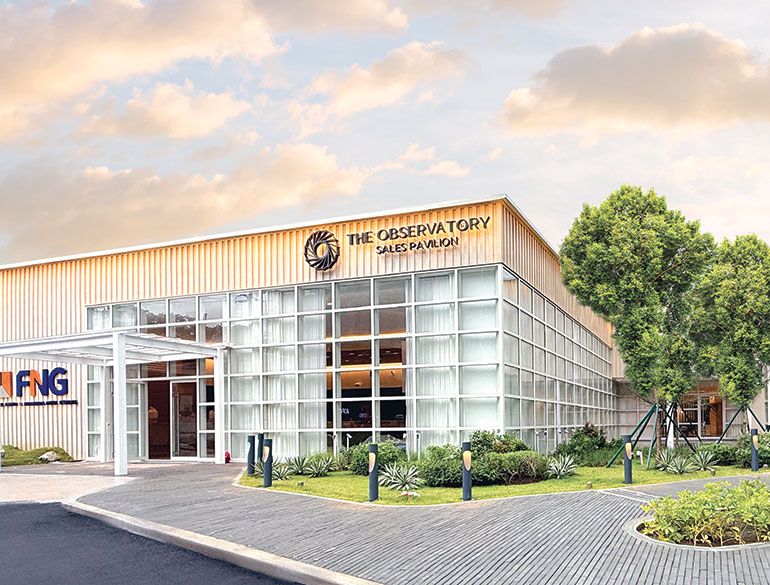
The Observatory Sales Pavilion, FNG’s standalone showroom along Pioneer St. in Mandaluyong

Building for the next phase of growth

As the real estate sector navigates a more measured cycle, FNG continues to focus on disciplined planning, strategic partnerships, and long-term value creation.

Across its portfolio, the company is positioning its developments to remain future-ready to support communities, businesses, and cities.

For more information about FNG, visit https://fng.ph/.


Spotlight is BusinessWorld’s sponsored section that allows advertisers to amplify their brand and connect with BusinessWorld’s audience by publishing their stories on the BusinessWorld Web site. For more information, send an email to online@bworldonline.com.

Join us on Viber at https://bit.ly/3hv6bLA to get more updates and subscribe to BusinessWorld’s titles and get exclusive content through www.bworld-x.com.

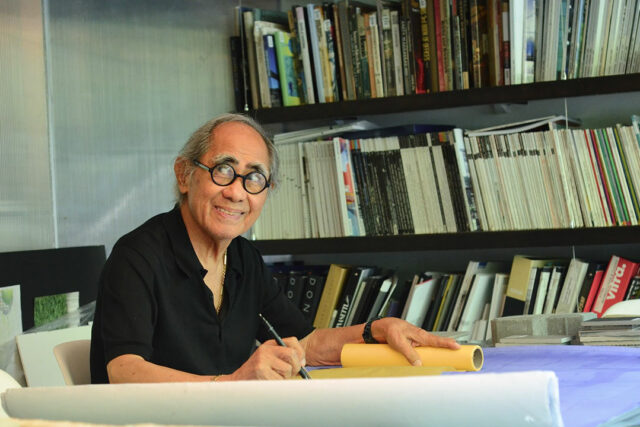
Architect Lorenzo ‘Lor’ Calma, 97

INSTAGRAM.COM/LORCALMAPARTNERS

PIONEER modernist architect Lorenzo “Lor” Calma passed away at the age of 97 on Jan. 27.

“He will be deeply missed and lovingly remembered for his generosity of spirit, his belief in others, and the quiet warmth and calm he brought to everyone he met,” wrote his children, designer Lorena Calma and architect Eduardo Calma, in a social media post. They also noted their father’s “enduring legacy that helped shape modern Philippine architecture.”

With a reputation for using minimalist lines and local materials across architecture, sculpture, and furniture design, Mr. Calma is responsible for timeless works such as the interiors of the Manila International Airport (now known as the Ninoy Aquino International Airport) and the Asian Development Bank.

Born on March 4, 1928, in Pampanga, he was a multidisciplinary artist who “sought to transform international modernism into an expression of Filipino culture, context and values,” according to his firm, Lor Calma & Partners. He studied at the Mapua Institute of Technology School of Architecture and Planning and influenced Philippine postwar design in the 1950s and beyond, later co-founding the Philippine School of Interior Design in 1967.

He was the recipient of numerous awards including the Most Outstanding Kapampangan in Arts and Architecture (2010) and Outstanding Professional of the Year in Interior Design (1997). His practice is continued by his studio and family through Lor Calma & Partners.

The firm’s tribute read: “His legacy lives in the values he championed: restraint over excess, meaning over trends, craftsmanship over convenience. He taught us that design is not about spectacle, but about clarity, purpose, and respect — for materials, for context, and for people.”

In a Facebook post, his nephew Juan Carlo Calma, who is also an architect, said his uncle was “a multifaceted artist and architect.”

“He is funny with always a very discerning taste with interesting stories — very experimental and always promoting Filipino craftsmanship — the most authentic display of Filipino modern minimalism and that can truly express the sensual use of local materials and his magnificent paper folds architecture showing both restraint and bold statements,” he said.

The wake is ongoing at the Heritage Memorial Park until Jan. 30 from 3 to 10 p.m. This will be followed by his internment on Jan. 31, with details to follow.

Mr. Calma is survived by his wife, children, and grandchildren. — BHL

Grab Philippines pilots human-led, consent-driven Driver AI Ambassador Program

Grab is pioneering a new frontier in digital marketing with the pilot of its Driver AI Ambassador Program in the Philippines. The initiative reimagines traditional brand ambassador models by utilizing Artificial Intelligence to scale and iterate content featuring real driver-partners.

By integrating AI as a force multiplier, Grab amplifies authentic driver-partner narratives and brand stories with unprecedented efficiency, allowing the platform to produce a high volume of factual and educational storytelling assets from a single human-led session.

“The Driver AI Ambassador Program is designed to reimagine influence, shifting it from traditional content creators to the people who live the brand every day: our driver-partners. AI is the enabler, but the stories, the voice, and the truth come from them,” said Grab Philippines Head of Integrated Marketing Services and Brand Marketing Jewel Oliveros.

The program is geared at translating real driver-partner narratives into publishable content with fewer constraints around time, cost, and production bandwidth, historically met by traditional content production. Under the pilot, driver-partners provide the core story material, including interviews, recorded voice, photos, and personal anecdotes about safety, family, community, and their livelihood and experience on Grab, which are then adapted into multiple formats such as short-form videos and social assets using AI tools. The content remains grounded in real input provided by participating driver-partners.

One of the program’s pioneer participants, Patrick Pidlawan Duque, a PWD GrabFood delivery-partner, said being featured provides an opportunity to share his story and widen visibility for delivery-partners. “’Yun po kasi kahit paano po makakatulong rin po sa akin. Yung makapagkwento ka sa mga social media,” Duque said. “’Yung magagawa ng pag-onboard po namin dito sa pagiging AI models ng Grab po, kailangan din po namin ma-expose para makilala ng iba. At para makatulong din po sa aming pamilya.” This AI-enabled creator model offers a competitive compensation package, treating driver-partners as ambassadors with industry-standard remuneration. This effectively creates an additional income stream for driver-partners who opt into the program.

The pilot includes robust governance measures meant to address concerns about the ethical application of using generative AI in marketing. Participation is anchored on informed consent, with driver-partners briefed on how their stories, voice, and likenesses may be used. The driver-partner participants also have the guaranteed right to opt out at any stage of the process. The program integrates human oversight into the workflow to preserve creative nuance and prevent misrepresentation. Furthermore, all AI-enabled outputs feature mandatory disclosures to ensure total transparency for viewers.

Aligning with Global and Ethical Standards for AI Application in Communications

The Grab Driver AI Ambassador Program aligns with the Venice Pledge: Responsible AI Guiding Principles for PR and Communications, established by the Global Alliance for Public Relations and Communication Management, which calls for AI practices that are ethical, transparent, and human-centered.

“We made sure we abided by international standards for AI-enabled communications because we want to make sure that we do right by our driver-partner ambassadors,” Oliveros said. “Our goal is to ensure that AI serves solely as an enabling scale tool for human-first, factual stories.”

Ana Pista, a director for the Global Alliance and president of the Public Relations Society of the Philippines (PRSP), said the pilot could serve as a case study for the industry. “As we navigate this technological shift, the commitment to placing human dignity at the center of innovation aligns with our global mission,” Pista said. “This program demonstrates that when we prioritize professional integrity and the sanctity of consent and transparency, technology like AI can elevate human connection.”


Spotlight is BusinessWorld’s sponsored section that allows advertisers to amplify their brand and connect with BusinessWorld’s audience by publishing their stories on the BusinessWorld Web site. For more information, send an email to online@bworldonline.com.

Join us on Viber at https://bit.ly/3hv6bLA to get more updates and subscribe to BusinessWorld’s titles and get exclusive content through www.bworld-x.com.

FNI unit ships first nickel ore cargo for 2026

GFNI.COM.PH

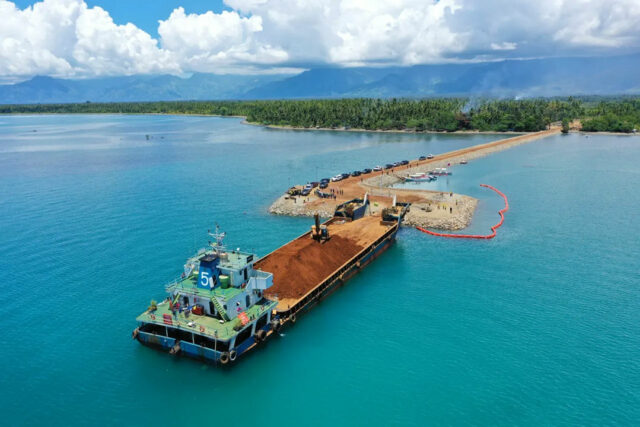
IPILAN NICKEL CORP., the Palawan-based subsidiary of listed miner Global Ferronickel Holdings, Inc. (FNI), has begun its operations for calendar year 2026 after completing its first nickel ore shipment for the year.

In a disclosure to the Philippine Stock Exchange on Thursday, FNI said bulk carrier MV RU Cheng Shan departed Ipilan’s anchorage area in Brooke’s Point carrying 53,912 wet metric tons (WMT) of 1.3% low-grade nickel ore bound for China.

With favorable weather and operating conditions, FNI said Ipilan is targeting production of at least 1.5 million WMT this year.

The projected sales mix for the year consists of 52.6% low-grade and 47.4% medium-grade nickel ore, in line with the company’s production targets and customer requirements.

“The commencement of shipments reflects the strong operational readiness of Ipilan’s mine site and its continued ramp-up under a comprehensive mine development program for the year,” the company said.

FNI said mine development activities for 2026 include the expansion of mining areas, the construction of additional haul roads, and the installation of environmental protection structures.

“These initiatives are integral to supporting the Company’s targeted production volumes while ensuring strict compliance with environmental and regulatory standards,” FNI said.

Ipilan operates under Mineral Production Sharing Agreement No. 017-93-IV, as amended in 2000, with the Philippine government, covering a contract area of 2,835 hectares in the municipality of Brooke’s Point, Palawan.

FNI said it continues to coordinate with national and local government agencies and host communities “to ensure that mining operations translate into inclusive economic growth, employment generation, and sustainable community development.”

At the stock exchange on Thursday, FNI shares rose 0.52%, or one centavo, to close at P1.92 apiece. — Vonn Andrei E. Villamiel

Ushering a new leadership at Sun Life Philippines

Outgoing CEO and Country Head Benedict Sison (left) and incoming CEO and Country Head Jonathan Juan “JJ” Moreno (right)

Sun Life Philippines recently announced a leadership transition that places its insurance business president, Jonathan Juan “JJ” Moreno, at the helm starting April 1, following the retirement of CEO and Country Head Benedict Sison after nearly eight years in the post.

Mr. Sison will remain as strategic advisor and chairman of the Sun Life Philippines Holding Company and the Sun Life Foundation until Dec. 31 to support the transition.

The announcement comes as Sun Life highlights its position as one of the longest-standing financial institutions in the country, serving more than 6.2 million clients. The company ties the leadership change to a period of evolving client expectations and a more digital financial landscape.

Sun Life traces its roots to Canada, where it recently observed its 160th year, and operates across North America and Asia. In the Philippines, the company logged its 130th anniversary last year and now counts 131 years of local operations.

Continuing the legacy

Mr. Sison described his retirement as both emotional and reassuring, citing confidence in the leadership team he leaves behind.

Over the past eight years, Sun Life Philippines stayed on top across major indicators, including total premium income and net income, based on Insurance Commission data as of Sept. 30, 2025. He adds that the company’s net income lead over its closest competitor exceeds 50%.

Mr. Sison also pointed to growth in brand recognition, with Sun Life named the most trusted brand in the industry for 14 consecutive years, including seven years at a platinum level. The agency force now exceeds 22,000 advisors, with the largest number of Million Dollar Round Table members in the market.

One of the major developments during his tenure is the creation of Sun Life Investment Management and Trust Corp. in 2021. As of end-2025, the trust unit manages about P430 billion in assets, ranking among the top players in the sector within three years of launch.

For four consecutive years, Sun Life Philippines has been recertified as a Great Place To Work. Mr. Sison said the acknowledgment matters because it reflects internal conditions rather than external rankings.

“Our greatest accomplishments are not measured solely by ambitious targets or rankings. They are measured by the lives we have touched, the relationships with clients that have been built and the legacy of care, compassion, and excellence that we leave behind,” says Mr. Sison.

Next at the helm, Mr. Moreno brings a career that spans the military, financial markets, consulting, and technology. A former naval officer, he later transitioned into enterprise reform, corporate governance, and financial services development, including roles linked to the stock exchange, consulting firms, fintech, and the World Bank Group.

He said this background shapes his approach to leadership, with emphasis on strategy grounded in disciplined execution and decisive action. As such, leading large organizations requires strong teams and systems that can handle multiple pressures at once.

“The areas of ways of working, execution, and implementation of technology and innovation [will remain constant]. [The] focus will be on building ecosystems, such as forging strategic partnerships. It will also include ensuring that our operations are not only responsive to current demands but also to emerging and future needs,” Mr. Moreno said. “Value is created not through the brilliance of strategy but through the excellence of execution.”

Growth of insurance industry

The Philippine life insurance industry posts steady gains despite economic strain in 2025, with Sun Life Philippines outpacing the market as it doubles down on technology, distribution and long-term confidence.

Industry growth over the past five years averages close to 10% in total premiums, according to Mr. Sison. As of Sept. 30, 2025, new business premiums for the industry rose to 11.5%.

Despite steady expansion, life insurance coverage in the Philippines remains limited. Insurance penetration stands at about 1.85% of gross domestic product, well below Thailand’s rate of more than 5% and Singapore’s level above 8%.

“I look at the numbers as an inspiration. They should serve as an inspiration for the Philippine life insurance industry. It tells us that there’s a huge part of potential out there for us to penetrate in the coming years,” Mr. Sison explains.

Meanwhile, Mr. Moreno identifies financial literacy and competition for household spending as ongoing hurdles. He said Sun Life plans to address these through education efforts, advisor-led engagement, and further investment in digital capability.

Technology investment has accelerated at Sun Life after the pandemic, allowing faster underwriting and claims processing, and expanding client access to policy services through digital platforms.

Sun Life places heavy emphasis on digital systems to support its expansion. Mr. Sison said the company invests heavily in technology to improve operations and customer experience. Clients can now access policies around the clock, make changes, or review coverage through digital platforms. These tools allow customers to manage policies remotely while keeping traditional service available for those who prefer it.

Both leaders stressed continuity in priorities. Mr. Moreno said the company will stay focused on clients, employees, distribution partners, and financial results.

“My leadership style has always been not to focus on what will change but first to focus on what will endure. Those that will endure include four things I outlined earlier, as Benedict said: focus on the client, focus on our employees, focus on our distribution channels and distribution force and, at the end of the day, as a publicly listed company, financial performance for shareholders,” Mr. Moreno explains.

Mr. Sison urges employees and advisors to rally behind the new leadership and to keep attention on client needs, which he credits for Sun Life’s long presence in the country.

“What’s helping us stay relevant is our purpose. Our purpose of helping Filipinos achieve lifetime financial security remains relevant, because, as long as there is one Filipino with a loved one he or she wants to protect, Sun Life will be there,” Mr. Sison concludes.


Spotlight is BusinessWorld’s sponsored section that allows advertisers to amplify their brand and connect with BusinessWorld’s audience by publishing their stories on the BusinessWorld Web site. For more information, send an email to online@bworldonline.com.

Join us on Viber at https://bit.ly/3hv6bLA to get more updates and subscribe to BusinessWorld’s titles and get exclusive content through www.bworld-x.com.

Globe powers inaugural WTA’s Manila Open, providing top-tier connectivity to world-class tennis

Women’s sports are taking center stage in the Philippines as Manila hosts its first-ever Women’s Tennis Association (WTA) tournament, the Philippine Women’s Open, from Jan. 26-31, 2026 at the Rizal Memorial Sports Complex. Powered by Globe’s internationally recognized cutting-edge 5G network and reliable connectivity, this landmark event marks a historic milestone for the country, showcasing elite, globally ranked women’s professional tennis on home soil for the very first time to ensure seamless operations and world-class coverage.

The rise of Alex Eala, who has steadily built her career competing against the world’s best, has reignited national pride and empowered young Filipinos to dream bigger in sports. Her journey demonstrates that Filipinos can excel and belong at the highest levels of any global stage. The Philippine Women’s Open builds on this momentum, offering local fans and aspiring athletes unprecedented access to world-class sporting events.

“Globe has been a constant partner in my journey, giving me the connectivity and support to compete and grow on the world stage. Seeing Globe now power the first‑ever WTA tournament in Manila makes me proud, not just as a player, but as a Filipina, because it shows how far we’ve come in bringing world‑class tennis home. This event is proof that with the right support, Filipino athletes and fans can stand shoulder to shoulder with the best in the world,” said Eala.

As part of this milestone, Globe proudly reaffirms its commitment to progress, pride, and purpose by championing women’s empowerment and Filipino excellence. Globe’s 5G connectivity will power the Rizal Memorial Sports Complex, supporting flawless tournament execution and broadcast quality. Delegates and participants will also enjoy reliable connectivity throughout the tournament, enabling them to stay connected and share the excitement with the world.

“As women’s sports gain momentum globally, Globe is committed to bringing world-class platforms closer to Filipinos. From the inspiring journey of Alex Eala to hosting the Philippine Women’s Open, we support not only women’s excellence but also the empowerment of the youth, who see in Alex a role model for dreaming bigger and achieving more. By powering this historic event with our 5G network and delegate connectivity, Globe reaffirms its mission to nurture Filipino pride, inspire the next generation, and ensure that our athletes and young people alike can thrive,” said Roche Vanderberghe, Chief Marketing Officer at Globe.

To further bring the action closer to Filipinos, Globe Prepaid is supporting the event through the Go5G TURBO50, giving fans a faster and more affordable way to enjoy every match. With fast and reliable 5G connectivity, fans can stay connected, share moments, and experience the thrill of the Philippine Women’s Open, live or online.

The Philippine Women’s Open is more than a sporting event, it is a celebration of Filipino pride, women’s empowerment, and the country’s place on the global sporting stage. By supporting this historic milestone, Globe continues to inspire progress and elevate platforms that showcase Filipino potential to the world.

Fans can also celebrate Pinoy pride powered by Globe 5G by streaming the Philippine Women’s Open 2026 LIVE on the official WTA website from Jan. 26-31, ensuring that Filipinos everywhere can witness history as it unfolds.


Spotlight is BusinessWorld’s sponsored section that allows advertisers to amplify their brand and connect with BusinessWorld’s audience by publishing their stories on the BusinessWorld Web site. For more information, send an email to online@bworldonline.com.

Join us on Viber at https://bit.ly/3hv6bLA to get more updates and subscribe to BusinessWorld’s titles and get exclusive content through www.bworld-x.com.

Jollibee’s Compose Coffee leads Korea satisfaction survey

JOLLIBEEGROUP.COM

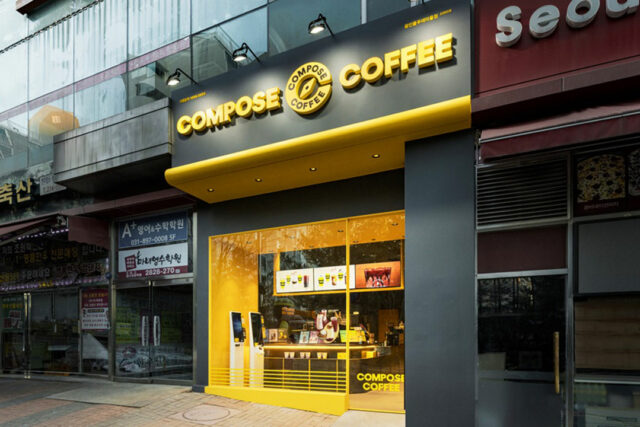
JOLLIBEE FOODS CORP. (JFC) said its South Korea-based coffee brand Compose Coffee received the highest customer satisfaction rating among low-cost coffee franchises in a survey conducted by the Korea Consumer Agency (KCA).

“Compose Coffee’s customer satisfaction win comes amid a period of rapid expansion supported by strong digital engagement and a scalable, asset-light business model,” the company said in a statement on Thursday.

“The brand’s continued momentum aligns with the Jollibee Group’s global coffee and tea growth strategy, reinforcing its ambition to build a world-class portfolio of category-leading brands in high-potential markets,” it added.

The KCA, South Korea’s government consumer protection agency, works to safeguard consumer rights, promote market transparency, and enhance consumer welfare through services and research that support fair market practices.

In the survey, which covered 1,600 consumers, Compose Coffee scored 3.97 out of 5, ranking highest in customer service, operations, empathy, menu quality, and ease of ordering.

Respondents also cited price-to-value fit, coffee taste, and store accessibility as key factors in their evaluation.

JFC said it will continue investing in technology upgrades, operational streamlining, and feedback-driven product improvements across its global coffee and tea brands.

“As Compose Coffee continues to set new standards in customer satisfaction and value, the Jollibee Group looks forward to celebrating more milestones together,” the company said.

In an earlier disclosure, JFC said its coffee, tea, and Chinese cuisine segments expanded through new store openings, with Compose Coffee adding more than 1,000 stores in South Korea over the past 18 months to reach a total network of over 3,000 outlets.

At the local bourse on Thursday, JFC shares rose 0.99% to close at P205 apiece. — Alexandria Grace C. Magno

Breaking the mold: Innovation, institutions and economic transformation

STOCK PHOTO | Image from Freepik

Recent developments should have stripped away any lingering complacency about the Philippine economy’s post-pandemic recovery. Growth forecasts for the country have been revised downward by major international financial institutions like the International Monetary Fund, the World Bank, and the Asian Development Bank as well as by credit rating agencies. These revisions reflect a confluence of factors including weaker global demand, tighter financial conditions, lingering inflationary pressures, and heightened geopolitical uncertainty. Yet they also point inward, signaling concerns about the Philippines’ structural weaknesses and institutional capacity to sustain growth.

At home, renewed public scrutiny of corruption, accountability gaps, and governance failures has further undermined confidence in the country’s ability to translate policy intentions into durable economic outcomes. Together, these developments send a clear message: the Philippines can no longer rely on familiar policy frameworks, incremental reforms, or historical growth patterns. The moment calls for a decisive break from the existing development mold.

Today’s column distills the key insights from a colloquium we prepared as an accompanying volume to the Asian Development Bank’s forthcoming Country Diagnostic Study, Breaking Barriers, Building Bridges. Drawing from extensive dialogues on economic planning, infrastructure, transport and communications, banking, and capital markets, the discussions converged on a central conclusion. If the Philippines is to escape the lower middle-income trap and meaningfully catch up with its regional peers, it must grow beyond historical averages and do so through a fundamentally different growth model.

It’s time to break the mold.

RESILIENCE HAS ITS LIMITS
For more than two decades, the Philippine economy has demonstrated resilience. It weathered the Asian financial crisis, domestic fiscal stress, the global financial crisis, and the unprecedented shock of COVID-19. Each time, growth eventually rebounded, and macroeconomic stability was preserved. This capacity to absorb shocks is a strength. But resilience alone has not delivered transformation.

Despite average growth of nearly 5% since the late 1990s, the Philippines has remained stuck in lower middle-income status for almost four decades. In contrast, most of its ASEAN-5 peers have already transitioned to higher-income categories. The divergence is telling. It underscores that the challenge is not growth per se, but the nature of that growth.

The pandemic laid bare these limitations. Economic scarring weakened productivity, disrupted labor markets, and strained public finances. Even before COVID-19, poverty reduction had begun to slow, and income inequality remained stubbornly high. Growth was increasingly driven by consumption, remittances, and low-productivity services, sources that generate momentum but rarely transform economies. Recent forecast downgrades merely formalize what these trends had long implied: without structural change, growth will remain fragile and insufficient.

BINDING CONSTRAINTS TO TRANSFORMATION
The Philippine economy faces a set of interrelated constraints that reinforce one another and dampen long-term potential.

Infrastructure deficits remain among the most binding. Weak transport, logistics, energy, water, and digital connectivity raise the cost of doing business and fragment markets. Congested ports, inadequate airports, inefficient road networks, and uneven internet access weaken competitiveness and deepen regional disparities. High logistics costs, in particular, limit firms’ ability to scale up and integrate into higher-value segments of regional and global value chains.

Low productivity and slow structural transformation compound these infrastructure gaps. The economy has struggled to move decisively from low-productivity activities toward advanced manufacturing and high-value services. Research and development spending remains limited, innovation capacity uneven, and many industries remain locked into assembly-based or low value-added production. As a result, productivity growth has lagged that of regional peers.

Agricultural underdevelopment and food insecurity continue to exert pressure on growth and inflation. Fragmented landholdings, weak farm support systems, inadequate irrigation and storage, and poor market logistics keep productivity low and rural incomes depressed. High postharvest losses contribute to volatile food prices, complicating macroeconomic management and disproportionately affecting low-income households.

Human capital deficits further constrain the country’s long-term prospects. Despite a young and growing population, learning outcomes in reading, mathematics, and science lag behind those of neighboring economies. Even the creative thinking capacity of Filipino students is dismally low. The pandemic widened learning gaps and intensified skills mismatches. Health and nutrition challenges — particularly childhood stunting — undermine workforce quality and productivity over time.

Climate vulnerability imposes recurring economic losses as the Philippines remains exposed to typhoons, floods, earthquakes, and other natural hazards. Climate change not only amplifies these risks, but it also threatens food security, infrastructure resilience, and human safety. Adaptation and resilience are no longer optional add-ons; they are central to any credible development strategy.

Threaded through all these constraints are governance and institutional weaknesses. Fragmented mandates, overlapping agency functions, weak coordination between national and local governments, and persistent corruption concerns undermine policy effectiveness. Budget inefficiencies and weak execution dilute the impact of development programs, while accountability gaps erode public trust. These institutional shortcomings increasingly shape the cautious outlooks of international investors and credit rating agencies.

WHY THE OLD MODEL NO LONGER WORKS
Taken together, these constraints explain why incremental reforms within the existing policy paradigm are no longer enough. The global economy has become more fragmented and volatile, marked by geopolitical tensions, shifting trade regimes, and rapid technological change. Domestically, slower growth prospects, fiscal pressures, and governance concerns have narrowed the margin for error.

What the Philippines needs is not simply faster growth, but a different kind of growth, one that is productivity-driven, innovation-led, and inclusive. This requires a fundamental rethinking of how value is created, how institutions function, and how public and private sectors interact.

INNOVATION AS THE CATALYST
At the center of this new growth model is innovation. Innovation is not confined to frontier technologies or advanced manufacturing. It encompasses new ways of organizing production, delivering services, governing institutions, and deploying resources. By raising productivity and reducing dependence on ever-increasing inputs of labor and capital, innovation allows economies to grow more sustainably and resiliently, higher than historical averages. The Philippines today needs no less than leapfrogging, and innovation could be the enabling factor.

Indeed, innovation offers a pathway to overcome long-standing bottlenecks. Digital technologies and data analytics, artificial intelligence and financial technology can all raise efficiency across sectors — from agriculture and manufacturing to logistics, healthcare, and public administration. Just as importantly, innovation can strengthen governance by enhancing transparency, accountability, and service delivery.

The country’s gradual improvement in global innovation rankings suggests latent potential. But ambition must be matched by execution. Innovation cannot flourish without sustained investment in human capital, research and development, and enabling infrastructure. Nor can it thrive in an environment of weak institutions and uncertain rules that in turn, are rooted in and abet a culture of corruption and impunity.

FOUR PILLARS FOR BREAKING THE MOLD
Insights aligned with the ADB Country Diagnostic Study point to four mutually reinforcing pillars for economic transformation.

First, promote good governance that fosters innovation and entrepreneurship. A competitive business environment depends on good governance: clear rules, efficient regulation, and capable public institutions. Rationalizing government functions, accelerating digital government, and strengthening public financial management can improve the ease of doing business and attract investment. Values formation is indispensable. Outcome-based budgeting, stronger inter-agency coordination, and continuous capacity building are essential to turning plans into results.

Second, invest decisively in human capital. Education, health, and skills development form the foundation of an innovative economy. Reskilling and upskilling must be institutionalized to keep pace with technological change, while curricula should be better aligned with industry needs. Expanding access to quality healthcare and nutrition is essential to future-proof the workforce. Social protection programs should evolve beyond safety nets to become springboards for productive participation.

Third, strengthen digital and physical infrastructure. Affordable and reliable digital connectivity is critical to innovation and regional inclusion. Transport and logistics investments should prioritize integrated networks rather than isolated corridors, reducing congestion, and lowering costs. Energy security, particularly through renewable energy and transition fuels, is indispensable for sustaining industrial growth and digital transformation.

Fourth, address inequality by revitalizing agriculture and mining as well as focusing on lagging regions. Inclusive growth requires raising productivity and incomes where poverty is most concentrated. Land aggregation, farm clustering, modern farming techniques, open but environment-friendly mining, improved logistics, and better access to finance can transform agriculture and mining into competitive sectors. Targeted investments in lagging regions can broaden economic opportunities and strengthen social cohesion.

INSTITUTIONS AT THE CORE
Global experience consistently shows that institutions shape development outcomes. Inclusive, accountable, and adaptive institutions enable innovation and shared prosperity. Weak institutions, by contrast, block technological progress, entrench inequality, and undermine confidence.

For the Philippines, strengthening institutions means reinforcing the rule of law, protecting property and contract rights, ensuring fiscal and financial stability, and investing consistently in education and innovation. It also requires cultivating a political and social culture that prioritizes long-term national development over short-term gains.

The Philippine economy stands at a critical point. Its resilience has enabled it to survive repeated shocks, but resilience alone will not deliver lasting prosperity. Recent forecast downgrades and renewed governance concerns serve as a warning that the old growth model has reached its limits.

Breaking the mold demands a deliberate shift toward innovation-led growth anchored in good governance, strong institutions, and inclusive policies. The challenges are formidable, but they are not insurmountable. With its demographic potential, strategic location, and deep reservoir of talent, the Philippines has the ingredients for transformation.

Economic transformation, ultimately, is not a matter of possibility but of choice. It requires vision, discipline, and sustained commitment — to invest in people, modernize infrastructure, strengthen governance, and embed innovation at the core of development. If pursued with resolve, this path can move the country beyond resilience toward more durable, more inclusive prosperity.


Diwa C. Guinigundo is the former deputy governor for the Monetary and Economics Sector, the Bangko Sentral ng Pilipinas (BSP). He served the BSP for 41 years. In 2001-2003, he was alternate executive director at the International Monetary Fund in Washington, DC. He is the senior pastor of the Fullness of Christ International Ministries in Mandaluyong.