Home Blog Page 348

PHL money market growing as repurchase transactions increase

Bangko Sentral ng Pilipinas Governor Eli M. Remolona, Jr. — COURTESY OF BANGKO SENTRAL NG PILIPINAS

By Katherine K. Chan, Reporter

DUMAGUETE CITY — The Philippines’ money market, particularly for repurchase agreement (repo) contracts, is growing rapidly and could potentially surpass the foreign exchange (FX) swaps, the Bangko Sentral ng Pilipinas (BSP) said.

“Now, our repo market, based on the GMRA (Global Master Repurchase Agreement) contract, is developing very fast so that it’s beginning to rival the FX swap market,” BSP Governor Eli M. Remolona, Jr. said during a media information session here.

“At this point, a lot of activity in the repo market is about 75% of the activity in the FX swaps. So, things seem to be developing in the right direction.”

The BSP chief said transactions in the repo market have now reached about P100 billion from “almost nothing a year and half ago,” making it the number two market in the country after FX swaps.

“I think it won’t be long before it surpasses the FX swap market and makes the FX swap market redundant (and) no longer necessary.”

Asked when he sees the repo market surpassing the FX swap market, Mr. Remolona said: “I think this year, it should overtake it.”

Rizal Commercial Banking Corp. Chief Economist Michael L. Ricafort said the repo market serves as another source of funding for banks, other financial institutions and investors, which could contribute to the development of the Philippine capital market.

“This provides greater optionality on more innovative ways to get funding in a more expeditious while stable manner, by allowing the borrower to hold on earning investments or assets, without the need to liquidate and sell them and use them as collateral instead, thereby also promoting stability and at least preventing forced liquidations and disruptions in the local financial markets,” he said in a Viber message.

Increased repo transactions could ease the pressure on the peso and dollar or other foreign currency-denominated lending rates in the FX swap market, leading to more stable funding costs, he said.

BOND MARKET
Meanwhile, the BSP chief said the bond market is also showing “very encouraging signs of development,” with about P30 billion worth of transactions seen since the peso interest rate swap market was launched in November 2024 involving longer maturities.

“So, it looks promising, I would say.”

He said the central bank is working with several partners to create a roadmap for a more accessible corporate bond market.

BSP Deputy Governor Zeno Ronald R. Abenoja added that increased activity in the capital market has helped guide yields closer to benchmark rates.

“As the liquidity in these markets continues to increase and also be evenly distributed towards other tenors, what we have seen also are improvements in the alignment of the rates relative to the different rates in the BSP facility,” Mr. Abenoja said during the same event.

“So, with increased volume, we continue this to further align among themselves in the short end of the market, and that could be transmitted all the way up to the long end, as the governor has mentioned.”

The BSP has been pushing to deepen the country’s capital market to boost liquidity, improve domestic savings and investments, and enhance monetary policy transmission.

“Money and capital markets help the BSP do its job,” Mr. Remolona said. “At the moment, these markets are makeshift markets, and they could be more helpful.”

“We need money and bond markets that transmit monetary policy more effectively. We need a corporate bond market that can serve as a spare tire in case the banking system fails.”

Manila condo oversupply seen keeping vacancy high this year — Colliers

A VIEW of buildings in Makati City. — PHILIPPINE STAR/MICHAEL VARCAS

METRO MANILA’S condominium market is expected to see residential vacancy rise to 25% this year as unsold units in mid- and lower mid-income segments continue to weigh on the market, property consultancy firm Colliers Philippines said.

In its Fourth-Quarter Property Market Report, Colliers projected that the region’s residential vacancy rate would peak in 2026 before easing to 23.9% in 2027.

Metro Manila ended 2025 with a 24.7% vacancy rate, up from 23.9% in 2024.

“The mid-income segment has shown strong demand for its pre-selling units, but when owners try to resell or lease them, they have a hard time finding a renter or buyer,” Joey Roi H. Bondoc, director and head of research at Colliers Philippines, said on the sidelines of a briefing on Monday.

Colliers data show Metro Manila has roughly 30,000 unsold ready-for-occupancy units, with 36% in the lower mid-income segment, priced at P3.6 million to P6.99 million, and 33% in the affordable segment, valued at P2.5 million to P3.59 million.

By submarket, the Bay Area recorded the highest vacancy at 57.3% in the fourth quarter of 2025, while Ortigas Center had the lowest at 6.4%.

Despite elevated vacancies, net take-up improved by 8% in the fourth quarter of 2025, totaling 10,000 units, with the mid-income segment accounting for 70% of net demand. Colliers said developers’ ready-for-occupancy promotions and flexible payment schemes, such as extended down payments and early move-ins, helped drive absorption.

Colliers projected that 7,100 units would be completed on average annually from 2026 to 2028, slightly lower than the 7,400 units completed in 2025.

Absorption remains significantly below pre-pandemic levels, when roughly 14,000 units were completed annually from 2017 to 2019.

In the office sector, Colliers expects vacancies to fall to 18.9% in 2026 from 19.4% at end-2025, supported by an expected net take-up of 400,000 square meters (sq.m.).

Office transactions rose 13% in 2025 to 847,000 sq.m. from 752,000 sq.m. in 2024, while vacated spaces fell 38% to 485,000 sq.m.

Colliers said the data suggest that while demand for mid-income pre-selling condos remains steady, developers may need to focus on ready-to-occupy units, flexible payment options, and targeted submarkets to absorb excess inventory. — Beatriz Marie D. Cruz

DMCI Power allocates P2.4B for new off-grid projects this year

DMCIHOLDINGS.COM

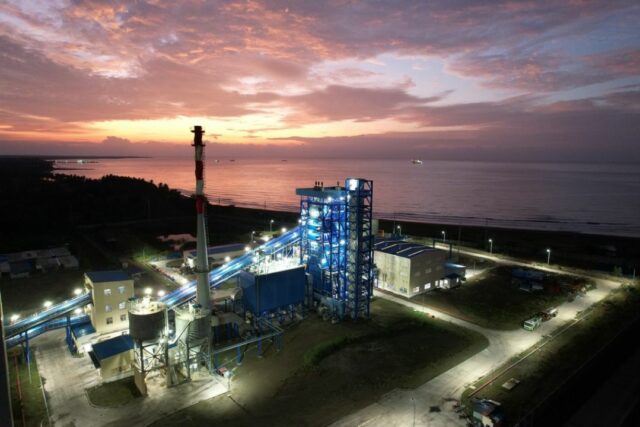
OFF-GRID POWER supplier DMCI Power Corp. (DPC) is earmarking at least P2.4 billion in capital expenditure (capex) for 2026 to start construction on power projects aimed at meeting rising demand in its service areas.

Speaking to reporters last week, DPC President Antonino E. Gatdula, Jr. said this year’s capex would be significantly higher than the previous year’s P1.4-billion budget, which was used to finance various power projects.

The bulk of the capex is allocated for the expansion of its 15-megawatt (MW) coal-fired power plant in Palawan through the construction of an additional facility capable of generating 15 MW.

“Currently, we’re in the process of securing the ECC (environmental compliance certificate). So we’re targeting to receive it by the first quarter at the latest or early second quarter. After that, we can commence construction,” Mr. Gatdula said.

He added that the planned capex for the year could increase depending on the timing of regulatory approvals, as the company plans to roll out around 45 MW of power projects.

DPC is preparing to construct a 17-MW bunker-fired thermal plant in Occidental Mindoro after emerging as the winning bidder in a power supply auction.

The company has also submitted an unsolicited proposal to the electric cooperative in Antique to initially build a 1-MW diesel plant, which could later be replaced by a 4-MW solar farm and an 11-megawatt-hour battery energy storage system.

Mr. Gatdula said the company is also planning to build a 4-MW solar farm in Masbate and an 8-MW bunker-fired power plant in Roxas, Palawan.

Established in 2006, DPC focuses on supplying electricity to off-grid small and remote islands. It has 188.3 MW of installed capacity and operates thermal, bunker, diesel, and wind power plants in Masbate, Oriental Mindoro, Palawan, and Antique.

For 2025, DPC reported a 6% increase in energy sales to 522.2 gigawatt-hours (GWh) from 491.2 GWh the previous year, driven by additional output from new power plants.

“Delivering our highest sales for the 15th consecutive year reflects the growing demand in off-grid areas and our continued focus on providing reliable, cost-efficient power,” Mr. Gatdula said.

About 55% of last year’s energy sales came from newly added wind capacity, with the remainder supported by steady output from existing power plants.

During the second quarter of 2025, DPC commissioned the 12.5-MW Semirara Wind Project, marking the company’s foray into renewable energy.

“The inclusion of wind power in our portfolio supports the Department of Energy’s thrust to accelerate the development and commercialization of renewable energy, especially in off-grid areas,” Mr. Gatdula said.

An 8-MW bunker-fired power plant in Aborlan, Palawan also contributed to the company’s increased capacity. — Sheldeen Joy Talavera

Treasury bill award upsized as rates pushed lower

BW FILE PHOTO

By Aaron Michael C. Sy, Reporter

THE GOVERNMENT raised more than its programmed amount of Treasury bills (T-bills) at Monday’s auction as strong demand for short-term securities pushed yields lower, with investors factoring in weaker-than-expected economic growth ahead of the Bangko Sentral ng Pilipinas’ (BSP) policy meeting later this month.

The Bureau of the Treasury (BTr) awarded P37.8 billion in T-bills, exceeding the P27-billion offer after bids rose to P176.8 billion from P156 billion at the auction last week.

In response to the heavy demand, the Auction Committee doubled its acceptance of noncompetitive bids across all tenors to P7.2 billion each, the Treasury said in a statement. Average yields for all maturities fell from the previous week’s auction to below secondary market levels.

The Treasury awarded P12.6 billion in 91-day T-bills, above the P9-billion plan, as bids reached P62.1 billion. The three-month paper fetched an average rate of 4.579%, down 8.7 basis points (bps) from 4.666%. Accepted yields were 4.548% to 4.593%.

For the 182-day tenor, the government also borrowed P12.6 billion, surpassing the programmed P9 billion, with tenders hitting P59.818 billion. The average yield eased by 7.9 bps to 4.672% from last week. Rates accepted ranged from 4.63% to 4.7%.

The Treasury likewise raised P12.6 billion from the 364-day T-bills, more than the P9-billion offer, as bids reached P54.89 billion. The one-year paper’s average yield fell by 13.8 bps to 4.689%, with accepted rates at 4.67% to 4.735%.

Before the auction, secondary market rates stood at 4.6826% for the 91-day, 4.7725% for the 182-day and 4.8412% for the 364-day T-bills, based on PHP Bloomberg Valuation Service reference rate data provided by the Treasury.

“The T-bill auction continued to enjoy strong demand, supported by the softer growth outlook and a favorable inflation environment,” a trader said in a text message. “These conditions are already sufficient to exert downward pressure on yields.”

Philippine economic growth slowed to 3% in the fourth quarter of 2025 from 5.3% a year earlier and 3.9% in the third quarter. Full-year growth averaged 4.4%, below the government’s 5.5% to 6.5% target.

“While a BSP rate cut remains possible, the macroeconomic backdrop allows the central bank to remain data-dependent, with scope to adjust liquidity through facilities and reserve settings in the upcoming meeting rather than rush into policy easing,” the trader added.

Analysts said the weaker growth data could increase expectations for further policy easing to support domestic demand. BSP Governor Eli M. Remolona, Jr. has said a rate cut this month is not assured, noting that slower growth alone would not justify easing as inflation remains the central bank’s main focus.

The Monetary Board is scheduled to meet on Feb. 19.

Another trader said strong demand was also driven by a large volume of maturities due next week, prompting investors to reinvest in government securities.

On Tuesday, the government will auction P30 billion in reissued seven-year Treasury bonds with a remaining life of four years and 11 months.

The government plans to raise P308 billion from the domestic market this month, including P108 billion from T-bills and as much as P200 billion from Treasury bonds, to help fund the budget deficit capped at P1.647 trillion, or 5.3% of gross domestic product this year.

PAL to move turboprop flights from NAIA to provincial hubs

PHILIPPINE STAR/EDD GUMBAN

PHILIPPINE AIRLINES (PAL) will shift its turboprop operations to hubs outside Manila following the relocation of flights from Ninoy Aquino International Airport (NAIA).

“All its turboprop operations to and from Manila will be discontinued effective March 29,” the flag carrier said in a media release on Monday, adding that it will re-route all turboprop flights to alternative hubs such as Clark, Iloilo, and Cebu.

The move follows a resolution from the Transportation department’s Manila Slot Coordination Committee directing airlines to transfer turboprop operations out of NAIA.

The measure aims to prioritize larger jets while helping decongest the airport.

PAL said affected flights will be notified of updated itineraries, offering passengers options for rebooking, rerouting, travel credit conversion, or refund.

Passengers with existing bookings will be rerouted to maintain connectivity.

Manila-Coron and Manila-Siargao flights will be redirected via Siargao; Manila-Antique-Manila will operate through Iloilo; and the Manila-Catarman service will be relocated to Cebu.

PAL will also increase domestic flight frequencies starting in March to expand capacity on high-demand routes.

Manila-Cebu flights will rise to 76 weekly, Manila-Dumaguete to 21, Manila-Iloilo to 42, Manila-Roxas to 14, and Manila-Tacloban to 28 weekly. — Ashley Erika O. Jose

Bad Bunny wins top Grammy prize, first ever for Spanish-language album

BAD BUNNY accepts the award for Album of the Year for Debí Tirar Más Fotos during the 68th Annual Grammy Awards in Los Angeles, Feb. 1. — REUTERS/DANIEL COLE

LOS ANGELES — Bad Bunny, the Latino rap star whose forthcoming Super Bowl gig has ignited a culture wars controversy, won the top Grammy prize on Sunday, a first for a Spanish-language album, with Debí Tirar Más Fotos, a celebration of his Puerto Rican roots.

The 31-year-old performer-producer edged out fellow megastars Kendrick Lamar and Lady Gaga in what amounted to a three-way race to clinch his first album-of-the-year Grammy, considered the pinnacle of the music industry’s highest honors.

“I want to dedicate this award to all the people who had to leave their homeland, their country to follow their dreams,” the Puerto Rican artist said in his acceptance speech, tapping into expressions of solidarity for immigrants evident throughout the show.

Debí Tirar Más Fotos, a musical tribute to Bad Bunny’s Caribbean island homeland, marked his sixth studio set and was heavily favored after winning the Latin Grammys’ album of the year award in November.

POLITICAL OVERTONES
Grammy recognition of Bad Bunny, born Benito Antonio Martinez Ocasio, carried strong political overtones given his outspoken criticism of the Immigration and Customs Enforcement sweeps ordered by US President Donald J. Trump in cities across the country.

The singer-producer skipped the continental United States on his recent concert tour, saying he feared federal immigration agents would show up to arrest his fans.

The Grammy accolades also burnished his reputation ahead of a wider introduction to a mainstream English-speaking US audience next Sunday when he is due to headline the National Football League’s Super Bowl halftime show.

His selection for one of the marquee live sports and entertainment events on US television has rankled some traditionalists, including Mr. Trump, who called it “absolutely ridiculous” and said he had never heard of Bad Bunny.

Bad Bunny openly supported Mr. Trump’s Democratic opponent Kamala D. Harris in the 2024 presidential race.

“ICE out,” he declared from the stage as he accepted the award for best Latin urban music album for Debí Tirar Más Fotos, one of five awards he received.

“We’re not aliens,” he said on stage, after Debí Tirar Más Fotos won the Best Music Urbana award. “We are humans and we are Americans,” he added.

Often referred to as the “King of Trap,” Bad Bunny said that love is the only thing more powerful than hate and urged people to confront cruelty with compassion. “We love our people. We love our family,” he added.

Opposition to Mr. Trump’s deportation drive emerged as a recurring theme throughout the three-hour-plus live Grammy telecast, in which many attendees, including Justin Bieber, were seen sporting “ICE Out” buttons.

BEST NEW ARTIST OLIVIA DEAN
Accepting her award as best new artist, British soul-pop singer Olivia Dean paid tribute to a grandmother who immigrated to Britain from Guyana as a teenager seeking a new life.

“I must say I’m up here as a granddaughter of an immigrant,” she said, evoking cheers from the star-studded audience. “I am a product of bravery and I think those people deserve to be celebrated. We’re nothing without each other.”

Lamar, the chart-topping hip-hop sensation who led the field of Grammy contenders going into Sunday’s show with nine nominations, came away with five awards, including best rap album for his latest studio set GNX and a shared award for record of the year for “luther,” his wistful duet with R&B singer-songwriter SZA.

The award for song of the year, honoring composers, went to Billie Eilish and her brother Finneas O’Connell, for her hit single “Wildflower.”

Billie Eilish, who wore an “ICE out” pin, used her time on stage to call out ICE. “No one is illegal on stolen land,” she said. “Fuck ICE,” the “bad guy” singer added.

“Golden,” the smash hit from the Netflix animated movie KPop Demon Hunters, made history during the non-televised portion of the awards when it was named best song written for visual media, marking the first time the K-pop music genre has ever earned Grammy glory.

The song was performed in the film by a fictional band called HUNTR/X, voiced by real-life vocalists EJAE, Audrey Nuna, and Rein Ami.

Lady Gaga won Grammys for best pop vocal album with Mayhem, and best dance-pop recording for “Abracadabra.”

Trevor Noah returned to host the festivities for a sixth time, which he had said would be his last Grammys gig. The show aired live on the CBS network from the Crypto.com Arena in downtown Los Angeles.

Legendary filmmaker Steven Spielberg, 79, achieved EGOT status — one of the rarest honors in the entertainment industry — after winning his first Grammy award for best music film for Music by John Williams, which he produced. EGOT stands for Emmy, Grammy, Oscar, and Tony.

Grammy winners are chosen by the roughly 15,000 voting members of the Recording Academy — industry peers including artists, songwriters, producers and engineers — whose ranks have been revamped over the past seven years to increase diversity. About 1,000 Latin Grammys voters became eligible to vote this year, and 73% of members have joined since 2019. — Reuters

Digital marketplace rules out within 1st half

STOCK PHOTO | Image by Katemangostar from Freepik

THE BANGKO Sentral ng Pilipinas (BSP) may issue regulations governing digital marketplace activities for banks and other central bank-supervised financial institutions in the first half, a senior official said, as the regulator moves to widen access to financial and insurance products through digital platforms.

“We’re coming up with a circular on digital marketplace,” BSP Deputy Governor Lyn I. Javier told a news briefing in Dumaguete City on Sunday. “This will be open to big banks or electronic money issuers opening their platforms to other financial service providers, including insurance companies.”

She said the draft circular is undergoing its final stage of review.

“The digital marketplace is coming very soon because we’re already finalizing it based on the inputs we have,” she said. “There’s just one final review for the physical touch points.”

The BSP last year released a draft circular outlining rules for banks and electronic money issuers offering products through a single platform, or so-called digital marketplaces. Under the framework, institutions may offer their own financial and nonfinancial products, as well as those of third-party providers, including insurance companies.

The proposed rules, however, prohibit banks and electronic money issuers from offering products linked to online gambling activities.

Separately, the BSP is also revising its bancassurance rules to allow banks to distribute insurance products from firms outside their financial conglomerates, BSP Deputy Governor Bernadette Romulo-Puyat told the same event.

“We are finalizing guidelines that will allow banks to partner with insurance companies outside their existing financial conglomerate,” she said. “This broadens who banks can work with to offer insurance products.”

Bancassurance allows insurance companies to sell policies through bank branches and digital channels. Under BSP and Insurance Commission rules, banks may only distribute insurance products from companies within their corporate group.

Ms. Romulo-Puyat said expanding bancassurance partnerships would help improve access to insurance, particularly in underserved areas, given banks’ extensive nationwide reach.

The BSP expects the digital marketplace circular to be issued within the first semester, Ms. Javier said. — Katherine A. Chan

Vivant unit proposes P6.2-B hybrid solar farm in Iloilo

STOCK PHOTO | Image by Jcomp from Freepik

VIVANT SOLENERGY Anilao Corp., a subsidiary of Vivant Energy Corp., is proposing a P6.2-billion hybrid solar farm in Anilao, Iloilo, to add renewable energy capacity to the Visayas grid.

In its filing with the Department of Environment and Natural Resources, Vivant Solenergy said it aims to build a 173-megawatt (MW) solar farm paired with a 99-megawatt-hour battery energy storage system (BESS).

The ground-mounted solar plant will span 107.65 hectares and use 276,942 high-efficiency photovoltaic panels, each with a capacity of 625 MW. The project is expected to harness Iloilo’s high solar irradiance and stable climatic conditions to generate approximately 1,905.3 kilowatt-hours annually.

Meanwhile, the BESS will use lithium-ion technology equipped with advanced battery management, fire suppression, and safety monitoring systems in compliance with international and Philippine safety standards.

“The addition of a BESS further enhances system flexibility and reliability, which are increasingly critical in grids with growing renewable energy penetration,” the company said.

Construction is expected to be completed within 12 months, with commercial operations targeted for the fourth quarter of 2027.

Once operational, the facility will supply electricity under a power purchase agreement with Corenergy, Inc., the retail electricity supplier arm of the Vivant group.

“The proposed project is a strategic response to the growing energy demand and the government’s policy of accelerating the transition toward renewable energy,” the company said.

Established in 2014, Vivant Solenergy is a wholly owned subsidiary of Vivant Energy, tasked with developing and operating renewable energy facilities in the Philippines, particularly utility-scale solar power plants.

Vivant Energy is part of Cebu-based conglomerate Vivant Corp., which has investments in power generation, distribution, and retail supply, and aims to reach a 1,000-MW renewable energy portfolio by 2030. — Sheldeen Joy Talavera

Dado Banatao: Founding Father of PC Hardware

BANATAO.COM

Diosdado “Dado” Banatao, a Silicon Valley giant as the  Founding Father of Personal Computer Hardware, was a most practical but quiet nationalist who deserves recognition as a Philippine hero in the global knowledge age. He may already be an international hero in an age where AI is transforming into a digital teammate of human decision makers (Agentic AI).

After the 1986 restoration of Philippine democracy, he was among those who wanted to assist in the innovative reconstruction of the economy, especially in a 21st century technology-led development path to erase poverty.

Being called the Bill Gates of the Philippines added a later mystique to his mission.

I discovered why Dado could legitimately be named alongside Bill Gates during a small dinner hosted by the US after the 1st APEC summit in 1993. Since the Philippines would host the 1996 APEC meetings, I was seated by the host next to Bill Gates himself. I started our conversation by asking how it would be possible to have a $100 personal computer by the start of the new millennium — which is what some senior officials had been hinting at during the APEC meetings in Seattle.

Mr. Gates at first whispered that it was very possible — because a Filipino graduate from Stanford (whom he did not name) had been working to cut hardware costs dramatically for some time. Some guests who overheard the conversation became curious, animating the discussion. Mr. Gates emphasized: that young man’s invention would be revolutionary.

NEW PERSPECTIVE OF HEROES
In the 21st Century, humans need to redefine who are heroes:

In the Agricultural Era, heroes were guardians of land and survival (protecting village, harvest and clan); in the Industrial Age they were builders, soldiers, and nation-makers (not raising armies but standards and aspirations across generations); and, in the Knowledge Age heroes are solvers, connectors, and protectors of humanity (not as warriors of territory but guardians of systems).

Mankind needs new metrics for measuring national greatness for a borderless world, and to regroup humanity — not against intergalactic enemies, but against itself, including the perils from its own AI.

From data to information to knowledge to wisdom, human decision-makers need people like Dado whose view of heroism is no longer the conquest of physical territory, but the expansion of win-win possibilities for all — as sand transforms into microchips.

FOUNDING FATHERS
Dado’s demise on Christmas Day 2025 “marked the end of an era for the “founding fathers” of the personal computer (PC). While Gates built the software world, Banatao built the hardware “expressway” that allowed software to reach billions of people” (this was Gemini AI’s response to my prompt, made on Dec. 27, 2025).

Dado reconnected to his roots. As an expatriate Filipino with an orientation towards science, technology, and development, Dado made a name as a beginning serial entrepreneur (Mostron in 1984; Chips and Technologies in 1985; and S3 Graphics in 1989), a path echoed by a few but high-level Filipino diaspora leaders. These people were responding to a concern for giving assistance to the Philippines, cognizant of the dark chapters of crony capitalism in our authoritarian past.

Among these were former Executive Secretary Rafael M. Salas who quite successfully served as the first head of the UN Fund for Population Activities, and other Filipinos in the UN headquarters in New York. They knew of opportunities for funding expatriate experts to assist countries rising from the dramatic brain drains that had subtly devastated economies like the Philippines’.

3 PHASES OF NATIONAL RE-ENGAGEMENT
Dado’s structured approach to national re-engagement began with his recognition by numerous grantees of the UN Transfer of Knowledge Through Expatriate Nationals (TOKTEN, established in 1977) program as an individual capable of contributing to the transformation of the Philippine economy. These were people from universities and Dado’s workplaces in California. This was Phase 1.

The short-term assignments of the UN TOKTEN proved attractive to many STEM experts in the Philippine diaspora compared with the permanent return in the Balik-Scientist program. Permanent return, of course, was not part of Dado’s plans — agile global leaders like him thrive across markets in many continents.

I heard Dado’s name from a few top-level engineers whom I met in Manila during a short TOKTEN assignment at the Department of Foreign Affairs (DFA) in July-August 1988. My report for the DFA on development diplomacy concluded with an invitation from then Foreign Affairs secretary Raul Manglapus for me to stay and serve the Philippines in the new government after EDSA I. That is how we met.

In late 1988, Mr. Manglapus created a new unit at the DFA, the Office of International Cooperation in Science and Technology (OICST), which, as its first head, I would help shape. In terms of funding, there were no issues. Aniceto (Chito) Sobrepeña, a former colleague from the National Economic and Development Authority (NEDA), unexpectedly transferred the TOKTEN Philippines portfolio from his office to the DFA OICST, acknowledging its wider and more substantial access to highly skilled diaspora talent.

I offered Dado one such grant years later, but he opted to self-fund his return trip to the Philippines after a DFA Dialogue on Science and Technology Projects in the US, held at the University of San Francisco (USF) in April 1990.

Dado’s ideas then bloomed (in Phase 2) with his advisory support to Filipino expatriates who were mainly STEM and social science experts. Their volunteer services were done through DFA’s OICST Division I, Science and Technology Advisory Council (STAC) to benefit private and public programs.

Dado’s pathway finally culminated (Phase 3) with him investing in the practical STEM education of Filipinos here and abroad through the Philippine Development Foundation (PhilDev). Towards 2010, our conversations about STAC and Philippine education reform were deeply informed by our own experiences in the US — case method, structured internships, cross-disciplinary research for Big Picture systems view, close industry linkages, etc.

Beginning in 2011, Dado spent five years at the Asian Institute of Management (AIM), in foreign-faculty-led training of engineering deans nationwide. It resonated with an AIM classroom management technique: other than having faculty from top universities abroad, AIM teachers can also enroll a mix of top education executives as lifelong-learning students together with masteral candidates in management. I found this strategy enables the latter to experience live cases through the weeks of a course I taught for more than 15 years on Regional Integration in Asia focused on education.

LESSONS
As an emigrant from a country impoverished by severe socio-economic inequalities, as experienced by his family in Iguig, Cagayan, the TOKTEN-STAC-PhilDev path must have shaped Dado’s mind through the years.

His mindset moved sequentially from education to innovation, to “technopreneurship,” and to economic transformation. But in all these, Dado preferred the private sector to show the way for 21st century approaches, thus he founded Tallwood Venture Capital in 2000 with his own funds in order to pursue research and development in semiconductor technologies.

I remember a memorable one-on-one conversation in his Atherton home workroom, as we walked through his vast network of people displayed on the walls. He insisted that I introduce him less to politicians but more to industrialists, businesspeople, and academics with a sincere interest in technology for developing the country.

It became the premise for his acceptance of the leadership of the Silicon Valley-San Francisco Chapter of STAC.

(To be continued.)


Dr. Federico “Poch” M. Macaranas, Ph.D. founded and led the Department of Foreign Affairs’ Science and Technology Advisory Council from 1988-1997. He was the chair of the Education Committee of the Management Association of the Philippines from 2023 to 2025. He is a board member of Bayan Innovation Group, Inc.

map@map.org.ph

fmmacaranas@gmail.com

Dilaw releases album in CD format

Physical form helps build stronger connection to the art

THE physical CD edition of Filipino band Dilaw’s first full-length album, RARARA, is now available at indie vinyl record shop Backspacer Records in Pasig City.

First released digitally in September under Warner Music, the album chronicles an emotional road trip that traverses pop and rock genres. Having a CD edition in a record store makes it “something real,” said guitarist Vie Dela Rosa.

As music lovers who once dreamed of having their own physical record, the CD format release is a great way to culminate their life’s work so far, he said at the launch on Jan. 30 at Backspacer Records.

May full commitment na bibili ka ng CD, at may player ka, tapos excited kang buksan at nandoon pa ’yong mga picture ng idol mong banda (It’s a full commitment of buying a CD, and owning a player, then the excitement of opening it and seeing the picture of the band you idolize),” he explained.

For guitarist Leon Altomonte, aside from the satisfaction and nostalgia of listening to a CD, the format helps “build a stronger connection to the art,” especially in the fast-paced digital age.

“You’re not just looking at a screen and scrolling through whatever the algorithm is recommending you. This is something you’re actively seeking out, a piece of art you actively want to engage with, and it helps you connect with the music in a different way,” he said.

Meanwhile, drummer Tobi Samson referred to the achievement as a “full-circle moment.”

“I remember my dad collected a lot of audio cassettes and whenever we played any songs, my dad would tell us stories of where he was when he bought those,” he recalled. “I still remember everything.”

A MUSICAL ROAD TRIP
The CD edition features 10 tracks and a lyric booklet detailing the artwork of their journey. Aside from being a road trip album, or a soundtrack for young Filipinos navigating uncertainty, heartbreak, and self-discovery, it is also an ode to Baguio City, the band’s hometown.

Among the fan favorites is the laidback tune “SEYP,” which then carries into a colorful track list of healing and hope alongside standouts like “RARARA.”

Mr. Samson cited “BLACK N’ WHITE” as his favorite song: “It’s so silky. It’s so smooth. I had fun with it!” he said.

For Mr. Dela Rosa, the bold opener “ALL IN” is a great motivational track. He and lead vocalist-songwriter Leonard Obrero wrote it as a conversation between a daring friend and a more cautious friend.

“When it comes to songwriting, pinipili namin ang totoong nararamdaman namin (we choose to convey what we really feel),” he explained.

WHAT’S NEXT
Mr. Altomonte cited the fans who pre-ordered the CD at the launch and would go out of their way to attend gigs as their reason for continuing.

“We have a wide mix of gigs like private events, where people hear tracks for the first time and give positive reactions. There’s bar gigs and fan-centered events, for the people we made the songs for,” he said.

The band members all agree that their chemistry and bond were built on stage, which made it interesting to “translate to the album.”

As for being a modern OPM representative of the Baguio music scene, they remained humble and told the press that it is always a privilege to play music and have fans sing along to their songs.

“The sound and vibe of Baguio is something the whole community contributes to,” Mr. Altomonte said, speaking for all five members. “We’re just happy to share a slice of the culture down here.”

Dilaw’s RARARA CD, produced in Baguio with a lyric booklet detailing the artwork of their journey, can be purchased exclusively via Backspacer Records’ official website and its physical store, located at the 2nd floor of D’Ace Plaza in Kapitolyo, Pasig City. — Brontë H. Lacsamana

BPI nets P66.6B in 2025

BPI FACEBOOK PAGE

BANK of the Philippine Islands (BPI) posted a 7.4% increase in net income to P66.6 billion last year, supported by strong revenue growth that helped offset higher operating expenses and loan-loss provisions.

“Revenue growth remained strong although income growth was partly tempered by higher provisions and operating expenses, but the bank continued to sustain a positive jaw,” the Ayala-led lender said in a statement on Monday.

BPI posted a return on equity of 14.5% and a return on assets of 2% for the year. Its financial statements were unavailable as of press time.

Revenue climbed 14.8% to P195.3 billion, driven mainly by higher net interest income, which rose 16% to P148 billion.

This was supported by an 8.5% expansion in the bank’s asset base, allowing its net interest margin to widen by 28 basis points (bps) to 4.6%.

Noninterest income increased 11% to P47.2 billion, reflecting higher fees from cards, insurance and wealth management, alongside solid trading gains.

Operating expenses went up 9.9% to P92.1 billion, largely due to higher costs linked to business volumes, manpower and technology investments. Despite this, the bank’s cost-to-income ratio improved by 209 bps to 47.2%.

Provisions more than doubled, surging 168.9% to P17.8 billion. BPI said this supported asset quality as its nonperforming loan ratio stood at 2.18%. Bad loan coverage was 122.9%.

Total loans reached P2.6 trillion at end-2025, up 14.7% year on year. Institutional loans grew 10.4%, while noninstitutional loans expanded 25.8%, led by business banking, credit cards and personal loans.

On the funding side, deposits rose 8.6% to P2.8 trillion. Current and savings account (CASA) deposits hit P1.7 trillion, translating to a CASA ratio of 60.7%. — Aaron Michael C. Sy

SM Offices’ Pasay property earns LEED Gold

SM PRIME HOLDINGS, INC.

SM OFFICES, the commercial property arm of SM Prime Holdings, Inc., has earned its sixth LEED (leadership in energy and environmental design) Gold certification with its 15-storey FiveE-com Center in Pasay City.

In a statement on Monday, the company said the FiveE-com Center received the LEED Operations and Maintenance Gold certification under the LEED v4.1 O+M: Existing Buildings framework.

The LEED framework evaluates energy efficiency, water conservation, indoor environmental quality, and building management practices.

The twin-tower FiveE-com Center has more than 93,000 square meters of gross leasable area, with floor plates averaging 3,500 square meters designed for flexible office layouts.

The property features biophilic design and open-air spaces, including landscaped decks, pocket gardens, select office balconies, and koi ponds.

It also utilizes automated meter reading systems to track real-time energy consumption and a building management system that adjusts cooling based on occupancy. Energy recovery ventilators replace stale air to improve indoor air quality and reduce HVAC (heating, ventilation, and air conditioning) energy demand.

The center provides electric vehicle charging stations, bicycle facilities, and covered walkways connecting to SM Mall of Asia and a nearby transport hub.

SM Prime said its OneE-com, TwoE-com, and the upcoming SixE-com Center are also pursuing LEED certifications.

FiveE-com Center adds to the developer’s existing LEED office portfolio, which includes ThreeE-com Center and FourE-com Center in Pasay City, Mega Tower in Ortigas Center, Aura Tower in Bonifacio Global City, and North Towers in Quezon City.

In the first nine months of 2025, SM Prime’s net income grew 10% to P37.2 billion, with offices and warehouse revenues contributing P4 billion.

On the local bourse on Monday, SM Prime shares fell 2.31% or 50 centavos to close at P21.10 apiece. — Beatriz Marie D. Cruz

ADVERTISEMENT
ADVERTISEMENT