Home Blog Page 3100

Singapore intensifies oil spill clean up after it spreads along coast

REUTERS

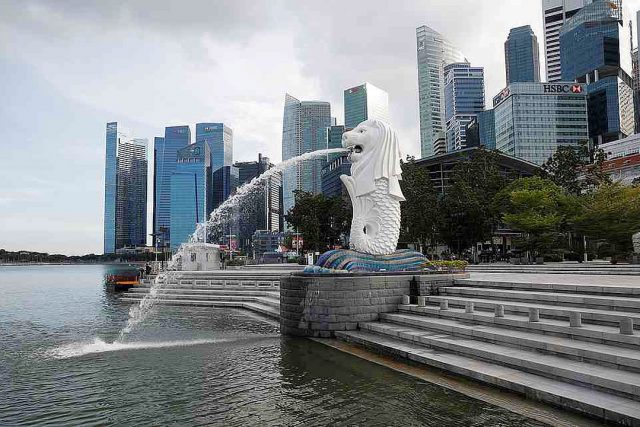
SINGAPORE — An oil spill off southern Singapore has spread to other areas of the island’s coast and is threatening a marine reserve, government agencies said, adding that authorities were intensifying efforts to mop up the fuel.

The oil spilled into Singaporean waters after a Netherlands-flagged dredger struck a stationary Singapore-flagged bunker vessel on Friday afternoon in the southern port of Pasir Panjang.

Authorities had said the vessel was no longer leaking oil, but added in a statement late on Saturday that “due to the tidal current, the treated oil has landed along shorelines including Sentosa, Labrador Nature Reserve, Southern Islands, Marina South Pier, and East Coast Park”.

An oil sheen was also seen in the waters surrounding Sister’s Islands Marine Park, a 400,000 square meter marine protected area, the statement added.

Singapore is a global shipping and fuel bunkering hub. The environmental impact of the oil spill remains unclear, but local newspaper The Straits Times reported that fishermen were on alert for a spike in the number of fish deaths over the next few days. — Reuters

IBPAP honors IT-BPM companies at Solaia 2024

photo by Almira Louise S. Martinez

Various Information Technology and Business Process Management (IT-BPM) companies received recognition last Friday in Solaia: The IT-BPM Awards 2024 held during the 20th year celebration of the Information Technology and Business Process Association of the Philippines (IBPAP). 

“This inaugural awards event highlights their innovative initiatives, resilience, and contributions to industry advancement,” IBPAP stated in their press release. 

Staged at the awards night, Synchrony Global Services Philippines, Inc. reigned first, followed by Cisco and Accenture in the 2024 Great Place to Work for IT-BPM category. Other companies that made it to the list were Atlassian, Via Appia Philippines, Inc., TaskUs, Teleperformance, Capital One Philippines, 3M GSC Philippines, and DXC Technology Philippines. 

Aside from ranking third in the great workplaces, Accenture bagged two more awards – Innovative Program of the Year and BPM Company of the Year in the event.  

“As a talent-led organization, Accenture puts people first. We embrace diversity as a source of innovation, creativity, and competitive advantage,” the IT company mentioned on its website. 

The Innovative Program of the Year recipient was a company that offered “groundbreaking” service, accelerating the benefits for the organization, stakeholders, employees, and customers. Meanwhile, the BPM Company of the Year was awarded to a company with significant improvement in customer satisfaction and experiences, going beyond the conventional cost-saving paradigm. 

International Business Machines Corporation (IBM) also won in the Technology Company of the Year category due to its commitment to pioneering technologies and spearheading innovative and tech-driven services to enhance customer satisfaction and experiences.   

“IBM’s dedication to putting clients first continues to be the driving force behind its success,” the tech company stated in their press release last February as they received another acknowledgment from G2’s 2024 Best Software Awards. 

Other awardees at the event are:  

  • SME of the Year – Multisys 
  • Company for Regional Development – Foundever
  • Global Capability Center of the Year – JP Morgan 


Outstanding LGUs and Luminary of the Year 

Apart from companies, notable government officials were commended as well for their contributions to the said industry.  

Applauded for his remarkable contributions to the IT-BPM industry in the country, the Special Assistant to the President for Investment and Economic Affairs Frederick Go became the first IT-BPM Luminary awardee.  

According to IBPAP, a visionary with a track record and insight that positively impacted the IT-BPM ecosystem, and the Philippine economy is given this award.   

“My professional growth is very much linked to the BPM industry. Nearly 25 years ago, I probably built one of the earliest BPO buildings and took quite a number of BPO companies nationwide,” Mr. Go shared as he reflected on his career journey in his acceptance speech. 

He added that throughout the years, the IT-BPM industry has been one of the strongest pillars that contributes to the country’s economy. 

Quezon City and Iloilo City Local Government Units (LGU) were recognized too for their efforts in facilitating ease of doing business and attracting IT-BPM investments in their respective communities.  

“This award recognizes an LGU that consistently partners with the IT-BPM industry and IBPAP, implementing policies and creating an environment conducive to industry growth,” the host organization elaborated. 

To cap off the night, IBPAP President Jack Madrid asserted that the IT-BPM industry in the country aims to reach 1.9 million full-time employees by 2026 and over $40 billion in export revenues. 

“As we look ahead into the next few decades, let us expect more change and more challenges,” Mr. Madrid said.Almira Louise S. Martinez

GCash launches new partnership with Meridian, allowing transfers from over 12,000 US banks to GCash accounts

GCash set up booths parallel to the festivities at the city of Carson, California, where attendees learned more about the app's seamless fintech solutions and its recent partnership with Meridian.

From US to Dubai, GCash and Filipino Communities come together to celebrate PHL Independence Day 

GCash, the Philippines’ leading finance app and largest cashless ecosystem, brought the spirit of Filipino independence to overseas Filipino communities this June. From the vibrant streets of New York City to the sun-kissed shores of California and the cosmopolitan hub of Dubai, GCash joined hands with Filipino communities to celebrate our cultural heritage and foster stronger ties with the homeland.

GCash took part in Independence Day commemorations in New York City, California, and Dubai, where it shared important new features that aim to make digital financial services more accessible to and even better for Filipinos living and working outside of the Philippines.

“At GCash, when we say that ‘Finance for All’ is our vision, it means we are driven to go beyond the Philippines and reach as many Filipinos as we can around the globe,” said Paul Albano, General Manager of GCash International. “We are honored to join our community in this distinctly Filipino celebration, and we’re eager to share all the ways GCash has been continuously innovating and enhancing our services to meet the needs of our kababayan overseas.”

GCash International General Manager Paul Albano reiterates that through this expansion, Filipinos overseas are able to take better control of their finances, and sending money back home is now more convenient.

As GCash continues to expand its reach, Filipinos worldwide can look forward to more responsive services, greater financial empowerment, and connectivity—thus bridging the gap between continents and reinforcing the bonds of community and culture.

Filipino community coast-to-coast celebrate Independence Day with GCash

The US leg of this year’s Philippine Independence Day commemorations included the grand Independence Day Parade in New York—the largest outside of the Philippines—held on June 2, 2024. The Philippine Independence Day Council, Inc. (PIDCI), a nonprofit umbrella organization of Filipino-American associations along the East Coast, hosted the event. Now in its 34th year, the parade has grown to become an annual celebration of Filipino culture, the strengthening of familial and community ties, and the joyful display of Filipino pride.

Cementing its position as the seamless fintech solution for Filipinos overseas, GCash participated in the Grand Independence Day Parade hosted by the Philippine Independence Day Council, Inc. (PIDCI).

At the NYC booth set up during a street fair parallel to the Independence Day parade, GCash featured partnerships with financial institutions like Meridian—effectively synergizing US-based financial services and the mobile wallet that has become a staple across the Philippines.

On June 8, over on the West Coast, the city of Carson in California came alive with whole-day festivities for its own Independence Day celebrations. The community event held at Veterans Park featured booths, a parade, and cultural presentations—all showcasing Filipino culture, past and present, as well as the joys of coming together with family and friends.

At the Carson commemoration, GCash also set up booths to share with members of the Filipino community the latest exciting updates about GCash, its international expansion, and its position as a seamless digital financial solution for Filipinos overseas. Foremost is the news that the app is now available for download in the US using a US mobile phone number. Cashing in and sending money is also now made easier and more convenient through direct cash-ins from more than 12,000 US banks to GCash accounts.

GCash and Meridian enable transfers from 12,000 US banks to GCash peso accounts

GCash’s partnership with Meridian, an instant payments technology company headquartered in New York City, has enabled the direct in-app transfer of US-based user funds from over 12,000 US banks to GCash accounts. Upon cash-in, the service automatically converts dollar amounts into Philippine pesos with competitive ForEx rates. Cash-ins come with a $1 fee per transaction.

“At GCash, we want to help with the most important thing for our countrymen abroad: how they can care for their families and maintain connections with their loved ones despite the distance,” Albano said. “With GCash’s international expansion, this is exactly what we are doing. We’re making it possible for Filipinos overseas to take better control of their finances, and sending money to the Philippines is more convenient with our competitive rates.”

GCash joins Dubai migrant workers in celebrating PH-UAE relations  

Across the globe, in Dubai, the Filipino community gathered at the 126th Kalayaan 2024 celebration held at the Dubai World Trade Center. The event, which featured cultural presentations and tributes to Filipino traditions, celebrated the continuous contributions of overseas Filipinos toward nation-building efforts across two countries. It also honored the 50 years of diplomatic relations between the United Arab Emirates and the Philippines.

GCash in Dubai: GCash took center stage, showcasing its latest innovations and international expansion efforts, to the Filipino community who gathered at the 126th Kalayaan 2024 celebration held at the Dubai World Trade Center. (From L-R surrounded by GCash brand ambassadors in white): Kai Torreflores, Dubai-based Influencer from Studio 10LR, Head of GCash Overseas Acquisition Adrian Galang, GCash Head of Marketing Communications Kim Viray, GCash International General Manager Paul Albano, Head of GCash International Products Jules Abalos, and Head of GCash Customer Onboarding Raz Garrido.

During the event’s bazaar, GCash showcased its global expansion efforts to Filipinos who have made a second home in the UAE. It shared latest innovations that aim to empower overseas Filipino workers by giving them more control of their finances alongside the ability to support their families back in the Philippines—all through a convenient and reliable access to financial services by way of the GCash app.

GCash International expansion to reach millions of overseas Filipinos

GCash announced in March that it has expanded its international reach and fully launched its global push following approval from the Bangko Sentral ng Pilipinas. Filipinos in 14 territories—the US, Canada, Italy, the UK, Australia, Japan, the United Arab Emirates, Qatar, South Korea, Taiwan, Hong Kong, Spain, Germany, and Singapore—can now use international mobile numbers to sign up for and use the GCash app. Kuwait and Saudi Arabia will follow suit in the next half of 2024.

With its expansion outside of the Philippines, GCash is able to serve and empower more Filipinos, wherever they may be based. In addition to free, real-time money transfers between GCash wallets for convenient access to funds, as well as the ability to buy load for loved ones back home, GCash users abroad can now directly pay their bills—ranging from utilities and tuition fees to government payables like taxes and contributions—from more than 1,900 Philippine billers.

To access GCash outside the Philippines, simply download the GCash app on Google Play, App Store, or Huawei AppGallery with an active international SIM card. On the app, select the country, type in your mobile number, and fill out important personal information to register; residency requirements may apply. Next, set your MPIN then proceed to log in. Prepare your valid ID, like your Philippine passport, for scanning to verify your account. Afterward, complete the facial verification via a selfie and provide additional information, then wait for the SMS confirmation. After receiving the confirmation, you can now enter your MPIN and use the app.


Spotlight is BusinessWorld’s sponsored section that allows advertisers to amplify their brand and connect with BusinessWorld’s audience by publishing their stories on the BusinessWorld Web site. For more information, send an email to online@bworldonline.com.

Join us on Viber at https://bit.ly/3hv6bLA to get more updates and subscribe to BusinessWorld’s titles and get exclusive content through www.bworld-x.com.

The Philippines looks up to Estonia’s best practices as first foray into online voting for OFWs set in 2025

The Philippines is eyeing to duplicate the success of online voting in the European country of Estonia in line with the goal of the Commission on Elections (Comelec) to make it easier for Filipinos living and working abroad to cast their votes in next year’s midterm election.

In a recent forum held at the Rappler office in Pasig where Comelec demonstrated the automated counting machines (ACMs), Chairman George Erwin Garcia of the Comelec assured the public that online voting will be introduced in 2025, a move that is set to revolutionize the voting process for millions of overseas Filipino workers (OFWs).

Garcia said the initiative aims to make voting more accessible and convenient for Filipinos living abroad, significantly pushing forward the country’s democratic process. He noted that if successful, the Comelec could extend online voting to senior citizens, persons with disabilities, and pregnant women in the Philippines, thereby increasing democratic participation.

To leave no stone unturned in ensuring the success of the new voting method, Garcia announced that Comelec officials were sent to Estonia to benchmark the Baltic country’s trailblazing online voting system.

“[A] commissioner and the head of the Information Technology Department left for Estonia, the first country in the world to implement voting. We want to learn how they secured and protected the votes of their citizens using internet voting. Of course, it’s best to get ideas from other countries that have already successfully used the technology,” Garcia said.

Estonia has been offering internet voting to all its citizens since 2005, with 41% opting for this method in the recent European Parliament elections. The Estonian model features a seven-day online voting period while maintaining the option for in-person voting, ensuring flexibility and convenience.

The system, designed from the ground up to complement traditional voting, discourages coercion and vote-buying by allowing multiple online votes, with only the final vote counting. This ingenious feature, along with the rule that in-person votes overrule electronic ones, allows for greater election integrity.

Estonia’s system, initially developed by Estonian tech company Cybernetica and upgraded in 2014 with the help of international election company Smartmatic, has been providing a secure and effective online voting system to other countries like Norway, Germany, Canada, and Chile.

The introduction of the Automated Election System in 2010 has resulted in dramatic improvements in speed, accuracy, and security in the country’s electoral process. Observers see online voting as the next level in this evolution, promising to give a voice to the sizable Filipino diaspora, whose economic contributions hit a record high of US$36.14 billion in 2022.


Spotlight is BusinessWorld’s sponsored section that allows advertisers to amplify their brand and connect with BusinessWorld’s audience by publishing their stories on the BusinessWorld Web site. For more information, send an email to online@bworldonline.com.

Join us on Viber at https://bit.ly/3hv6bLA to get more updates and subscribe to BusinessWorld’s titles and get exclusive content through www.bworld-x.com.

Celebrating diversity and pride: TikTok’s vibrant LGBTQIA+ community

TikTok has become a vibrant and inclusive space where Filipinos from all walks of life find empowerment and community. Through its platform, TikTok aims to enable authentic self-expression while ensuring that it remains a safe and positive space. This Pride Month, TikTok celebrates and uplifts the voices of queer creators who inspire and advocate for a more inclusive world through the hashtags #ForYourPride and #YouBelongHere.

From entertaining makeup transformations to heartfelt discussions on embracing authenticity, these queer creators are leveraging TikTok to champion inclusivity and pride. With each video, they redefine visibility and celebration, fostering a more inclusive digital landscape. Ready for a rainbow-infused TikTok experience? Check this list of creators who are sure to fill your feed with fabulous and inclusive content.

Marina Summers

Marina Summers’ journey from TV and advertising producer to drag queen extraordinaire is a testament to the power of self-expression and resilience. Having graced the stages of Drag Race Philippines and captivated audiences on RuPaul’s Drag Race: UK vs. the World, Marina’s ascent to fame inspires members of the LGBTQIA+ community seeking to unleash their creativity and authenticity.

“TikTok gave me my first million views and viral moments,” Marina shares. “It helped in cementing the idea of Marina Summers, especially the brand online. It democratizes creativity and inspires the whole world to discover their artistic expression.”

Through TikTok, Marina showcases her glamorous performances and infuses them with meme-worthy comedy content. For her, TikTok represents a platform that empowers queer Filipinos and provides them with bigger stages to shine on. “It proves that not only are we worthy of the spotlight, but we are also admired,” Marina proudly asserts.

@marinaxsummers PROUDLY CREATING MAGIC 🪄 Tapping into different creative outlets and styles has totally leveled up my game on stage and in life! 💃 Show off your pride and let’s create together! 🏳️‍🌈 #ForYourPride @TikTok Philippines ♬ original sound – Marina Summers

Eva LeQueen

From the stiff corporate life to the dazzling world of drag, Eva Le Queen’s transformation is undoubtedly one for the books. The competitive contestant of the inaugural season of Drag Race Philippines was a former Overseas Filipino Worker in Singapore before she boldly pursued her passion for drag. Remarkably, within four months of her drag debut, Eva clinched the first runner-up title at Singapore’s Drag It Out All-Stars competition, showcasing her rapid ascent and innate talent.

“During the pandemic, the world of drag queens closed down,” Eva recalls. “We started #KeepDragAlive and brought drag online through TikTok. It provided access to many talented individuals who wanted to explore drag.”

TikTok offered a platform for Eva to share tutorials and transformation videos and facilitated the growth of the drag community in the Philippines. “TikTok provided access to all queens, all kids who wanted to take part in the art form,” Eva emphasizes. “It’s high time to do drag in the PH, and TikTok has been instrumental in bridging that gap.”

@evalequeen Happy PRIDE! 🏳️‍🌈🏳️‍⚧️ True PRIDE is in knowing that you are capable and worthy of living your best life! Let’s be our own Queens / Kings together! #ForYourPride ♬ original sound – Eva Le Queen

Paul Sumayao of Barbierro

In the Philippines, traditional gender norms have long determined the acceptable spaces for haircuts: salons for women and barbershops for men. Unfortunately, this binary system has left many in the trans and queer community feeling uncomfortable, unwelcome, and uncertain.

Paul Sumayao believes that “Ang buhok ay walang kasarian” (Hair has no gender). He advocates for self-expression through style, affirming that everyone deserves a hairstyle that makes them feel their best. Consequently, he co-founded Barbierro, the Philippines’ pioneering queer barbershop, with a mission to create safe spaces for the queer community through superior grooming services. TikTok played a pivotal role in amplifying his message and connecting with a wider audience.

“Through TikTok, we found out that many of our transmen and lesbian brothers and sisters felt ostracized during haircuts,” Paul shares. “TikTok helped us hear their stories and provided a platform to engage with them.”

For Paul, Barbierro Barbershop represents more than just a business—it’s a legacy of acceptance and empowerment. “Establishing a safe space called Barbierro Barbershop is our way of leaving something behind for young queer kids everywhere,” Paul affirms. “And with TikTok’s support, we can reach even more people and let them know that #YouBelongHere.”

@barbierrobarbershop And Just Like Thatsss: it’s PRIDE Month! ✨️🏳️‍🌈🏳️‍⚧️ Our co-founder @paulsumayao shares with @tiktokphilippines why and how Tiktok paved the way for conversations around safe spaces, hair, and inclusion through #BarbierroBarbershop . 💈 Pride isn’t a party. It was and still is a way of claiming our space/s in this world. And remember: #YouBelongHere . #ForYourPride #TiktokPhilippines #fyp #fyppppppppppppppppppppppp ♬ original sound – @barbierrobarbershop on IG – Barbierro Barbershop

Roanne and Tina

Roanne and Tina, the dynamic duo behind Queer Safe Spaces Inc., have been vocal advocates for love, acceptance, and inclusivity. Their journey on TikTok has been a testament to the platform’s ability to amplify marginalized voices and spark meaningful conversations. “Thanks to TikTok, we feel heard and seen,” Roanne expresses. “It served as an entry point for our partnership with TikTok Philippines, leading to initiatives like the Queer Prom co-presented by TikTok.”

Having faced their share of struggles as a queer couple, Tina and Roanne empathize with the challenges encountered by fellow LGBTQIA+ individuals. This empathy led them to establish Queer Safe Spaces Inc., which is dedicated to fostering a supportive environment for the Filipino LGBTQIA+ community and their allies.

Their partnership with TikTok Philippines has enabled them to reach a wider audience and advocate for LGBTQIA+ rights more effectively. Through creative campaigns and collaborations, they’ve amplified their message of love and acceptance, paving the way for transformative initiatives like the Queer Prom: You Belong Here, a fundraising effort to establish a physical safe space center for the Filipino LGBTQIA+ community.

“We hope that through initiatives like the Queer Prom, we can provide a physical institution that addresses the diverse needs of our community,” Tina explains. “Because everyone deserves to feel validated and loved, and TikTok has been instrumental in amplifying that message.”

@roanneandtina LOVE IS LOVE 🏳️‍🌈 Here’s to queer representation and visibility! 🥹 This year marks our fourth year working with @TikTok Philippines for their Pride initiatives. Together, let’s build a more inclusive world — one queer safe space at a time. @Queer Safe Spaces® #ForYourPride #QueerSafeSpaces #YouBelongHere #QueerPromPH ♬ original sound 🏳️‍🌈💍 – Roanne and Tina


Spotlight is BusinessWorld’s sponsored section that allows advertisers to amplify their brand and connect with BusinessWorld’s audience by publishing their stories on the BusinessWorld Web site. For more information, send an email to online@bworldonline.com.

Join us on Viber at https://bit.ly/3hv6bLA to get more updates and subscribe to BusinessWorld’s titles and get exclusive content through www.bworld-x.com.

Philippine central bank revises 2024 current account deficit projection

BW FILE PHOTO

MANILA – The Philippine central bank said on Friday it expects the current account deficit to be smaller than previously forecast in 2024 and 2025, due to a narrowing trade gap and sustained dollar flows from overseas Filipinos and the outsourcing sector.

The current account deficit for 2024 is now forecast at $4.7 billion, equal to 1.0% of gross domestic product (GDP), from the previous projection of a $6.1 billion gap, or 1.3% of GDP, the Bangko Sentral ng Pilipinas (BSP) said.

For 2025, the current account deficit is seen at $2 billion, or 0.4% of GDP, compared with an earlier estimate of a $5.8 billion deficit, equivalent to 1.1% of GDP.

The central bank expects a balance of payments (BOP) surplus of $1.6 billion, or 0.3% of GDP for 2024, larger than its previous forecast of a $700 million surplus, or 0.1% of GDP.

For 2025, the BOP is now seen posting a surplus of $1.5 billion, or 0.3% of GDP, a marked turnaround from a previous forecast of a deficit of $0.5 billion, or 0.1% of GDP.

The BSP said a pick-up in global economic activity, easing domestic inflation and forecast growth of 3% in remittances from overseas Filipino remittances were factors in revised forecasts.

Remittances from millions of Filipinos living and working abroad will help the Southeast Asian nation record end-2024 gross international reserves of $104 billion in 2024 and $105 billion in 2025, the central bank said. — Reuters

Game changer: extreme heat stifles women’s sports in Pakistan

 – Pakistani student Aqsa Shabbir is hot, tired and frustrated. A keen field hockey player, she can no longer train during the day because of a brutal heatwave, she can’t sleep at night and she fears she will not play well in a tournament at the end of June.

The 17-year-old, who lives in Jacobabad in the southern Sindh province, already had to overcome many obstacles – like many girls who live in Pakistan’s smaller cities where exercising in public is frowned upon – and the heatwave is making things harder.

Two years ago, Jacobabad was named the hottest city on earth after temperatures reached 51 degrees Celsius (124 Fahrenheit). This year, as a heatwave seared southeast Asia, temperatures shot up to 52 degrees Celsius (126 Fahrenheit) in May.

“We cannot keep waiting for the weather to get better – it won’t,” Shabbir told the Thomson Reuters Foundation by phone from Jacobabad.

Rising temperatures are one more barrier for women and girls who want to stay active in a country where there are few training spaces available to them, apart from private sports clubs reserved for the wealthy.

A 2022 study found that the main obstacles to participating in sport in the Muslim-majority country are “religious and cultural limitations, a lack of permission from parents, and a lack of sports facilities and equipment”.

Now add extreme heat, linked to climate change, to the list.

Shabbir is a member of the Star Women’s Sports Academy in Jacobabad, the only women’s sports club in the city of nearly 300,000 people. The girls have started training later in the day in a bid to beat the heat but parents are unhappy with their daughters returning home late on their own.

And there is little rest at night either. Shabbir says the one air conditioner her family has invested in provides “little comfort” because of frequent power cuts. The long days and nights are affecting her performance.

“I am not playing my best,” she said.

Haseena Soomro, who plays hockey at the same club, is equally frustrated.

“Of course the heat impacts our game,” the 19-year-old said. “The heat makes you sluggish, and this game is defined by speed.”


‘LONG AND UNBEARABLE’ SUMMER

Sport has long been an often unaffordable luxury for girls from low-income households in Pakistan. It costs money to get to the few sports clubs available and even eating well is costly.

Some sports clubs try to help out with expenses but Erum Baloch, who founded the club in Jacobabad where Shabbir and Soomro play, says that can also be difficult.

And now she is also grappling with the challenge of training her team on outdoor pitches during what she calls the “long and unbearable” summers.

The situation is complicated by the fact that the women wear long clothing when training. Even though Baloch’s club is in a women’s government college, the girls she coaches are uncomfortable swapping shalwar kameez for jogging pants, never mind cooler shorts.

“Families don’t like them wearing pants … shorts is too far-fetched a concept,” said Baloch. “Until society is ready, we need to concentrate on (making) sports for women acceptable instead of letting a dress come in our way.”

Farwa Batool, from Khairpur city in Sindh, wears long sleeves beneath her T-shirt to cover her arms and also wears a hijab when she plays field hockey.

“You cannot imagine the heat we bear,” she said, adding that she envies the men who can wear just shorts and T-shirts. She gets up at 5.45 am to train at the mixed gender club, hoping no men will be around.

“If we could have women-only grounds, or women timings are introduced with men strictly not allowed, we too can be free of yards of cumbersome clothing.”

In Jacobabad, Baloch is hoping to get financing from the government or a sponsor to pay for an indoor facility with air conditioning.


UNSUSTAINABLE EXPENSES

Zamzam Allahbuksh said she pays out of pocket to top up water and ice supplies at the women’s sports club she runs in Mirpurkhas, 230 km (143 miles) east of Pakistan’s largest city Karachi.

“I don’t want them catching a heatstroke,” she said.

To manage costs, she has introduced games like football and volleyball because she does not have enough equipment for everyone to play cricket or field hockey.

“At least with one football or one volleyball, quite a few girls can play a sport,” she said.

Baloch, too, arranges for drinking water every day for her 43 field hockey players along with oral rehydration solutions but this is not sustainable.

“I don’t know how long I can carry on doing this,” she said. “We cannot train girls on an ad hoc basis – there needs to be a continuous and full government support for them, if they want to play their best.”

As heat threatens the viability of the few facilities available to women and girls, Baloch said she hopes they don’t lose out on the opportunities sports can provide.

Some of the athletes Baloch has coached went on to attend university on sports scholarships.

Bushra Arif, a former field hockey player, is keenly aware of what sport offers girls in her country.

“Sports teach lifelong values like endurance, teamwork, confidence, overcoming challenges,” said Arif, now the director of physical education at Khursheed Begum Girls Degree College in Hyderabad in Sindh.

Despite all the challenges, Shabbir is trying to look on the bright side ahead of her important tournament in the neighboring Sukkur district.

“Who knows, we may outdo other teams from other cities with relatively lower temperatures, being more acclimatized to this extreme heat.” – Reuters

Collabera Digital announces CONVERGENCE 2024

‘Creative Minds. Generative Algorithms.’

Following the success of last year’s CONVERGENCE event in The Philippines, Collabera Digital, a leading provider in digital engineering solutions, is excited to announce the return of their CIO summit.

CONVERGENCE 2024, themed ‘Creative Minds. Generative Algorithms,’ will be held on June 20, 2024, at Shangri-La The Fort Manila, BGC.

Convergence 2024 will bring together CIOs, CTOs, and C-level executives from leading companies, providing a platform for collaboration, networking, and exchange of groundbreaking ideas.

Kaushik Sarkar, president of Collabera Digital, said, “At Collabera Digital, we believe that the fusion of human creativity and generative algorithms will shape the future of digital innovation. We are excited to bring together business leaders from across organizations & industries to explore the evolving relationship between humans and AI, and the strategies that propel our business innovation & transformation.”

Esteemed business news correspondent Mimi Ong will once again host the event, bringing her insightful and engaging presence to the summit. Attendees can look forward to keynote & panel discussions from industry thought leaders.

“We are excited to bring CONVERGENCE, the Collabera Digital CIO Summit, back to Manila, building on last year’s success. This year promises an even more dynamic experience, with thought-provoking discussions on AI adoption, innovative financial services, and the transformation of global captive centers into innovation hubs. Our interactive experience zones, in partnership with leading technology providers, will offer participants an unparalleled opportunity to engage with cutting-edge solutions. We look forward to hosting CONVERGENCE 2024, connecting, learning, and leading the digital transformation journey for our customers,” said Manan Mehta, senior vice-president & country head, Collabera Digital Philippines.

About Collabera Digital:

Collabera Digital is a new age digital engineering company delivering unique experiences, actionable insights, and intelligent products & platforms at the intersection of talent & technology.  We are at the forefront of innovation, blending human creativity with smart technologies to drive transformative solutions. Our client-first and highly collaborative approach enables organizations to accelerate their digital journeys with efficiency and velocity at scale.

Since our inception in 2010, Collabera Digital has soared to unparalleled heights. With a global presence spanning 11 countries throughout APAC and Europe, our network of over 25 offices serves as the epicenter of digital innovation. We proudly cater to a prestigious clientele, counting Fortune 500 companies amongst our 300+ esteemed clients.

For more information, visit www.collaberadigital.com.


Spotlight is BusinessWorld’s sponsored section that allows advertisers to amplify their brand and connect with BusinessWorld’s audience by publishing their stories on the BusinessWorld Web site. For more information, send an email to online@bworldonline.com.

Join us on Viber at https://bit.ly/3hv6bLA to get more updates and subscribe to BusinessWorld’s titles and get exclusive content through www.bworld-x.com.

The Travel Club+ hosts exclusive “First Class: Exploring the World Through Wine” event

Imagine being whisked away to a dream getaway in Italy simply by sipping on a glass of crisp and fruity Prosecco.

That’s exactly the bespoke experience that The Travel Club+’s loyal customers and special guests enjoyed at “First Class: Exploring the World Through Wine,” an intimate and exclusive wine-tasting event held at its flagship branch at Shangri-La Plaza last May 31, 2024, in partnership with Elevaj Wine Experts.

Exploring Old and New World Wine Destinations

Oly Ruiz, a Wine and Spirit Education Trust (WSET) Level 3 expert, and host Jackie Go, with a WSET 2 certification from Elevaj Wine Experts, led the journey through the art of wine in popular regions like Italy, France, and the USA — where Napa Valley is home.

The wine-tasting journey started in the Old World, with the guests’ glasses being filled with Prosecco, followed by some savory Chianti, an incredible wine that pairs perfectly with food. France was the next stop, with a glass of the vibrant Provence Rosé, a crowd-favorite, followed by the sweet and dessert-friendly Monbazillac. Guests also enjoyed New World wines such as the versatile Chardonnay and the full-bodied Cabernet Sauvignon.

Ruiz shared a useful tip on wine pairings, saying that the best food to pair with the wine of your destination is usually also the area’s local cuisine. If you’re looking to embark on a culinary journey of your own, Ruiz also encourages including cities known for producing wine in your travel itineraries as a unique way to immerse with the local culture.

Luggage from the same origins as the wines were also showcased to the guests, making them the perfect partners for culinary travel. Italian brand Piquadro highlighted its lightweight PQ Lite luggage, card case wallets and other leather goods with palpable Italian craftsmanship. To represent France, sophisticated and stylish travel essentials from Delsey Paris were also featured. For those seeking innovation and durability, Briggs & Riley from the United States was presented as the perfect travel companion.

Let Taste Guide Your Travels

One of the guests, Camille Gutierrez, shared that the experience gave her a deeper appreciation for wine. “This event was so informative and packed with learning,” she said.

“You have to find that particular wine made in that specific region or country to appreciate it more and immerse yourself in the local culture,” added event host Jackie Go.

So, uncork your curiosity and plan your next trip with a newfound appreciation for the perfect travel companion — a well-paired glass of wine!

This event is co-presented by Briggs & Riley, Delsey Paris, Piquadro, and Primer Group of Companies, in partnership with Elevaj Wine Experts.

Special thanks to our sponsors: Styling by Neve, Travel Blue, and Grazing Box MNL.

For all things travel, follow The Travel Club on social media: @thetravelclubph and @thetravelclubplus! For all your travel must-haves, visit www.thetravelclub.ph.


Spotlight is BusinessWorld’s sponsored section that allows advertisers to amplify their brand and connect with BusinessWorld’s audience by publishing their stories on the BusinessWorld Web site. For more information, send an email to online@bworldonline.com.

Join us on Viber at https://bit.ly/3hv6bLA to get more updates and subscribe to BusinessWorld’s titles and get exclusive content through www.bworld-x.com.

High shipping costs dent Vietnam’s rice prices

Workers load sacks of flour in a delivery truck in Manila, July 11, 2022. — PHILIPPINE STAR/ MIGUEL DE GUZMAN

Rice export prices from Vietnam this week dipped slightly on rising shipping costs, while prices of rice exported from other major Asian hubs held steady.

Vietnam’s 5% broken rice prices were offered at $570-$575 per metric ton on Thursday, down from a range of $575-$580 a week ago, traders said.

Rising shipping cost, both domestically and internationally, is impacting rice shipments, a trader based in Ho Chi Minh City said, without elaborating.

Another trader in the city said the Philippines’ move to lower its import tariff on rice will boost shipments of Vietnamese rice. For years, the Philippines has been Vietnam’s largest rice export market.

Vietnam’s rice exports in May fell 14.6% from April to 856,000 tons, according to the government’s customs data. For the first five months of this year, the country’s rice exports rose 11.2% from a year earlier to 4.02 million tons.

Top exporter India’s 5% broken parboiled variety was quoted at $539-$546 per ton this week, unchanged from the last week.

“African buyers are continuously making purchases. The depreciation of the rupee is allowing exporters to absorb rising local prices because of falling supplies,” a Mumbai-based trader said.

Thailand’s 5% broken rice was quoted at $630 per ton, unchanged from last week.

Demand continues to come in from regular customers in Indonesia and the Philippines, said a Bangkok-based trader, adding that new demand and additional crops would come in July.

Meanwhile, Bangladesh plans to import 400,000 tons of rice in 2024 as the government struggles to control staple grain prices for the nation, food secretary Ismail Hossain said. — Reuters

India’s opposition leveraged caste and constitution to shock Modi in election

REUTERS

 – A seminal moment in Prime Minister Narendra Modi’s unsuccessful campaign to retain his parliamentary majority occurred days before India’s marathon election began in April.

Speaking in the constituency that includes the Hindu temple town of Ayodhya, lawmaker Lallu Singh said that his and Modi’s Bharatiya Janata Party (BJP) was seeking a supermajority in parliament’s lower chamber to make material changes to the constitution.

Opposition parties latched onto Singh’s remark to assert, without evidence, that the BJP would amend modern India’s founding document to strip Hindus at the bottom of the caste hierarchy of access to affirmative action policies.

The attack line hit a nerve – splitting the Hindu vote and ending the BJP’s decade-long dominance in the country’s most populous state.

Opinion polls had pointed to a landslide in Ayodhya’s home state of Uttar Pradesh and nationally but when results came through on June 4, the BJP had lost 29 seats in the state – nearly half of all the party’s losses nationwide.

“It hit the people like fire,” said Awadhesh Prasad of the opposition Samajwadi Party (SP), whose base comprises Muslim and lower-caste voters in Uttar Pradesh. He successfully wrested the constituency anchored by Ayodhya from Singh, who had held it since 2014.

Despite the BJP’s best efforts to debunk the emerging narrative, the damage was done.

“The prime minister and other leaders tried to explain to the people, but by then their mood was set,” said Dileep Patel, a state BJP official in Varanasi. Singh declined to comment.

Reuters interviewed 29 party leaders and workers from the BJP and rival parties, four analysts and 50 voters for this story. They described how lower caste concerns about affirmative action, along with a shortage of jobs, and complacent BJP activists combined to tip the scales in Uttar Pradesh, which sends the most lawmakers to parliament.

After a decade of electoral near-invincibility that combined economic success with a narrative of Hindu supremacy, Modi’s party was reduced to 240 seats nationwide. He was able to form a third government only with the help of allies, some of whom have a reputation for political fickleness.

It was a reminder that BJP cannot take Hindu votes for granted.


THE SUPERMAJORITY CALL

Ayodhya was supposed to be the safest of seats.

In January, Modi inaugurated a grand temple there to the deity Lord Ram in a ceremony that sparked national euphoria. It also fulfilled a decades’ long pledge used by the BJP to rise from India’s political margins into a major force.

Singh’s speech made no mention of taking benefits from lower castes and Modi’s aides have frequently downplayed concerns about changes to the constitution, which guarantees school and government job quotas to historically disadvantaged castes and tribal groups, both still among India’s poorest.

But it quickly spread on social media, fueling an opposition campaign.

SP chief Akhilesh Yadav wrote on social media that the BJP wanted to end the quota system and keep underprivileged segments of society “as their slaves.”

At election rallies, Yadav’s ally and the opposition’s main figurehead, Rahul Gandhi of the Congress party, began whipping out a pocket-sized copy of the constitution, warning it was under threat.

The message was echoed in media advertisements and by the regional party’s workers in Uttar Pradesh, which a SP spokesperson described as 600,000 strong.

India’s castes have co-existed uneasily with each other for millennia.

The BJP was long considered a bastion of upper-caste Hindus, but Modi, who belongs to a lower caste, had previously made inroads with marginalized groups, according to analysis by the Delhi-based Centre for the Study of Developing Societies (CSDS).

He has sought to unite Hindus by shifting focus from traditional notions of caste, instead putting the spotlight on the poor, youths, farmers and women – which he calls the four biggest castes in modern India. In power, Modi successively backed a man from a lower caste and a woman from a tribal group for India’s largely symbolic presidency.

A relatively united Hindu vote in the last two national elections allowed the BJP to sideline India’s nearly 200 million Muslims and overcome longstanding concerns around unemployment, inflation and rural distress.

Sandeep Shastri, coordinator of a program on Indian elections at CSDS said the number of people voting primarily on Hindu ideology appeared to have plateaued in 2019.

This year, BJP won just 54 of the 131 seats reserved for candidates from underprivileged groups, down from 77 in 2019. It won eight of the 17 reserved seats in Uttar Pradesh, compared to 14 the last time.

Dharmendra Yadav, a 30-year-old in Varanasi constituency who comes from a lower caste, said he believed the BJP “would have ended the reservations.”

“When the opposition raised the issue of the constitution, it just verified it for us,” said Dharmendra, whose surname indicates a caste affiliation with the SP’s Akhilesh, who he is not related to.

Dharmendra previously backed the BJP but went for the opposition this year.

“Caste politics still has a major influence in the Hindi belt,” state BJP official Patel said, referring to states across central India that have been BJP’s stronghold since 2014.


WHERE ARE THE JOBS?

Surveys suggest Mr. Modi remains the world’s most popular elected leader.

But this year, Mr. Modi’s personal majority in his seat, centered around the holy city of Varanasi, shrank by more than 300,000. He retained his constituency with the lowest margin of any sitting premier in over three decades.

“The BJP heavily relied on the prime minister’s leadership to … win votes and also maybe to camouflage problems that people are facing,” said researcher Shastri.

Among those problems is a lack of jobs created over the past decade.

Young voters like Mr. Dharmendra had backed BJP in a landslide in 2014, when Modi promised to create 20 million jobs a year nationwide. The pledge has not been fulfilled.

Mr. Dharmendra said he had taken numerous exams for white-collar government jobs, highly prized for their security and benefits. In February, nearly 4.6 million people applied for 60,000 constable vacancies in Uttar Pradesh, only to have the BJP-run state government cancel the exam after the test was leaked online.

Banaras Hindu University political science professor Ashok Upadhyay said the exam leak, which was not the first and was repeated in March, gave young Indians, who have grown up in an increasingly unequal country, a sense that the job selection process was unfair.

Adding to the BJP’s electoral missteps, some voters and BJP leaders said the party faltered because they had assumed another landslide victory and were dismissive of issues that were important to voters.


DON’T WANT VOTES?

The redevelopment of Ayodhya into a temple town was preceded by the demolition of thousands of homes and stores. Nearly two dozen locals, including BJP supporters, told Reuters they were dissatisfied with the compensation offered.

A SP voter who identified himself by his first name of Shakti said he was part of a group that had lobbied BJP leaders for support.

“They said they didn’t want these 10,000 to 20,000 votes from local businessmen, they would win anyway,” he said.

Another Ayodhya trader confirmed Shakti’s account and local BJP leader Veerchand Manjhi said he had also found it difficult to get locals’ issues addressed by authorities.

District magistrate Nitish Kumar said in response to Reuters questions that the compensation process was fair.

Ratan Sharda, a senior leader of Rashtriya Swayamsevak Sangh (RSS), the BJP’s ideological parent, wrote in the June 16 issue of its “Organizer” magazine that the result was a “reality check.”

BJP activists and leaders were “happy in their bubble, enjoying the glow reflected from Mr. Modiji’s aura, they were not listening to the voices on the streets,” he wrote.


BJP RESILIENCE?

The BJP retains many strengths, including a leader with popular backing across the party, control of Uttar Pradesh’s state government and the backing of the influential RSS, said Delhi University professor Chandrachur Singh.

Analysts such as CSDS’s Sanjay Kumar noted that the BJP did well in states where there wasn’t a strong local party like the SP in Uttar Pradesh, which was able to capitalise on regional discontent.

And while Congress tried to nationalise its message that the BJP posed a threat to affirmative action, caste-based messaging held less appeal in urbanising India’s many cities. “In urban areas, caste is overridden by class identities,” Singh said.

The BJP’s Patel said that the party had launched a detailed review of the loss and was confident of winning state elections in Uttar Pradesh that are due by 2027.

“The BJP either wins, or it learns,” a BJP worker in Ayodhya told Reuters. – Reuters

South Korea, US warn against North Korea-Russia military ties ahead of Putin visit

RUSSIA’s President Vladimir Putin shakes hands with North Korea’s leader Kim Jong Un during a meeting at the Vostochny Cosmodrome in the far eastern Amur region, Russia, Sept. 13, 2023. — SPUTNIK/MIKHAIL METZEL/KREMLIN VIA REUTERS

 – Senior officials of South Korea and the United States held an emergency phone call over a possible impending visit by Russian President Vladimir Putin to North Korea, Seoul’s foreign ministry said on Friday.

South Korea’s vice foreign minister, Kim Hong-kyun, in the phone call with US Deputy Secretary of State Kurt Campbell, said that Putin’s visit should not result in deeper military cooperation between Pyongyang and Moscow in violation of UN Security Council resolutions, the ministry said.

Echoing Kim’s concerns, Campbell pledged continued cooperation to tackle potential regional instability and challenges caused by the trip.

While closely monitoring related developments, the two sides agreed to resolutely respond through airtight cooperation to North Korea’s provocations against South Korea and actions that escalate tensions in the region,” the ministry said in a statement.

On Wednesday, a senior official at Seoul’s presidential office said Putin was expected to visit North Korea “in the coming days”. Russia’s Vedomosti newspaper on Monday reported Putin would visit North Korea and Vietnam in the coming weeks.

Civilian aircraft have been cleared from Pyongyang’s airport and there are signs of preparations for a possible parade in the capital’s Kim Il Sung Square, NK PRO, a Seoul-based website, reported this week, citing commercial satellite imagery.

When Sergei Shoigu, then Russia’s defese minister, visited Pyongyang last year to jumpstart the two countries’ warming ties, he accompanied Kim to a parade and saluted as North Korea’s banned nuclear-tipped missiles rolled by.

Speaking at the Stimson Center think tank in Washington on Wednesday, Campbell said the United States has a very good understanding of what North Korea has provided Russia, which he said has had “a substantial impact on the battlefield”.

Less clear, he said, is what Russia has provided North Korea.

“Hard currency? Is it energy? Is it capabilities that allow them to advance their nuclear or missile products? We don’t know. But we’re concerned by that and watching carefully,” he said. – Reuters

ADVERTISEMENT
ADVERTISEMENT