Home Blog Page 1930

More PHL HNWIs seeking overseas residency

REUTERS

FOREIGN RESIDENCY is becoming more attractive to High Net Worth Individuals (HNWIs) in the Philippines in the face of economic and geopolitical uncertainty, according to Henley & Partners, a residence and citizenship advisory firm.

Henley & Partners’ Investment Migration Guide for Filipinos found that HNWIs are considering migration to access better opportunities, future-proof their wealth and ensure their families’ long-term security.

“As global uncertainties rise, having an alternative residence or citizenship provides a strategic advantage, offering stability, mobility, and enhanced lifestyle benefits,” it added.

Henley & Partners said global mobility offers HNWIs access to superior services, healthcare, and education for their children citizenship programs.

Relocating to safer jurisdictions provides stability, while investment opportunities in global markets help diversify assets and mitigate financial risk.

Benjamin B. Velasco, University of the Philippines School of Labor and Industrial Relations Assistant Professor, warned that investing overseas represents “capital flight” and “a drain of financial resources that could have been used to develop the economy.”

“Residence and citizenship by investment can certainly entice skilled professionals (lawyers, doctors for example) and entrepreneurs (small to medium) since the capitalization is a low of P6.5 million (Nauru) to a high of P40 million (US). Likewise, some of these destinations are tax havens, and so that is another come on,” he told BusinessWorld via Messenger chat.

He noted that mobility of capital is a feature of globalization.

“Volatile financial flows have made economies more vulnerable, like what happened in the Asian financial crisis,” he added.

“Thus, there are proposals to regulate footloose financial capital and end tax havens. These are mechanisms to evade the social responsibility to pay taxes and re-invest in areas where profit was generated,” he added.

Nauru’s investor program, known as the Economic and Climate Resilience Citizenship Program, sets a minimum investment of $130,000.

Meanwhile, the Australia National Innovation Visa Program has no minimum investment in financial contribution, and promises “a streamlined pathway to permanent residence for highly skilled and talented academics, global researchers, innovative investors and entrepreneurs, as well as world-renowned athletes, artists, and entertainers.”

New Zealand is also a popular destination because of its Active Investor Plus Visa Program.

It accepts applicants to “live, work, and study in New Zealand indefinitely by making a substantial investment in the country,” with the minimum investment set at $5 million New Zealand dollars.

The United Arab Emirates also offers Residence by Investment to investors, entrepreneurs, and skilled professionals, granting them the right to live in any of the seven emirates by making a significant real estate investment of at least $550,000.

Greece offers a Golden Visa Program for a minimum real estate investment of 250,000 euros, with the main draw being visa-free access to the Schengen Area.

Portugal offers a 250,000-euro Golden Residence Permit, which Schengen access as well as the right to live, work, and study in Portugal, with a citizenship pathway after five years without requiring renunciation of other citizenship.

Malta offers citizenship by naturalization for exceptional services by direct investment for 600,000 euros.

Filipino investors frequently inquire about dual citizenship, residency requirements, and the ability to include family members in their applications.

Henley & Partners said that many programs allow dual citizenship and family inclusion, with varying stay requirements. Some offer citizenship by descent. — Chloe Mari A. Hufana

Congress think tank bats for statistics, data enhancements to better track investment

BW FILE PHOTO

THE GOVERNMENT needs to enhance its statistics-gathering capabilities to better track investments and address data shortcomings that limit its ability to assess how investment approvals are yielding foreign direct investment (FDI), according to a House of Representatives think tank.

The Congressional Policy and Budget Research Department (CPBRD) said it has found that higher investment approvals have boosted FDI in the short term, though it is less confident in drawing conclusions for the long term due to data limitations.

“The data… indicate that most firms commence commercial operations in the year of registration. However, it must be emphasized that the full realization of investment pledges often extends beyond the first year of operations and may occur incrementally over a longer period,” CPBRD study author Mark Carmelo R. Manguera said.

“Limitations in the current data underscore the need for more robust statistical systems to provide a definitive answer, including the operationalization of the Integrated Investment Statistical Framework,” he added.

The Fiscal Incentives Review Board (FIRB) reported that of 949 firms, 51.7% exceeded their investment pledges, 22.7% met their commitments, and 26.3% have started operations but have yet to fulfill their pledges, the think-tank found in its review of investment promises.

“The analysis of the FIRB data, while constrained due to certain limitations… (showed that) the majority of firms are able to fulfill their investment commitments, with some even exceeding their pledged amounts,” the CPBRD said.

The think tank’s analysis of investment and FDI flows also indicated that “increases in one often influence the other.”

“Nonetheless, these findings must be interpreted cautiously due to limitations in the data,” it said.

The inability to accurately assess whether increased investment pledges have led to a boost in FDI inflows should prompt the government to strive to better understand the data, according to the CPBRD.

“One cannot address, improve, or intervene in areas that are not properly measured. Reliable data collection and analysis are essential for identifying issues, tracking progress, and formulating effective policies,” it said.

Having accurate data on the investment pipeline would enable the government to enhance its framework to better convert investment pledges into actual investments and help identify specific countries or sectors to target for further investment promotion.

The data could also serve as a basis for amendments of the investment laws to make them more receptive to market conditions, the think tank said.

“The availability of data for proper monitoring and evaluation of laws will provide crucial inputs to enhancing policies, such as adjustments to the minimum paid-up capital requirement under the Retail Trade Liberalization Act, employment requirements under the Foreign Investments Act, and equity and sector restrictions under the Public Service Act,” it said. — Kenneth Christiane L. Basilio

E-commerce fulfillment center launched in Bohol

PHILSTAR FILE PHOTO

GENPACT LTD. said it launched a new delivery operations center in Bohol to support e-commerce clients.

“This expansion is expected to create hundreds of jobs for Boholanos, offering them the opportunity to work for a global company and gain invaluable experience in high-demand, tech-driven industries,” Genpact said in a statement on Thursday.

The center has hired several dozen professionals, with further plans to expand throughout 2025.

“Initially, the center will provide customer service support for an e-commerce client, with plans to expand into additional business lines, including collections, insurance claims processing, and sales,” the company said.

“This diversification will open up multiple career paths for Boholanos, fostering professional growth within the company,” it added.

Asked how was invested in the Bohol facility, the company said only that “Genpact continues to invest strategically in the Philippines as part of our commitment to driving innovation, developing local talent, and expanding our presence in key locations.”

“While we are not disclosing specific investment figures, our launch in Bohol underscores our long-term vision to create a thriving hub that contributes to the region’s economic growth and artificial intelligence-led innovation,” it added.

Genpact started operations in the Philippines in 2006 and now has nine sites in Bataan, Muntinlupa City, Bonifacio Global City, Quezon City, Cebu City, as well as Bohol Province.

Its operations in the Philippines serve 12 countries and over 60 global clients. It has 10,000 employees, with staffing growing 30% year on year. — Justine Irish D. Tabile

Philippine shares fall before key economic data

BW FILE PHOTO

By Sheldeen Joy Talavera, Reporter

PHILIPPINE STOCKS dropped on Thursday in the absence of fresh leads, as investors awaited key data releases that could boost market sentiment.

The benchmark Philippine Stock Exchange index (PSEi) shed 0.34% or 20.87 points to close at 6,124.09. The broader all-share index dropped 0.36% or 13.22 points to 3,655.19.

“The local bourse slipped… as the market struggled with a lack of fresh catalysts,” Claire T. Alviar, a research analyst at Philstocks Financial, Inc., said in a Viber message. “Adding to the decline, foreign investors posted a net outflow of P368.83 million, weighing on overall sentiment.”

Net foreign selling stood at P368.83 million, reversing the P166.13 million in net foreign buying on Wednesday.

Jayniel Carl S. Manuel, an equity trader at Seedbox Securities, Inc, said investors were monitoring upcoming economic releases on Feb. 28, including Philippine trade balance, money supply and bank lending for January.

“These data points will clarify the strength of external demand and the level of domestic liquidity, both of which are important for market sentiment,” he said in a Viber message.

If the upcoming releases confirm manageable consumer price index growth and healthy bank lending, the index could gather enough momentum to break above 6,200, he said.

“On the other hand, a bigger-than-expected trade deficit or weaker exports could spark renewed selling pressure, potentially testing the 6,000 support once again,” he added.

Luis A. Limlingan, head of sales at Regina Capital Development Corp., said local share prices dropped as investor anxiety grew over US President Donald J. Trump’s escalating trade policies.

Mr. Trump said at the first meeting of his cabinet on Wednesday, US time, he wanted to impose a 25% tariff on the European Union, Reuters reported.

Back home, almost all sectoral indexes dropped except financials, which added 0.23% or 5.23 points to 2,328.50.

Mining and oil fell by 1.58% or 127.69 to 7,948.67, while the property index dropped 0.81% or 18.33 points to 2,232.75. Holding firms shed 0.68% or 35.11 points to 5,075.22, while industrials lost 0.36% or 32.5 points to 8,799.24. Services dropped 0.31% or 6.11 points to 1,956.91.

Value turnover rose to P6.35 billion involving 534.85 million shares, from P5.31 billion involving 467.32 million stocks a day earlier.

Decliners outnumbered advancers 103 to 73, while 61 stocks were unchanged.

Senate won’t hold caucus, sets VP impeachment trial for July 30

FACEBOOK.COM/SENATEPH

THE SENATE will not be holding an all-senator caucus to discuss impeachment trial of Vice-President (VP)  Sara Duterte-Carpio, Senate President Francis G. Escudero said on Thursday, as he outlined plans to begin proceedings on July 30.

“There will be no caucus… I have asked other senators, but they do not want to have (an all-senator caucus) or they are busy,” Mr. Escudero said in mixed English and Filipino in a news briefing on Thursday.

“No matter what we do, until there is a session…whatever we agree on will not be official because whatever vote we take can still change once we resume and or convene,” he added.

In a letter to Senators, Mr. Escudero proposed to officially begin the trial on July 30, after newly elected Senators take oath as impeachment judges on July 29.

Under the proposed calendar, the Senate is expected to start the presentation of the Article of Impeachment and approve the Impeachment Rules by June 2. It will start convening the impeachment court and oath-taking of incumbent senators by June 3 and issuance of the summons by June 4.

The reception of pleadings is scheduled on June 14 to 24, while the pre-trial is on June 24 to July 25.

In the same letter, Mr. Escudero justified the Senate’s timeline amid calls for the chamber to immediately start proceedings, citing the Constitution.

Article 11, Section 3 of the Constitution provides that the trial in the Senate should “forthwith” proceed upon filing of a verified complaint or resolution of impeachment by at least 1/3 of the members of the House.

The House of Representatives on Feb. 5 impeached Ms. Duterte on charges of violating the Constitution, betrayal of public trust, graft and corruption and other high crimes. This also fell on the last day of the Congressional calendar.

The impeachment complaint against Ms. Duterte, daughter of former President Rodrigo R. Duterte, was filed and signed by 215 congressmen, more than the one-third legal requirement before it can be sent to the Senate, which will try her as an impeachment court. Under the 1987 Constitution, several congressmen will be serving as impeachment prosecutors.

“I am of existing jurisprudence which interprets ‘forthwith’ to mean ‘within reasonable time, which may be a longer or shorter period,’” Mr. Escudero said in the letter.

The Senate President had previously said that there is no reason to call for a special session in congress as it does not meet the requirements of the Constitution.

“In the present case against the Vice-President, the complaint was received late in the afternoon of our last session day, without sufficient prior notice that would have prompted the body to discuss and amend the impeachment rules and procedures. As such, the Senate was adjourned as scheduled,” he added.

Congress went on a four-month break for the 2025 midterm elections and will reconvene for a two-week session on June 2.

Letters were also sent to the Offices of the Vice President and the Speaker of the House stating that the Senate has begun preparations to review the rules of impeachment, determine the arrangement of the session hall, and institute higher security screenings for visitors.

Other preparations include the improvement of redundant systems, the procurement of necessary equipment, engagement of external counsel, and the setting up of an electronic filing system.

ADMIN SUPPORT GROUP
Meanwhile, the Senate President has created an administrative support group that will assist the Senate when it convenes as an impeachment court for the trial of Ms. Duterte, under Senate Special Order (SO) No. 2025-015.

Under the SO, the senate has tasked the Office of the Senate Legal Counsel, the Office of the Deputy Secretary for Legislation, and the Office of the Sergeant-at-Arms in supporting the impeachment process.

The Secretary of the Senate was granted the authority to issue administrative orders, directives, and guidelines as necessary to support the Clerk of Court and the Impeachment Court.

The Senate Secretariat will provide comprehensive legal, technical, administrative, and general staff support.

“The primary offices involved include the Office of the Senate Legal Counsel, the Office of the Deputy Secretary for Legislation, and the Office of the Sergeant-at-Arms, all of which will also act as Deputy Clerks,” the order stated. — Adrian H. Halili

Palace mulls amendments to SIM card, POGO laws to deter espionage, crime

PHILIPPINE STAR/MIGUEL DE GUZMAN

By John Victor D. Ordoñez, Reporter

THE MARCOS administration is considering to study and refine laws requiring Filipinos to register their Subscriber Identity Module (SIM) cards and banning Philippine Offshore Gaming Operators (POGOs) after reports of alleged Chinese espionage and kidnapping, the Presidential Communications Office (PCO) said on Thursday.

“We have been saying that there are indeed loopholes in the said (SIM card registration) law,” PCO Undersecretary Claire A. Castro told a news briefing at the Palace.

“The registration can be done online, and this has caused problems because the registration process is not properly managed, and people, even monkeys, can register. This is really a violation of our law. But it is better to discuss how to fix this law.”

She floated the idea that the SIM registration could instead be done in person to reduce the risk of scammers taking advantage of the system.

This comes after the National Bureau of Investigation arrested two alleged Chinese spies and three Filipinos accused of spying on the Malacañan Palace and the Philippine Coast Guard amid Manila’s tensions with Beijing in the South China Sea.

The SIM Registration Law, enacted in October 2022, requires mobile phone users to register their SIMs under their names or risk deactivation in a bid to deter text scams and other criminal activities done through mobile phones.

“We can manage to register SIM cards properly to avoid these kinds of scams where anyone can buy a SIM card; people pay for it, buy it from others, and sell their identity. It will be difficult to suppress crime if that happens.”

Ms. Castro also said the Palace would coordinate with other government agencies to go after POGO firms that continue to operate without a license.

“We will coordinate with our agencies that should pursue if there are still POGOs operating without a license. You can expect swift action on this,” she said. “We will further study what else needs to be done.”

Last year, President Ferdinand R. Marcos, Jr. signed an executive order, banning POGOs due to their links to organized crime, such as human trafficking. This is in line with his policy directives during his third State of the Nation Address to shut down POGOs by the end of 2024.

Senator Ana Theresia N. Hontiveros earlier sponsored a committee report before plenary that seeks to outlaw POGOs and raised alarm on public officials being involved in facilitating crimes linked to these outfits.

“Aside from the actions of the Palace and the government, we will also strive to improve the law regarding this because, as of now, the law on SIM card registration is one reason why these kinds of text scams still occur,” the PCO official said. “This law needs to be reviewed again to make it effective.”

Based on 2023 government data, “smishing scams,” or schemes that involve text messages impersonating legitimate financial institutions to trick recipients into providing sensitive financial information such as account numbers and passwords, have cost the state approximately P460 billion in losses.

Last year, the President signed into a law a bill that imposed tougher penalties on those using financial accounts to commit crimes.

Ronald B. Gustilo, national campaigner for Digital Pinoys, said an in-person SIM registration system would just be another inconvenience for Filipinos especially for those in remote areas or with limited mobility, adding the state should focus on boosting verification measures.

“Instead of burdening ordinary users, authorities should target the organized groups behind identity theft and scams, including those linked to POGOs,” he said in a Viber message.

“Rather than making SIM registration an inconvenience, the government should enhance verification technology, enforce stricter compliance among telcos, and crack down on the real perpetrators of cyberfraud.”

Marcos to boost bilateral ties with Slovenia, Palestine

PCO.GOV.PH

PHILIPPINE President Ferdinand R. Marcos, Jr. on Wednesday told new envoys from Slovenia and Palestine that Manila seeks to pursue cooperation on peacebuilding and deepen bilateral ties between their countries, the Presidential Communications Office (PCO) said on Thursday.

At separate meetings at Malacañang, Slovenian Ambassador to the Philippines-designate Smijana Knez and Palestinian Ambassador-designate Mounir Y.K, Anastas told the President that they would push for adherence to international law and a rules-based international order with Manila.

Ms. Knez vowed that Ljubljana would “work tirelessly and cooperate closely” with the Philippine government, business community, and scientific communities.

The PCO said there are 462 Filipinos in Slovenia who are mostly office workers, service workers, and technicians.

“We can work towards a future where peace, mutual understanding, and prosperity prevail. Let us continue to stand united in the pursuit of justice and equality not only for nations but for all humanity. May peace and solidarity guide our path forward,” Mr. Anastas told Mr. Marcos, based on a statement released by the PCO.

The Philippine President in November said the Philippines is “gravely concerned” with the “catastrophic humanitarian situation” in Gaza and the increasing tensions in the Middle East.

Meanwhile, on Thursday, Mr. Marcos also met with newly appointed ambassadors from Sweden and Egypt to discuss commitments to upholding international law, enhancing trade and investments, and education among others, according to a separate statement published by the PCO.

Stockholm values Manila as a “priority partner” in respecting human rights, democracy and upholding the United Nations Convention on the Law of the Sea (UNCLOS), Swedish Ambassador-designate Anna Ferry told the President.

In 2023, Sweden was the Philippines’ 41st trading partner, 45th export market and 38th import supplier, according to the PCO.

Cairo also seeks to build on existing trade and investment, education, science, and cultural ties with Manila, Egyptian Ambassador-designate Nader Nabil Zaki told Mr. Marcos at the Palace.

“Let us continue to work on the basis of our shared values, on basis of peace, and prosperity along the lines of international order and human rights for all in the entire world,” the Philippine President said. — John Victor D. Ordoñez

PHL, Malaysia strengthen security ties

PHILIPPINE Defense Secretary Gilberto C. Teodoro, Jr. met with Malaysian Defense Minister Mohamed Khaled Nordin on the sidelines of the ASEAN Defense Ministers’ Meeting (ADMM) Retreat on Wednesday, February 26, to discuss key defense issues and enhance security cooperation between the two nations. — DND.GOV.PH

THE Philippines and Malaysia have agreed to strengthen security cooperation in talks during the ASEAN Defense Ministers’ Meeting (ADMM) Retreat in Malaysia, the Department of National Defense (DND) said on Thursday.

Defense Secretary Gilbert C. Teodoro met with his counterpart Malaysian Defense Minister Khaled Nordin on the sidelines of ADMM Retreat on Feb. 25, during which “both officials reaffirmed their commitment to bolstering defense relations, particularly in maritime security, counter-terrorism efforts, and capacity-building programs,” the Defense department said in a statement.

The two envoys also discussed cooperation in human capital development, particularly in cybersecurity, which could strengthen both countries’ efforts against “malign influence and interference.”

Mr. Teodoro said that both countries would continue to work together diplomatically and constructively despite territorial disputes, allowing them to engage in discussions on “other critical issues.”

In November last year, the Malaysian government had protested the Philippines new maritime laws, saying that it has encroached in their territory.

This came after Philippine President Ferdinand R. Marcos, Jr. signed into law the Philippine Maritime Zones Act and the Philippine Archipelagic Sea Lanes Act to reinforce the Philippines’ entitlement and responsibility within its maritime zones.

The Defense chief also emphasized the importance of further strengthening ties among Association of Southeast Asian Nations (ASEAN) Member States to ensure regional security and stability.

“Both officials agreed on the importance of ASEAN nations supporting one another and expressed their commitment to exploring more opportunities for collaboration in the future,” the defense agency added.

Additionally, Mr. Teodoro expressed gratitude to the Malaysian government for its support to the Philippines’ call for assistance last year after six consecutive tropical cyclones battered the country in a month.

The Philippine state weather bureau logged six successive typhoons approaching or traversing the eastern and northern Philippines in November 2024. This had caused heavy rainfall, flooding, and typhoon force winds to affect the country.

“Natural calamities are causing significant displacement, underscoring the urgency of continuously upgrading individual and collective humanitarian assistance and disaster response (HADR) capabilities and capacities,” he added.

He said that regional alliances like ASEAN are important to facilitate rapid response in times of crisis. — Adrian H. Halili

Comelec may amend survey rules

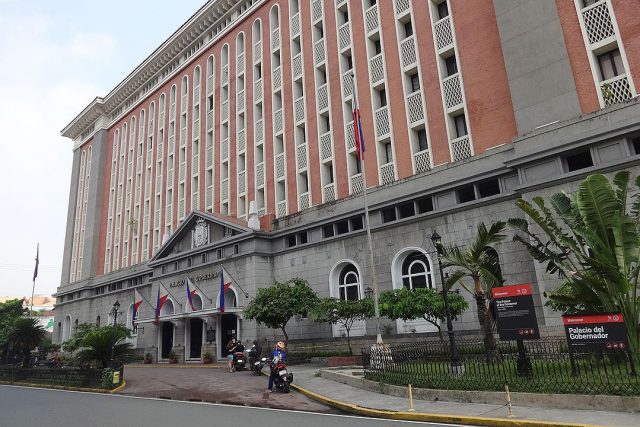
PALACIO del Gobernador, where the Comelec holds office — PATRICK ROQUE

THE Commission on Elections (Comelec) is considering amendments to its survey regulations, particularly on the mandatory registration of survey firms, amid concerns that certain organizations may be misleading voters ahead of the 2025 elections.

While the poll body acknowledged that requiring registration may be seen as a form of “prior restraint” on freedom of expression, it is exploring the possibility of a voluntary registration system for survey organizations, Chairman George Erwin M. Garcia told reporters on Thursday.

“The mandatory registration, when studied in depth, might be considered a form of prior restraint on freedom of expression and freedom of speech,” he said in Filipino. “That’s why we are currently reviewing it and will consult survey organizations to determine whether it should remain mandatory or voluntary.”

Comelec reassured survey firms that they would not be required to disclose the identities of individual respondents, as this could compromise voter confidentiality. 

Instead, the commission is focused on understanding the methodology behind surveys, such as the selection of respondents and sampling techniques. 

“To create a level playing field for all candidates, as not all candidates have the funds to pay survey organizations or commission surveys,” the poll chief added. “Some may benefit from it, while others may have no access at all. As a result, the playing field becomes uneven.”

The poll body has issued stricter regulations for public opinion firms conducting election-related surveys ahead of the 2025 midterm elections last Feb. 19.

It said that only pre-registered firms are authorized to conduct and publicly disseminate election surveys.

Non-compliance may lead to fines, suspension of accreditation, or legal action for deliberate misrepresentation of survey data. — Chloe Mari A. Hufana

SHS voucher program probe sought

Students walk inside the campus of a high school in Quezon City, April 18, 2024. — REUTERS

THE House of Representatives should launch a probe into the alleged “ghost beneficiaries” plaguing the Education department’s voucher program, a congressman said on Thursday.

The House good government and basic education committees should immediately launch an investigation into the listing of non-existent students in the voucher program to preserve its integrity and prevent further corruption, Party-list Rep. Raul Angelo D. Bongalon said in a statement.

The House basic education panel would take up the matter in its “next meeting,” Pasig Rep. Roman T. Romulo, who heads the committee, told BusinessWorld in a Viber message.

“I’ll ask the committee to ask permission from Committee on Rules for Wednesday or Thursday.”

Education Secretary Juan Edgardo “Sonny” M. Angara did not immediately respond to a Viber message seeking comment. He has said in previous reports that the Department of Education (DepEd) could impose validation mechanisms to prevent voucher scams from happening again.

DepEd’s voucher program aims to subsidize the education of senior high school students (SHS) enrolled in private schools. 

Mr. Angara in mid-February raised concerns about the prevalence of “ghost students” after his agency halted the release of almost P52 million worth of subsidies to at least 12 schools nationwide for the school year 2023-2024.

Mr. Bongalon said the program’s “phantom beneficiaries” have siphoned millions from DepEd’s budget and undermined its intent of decongesting public schools.

“How long has this ghosting scheme been going on, and why does it seem like it has just been allowed to continue,” he said. “We need to identify where the loopholes are and who should be held accountable.” — Kenneth Christiane L. Basilio

Voters favor agri advocates — SWS

PHILIPPINE STAR/EDD GUMBAN

NINE out of ten Filipinos are inclined to support candidates advocating for agriculture development and food security in the May 2025 elections, according to a Social Weather Stations (SWS) survey commissioned by the Stratbase Group.

The nationwide poll, conducted from Feb. 15 to 19, surveyed 1,800 respondents with a 2% margin of error. The findings align with a previous survey in January, which showed that 94% of Filipinos favored candidates with similar platforms.

In addition, 81% of respondents noted willingness to vote for candidates prioritizing price control measures for essential goods and services, reflecting the electorate’s growing concerns over inflation and cost-of-living pressures.

“These findings suggest that affordability and accessibility of essential goods, particularly food, remain major concerns for many Filipinos. We need candidates who will prioritize food security and take decisive action to address the rising prices of essential goods that Filipinos rely on,” Stratbase President Victor Andres C. Manhit said in a statement on Thursday.

“Strengthening the agriculture sector and ensuring a stable food supply can ultimately help control the cost of basic goods and services while also reducing poverty and hunger across the country,” he added.

The Philippine Statistics Authority reported that overall inflation in January 2025 held steady at 2.9%, the same as in December 2024. However, food inflation accelerated to 4%, up from 3.5% in the previous month.

Despite the modest overall inflation rate, Mr. Manhit noted the increasing burden of rising food prices, particularly on low-income households.

A SWS survey in January found that 59% of Filipinos identified rice as the commodity with the steepest price increase over the past three months, followed by meat products at 25%.

“These staples are essential in every household and play a crucial role in daily nutrition and survival,” Mr. Manhit added. “The rising costs of these basic food items further highlight the growing concern over food affordability and its impact on Filipino families.” — Chloe Mari A. Hufana

PhilHealth expands benefits for HIV, AIDS

PHILSTAR FILE PHOTO

THE PHILIPPINE Health Insurance Corp. (PhilHealth) has expanded its outpatient treatment package for individuals with human immunodeficiency virus (HIV).

“PhilHealth reaffirmed its commitment to supporting people living with HIV (PLHIV) by providing increased financial access to essential healthcare through its comprehensive outpatient HIV/AIDS (Acquired Immunodeficiency Syndrome) treatment coverage,” the state insurer said in a statement on Thursday.

The annual benefit for the enhanced Outpatient HIV Treatment (OHAT) Package is now at P58,500, up from P30,000, previously.

“The package includes antiretroviral therapy (ART) for all individuals with confirmed positive HIV test results confirmed by certified institutions, regardless of their clinical or immunologic status. It also ensures access to all minimum essential services necessary for effective HIV management,” PhilHealth said.

The OHAT Package can be accessed through the 234 PhilHealth-accredited Department of Health (DoH)-designated HIV Treatment facilities nationwide.

PhilHealth said it hopes the expanded benefits will encourage PLHIV to seek appropriate management, as well as other members to sign up for regular testing. 

The state insurer also noted that a separate package for the Tuberculosis – Directly Observed Treatment Short-course (TB-DOTS) package may be reimbursed at accredited TB-DOTS facilities. Members may avail of both the OHAT and TB-DOTS packages simultaneously.

Last year, PhilHealth disbursed P1.66 billion to 176,819 Outpatient HIV/AIDS Package claims.

“This enhancement is aligned with President Ferdinand R. Marcos, Jr.’s directive to continually improve and sustain health insurer’s healthcare benefits by ensuring adequate financial support to patients seeking medical treatment,” the state insurer said.

PhilHealth aims to collect P204 billion from members this year.

Its net income declined by 41.66% to P46.43 billion in the first nine months of 2024, its financial statement showed. — Aaron Michael C. Sy

ADVERTISEMENT
ADVERTISEMENT