Home Blog Page 1187

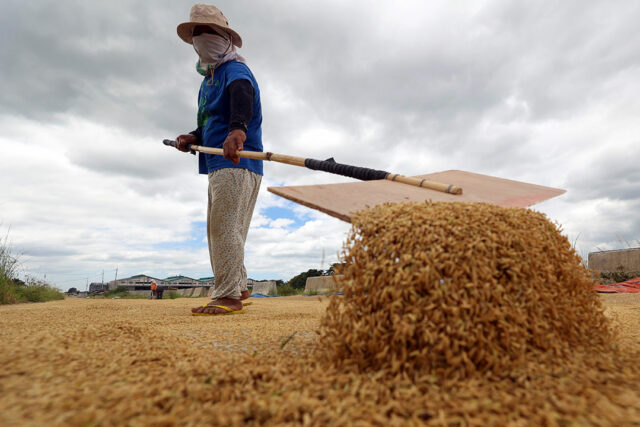
Palay output rises 13.9% in Q2

PHILIPPINE STAR/ KJ ROSALES

PALAY production in second quarter rose 13.9% year on year, the strongest result for the period in nearly four decades, the Philippine Statistics Authority (PSA) said.

In a report, the PSA said production rose to 4.38 million metric tons (MMT).

“The second quarter of 2025 palay production of 4.38 MMT was the highest production recorded for the same quarter in the series since 1987,” it noted.

Central Luzon was the top producer of palay with 1.098 MMT, accounting for 25.1% of national production.

Cagayan Valley produced 964.37 thousand metric tons (22.0%) and Bicol Region 354.54 thousand metric tons (8.1%).

The three regions accounted for 55.2% of total palay production during the quarter.

Cagayan Valley accounted for 19.3% or 187.36 thousand hectares of the total area of palay harvested.

It was followed by Central Luzon and Bicol Region with 180.83 thousand hectares (18.6%) and 92.16 thousand hectares (9.5%), respectively.

The yield per hectare of palay in the second quarter of 2025 rose 4.2% year on year to 4.50 metric tons (MT), also the highest since 1987, the PSA said.

Central Luzon yields were 6.07 MT per hectare, followed by Cagayan Valley and Ilocos Region with 5.15 MT and 4.81 MT, respectively.

Agriculture department spokesman Arnel V. de Mesa said the Philippines will likely hit its 20.4-MMT target for 2025 in the absence of extreme weather disturbances. — Kyle Aristophere T. Atienza

BCDA obtains P75M to engage consultants for Poro Point upgrade

POROPOINTFREEPORT.GOV.PH

THE Bases Conversion and Development Authority (BCDA) said it obtained P75 million in funding from the Public-Private Partnership (PPP) Center to hire consultants for the modernization of the Poro Point Seaport.

In a statement on Wednesday, BCDA said that the funding for consultants in the modernization of San Fernando International Seaport in Poro Point, La Union was sourced from the Project Development and Monitoring Facility.

Under the technical assistance agreement, the BCDA and the PPP Center “will jointly engage expert consultants to undertake the end-to-end preparation of the project under a PPP arrangement.”

“This advisory package covers feasibility studies, market analysis, legal and financial structuring, PPP transaction support, and other related expenses, with an indicative budget of P74.90 million,” it added.

Targeted to begin construction by the second quarter of 2027, the modernization is expected to be completed by 2029.

“Once operational, the upgraded seaport will support regional industries in Pangasinan, La Union, and the Ilocos provinces as well as enhance Poro Point Freeport Zone’s appeal to logistics investors and export-oriented manufacturers here and abroad,” the BCDA said.

The bulk and break-bulk terminal is being positioned as fully containerized port.

The project covers the installation of quay and yard cranes for faster cargo turnaround, expansion of storage and stacking areas, and the deployment of advanced terminal operating systems.

The modernization also aims to automate gates, digitalize freight management, and improve road and future rail connectivity for seamless cargo movement.

BCDA President and Chief Executive Officer Joshua M. Bingcang said Northern Luzon’s participation in global trade is currently limited by the state of its port infrastructure.

“This project is designed to change that by enabling full containerization, streamlining logistics, and anchoring regional industries to more competitive supply chains,” he said.

“It is a critical step in realizing Poro Point’s vision as a strategic economic gateway for Northern Luzon,” he added. — Justine Irish D. Tabile

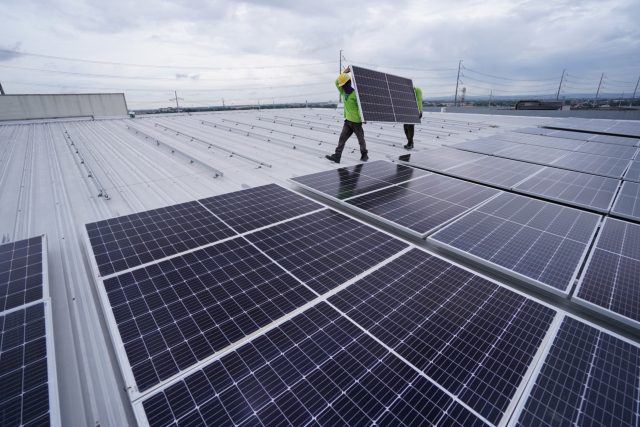
PHL targets solar for 100% of gov’t power use 

Solar panels are being installed on the roof of a mall. — GREEN HEAT HANDOUT PHOTO

THE PHILIPPINES is hoping to power all government buildings with solar energy eventually, the Department of Energy (DoE) said.

Energy Undersecretary Felix William B. Fuentebella said the private sector will be instrumental in achieving the goal, citing the potential role of registered solar photovoltaic (PV) installers.

“The government is committed to creating an enabling environment for renewable energy, but we need your help to make this real. Let us aim for 100% solar installation in all government buildings,” he said at the recent inaugural general assembly of registered solar PV installers.

The assembly featured discussions on the solar PV registry, policy developments, and compliance mechanisms.

Beyond government facilities, the DoE said that it is working to provide access to electricity to underserved communities via solar home systems.

The National Electrification Administration plans to energize 100,000 households this year, expanding to a total of 154,000 over the next two years.

“This initiative will bring reliable electricity to remote and mountainous areas previously unconnected to the national grid, improving the quality of life and empowering these communities,” the DoE said.

The government is aiming to achieve nationwide electrification by 2028. — Sheldeen Joy Talavera

Tax relief amid torrential rains

As the country enters the second half of the year, we brace ourselves for the familiar rhythms of the rainy season. This period brings not only cooler temperatures but also relentless rains, unpredictable weather, and, worse, flooding that disrupts daily life. Beyond the inconvenience lies a deeper struggle: homes inundated by floodwaters, families displaced, and livelihoods interrupted.

Recently, the northern Philippines, including Metro Manila, was hit by a series of storms. The continuous rainfall, exacerbated by the southwest monsoon (habagat), caused damage exceeding P6 billion to public infrastructure and agriculture. During that period, the government repeatedly suspended classes and government work in affected areas to ensure public safety. For the private sector, some scaled back operations or operated remotely. Taxpayers with reporting or filing deadlines were affected, as government-declared work suspensions disrupted schedules and potentially delayed filings.

Recognizing the operational and personal toll of these disruptions, the Bureau of Internal Revenue (BIR) issued three key circulars — Revenue Memorandum Circular (RMC) Nos. 75, 76 and 77-2025 — providing much-needed relief to taxpayers by extending deadlines for filing critical documents and remitting taxes.

TAX FILING AND PAYMENT DEADLINE EXTENSIONS
The series of government work suspensions announced by the Office of the President through Memorandum Circular Nos. 88 to 91, the BIR (thru RMC Nos. 75 and 77) extended the deadline for filing tax returns, paying taxes, and submitting specific documents to July 31. This extension applied to affected Revenue District Offices and Authorized Agent Banks in Metro Manila and several provinces across Regions I to VI and the Cordillera Administrative Region.

Specifically, the following filing deadlines were extended:

1. BIR Form 2550Q (Quarterly VAT Return) for eFPS & Non-eFPS Filers – For the Quarter ending June 30

2. Quarterly Summary List of Sales/Purchases/Imports by a Value-added Tax (VAT) Registered Taxpayer for Non-eFPS Filers – For the Quarter ending June 30

3. BIR Form 2551Q (Quarterly Percentage Tax Return) – For the Quarter ending June 30

4. BIR Form 2550DS (VAT Return for Non-resident Digital Service Provider) – For the Quarter ending June 30

5. Sworn Statement of Manufacturer’s or Importer’s Volume of Sales of each particular Brand of Alcohol Products, Tobacco Products and Sweetened Beverage Products – For the Quarter ending June 30

6. Quarterly Information on Overseas Contract Workers or Overseas Filipino Workers Remittances Exempt from Documentary Stamp Tax – For the Quarter ending June 30

7. Quarterly Report of Printer – For the Quarter ending June 30

8. BIR Form 1600 WP (Remittance Return of Percentage Tax on Winnings and Prizes Withheld by Race Track Operators) for eFPS & Non-eFPS Filers – For the Month of June

A WIDER NET OF SUPPORT
The BIR also extended (through RMC 76) the deadline for submission of position papers, replies, protest letters and other correspondences and documents related to ongoing BIR audit investigations; tax refunds; assessment notices and warrants of distraint and levy; and other similar letters/correspondences.

This extension applies to submissions originally due from July 21 to 25, with a new deadline set 10 calendar days from the last day of government work suspension as declared by the Office of the President, i.e., July 25. RMC 76 also clarified that if the extended due date falls on a holiday or non-working day in the affected areas, the deadline is to be moved to the next working day.

A particularly notable point in RMC 76 is that it took into consideration future government work suspensions in areas affected by inclement weather. Thus, any similar submission falling due during future suspension periods will likewise be extended by 10 calendar days from the last day of suspension.

This proactive provision is a significant step forward in making tax administration more responsive to real-world challenges. It acknowledges that weather-related disruptions are not isolated events but recurring realities that require flexible compliance mechanisms.

As many affected businesses and tax practitioners face logistical challenges (e.g., power outages to office closures and navigating floodwaters), the clamor for leniency and consideration has been strong.

Fortunately, these concerns did not fall on deaf ears. As BIR Commissioner Jun Lumagui shared on his social media account, “Nadinig namin kayo.” The issuance of RMC Nos. 75, 76 and 77-2025 is a timely and considerate measure, demonstrating the BIR’s understanding of the difficulties taxpayers face and its commitment to making compliance more manageable.

The circulars also reflect a broader shift in tax administration — one that values empathy, flexibility, and responsiveness. In times of crisis, such measures not only ease the burden on taxpayers but also reinforce trust in public institutions.

As the monsoon season continues, more weather-related suspensions may follow. As part of good housekeeping, taxpayers are advised to monitor official BIR announcements and coordinate with their advisors to ensure compliance within the adjusted timelines.

For now, these clear guidelines, particularly provisions under RMC 76 for audit and refund-related correspondences, offer much needed clarity and relief. They serve as a reminder that tax policy can and should adapt to the realities faced by the people it serves.

The views or opinions expressed in this article are solely those of the author and do not necessarily represent those of Isla Lipana & Co. The content is for general information purposes only, and should not be used as a substitute for specific advice.


Dorothy Jane Puguon is a senior manager at the Tax Services department of Isla Lipana & Co., the Philippine member firm of PricewaterhouseCoopers global network.

+63 (2) 8845-2728

dorothy.jane.puguon@pwc.com

Shares rise as BSP chief hints at more rate cuts

BW FILE PHOTO

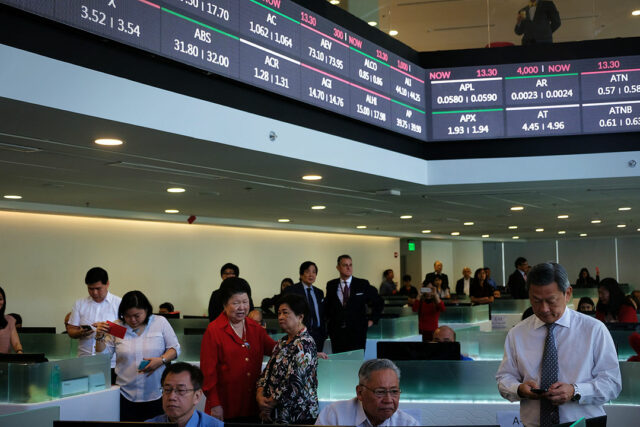
PHILIPPINE STOCKS extended their climb to a fourth straight day on Wednesday as the Bangko Sentral ng Pilipinas (BSP) chief hinted at more rate cuts.

The bellwether Philippine Stock Exchange index (PSEi) rose by 0.26% or 17.02 points to close at 6,370.65, while the broader all shares index climbed by 0.23% or 9.02 points to end at 3,779.96.

“The local market rallied further as investors continued to cheer the Philippines’ slow July inflation print and the possibility of further rate cuts by the BSP as a consequence,” Philstocks Financial Inc. Research Manager Japhet Louis O. Tantiangco said in a Viber message.

“The PSEi closed at 6,370.65, up by 0.26%, as the investors are still weighing their positions, driven by left and right earnings sentiment. Moreover, there is growing optimism regarding the lower inflation, which could influence the BSP’s decision in its upcoming meeting,” Regina Capital Development Corp. Head of Sales Luis A. Limlingan said in a Viber message.

Headline inflation eased to 0.9% in July from 1.4% in June and the 4.4% clip in the same month a year ago, the government reported on Tuesday.

This was the lowest consumer price index (CPI) in nearly six years or since the 0.6% print posted in October 2019.

For the first seven months of the year, the CPI averaged 1.7%, a tad higher than the BSP’s 1.6% full-year forecast.

The Philippine central bank has room to continue its easing cycle next year after possibly two more quarter-point cuts for the rest of 2025, according to Governor Eli M. Remolona, Jr., Bloomberg reported.

A rate cut is “more likely” this month after inflation eased to a near six-year low in July, Mr. Remolona said in an interview on Tuesday. “Something unexpected would have to happen for us not to cut rates,” he said. That will likely be followed by another reduction in the fourth quarter, the governor said.

With inflation this year likely to average below the central bank’s 2%-4% goal and within that range in 2026, it gives the BSP leeway to further lower borrowing costs “as long as the numbers look good, inflation remains low and the economy can still afford” more easing, he said.

Sectoral indices were mixed on Wednesday. Services climbed by 2.19% or 48.94 points to 2,282.28; mining and oil increased by 1.67% or 152.13 points to 9,210.57; and industrials went up by 0.85% or 77.63 points to 9,150.22.

Meanwhile, property fell by 1.16% or 28.52 points to 2,422.97; financials declined by 0.35% or 7.69 points to 2,190.73; and holding firms sank by 0.08% or 4.78 points to 5,351.49.

Value turnover went up to P6.78 billion on Wednesday with 664.92 million shares traded from the P5.67 billion with 1.28 billion issues traded on Tuesday.

Advancers outnumbered decliners, 93 versus 84, while 63 names were unchanged.

Net foreign buying was at P211.85 million on Wednesday, a reversal of the P153.3 million in net selling recorded on Tuesday. — R.M.D. Ochave

Philippine jobless rate eases to 3.7% in June, but job quality still a concern

STOCK PHOTO | Image by Ricardo Gomez Angel from Unsplash

By Adrian H. Halili, Reporter

PHILIPPINE unemployment eased to 3.7% in June, as more Filipinos found job opportunities during the month, according to the local statistics agency.

However, labor experts cautioned that structural challenges remain in the country’s labor market, particularly on job quality and sustainability.

The June unemployment rate was lower than 3.9% in May, but higher than 3.1% a year ago, the Philippine Statistics Authority (PSA) said.

Philippine Labor Force Situation

This translates to 1.95 million jobless Filipinos, down from 2.03 million in April. The number of unemployed rose from 1.62 million a year earlier. The average unemployment rate for the first half stood at 4%, slightly higher than 3.9% a year ago.

Deputy National Statistician Divina Gracia L. Del Prado said the month-on-month improvement was due to a drop in discouraged workers — those who had stopped looking for jobs, believing none were available.

However, she noted that the year-on-year rise in the unemployment rate was due to a larger number of Filipinos entering the job market, particularly new graduates, she told a news briefing.

“Because June is also graduation [season], there are many people who are actually entering our labor market,” she said. She added that many had cited active job searching or waiting to be rehired as the top reasons for being unemployed.

Underemployment — defined as workers seeking additional hours or better-paying jobs — dropped to 11.4% in June from 13.1% in May, translating to 5.76 million underemployed Filipinos. However, this figure was still slightly lower than the 6.08 million underemployed in June 2024, when the rate was 12.1%.

For the first half, the average underemployment rate stood at 12.7%, slightly higher than the 12.3% average from a year earlier.

Despite the drop in underemployment for the month, some labor groups warned against interpreting the decline as an improvement in job quality.

“Fewer people saying they’re underemployed doesn’t mean jobs are getting better,” Jose Enrique A. Africa, executive director of IBON Foundation, said in a Viber message. “It’s more likely that workers just have fewer and fewer options in a deteriorating labor market.”

He added that job quality in the Philippines continues to suffer due to low wages, lack of job security and weak enforcement of labor rights.

The country’s employment rate rose to 96.3% in June from 96.1% in May. However, this was lower than the 96.9% employment rate a year earlier.

Job Gains by Industry (June 2025 vs. May 2025)
The number of employed Filipinos increased to 50.47 million in June from 50.29 million in May, and from 50.28 million in June last year. For the first half, the employment rate averaged 96.1%, slightly lower than 96.2% a year ago.

Ms. Del Prado attributed the year-on-year dip in employment to the sharp decline in jobs in the construction sector, which lost 692,000 jobs, and the arts, entertainment and recreation sector, particularly in gambling and betting, where jobs fell by 218,000.

Several bills aiming to regulate or ban online gambling are pending in Congress amid concerns about its social impact.

Meanwhile, sectors that added the most jobs included fishing and aquaculture (+512,000), wholesale and retail trade (+375,000), financial and insurance activities (+327,000), transportation and storage (+211,000) and human health and social work (+179,000).

Services remained the largest employer, accounting for 61.4% of the employed population in June, followed by agriculture (20.9%) and industry (17.7%).

Wage and salary workers made up 63% of the employed population. Self-employed people without paid employees accounted for 27.1%, unpaid family workers for 8%, and employers in family-operated businesses for 1.9%.

250807Loosers_Industry

YOUTH JOBLESSNESS
The average number of hours worked per week rose to 40.5 in June from 39.8 in May, but was still slightly lower than 40.9 hours in June 2024.

Youth unemployment also increased to 9.4% in June, from 8.6% a year earlier. About 1.62 million Filipinos aged 15–24 were jobless in June.

Economic Planning Secretary Arsenio M. Balisacan cited the need for targeted interventions, particularly to help young people transition from education to employment.

“We remain cautious due to the slight uptick in unemployment, particularly among the youth,” he said in a statement. “We are committed to enhancing workforce competitiveness by aligning education and training systems with industry needs.”

Labor groups called for stronger government action to address both the quantity and quality of jobs.

Josua T. Mata, secretary-general of Sentro ng mga Nagkakaisa at Progresibong Manggagawa, said the economy is not generating enough decent jobs to match the growing labor force.

“Even the jobs that are being created leave much to be desired,” he said in an e-mailed reply to questions. “Many are in sectors known for short-term, precarious and contractual work — as reflected in the decline in average hours worked.”

Federation of Free Workers (FFW) President Jose Sonny G. Matula in a Viber message said structural weaknesses in key sectors like construction, manufacturing and agriculture are dragging down overall job quality.

He also raised concerns over the potential impact of a 19% tariff imposed by the US on Philippine exports, effective Aug. 7, which could hurt industries like electronics and garments.

Maria Ella Calaor-Oplas, a De La Salle University professor, cited improving employment opportunities for full-time workers as a positive sign. “We are in a better place this year, as employment opportunities were mostly directed to part-timers last year,” she said in a Facebook Messenger chat.

Benjamin Velasco, a labor professor at the University of the Philippines, said the agriculture sector could face additional strain from possible rains and flooding in the coming months.

He cited the need for structural reforms tied to industrial and climate-responsive public employment programs, especially with holiday-driven demand potentially boosting manufacturing in the second half.

Labor experts urged the government to adopt bolder policies to improve job creation and quality. These include livelihood support, wage increases, industrial policy and green infrastructure investments.

“Waiting for the market to fix itself is not a strategy,” Mr. Mata said. “The government needs to step in urgently.”


PHL military launches air and sea search for Chinese rocket debris near Palawan province

A Long March-5B rocket with Yuanzheng-2 upper stage blasted off from the Wenchang Spacecraft Launch Site on Dec. 16, 2024. — REUTERS

THE Armed Forces of the Philippines (AFP) has deployed air and naval units to search for suspected rocket debris from a recent Chinese space launch that may have fallen into Philippine waters near Palawan, a military official said on Wednesday.

The search and retrieval operations began on Tuesday in the Sulu Sea, between Puerto Princesa City and Tubbataha Reefs Natural Park, according to Colonel Nep V. Padua, chief of the AFP Western Command’s public information office.

“Yesterday, the Western Command, through its subordinate Air Force and Navy components, deployed [assets] to search in the vicinity of the Sulu Sea, between the east coast of mainland Palawan and Tubbataha Reefs,” he told reporters via teleconference.

He said the Philippine Air Force dispatched two aircraft and a helicopter, while the Philippine Navy sent a ship to help find and recover the debris. As of Wednesday, no fragments had been found.

The military would continue operations until the debris is located or the search is assessed to be no longer feasible, Mr. Padua said.

The suspected debris is believed to have come from a Long March 12 rocket launched by China earlier this week to deliver internet satellites into low Earth orbit.

The rocket’s two-stage system is powered by six liquid oxygen-kerosene engines and can carry up to 12,000 kilograms of payload, according to a report by Reuters.

The Philippine Space Agency said the rocket flew over Palawan, with debris expected to fall about 21 nautical miles (39 kilometers) from Puerto Princesa and 18 nautical miles from Tubbataha Reefs, a United Nations Educational, Scientific and Cultural Organization (UNESCO) World Heritage Site.

The Philippines has formally protested, Palace Press Officer Clarissa A. Castro told a news briefing in Nel Delhi, where President Ferdinand R. Marcos, Jr. is on a state visit.

She conveyed the government’s concern, quoting a statement by Foreign Affairs Secretary Ma. Theresa P. Lazaro.

“The Philippines notes with concern China’s launch of its Long March 12 space launch vehicle on Aug. 4, which resulted in debris falling into Philippine waters,” Ms. Castro said, based on a livestreamed video by state media.

The two countries remain locked in a geopolitical dispute over claims in the South China Sea, where about $3.36 trillion worth of global trade passes through yearly.

“The Philippines takes this opportunity to urge all spacefaring states to conduct their space activities in a manner consistent with norms of responsible behavior, and with due regard to the rights of interests of other states,” according to Ms. Lazaro’s statement.

The palace deferred comments on technical and safety matters to the Philippine Space Agency (PhilSA) and other concerned agencies.

Ms. Castro said PhilSA Deputy Director General Gay Jane P. Perez assessed the incident and confirmed that the debris drop zone was somewhat close to Philippine territory.

The National Security Council (NSC) on Tuesday criticized China’s space launch as “irresponsible,” citing the proximity of the debris drop zone to populated and environmentally sensitive areas.

“While no immediate damage or injury has been reported so far, falling debris from the launch poses a clear danger and risk to land areas and to ships, aircraft, fishing boats and other vessels that will pass through the drop zone,” National Security Adviser Eduardo M. Año said in a statement. — Kenneth Christiane L. Basilio and Chloe Mari A. Hufana

Senate ‘archives’ impeachment case vs VP Duterte

VICE-PRESIDENT Sara Duterte-Carpio — OFFICE OF THE VICE PRESIDENT

PHILIPPINE senators voted late Wednesday to archive the impeachment complaint against Vice-President Sara Duterte-Carpio after the Supreme Court’s (SC) ruling that declared the proceedings unconstitutional.

After hours of plenary debate, senators approved a motion by Senator Rodante D. Marcoleta, who argued the Senate never formally acquired jurisdiction over the complaint and that the Supreme Court’s decision was “immediately executory,” to archive the case.

Archiving the case means it could be reopened later with majority approval.

“The Supreme Court has already spoken, the last arbiter of law,” he said on the Senate floor. “It says that the complaint was unconstitutional, is void ab initio, is violative of due process.”

The High Court earlier ruled that the impeachment of Ms. Duterte violated the constitutional ban on filing more than one impeachment complaint within a year and breached her right to due process. It said any new complaint against her could only be filed by Feb. 6 next year.

Four impeachment complaints had been filed against the Vice-President since December 2024. The House of Representatives dismissed the first three, but the fourth was endorsed by more than 200 lawmakers — exceeding the one-third constitutional requirement to send the charges to the Senate.

Senator Alan Peter S. Cayetano amended Mr. Marcoleta’s motion to dismiss to a motion to archive the case.

“You only have two choices,” he said. “Do you follow the Supreme Court, or you don’t follow?” Mr. Cayetano asked fellow senators.

He said archiving means the complaint would be set aside but could be revived by majority approval if needed.

Meanwhile, Palace Press Officer Clarissa A. Castro said President Ferdinand R. Marcos, Jr. would not interfere in the impeachment proceedings.

“The administration and the President respect [the court’s decision],” she told a news briefing in New Delhi livestreamed on Facebook. “The President won’t interfere in the Senate’s job.”

Ms. Duterte, seen as a potential 2028 presidential candidate, was impeached in February on allegations including fund misuse, unexplained wealth, destabilization efforts, and plotting to assassinate President Marcos, his wife and Speaker Ferdinand Martin G. Romualdez. She has denied all charges.

Earlier on Wednesday, House prosecution spokesman Antonio Audie Z. Bucoy said Senate dismissal of the impeachment charges without trial is premature because the Supreme Court’s dismissal of the case is under appeal and not yet final.

He urged senators to reconvene the impeachment court if the high tribunal reverses its earlier decision declaring the ouster move against Ms. Duterte unconstitutional.

“If the parties want to do it, if they want to follow, they can,” Mr. Bucoy told a news briefing in Filipino. “But there’s still a chance for it to be reviewed.”

The House has sought a reconsideration of the tribunal’s ruling.

Mr. Bucoy warned that if the Senate dismisses the charges outright based on a ruling that may still be reversed, it would reflect poorly on lawmakers.

“It will only show that they’re really rushing it, that they’re in a hurry to finish,” he said. “The justices — they’re human too, and capable of making mistakes.”

He added that the articles of impeachment remain valid should the SC reverse its decision.

Mr. Bucoy warned that upholding the SC’s decision could make it harder to hold high-ranking officials accountable. “You now have to go through the eye of a needle just to hold a guilty public official accountable.” — Adrian H. Halili and Kenneth Christiane L. Basilio

Senators back resolution to upload all budget documents online

PHILIPPINE STAR/PAOLO ROMERO

PHILIPPINE Senators on Wednesday unanimously backed a resolution that would mandate government agencies to upload budget documents in online platforms, allowing the public to track each stage of the budget process.

Under Senate Concurrent Resolution no. 4 all documents relating to the 2026 budget deliberations will be uploaded to the websites of the Senate and the House of Representatives.

Among the documents include the full proposed budget approved by the House of Representatives and transmitted to the Senate, funding requests submitted by government agencies, the Senate committee report and third reading version, and the reconciled version drafted by the bicameral conference committee.

Also included are the full transcripts of plenary deliberations, budget briefing, technical working group meetings, and public hearings.

“Existing technological innovations now allow for centralized, accessible, and searchable platforms for budget data that are responsive to the principles of open government and digital governance,” Senator Sherwin T. Gatchalian, who heads the finance committee said in a statement.

“Such transparency reform will enable an informed public to push for accountability on the use of public funds,” he added.

The concurrent resolution stated that all documents uploaded online should be in formats that are timely, comprehensive, and machine readable.

“The public shall be given a platform on the websites of both the Senate and House to communicate their analyses, suggestions, and feedback on the national budget,” the resolution read.

The House had likewise moved to make the budget process more transparent after it adopted House Resolution No. 94 on Tuesday to allow civil society groups to sit in during budget deliberations.

Last year’s budget deliberations drew criticism after the bicameral conference committee reportedly increased unprogrammed funds to more than P500 billion and included so-called “blank line-items” — prompting concerns that changes were made after Congress ratified the budget.

This has prompted President Ferdinand R. Marcos, Jr. to issue a warning during his State of the Nation Address on July 28 that he would reject any budget proposal that does not align with his administration’s priorities, even if it results in a reenacted budget.

The Development Budget Coordination Committee has proposed a P6.793-trillion budget, 7.4% higher than this year’s allocation and equivalent to 22% of the country’s domestic output.

Congress is expected to begin the budget process this month, once the Executive branch submits its proposed national spending plan. — Adrian H. Halili

Gov’t may scale down rice subsidy

PHILIPPINE STAR/EDD GUMBAN

PRESIDENT Ferdinand R. Marcos, Jr., said the government expects to scale down subsidies for its flagship rice program as improved domestic production is seen on the back of ongoing agricultural reforms.

“We got to a point where we can say, ‘We can afford this. We can afford the subsidy,’” Mr. Marcos said in Filipino, in a video blog posted on his social media pages on Wednesday night.

“And as subsidy — as the subsidy becomes less and less, the coverage of the P20-per-kilo rice will expand,” he added, noting the government will target more low-income consumers.

Since taking office, the Marcos administration has sought to boost farm output by lowering production costs, supplying machinery, and cracking down on smuggling and hoarding. Distribution of land to farmers has also been accelerated under the agrarian reform initiative.

The chief executive credited these efforts with helping the country achieve harvests in recent planting seasons.

“In the past three years, we’ve laid the groundwork. Now, we have the capacity.” — Chloe Mari A. Hufana

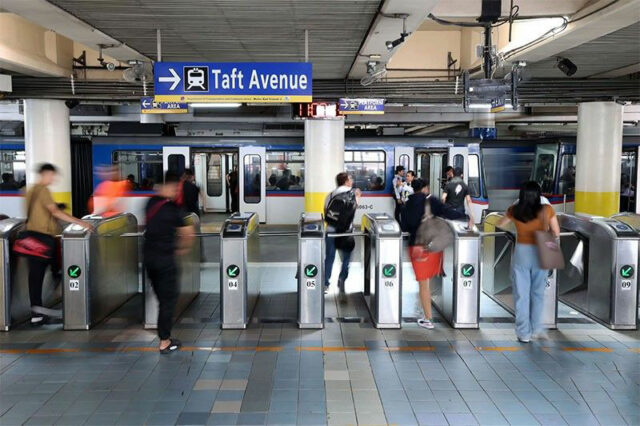
Nat’l ID holders get free MRT rides 

PHILIPPINE STAR/MIGUEL DE GUZMAN

THE Philippine Statistics Authority (PSA) announced that National ID holders can avail of free Metro Rail Transit Line 3 (MRT-3) rides every Wednesday this August.

“The free rides are available for passengers who will present any format of the National ID — card, paper, or digital,” the PSA said in a notice on its website.

This promo can be availed from 9 a.m. to 11 a.m. and 6 p.m. to 8 p.m. on Aug. 6, 13, 20, and 27.

“The National ID, regardless of the format, is a valid and accepted proof of identification for transactions with any government or private institution,” it added. — Luisa Maria Jacinta C. Jocson

Marcos’ budget warning criticized

PHILIPPINE STAR/KJ ROSALES

PRESIDENT Ferdinand R. Marcos, Jr.’s warning that he would not sign a budget deviating from the Executive’s proposal was criticized by a congressman on Wednesday, who said his stance threatens Congress’ ability to scrutinize and amend planned government spending for next year.

“What he’s saying to Congress is, don’t touch it, don’t change it,” Deputy Minority Leader and Party-list Rep. Antonio L. Tinio said in a media briefing in Filipino. “In that sense, he’s saying Congress must rubber-stamp the President’s submitted budget.”

Palace Press Officer Clarissa A. Castro did not immediately reply to a Viber message seeking comment.

Mr. Marcos, in his State of the Nation Address last week, said he would not approve any 2026 national budget that would veer away from the National Expenditure Program.

Mr. Tinio said the budget should be debated, and be tweaked if needed by lawmakers. “If there should be changes, then it should be changed.”

“What the President is saying won’t work, that whatever he submits, we should just approve,” he said — Kenneth Christiane L. Basilio

ADVERTISEMENT
ADVERTISEMENT