Home Blog Page 117

BARMM execs launch 2026-2028 governance framework

COTABATO CITY — Officials of the Bangsamoro Autonomous Region in Muslim Mindanao (BARMM) government on Monday launched its 2026-2028 governance framework, “Mas Matatag na Bangsamoro Agenda,” which aligns with the Mindanao peace process.

Senior BARMM officials, led by their chief minister, Abdulraof A. Macacua, converged in Quezon City on Monday and discussed the intricacies of their 2026-2028 peace and development goals as guides for boosting the autonomous region’s socio-economic growth via governance and collaboration with local government units on public service thrusts.

“We shall work together in furthering this very comprehensive peace and development framework for our region,” Mr. Macacua told reporters on Tuesday morning.

He said the objectives of their new governance framework is to have a progressive Bangsamoro region, as home to mixed Muslim, Christian and non-Moro indigenous communities, to spur economic growth in all of its towns and cities, to improve commerce and trade, to generate employment and boost small and medium enterprises, and expand the regional government’s infrastructure, healthcare and education programs.

Mr. Macacua said the framework also includes extensive peace and security initiatives and promotion of interfaith solidarity and ecumenism among BARMM’s culturally pluralistic communities.

“That shall be our governance guides for 2026 to 2028,” said Mr. Macacua, who is figurehead of the BARMM parliament.

Three members of BARMM’s parliament, Kadil M. Sinolinding, Jr. and Naguib G. Sinarimbo and Jet L. Lim, who is also spokesperson of the region’s lawmaking body, separately assured of their support for the newly launched framework.

“We shall exert our best efforts to achieve the goals of that governance framework,” said Mr. Sinarimbo, who was BARMM’s local government minister before he was appointed member of the regional parliament by President Ferdinand R. Marcos, Jr. last year.

Mr. Sinolinding, who is also managing the Ministry of Health-BARMM in concurrent capacity, said he and his subordinates in the agency will work together in expanding health services in the region; while BARMM’s labor and employment minister, Muslimin G. Sema, said they are glad with the launching of the Agenda. — John Felix M. Unson

Shift to clean energy begins in Northern Luzon provinces

BAYOMBONG, Nueva Vizcaya — Two northern provinces are stepping up their shift to clean energy, rolling out solar initiatives that will cut emissions while expanding access to electricity in underserved communities.

In Nueva Vizcaya, the “Silaw ti Umili” program of Governor Jose V. Gambito is bringing solar power to remote barangays beyond the grid of Nueva Vizcaya Electric Cooperative, reducing reliance on diesel and other fossil fuels in isolated areas.

Provincial Engineer Jerry A. Tan said 8,091 households have been identified for the program, with 3,756 already equipped with solar kits.

Backed by a P15.7-million funding, the initiative will expand further with a P16-million allocation in 2026 to reach 3,600 more homes.

Mr. Gambito said the push for solar electrification “is not only about access but also about sustainability, helping lower carbon footprints while improving living conditions in far-flung communities.”

In Kalinga, Governor James S. Edduba is advancing the same green agenda by requiring all new public school buildings to be solar-ready, aligning infrastructure development with climate resilience goals.

The plan, endorsed to Education Secretary Juan Edgardo M. Angara under the classroom program of Ferdinand R. Marcos, Jr., integrates renewable energy into school design, allowing future solar installations to cut long-term energy costs and reduce environmental impact. — Artemio A. Dumlao

Philippine shares rebound on bargain hunting

REUTERS

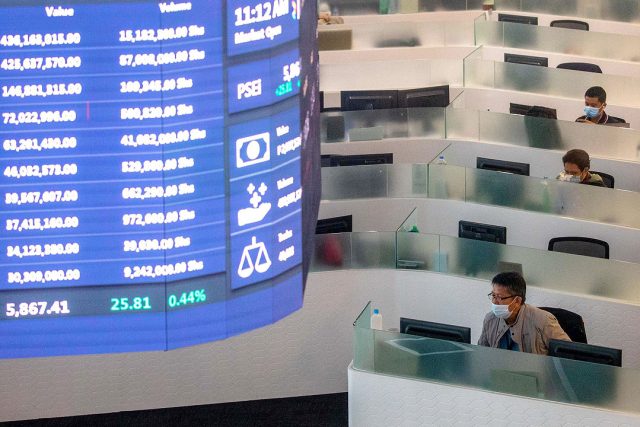
PHILIPPINE SHARES closed higher on Tuesday as investors took advantage of cheaper prices after the market’s two-day slide, with signals of a possible de-escalation in the Middle East conflict also lifting sentiment.

The Philippine Stock Exchange index (PSEi) rose by 0.62% or 37.02 points to close at 5,936.20, while the broader all shares index went up by 0.56% or 18.64 points to end at 3,295.23.

“The local market rose as investors hunted for bargains following two straight days of decline,” Japhet Louis O. Tantiangco, research manager at Philstocks Financial, Inc., said in a Viber message. “Investors are assessing the latest developments wherein President Donald J. Trump said that the US and Iran had productive talks and that the US would postpone its strike on Iran’s energy infrastructures.”

“The Philippine market rebounded after the previous session’s sharp sell-off, supported by improved sentiment following Donald Trump’s remarks about delaying the potential attack on Iran’s power plants,” Regina Capital Development Corp. Head of Sales Luis A. Limlingan said in a Viber message. “This temporary easing of geopolitical tensions helped lift equities, mirroring gains seen in global markets after the announcement. However, investors remain cautious as oil prices stay elevated amid ongoing supply risks and uncertainty in the Middle East.”

Stocks were on tenterhooks and oil prices rose in choppy trade on Tuesday as Mr. Trump’s postponement of the bombing of Iran’s power grid proved no panacea for investors worried about the ramifications of the Middle East war, Reuters reported.

US Treasury yields pushed higher and the dollar regained lost ground, in a retracement of the relief rally that swept markets overnight after Mr. Trump added five days to his Saturday ultimatum for Iran to reopen the Strait of Hormuz within 48 hours, citing “productive” talks with Tehran.

Much uncertainty remained as the world continues to grapple with an energy shock while Iran denied that it had engaged in negotiations with the US.

Most sectoral indices closed higher on Tuesday. Mining and oil rose by 3.39% or 495.60 points to 15,087.41; financials increased by 1.62% or 30.23 points to 1,889.03; property went up by 1.5% or 29.04 points to 1,957.15; holding firms climbed by 0.93% or 42.15 points to 4,538.68; and industrials went up by 0.74% or 64.38 points to 8,754.77.

Meanwhile, services declined by 0.48% or 13.29 points to 2,712.89.

Advancers outnumbered decliners, 129 to 63, while 59 names closed unchanged.

Value turnover declined to P5.7 billion on Tuesday with 633.85 million shares traded from the P8.17 billion with 1.36 billion issues that changed hands on Monday.

Net foreign selling decreased to P755.56 million from P1.34 billion in the previous session. — Alexandria Grace C. Magno with Reuters

P20-B Malampaya fund could be deployed to boost oil reserves

BW FILE PHOTO

THE GOVERNMENT is considering the use of funds generated by the Malampaya offshore project to finance bulk purchases of petroleum products to mitigate the risk posed by the disruption of supply from the Persian Gulf, the Department of Budget and Management (DBM) said on Tuesday.

Budget Secretary Rolando U. Toledo said the P20-billion Malampaya fund is being considered to support bulk procurement of petroleum products.

“We are looking at tapping the Malampaya fund of P20 billion, and we will release that for bulk purchases of oil,” he told a Senate hearing on the government’s response to the Iran war.

Mr. Toledo said that he received a request from  Energy Secretary Sharon S. Garin for the bulk purchase of petroleum products.

The DoE has signaled plans to purchase about 2 million barrels of diesel to bolster stockpiles after price shocks triggered by the escalating conflict in the Middle East.

The government is entitled to about 60% of the proceeds from the Malampaya offshore natural gas project. The government’s share is meant to be invested in domestic energy development.

At the hearing, Ms. Garin said the DoE is also looking into a revolving credit facility with the Land Bank of the Philippines  worth P10 billion.

“We are also trying to access P15 billion in unused Philippine National Oil Co. funds to relieve the strain on the National Government budget,” Ms. Garin said.

Meanwhile, Mr. Toledo added that the government has about P210 billion to provide relief to those affected by the Iran war.

The DBM has allocated some of the funding for the Protective Services for Individuals and Families in Difficult Circumstances overseen by the Social Welfare department amounting to P63.8 billion; P4.2 billion for the Department of Migrant Workers, and P1.2 billion in assistance to Filipinos abroad. P2.5 billion will also be used for subsidies for transport.

Mr. Toledo said that the DBM is also looking to tap P21.28 billion from the Department of Labor and Employment and P51.64 billion from the Department of Health. — Adrian H. Halili

Toyota expects EVs, hybrids to make up 20% of PHL sales

TOYOTA MOTOR PHILIPPINES

TOYOTA MOTOR Philippines Corp. (TMP) said it expects electric vehicles (EVs), which include hybrids, to account for 20% of its sales this year.

“About 20% of our volume is electrified,” TMP Chairman Alfred V. Ty told reporters on the sidelines of a Stratbase Institute conference on Tuesday.

“Electrified to us is full-electric and hybrid, and that continues to multiply,” he said. “Even before the war, there were plans for models to come in,” he said, on the assumption that the rollout is not disrupted.

In 2025, TMP recorded a 38.83% increase in EV sales to 19,516 units. This includes 17,825 Toyota EVs and 1,691 Lexus EVs.

“We’re really moving towards electrification, but of course, you have your diesel models, especially for the provinces, so that’s why… we’re making sure that we have all the different technologies for everybody,” Mr. Ty said.

TMP, automotive unit of GT Capital Holdings, Inc. reported a 49.33% market share, despite a 6.3% decline in sales to 34,300 units at the end of February.

GT Capital said it is looking to revisit its capital expenditures this year amid the impact of rising oil prices caused by the escalating conflict in the Middle East.

“We haven’t finalized, of course, but I guess everything’s on the table for discussion,” Mr. Ty, who is also the vice-chairman of GT Capital, said.

GT Capital is involved in the automotive, banking, property development, infrastructure, utilities, life and non-life insurance, and motorcycle financing industries.

Meanwhile, Mr. Ty also cited the need to update the Japan–Philippines Economic Partnership Agreement (JPEPA) to include incentives for EV makers.

“The automotive incentives written in the JPEPA…only considered big engines, wala pa ‘yung mga small engines, wala pang electrification (it did not consider small engines or electrification)” he said.”

JPEPA, the Philippines’ first bilateral free trade agreement, came into force in 2008. 

It covers trade goods, rules of origin, customs procedures, investment, movement of natural persons, intellectual property, and government procurement. — Beatriz Marie D. Cruz

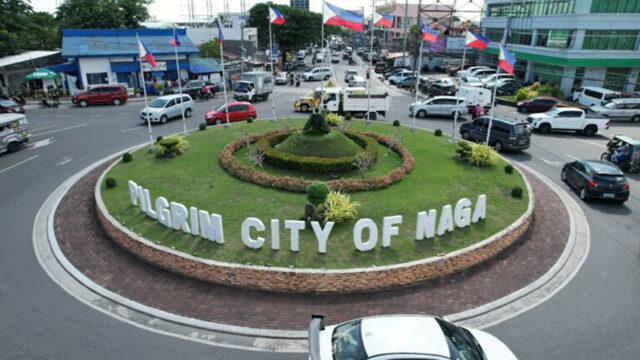
Bicol regional minimum wage set at P480 per day

NAGA.GOV.PH

THE WAGE BOARD of the Bicol Region has approved an increase for private sector workers in the region to bring the daily minimum wage to P480 from P435.

Wage Order No. RBV-23, published on March 23 by the Regional Tripartite Wages and Productivity Board V, ordered a daily basic wage increase of P45 to be released in two tranches.

The first tranche is a P20 increase, raising the daily rate to P455 upon effectivity on April 8. A second tranche of P25 will take effect on Dec. 1, bringing the minimum wage to P480 for all types of private-sector industries and businesses. 

This adjustment covers workers in Albay, Camarines Norte, Camarines Sur, Catanduanes, Masbate, and Sorsogon.

In determining the new rates, the wage board said it conducted a series of consultations and public hearings across Bicol in January and February to evaluate regional socio-economic conditions.

The board found that the average inflation rate within the region was 1.5% between April 2025 and January 2026, while the regional real minimum wage was recorded at P318 as of January.

It added that the 2023 poverty threshold for a family of five in the region was P460 as of early 2026, and that Bicol’s gross regional domestic product grew 4.9% during the 2023-2024 period. — Erika Mae P. Sinaking

Philippines commits to implement semiconductor industry roadmap

Semiconductor chips are seen on a circuit board of a computer in this illustration picture taken on Feb. 25, 2022. — REUTERS

THE government pledged to fast-track reforms and investments to scale up its semiconductor and electronics industry (S and E), recognizing the sector’s role in economic growth.

Executive Secretary Ralph G. Recto said Malacañang will “fully and forcefully” implement commitments under the industry’s roadmap, underscoring the sector’s role as a cornerstone of export growth and employment.

“The government must maximize the S and E industry, because this industry can maximize the country,” he said during the meeting of the Semiconductor and Electronics Industry Advisory Council (SEIAC) in Malacañang on March 23.

The industry generates about P3 trillion annually, accounts for nearly three-fifths of export revenue and supports roughly 3 million jobs directly and indirectly.

Mr. Recto expects SEIAC to act as a central platform for resolving bottlenecks rather than merely coordinating dialogue. 

He said that the council must function as a “problem-solving” body, with reforms tied to concrete deliverables and deadlines.

The government is backing industry efforts to expand into higher-value activities such as integrated circuit design and advanced packaging — segments seen as more attainable given current capabilities.

The roadmap of the Philippine Semiconductor and Electronics Industries in the Philippines Foundation, Inc. targets the establishment of wafer fabrication facilities, a capital-intensive leap that would mark a significant upgrade in domestic manufacturing capacity.

Central to that plan is the proposed creation of up to three national laboratories, envisioned as hubs for research collaboration among academia, industry and government.

These facilities would anchor innovation, workforce development and technology transfer, helping address longstanding gaps in research and development. — Chloe Mari A. Hufana

Rice imports beat DA forecast by topping 1 million MT at mid-March

REUTERS

RICE IMPORTS amounted to 1.01 million metric tons (MT) as of March 19, up 10.44% from the actual first quarter total in 2025, the Bureau of Plant Industry (BPI) said.

The year-to-date volume exceeded the Department of Agriculture’s (DA) projection of about 750,000 MT for the full first quarter.

The DA earlier said traders and importers agreed to keep shipments to around 300,000 MT per month in January and February and 150,000 MT per month during the peak of the harvest in March and April.

The BPI said inbound shipments as of March 19 are equivalent to 79.74% of the 1.27 million MT expected volume based on approved import clearances.

Regular rice accounted for the bulk of imports at 980,896 MT or 96.77% of the total, while special rice amounted to 32,758 MT or 3.23%.

Of the landed shipments, 85.97% originated in Vietnam, 7.63% Thailand, 4.48% Myanmar, and 1.61% Cambodia.

Agriculture Secretary Francisco P. Tiu Laurel, Jr. earlier told BusinessWorld that the Philippines continues to have access to adequate rice supplies from overseas markets, despite a projected global food supply crunch due to the Middle East war.

He said supply remains sufficient in major suppliers such as Vietnam, India, and Myanmar, but added that freight costs will be the main component affecting the price paid by consumers. — Vonn Andrei E. Villamiel

Port regulator plans RoRo terminal fee cut for farm goods

MARINA

TRANSPORTATION Secretary Giovanni Z. Lopez said the Philippine Ports Authority (PPA) has proposed a reduction to P1 in the roll-on/roll-off (RoRo) terminal fee for class 3 and class 4 vehicles carrying raw and unprocessed agricultural products, from the current P258 and P516, respectively.

“The maritime sector, and PPA-operated ports have agreed that we need to provide discounts. One recommendation is to give a discount for RoRo terminal fees,” he said.

This proposal is set to take effect on April 15, once approved, and will remain in force for six months, Mr. Lopez said.

“The decreased RoRo terminal fee will help lower the operating costs of owners or drivers of vehicles with agricultural products,” Mr. Lopez said.

The PPA and the Maritime Industry Authority (MARINA) and the Department of Transportation (DoTr) will explore measures to ease the impact of rising fuel costs on shipping lines.

“Any mode of transport feels the pain of the rising fuel costs. We are exploring solutions, together with MARINA and the DoTr to help (shipping lines),” PPA Assistant General Manager Mark John S. Palomar said at a briefing on Tuesday.

Earlier this month, MARINA authorized ship operators to collect a fuel surcharge of up to 20% of base fares, citing the needs to promote the efficient use of fuel.

It also allowed shipping companies to adjust their operations by consolidating or reducing trips to optimize vessel use in the interest of cutting fuel consumption, subject to MARINA approval.

Several regional shipping lines have also raised passenger and cargo 25% fol-low-ing a surge in fuel costs triggered by the clos-ure of the Strait of Hor-muz, which pushed global oil prices above $100 per bar-rel.

Mr. Palomar said it is too early to tell if the ongoing Middle East war will have an impact on passenger volume during the Easter travel season.

“It is possible. People might be deterred because of rising fuel costs, but you know, travel plans are set way ahead so people might just go through with their travel,” he said when asked about the possibility of lower passenger traffic. 

The PPA also launched an Online Reservation Assistance System to reduce “uncertainty regarding the schedule of vessels,” Mr. Palomar said, thereby easing terminal congestion.

He said the system will be launched at two terminals by Thursday, covering voyages to and from Lucena and Batangas. — Ashley Erika O. Jose

Agri lending system migrating to digital

PHILIPPINE STAR/MICHAEL VARCAS

THE Department of Agriculture (DA) said it is digitizing its lending system for farmers, fisherfolk, and rural enterprises.

In a statement on Tuesday, the DA said the digital push, led by the Agricultural Credit Policy Council (ACPC), will introduce the Credit Fund Line facility to speed up the release of funds and the Agri-Credit E-Portal 2.0, which digitizes loan processes.

Agriculture Secretary Francisco P. Tiu Laurel, Jr. said the DA is simplifying loan requirements to address delays caused by documentary requirements.

“By simplifying loan requirements and expanding access to affordable financing, we enable farmers and fishers to invest in production, raise their incomes, and help stabilize the food supply,” he was quoted as saying in the statement.

Mr. Laurel said the migration to digital addresses farmer complaints about delays in loan approval stemming from burdensome documentary requirements.

The DA said the Credit Fund Line program will accelerate the transfer of loan proceeds to partner lenders such as rural banks, cooperative banks, and non-government organizations.

Meanwhile, the Agri-Credit E-Portal 2.0 integrates the government’s Registry System for Basic Sectors in Agriculture and the DA’s intervention monitoring database, allowing for faster verification of applicants.

The DA said the ACPC has earmarked P3 billion for lending in 2026, covering programs such as AgriNegosyo, Kapital Access for Young Agripreneurs, and Survival and Recovery, along with Agrisenso Plus and Agri-Puhunan at Pantawid. — Vonn Andrei E. Villamiel

Energy dep’t considering discarding Dubai benchmark

REUTERS

THE Department of Energy (DoE) said on Tuesday that it will propose to Congress the abandonment of the Dubai crude benchmark as a trigger for various policy responses, saying the benchmarks might no longer adequately reflect market realities.

Energy Undersecretary Alessandro O. Sales told a Senate hearing the DoE is drafting a policy note that would change the reference from Dubai to the Mean of Platts Singapore (MOPS), which is an average price of refined petroleum products such as diesel, gasoline and kerosene.

“The DoE is devising a proposal to change our trigger because the current trigger is not appropriate for the movement of fuel prices in times of crisis,” Mr. Sales said during the Senate’s Proactive Response and Oversight for Timely and Effective Crisis Strategy ad hoc committee hearing.

Mr. Sales explained the price difference between Dubai Crude and Diesel have widened from $15 to $20 per barrel to approximately $60, thus necessitating a change in trigger from Dubai Platts to MOPS.

The Dubai price is the default benchmark for crude shipped to Asia, and is often subject to volatility during periods of disruption in the Persian Gulf.

MOPS reflects the landed price of crude in Singapore as well as the cost to process it into petroleum products. Singapore refiners then supply the inventory of fuel retailers in the Philippines that do not operate refineries.

Senator Sherwin T. Gatchalian pointed out in the hearing that the trigger event — currently $80 per barrel of Dubai crude — could set in motion Philippine government measures like the suspension of excise taxes and the release of the Pantawid Pasada fuel subsidy program of the Department of Transportation.

Mr. Gatchalian concurred that the DoE needs a different trigger.

The $80 per barrel level was surpassed on March 13 when it hit $89.02 per barrel according to the DoE.

Energy Secretary Sharon S. Garin, in the same hearing, said the DoE has so far obtained three to four days’ worth of oil supply in addition to the current stockpile, which is good until the end of April.

“I don’t think (running out of supply) will happen, but the worst case scenario is the price will be really high. We need to be willing to pay that,” Ms. Garin said.

Ms. Garin said the DoE has P20 billion in funding from the Department of Budget and Management to build up fuel reserves, and can tap P15 billion in unused Philippine National Oil Co. It is also seeking a P10-billion credit line from the Land Bank of the Philippines. — Kaela Patricia B. Gabriel

DoF cites key role played by Japan ODA, investors

JICA

JAPAN continues to be the biggest source of official development assistance (ODA) as of the end of 2025, the Department of Finance (DoF) said.

“As of December 2025 Japan is our largest source of ODA,” Finance Secretary Frederick D. Go said in a video message at a Stratbase Institute conference on Tuesday. “Japanese companies have played a key role in strengthening industries, creating jobs, and supporting sustained economic growth.”

“Their investments have enabled a wide range of sectors, from manufacturing and energy to digital technology and infrastructure. These initiatives have not only generated employment but also helped Filipino businesses grow and innovate,” he added.

He also cited Japan’s support in knowledge transfer, workforce development, and modern transport systems, which help improve connectivity and enhance the competitiveness of the Philippines.

“Roads, railways, ports, and other infrastructure projects have increased productivity and opened new opportunities for trade and investment, (while) skills training and technological partnerships have empowered our workforce together,” he said.

“These efforts demonstrate a partnership that delivers tangible benefits to our people. They strengthen the Philippines’ development priorities and build a shared future of growth,” he added.

Moving forward, he said the government remains fully committed to further strengthening the strategic partnership with Japan.

“We celebrate our shared achievements and look forward to building even stronger collaboration in the years ahead,” he added.

Japanese Ambassador to the Philippines Kazuya Endo said: “Our cooperation has covered a wide range of areas — from major infrastructure projects such as urban railways, roads, and bridges to disaster risk reduction, maritime cooperation, technical assistance, support for the Mindanao peace process, and grassroots-level development initiatives.”

He also cited the contribution of Japanese companies to the bilateral partnership.

“Today, approximately 1,600 Japanese companies operate in the country, making Japan one of the Philippines’ most important trade and investment partners,” he said.

He also expressed support for the Association of Southeast Asian Nations (ASEAN) chairmanship this year, particularly in “strengthening ASEAN centrality and unity and advancing regional cooperation.” — Justine Irish D. Tabile

ADVERTISEMENT
ADVERTISEMENT