
How PSEi member stocks performed — August 11, 2025

Here’s a quick glance at how PSEi stocks fared on Monday, August 11, 2025.
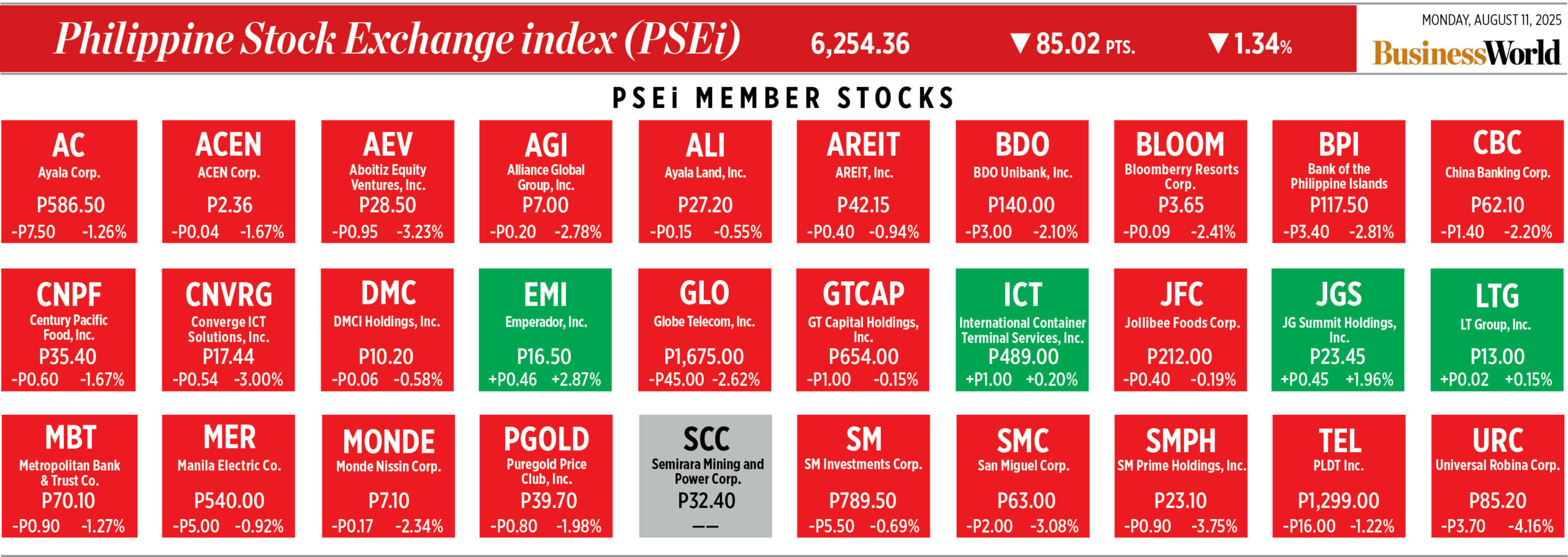

Here’s a quick glance at how PSEi stocks fared on Monday, August 11, 2025.

FINANCE Secretary Ralph G. Recto said the government is studying a new general tax amnesty (GTA) measure, with the possibility of an estate-tax extension.
“We are also studying the possibility of enacting a General Tax Amnesty and online gambling tax laws,” Mr. Recto said in his speech at the Economic Journalists Association of the Philippines Economic Forum on Monday.
The proposed tax amnesty will involve an amnesty charge set at a yet-to-be-determined percentage of the outstanding unpaid tax, in exchange for immunity from civil, criminal, and administrative penalties.
Mr. Recto said the GTA will be submitted to Congress this year, subject to the approval of President Ferdinand R. Marcos, Jr. and the cabinet.
“There’s a call to extend the Estate Tax amnesty. We’ll include it here,” Mr. Recto said.
Two months ago, the Bureau of Internal Revenue moved the deadline for the filing, approval and payment of estate tax amnesty application to June 16 as June 14 landed on a weekend.
Republic Act No. 11956 extended the period for availing of the estate tax amnesty for another two years or until June 14, 2025, from the previous deadline of June 15, 2023.
This grants beneficiaries, transferees, or legal heirs sufficient time to settle taxes on inherited assets, particularly for estates of individuals who died on or before May 31, 2022.
“It’s not going to be the same bill passed by Congress then that was vetoed. This is just a General Tax Amnesty. This will be a simple amnesty bill,” he said.
In 2019, President Rodrigo R. Duterte vetoed the GTA provisions of Republic Act No. 11213 but retained the estate tax amnesty provisions.
Asked for further details of the bill and possible proposed deviations from the previous bill, Mr. Recto said: “No details yet. (The drafting is) being started right now.”
Mr. Recto told reporters the government is open to the idea of barring state-run firms from investing in businesses related to online gambling, after the Government Service Insurance System (GSIS) purchased DigiPlus Interactive Corp. shares.
“We’ll look into it. I agree. The Maharlika (Investment Corp.) will not invest in this,” he said, referring to the sovereign wealth fund. Mr. Recto also serves as Maharlika chairman.
GSIS President and General Manager Jose Arnulfo Veloso is currently under preventive suspension over the pension fund’s investment decisions. The GSIS had also purchased Alternergy Holdings Corp. shares, allegedly without adhering to the pension fund’s prescribed internal approval procedures.
Mr. Recto is proposing to deter gambling addiction by taxing the online gambling industry, while other parts of the government crack down on electronic wallet use in online gambling.
“This is a whole-of-government approach. Even the President has said he will call for a semi-summit to discuss the issue,” Mr. Recto said. — Aubrey Rose A. Inosante

By Justine Irish D. Tabile, Reporter
SECRETARY Frederick D. Go, the special assistant to the President for investment and economic affairs, said restrictions on online gambling could take the form of more comprehensive know-your-customer (KYC) rules.
“There are a few things that are possible there. Number one is to be stricter on the KYC, meaning all the platforms can be stricter to ensure that nobody below 21, for example, is allowed to gamble,” Mr. Go said on Monday at the Economic Journalists Association of the Philippines Economic Forum.
He sees KYC as an effective means of determining whether an individual should be barred from gambling.
“A regulation that I believe should be seriously considered is raising the minimum bet and raising the minimum entry point,” he added.
He said raising the minimum bet is likely to reduce betting frequency.
He noted that Singapore casinos also require an entry fee, a practice that could be adopted by online gambling operators.
“For example, there’s a minimum entry level, let’s say P1,000, and a minimum bet of P100. That way you don’t have somebody coming in with P100 and betting everything he has on one bet,” he said.
INDIAN MARKET
Separately, Mr. Go said India has become a major trading, investment, and tourism partner of the Philippines.
However, he said the Philippines, with only 70,000 or so Indian visitors last year, is far behind its Southeast Asian neighbors.
“The number of Indian visitors to our Southeast Asian neighbors is in the hundreds of thousands, if not in the millions of visitors a year,” he said.
“I kept pushing for this within the sectoral groups to ensure that we allow easy entry for Indian tourists,” he added.
He said a recent positive development is that Indians with US, Japanese, Australian, Canadian, Schengen, Singaporean, or UK visas can now enter the Philippines visa-free for 14 days.
Regarding the launch of Air India direct service connecting New Delhi and Manila in October, he said: “I’m not even sure when the last time we had a direct flight to India was. But with access now to 1.5 billion people, I think we can be looking at major tourism numbers, major trade numbers, and major investment numbers coming from India,” he said.
He said the Philippine delegation led by President Ferdinand R. Marcos, Jr. to India last week obtained $446 million in firm investment commitments, with the potential to grow to about $4.5 billion if other letters of interest come through.
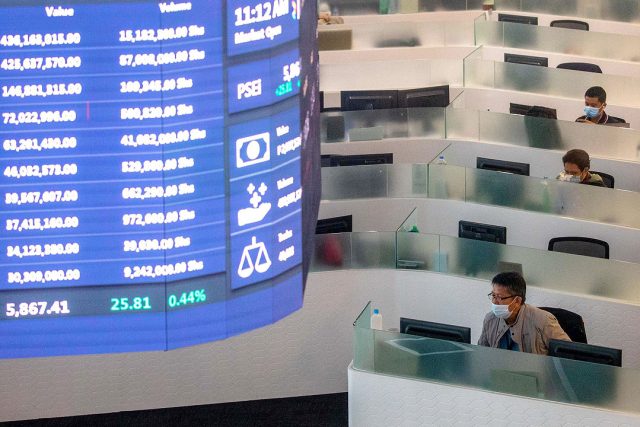
STOCKS dropped for the third straight session on Monday, sending the bellwether index back to the 6,200 level, amid the lack of fresh leads and concerns regarding the Philippine economy’s growth outlook.
The Philippine Stock Exchange index (PSEi) sank by 1.34% or 85.02 points to close at 6,254.36, while the broader all shares index went down by 0.85% or 32.16 points to 3,735.25.
“The local market opened the week on a negative tone as the lack of fresh positive leads allowed worries over the local economy’s outlook to take over sentiment,” Philstocks Financial Inc. Research Manager Japhet Louis O. Tantiangco said in a Viber message.
“Investors are concerned on how the local economy could accelerate its growth amid lingering global economic uncertainties caused primarily by the United States’ protectionist policies,” Mr. Tantiangco added.
Philippine gross domestic product (GDP) expanded by 5.5% in the April-to-June period, slightly faster than the 5.4% growth in the first quarter but slower than the 6.5% expansion in the second quarter last year. This matched the lower end of the government’s 5.5%-6.5% growth target for this year.
For the first half, GDP growth averaged 5.4%, slightly below the government’s goal. Economic Secretary Arsenio M. Balisacan last week said the economy must grow by 5.6% this semester to hit the low end of the full-year target and by 7.5% to reach the upper end.
“The market was largely driven by selling pressure today, with prices seemingly stalled as investors wait for a new catalyst to emerge after the PSEi rebalancing last Friday,” Regina Capital Development Corp. Head of Sales Luis A. Limlingan said in a Viber message.
“With most companies having already released their second quarter earnings, attention may now shift to the upcoming US inflation data, which could shape the Federal Reserve’s next policy direction,” he added.
July US consumer inflation data will be released on Aug. 12 (Tuesday).
On Friday, the PSE announced the inclusion of Tanco-led digital entertainment provider DigiPlus Interactive Corp. into the PSEi starting Aug. 18, replacing Razon-led integrated resorts operator Bloomberry Resorts Corp.
Almost all sectoral indices closed lower on Monday. Financials sank by 2.3% or 50.39 points to 2,132.21; property dropped by 1.97% or 48.41 points to 2,408.30; industrials declined by 0.91% or 82.61 points to 8,911.90; holding firms retreated by 0.85% or 44.62 points to 5,199.57; and mining and oil decreased by 0.2% or 18.82 points to 9,263.62.
Meanwhile, services went up by 0.19% or 4.59 points to 2,319.54.
Value turnover went down to P7.1 billion on Monday with 908.82 million shares traded from P7.25 billion with 1.42 billion shares exchanged on Friday.
Decliners outnumbered advancers, 141 versus 70, while 41 names were unchanged.
Net foreign buying increased to P421.37 million on Monday from P37.65 million on Friday. — Revin Mikhael D. Ochave

THE National Government’s (NG) budget deficit is expected to widen to 6% of economic output this year as escalating trade tensions weigh on fiscal consolidation, Fitch Solutions unit BMI said.
“We maintain our Philippine fiscal deficit forecast at 6% in 2025 as a more challenging external environment will challenge fiscal consolidation efforts,” it said in a report.
“The economy will need fiscal support to offset global headwinds, but policymakers will have very limited room to maneuver given already high public debt levels.”
BMI’s forecast is higher than the 5.5% deficit ceiling set by the Development Budget Coordination Committee for this year.
“This signals a clear slowdown in fiscal consolidation efforts and reinforces our view that the government faces growing constraints in reducing its budget shortfall over the medium term,” BMI said.
In the first six months, the NG budget deficit widened 24.69% to P765.5 billion.
The budget gap remained relatively within target as it was 0.63% above the projected P760.7 billion for the first half.
The government is hoping to bring the deficit down to 4.3% of GDP by 2028.
However, BMI said “escalating US trade protectionism” remains a key risk to this outlook.
In late July, US President Donald J. Trump imposed a 19% duty on many goods from five members of the Association of Southeast Asian Nations (ASEAN) — the Philippines, Cambodia, Malaysia, Thailand and Indonesia, which took effect Aug. 7.
“If fully implemented, this would further dampen external demand and add to existing structural weaknesses. In turn, this increases pressure on the government to provide economic support.”
BMI estimates indicate that government spending would need to increase by around 1 percentage point to meet the 6% medium-term growth target.
However, this would be “fiscally unfeasible.”
“The Philippines’ public finances remain fragile, with the debt-to-GDP ratio having risen to around 60% from the pre-pandemic level of 40%. This places the country among the regional laggards in fiscal recovery,” it said.
The NG’s outstanding debt as a share of GDP rose to 63.1% at the end of June, the highest since 2005.
This was also higher than the first quarter’s 62% and the year-earlier 60.9%. It is also above the 60% debt-to-GDP threshold considered by multilateral lenders to be manageable for developing economies.
“Elevated borrowing costs and a narrow revenue base further limit Manila’s ability to deliver large-scale fiscal support without compromising debt sustainability,” it added.
On the other hand, BMI noted that the impact of the tariffs may be “less severe than feared.”
“The full impact of rising trade fragmentation — driven by geopolitical tensions and supply chain realignment — remains difficult to quantify.”
“Furthermore, policymakers are unlikely to rely solely on fiscal spending. Instead, we expect a more balanced policy response that includes monetary easing, targeted subsidies and efforts to diversify trade partners, particularly within ASEAN and the Indo-Pacific region.”
BMI said that the Philippines must either “accept structurally slower GDP growth or prolong the fiscal adjustment timeline.”
“With limited fiscal headroom and rising external risks, the government’s ability to strike a sustainable balance will be tested in the years ahead.” — Luisa Maria Jacinta C. Jocson

THE Department of Agriculture (DA) said talks with the Canadian government produced an agreement to collaborate on plant health.
In a statement, the DA said the Bureau of Plant Industry and the Canadian Food Inspection Agency signed an agreement focusing on plant health, capacity-building, scientific and regulatory advancement, and the exchange of innovations.
The deal emerged from a meeting between Agriculture Secretary Francisco P. Tiu Laurel, Jr. and Canadian Agriculture and Agri-Food Minister Heath Macdonald last week.
Officials also discussed Canada’s pursuit of a trade agreement with members of the Association of Southeast Asian Nations, the DA said.
The talk “raised the prospect of a bilateral FTA to broaden market access and diversification,” the DA said.
Canada and the Philippines in December 2024 announced exploratory discussions for a potential bilateral free trade agreement (FTA).
“We remain committed to the successful and timely conclusion of these negotiations,” the DA said.
The DA noted growing bilateral agri-fishery trade between Canada and the Philippines that hit $2.39 billion between 2020 and 2024.
Philippine agri-fishery exports to Canada grew to $148 million in 2024 from $109 million in 2020, “the strongest performance in five years.” — Kyle Aristophere T. Atienza

THE government expects to complete the rehabilitation of the Agus-Pulangi hydroelectric power plant (HEPP) complex in Mindanao before the government steps down, according to the Department of Finance (DoF).
“It’s moving forward,” Finance Secretary Ralph G. Recto said on the sidelines of a forum on Monday organized by the Economic Journalists Association of the Philippines.
Mr. Recto, was speaking in his capacity as chairman of the Power Sector Assets and Liabilities Management Corp. (PSALM), the entity set up to manage and in some cases privatize the government’s portfolio of power facilities.
The complex, with a rehabilitation cost estimated at $350 million, consists of seven run-of-river HEPPs in southern and central Mindanao, with a rated capacity of about 1,000 megawatts (MW).
However, only 600-700 MW is currently operational due to aging equipment and infrastructure issues, according to a 2024 World Bank report.
PSALM was created under the Republic Act No. 9136, or the Electric Power Industry Reform Act (EPIRA) of 2001.
Its corporate term was originally due to expire in June 2026, or 25 years after the effectivity of EPIRA. It was granted a 10-year extension.
PSALM recently completed the privatization of the 796.64-MW Caliraya-Botocan-Kalayaan (CBK) HEPP to the Aboitiz-led Thunder Consortium.
Thunder Consortium consists of Aboitiz Renewables, Inc., Sumitomo Corp., and Electric Power Development Co.
The group offered P36.266 billion, outbidding the FGKW Consortium — composed of First Gen Prime Energy Corp. and Korea Water Resources Corp. — which submitted a P19.62-billion offer.
The winning bid exceeded PSALM’s reserve price of P32.6 billion.
“It will generate something like P35 billion which is good as it represents additional revenue for the government,” Mr. Recto said.
The CBK complex consists of the 39.37-MW Caliraya HEPP in Lumban; the 22.91-MW Botocan HEPP in Majayjay, and the 366-MW Kalayaan I and 368.36-MW Kalayaan II pumped-storage power plants, all in Laguna. — Sheldeen Joy Talavera

THE Department of Trade and Industry (DTI) said it is expecting over $50 million worth of investment from an Indian operator of dialysis centers.
It said NephroPlus is planning to expand its renal care network in the Philippines, possibly leading to the creation of 1,000 jobs in the next three years.
“NephroPlus, which currently operates 39 dialysis centers nationwide, announced plans to scale up to 150 clinics by 2028, focusing on underserved provinces and areas with high prevalence of chronic kidney disease (CKD),” the DTI said.
“The company’s expansion includes building new centers, localizing the manufacturing of dialysis-related supplies, and establishing a training academy for Filipino hemodialysis nurses,” it added.
Since its entry in 2020, the company has invested around $30 million, employing over 600 staff.
“It has forged partnerships with local governments in Cavite, Aklan, and Cebu to expand dialysis access through public-private partnerships (PPPs). The company plans to earmark around $50 million for the expansion,” it added.
Among the company’s upcoming projects is a greenfield clinic in Noveleta, Cavite, which is awaiting BoI board approval. It is expected to house 12 advanced dialysis machines.
“When we open more doors to healthcare, we open more doors to inclusive growth … This partnership shows how the private sector can help us bring quality care to every Filipino, wherever they are,” Trade Secretary Ma. Cristina A. Roque said.
The NephroPlus three-year plan involves tripling its Philippine workforce, deploying artificial intelligence-enabled treatment monitoring, and conduct clinical research in dialysis care.
“These initiatives are expected to contribute significantly to the Philippines’ growing healthcare economy, estimated to rise sharply amid increasing cases of CKD linked to diabetes and hypertension,” the DTI said.
In a separate statement, the DTI said President Ferdinand R. Marcos, Jr. met with executives of the Hinduja Group to obtain new investments.
According to the DTI, the conglomerate, which is involved in the automotive, finance, and technology industries, is expected to create 1,000 additional jobs with its prospective investment.
Unit Hinduja Global Solutions, a business process management company, has an ongoing expansion in the Philippines, which includes new offices in Bonifacio Global City and Iloilo and a recently launched AI Hub in Quezon City.
“These projects, backed by an estimated $5 million in fresh investment, position the Philippines as a strategic partner in Hinduja’s growth in the Asia-Pacific region,” the DTI said.
To date, the company employs more than 3,800 across seven delivery centers in Quezon City, Taguig, Cebu, and Iloilo.
Since entering the country in 2003, the company has invested over $50 million in the Philippines.
“Beyond business process management, the delegation also invited Hinduja to explore opportunities in renewable energy, mobility, automotive, banking, and other priority sectors under the Philippine Development Plan, citing complementarities between Indian and Filipino industries,” the DTI said. — Justine Irish D. Tabile

By Beatriz Marie D. Cruz, Reporter
THE government’s public housing program remains hampered by the high cost of land and lack of capacity by local government units, which may have led to the scaling back of the three million unit government housing target, analysts said.
Mark Cooper, senior director, Thought Leadership, at the Urban Land Institute Asia Pacific, said the Philippines has limited urban land, which is not sufficient to house its increasing population.
“There are very few countries in the region which have been able to successfully deliver public housing. Large developing nations such as the Philippines are challenged by the sheer size of their population,” Mr. Cooper said in an e-mail.
“The major challenge for housing everywhere, especially public housing, is the cost and availability of land.”
The government’s public housing program is known as the Expanded Pambansang Pabahay Para sa Pilipino (4PH). The Department of Human Settlements and Urban Development (DHSUD) recently abandoned its initial goal of building three million housing units by 2028.
Noel Toti M. Cariño, national president of the Chamber of Real Estate & Builders Association, Inc., said key challenges faced by the 4PH program include access to affordable and well-located lands, as well as funding, permits and titling.
Many local government units lack the technical capacity or resources to implement large-scale housing projects, he said via Viber.
Mr. Cariño also cited the need to streamline government regulations and improve funding flows to speed up implementation.
To increase private sector participation and better support beneficiaries, the expanded 4PH program included horizontal or subdivision-type housing.
It also included rental and incremental housing to suit the needs of beneficiaries. About 7,000 families are also expected to benefit from the revived community mortgage program under the Expanded 4PH framework.
However, the program won’t lead to significant benefits if housing remains commodified, according to Philippine Resource Center for Inclusive Development (Inklusibo), an organization supporting informal settlers.
“To fully transform the housing situation, we recommend that housing not be commodified by the government. Instead of facilitating the delivery of housing units, the government should fully reclaim its responsibility of providing housing to the public — investing, allocating more resources, and fully implementing it,” Inklusibo Executive Director Hans G. Bautista said in an e-mail.
“Furthermore, the government must ensure that its housing programs are participatory and appropriate to the needs and demands of the urban poor and the homeless.”
The organization also flagged President Ferdinand R. Marcos, Jr.’s lack of direction to housing agencies during his recent State of the Nation Address.
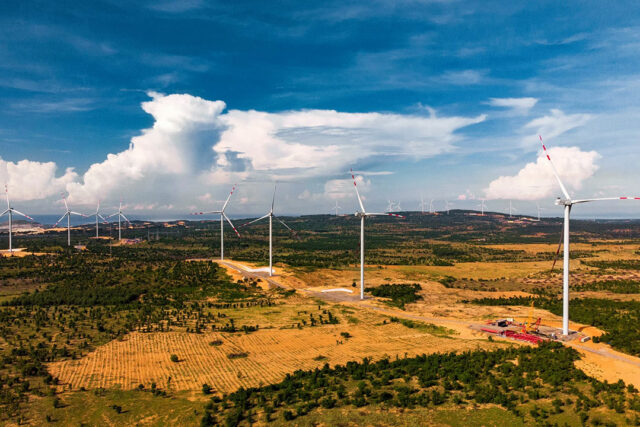
THE Kalayaan 2 Wind Power project, which was expedited by the green lane permitting system, is on track to begin commercial operations in July 2026, the Board of Investments (BoI) said.
BoI Investment Assistance Service Director Ernesto C. Delos Reyes, Jr. said the BoI One-Stop Action Center for Strategic Investments (OSACSI) assisted the project in obtaining a tree-cutting permit.
“The BoI also facilitated the inter-agency meeting among the local government units, Department of Public Works and Highways (DPWH), and Department of Environment and Natural Resources (DENR) for the logistical arrangements,” he said via Viber.
He said the meeting paved the way for the transport of the turbine, tower, and blade equipment from Batangas port to the site.
“Upon completion, the Kalayaan 2 Wind Power Project is expected to generate 100.8 megawatts of clean energy to the grid, reducing carbon emissions and contributing significantly to the country’s renewable energy targets and long-term energy security,” the BoI said in a statement on Monday.
It said the OSACSI aided in achieving “seamless logistics, safe unloading, and on-schedule transportation of turbine components to the project site.”
“With the turbines now on-site, installation and commissioning activities are set to begin immediately, further advancing the project toward full operational status,” it added.
The P10.85-billion wind power project received its green lane endorsement on Oct. 23, 2023.
Expected to generate 530 jobs, it is being developed by Laguna Wind Energy Corp., a subsidiary of The Blue Circle.
Laguna Wind Energy Corp. Project Director Miguel Cruz Moniz said that the company remains “on schedule to complete the Kalayaan 2 Wind Power Project, contributing significantly to the nation’s renewable energy goals.” — Justine Irish D. Tabile

On July 1, the Capital Markets Efficiency Promotion Act (CMEPA), or Republic Act No. 12214, took effect. As specifically provided in the law, the State recognizes the necessity of a simpler, fairer, more efficient, and regionally competitive passive income tax system to encourage savings, as well as develop and deepen capital markets. Thus, CMEPA was signed into law to encourage broader investment in the capital markets and promote inclusive growth.
While the intent of the law is clear, misinformation surfaced when the law took effect in July. Viral social media posts circulated claiming that bank deposits in the Philippines will be taxed at 20%. Though these claims are inaccurate and misleading, many were quick to believe the claims. Further posts even advocated just keeping money at home, or spending, instead of saving.
The Department of Finance (DoF) and Malacañang have refuted these posts, clarifying that taxation applies not to the savings themselves, but solely to the interest earned from those savings. Furthermore, the Bureau of Internal Revenue (BIR) released the necessary rules and revenue regulations for the implementation of CMEPA on Aug. 5. Among these are Revenue Regulations (RR) No. 20-2025 and 21-2025.
RR Nos. 20-2025 and 21-2025 were issued to implement the amendments of CMEPA to the taxation of certain passive income.
INTEREST INCOME
Effective July 1, all interest income earned by Filipino citizens, resident foreigners, and non-resident foreigners engaged in trade or business, domestic and resident foreign corporations, from both peso and foreign-currency bank deposits or deposit substitutes, trust funds and other similar arrangements, regardless of their nature or tenure, are now subject to 20% final withholding tax. Interest income of nonresident foreigners not engaged in trade or business and nonresident foreign corporations will still be subject to a 25% final withholding tax or tax treaty rate. Income of non-residents, whether individuals or corporations, from transactions with depositary banks under the expanded system, remain exempt from income tax.
Interest income from project-specific bonds issued by the Republic of the Philippines or any of its instrumentalities to finance capital expenditures or programs covered by the Philippine Development Plan or its equivalent and other high-level priority programs of the National Government, as determined by the Secretary of Finance, are exempt from income tax.
GAINS FROM SALE, TRANSFER, OR DISPOSITION OF INVESTMENTS
Except in the case of non-resident foreign corporations, capital gains from the sale, exchange or other disposition of shares of stock in a domestic or foreign corporation not traded in a local or foreign stock exchange are subject to 15% capital gains tax, regardless of the classification and status of the seller (individual or corporation). For non-resident foreign corporations, only capital gains from the sale, exchange or other dispositions of shares of stock of a domestic corporation, not traded in a local or foreign stock exchange, are subject to 15% capital gains tax.
Shares in a domestic corporation sold or disposed of through a local or foreign stock exchange are subject to stock transaction tax (STT) of 1/10 of 1% effective July 1. Similarly, shares in a foreign corporation sold or disposed of through a local stock exchange are subject to the same STT. As specifically provided in RR No. 21-2025, STT is in lieu already of capital gains tax.
Since individuals, other than resident citizens and resident foreign corporations, are subject to Philippine income tax on their Philippine sourced income only, we hope the BIR issues further guidance on the treatment of sale of shares in a foreign corporation for these non-residents.
Gains realized from the sale, exchange, or retirement of bonds, debentures, or other certificates of indebtedness, including those with a maturity period of more than five years, are now subject to income tax effective July 1. If traded through a local or foreign stock exchange, the sale is subject to Stock Transaction Tax (STT).
Gains realized by the investor upon redemption of shares of stock in a mutual fund company, or units of participation in a Mutual Fund or Unit Investment Trust Fund are not subject to income tax provided, that prior to such redemption, final taxes due on realized gains were previously withheld at the level of the underlying assets.
INVESTMENTS PRIOR TO JULY 1
Since CMEPA took effect on July 1, any tax exemption and preferential rate on financial instruments issued or transacted prior to July 1 are subject to the prevailing tax rate at the time of its issuance for the remaining maturity of the relevant agreement.
As provided in the implementing rules and regulations, the following conditions must be complied with for the prevailing rate or tax exemption prior to July 1 to apply:
1. The financial instrument was issued or transacted prior to July 1, as evidenced by the instrument itself or any other relevant agreement either in written or electronic format;
2. The instrument itself or agreement provides for the maturity period of the financial instrument as agreed upon or stated in the instrument which is beyond July 1; and
3. There is no change in the maturity date or remaining period of coverage from that of the original document or agreement, and no renewal or issuance of new instrument to replace the old ones, starting July 1.
While the implementing rules and regulations outlined the conditions for exemptions or preferential rates to apply to financial instruments issued prior to July 1, further clarity from the BIR is needed regarding the tax treatment of gains from the sale of instruments that were previously exempt from income tax. For example, are gains realized from the sale of long-term instruments — originally exempt because they were issued before July 1, but sold on or after that date — still considered exempt?
Although initial confusion around the taxation of savings deposits has since been addressed, and the BIR has released the implementing rules and regulations, the early uncertainty caused by CMEPA’s amendments underscores the critical importance of clear and timely communication of the implementation of the changes brought about by new tax laws. Ensuring that the public is well-informed about tax changes is essential.
Ideally, the effective implementation of new laws relies on the availability of comprehensive rules and regulations before those laws come into force. At the end of the day, a law, no matter how well-crafted, is only as effective as its implementation. We laud the DoF and BIR effort in ensuring that the required implementing rules and regulations are issued within the deadline set by the law. However, the effectivity of the new tax laws must consider the time required of government agencies to frame, consult and issue the implementing regulations. This ensures that the intended objectives are achieved, and compliance from taxpayers is seamless.
Let’s Talk Tax is a weekly newspaper column of P&A Grant Thornton that aims to keep the public informed of various developments in taxation. This article is not intended to be a substitute for competent professional advice.
Ma. Lourdes Politado-Aclan is a director from the Tax Advisory & Compliance practice area of P&A Grant Thornton, the Philippine member firm of Grant Thornton International Ltd.

By Chloe Mari A. Hufana, Reporter
PHILIPPINE President Ferdinand R. Marcos, Jr. said on Monday that Beijing has “misinterpreted” his comments saying Manila will be inevitably drawn in to a conflict between China and Taiwan should one erupt.
China accused Mr. Marcos of “playing with fire” after the Philippine leader said during a visit to India that “there is no way that the Philippines can stay out of it” due to its proximity to the democratically governed island.
“We are, I think for propaganda purposes, misinterpreted,” Mr. Marcos told a press briefing.
“I’m a little bit perplexed why it would be characterized as such, as playing with fire,” he added.
Mr. Marcos said Filipinos working and living in Taiwan will have to be evacuated if a conflict does arise but maintained that he wishes to avoid confrontation and war.
Over a hundred thousand Filipinos live and work in Taiwan, according to Philippine government data.
“War over Taiwan will drag the Philippines kicking and screaming into the conflict. That is what I was trying to say,” Mr. Marcos said.
China’s embassy in Manila did not immediately respond to a request for comment on the President’s remarks.
The Philippine president’s comments come at a time of heightened tensions between Manila and Beijing over territorial disputes in the South China Sea, a strategic waterway where the two countries have had a series of maritime run-ins over the past years.
Mr. Marcos’ new remarks on the potential conflict in Taiwan reflect the Philippines’ foreign policy, Josue Raphael J. Cortez, diplomacy lecturer at De La Salle-College of St. Benilde, said, noting the Philippines is a peace-loving nation, committed to the resolution of conflicts through dialogue and peaceful ways.
“The President, as chief architect of Philippine foreign policy, has enunciated the statement in line with the third pillar, which is to protect the rights and promote the welfare of Filipinos abroad,” Mr. Cortez said in a Facebook Messenger chat.
“To argue that we are trying to ‘play with fire’ is something baseless given that we are now perceiving the issue from the context of our national interest.”
Manila’s reason for possibly intervening in the conflict must be viewed in a humanitarian lens, Mr. Cortez noted, which Manila has always done, as exemplified during the Arab Spring and the recent tensions in the Middle East.
NOT BACKING OUT
Also on Monday, Mr. Marcos said Philippine government vessels will remain in Scarborough Shoal (Bajo de Masinloc) after a Philippine vessel was targeted with a water cannon by a China Coast Guard (CCG) ship earlier in the day.
The Philippine Coast Guard (PCG) reported on Monday that it deployed the BRP Teresa Magbanua and BRP Suluan, along with MV Pamamalakaya, to carry out Kadiwa operations for around 35 Filipino vessels in the shoal, when it encountered “hazardous maneuvers and blocking actions.”
BRP Suluan was particularly targeted with a water cannon, which was evaded by PCG crew members.
“We will not instruct any of our vessels to back out,” Mr. Marcos said, pertaining to the Philippine Navy and PCG.
“We do not back down because we are afraid. I don’t know about other places, but this government does not withdraw from battles. We Filipinos are brave,” he added in mixed English and Filipino.
The same incident led to a collision between a CCG vessel and a People’s Liberation Army Navy ship. The PCG immediately offered support, including assistance with man-overboard recovery and medical aid for any injured CCG crew members.
Responding to the Monday incident, China’s coast guard said it had taken necessary measures to expel Philippine vessels from Scarborough Shoal, which China claims as its own territory.
It described the operation as “professional, standardized, legitimate and legal.”
A 2016 ruling of an international arbitral tribunal voided Beijing’s sweeping claims in the region, saying they had no basis under international law, a decision China rejects.
Senate President Pro-Tempore Jose “Jinggoy” P. Ejercito Estrada on Monday also called on Beijing’s navy to cease its dangerous actions against Manila’s coast guard.
“This is a classic case of reaping what one sows. The Chinese Coast Guard must cease and desist from engaging in dangerous maneuvers against our Philippine Coast Guard and other maritime vessels,” he said in a statement.
He added that the Beijing’s tactics not only endangered Manila’s maritime personnel and fisherfolk, it also escalated tensions.
“Nothing good will come of such actions, except the empty display of logistical superiority,” Mr. Estrada said.
In a separate statement, Senator Risa Hontiveros-Baraquel said that China’s actions were reckless and endangered their own people.
“I also continue to call on our government to support our fisherfolk to the fullest extent possible, and to allow them continued access to their traditional fishing areas in the (Scarborough Shoal),” Ms. Hontiveros said.
She added that it was crucial for the Philippines to maintain year-round maritime law enforcement in the disputed waterways to protect its fisherfolks.
Both Senators had also commended the PCG for offering assistance and medical aid to the injured Chinese crew members.
PHL-INDIA PARTNERSHIP
Meanwhile, the Philippines’ National Security Council said that the country’s strategic partnership with India should bolster their naval cooperation and joint exercises amid ongoing tension in the South China Sea.
“Through this Strategic Partnership, we look forward to expanded naval engagements, joint training, technology exchanges, and collaboration in addressing emerging challenges such as cybersecurity, humanitarian assistance and disaster response, and capability building,” National Security Adviser Eduardo M. Año said in a statement also on Monday.
He added that the Philippines is looking forward to further discussions on submarine infrastructure development with India.
Last week, Mr. Marcos went on a five-day state visit to India where he secured agreements for defense, maritime cooperation, and investments. Manila had also strengthened its ties with New Delhi into a strategic partnership.
“The National Security Council will work closely with our security agencies to implement the agreements reached and ensure that our deepening partnership with India translates into concrete capabilities and mutual benefit for our two nations,” Mr. Año said.
The visit also coincided with a joint patrol by the Philippine and Indian navies in the South China Sea, which began before he left for New Delhi — the first for both forces in the disputed waters.
He said that the maritime exercise “enhances interoperability, promotes maritime domain awareness, and reinforces our capacity to protect our sovereignty, sovereign rights and jurisdiction, particularly in the (South China Sea) and the broader Indo-Pacific region.”
The Philippines has increasingly relied on multinational cooperation to shore up its maritime defenses. It has participated in more frequent joint patrols and multilateral naval exercises in the South China Sea, often alongside US forces and other regional partners. — with Adrian H. Halili and Reuters
