Home Blog Page 1141

Gaming profit, lower costs push Belle Corp. Q1 profit up 5% to P462M

PREMIUMLEISURECORP.COM

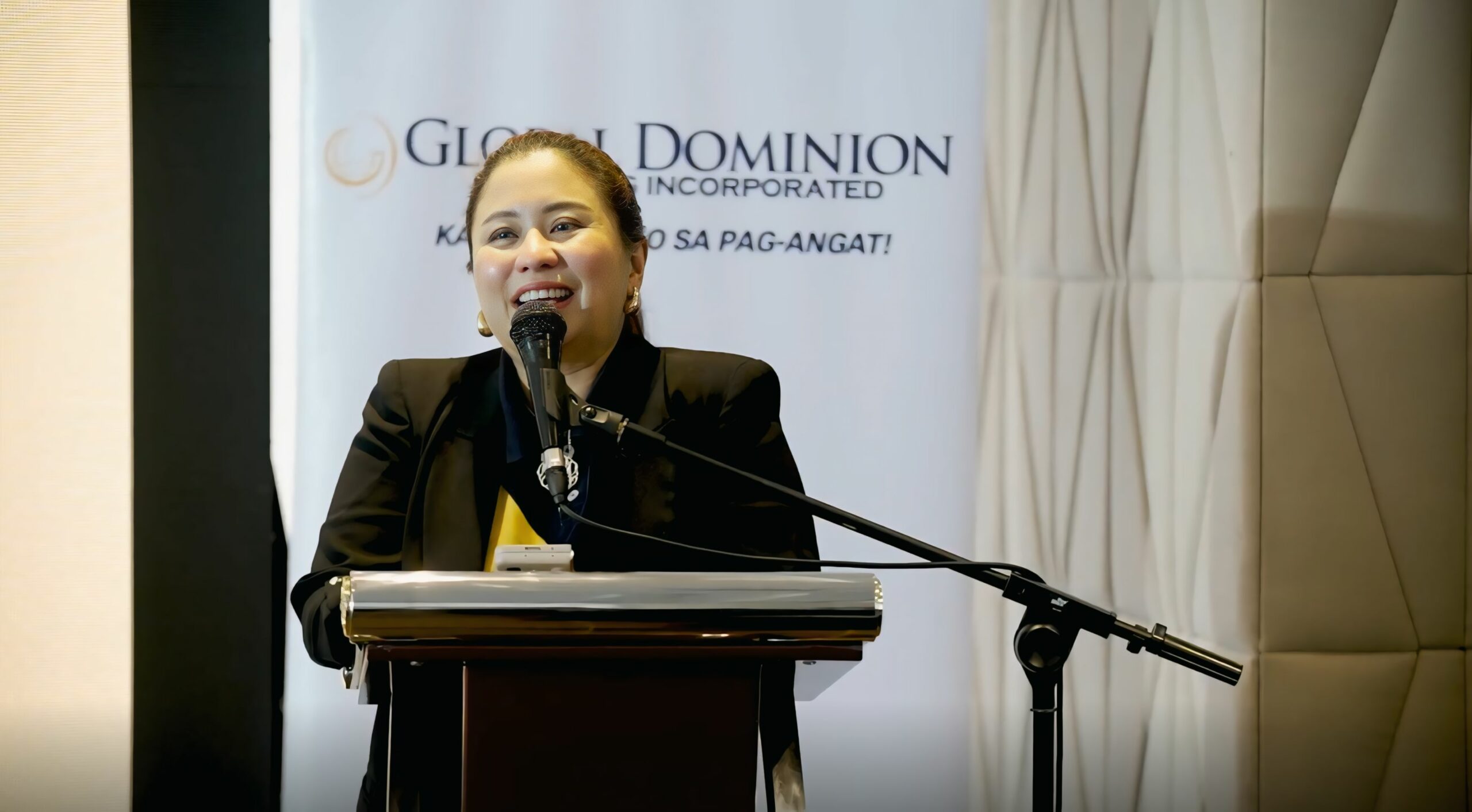
LISTED gaming and integrated resort developer Belle Corp. reported a 5% year-on-year increase in first-quarter net income to P462.39 million from P439.73 million, driven by lower operating costs and higher gaming revenue.

Consolidated revenue declined by 1% to P1.31 billion from P1.32 billion due to a 6% drop in real estate revenue to P739.7 million, Belle said in a regulatory filing on Tuesday.

Leasing income from the City of Dreams Manila integrated resort in Parañaque rose by 1% to P588 million, while revenue from real estate sales and property management at the Tagaytay Highlands complex fell by 28% to P151.7 million.

Belle leases the land occupied by City of Dreams Manila to Melco Resorts and Entertainment (Philippines) Corp.

Gaming revenue from subsidiary Premium Leisure Corp. (PLC) rose by 31.4% to P432.6 million. Lottery system provider Pacific Online System Corp., 50.1%-owned by PLC, generated P129.5 million in revenue from leasing online betting equipment to the Philippine Charity Sweepstakes Office.

Cost of lease income declined by 3% to P158.8 million on lower repair and maintenance expenses. Cost of real estate sold dropped by 13% to P52.7 million due to fewer units sold.

Cost of lottery services fell by 3% to P87.4 million, while cost of gaming operations edged up by 0.8% to P34.3 million. Property management service costs declined by 13% to P34.2 million on lower consumption.

Belle shares dropped by 1.36% or two centavos to P1.45 on Tuesday. — Revin Mikhael D. Ochave

T-bond yields inch up after jumbo 10-year issue

BW FILE PHOTO

THE GOVERNMENT made a full award of the reissued Treasury bonds (T-bonds) it offered on Tuesday even as its average rate inched up from the previous auction, with the recent issuance of 10-year benchmark notes affecting market liquidity and investor demand.

The Bureau of the Treasury (BTr) raised P30 billion as planned via the reissued seven-year bonds it auctioned off as total bids reached P55.222 billion or nearly twice the amount on offer.

This brought the total outstanding volume for the bond series to P291.7 billion, the Treasury said in a statement.

The bonds, which have a remaining life of five years and two months, were awarded at an average rate of 5.943%. Accepted bid yields ranged from 5.85% to 5.95%.

The average rate for the reissued papers increased by 3.5 basis points (bps) from the 5.908% fetched for the series’ last award on April 2. Still, this was 43.2 bps lower than the 6.375% coupon for the issue.

This was 2.2 bps above the 5.921% quoted for the five-year bond but 0.2 bp below the 5.945% seen for the same bond series at the secondary market before Tuesday’s auction, based on PHP Bloomberg Valuation Service (BVAL) Reference Rates data provided by the BTr.

The government fully awarded its T-bond offer as the average yield was lower than the prevailing BVAL rate for the series, the BTr said.

“The yield is within market expectations. Demand was decent enough for the BTr to consider awarding,” a trader said in a text message.

The awarded bids were at the higher end of the expected range following the government’s jumbo 10-year bond issuance, but still “fair enough” for both the Treasury and investors, the trader added.

Rizal Commercial Banking Corp. Chief Economist Michael L. Ricafort likewise said that the average yield of the issue went up from the previous award as the offering of new 10-year benchmark fixed-rate Treasury notes (FXTN) that closed last week siphoned off some liquidity from the financial system.

The government raised a total of P300 billion from its offering of new 10-year bonds, 10 times the initial P30-billion program, the BTr announced on Friday. The issuance was listed on the Philippine Dealing & Exchange Corp.’s fixed-income board on Monday.

The BTr borrowed an initial P135 billion from the bonds at the rate-setting auction on April 15 and held a public offer that ended on April 23. The notes fetched a coupon rate of 6.375%. Accepted bid yields ranged from 6% to 6.4%, resulting in an average rate of 6.286%.

The FXTN offer was held under a new issuance format targeting institutional investors like corporates, cooperatives, trust funds, retirement funds, and provident funds.

The BTr plans to raise P260 billion from the domestic market in May, or P100 billion via Treasury bills and P160 billion through T-bonds.

The government borrows from local and foreign sources to help fund its budget deficit, which is capped at P1.54 trillion or 5.3% of gross domestic product this year. — A.M.C. Sy

Violinist Esther Abrami pays tribute to female composers in album Women

ESTHERABRAMI.COM

LONDON — French violinist Esther Abrami puts female composers in focus on her new album Women, paying tribute to their often-overlooked contributions to classical music.

From Oscar winners Rachel Portman and Anne Dudley to historical composers Ethel Smyth and Pauline Viardot, 14 women feature on the record, which will be released on Friday.

Abrami, a graduate of London’s Royal College of Music, describes her third album as “a collection of music and stories from women across the centuries, starting from the Middle Ages all the way up to today.”

“In 15 years of studying music, I didn’t play a single piece written by a woman,” she told Reuters.

“If I ask anyone who’s not into classical music to name me… one woman who composed classical music, they’re usually unable to. If I ask them to name one man who composed classical music, everybody can at least give you one name. So I think that’s kind of what inspired it, I want things to change.”

On the track list are arrangements of original compositions including “March of the Women” by Smyth, featuring the voice of fellow women’s suffrage activist Emmeline Pankhurst, as well as “Wiegala” by Jewish poet Ilse Weber, who composed songs for children while at the Theresienstadt camp during World War Two.

Weber died in the Auschwitz death camp but her husband, who had hidden her music before their deportation, retrieved it after the war.

“I chose pieces that touched me,” Abrami said. “(These women) are incredibly inspiring and I hope they can also inspire young girls to want to compose music themselves.”

Modern touches include Miley Cyrus’ hit “Flowers” and Abrami’s own composition “Transmission,” inspired by her grandmother who was also a violinist.

Abrami, who has a loyal social media following, has long championed the voice of women in classical music, interviewing various figures on her podcast Women in Classical.

“I think… it’s… refreshing to hear… different pieces of classical music, different composers,” she said.

“Even (for) me as a classical musician, when I thought I knew kind of everything about it… at least the main composers, to realize actually there’s a whole part of history that you don’t know yet. That’s super exciting.” — Reuters

The Balikatan: A demonstration of full-scale commitment to peace

PHILIPPINE STAR/WALTER BOLLOZOS

“Balikatan” means, literally, standing shoulder to shoulder. The annual bilateral defense drill has long symbolized the enduring alliance between the Philippines and the United States.

This year’s iteration of the Balikatan, the 40th, is imbued with an even greater significance. It takes place at a critical point where security no longer only refers to the defense of physical territory. Over time, there have emerged numerous other ways in which security can be threatened. This is also a time when many external factors threaten to challenge the two countries’ mutual commitment to each other and to peace.

Indeed, the Balikatan Exercises that began on April 21 this year stands out both in scale and in strategic importance.

According to the Armed Forces of the Philippines (AFP), this year’s Balikatan is the most comprehensive iteration of the annual bilateral exercise to date. It is a full-scale defense drill designed to enhance interoperability between the two nations’ militaries “under the most realistic and challenging conditions.”

Balikatan 2025 is unique for its multi-domain focus. It spans traditional air, land, sea, and space operations, featuring components such as Integrated Air and Missile Defense (IAMD), Maritime Strike (MARSTRIKE), and Counter Landing Live Fire Exercises (CLLF).

At the same time, it also tries to address emerging threats in the cyber and digital domains. According to the AFP, the exercises include Combined Joint All-Domain Operations (CJADO), These high-level drills are complemented by the Cyber Defense Exercise (CYDEX), a key initiative that brings together cyber units from both countries to enhance resilience and coordination in defending critical digital infrastructure.

What this year’s Balikatan represents is credible deterrence, a product of the Philippines’ ongoing military modernization that also enjoys the growing support of like-minded nations like the US.

The modernization of the military is an essential part of beefing up the Philippines’ defense capabilities. Thus, a range of military assets acquired through the Philippines’ ongoing modernization efforts are set to be tested during Balikatan 2025, including the C-Star cruise missile, the Philippine Navy’s most advanced anti-ship weapon.

These will be accompanied by a wide array of air assets.

There will also be a deployment of advanced military assets from the US, including the NMESIS coastal anti-ship missile platform. As stated by the US Ambassador to the Philippines MaryKay Carlson, the US is “committed to bolstering deterrence and there is no better way to do that than Balikatan. Through the additional deployment of NMESIS, the full battle test, and all domain capabilities training, our combined joint force is taking our alliance to the next level.”

Then again, when we say like-minded nations, we do not just refer to the US. Many other countries are taking part in the Balikatan as either active participants or observers. According to the Department of Foreign Affairs and the AFP, these countries include Japan, Australia, the United Kingdom, France, Canada, Germany, the Czech Republic, Poland, and Colombia.

For the first time, the Japan Maritime Self-Defense Force (JMSDF) is joining the Multilateral Maritime Event (MME), a positive development following the ratification of the Japan-Philippines Reciprocal Access Agreement.

In a statement, the Australian Government emphasized that the participation of around 260 members of the Australian Defense Force is a way of “improving interoperability with partner nations and strengthening defense cooperation.”

The United Kingdom, which had previously participated only as an observer, has now signified that its defense forces will actively take part in this year’s exercise.

MUTUAL DEFENSE TREATY
The Balikatan is rooted in the 1951 Mutual Defense Treaty between the US and the Philippines. Amid global events and factors that threaten peace, and despite numerous points of uncertainty, Balikatan 2025 affirms the alliance between the two countries, described by no less than US officials as “ironclad” on numerous occasions. Through expanded troop deployments, the introduction of cutting-edge military technology, and strengthened multilateral engagement, the exercises clearly demonstrate that the United States remains deeply committed to supporting the Philippines and upholding a free and open Indo-Pacific.

No doubt, the geopolitical landscape has become more complex. Today the Philippines is battling several simultaneous threats on different fronts, necessitating fast, decisive action as well as cooperation with like-minded nations. The West Philippine Sea, despite the favorable ruling of the Permanent Court of Arbitration in 2016, and despite the popular global acknowledgment as reflected in its entry in Google Maps, remains persistently challenged by audacious actors asserting their dubious claims.

Amid all these, the Balikatan sends a strong and unequivocal message: that credible deterrence is built on strong partnerships, modern capabilities, and collective resolve. By expanding the scale, scope, and participation of the exercises, the Philippines is not only reinforcing its alliance with the United States but also demonstrating its strategic importance in promoting regional security and safeguarding the rules-based international order.

The geopolitical challenges we are facing are daunting, but our alliances and partnerships with countries who share our values and their commitment to support us in pursuit of our common goal emboldens us to stand strong. The Balikatan has always been an important part of our defense and diplomacy, and now, more than ever, it assures us we are not alone in facing the threats that confront us.


Victor Andres “Dindo” C. Manhit is the president of the Stratbase ADR Institute.

CIC targets 80 franchise centers by yearend

CONCEPCION.PH

LISTED Concepcion Industrial Corp. (CIC) plans to expand its Carrier Air Authority Center franchise network to at least 80 outlets by end-2025, from 35 currently, as it accelerates retail and after-sales channel development.

CIC operates through subsidiary Concepcion-Carrier Air Conditioning Co. (CCAC), which manages the franchise program launched in 2023 to expand regional access to air-conditioning products and services.

“We have 35 existing partnerships. For this year, the target is to increase that to at least 80,” said Carrier Air Authority Franchise Program Head Joanne Ramos during a media roundtable on April 25.

“Preferably, these will be outside Metro Manila and major cities because we are trying to change the buying habit. So if it is near a retail store, it defeats the purpose,” she added.

The franchise model allows entrepreneurs to open localized service centers offering end-to-end HVAC (heating, ventilation, and air conditioning) support — from unit sales to installation, maintenance, and the sale of genuine parts.

“The Carrier Air Authority Center reflects our broader mission at CIC to create meaningful opportunities that uplift Filipino communities,” said CIC Chairman and President Raul Joseph A. Concepcion.

“By empowering entrepreneurs to build sustainable businesses that address essential needs, we are not only contributing to national progress but also advancing our commitment to provide reliable Concepcion solutions to every home and business,” he added.

The program is positioned to capitalize on increasing demand for climate control solutions, particularly outside major urban centers.

CIC said it also supports small business development by enabling franchisees to generate multiple revenue streams.

Franchisees receive rights to use the Carrier brand and access a bundled package including operations manuals, technical and business training, marketing materials, launch support, business consulting, and localized promotional assistance.

“This robust support infrastructure enables motivated individuals, even those without prior extensive technical backgrounds, to establish and scale successful enterprises,” CIC said.

Future program enhancements may include maintenance contracts and commercial HVAC installations beyond the current residential focus.

CIC shares rose by 18 centavos, or 1.2%, to P15.18 apiece on Tuesday. — Justine Irish D. Tabile

Philippine banks seen resilient, stable amid potential tariff shocks

THE PHILIPPINE banking system is expected to be more resilient against shocks caused by the United States’ tariff policies compared to its neighbors, Fitch Ratings said.

“The imposition of tariffs will likely be negative, potentially more so for the likes of Vietnam and Thailand than is the case for the Philippines, where we view the banking system as exhibiting a degree of resilience and stability in terms of growth prospects,” Fitch Ratings Head of Asia-Pacific Banks Jonathan Cornish said on Money Talks with Cathy Yang on One News on Tuesday.

“It should be largely manageable, especially in the case of the Philippines, that’s reflected in Fitch’s neutral outlook for the Philippine banking system,” he added. “This means the banking sector’s business generation and financial prospects will remain “broadly similar in 2025 versus last year.”

US President Donald J. Trump earlier this month slapped “reciprocal” tariffs on its major trading partners. The Philippines was slapped with a 17% rate, the second-lowest in Southeast Asia.

However, the implementation of the reciprocal rates was suspended for 90 days, with countries currently subject to a blanket 10% duty.

Lingering uncertainties over the US tariff policies may be a “deterrent for business investment across the region, and that’s going to weigh on economic growth and hit banks’ growth prospects, albeit to varying degrees across the region,” Mr. Cornish said.

The potential economic impact of these changing tariff policies could also prompt the credit rater to revise its outlook on banking systems in the Asia-Pacific region, but this is less likely for the Philippines, he added.

“The threat of high tariffs increases the potential that we’ll revise the likes of Vietnam’s sector and look back to neutral. Thailand actually could move to deteriorating from neutral. We see less risk of change for the Philippines overall,” he said.

“If the tariff level remains lower, together with what is a relatively low single-digit exposure to US exports as a percentage of GDP (gross domestic product), then the Philippine economy and banking system should remain relatively stable.”

Mr. Cornish noted Fitch’s recent actions on major Philippine banks’ viability ratings, adding that these reflect their neutral view on the sector.

“Their viability ratings reflect our assessment of the price behind credit risk. And the credit rating outlook for the Philippine banks also remains the same,” he added.

In March, the credit rater hiked the country’s banking sector operating environment score to “bbb-” from “bb+.” All rated Philippine banks’ viability ratings were also revised one notch higher this month.

“The authorities in the Philippines including the Bangko Sentral ng Pilipinas (BSP) certainly have presided over relatively robust credit growth in recent years,” Mr. Cornish said. “We expect that to continue as genuine demand for credit to support robust economic growth, and which is likely to be aided by policy rate cuts in 2025 and 2026.”

The BSP resumed its easing cycle earlier this month with a 25-basis-point (bp) rate cut.

“But in the Philippines, rate cuts have not always weighed on bank net interest margins (NIMs) in the past. That’s partly to do with the nature of bank lending in the Philippines,” Mr. Cornish noted.

“We expect NIMs of the major commercial banks to narrow slightly. The same goes for our major banks, which are offering profit to risk-weighted assets, but this is on the back of double-digit total loans growth. So, overall bank earnings should really hold up in the Philippines.”

Bank lending rose by 12.2% year on year to P13.03 trillion in February, slower than the 12.8% expansion in January, which was the fastest in two years. — Luisa Maria Jacinta C. Jocson

Sistine Chapel’s conclave preparations leave tourists shut out

MUSEIVATICANI.VA

VATICAN CITY — It is one of the wonders of the world, attracting millions of visitors every year. But those now in Rome hoping to admire the Sistine Chapel will not get their fix of its monumental Michelangelo frescoes.

“Notice is hereby given that the Sistine Chapel will be closed to the public from Monday 28 April 2025 for the requirements of the Conclave,” reads a terse statement on the Vatican Museums’ website.

The conclave, the secret meeting to elect a new leader of the Catholic Church after the death of Pope Francis, starts on May 7, but preparations to host the more than 130 cardinals due to take part take several days.

“To come from so far, to not be able to go into one of the major sites is very disappointing,” said Leonie Shannon, a 67-year-old tourist from Australia.

The chapel’s ceilings are adorned with scenes painted between 1508 and 1512 from the Bible’s Old and New Testaments. The most famous is The Creation of Adam, in which God reaches with his finger to touch the outstretched hand of the first man.

Michelangelo also painted the awe-inspiring Last Judgment on the wall behind the altar, while other Renaissance artists such as Botticelli, Perugino, and Ghirlandaio decorated its side walls.

“This is a truly great work of art that we’ve studied, so we hoped that we could witness it firsthand,” said Guo Feng, one of a group of art students from China. “It’s really unfortunate that we can’t see it on this trip. It’s a big regret for us.”

But many visitors also acknowledged the extraordinary circumstances that required the closure of the most popular part of the Vatican Museums.

“We were a little bit sad (when) we heard the Sistine Chapel was closed, we really wanted to see the Creation of (Adam), right?” said Ahmad Mourad, a visitor from Texas in the US. “But we understand the situation and everything.”

Even without the chapel, the Vatican Museums contain one of the great art collections, stretching from ancient Roman sculptures to 19th– and 20th-century masters such as Van Gogh and Matisse.

“(It) would have been amazing to see the Michelangelo, … I mean, that’s stunning. But look, I think we still enjoyed what we saw. There were still many, many, many rooms that we could explore… But yeah, obviously disappointed,” said Australian Sharyn Davis. — Reuters

US director Alexander Payne to head Venice Film Festival jury

US film director Alexander Payne — LABIENNALE.ORG

ROME — US director Alexander Payne will head the main competition jury at this year’s Venice Film Festival, the organizers said on Monday.

Mr. Payne’s films, including the comedies The Holdovers, Sideways, and The Descendants, have been nominated for a total 24 Oscars, including four times for Best Picture and three times for Best Director.

He has won twice for Best Adapted Screenplay.

“It’s an enormous honor and joy to serve on the jury at Venice. Although I share a filmmaker’s ambivalence about comparing films against one another, I revere the Venice Film Festival’s nearly 100-year history of loudly celebrating film as an art form,” Mr. Payne said in a statement.

The 82nd Venice Film Festival, held on the lagoon city’s Lido island, will run from Aug. 27 to Sept. 6. The movies in competition will be announced in July.

Mr. Payne’s 2017 comedy Downsizing opened the festival in 2017. — Reuters

China’s e-commerce giants are putting up a fight

By Catherine Thorbecke

CHINA’s e-commerce players are perhaps the most exposed to the trade war, the exception to arguments that the country’s tech sector will be able to weather the storm.

If US President Donald Trump’s tariffs hold, it would be devastating for the business models of PDD Holdings, Inc.’s Temu, Shein, Alibaba Group Holding Ltd.’s international retailers, and the thousands of small Chinese companies making goods for export. But the levies have galvanized them to support each other in unprecedented ways. And Americans have simultaneously shown an unwillingness to let their access to cheap imports go.

Chinese tech giants are working to help exporters find buyers in the domestic market. JD.com, Inc. said earlier this month that it would purchase at least 200 billion yuan ($27.4 billion) of goods from exporters over the next year and help sell them at home. PDD pledged to invest 100 billion yuan to help its sellers pivot to local consumers. Alibaba’s supermarket chain launched a new channel for firms looking to sell at home. Internet giant Baidu, Inc. pledged free advertising services for a million companies. Even companies not immediately exposed to tariffs, such as ride-hailing app DiDi Global, Inc. or internet giant Tencent Holdings Ltd., have joined the crusade.

The efforts, combined with government stimulus programs aimed at boosting consumption, lifted China’s retail sales by 5.9% last month, beating estimates and marking the best pace since December 2023. It’s not yet clear if this will be enough to offset the impact from prolonged tariff pain. But if this strategy does succeed, it would show how Washington’s approach has backfired and forced Beijing to further trade-war-proof its economy.

Trump also seems to have miscalculated how his home base would respond when access to cheap Chinese e-commerce goods is cut off. It has driven hordes of Americans to do even more international bargain-hunting. The impact will really hit home now that Shein Group Ltd. has raised US prices ahead of tariffs on small parcels: Health and beauty products are increasing by 51% and women’s clothing by 8%.

US consumers have flocked to Chinese retail outlets. Downloads of Alibaba’s app have surged 34% year-to-date compared to the same period last year, according to data from market intelligence firm Sensor Tower, while DHGate and Taobao (the latter is owned by Alibaba) have rocketed 78% and 420%, respectively. It’s a notable spike given Sensor Tower estimates that Alibaba has pulled back on advertising spending in the US by nearly 45% so far this year.

The figure exposes how the unwinding of Chinese e-commerce in the US will hit revenues for Silicon Valley titans like Meta Platforms, Inc. and Alphabet, Inc.’s Google. Temu and PDD have been some of the largest buyers of ads on the platforms. In the wake of the fresh tariffs, the companies’ US advertising has cratered.

Some of the interest in Chinese wholesale retailers may have been instigated by a rash of viral videos from suppliers and manufacturers, touting the high quality and low price of goods from the “world’s factory,” and putting international brands they claim to work with on blast. This messaging highlights China’s advantages — including access to its deeply integrated and nimble supply chains. They also suggest that exporters are no longer just trying to compete on cost, but also on quality and value. These follow a separate blitz of AI-generated videos and memes from China mocking US workers trying to recreate this manufacturing ecosystem.

It will still no doubt be painful for Chinese e-commerce to weather extended tariff turmoil. The domestic pivot could just be a Band-Aid, and further escalations could eradicate American consumers’ interest. Policy rollbacks and uncertainty make it impossible to predict how sustainable these initial trends are.

But there are some lessons: Nothing galvanizes China to come together like attacks from the US, and little rouses American consumers like the threat of losing access to cheap goods. If this trade war tips the US into a recession, it will only further the desire for bargain prices, while doing little to bring back business investment or manufacturing.

BLOOMBERG OPINION

ACEN CFO says company to see ‘robust growth’ by 2026

ACEN Corp., the listed energy platform of the Ayala group, expects “robust growth” in earnings by 2026, driven by new power projects scheduled to come online, according to its chief financial officer (CFO).

“I think we’d expect to see pretty robust growth because we have good visibility on our project pipeline and new projects coming online over the next two to three years,” ACEN CFO Jonathan Back told reporters last week.

Mr. Back said that this year would be “a little bit slower” compared to 2024, as the company does not have as much new capacity coming online.

“We’re in a slightly lumpy business, so there will be years with very fast growth, like last year, and then there will be years where growth is flatter. Also, some of the projects that Patrice Clausse was referring to will only fully come online toward the end of the year, like the Monsoon project in Laos,” he said.

“So, there are some timing effects,” he added.

Based on a presentation from ACEN, the company has ongoing developments across its domestic and international projects, progressing toward its target of 20 gigawatts (GW) of renewable energy capacity by 2030.

The majority of the projects in the pipeline are set for completion by 2026, including the 300-megawatt (MW) Palauig 2 Solar power project and the 200-MW SanMar Solar power project, both located in Zambales.

Outside the Philippines, ACEN is scheduled to complete the 80-MW Solarscape & Dayasinar Solar project in Malaysia, the 68-MW Sonagazi Solar project in Bangladesh, and the New England Battery Energy Storage System project in Australia.

For this year, the company anticipates the completion of the 520-MW Stubbo Solar project in Australia, the 600-MW Monsoon Wind project in Laos, the 153-MW Maharashtra commercial and industrial (C&I) hybrid solar-wind project in India, and the 129-MW Stockyard Wind project in Texas.

“ACEN continues to progress toward our goals, notwithstanding the global headwinds impacting the energy transition. The company remains committed to scaling up renewables in the Philippines and across the region,” said ACEN President and Chief Executive Officer Eric T. Francia.

To date, ACEN holds 7 GW of attributable renewable energy capacity across operational, under-construction, and committed projects. Its footprint spans the Philippines, Australia, Vietnam, India, Indonesia, Laos, and the United States.

For 2024, ACEN reported a 27% increase in its attributable net income to P9.36 billion, driven by higher generation output.

Revenues grew by 2.2% to P37.3 billion from P36.5 billion a year ago.

At the local bourse on Tuesday, shares in the company closed unchanged at P2.69 apiece. — Sheldeen Joy Talavera

PHL hopes to get “watch” status for JPMorgan bond index re-entry

BW FILE PHOTO

THE PHILIPPINES continues to work towards its re-inclusion in JPMorgan Chase & Co.’s emerging market government bond index and hopes to be placed under “watch” status following the latter’s latest consultation survey.

“JPMorgan will conduct another round of Index Governance Consultation survey in May-June, and hopefully we will be under its ‘watch’ status,” National Treasurer Sharon P. Almanza said in a Viber message on Tuesday.

“During the last survey, taxation and secondary market liquidity were the key issues of investors,” Ms. Almanza added.

Ms. Almanza, along with other officials from the Bureau of the Treasury as well as the Bangko Sentral ng Pilipinas and the Department of Finance, last week met with representatives from JPMorgan to discuss the inclusion of Philippine bonds in its Government Bond Index-Emerging Markets (GBI-EM), the Treasury said in a statement.

“This marks the continuation of the consultation process with JPMorgan towards index inclusion which would increase potential capital inflows, representing a significant milestone for the country’s capital markets,” it said.

JPMorgan’s GBI-EM tracks the performance of sovereign and quasi-sovereign bonds issued by emerging market countries. The country’s inclusion will need to be approved by a certain percentage of investors reviewing the index.

The Philippines last year missed the cut for the bond index, Bloomberg reported in November. This came after JPMorgan in August last year asked investors if the Philippines should be placed on “Index Watch Positive,” which is a precursor for inclusion in the GBI-EM.

The Finance department last year said it hopes the Philippines could re-enter the GBI-EM by this year, as this would “enhance foreign investor access to peso-denominated government bonds, reduce friction costs, and strengthen the country’s investment attractiveness.”

Ms. Almanza last year said it could take the Philippines two to three years to re-enter the bond index after getting added to JPMorgan’s watchlist.

The Philippines’ global peso notes were removed from the GBI-EM in January last year due to illiquidity. — Aaron Michael C. Sy

Philippines trails regional peers in UNCTAD’s Inclusive Growth Index

The Philippines was among the laggards in the East and Southeast Asian region after it scored 34.3 out of 100 in the latest edition of the Inclusive Growth Index (IGI), released by the United Nations Conference on Trade and Development (UNCTAD). Using 2023 data, the index assesses an economy’s well-being and inclusivity through its gross domestic product (GDP) with other data on living conditions, equality, and environmental sustainability.

Philippines trails regional peers in UNCTAD’s Inclusive Growth Index