Home Blog Page 114

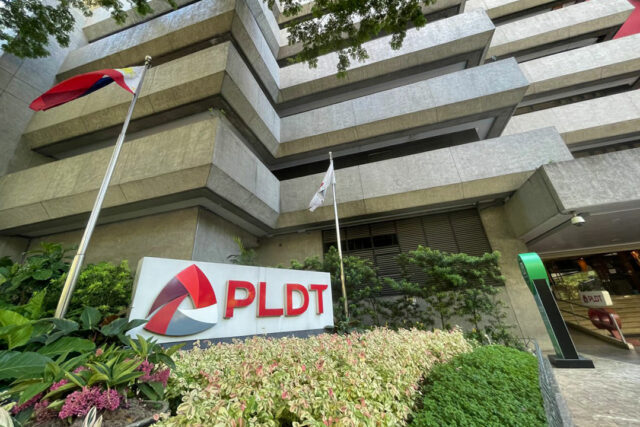
PLDT, EdgePoint to deploy solar-powered telco towers

PLDT

PLDT INC. said its wireless arm, Smart Communications, Inc., has partnered with EdgePoint Towers Inc. to deploy solar-powered telecommunications towers across the country.

“Ensuring reliable connectivity is our foremost priority, especially in communities where power supply is unstable. Solarizing these towers significantly improves uptime and service continuity by giving our equipment a more dependable energy source for our network,” PLDT Chief Operating and Network Head Menardo G. Jimenez, Jr. said in a media release on Tuesday.

The deployment of solar-powered telco towers will begin with 20 Smart-leased sites in off-grid areas, PLDT said, adding that this is part of its ongoing efforts to integrate sustainability initiatives into partnerships.

Smart is leveraging EdgePoint’s solarization initiatives to strengthen energy security and network operations while expanding service availability in far-flung areas.

The company said replacing diesel with renewable energy as the main power source for telco towers will help stabilize operations in areas with unreliable electricity supply.

“For us, sustainability is not separate from network performance — it strengthens it. By shifting to cleaner energy sources, we reduce emissions while making our network more reliable and future-ready. Our partnership with EdgePoint accelerates our progress toward building a low-carbon and resilient digital infrastructure,” PLDT and Smart Chief Sustainability Officer Melissa Vergel de Dios said.

Across the solar-powered telco towers, PLDT said installed solar capacity exceeds 181 kilowatt-peak, complemented by battery capacity of over 20,000 ampere-hours.

The shift to renewable energy is expected to reduce reliance on fossil fuels, cutting diesel consumption by about 98,000 liters annually and lowering carbon emissions.

At the local bourse on Tuesday, shares in PLDT rose by P51, or 3.93%, to close at P1,350 each.

Hastings Holdings, Inc., a unit of the PLDT Beneficial Trust Fund subsidiary MediaQuest Holdings, Inc., holds a majority stake in BusinessWorld through the Philippine Star Group, which it controls. — Ashley Erika O. Jose

InstaPay, PESONet transfers reach P2.6 trillion in January

PHILIPINE STAR/IRRA LISING

By Katherine K. Chan, Reporter

TRANSACTIONS coursed through PESONet and InstaPay reached a total value of around P2.6 trillion in January, data from the Bangko Sentral ng Pilipinas (BSP) data showed.

As of January, the value of InstaPay and PESONet transfers jumped 43.1% to P2.581 trillion from P1.803 trillion in the same month last year.

Meanwhile, both clearing houses recorded a combined transaction volume of 688.801 million in the first month of 2026, over quadruple (329.86%) the 160.238 million seen a year prior.

Broken down, the value of transactions made via InstaPay surged by 65.52% to P1.242 trillion in January from P750.618 billion in the same month last year.

The volume of InstaPay transfers also ballooned by 350.45% year on year to 678.319 million from 150.588 million previously.

On the other hand, PESONet transactions were valued at P1.338 trillion during the month, up 27.11% from the P1.053 trillion recorded in January 2025.

The volume of transactions made via the payment gateway also climbed by an annual 8.62% to 10.481 million from 9.649 million, central bank data showed.

John Paolo R. Rivera, a senior research fellow at the Philippine Institute for Development Studies, said PESONet and InstaPay transactions sustained their growth as consumers and businesses continued to patronize digital payments.

“(This) reflects the continued shift toward digital and cashless transactions, driven by wider use of mobile banking and e-wallets, strong remittance flows, and growth in (e-commerce),” he said via Viber.

“InstaPay’s faster growth points to increased use for real-time, small-value payments, while PESONet is driven by business and bulk transactions,” he added.

Wider adoption of QR Ph, the country’s national standard for quick response code payments, likely also boosted traffic for both automated clearing houses, said Jonathan L. Ravelas, a senior adviser at Reyes Tacandong & Co.

“This surge shows how fast Filipinos are moving away from cash,” he said in a Viber message. “Everyday payments — from bills to small purchases — are increasingly done via e‑wallets and digital banks, while wider QR Ph acceptance and faster, cheaper transfers made InstaPay and PESONet the default choice.”

In the coming months, digital payments in the country will likely continue posting strong growth, Mr. Rivera said.

“Digital payments should continue to grow at a double-digit pace, supported by financial inclusion, better payment infrastructure, and changing consumer behavior, although growth may gradually normalize as adoption matures.”

InstaPay and PESONet are automated clearing houses under the central bank’s National Retail Payment System framework.

InstaPay is a real-time, low-value electronic fund transfer facility for transactions up to P50,000 and is mostly used for remittances and e-commerce.

Meanwhile, PESONet is mainly used for high-value transactions and may be considered as an electronic alternative to paper-based checks.

The BSP wants digital payments to make up 60-70% of the total volume of retail payments by 2028 in line with the Philippine Development Plan.

The share of online payments in monthly retail transactions stood at 57.4% in terms of volume and 59% in value terms in 2024, according to the BSP’s 2024 Status of Digital Payments in the Philippines report. These are up from 52.8% and 55.3%, respectively, in 2023.

The central bank has said that advancing developments in cross-border payments, lower transfer fees, and increased adoption for government transactions would help boost digital payments further.

Banksy’s anonymity is what gives — gave? — his art its power

AN OLDER ARTWORK by Banksy in Hoxton, London. — VUK VALCIC/ZUMA PRESS WIRE/REUTERS

By Allison Schrager

THE REVELATION that the artist Banksy is a 50-something man from Bristol, England, named Robin Gunningham, according to a Reuters report*, has shaken the art world. It may be the ultimate test of what actually determines value in contemporary art.

Art insiders are speculating that the news will increase the value of Banksy’s work. That line of thinking tracks with the fact that markets hate uncertainty, and now there is more clarity. But Banksy’s art is not like a stock option or any other commodity; greater transparency and predictability won’t increase its value. Odds are, the prices of his existing work will fall.

That said, it is easy to see how coming out of the shadows and embracing commercialization could create a new and more stable market for Banksy’s work — or at least more consistent revenue for art dealers who believe their role is to control price and supply. It is true that his work has fallen sharply in recent years, but so has the broader art market. The difference is in the magnitude: his prices tend to rise and fall more dramatically, often behaving like a high-beta asset.

Art has always been a peculiar market because value is so arbitrary — what determines it isn’t anything intrinsic to the work itself. Factors like aesthetics, scarcity, hype, and the sense that the work captures our cultural moment all shape value. Contemporary art, or art produced by a living artist, is especially hard to price for several reasons. The artist may turn out to be a modern master, or they may flame out. Their work may not stand the test of time as the cultural moments and historical events that inspire it lose their immediacy. This is why prices are so volatile, and the market is prone to manipulation by dealers who, to their credit, aim to make value more predictable (albeit with conflicted incentives).

In part because of this dynamic, few contemporary artists are well-known outside of art circles. Those who are — like Jeff Koons and Damien Hirst — owe as much to hype as to the work they produce, with marketing and spectacle becoming part of the art. This helps explain why Banksy may be the most famous living artist. His work, which is not especially exceptional on its own, would not be nearly as valuable if it didn’t capture the political moment. Indeed, timing and context have allowed his art to circulate beyond traditional art audiences.

But Banksy’s success also points to a broader problem. Art at its best challenges and reflects the world we live in, often making us uncomfortable. Much of what we see today falls short of those standards. Like many cultural institutions, contemporary art often mirrors a left-wing ideological perspective — about as edgy as an HR training video — that can come across as preachy and hypocritical. Banksy shares the political inclinations of the rest of the art world, but his anonymity and covert methods have made an otherwise unsurprising political message feel fresh.

From the shadows, he created a much-needed distance, positioning himself outside the systems he was critiquing. Consider that the artist claims to be challenging the capitalist system, yet once he is known, his position within that system becomes impossible to ignore. He could no longer covertly create his art without risking arrest for vandalism. He’ll need to be commissioned to create it like other street artists. A known Banksy may produce the same work, but it would be fundamentally different and less unique than other products on the market. Remaining unknown helps sustain the hype, even long after he’s gone. Years from now, art historians would’ve written dissertations speculating about who he really was, further adding to the myth and, in turn, the value of his work.

But perhaps all is not lost. We know Banksy might be a middle-aged man from Bristol — emphasis on might. The artist still has not confirmed the news. If he stays mum about the claims, some of the mystery may still endure, which would be for the best. Without anonymity, his artistic power is likely to erode. The market for his work could become more stable, but at the cost of both value and excitement. — Bloomberg Opinion

*Read the Reuters report here: https://tinyurl.com/58n6kdf4

Assessing the first half of the Marcos Jr. administration

PHILIPPINE STAR/NOEL PABALATE

(Part 1)

The end of 2025 marked more than half of the presidential term of President Ferdinand R. Marcos, Jr. As the year 2026 began, President Marcos Jr. had only 30 more months for attaining the goals that he had set for himself, especially for the Philippine economy. In this series of articles, I will assess the performance of his administration in some Key Result Areas (KRAs) that I consider of the greatest importance to the economic welfare of the Filipino people.

I gathered a group of young economists of the University of Asia and the Pacific (UA&P) to compare the performance of Mr. Marcos Jr.’s administration during the first half of his term to those of his two predecessors, President Benigno (Noynoy) Aquino III and President Rodrigo Duterte. I am grateful to economists Diana Rueda, Marco Agonia, and Jose Antonio Ramirez, all graduates of the Industrial Economics Program of UA&P, for the excellent research and communication assistance they contributed to the writing of these articles. The most thorough review by Mr. Ramirez of the efforts of the last three administrations at prudent fiscal management will be a featured article in the sequel to a book that will be written for the enlightenment of the next administration that will be in place by July 2028.

Briefly, under President Marcos Jr., who assumed office on June 20, 2022, the Philippines has recorded the following GDP growth rates so far:

For the whole year of 2022, GDP grew at the high rate of 7.6%, mostly a post-pandemic rebound, with strong reopening effects during the first months of the new administration. The year 2023 was not as lucky. It was the first of a series of years that the Marcos Jr. administration failed to meet its target of GDP growth of 6.5-8% by posting 5.5% growth only. Although this growth rate was still among the highest in the Indo-Pacific region (together with India and Vietnam), it fell short of the 8% growth needed to bring the poverty incidence of 16% down to a single digit by 2028. The year 2024 was no different, with a 5.6% GDP growth rate, still below the government target of 6-6.5%. Things got worse in 2025 when the GDP growth rate slowed down to 4.4%, the slowest increase in 15 years if we do not include the very abnormal period of the pandemic.

The major slowdown in activity in 2025 was a result of the flood control corruption scandal. A quick comparison to the previous administration of President Duterte shows that at the very macroeconomic level of GDP growth rate, the Marcos Jr. government has not performed as well. Under the Duterte administration (2016 to 2022), the annual growth rate average during the pre-pandemic years was about 6.4% It was -9.5% during the pandemic year 2020 and had a rebound in 2021 at 5.7% and 2022 at 7.6%.

It would be meaningful, however, to rate the present administration on the bases of the KRAs that are directly related to the most important goal of accelerating the GDP growth rate to 8% so that there will be sufficient resources to bring down the very high poverty incidence (compared to our ASEAN peers) that still hounds the Philippine economy.

These KRAs are food security, foreign direct investments (fdis), infrastructure, and good governance.

The first, food security, is intimately related to the performance of the agricultural sector which for the last decade or so has been performing poorly, growing at a yearly average of 0-1%. FDIs have compared very poorly with those of neighboring countries, especially with Vietnam that has averaged an annual FDI flow of $15-20 billion compared to our less than $10 billion yearly. Infrastructure spending reached the ideal of 5-6% of GDP only during the second half of the Duterte administration but has plummeted back to less than 3% in 2025 because of the massive corruption related to flood control projects involving the Department of Public Works and Highways, members of the Legislature, and some private contractors. I also included a comparative study of the fiscal discipline practiced by the three administrations.

I chose these KRAs for very specific reasons. President Marcos Jr. himself has repeatedly declared that he is assigning the highest priority to food security. In fact, he decided to be Secretary of Agriculture himself for the first 14 months of his presidential term and subsequently appointed a very competent Secretary in the person of Francis Tiu Laurel who has vast experience in aquaculture. Growing agriculture (which includes fisheries and forestry) at 3% or more annually is crucial to the urgent need to accelerate GDP growth from the average of 6% annually to at least 8% so that the high rate of poverty can be brought down to single digit levels at the end of this current term.

Other requirements for this 8% growth to be achieved is an annual flow of some $15-20 billions in FDIs which can supplement the meagre savings of the Philippines (at only 8% of GDP) so that the investment-to-GDP ratio of the Philippines can be raised close to the average 30% of GDP in the East Asian region.

A final conditio sine qua non for higher growth is an improvement in good governance so that the trillions of pesos lost through corruption (as happened in 2025) can be channeled to investing in infrastructure (especially farm to market roads), providing small farmers with the resources they need (irrigation, post-harvest facilities, access to credit, etc.) and improving the quality of basic education and the general health of the public, especially the poor.

(To be continued.)


Bernardo M. Villegas has a Ph.D. in Economics from Harvard, is professor emeritus at the University of Asia and the Pacific, and a visiting professor at the IESE Business School in Barcelona, Spain. He was a member of the 1986 Constitutional Commission.

bernardo.villegas@uap.asia

Filinvest Land, EastWest launch home financing program

FILINVESTLAND.COM

FILINVEST LAND, INC. (FLI) and East West Banking Corp. (EastWest) have launched a financing program for select ready-for-occupancy (RFO) properties.

Under the partnership, buyers may secure financing of up to 95% of the contract price for selected RFO units, with a 5% down payment payable in spot cash or in installments of up to 12 months. Some projects offer early move-in options with down payments below the standard 5%.

Filinvest Land and EastWest Bank said the program aims to address higher monthly amortizations after down payments by offering loan tenors of up to 30 years with preferential rates, subject to credit evaluation.

The partnership also reduces upfront costs by waiving bank fees and offering Filinvest incentives such as discounts, vouchers, and flexible terms for selected condominium, house-and-lot, and lot-only projects.

“This partnership with EastWest Bank strengthens our efforts to remove common barriers to owning a home, helping more families move into their homes sooner and with greater ease,” Tristan Las Marias, president and chief executive officer of Filinvest Land said in a statement on Tuesday.

“By making financing more accessible, we help more Filipino families become part of these connected communities where opportunities are within easier reach,” he added.

To help speed up processing, EastWest will provide a dedicated lane for faster evaluation of qualified applications, with pre-qualification typically completed within three banking days.

“EastWest is proud to work alongside Filinvest Land in offering a financing program that truly supports the needs of Filipino homebuyers,” EastWest President Jackie S. Fernandez said.

“Our shared goal is to make the home-buying journey easier by offering a loan experience that’s faster, clearer, and more accessible. We want more families to feel confident and supported as they take this important step toward owning a home.”

The time-limited offer applies to select ready-for-occupancy projects and remains subject to bank approval and Filinvest Land’s standard guidelines.

At the local bourse on Tuesday, FLI shares were unchanged at P0.73 apiece, while EastWest Banking shares rose 1.72% to P13 apiece. — Alexandria Grace C. Magno

Peso surges as Trump says Iran talks underway

BW FILE PHOTO

THE PESO recovered to the P59-per-dollar level on Tuesday as markets saw some relief after US President Donald J. Trump claimed they were already in talks with Iran for a possible end to the war.

The local unit surged by 35 centavos to close at P59.95 against the greenback from its record-low P60.30 finish on Monday, data from the Bankers Association of the Philippines showed.

The peso opened Tuesday’s trading session stronger at P59.90 per dollar. It traded better than Monday’s close the entire session as its intraday best was at P59.68, while its weakest showing was at just P60.15 against the greenback.

Dollars traded ballooned to $2.69 billion from $1.65 billion on Monday.

“The dollar-peso closed lower on a sense of de-escalation in the US-Iran war,” a trader said by phone.

The peso rose as the dollar was mostly weaker overnight after Mr. Trump rescinded his threats against Iran and signaled progress on peace talks, which also helped lower global oil prices, Rizal Commercial Banking Corp. Michael L. Ricafort said in a Viber message.

For Wednesday, the trader sees the peso moving between P59.70 and P60.20 per dollar, while Mr. Ricafort expects it to range from P59.85 to P60.10.

The dollar firmed slightly on Tuesday as investor sentiment turned cautious, with the war in the Middle East raging on and markets skeptical of a swift resolution even though Mr. Trump delayed the bombing of Iran’s power grid, Reuters reported.

Mr. Trump wrote on his Truth Social platform that the US and Iran had held “very good and productive” conversations about a “complete and total resolution of hostilities in the Middle East.” Iran denied it had engaged in any direct negotiations.

The contrasting comments and a fresh wave of fighting left markets in flux as traders weighed Mr. Trump’s post in which he postponed the bombing for five days. Still, markets were mindful of the war all but halting shipments of about one-fifth of the world’s oil and liquefied natural gas through the Strait of Hormuz.

Oil prices edged higher after plunging more than 10% on Monday, with Brent crude futures retopping $100.94 a barrel on supply concerns.

The dollar index, which measures the US currency against a basket of peers, rose 0.2% to 99.387 after dipping 0.4% to near a two-week low on Monday.

The index has strengthened 1.8% this month, on track for its strongest monthly gain since October, as the conflict fueled safe-haven demand and resulted in traders no longer fully pricing a rate cut this year from the US Federal Reserve. — A.M.C. Sy with Reuters

Philippines-Japan at 70: Advancing a strategic partnership in an evolving Indo-Pacific region

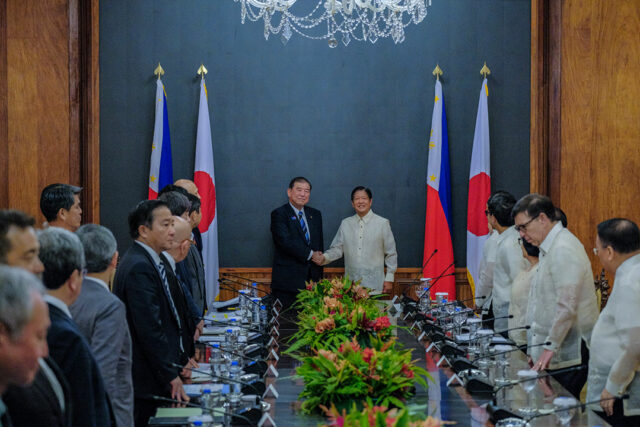
PRESIDENT Ferdinand R. Marcos, Jr. (R) and Japanese Prime Minister Ishiba Shigeru hold a bilateral meeting at Malacañan Palace on April 29, 2025. — PHILIPPINE STAR/RYAN BALDEMOR

The Philippines and Japan mark 70 years of diplomatic relations at a time of growing uncertainty in the Indo-Pacific region. What began as a process of rebuilding trust has matured into a partnership of real consequence. Today, as regional pressures intensify, this relationship is not only a testament to history — it is a strategic anchor for stability, cooperation, and shared purpose moving forward.

Across the Indo-Pacific region, long-standing assumptions about stability are being tested. The rules that have long kept our region stable are under pressure. Tensions are rising, and supply chains are becoming more vulnerable.

This is not a normal moment. It demands stronger partnerships — ones that translate into investments that create jobs, security cooperation that protects our seas, and tangible gains for the future of our people. In this environment, resilience is no longer optional; it is a shared imperative.

This is why the Philippine–Japan partnership matters now more than ever.

This year, we mark 70 years of diplomatic relations between our two countries. What began in 1956 as a process of rebuilding trust after World War II has evolved into one of the most trusted and strategically significant partnerships in the Indo-Pacific region.

This relationship is no longer just historical — it is strategic and future-facing.

The economic foundation of our partnership remains strong and deeply consequential.

For decades, Japan has been the Philippines’ largest source of Official Development Assistance (ODA), helping build the infrastructure that drives our growth — from transport systems to disaster resilience. Japanese investments have generated hundreds of thousands of jobs and supported the development of key industries across the country.

Japan has not only invested in our economy — it has helped build its foundations.

More recently, initiatives such as the Luzon Economic Corridor reflect a shared commitment to the future — strengthening connectivity, improving logistics, and positioning the Philippines as a key player in resilient regional supply chains. These efforts also support broader regional goals of diversification and risk reduction, ensuring that growth remains stable even amid external shocks.

These contributions are visible in roads, railways, industries — and in the everyday lives of Filipinos.

Second, our partnership has entered a new and more strategic phase — one defined by shared security responsibilities.

What was once an economic partnership has evolved into one that now plays a critical role in addressing today’s security challenges.

Japan is no longer just a development partner — it is now a key security partner of the Philippines. This reflects a clear reality: our maritime domain is becoming more contested, and the need to uphold international law has never been more urgent. The challenges we face are not isolated — they are part of a broader shift in the regional security environment that requires coordination among like-minded partners.

The Philippines’ designation as Japan’s first and only multi-year recipient of Official Security Assistance is not symbolic — it is strategic. Since 2023, this support has strengthened our maritime domain awareness and defense capabilities. Most recently, an additional ¥900 million, or approximately P341 million, has been committed to further support our modernization efforts.

At the same time, the Reciprocal Access Agreement marks a historic milestone. It turns alignment into action — enabling joint exercises, improving interoperability, and institutionalizing cooperation between our forces.

In today’s security environment, cooperation is no longer a choice — it is a requirement.

Third, and perhaps most important, is the foundation of trust and shared values that underpins this partnership.

Surveys consistently show that Filipinos regard Japan as one of the countries they trust the most. This trust has been built over decades of consistent engagement, mutual respect, and a shared commitment to peace, stability, and the rule of law.

Trust is the most strategic asset in any partnership — and this is where Japan stands out.

It is this trust that allows our partnership to expand into new domains — from economic cooperation to security, and increasingly into areas such as digital infrastructure and emerging technologies. As both countries navigate rapid technological change, this cooperation will become even more important in shaping inclusive and secure growth.

The Philippines and Japan stand as like-minded partners in advancing a free and open Indo-Pacific region.

But a rules-based order is not self-sustaining. It must be defended, reinforced, and practiced. The real question we must confront is this: will our region be governed by rules — or by force?

As we commemorate 70 years of diplomatic relations, we are not only celebrating a shared history. We are recognizing a partnership that continues to evolve — and one that must rise to meet the challenges of our time. Because the next 70 years will not be defined by history but by how we act today.

In a region where the stakes continue to rise, the Philippines and Japan have both the opportunity and the responsibility to work together — to strengthen economic resilience, enhance security cooperation, and uphold the principles that keep our region stable and open.

I extend my congratulations to the governments of the Philippines and Japan on this important milestone. In Stratbase, we reaffirm our commitment to strengthening partnerships that keep the Indo-Pacific region free, open, and rules-based.

Seventy years ago, we rebuilt a relationship. Today, we are shaping a shared future.


Victor Andres “Dindo” C. Manhit is the president of the Stratbase ADR Institute.

Pushing for women’s economic participation amid barriers

Jcomp | FREEPIK

Data from McKinsey & Company show that only about half of global companies prioritize women’s career advancement, extending a multiyear decline in corporate commitment to gender diversity.

Its 2025 Women in the Workplace report also finds that women express less interest in promotion than men, despite reporting similar levels of career commitment. The report links that gap to unequal access to support systems. Women are less likely to have sponsors or senior leaders who advocate for their advancement. Even when sponsorship exists, promotion rates for women lag behind men.

At the entry level, 69% of women say they want a promotion, compared with 80% of men. Among senior leaders, the figures rise to 84% for women and 92% for men. Women also report fewer chances to lead high-impact projects, limited access to leadership networks and weaker signals that advancement is attainable.

Meanwhile, Grant Thornton reports that women hold 33.5% of senior management roles worldwide, up from 32.4% a year earlier and 19.4% two decades ago. However, at the current pace, parity may not be reached until 2053.

At the same time, the World Economic Forum (WEF) estimates full gender parity across sectors could take 123 years. Its latest report also notes a drop in the share of female chief executives to 19% globally, down from 28% a year earlier, pointing to volatility at the highest levels of leadership.

The United Nations Global Compact says systemic barriers, not a lack of talent, continue to limit women’s rise to leadership. Such barriers include gender bias in hiring and promotion, along with what researchers describe as “second-generation bias,” tied to perceptions of leadership style.  

Women also face unequal access to high-visibility roles that often lead to executive positions, workplace structures that do not account for caregiving responsibilities, and underinvestment in women-led sectors.

Consequently, emerging workplace trends may deepen disparities. Artificial intelligence-driven hiring tools risk reinforcing bias, while reduced workplace flexibility, including scaled-back remote work, can disproportionately affect women.

Advancing parity

The Philippines ranks among the top performers globally on gender equality, placing 20th out of 148 economies in WEF’s 2025 Global Gender Gap Report. The country posts a gender parity score of 78.1%, up from 77.9% a year earlier, making it the most gender-equal economy in Asia.

In business, women account for 44.5% of senior management roles in 2026, up from 43% the previous year, based on data from Grant Thornton Philippines. The figure places the country second globally in female representation in top management.

Companies report that gender equality programs now form part of corporate strategy. Nearly all firms surveyed, or 98.9%, have diversity, equity and inclusion policies. About 43.5% of employees say they feel treated equally, while 28.2% point to women leaders as visible models for career advancement.

According to the Philippine Commission on Women (PCW), the country maintains about 80% parity in economic participation, supported by wage equality and broader access to employment and entrepreneurship.

However, gaps in other sectors affect the broader leadership pipeline. The PCW reports that education show a slight decline in parity, with boys’ enrollment in primary school surpassing that of girls. Health indicators also raise concern as the sex ratio at birth declines.

In governance, women’s representation in ministerial roles has fallen to 21.1%, down from more than 30% in previous years, while parliamentary representation stands at 38.9%.

Addressing gaps

To address challenges for women, legal frameworks such as the Magna Carta of Women sets out protections and opportunities in health, education, and economic participation. Government agencies also follow the Gender and Development Budget Policy, which requires at least 5% of budgets to fund programs for gender equality, including initiatives that support women entrepreneurs.

In addition, policies such as the National Action Plan on Women, Peace and Security provides a framework that connects women’s participation in peace-building with economic inclusion.

The Department of Trade and Industry leads several initiatives aimed at building women-led enterprises, with support tailored for overseas Filipino workers and repatriated women.

In rural areas, the Women Go Project, backed by the European Union, works with women in protected zones. Participants develop eco-friendly livelihoods, including fashion products made from recycled materials.

At the same time, organizations like KUMARE Inc. provide financial services alongside skills training and education support. The group has expanded into a network that also offers mentoring in household financial management.

Speaking at the 70th session of the United Nations Commission on the Status of Women, President Ferdinand R. Marcos, Jr. said women must take part in decision-making across sectors, including business.

“We cannot hope to solve the great challenges of our time if half of our humanity is excluded from shaping those solutions. Women must be present wherever decisions are made — in government, in business, in science, in diplomacy, and in peacebuilding. The Philippines stands ready to work with all nations to advance this cause,” he said. — Mhicole A. Moral

Benilde Open announces 10 grantees

Works to explore how art and tech work with the environment

TEN grantees have received production grants worth P300,000 each that will allow them to fuel art projects and creative ideas still at their very beginnings. They will be taking part in the second iteration of the Benilde Open Design + Art, which will run from April 11 to 27.

Geraldine Araneta, Benilde Open’s executive director, told BusinessWorld that this year’s theme builds on the first edition’s theme of curiosity to “imagine a future where art and technology work with the environment.”

“At its core, the theme ‘Extension of Nature’ encourages practitioners to reflect on the urgent environmental realities of our time, from climate change to ecological instability,” she said at the March 11 press launch at the College of Saint Benilde (CSB) in Manila.

“Inspired in part by the legacy of kinetic art, the theme considers how technology can operate not as an opposing force to nature, but as something that can emulate, respond to, and engage with living systems,” she added.

The 10 finalists emerged from 130 proposals, which came from artists, designers, and interdisciplinary practitioners. The 10 are: Andi Osmeña; Bianca Carague; Karl Castro; Kiri Dalena and Ben Brix; Krishner Appay; Mac Andre Arboleda; Mikael Joaquin; Camille Jay “Cairo” Pinton, Nicolei Racal, Renz Tan, Michaela Sula, and Leanne Angulo of Maison Pinton; Niño Tayao; and Buddy Lim Ong and Mona Alcudia-Ong of Studio Unosinotra.

Their projects range from video art and mixed media works to industrial design pieces and installations. They tackle a wide range of subject matter, such as climate anxiety, urbanization, corruption, and the preservation of traditional arts.

Ms. Araneta said that the process of selection was more of a “discussion of ideas” rather than a rigid points system.

Benilde Open convenor Rita Nazareno added that none of the jurors were from the Philippines, which made for an interesting result.

“They were [from] everywhere, from Madrid, Australia, California, and New York, so some had to wake up at 5 a.m. while some had to stay up until 2 a.m. [to deliberate],” she said. “You could see the sheer engagement from them. To have your work discussed in a jury, I think, is already amazing — to have all these minds to be talking about it in all seriousness.”

The members of the international jury are leaders in different facets of global design: Jihoi Lee (MMCA Korea curator and founder of Watch & Chill), Mireia Luzárraga (TAKK co-founder and assistant professor at Columbia GSAPP), Nathalie Huni (Wells Fargo managing director and head of design), Timothy Moore (curator for Contemporary Design and Architecture and Melbourne Design Week and founder of Sibling Architecture), and Freddy Anzures (a Filipino-American designer from the original iPhone team).

“They were quite impressed by the quality of the proposals. That’s where the lengthy discussions came in. We could only pick 10, and there were more than 10 that they liked,” Ms. Araneta said.

As for how the exhibition will unfold on the 6th and 12th floors of the College of Saint Benilde’s School of Design + Arts campus, she explained that the convenors are working closely with the grantees to help bring their visions to life.

It is also a good opportunity for Benilde’s students (as well as visiting students from other campuses) to be exposed to innovative projects.

“The fact that the students have the opportunity to see these exhibitions installed in the spaces around them really gives them insights about their projects and the possibilities of what they can do,” she said.

Ms. Nazareno added that the “anchor exhibitions,” which can be found in the Museum of Contemporary Art and Design (MCAD) on the ground floor of the campus, supplement the experience very well.

“Last year, they had Heidi Bucher. She was a dressmaker by profession but she also did performance and art. The students being able to see that is really quite special,” she explained. “Our anchor exhibition this year is Poets of Physics, and the kind of multidisciplinary conversation it brings to this kind of school space is really quite special.”

The exhibition features the works of Aki Sasamoto, Bagus Pandega, David Medalla, Fischli and Weiss, and Ian Carlo Jaucian, all of whom explore how scientific phenomena are collaborators in their respective creations. For example, David Medalla’s Cloud Canyons continuously generates foam or bubbles to produce ever-changing sculptural forms that dissolve and reform.

Benilde Open convenor Joselina Cruz (who is also MCAD’s director and curator) told BusinessWorld that the title of the exhibition is drawn from text by Mr. Medalla, in which he referred to himself as “a poet who celebrates physics.”

She posited that the grantees this year have the potential to continue this lineage that he spoke about.

“In the face of ecological crisis and technological innovation, in a world mired in destruction, the creative mind has an obligation to explore the relationship between the made and the natural,” she said.

Benilde Opens’ Extensions of Nature will run from April 11 to 27 at the CSB’s School of Design + Arts campus in Malate, Manila. — Brontë H. Lacsamana

ABS-CBN secures India streaming deal with Amazon MX Player

PHILSTAR FILE PHOTO

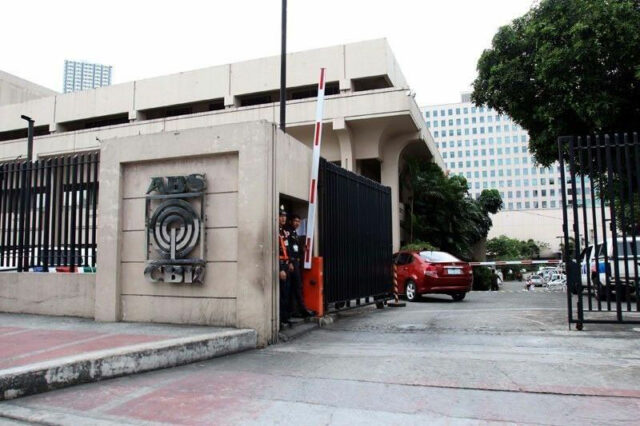
ABS-CBN CORP. said it has secured its first syndication agreement in India through a multi-title streaming deal with Amazon MX Player.

In a media release on Tuesday, ABS-CBN said that under the partnership, seven of its drama series will be carried on the platform, marking the first time Filipino drama series have been featured there.

The listed media company said the deal marks its entry into India’s over-the-top (OTT) market, which it described as one of the largest free ad-supported video-on-demand (AVOD) segments, with about 250 million monthly users.

Amazon MX Player is a video streaming service in India. The platform was formed after Amazon acquired MX Player, a free OTT streaming service in the country.

OTT refers to streaming media services, such as video, audio, or messaging, delivered over the internet rather than through traditional cable, broadcast, or satellite television.

Amazon MX Player carries a wide selection of Chinese, Korean, Turkish, and Thai dramas, ABS-CBN said, adding that the partnership expands its distribution reach.

In January, ABS-CBN said its digital operations remained a key growth driver, noting that its YouTube channel was the most subscribed in Southeast Asia with 54.4 million subscribers.

Last year, the company said it was anticipating a return to profitability within 18 months, citing higher advertising revenue and contributions from its digital, film, and music operations.

At the local bourse on Tuesday, shares in ABS-CBN were unchanged at P3.75 apiece. — Ashley Erika O. Jose

Asialink Group inks P5-B corporate notes facility to fund MSME loan growth

ASIALINK GROUP of Companies has signed a P5-billion multi-lender corporate notes facility agreement to help fund the growth of its micro, small, and medium enterprise (MSME) loan portfolio.

With the fresh funding, Asialink’s loan portfolio is projected to grow to P60 billion by yearend from P48 billion, it said in a statement on Tuesday.

The facility was arranged by Union Bank of the Philippines (UnionBank) as issue manager. UnionBank and Land Bank of the Philippines (LANDBANK) are the mandated lead arrangers and bookrunners, and both also participate as noteholders along with East West Banking Corp. (EastWest).

“This corporate notes facility agreement is a testament to the trust that leading financial institutions place in Asialink’s vision,” Asialink Group Chief Executive Officer Robert B. Jordan, Jr. said. “With UnionBank, LANDBANK, and EastWest as key partners, we are better positioned to scale our operations, innovate our services, and provide faster and more accessible financing solutions to MSMEs that drive local economic growth.”

“This milestone reinforces our commitment to empowering Filipino entrepreneurs,” Asialink Finance Corp. President and CEO Samuel Z. Cariño said. “With the support of our consortium of partner lenders, we are better equipped to provide accessible and timely financing to MSMEs, helping them grow, innovate, and contribute to local communities across the country.”

The company said the facility shows growing confidence in the nonbank sector’s role in expanding financial inclusion in underserved and high-growth regional markets as it provides funding efficiency while supporting their continued expansion as they look to reach more underserved entrepreneurs.

“Asialink is pleased to partner with UnionBank in this milestone transaction,” Asialink Group Finance Director Meynard M. Mendoza added. “Our dedication to empowering MSMEs aligns with our mission to enable businesses and communities through meaningful financial solutions. We value UnionBank’s collaboration in this initiative and look forward to a partnership that fosters growth, resilience, and greater financial inclusion.”

Last year, Asialink Finance assisted 34,611 MSMEs nationwide and financed more than 3,000 women-led enterprises through its Women’s Access to Inclusive Support or WAIS loan. — A.M.C. Sy

Museum Foundation to honor museums, cultural workers

GUARDIANS of Philippine heritage will soon be honored with a brand-new recognition program for those who preserve Philippine culture.

Titled Ang MUSEO: Gawad ng Museum Foundation of the Philippines, the awards aim to elevate the standards of cultural spaces by recognizing those who make museums “vibrant spaces of learning and cultural pride in the Philippines.”

It also has the goal of elevating regional and niche museums to the national stage, with 10 distinct categories spanning different fields under cultural heritage. They include: Gawad sa Natatanging Pamana ng Bayan (Local Museum of the Year), Gawad Para sa Institusyong Pang-Edukasyon (Educational Institute Museum of the Year), and Gawad sa Natatanging Kawani Ng Museo (Museum Worker of the Year).

“The MFPI (Museum Foundation of the Philippines) has always been proud to serve as stewards of connecting Filipinos with their cultural heritage,” said MFPI President Danny Jacinto at the press launch on March 12. “It is our hope that Ang MUSEO will help reinforce and honor all those who work to protect national memory and foster appreciation for history and the arts.”

“We want to bring well-deserved recognition to the unsung regional stewards, independent museum owners, and university-run museums nationwide, ensuring that every vital space — no matter its size or location — is honored for keeping the Filipino story alive,” MFPI Executive Director Tanya Pico said at the same event.

The awards are also inspired by standards set by the International Council of Museums. Though MFPI has worked on promoting and preserving Philippine cultural heritage over the last 40 years, its board members thought that “it was about time” such a recognition program was launched to elevate the field further.

“This can start a movement that will nurture excellence, foster collaboration, and amplify the transformative power of museums,” said Ms. Pico.

An official Ang MUSEO website and entry portal was launched at the event, now open to museums nationwide. There is a standard entry fee of P3,000 for all categories.

To ensure the integrity of the recognition, all entries will go through a rigorous, two-tier governance structure, culminating in an evaluation by a jury of independent experts in museum work, heritage conservation, and education.

Individual nominees must be Filipino citizens, either by birth or naturalization.

HERE IS THE COMPLETE LIST OF THE AWARDS:
Institutional

• Gawad sa Pamanang Tanghal (Permanent Exhibition of the Year)

• Gawad sa Napapanahong Tanghal (Temporary Exhibition of the Year)

• Gawad para sa Institusyong Pang-Edukasyon (Educational Institute Museum of the Year)

• Gawad para sa Natatanging Pamana ng Bayan: Lunsod o Munisipalidad (Local Museum of the Year)

• Gawad sa Natatanging Programa ng Museo (Program of the Year)

• Gawad sa Sangay ng Pambansang Museo (National Museum of the Philippines Satellite Museum of the Year)

Individual

• Gawad sa Natatanging Paglilingkod ng Indibidwal (Individual Achievement Award)

• Gawad sa Tagapagtaguyod ng Sining at Kultura (Patron of the Arts or Special Recognition Award)

• Gawad sa Natatanging Pamumuno ng Museo (Museum Leadership Award)

• Gawad sa Natatanging Kawani ng Museo (Museum Worker of the Year)

The deadline of submissions is on May 15. Winners will be announced at an awarding ceremony in October. — Brontë H. Lacsamana

ADVERTISEMENT
ADVERTISEMENT