Home Blog Page 113

Pushing for women’s economic participation amid barriers

Jcomp | FREEPIK

Data from McKinsey & Company show that only about half of global companies prioritize women’s career advancement, extending a multiyear decline in corporate commitment to gender diversity.

Its 2025 Women in the Workplace report also finds that women express less interest in promotion than men, despite reporting similar levels of career commitment. The report links that gap to unequal access to support systems. Women are less likely to have sponsors or senior leaders who advocate for their advancement. Even when sponsorship exists, promotion rates for women lag behind men.

At the entry level, 69% of women say they want a promotion, compared with 80% of men. Among senior leaders, the figures rise to 84% for women and 92% for men. Women also report fewer chances to lead high-impact projects, limited access to leadership networks and weaker signals that advancement is attainable.

Meanwhile, Grant Thornton reports that women hold 33.5% of senior management roles worldwide, up from 32.4% a year earlier and 19.4% two decades ago. However, at the current pace, parity may not be reached until 2053.

At the same time, the World Economic Forum (WEF) estimates full gender parity across sectors could take 123 years. Its latest report also notes a drop in the share of female chief executives to 19% globally, down from 28% a year earlier, pointing to volatility at the highest levels of leadership.

The United Nations Global Compact says systemic barriers, not a lack of talent, continue to limit women’s rise to leadership. Such barriers include gender bias in hiring and promotion, along with what researchers describe as “second-generation bias,” tied to perceptions of leadership style.  

Women also face unequal access to high-visibility roles that often lead to executive positions, workplace structures that do not account for caregiving responsibilities, and underinvestment in women-led sectors.

Consequently, emerging workplace trends may deepen disparities. Artificial intelligence-driven hiring tools risk reinforcing bias, while reduced workplace flexibility, including scaled-back remote work, can disproportionately affect women.

Advancing parity

The Philippines ranks among the top performers globally on gender equality, placing 20th out of 148 economies in WEF’s 2025 Global Gender Gap Report. The country posts a gender parity score of 78.1%, up from 77.9% a year earlier, making it the most gender-equal economy in Asia.

In business, women account for 44.5% of senior management roles in 2026, up from 43% the previous year, based on data from Grant Thornton Philippines. The figure places the country second globally in female representation in top management.

Companies report that gender equality programs now form part of corporate strategy. Nearly all firms surveyed, or 98.9%, have diversity, equity and inclusion policies. About 43.5% of employees say they feel treated equally, while 28.2% point to women leaders as visible models for career advancement.

According to the Philippine Commission on Women (PCW), the country maintains about 80% parity in economic participation, supported by wage equality and broader access to employment and entrepreneurship.

However, gaps in other sectors affect the broader leadership pipeline. The PCW reports that education show a slight decline in parity, with boys’ enrollment in primary school surpassing that of girls. Health indicators also raise concern as the sex ratio at birth declines.

In governance, women’s representation in ministerial roles has fallen to 21.1%, down from more than 30% in previous years, while parliamentary representation stands at 38.9%.

Addressing gaps

To address challenges for women, legal frameworks such as the Magna Carta of Women sets out protections and opportunities in health, education, and economic participation. Government agencies also follow the Gender and Development Budget Policy, which requires at least 5% of budgets to fund programs for gender equality, including initiatives that support women entrepreneurs.

In addition, policies such as the National Action Plan on Women, Peace and Security provides a framework that connects women’s participation in peace-building with economic inclusion.

The Department of Trade and Industry leads several initiatives aimed at building women-led enterprises, with support tailored for overseas Filipino workers and repatriated women.

In rural areas, the Women Go Project, backed by the European Union, works with women in protected zones. Participants develop eco-friendly livelihoods, including fashion products made from recycled materials.

At the same time, organizations like KUMARE Inc. provide financial services alongside skills training and education support. The group has expanded into a network that also offers mentoring in household financial management.

Speaking at the 70th session of the United Nations Commission on the Status of Women, President Ferdinand R. Marcos, Jr. said women must take part in decision-making across sectors, including business.

“We cannot hope to solve the great challenges of our time if half of our humanity is excluded from shaping those solutions. Women must be present wherever decisions are made — in government, in business, in science, in diplomacy, and in peacebuilding. The Philippines stands ready to work with all nations to advance this cause,” he said. — Mhicole A. Moral

Benilde Open announces 10 grantees

Works to explore how art and tech work with the environment

TEN grantees have received production grants worth P300,000 each that will allow them to fuel art projects and creative ideas still at their very beginnings. They will be taking part in the second iteration of the Benilde Open Design + Art, which will run from April 11 to 27.

Geraldine Araneta, Benilde Open’s executive director, told BusinessWorld that this year’s theme builds on the first edition’s theme of curiosity to “imagine a future where art and technology work with the environment.”

“At its core, the theme ‘Extension of Nature’ encourages practitioners to reflect on the urgent environmental realities of our time, from climate change to ecological instability,” she said at the March 11 press launch at the College of Saint Benilde (CSB) in Manila.

“Inspired in part by the legacy of kinetic art, the theme considers how technology can operate not as an opposing force to nature, but as something that can emulate, respond to, and engage with living systems,” she added.

The 10 finalists emerged from 130 proposals, which came from artists, designers, and interdisciplinary practitioners. The 10 are: Andi Osmeña; Bianca Carague; Karl Castro; Kiri Dalena and Ben Brix; Krishner Appay; Mac Andre Arboleda; Mikael Joaquin; Camille Jay “Cairo” Pinton, Nicolei Racal, Renz Tan, Michaela Sula, and Leanne Angulo of Maison Pinton; Niño Tayao; and Buddy Lim Ong and Mona Alcudia-Ong of Studio Unosinotra.

Their projects range from video art and mixed media works to industrial design pieces and installations. They tackle a wide range of subject matter, such as climate anxiety, urbanization, corruption, and the preservation of traditional arts.

Ms. Araneta said that the process of selection was more of a “discussion of ideas” rather than a rigid points system.

Benilde Open convenor Rita Nazareno added that none of the jurors were from the Philippines, which made for an interesting result.

“They were [from] everywhere, from Madrid, Australia, California, and New York, so some had to wake up at 5 a.m. while some had to stay up until 2 a.m. [to deliberate],” she said. “You could see the sheer engagement from them. To have your work discussed in a jury, I think, is already amazing — to have all these minds to be talking about it in all seriousness.”

The members of the international jury are leaders in different facets of global design: Jihoi Lee (MMCA Korea curator and founder of Watch & Chill), Mireia Luzárraga (TAKK co-founder and assistant professor at Columbia GSAPP), Nathalie Huni (Wells Fargo managing director and head of design), Timothy Moore (curator for Contemporary Design and Architecture and Melbourne Design Week and founder of Sibling Architecture), and Freddy Anzures (a Filipino-American designer from the original iPhone team).

“They were quite impressed by the quality of the proposals. That’s where the lengthy discussions came in. We could only pick 10, and there were more than 10 that they liked,” Ms. Araneta said.

As for how the exhibition will unfold on the 6th and 12th floors of the College of Saint Benilde’s School of Design + Arts campus, she explained that the convenors are working closely with the grantees to help bring their visions to life.

It is also a good opportunity for Benilde’s students (as well as visiting students from other campuses) to be exposed to innovative projects.

“The fact that the students have the opportunity to see these exhibitions installed in the spaces around them really gives them insights about their projects and the possibilities of what they can do,” she said.

Ms. Nazareno added that the “anchor exhibitions,” which can be found in the Museum of Contemporary Art and Design (MCAD) on the ground floor of the campus, supplement the experience very well.

“Last year, they had Heidi Bucher. She was a dressmaker by profession but she also did performance and art. The students being able to see that is really quite special,” she explained. “Our anchor exhibition this year is Poets of Physics, and the kind of multidisciplinary conversation it brings to this kind of school space is really quite special.”

The exhibition features the works of Aki Sasamoto, Bagus Pandega, David Medalla, Fischli and Weiss, and Ian Carlo Jaucian, all of whom explore how scientific phenomena are collaborators in their respective creations. For example, David Medalla’s Cloud Canyons continuously generates foam or bubbles to produce ever-changing sculptural forms that dissolve and reform.

Benilde Open convenor Joselina Cruz (who is also MCAD’s director and curator) told BusinessWorld that the title of the exhibition is drawn from text by Mr. Medalla, in which he referred to himself as “a poet who celebrates physics.”

She posited that the grantees this year have the potential to continue this lineage that he spoke about.

“In the face of ecological crisis and technological innovation, in a world mired in destruction, the creative mind has an obligation to explore the relationship between the made and the natural,” she said.

Benilde Opens’ Extensions of Nature will run from April 11 to 27 at the CSB’s School of Design + Arts campus in Malate, Manila. — Brontë H. Lacsamana

ABS-CBN secures India streaming deal with Amazon MX Player

PHILSTAR FILE PHOTO

ABS-CBN CORP. said it has secured its first syndication agreement in India through a multi-title streaming deal with Amazon MX Player.

In a media release on Tuesday, ABS-CBN said that under the partnership, seven of its drama series will be carried on the platform, marking the first time Filipino drama series have been featured there.

The listed media company said the deal marks its entry into India’s over-the-top (OTT) market, which it described as one of the largest free ad-supported video-on-demand (AVOD) segments, with about 250 million monthly users.

Amazon MX Player is a video streaming service in India. The platform was formed after Amazon acquired MX Player, a free OTT streaming service in the country.

OTT refers to streaming media services, such as video, audio, or messaging, delivered over the internet rather than through traditional cable, broadcast, or satellite television.

Amazon MX Player carries a wide selection of Chinese, Korean, Turkish, and Thai dramas, ABS-CBN said, adding that the partnership expands its distribution reach.

In January, ABS-CBN said its digital operations remained a key growth driver, noting that its YouTube channel was the most subscribed in Southeast Asia with 54.4 million subscribers.

Last year, the company said it was anticipating a return to profitability within 18 months, citing higher advertising revenue and contributions from its digital, film, and music operations.

At the local bourse on Tuesday, shares in ABS-CBN were unchanged at P3.75 apiece. — Ashley Erika O. Jose

Asialink Group inks P5-B corporate notes facility to fund MSME loan growth

ASIALINK GROUP of Companies has signed a P5-billion multi-lender corporate notes facility agreement to help fund the growth of its micro, small, and medium enterprise (MSME) loan portfolio.

With the fresh funding, Asialink’s loan portfolio is projected to grow to P60 billion by yearend from P48 billion, it said in a statement on Tuesday.

The facility was arranged by Union Bank of the Philippines (UnionBank) as issue manager. UnionBank and Land Bank of the Philippines (LANDBANK) are the mandated lead arrangers and bookrunners, and both also participate as noteholders along with East West Banking Corp. (EastWest).

“This corporate notes facility agreement is a testament to the trust that leading financial institutions place in Asialink’s vision,” Asialink Group Chief Executive Officer Robert B. Jordan, Jr. said. “With UnionBank, LANDBANK, and EastWest as key partners, we are better positioned to scale our operations, innovate our services, and provide faster and more accessible financing solutions to MSMEs that drive local economic growth.”

“This milestone reinforces our commitment to empowering Filipino entrepreneurs,” Asialink Finance Corp. President and CEO Samuel Z. Cariño said. “With the support of our consortium of partner lenders, we are better equipped to provide accessible and timely financing to MSMEs, helping them grow, innovate, and contribute to local communities across the country.”

The company said the facility shows growing confidence in the nonbank sector’s role in expanding financial inclusion in underserved and high-growth regional markets as it provides funding efficiency while supporting their continued expansion as they look to reach more underserved entrepreneurs.

“Asialink is pleased to partner with UnionBank in this milestone transaction,” Asialink Group Finance Director Meynard M. Mendoza added. “Our dedication to empowering MSMEs aligns with our mission to enable businesses and communities through meaningful financial solutions. We value UnionBank’s collaboration in this initiative and look forward to a partnership that fosters growth, resilience, and greater financial inclusion.”

Last year, Asialink Finance assisted 34,611 MSMEs nationwide and financed more than 3,000 women-led enterprises through its Women’s Access to Inclusive Support or WAIS loan. — A.M.C. Sy

Museum Foundation to honor museums, cultural workers

GUARDIANS of Philippine heritage will soon be honored with a brand-new recognition program for those who preserve Philippine culture.

Titled Ang MUSEO: Gawad ng Museum Foundation of the Philippines, the awards aim to elevate the standards of cultural spaces by recognizing those who make museums “vibrant spaces of learning and cultural pride in the Philippines.”

It also has the goal of elevating regional and niche museums to the national stage, with 10 distinct categories spanning different fields under cultural heritage. They include: Gawad sa Natatanging Pamana ng Bayan (Local Museum of the Year), Gawad Para sa Institusyong Pang-Edukasyon (Educational Institute Museum of the Year), and Gawad sa Natatanging Kawani Ng Museo (Museum Worker of the Year).

“The MFPI (Museum Foundation of the Philippines) has always been proud to serve as stewards of connecting Filipinos with their cultural heritage,” said MFPI President Danny Jacinto at the press launch on March 12. “It is our hope that Ang MUSEO will help reinforce and honor all those who work to protect national memory and foster appreciation for history and the arts.”

“We want to bring well-deserved recognition to the unsung regional stewards, independent museum owners, and university-run museums nationwide, ensuring that every vital space — no matter its size or location — is honored for keeping the Filipino story alive,” MFPI Executive Director Tanya Pico said at the same event.

The awards are also inspired by standards set by the International Council of Museums. Though MFPI has worked on promoting and preserving Philippine cultural heritage over the last 40 years, its board members thought that “it was about time” such a recognition program was launched to elevate the field further.

“This can start a movement that will nurture excellence, foster collaboration, and amplify the transformative power of museums,” said Ms. Pico.

An official Ang MUSEO website and entry portal was launched at the event, now open to museums nationwide. There is a standard entry fee of P3,000 for all categories.

To ensure the integrity of the recognition, all entries will go through a rigorous, two-tier governance structure, culminating in an evaluation by a jury of independent experts in museum work, heritage conservation, and education.

Individual nominees must be Filipino citizens, either by birth or naturalization.

HERE IS THE COMPLETE LIST OF THE AWARDS:
Institutional

• Gawad sa Pamanang Tanghal (Permanent Exhibition of the Year)

• Gawad sa Napapanahong Tanghal (Temporary Exhibition of the Year)

• Gawad para sa Institusyong Pang-Edukasyon (Educational Institute Museum of the Year)

• Gawad para sa Natatanging Pamana ng Bayan: Lunsod o Munisipalidad (Local Museum of the Year)

• Gawad sa Natatanging Programa ng Museo (Program of the Year)

• Gawad sa Sangay ng Pambansang Museo (National Museum of the Philippines Satellite Museum of the Year)

Individual

• Gawad sa Natatanging Paglilingkod ng Indibidwal (Individual Achievement Award)

• Gawad sa Tagapagtaguyod ng Sining at Kultura (Patron of the Arts or Special Recognition Award)

• Gawad sa Natatanging Pamumuno ng Museo (Museum Leadership Award)

• Gawad sa Natatanging Kawani ng Museo (Museum Worker of the Year)

The deadline of submissions is on May 15. Winners will be announced at an awarding ceremony in October. — Brontë H. Lacsamana

The Iran war is costing China dearly, too

COMMONS.WIKIMEDIA.ORG/ MNXANL

By Shuli Ren

TO THINK about how the Iran war affects China, you might take a look at Yiwu, a global trading hub in the eastern Zhejiang province that hosts sprawling wholesale markets selling goods from hair clips to toys.

Exporters are eager for business. At the entrance is a prominent display that reads “World’s capital of small commodities eagerly embraces your gracious presence.” Buyers from Gulf states are the city’s most prized guests, as Middle Eastern restaurants — the best in China according to social media influencers — spread across the main shopping districts. After all, these customers bring big business. Exports to the region doubled in five years, exceeding $120 billion in 2025. In the first two months of the year, China’s exports to the United Arab Emirates (UAE) and Saudi Arabia alone grew 23%. 

With the Iran war entering the fourth week, the much-anticipated visitors from the region have practically disappeared as air traffic disruptions continue. Those in town are rushing to find flights home, while local vendors worry about the safety of their Iranian customers, having not heard from them as the country experiences a near-total internet blackout. Some have reportedly applied to join the army to defend their country’s sovereignty.

Even if Middle Eastern buyers are still able to place orders via WeChat, their Chinese suppliers in, especially electronics makers, are pulling the plug. Their math no longer works.

Take air conditioners, for example. Last year, China shipped over 17 million units to the Middle East, or roughly 20% of the country’s total exports. Overseas sales might be tumbling by 12% this month, readings from online orders show.

Transportation costs have become prohibitively expensive. Freight for a standard container to the Persian Gulf has risen 35% in March, while insurance premiums have jumped by 143%. Sellers also have to pay insurers war surcharges of up to $4,000 per container.

Manufacturers are also concerned about procurements of raw materials, from copper to aluminum, not wanting to be caught at the wrong end of the cycle. The price of aluminum soared at the start of the war as commodities traders worried about supply disruptions. The region accounted for 9% of global production in 2025. But as the conflict drags on, prices of industrial metals have plunged in recent days over fears of a global recession. A 10% rise in raw materials costs can shave gross margins for home-appliances makers Midea Group Co., Haier Smart Home Co., and Gree Electric Appliances, Inc. of Zhuhai by as much as 6%.

Yiwu provides a small glimpse of the existential threat a prolonged war may pose to China. A collapse of global demand will dent the economy’s only bright spot — exports that the government has counted on to help meet its annual growth targets. This pillar is now looking wobbly as elevated energy costs drain consumers’ wallets around the world.

A slowdown in exports will likely create more overcapacity, trigger fiercer price wars at home, and trim corporate profits. This perhaps explains why China’s stock market is finally pricing in the Iran war after weeks of calm.

There’s now a debate in mainland China over what the war means for the country. In the near-term, the government needs to handle an energy crisis that has already erupted. To be sure, almost everyone agrees that the formidable strategic oil reserves Beijing has built buffers the economy better than its north Asian neighbors. It’s the long-term impact that has investors at odds. Some argue that the war is good for China because US military resources will be diverted away from the Pacific, and that Beijing will win the AI arms race because it has a superior energy infrastructure.

I disagree with this bullish view. In the last two years, China caught a lucky break because of robust global demand, allowing it to sell into Europe and the Global South even as President Donald Trump raised US tariffs. This gives his counterpart, Xi Jinping, the policy space to let a weak economy bottom out on its own. Indeed, the government has dialed down fiscal support, while sounding unfazed by the continued housing market decline.

This rug of policy comfort will be pulled from under China’s feet if we enter a global recession. Unlike Trump’s claims, wars have no winners.

BLOOMBERG OPINION

More MSMEs turn to influencers to drive growth

STOCK PHOTO | Image by FREEPIK

By Almira Louise S. Martinez, Reporter

MORE MICRO, small and medium enterprises (MSME) are tapping influencers to boost revenue and business growth, as content creators continue to gain traction in the Philippines, according to marketing firm Blogapalooza, Inc.

“Businesses are also starting to see that creators are becoming an integral part of marketing,” Blogapalooza Chief Executive Officer Hazel Bernadette B. Gapuz told BusinessWorld via Zoom. “The way that consumers decide has already evolved.”

Blogapalooza is a Philippine-based influencer marketing and talent management firm.

Unlike traditional advertising that relies on celebrities, influencers can build more personal connections with audiences, making them particularly effective for small brands seeking to strengthen their online presence, Ms. Gapuz said.

“Consumers trust content creators, who are like their peers,” she said. “That’s their edge over traditional celebrities because when you’re digital‑first, you speak internet language.”

“The traditional way of doing advertising won’t work anymore,” she added.

As demand for influencer marketing grows, Ms. Gapuz noted that the industry remains fragmented and largely unstandardized, particularly in terms of pricing.

“Creators are starting to think of themselves as media entities,” she said. “Some of them really professionalize it — even to the point of hiring a team or setting up their own studio.”

She said the influencer market is becoming more professionalized, with many of them investing more in their businesses. “It just makes sense that the cost is increasing.”

Despite rising fees, many MSMEs continue to invest in influencer marketing because of its results‑driven nature.

“Smaller businesses obviously don’t have a lot of money to pay these big names,” Ms. Gapuz said. “They need sales right away, or if sales don’t come, they need a specific path to justify the influencer spending.”

Some small brands are also turning to in‑house creators or collaborating with influencers through X‑deals, where content is exchanged for products or experiences instead of cash.

“While costs are the primary barrier to most small businesses, there are creative ways of going around them,” she said.

Data from consumer intelligence firm Meltwater showed that influencer marketing spending in the Philippines reached $109 million in 2024, up 15.9% from the previous year.

Influencer advertising also accounted for 5.6% of total digital advertising spending in the country.

“It’s a massively growing industry,” Ms. Gapuz said. “We’ve seen how much it has grown over the past couple of years. There’s a lot of potential, even if the industry isn’t fully mature yet.

Ayala names Urquijo head of Ayala Land urban estates

JAIME Z. URQUIJO — FACEBOOK.COM/AYALACORPORATION

A MEMBER of the Zobel family’s next generation will take on a larger role in Ayala Group’s property operations at Ayala Land, Inc. (ALI) effective April 15.

Jaime Z. Urquijo, Ayala Corp.’s chief sustainability and risk officer, has been seconded to Ayala Land to serve as head of urban estates.

“In this role, Mr. Urquijo will lead the continued development of Ayala’s Metro Manila estates as it strengthens its efforts to build sustainable and distinctive urban communities,” the company said in a regulatory filing on Tuesday.

The group also named Paolo Maximo F. Borromeo as chief social infrastructure officer. He will hold the position alongside his current role as president and chief executive officer of Ayala Healthcare Holdings, Inc.

Mr. Borromeo will oversee Ayala’s social infrastructure businesses, which include healthcare, education, community development, and livelihood programs. He will also manage the company’s sustainability, state affairs, and external communications units.

At the local bourse on Tuesday, shares in Ayala Corp. were unchanged at P490 apiece, while Ayala Land shares climbed 3.19% to P17.46 each. — Alexandria Grace C. Magno

Malayan Insurance rolls out zero-interest installment payment options for products

MALAYAN Insurance Co., Inc. is offering installment payment options with 0% interest for some of its products to make comprehensive insurance coverage more accessible amid shifting economic priorities.

“Our mission has always been to give our clients peace of mind and financial security during life’s unexpected events,” Paolo Y. Abaya, president and chief executive officer of Malayan Insurance, said in a statement on Tuesday.

“Through these 0% installment options, we aim to remove financial barriers to protection and ensure that every Filipino can safeguard what matters most — easily and affordably.”

The nonlife insurer said these easier payment options aim to help provide relief to consumers as they prioritize immediate expenses due to economic worries.

Customers can avail of its AutoMaster car insurance and Home Protect products without a one-time lump-sum payment, as they can divide their total annual premiums into terms of three or six months without any interest or financing fees.

“Even with these manageable staggered payments, policyholders are guaranteed immediate, full, and uncompromised protection the moment their installment plan is approved, ensuring there are zero gaps in their security,” Malayan Insurance said.

The installment facilities are now available via participating credit card partners and for purchases via its website.

Malayan Insurance’s premiums earned stood at P5.516 billion in 2025, latest Insurance Commission data showed. Its net income was P383.533 billion. — A.M.C. Sy

Arts & Culture (03/25/26)


Manila hosts 1st Southeast Asian Congress of Hispanists

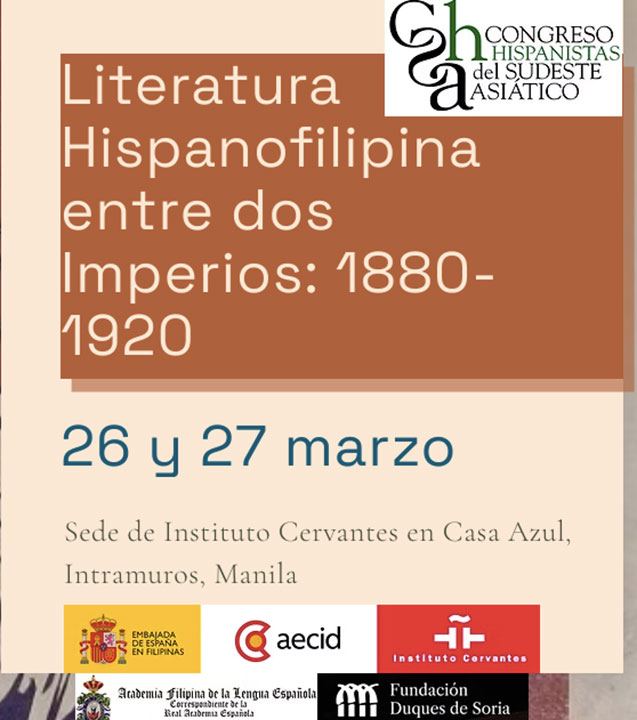
THE Embassy of Spain is presenting the first Southeast Asian Congress of Hispanists this week. The event brings together scholars, researchers, and practitioners dedicated to the study of the Spanish language, literature, and culture. Participants from across Southeast Asia, along with invited experts from Europe and the United States, will come together at the Instituto Cervantes in Intramuros from March 26 to 27 to foster dialogue on the role of Hispanic studies in a global and multicultural context. The event is being held through the Instituto Cervantes and its Cultural Section and in collaboration with the Academia Filipina de la Lengua Española and the Fundación Duques de Soria. Further information may be found at https://www.hispanismosea.org/.


Next-gen creators in multimedia exhibition

THE multimedia art exhibition ORGANICA: Emergence is presenting a collection of over 170 prints, traditional and digital artworks, and immersive installation pieces. Featured works range from illustrations, graphic design, photography, and 3D modeling to animation, games, video clips, films, and motion graphics. It likewise includes paintings, sculptures, and zines, among many others. Anchored in the theme of Bio Art, the showcase explores art as a living system. It features the portfolios of graduating Multimedia Arts students from the De La Salle-College of Saint Benilde (DLS-CSB) and is free and open to the public from March 26 to 28 at the Ayala Malls Circuit in Makati City.


NCCA stages Pakudos cultural recollection

THE National Commission for Culture and the Arts (NCCA) will be staging its first Lenten cultural recollection, titled Pakudos. The activity will kick off with a Holy Mass and be followed by a cultural performance by MB Rosie Sula, Sinukwan Kapampangan, Powerdance, Manunubli ng Sinala, and JM Yosures, who are all respected cultural performers from their regions. The Lenten presentation will be held on March 27, 5 p.m., at the Rizal Park Open-air Auditorium in Manila.


Kaida Contemporary mounts Fil-Chi women’s exhibit

AS PRODUCTS of migration, the Filipino-Chinese are a multi-hyphenate people with an identity in constant flux. This will be explored in Kaida Contemporary’s ongoing exhibit for women’s month, To know a bird’s song go to the mountains , curated by Janice Liuson-Young. Anchored on reinterpretations of the titular Chinese proverb, the exhibit seeks to unpack the reconfigurations of home through the works of 13 female Filipino-Chinese artists: Celine Lee, Shireen Co, Julieanne Ng, Sarah de Veyra-Buyco, Valerie Chua, Kadin Tiu, Jing, Tracie Anglo-Dizon, Billie Jean Chuaunsu, Janice Liuson-Young, Aze Ong, Kim Lim, and Helena Go. It runs until April 7 at Kaida Contemporary, located on 120 Kamias Rd., Diliman, Quezon City.


NYC-based Filipino artist exhibits at Art Cube Gallery

AN EXHIBITION titled The Family and Medical Leave Act (FMLA) is the 18th solo show of Julio Jose “Jojo” Austria, a Filipino artist based in New York City (NYC). FMLA is defined as unpaid and job-protected time off granted to employees specifically to care for an immediate family member, administered by the United States’ Department of Labor. The show poster was based on an actual form that the artist filled out as a Museum of Modern Art (MoMA) worker of nine years. Here, the term leave of absence (LOA) takes on a dual meaning — for the artist, a return to familial duty in the Philippines, his physical absence in studio bringing a different kind of presence within the paintings themselves. FMLA runs until April 7 at Art Cube Gallery at the OPVI Center, 2295 Chino Roces Ave., in Makati City.


PETA redefines people’s theater in Control + Shift

THE Philippine Educational Theater Association (PETA) is bringing back Control + Shift: Changing Narratives, which runs at the PETA Studio Theater from April 10 to 19. It will feature a “StudioLab” of fresh stories and restaged productions, with two new works produced under PETA’s Artist-Teacher Training alongside two returning pieces from last year’s festival and one developed with a theater group from a community partner. Set A features Jhudiel Clare Sosa’s Cleaners, directed by Julio Garcia, and Herlyn Alegre’s Monit-oh! Monit-ah!, directed by Norbs Portales. Set B features Mikaela Regis’ At Nagkatawang-tao Ang Verbo, directed by Anthony Cruz, and Anj Heruela’s Baga ng Gumuguhong Langit, directed by Ian Segarra. The PETA Theater Center is at No.5 Eymard Drive, New Manila, Quezon City.


Tiffany Lafuente, Maricar Tolentino at MO_Space

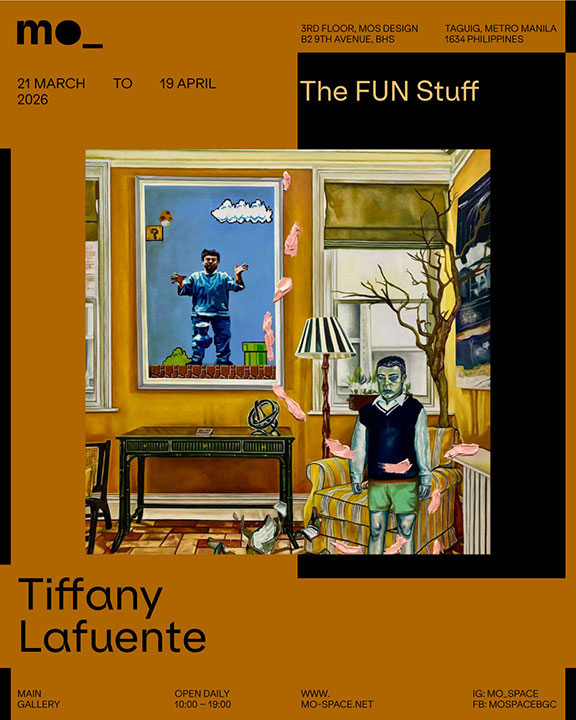
TWO EXHIBITIONS are on view at MO_Space this month. In The FUN Stuff, Tiffany Lafuente cracks the veneer of everyday life, poking fun at mundane rituals as well as the domestic objects that allow us to fashion identities and shape how others perceive us. Meanwhile, in /hour, Maricar Tolentino sets down what she has previously practiced, the density of pigments and insistence of imagery, and picks up time and repetition. In white-on-white thread, she accounts for what labor demands and what it cannot, in hours, days, weeks, and months. The exhibitions run until April 19 at MO_Space, Bonifacio High Street, BGC, Taguig.

The move to a digital apostille system

STOCK PHOTO | Image by Wirestock from Freepik

The Philippines acceded to the Hague Apostille Convention on Sept. 12, 2018. The Convention took effect in the Philippines on May 14, 2019. The Convention was intended to simplify the authentication of public documents for use abroad by replacing the multi-step legalization process with a single certification known as an apostille. An apostille serves to authenticate the origin of a public document, and verify the signature, seal, or stamp of the issuing authority so that the document may be recognized in another contracting state without further authentication. For documents intended for use in countries that are not parties to the Convention, the traditional consular legalization through the relevant embassy or consulate remains necessary.

Following the Philippines’ accession to the Hague Apostille Convention, apostilles have been traditionally secured through a paper-based process with the Department of Foreign Affairs (DFA). Applicants are required to obtain the original document from the issuing agency, secure an online appointment with the DFA, and appear in person or through an authorized representative to submit the document for apostille.

In 2024, the DFA introduced the e-Apostille service for Philippine Statistics Authority (PSA) civil registry documents. This allowed applicants to obtain apostilles for PSA e-Certificates without the need for personal appearance, with the apostille issued and transmitted electronically. However, the system was limited in scope and applied only to PSA or civil registry documents.

On March 16, in addition to PSA e-Certificates, the DFA introduced a digital apostille system for Commission on Higher Education (CHED) Electronic Certification, Authentication, and Verification (eCAV) documents. Such a development in the apostille process framework allows the said public documents to be issued, apostilled, and thereafter transmitted entirely in their electronic form.

Under this system, documents such as birth, marriage, and death certificates which can be currently obtained as PSA e-Certificates may be subsequently apostilled without the need for their physical submission, within a shorter apostille process timeline. Academic records processed through CHED’s eCAV platform may also be e-Apostilled. The apostille is issued electronically and transmitted directly to the applicant. This start-to-finish digital process is aimed to minimize processing time and eliminating the need for personal appearance before the PSA, CHED, and the DFA.

It is important to note that e-Apostilles are intended only for electronic transmission to the applicant and should not be printed for use as the e-Apostille loses its validity when printed and submitted as hard copies.

To balance the efficiency and practicality that come with the transition to an e-Apostille digital system, the DFA put in place safeguards to preserve the integrity and authenticity of apostilled documents. Verification mechanisms — including QR codes, verification links, and a digital signature checker — are available to ensure that e-Apostilles remain secure and could be readily validated by their receiving authorities.

Although the e-Apostille is available for select public documents, the traditional apostille process for other documents remains available. Applicants who need the apostille of physically issued or executed documents or whose intended recipients do not accept electronic apostilles, may continue to avail of the online appointment system with the DFA and the physical submission of documents for apostille. These multiple modes of securing apostilles allow for flexibility, accommodating varying requirements across agencies and jurisdictions.

The introduction of the digital apostille system reflects a calibrated step toward greater efficiency and accessibility in public service. The DFA continues to exert recognizable efforts in streamlining the apostille process for documents while maintaining the safeguards necessary to keep the integrity of public documents used in cross-border transactions. The start of the e-Apostille system is a step forward to making processes simple, straightforward, and readily available to the public.

This article is only for general informational and educational purposes and is not offered as and does not constitute legal advice or opinion.


Christianna Manami Y. Salud is a senior associate of the Immigration department of the Angara Abello Concepcion Regala & Cruz Law Offices (ACCRALAW).

cysalud@accralaw.com

(632) 8830-8000

Rimini Street helps firms optimize legacy IT systems

UNSPLASH

By Edg Adrian A. Eva, Reporter

RIMINI STREET, INC., a global provider of enterprise software support, is helping companies extract more value from their existing information technology (IT) systems as many firms struggle to realize returns on artificial intelligence (AI) investments.

Michael L. Perica, executive vice-president and chief financial officer at Rimini Street, said many organizations fail to generate meaningful benefits from early AI initiatives due to the absence of a clear strategic roadmap and inadequate data infrastructure.

“One will not have success unless you have an overall roadmap, a strategy, and the appropriate preparedness to fully realize the benefits of investing in this technology,” he told BusinessWorld via Microsoft Teams.

“At Rimini Street, we support clients, optimize their existing systems, and then prepare them for innovation,” he added.

Only 20% of chief financial officers are satisfied with their technology investments including security, AI, customer-facing software-as-a-service (SaaS) platforms and enterprise resource planning systems, according to the Rimini Street Survey 2024, which polled almost 3,000 global finance and IT leaders.

The survey found that companies often experience negative consequences from these investments, such as rising costs, limited future flexibility and significant organizational disruption.

To address these challenges, Mr. Perica said Rimini Street offers a vendor‑independent support model that lets organizations continue using their software releases for as long as needed, without being forced into costly upgrades or system migrations.

“We have our own innovative solutions that use agentic AI and workflows on your own data and systems, maximizing your customizations or even those of others,” he said.

They also work with partners for agentic AI, allowing organizations to prioritize and invest at their own pace with their data, while achieving the appropriate level of preparedness, he pointed out.

This approach, he said, lets firms recover 80% to 90% of their maintenance and support spending, freeing up what he described as “sacred dollars” that could be redirected toward strategic initiatives such as digital transformation and AI deployment.

“Redeploying those savings is what puts one in a position to optimize preparedness and ultimately fund innovation,” he said.

Among Rimini Street’s offerings is Rimini Consult, an advisory service focused on preparing legacy systems for modern technologies.

The firm’s enterprise architects and data specialists clean and standardize existing databases and build custom digital integrations that allow older systems to work seamlessly with newer AI tools.

Among Rimini Street’s clients in the Philippines is Philippine Airlines, which it provided with third-party support for its core enterprise software, allowing the carrier to cut maintenance costs and fund its digital transformation, Mr. Perica said.

He advised companies to maintain control over their data and avoid “vendor lock‑in” arrangements that limit flexibility and long‑term value from technology investments, including AI.

He further urged firms to align technology spending with their own strategic priorities rather than adapting their business models to match a software provider’s roadmap.

The Philippines and the broader Southeast Asian region, Mr. Perica said, represent an “emerging and exciting market” for Rimini Street.

The company plans to deepen engagement with Filipino partners, monitor regional technology trends, and tap into local talent to support its global operations, he said.