Home Blog Page 698

Greece arrests man in Europol’s global ‘Endgame’ operation against cybercrime

TOWFIQU BARBHUIYA-UNSPLASH

ATHENS — Greece has arrested a 38-year-old man as part of a Europol crackdown on international cybercrime, during which authorities dismantled malware infrastructure that has infected hundreds of thousands of computers worldwide, police said.

The pan-European law enforcement cooperation agency Europol said on Thursday that in the latest phase of “Operation Endgame” across 10 countries, including the United States, it targeted infostealers Rhadamanthys, the Remote Access Trojan VenomRAT, and the botnet Elysium.

The malware infrastructure dismantled this week consisted of hundreds of thousands of infected computers containing several million stolen credentials, Europol said. Many of the victims did not know that their systems were infected.

In total, 1,025 servers were taken down or disrupted worldwide and 20 domains were seized.

The man, an Albanian national arrested in Athens on November 3, is allegedly the creator and seller of VenomRAT since 2020, Greek police officials said. He was detained on a European arrest warrant issued by France.

“The main suspect behind the infostealer had access to over 100,000 crypto wallets belonging to these victims, potentially worth millions of euros,” Europol said.

Greek police said that the malware was designed to steal information through keystroke recording and the remote use of web cameras, text infiltration, and cryptocurrency wallet hacking. The price for its use ranged from 150 euros a month to 1,550 euros a year.

After searching the man’s residence they said they found versions of malware source code, evidence pointing to the management of a website promoting the malware, suspicious emails, and cryptocurrency accounts.

They have confiscated seven hard drives, three USB sticks, and a digital wallet with cryptocurrencies worth $140,424 among other items, police said in a statement.

A Greek police official said that the digital infrastructure for the operation of the malware was hosted on a server of a company based in France, while French and US authorities have also launched investigations. — Reuters

Japan will suffer ‘crushing defeat’ if it tries to intervene over Taiwan, China military says

A NAVY miniature is seen in front of displayed Chinese and Taiwanese flags in this illustration taken April 11, 2023. — REUTERS

BEIJING — Japan will suffer a “crushing defeat” by the Chinese military if it tries to use force to intervene over Taiwan, China’s defense ministry said on Friday, ramping up the rhetoric over Japanese Prime Minister Sanae Takaichi’s remarks about the island.

Takaichi sparked a diplomatic row with Beijing with comments in parliament last week that a Chinese attack on Taiwan could amount to a “survival-threatening situation” and trigger a military response from Tokyo.

China’s top diplomat in Osaka shared a news article about Takaichi’s remarks about Taiwan on X and commented “the dirty neck that sticks itself in must be cut off”, prompting a protest from Japan’s embassy in Beijing to Chinese Vice Foreign Minister Sun Weidong.

Chinese Defense Ministry spokesperson Jiang Bin said that Ms. Takaichi’s words were extremely irresponsible and dangerous.

“Should the Japanese side fail to draw lessons from history and dare to take a risk, or even use force to interfere in the Taiwan question, it will only suffer a crushing defeat against the steel-willed People’s Liberation Army and pay a heavy price,” Mr. Jiang said in a statement.

Chinese state media has also weighed in with a series of vitriolic editorials and commentaries lambasting Ms. Takaichi, given lingering grievances about Japan’s wartime past and China’s extreme sensitivity over anything Taiwan-related.

Ms. Takaichi’s remarks were by no means an “isolated political rant,” the Communist Party’s People’s Daily said earlier on Friday in a commentary.

Japan’s right wing has been trying to break free from the constraints of their post-World War Two constitution and pursue the status of a military power, said the commentary published under the pen name “Zhong Sheng”, meaning “Voice of China” and often used to give views on foreign policy.

“In recent years, Japan has been racing headlong down the path of military buildup,” the paper added.

“From frequent visits to the Yasukuni Shrine, to denying the Nanjing Massacre, to vigorously hyping the ‘China threat theory,’ Ms. Takaichi’s every step follows the old footprints of historical guilt, attempting to whitewash a history of aggression and revive militarism.”

World War Two, and the Japanese invasion of China which preceded it in 1931, remain a source of ongoing tension between Beijing and Tokyo.

Beijing claims democratically-governed Taiwan as its own and has not ruled out using force to take control of the island. Taiwan’s government rejects Beijing’s claims and says only its people can decide the island’s future.

Taiwan sits just over 110 km (68 miles) from Japanese territory and the waters around the island provide a vital sea route for trade that Tokyo depends on. Japan also hosts the largest contingent of US military overseas.

Meanwhile, Japanese broadcaster NTV reported on Friday the Chinese embassy in Tokyo had instructed its staff to avoid going out due to concerns about rising anti-China sentiment.

In a regular news conference, Japan’s top government spokesperson Minoru Kihara reiterated the country’s position on Taiwan, telling reporters that Tokyo hopes for a peaceful resolution of the issue through dialogue.

‘SELF-DIRECTED FARCE’
China has also cranked up its rhetoric against what it calls “diehard” Taiwan independence separatists.

On Friday, the State Council’s Taiwan Affairs Office criticized Taiwan’s ruling Democratic Progressive Party (DPP) lawmaker Puma Shen, who visited Berlin earlier this week. Mr. Shen said China was threatening to try to get him arrested while abroad, but that he was not frightened.

“Taiwan independence advocates are already at the dusk of their days and at a dead end,” the office’s spokesperson Chen Binhua said, according to state broadcaster CCTV.

A day earlier, Chinese police issued a wanted notice and offered a $35,000 reward for two Taiwanese social media influencers they accused of “separatism”.

The two influencers took to social media to poke fun at the wanted notice.

One of them, the rapper Mannam PYC, posted a video on Friday where he tried to turn himself in to police in Taiwan.

“Why won’t the Taiwan police arrest me? Does that mean everyone supports Taiwan independence?” he wrote, sarcastically.

China’s legal system has no authority or jurisdiction in Taiwan. — Reuters


Advocates urge stronger workplace support for Filipinos with diabetes

Healthcare and legal professionals at the World Diabetes Day 2025 press conference.—PCEDM PRESS PHOTO

There is a need for stronger collaboration across sectors to ensure that Filipinos living with diabetes receive comprehensive workplace support, advocates said on Wednesday.

The call was made by health and patient advocates, as well as policymakers, led by the Philippine College of Endocrinology, Diabetes, and Metabolism Inc. (PCEDM), in line with the celebration of World Diabetes Day on Friday, Nov. 14.

PCEDM said that type 2 diabetes is the country’s fifth leading cause of mortality, affecting 8.2% of adults or around 5.5 million Filipinos, yet patients continue to face stigma and a lack of workplace support.

It also said that diabetes can affect people of all ages, from young to elderly.

“This year, as we focus on diabetes and well-being, with special attention on those in the workplace, we want to emphasize that diabetes need not be a crippling nor disabling disease,” Dr. Lora May T. Tin Hay, PCEDM president in the statement.

She added that with proper treatment, people with the disease can still live full and active lives. While managing the condition starts with personal choices, support from family, colleagues, schools, and even the local community is crucial for maintaining good blood sugar levels and preventing complications.

According to the International Diabetes Federation (IDF), various sectors can take ten key actions to better support Filipinos living with diabetes in the workplace.

These include providing safe and private spaces for diabetes management, adequate storage for medical supplies, and access to food, water, and other essentials to help employees manage their condition.

The IDF also emphasizes the importance of eliminating diabetes-related stigma, offering flexible working arrangements, fostering a more inclusive and health-conscious work environment, and among others.

Ms. Hay said that inclusive workplaces for people with diabetes not only benefit the employees but also help companies by improving performance, reducing absences, and promoting overall well-being.

“They may in turn see a more productive and efficient workforce. It becomes a win-win situation,” she said.

PCEDM also reaffirmed its commitment to promoting awareness, policies, and programs that help Filipinos better manage diabetes amid the growing burden of the disease. — Edg Adrian A. Eva

China’s Shenzhou-20 crew to return Friday after space debris delays mission

Rendering of China’s Tiangong Space Station. — WIKIMEDIA COMMONS

BEIJING — Three Chinese astronauts whose return to Earth was delayed by space debris hitting their vessel last week will return to their landing site using a different spacecraft on Friday, the China Manned Space Agency (CMSA) said in a statement.

China has in the past four years sent trios of astronauts to its permanently inhabited Tiangong space station for six-month stays, a program known as Shenzhou, or “Divine Vessel”.

The Shenzhou-20 mission began in April and went smoothly until what CMSA called a “suspected impact from tiny space debris” to the Shenzhou-20 spacecraft forced a postponement of the crew’s return to Earth, originally scheduled for November 5.

The delay, while short, is highly unusual for a program that has run like clockwork and in the past year reached new milestones with the deployment of astronauts born in the 1990s, a world-record spacewalk and plans to train and send the first foreign astronaut, from Pakistan, to Tiangong next year.

Every Shenzhou mission ends with a handover where the departing crew welcomes the arriving crew that will take over the space station’s operations. During the handover period of several days, two Shenzhou vessels are docked at the space station.

CREW TO RETURN ON SHENZHOU-21 MISSION’S SPACECRAFT
The decision to send back the Shenzhou-20 crew aboard the spacecraft used by the Shenzhou-21 crew, which started its six-month stay in space two weeks ago, suggests that damage to the Shenzhou-20 vessel was severe enough that China’s space authorities deemed it unfit to fly for now.

Given the Shenzhou-20 vessel’s impairment, China’s manned space program will have to deal with new logistical headaches.

With the Shenzhou-21 returning to Earth six months earlier than scheduled, the vessel’s crew will be left on the space station without any spacecraft that could take them home in the event of an emergency.

CMSA said on Friday that the Shenzhou-22 spacecraft will be launched at “an appropriate time in the future.” — Reuters

Audit the powerful, not the powerless

By Mon Abrea, Global Tax Policy Expert and Chief Tax Advisor, Asian Consulting Group

Businesses — from small entrepreneurs to major corporations — are breathing a sigh of relief after President Ferdinand Marcos, Jr. ordered the Bureau of Internal Revenue (BIR) to redirect its audit and enforcement efforts toward those implicated in the multibillion-peso flood-control corruption scandal.

The President’s instruction is more than a reaction to a scandal — it’s a signal that the government is finally listening. For years, reform advocates have urged the BIR to stop harassing compliant taxpayers and instead focus on high-risk, high-impact investigations where corruption and tax evasion converge.

This shift, if sustained, could mark the most significant turning point in the country’s tax administration since the TRAIN Law. It’s time to institutionalize this approach — to make accountability, not extortion, the core of the BIR’s audit culture.

Fixing a Broken Audit System

The BIR’s own data tells a troubling story: less than 3% of total revenues come from audits. Despite that, most audits target micro, small, and medium enterprises (MSMEs) — the easiest to intimidate but the least likely to cheat.

Random, manual audits have bred inefficiency and corruption. Some examiners allegedly use their power to solicit bribes for “settlements,” turning the audit process into a revenue leak instead of a revenue source. The result: compliant taxpayers lose confidence, while politically connected tax evaders remain untouched.

Redirecting audit efforts toward those linked to government anomalies is the right move. But to ensure this is not just a one-off campaign, the BIR must adopt risk-based, technology-driven systems that remove discretion and enforce accountability where it matters most — at the top.

Rebuilding Trust Through Technology

Modern tax systems no longer rely on random audits. They use risk-based computer-assisted audit systems powered by AI, blockchain, and data analytics to identify red flags and detect undeclared wealth.

The BIR should integrate data from the Commission on Audit (CoA), the Anti-Money Laundering Council (AMLC), the Securities and Exchange Commission (SEC), the Bureau of Customs (BoC), and the Office of the Ombudsman. Linking tax filings with Statements of Assets, Liabilities, and Net Worth (SALNs) can uncover unexplained wealth in real time — a task impossible under manual systems.

Global experience shows that risk-based auditing can double audit efficiency and raise revenues by up to 200%, with most gains coming from high-yield, high-risk taxpayers. For this to work, Congress must lift bank secrecy for public officials, allowing tax authorities to verify if their declared income aligns with actual wealth. Transparency is the cornerstone of trust.

Relief with Responsibility

Tax reform must be fair as well as firm. The Department of Finance’s (DoF) proposal to raise tax-free benefit limits and ease the burden on Filipino workers is long overdue. Updating the income tax exemption threshold from P250,000 to P400,000 or P500,000 — as proposed in Senator Win Gatchalian’s Ginhawa Bill — would finally align tax policy with economic reality.

The threshold has not changed since 2018, even as prices surged and the cost of living climbed. Adjusting it would provide real relief for middle-income earners — the backbone of the economy — while boosting consumption and voluntary compliance. Any temporary revenue loss can be offset by reducing leakages, automating processes, and targeting true evaders.

Digital Transformation and VAT Reform

Beyond audits, transparency demands automation. The Electronic Invoicing System (EIS) must be fully implemented and extended to all professionals and service providers. Real-time monitoring of sales and income will minimize underreporting and corruption at every level.

Likewise, the World Bank’s recommendation to broaden the VAT base — removing most exemptions except essentials like food, health, and education — offers a clear path to reduce the rate from 12% to 10% without losing revenue. A simpler, broader VAT will strengthen compliance, fairness, and competitiveness.

From Reaction to Reform

The President’s directive is a welcome start—but the real test is consistency. The BIR, DoF, and Congress must now institutionalize risk-based auditing, digital invoicing, inter-agency data sharing, and public accountability.

A government that enforces tax justice at the top will earn the moral authority to collect taxes from the rest. The Philippines doesn’t need higher taxes; it needs a smarter system that rewards honesty, punishes corruption, and restores public trust.

Only then can we transform our tax system from one built on fear to one built on fairness — where doing the right thing is no longer the hardest thing to do.

About the Author

Mon Abrea is a Global Tax Policy Expert and Chief Tax Advisor of the Asian Consulting Group (ACG). An alumnus of Harvard, Oxford, and Duke Universities, he works with governments and international institutions on tax reform, investment policy, and governance. Recognized among the TOFA 100 Most Influential Filipinos in the World, he leads global initiatives through his Reimagining the World book series, Thought Leaders and Game Changers podcast, and International Tax & Investment Roadshow, promoting the Philippines as an ESG-aligned investment destination.


Spotlight is BusinessWorld’s sponsored section that allows advertisers to amplify their brand and connect with BusinessWorld’s audience by publishing their stories on the BusinessWorld Web site. For more information, send an email to online@bworldonline.com.

Join us on Viber at https://bit.ly/3hv6bLA to get more updates and subscribe to BusinessWorld’s titles and get exclusive content through www.bworld-x.com.

Anticipation builds for the All-New Toyota bZ4X BEV

First all-electric Toyota in the country to arrive in December

The All-New bZ4X, Toyota Motor Philippines (TMP)’s first-ever Battery Electric Vehicle (BEV) under the Toyota brand, is capturing the interest of several customers who have been anticipating the official availability of the vehicle in the country.

According to TMP President Masando Hashimoto, TMP dealers who are set to offer the bZ4X have been receiving inquiries since TMP opened the reservation period last Nov. 7.

“We are encouraged by the positive reception by the public to the news of bZ4X local release,” said Hashimoto. “Understandably, one of the most asked questions is the average range of the EV. While actual consumption and range will vary based on conditions and driving habits, we were able to register 570 km of EV range. This is based on internationally accepted Fuel Consumption Test Protocol under UN Regulations No. 101.”

The Philippines will be getting the Japan-sourced bZ4X.

Currently, TMP has the widest selection of hybrid and battery electric models in the country, with a mix of electrified sedans, MPVs, SUVs, and vans under its Toyota and Lexus brands. Lexus introduced TMP’s first BEV, the Lexus RZ, in 2023.

Through its multi-pathway approach that provides more electrified options based on varied customer needs and readiness, Toyota is committed to enabling customers to be part of its strong carbon neutrality push.

The All-New Toyota bZ4X, an all-wheel drive (AWD) BEV SUV, is powered by a 73.11 kWh Lithium-ion battery with a max output of 343 PS and max torque of 338 Nm.

Those looking to make the fearless step forward toward electrification may already reserve the bZ4X at https://www.toyota.com.ph/reservebz4x. They may also inquire directly at any of the Toyota dealerships offering the bZ4X: Toyota Alabang, Toyota Commonwealth, Toyota Global City, Toyota Mabolo Cebu, Toyota Makati, Toyota Manila Bay, Toyota Mandaue South, Toyota North EDSA, Toyota Pasig, Toyota Quezon Avenue, Toyota San Fernando, and Toyota Santa Rosa.

With the bZ4X, Toyota empowers customers to actively reduce their carbon footprint without compromising on style and comfort. By choosing a Toyota, they enjoy worry-free vehicle ownership so they can focus on the drive.

For more information on the bZ4X, customers may visit https://www.toyota.com.ph/bz4x.

For the latest updates on Toyota products, services, dealer operations, announcements and events, follow Toyota Motor Philippines on Facebook and Instagram, ToyotaMotorPH on X, and Toyota PH on Viber.


Spotlight is BusinessWorld’s sponsored section that allows advertisers to amplify their brand and connect with BusinessWorld’s audience by publishing their stories on the BusinessWorld Web site. For more information, send an email to online@bworldonline.com.

Join us on Viber at https://bit.ly/3hv6bLA to get more updates and subscribe to BusinessWorld’s titles and get exclusive content through www.bworld-x.com.

War-torn Myanmar embraces solar to tackle power crisis

STOCK PHOTO | Image from Freepik

WHEN Thailand cut power supply to Myanmar across its western border this year, it intended to curb online scam centers linked to regional networks trafficking hundreds of thousands of people.

However, the move also hit the wider community, pushing hospitals and some offices to install solar panels, said Zaw, a rescue worker in Myawaddy town just across the Thai border. Homes, too, made the switch.

“Three out of four people now rely on solar panels, with businesses using multiple panels,” said Mr. Zaw, who did not want to disclose his full name, fearing retribution.

Myanmar’s electricity supply has deteriorated since the 2021 military coup and ensuing civil war, exposing millions to chronic blackouts, with a cash-strapped government hit by Western sanctions unable to maintain power infrastructure.

The World Bank estimated the country’s operating power capacity plunged to 2015 levels in 2024, describing electricity supply in conflict-affected areas as “catastrophic”.

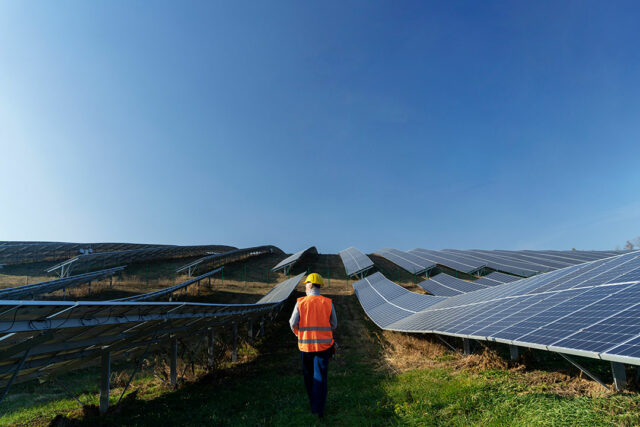
Chinese firms have helped fill the gap, supplying cheap solar panels.

NATURAL GAS SHORTAGE SAPS GENERATION
Light intensity data – a proxy for economic activity and electricity access – analyzed by the United Nations revealed an average 8% annual decline after the 2021 coup.

The drop is largely due to a shortage of natural gas, Myanmar’s main generation fuel, as domestic production has declined and the government has halted imports of liquefied natural gas due to a foreign exchange shortage, the World Bank said in a June 2024 report.

Former US President Joe Biden’s administration froze about $1 billion of Myanmar assets and imposed sanctions, some of which have been eased by the Trump administration. Western sanctions have restricted access to technical support, spare parts, and expertise to maintain infrastructure, such as transmission lines damaged in the civil war.

Myanmar’s junta said earlier this year generation capacity had plunged by nearly half from pre-2021 levels. Data on the Ministry of Electric Power’s website shows output has not changed much since 2018.

The information ministry did not respond to detailed questions on power supply and demand, and the junta’s spokesperson did not answer calls from Reuters.

CHEAP SOLAR PANELS FROM CHINA
To combat the power crisis, households and businesses are embracing solar, according to interviews with a dozen residents, business owners and panel and battery sellers across the Southeast Asian country.

“Unlike most of Asia, where we’re seeing corporate demand drive solar growth, energy security concerns and fuel shortages are the key drivers in Myanmar,” said Linda Zeng, renewables analyst at Fitch Solutions unit BMI.

Solar panel imports from China, Myanmar’s largest supplier, more than doubled in the nine months through September to about $100 million, according to Chinese customs data. Shipments have risen over eightfold from pre-pandemic levels, the data showed.

Shops, restaurants, and workshops seeking reliable power for lighting, refrigeration and electronic payments, as well as water kiosks, clinics, and schools increasingly use small solar systems, said an official from an international development agency working in Myanmar.

“I have about 10 refrigerators. The electricity here is not regular, so I had to use solar panels,” said an ice cream seller from the ancient city of Mawlamyine, who declined to be named due to fear of retribution.

Household solar installations have surged from a few hundred in 2019 to roughly 300,000 in 2025, as users switch from diesel generators to solar panels with storage, said Ken Pyi Wa Tun, chairman of Parami Energy, which sells solar panels and diesel generators in Myanmar.

“A household solar-plus-battery-plus-inverter can be acquired for under $1,000 and power essentials, run for four to five hours and power 2 AC units,” Ken Pyi Wa Tun said.

While that is too expensive for most homes, it is cheaper than the roughly $7,000 for a small diesel generator, plus fuel costs of $50 to $100 per week, he said, predicting solar could potentially power 2 million to 2.5 million Myanmar households.

IT’S NOT ABOUT CLIMATE GOALS
Myanmar’s surging solar imports mirror a trend of increased solar adoption to escape erratic power supply in lower- and low-middle income countries such as Pakistan, Iraq, Sri Lanka, and Afghanistan.

They are among the fastest-growing markets for panel exports from China, the world’s dominant solar manufacturer, data from energy think-tank Ember showed.

“If the grid is not reliable or the prices too high, then people will do it themselves. And now they can, thanks to solar,” said Richard Black, director of policy and strategy at Ember.

Solar adoption, driven by necessity rather than policy, could disrupt traditional utility models, challenge forecasts about fossil fuel demand and complicate grid management, analysts say.

In Pakistan, a surge in affluent residents ditching the country’s costly grid power by installing solar panels has forced utilities to raise prices even further for remaining customers.

Diesel imports by Myanmar declined 11% in the first 10 months of 2025, data from analytics firm Kpler showed, while solar panel purchases grew.

“It is not like we are using them for clean energy or for some environmental reasons. We are a country with civil war. We are just using them out of necessity,” said a resident in the Bago region. — Reuters

‘The Blueprint by Globe’ lights up the holidays with purposeful connectivity and meaningful connections

Globe leaders respond to questions from media attendees during The Blueprint by Globe event, sharing insights on innovation, purposeful connectivity, and inclusive digital transformation. From left to right: Jonathan Cristobal, marketing head of Globe Business; KD Dizon, vice-president of Globe Business; Paula Rivera-Castillo, head of International Business; Yoly Crisanto, chief sustainability and corporate communications officer; Roche Vandenberghe, chief marketing officer; Chelo Flores, director of Marketing Strategic Partnerships; Beverly Robles, senior director of Digital Strategy and Channels Activation of Broadband Business; and Aranas-Baldos, director of Portfolio Management of Globe Prepaid

Globe marked the season of giving and togetherness with the second installment of The Blueprint by Globe, celebrating the yearend holidays at The Globe Tower, Bonifacio Global City in Taguig. With the theme “Lighting Up the Season with Purposeful Connectivity and Meaningful Connections,” the event showcased how Globe continues to shape the Filipino digital lifestyle, not just through innovation, but with intention.

The Blueprint by Globe charts the evolving design of a connected future where technology is built not for its own sake, but to include, protect, and empower every Filipino. From frictionless digital experiences to nation-building infrastructure, Globe’s forward-thinking approach lays the foundation for a truly inclusive digital nation.

“Through each quarter, we’ve explored the different layers of this design, from innovation and inclusion to sustainability and digital empowerment,” said Roche Vandenberghe, Chief Marketing Officer at Globe. “And today, as we close the year, we celebrate how all these pieces come together to form something greater: a future where every connection we build becomes meaningful.”

Purposeful Connectivity

Globe spotlighted how its strategic collaborations, inclusive platforms, and customer-first solutions enable seamless, secure, and equitable access to essential services, empowering Filipinos to thrive in work, learning, and everyday life. From reliable 5G and AI-powered experiences to seamless connections at home and abroad, Globe continues to build technology with purpose, proving that real progress is driven by care.

Globe is equipping businesses with tools that drive meaningful digital transformation. Through the Globe API Ecosystem, enterprise partners gain access to secure, next-generation authentication capabilities. Anchored on the GSMA-certified Number Verification API, the multi-party ecosystem brings together Globe Business, m360 and Concati. Together, these enable new standards of trust, security, and seamless customer experiences across industries.

Complementing this is Digitest, Globe Business’s digital maturity assessment tool that helps organizations gauge their current capabilities, identify gaps, and align their digital initiatives into a clear strategy for growth. Together, these innovations enable  Philippine enterprises to scale with confidence, strengthen customer trust, and drive progress across industries, business sectors and communities.

Connectivity that Brings Us Together

Globe opened the segment with the heartbeat of the nation’s digital life, its network. Whether at home or abroad, Globe ensures that every Filipino stays connected, especially during the most connected season of the year.

From GoRoam’s “roam like a local” offer for leisure travelers, and the Roam Kabayan 3-in-1 pack that empowers Overseas Filipino Workers to stay close to their families through affordable call, text, and data bundles, to Globe At Home’s AI-powered partnerships that redefine future living with secure, seamless digital experiences — Globe ensures that connection is always within reach. Whether it’s managing life abroad, sending love back home, or building a digitally enabled household, Globe makes every moment count.

This season, Globe celebrates the power of 5G to unlock everyday potential, backed by the widest 5G coverage in the Philippines according to Ookla. With smoother gaming, clearer video calls, faster streaming, and real-time content creation, 5G enables young Filipinos to stay productive, expressive, and connected wherever they are.

Through Globe Prepaid’s Go5G TURBO 50 and Go+ 99 plus AI, hyper-connected youth gain access to fast, reliable 5G and powerful digital tools that support learning, creativity, and self-expression. Together, these innovations light up Filipino lives with seamless, meaningful connections that bring us closer to who and what matters most this holiday season and beyond.

Meaningful Connections

Globe’s commitment to Meaningful Connections comes to life through campaigns, community programs, and personalized experiences that celebrate relationships that matter most. Whether connecting families, educators, creators, or changemakers, Globe transforms connectivity into community. This segment is about people: families gaining meaningful access to digital tools and opportunities, students building their dreams, local designers and entrepreneurs shaping businesses and culture, and the partners who help make these stories possible.

The Globe Student Program and The Globe Caravan embody this mission. The Student Program, co-created with Filipino youth stakeholders, empowers over 30 million students nationwide to turn ambition into action through mentorship, real-world opportunities, and access to telco tools. From student-led events to digital literacy and career-building experiences, Globe helps young Filipinos grow as creators and community builders.

Meanwhile, the Globe Caravan brings digital know-how to families and aspiring social entrepreneurs  in underutilized communities, showing them how to turn connectivity into livelihood. Through hands-on learning and practical demonstrations, it transforms hesitation into hope and simple connections into stepping stones for progress.

In the spirit of bringing the nation together, Globe proudly supports the FIFA Futsal Women’s World Cup 2025, the world’s international women’s futsal tournament, hosted for the first time by the Philippines. As our national team competes, Globe brings the global stage closer to the Filipinos through heartfelt hospitality, ticket giveaways, and providing strong and reliable connectivity to the delegates and their supporters. More than a game, this historic moment unites fans, inspires young athletes, and celebrates Filipino excellence and sportsmanship.

Globe of Good

To cap off the event, Globe of Good took center stage as a testament to the company’s compassion in action. In the wake of devastating typhoons and earthquakes that displaced millions and triggered a national state of calamity, it stood as a beacon of hope and collective resilience. By transforming everyday connectivity into an opportunity to directly help our vulnerable kababayans, Globe empowers customers to turn data usage, Rewards points, and digital engagement into sustained support for their communities and chosen advocacies.

Through the GlobeOne app’s platforms like Globe Rewards, over 300,000 Globe customers have already donated their rewards points to collect over Php5 million to support programs of our Globe of Good Community Alliance NGO partners to address disaster relief and recovery, hunger alleviation, child stunting, livelihood assistance,, education, persons with intellectual disabilities, child protection, environmental conservation, animal welfare, health and well-being, and other advocacies proving that small acts such as donating their rewards points can drive lasting impact. For our Prepaid customers, Globe offers GoGIVE, which is impact without interruption. Prepaid customers can sign up for free in the GlobeOne app to automatically send hearts to their chosen causes every time they use mobile data. In addition, this year’s G-Gantic Goals campaigns brought together 150,000 customers through the GlobeOne app, proving that even one Rewards point can make a difference, whether it’s feeding rescued animals or donating tablets to public schools in need. Globe of Good perfectly captured the heart of The Blueprint, showing that true progress shines brightest when powered by compassion and collective care.

“This holiday season, The Blueprint by Globe celebrates how technology and connectivity, when guided by purpose, can spark meaningful connections, empower communities, and light up lives through inclusive, intuitive, and intentional innovation,” said Darius Delgado, Chief Commercial Officer at Globe. “We believe in purposeful connectivity, where every product, service, and initiative is designed to provide meaningful connections to Filipino lives.”

The event reinforced Globe’s leadership in shaping the Filipino digital lifestyle, spotlighting how its innovations, from mobile platforms to fiber broadband and digital solutions, enable meaningful connections during the most connected time of the year.

For more information about Globe, visit www.globe.com.ph.


Spotlight is BusinessWorld’s sponsored section that allows advertisers to amplify their brand and connect with BusinessWorld’s audience by publishing their stories on the BusinessWorld Web site. For more information, send an email to online@bworldonline.com.

Join us on Viber at https://bit.ly/3hv6bLA to get more updates and subscribe to BusinessWorld’s titles and get exclusive content through www.bworld-x.com.

[B-SIDE Podcast] AI-driven fraud, deep fakes, and the need for secure finance

Follow us on Spotify BusinessWorld B-Side

This B-Side episode discusses the threat of AI-driven fraud with Dominic Forest, chief technology officer at iProov, a London-based technology company specializing in biometric identity verification.

Interview by Patricia Mirasol
Audio editing by Jayson Mariñas

Follow us on Spotify BusinessWorld B-Side

Australia pledges A$3 million humanitarian aid to Philippines

STOCK PHOTO | Image by Rebecca Lintz from Pixabay

The Australian government on Friday expressed its commitment to provide A$3 million (P115.9 million) in humanitarian assistance to support the Philippine government’s response to those affected by recent natural disasters.

In a statement, the Australian Embassy in Manila said Australia, as a reliable friend and strategic partner, is well-positioned to support the Philippine government-led response to the millions affected by recent typhooons Tino and Uwan, as well as those affected by recent earthquakes.

It also said that its humanitarian partners collaborate with local governments and civil societies to coordinate relief efforts and ensure aid reaches those who need it most.

Among the assistance that Australia can provide are in-country shelter, water, sanitation and hygiene support, health services, and food aid.

“Australia always stands ready to support the Philippines,” Marc Innes-Brown, Australia’s ambassador to the Philippines, said in a statement.

“We commend the Philippine Government on their quick and extensive response to multiple disasters impacting millions of Filipinos.”

Mr. Brown also said that the Australian government is ready to work with the Philippine government while response efforts are still ongoing in various parts of the country. — Edg Adrian A. Eva

Amazon, Microsoft back effort to restrict Nvidia’s exports to China, WSJ reports

REUTERS

AMAZON is joining Microsoft in backing legislation to further curb chipmaker Nvidia’s ability to export chips to China, the Wall Street Journal reported on Thursday, citing people familiar with the matter.

The legislation, known as the GAIN AI Act, is also backed by AI startup Anthropic, the report said.

Short for Guaranteeing Access and Innovation for National Artificial Intelligence (GAIN), the Act was introduced as part of the National Defense Authorization Act and stipulates that AI chipmakers prioritize domestic orders for advanced processors before supplying them to foreign customers.

Microsoft publicly came out in favor of the legislation, while officials at Amazon’s cloud unit have privately told Senate staffers that they also support it, the report said.

Meta Platforms and Alphabet’s Google have not taken a position on the Act, and neither has US President Donald Trump, the report added.

Reuters could not immediately verify the report. Amazon, Microsoft, and Anthropic did not immediately respond to Reuters’ requests for comment.

Nvidia, the world’s dominant chipmaker, has previously said the GAIN AI Act stands to restrict global competition for advanced chips, limiting computing power available to other countries.

The touted legislation reflects Washington’s attempt to prioritize American needs amid fears that China would leverage access to high-end AI capabilities to supercharge its military.— Reuters

Sticky Philippine loan rates blunt impact of central bank cuts

Shipping containers in Manila. Photographer: Veejay VILLAFRANCA/BLOOMBERG

The Philippine central bank has slashed its key policy rate by almost two percentage points to 4.75% since last year, but the price of a home loan from the nation’s top banks has barely budged.

BDO Unibank Inc. charges a 6% fixed rate on new housing loans for the first year, with the debt then subject to repricing, or else 6.5% fixed for five years. That’s roughly the same as the minimum offered in 2024, and rates at Bank of the Philippine Islands and Metropolitan Bank & Trust Co. show a similar trend.

Across Asia, as policymakers have reduced benchmark rates to support economic growth in the face of US tariffs, there’s evidence that banks aren’t fully passing on the cuts to consumers, according to Australia and New Zealand Banking Group. In the Philippines’ case, the stickiness of borrowing costs may prolong a slump that’s left its economy trailing Indonesia and China in growth.

Philippine commercial banks’ average lending rate, after dipping earlier in the year, hit 8.132% in August, up from 8.097% at the end of last year, Bangko Sentral ng Pilipinas data show. That’s as the benchmark has been cut 175 basis points since August last year.

For Philippine lenders, there’s little incentive to cut interest rates when a scandal over government graft has rocked confidence, threatening more bad loans. Demand is also weak: growth in household consumption, which accounts for more than 70% of the nation’s output, hit a four-year low in the three months through September as consumers held off spending.

“There’s this corruption scandal. Liken it to a toothache – the rest of the body feels it because everything is connected,” said Jonathan Ravelas, managing director at eManagement for Business and Marketing Services, a Manila-based consultancy. “Banks are cautious because of the economic outlook. It challenges jobs.”

“Banks are exercising prudent credit underwriting, particularly in consumer segments, to mitigate non-performing loan risks,” the Bangko Sentral ng Pilipinas said in response to questions.

It noted that a survey of bank loan officers showed most expect tighter lending standards for households in the current quarter, “citing a deterioration in portfolio profitability, a less favorable economic outlook, reduced risk tolerance, and weakening borrower profile.”

To be sure, total loans are still gaining, rising 10.5% in September from a year earlier, down from 12.2% at end-2024. And banks have eased up in some ways, with mortgage incentives including lower downpayments; waivers of application, registration and appraisal fees; or free insurance for the first year.

“We’re cautiously optimistic about where lending rates are headed. In the near term, we expect them to hold steady or dip slightly,” said Maria Cristina Go, head of consumer banking at BPI, one of the biggest in the country. “This will depend not only on the policy rates that will impact funding costs but will also consider inflation trends and asset quality.”

BDO Unibank said it expects lending rates for this year and the next two years to be “generally in the same range given current economic conditions.” And BSP data shows the rate at which banks lend to each other is declining.

The BSP says data shows lending rates “generally moved in line” with policy rate cuts, though the range and degree differed across loan types. It added that not all lenders engage in rate competition.

“I’m actually in the camp transmission is getting better,” said Euben Paracuelles, chief ASEAN economist at Nomura Holdings Inc. “It’s certainly not the lowest in the region and I would say compared to past cutting cycles, policy transmission of BSP’s latest rate cuts is improving.”

In the meantime, banks and consumers are cautious amid worsening political uncertainty. In July, President Ferdinand Marcos Jr. unveiled a major campaign against corruption, especially in flood control projects. Massive protests erupted in anger at the scale of the graft, and the government slowed public works spending to allow more scrutiny, with stocks sliding to a three-year low.

Sentiment had already been hit by a year of fierce feuding between Marcos and Vice President Sara Duterte.

The Philippines isn’t alone in seeing banks refrain from rate cuts. Bank Indonesia’s governor last month criticized banks for only cutting lending rates by 15 basis points, even as the benchmark has been reduced by ten times that. In other countries such as Malaysia, however, lending rates are required to be calibrated with policy rates. In Communist Vietnam, the government is driving state-owned lenders to extend credit as it pushes to achieve economic growth to 10% a year.

“Household credit demand has responded uncharacteristically weakly to the recent monetary policy easing cycle in Asia,” ANZ analysts led by Sanjay Mathur and Dhiraj Nim wrote in a Nov. 6 report. – Bloomberg

ADVERTISEMENT
ADVERTISEMENT