Home Blog Page 6961

Nov. trade deficit balloons to record
ICTSI

By Lourdes O. Pilar, Researcher

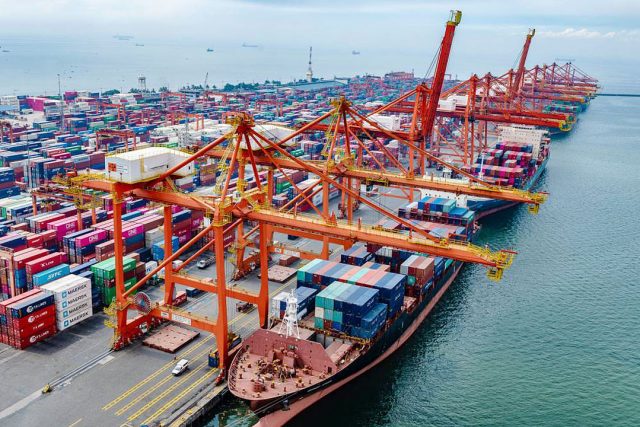
THE COUNTRY’S trade-in-goods deficit further widened to a record high in November as growth in merchandise imports continued to outpace the rise in exports, the Philippine Statistics Authority (PSA) reported on Tuesday. 

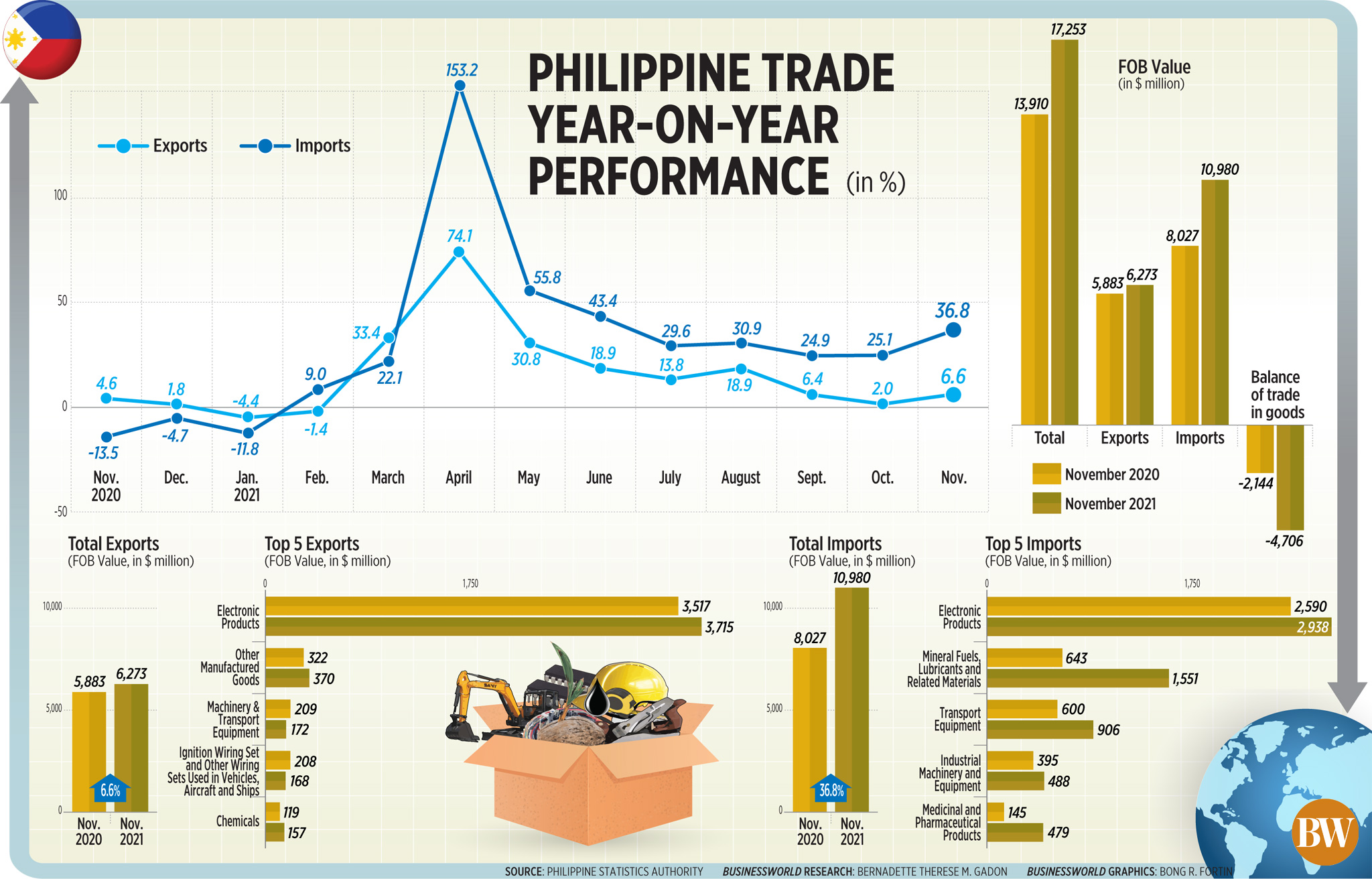
Export receipts grew by 6.6% year on year to $6.27 billion in November, preliminary data from the PSA showed.

This was higher than the 4.6% increase in the same month in 2020 and the 2% growth in October 2021. November’s export growth was the highest in three months or since August’s 18.9% expansion.
Philippine trade year-on-year performance (Nov. 2021)

The value of November exports slipped to a six-month low or since May’s $5.94 billion.

Meanwhile, the country’s merchandise import bill rose by 36.8% to a record $10.98 billion in November.

This marked a turnaround from the 13.5% fall in November 2020 but faster than the 25.1% increase in imports in October 2021.

This was the highest import growth in five months or since the 43.4% surge recorded in June.

This brought the trade-in-goods deficit to $4.71 billion in November, wider than the $2.14-billion shortfall recorded in the same month last year, as well as the $4.11-billion gap in October.

This was the widest monthly trade gap on PSA’s record dating back to 1991.

Year to date, the trade balance ballooned to a $37.92-billion deficit, from a $22.15-billion trade gap in 2020’s comparable 11 months.

For the 11-month period, exports jumped by 15.2% year on year to $68.37 billion. This was below the revised 16% growth projected by the Development Budget Coordination Committee for 2021.

Imports, on the other hand, climbed by 30.4% to $106.30 billion, slightly above the government’s revised 30% assumption.

Outbound shipment of manufactured goods grew by 5.9% to $5.30 billion in November. These goods accounted for 84.4% of total export sales that month.

Electronic products, which made up 70.2% of manufactured goods and more than half of the total exported goods, rose by 5.6% to $3.71 billion in November. Of these, semiconductors contributed $2.62 billion — up by 3.7% from November 2020.

Agro-based products increased by 36.1% to $491.22 million, while forest products went up by 6% to $34.25 million.

However, sales of mineral and petroleum products contracted by 8.9% to $359.27 million and 95.2% to $42,000, respectively.

All major import items posted significant annual growth in November.

Raw materials and intermediate goods, which accounted for 38.7% of import goods in November, grew by 39.2% to $4.25 billion.

Imports of capital and consumer goods were valued at $3.35 billion (up 18.8%) and $1.76 billion (up 22.7%) in November.

Purchases of mineral fuels, lubricant and related materials more than doubled to $1.55 billion in November from $642.87 million in the same month in 2020. These goods accounted for 14.1% of the country’s total imports that month versus just 8% in the same month in 2020.

Asian Institute of Management (AIM) economist John Paolo R. Rivera said that improved trade performance was “expected” as the pandemic situation in the country improved from September until December.

“Because of increased demand locally due to a more active economy, imports were expected to gain steam. Exports, on the other hand, were also expected to perform given the varying pace of economic recovery by our trading partners,” he said in an e-mail interview.

“The last quarter of 2021 was a good window for the economy to get moving until the Omicron variant threatens this recovery process momentum,” Mr. Rivera said.

In a note to reporters, ING Bank N.V. Manila Senior Economist Nicholas Antonio T. Mapa said higher fuel imports was one of the factors for the widening trade gap.

“Costlier imported crude oil translated to overall fuel imports rising sharply, which in turn helped bloat the trade deficit to its current record high,” he said. “With global crude oil prices staying elevated to open the year, the Philippines could continue to experience wider trade deficits in the near term.”

OUTLOOK
The government’s trade targets for 2021 were on track to be met, but the fresh surge in new coronavirus cases may hurt this year’s trade growth assumptions.

The interagency DBCC expects exports and imports to grow by 6% and 10%, respectively, this year.

“The problem would be felt in the first quarter of 2022 due to Omicron. But for 2021, I think the government will meet its targets for exports and imports,” Philippine Exporters Confederation, Inc. President Sergio R. Ortiz-Luis, Jr. said in a phone interview.

AIM’s Mr. Rivera expects the 2021 targets to be met with “slim margin or slim shortfall.”

“Given the economic conditions during the last quarter of 2021 and the performance in the previous quarters, the Delta variant surge was the most significant threat to meeting economic target performances,” he said. “The threats were significant in altering the growth trajectories of trade figures even in the first quarter of 2022.”

For ING’s Mr. Mapa, the ballooning trade gap pushed the country’s current account balance to a deficit in 2021. He expects this trend to continue this year.

The current account shows a country’s transactions with the rest of the world. It includes trade in goods and services, remittances from migrant Filipino workers, profit from Philippine investments overseas, interest payments to foreign creditors, and gifts, grants, and donations to and from abroad.

“With the current account expected to remain in deficit territory, pressure on PHP (Philippine peso) to weaken should persist in 2022 although other factors such as the looming Fed rate hike will likely play a major role in the currency’s trajectory this year,” Mr. Mapa said.

Rizal Commercial Banking Corp. Chief Economist Michael L. Ricafort said in a note sent to reporters that the recent surge in new coronavirus cases will be a drag on economic recovery prospects and on trade.

“Lingering concerns over the Omicron variant could also add to the disruptions in the global supply chains amid isolation and quarantine for increased number of infected workers for many businesses and industries worldwide,” he added.

Mr. Ricafort said the trade deficit could be sustained at the $4-billion levels per month this year for as long as the global oil prices remained elevated as the pandemic-induced supply chain disruptions continue.

“For the coming months, further pickup in imports and exports could also be supported by still near-record-low short-term interest rates that could help spur greater demand for loans for new investments that entail the more importation and also more export production as well as more jobs and other business opportunities in the supply chain and for related businesses and industries,” Mr. Ricafort said.
GDP growth seen below gov’t target this year

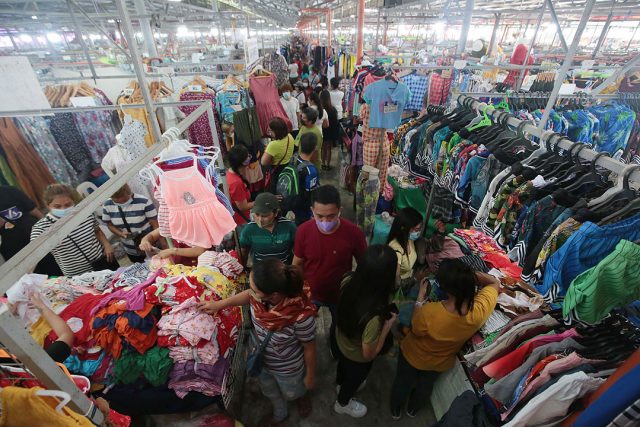
AISLES of tiangge (flea market) in Taytay, Rizal are filled with customers looking for cheap clothes. — PHILIPPINE STAR/ MICHAEL VARCAS
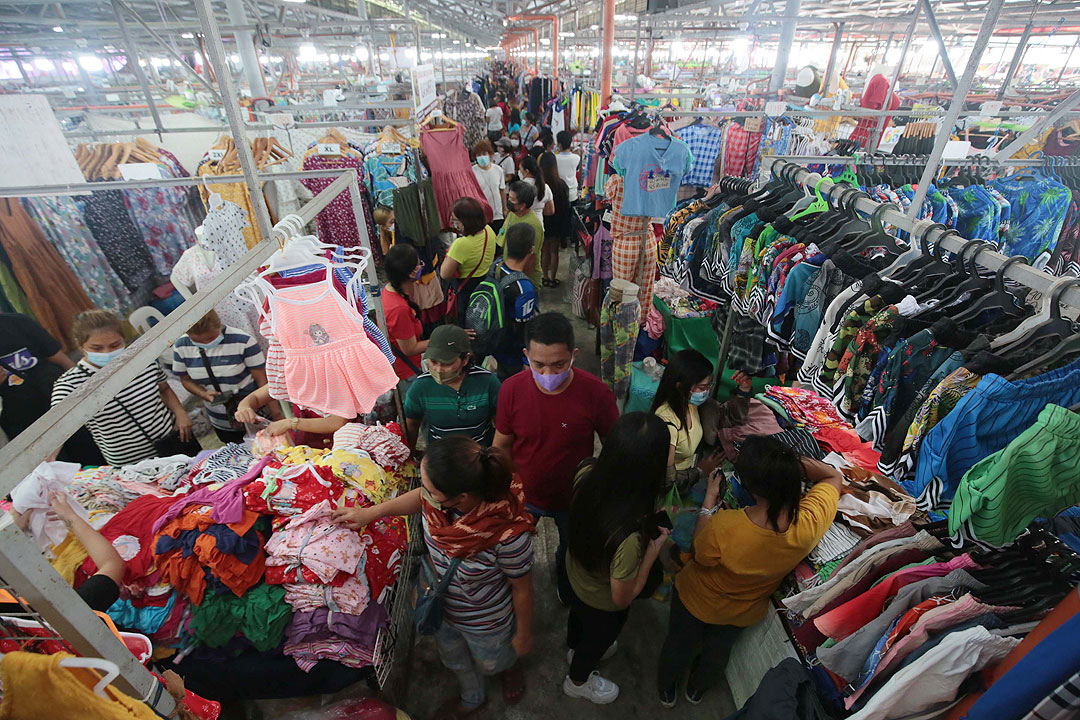
Shoppers crowded the aisles of a market in Taytay, Rizal, Dec. 13, 2021. — PHILIPPINE STAR/ MICHAEL VARCAS

ECONOMISTS EXPECT the Philippines’ gross domestic product (GDP) to grow between 6-7% this year, lower than the government’s 7-9% target range.

First Metro Investment Corp. (FMIC) on Tuesday said the economy will likely expand by 6-7% in 2022 as remittances increase and the outsourcing industry generates more revenue.

On the other hand, the Hongkong and Shanghai Banking Corp. (HSBC) lowered its 2022 growth forecast for the Philippines to 6.2%, from 6.5% previously.

“This is a strong growth this year, but we are still not at the pre-pandemic output levels. It will still take a few more years before we get there, similar to other countries as well,” James Cheo, chief investment officer, Southeast Asia Global Private Banking and Wealth at HSBC, said at an online briefing.

Mr. Cheo said the government’s infrastructure push will help accelerate growth.

“It’s [Philippine economic growth] really one of a recovery, powered by consumption, economic reopening and also the big investment infrastructure projects that are backed by the government,” he said.

The economy will also be supported by rising demand for technology-driven products, said Fan Cheuk Wan, Asia managing director and chief investment officer for HSBC Global Private Banking and Wealth.

“We think the key driver for the growth recovery remains the economic reopening and we also anticipate that the global tech cycle will also benefit the Philippines because quite an important driver for the Philippine economy is actually the electronics growth,” Ms. Fan said.

The government gradually eased restrictions in the fourth quarter, allowing more economic activity as the daily new cases of coronavirus disease 2019 (COVID-19) declined.

“Last year the Philippine economy rebounded from a deep recession, registering 4.9% growth in the first three quarters of the year. This growth momentum likely spilled over in the fourth quarter given further economic reopening and easing mobility restrictions,” FMIC President Jose Patricio A. Dumlao said in a statement.

Third-quarter GDP grew by 7.1%, bringing full-year growth to 4.9%. The Development Budget Coordination Committee raised the 2021 outlook to 5-5.5%, from the previous estimate of 4-5%.

“Notwithstanding the ongoing pandemic, and Omicron sparking the third wave of infections, we are still optimistic that Philippine growth will further accelerate and get back on its trajectory of 6-7% in 2022,” Mr. Dumlao added.

This forecast would be backed by its 9.5% growth projection for the industry sector. The services sector would lag behind with a 5% growth forecast.

Business process outsourcing will likely see more earnings from emerging segments like insurance, healthcare, and data and analytics, he added.

Economist Victor A. Abola of the University of Asia and the Pacific (UA&P) at a briefing listed some caveats, including the continued effect of COVID-19 on poverty levels and supply chain disruptions. UA&P is FMIC’s partner in issuing its economic outlook.

Credible elections will be necessary to support FMIC’s economic growth forecast, he added.

INFLATION ISSUE
Meanwhile, HSBC’s Mr. Cheo said inflation in 2022 will still be “a little bit of an issue” as it could be at about 3.7%. Last year, inflation averaged 4.5%, above the 2-4% target of the Bangko Sentral ng Pilipinas (BSP).

For this year, Mr. Cheo said the central bank would likely keep its focus on supporting economic recovery.

“It’s very likely that the central bank would still be on a wait-and-see mode because they would still want to maintain growth. So perhaps, if there is a hike in policy rates, the next move will probably be in the second half of this year with a 50-basis-point hike,” Mr. Cheo said.

The BSP has kept the key policy rate at a record low of 2% all throughout 2021, after cutting rates by 200 basis points in 2020. Last week, BSP Governor Benjamin E. Diokno said they will ensure a careful exit strategy and will only raise interest rates “when prospects for the economy have materially improved.”

CREDIT DOWNGRADE UNLIKELY
A credit downgrade this year will be unlikely, while the debt ratio would probably decline with faster economic growth, according UA&P’s Mr. Abola.

“We have high gross international reserves and we have one of the lowest external debt-to-GDP,” he said, comparing the Philippines to other countries in Asia.

“Our reserves remain high,” he said. “What’s driving that is we have a very robust OFW (overseas Filipino worker remittances).”

Fitch Ratings in November said rising public debt could lead to a credit rating downgrade for the Philippines in the next few years. The country’s debt-to-GDP ratio was 63.1% as of September, the highest in 16 years. — Luz Wendy T. Noble and Jenina P. Ibañez

Banks’ November NPL ratio lowest in 8 months — BSP data

BW FILE PHOTO

By Luz Wendy T. Noble, Reporter

PHILIPPINE BANKS’ asset quality improved for a third month in a row in November as the industry’s gross nonperforming loan (NPL) ratio fell to its lowest since March 2021.

Preliminary data from the Bangko Sentral ng Pilipinas (BSP) showed banks’ NPL ratio stood at 4.35% as of November, easing from the 4.42% as of Oct. but still above the 3.81% a year earlier.

The November bad loan ratio matched the 4.35% in April and is the lowest in eight months or since the 4.21% logged in March.

The industry’s NPL ratio has dropped after reaching a 13-year high of 4.51% in July and August, after the easing of pandemic-related restrictions allowed businesses to expand operational capacity.

BSP data showed bad loans as of November slipped by 0.43% to P481.879 billion from P483.98 billion in the prior month. However, it was still higher by 19% from the P404.687 billion seen in the same month a year earlier. 

Lenders’ total loan portfolio grew by 4.3% year on year to P11.08 trillion as of November.

“The absolute amount of bad loans continued to climb as firms and households are still faced with challenging economic conditions. The NPL ratio, however, dipped as new loan growth picked up amidst the economic reopening,” ING Bank N.V. Manila Senior Economist Nicholas Antonio T. Mapa said in an e-mail.

Earlier released central bank data showed lending by big banks rose by 4% in November, marking the fourth straight month of annual growth and the fastest since the 4.7% in 2020. Lending for production activities increased by 5.3%, although retail borrowings was still down by 7.1%.

The government placed Metro Manila under the more relaxed Alert Level 2 in November.

Meanwhile, past due loans as of November rose by 11.5% to P567.511 billion from P507.687 billion a year earlier. These accounted for 5.12% of the total loans, up from 4.78% a year ago.

In the same month, restructured loans more than doubled year on year to P344.896 billion from P139.614 billion. This brought its ratio to 3.11% of banks’ gross loan portfolio, from 1.31%.

Lenders’ loan loss reserves jumped by 19% year on year to P419.862 billion from P352.733 billion. These buffers are equivalent to 3.79% of the total loans.

NPL coverage ratio — which indicates banks’ allowance for potential losses due to bad loans — was a tad lower at 87.13% from 87.16% a year ago.    

The BSP earlier said the NPL ratio could reach 5-6% by end-2021 before peaking at 8.2% by 2022.

While banks’ asset quality gradually improved due to the economy’s reopening, Mr. Mapa said the ongoing Omicron wave may force another lockdown.

“Although the declining trend in NPL is a welcome sign, [it] may be too early to say this ratio has peaked as we enter another bout of alert levels with the current surge threatening to force authorities to tighten up further,” Mr. Mapa said.

UnionBank of the Philippines, Inc. Chief Economist Ruben Carlo O. Asuncion said the Omicron surge is clouding the outlook for asset quality of banks, although he is optimistic this will have a “shorter impact” than previous waves.

“The improving outlook is being clouded by the Omicron effect. However, this may have a shorter impact compared to previous surges. We think that the Omicron surge may be higher but quicker to dissipate,” Mr. Asuncion said in a Viber message.

The Philippines is experiencing a surge in coronavirus disease 2019 (COVID-19) infections, which experts said is likely due to more transmissible Omicron variant. New infections rose by 28,007 on Tuesday, with active cases now at 181,016.

Rate hike unlikely in first half of 2022, says Diokno

THE PHILIPPINES’ central bank is unlikely to increase policy rates in the first half of this year as it waits for the economic recovery to become entrenched and unemployment to fall, according to central bank Governor Benjamin E. Diokno.

“After the performance in the first two quarters of the year, that’s when we seriously look at whether we will make some adjustments,” Mr. Diokno said in an interview on Tuesday. “We want to make sure that the economy is recovering well.”

Like central bankers globally, Southeast Asian policy makers are juggling the prospects of a faster US rates liftoff and the threat from a quick-spreading coronavirus variant, as well as regional developments such as the People’s Bank of China pledging greater support for its economy and sustaining accommodative policies.

“There is no ‘one size fits all’ on what’s happening,” Mr. Diokno said, when asked how faster rate increases by the US Federal Reserve will impact emerging-market central banks.

The governor said the Bangko Sentral ng Pilipinas typically likes to see four to six quarters of steady economic growth and unemployment around 5% before considering raising rates. Gross domestic product has posted two consecutive quarters of year-on-year growth — including, most recently, 7.1% expansion in the July-September period — while the unemployment rate hit 6.5% in November, the lowest since the pandemic began.

The Philippines’ key interest rate has been at a record-low 2% for more than a year, withstanding mounting inflation in 2021. Ample foreign-exchange reserves and manageable government debt provide some cushion against tighter financial conditions worldwide, said Mr. Diokno, who recently was named central banker of the year by The Banker magazine.

The governor said the economy can grow within the government’s 7%-9% forecast this year, with inflation set to slow to near the midpoint of the central bank’s 2%-4% target.

If the economy needs more support, a cut to the benchmark rate is unlikely, Mr. Diokno said. Instead, policy makers can consider tweaks to banks’ reserve requirement ratio (RRR), either in the form of direct cuts to the ratio or an easing of compliance rules, he said.

Policy makers are next scheduled to set the key rate on Feb. 17.

Mr. Diokno has said a potential RRR cut remains on the table, as the central bank reduced its direct budget support to the government and its bond buying in the secondary market. The monetary authority’s loans to the government are likely to end this year, he said on Tuesday.

PESO RANGE
Foreign-exchange strategists see the peso under pressure as the central bank aims to keep monetary policy accommodative while the Fed turns hawkish. The local currency has lost about 0.5% against the greenback so far this year.

Mr. Diokno said he’s “very comfortable” with the peso trading in a range of P48-53 per dollar, adding that the currency is unlikely to weaken beyond P53.

Going forward, Mr. Diokno said fiscal policy should be able to do the “heavy lifting” to support the economy through the pandemic, advice he said could apply to most countries.

“A governor should know the limits of monetary policy,” Mr. Diokno said. “You may be good, but you’re not superman. You can’t solve all the problems.” — Bloomberg

PHL gets ADB grant to craft ‘growth strategy’

THE ASIAN Development Bank (ADB) has approved a $225,000 grant to the Philippine government to create an economic growth strategy to help reach its target of becoming a high-income country in two decades.

The ADB in a document said the grant was approved on Dec. 28.

“The technical assistance will support the Philippines’ Department of Finance (DoF) formulate a growth strategy that will guide necessary structural reforms to lift potential growth and create skilled jobs,” the ADB said.

“The socioeconomic impacts of the coronavirus disease (COVID-19) pandemic created many development challenges. This strategy will identify new sources of sustained growth that will help the Philippines consistently achieve a real GDP (gross domestic product) growth to become a high-income country in the 2040s.”

Project outputs include an economic complexity analysis and services for the country’s long-term growth strategy.

The ADB noted that the Philippine economy contracted by 9.6% in 2020 due to the pandemic’s impact.

The multilateral lender said the economy started to recover in the second quarter last year, with investment and household consumption as strong contributors.

“Progress in vaccination is helping restore consumer and business confidence. An expansionary fiscal policy continues to support growth, especially infrastructure investment,” the ADB said.

The Philippine government’s AmBisyon Natin 2040 crafted in 2016 is a plan to eliminate poverty and make the country a predominantly middle-class society. — Jenina P. Ibañez

New consortium gets original proponent status for Sangley airport project

By Arjay L. Balinbin, Senior Reporter

SPIA Development Consortium, a newly formed group that seeks to develop the Sangley Point International Airport, announced on Tuesday that it had been granted original proponent status for the project.

The provincial government of Cavite has “formally accepted” the proposal, the group said in an e-mailed statement to reporters, adding that it has also been granted original proponent status, or OPS.

“The grant of the OPS gives the consortium the right to directly negotiate the final terms and conditions of the joint venture with the province as well as the right to match the best counter proposal that may be received during the 60-day mandatory competitive or Swiss challenge process,” it noted.

The group said Cavite Governor Juanito Victor “Jonvic” C. Remulla issued the certificate of acceptance to the consortium on Jan. 7.

The governor was quoted as saying the acceptance of the unsolicited proposal is a “clear sign” of the province’s commitment to delivering the project to the Filipino people.

“We are very glad and hopeful that this consortium made up of reputable domestic and well-known global development and investment companies will help us successfully complete the project,” he also said.

The Cavite province previously declared a second failed bidding because no bids came in after the Oct. 20 deadline.

SPIA Development Consortium announced in November that it submitted its own unsolicited proposal for the airport project.

The consortium is composed of Philippine developers and investors as well as global firms. The local lead members are Cavitex Holdings, Inc. and Yuchengco Group of Companies.

MacroAsia Corp., a non-equity member, will provide management and technical services for aviation support as well as the logistics component of the project, the consortium said.

The global firms involved are Samsung C&T Corp., which built the Petronas Twin Towers in Kuala Lumpur and the Burj Khalifa in Dubai, and Munich Airport International GmbH, the management services arm of Munich Airport.

Arup Group, a London-based design company, is also a member of the consortium.

“The long-delayed Sangley Airport project is envisioned as a fully modernized, world-class and green airport that is designed to meet an anticipated increase in demand for air transport in the next 30-40 years, and as operations at NAIA (Ninoy Aquino International Airport) are eventually phased out to allow for a development of the site and its surrounding areas,” the consortium said.

“After final planning, design and financial closing, the work would immediately begin with the construction of a 4.6-kilometer connector road from the Kawit Interchange of Cavitex that would lead to Sangley, with the time of completion estimated at two years, the consortium affirmed,” it added.

MacroAsia and its partner China Communications Construction Co. Ltd. had negotiated with Cavite for the project in 2020, but the latter canceled its notice of selection and award in January 2021 due to the “various deficiencies in the submission of requirements to conclude the joint venture agreement.”

The province had issued a new invitation for firms to submit joint venture proposals for the airport project but received no bids.

Sore throat? Stay home

PIXABAY

By Brontë H. Lacsamana 

DON’T DISREGARD a sore or scratchy throat, health experts said on Friday, as it may be an early sign of the highly transmissible Omicron variant. 

Those with mild to moderate symptoms, like fever, colds, cough, body pains, headache, and sore throat should immediately isolate and use telemedicine services so as not to increase risk of transmission in public.  

“If you start to have symptoms, do not go to work, do not ride on public transport, and do not go to the mall,” said Dr. Teodoro J. Herbosa, special advisor of the National Task Force for COVID-19 (coronavirus disease 2019).   

Asymptomatic, mild, and moderate patients must isolate for 10 days while severe and critical patients must isolate for 21 days, according to home quarantine guidelines released on Friday by the Department of Health in light of the rise in hospitalizations due to the surge in COVID-19 cases.   

Household members should follow minimum public health standards at home, like wearing face masks, proper hand hygiene, and physical distancing of at least one meter away from others.  

With these protocols, an overwhelmed health system can be avoided, as hospital utilization is at 40% or 50%, according to Mr. Herbosa. 

‘CAUTIOUS OPTIMISM’ 
Based on past surges, the Philippines may reach its peak of coronavirus cases in January or February, according to a panel. 

“Note that the mixture of the holiday season, ongoing Delta, and potential Omicron are factors that brought us to where we are today,” said Dr. Benjamin G. Co, a pediatric infectious diseases expert, at a webinar on Jan. 7. He added that cautious optimism is the way to go, noting that the surge “should end somewhere.”  

On Monday, the country recorded its highest daily number of infections of more than 33,000. On New Year’s Day, the Philippines saw over 3,600 cases, following an average of under 500 infections pre-holidays. The National Capital Region (NCR) is under alert level 3 until Jan. 15.  

Since Omicron is the latest variant of concern, information is still limited as to whether vaccines will be effective against it. However, the currently available vaccines offer significant protection against severe disease and death, said Dr. Co.   

“How to protect against Omicron? Reduce our risk of exposure to the virus by responsibly making sure that our mobility is well thought of,” he said.  

Fredegusto Guido P. David, a University of the Philippines scientist and OCTA research fellow, suggested that the dramatic increase in cases and “critical-level” positivity rate of over 50% in the NCR could indicate a similar situation as South Africa. There, the rise in cases was followed by a steep decrease.  

“That’s the best-case scenario for the Philippines,” he said. “It’s possible that we could be closing in on the peak but we just don’t know.”  

On Jan. 9, Mr. David tweeted more cautious optimism: “We will know in the next few days if the positivity rate is indeed slowing down … If the increase in positivity rate is slowing down, then the peak in the NCR might occur within the week. Let us hope that is the case.” 

US man recovering after ‘breakthrough’ pig-heart transplant

Illustration of human heart by Patrick J. Lynch, medical illustrator/CC BY 2.5/Wikimedia Commons

CHICAGO — A US man with terminal heart disease was implanted with a genetically modified pig heart in a first-of-its-kind surgery, and three days later the patient is doing well, his doctors reported on Monday.  

The surgery, performed by a team at the University of Maryland Medicine, is among the first to demonstrate the feasibility of a pig-to-human heart transplant, a field made possible by new gene editing tools.  

If proven successful, scientists hope pig organs could help alleviate shortages of donor organs.  

“This was a breakthrough surgery and brings us one step closer to solving the organ shortage crisis. There are simply not enough donor human hearts available to meet the long list of potential recipients,” Dr. Bartley Griffith, who surgically transplanted the pig heart into the patient, said in a statement.  

“We are proceeding cautiously, but we are also optimistic that this first-in-the-world surgery will provide an important new option for patients in the future,” Dr. Griffith added.  

For 57-year-old David Bennett of Maryland, the heart transplant was his last option.  

“It was either die or do this transplant. I want to live. I know it’s a shot in the dark, but it’s my last choice,” Mr. Bennett said a day before his surgery, according to a statement released by the university.  

To move ahead with the experimental surgery, the university obtained an emergency authorization from the US Food and Drug Administration on New Year’s Eve through its compassionate use program.  

“The FDA used our data and data on the experimental pig to authorize the transplant in an end-stage heart disease patient who had no other treatment options,” said Dr. Muhammad Mohiuddin, who heads the University’s program on xenotransplantation — transplanting animal organs into humans.  

About 110,000 Americans are currently waiting for an organ transplant, and more than 6,000 patients die each year before getting one, according to organdonor.gov.  

Mr. Bennett’s genetically modified pig heart was provided by Revivicor, a regenerative medicine company based in Blacksburg, Virginia. On the morning of the surgery, the transplant team removed the pig’s heart and placed it into a special device to preserve its function until the surgery.  

Pigs have long been a tantalizing source of potential transplants because their organs are so similar to humans. A hog heart at the time of slaughter, for example, is about the size of an adult human heart.  

Other organs from pigs being researched for transplantation into humans include kidneys, liver and lungs.  

Prior efforts at pig-to-human transplants have failed because of genetic differences that caused organ rejection or viruses that posed an infection risk.  

Scientists have tackled that problem by editing away potentially harmful genes.  

In the heart implanted in Mr. Bennett, three genes previously linked with organ rejection were “knocked out” of the donor pig, and six human genes linked with immune acceptance were inserted into the pig genome.  

Researchers also deleted a pig gene to prevent excessive growth of the pig heart tissue.  

The work was funded in part with a $15.7-million research grant to evaluate Revivicor’s genetically-modified pig hearts in baboon studies.  

In addition to the genetic changes to the pig heart, Mr. Bennett received an experimental anti-rejection drug made by Kiniksa Pharmaceuticals based in Lexington, Mass. — Reuters

PSEi seen to reach 8,100 by yearend

BW FILE PHOTO

By Keren Concepcion G. Valmonte, Reporter

FIRST Metro Investment Corp. (FMIC) is expecting the benchmark Philippine Stock Exchange index (PSEi) to potentially hit an 8,100 high in 2022.

In a briefing on Tuesday, FMIC said it is expecting the 30-member PSEi to post a 13% to 15% growth this year, to close around 7,900 to 8,100 by yearend.

“The biggest event that is yet to be priced in by the PSEi is the fact that we are going to be returning to the pre-pandemic GDP (gross domestic product) by the end of this year,” FMIC Vice-President and Research Head Cristina S. Ulang said.

FMIC is expecting the economy to go “back on track” this year with a GDP growth of 6% to 7%, on the back of sustained domestic demand, easing inflation, election-related spending, and the government’s spending on the country’s infrastructure projects.

However, some of the key risks for the stock market include new coronavirus disease 2019 (COVID-19) variants, high inflation, higher interest rates, the slowdown of global economic growth, and power supply shortage.

Ms. Ulang said there are “so many industries that are very promising and buoyant during election years.” This includes durable equipment, construction, finance or insurance, information and communications technology (ICT), communication, restaurant and hotels, recreation and culture, electricity, and the wholesale or retail industries.

Election years also point to “possible” foreign buying. Some of the election spending stock beneficiaries FMIC named are Universal Robina Corp., Jollibee Foods Corp., Ginebra San Miguel, Inc., Bloomberry Resorts Corp., and GT Capital Holdings, Inc.

“[These] are all benefiting from the reopening of the economy,” Ms. Ulang said.

FMIC expects corporate earnings growth to go up to 35% this year from 28% last year. This may be a catalyst to improved investor sentiment.

For more stock picks, Ms. Ulang said issues that give dividends “that are superior than the bench fixed income rate” are preferred such as Globe Telecom, Inc., PLDT, Inc., and Converge ICT Solutions, Inc.

Stocks in the energy sector were also emphasized like AC Energy Corp., Manila Electric Co., and Semirara Mining and Power Corp., or companies with renewable energy projects.

“Inflation plays, we like the mining issues because of the improved regulatory climate and strong demand for electric vehicles, for nickel, and basic metals. Of course, we like the banks,” Ms. Ulang said.

These issues include Philex Mining Corp., Nickel Asia Corp., Semirara Mining, Metropolitan Bank & Trust Co., BDO Unibank, Inc., and the Bank of the Philippine Islands.

FMIC is also optimistic on stocks in the infrastructure and logistics sector as well as real estate investment trust issues such as Metro Pacific Investments Corp., Aboitiz Equity Ventures, Inc., DMCI Holdings, Inc., MREIT, Inc., and Filinvest REIT Corp.

Stocks that are “global trade beneficiaries” and issues riding on the growth of e-commerce are also recommended, like AyalaLand Logistics Holdings Corp. and International Container Terminal Services, Inc.

Access to new investors seen to spur dual listings

INTERNATIONAL advisory law firm Allen & Overy (A&O) is expecting qualified Philippine-listed companies to consider listing in other regional stock markets, such as the Singapore Exchange, for exposure to another set of investors.

“[It] enables the company to have exposure to another set of investors who invest in the Singapore Stock Exchange as not all investors invest in the Philippine Stock Exchange (PSE),” Giancarlo B. Sambalido, a registered foreign lawyer at A&O told BusinessWorld in a recent virtual call.

A&O has rendered its services to firms going public in the Philippines, such as Monde Nissin Corp. for its landmark initial public offering last year.

However, “the attractiveness of a dual listing” may not be for all Philippine companies.

“Only the bigger ones that have a regional, global profile will look to dual list because they want to gain access to these new investors, they want the more enhanced profile of a Singapore listing,” Mr. Sambalido said.

Meanwhile, some of the “hot sectors” expected for the PSE this year are food and consumer, “new economy” or financial technology issues, real estate investment trusts (REIT), and companies in the energy space.

“Especially if it’s a clean energy play,” Mr. Sambalido said. “A lot of investors are looking to invest in clean energy platforms.” — Keren Concepcion G. Valmonte

PATAFA open to reconciliation with pole-vaulter Obiena — PSC

THE Philippine Athletics Track and Field Association (PATAFA) is open to a possible reconciliation with Filipino pole-vault star Ernest John “EJ” Obiena, according to Philippine Sports Commission (PSC) chairman William Ramirez.

“Cong. Rufus (Rodriguez), who chairs PATAFA, told me they are very amenable to a reconciliation,” said Mr. Ramirez during Tuesday’s weekly public service online Philippine Sportswriters Association Forum.

But to fix the discord, Mr. Ramirez stressed the need for Mr. Obiena and PATAFA to sign the document that they are formally agreeing to the mediation.

While both parties are willing, the two factions, however, have not signed anything yet, delaying the process that sought to resolve the mess that had disgraced Philippine sports locally and internationally.

Mr. Ramirez, however, said they are not rushing things since Mr. Obiena might be busy with his plan of going under the knife to repair the small meniscus tear the latter suffered recently.

And the PSC board isn’t thinking twice to lend a helping hand.

“We went beyond compass of the NSA (national sports association) to help EJ (Obiena). The money is ready, we’re just waiting for his call,” said Mr. Ramirez.

The sports-funding agency is also processing the request of Mr. Obiena to release the incentives that he is due for breaking the national and Asian records a year back.

The issue stemmed from the accusation of PATAFA accusing Mr. Obiena of allegedly falsifying liquidations concerning payments to his Ukrainian coach Vitaly Petrov.

Mr. Obiena had repeatedly denied it.

But after more than a month of ugly exchanges in multimedia, Mr. Obiena, PATAFA and even Philippine Olympic Committee President Abraham Tolentino had all relented to a truce.

And there is hope there is light at the end of the tunnel. — Joey Villar

Pfizer CEO says Omicron-targeted vaccine is most likely outcome

Image via US Secretary of Defense/CC BY 2.0/Wikimedia Commons

PFIZER, INC. Chief Executive Albert Bourla on Monday said a redesigned coronavirus disease 2019 (COVID-19) vaccine that specifically targets the Omicron coronavirus variant is likely needed and his company could have one ready to launch by March.  

Mr. Bourla said Pfizer and partner BioNTech SE are working on both an Omicron-targeted vaccine version as well as a shot that would include both the previous vaccine as well as one targeted at the fast-spreading variant.  

“I think it is the most likely scenario,” Mr. Bourla said, speaking at J.P. Morgan’s annual healthcare conference, which is being held virtually this year. “We’re working on higher doses. We’re working different schedules. We’re doing a lot of things right now, as we speak.”  

Mr. Bourla said Pfizer could be ready to file for US regulatory approval for a redesigned vaccine and launch it as soon as March. Mr. Bourla said Pfizer has built up so much manufacturing capacity for the vaccine that it will not be a problem to switch immediately.  

COVID-19 vaccines eventually could be an annual shot for most people, Mr. Bourla said, and some high-risk groups might be eligible to receive the shots more often than that.  

Moderna, Inc. CEO Stephane Bancel said last week that people could need another shot this fall, as the efficacy of boosters is likely to decline over the next few months.  

An Omicron-driven spike in COVID-19 cases has forced some nations to look to another booster dose, but early signs suggest repeat vaccination may be a hard sell.  

Pfizer earlier in the day announced three deals to broaden the use of the messenger RNA technology (mRNA) that its COVID-19 vaccine was based on, including a pact worth as much as $1.35 billion with gene-editing specialist Beam Therapeutics.  

The US drugmaker has been looking to advance the development of mRNA-based vaccines and therapeutics after it led global efforts to develop a COVID-19 shot against the COVID-19 pandemic.  

The company will also collaborate with Codex DNA, Inc. to leverage the biotech’s proprietary technology, which could enable more efficient development of mRNA-based vaccines, therapeutics and other biopharma products.  

Its deal with private biotech Acuitas Therapeutics will focus on the use of the Vancouver-based company’s lipid nanoparticle technology for developing up to 10 vaccines or therapeutics. — Reuters

ADVERTISEMENT
ADVERTISEMENT