Home Blog Page 6867

SEC taps crowdfunding portals to list more firms

THE SECURITIES and Exchange Commission (SEC) will be tapping crowdfunding portals to target companies of various sizes amid its plans to list 888 companies in the capital markets for corporate financing or capital raising by 2024, the Department of Finance (DoF) said in a statement on Monday.

Over the next two years, the SEC will access crowdfunding portals to target micro-, small-, and medium-sized enterprises (MSME), large firms, and companies with franchises.

The country currently has 274 publicly listed companies. Another three are waiting to be listed, while three have pending applications this year, the SEC said in a report to the Finance department.

SEC Chairperson Emilio B. Aquino in September last year said the commission wants more small- and medium-sized enterprises (SMEs) listing at the local bourse. To do so, it plans to create the Office for the Advancement of Strategic Investments in SMEs (OASIS).

OASIS will work with government agencies and the private sector to help SMEs tap the capital markets.

Meanwhile, the SEC has also reached out to 18 institutions, including fund managers and investment houses, to help expand its financial literacy campaign.

The SEC wants more Filipinos to “place their money in safe and secure investments while continuing to protect the public from fraudulent ‘get-rich-quick’ schemes and other scams,” the DoF said.

About 54 million Filipino adults do not participate in the capital markets, according to a pre-pandemic SEC survey.

While 66% said they do not have excess income, 35% said they would have participated if not for perceived high costs or lack of information.

“Other reasons given by the survey respondents were the perceived low return on investment and the lack of trust on investment providers,” the DoF said. — Jenina P. Ibañez


‘Warm’ reception for Figaro’s market debut

Figaro Coffee Group, Inc. debuted on the Philippine Stock Exchange on Jan. 24. — COURTESY OF PHILIPPINE STOCK EXCHANGE

By Keren Concepcion G. Valmonte, Reporter

SHARES of Figaro Coffee Group, Inc. (FCG) closed its first day of trading up 2.67%, reflecting investor confidence in the food industry’s growth prospects amid the pandemic.

The food and beverage holding company’s shares closed at 77 centavos, adding two centavos to its initial public offering (IPO) price of 75 centavos.

“It was a relatively warm reception for Figaro given that most of the session it was trading above 80 [centavos], and closed at 77 [centavos] only because of profit taking,” Regina Capital Development Corp. Head of Sales Luis A. Limlingan said in a Viber message on Monday.

Figaro shares opened at 79 centavos each, before rising to an intraday high of 89 centavos.

Mr. Limlingan said the stock market’s overall decline may have affected Figaro’s debut.

On Monday, the Philippine Stock Exchange index (PSEi) declined by 40.88 points or 0.56% to close at 7,252.64. All of the sectoral indices ended in the red.

“Given that the PSEi closed in the red, and the US markets have been experiencing a huge sell-off, the stock could have performed better under normal circumstances,” Mr. Limlingan said.

Investors remained on the sidelines as they await the release of the Philippines’ fourth-quarter national accounts on Jan. 27, and signals on rate hikes from the US Federal Reserve policy meeting this week.

Figaro raised P767 million from the sale of 1.023 billion common shares for 75 centavos each.

“We are very happy that our IPO generated strong interest from institutional and public investors. We are also grateful to the strong support of the banking community as this reflects their confidence in the food industry, especially in FCG’s subsidiary, Figaro Coffee Systems, Inc., a company that has over 25 years of experience,” Figaro Chairman and Director Justin T. Liu said in a statement on Monday.

PSE President and Chief Executive Officer Ramon S. Monzon said 94% of Figaro’s local small investor (LSI) tranche was taken up by investors from 51 provinces and 11 countries.

“The percentage take-up of Figaro’s LSI tranche is the fourth highest out of the 17 companies that have so far used the PSE EASy platform,” Mr. Monzon said during the listing ceremony.

Net proceeds from the offer will be used to fund Figaro’s planned store launches and renovations, commissary expansion, to refinance debt, as well as for the expansion of its information technology infrastructure.

As of last week, Figaro operates 56 Figaro Coffee Shops, 39 Angel’s Pizza outlets, seven TFG Express outlets, six Tien Ma’s Taiwanese Cuisine restaurants, and one Cafe Portofino outlet.

Figaro is the second company to brave the stock market this year, just a week after Haus Talk, Inc. made its debut at the small, medium, and emerging (SME) board of the PSE. Mr. Monzon noted the last time a company debuted on the stock exchange in the month of January was in 2003.

“So having two listings to date hopefully bodes well for the exchange’s listing activities for the rest of the year,” Mr. Monzon said.

However, Darren Blaine T. Pangan, a trader at Timson Securities, Inc., said it is possible that uncertainty due to the pandemic is clouding market sentiment.

“This positive mood may spill over to the next offerings, but uncertainty still remains over how the prevailing sentiment will unfold in the coming weeks, especially at a fragile time amid the pandemic,” Mr. Pangan said in a separate Viber message.

Duterte signs law to accelerate Philippines’ total electrification

PCOO

PRESIDENT Rodrigo R. Duterte has signed into law a measure promoting the use of microgrid systems in unserved and underserved areas to accelerate total electrification of the country.

Signed on Jan. 21, Republic Act. No. 11646 aims to provide continuous power to remote communities, while prioritizing low-cost, renewable and environment-friendly sources of energy.

Unserved areas are those with no electricity access, while underserved areas are currently served by distribution utilities (DU) whose supply is less than 24 hours daily.

Ownership and operation of a microgrid system in the unserved and underserved areas will not be considered a public utility operation under the law.

Under the law, microgrid systems providers (MGSPs) will not be required to secure a franchise from Congress, but will need an authority to operate from the Energy Regulatory Commission.

MGSPs may provide power generation and distribution services in distribution utility-identified unserved areas, as well as Department of Energy-declared unserved and underserved areas after the conduct of a competitive selection process (CSP).

The CSPs will be “simple, uniform, streamlined and transparent.”

In case there are no participants or awarded MGSP in the CSP for a particular area, the National Power Corp. will undertake a missionary electrification project in the area.

The government’s 100% electrification target may be achieved as early as June given adequate funding, the state-run National Electrification Administration (NEA) said in July last year.

At that time, NEA said that about 12,000 sitios still “need to be connected to the grid.” The agency estimated a budget of P18 billion to accomplish the goal. — K.A.T.Atienza

SEC halts operations of Goodpocket, Easymoney Lending 

THE Securities and Exchange Commission (SEC) has issued halt orders against Goodpocket and Easymoney Lending Corp. for engaging in unauthorized lending activities.

“The acts of these unregistered Online Lending Operators in illegally offering and providing loans to the public, charging high-interest rates, and subjecting its debtors to unfair treatment through abusive and even libelous language in collecting the loaned amount, have no place in a society that is governed by and faithfully adheres to positive laws,” the Commission En Banc said.

The regulator said it received complaints about the two entities’ unfair collection processes. This includes posting libelous statements against borrowers on social media pages on top of sending similar statements to their borrowers’ contacts.

Neither Goodpocket nor Easymoney Lending is registered with the commission as a corporation and neither has the required Certificates of Authority to operate as a lending or financing company.

The Commission En Banc said the activities of Goodpocket and Easymoney Lending “constitutes actual fraud which was intentionally employed to lead the public into the belief that they are legally authorized to engage in the lending business, which is not and has never been the case.”

Republic Act No. 9474 or the Lending Company Regulation Act of 2007 (LCRA) provides that persons or entities that operate as lending companies should register as corporations and get a certification from the SEC before conducting lending transactions.

The Commission En Banc ordered the two entities on Jan. 18 to cease and desist from their lending activities and transactions until required authorization from the commission is secured.

“The companies, their owners, operators, promoters, representatives, and agents were further enjoined to cease from offering and advertising their lending business through the internet or any other media, and to remove all materials involving such,” the regulator said.

The SEC has canceled the licenses of 36 financing and lending companies due to their violations of rules and regulations. It has also since revoked the registration of 2,081 lending companies for not securing a certificate of authority as prescribed by the LCRA.

There are 60 online lending applications that have been ordered to stop their operations for not having secured authority to operate as a lending or financing company. — Keren Concepcion G. Valmonte

Robinsons Retail to rebrand Ministop after full acquisition

MINISTOP PHILIPPINES FB PAGE

ROBINSONS Retail Holdings, Inc. (RRHI) plans to “repurpose” and “rebrand” its Ministop stores after it fully acquires the franchise in February.

“Under the new agreement with Ministop Japan, RRHI will continue to operate the stores using the Ministop brand within the transition period agreed upon with Ministop Japan, until they are repurposed and appropriately rebranded in consideration of strong ready-to-eat offerings such as Uncle John’s Fried Chicken and Kariman,” RRHI said in a statement on Monday.

RRHI plans to buy Japan-based Ministop Co., Ltd.’s stake in Robinsons Convenience Stores, Inc. (RCSI) for an undisclosed price. The transaction will bump RRHI’s stake in RCSI, which is the exclusive franchisee of Ministop in the Philippines, to 100% from its current 60%.

“Our stores will continue to carry our best-sellers while we continue to diversify our ready-to-eat menu and offer new products to the market,” Ministop Philippines General Manager Suresh Ramalinggam said in the statement.

“Customers can also rely on our convenient e-services and bills payment facilities,” he added.

Last week, news outfit Nikkei Asia reported that Ministop plans to hand off its South Korean operations to Seoul-based conglomerate Lotte Corp. as well as to sell its stake in its Philippine business to focus on the Japanese market.

“I would like to thank Ministop Japan for our partnership over the years. Under the Ministop banner, we were able to bring to the public well-loved products and essential services,” RRHI President and Chief Executive Officer Robina Y. Gokongwei-Pe said in the statement on Monday.

The Gokongwei-led conglomerate teamed up with Mitsubishi Corp. and Ministop in 2000 to bring Japan’s 24-hour convenience store chain in the Philippines.

Mitsubishi sold its entire 12% ownership in the venture in August 2018. The 8% stake equivalent to 161.05 million shares in RCSI was sold to RRHI, bumping its ownership to 59.05% from 51%. The 4% balance equivalent to 78.95 million shares were sold to Ministop, bringing its ownership up to 40.9% from 36.9%.

In November 2019, RRHI’s wholly owned Robinson’s, Inc. bought 18.95 million RCSI shares from Ministop for P18.95 million. This bumped up RRHI’s ownership to 60% from 59.05%.

According to RRHI’s financial report covering the quarter ended September 2021, Ministop recorded a gross profit of P1.12 billon. Its system-wide sales amounted to P3.98 billion, while the segment’s net sales stood at P3.58 billion.

Ministop’s same stores sales growth stood at 3.3%, higher than the 1.7% seen in the second quarter of 2021. However, its third quarter gross profit and royalty income margin declined 35%.

Ministop has 458 branches across the country as of September last year. RRHI said 90% of its stores were operating, 59% of which are open 24 hours.

Meanwhile, for the first nine months of 2021, RRHI’s net income attributable to equity holders of the parent rose 13.3% to P2.71 billion from P2.39 billion a year ago. This is despite its sales inching down by 0.6% due to the pandemic, scoring P108.93 billion from P109.58 billion.

RRHI shares on the stock market went up 0.52% or 30 centavos on Monday to close at P57.95 apiece. — Keren Concepcion G. Valmonte

MWSS probes water output gaps; Maynilad cites weather

BW FILE PHOTO

THE regulatory office of the Metropolitan Waterworks and Sewerage System (MWSS) said on Monday that it is probing the prolonged water service interruptions by Maynilad Water Services, Inc.

“The investigation is being conducted primarily to determine whether there is a ground to declare Maynilad to have failed contractually on its service obligations, and to impose the appropriate penalties on the concessionaire,” the regulator said in a statement.

The MWSS Regulatory Office (RO) is spearheading the investigation of Maynilad’s Putatan water treatment plant’s (PWTP) supply zone located in Muntinlupa.

The plant is the first water treatment facility that taps into Laguna Lake as an alternative water source to Angat Dam.

“According to Maynilad, the reduced water production at the PWTP is caused by the prolonged high algal count and sustained high raw water turbidity in the Laguna Lake,” the regulator said.

“Considering the corrective actions and long-term solutions being taken at the PWTP since the second quarter of 2021, the MWSS is expecting the PWTP to be operating at its maximum design of 300 millions of liter per day (MLD) and Maynilad to be complying with its service obligation of providing all customers with an uninterrupted supply of potable water at 7 pounds per square inch (psi) minimum pressure,” it added.

The MWSS RO served Maynilad a “notice to explain” from Dec. 6 to 22 and Dec. 27 to Jan. 15.

On Jan. 21, it issued another notice asking the company to explain the reasons for the interruptions and its plan of action to remedy the situation.

In response, Maynilad said in a statement that the water service interruptions are due to unforeseen weather disturbances.

It said water production from Laguna Lake had been affected by the northeast monsoon or hanging amihan “that has been pushing unusual amounts of sediment toward our Putatan treatment plants.”

“The resulting turbid water needs more processing before being released to our customers. Also, increased nutrients in the lake have been promoting the growth of algae that block the intake structure of our treatment facilities,” said Maynilad, which serves Metro Manila’s west zone.

“We are taking short and long-term measures to address these concerns like intensifying filtration to get rid of the debris. Unfortunately, these extra interventions result in reduced water production, hence, the temporary rotating supply interruption. Meanwhile, we have been supplementing the supply of potable water through our mobile water tankers and stationary water tanks in several areas,” it added.

The water concessionaire said it is building a third treatment plant in Muntinlupa that will add another 150 MLD upon its completion in 2023.

“We apologize for the supply interruptions. We are doing our best to mitigate the effects on our customers of these natural and man-made causes. We will cooperate with our regulators to make sure all these issues are properly resolved soonest with the least inconvenience to the public,” the company added.

Metro Pacific Investments Corp., which has a majority stake in Maynilad, is one of three Philippine units of Hong Kong-based First Pacific Co. Ltd., the others being Philex Mining Corp. and PLDT, Inc.

Hastings Holdings, Inc., a unit of PLDT Beneficial Trust Fund subsidiary MediaQuest Holdings, Inc., has an interest in BusinessWorld through the Philippine Star Group, which it controls. — Luisa Maria Jacinta C. Jocson

8990 Holdings plans follow-on offering

8990 Holdings, Inc. is planning to conduct a follow-on offering (FOO) through the sale of shares owned by its existing shareholders, TPG Rafter Holdings, Ltd., Pasir Salak Investments Ltd., and IHoldings, Inc.

“The offer will be registered with the SEC and the offer shares will be crossed through the facilities of the PSE (Philippine Stock Exchange),” 8990 Holdings said in a disclosure on Monday.

The listed mass housing developer said its board of directors gave the go signal on plans to sell up to 1.25 billion outstanding common shares owned by the three shareholders, along with an overallotment option of up to 150 million common shares.

8990 Holdings also plans to issue IHoldings new common shares from the listed company’s unissued capital stock equivalent to the shares IHoldings will sell for the FOO.

The company assured that shares issued to IHoldings will not go over 10% of 8990 Holdings’ resulting total issued and outstanding capital stock.

8990 Holdings may issue up to 450 million new common shares, assuming the overallotment option is exercised, in favor of IHoldings for the same price as its FOO shares. These shares will also be listed on the PSE.

“There is no expected decrease in the public float of the Company as a result of the foregoing transactions,” 8990 Holdings said.

“The company shall make additional disclosures in due course,” it added.

Shares of 8990 Holdings at the stock exchange declined 2.56% or 30 centavos to P11.40 each. — Keren Concepcion G. Valmonte

Manila falls near bottom of list ranking city investment prospects

PHILIPPINE STAR/MICHAEL VARCAS

MANILA slumped to near bottom in a ranking of city investment prospects in the Asia-Pacific for 2022, a joint report from the Urban Land Institute and PricewaterhouseCoopers showed.

In the 2022 Emerging Trends in Real Estate report, Manila ranked 21st out of 22 cities in terms of city investment prospects, slipping from 19th spot in the previous year.

The Philippine capital was classified as having “generally poor” investment prospects this year.

Manila only performed better than Kuala Lumpur, which ranked 22nd. The bottom of the list featured all of the region’s developing markets, which continue to suffer from high rates of coronavirus disease 2019 (COVID-19) infections.

“Despite boasting both a young demographic and an economy with positive long-term fundamentals, Manila will struggle to digest a large amount of incoming supply on both the residential and office fronts, even as demand has weakened due to lockdowns and business closures,” the report said.

Manila’s property sector has also been affected by the exodus of Philippine Offshore Gaming Operators, which had taken up new supply before the pandemic.

“Business process outsourcing (BPO) facilities, meanwhile, have fallen victim to the work-from-home wave, although over the longer term the industry may benefit from a global trend towards employment decentralization,” the report said.

Tokyo topped the list, as it benefitted from “low interest rates and an economy that is largely fueled by domestic demand.”

Along with Tokyo, Singapore, Sydney, Melbourne, Seoul and Osaka were classified as cities with “generally good” prospects.

“2022’s top markets for investment prospects in the region were characterized by abundant core capital and a flight-to-safety approach,” the report said.

For real estate investors, the most problematic issue remains the impact of the COVID-19 pandemic on property rent and values.

Investors are also concerned about low yields, vacancy rates, and lack of investable properties.

The Emerging Trends Asia Pacific report is based on a survey of 233 real estate professionals, and 101 interviews, including investors, developers, property company representatives, lenders, brokers and consultants.

Manila continues to lag in list of top real estate investment destinations

Spider-Man: No Way Home swings to 6th highest grossing movie in history with $1.69 billion globally

A SCENE in the film Spider-man: No Way Home

LOS ANGELES — Add another notch on Spider-Man: No Way Home’s long list of box office achievements.

Over the weekend, Sony’s comic book adventure became the 6th highest grossing movie in history with $1.69 billion at the global box office (not adjusted for inflation). It passed Jurassic World ($1.67 billion) and The Lion King ($1.66 billion) to secure that spot.

Now in its 6th weekend of release, Spider-Man: No Way Home returned to the No. 1 slot in North America, adding $14.1 million between Friday and Sunday, along with $27.7 million overseas. The superhero epic, starring Tom Holland as Marvel’s neighborhood web-slinger, opened in December and has generated $721 million at the domestic box office and $970.1 million internationally.

Outside of the United States, where No Way Home ranks as the fourth-biggest movie ever, Spidey’s latest adventure has done especially well in the UK — Mr. Holland’s birthplace — amassing $116 million to date. Other top-earning territories include Mexico with $73.4 million, South Korea with $60.6 million and France with $59.9 million. It’s notable that No Way Home has managed to shatter records and smash expectations without playing in China, which is the world’s biggest moviegoing market. —  Reuters

T-bills fully awarded as rates drop ahead of Fed

BW FILE PHOTO

THE GOVERNMENT made a full award of the Treasury bills (T-bills) it auctioned off on Monday as rates declined while investors await signals from the US Federal Reserve following its meeting this week.

The Bureau of the Treasury (BTr) raised P15 billion as planned via the T-bills it auctioned off on Monday as total tenders reached P76.37 billion, more than five times the initial offer but slightly lower than the P77.68 billion in bids seen last week.

Broken down, the Treasury raised P5 billion as programmed via the 91-day securities from P27.98 billion in bids. The average rate of the three-month debt paper went down by 18.2 basis points (bps) to 0.693% from 0.875% last week.

The government also borrowed P5 billion as planned through the 182-day instruments on Monday from P27.86 billion in tenders. The six-month T-bill’s average rate fell by 2 bps to 1.0777% from 1.097% previously.

Lastly, the BTr made a full P5-billion award of the 364-day papers as bids reached P20.53 billion. The average yield on the one-year securities stood at 1.41%, down by 0.5 bp from 1.415% a week earlier.

At the secondary market prior to the auction on Monday, the 91- 182- and 364-day T-bills were quoted at 0.8783%, 1.0979% and 1.4473%, respectively, based on the PHP Bloomberg Valuation Reference Rates published on the Philippine Dealing System’s website.

National Treasurer Rosalia V. de Leon in a Viber message to reporters said the BTr made a full award of all T-bill tenors as yields dropped ahead of the Fed’s policy review this week.

“(A) strong bias for short-term tenors was seen in the auction with [a] sharp reduction in rates,” she said.

The US central bank meeting this week will give the market guidance for the next auctions, Ms. De Leon added.

A bond trader said in a Viber message that the yield on the 91-day T-bill declined the most, which reflects that “investors are thinking of a potential rate hike after three months.”

The Fed will hold its first policy meeting for 2022 on Jan. 25 and 26.

The Fed is widely expected to raise rates three times this year starting as early as March, median forecasts from a Reuters poll showed.

Meanwhile, almost half of the analysts polled expect the central bank to hike rates at least four times.

Inflation pressures could push the Fed into tightening monetary policy more aggressively, possibly into more than four rate hikes this year, a Goldman Sachs analysis said.

The BTr wants to raise P200 billion from the domestic market this month, or P60 billion via T-bills and P140 billion from Treasury bonds.

The government borrows from local and external sources to help fund a budget deficit capped at 7.7% of gross domestic product this year. — J.P. Ibañez with Reuters

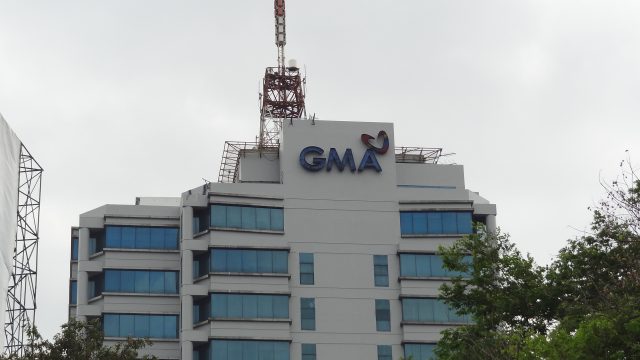
GMA reports net reach of nearly 96% with 83M TV viewers

BW FILE PHOTO

GMA NETWORK, Inc. on Monday reported a net reach of 95.7% for 2021, with an estimated 83 million television (TV) viewers.

“Per major area, GMA’s net reach was 95.6% or 54.4 million viewers in Total Luzon; 96.4% (16.4 million viewers) in Total Visayas; and 94.9% (12 million viewers) in Total Mindanao,” the listed media company said in an e-mailed statement, citing data from market researcher Nielsen Phils.

GMA also said it was the most watched channel in the country last year with a 46% audience share.

GMA used to go head-to-head with ABS-CBN Corp. for free TV reach, but since the nonrenewal of its broadcast franchise in 2020, the latter has become primarily a content company.

The Gozon-led network said that it recorded an average of 48.4% total day audience share in Total Luzon, 41.6% in Total Visayas, and 41.3% in Total Mindanao for 2021.

The company announced in December last year that it had set aside slightly less than P2 billion for 2022 to cover various projects, including the expansion of its digital transmission network and regional television network.

It had budgeted more than P20 billion between 2021 and 2023 for capital expenditures (capex) and content costs.

GMA Chairman and Chief Executive Officer Felipe L. Gozon said during the company’s recent special stockholders’ meeting that the network was expecting the momentum it had in the later part of the fourth quarter of 2021 to last into this year.

“Being a presidential election year, we have a reason to be optimistic. However, it still depends on how far and fast our recovery will be and whether the pandemic will surge or not,” he noted.

GMA’s January-to-September 2021 attributable net income grew 53.3% to P5.98 billion from P3.90 billion previously, as net revenues for the period climbed 30.8% to P16.56 billion — propelled by advertising revenues — from P12.66 billion in 2020.

GMA shares closed 1.89% lower at P14.56 apiece on Monday. — Arjay L. Balinbin

Multiple PESONet settlements to make transactions more convenient

THE MULTIPLE batch settlement (MBS) feature of PESONet launched on Monday is seen to make online transactions and liquidity management more convenient and help the central bank reach its goal to turn the country into a cash-lite economy.

Starting Monday, PESONet, an electronic fund transfer scheme participated in by 94 financial institutions, will facilitate morning and afternoon settlements for transactions.

“We hope that consumers will be incentivized to use PESONet for greater convenience, faster settlement and better liquidity management,” BSP Governor Benjamin E. Diokno said at the launch of the MBS system of PESONet.

The central bank chief said the MBS would also improve person-to-government transactions on EGov Pay as this runs through PESONet.

“Payments for taxes, permits, fees, and other obligations to the government using EGov Pay will be faster,” Mr. Diokno said.

He noted that a growing volume of pension, social security benefits and government aid have been disbursed digitally through PESONet. Social Security System disbursements alone coursed through the facility reached P158 billion in 2021, Mr. Diokno added.

PESONet — unlike its retail counterpart InstaPay, which allows real-time fund transfers of amounts below P50,000 — is mostly used for higher-value transactions. Mr. Diokno said this makes PESONet an alternative to the paper-based check system often tapped for business purposes.

“It (PESONet) is not intended to eliminate the use of this conventional way of making high- value payments, at least not within the next three years. But we encourage corporate clients and other users to veer away from paper-based checks, and use the more convenient digital payment options,” Mr. Diokno added.

BSP Deputy Governor Mamerto E. Tangonan said the MBS will provide more ease and cut waiting time for higher-value transactions. 

“For businesses, this may mean that payments received in the morning may be used for other productive use in the afternoon, thereby boosting productivity and income,” Mr. Tangonan said.

PESONet Steering Committee Chairman John Cary L. Ong said they are studying the possibility of allowing more settlements via PESONet to further boost digital transactions.

“This (MBS) will be a game changer, especially as the industry moves from two settlements a day to three, or four or even more, and eventually, even on weekends and holidays,” he said.

He noted that PESONet has no transaction limit, but participants have the right to impose transaction limits for their clients.

“Each institution is afforded the flexibility to customize their services taking into consideration also the appropriate limit that is commensurate to the robustness of its risk management system,” Mr. Ong said.

Transactions coursed through PESONet reached over seven million in December 2021, Mr. Ong said. Meanwhile, Mr. Tangonan said the net transaction volume and value of PESONet transfers rose by 26% and 37% year on year in 2021.

Online payments made up 20.1% of the total in 2020, with the pandemic fueling the rise in digital transactions.

By 2023, the central bank wants 50% of all payments done digitally. — L.W.T. Noble