Home Blog Page 59

House body summons Ombudsman as VP’s impeachment probe deepens

Vice President Sara Z. Duterte-Carpio announces her intention to run for president during a press conference in Mandaluyong City, Feb. 18, 2026. — PHILIPPINE STAR/MIGUEL DE GUZMAN

THE HOUSE of Representatives Justice Committee has summoned the Ombudsman to testify and turn over Vice-President (VP) Sara Duterte‑Carpio’s wealth declarations, a move that deepens scrutiny of her finances as an impeachment inquiry advances.

In a March 31 subpoena, the body ordered Ombudsman Jesus Crispin C. Remulla to appear at an April 14 hearing and submit certified copies of Ms. Duterte’s statements of assets, liabilities and net worth (SALNs) covering 2022 to 2025, as well as earlier periods from 2007 to 2013 and 2016 to 2022.

The records are needed “for the committee to be apprised of the assets, liabilities and net worth” declared by the Vice-President from the time she started public service until the present, according to the subpoena.

The request signals a shift toward closer examination of Ms. Duterte’s financial disclosures as lawmakers assess whether probable cause exists to move forward with impeachment, a step that could accelerate the case toward a public trial and intensify political pressure on the country’s second‑highest official.

“As long as it is our duty, we will comply,” Mr. Remulla said at a livestreamed news briefing in Filipino.

Political analysts earlier said the impeachment proceedings risk undercutting Ms. Duterte’s position as a leading contender for the 2028 presidential election, with corruption allegations threatening to erode the political capital she has built since sweeping into office in 2022.

The move to unseat Ms. Duterte intensifies a high-stakes political standoff between her and President Ferdinand R. Marcos, Jr., once allies who ran together on a unity ticket but have since fallen out and emerged as rivals.

The impeachment proceedings are now in the hearing stage before the Justice committee, which is tasked with determining probable cause on two active complaints after finding them sufficient in form and substance.

The panel has invited Ms. Duterte to attend the hearings and has issued subpoenas to secure testimony, financial records and related evidence from government agencies.

Mr. Remulla has said his office is prepared to provide Congress with all available SALNs of the Vice-President, citing the legality of the request.

Lawmakers said reviewing the SALNs is central to assessing claims of unexplained wealth and potential violations of public trust cited in the complaints, allegations Ms. Duterte has denied.

The House is proceeding under a more formal committee process following a 2025 Supreme Court ruling that voided expedited impeachment procedures.

A pro‑Duterte legal group has filed another petition seeking to halt the inquiry, its second attempt after the high court blocked earlier proceedings for violating the Vice-President’s right to due process.

At least 106 lawmakers must vote in favor for the articles of impeachment to be sent to the Senate, which would then sit as an impeachment court. A Senate conviction would remove Ms. Duterte from office and permanently bar her from holding any public post.

The complaints accuse Ms. Duterte of misusing hundreds of millions of pesos in confidential funds allocated to the Office of the Vice-President and the Department of Education, which she headed.

Other allegations include amassing wealth disproportionate to her declared income, seeking to destabilize the government and plotting to assassinate Mr. Marcos, his wife and a former House speaker. Ms. Duterte has denied all accusations.

Taken together, the petitions charge her with graft, bribery, constitutional violations and betrayal of public trust — all impeachable offenses under the 1987 Constitution.

The rift between Mr. Marcos and Ms. Duterte has widened in recent months following policy disagreements and political tensions between their camps.

The political dispute has also unfolded against the backdrop of the arrest of her father, former President Rodrigo R. Duterte, by the International Criminal Court over charges of crimes against humanity related to his anti-drug campaign. — Erika Mae P. Sinaking


Marcos weighs fuel tax cut as oil price shock mounts

MOTORISTS queue at a gasoline station along Norzagaray Road in San Jose del Monte on March 8, 2026. — PHILIPPINE STAR/RYAN BALDEMOR

By Chloe Mari A. Hufana, Reporter and Kaela Patricia B. Gabriel

PRESIDENT Ferdinand R. Marcos, Jr. may decide on Tuesday whether to use his emergency powers to suspend or cut excise taxes on petroleum products, as economic managers submit recommendations aimed at easing the impact of surging oil prices driven by the escalating Middle East war.

The Development Budget Coordination Committee is scheduled to present its assessment to the President on April 7, Palace officials said, raising the possibility of fiscal intervention just weeks after Congress authorized such powers.

“The recommendation will be submitted [to the President], and there will probably be a decision if he finds it correct and appropriate for our people and the country,” Palace Press Officer Clarissa A. Castro told a news briefing on Monday. She declined to provide details on the committee’s proposal.

The Philippines, which imports almost all of its fuel, remains under a year‑long state of energy emergency as conflict involving Iran threatens global supply routes and pushes crude prices higher.

Oil prices have climbed steadily since late February, with the latest adjustment set to push domestic diesel prices toward P170 per liter.

Under the emergency declaration, Mr. Marcos also created the inter‑agency Unified Package for Livelihoods, Industry, Food and Transport (UPLIFT) Committee to coordinate the government’s response. The body is scheduled to meet on April 7, though the Palace has not disclosed its agenda.

Congress last month granted Mr. Marcos the authority to suspend or reduce excise taxes on petroleum products after he signed Republic Act No. 12316 on March 25. The law allows tax relief during periods of severe price volatility but stops short of mandating action.

Ms. Castro said fiscal trade‑offs remain a key consideration. Taxes are the lifeblood of the government, she said, underscoring the need to balance price relief with revenue stability.

Finance officials have warned of the cost. Finance Undersecretary Karlo Fermin S. Adriano told lawmakers that suspending excise taxes could cost the government as much as P136 billion this year, including P121.4 billion in foregone excise revenues and P14.6 billion from lower value‑added tax collections.

DIPLOMACY, SUPPLY RISKS
The Palace sought to play down diplomatic fallout from Iran’s assurance of safe passage for Philippine‑flagged vessels through the Strait of Hormuz, a critical waterway that carries about a fifth of the world’s oil supply.

Ms. Castro, citing Foreign Affairs Secretary Ma. Theresa P. Lazaro, said Manila does not expect the arrangement to affect ties with the US, a long‑time ally.

“We don’t see any issues with our ally, the US, because they are aware of the current situation,” Ms. Castro said, comparing the arrangement to the Philippines’ continued oil imports from Russia despite strained US‑Moscow relations.

Ms. Lazaro spoke last week with Iranian Foreign Minister Abbas Araghchi, who assured the “safe, unhindered and expeditious passage” of Philippine‑flagged vessels and Filipino seafarers. Iran restricted access to the Strait after US and Israeli strikes against Tehran on Feb. 28.

US President Donald J. Trump warned Iran this week to reopen the Strait or face further consequences, raising fears of additional escalation.

Energy Secretary Sharon S. Garin has said Iran’s guarantee does not translate into immediate price relief, as global benchmarks continue to price in supply risk. Manila has instead pursued alternative fuel sources, including shipments from Russia, Japan and South Korea. Mr. Marcos said earlier that negotiations with nontraditional suppliers have been positive.

The oil shock has amplified economic pressures at home. Higher pump prices threaten to lift inflation, while the peso hit a record low against the dollar last month, reflecting capital outflows and import‑driven demand for foreign currency.

PUSH TO REGULATE PRICES
Amid the volatility, a senator on Monday filed a bill that would reverse decades‑old fuel deregulation by granting the President broader powers to intervene in oil pricing during national emergencies.

Senate Bill No. 2020 or the Bayanihan 3: Power to the People Act, filed by Senator Lorna Regina B. Legarda, will allow the Energy, Finance and Trade departments and the Philippine Competition Commission to temporarily regulate the oil industry during an energy emergency.

“By granting the President emergency powers to stabilize fuel prices, the state is preemptively defending against the weaponization of scarcity,” Ms. Legarda said in the bill’s explanatory note.

The proposal allows temporary price controls, reallocation of fuel supply and mandatory minimum strategic stockpiles. It also directs the Finance department to defer, suspend or reduce excise taxes on gasoline, diesel, kerosene and liquefied petroleum gas.

The bill seeks to institutionalize the UPLIFT framework and expand financial relief for transport, agriculture and fishery workers. Ms. Legarda proposed a P230‑billion funding package taken from unreleased appropriations, the 2026 budget and the Malampaya Fund.

The emergency powers will take effect for six months upon enactment or until global crude prices fall below $80 a barrel. Dubai crude has surged to as high as $153 in recent weeks.

The Palace will review the bill, Ms. Castro said, adding that the President is open to certifying fuel‑related measures as urgent.

Advocacy group urges audit of ride‑hailing firms over subsidy issues

ANDREAS160578-PIXABAY

AN ADVOCACY GROUP on Monday accused some ride-hailing companies of skirting government rules by using unauthorized drivers, raising concerns over disruptions to public subsidy programs meant to cushion workers from rising fuel costs.

In a statement, Digital Pinoys said some transport network companies deployed drivers beyond limits set by the Land Transportation Franchising and Regulatory Board (LTFRB), blaming the practice for irregularities in the distribution of government aid. It did not name the companies.

The group criticized what it described as systematic “overboarding” and the use of “shadow fleets,” alleging that at least one company exceeded its authorized driver allocation by as much as tenfold.

“The drivers and riders did not misrepresent themselves,” Digital Pinoys said. “They showed up at subsidy payout sites because they believed they were legitimately part of the system.”

The group said the practices came to light after thousands of unregistered drivers tried to claim subsidies, causing confusion at payout centers and straining government resources.

“In effect, a government program intended to assist vulnerable sectors was disrupted — not by its beneficiaries — but by platform‑level manipulation,” it said.

Digital Pinoys also flagged what it called aggressive recruitment during aid distribution, alleging that some companies used payout sites to poach riders from rival platforms.

Social Welfare Secretary Rexlon T. Gatchalian earlier acknowledged irregularities in the cash relief assistance program, which provides a one‑time P5,000 grant to ride-hailing drivers affected by higher fuel prices linked to the Middle East war.

In a Facebook post, he urged ride-hailing platforms not to turn payout centers into driver and rider recruitment venues.

He accused some firms of activating drivers at government payout sites, calling the practice inappropriate and disruptive.

Digital Pinoys urged the LTFRB and the Department of Transportation to audit drivers onboarded under temporary arrangements, freeze noncompliant firms and consider sanctions that could include revoking accreditation.

As of March 30, more than 256,000 drivers in Metro Manila had received the P5,000 cash aid, totaling about P1.28 billion, according to the Department of Social Welfare and Development.

The agency said more than 170,000 previously unlisted drivers are undergoing validation for inclusion in special payouts after Holy Week, with the program set to expand outside Metro Manila. — E.M.P. Sinaking

Cagayan grandma, 78, finishes senior high

Genoveva M. Andaya — LAL-LO LOCAL GOVERNMENT UNIT

By Artemio A. Dumlao

BAGUIO CITY — In the quiet town of Lal-lo in Cagayan in northern Philippines, Genoveva M. Andaya, 78, proved that age is not a barrier to learning after completing senior high school through the government’s Alternative Learning System (ALS).

On March 31, Ms. Andaya stood among the graduating students not as a guest or parent, but as a completer herself, earning her senior high school certificate decades after poverty forced her to drop out.

Like many in rural Philippine communities, schooling gave way to survival. Financial hardship compelled her to abandon her education early, a decision that stayed with her for most of her life.

For years, the unfinished chapter lingered. Eventually, she chose to return.

Ms. Andaya enrolled under the ALS, a program designed for out-of-school youth and adult learners.

She faced challenges beyond the usual academic demands, including learning to read and write again at an advanced age, according to the Cagayan Public Information Office (CPIO).

Despite the difficulty, she attended lessons regularly and completed requirements with discipline and resolve, it said in a statement.

The ALS program, which has helped thousands bridge education gaps, became Ms. Andaya’s second chance to finish what she once had to abandon.

She completed the Technical-Vocational-Livelihood track in Home Economics at Magapit National High School in Lal-lo, graduating alongside classmates several decades younger.

Teachers and fellow learners, the CPIO said, saw in her persistence a quiet determination rather than a quest for recognition.

Ms. Andaya’s journey was less about personal acclaim than proving that learning does not expire, and that deferred dreams can still be fulfilled.

Her achievement has inspired residents in her community, offering an example of resilience and lifelong learning.

For Lal-lo, her graduation stands not only as a personal milestone, but as a reminder that the door to education remains open at any age.

Marcos, Duterte ratings down in Q1

PHILSTAR FILE PHOTO

PRESIDENT Ferdinand R. Marcos, Jr. and Vice-President Sara Duterte-Carpio’s approval and trust ratings declined in the first quarter, according to a survey by PUBLiCUS Asia, Inc.’s PAHAYAG.

Mr. Marcos’ approval rating fell to 19% from 22% in the fourth quarter of 2025, while his trust rating slipped to 13% from 15%, with sharper declines among urban and middle-income groups.

The slide was driven by dissatisfaction over the flood control controversy, rising fuel prices and backlash linked to developments involving former President Rodrigo R. Duterte’s transfer to the International Criminal Court (ICC) in the Hague, the survey said.

Ms. Duterte, while still the highest-rated official, saw her approval rating fall to 28% from 34% in the last quarter of 2025 and trust to 26% from 31%, with declines across regions and income segments.

Her ratings were weighed down by impeachment complaints, ICC-related developments involving her father, and remarks about her 2022 alliance with Mr. Marcos.

Senate President Vicente C. Sotto III and Chief Justice Alexander G. Gesmundo showed relative stability despite slight declines, while House Speaker Faustino G. Dy III continued to lag due to low visibility.

The survey was conducted March 21-24 among 1,509 registered voters, with a margin of error of ±3 percentage points. — Chloe Mari A. Hufana

Bidding for EDSA rehab phase 2 set

PHILIPPINE STAR/MIGUEL DE GUZMAN

THE DEPARTMENT of Public Works and Highways (DPWH) plans to begin bidding for the second phase of the Epifanio de los Santos Avenue (EDSA) rehabilitation project within the month.

“We are happy (with the result) because practically the vehicle lanes for phase 1 were finished. We are two months ahead of schedule but we did not compromise the quality of this,” Public Works Secretary Vivencio B. Dizon said in a media release on Monday.

The DPWH is now aiming to start the bidding for phase 2 in April to fast-track the project, Mr. Dizon said.

The agency, together with the Metropolitan Manila Development Authority, and the Department of Transportation started the EDSA rehabilitation in December 2025.

This forms part of a revised plan, cutting the rehab project to eight months from the original target of two years.

The revised plan is divided into two phases and is expected to be completed by May 31, 2026. The DPWH said that the project is estimated to cost P6 billion for its entirety from the earlier P17 billion.

During the second phase of the project, DPWH will carry out asphalt overlay lane by lane for both northbound and southbound directions from Monday to Friday, while Friday to Sunday will involve asphalt overlay and reblocking of one lane per direction. — Ashley Erika O. Jose

Taiwan taps PHL for chip talent

The Intelligent Electronics Institute (IEI) under the Industrial Development Administration (IDA) of Taiwan is once again bringing the Taiwan Semiconductor Career Day in Manila after its success in 2025

THE INTELLIGENT Electronics Institute (IEI) will tap into the Philippines’ pool of highly skilled engineering talents as it holds the Taiwan Semiconductor Career Day in Manila from April 22-24.

In a statement on Monday, IEI said the event will roll out in select academic institutions, including the Polytechnic University of the Philippines, Technological University of the Philippines, and Mapúa University.

The institute, which is under the Industrial Development Administration of Taiwan, will hold a series of physical events and industry talks that will align academic training with semiconductor applications.

It will also bring Taiwan’s industry giants, such as the ASE, Power Technology, Inc., and Vanguard International Semiconductor Corp., to engage with Filipino engineers and semiconductor professionals in a separate Career Day at SM Megamall’s Megatrade Hall on April 25.

Also among the prominent semiconductor companies participating in the event are Silicon Precision Industries, Micron Technology, WinWay Technology, Chipbond Technology, and Universal Scientific Industrial Co.

“As semiconductor supply chains continue to diversify, the Philippines is emerging as a regional stabilization hub in Southeast Asia’s manufacturing landscape,” it said, noting the country’s chip market is poised to reach $7.21 million this year, with a compound annual growth rate of 6.58%.

The Southeast Asian nation is also known to produce more than 80,000 engineering and technical graduates annually who are skilled in Assembly, Testing, and Packaging, it said.

Apart from immediate hiring, the IEI said the initiative seeks to equip Filipinos the “Taiwan-standard” experience, which is highly sought after worldwide. — CAT

BIR clarifies education tax perks

BW FILE PHOTO

THE BUREAU of Internal Revenue (BIR) clarifies provisions for tax exemption and incentives for private sector partnerships in education.

“With the issuance of Revenue Memorandum Circular (RMC) No. 23-2026, we are making it simpler and faster for the private sector to access the tax incentives they earn by supporting Philippine education,” said BIR Commissioner Charlito Martin R. Mendoza in a statement on Monday.

“By streamlining these procedures, the BIR reaffirms its commitment to a transparent and efficient tax system that empowers our partners to invest in the Filipino workforce and contribute to our national development,” he added.

The RMC aims to streamline the availment of tax incentives for private entities participating under the Adopt-a-School Act and Enterprise-Based Education and Training Framework Act.

“The circular clarifies the implementation of Revenue Regulations No. 13-2025, following concerns from stakeholders over compliance requirements and procedural gaps,” it said.

In particular, the RMC prescribed the submission of documentary requirements to make it easier for the private sector to access tax incentives tied to education-related programs.

“The BIR said the issuance aims to reduce administrative burden, remove ambiguities, and ensure more consistent application of tax incentives,” it said.

“The circular is expected to support wider private sector participation in education programs, while ensuring proper compliance and accountability in the use of tax incentives,” it added. — Justine Irish D. Tabile

ICI report’s fate up to DoJ, Ombudsman

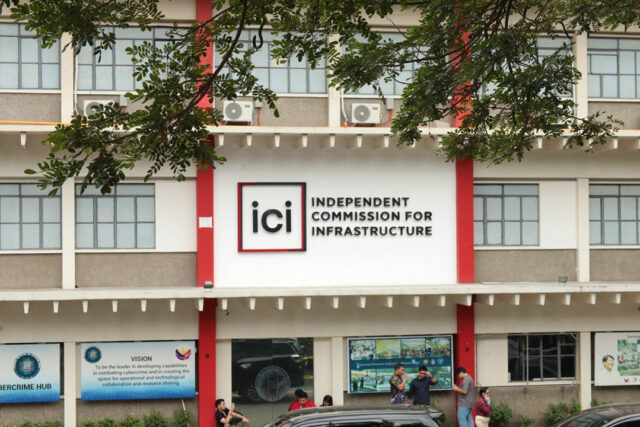
ICI office facade — BW FILE PHOTO

THE PALACE will leave it to the Department of Justice (DoJ) and the Ombudsman to publicize the Independent Commission for Infrastructure’s (ICI) comprehensive report submitted to President Ferdinand R. Marcos, Jr. last February.

Amid calls for full transparency regarding the result of the super body’s investigations, Palace Press Officer Clarissa A. Castro said Mr. Marcos will let the DoJ and Ombudsman Jesus Crispin C. Remulla publish the full reports.

“We respect the Ombudsman and the DoJ,” she told a briefing in Filipino. “If they need to speak about this, they are the ones who are given the authority to say something about that.”

The Philippines has been probing a multibillion-peso graft scandal since July 2025, which has dampened economic growth and weakened public sentiment.

Mr. Marcos established the ICI under Executive Order No. 94 last September. The body wound down its operations last March 31 as it said its mandate has been achieved.

Analysts earlier said the flood control scandal, if resolved, will be Mr. Marcos’ defining legacy in his six-year term. — Chloe Mari A. Hufana

DMW launches reintegration network for repatriated OFWs

Repatriated overseas Filipino workers (OFWs) queued at booths offering government services as the Department of Migrant Workers launched the “Bayanihan para sa Balikbayang Manggagawa” National Reintegration Network and Job Fair in Quezon City, April 6, 2026. — PHILIPPINE STAR/MIGUEL DE GUZMAN

THE DEPARTMENT of Migrant Workers (DMW) on Monday launched its reintegration assistance program for repatriated overseas Filipino workers (OFWs) through a 22-agency network.

During the launch of the “Bayanihan para sa Balikbayang Manggagawa” National Reintegration Network (NRN), Migrant Workers Secretary Hans Leo J. Cacdac said they found 200,000 opportunities abroad for OFWs through their job and skillset matching initiatives.

“We saw the skillsets [of the OFWs] and matched it with job orders abroad and we came up with more or less 200,000 job orders,” Mr. Cacdac said in Filipino, noting that many returning Filipinos still plan to work abroad.

According to the Overseas Workers Welfare Administration (OWWA), about 8,000 local and overseas job opportunities have been offered during the NRN launch through 15 participating private companies and recruitment agencies.

The reintegration network comprises 22 government agencies including OWWA, the Department of Trade and Industry, Department of Social Welfare and Development, Technical Education and Skills Development Authority, Department of Labor and Employment, Department of Health, Department of Education, Social Security System, Philippine Health Insurance Corp., and Pag-IBIG Fund.

“For the first time, in this administration, a network like this was formed so that you no longer have to go to different offices one by one. It has been brought together for our OFWs and their families,” OWWA Administrator Patricia Yvonne M. Caunan said during the job fair.

Based on OWWA’s survey for the repatriated OFWs, 2,116 Filipinos would like to work in the Philippines, while 1,572 prefer employment abroad, and 117 seek to grow their businesses in the country.

The reintegration assistance also covers livelihood packages for returning OFWs who would like to start their own business.

As of April, over 4,000 OFWs have been repatriated since the war erupted on Feb. 28 when the US-Israel launched attacks on Iran.

About 2.4 million Filipinos live in the affected region, according to the Department of Foreign Affairs.

Early Monday, seven OFWs from Lebanon, and nine from the United Arab Emirates returned to the country and received post-repatriation aid from the DMW and OWWA through food, domestic flight tickets, land transportation, and accommodation assistance. — Kaela Patricia B. Gabriel

Think tank denounces PHL-China joint exploration plans

BW FILE PHOTO

A RESEARCH FIRM on Monday rejected considerations of a joint gas development in the South China Sea between the Philippines and China.

In a statement, Stratbase Institute warned that China is “neither a reliable nor a responsible actor,” noting that any partnership with the said country must be grounded in international law, such as the 2016 Arbitral Award.

“China’s continued refusal to recognize and comply with the arbitral ruling further underscores its lack of credibility. A state that persistently disregards international law and violates Philippine sovereign rights cannot be expected to honor any agreement,” Stratbase Institute President and Chief Executive Officer Victor Andres C. Manhit said.

Mr. Manhit cautioned that entering into negotiations with China poses a risk to the sovereign rights of the country, considering the plight of the Filipino fisherfolk and frontliners in the disputed waters.

The Department of Foreign Affairs on March 29 said the Philippines and China had initial exchanges on the possibility of a joint gas exploration in the South China Sea.

The talks on joint energy exploration halted in 2023 following a Supreme Court ruling declaring the marine seismic survey of the area between the Philippines, China, and Vietnam as unconstitutional.

Recent developments on the oil crisis caused by the conflict in the Middle East revived discussions of the exploration to address the challenges in fuel supply.

However, Mr. Manhit said the energy crisis must not be used to justify such an agreement, calling on the government to enter energy partnerships with the private sector in the country instead. — Kaela Patricia B. Gabriel

Market matching to benefit Mindoro onion farmers

BUREAU OF CUSTOMS

THE DEPARTMENT of Agriculture (DA) said Mindoro onion farmers could access institutional markets after a recent virtual market-matching session, with buyers indicating a monthly demand of up to 16 metric tons.

In a statement on Monday, the DA said eight institutional buyers, including supermarket chains, wet markets, and food processors, participated in the session and expressed initial interest in sourcing red onions from Mindoro.

“One of the key agreements reached was to empower farmer cooperatives and associations to set farmgate (pickup) and delivery prices, ensuring fair pricing and higher income,” the department said.

The DA said deliveries are targeted for major markets in Metro Manila and Cavite, with the government’s Kadiwa trucks ready to extend logistics support to reduce costs for producers.

The agency added that institutional buyers have also expressed interest in other commodities, including garlic, bell pepper, ginger, and calamansi.

Meanwhile, DA-Mimaropa Regional Executive Director Christopher R. Bañas said the agency will continue to support farmers in the region.

“Our role does not end with linking farmers to the market. Our agency ensures sustained guidance to cooperatives and associations so that agreements are fulfilled and each transaction becomes successful — for the real benefit of our farmers,” he said in the statement.

The matchmaking comes amid a surge in onion supply during the peak harvest season in March and April, which has put downward pressure on farmgate prices.

The DA earlier reported that prevailing farmgate prices in Mindoro are around P22 per kilo. In Occidental Mindoro, average production costs are estimated at P18 to P24 per kilo, indicating that some farmers are still selling below break-even levels. — Vonn Andrei E. Villamiel