Home Blog Page 584

Hatchery studies yield path to boosting abalone output

NFRDI.DA.GOV.PH

THE National Fisheries Research and Development Institute (NFRDI) said hatcheries have yielded improved breeding techniques with the potential to boost production of abalone (Haliotis asinina).

It said hatcheries are seeking to release more juveniles onto Philippine reefs to restore stocks depleted by overharvesting.

Abalone, known in the Philippines as lapas, is a high-value shellfish, selling for between P300 and P600 per kilo in Philippine markets and up to $120 per kilo overseas.

Intensive harvesting due to high demand has sharply reduced wild populations, prompting the agency to turn to aquaculture and conservation.

The NFRDI said the three-year project, launched in January 2024, focuses on refining breeding protocols and testing techniques to produce sterile abalone that grow faster and survive better.

According to the NFRDI, the three-year project, launched in January 2024, hopes to improve spawning and fertilization and induce triploidy, a genetic method that enhances abalone growth and survival.

The NFRDI said the team studied triploidy using caffeine, a safer and cost-effective alternative to traditional chemical inducers.

According to the agency, from January to April 2025, the project produced more than 16,000 juvenile abalone, many of which were released into Manapag Reef in Guiuan, Eastern Samar, to help replenish wild stocks.

NFRDI said its collaboration with the Guiuan Marine Fisheries Development Center ensures technology transfer to stakeholders.

Hatcheries run by GMFDC distribute juvenile abalone to marine protected areas and fisherfolk groups for livelihood support and conservation.

“The seeds we produced through our experiments and hatchery operations were distributed to beneficiaries of NFRDI’s AquaBiz School and Technology Business Incubation program,” Cristan Campo, one of the project’s researchers, was quoted as saying in a statement. 

The NFRDI said the project supports the restoration of valuable marine species and the livelihood of coastal communities. — Vonn Andrei E. Villamiel

ARBs targeted to broader market, financing access

FACEBOOK.COM/DARGOVPH

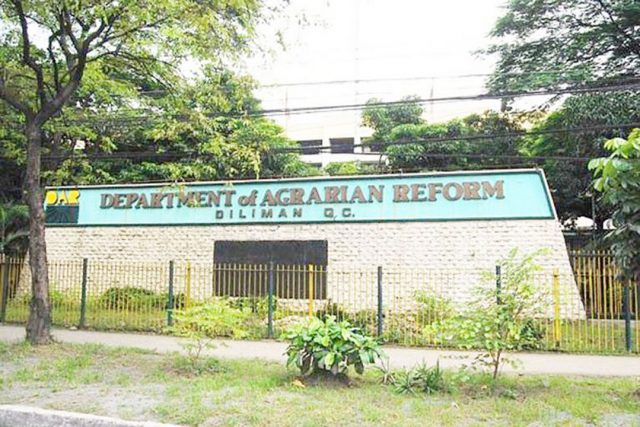
THE Department of Agrarian Reform (DAR) said it is expanding the links between agrarian reform beneficiaries (ARBs) and buyers and institutional partners offering financing opportunities.

At the opening of the 2025 Agraryo Trade Fair, Agrarian Reform Secretary Conrado M. Estrella III said improving access to buyers and markets is essential for making ARB livelihoods more viable.

“We need to show that our products are competitive. We need to show the world that we have products that we can be proud of, that we can market not just locally but globally,” he said.

Mr. Estrella said this includes organizing trade fairs to showcase produce and processed goods, while also linking ARBs and their organizations to financing and support programs.

This year’s trade fair, which runs from Dec. 1 to 5 at Gateway Mall, Quezon City, features more than 80 booths, including those from more than 40 agrarian reform beneficiary organizations (ARBOs) from 17 regions.

“Bringing the fair to a public mall opens bigger markets for our farmers, elevates their products to mainstream spaces, and empowers ARBOs to become competitive agro-enterprises,” Mr. Estrella said.

Products on display include farm-to-table produce, processed foods, handcrafted goods and artisanal items, as well as specialty products from the Bangsamoro Autonomous Region in Muslim Mindanao.

A “business center” booth was also set up to provide on-site assistance, information, and services to support ARBs, ARBOs and trade fair participants.

The DAR said it is also trying to link ARBOs to institutional buyers like government agencies and potentially developing an online platform to market ARBO products.

The DAR also partnered with Land Bank of the Philippines (LANDBANK) for various financing schemes for small-scale farmers and ARBs. 

Under the Enhanced ARISE Program, ARBOs can access a two-year advance credit line after calamities. Farmers may also avail of AGRISENSO Plus services, which include accessible and affordable loans, free insurance, and various support services.

“Under the Enhanced ARISE Program, in partnership with the DAR, we still have funds of around P200 million that we can lend to the ARBOs and the ARBs. We also have the AGRISENSO Plus lending program, in partnership with the (Department of Agriculture), wherein we provide loans to small farmers at concessional rates,” LANDBANK Executive Vice-President Ma. Celeste A. Burgos said at the event.

According to the DAR, the programs finance crop, livestock and fisheries production, the purchase of seed and fertilizer, working capital, machinery, equipment, and post-harvest facilities. They also support ARBO-managed projects and help supplement working capital for relending to members.

The DAR said it is also partnering with Go Negosyo to support small and medium agribusinesses, provide mentorship and link producers to private companies.

It said farmers can benefit from Go Negosyo’s Kapatid Mentor Me program and the “Big Brother/Big Sister” initiative, which links small businesses with big companies that can provide investment, facilities, training, and market access. — Vonn Andrei E. Villamiel

BIR reset for protecting taxpayers’ rights

The foundation of any sovereign state rests on the ability to collect revenue, a principle often encapsulated in the legal maxim that “taxes are the lifeblood of the nation.” This overarching authority stems from the state’s inherent power of taxation, which exists even without an express provision in the Constitution. Precisely because the power is so encompassing, its execution by the taxing authority must be conducted with utmost care and integrity.

However, present clamor against ghost flood control projects that highlighted massive corruption in the bureaucracy led to complaints about the misconduct of taxing authorities. Under the scrutiny is the alleged weaponization of Letters of Authority (LoAs).

The LoA is the official document issued by the Commissioner of Internal Revenue (CIR) or their duly authorized representative that empowers specific revenue officers to examine and audit the books of account and other financial records of a taxpayer for a specific period.

Recognizing the urgent need to address systemic issues and protect taxpayer rights, the BIR, under the leadership of new Commissioner Charlito Martin R. Mendoza, suspended all audits to restore public trust by issuing Revenue Memorandum Circular (RMC) No. 107-2025.

SCOPE OF THE SUSPENSION
RMC No. 107-2025 ordered an immediate and indefinite suspension, beginning Nov. 24, of all ongoing field audits and related field operations by the BIR, including the issuance of LoAs and Mission Orders (MOs), examinations, and verification of taxpayers’ books of account and other accounting records. During the suspension period, no LoAs and MOs shall be created, printed, signed, or served by the BIR to taxpayers.

The suspension applies to all BIR offices involved in audit and field operations, including the Large Taxpayers Service (LTS), Revenue Regions (RRs), Revenue District Offices (RDOs), National and Regional Investigation Divisions, Assessment Divisions, VAT Audit Units (LTS), and VAT / Special Audit Sections.

WHERE AUDITS CAN STILL PROCEED
While the coverage is comprehensive, the suspension does not cover the following instances:

• Audits prescribing within six months from Nov. 24;

• One-time transactions, such as estate tax, donor’s tax, and Capital Gains Tax;

• Examination of taxpayers retiring from business;

• Active criminal investigations based on verified intelligence;

• Refund claims where the issuance of LoAs is statutorily required; and

• Other matters where deadlines have been imposed or under orders of the Commissioner.

As such, the issuance of Assessment Notices, Warrants, and Seizure Notices under the exceptions are to continue. Revalidation, extension, replacement, or supplementary LoAs and MOs may also be issued in connection with these circumstances.

ONGOING ASSESSMENTS AND COMPLIANCE
The issuance of RMC No. 107-2025 has prompted questions among taxpayers regarding its impact on their ongoing assessments and whether their current cases fall within the scope of the suspension order.

From the wording of the RMC, the Stop Audit directive does not cover taxpayers under assessment for taxable year 2022, as they are considered prescribing cases.

Taxpayers who received Assessment Notices, such as the Notice of Discrepancy (NoD), Preliminary Assessment Notice (PAN), or Final Assessment Notice with Formal Letter of Demand (FAN/FLD), before the issuance of the RMC must note that the suspension does not allow them to delay the filing of their reply or protest. Hence, replies or protests must still be filed within the statutory prescriptive periods under the Tax Code, as amended.

Another question is whether taxpayers who have already filed their protest to a FAN/FLD prior to the issuance of the RMC can get relief during the suspension period. Section 228 of the Tax Code, as amended, requires the BIR to decide on the protest within 180 days from submission of documents. Thereafter, the taxpayer adversely affected by the inaction of the Commissioner may appeal to the Court of Tax Appeals within 30 days from the lapse of the 180-day period. In such a case, will the running of the 180-day period continue despite the RMC? If so, may the taxpayer exercise their right to file their appeal to the CTA after the lapse of the 180-day period?

Cases already at the payment stage are also not hindered by the suspension. In fact, the RMC provides that taxpayers may voluntarily pay their known deficiency taxes without needing the approval from the appropriate revenue officials. By opting for voluntary payment, taxpayers can mitigate exposure to further interest and penalties.

For now, taxpayers are looking forward to a clarificatory issuance from the BIR that will provide detailed guidance on how RMC No. 107-2025 applies to ongoing cases, particularly those already in various stages of the assessment. Such guidance is expected to address grey areas and outline compliance steps once audit operations resume.

The suspension of BIR audits also provides taxpayers with a critical opportunity to strengthen their compliance. This period should be maximized to review internal practices and ensure proper documentation to address common findings by the BIR.

AUDITING THE AUDITOR: THE MECHANISM FOR REFORM
Far from being an administrative pause, RMC No. 107-2025 represents an institutional reset designed to strengthen internal discipline, ensure the integrity of the audit process, promote compliance, and foster trust among taxpayers.

To materialize these reforms, the RMC ordered the creation of a Technical Working Group (TWG) or Review Committee on LoA Integrity and Audit Reforms, tasked with the following:

• Evaluation of current policy frameworks;

• Identification of operational and systemic vulnerabilities;

• Recommendation of a revised, integrity-based LoA issuance protocol and

• Integration of digital safeguards and uniform audit standards.

Further, the RMC also includes a strong stance on internal policing and enforcement, that even BIR personnel are not immune to regulation and the standards of integrity and accountability, such that their non-compliance constitutes an administrative offense.

While taxes remain the lifeblood of the nation, the outcry of the people — the very source of this revenue — is fundamentally valid. When the power of taxation is wielded with irregularities and inconsistencies, trust erodes, creating an environment for further abuse.

The issuance of RMC No. 107-2025 is therefore both timely and necessary. By suspending audit operations to reform internal policies, the BIR signals its commitment to a transparent, accountable, and hopefully, conscientious approach in exercising its authority.

Let’s Talk Tax is a weekly newspaper column of P&A Grant Thornton that aims to keep the public informed of various developments in taxation. This article is not intended to be a substitute for competent professional advice.


Mirasol M. Abrenica is an associate from the Tax Advisory & Compliance division of P&A Grant Thornton, the Philippine member firm of Grant Thornton International Ltd.

pagrantthornton@ph.gt.com

LTO delays e-bikes, e-trikes ban until next year 

An e-trike traversing United Nations Avenue in Manila on Monday, amid the government’s heightened monitoring of light electric vehicles. — PHILIPPINE STAR/RYAN BALDEMOR

The Land Transportation Office (LTO) has postponed the impounding of light electric vehicles (LEVs), particularly e-bikes and e-trikes, from its initially announced date of Dec. 1 to Jan. 2. 

In a video message posted Sunday, LTO Chief Assistant Secretary Markus V. Lacanilao said the move aims to allow for a comprehensive information drive, which began on Monday. 

“Narinig ng ating Pangulong Bongbong Marcos at ni Secretary Giovanni Z. Lopez ang inyong concern [Our President Bongbong Marcos and (Transportation) Secretary Giovanni Z. Lopez have heard your concerns],” Mr. Lacanilao said. 

“Simula Dec. 1 magiging visible ang ating LTO enforcers and personnel sa mga kalsada para isulong ang information drive at ipaliwanag sa publiko ang tamang paggamit ng LEVs [Starting Dec. 1, LTO enforcers and personnel will be visible on the roads to promote the information drive and explain to the public the proper use of LEVs].” 

Starting Jan. 2, the LTO will begin apprehending violators found traversing national highways, with no further extensions. 

Mr. Lacanilao said that the order is not meant to burden the public but to make roads safer and clarify the responsibilities of all road users. 

Mr. Lacanilao also noted that the Electric Vehicle Industry Development Act (EVIDA) does not diminish the LTO’s authority; instead, it clarifies it. 

He added that the LTO has the right to apprehend LEVs even if they are not registered, provided they enter national highways or violate traffic regulations. 

However, he said that LEVs may still cross national highways as part of “normal traffic” and may use local and secondary roads if allowed by local government units. 

Mr. Lacanilao also urged Congress not to wait for accidents to happen, as it is their job to create updated legislation that will help protect every Filipino. Without any new laws, he said the LTO will continue enforcing existing laws. — Edg Adrian A. Eva

Four teams face off in pair of best-of-three NCAA 101 semis

COLLEGE OF ST. BENILDE BLAZERS — STRONG GROUP ATHLETICS/JULIUS DOMONDON

Games on Tuesday
(Smart Araneta Coliseum)
11 a.m. – UPHSD vs Letran (Srs)
2:30 p.m. – San Beda vs CSB (Srs)

FOUR TEAMS, two eyeing to reclaim their throne and the other two aiming to end a championship drought, face off in a pair of titanic best-of-three semifinal matches on Tuesday in NCAA Season 101 at the Smart Araneta Coliseum.

University of Perpetual Help System DALTA (UPHSD), eyeing its first finals stint since reaching that far 21 seasons ago and a crack at a breakthrough championship in its 41 years in the grand old league, and Colegio de San Juan de Letran, seeking a return to the top after winning it all three years back, face off at 11 a.m.

San Beda University, looking to get back on top after reigning supreme two years before, squares off with College of St. Benilde (CSB), which is seeking a second finals stint and another attempt at their second crown, at 2:30 p.m.

Game Two is on Friday at the MOA Arena while a deciding Game Three, if necessary, is on Sunday back at the Big Dome.

While the UPHSD Altas will be coming in with the better elimination record, the Letran Knights have an ace up their sleeves — they’ve beaten the former in their one and only meeting in the group stage, 63-56.

“We just have to have the mentality that we will all start from scratch and we needed to work harder and play tougher,” said UPHSD coach Olsen Racela.

Letran mentor Allen Ricardo agrees.

“If it’s the playoffs, you throw away everything and just play for the win,” he said.

For the San Beda Lions, they hope to keep their mastery over the CSB Blazers, whom the former have beaten twice in the elims.

But CSB bench tactician Charles Tiu is optimistic of their chances.

“Might be the first time our team will be complete facing them this season so I hope it will be a difference this time around, although of course they will also probably be complete now,” said Mr. Tiu.

“Looking forward to going against them as it will be the third time in four years we will meet in the playoffs,” he added. — Joey Villar

Van Sickle family works wonders for PG Angels

BROOKE VAN SICKLE (C) with her parents — PVL

WHEN Petro Gazz (PG) decided at the last minute to tap the husband and wife tandem of Gary and Lisa Van Sickle, parents to its star player Brooke, to handle the PG Angels’ coaching reins, there were some uncertainties if it would work or not.

The gamble, despite some early struggles, eventually paid off.

It resulted in the gasoline franchise’s third PVL Reinforced Conference championship and fourth overall after bringing down a young and talented but inexperienced ZUS Coffee in finals to remember on Sunday at the Smart Araneta Coliseum.

The championship boiled down to the biggest key of the series — it made Ms. Van Sickle happy.

“I’m super grateful management had them come on board with Petro Gazz,” said Brooke, who relived the moment exactly a decade ago when she and her parents won a championship together back home in the United States.

“I don’t think a lot of people understand being an athlete, especially being away from your parents and home are kind of hard. Ultimately, my team is family, without them I’m just alone.”

“It’s just awesome to be able to have them here not just as my coaches because I’m familiar with them but also having a family around,” she added.

It was a full family circle moment for the Van Sickles, whose familiarity with one another worked wonders.

Of course, it won’t happen without a collective effort from the whole team.

There was Lindsey Vander Weide, who was the squad’s rock for most of the tournament.

MJ Phillips and Myla Pablo were also there with their unshakeable resolve.

Count an unheralded but talented rookie setter Jules Tolentino, who came out of nowhere to take the starting job at her position.

But none shone brighter than their heart and soul in Brooke.

“It’s just awesome to have my parents here as additional support and I’m really happy it all worked out,” she said. — Joey Villar

WNBA lockout looms with pay talks deadlocked

THE Women’s National Basketball Association (WNBA) is hurtling toward a potential lockout or strike with pay talks deadlocked ahead of Sunday’s deadline over the players’ push for a bigger share of the league’s explosive growth in revenue.

The current Collective Bargaining Agreement (CBA) was due to expire on Oct. 31, but has been extended to Nov. 30. However, a deal appears increasingly unlikely, raising the prospect of a work stoppage that could disrupt the 2026 season.

“They’ll probably do another extension, yet if we get to the New Year without an agreement a strike becomes a realistic option,” Daniel Kelly II, an associate dean and professor at New York University who specializes in sports law, said in an interview on Wednesday.

“Historically, that has led to the best deal for players. For the NBA, the 50-50 deal came after the strike in 2011-12. It almost seems like you have to push to the edge to get the deal you want,” he added.

According to local media reports, the league has proposed increasing the maximum salary from $250,000 to $1.1 million, raising the average player salary to more than $460,000 and increasing the minimum salary to $220,000.

However, WNBA players want more than just salary increases. They believe they should follow the NBA’s path, which began with their first CBA in 1970 and by 2011 had negotiated a 50-50 split of basketball-related income.

“Players are pushing for revenue-sharing arrangements similar to those in men’s professional leagues, rather than fixed salary increases that don’t keep pace with the WNBA’s growth in media deals and team valuations,” Kelly said. “The business is growing exponentially, yet they want the players salaries to increase at a fixed amount.”

COMPLEX OWNERSHIP AND RIVAL LEAGUES ADD PRESSURE
The ownership structure adds a layer of complexity to the discussion. The NBA itself owns 42% of the WNBA, while team owners hold another 42% and a private equity group controls the remaining 16%.

“As the WNBA’s commissioner, Cathy Engelbert represents three groups. She has multiple stakeholders to answer to in different capacities when negotiating against the players’ union,” Kelly said, noting that it makes negotiations far more difficult than simple two-party bargaining.

Rival leagues dangling eye-popping paychecks further complicate matters. Unrivaled, a 3-on-3 basketball league which began its first season in January, reported an average salary of $222,222, which included amenities such as on-site childcare.

Even more threatening is Project B, which plans to launch next fall with men’s and women’s 5-on-5 basketball and is reportedly offering salaries up to $2 million. It has signed WNBA players union (WNBPA) president Nneka Ogwumike, along with big names like Alyssa Thomas and Sophie Cunningham.

“Do we know if these new leagues can sustain those salaries? We don’t because they haven’t been around for multiple seasons. However it gives players leverage to say to the league: you’re not the only option,” Kelly added.

He recommended a hybrid model that maintains minimum and maximum salaries but includes guaranteed revenue-sharing percentages that grow with the business. — Reuters

Pacific Online Systems-backed Buenas PH presents YGS Live’s Battle of the Streamers tourney

By Alexandria Grace C. Magno

LISTED online lottery operator Pacific Online Systems Corp.-backed Buenas PH has become the presenting partner for YGS Live’s (Your Game Simulator Live) Battle of the Streamers, an esports and iGaming competition.

“Industry reports have highlighted Pacific Online’s active participation in the growth of regulated online gaming in the Philippines, including its involvement in HHR Philippines and the Buenas operator. These developments strengthen confidence in the company’s long-term direction as a regulated and ethical player in the e-casino sector,” the company said in a statement on Monday.

The Battle of the Streamers is a weekly tournament where iGaming content creators compete for a total prize pool of P11 million, ending with a final event in January next year. It will be broadcast on the upcoming Loco Live platform and requires all participants to promote only licensed iGaming operators, explicitly excluding unlicensed or scam sites.

In January, Pacific Online signed an investment agreement to acquire a 37.5% stake in electronic gaming platform provider HHR Philippines, Inc. (HHRPI) for P150 million to expand its online gaming presence. The acquisition involved subscribing to 81,000 common shares of HHRPI, with payment made in three tranches.

HHRPI is a PAGCOR-licensed provider of electronic gaming software and services for land-based and online operators, holding an online gaming license under the brand “Buenas.”

Panthers use turnovers to knock LA Rams from perch atop NFC

BRYCE YOUNG threw three touchdown passes and the Carolina Panthers forced Los Angeles (LA) quarterback Matthew Stafford into three turnovers in a 31-28 victory that ended the Rams’ six-game winning streak on a rainy Sunday afternoon in Charlotte, North Carolina.

The Panthers were efficient on fourth-down plays in the second half and the defense came up with a huge stop when it appeared the NFC-best Rams might be ready to regain the lead.

After Los Angeles reached the Carolina 17-yard line, a delay of game penalty came before Derrick Brown forced a Stafford fumble on a sack which was recovered by DJ Wonnum with 2:25 remaining.

Stafford entered the game with two interceptions all season and then threw two in the first quarter. The first was tipped and picked off in the end zone and the next was snatched by Mike Jackson and returned 48 yards for a touchdown (TD).

Young completed 15 of 20 passes for 206 yards, helping the Panthers (7-6) recover from a loss on Monday night at San Francisco. Running back Chuba Hubbard gained 83 yards on 17 carries and caught a 35-yard touchdown pass for the team’s first points in the first quarter.

Stafford completed 18 of 28 passes for 243 yards and two touchdowns for the Rams and set an NFL record in the first quarter with 28 TD passes without an interception going back to Week 3. That run ended when he threw a pair of picks in a span of three passes.

Davante Adams had two TD receptions for Los Angeles, Xavier Smith caught three passes for 82 yards and Blake Corum led the Rams’ rushing attack with 81 yards and a touchdown on seven carries.

The Rams (9-3) went ahead, 28-24, with 9:58 remaining on Kyren Williams’ 7-yard run.

Carolina needed six plays to regain the lead, with Young hitting Tetairoa McMillan for a 43-yard touchdown on fourth-and-2 with 6:34 remaining.

The Panthers earlier took a lead on the first possession of the third quarter when Young hooked up with Jalen Coker for a 33-yard touchdown play on fourth-and-3. 

The Rams recovered from their early woes for a 21-17 halftime lead. Los Angeles didn’t punt in the first half, with three touchdowns and Stafford’s two interceptions. — Reuters

Asia’s factories stumble as US trade deals fail to revive demand

REUTERS

ASIA’S manufacturing powerhouses struggled with sluggish demand in November, extending declines in factory activity as progress in US trade negotiations failed to translate into a significant recovery in orders.

A raft of purchasing managers’ indexes (PMIs) on Monday showed diverging conditions across the region, with China, Japan, South Korea and Taiwan all reporting declines in activity while Southeast Asian economies mostly saw growth.

In China, the world’s largest manufacturer, factory activity slipped back into contraction, a private-sector PMI showed, a day after Beijing’s official measure showed activity falling for the eighth consecutive month albeit at a slower pace.

“Container throughput at Chinese ports was little changed last month compared to October. To the extent that demand did improve, it didn’t do much to support production amid already high inventory levels — the output component dropped to a four-month low,” said Zichun Huang, China economist at Capital Economics.

“And while the output price component edged up slightly, it stayed at a low level, pointing to persistent deflationary pressures.”

Across Asia this year, businesses in major exporting nations have been scrambling to navigate the uncertainty created by US President Donald J. Trump’s sweeping tariffs.

While Mr. Trump’s trade deals with countries like Japan and South Korea and lowered tensions with China have given firms some confidence, many are still adjusting to the new US trade reality.

Japan’s PMI showed new orders continued to decline, stretching the downturn to two-and-a-half years, blamed on factors such as a sluggish global business environment, tighter client budgets and subdued capital investment.

Official data on Monday also showed Japanese corporate spending on factories and equipment rose 2.9% in July-September versus the same period a year prior, slowing from the previous quarter.

South Korea’s factory activity contracted for a second month in November, though a finalized trade deal with the United States brought some clarity for manufacturers.

Separate data showed Korean exports rose in November for a sixth consecutive month, beating market expectations, as chip sales hit a record on strong technology demand while autos also jumped after a US trade deal.

Taiwan’s PMI showed factory activity continued to fall, but at a slower pace.

Meanwhile, Asia’s emerging-market manufacturers remained outperformers with Indonesia and Vietnam both reporting brisk growth in factory activity and Malaysia swinging back to growth. — Reuters

Police comb fire-ravaged Hong Kong apartments, death toll at 146 people

A DRONE view shows flames and thick smoke rising from the Wang Fuk Court housing estate during a major fire in Tai Po, Hong Kong, China, Nov. 27. — REUTERS/TYRONE SIU

HONG KONG — Hong Kong authorities pressed ahead on Monday with combing the remaining apartment towers destroyed by a massive fire at a housing estate that killed at least 146 people and displaced hundreds now adjusting to life in temporary housing.

Police have completed sweeps of four of the seven towers that were engulfed in the city’s deadliest fire in more than 75 years, finding bodies of residents in stairwells and on rooftops, trapped as they tried to flee the flames.

Thousands have turned out to pay tribute to the victims, who include at least nine domestic helpers from Indonesia and one from the Philippines, with lines of mourners stretching more than a kilometer (a half-mile) along a canal next to the doomed Wang Fuk Court estate on Sunday.

Vigils are also due to take place this week in Tokyo and London. Around 40 people are still missing, authorities said.

The cause of the blaze that started last Wednesday and quickly fanned across the exterior of the apartments under renovation is still being investigated.

But amid pockets of public anger over missed fire risk warnings and evidence of unsafe construction practices, Beijing has warned it would crack down on any “anti-China” protests.

At least one person involved in a petition calling for an independent probe among other demands has been detained, sources familiar with the matter said.

Police have declined to comment on specifics, saying only that they will take action in accordance with the law.

SEARCH MOVES TO WORST AFFECTED BUILDINGS
The remaining buildings to be scoured for remains are “the difficult ones,” Amy Lam, a senior police official told reporters on Sunday, adding that the final leg of the search may take weeks.

Images shared by police showed officers clad in hazmat suits, face masks and helmets, inspecting rooms with blackened walls and furniture reduced to ashes, and wading through water used to douse fires that raged for days.

Throngs of officers arrived at the site early on Monday morning to continue their search of the burnt out buildings.

The apartment blocks were home to more than 4,000 people, according to census data, and those that escaped must now try to get their lives back on track.

More than 1,100 people have been moved out of evacuation centers into temporary housing, with a further 680 put up in youth hostels and hotels, authorities said.

With many residents leaving behind belongings as they fled, authorities have offered emergency funds of HK$10,000 ($1,284) to each household and provided special assistance for issuing new identity cards, passports and marriage certificates.

ELEVEN PEOPLE ARRESTED IN FIRE PROBE
Hong Kong’s deadliest fire since 1948, when 176 people died in a warehouse blaze, has stunned the city, where legislative elections are due to be held this weekend.

Authorities have arrested 11 people as part of investigations into possible corruption and the use of unsafe materials during the renovations.

The building was wrapped in green mesh and bamboo scaffolding and layered with foam insulation at the time. Fire alarms at the complex were also not working properly, authorities have said.

Residents of Wang Fuk Court were told by authorities last year they faced “relatively low fire risks” after complaining about fire hazards posed by the renovations, the city’s Labor Department said.

The residents raised concerns in September 2024, including about the potential flammability of the mesh contractors used to cover the scaffolding, a department spokesperson said.

Police on Saturday detained Miles Kwan, 24, part of a group that launched a petition demanding an independent probe into possible corruption and a review of construction oversight, two people familiar with the matter said. Reuters could not establish whether he had been arrested.

Two others have also since been arrested on suspicion of seditious intent, the South China Morning Post said. The police declined to comment on those reported arrests.

China’s national security office warned individuals on Saturday against using the disaster to “plunge Hong Kong back into the chaos” of 2019, when massive pro-democracy protests challenged Beijing and triggered a political crisis.

“We sternly warn the anti-China disruptors who attempt to ‘disrupt Hong Kong through disaster,’” the office said in a statement. “No matter what methods you use, you will certainly be held accountable and strictly punished.” — Reuters

China’s military firms struggle as corruption purge bites, report says

THE DF-5C liquid-fueled intercontinental strategic nuclear missiles are displayed during a military parade to mark the 80th anniversary of the end of World War II in Beijing, China, Sept. 3. — REUTERS/GO NAKAMURA

HONG KONG — Revenues at China’s giant military firms fell last year as corruption purges slowed arms contracts and procurement, according to a study released on Monday by a leading conflict think tank.

The Chinese declines contrast with strong revenue growth globally for big arms and military-services companies, fueled by wars in Ukraine and Gaza, and global and regional tensions, the research by the Stockholm International Peace Research Institute (SIPRI) found.

“A host of corruption allegations in Chinese arms procurement led to major arms contracts being postponed or cancelled in 2024,” said Nan Tian, director of SIPRI’s Military Expenditure and Arms Production Program.

“This deepens uncertainty around the status of China’s military modernization efforts and when new capabilities will materialize.”

CHINA’S REVENUES DOWN 10%, JAPAN’S UP 40%
The People’s Liberation Army (PLA) was one of the main targets of a broader corruption crackdown ordered by President Xi Jinping in 2012, reaching the upper levels of the military in 2023 when its Rocket Force was targeted.

Eight top generals were expelled from the ruling Communist Party on graft charges in October, including the country’s number two general, He Weidong. He had served under Mr. Xi on the Central Military Commission, China’s supreme military command organization.

Asian and Western diplomats say they are still trying to gauge the impact of the crackdown on China’s ongoing military rise and how far down it reaches through the command chain.

Revenues of China’s top military firms fell 10% last year, while those in Japan surged 40%, Germany 36% and US revenues rose 3.8%, SIPRI data shows.

Revenues of the world’s 100 largest arms firms rose 5.9% to a record $679 billion, the report said, while China’s fall was enough to make Asia-Oceania the only region to post a revenue decline among its top arms firms.

China’s weapons revenue fell despite three decades of rising defense budgets in Beijing’s growing strategic rivalry with the United States, Asia’s traditional military power, and tensions over Taiwan and the hotly disputed South China Sea.

MID-, LONG-TERM INVESTMENT, MODERNIZATION TO CONTINUE
The buildup is bearing fruit as China deploys the world’s largest naval and coast guard fleets — including a potentially advanced new aircraft carrier — a host of new hypersonic missiles, nuclear weapons and air and sea drones.

Revenue fell at AVIC, China’s largest arms maker, land-systems producer Norinco and aerospace and missile manufacturer CASC, all state-owned, according to the SIPRI research. Norinco experienced the steepest revenue decline, falling 31% to $14 billion.

Corruption-related personnel changes at the top of Norinco and CASC sparked government reviews and project delays, while deliveries of AVIC’s military aircraft slowed, the research found.

China’s defense ministry and the three companies did not immediately respond to faxed requests for comment from Reuters.

The timeline of advanced systems for the PLA Rocket Force, which handles its growing arsenal of ballistic, hypersonic and cruise missiles, could be exposed, along with aerospace and cyber programs, said SIPRI researcher Xiao Liang.

This adds to uncertainties over the PLA’s target of getting key capabilities and war-fighting readiness in place for its 100th anniversary, Mr. Liang said. The PLA’s forerunner, Mao Zedong’s Red Army, was founded in 1927.

“However, in the medium and longer term, sustained investment in defense budgets and political commitment behind modernization will continue, albeit with some program delays, higher costs and tighter control of procurement,” Mr. Liang said. — Reuters