Home Blog Page 5753

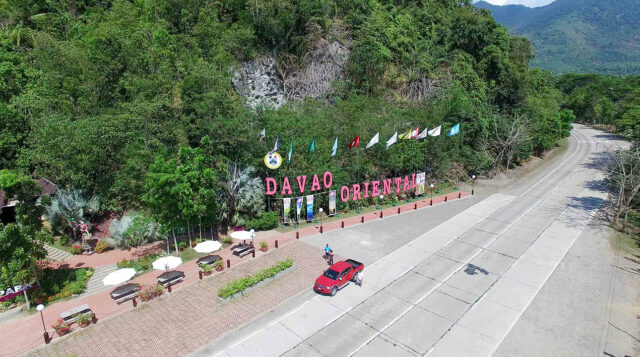
Davao Oriental provincial gov’t eyes biomass energy project, expanded rural electrification

DAVAOORIENTAL.GOV.PH 

THE DAVAO Oriental provincial government is pursuing partnerships to speed up electrification in remote communities and possibly put up a biomass facility for cheaper power rates.   

Governor Corazon N. Malanyaon met last week with officials of Davao Oriental Electric Cooperative, Inc. (DORECO), the provinces sole distributor, to discuss shared costs for bringing supply to still unserved areas as well as improving delivery in tourist destinations, the local government said in a statement.   

Ms. Malanyaon said providing power is crucial for economic recovery efforts as well as livelihood development and social services, noting that the presence of electricity symbolizesthe presence of government in communities.   

The province will be allocating funds for the program and DORECO, which has its own ongoing Sitio Electrification Program, expressed readiness to cover the labor component.   

We can give the labor counterpart to whatever electrification project the province would like to engage in. Our men are eager to energize our province, especially the tourism areas,DORECO officer-in-charge General Manager Mary Ann Santos is quoted as saying in the statement.  

Ms. Malanyaon said the provincial government is also looking into a partnership with a Japanese company for the construction of a biomass plant, which could reduce electricity cost by about 40% while providing clean and sustainable energy.” 

DORECO, which currently charges a basic rate of P12 per kilowatt hour, is also backing the green energy plan.   

Meanwhile, the utility and the provincial government are undertaking a joint clearing operation of power lines to minimize power outages.  

Ms. Santos said supply interruptions in the province are mainly caused by obstructions in power facilities.     

We would want our barangay leaders and everyone in the government to help us secure our power lines because power interruption interrupts everything, it interrupts everyone, she said.  

Davao Oriental has an installed capacity of 55 megawatts (MW) and a contracted capacity of 22 MW from different suppliers, according to DORECO. The provinces recent average peak load was 33 MW. MSJ 

Cotabato strengthens ASF-control measures with new provincial quarantine center

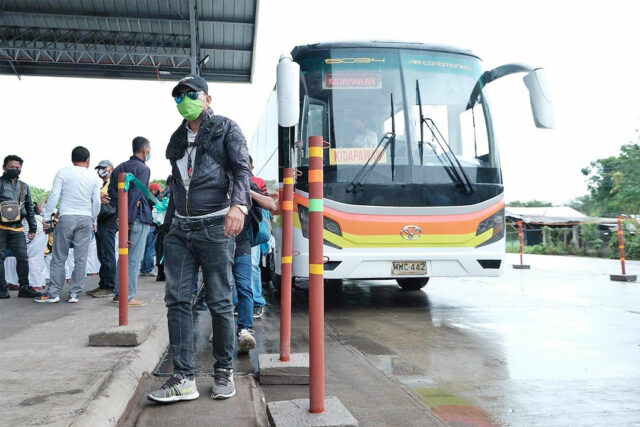
BUS passengers bound for Kidapawan City, capital of Cotabato, go through a foot bath as part of measures to prevent the entry of African Swine Fever (ASF) in the province. — BUSINESSWORLD/MMPADILLO

COTABATO is strengthening its control measures against the entry of African Swine Fever (ASF) with the opening of its Provincial Veterinary Quarantine Services Center.  

The facility, located along the main highway in Old Bulatukan, Makilala, has disinfection equipment and foot baths. All vehicles are required to undergo inspection, including passengers and cargo.   

Hope that we can save other livestock that are still alive. We need to protect our farmers and hog raisers considering that we are an agricultural province and this is the backbone of our economy,Cotabato Governor Emmylou Taliño-Mendoza said during the facilitys inauguration last week.   

The establishment of the quarantine center was spearheaded by former provincial board member Loreto V. Cabaya, Jr., who sponsored an ordinance on comprehensive quarantine services. It is operated by the Office of the Provincial Veterinarian (OPVet) in collaboration with the governors office and the police.   

Hog farmers in several towns in Cotabato, also known as North Cotabato, were first affected by ASF in 2020 and was contained in the same year. A new outbreak was reported at the start of 2022.  

Last week, the OPVet culled 114 hogs in several villages as part of efforts to prevent the spread of the disease.    

Ms. Mendoza has also sought the help of the military and the police in imposing a ban on pork meat and by-products from outside the province in southern Philippines.  

Cotabato is bounded by five provinces and one city. Maya M. Padillo 

Why we resist the suspension of fuel taxes and the reversal of other hard reforms

ERIK MCLEAN-UNSPLASH

The latest Pulse Asia Survey poll on the public’s most pressing concerns reveals that inflation is the most urgent issue among Filipinos (57%), followed by other economic issues such as workers’ incomes (46%), poverty (33%), and jobs (29%)1. The data show how highly concerned most of us are about the uncertainties of post-COVID recovery and just how close to home inflationary pressures are becoming.

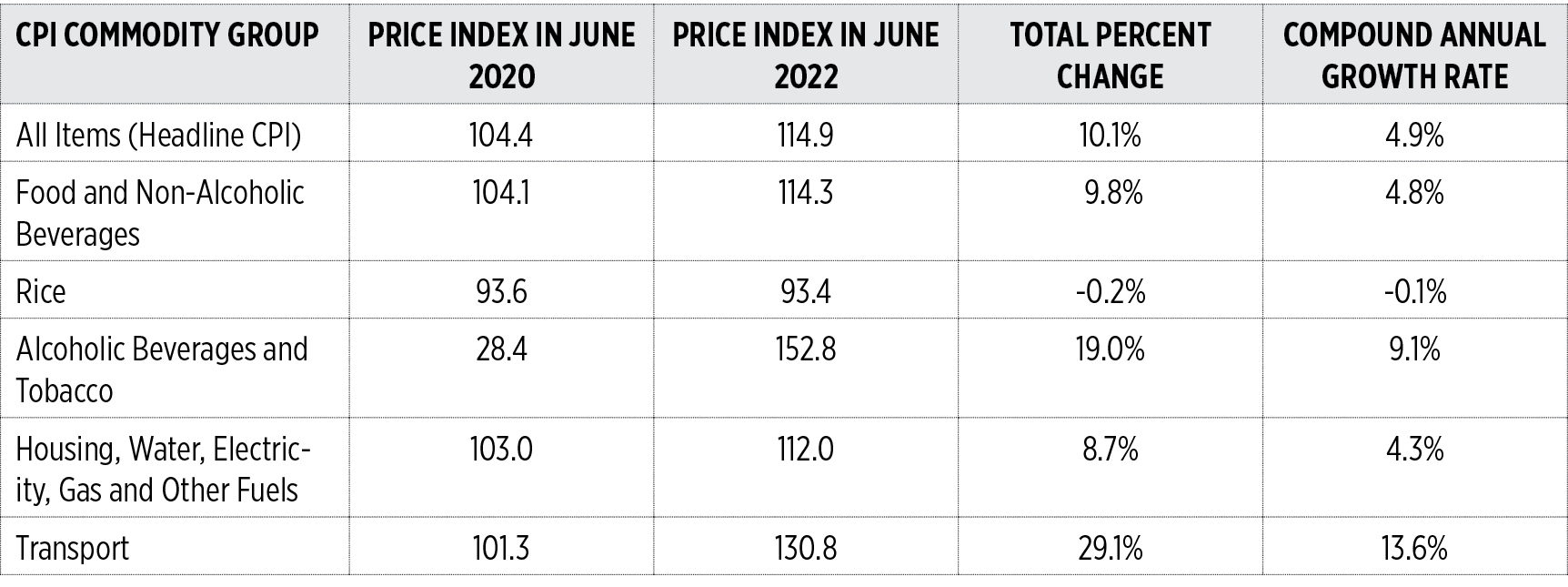
Comparing Consumer Price Index (CPI) figures over the past two years, average prices have risen at a compound annual rate of 4.9%2. Owing to rising fuel prices, inflation in transport commodities and services has been the most pronounced at 13.6%. This issue is what prompted presidential candidates to call for the suspension of fuel excise taxes during the election cycle and it is why several legislators will continue to push measures to suspend fuel excise taxes.

I wrote in April 2022 about why fuel tax cuts are a poor solution to rising transport prices, and why direct and targeted fuel subsidies are superior3. The costs of a fuel tax suspension would simply outweigh the benefits. The forgone revenue worth P131.4 billion would essentially cut the government’s ability to spend on services and subsidies for the vulnerable sectors. A general subsidy through suspending fuel taxes to afford lower pump prices disproportionately benefits the car-owning class of Filipinos more than the rest4. Car owners belong to the top 10% in terms of family income.

For instance, jeepney drivers who are losing income due to rising prices certainly ought to be provided assistance. Targeted fuel subsidies will essentially serve as transfers from the car-owning households, who pay the bulk of the tax, to the jeepney drivers — and also to the poor and the public using public transport who will benefit from the subsidy. A fuel tax cut by suspending the tax would achieve a transfer in the opposite direction. This is why we are better off spending fuel tax collections directly on the poorer segments of society rather than losing out completely on the revenues.

Unfortunately, there is a tendency to become squeamish about recently passed reforms when times become tough. Reforms seem to be backwards sticky in that securing good reforms requires long-run vision, tremendous effort, and a lot of luck, and yet the undoing of these reforms takes only an overeager or miscalculated approach to address immediate or short-term concerns. I would argue that crises should push us to not only follow through on these reforms, but to serve as opportunities to further pursue our reform agenda.

The fact that the TRAIN Law (Tax Reform for Acceleration and Inclusion) was a major tax reform program, passed during a non-crisis period, was lauded then. And its advantages are demonstrated now. The additional revenues from TRAIN have provided fiscal room for our government to finance its COVID-19 spending.

Many of us are concerned about the country’s significant debt, but we are in much less dire straits than we would have been without the reform. The package of excise taxes in TRAIN may not have been a politically popular measure (although a survey belies this), but it is what has afforded the effective reduction in personal income taxes thus providing higher disposable incomes for the middle class, the additional cash transfers for the poor, and the increase in spending for public goods.

Also consider the Rice Tariffication Law (RTL) which was passed during a time of inflationary pressure. The immediate clamor from different quarters to repeal the law almost caused Congress to flinch, but because we persisted with the reform, food inflation is not as pronounced as it would have been without RTL. Rice prices have been stable despite the pandemic and this stability is likely to have averted even worse outcomes for poverty and hunger. The reform has also introduced massive tariff collections, P17.9 billion in 2021 and P14.7 billion in 2020, which will be game-changing once the resources are properly mobilized towards our local farmers5.

With the current inflationary episode, the quick fix is seemingly to roll back taxes to push prices down. Taxes are politically unpopular and difficult to pass so the longer-term consequences of rolling back the just-passed tax reforms now will mean that widened deficits and a shrunken fiscal space will persist in the future. This will hamper our ability to recover from the pandemic, not to mention pay off our debts. Strategically reallocating or redirecting resources towards vulnerable stakeholders is a much more pragmatic and equitable solution and without the long-term side effects of a reform reversal. Spending a portion of the P131-billion fuel tax revenues for the 900,000 jeepney drivers, for example, will be a better outcome than losing out on all the revenues from a tax cut.

The temptation to undo the hard reforms won in previous administrations is there. The good intentions of policymakers to act quickly cannot be questioned. However, if we are too hasty and imprudent in our response, we only make the present situation worse and endanger sustainable long-term growth.

1 Rising prices top concern among Filipinos — Pulse Asia, BWorld Online, July 12, 2022 https://www.bworldonline.com/the-nation/2022/07/12/460833/rising-prices-top-concern-among-filipinos-pulse-asia/

2 CPI Data from Philippine Statistics Authority

3 Why targeted fuel subsidies are better than fuel tax cuts, BWorld Online, April 10, 2022 https://www.bworldonline.com/opinion/2022/04/10/441464/why-targeted-fuel-subsidies-are-better-than-fuel-tax-cuts/

4 DoF estimate on forgone revenue cited in Fuel excise tax suspension will induce more economic activities — Poe, BWorld Online, July 7, 2022, https://www.bworldonline.com/the-nation/2022/07/07/459999/fuel-excise-tax-suspension-will-induce-more-economic-activities-poe/

5 Rice tariff collections at nearly P18 billion in 2021 — Customs https://www.bworldonline.com/agribusiness/2022/01/03/421186/rice-tariff-collections-at-nearly-p18-billion-in-2021-customs/


AJ Montesa heads the fiscal policy program of Action for Economic Reforms.

Lessons on agriculture I learned under Marcos Sr.

LEVI NICODEMUS-UNSPLASH

As BBM — Ferdinand “Bongbong” Marcos, Jr. — starts his administration as President of the Republic and concurrent Secretary of Agriculture, it is useful to recall some of the good and bad things about his father’s administration of the country’s agriculture sector.

Marcos Sr. started his administration when the country was food insecure, even more so than now. Rice yields were only 1.5 tons a hectare, and demand for rice was rising. Rice shortage was unexceptional, such that it was commonplace to consume a meal comprising rice mixed with corn grits, or just corn grits or root crops. Not only are they less expensive than rice, corn grits then were more available than rice. The Philippines started to look for other sources of rice in other countries, but in those years the world rice market was significantly thinner and more unpredictable than now.

Food insecurity was a very important challenge of the government of Marcos Sr., such that BBM’s father had to take drastic measures to protect Filipinos from famine.

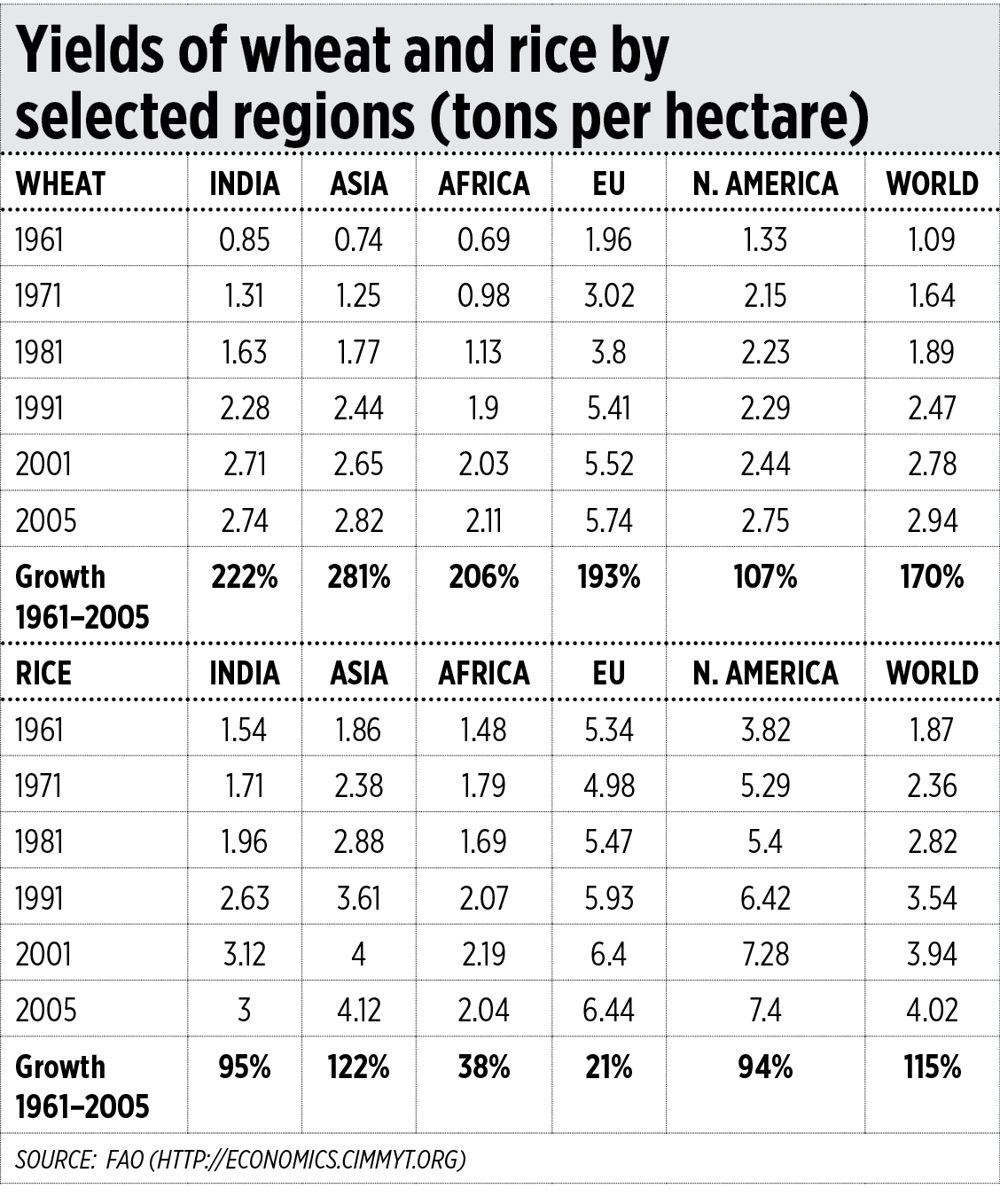
Marcos Sr. was fortunate then as the green revolution was “raging” during his first administration, 1966 to 1969. In the early 1960s, yields of wheat varieties in India increased significantly. This was attributed to the efforts of M.S. Swaminathan, an agronomist who became the Director-General of IRRI (International Rice Research Institute) in Los Baños in the early 1980s. For his work in increasing wheat yields in India and his administration of IRRI, which led the research on generating improved rice varieties, Mr. Swaminathan received the first World Food Prize, which is the counterpart of the prestigious Nobel Awards, but for agriculture.

He worked with another famous scientist, Norman Borlaug, who was often called “the father of the Green Revolution,” and is credited with saving over a billion people worldwide from starvation. Also recognized as the father of modern biotechnology, Mr. Borlaug was awarded the Nobel Peace Prize in 1970 in recognition of his contributions to world peace through increasing food supply.

Table 1 shows the gains in crop yields due to biotechnology.

IRRI was founded by the Ford Foundation, Rockefeller Foundation and the Government of the Philippines in 1960.

When Marcos Sr. was looking for a viable solution to the problem of food insecurity, IRRI had already developed its high yielding varieties.

One of the best things that came out of the pre-martial law government of Marcos Sr. was the successful introduction of the high yielding varieties of rice in the Philippines. When they talk openly about their disappointment about the continuing high cost of food or the propensity of importing food, Filipinos pride themselves as being in a country which succeeded in increasing the yield of rice from 1.5 to at least three tons of rice. Our fellow ASEANs, including the more successful countries in agriculture, Thailand and Vietnam, had agronomists who were educated in IRRI in Los Baños, they often say.

Masagana 99 was the program Marcos Sr. implemented to introduce the high yielding varieties. It was administratively costly. Farmers were extended credit to grow high yielding varieties of rice, and not all of it was recovered. If we look at other countries like India, what they had was extension work and demonstration plots, which were less costly compared to credit extension. Marcos Sr. could have followed the same, and in the process avoided using credit to entice farmers to adopt the higher yield rice varieties and making them dependent on the government.

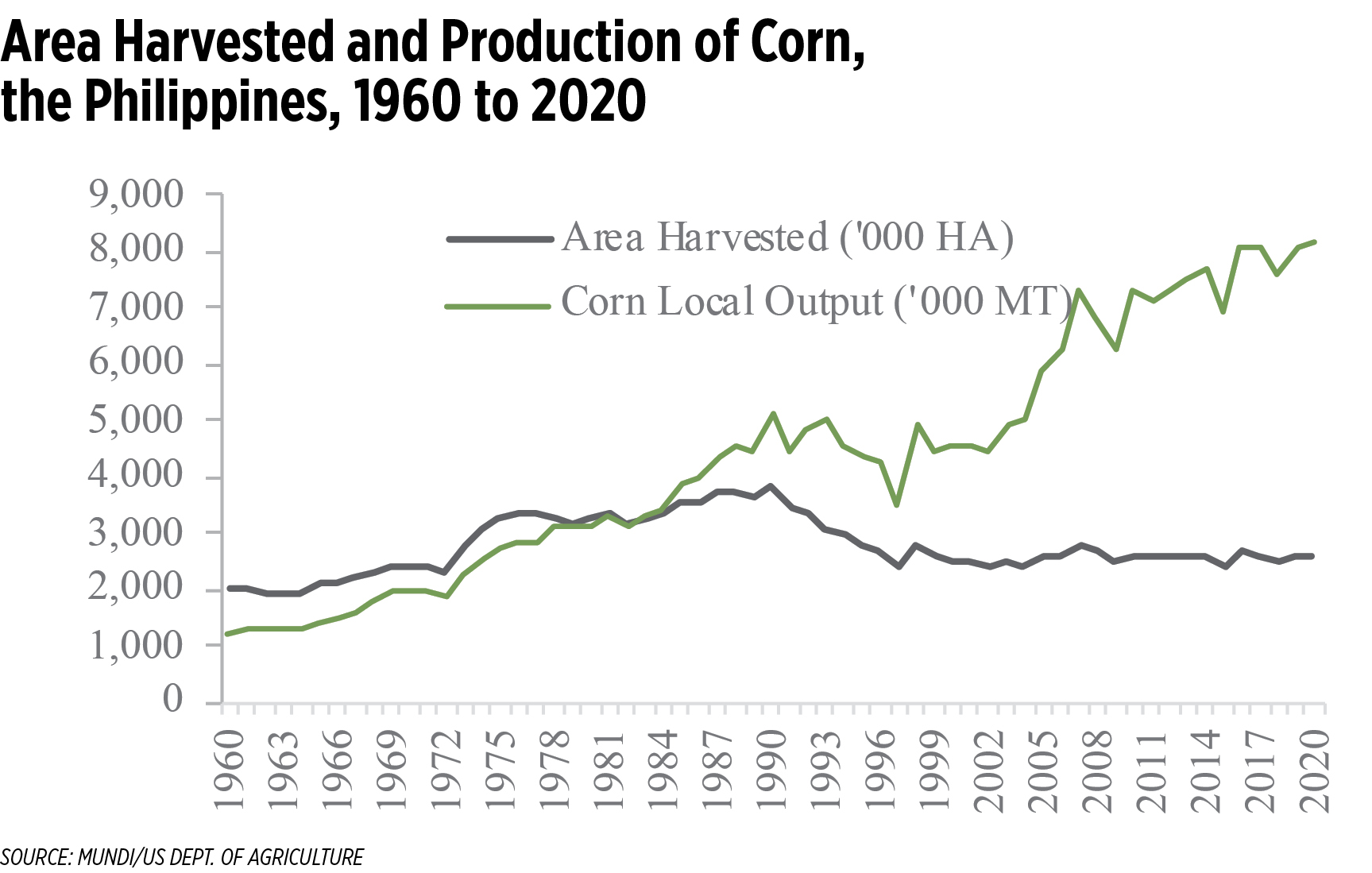
If we look at another successful introduction of a better technology here in the Philippines that has been implemented efficiently, I suggest we look at the adoption of genetically modified (GM) corn varieties. GM corn is the answer of agronomists to the corn stem borer and weeds, both of which reduce the yield of corn. The technology was permitted to be grown in the Philippines in 2003. The technology owners made use of extension work and demonstration plots, just like what was done in India for wheat in the 1960s. The government was not instrumental in promoting the technology other than setting up the regulatory system needed to ensure the safe and responsible use of modern biotechnology. No credit was extended to farmers, but somehow the adoption was rapidly successful.

Several technologies are waiting to be introduced to increase crop yields or make the plants more useful, most of which make use of modern biotechnology. Compared to the breeding used by agronomists during the Green Revolution in the 1960s, modern biotechnology is more precise in developing improved varieties. GM sugar, available in other countries, has the potential of boosting the productivity of our sugar farms.

We have successfully developed so-called “Pinoy GMOs” such as GM eggplant and golden rice. This rice introduces protection of the population from Vitamin A deficiency, which has killed millions of children in less-developed countries for at least the last three decades.

Recently the Department of Agriculture issued a circular on plant breeding innovations. The circular distinguishes between genetically modified improved varieties and crop engineered varieties not using a foreign gene. The circular prepares the Philippines to regulate and thus facilitates introduction of the most advanced varieties produced by modern biotechnology.

The National Committee on Biosafety of the Philippines (NCBP) is considering a new circular on agricultural applications of genetically modified animals. The technology has the potential to improve the country’s livestock and fisheries industries.

One of challenges these days is the high cost of fertilizer, now three times more expensive than fertilizer prices before the Ukraine-Russian war. Yesterday, I attended a briefing about foliar fertilizer. This technology supplies both macro-nutrients (NPK) and trace elements such as boron, copper, iron, and zinc to the plant. Not only is this more affordable, i.e., its price did not increase as inorganic fertilizer did, it is more effective than the traditional granular inorganic fertilizer. It is applied on the leaves of the plants, and is released gradually to improve absorption of the fertilizer by the plant, resulting in higher yields compared to granular fertilizers. Over the long term, using foliar fertilizer prevents unfavorable nutrient interactions in the soil, which reduces the fertility of the soil.

Like most improved technologies, information on foliar fertilizer needs to be disseminated to our farmers who are now looking for more affordable yet still effective fertilizers. However, to avoid the high cost of Masagana 99, and emulate the good practice of introducing GM corn, BBM may consider the lessons we learned on agriculture under his father: make use of the advanced technology, rely on the private sector to disseminate the technology, avoid unnecessary spending which makes farmers dependent on government, and focus spending on generating so-called “public goods” such as dissemination of information, research, and infrastructure.


Ramon L. Clarete is a professor at the University of the Philippines School of Economics.

A plea to the 19th Senate

BW FILE PHOTO

As the 19th Congress convenes today, we make an earnest appeal that the Regional Comprehensive Economic Partnership (RCEP) be ratified. Let me say it straight — the Philippines cannot afford not to be a part of RCEP. Our failure to ratify participation will consign the country to an economic disadvantage so severe that it will retard our development for decades.

It will be recalled that the 18th Senate adjourned without voting on the ratification of RCEP. They cited the lack of safety nets for the farming sector as the reason for non-ratification. The Philippines, along with Indonesia and Myanmar are the only economies who have failed to ratify their participation so far. Meanwhile, the rest of the RCEP countries have been benefitting from the many advantages of the treaty since January 1st this year.

RCEP members include the 10 ASEAN countries plus Australia, China, Japan, South Korea, and New Zealand. There is an open invitation for India pending the resolution of certain socio-political concerns on New Delhi’s part.

RCEP provides its members with ease of market access and ease in trade. Ease in market access is realized through preferential tariffs, minimized trade barriers, and simplified customs procedures. More significantly, RCEP has a common framework for Rules of Origin which simplifies procedures for exporting products using foreign components. All things considered, participation in RCEP brings forth lower costs, trade convenience, better complementation between trading partners, and increased competitiveness among its member states.

On the legal front, RCEP has adopted common laws that govern intellectual property rights, trade, competition, and government procurement. Common laws translate to the absence of trade disputes and legal friction among members.

The Philippines has all to lose by not ratifying RCEP. This is because 52% of our exports and 63% of our imports are sold to and bought from RCEP countries. One can imagine how our thriving electronics industry will come to a screeching halt if Philippine-made electronic products are slapped with higher tariffs and its imported components are taxed twice. One can imagine the economic blowback if our exports of frozen food and fresh fruits are subjected to stiff non-tariff barriers. One can imagine the financial losses if our tuna exports are denied market access since fishing origins cannot be defined.

In terms of importation, non-participation in RCEP will result in more expensive landed costs for raw materials, components for re-export, capital goods, agriculture fertilizers, etc. Worse, the cost of our food will become more expensive, specifically rice, sugar, chicken, and pork. This is the last thing we need in this era of high inflation.

In investments, the Philippines garnered the 4th largest intake of FDIs in 2021, 58% of which originated from RCEP members. Non-participation in RCEP will cause the Philippines to be bypassed in global supply chains, leaving benign the reforms we have worked so hard to put in place. These include the CREATE (Corporate Recovery and Tax Incentives for Enterprises) Law, the Foreign Investment Act Amendment, the Retail Law Amendment, and the Public Service Act Amendment. If we are out of the RCEP, our neighbors will develop rapidly on the back of FDIs while the Philippines will be left behind.

We have already lost seven months of trade benefits and while we have not felt its impact yet, you can be sure its consequences will be palpable soon. What stings badly is that the reasons for non-ratification were, for the most part, politically motivated. Senators running for re-election did not want to be blamed by farmers for acceding to open up the agricultural sector. It is a textbook case of self-interest getting in the way of national development.

Protection for our backward farming sector should not hold hostage the development of the entire economy. It is but one piece of a complex economy comprised of many sectors.

President Ferdinand “Bongbong” Marcos, Jr. voiced out his support for RCEP. We hope the 19th Senate heads the call of the president, of business groups, of foreign chambers and civil society, all of whom call for RCEP’s ratification.

********

Angela Gaddi, Ryan Robert Flores, and Ram Bautista are art mavericks. Back in 2019, the trio established Vintana.ph, an online gallery that features works by Filipino contemporary artists. Their mission is to bring Filipino art to a wider audience and to foster greater art literacy among the public.

During the pandemic, the worldwide web served as an ideal venue to highlight Filipino art. But now that restrictions have relaxed, the folks at Vintana.ph have mounted their first face-to-face art exhibit featuring 15 of the country’s most talented, up-and-coming artists.

The exhibit is entitled Little Big Art Show since it is a small show featuring big talent. I attended the show at the Artsbury Gallery (Orion St., Bel Air, Makati) and was delighted by the paintings, sculptures, and installations on offer. The featured artists include Dex Fernandez, Lourd de Veyra, Kiko Escora, Manuel Ocampo, Aba Lluch Dalena, Angie Bandoy, Kirk Dijamco, Erick Encinares, Jojo Barja, Hamilton Sulit, Jaime Pacena, Chinnich Conadao, Art Tavera, Jared Yokte, and Lena Cobangbang.

Although the exhibit area is small at 170 square meters, the space was well curated, putting the spotlight on selected works of the artists.

The 15 artists were personally vetted by Vintana.ph and chosen for the messages they convey. Admittedly, the works are out of the norm. Many of them are dystopian, dark and dream-like. Some works are overkill maximalist. Others feature erotica and rage. Some are expressions of mental illness. I thought it was interesting how Filipino artists are stepping out of the stereotypes and becoming bold, intrepid, and unapologetic. The works are impeccably executed and thought provoking.

The exhibit runs until July 27 but the works will continue to be on display at www.vintana.ph.

I am glad to see the art scene thriving in the Philippines. We have a long way to go before our artists realize the global recognition they deserve. Initiatives like the Little Big Art Show are a step in the right direction and certainly worth our support.


Andrew J. Masigan is an economist

andrew_rs6@yahoo.com

Facebook@AndrewJ. Masigan

Twitter @aj_masigan

Expectations on a SONA

President Ferdinand R. Marcos, Jr. answers questions from the media after his first Cabinet meeting at the Heroes Hall of the Malacañan Palace, July 5. — PHILIPPINE STAR/KRIZ JOHN ROSALES

A little history of the State of the Nation Address (SONA) by the President of the Philippines to Congress (from the Official Gazette):

The State of the Nation Address or SONA is delivered by the President of the Philippines every year. In it, the Chief Executive reports on the state of the country, unveils the government’s agenda for the coming year, and may also propose to Congress certain legislative measures. The SONA is a constitutional obligation, required by Article VII, Section 23 of the 1987 Constitution:

“[T]he President shall address the Congress at the opening of its regular session.”

Article VI, Section 15 prescribes that the Congress “shall convene once every year on the fourth Monday of July for its regular session.”

The first SONA was delivered by President Manuel L. Quezon during a special session of the National Assembly on Nov. 25, 1935, in fulfillment of the mandate under the 1935 Constitution to give a report of “the State of the Nation” to Congress on its opening session. After 1935, the opening session of each Congress changed date several times, and succeeding SONAs followed the opening of Congress for the particular year before it settled to the every-fourth Monday of July schedule under the 1987 Constitution.

There have been 84 SONAs (including today’s SONA by newly elected President Ferdinand R. Marcos, Jr.), delivered by 15 presidents since Manuel L. Quezon, in their terms of office. Two presidents after Quezon had no SONAs: Jose P. Laurel, who served under the Japanese-installed interim government in 1943; and Sergio Osmeña who served in the continued Commonwealth government from 1944 to 1946, just before the granting of independence to the Philippines by the United States of America on July 4, 1946.

Note that President Ferdinand E. Marcos, Sr. delivered his SONAs on each January of his first elected four-year term 1966 to 1969, and three SONAs for his subsequent re-elected term until he declared Martial Law on Sept. 21, 1972, whereupon there was no reason to do a SONA, because there was no Congress that represented the people to whom he would have addressed his state of the nation address. (The 7th Congress on its 3rd Session for the year 1972 was aborted by Martial Law.) Under his 1973 Constitution, Marcos did five annual talks to the people on the anniversary date of Martial Law, Sept. 21, from 1973 to 1977.

The Interim Batasang Pambansa (Interim National Assembly) was the legislature in Marcos’ time, inaugurated on June 12, 1978, and standing to June 5, 1984. It was a transitional legislative body mandated by the 1973 Constitution for the shift from a presidential to a semi-presidential form of government. Between and including June 12, 1978, and July 22, 1985, Marcos Sr. delivered another eight talks, five of which were defined as SONAs, at the new Batasang Pambansa complex in Quezon City. It was not until July 27, 1987, that the 8th Congress opened, 15 years after the shutting down of the 7th Congress by Marcos’ declaration of Martial Law. Corazon C. Aquino, president after the EDSA Revolution that ousted Marcos, made her first SONA before the 8th Congress that year, pursuant to the 1983 Constitution that restored full democracy to the Philippines.

And today July 25, 2022, the 84th SONA is addressed to the 19th Congress by the 17th President of the Philippines, Ferdinand “Bongbong” R. Marcos, Jr. It is 37 years and two days from when his father, Ferdinand Sr., delivered his last SONA on July 22, 1985, before his fall from power in 1986. Marcos Sr. delivered a total of 20 SONAs in his time.

In a dizzying fast-forward cum flashback, the Batasang Pambansa built by Marcos Sr. 44 years ago (1978) is the same venue for the first SONA of Marcos Jr. (noted by CNN Philippines News July 22, 2022). The plenary hall was recently renovated and refurbished, at a cost of about P100 million, in time for Marcos Jr.’s first SONA. It can now seat some 350 solons with the physical distancing requirements of the long-staying COVID-19 pandemic (Manila Bulletin, July 20, 2022).

The frenetic security preparations for the SONA might show some paranoia over what could physically go wrong on such a grand occasion. From the 15,000 security personnel utilized to secure the inauguration of President-elect Ferdinand “Bongbong” Marcos, Jr. on June 30, less than a month ago, Metro Manila police chief Maj. Gen. Felipe Natividad said the figure for the SONA is now at almost 22,000 security personnel in order to maximize protection of the event (mb.com.ph, July 16, 2022). But an instinctive collective anxiety rises above the basic concern for the safety of the president and the VIPs. The inauguration was victorious jubilation (for the 31.5 million voters who made Marcos Jr. win) while the SONA is about the expectations of 115 million Filipinos for their survival and quality of life — for the short and medium term of the six years incumbency of the president, and for the long term as the future will evolve from the successes and failures of the years under the leadership of the new president.

Samahan niyo po ako at pakinggan ang estado ng ating bansa at ang mga plano at mithiin natin bilang isang sambayanan para sa mga susunod na taon (Join me and listen as I talk about the state of our country and our plans and aspirations as a nation in the succeeding years),” Marcos Jr. said in a Facebook post published July 17 (The Philippine Star, July 19, 2022).

He is expected to enumerate his priority bills and to ask Congress to pass measures that will help his administration conduct its programs. Economic managers hint that the President will also present the details of the government’s medium-term fiscal framework, cutting the budget deficit and reducing the debt-to-gross domestic product ratio from 63.5% as of the first quarter of 2022 to 60% by 2025. The economy is expected to grow by 6.5% to 7.5% by year-end 2022 and by 6.5% from 2023 to 2028. Marcos Jr. aims to reduce poverty incidence to 9% and to elevate the country to upper middle-income status, where per capita income for Filipinos is at $4,046 by the end of his term (Ibid.).

Marcos Jr., having chosen to take personal and official management of the Department of Agriculture, promises to increase food production and decrease food importations. He said he will strengthen the Philippines’ value chain to address a food crisis that he said may affect the Philippines in the next two quarters. He will work on food security by increasing the production of rice, corn, and livestock while ensuring that their prices remain affordable.

“I will get it done, no excuses from me,” President Marcos, Jr. said at his inaugural speech on June 30. “You picked me to be your servant, to enable changes to benefit all. I fully understand the gravity of the responsibility that you’ve put on my shoulders. I do not take it lightly, but I am ready for the task,” Marcos, Jr. said (newsinfo.inquirer.net, June 30, 2022).

“I watched a man who saw what had been achieved since independence in a land of people with the greatest potential for achievement and yet they were poor. But he got this done,” the newly elected president said, without mentioning the name of his father (Ibid.).

And the collective consciousness of the expectant Filipino is sucked into dazed memories of past SONAs when presidents thumped their chests for claimed victories, promising more conquests for the people and for the country. The stupor from cloying rhetoric may have deadened discernment of issues and the distortion of facts — even the revision of history.

What can really be expected from a SONA?


Amelia H. C. Ylagan is a doctor of Business Administration from the University of the Philippines.

ahcylagan@yahoo.com

Monkeypox outbreak is now a global health emergency — WHO

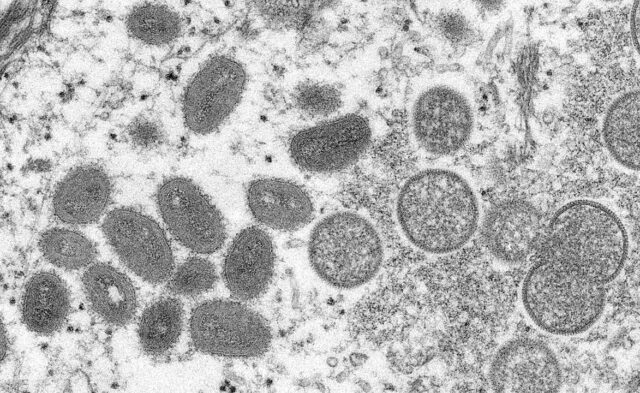
AN ELECTRON MICROSCOPIC image shows mature, oval-shaped monkeypox virus particles as well as crescents and spherical particles of immature virions, obtained from a clinical human skin sample associated with the 2003 prairie dog outbreak in this undated image obtained by Reuters on May 18, 2022. — CYNTHIA S. GOLDSMITH, RUSSELL REGNERY/CDC/HANDOUT VIA REUTERS

THE RAPIDLY spreading monkeypox outbreak represents a global health emergency, the World Health Organization’s highest level of alert, WHO Director-General Tedros Adhanom Ghebreyesus said on Saturday.

The WHO label — a “public health emergency of international concern (PHEIC)” — is designed to trigger a coordinated international response and could unlock funding to collaborate on sharing vaccines and treatments.

Members of an expert committee that met on Thursday to discuss the potential recommendation were split on the decision, with nine members against and six in favor of the declaration, prompting Tedros himself to break the deadlock, he told reporters.

“Although I am declaring a public health emergency of international concern, for the moment this is an outbreak that is concentrated among men who have sex with men, especially those with multiple sexual partners,” Mr. Tedros told a media briefing in Geneva.

“Stigma and discrimination can be as dangerous as any virus,” he added.

He said the risk of monkeypox — which spreads via close contact and tends to cause flu-like symptoms and pus-filled skin lesions — was moderate globally, except in Europe, where the WHO has deemed the risk as high.

The White House said the declaration was a “call to action for the world community to stop the spread of this virus.” Raj Panjabi, director of the White House pandemic preparedness office, said a “coordinated, international response is essential” to stop the spread of the disease and protect communities at the greatest risk of contracting it.

Previously, Mr. Tedros has typically endorsed expert committee recommendations, but two sources told Reuters earlier on Saturday said he had likely decided to back the highest alert level due to concerns about escalating case rates and a short supply of vaccines and treatments.

So far this year, there have been more than 16,000 cases of monkeypox in more than 75 countries, and five deaths in Africa.

The viral disease has been spreading chiefly in men who have sex with men in the recent outbreak, outside Africa where it is endemic.

Health experts welcomed the WHO’s decision to issue the PHEIC declaration, which until now had only been applied to the coronavirus pandemic and ongoing efforts to eradicate polio.

“The right result is clear — not declaring an emergency at this point would be a historic missed opportunity,” said Lawrence Gostin, a professor at Georgetown Law in Washington, D.C., calling the decision politically brave.

The decision should help contain the spread of the viral disease, said Josie Golding, head of epidemics and epidemiology at the Wellcome Trust.

“We cannot afford to keep waiting for diseases to escalate before we intervene,” she said.

JUNE MEETING
The WHO and national governments have been facing intense pressure from scientists and public health experts to take more action on monkeypox.

Cases of the viral disease have ballooned since the committee first met at the end of June, when there were only about 3,000 cases.

At the time, the expert group agreed to reconsider their position on the emergency declaration if the outbreak escalated.

One of the key issues driving a reassessment was whether cases would spread to other groups, particularly children or others who have been vulnerable to the virus in past outbreaks in endemic countries.

On Friday, the United States identified its first two monkeypox cases in children.

WHO officials said on Saturday they were exploring the possibility of the virus spreading via new modes of transmission. — Reuters

China heightens warning to US over possible Pelosi visit to Taiwan

PIXABAY

CHINA has issued stark private warnings to the Biden administration about a possible trip to Taiwan in August by US House of Representatives Speaker Nancy Pelosi, the Financial Times reported on Saturday.

The report cited six people familiar with the Chinese warnings as saying they were significantly stronger than the threats that Beijing has made in the past when it was unhappy with US actions or policy on Taiwan, which is claimed by China.

The private rhetoric suggested a possible military response, the Financial Times cited several people familiar with the situation as saying.

The White House National Security Council and the State Department declined to comment on the report. China’s foreign ministry did not immediately respond to a Reuters request for comment on Sunday.

China has been stepping up military activity around Taiwan seeking to pressure the democratically elected government there to accept Chinese sovereignty. Taiwan’s government says only the island’s 23 million people can decide their future, and while it wants peace, will defend itself if attacked.

The Financial Times reported on Monday that Ms. Pelosi plans to visit Taiwan in August.

China’s foreign ministry said the next day a visit to Taiwan by her would seriously undermine China’s sovereignty and territorial integrity, and the United States would bear the consequences of its response.

On Wednesday, US President Joseph R. Biden said he plans to speak with Chinese President Xi Jinping by the end of the month. Mr. Biden appeared to cast doubt on the reported Pelosi trip to Taiwan.

“I think that the military thinks it’s not a good idea right now, but I don’t know what the status of it is,” Mr. Biden told reporters. — Reuters

Russian missiles hit Ukraine’s southern port

REUTERS

KYIV — Russian missiles hit Ukraine’s southern port of Odesa on Saturday, the Ukrainian military said, threatening a deal signed just a day earlier to unblock grain exports from Black Sea ports and ease global food shortages caused by the war.

Ukrainian President Volodymyr Zelensky called the strike blatant “barbarism” showing Moscow could not be trusted to implement the deal. However, public broadcaster Suspilne quoted the Ukrainian military as saying the missiles had not caused significant damage and a government minister said preparations continued to restart grain exports from Black Sea ports.

The deal signed on Friday by Moscow and Kyiv and mediated by the United Nations and Turkey was hailed as a breakthrough after nearly five months of punishing fighting since Russia invaded its neighbor. It is seen as crucial to curbing soaring global food prices by allowing grain exports to be shipped from Black Sea ports including Odesa.

The strikes on Odesa drew strong condemnation from the United Nations, the European Union, the United States, Britain, Germany and Italy. On Friday, U.N. officials said they hoped the agreement would be operational in a few weeks. Read full story

Turkey’s defense minister said Russian officials told Ankara that Moscow had “nothing to do” with the strikes. Neither Russian defense ministry statements nor the military’s evening summary mentioned missile strikes in Odesa. The ministry did not reply to a Reuters request for comment.

Two Russian Kalibr missiles hit the area of a pumping station at the port; two others were shot down by air defense forces, according to Ukraine’s military. Ukrainian air force spokesperson Yuriy Ignat said the missiles were fired from warships in the Black Sea near Crimea.

Suspilne quoted Ukraine’s southern military command as saying the port’s grain storage area was not hit.

“Unfortunately there are wounded. The port’s infrastructure was damaged,” said Odesa region governor Maksym Marchenko.

But Infrastructure Minister Oleksandr Kubrakov said on Facebook that “we continue technical preparations for the launch of exports of agricultural products from our ports”.

The strike appeared to violate Friday’s deal, which would allow safe passage in and out of Ukrainian ports.

“If anyone in the world could have said before this that some kind of dialogue with Russia, some kind of agreements, would be necessary, look at what is happening,” Zelensky said in a late-night video.

He vowed to do everything possible to acquire air defense systems able to shoot down missiles like those that hit Odesa.

US Secretary of State Antony Blinken said in a statement that “this attack casts serious doubt on the credibility of Russia’s commitment to yesterday’s deal.”

“Russia bears responsibility for deepening the global food crisis and must stop its aggression,” he added.

U.N. Secretary-General Antonio Guterres “unequivocally condemned” the strikes, a spokesperson said, adding full implementation of the deal was imperative.

Turkish Defense Minister Hulusai Akar said in a statement: “The Russians told us that they had absolutely nothing to do with this attack … The fact that such an incident took place right after the agreement we made yesterday really worried us.”

Ukraine foreign ministry spokesperson Oleg Nikolenko said on Facebook that “the Russian missile is (Russian President) Vladimir Putin’s spit in the face” of Mr. Guterres and Turkish President Tayyip Erdogan.

Moscow has denied responsibility for the food crisis, blaming Western sanctions for slowing its food and fertilizer exports and Ukraine for mining the approaches to its ports.

A blockade of Ukrainian ports by Russia’s Black Sea fleet since Moscow’s Feb. 24 invasion has trapped tens of millions of tons of grain and stranded many ships.

This has worsened global supply chain bottlenecks. Along with Western sanctions on Russia, it has stoked food and energy price inflation. Russia and Ukraine are major global wheat suppliers and a global food crisis has pushed some 47 million people into “acute hunger,” according to the World Food Programme.

The deal would restore grain shipments from the three reopened ports to pre-war levels of 5 million tons a month, U.N. officials said. — Reuters

Russian oligarchs’ citizenship bids face scrutiny in Portugal

ANDRE LERGIER-UNSPLASH

LISBON — Portugal is analyzing the citizenship applications of two Russian oligarchs — one of whom is under US sanctions, the government said late on Friday, as a law granting passports to descendants of Sephardic Jews faces growing scrutiny.

Russian-Israeli diamond oligarch Lev Leviev and Russian property developer God Nisanov are the latest high-profile Russians known to have applied for citizenship under the legislation.

US Secretary of State Antony Blinken said last month that Nisanov, who was hit by sanctions following Russia’s invasion of Ukraine, was “one of the richest men in Europe and a close associate of several Russian officials”.

The two men’s citizenship applications are “pending analysis”, Portugal’s Justice Ministry said in a statement, without giving further details. Representatives for Leviev and Nisanov did not immediately reply to requests for comment.

Sanctions-hit Russian billionaire Roman Abramovich was granted citizenship in April 2021 under the same law, a process that triggered an ongoing inquiry at a state agency and forced the government to tighten the rules.

Two years earlier, Russian businessman Andrei Rappoport, who has a net worth of $1.2 billion according to Forbes, also got a Portuguese passport.

Rappoport, whose representatives did not immediately reply to a request for comment, was identified by the US Treasury Department in 2018 as being close to Russian President Vladimir Putin.

A report in Portugal’s Publico newspaper on Wednesday said all four of the oligarchs had applied for Portuguese nationality through Porto’s Israeli Community (CIP), which was responsible for vetting their genealogies.

Police are investigating the CIP on suspicion of money laundering, corruption, fraud and falsification of documents.

In a statement on Friday, CIP said the accusations were “false” and all applicants complied with legal requirements to obtain the certificate needed to prove their ancestry. The final stamp of approval is given by the state.

Civic Front, an association that denounces wrongdoing in public life, said all pending nationality processes based on the law in question should be suspended until the state agency inquiry has concluded.

“It is increasingly evident that the naturalization of Roman Abramovich is not an isolated case,” it said in a letter to the justice minister this week.

A spokeswoman for Abramovich previously said he obtained citizenship “in accordance with the rules”. —  Reuters

Google fires software engineer who claimed its AI chatbot is sentient

ALPHABET, INC.’s Google said on Friday it has dismissed a senior software engineer who claimed the company’s artificial intelligence (AI) chatbot LaMDA was a self-aware person.

Google, which placed software engineer Blake Lemoine on leave last month, said he had violated company policies and that it found his claims on LaMDA to be “wholly unfounded.”

“It’s regrettable that despite lengthy engagement on this topic, Blake still chose to persistently violate clear employment and data security policies that include the need to safeguard product information,” a Google spokesperson said in an email to Reuters.

Last year, Google said that LaMDA —Language Model for Dialogue Applications — was built on the company’s research showing Transformer-based language models trained on dialogue could learn to talk about essentially anything.

Google and many leading scientists were quick to dismiss Mr. Lemoine’s views as misguided, saying LaMDA is simply a complex algorithm designed to generate convincing human language.

Mr. Lemoine’s dismissal was first reported by Big Technology, a tech and society newsletter. — Reuters

Budget, bureaucracy hinder PHL implementation of satellite data for agriculture 

By Patricia B. Mirasol, reporter

Satellite technology that can speed up the work of crop insurers and help the government make macro-level decisions hasn’t gained traction in the agricultural sector due to budget constraints, bureaucratic resistance from those whose jobs may be rendered obsolete, and inadequate technical capacity among staff, according to a former official at the Department of Agriculture (DA).

“Assessors who go to the field to inspect the extent of damage and losses will become redundant with this technology,” said economist Fermin D. Adriano, an Agriculture undersecretary during the Duterte administration, in a July 18 e-mail to BusinessWorld, noting that “if one is the head of the crop insurance company receiving a government subsidy of more than P4 billion a year, what is the incentive for you to change the status quo when it serves you well to maintain powers and perks?” 

Satellite technology can be applied to monitor current crop conditions and predict future yield, making it a useful tool for crop insurance.  

In June 2020, the DA partnered with SatSure AG, a Karnataka-based deep tech multinational, to provide satellite imaging for 100,000 hectares planted with rice and 40,000 hectares planted with other crops in Nueva Ecija, Iloilo, and North Cotabato. 

The pilot project focused on estimating the damage and losses due to weather disturbances or pests. Field data could be used as a basis for extending crop insurance and expanding credit, said Mr. Adriano in the same e-mail. 

This information is “badly needed to guarantee insurance companies or banks that actual planting of such crops was made, [and also to] measure actual crop density, whether there were … losses to crops,” he added. “This data is particularly needed by our vulnerable farmers in this age of climate change challenges.”

Aside from bureaucracy, budget woes also prevent the project from scaling up. Even if the satellite technology can be funded by grants, additional financial support will be needed to geo-tag individual farms.

“The problem is that the government is in a tight fiscal situation now and looks at such innovations as a cost rather than an investment in the future,” said Mr. Adriano, who was Agriculture undersecretary for policy and planning.

‘NOT YET CONVINCING’

The Philippine Crop Insurance Corporation (PCIC), meanwhile, told BusinessWorld in a July 14 e-mail that the proof of concept of the pilot project is “encouraging but not yet convincing.” 

PCIC — which was under the DA in 2020 when the project was rolled out — tested SatSure’s satellite technology for post-planting inspection and damage assessment in Isabela, Cagayan Valley, and Butuan, Agusan del Norte, from June to October that year. 

The validation that needs to be done for insurance underwriting is typically done by field personnel, according to Manuel J. Cortina, officer-in-charge of PCIC’s business development and marketing department, and Luther Romeo C. Salting, PCIC’s vice president for its corporate business affairs group. 

“The technology made the validation faster,” said Mr. Cortina in a July 14 phone call, adding that SatSure AG provided data analytics as well as a platform for viewing the gathered images. “We had an issue with damage assessment, however, because we insure individually [per hectare], and the images shown were per cluster [per region]. We want a more micro view of the areas.”  

“We are open to adopting the technology if it can handle individual assessment,” Mr. Cortina said. “Indemnity-based kasi kami [We protect based on indemnity].” 

Arvind Kumar, SatSure AG’s Philippine country director, in a July 21 text message said: “[PCIC’s requirement] can be provided once geotagging is done. We already made it very clear in our scale up proposals submitted to the DA.” 

AGRICULTURAL APPLICATIONS 

In a July 11 call with BusinessWorld, SatSure co-founder Abishek Raju said: “We’ve been working with states and governments, and we feel the level of enthusiasm for digitalizing agricultural practices in the Philippines is very high.”

Space data can help provide predictive assessments based on how a specific landscape has changed, Mr. Raju explained. Archival information and images from more than 8,000 satellites orbiting the planet can inform the decisions related to agriculture.

“By doing a scientific audit of historic activities, a lot of predictive assessments can be done. Are there more cities? Is there more demand for food? What type?” he said.

Data can also be used for the continuous monitoring of crop yields both within a country and a larger region. Knowing whether there will be a deficit can help the government plan on which crops to import, said Mr. Raju.  

“Satellite technology can do a global assessment and find out who’s going to surplus or deficit,” he said. “Governments can use this as a trade deal for deficits and exports. Our work enables governments to make decisions at a macro level.” 

The Philippines has had recent examples of crop yield excesses. A report that tomatoes were thrown out by a farmer in Bukidnon due to oversupply prompted the DA to issue a statement on July 10 that it was pushing for a nationwide cropping calendar to reduce wastage. 

The DA told SatSure in 2021 it was keen on exploring how to scale the project at a national level, said Mr. Raju. 

“I think that if agriculture has the focus of the president himself, then it will have a lot of successes,” he added. “We are looking forward to working with the DA. We are waiting for them to tell us how to start.” 

Mr. Kumar likened the crop insurance situation to a chicken-and-egg story. 

Without insurance, banks won’t lend, he said. “Until farmers are enabled with access to formal bank credits in the form of agri-agra loans, it is difficult to see any major changes, as credit is the life blood for small farmers,” added Mr. Kumar. “Crop insurance reformation is vital.” 

A LONG-GESTATING CRISIS 

Economist Bernardo M. Villegas described the neglect of the agricultural sector as “almost criminal” in a June 28 opinion column in this newspaper. He called the sector the number one weakness of the Philippine economy in terms of productivity as compared to its peers in the ASEAN. 

The agricultural crisis cannot be solved unless the agrarian reform law is amended, said Calixto V. Chikiamco, a business process outsourcing entrepreneur and president and co-founder of Foundation for Economic Freedom, an organization that advocates the cause of economic and political liberty and market-oriented reforms. 

Mr. Chikiamco, in a July 6 forum organized by the German-Philippine Chamber of Commerce and Industry (GPCCI), said that the biggest problem is land limitation. 

“How can you apply science and technology innovations if you only have one hectare and can’t own more than five?” he said, noting how it “doesn’t make sense to apply machinery” to small plots of land.

Farmers posted the highest poverty incidence in 2015 at 34.3%, per the Philippine Statistics Authority

That President Ferdinand “Bongbong” R. Marcos, Jr., is holding the agriculture portfolio will “hopefully make the department more responsive and use its money better,” Mr. Chikiamco added. 

Mr. Marcos has identified food security among the priorities for the first few months of his administration.

“Food is not just a trade community. … It is an existential imperative, and a moral one,” he said at his June 30 inaugural address. “Food sufficiency must get preferential treatment.” 

The Department of Agriculture could not be reached for comment.