Home Blog Page 5752

Dell reports record year of remote work support for PHL partners 

XPS-UNSPLASH

Digital transformation efforts led to a record year for remote work support, according to information technology (IT) service provider Dell Technologies. 

“We don’t have specific numbers, but the fiscal year of 2022 for the Philippines is a record year for us,” said country general manager Ronnie Latinazo, at a media roundtable on June 22 in Dell’s newly renovated local office in Bonifacio Global City.  

“It’s a strong year and we posted high growth. In fact, the Philippines posted even better growth rates than international, in practically all key drivers,” he added. 

In Asia Pacific and Japan, the Partner Program saw order revenues grow by up to 12% year-on-year as of the first quarter of 2022. Dell also reported that distribution revenue and rebate payouts increased by 12% and 38% respectively. 

Tiang-Hin Ang, Dell’s channel general manager for South Asia, shared that this growth was due to customers realizing that hybrid work is the future, entailing the need for collaboration, security, and performance whether working onsite or online.

“Partners’ strategies are now focused on how to differentiate themselves as experts,” he said. “They’re adapting their business models to address evolving customer needs.”  

This data-driven mindset is the reason for the 24% rise in storage revenue, he added.  

Dell’s clientele includes solution providers, cloud service providers, and original equipment manufacturer (OEM) partners. — Brontë H. Lacsamana

China Belt & Road spending dips in H1, with no investment in Russia — research

JCOMP-FREEPIK

SHANGHAI — China’s finance and investment spending in Belt and Road countries fell slightly in the first half compared to a year earlier, with no new coal projects and investments in Russia, Egypt, and Sri Lanka falling to zero, new research showed. 

Saudi Arabia was the biggest recipient of Chinese investments over the period, with about $5.5 billion, according to the Shanghai-based Green Finance and Development Center (GFDC) in research published on Sunday. 

Total financing and investment stood at $28.4 billion over the period, down from $29.6 billion a year earlier, bringing total cumulative Belt and Road spending to $932 billion since 2013, GFDC said. 

President Xi Jinping launched the Belt and Road Initiative in 2013 aiming to harness China’s strengths in financing and infrastructure construction to “build a broad community of shared interests” throughout Asia, Africa, and Latin America. 

But it has come under scrutiny for the debt burden it places on countries and other issues such as environmental degradation. Some countries have also renegotiated their investment projects with China, highlighting the debt risks. 

No new coal projects received Chinese support over the period after a pledge made at the United Nations General Assembly by Xi last September to put an end to overseas coal financing. 

However, a Chinese developer won a bid to build a thermal power plant in Indonesia in February, and there are still 11.2 gigawatts of capacity that have already secured financing though are yet to begin construction, according to GFDC, part of Shanghai’s Fudan University. 

China has continued to provide support to other fossil fuel projects in Belt and Road countries, with oil and gas amounting to around 80% of China’s overseas energy investments and 66% of its construction contracts, GFDC said. 

Engagements in gas projects stood at $6.7 billion in the first half, compared with $9.5 billion over the whole of last year, it said. 

Green energy and hydropower transactions fell 22% from a year earlier. Investment rose to $1.4 billion from $400 million, but green energy-related construction spending fell to $1.6 billion, less than half the level a year earlier. — Reuters

China’s population expected to start to shrink before 2025

UNSPLASH

HONG KONG — China’s population has slowed significantly and is expected to start to shrink ahead of 2025, the state backed Global Times reported, citing a senior health official. 

Birth data released late on Sunday showed that the number of new births in 2021 was the lowest in decades in several provinces. 

The number of births in central Hunan province fell below 500,000 for the first time in nearly 60 years, the Global Times said. Only China’s southern Guangdong province has had more than 1 million new births, it said. 

China is battling to reverse a rapid shrinkage in natural population growth as many young people opt not to have children due to factors including the high cost and work pressure. 

China’s population is expected to start to shrink in 2021–2025, the Global Times said, citing Yang Wenzhuang, head of population and family affairs at the National Health Commission. 

A change in China’s laws last year to allow women to have three children has not helped, with many women saying the change comes too late and they have insufficient job security and gender equality. — Reuters

‘God, give us rain’ — Romanian monastery prays for end to drought

PIXABAY

DRAGANESTI-VLASCA, Romania — Iulia Coleasa, an 81-year-old who relies on her small plot for food, traveled 15 kilometers in searing heat to a monastery in southern Romania on Sunday to join a service praying for rain. 

Temperatures have spiked above 40 Celsius in the country this week and the drought has left hundreds of Romanian villages with rationed water. Crops are being decimated in the country which is an exporter of grains. 

Romania’s Orthodox Church has asked clerics to perform traditional rain prayers. At the Pantocrator monastery in the southern Romanian county of Giurgiu, Ms. Culeasa joined roughly 100 people in prayer. 

She said the weather had never been this bad. 

“I haven’t seen drought like this until now,” she said. 

“We have children, we have cattle. We make an effort to plant tomatoes in the garden and they dry out and we have nothing to eat. God, give us rain, don’t abandon us.” 

More than 40% of Romania’s population of 20 million live in the countryside and many rely on subsistence agriculture on small plots of land. The country has massive investment needs in infrastructure, including roads, running water and irrigation. 

Romania’s weather agency issued temperature warnings for Sunday, adding torrential storms would follow, although it said temperatures would remain abnormally high. Water levels on the river Danube were three times lower than usual. 

“The drought period is fairly cruel, not just for this place, but for the entire country,” said Father Justinian, one of several priests who held the service at the Pantocrator. The priests prayed in a field of harvested wheat across from the monastery, with sunflower and maize fields withering nearby. 

The scorching heat is part of a global pattern of rising temperatures, attributed by scientists to human activity. Pope Francis earlier this month called on world leaders to heed the Earth’s “chorus of cries of anguish” stemming from climate change, extreme weather and loss of biodiversity. — Octav Ganea and Luiza Ilie/Reuters

US economy slowing, but recession not inevitable, Yellen says

WIKIMEDIA COMMONS

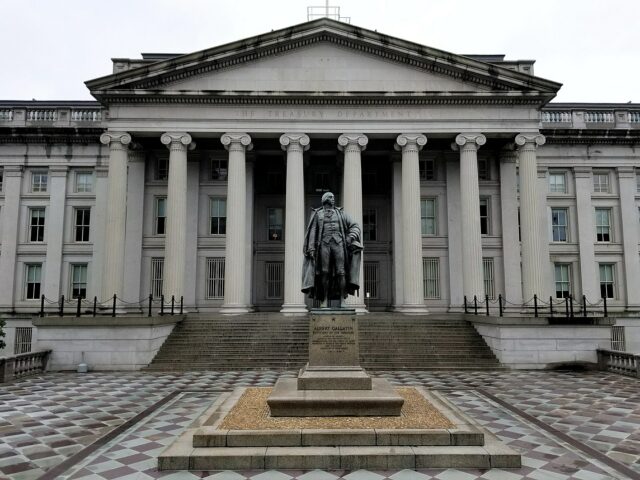
WASHINGTON — US Treasury Secretary Janet Yellen said on Sunday that US economic growth is slowing and she acknowledged the risk of a recession, but she said a downturn was not inevitable. 

Ms. Yellen, speaking on NBC’s Meet the Press, said strong hiring numbers and consumer spending showed the US economy is not currently in recession. 

US hiring remained robust in June, with 372,000 jobs created and the unemployment rate holding at 3.6%. It was the fourth straight month of job gains in excess of 350,000. 

“This is not an economy that is in recession,” said Ms. Yellen. “But we’re in a period of transition in which growth is slowing and that’s necessary and appropriate.” 

Still, data last week suggested the labor market was softening with new claims for unemployment benefits hitting their highest point in eight months. 

Ms. Yellen said inflation “is way too high” and recent Federal Reserve interest rates hikes were helping to bring soaring prices back in check. 

In addition, the Biden administration is selling oil from the Strategic Petroleum Reserve, which Ms. Yellen said has already helped lower gas prices. 

“We’ve seen gas prices just in recent weeks come down by about 50 cents (a gallon) and there should be more in the pipeline,” she said. 

Ms. Yellen, who previously served as chair of the Federal Reserve, hopes the Fed can cool the economy enough to bring down prices without triggering a broad economic downturn. 

“I’m not saying that we will definitely avoid a recession,” Ms. Yellen said. “But I think there is a path that keeps the labor market strong and brings inflation down.” 

US gross domestic product, a broad measure of economic health, shrank at a 1.6% annual rate in the first quarter, and a report on Thursday is expected to show a gain of just 0.4% in the second quarter, according to economists polled by Reuters. 

Ms. Yellen said that even if the second-quarter figure is negative, it would not signal that a recession has taken hold, given the strength in the job market and strong demand. 

“Recession is broad-based weakness in the economy. We’re not seeing that now,” she said. 

Journalists, some economists and analysts have traditionally defined a recession as two consecutive quarters of GDP contraction. But the private research group that is the official arbiter of US recessions looks at a broad range of indicators instead, including jobs and spending. 

Brian Deese, director of the White House National Economic Council, said on Twitter on Sunday that the upcoming second-quarter figures would be “backward looking,” which he called important context. “Hiring, spending, and production data look solid,” he said. — Reuters

Ukraine works to resume grain exports, flags Russian strikes as risk

REUTERS

KYIV — Ukraine pressed ahead on Sunday with efforts to restart grain exports from its Black Sea ports under a deal aimed at easing global food shortages but warned deliveries would suffer if a Russian missile strike on Odesa was a sign of more to come. 

President Volodymyr Zelenskyy denounced Saturday’s attack as “barbarism” that showed Moscow could not be trusted to implement a deal struck just one day earlier with Turkish and United Nations (UN) mediation. 

The Ukrainian military, quoted by public broadcaster Suspilne, said the Russian missiles did not hit the port’s grain storage area or cause significant damage. Kyiv said preparations to resume grain shipments were ongoing. 

“We continue technical preparations for the launch of exports of agricultural products from our ports,” Infrastructure Minister Oleksandr Kubrakov said in a Facebook post. 

According to the Ukrainian military, two Kalibr missiles fired from Russian warships hit the area of a pumping station at the port and two others were shot down by air defense forces. 

Russia said on Sunday its forces had hit a Ukrainian warship and a weapons store in Odesa with its high-precision missiles. 

The deal signed by Moscow and Kyiv on Friday was hailed as a diplomatic breakthrough that would help curb soaring global food prices by restoring Ukrainian grain shipments to pre-war levels of 5 million tonnes a month. 

But Mr. Zelenskyy’s economic advisor warned on Sunday the strike on Odesa signaled that it could be out of reach. 

“Yesterday’s strike indicates that it will definitely not work like that,” Oleh Ustenko told Ukrainian television. 

He said Ukraine could export 60 million tonnes of grain over the next nine months, but it would take up to 24 months if its ports’ operations were disrupted. 

WAR ENTERS SIXTH MONTH 

As the war entered its sixth month on Sunday there was no sign of a let-up in the fighting. 

The Ukrainian military reported Russian shelling in the north, south and east, and again referred to Russian operations paving the way for an assault on Bakhmut in the eastern Donbas region. 

The military said in a Sunday evening briefing note that the Russians continue efforts to assert control of the area around the Vuhlehirsk power plant, which is 50 kilometers (31 miles) north-east of Donetsk. The note also listed several dozen settlements along the entire front line which it said had been shelled by Russia in the past 24 hours. 

Four Russian Kalibr cruise missiles fired from the Black Sea and aimed at the western Khmelnytskiy region were shot down on Sunday, the Ukrainian air command reported. 

While the main theater of combat has been the Donbas, Ukraine’s military said its forces have moved within firing range of Russian targets in the occupied eastern Black Sea region of Kherson where Kyiv is mounting a counter-offensive. 

Reuters could not immediately verify the battlefield reports. 

Mr. Zelenskyy in his nightly video address on Sunday adopted an upbeat tone ahead of a new national holiday being celebrated on July 28. 

“Even the occupiers admit we will win. We hear it in their conversations all the time. In what they are telling their relatives when they call them,” he said. 

SAFE PASSAGE 

The strikes on Odesa drew condemnation from the United Nations, the European Union, the United States, Britain, Germany and Italy. 

Russian news agencies quoted Russia’s defense ministry as saying a Ukrainian warship and US supplied anti-ship missiles were destroyed. 

Friday’s deal aims to allow safe passage in and out of Ukrainian ports, blocked by Russia’s Black Sea fleet since Moscow’s Feb. 24 invasion, in what one UN official called a “de facto ceasefire” for the ships and facilities covered. 

Ukraine and Russia are major global wheat exporters and the blockade has trapped tens of millions of tonnes of grain, worsening global supply chain bottlenecks. 

Along with Western sanctions on Russia, it has stoked food and energy price inflation, driving some 47 million people into “acute hunger,” according to the World Food Programme. 

Moscow denies responsibility for the food crisis, blaming the sanctions for slowing its food and fertilizer exports and Ukraine for mining the approaches to its ports. 

Ukraine has mined waters near its ports as part of its war defenses but under Friday’s deal pilots will guide ships along safe channels. 

A Joint Coordination Center staffed by members of the four parties to the agreement will monitor ships passing the Black Sea to Turkey’s Bosporus Strait and on to world markets. All sides agreed on Friday there would be no attacks on them. 

Russian President Vladimir Putin calls the war a “special military operation” aimed at demilitarizing Ukraine and rooting out dangerous nationalists. Kyiv and the West call this a baseless pretext for an aggressive land grab. — Natalia Zinets and Max Hunder/Reuters

Udenna denies debt default as shares in Philippine-listed units slide

UDENNA.PH

MANILA (UPDATE) – Philippine conglomerate Udenna Corp, owned by a close associate of former President Rodrigo Duterte, said on Monday it has received a notice of declaration of default from lenders, sending shares in related companies sharply down in early trade.

DITO CME fell as much as 9%, Chelsea Logistics sank 16%, Phoenix Petroleum  dropped 6% and PH Resorts retreated as much as 7.5% in the first 30 minutes of trade. The broader index fell as much as 1.6%.

The four companies are owned by unlisted Udenna, which has pursued a debt-fuelled acquisition and expansion spree since 2016.

“There has been, in fact, no event of default or, at the very least, no irremediable event of default,” Udenna said in a statement on Monday.

The four listed companies were working to “immediately resolve” the matter on Monday, ahead of a July 27 deadline to pay a $4 million liability, they said in separate disclosures to the stock exchange. “There should be no effect on the business, financial condition, and operations,” they added.

Under existing loan terms, a default in one debt could mean a default in other liabilities.

Udenna chairman Dennis Uy, 48, was among Duterte’s top campaign donors. Uy oversaw the conglomerate quadrupling its portfolio to more than 100 firms in the first four years of Duterte’s presidency, in sectors ranging from gaming, shipping, education and construction to fast food, ferries, tourism, telecoms and sports cars.

Uy has since sold some of the companies, including a controlling stake in a South China Sea gas field, to trim debts.

Udenna’s total liabilities rose by nearly half to P254 billion ($4.5 billion) in 2020 from P171 billion in 2019, the latest available data from the corporate regulator showed. — Reuters

[B-SIDE Podcast] The future is electric

Follow us on Spotify BusinessWorld B-Side

The mainstream adoption of electric vehicles (EVs) is expected to gain traction after the previous Congress passed a law that seeks to develop the Philippines’ EV industry.

The law facilitates a shift to EVs by imposing a 5% EV fleet quota for industries that operate vehicles — such as cargo logistics, food delivery companies, tour agencies, and utilities providers — within a timeline that will be set by regulators.

In this B-Side episode, Terry L. Ridon, an investment analyst and convener of InfraWatchPH, speaks with BusinessWorld reporter Kyle Aristophere T. Atienza about the potential of EVs.

Cost is the number one concern, according to Mr. Ridon. For EVs to be adopted by average consumers, their prices have to be comparable to their gas-powered counterparts.

Recorded remotely in June 2022. Produced by Joseph Emmanuel L. Garcia and Sam L. Marcelo.

Follow us on Spotify BusinessWorld B-Side

International CSR & Sustainability Summit 2022 redefines net zero with The ZERO Shift

The International CSR & Sustainability (ICS) Summit 2022 convened over 300 C-suite level executives, business leaders, and CSR practitioners from 19 countries. Organized by regional NGO Enterprise Asia, the ICS Summit gathers top CSR leaders and practitioners to strengthen ties, share experiences and insights, as well as identify regional challenges and opportunities to shape Asia toward a more responsible, sustainable, and progressive socioeconomic market.

Themed “The ZERO Shift,” this year’s virtual summit provided a regional platform for leading thought leaders and CSR practitioners to explore the application of the NetZero approach to the entirety of the sustainability equation to achieve zero emissions, zero waste, and zero inequality.

The Chairman of Enterprise Asia, Tan Sri Dr. Fong Chan Onn, expressed at the summit’s opening that “We must work collectively to adhere to E.S.G. — environmental, social, and governance — to build a sustainable world along with rapid economic advancement; and consistent and transparent E.S.G. reporting will help contribute to zero emissions, zero waste, and zero inequality.”

The speakers were Kim-See Lim, regional director of East Asia & the Pacific of International Finance Corporation (IFC); Dr. Naoki Adachi, executive director of Japan Business Initiative for Biodiversity, and CEO & founder of Response Ability Inc.; Dr. Niven Huang, ASPAC ESG leader of KPMG Taiwan; Olivier Trecco, head of ASEAN, Japan, Australia of ESG Solutions Sustainable1; Monica Bae, regional lead – Capital Markets APAC of CDP; Daniele Mae C Coronacion, Climate Change and Sustainability Services manager of Ernst & Young Global Delivery Services; Dr. Allinnettes Adigue, head of the ASEAN Regional Hub of Global Reporting Initiative; Kevin Milla, Consultant, carbon specialist of Paia Consulting; Alexandra Tracy, founder and president of Hoi Ping Ventures; Ali Mohamed Ali, founder of OxEarth and CEO of Destination EMEA of Independent Consultant, United Nations Global Compact; Duncan Lee, ddirector of Investment Environmental, Social & Governance, Group Investment of AIA Group; Lt. General Sudhir Sharma, advisor to Enterprise Asia; Ben Kellard, director of Business Strategy of Cambridge Institute for Sustainability Leadership; Ivy Kuo, partner and PwC Asia Pacific ESG leader of PwC China ESG Services; Anirban Ghosh, chief sustainability officer, Mahindra Group; Dr. Mushtaq Memon, regional coordinator, United Nations Environment Programme.

Among the topics discussed in the virtual summit was ‘ESG: Trends, Expectations, and What’s Next for 2022’ in which speakers Dr. Niven Huang, Olivier Trecco, Monica Bae, and Dr. Allinnettes Adigue called for all businesses to embrace the transition, and to live and breathe ESG while, at the same time, ESG reporting must be sincere and credible, and the boards must truly buy into sustainability and be aware of greenwashing.

Besides this, the virtual summit also covered the topic ‘Multi Stakeholder Impact: Enabling Zero Emission, Zero Wastes, Zero Inequality Through Multi-Alliances and Partnerships’ in which speakers Lt. General Sudhir Sharma, Ben Kellard, Ivy Kuo, Anirban Ghosh, and Dr. Mushtaq Memon revealed that the world is too far behind in climate targets in the race to zero, and we must speed up in decarbonization if we are to continue to shift to zero.

The ICS 2022 is supported by CSRone, the Global Reporting Initiative, India CSR Network, Malaysian Business Council of Cambodia (MBCC), Malaysia Green Technology and Climate Change Corp. (MGTC), National Institute of Entrepreneurship and Innovation (NIEI), Singapore-Thai Chamber of Commerce, and Taiwan Institute for Sustainable Energy (TAISE), with Bangkok Post, BusinessWorld, Commercial Times, Hong Kong Economic Times, Kumparan, and SME Magazine as media partners, and Evogenetic Studio as the Official Production Partner.


Spotlight is BusinessWorld’s sponsored section that allows advertisers to amplify their brand and connect with BusinessWorld’s audience by enabling them to publish their stories directly on the BusinessWorld Web site. For more information, send an email to online@bworldonline.com.

Join us on Viber to get more updates from BusinessWorld: https://bit.ly/3hv6bLA.

DoF says on track to hit revenue goals

THE NATIONAL Government is on track to meet its revenue targets this year, although the Bureau of Internal Revenue (BIR) has to collect more in the second half, Department of Finance (DoF) Secretary Benjamin E. Diokno said.

Mr. Diokno met with officials of the BIR and the Bureau of Customs (BoC), the top revenue collection agencies, on Friday.

“The BIR is slightly behind target while BoC exceeds its target largely due to higher oil prices and peso depreciation. BIR officials commit to (a) better second-half performance,” he told reporters over the weekend.

“I expect this year’s revenue target will be met.”

The National Government aims to collect P3.3 trillion in revenues for 2022, equivalent to 15.2% of gross domestic product (GDP), as the economy recovers from the coronavirus pandemic.

For the first five months of 2022, total revenues jumped by 15.46% to P1.43 trillion as economic activity improved alongside the easing of mobility restrictions.

The BIR’s collection goal is set at P2.43 trillion for this year, but revenues stood at P959 billion as of end-May.

The Customs bureau targets to collect P671.66 billion this year. As of end-May, BoC revenues stood at P320.5 billion.

Higher oil prices and the peso’s depreciation against the US dollar have contributed to the strong Customs revenues this year.

Asked about his marching orders to the BIR and BoC, Mr. Diokno said he urged them to collect taxes “efficiently and fairly.”

“I consider revenue collectors as essential workers. Revenues are essential for achieving the goals embodied in our medium-term fiscal framework,” he added.

The Finance chief also reiterated his push for digitalization to increase tax collection.

“Digitalization is the key. It removes discretion,” Mr. Diokno said.

MARCOS ESTATE TAX
Meanwhile, the DoF appears reluctant to tackle the unpaid estate tax of the late president Ferdinand E. Marcos.

Asked if the matter was brought up during the meeting with the BIR, Mr. Diokno replied: “No, that was not discussed.”

BIR chief Lilia C. Guillermo last month said she would enforce the collection of the unpaid estate tax, as ordered by the courts. She said the Marcoses would become “role models” if their unpaid estate tax was settled.

The unpaid estate tax was worth P23 billion in 1997 and had ballooned to more than P200 billion due to interests and other fees, according to former Supreme Court Justice Antonio T. Carpio.

In December, the BIR sent a written demand to the Marcos family to settle the tax.

Ferdinand R. Marcos, Jr. assumed the presidency on June 30.

In an ambush interview by GMA Network last month, Mr. Diokno said that it was “unfair” to put the burden of collecting the estate tax on him.

“It has been 40 years or 35 years… I think it’s unfair to put the burden on me. It should have been collected if it was collectable. And so, we will leave it to the courts to decide,” he said. — Diego Gabriel C. Robles

Business groups want Marcos’ SONA to show clear roadmap for next 6 years

President Ferdinand Marcos Jr. answers questions from the media after his first cabinet meeting at the Heroes hall of the Malacañan Palace on Tuesday, July 05, 2022. — PHILIPPINE STAR/KRIZ JOHN ROSALES

By Revin Mikhael D. Ochave and Kyle Aristophere T. Atienza, Reporters

PHILIPPINE President Ferdinand R. Marcos, Jr. is expected to provide more details about his administration’s priorities as he delivers his first State of the Nation Address (SONA) before Congress on Monday (July 25).

Business groups and analysts want Mr. Marcos, who clinched a landslide victory, to provide a clear roadmap for his six-year term as the economy faces rising inflation, ballooning government debt and a darkening global outlook.

George T. Barcelon, president of the Philippine Chamber of Commerce and Industry, hopes Mr. Marcos will provide more support for pandemic-hit businesses and assure them of good governance under his administration.

“We want to hear from him that the government is ready and able to help us,” he said by telephone.

Mr. Barcelon said Mr. Marcos needs to outrightly reject cronyism or the practice of rewarding friends and allies in his first SONA.

“We hope President Marcos sends more signals that business is welcome again as a partner, that laws, franchises, and contracts will be upheld and targeting businesses politically be stopped,” Makati Business Club (MBC) Executive Director Francisco “Coco” Alcuaz, Jr. said in a Viber message, adding that this would boost interest in much-needed public-private partnership (PPP) projects.

He said they are also hoping Mr. Marcos will declare an education and nutrition crisis in the country.

“A world-beating, two-year no-classroom lockdown didn’t help, plus one-third of 5-year-old kids are malnourished, hurting their ability to learn for life. If we don’t fix these twin crises, we will chug along, at best. No economic policy will make us a high-income country without a smart and skilled workforce to execute it,” Mr. Alcuaz said.

Semiconductor and Electronics Industries in the Philippines Foundation, Inc. (SEIPI) President Danilo C. Lachica said via mobile phone message they want Mr. Marcos to review the rationalization of fiscal incentives under Republic Act No. 11534 or the Corporate Recovery and Tax Incentives for Enterprises (CREATE) Act.

“Top on our list is the review of CREATE’s incentives rationalization. It has not been effective in attracting investments versus our ASEAN neighbors,” he said.

Mr. Lachica said the President should also elaborate on his plans to reduce the cost of doing business, particularly for power, labor and logistics, in the Philippines.

“We want hear his plans on strictly implementing (ease of doing business) to eliminate corruption, removing bureaucracy, red tape, and transparency,” he added.

EXIT FROM PANDEMIC
Philippine Retailers Association (PRA) President Rosemarie B. Ong told BusinessWorld via mobile phone that they want to hear about Mr. Marcos’ economic programs, as well as the plan to exit from the coronavirus disease 2019 (COVID-19) pandemic.

“In particular (we want to hear) the prioritization of the proposed online taxation, which is important for retailers as it aims to level the playing field for online and offline retailers,” she said.

Steven T. Cua, Philippine Amalgamated Supermarkets Association, Inc. president, said in a mobile phone message that he wants Mr. Marcos to provide a roadmap or development plans for different industries over the next decade.

“We also wish to hear on the development of employment-generating backyard industries that produce raw materials for commercial and industrial customer, which promotes entrepreneurship and helps diminish reliance on importation as well as unemployment. We also want to hear effective solutions versus smuggling,” he added. 

Ferdinand I. Raquelsantos, Electric Vehicle Association of the Philippines chairman emeritus, said in a Viber message the electric vehicle (EV) industry is hoping to see more support from the Marcos administration.

“We need government support in terms of subsidies, for the manufacturing, sales, promotions and use of EVs. An example is giving rebates if you buy EVs, and a loan subsidy if jeepney operators buy EVs and replace their dilapidating jeepneys,” Mr. Raquelsantos said.

Chris Nelson, British Chamber of Commerce Philippines (BCCP) executive director, said they want to hear Mr. Marcos express support for the Regional Comprehensive Economic Partnership (RCEP) trade deal.

“(The ratification of RCEP would) send a clear signal to investors. This would be a very good time now because Congress will resume (session),” Mr. Nelson said in a mobile phone interview. 

The Philippines has yet to ratify its membership in RCEP, a multilateral trade agreement involving Australia, China, Japan, South Korea, New Zealand and the 10 members of the Association of Southeast Asian Nations (ASEAN).

Mr. Nelson said the BCCP also wants Mr. Marcos to provide details on what he plans to do to further open up the economy to foreign investments.

CLEAR PLANS
During the campaign period, Mr. Marcos promised cheaper food, more jobs, more roads and better public facilities, and urged overseas workers to return to the country.

But in making such promises, he needs to inform Filipinos about the country’s fiscal status and engage them on how he would handle public finances in the next six years, Zyza Nadine M. Suzara, an economist and public finance analyst, said.

“He should squarely talk about his plans to shore up financing for government services not only for the rest of 2022, but also for 2023 and beyond. He would need to talk about specific courses of action, such as whether taxes would increase, or if more debt would be incurred,” she said via Messenger.

The Philippine economy is expected to grow by 6.5-7.5% this year. The National Government’s budget deficit stood at P458.7 billion as of end-May, narrower by 19% from the same period a year ago.

Outstanding debt stood at P12.5 trillion at the end of May, as the Duterte administration ramped up borrowings to finance its pandemic response.

As of the first quarter of 2022, the Philippines’ debt-to-GDP ratio stood at 63.5%, the highest since 65.7% in 2005. This surpassed the 60% threshold considered as manageable by multilateral lenders for developing economies.

“The bigger debt in itself is not a serious problem. But the President must show credible commitment that we can sustain our capacity to pay,” Filomeno Sta. Ana, coordinator of Action for Economic Reforms, said in a Messenger chat.

Mr. Sta. Ana also said he expects the President to push for “smart taxes” that have popular support and that could generate significant revenues, such as the proposed excise duties on vape products, cigarettes, and alcohol.

At the same time, Mr. Marcos needs to assure the business sector that he would address rising inflation and the peso’s depreciation against the US dollar, Benvenuto N. Icamina, vice-president and chief operating officer at The Wallace Business Forum, said.

Inflation rose to a nearly four-year high of 6.1% in June, bringing average inflation to 4.4% so far this year. The peso earlier this month dropped to its weakest level in nearly 17 years.

The Bangko Sentral ng Pilipinas earlier this month raised its key policy rates by 75 basis points in an off-cycle move as it sought to contain broadening price pressures and rescue the peso.

Higher interest rates could affect private contractors in government projects, said Terry L. Ridon, convenor of InfraWatchPH.

“This is a hard cap on infrastructure firms on undertaking more projects or capital expansion, as previous profit projections based on old interest rates may not be the same anymore,” he said in a Messenger chat. “The rate hike will compel them to look for other sources of funding.”

INFRASTRUCTURE
Mr. Marcos may use the SONA to unveil the blueprint for his infrastructure plan.

“Expect the President to focus on a new ‘Build, Build, Build’ plan as a way to project that the government is output-driven,” Arjan P. Aguirre, who teaches political science at the Ateneo de Manila University, said in a Messenger chat.

Bernardo M. Villegas, an economist at the University of Asia and the Pacific, said the government should focus the “Build, Build, Build” program “on farm- to-market roads, irrigation systems and other infrastructures that will help the small farmers improve their productivity and incomes.

Mr. Villegas said the country could easily achieve infrastructure resilience once the “pre-requisites of agricultural development and food security are achieved.”

Terry L. Ridon, convenor of InfraWatchPH, said Mr. Marcos’ infrastructure talk will “ring hollow without considering the current limitations in our fiscal space and general economic situation.”

“We are expecting typically general statements rather than concrete plans, with a focus on feel-good promises of delivering on its commitment to an infrastructure-focused agenda,” he said.

Mr. Ridon said Mr. Marcos should also assure the public that his projects would not favor only a few countries, including China. “The Marcos government should not fall under this trap.”

Also the President might fall short of discussing much-needed good governance and political reforms, said Mr. Aguirre.

“He will not be mentioning anything related to human rights, previous corruption scandals, and political repression cases,” he added.


DPWH eyes 3,000 NCR projects for next year

MOTORISTS ply the southbound lane of the EDSA-Kamuning flyover in Quezon City, Sunday (July 24). The flyover reopened to the public on July 23, after a month of repairs by the Department of Public Works and Highways. — PHILIPPINE STAR/ MIGUEL DE GUZMAN

By Arjay L. Balinbin, Senior Reporter

THE DEPARTMENT of Public Works and Highways (DPWH) is proposing around 3,000 infrastructure projects worth P53 billion in Metro Manila next year.

Nomer Abel P. Canlas, regional director for DPWH-National Capital Region (NCR), said that the number of proposed projects for next year would be significantly higher than the 1,600 projects worth P43 billion approved for 2022.

“For the whole region, we have 3,000 proposed projects, but our wish list is subject to change depending on the policy direction and priorities of (Public Works Secretary Manuel M. Bonoan),” he told BusinessWorld in a phone interview last week.

Most of the proposed projects in NCR are buildings such as hospital and school facilities as well as housing facilities inside military and police camps, Mr. Canlas said.

Mr. Canlas identified two major projects for NCR — the underground cable system and water impounding project.

The proposed P300-million underground cable project involves relocating the overhead utility lines on major roads below ground. This will cover Epifanio de los Santos Avenue (EDSA), Radial Road 10 (R-10), and Circumferential Road 5 (C-5).

“We hope we can start this along EDSA so the public can see the impact immediately, then R-10 and C5,” Mr. Canlas said.

The DPWH’s vision for the capital region is to move all utility lines underground, he said, citing safety, convenience, and aesthetics.

Underground cables help avoid accidents like electrocution, Mr. Canlas added.

Various groups have urged the government to consider underground cables as part of its disaster resiliency strategy to prevent massive blackouts during calamities.

Mr. Canlas said another DPWH priority is the construction of water impounding facilities in selected areas.

“The proposed locations are Sto. Domingo Church, 537 Quezon Avenue Sta. Mesa Heights in Quezon City; National Center for Mental Health in Mandaluyong City; and St. Paul Street, Barangay Veinte Reales in Valenzuela City,” he said.

The DPWH recently completed the P92-million rehabilitation of a drainage structure along E. Quintos Street in Sampaloc, Manila.

Many areas in Metro Manila are low-lying and prone to flooding, while natural drainage is often restricted during rainfall events by high river and sea water levels, according to the World Bank.

The DPWH said in May that civil works had started on a major pumping station serving a flood-prone area in Valenzuela City. The station is being implemented by DPWH Metro Manila third District Engineering Office and is “expected to address the city’s perennial flooding problem as well as of neighboring areas along Meycauayan River,” it said in a statement.

Under the DPWH’s flood management master plan for the Greater Metro Manila area, one of the proposed measures is the application of rainwater catchment system that will enable some communities to store rainwater for reuse instead of allowing it to run off into a waterway.