Home Blog Page 5594

Oldest patient yet cured of HIV after stem cell transplant — researchers

LONDON — The oldest patient yet has been cured of HIV after receiving a stem cell transplant for leukemia, researchers reported on Wednesday.

While the transplant was planned to treat the now-66-year-old’s leukemia, the doctors also sought a donor who was naturally resistant to the virus that causes AIDS, a mechanism that first worked to cure the “Berlin patient,” Timothy Ray Brown, in 2007.

The latest patient, the fourth to be cured in this way, is known as the “City of Hope” patient after the US facility in Duarte, California, where he was treated, because he does not want to be identified.

As well as being the oldest, the patient has also had HIV the longest, having been diagnosed in 1988 with what he described as a “death sentence” that killed many of his friends.

He has been on antiretroviral therapy (ART) to control his condition for more than 30 years.

Doctors who presented the data ahead of the International Aids Society’s (IAS) 2022 meeting said the case opened up the potential for older patients with HIV and blood cancer to access the treatment, particularly as the stem cell donor was not a family member.

Describing a cure as the “holy grail,” Sharon Lewin, president-elect of the IAS, said the case provided “continued hope … and inspiration” for people with HIV and the wider scientific community, although it was unlikely to be an option for most people with HIV due to the risks of the procedure.

Scientists think the process works because the donor individual’s stem cells have a specific, rare genetic mutation which means they lack the receptors used by HIV to infect cells.

After the transplant three and a half years ago, which followed chemotherapy, the City of Hope patient stopped taking ART in March 2021. He has now been in remission from both HIV and leukemia for more than a year, the team said.

On Wednesday, researchers in Spain also presented details of a 59-year-old woman who is one of a rare group of what is known as “post-treatment controllers”. They can maintain undetectable viral loads after stopping ART, and also provide clues to a potential cure, Ms. Lewin said.

Ahead of the IAS conference that starts on Friday, the Joint United Nations Program on HIV/AIDS (UNAIDS) also presented data showing how the COVID-19 pandemic had derailed global efforts to tackle HIV, including a reversal of progress in the world’s most populous region, Asia and the Pacific. — Reuters

That ‘piece of paper’

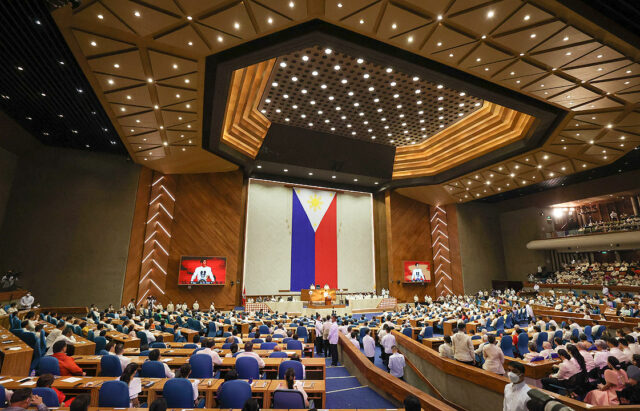
PHILIPPINE STAR/ RUSSELL PALMA

The International Observer Mission that monitored the May 9 election claims that it was neither free, fair, nor honest. But if it was, with over 31 million votes in his favor, or some 56% of the votes cast, Ferdinand Marcos, Jr. won the Presidency by an unprecedented landslide.

That would make him the most popular of all the candidates last May. Only 25 days into his six-year term of office last Monday, he therefore had nothing — or little — to fear from his countrymen and women.

But nearly 22,000 police personnel, plus some 8,000 more from the Presidential Security Group (PSG), the Bureau of Fire Protection, the Philippine Coast Guard, the Metropolitan Manila Development Authority, and even the Bureau of Jail Management and Penology were deployed to secure Mr. Marcos Jr. and his family during his first State of the Nation Address (SONA) last Monday, July 25.

The Philippine National Police (PNP) also banned protest actions such as rallies and demonstrations in several streets including Manila’s Mendiola, despite its being kilometers away from the Batasang Pambansa where he delivered his first SONA.

Those attending the SONA were also told not to wear anything with a political statement on it, which was of course in violation of the right to free expression mandated by the Constitution. And only when the PNP realized that there would be pro-Marcos gatherings too did they agree with the Quezon City government to allow protesters on Commonwealth Avenue.

Local government units, not the police, have the authority to approve or deny applications for permits to hold public gatherings. But usually ignored is the more basic fact that permits are required only to forewarn local authorities early enough for them to reroute traffic and assure the safety of the public. Instead, however, in violation of Article III, Section 4 of the Constitution, permits are often either granted or denied on the basis of whether the group involved is perceived to be pro- or anti-government.

Those groups initially denied permits were obviously thought to be in the latter category, thus the police’s earlier insistence in denying them their right to protest and bring their grievances to government attention.

These excessive measures made it appear that Mr. Marcos Jr. is as unpopular as, say, Australian politician Clive Palmer, who has a dismal -51% approval rating, or the United Kingdom’s former Prime Minister Boris Johnson, whose disapproval rating was 70% at the time of his resignation.

Granted that because it puts the Executive and Legislative branches of government together in one venue, every President’s SONA needs extra attention in terms of those participants’ and attendees’ safety. But does doing that really need almost two divisions of armed men for it to succeed, especially since the PSG themselves said that they knew of no threat against the person of Mr. Marcos or of anyone else in government?

Benigno Aquino III’s security people apparently did not think that such a huge army was needed in 2015, and neither did Rodrigo Duterte’s last year. The late Mr. Aquino’s last SONA was secured by 10,000 police and military personnel, while 7,000 did the same for Mr. Duterte’s 2021 SONA. In neither case were protests banned, except in the immediate vicinity of the Batasan.

The measures the new administration took to secure Mr. Marcos Jr. and his family — those measures were certainly adopted primarily for that purpose — do not only raise eyebrows. They also provoke such questions as:

1.) Are they indicative of the same reliance on the coercive powers of the State that characterized Marcos Sr.’s rule?

2.) Given how, this early, restrictions on free expression and the right to peaceable assembly are being implemented, is this a portent of things to come? and,

3) Is the new Marcos regime thus replicating the anti-free expression and other repressive policies of its predecessor?

The fears implicit in these questions are far from unfounded. There is, after all, a context in which the use of coercion as the primary policy in dealing with dissent occurred: during the martial law period which, despite the Marcos family’s efforts at prettifying it, is nevertheless still equated with repression by many Filipinos including those too young to have lived through it, but whose elders have told them about it.

Question No. 3 is equally relevant. These are not exactly the best of times for the exercise of free speech, free expression, and press freedom. All had been diminished — or, to borrow the word the Constitution uses in Article III, Section 4, “abridged”— during the six years of the Duterte despotism through such attacks on media organizations as withdrawing their registrations and shutting them down, encouraging the filing of libel suits against journalists, blocking access to their websites, and “red-tagging” and barring reporters from covering Malacañang. Equally restrictive and in some instances even lethal for those targeted was the regime’s labeling as terrorists sectoral groups such as teachers’, students’, workers’, youth, and women’s organizations, and even religious charities, book stores, and entire universities.

The Duterte regime was as dependent on the police and military as the Marcos dictatorship. Its response to the COVID-19 pandemic was grossly militarized and like its failed “war on drugs,” as deadly to such fundamental rights as those to life and due process. As a consequence — the Bill of Rights is the heart of that document — only with some exaggeration did the Constitution become no more than the “piece of paper” the power elite reduced it to. Together with its frequent violations and the perception that it is of no consequence to Filipino lives and fortunes came the country’s descent into even worse poverty, political and social instability, and hopelessness.

His first SONA, as announced earlier, did focus on Mr. Marcos Jr.’s economic recovery program; his plans to improve the government’s capacity to help the underprivileged; revive the tourism industry; develop alternative energy sources; reform the healthcare and educational systems; and support agriculture and farmers, among others. He also vowed never to surrender “even an inch” of Philippine territory to any foreign power.

But although insulated by the police and military from the grievances of protesters, he could have also dwelt on the need for any administration with democratic pretensions to make the Constitution more than the veritable piece of paper into which it has been reduced by the past regime. He could have assured the press of State protection of its freedom as a necessary pillar of democratic rule, together with free speech, free expression —and, yes, re-affirmed the citizenry’s right “peaceably to assemble and petition the government for the redress of grievances.”

That he did not, one can only hope, was not indicative of any policy that would continue rather than end his predecessor’s war against democratic rights and the Constitution. That would be to the detriment of the unity and national recovery of which Mr. Marcos Jr. claims to be both herald and champion.

Rather than just a document worth only the paper it is written on, the 1987 Constitution restored such democratic institutions as the elections that put Mr. Marcos Jr. in power, and bound the Filipino community together in a new social contract with government.

It is the government’s primary responsibility to defend the Constitution as the guardian and guarantor of the people’s and this country’s freedom, welfare, and development. The past regime reneged on that responsibility. May the present one be more than aware of the need to respect, honor, and, most of all, abide by it.


Luis V. Teodoro is on Facebook and Twitter (@luisteodoro).

www.luisteodoro.com

A thumbs up or down for Marcos Jr.’s first SONA?

PHILIPPINE STAR/KRIZ JOHN ROSALES

It was a brave declaration, said during the first State of the Nation Address (SONA) of President Ferdinand R. Marcos, Jr. as the 17th President of the Republic of the Philippines, that he knew it in his mind, he knew it in his heart, and he knew it in his very soul that the state of the nation is sound.

Let’s get our tenses right. If we are to believe President Marcos Jr.’s strategic plans would succeed, the state of the nation WILL be sound. But at the time he delivered his report to the Filipino people, inflation WAS a major problem, having breached the official target of 2-4%. Both our fiscal deficit and national government (NG) debt to GDP ratios WERE significantly high. COVID-19 WAS resurging. Economic scarring in both education and the labor market COULD BE a big obstacle to sustainable economic growth. Poverty and income inequality HAD worsened. While its prospects might be promising, the state of the nation is far from sound today.

Before that, he expressed his unqualified confidence in his cabinet for navigation through the global crisis, as well as his unwavering trust in the indomitable spirit of the Filipino for endurance.

It was right for him not to dismiss the risks of the global and domestic challenges we face today, but to focus more on the “sunlight filtering through these dark clouds.” This is the optimistic streak of a SONA.

Thus, it was easy for the business sector to give a thumbs up to the President’s agenda of governance. It sounds and looks business friendly.

The Employers Confederation of the Philippines, for instance, was impressed by the exhaustive coverage of the SONA, particularly its aim to improve healthcare in the Philippines. Their business sense must have been kindled by the call to build specialty hospitals for children, heart, lung, and kidney beyond the National Capital Region. The SONA also announced the administration’s intention to build the country’s own Center for Disease Control and a vaccine institute.

The siren song to the business people must be the President’s highly applauded announcement that “we will no longer implement a lockdown.” To business, it would be preferrable to implement the health protocols of wearing face masks and perhaps even face shields supported by widespread vaccination. This is how to dance with the virus.

True, lockdowns halt production and employment, even mobility and consumption. But time is suspended by lockdowns to give space for strengthening testing, tracing, and therapy. We doubt whether we have reached that point when these three Ts no longer need pump priming. Do we already have the digital database that would allow us to do granular isolation of specific areas to minimize harming the whole economy?

This decision is most welcome if the evidence is clear that our healthcare system is much stronger than when we risked opening up the economy sometime in 2021. Unless we are fully convinced that the President’s promise to fortify our healthcare is already on the ground, it may be difficult to simply rule out lockdowns, even if granular.

The Makati Business Club took the view that the proposals to facilitate tax payment and to boost internet interconnectivity would help “energize” the business sector. They believe digitalization would be helpful to small businesses.

But there is also an undeniable sense of ambivalence among the movers and shakers of Philippine business.

For one, the International Chamber of Commerce Philippines was reported to have saluted the SONA’s strong agenda for digitalization of all government processes, particularly on improving connectivity for the educational system and rural areas. They also liked the solutions in the SONA to address both food and energy security in the middle of the war in Eastern Europe.

Their support for digitalization is actually due to what it could contribute to good governance. The government is expected to be better run because red tape and corruption are reduced, if not eliminated. This is business-positive because the cost of doing business could drop. The SONA could have earned a great deal of goodwill if fighting corruption was given prominence.

On the other hand, the exporters’ group does appear ambivalent in their perception of the SONA. While admitting that most of the President’s legislative agenda already incorporated the wish list of the private sector, and the economic goals appear reasonable, the Philippine Exporters Confederation observed that the SONA failed to give strong emphasis on micro, small and medium enterprises (MSMEs) by asking Congress to enact the Magna Carta on MSMEs.

It was the Management Association of the Philippines (MAP) that indicated the strong position on what the SONA failed to show. While it was pleased with the inaugural SONA, it clarified that the government’s commitment to good governance by rightsizing the bureaucracy could always be undermined if corruption in government is not addressed. Statements to the effect that the government means business will not serve any purpose if the general public refuses to support it, given the reported irregularities in the bureaucracy.

For the Foreign Buyers Association of the Philippines, the SONA could have given the manufacturing industry more focus as this sector is expected to reduce the economy’s dependence on imports.

For the Philippine Chamber of Commerce and Industry, the SONA would have been more useful if it also proposed various ways to bring in more investments in the healthcare sector. This is its version of PPP (public-private partnership) in the healthcare sector to reduce the need for higher public spending and allow fiscal consolidation to be achieved faster.

For the farmers’ groups, they would like greater clarity on the imposition of a one-year moratorium on land amortization and interest payments. The Federation of Free Farmers believes that all amortizations should be waived, whether past, present, or future. In fact, for the Kilusang Magbubukid ng Pilipinas, such a suspension of amortizations has long been overdue.

Since power is critical to enable an economic recovery, the Marcos presidency ought to consider what the Power for People Coalition has to say about the contradiction between the government’s renewable energy agenda and its push for nuclear power and liquefied natural gas. “Renewable energy is a top priority not just by saying it, but committing to minimizing, then eliminating, the use of fossil fuels to protect the environment and consumers. It’s disappointing to hear him talk about incentives and [a] bill for gas and action point for nuclear but no actual plans for renewable energy.”

It is equally important to hear what the Philippine Energy Efficiency Alliance has argued about the government implementing the Energy Efficiency and Conservation Act to attain “the energy security and decarbonization objectives of the Philippines.”

The MAP’s point about the SONA’s failure to touch on fighting corruption is just one of those exclusions as we failed to hear any anti-corruption marching order from the Chief Executive. The SONA could have fortified its courage not to yield even a square inch of the Philippines by citing our victory in the Permanent Court of Arbitration six years ago. Resolving that maritime crisis should be good for business because the whole blue ocean economy west of the Philippines could be tapped, while maritime routes could also be secured. Respect for human rights and lives should have been a critical element in the SONA because business confidence is a function of peace and order. Justice and the rule of law assure investors that private property rights are upheld and any legal disputes can always be given due course.

The writers of the SONA should recall what the International Monetary Fund (IMF) once declared about good governance, that it is key to economic success. While good governance is a broad concept that is inclusive of economic policies, regulatory framework, and adherence to the rule of law, its absence does offer more opportunities for corruption, the abuse of public office for private gains. By skipping the strategy for good governance, the SONA might unwittingly work against market integrity, weaken competition and compromise economic growth.

A long recitation of the 19 legislative proposals and a potpourri of executive intent are praiseworthy. But an elephant still resides in the SONA. And it is not inflation. It is good governance.


Diwa C. Guinigundo is the former deputy governor for the Monetary and Economics Sector, the Bangko Sentral ng Pilipinas (BSP). He served the BSP for 41 years. In 2001-2003, he was alternate executive director at the International Monetary Fund in Washington, DC. He is the senior pastor of the Fullness of Christ International Ministries in Mandaluyong.

Have Putin’s Ukraine goals shrunk or expanded?

THE WAR in Ukraine is, let’s admit it, weird. Russian citizens can, at least theoretically, travel to Ukraine for business or pleasure, though now — only since June — they need visas. The belligerents are parties to a recent deal ensuring safe grain exports. Russian gas keeps flowing to Europe through Ukraine’s pipeline system, albeit in reduced volumes. Countries that supply weapons to Ukraine are also paying Russia for energy and fertilizer imports, thus also funding its war effort. It’s not easy to imagine any of this going on during, say, World War II.

If that tangle of relationships is not confusing enough, both Russia’s stated invasion goals and outsiders’ perceptions of them appear to be shifting shape on a monthly basis.

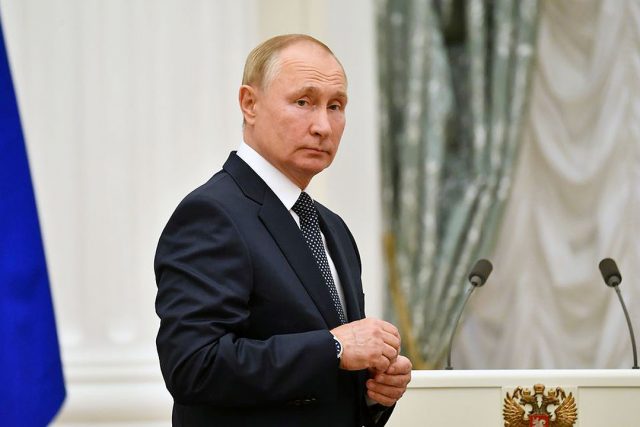
In one sense, Russia appears to have scaled back its goals. To achieve his stated objectives, the “demilitarization” and “denazification” of Ukraine, Vladimir Putin attacked on a much broader front than Russia maintains today. When he then had to pull back from Kyiv, Chernihiv, Sumy, and parts of the Kharkiv Region, the objectives, which sounded like euphemisms for regime change, slid into the background. At this point, it is probably wrong to call them “goals”: Since they are not attainable in the foreseeable future with the resources the Kremlin — and Russians as a largely passive populace at war — have been willing to devote to the invasion, “dreams” is probably a better word.

In another sense, however, the goals appear to have expanded in reach. Initially, the only territorial ambitions Russia officially declared were confined to the administrative borders of the Donetsk and Luhansk regions, which the respective puppet “People’s Republics” claimed as their land. Recently, however, Russian Foreign Minister Sergey Lavrov has stated bluntly that “the geography has changed,” adding that Russia was now also interested in the Kherson Region in southern Ukraine and the Zaporozhzhia Region in the country’s center. Lavrov is the highest-placed Russian official to speak more or less openly of such plans. Coupled with the groundwork being laid by the occupying administrations for “referendums” that would call for the invaded areas to join Russia, his words are evidence that Russia intends to annex the territories outright rather than leave them in a gray zone as it did with the “People’s Republics” in 2015.

The easiest way to reconcile these diverging vectors is to assume that, having failed to secure a somewhat reduced Ukraine (minus Crimea and the two eastern regions) run by a pro-Kremlin government, Putin has decided to grab significantly more land instead, as a kind of compensation. But this weird war defies easy explanations. It’s far more likely that any Kremlin “planning” these days is reactive and ad hoc rather than strategic. Kremlin expectations appear to be shaped by battlefield events. Every shift in the military situation leads to a new “plan” that, if carried out, would allow Putin to declare victory.

When it turned out that the Russian military could not take Kyiv or the cities of northern Ukraine, the Kremlin concentrated its forces in the east, completing the invasion of Luhansk Region early this month.

This plan, however, ran into personnel issues. The draft-based armies of the “People’s Republics” have incurred enormous losses (just the admitted military casualties of the “Donetsk People’s Republic” approach 3,000 dead), and the poorer regions of Russia proper have already supplied most of the available recruits willing to sign military contracts — and their contingents account for a disproportionate amount of Russia’s military fatalities. A “hidden mobilization” echoing across Russian Telegram channels that offers able-bodied men, including prisoners, a chance to fight in Ukraine for attractive pay and their freedom is a slow and iffy process. Without more infantry, Russia cannot risk a frontal attack on Ukrainian fortifications around Slovyansk and Kramatorsk, the way it did in Mariupol and Severodonetsk, and there appears to be no other obvious way to complete the conquest of the Donetsk Region.

At the same time, increasingly powerful Western weapons have enabled Ukraine to hit military targets such as munitions warehouses and command centers deep in the occupied territory, killing more senior officers. In his interview with one of Russia’s top propagandists, Margarita Simonyan, Lavrov admitted that these weapons have changed the Kremlin’s calculus.

Putin’s attention appears to have shifted to defending Russia’s conquests in the south, where Ukraine has been threatening to launch a major counterattack to retake Kherson, and in the east, where the Ukrainian military has been shelling targets in and near Donetsk. The relatively weak Russian group of forces in the south has been beefed up and reinforced with more aviation and artillery support in recent days as it repelled Ukrainians’ probes.

Igor Girkin (Strelkov), who fought in Ukraine in 2014 and is one of the harshest nationalist critics of Russia’s conduct of the war today, has suggested on his Telegram channel that the current plan might be to defeat the Ukrainian military as it mounts an attack in the south and then push on against a weakened enemy in the east. If Strelkov is right, that would be at least the third major change of strategy in five months. And the annexation plans shaping up in the form of “referendums” indirectly support his argument. Making the land grab official before a negotiated end to the war can only mean one thing: A declaration by Russia that it will defend the new territories as its own.

It would be meant as a warning to Ukraine’s Western allies to be careful what weapons they supply — the US administration already limits the range of the munitions it sends for fear of starting World War III — and it would, at least theoretically, spread Russia’s nuclear umbrella over parts of the Kherson and Zaporizhzhia regions. At the same time, it would reassure pro-Russian activists and Russia-backed administrations in the occupied territories that Russia would not abandon them — reassurance they sorely need in the face of Ukrainian guerilla action and threats to recover the lost territories.

In all these aspects, a formal annexation fits a defensive mindset. If Putin were still on the attack, he’d try to seize more territory, including a least another regional center — Kherson is the only one grabbed so far — then attempt to make a peace deal on his terms before claiming more land for Russia. In that case, a massive push in the Donetsk Region would already have started. The Institute for the Study of War reported that Russia’s “operational pause” was ending as early as July 15, but Russia has made no major moves in the region in the two weeks since.

As it is, holding on to what was grabbed in the first, chaotic weeks of the invasion appears to have become a priority for the Kremlin. Paradoxically, the seeming expansion of territorial ambitions comes as a sign of relative military weakness, not strength.

For that reason, any Western compromise-seeking at this point makes little sense. Why offer Putin anything if he’s increasingly willing to settle for less (even if “less” may sometimes look like “more,” at least in terms of occupied square miles)? As Rob Lee, a senior fellow at the Foreign Policy Research Institute and a keen observer of the Ukraine war, has argued, “The starting point to ending this war is by shaping the military balance of power so that Russia cannot make further advances.”

Any speculation that things are close to reaching that point is premature. The Russian military may be understaffed and poorly commanded, but it is adapting to new circumstances, new Western weapons in Ukraine’s hands, and a shifting political vision in the Kremlin. It will fight a sound defensive battle, and in the end, whichever side shows more tenacity and fighting spirit will win in the south and, subsequently, in the east. If that side is Russia, Putin’s goals will shift again in the direction of February’s frustrated dreams. If it’s Ukraine, Putin will look for a way to claim even less and still portray himself as a winner.

The apparently planned annexation is a stop-loss move in this game of diminishing returns.

BLOOMBERG OPINION

Of vaccines, heart attacks, menstruation and others

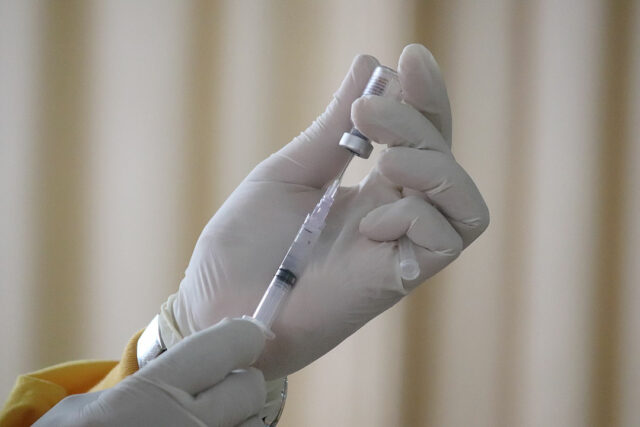
MUFID MAJNUN-UNSPLASH

“I knew these vaccines were not going to protect against infection and I think we overplayed the vaccines …” That was Dr. Deborah Birx, former White House Coronavirus Response Coordinator, in a recent interview. And more: “50% of those who died via Omicron were older and vaccinated.” Interesting statements amidst the many reports, both here and abroad, of somewhat healthy young people suddenly dropping dead. Oftentimes from heart or blood related issues.

In this regard, one particular study (“Age and sex-specific risks of myocarditis and pericarditis following COVID-19 messenger RNA vaccines,” Stéphane Le Vu, et al, June 2022) seems particularly relevant:

“Cases of myocarditis and pericarditis have been reported following the receipt of COVID-19 mRNA vaccines. As vaccination campaigns are still to be extended, we aimed to provide a comprehensive assessment of the association, by vaccine and across sex and age groups. Using nationwide hospital discharge and vaccine data, we analyzed all 1,612 cases of myocarditis and 1,613 cases of pericarditis that occurred in France in the period from May 12, 2021 to Oct. 31, 2021.”

The result? “Strong evidence of an increased risk of myocarditis and of pericarditis in the week following vaccination against COVID-19 with mRNA vaccines in both males and females, in particular after the second dose of the mRNA-1273 vaccine.”

This has to be read within the context of lowered immunity, as found by cardiovascular surgeon Kenji Yamamoto (“Adverse effects of COVID-19 vaccines and measures to prevent them,” June 2022): the “immune function among vaccinated individuals eight months after the administration of two doses of COVID-19 vaccine was lower than that among the unvaccinated individuals. According to European Medicines Agency recommendations, frequent COVID-19 booster shots could adversely affect the immune response and may not be feasible.” Thus: “COVID-19 vaccination is a major risk factor for infections in critically ill patients.”

Another interesting finding is the possible effect that the COVID vaccines have on the reproductive system, both for males and females. Dr. Anthony Fauci, the US president’s chief medical adviser, admitted this is a matter that needs further looking into.

For women, it was found that “since the emergence of COVID-19 vaccinations, many women around the world are reporting abnormalities in their menstrual periods post-vaccination.” So a study was made (“Menstrual Symptoms After COVID-19 Vaccine: A Cross-Sectional Investigation in the MENA Region,” Nadia Muhaidat, December 2021) “to investigate the prevalence and impact of menstrual abnormalities after the COVID-19 vaccine.” The conclusion: “a possible link between the COVID-19 vaccine and menstrual abnormalities that have impacted their quality of life.”

For men, a possible lowered sperm count: “Systemic immune response after BNT162b2 vaccine is a reasonable cause for transient semen concentration and TMC [total motile count] decline.” (“COVID-19 vaccination BNT162b2 temporarily impairs semen concentration and total motile count among semen donors,” Itai Gat, et al., June 2022).

Finally, there’s this piece of news that had pro-vaccine news media fact checkers scrambling to respond: the possibility of DNA changes due to vaccination. Nevertheless, one of the researchers admitted that: “the vaccine enters liver cells as early as six hours after the vaccine has been administered. We saw that there was DNA converted from the vaccine’s mRNA in the host cells we studied.” (Answer by Associate Professor Yang de Marinis, “Q&A: COVID-19 vaccine study gains attention,” Lund University, March 2022; see also “Intracellular Reverse Transcription of Pfizer BioNTech COVID-19 mRNA Vaccine BNT162b2 In Vitro in Human Liver Cell Line,” February 2022: which “detected high levels of BNT162b2 in Huh7 cells and changes in gene expression of long interspersed nuclear element-1 (LINE-1), which is an endogenous reverse transcriptase.”)

There is, of course, the disease du jour that is monkeypox, for which this Washington Post article (“You are being misled about monkeypox,” July 2022) makes a good point: “Here is what we can discern from data collected about monkeypox so far: This viral outbreak isn’t just mostly occurring among men who have sex with men. The confirmed cases, at least to date, have consistently almost entirely occurred among this demographic, which accounts for 96% or more of diagnoses where data are available.

“Per capita, the few monkeypox cases in women and children remain minuscule compared with the rate among gay and bisexual men. Of course, substantial transmission could always occur among such other groups. But researchers at the WHO and elsewhere have speculated that the monkeypox reproduction rate will likely remain significantly lower in such demographics — meaning the virus will more likely hit transmission dead ends among them than among gay and bisexual men.

“An uncomfortable truth, one documented in peer-reviewed papers, is that sexual behaviors and networks specific to gay and bisexual men have long made them more likely to acquire various sexually transmitted infections compared with heterosexual people.”

The baffling response of local health experts is to require citizens to mask up and socially distance. Which makes one wonder if this is really about public health or public manipulation.


Jemy Gatdula is a senior fellow of the Philippine Council for Foreign Relations and a Philippine Judicial Academy law lecturer for constitutional philosophy and jurisprudence.

www.facebook.com/jigatdula/

Twitter @jemygatdula

Philippine para-chessers eye big moves in 11th ASEAN Para Games

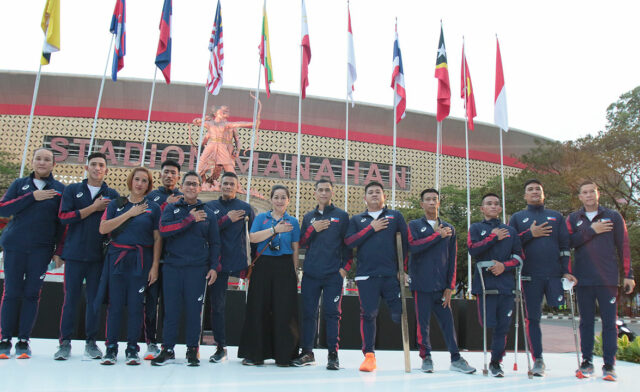
MEMBERS of the national para volleyball team join Team Philippines’ Chef de Mission Walter Torres (fifth from left) and Deputy CDM Tricia Rana (sixth from left) in posing in front of the national colors of the 11 participating teams of the 11th ASEAN Para Games after flag-raising ceremonies held at the Manahan Stadium last Wednesday.

SURAKARTA, Indonesia — Filipino para-chessers are keen on surpassing their performances in the 2017 10th Association of Southeast Asian Nations (ASEAN) Para Games in Kuala Lumpur, Malaysia when the chess competition begins on Sunday at the Lor-in Hotel.

“Definitely, we want to surpass what our athletes did in Malaysia five years ago,” said national head coach James Infiesto on Thursday, referring to the four golds, three silvers, and six bronze medals the country won on the way to placing third overall in the regional sports showpiece in the Malaysian capital.

Mr. Infiesto revealed that the Indonesian hosts have added 12 more events, boosting to 36 golds that will be up for grabs in the sport of the 11th ASEAN Para Games.

“This is why we tried to fill up all of the categories with players since there will be 12 more golds available in this competition,” he noted of the trip supported by the Philippine Sports Commission (PSC).

Anchoring the squad are the powerhouse trio of FIDE Master Sander Severino, Jasper Rom, and Henry Roger Lopez, who swept the men’s team standard and rapid events in the 2018 Asian Para Games held in the Indonesian capital of Jakarta. Highlighting that sterling display was the 1-2-3 finish of Messrs. Severino, Lopez, and Rom in the men’s individual rapid event.

“We completed a grand slam of gold, silver, and bronze in the individual rapid event so this is why Indonesia is really preparing hard to get back at us,” Mr. Infiesto said, adding that he has players who could pull up some surprises once the chess competition gets underway.

“Unlike in the Asian Para Games where we dominated two events, we are aiming to be dominant in others as well,” said the coach, who declined to name the chessers he was expecting to deliver in the other events.

While the team buildup was held online at the start, Mr. Infiesto said they began their bubble face-to-face training funded by the PSC in early July at the PhilSports Complex in Pasig City.

The other members of the men’s squad are Felix Aguillera, Anthony Abogado, Cecilio Bilog, Francis Ching, Darry Bernardo, Israel Peligro, Menando Redor, Rodolfo Sarmiento and Arman Subaste.

The women’s squad is composed of Cheryl Angot, Maria Teresa Bilog, Charmaine Tonic, Cheyzer Crystal Mendoza, Evangeline Gamao, Corazon Lucero, Ma. Katrina Mangawang, Fe Mangayayam, Jean-Lee Nacita and Elena Peligro.

Flag-bearer Guion gets two-day break after opening

PHILIPPINE powerlifting squad led by flag-bearer Achelle “Jinky” Guion (right) and 2000 Sydney Paralympic Games bronze medalist Adeline Dumapong-Ancheta (fifth from left) pose with PSC staff led by NSA Affairs chief Annie Ruiz (sixth from left) during a break in training in the 11th ASEAN Para Games.

SURAKARTA, Indonesia — Flag-bearer Achelle “Jinky” Guion got a timely break when her event in the women’s powerlifting competition was reset to two days after the formal opening of the 11th Association of Southeast Asian Nations (ASEAN) Para Games on Saturday at the Manahan Stadium.

“Malaking tuwa ko po nang malaman ko na na-reset ‘yung dates. At least, may isang araw pa akong pahinga bago maglaro,” said Ms. Guion after learning of the welcome news last Wednesday that the start of the powerlifting tournament at the Paragon Hotel was moved to Aug. 1.

In the original schedule, the 51-year-old pride of Sipalay, Negros Occidental was supposed to compete in the women’s 45-kilogram (kg.) division on Sunday or just a day after the inaugural rites at the 20,000-capacity arena located in the heart of the Central Java provincial capital.

A back-to-back silver medalist in the 2014 Incheon and 2018 Jakarta Asian Para Games, Ms. Guion, however, declined what medal color she would deliver for the country since looming as her fierce rival in the weight class was hometown bet Ni Nengah Widiasih. Competing in the women’s 41-kg. class, Ms. Widiasih bagged a silver in last year’s Tokyo Paralympic Games.

This was set when the athlete placed eighth overall in the women’s 45-kg. category of the world para powerlifting championships last November in Tbilisi, Georgia.

National coach Rico Canlas said there are five women and three men in the national para powerlifting squad, among them, reigning women’s +86-kg. queen Adeline Dumapong-Ancheta, in the stint bankrolled by the Philippine Sports Commission (PSC).

Also in the group are veteran Marydol Pamatian, who will vie in the women’s 41-kg. class, Denesia Apote Esnara (50-kg.), Agustin Kitan and Romeo Tayawa, who will both compete in the men’s 54-kg. category, and Gregorio Damian Payat, Jr., who sees action in the men’s 59-kg. division.

“Everyone on our team wants to win, but I don’t want to make any medal forecast so as not to pressure our athletes,” said Mr. Canlas, who was hoping to surpass the one gold and one bronze medal won in the 2017 Malaysia ASEAN Para Games.

Popp double sends Germany into 2022 Euro women’s final

GERMANY’s Alexandra Popp celebrates scoring their second goal with teammates. — REUTERS

MILTON KEYNES, England — Prolific striker Alexandra Popp scored twice as Germany beat France 2-1 in their Euro 2022 semifinal on Wednesday to set up a clash with host England in Sunday’s final at Wembley.

The Germans, eight-time European champions, will take on an England team on a high after their 4-0 thrashing of Sweden in Tuesday’s other semi.

“We played an amazing game and threw everything in,” said Popp, who has scored six goals in five games at the tournament after a lengthy spell of injury troubles.

“We are incredibly happy; nobody expected us (to do it). We’re in the final at Wembley against England — it doesn’t get any better than that.”

“We earned our self-confidence in all the games. The team is just great; they have my back and are happy with me after my whole story of suffering,” she added.

Popp fired Germany ahead in the 40th minute, sneaking in from the left to meet a fine cross from Svenja Huth and beat Pauline Peyraud-Magnin with a crisp finish.

The lead lasted less than four minutes, however, as France leveled when Kadidiatou Diani unleashed a fierce drive on the turn which rattled off the post and flew in off the back of Germany keeper Merle Frohms.

France had the better chances after the break, putting intense pressure on the German defense, but they could not find a way through.

Diani set up Selma Bacha, whose goalbound shot was blocked by Kathrin Julia Hendrich and then Wendie Renard’s header at the back post was well saved by the alert Frohms.

The lively Diani then intercepted a poor back pass and burst forward, but Frohms kept out her low drive from a tight angle.

Popp won the contest with her sixth goal in five games in the tournament, powering a superb header home from another excellent Huth cross in the 76th minute.

France continued to push, but with increasing desperation — Bacha went close with a curling first-time effort and Clara Mateo saw an effort fly just over the bar.

But in the end, it was Popp who proved the difference and England will need to find a way to stop her if they are to win their first title against the country which has dominated European women’s football for so long.

The enterprising French team, who had impressed many during this tournament, was left to rue the chances they couldn’t turn into goals.

“I wasn’t surprised by Germany because we knew that they were a very big team offering a lot of intensity. They were efficient, unlike us. We will learn from it,” said Bacha.

“All that was missing was efficiency. We are not going to discard everything. We can be proud of our journey. No one thought we were going to make it to the semifinals. Next time, it will be the final. You really have to believe in it and never give up.” — Reuters

Cleveland Guardians overtake sloppy Boston Red Sox

JOSH Naylor hit a tie-breaking home run with one out in the ninth inning as the Cleveland Guardians capitalized on shoddy defense by the host Boston Red Sox and recorded a 7-6 victory on Wednesday night.

Naylor snapped a 6-6 tie when he hammered a 2-0 slider from Tanner Houck (5-4) over the Green Monster seats for his 14th homer. Naylor’s fifth homer in 18 games this month helped Cleveland win for the seventh time in 10 games.

Myles Straw hit a tying double in the eighth off Red Sox reliever John Schreiber (3-2) two batters after first baseman Franchy Cordero committed his third error of the game by making an errant throw on a grounder by rookie Nolan Jones. Cordero was charged with two errors in Cleveland’s three-run second inning when he bobbled Jones’ grounder and also made an errant toss.

Bobby Dalbec homered twice and drove in a season-high five runs for Boston, but the Red Sox dropped to 2-11 in their past 13 games.

Phillies 7, Braves 2: J.T. Realmuto and Alec Bohm each had two hits and two RBIs to help Philadelphia to a win against visiting Atlanta in the rubber contest of a three-game series.

Kyle Gibson (6-4) allowed two runs and four hits in six innings for the Phillies, who had lost four of five coming out of the All-Star break. He struck out four and walked two.

Braves starter Charlie Morton (5-5) allowed five runs (four earned) and six hits in five innings. He struck out five and walked two. Matt Olson homered and Eddie Rosario had two hits for Atlanta.

Tigers 4, Padres 3: Victor Reyes hit a two-run, walk-off double with two outs off closer Taylor Rogers to give host Detroit a win over San Diego, as the Tigers took two of three in the series.

Jeimer Candelario, who began the ninth-inning uprising with a double, had three hits and drove in two runs. Michael Fulmer (3-4) collected the victory with an inning of scoreless relief.

Padres starter Yu Darvish allowed two runs on six hits while striking out 11 in seven innings. San Diego’s Jurickson Profar had two hits and an RBI.

Angels 4, Royals 0: Janson Junk threw five-plus scoreless innings, Kurt Suzuki, Brandon Marsh and Phil Gosselin each had two hits and Los Angeles beat host Kansas City.

Junk, who was lifted after issuing a leadoff walk to begin the sixth inning, earned his first career major league win after going winless in four major league starts last season and one relief appearance this year. He struck out a career-best eight batters while allowing only one walk and four hits.

Royals starter Brad Keller (5-11) gave up three runs on six hits in six innings. Ryan O’Hearn collected three hits and Michael A. Taylor had two hits for Kansas City. — Reuters

Tatum on Durant

For marquee names always elbowing each other for room at the top, it’s hard to get worked up over the prospect of relinquishing the role of top dog for one of the most storied franchises in National Basketball Association history. In this regard, Jayson Tatum’s responses to queries on the possibility of all-world Kevin Durant joining the Celtics was to be expected. That he publicly showed he was lukewarm at best on the chance while attending the premiere of the documentary series NYC Point Gods — which, not coincidentally, his would-be teammate produced — shows where he stands.

To be sure, Tatum had reason to balk at the notion, and not simply because of ego. After all, the Celtics managed to finish runners-up in the immediate past season, as good an indication as any that they’re already built to contend even without Durant. Chemistry is an extremely elusive component of winning, and, if nothing else, they proved they have it. And, make no mistake; the Nets will be asking for the moon before letting the former Most Valuable Player awardee go, no matter how disgruntled he may be.

Which, in a nutshell, is why the decision isn’t as clear cut as it seems. The rule of thumb on deals is that the winner just so happens to be the one that landed the best player. And, yes, Durant will be the best player in any trade that involves him. Reportedly, the Celtics need to offer vital cogs Jaylen Brown and Marcus Smart, not to mention a plethora of first-round picks, just to be in the same zip code of “reasonable.” Even taking into consideration the sacrifice of depth for top-heavy arsenal, esprit de corps heads the list of question marks.

For the record, Tatum disclosed that “I love my team. I love the guys that we got.” Not that the Celtics have yet to see the obvious signals. They know what they’re risking, least of all the good relationships they have with their stars. Brown’s already seething; despite having proven his chops as the leading scorer for the green and white in the 2022 Finals, he’s still being dangled as bait. They can’t go wrong with Durant, of course. Whether they’re also doing right by their homegrown talents is another matter altogether.


Anthony L. Cuaycong has been writing Courtside since BusinessWorld introduced a Sports section in 1994. He is a consultant on strategic planning, operations and Human Resources management, corporate communications, and business development.

Digital-first college launches learning hub in QC

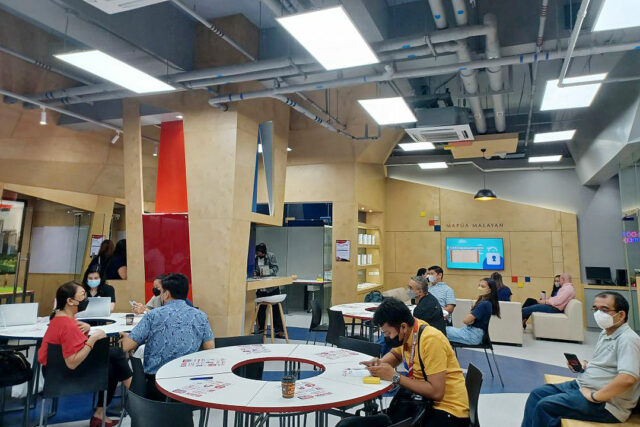
To set the stage for the start of school year 2022–2023, Mapúa Malayan Digital College (MMDC), a digital-first college under Mapúa University and its subsidiary Malayan Colleges Laguna, opened its second learning hub in Ayala Malls Cloverleaf on July 28. 

Designed to be a “21st century digital learner working space,” the Quezon City hub follows its Bacolod City counterpart, which launched on July 1. 

“Our courses are fully online, but sometimes you have to sit down with people, look at them in the face, talk, and point at things. [For that] you need a place to go,” said MMDC’s chief learning officer Derrick Latreille at the July 28 event.

“That’s why this looks like a co-working space. It looks like you can run a business here,” he added. 

The learning hub features conference tables and chairs that can be rearranged, study pods, collaboration rooms with whiteboards, and bleachers.

Though classes start mid-August, the digital college will be accepting late enrollees up to the end of the same month. They offer two programs: Bachelor of Science in Information Technology and Bachelor of Science in Business Administration. 

Dennis H. Tablante, MMDC executive director, assured that the digital program has been approved by the Commission on Higher Education (CHED). 

“We follow their regulations and we can deliver in a manner that we think is best — using the projects, problems, and cases (PPC) model,” he said. 

The PPC model focuses on real-world applications and competency development rather than just knowledge acquisition. Instead of taking tests, students work together and apply the information they glean from synchronous and asynchronous classes.  

“Mapúa has a great heritage. How do we take that great brand and make it more affordable to more people and available all across the country? Online learning was our answer to that,” Mr. Latreille said. 

Through its two hubs, students learning primarily online still have the option of socializing and collaborating face-to-face (although it is not required).

For more information, visit www.mmdc.mcl.edu.ph

PLDT, Smart activate more ‘Libreng Tawag, Libreng WiFi’ sites in quake-hit areas

PLDT and its wireless unit Smart Communications, Inc. (Smart) have activated three more ‘Libreng Tawag (free calls) and Libreng WiFi (free WiFi) sites in northern Luzon following the magnitude 7.0 earthquake that hit Abra on Wednesday.

“The three new sites expand the ‘Libreng Tawag’ stations that we had set up in the region on Wednesday evening. PLDT and Smart were the first telcos to offer free call services in quake-hit Vigan City, Ilocos Sur following the tremors. We later opened another Libreng Tawag site in Bangued, Abra before midnight,” said Cathy Yang, FVP & Group Head of Corporate Communications at PLDT and Smart.

As of Thursday, PLDT and Smart have activated ‘Libreng Tawag, Libreng WiFi’ stations at the following locations:

Ilocos Sur
• Landmark Building, Jose Singson St., Barangay VIII, Poblacion, Vigan City
• Vigan Northern Alliance Trading, 3rd Floor UNP Town Center, Tamag, Vigan City
• Candon City PD Office, Corner Gaerlan and Abaya St., San Isidro, Candon

Abra
• Abra PD Office, Horizon St. Zone 7, Bangued

Benguet
 • Benguet Agri Pinoy Trading Center, Strawberry Fields, La Trinidad

Aside from providing communication as aid to affected residents, PLDT and Smart continue to work with local government units as they prepare to distribute relief assistance to severely impacted communities.

PLDT and Smart’s ‘Libreng Tawag, Libreng WiFi’ initiative and aid distribution underscore the PLDT Group’s commitment to creating a safe and smart Philippines by providing immediate response through network resilience, continuous availability of communication services, and relief assistance to communities affected by disasters, and aid in recovery.

The programs in helping communities become more resilient in times of calamity are in line with the commitment of PLDT and Smart to help the country attain the United Nations Sustainable Development Goal (SDG) #11 of making cities and human settlements inclusive, safe, resilient and sustainable by significantly reducing the number of people affected by disasters.


Spotlight is BusinessWorld’s sponsored section that allows advertisers to amplify their brand and connect with BusinessWorld’s audience by enabling them to publish their stories directly on the BusinessWorld Web site. For more information, send an email to online@bworldonline.com.

Join us on Viber to get more updates from BusinessWorld: https://bit.ly/3hv6bLA.