Home Blog Page 5595

Exploring the food scene in Singapore

Maxwell Hawker Centre

By Brontë H. Lacsamana, Multimedia Reporter

AS a tourist, it’s easy to get all shopped out and tired from strolling in the malls or exploring the wide range of cultural sights that Singapore has to offer, so the best thing to do in such instances is seek refuge in a cozy place and fill yourself with good food.

Homegrown cafés and restaurants keep Singapore’s food scene as vibrant as ever, featuring flavors from the country’s many influences, whether it’s Chinese, Malay, Indian, or even Western.

Though the pandemic did put up challenges for such places all over the world, many withstood the circumstances to continue showcasing the colorful cuisine of Singapore.

BREAKFAST & COFFEE
Kaya toast with eggs and coffee is popular breakfast fare in the straits, available in many of its oldest cafés. On Joo Chiat Road, Chin Mee Chin Confectionery (the pale blue shophouse on the far right) is an institution that has served this classic since 1925.

How to eat it? You can dip the buttered and kaya-filled toast in a plate of beaten eggs and/or in your coffee. You can even opt to eat it as is and drink the coffee separately. What is fun is that it’s all up to you.

HAWKER FOOD STALLS
If you haven’t eaten at a hawker center before, do yourself a favor and go for the char kway teow (stir-fried flat noodles), char siew (barbecued pork), chicken rice, fried oyster, or anything else that strikes your fancy. Find comfort in the many choices you have.

Even if you order a lot, you won’t have to spend more than $5 for a single meal. And go early because stalls cater to the breakfast and lunch crowd, which means ingredients can run out quickly.

Try these: Maxwell Food Centre, Tiong Bahru Market, Old Airport Road Food Centre.

TRENDY BUT CLASSIC
Though not as inexpensive as hawker centers, trendy restaurants in Singapore are putting their own twist on classic dishes, making them popular among tourists.

In Kampong Glam, many stores offer authentic Malay, Indian, and Middle Eastern food. For a taste of the local, visit The Coconut Club found along Beach Road, so you can grab a bite of their delicious nasi lemak before continuing your stroll in the area.

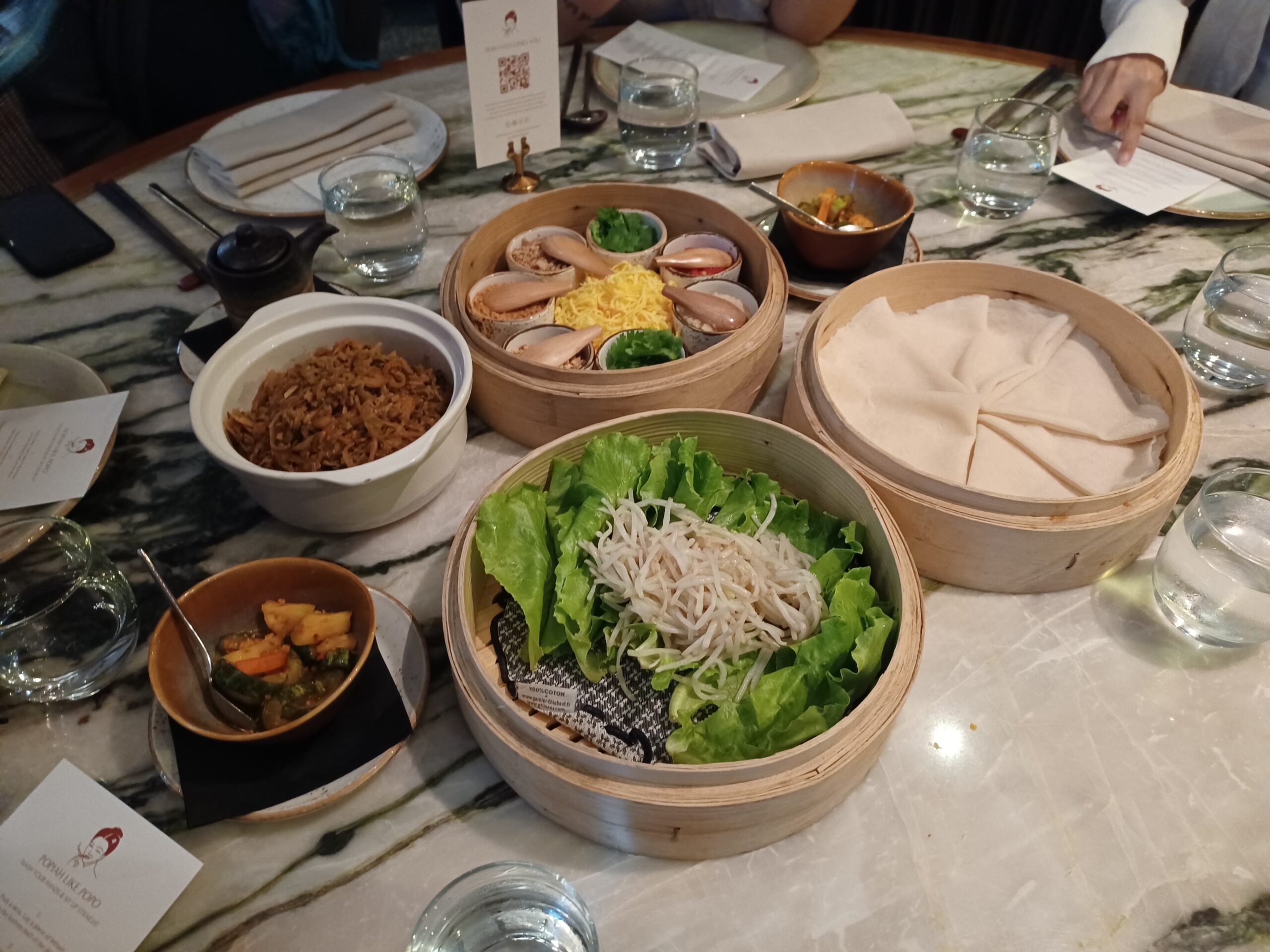
For popiah, or Singapore’s version of fresh spring rolls, go to the Po Restaurant inside The Warehouse Hotel on Havelock Road. After putting together your own popiah with fresh ingredients, its lowkey ambience is perfect for a leisurely cocktail at the bar.

Exploring the lush greens of Dempsey Hill in the middle of the city center can involve eating too — the Open Farm Community located in the area sources its ingredients from its own sustainable garden. Cauliflower wings are its bestselling vegan dish.

If you are a fan of chicken rice, visit Chatterbox, a longtime institution on Orchard Road. It’s been open since 1971 —  though it is now found in the Hilton Hotel — and is known for an elegantly prepared chicken rice set that ups the ante of the classic favorite.

PERANAKAN CUISINE
Originating from Chinese diaspora and incorporating Malay and Western elements, Peranakan culture can be credited for giving flavor and color to Singapore’s cuisine.

The neighborhood of Katong & Joo Chiat is your best bet at trying some traditional Peranakan food. Start in Chilli Padi Nonya, a humble local restaurant that opened in 1997 and was recently featured in the 2022 Singapore Michelin Guide.

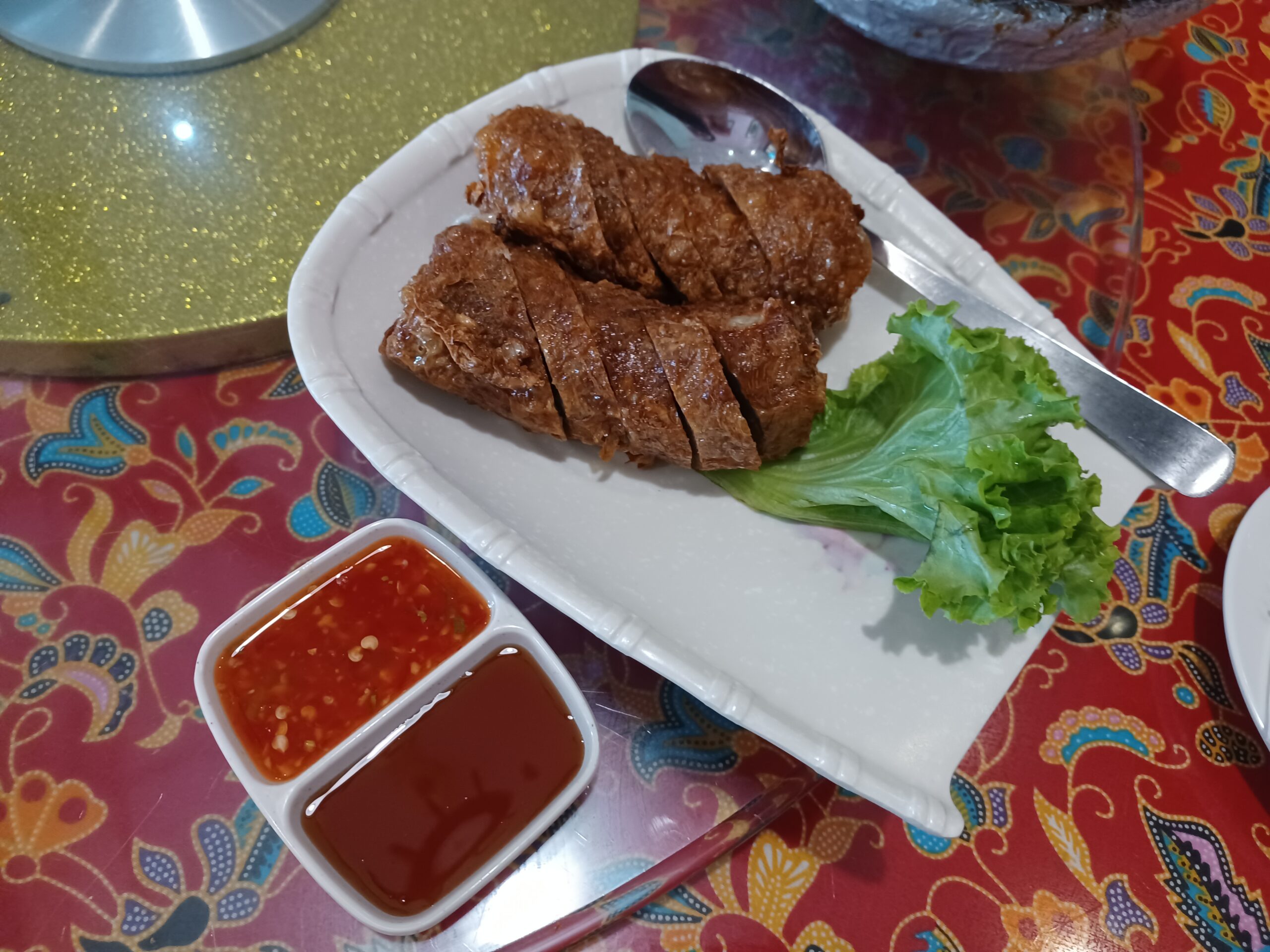
Must-try items on the menu include kueh pai ti (a crispy pastry tart shell filled with a sweet and spicy mix of shredded Chinese turnips, thinly sliced vegetables, and prawns) and ngoh hiang (fried pork rolls wrapped in beancurd skin — like the Philippines’ kikiam).

For those who like their food hot, there are also much spicier dishes like rendang.

Afterwards, as you stroll in Katong & Joo Chiat, keep an eye out for the go-to store for immersing yourself in the local culture: Rumah Kim Choo. Aside from Peranakan clothes, shoes, and souvenirs, its boutique center offers traditional sweets.

If you join a tour, you’ll have snacks, which includes kueh lapis (a rice treat like Filipino sapin-sapin but with multicolored layers eaten one by one), pineapple tart, and nyonya rice dumpling (a rice cake with sweet and savory meat, wrapped in pandan leaves).

To help gulp down this mini feast is butterfly pea flower tea with pandan and lemongrass in it, its blue color a satisfying balance to the eye-catching food on your plate.

THE NIGHTLIFE
As a booming financial center, Singapore is home to a slew of expats from all over the world, further livening up its multicultural image. These days, the hip nightlife scene caters to foreigners and tourists hoping to let loose in the Lion City.

In Chinatown, there are many relatively new places where everyone goes to socialize, one of which is Potato Head. Open since 2014, it takes up four floors of a shophouse on Keong Saik Road.

The lower floors have sit-down dining for those who want to try the burgers and fries or enjoy the occasional music gig. The rooftop bar is where it’s at, though — take pictures with your friends holding tiki-themed cocktails as the sun sets on the Singapore skyline.

Another hotspot in Chinatown is Native Bar, this time located in Telok Ayer Street. It’s known for its multi-awarded cocktail menu of regional flavors.

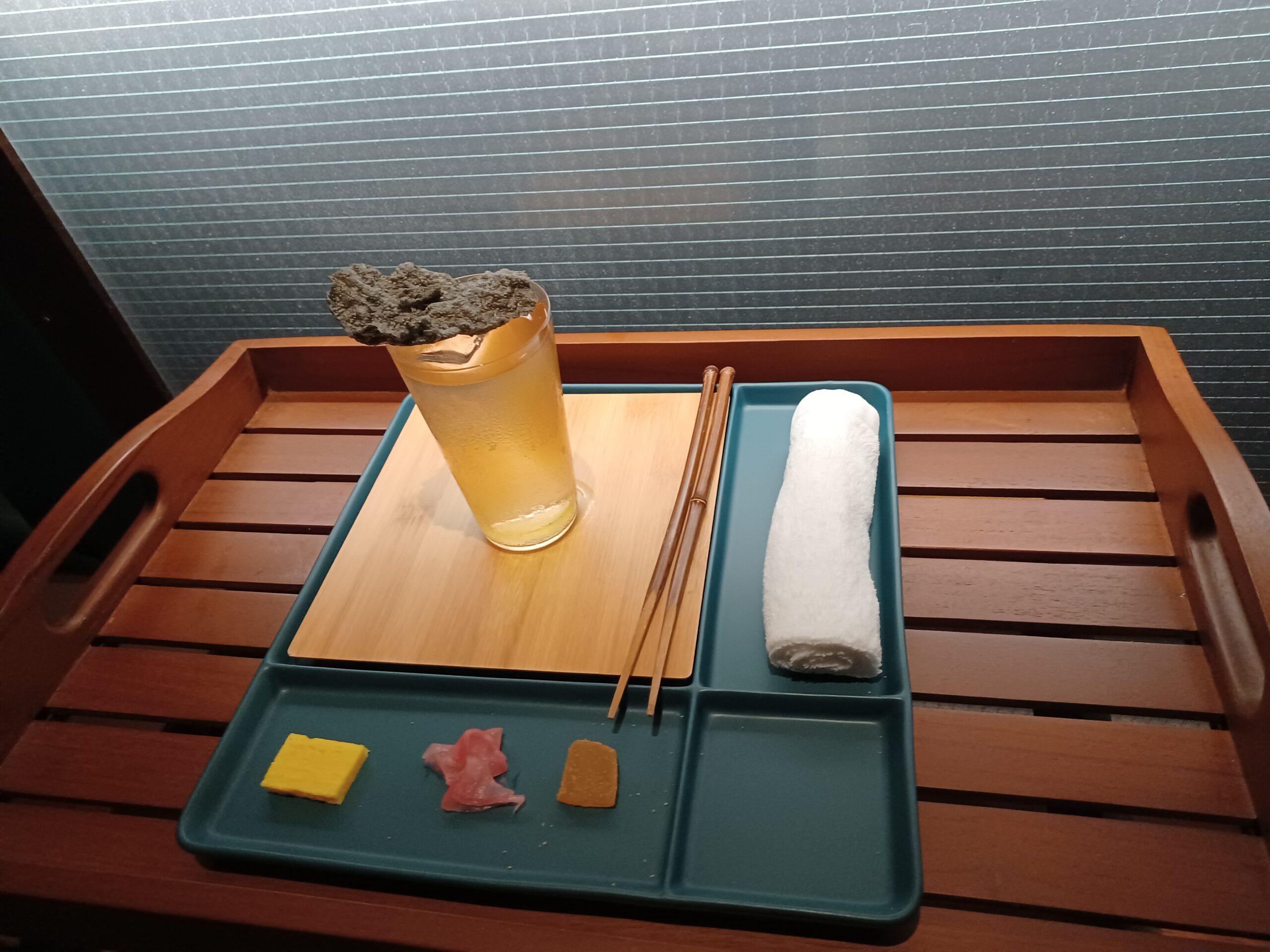
Vijay Mudaliar, the owner of the bar, told BusinessWorld that the menu is constantly updated to experiment with the various flavor trends in Asia. One of its recent stars is the Oolong Highball, which takes inspiration from the Japanese salaryman’s bento.

Meanwhile, those seeking out the hard stuff can venture towards the trees of Dempsey Hill to find a gin distillery sitting amidst the city’s peaceful slice of nature.

Tanglin Gin Distillery offers a tour and tasting experience that lets you try its handcrafted gin, featuring distinct Singaporean flavors — the Orchid Gin celebrates the tastes of hawker food and the Singapore Gin is citrusy with chili and ginger notes.

One of the brand’s partners, Bradley Young, will be able to explain what goes into smelling and later tasting the flavors in a gin. Make sure you have no other important places to be afterwards because this experience will set you up for the night.

Like Singapore’s own culture, the variety of smells and tastes in a single drink reflects just how exciting it can be to explore the city’s most unique offerings.
Maya Kitchen visits Davao through balbacua and Pakfry

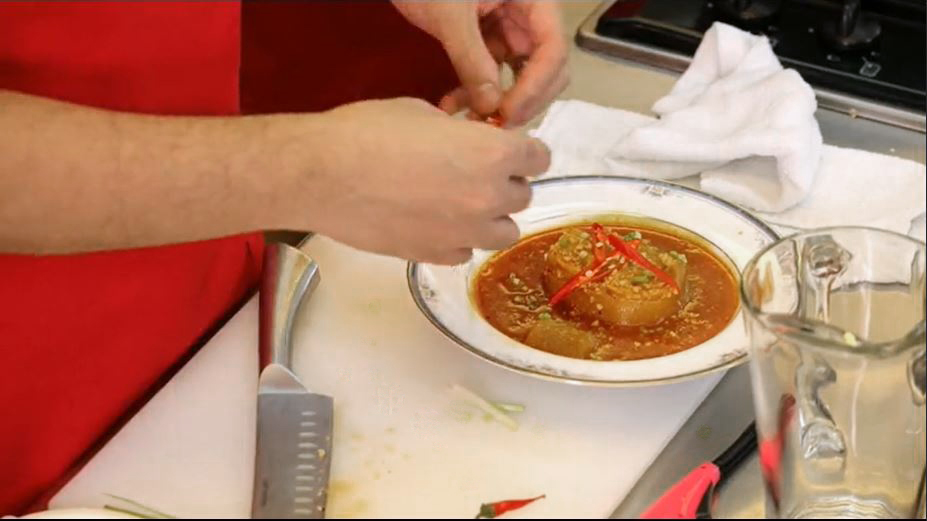
MR. PENDATUN plating the Balbacua

TO MANY people from outside the island, especially Luzon, Mindanao might as well be another country. A cooking webinar by Maya Kitchen last month found commonalities between Davao cuisine and those of the rest of the Philippines.

In its fourth stop for its Philippine Food Tour series streamed on Facebook, The Maya Kitchen featured essayist, food writer, and chef Datu Shariff Pendatun and former president of the Culinary Historians of the Philippines, Pia Lim Castillo, who discussed balbacua and Pakfry (we’ll explain that later).

“We’re talking about a region with a few provinces, Davao City included, of course,” said Mr. Pendatun. “Davao is a city of settlers,” he said, noting how various peoples, those from indigenous cultures as well as those from regions like Cebu, have made Davao their home.

“If in Luzon, there’s really a proclivity for bulalo (beef shanks in a bone broth) and lomi or mami (noodle soups), and all these things, when you go south to the Visayas and Mindanao, people have a knack for something they call balbacua.”

According to Ms. Castillo, balbacua comes from the Mexican barbacoa, itself transplanted into North America as barbecue. This used off-cuts like offal and trotters. “These are not the likely parts that you would use for most cuisines. But the Filipinos, we like to use that,” she said, noting the use of trotters in dishes like kare-kare (braised peanut stew). “You’ll get a very gelatinous soup that tastes really good.”

Mr. Pendatun said that for this recipe, they used ox trotters. To clean it and eliminate hair strands from the cow, one can use a blowtorch, a flame, or even a razor. This was placed in a pot of water, and some vinegar was poured over it. “The vinegar is not to make it sour. It’s really there to expel whatever odors or whatever things we don’t like about the ox feet,” he said. The liquid from this initial boiling is discarded, and both hosts calculated that in general, the dish would take between two to three hours to make (with TV magic, however, by pre-cooking the trotters, they shaved the cooking time to about 30 minutes).

Mr. Pendatun said that in some parts in the south of the Philippines, for reasons of economy, some families cook the dish with just ox skin. Said Ms. Castillo, “If you do it a day before, you create a dish that has so much gelatin, which is so flavorful.” Mr. Pendatun added ginger, which he pounded instead of slicing it, and he added the same rustic touch with some onions, which he chopped into large chunks. Some lemongrass was also bruised to release more flavor.

“I think the keyword when talking about things Davao, not just cuisine, is rustic,” he said.

The broth had, by this time, turned yellow from the fat. He joked, “You have collagen for the skin, and the fat for the soul.” To this he added annatto (atsuete) powder. “In terms of flavor, I would surmise that powder is just a little bit more intense,” he said, comparing this to using the seeds, which some people prepare by soaking them in warm water or cooking them in warm oil. Annatto seeds, known in Filipino cuisine to impart a fiery red color to dishes, also adds a mild peppery taste.

While the broth simmered, he sprinkled it with a little fried garlic, spring onion, and MSG. Said Ms. Castillo, “You don’t really need it [the MSG] if you cook it slowly and you allow the flavors [to come out].”

“For carinderias (streetside eateries), it’s a shortcut.”

After the broth had finished simmering, the dish was plated and served with another sprinkling of garlic and spring onion, and garnished with sliced chilies.

PAKFRY
“We know Davao is a coastal community, so the dishes that they serve there have a lot of seafood,” said Mr. Pendatun. “Among the seafood that is most prominent in and that Davaoeños love very much is tuna.”

Mr. Pendatun asked Ms. Castillo about what goes into a paksiw (a fish stew). She said that it is fish lightly stewed in vinegar, ginger, and onions, emphasizing that this dish uses no oil. “Some people posit that paksiw is actually like an older form of adobo (a stew of chicken or pork, or both, cooked in vinegar).” However, she did reveal one of her secrets: “Fry that fish the following day, after it has soaked [in the sauce].” It turns out that…that was the very essence of Pakfry, a portmanteau that means a previous day’s paksiw that has been deep-fried.

To Ms. Castillo’s recipe, Mr. Pendatun added star anise and garlic. He also uses tuna tails, an abundant ingredient which is considered an end cut in Mindanao. After the fish had been deep-fried, the simmering liquid is added to it before serving.

“I think it’s a great thing, because it has evolved,” said Mr. Pendatun. —  JL Garcia

Term deposit yields rise on lower demand, rate hike expectations

YIELDS on the Bangko Sentral ng Pilipinas’ (BSP) term deposits climbed on Wednesday as the offer was undersubscribed, with markets anticipating another rate hike by the central bank next week.

Demand for the term deposit facility (TDF) of the central bank totaled P335.344 billion on Wednesday, lower than the P350-billion offering as well as the P390.94 billion in tenders recorded last week.

Broken down, bids for the seven-day term deposits amounted to P196.194 billion, higher than the P180 billion auctioned off by the BSP. However, this was below the P218.96 billion in tenders seen a week earlier.

Accepted rates ranged from 3.38% to 3.6888%, narrower and higher than the 3.25% to 3.65% margin seen in the prior auction. With this, the average rate of the one-week paper rose by 5.34 basis points (bps) to 3.5623% from 3.5089% previously.

Meanwhile, the 14-day papers attracted P139.150 billion in bids, short of the BSP’s P170-billion offering. Demand was also lower than the P171.98 billion in tenders seen on Aug. 3.

Banks asked for yields from 3.48% to 3.75%, narrowing and rising from the 3.4% to 3.725% bond recorded last week. This caused the average rate of the two-week term deposit to increase by 10.39 bps to 3.6762% from 3.5723%.

The central bank has not auctioned off 28-day term deposits for more than a year to give way to its weekly offers of securities with the same tenor.

Both the TDF and 28-day bills are used by the central bank to gather excess liquidity in the financial system and to better guide market rates.

“The results of the TDF auction reveal that eligible participants are pricing in another policy rate hike by the BSP,” BSP Deputy Governor Francisco G. Dakila, Jr. said in a statement on Wednesday.

“At the same time, there is preference for the shorter tenor as the market anticipates the issuance of the retail Treasury bonds towards the end of the month. Looking ahead, the BSP’s monetary operations will continue to be guided by its assessment of the latest liquidity conditions and market developments,” Mr. Dakila added.

Yields on the term deposits were higher after the BSP chief signaled a 50-bp rate increase at the Monetary Board’s Aug. 18 meeting after inflation rose in July, Rizal Commercial Banking Corp. Chief Economist Michael L. Ricafort said in a Viber message.

BSP Governor Felipe M. Medalla last week said the central bank may hike rates by 50 bps at the Monetary Board’s Aug. 18 meeting after headline inflation accelerated further in July.

The Monetary Board last month raised the benchmark interest rates by 75 bps in an off-cycle move, as it sought to contain inflationary pressures. It has raised rates by 125 bps so far since May.

Headline inflation quickened to 6.4% year on year in July, its fastest pace since October 2018, mainly due to soaring prices of food and higher transport costs.

For the first seven months, inflation averaged 4.7%, faster than the 4% seen in the same period a year ago and the central bank’s 2-4% target, but lower than its 5% forecast for the year. — Keisha B. Ta-asan

Use of blockchain, crypto in PHL may grow further

THE adoption of blockchain technology and cryptocurrency is likely to continue growing in the Philippines as people explore more of its use in the financial infrastructure.

Filipino-led blockchain startup Tetrix said in an interview with BusinessWorld that ownership of digital assets may increase as people become more educated about these technologies.

“The crypto ecosystem has grown so much over the past years and there’s a greater demand for building high-throughput applications like gaming, NFT (nonfungible token) marketplaces, and media apps on cost-effective blockchains,” Tetrix Chief Executive Officer Emman Navalan said.

“However, the limitations between blockchains are forcing users to pick which one to use over the other. Tetrix aims to bridge that gap. Tetrix creates a way for many different blockchain networks to seamlessly communicate with each other,” he added.

Blockchain, the technology behind the trading of cryptocurrencies and NFTs, is a distributed database that exists on multiple connected computers.

Often referred to as a distributed ledger, blockchain also allows digital ownership and peer-to-peer transactions.

Mr. Navalan said blockchain can support any development or digital transformation by eliminating redundancies, making processes efficient. It can be used in accounting, financial services, logistics, and arts, as it helps in keeping relevant information secure.

“Potential applications of blockchain are limitless, ranging from storing client identities to handling cross-border payments, clearing and settling bond or equity trades to smart contracts that are self-executing, such as a credit derivative that pays out automatically if a company goes bust or a bond that regularly pays interest to the holder,” he said.

Established in 2020, Tetrix aims to change the way blockchains are designed, utilized, and developed for the digital space.

Using the omni chain interoperability protocol, Tetrix has been helping businesses and developers to implement interchain applications without having to rely on a middleware approach, Mr. Navalan said.

The blockchain startup recently launched Pitaka, a crypto wallet built on top of Tetrix that can transact with multiple networks.

Tetrix is also looking to connect to other blockchain networks and support numerous digital projects such as the central bank digital currency (CBDC) project of the Bangko Sentral ng Pilipinas (BSP).

The BSP has been working on a pilot project to test the use of wholesale CBDCs for large-value financial transactions among selected institutions. It wants to focus on the wholesale aspect of CBDCs as it expects this to have a bigger impact compared to retail use cases.

The project covers areas including policy and regulatory considerations, technological infrastructure, governance and organizational requirements, legal matters, payment and settlement models, reconciliation procedures, and risk management.

The BSP recently said it is on track to conduct a pilot test for its CBDC project by the fourth quarter.

Mr. Navalan said CBDCs can provide the central bank easy access to digital solutions. It can also facilitate faster cross-border transactions as users can directly send digital versions of fiat money.

However, he raised some concerns about the project and urged the BSP to be more specific and clarify limitations for CBDC use.

“Can it be used by anybody like a regular peso? What are the certain limitations? Would you allow them to really transact that in all industries? These are the things that are being questioned in Europe, especially in the United Kingdom,” Mr. Navalan said.

“We have to have clarity. The government should support the idea of not just cryptocurrencies, but Web3 in general. Because what drives cryptocurrency is actually the technology that comes with it because the technology allows trust,” he added.

Web3 refers to the decentralized web and includes both decentralized applications and decentralized finance. Web3 also includes cryptocurrencies, assets, or tokens.

“Without the technology, cryptocurrency will just be trading, sending assets, and nothing more to that. That is something we wouldn’t want to be in moving forward because that would mean you have less adoption, less collection, and everything is going to be inefficient,” Mr. Navalan added. — Keisha B. Ta-asan

Three local companies enter Forbes’ under a billion list

Three Philippine companies — COL Financial Group, Inc., Crown Asia Chemicals Corp. and Eagle Cement Corp. — are among Forbes Asia’s roster of top-performing publicly traded small and midsized firms in the Asia-Pacific region this year.

The annual “Forbes Asia’s Best Under A Billion,” identifies the top 200 companies out of 20,000 publicly listed firms in the region with sales above $10 million and $1 billion. 

The 2022 list used the full-year annual results, based on the latest publicly available figures as of July 11.

“Of note, the list features companies from across the region, spanning industries such as semiconductors, software and services, pharmaceuticals, healthcare and manufacturing,” Forbes Asia said.

COL Financial Group generated $27 million in sales and $412 million in net income, while its market value is pegged at $319 million.

Crown Asia Chemicals recorded $35 million in sales and a net income of $5 million, with a market value of $21 million.

Meanwhile, Eagle Cement registered $434 million in sales and $122 million in net income, with a market value projected at $1.17 billion.

“As Covid-19 restrictions ease across the Asia-Pacific and people adapt to the new normal, this year’s annual Best Under A Billion list highlights the shift to discretionary spending,” Forbes Asia stated.

The list is unranked and companies were selected based on their overall track record for debt, sales and earnings-per-share growth over the most recent fiscal one- and three-year periods and the strongest one-year and five-year average returns on equity.

Through qualitative, screening companies with “serious governance issues, questionable accounting, environmental concerns, management issues or legal troubles” were excluded. 

State-controlled and subsidiaries of larger companies were also excluded and the criteria also ensured a geographic diversity of companies from across the region.

It added that the easing of restrictions has benefitted apparel makers, mall operators, restaurants, consumer electronics and entertainment companies, among others.

The full list can be accessed at www.forbes.com/bub and in the August issue of Forbes Asia. — Justine Irish DP. Tabile

Baristas beware: this machine makes consistent espresso every time

WHEN we trooped off to the SMX Convention Center last week, we thought the Nespresso Iced Coffees Masterclass would take hours. But thanks to the new Nespresso machines, the whole thing wrapped up in 15 minutes.

Nespresso Philippines in-house Coffee Ambassador JR Abril said that he would be teaching us how to make Iced Hazelnut Lattes and Cold Caramel Cappuccinos. He placed ice in each glass, and into the Nespresso Momento Coffee and Milk machine, he added a flat capsule of Nespresso’s Ristretto Intenso. The espresso came out in mere seconds.

The Momento is the Nespresso professional line, which had been in the Philippines prior to the entry of their home use machines.

“What we can expect are dark, deep components,” said Mr. Abril about the coffee pods that he used, which are flattened and are used for the professional machines (the ones for home use are cylindrical). “We don’t want the milk and the other sweeteners to overpower the coffee.” The syrups were added first for the latte, then the milk, then poured over and stirred with the espresso shot. The cappuccino saw syrup first, then the coffee, then topped off with milk foam (Nespresso also offers the milk machines).

That literally looked like Steps 1, 2, and 3, and we wondered how Nespresso machines might affect a barista’s job. Mr. Abril said, “You still have to study the coffee, of course. But as far as the machine goes, it pretty much takes care of itself. You don’t need to put your time into that, but put your time into coffee.”

Asked about the things that can go wrong with using a traditional espresso machine which the Nespresso machine avoids, he answered: “With Nespresso, you don’t have to worry about the right grind size, the right tamp, the right pressure, the right temperature for your water — and also water hardness.” Mineral-rich water can affect the taste of your coffee, and leave mineral deposits behind that can clog up the machine. He said that getting one of those factors wrong when making a coffee can alter the taste, or the look. “Basically, it’s called a bad shot of espresso. When you use a Nespresso machine, it’s super-consistent.”

So, is there a chance of getting a bad shot from a Nespresso machine, ever? “None. There’s a bigger chance of this machine having a capsule lock (that is, the coffee pod discard clogging up the machine) than giving you a bad shot.” — JLG

BSP may raise rates by 125 bps more this year as inflation has yet to peak

THE Bangko Sentral ng Pilipinas (BSP) may hike its key interest rates by another 125 basis points (bps) this year, beginning with a 50-bp hike next week, to curb stubborn inflation, Nomura Global Markets Research said.

Nomura said in a report authored by research analysts Euben Paracuelles and Rangga Cipta that with inflation yet to peak, the BSP may continue raising borrowing costs.

“Because of our forecast that CPI (consumer price index) inflation will stay above 6% before peaking by Q4, we expect BSP to follow up with a 50-bp hike at its next meeting this month, followed by three more 25-bp hikes, taking the policy rate to 4.50%,” Nomura said.

“Given the expected growth downturn next year, we still forecast a total of 50 bp of rate cuts in H2 2023,” it added.

Nomura expects inflation to average 5.1% this year, above the central bank’s 2-4% target and 5% forecast. It said inflation will be driven by high food and fuel prices.

“We also see core inflation picking up, with some signs of second-round effects and stronger demand for wage increases,” it said.

Rising prices may also affect the economy’s expansion, Nomura said.

“We maintain our 2022 GDP (gross domestic product) growth forecast of 6.6%, which is at the lower end of the latest official forecast range of 6.5-7.5% and reflects our more cautious view on surging domestic inflation that is likely to dampen household spending at a time when the labor market recovery is not yet complete,” Nomura said. “For 2023, we expect growth to slow sharply to 3.6%, well below official forecasts of 6.5-8% due to our view of a recession in the US and Europe.”

Besides inflation, it said the Philippines is “vulnerable” to tight global financial conditions due to its current account deficit, which it expects to widen to 4.9% of GDP in 2022 from 1.8% in 2021 and stay high at 4% next year.

“While we have lowered our crude oil price assumption to USD106.2/bbl from USD111.3/bbl, surging global food prices will likely be an offset. Moreover, infrastructure spending remains a priority under President [Ferdinand “Bongbong” R. Marcos, Jr.] as highlighted during his first State of the Nation Address, which should boost capital goods and raw material imports even into 2023,” Nomura added.

BSP Governor Felipe M. Medalla last week said the central bank may hike rates by 50 bps at the Monetary Board’s Aug. 18 meeting after headline inflation accelerated further in July.

Headline inflation quickened to 6.4% year on year in July, its fastest pace since October 2018, mainly due to soaring prices of food and higher transport costs.

For the first seven months, inflation averaged 4.7%, faster than the 4% seen in the same period a year ago and the central bank’s 2-4% target, but lower than its 5% forecast for the year. 

The Monetary Board has raised rates by a total of 125 bps since May, including a 75-bp off-cycle hike last month, amid sustained and broadening inflation pressures exacerbated by a weakening peso due to the US Federal Reserve’s aggressive tightening.

This brought the yield on the overnight reverse repurchase facility or the policy rate to 3.25%. The rate on the BSP’s overnight deposit and lending facilities were also increased by 75 bps, to 2.75% and 3.75%, respectively.

Meanwhile, Philippine GDP grew by 7.4% year on year in the April to June period, easing from the downward-revised 8.2% reading for the first quarter and the 12.1% expansion in the same period in 2021.

This brought the first semester average to 7.8%, faster than the 3.9% growth seen in the same period last year and well above the government’s 6.5-7.5% target for the year.

FISCAL DEFICIT
Meanwhile, Nomura Global Markets Research said the country may see its budget deficit narrow to 6.9% of GDP this year from 8.6% in 2021.

The forecast is “in part due to the Mandanas-Garcia ruling of the Supreme Court that increases fiscal transfers to local governments, which have weak absorptive capacity and therefore could underspend.”

The Mandanas-Garcia Ruling mandates the expansion of the income base for the computation of the national tax allocation for local government units (LGUs) to include not only internal revenue collections but also customs collections.

This assures LGUs with an additional 24% revenue share, aside from the 13.9% increase due to the increase in internal revenue collections.

“Despite his campaign pledges, which included some populist measures, President Marcos Jr. said he will target narrowing the fiscal deficit to 3% of GDP by 2028, helping shore up market sentiment for now,” Nomura said.

As of the first quarter, the budget deficit stood at 6.4% of GDP.

The government aims to reduce the deficit to 7.6% of GDP this year, and further to 6.1% in 2023, 5.1% in 2024, 4.1% in 2025, 3.5% in 2026, 3.2% in 2027, and 3% in 2028. — K.B. Ta-asan

Twitter says loading issues fixed after user complaints

TWITTER, Inc. said on Tuesday it had fixed issues after thousands of users reported that they were having trouble accessing the micro-blogging platform.

More than 27,000 users had reported outage of the service, according to Downdetector.com, a website which tracks outages by collating status reports from a number of sources including user-submitted errors on its platform.

The outage started at 1:50 p.m. ET and had as many as 35,000 reports at its peak.

“We fixed it! We made an internal systems change that didn’t go as planned and have rolled it back. Twitter should now be loading as expected. Sorry about that!” Twitter said in a tweet.

This was the second outage in as many months.

The social media company is in a legal tussle with Tesla boss Elon Musk over his $44-billion takeover deal.

Last month, Twitter users faced a nearly three-hour outage in July, with the San Francisco-based company saying it had some trouble with its internal systems that impacted many globally.

Notorious for outages in its early years, Twitter was known for using its popular “Fail Whale” illustration, which showed a beluga whale being lifted by birds, during such incidents.

Twitter users took to Reddit to complain about the outage, with many users saying all they could see was the Twitter logo when they tried to log in.

“There is no Twitter to find out why Twitter isn’t working,” one user joked on a Reddit channel dedicated to Twitter.

Twitter had suffered another widespread outage in February that it blamed on a software glitch.

Other big technology companies have also been hit by outages in the past year, with a near six-hour disruption at Meta Platforms keeping WhatsApp, Instagram and Messenger out of reach for billions of users in October. — Reuters

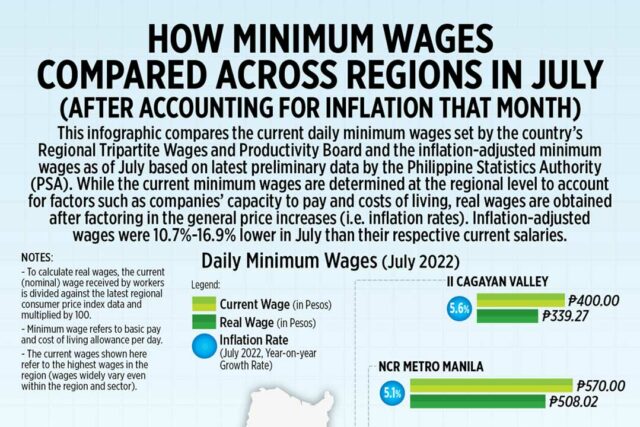
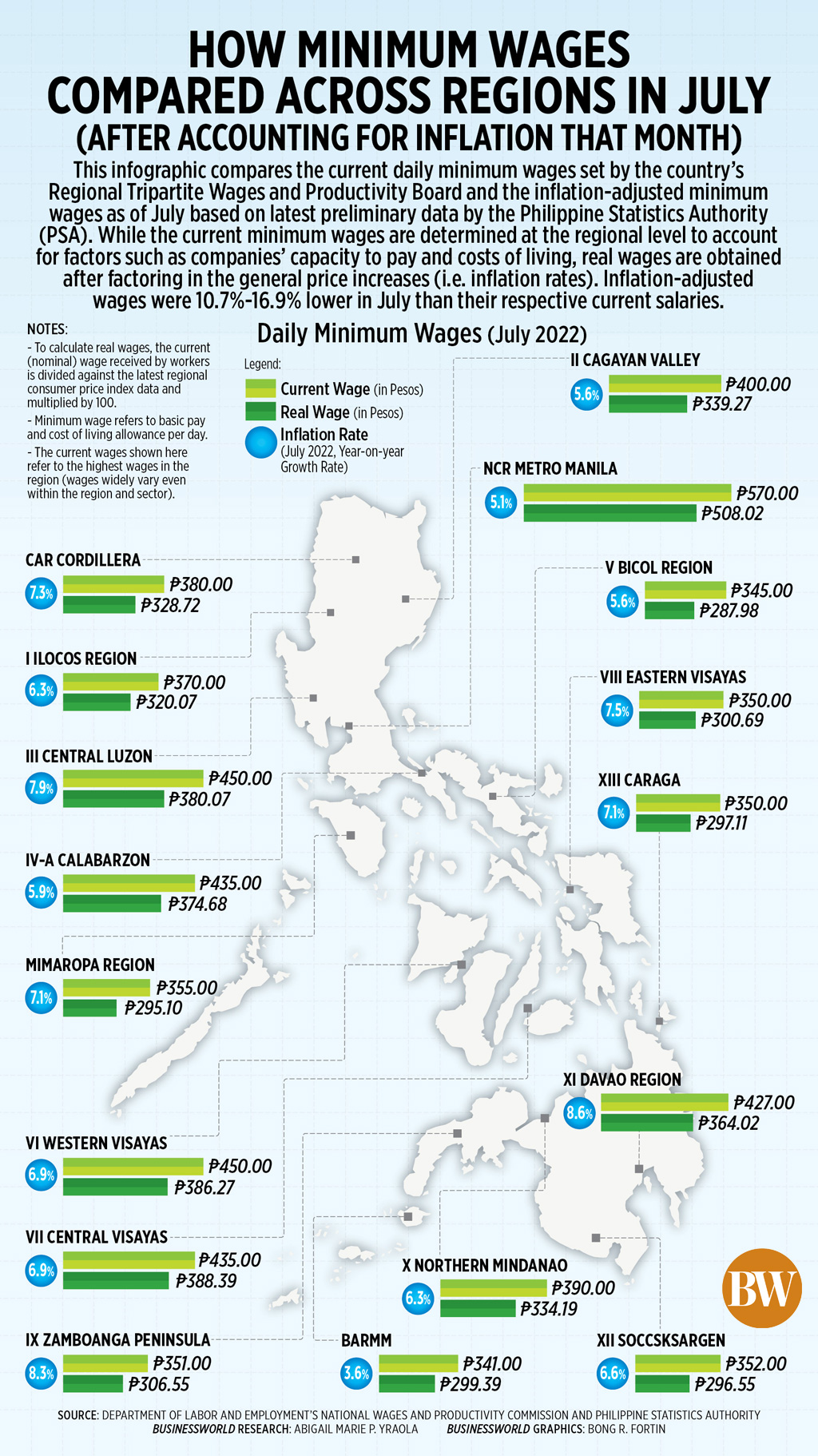
How minimum wages compared across regions in July

This infographic compares the current daily minimum wages set by the country’s Regional Tripartite Wages and Productivity Board and the inflation-adjusted minimum wages as of July based on latest preliminary data by the Philippine Statistics Authority (PSA). While the current minimum wages are determined at the regional level to account for factors such as companies’ capacity to pay and costs of living, real wages are obtained after factoring in the general price increases (i.e. inflation rates). Inflation-adjusted wages were 10.7%-16.9% lower in July than their respective current salaries.

How minimum wages compared across regions in July

D&L Industries’ income jumps 22% to P891M

D&L Industries, Inc. recorded a 22% increase in its net income to P851 million in the second quarter after booking higher sales due to eased mobility restrictions.

“We are on track to at least hit if not exceed [our] pre-Covid high, which was in 2018,” D&L Industries President and Chief Executive Officer Alvin D. Lao said in the company’s first half media briefing.

The company’s sales climbed by 79% to P12.33 billion in the second quarter.

Year to date, the company’s net income rose to P1.63 billion, 17% higher than the recorded net income in the first half of last year. Sales rose by 61% to P22.32 billion in the first half.

In 2018, the company registered a P1.53-billion net income in the first half, 7% lower than this year’s record.

In the first semester of 2022, exports contributed 34% of the company’s sales, higher by 1% than the level a year ago.

Oleochemicals made up 23% of D&L Industries’ exports while its food segment contributed 65% to the total.

Meanwhile, the company spent P660 million in capital expenditure (capex) in the second quarter and a total of P1.63 billion in the first half.

“We expect by this year [that] the capex will be lower than what we spent last year,” Mr. Lao said.

Capital spending last year reached P3.18 billion, which Mr. Lao described as the company’s peak, thus figures in succeeding years will be lower.

“It means that in a couple of years we will be back to that low capex level, so it means a lot of free cash flow will be released,” Mr. Lao said, pertaining to the company’s 2017 to 2018 spending budget.

He said that for the rest of the year, the company is expected to spend no more than P1 billion to P1.1 billion.

By January 2023, D&L Industries will open its biggest project, First Industrial Township in Tanauan, Batangas. 

The expansion project will sit on a 26-hectare property at the special economic zone, and will house plant-specific buildings, machineries, and equipment.

D&L Industries’ principal business activities include manufacturing of customized food ingredients, specialty raw materials for plastics, and oleochemicals for personal and home care use. 

On the stock market on Wednesday, shares in D&L Industries declined by 1.14% or P0.08 to P6.91 apiece. — Justine Irish DP. Tabile

CIMB Bank PH launches virtual card for users of  credit product

CIMB Bank Philippines, Inc. has launched its virtual card powered by its revolving credit product REVI Credit to boost its digital banking services in the country.

Through the virtual card, REVI Credit users can shop online in any Visa-accepted online merchants. This includes e-commerce platforms, deliveries, travel bookings, and more, CIMB Bank PH said.

“When we launched REVI Credit, it was a revolutionary product that enabled Filipinos to get easy and flexible access to credit,” CIMB Bank PH Chief Executive Officer Vijay Manoharan said in a statement on Wednesday.

“The natural next step was for us to make REVI also available for online purchases and transactions, especially as a digital banking services provider. This is also in pursuit of our mission of driving greater digital adoption in the country, which has always been our goal since we started this journey in 2018,” Mr. Manoharan added.

There is no annual fee for the virtual card. The card is also supported by fraud monitoring and prevention tools and capabilities.

Clients can only access the card’s details after keying in their pin number on the CIMB Bank PH app.

“With the launch of our virtual card, REVI Credit users can do just that. They will be able to get the most out of their credit lines and ultimately, use it to fuel their life’s passions and purpose,” Mr. Manoharan said.

CIMB Bank PH launched REVI Credit for all its customers in December 2021.

The service gives clients access to higher credit limits of up to P250,000 and interest rates as low as 1% with no annual fees. It also allows clients to convert a portion of their credit lines into cash or a term loan at any time, making it ideal for emergency needs.

Through REVI Credit, the bank has extended a cumulative credit limit of P4.3 billion since the product’s launch.

REVI Credit users can activate their virtual cards on the CIMB Bank PH app. Clients will also get zero interest on transactions made using their virtual cards when they pay on time this month.

CIMB Bank PH has over 5.7 million clients in the Philippines to date and over one million lending customers.

The commercial bank provides mobile-first digital banking solutions and services. Its total assets as of March stood at P23.191 billion, based on central bank data. — Keisha B. Ta-asan

Dining In/Out (08/11/22)

Wednesday is Taste Teasers Day

WEDNESDAY is Taste Teaser Day at Sheraton Manila Bay’s Unspoken bar as the hotel’s bartenders and mixologist create cocktails and unique beverage concoctions for guests and diners to taste test for free. Held every Wednesday evening at 6:30 and 7 p.m., try the complimentary samplers and mixes ranging from signature cocktail drinks to bite-size bar chow. The selection varies every week and is available for a limited time only. After 7 p.m., indulge in Happy Hour daily until 10 p.m. for P550++ and enjoy any two of the bar’s best-selling cocktails (Gin Basil Smash, Old Manila, Aperol Spritz, Sangria de Malate, Gin & Tonic, Margarita, Mojito, Negroni, and Martini) complemented with the chef’s special pica-pica platter. The evening features live entertainment and acoustic performances from duo Sonny and Sunshine and Franco and Catherine every Friday and Saturday. The Unspoken bar is located at the Main Lobby, Sheraton Manila Bay, M. Adriatico cor. Gen Malvar Streets. Malate, Manila. It is open from 3 p.m. to midnight.


Jollibee Group to relaunch Yoshinoya in PHL

THE JOLLIBEE Group is relaunching the Yoshinoya in the Philippines with the re-opening this August of the Glorietta 1 Mall branch in Makati. The relaunched Yoshinoya will offer a beefed-up menu bannered by the brand’s world-famous bestseller, the gyudon or beef bowl. Featuring thin strips of tender beef, slowly simmered in the brand’s signature gyudon sauce, the gyudon bowl can be enjoyed in many ways, including adding togarashi, red ginger, green onions, and even cheese toppings. Yoshinoya Philippines also offers onsen egg or the traditional Japanese slow-cooked egg with custardy egg white and egg yolk, as an optional topping. Also on the menu are tempura, chicken karaage, chicken teriyaki, and beef yakiniku. These dishes are served over steamed Japanese rice. Yoshinoya will also offer ramen and other side dishes such as gyoza, kani salad, and miso soup, among others. For dessert, customers can enjoy the brand’s Matcha Mochi Ice Cream and Coffee Jelly. To complete the dining experience, all Yoshinoya stores in the Philippines will be redesigned with a contemporary and casual Japanese style that exudes an authentic, light, and welcoming feel. The opening of the new Yoshinoya store officially seals the Jollibee Group’s first foray into Japanese food. The Jollibee Group recently formed a joint venture with Yoshinoya International Philippines, Inc. to establish the Yoshinoya Jollibee Foods, Inc., which will operate the Yoshinoya stores in the country, with plans to expand to 50 stores in the long term.


Flavors of Asia at Happy 8

TRADITIONAL and classic Southeast Asian fare take the spotlight at Newport World Resorts’ new signature restaurant, Happy 8, at the Newport Garden Wing’s 3F Gaming Area. Surrounded by the Newport Club, the restaurant can seat up to 100 dining guests for a family-style dining experience. The modern Asian restaurant’s diverse menu is filled with traditional and classic recipes with a twist, carefully created by its own team of award-winning chefs. Among its wide range of dishes are a selection of dimsum, noodle dishes, and Asian-style stews. These include Steamed Shrimps Dumplings with Charcoal Skin, Stir Fried Malaysian-style Noodles Mamak Mee, Baked Lemongrass Chicken, Slow-cooked Beef with spices and Coconut Milk Beef Rendang, and Wok Fried Pork Belly with Dark Soy Sauce. Happy 8 also offers a selection of fresh seafood dishes. The signature Stir Fried “4 Heavenly Kings” with Scallop is popular among patrons, along with the Deep-Fried Prawn with Salted Egg Yolk.  Meals end with the restaurant’s own take on the Steamed Glutinous Rice balls with Peanut Masachi. For the month of August, Happy 8 is serving up an extravagant whole fried Pompano with Cashew Nuts until Aug. 31 for P1,188 net. For more information on Happy 8 and other Newport World Resorts offers visit www.newportworldresorts.com and follow @newportworldresorts on Facebook and Instagram, and @nwresorts on Twitter.


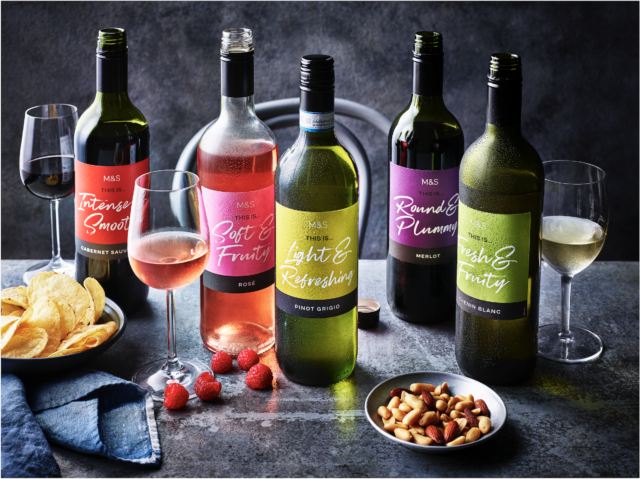
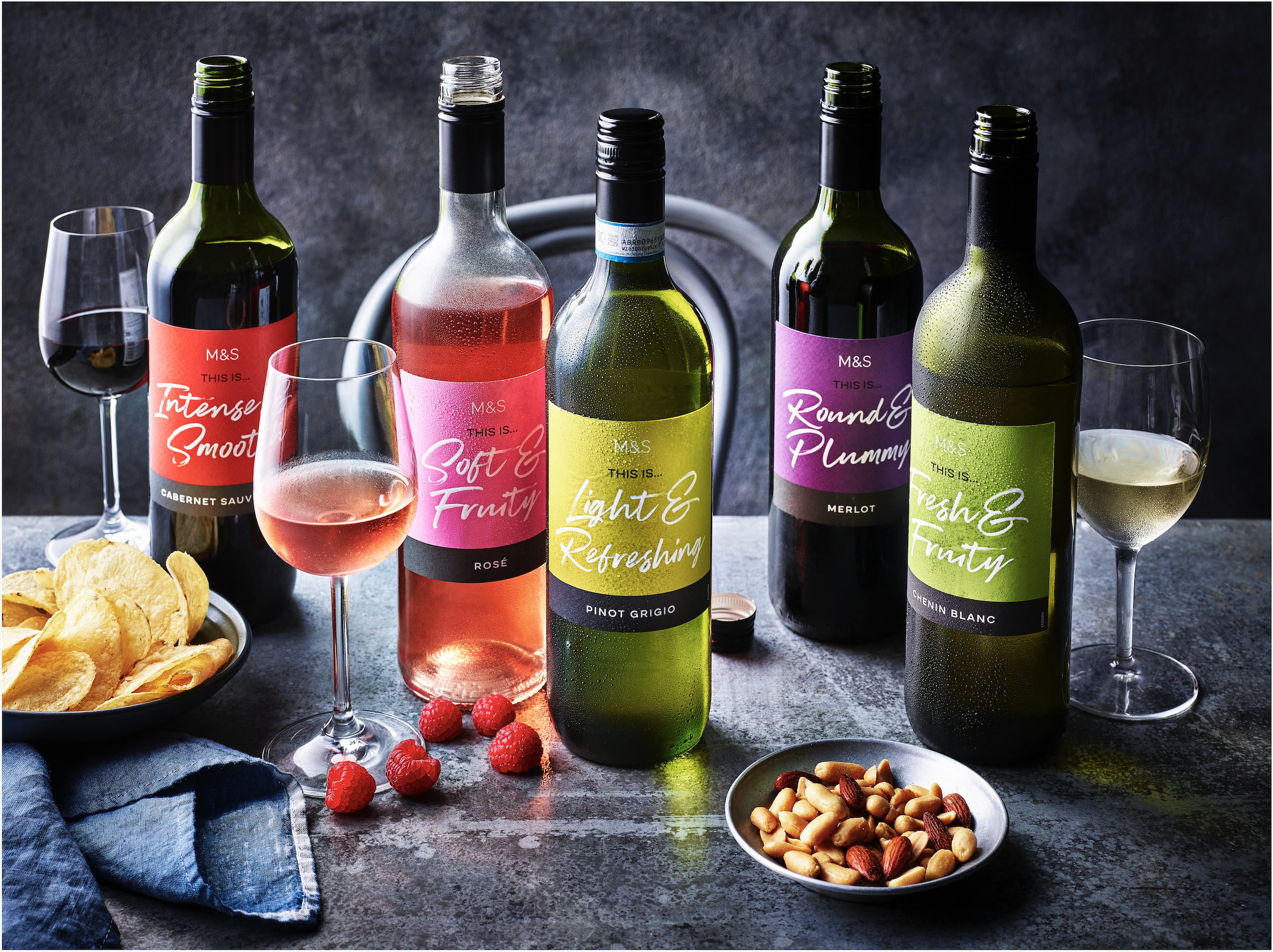
M&S holds food and wine pairing webinar

MARKS AND SPENCER (M&S) will be hosting the “This Is… A TOAST! Anytime, Anywhere” live wine webinar for aspiring wine connoisseurs on Aug. 27, 4-6 p.m. To join, purchase any bottle of M&S wine for as low as P375 in stores or on marksandspencer.com.ph from July 27-Aug. 23. Keep the receipt or order confirmation e-mail and register on thisisatoast.com to receive the webinar link once validated. Join in the Q&As and expect some surprises at the webinar. The webinar highlights Marks & Spencer’s This Is Wine range, a collection of great quality wines with exceptional value, and a wide variety of options ranging from spicy reds to blushing rosé and tropical whites. The live wine webinar is hosted by Hazel Aguilon, and facilitated by certified sommelier Gigi Varua. Recognized as one of the “Must-Know Sommeliers” by Tatler Asia and certified through the Court of Master Sommelier Americas, Ms. Varua has curated a list of M&S wines she will discuss in the webinar. Customers can buy these wines at 20% off until Aug. 23 to more fully experience the wine tasting webinar.


Lula Café to open in Tagaytay

DON TIM Development Corp. (DTDC), in partnership with the group behind Burrow Cafe, announces the launch of its latest endeavor, Lula Café in Tagaytay City. Lula Café is a mountain-view café establishment inside the village clubhouse of Monte Vista Subdivision along the Calamba-Tagaytay Road. The village is a destination in itself, thanks to the spectacular view its location offers. According to co-owner Andie Gamboa, the name of Lula Café is inspired by the view it would offer guests — something she describes as exhilarating or, in Filipino, “nakaka-lula.” Lula Café’s menu is a combination of popular comfort food, healthy options, and main dishes for all types of tastes and palates. Menu items include Ceviche of the Day, Poutine with steak cut fitters, smoked bacon, and seared mushrooms for starters; an array of pizza and sandwiches; and the freshest salads. Its All-Day Breakfast menu includes Filipino and international classics such as Tender Beef Tapa, Eggs Benedict, Smoked Salmon Hash, and French Toast Brioche. The mains range from Pan-Roasted Salmon Fillet with Squid Ink Black Rice Risotto to US Beef Tenderloin with Mushroom and Blue Cheese, Potato Gratin, and Peppercorn House, and Vegetarian Lasagna, among others. For dessert, it has Lula Cheesecake, Calamansi Pie, Kalabasa Cake, Davao Chocolate Cake, and Suman, Mangga, Kasuy. Lula Café is created by the same team that created the popular Burrow Café at Antipolo Beehouse, an underground café that aims to bring guests closer to nature through its lush surroundings. Lula Café is open six days a week except Tuesdays, from 8 a.m. to 4 p.m. It is open for reservations via e-mail at lulacafeph@gmail.com.


Chef JP Anglo takes on PAL in-flight meals

STARTING this August, Business Class passengers on board Philippine Airlines (PAL) flights to North America can now taste the best of Filipino food, courtesy of Filipino chef JP Anglo. The Philippine flag carrier is offering Mr. Anglo’s dishes on its nonstop flights from Manila to Los Angeles, San Francisco, New York, Vancouver, and Toronto. Mr. Anglo is the chef behind the restaurants Sarsa in Makati, and Kooya in Dubai. To launch his special collaboration with PAL, the chef flew from Manila to Los Angeles, and during the flight he prepared and served his signature dishes, Chicken Inasal and Bangus ala Pobre. PAL flies from Manila to Los Angeles twice daily using state-of-the-art B777-300ER aircraft. PAL’s Business Class service offers pre-flight concierge, full-flat beds, and food and beverage selections designed by renowned chefs.


McDonald’s adds lettuce and tomatoes to burgers

MCDONALD’S now serves Fresh ‘N Tasty Burgers — McDonald’s burgers with slices of tomato and lettuce. The Fresh ‘N Tasty Burgers — which include Burger McDo, Cheesy Burger McDo, Crispy Chicken Sandwich, Double Cheeseburger, and Quarter Pounder with Cheese — are now available at McDonald’s branches via dine-in, take-out, drive-through, and McDelivery.


Johnnie Walker introduces limited edition whisky glass gift set

SCOTCH whisky brand Johnnie Walker teams up with urban artist TAXA and glassmaker Dartington Crystal for the Johnnie Walker Blue Label x TAKA Limited Edition Whisky Glass Gift Set, just in time for gifting during the Mid-Autumn Festival. When customizing the artwork for the gift box, award-winning Japanese artist TAXA specifically sought to incorporate the elements of both family reunion and festive gifts. “The pattern of the circle is used extensively, such as the circle at the center embodying the full moon and mirroring the shape of a whisky glass. This represents family reunion and the joy of sharing, mid-autumn mooncakes, and the circular motion of dragon dances. This is a continuation of the meaning behind my previous gift box — an artistic representation of a gift that comes from the heart,” said TAXA in a statement.