Home Blog Page 5190

Metro Pacific allots P282.5M to improve systems in tollways

PHILIPPINE STAR/ MICHAEL VARCAS

A UNIT of Pangilinan-led Metro Pacific Tollways Corp. (MPTC) is setting aside P282.5 million to enhance its electronic toll collection and traffic management systems.

In a press release, MPTC’s subsidiary NLEX Corp. said that the project includes the upgrade of various servers and the installation of new radio frequency identification (RFID) antennas and speed cameras.

“[This] aims to enhance the processing of toll plaza transactions and implementation of traffic regulations,” the company said.

In particular, the company is equipping new antennas that can help to facilitate more efficient RFID transactions in 80 toll lanes, while it will be equipping four-speed cameras in Tarlac- and Subic-bound portions of the Subic–Clark–Tarlac Expressway (SCTEX).

The new speed cameras are seen to help traffic officers in getting real-time data to flag down those who will go beyond the maximum speed limits or 80 kilometers per hour for trucks and buses and 100 kph for cars and sport utility vehicles.

Meanwhile, the company said it will be upgrading several servers at North Luzon Expressway-SCTEX for “improved performance and reliability.”

In 2022, the company upgraded close to 150 toll fare indicators, lane status indicators, traffic control gates, automatic vehicle classification devices, and loop detectors.

“These enhancements are part of the company’s thrust in providing safer and more convenient journeys along with the drive for continuous innovation and customer service excellence,” NLEX Corp. President and General Manager Jose Luigi L. Bautista said.

MPTC is the tollways unit of Metro Pacific Investments Corp., which is one of three key Philippine units of Hong Kong-based First Pacific Co. Ltd., the others being Philex Mining Corp. and PLDT Inc.

Hastings Holdings, Inc., a unit of PLDT Beneficial Trust Fund subsidiary MediaQuest Holdings, Inc., has a majority stake in BusinessWorld through the Philippine Star Group, which it controls. — Justine Irish D. Tabile

Milan Fashion Week: Gucci revisits past to pave new way, sober looks at Tod’s, blooming flowers at Prada

ALBERTA FERRETTI — ALBERTAFERRETTI.COM

MILAN — Italian luxury label Gucci drew from its past to present an eclectic mix of looks at its womenswear show at Milan Fashion Week on Friday, paving the way for the next chapter as it awaits its new creative director.

The brand’s creative team revisited Gucci’s glamorous and colorful looks of the 1990s, 2000s, and 2010s — nodding to silhouettes and creations by past designers like Tom Ford and Frida Giannini. (See the show here: GUCCI Fall Winter 2023 Women’s Collection Fashion Show | GUCCI® )

Gucci parted ways with its star designer Alessandro Michele last November as sales lagged competitors, and the prized brand of French luxury group Kering will welcome its new creative director, Sabato De Sarno, later this year.

A model wearing a tiny metallic bikini top, long black satin pencil skirt and gloves opened the show. Androgynous trouser suits followed as did plenty of faux fur coats in lilac, blue, fuchsia, and yellow. There were furry lapels, oversized knits, footwear, and bags. One coat dazzled with sparkling silver fringes.

“The Gucci Fall Winter 2023 Women’s Collection connects the creative cultures that cross-pollinate the history of the House in an evocative but contemporary proposal,” show notes read.

“A free expression founded in collective memories that blur the lines of time, it is an illustration of the beating heart of Gucci: the ecosystem of designers and artisans whose shared understanding of the House has passed down and evolved from creative to creative for over a century.”

Slim trousers were slit at the bottom front while bustier dresses had exaggerated sides. One model wore a crumpled shirt tucked into a miniskirt, others were dressed in coats with voluminous shoulders.

There were plenty of see-through designs: white embroidered sheer shirts and skirts and black transparent dresses.

Tights were red, orange, lime and pale blue. There were new offerings of the Gucci loafer and the brand’s famed handbags.

At the end of the show, Gucci’s creative team came out to loud applause. Mr. De Sarno will present his first collection for Gucci in September.

TOD’S
At Tod’s, creative director Walter Chiapponi offered a sober collection in earthy tones that played with tailoring. (See show here: Women’s Looks – Autumn-Winter 2023/2024 Collection | Tod’s (tods.com) )

Models wore pea coats as well as long oversized coats, and also appeared in parkas and cropped aviator and elongated bomber jackets. Zipped ribbed tops had leather detailing while round-collared shirts had slightly voluminous shoulders.

Dresses were belted or had draped shoulders.

Called “Italian Feeling,” the collection came in hues of brown, dark green, camel, and cream. Mr. Chiapponi ended the show with several pinstripe looks.

“The idea was to go back to sobriety, with a certain rigidity in the construction,” Mr. Chiapponi told reporters.

“In a way it’s a very masculine show. The feminine touches are the skirts, embroideries… high heels.”

PRADA
Florals bloomed on skirts, shoes, and from the ceiling at Italian designer label Prada’s Milan Fashion Week show.

Designers Miuccia Prada and Raf Simons turned wedding dresses into everyday looks, opening their autumn/winter 2023-24 catwalk presentation with a range of long and short white skirts embellished with white flowers and paired with knits. (Watch the show here: FW 2023 Womenswear | PRADA )

Utility suits became long shirt dresses with trains, while large boxy jackets were matched with slim ankle-length trousers in mainly dark shades.

Models wore shirts with stick-out shoulders, knits and jackets with colorful inside collars, and pastel-colored cigarette trousers paired with ribbed tops.

Kitten heels in a range of colors bore cut out floral patterns.

The collection also featured white puffer and dark asymmetrical miniskirts, colorful printed dresses, buttoned capes and a range of duffel coats.

Last month, the Hong Kong-listed fashion group 1913.F said it had appointed a new chief executive, Andrea Guerra, taking the place of Patrizio Bertelli and Miuccia Prada and easing a transition to the next generation of the founding family.

FENDI, ALBERTA FERRETTI
Milan kicked off its leg of the month-long catwalk calendar with Italian luxury labels Fendi deconstructing masculine tailoring and Alberta Ferretti opting for dark colors at their womenswear fashion shows.

At Fendi, designer Kim Jones added pleated skirt aprons and trains to tailored trouser suits as well as shoulder-baring sleeves to waistcoats. (Watch the show here: Women’s Fall/Winter 2023-24 Fashion Show (fendi.com) )

There were also boiler suits with skirts, slashed knits with halternecks, draped and ribbed dresses as well as Mac coats adorned with sparkling sequined lining.

In show notes, Jones said he was inspired by the way jewelry designer Delfina Delettrez Fendi wore her family label’s archive items. Mr. Jones works alongside Delettrez’s mother and the founding family’s scion Silvia Venturini Fendi, who looks after menswear and accessories at the Rome-based label.

“It’s deconstructed but luxurious. There’s a little nod to punk and my admiration for DIY, but moved on towards something chic,” Mr. Jones said in the notes.

“The first day that Delfina walked into work, she was wearing blue and brown and I thought she looked so great. There’s a chicness but perversity to the way she twists Fendi, which is what I love.”

Mr. Jones’ color palette mainly stuck to pale blue, greys, cream, brown, and black. He added dabs of bright colors with pink and orange dresses.

Accessories included thigh-high boots, a trend also seen at Alberta Ferretti, who opened her show with a strapless grey gown. (See the show here: Alberta Ferretti Boutique Online Ufficiale )

Further grey looks, often paired with long shiny black gloves, followed — from trousers suits to short dresses.

Models wore long velvet gowns, checked or corduroy suits, belted coats and jackets as well as sheer sparkling dresses.

Ms. Ferretti used mainly dark colors — burgundy, black, and brown with bursts of red on some outfits.

Evening looks were all black: sparkling jackets, sheer dresses as well as matched tops and skirts.

Milan Fashion Week wraps up on Feb. 27. — Reuters

Alternergy secures offshore wind service contracts for Tablas Strait project

ALTERNERGY Holdings Corp. through its unit has secured offshore wind service contracts for exclusive rights to explore, develop, and utilize wind resources in Tablas Strait.

In a media release, Knud Hedeager, chief executive officer of Alternergy unit Pililla AVPC Corp., said the service contracts for the offshore wind power projects “were subjected to rigid technical, legal and financial review by the DoE (Department of Energy) since July 2022.”

The renewable energy company said it was awarded three separate wind energy service contracts for the Tablas Strait wind projects which cover about 120,000 hectares.

Mr. Hedeager said Tablas Strait, which separates the provinces of Oriental Mindoro and Antique, is suitable for offshore wind development as identified by a World Bank study.

“Our Tablas Strait Offshore Wind power projects are located in one of the zones identified by a World Bank study that is most suited to offshore wind development. We look forward to proceeding with the pre-development activities particularly technical studies and resource assessment,” he said.

To date, Pililla AVPC has secured four wind energy service contracts. In 2022, it secured a service contract for Calavite Passage in Occidental Mindoro.

Last year, Alternergy announced its partnership with Shell Overseas Investment B.V. to explore the offshore wind potential in Calavite Passage.

“Shell will bring in its global track record, supply chain access, and technical expertise in developing large-scale bottom-fixed and floating offshore wind projects,” Alternergy said.

The renewable energy company aims to develop up to 1,370 megawatts of renewable energy sources such as onshore and offshore wind, solar, and run-of-river hydropower projects. — Ashley Erika O. Jose

Meralco moves to secure emergency power supply deal

MANILA ELECTRIC Co. (Meralco) said it is working on securing a power supply contract after its deal with GNPower Dinginin Ltd. Co. (GNPD) ended on Feb. 25, forcing it to buy from the electricity spot market.

In a Viber message, a representative of Meralco said that it aims to secure another emergency power supply agreement (EPSA). Its previous emergency deal for 300 megawatts (MW) with Aboitiz Power Corp.’s GNPD ran from Feb. 3 to 25. It was the second time that the power distributor forged an EPSA with the power generation company.

Last year, Meralco secured an EPSA with AboitizPower for P5.96 per kilowatt-hour (kWh) from Dec. 15, 2022 until Jan. 25, 2023. Its EPSA with GNPD for most of February was not a fixed-rate contract.

Meralco said that it is in a constant effort to secure contracts to partly cover its 670-MW deal with a unit of SMC Global Power Holdings Corp. that remains suspended.

Its move to secure an EPSA came after its power deal with South Premiere Power Corp. (SPPC), the administrator of the gas-fired power plant in Ilijan, Batangas, was subjected to a writ of preliminary injunction issued by the Court of Appeals.

The 670-MW capacity is supposed to be covered by Meralco’s power supply agreement (PSA) with SPPC, which was agreed upon in 2019 for a period of 10 years at P4.2455 per kWh. However, the deal was indefinitely suspended after the injunction issued by the appellate court in January.

Last year, SMC Global Power sought a temporary rate increase, jointly filed with Meralco, saying that SPPC and another unit San Miguel Energy Corp. incurred a combined loss of P15 billion. The rate increase was meant to recover part or P5 billion of the units’ losses.

The company cited a “change in circumstance” when surging fuel costs breached the price range contemplated during the execution of the contracts with Meralco. However, the Energy Regulatory Commission denied the petition, saying this had no basis as the PSA is a fixed-rate contract.

The power distributor earlier said that it maintains its position that preserving the PSA is in the best interest of its consumers as this would protect them from potentially higher electricity rates.

Meanwhile, grid operator National Grid Corp. of the Philippines (NGCP) has warned of a thin power supply this summer due to increasing demand this year.

The Department of Energy (DoE) has earlier projected that the Luzon power grid is likely to experience deficient reserves, which may result in 12 yellow alerts, a warning on thinning power buffers.

The DoE said that the Luzon grid is expected to experience a peak demand of 13,125 MW in May.

For the Visayas power grid, peak demand is seen at 2,691 MW in September, and for the Mindanao power grid, the peak is expected at 2,395 MW in June.

“Thin operating margins (power in excess of demand) from where ancillary services (power used to manage and balance the grid) are taken, are forecasted for this year,” NGCP said in a media release.

For the Luzon power grid, the power transmission operator said that the months of April to June are expected to experience thin operating margins. A surge in power demand is expected to happen in summer due to higher temperatures.

“While base case projections show no occurrence of yellow or red alerts, there are weeks between March and April where operating margins are below required levels due to higher demand and planned outages of plants,” NGCP said.

“NGCP coordinates with the generation and distribution sectors to optimize and rationalize maintenance schedules to ensure sufficiency, at least on paper, of power supply throughout the year,” it added.

NGCP noted that unplanned shutdowns outside the grid operating and maintenance program might have an impact on the supply-demand situation.

The grid operator has asked policy makers to explore demand-side management to prevent threats of power shortages.

The DoE has earlier said that red alerts that lead to rotating brownouts are unlikely to happen unless a power plant with a capacity of about 100-200 MW would experience a forced outage.

Meralco’s controlling stakeholder, Beacon Electric Asset Holdings, Inc., is partly owned by PLDT Inc. Hastings Holdings, Inc., a unit of PLDT Beneficial Trust Fund subsidiary MediaQuest Holdings, Inc., has an interest in BusinessWorld through the Philippine Star Group, which it controls. — Ashley Erika O. Jose

Mini Cooper S 3-Door: Fun size, no compromise

Small and lovable: The Mini Cooper S Three-Door is a solid performer that stays the truest to the tenets of the brand. — PHOTO BY KAP MACEDA AGUILA

Counterintuition wins

WHILE FILIPINOS, as with many vehicle owners and browsers around the world, are ardent fans of SUVs and MPVs, we apparently have a soft spot for a brand not exactly renowned for space, known as among the main virtues of the aforementioned categories.

This was confirmed by Kidd Yam, who heads the Mini Asia regional office located in Singapore. “(The Philippines) is one of our key markets, and registered one of the highest sales in the region — with close to 31% growth,” he recently said to members of the media gathered at the flagship Mini BGC dealership in Taguig. The absolute figures may not be earth-shattering (130 units moved in 2020, 152 in 2021, and 204 last year — per the Philippine Automotive Dealers Association), but these are encouraging ones — particularly since Minis are neither high-volume nor affordable movers.

And, no surprise too, that Mini owners usually have another vehicle tucked in the garage — typically the “more practical” (read: bigger) ride for the trip to the grocery or for the family outing.

“Mini has always been known for its iconic three-door hatch design. Not many people in the market are aware of the fact that we have a Mini Clubman with six doors, or the Mini Countryman — a full-size SUV. It’s about communicating more effectively to a broader audience that we do have these, but we’ve already seen some success especially in the last two years — with the impressive growth of the Mini Countryman particularly in the Philippines,” continued Mr. Yam.

Yes, the Countryman or Clubman can be that compromise if you want to have your Mini cake and eat it, too. But if you want to experience what the brand is really about, nowhere can the breadth of Mini values be fully felt than in its smallest form factor: the Mini Cooper Three-Door.

Last week, I was reacquainted with just that: the S variant of the model that has, to be honest, steadily grown in size over the generations while truly remaining a staunch and stubborn exemplar of Mini.

Gorgeous in British Racing Green (with racing stripes straddling its bonnet), this Mini Cooper (as an S variant) has a standard piano black exterior touches — with the door handles, side scuttles, and fuel cap finished in black. This design ethos of ditching the traditional chrome extends to the Mini logos on the hood and luggage compartment lid, model lettering and tailpipes, and even surrounds of the headlights, radiator grille, and rear lights — which feature the signature Union Jack design. Even its huge six-spoke, 18-inch wheels are finished in black.

“With the current model revision, the Mini has reached a level of maturity that makes it more exceptional in the small car segment with regard to design, product substance and premium quality, than ever before,” declared Mini Brand Head Bernd Körber in a release. “The Mini is the original that stands out from the crowd and it continues to reinvent itself again and again.”

Lest you misinterpret “maturity,” let me just say that being mature also means knowing how (and when) to have fun. Mini, of course, has veritably owned “fun” — reflected in spirited performance, an exhilarating go-kart-like handling, and an innate ability to make people take notice. But I’m getting ahead of myself.

We start with its vital stats. This Mini measures only 3,876-mm long, 1,727-mm wide, 1,414-mm tall, and bears a wheelbase stretching but 2,495mm. Positioned as a four-seater, there’s an asterisk for the two rear seats because these will only take in smaller passengers. But the correct way to think of this Mini Cooper is as a two-seater with two cargo holds, methinks. And if you drop the rear seatbacks you get a total of 731 liters of space. Not bad.

And getting into the front seats is a lot easier than you’d think — certainly the case if you compare the Mini with full-on sports cars. Part of this is explained by a respectable ground clearance of 143mm. Speaking of the front seats, the Cooper gets firm, well-bolstered ones that keep you and your passenger in place even if you take curves at speed.

Why, pray tell? Well, you’ll be sorely tempted to push this car — because you can, and it welcomes the demand. Despite its diminutive size, the Cooper S boasts a 2.0-liter, four-cylinder Mini Twin Power Turbo mill that blurts out 192 horses (from 5,000rpm to 6,000rpm) and 280Nm (1,350rpm to 4,200 rpm). You can extract performance through a seven-speed dual clutch sports transmission. Three driving modes are available: Green, Mid, and Sport — and these correspond to the readiness of the engine to rev up and push forward. Throughout some 200 kilometers that I drove it, I largely left the setting on “Mid,” and mixed-situation motoring yielded a thirst rate of around 11 kilometers per liter. Not bad — considering I frequently gave in to the temptation of pushing the Cooper S. See that space right there on the highway? Vroom. Yup, we’re there.

And when you push the Mini, it’s a gift that keeps on giving. At speed, the vehicle is surprisingly stable and unperturbed.

By nature, the Mini scrimps on space, but little else. The accoutrements within are fit for a premium vehicle, and here is where you’ll see more of the brand’s affinity with BMW — which acquired it in 1994.

The gear shifter is much like the one found on its German sibling, and the level of clarity and quality of execution on its all-digital instrumentation, and infotainment screen — as well as the knob and switches which help you navigate them — call to mind BMW’s as well. The instrument cluster — housed in a five-inch-diameter oval — is still affixed to the steering column, which helps to keep its visibility consistent regardless of the positioning of the tiller.

The choice of materials within also reflects the more premium price point (shell out P3.15 million for the Cooper S Three-Door), and the ethos again eschews shiny chrome in favor of black accents. Air vents surrounding the central infotainment system have been redesigned, and are flush with the interior surface. The dash design now also crosses the entire width of the instrument panel into the driver’s area.

The trademark circular element in the center console houses the infotainment system, expressed through an 8.8-inch color touchscreen display, with touch-sensitive favorite buttons and piano black high-gloss surfaces. The LED light ring now bears laser engraving, and complements the perception/enjoyment of various functions ranging from the volume of the audio to air-conditioning setting and others. A more advanced and polished-looking graphics display is highlighted by “live widgets,” wireless/wired Apple CarPlay, and a sundry of niceties.

Meanwhile, Driving Assistant with Lane Departure Warning is fitted as standard. The feature, among other things, provides a camera-based speed and distance control, and gives a perceptible vibration in the steering wheel when you unknowingly stray past the markers of your lane.

Countryman and Clubman aside, I can see why people would opt for the smaller Mini at a time when more is, simply put, more. The raison d’être for the Mini Cooper S is simple: It exists to make you, your passenger, and the people who see it, smile. To be sure, you can’t find too many things in this world which distill and capture so much fun in such a compact package.

Forget conventional wisdom. Go small or go home.

How e-wallets bridge the gap between banks and ‘boomers’

FREEPIK

By Ana Olivia A. Tirona, Researcher

WILFRIDO T. GONZALES, a 74-year-old retiree, has no intention of using an electronic wallet (e-wallet) and is strongly against it. However, physically queuing and traveling to places have become quite a challenge for his day and age.

“I don’t use e-wallets or any online financial apps. I don’t intend to use them either. I still go to the bank and line up in bayad centers to pay bills. However tiresome it can be at my age, at least I know that the money is directly handed to the receiver,” Mr. Gonzales said in an interview with BusinessWorld.

However, in the case of 60-year-old interior designer Marite D. Medez, e-wallets have become a game changer for her.

“I only started using e-wallets because I needed them for one of my businesses back in 2022,” Ms. Medez said in a separate interview.

“I didn’t like the idea of using an e-wallet at first. And then one day, I had about 10 customers paying through e-wallets and only my staff had an account at the time. Until I had the app myself, I didn’t need to rely on anything else like going to the bank or cashing cheques,” she said.

The potential of Filipino senior citizens in the digitalization of financial services is often left unnoticed. However, specific barriers exist in e-wallet applications that the untapped segment could overcome and could further the central bank’s goal of digital financial inclusion.

In the Bangko Sentral ng Pilipinas’ (BSP) National Strategy for Financial Inclusion (NSFI) 2022-2028, the underserved and unserved segments of the country are part of the financially excluded persons that it targets to accommodate in their seven-year plan.

“Senior citizens, just like other underserved sectors, are also afforded the financial inclusion benefits from the priority initiatives of the NSFI, including digital finance,” the BSP said in an e-mail interview.

“In fact, one of the four strategic objectives identified in the NSFI is to promote inclusive digital finance as it enables cost efficiencies and innovations that improve the customer experience, affordability, availability, and personalization of welfare-enhancing financial products and services,” it added.

In the 2021 Financial Inclusion Survey (FIS), it was estimated that there are 5.4 million senior citizens. The share of senior citizens that own a smartphone more than tripled to 39% in 2021 from 12% in 2019. Similarly, the elderly population that has access to the internet rose to 26% in 2021 from 8% previously.

Those that hold an electronic money (e-money) account reached 11% of the senior citizens. They remain to be the smallest age group that utilizes e-money, next to those who are 50 to 59 years old (21% share).

Of the Filipino elderly, only 37% have a savings account in 2021 and about 54% of their pension payouts were received through an account. Moreover, 80% of Filipino seniors still made transaction payments as of 2021.

AGE IS JUST A NUMBER
In the research paper titled “Younger Persons are More Likely to Adopt the Mobile Wallet than Older Persons, or are they? The Moderating Role of Age” (2015) by Norman Shaw, the hypothesis that age as a moderator in terms of adopting to e-wallets was proven otherwise.

Results showed that the intention of use was slightly different between the younger generation and the senior citizens, but the age difference was not significant.

Despite this, there is still a gap between the elderly and the digital experience. Both Ms. Medez and Mr. Gonzales face constant struggles in the digital age.

“How to use it at first was the hardest part. I didn’t know what I was doing. It’s still very convenient in my opinion, I pay off all my bills through e-wallets,” Ms. Medez said.

For Mr. Gonzales, he uses his smartphone as his source of daily news, entertainment, and communication.

“I already have difficulty understanding some of the icons and features in my own iPhone, what more with an e-wallet,” he said.

The common ground for both these pain points is the digital experience that could be constantly improved. Thus, user experience (UX) and user interface (UI) are essential ingredients to creating a holistic service for these senior citizens.

UX is the design process developers use to create smooth and purpose-driven software. UI, on the other hand, is the process of creating a pleasurable and easy-on-the-eyes look for a specific application.

Fulltime UX designer Jed C. Cordova points out that a good e-wallet experience depends on the target demographic. His experience involved developing an e-wallet catered to sea-based workers for the smooth transaction of money without the need of stepping foot on shore.

“In my experience, based on the sample of seafarers, we also covered senior citizens as part of the demographic. Most of them are above 60 years old. But even those who are in their mid-50s, most of them are very resistant to e-wallets,” he said in a Zoom interview.

“Simply because they don’t want to learn. That’s the main pain point we have gathered,” he added.

In the design perspective, AIRR Labbs Digital Designer Leila A. Alibudbud emphasizes the importance of a good interface for e-wallets.

“If it’s easy to figure out where things are, that to me is a good interface,” she said in a separate Zoom interview.

An app with a good interface “has icons that are easily understandable and you know what the icons mean at first glance without having to look at the text underneath it. It uses readable font and font size that is readable. Mostly, the little details that go into design still have a huge impact.”

THE MIDDLEMEN
The central bank strives for a “bigger” digital payments ecosystem. With that, BSP supports all initiatives for the advancement of digital infrastructures.

“The BSP also continually broadens its financial literacy and consumer protection programs that cater to the needs of the different segments and age groups of the unbanked,” BSP said.

Likewise, initiatives that are supported by the central bank include digital financial literacy programs and implementation of the consumer protection regulatory framework.

Also, the BSP pushes to collaborate with relevant stakeholders to “develop innovative payment channels that can cater to the needs of senior citizens.” Examples of which are the electronic distribution of pension and social aid through PESONet and InstaPay, the central bank’s regulated electronic fund transfer channels.

Stepping up to the ideal e-wallet experience is G-Xchange, Inc. which offers GCash, and is a subsidiary of Globe Fintech Innovations, Inc. The e-wallet application is also one of BSP’s regulated electronic money issuers (EMI).

GCash Head of Digital Experience Michelle S. Fernandez said the company strives to continuously improve the app while maintaining inclusivity for all 72 million of its users.

“Not everyone is tech-savvy. Not everyone knows how to navigate complex apps. We have to make sure it’s really understandable and friendly to all kasi GCash nga para sa lahat,” she said in a Zoom interview.

For first-time downloaders, GCash ensures that users are familiar with the interface through an onboarding step-by-step process of what the app is and its features. To upskill the digital literacy of those new to the app, video tutorials are also available on their website for ease of use.

Most notably, Ms. Fernandez acknowledges the pain points that exist among senior citizens toward e-wallet usage.

“We do know that [e-wallets] are something that they actually need more. They shouldn’t be going out too much, or exposed to physical cash as it can be a health concern and it can be unhygienic. So, [senior citizens] should be the ones to avail of this service more for their own convenience. We really do consider that when we do our designs. My mom is my main use case because I get a lot of design insights from her,” she said.

GCash started as a Globe Telecom, Inc.’s money transfer service via SMS in 2006. It then transitioned to an app in 2016.

“GCat (the cat mascot of GCash) was still very prominent. The icons were very thin, and fonts were smaller. There was a little bit of a rebrand in 2020. But then, it was really [in 2022] that we changed about 60% of the app visually. A bit of the experience changed as well,” Ms. Fernandez said.

Considering feedback from senior citizens, the GCash team ensures that everyone is included and accessible to the e-wallet service.

“We were actually resizing our fonts and our icons real time as we were speaking with the senior citizens. So, we would check, “How about this? Is this font or icon size okay?” and they would say “Lakihan mo pa (Make it larger).” And, real-time, we would enlarge the font size. Then they would react “okay, tama na ’yan. Nababasa ko na ’yan (that’s good, I can read it already),” Ms. Fernandez added.

Other than the visual and functional aspects of the app’s features, GCash also includes those with physical challenges.

“We also consider the mobility and reachability aside from just the size and color contrast. Some people are colorblind. So that means they won’t be able to tell the difference between some of the shades we use. That’s why we have more contrast. And again, maybe that’s not the most modern way of designing, but it’s a more considerate way of designing,” Ms. Fernandez said.

Thus, it is considerate to understand the target market’s needs. Regardless of age, it all boils down to how the needs for the service can be provided in a simple and all-accepting way.

“Generation Z (those born between 1997 and 2012) are more prone to be able to adapt to changes. But as you get older, you just want to stick to what you know. And you don’t want to be so inconvenienced about relearning things,” Ms. Fernandez said.

“It is our job to adjust for them.”

PSE to host listing sessions for IPO-ready companies

BW FILE PHOTO

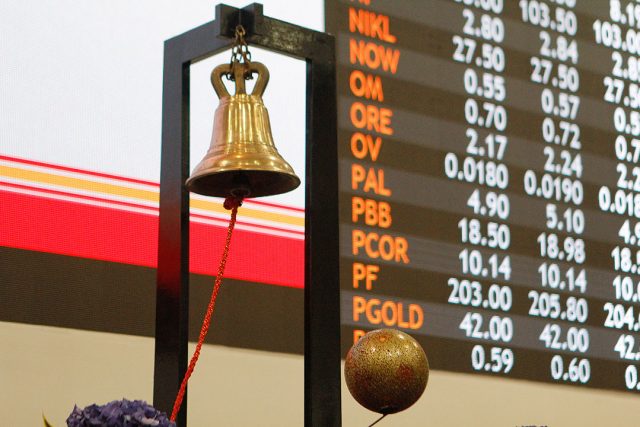
PHILIPPINE Stock Exchange, Inc (PSE) has moved to equip companies with the necessary resources ahead of a potential application for an initial public offering (IPO).

On March 2, PSE is set to host its inaugural Learn IPO Strategies and Tactics (LIST) masterclass exclusively for companies under its Listing Engagement and Assistance Program (LEAP). The training will be conducted in small groups throughout the year.

“PSE LIST was designed for companies that may start the paperwork on their listing applications anytime. We want the officers of these companies to be better equipped during the IPO application process by getting pertinent information directly from the regulators,” Ramon S. Monzon, PSE president and chief executive officer (CEO), said in a press release.

Resource speakers include PSE Issuer Regulation Division Head Attorney Marigel B. Garcia, Securities and Exchange Commission (SEC) Director Vicente Graciano P. Felizmenio, Jr., and Fund Managers Association of the Philippines Board of Senior Adviser Frederico Rafael D. Ocampo.

“PSE LIST will cover topics such as IPO registration process and procedures, due diligence and compliance requirements, among others,” PSE said.

Additionally, Cebu Landmasters, Inc. President and CEO Jose R. Soberano III will talk about “experiences and valuable insights” on preparing for an IPO, transitioning the company from privately owned to publicly listed, and its responsibilities post-IPO.

“For the year, the [exchange operator] will continue to host activities aimed at raising awareness about IPO listing such as the Corporate Connect and Road to IPO programs,” PSE said.

The Corporate Connect event is in partnership with financial advisors and business organizations aimed at gaining awareness and creating interest in tapping the equities market for capital raising.

Road to IPO is a round table discussion featuring executives from private listed companies and stakeholders in the listing process “to give potential listing applicants a preview of what to expect when preparing to go public.”

The exchange will be joining the SEC’s roadshow on capital formation for micro, small, and medium enterprises and start-ups.

“After the successful run in Davao this month, the Exchange will take part in the same activity that will be conducted in Cebu in March and Cagayan de Oro in April to discuss fund raising through the stock market and introduce PSE LEAP to business owners based in the key cities outside of Metro Manila,” PSE said. — Adrian H. Halili

Living magically every day

EVERYDAY clothing brand Uniqlo plans to make one live magically every day in their Spring/Summer 2023 collection.

During a press preview on Feb. 17, Makati’s Whitespace was transformed into a showroom of different looks for a fantasy summer.

A collection in linen sees draped pants with a matching oversized-double breasted jacket, as well as a gathered camisole dress. Linen has also been blended into jeans for a cooler and softer feel. Uniqlo’s Airism line, meanwhile, designed for comfort, sees tank tops blended with silk. For truly magical moments, they have also developed an Airism Anti-Odor Mesh T-Shirt. Water absorption and drying functionality has increased by 1.5 times, greatly reducing discomfort caused by sweat.

Meanwhile, frequent Uniqlo collaborator Ines de la Fressange will launch her collection in two weeks, featuring a meeting between India and France. This will see natural fabrics, floral prints, and classic Madras patterns.

“We focus on finding art, beauty, and creativity in everyday life,” said Georgette Barrera Jalasco, Uniqlo Philippines’ Vice-President for Marketing. — JLG

AgriNurture to push through with P280-M stock rights offering

ANTONIO L. TIU’s AgriNurture, Inc. (ANI) is pushing through with its P280-million stock rights offering (SRO) in 2023, as part of plans to raise P5 billion for expansion projects.

“We have an SRO that will bring in P280 million plus that is a long-term money we can use for capital expenditure,” he said.

When asked when the SRO will be offered Mr. Tiu said: “Soon. Soon we can submit the final prospectus.”

He said the company is just waiting for the decision of its underwriter Abacus Capital and Investment Corp. before the submission.

The SRO, which was first disclosed on Feb. 17, 2018, was said to have been delayed due to the pandemic.

Mr. Tiu said the SRO has an offer price of P1 apiece, with existing shareholders owning 2.5 shares entitled to one stock rights share.

In a disclosure dated Aug. 19, 2021, the company reduced the number of shares it will offer to 288 million from 307.31 million, which ANI said was because of the re-computation of shares eligible for SRO.

Meanwhile, the company is targeting to raise this year about $50 million through the issuance of green bonds, which was previously disclosed but was delayed by the pandemic and Russia’s war on Ukraine.

According to Mr. Tiu, all of the preparations for the two fund-raising activities were done before the pandemic.

“We are targeting the second half for the bonds, which is after the SRO and after the completion of the [entrance] of a strategic investor,” he said.

When asked, how much stake the strategic investor will acquire, Mr. Tiu said that it will just be a minority holding.

Among the company’s expansion plans are a 200,000-hectare corn plantation and the rollout of food terminals across key areas.

“We are looking at food terminals as our agri-infra investment for the future. We need to have a strategic food terminal because that is our marketplace,” Mr. Tiu said.

According to Mr. Tiu, among the food terminal locations being considered in northern Luzon are Subic, Bataan, and Clark.

The fund-raising activities are seen to help ANI reach its goal of becoming the top agriculture company in the Philippines.

“Currently, we’re not the largest. Our topline now is just over P4 billion and this is equivalent to our best years 10 years ago before I suffered my crisis in life. So, it’s a U-shaped recovery. And now that I have put 100% of my attention on ANI, it’s high time for it to take off after the headwinds,” he said.

Just last week, Mr. Tiu announced his resignation as director, president, and chief executive officer in two listed companies — Ever Gotesco Resources and Holdings, Inc., and Philippine Infradev Holdings, Inc. — as he sought to focus on his agribusiness. — Justine Irish D. Tabile

Kia PHL is top performer in Asia-Pacific

Kia Philippines President Manny Aligada delivers a speech. — PHOTO FROM KIA PHILIPPINES

KIA PHILIPPINES recently held a thanksgiving event for its dealer principals who helped the brand achieve “significant milestones” in 2022, as well as to celebrate the company’s fourth anniversary as a wholly owned subsidiary of the Ayala Corp.

In a release, Kia Philippines said that since it was established in 2019, “it has always outpaced the overall industry’s performance in terms of growth and has also rivaled the accomplishments of other leading brands.” Last year, Kia Philippines notched a “record-breaking 34% sales increase” versus the 2021 figure, while outpacing the auto industry’s 26% average.

Also announced at the event was the recognition from Kia Asia Pacific (K-APAC) that Kia Philippines achieved the highest growth rate in the region. It was also the leading independent distributor in retail sales in 2022 in this part of the world. Even in terms of customer satisfaction, Kia Philippines mustered the biggest improvement in the region, based on surveys conducted by K-APAC.

“This string of successes would not have been possible without the dealer principals who have worked tirelessly to reach these milestones,” continued the company. From 30 dealers in 2018, Kia Philippines grew to 42 dealers in 2022, and this nationwide network expansion is continuing. All 42 Kia dealerships nationwide are soon expected to boast refreshed exteriors. By 2023, all will reflect Kia’s revamped interior design aesthetic.

Newly appointed Kia dealers will also display the new corporate identity. This is in line with Kia’s fresh new look showcased by its lineup of stunning vehicles. The top-performing dealer groups who were commended during the event are well-known industry veterans Gateway Motors; Wheels, Inc.; Iconic Dealerships, Inc.; traders of the Laus Group; and Grand Canyon. New partners Autohub Group, Wheeltek, and Prime Legacy were also welcomed during the gathering.

The Kia Philippines story as an Ayala company began in January 2019 when the brand was relaunched with the Soluto as the very first all-new model introduced. Shortly after this, the all-new Stinger and the refreshed Forte were highlighted at the Manila International Auto Show that year. In November of the same year, the all-new Seltos was introduced.

At the height of the pandemic in 2020, the Stonic debuted and has continued to be Kia’s best-selling model in the Philippines. In 2021, together with the new Kia brand identity “Movement that Inspires,” the all-new Sorento was introduced. By early 2022, the all-new Carnival was warmly welcomed by the public and high demand continues to this day.

This March, Kia’s “Movement that Inspires” will continue with the official launch of Kia’s first dedicated battery electric vehicle, the EV6, the “perfect embodiment” of Kia’s technology and innovation.” The Kia EV6 and its supporting charging ecosystem provided by various organizations nationwide represent a pivotal shift into the electric vehicle market.

According to BPI Lead Economist Jun Neri, auto sales will continue to grow at a hefty pace in 2023 after a stellar showing last year. The sustained economic recovery is seen in 2023 due to fewer international and domestic travel restrictions, easier access to consumer credit, a reduced unemployment rate boosting purchasing power and consumer credit scores, an inflation slowdown, and a more stable foreign exchange environment.

‘No one is perfect’: Inevitability of bank glitches

DRAZEN ZIGIC-FREEPIK

By Lourdes O. Pilar, Researcher

THE RECENT GLITCHES in the local banking sector brought significant concern to consumers amid increased enhancement of technologically advanced systems to serve consumers.

As the industry continues to adapt to digital platforms and systems, these banking-related glitches — double-posting of deposits, withdrawals, etc. — are inevitable.

“Cybersecurity and technology-related incidents are not completely avoidable,” the Bangko Sentral ng Pilipinas (BSP) said. “This is due to the inherent vulnerabilities in systems, technologies, processes, and people, as well as the persistent risks from cyber threat actors.”

Based on BSP monitoring, incidents involving banking-related glitches are “minimal” and are generally within the financial institutions’ capability to contain and manage.

“The speed of incident resolution varies depending on the severity or criticality of the incident. BSP-supervised financial institutions (BSFIs) prioritize the remediation of high-risk vulnerabilities within the shortest possible time to minimize further losses or disruptions,” BSP said.

The state-run Development Bank of the Philippines (DBP) said these snags came from human errors.

“Nonetheless, there are layers of control to immediately contain errors and ensure that the bank’s systems are able to continuously serve and maintain its integrity,” Michael O. de Jesus, president and chief executive officer (CEO) of DBP, said.

“DBP also ensures that access to systems and information is strictly limited to internal personnel with a business need to know,” he added. “As such, occurrences of events attributed to an outsider have been seldom to none.”

Bank of the Philippine Islands (BPI) first experienced major glitch in June 2017 when it discovered an error that caused multiple accounts reflecting incorrect balances. The Ayala-led bank shut down its automated teller machines (ATMs) as well as online and mobile app-based facilities as it corrected an “internal data processing error” that doubled postings of transactions conducted between April 27 and May 2, 2017.

In early January 2023, BPI reported that transactions of its account holders experienced another double-debit transaction incident. Transactions made via its automated teller and cash accept machines as well as debit transactions via point-of-sale terminals and e-commerce platforms between Dec. 30 and 31 last year were posted twice.

BPI worked to reverse the duplicate transactions and the issue was resolved immediately.

BDO Unibank, Inc. (BDO), the largest lender in terms of assets, also reported a system problem that forced the lender to deactivate all its online services for two days in June 2017 due to reports that some of its clients lost funds from their accounts. BDO said that some of its cardholders lost cash due to unauthorized transactions from their bank accounts.

In December 2021, BDO and Union Bank of the Philippines (UnionBank) had been under monitoring by the BSP when complaints posted on social media platforms by some bank customers who claimed their accounts were hacked and their funds stolen.

Some Facebook users, who claimed to be BDO clients, posted screenshots of allegedly unauthorized fund transfers from their accounts to UnionBank account to a certain Mark Nagoyo which later confirmed that two or more UnionBank accounts received the unauthorized fund transfers from BDO clients.

Security Bank Corp. also encountered an error in June 2017. The bank reported a delay in posting banking transactions in its systems, but assured the incident has zero effect to the bank accounts of its clients.

UnionBank experienced a three-day systems glitch in June 2021 where its deposit and auto reversal system is not working. The lender blamed the “unplanned maintenance” of a storage appliance.

In a survey disclosed by the Rural Bankers Association of the Philippines (RBAP), the most common technical glitch encountered by rural banks is an interruption in internet connectivity, lasting an average of 11 and a half hours (in the aggregate) over a one-year period.

Affected banks spent approximately P23,000 on average to address these internet service glitches, according to RBAP. The next most common technical problem was downtime in the bank’s core banking system.

ACTIONS AND RECOMMENDATIONS
“It is important for BSFIs to implement sound technology and cybersecurity risk management as laid down in BSP regulations and guidelines,” the central bank said.

BSP also conducts examinations for BSFIs encountering major or high-severity cyber or disruptive events. Supervisory enforcement actions are applied as stated under Section 002 of the Manual of Regulations for Banks, to ensure that BSFIs address the root cause and prevent the recurrence of the incident.

BSP also issued BSP Circular No. 808 or Guidelines on Information Technology (IT) Risk Management for All Banks and Other BSP Supervised Institutions and BSP Circular No. 982 or Enhanced Guidelines on Information Security Management to provide comprehensive framework, set of principles, and basic hygiene practices that the BSFIs must observe to protect themselves from threat actors.

Threat actors are individuals or groups that involve in cyber-attacks or other malicious activities scheming of causing harm or stealing sensitive information in an institution. They can be motivated by financial gain, political or ideological beliefs, or personal gain.

For RBAP, they take a proactive approach to operational risk management by regularly coordinating with member banks on the latest software, hardware, connectivity issues and IT best practices. Through its sister organization, the Rural Bankers Research and Development Foundation, RBAP also conducts IT awareness and security year-round for bank employees.

“Moreover, at least twice a year, RBAP hosts IT security and bank security professionals in short roundtable discussions with banks. RBAP also has a permanent representative to the Joint Anti-Robbery and Cybercrime Committee, a multisectoral body (banks and law enforcement) that convenes to addresses security issues on a quarterly basis,” RBAP Executive Director Rafael Francisco D. Amparo said in an e-mail.

Meanwhile, DBP established a set of mechanisms for detecting system glitches and has an in-placed escalation process to systematically resolve such events based on the gravity or impact of the issue.

The bank also established incident response team which plays a crucial role in minimizing and containing the damage and impact that may arise from a potential information communication technologies-related incident.

“Further, progress resolution for such is periodically monitored and reported to the management as part of its risk management measures. More importantly, the bank ensures that all stakeholders, including its customers, are informed of such issues and disruptions, whenever necessary,” said Mr. De Jesus in an e-mail.

In 2014, the central bank ordered the Philippine banks to complete the shift to Europay Mastercard Visa (EMV) technology, which makes use of microchips rather than magnetic stripes on cards, by June 30, 2018.

The EMV card system is the international standard as it is safer compared to the magnetic strip cards which are prone to skimming — usually done by illegally tapping into ATM terminals to steal client data.

Former President Rodrigo R. Duterte signed Republic Act No. 11765, or the Financial Products and Services Consumer Protection Act, last year as reinforcement to its mandate of protecting the investing public. The law seeks to make sure that mechanisms in line with global best practices are put in place to shield consumers of financial products and services.

The report on the Philippine Financial System for the first semester of 2022 showed that bank deposits grew owing to the economy’s recovery and the depositors’ continued confidence in the banking system, BSP added.

Further, BSFIs continue to enhance their technology risk and cybersecurity management to address evolving threats and risks.

‘NO ONE IS PERFECT’
“We regret the incident and its effect on our customers,” BPI President and CEO Jose Teodoro K. Limcaoco said in a statement posted on various social media platforms in January.

“No one is ever perfect, and when you stumble, you admit and address. We regret the incident and its effect on our customers. No one is ever perfect, and when you stumble, you admit and address,” he added.

BPI said that the bank will continue to review and improve existing banking systems, processes, and controls to address gaps and pursue enhancements to prevent recurrence.

Maybank Philippines, Inc. (MPI) said that these glitches — either caused by system or human errors — can not be eliminated but can be minimized.

“It is important that a proper response and remediation process is in place to immediately identify, rectify and develop preventive actions to address issues. MPI follows these principles through our risk incidence monitoring, reporting and remediation policies,” MPI said in an e-mail.

MPI said that it is important that communication lines are open between the bank and its clients, and that the remediation is done as quickly as possible to minimize losses and inconvenience on the clients’ side.

DBP is committed to continually improve on its existing internal incident response process and procedures.

“However, it is worth mentioning that any deviation from standard operating procedures could result in disruptions and inconvenience to the public when not employed properly, this is why proper and diligent conduct of IT Change Management should remain of utmost importance when employing necessary enhancements and adjustments in the banking system,” DBP’s Mr. De Jesus said.

“Proper layers of controls that involve adequate testing, process reviews, and quality assurance must be properly observed,” he added.

RBAP said that there is inadequate emphasis on cybersecurity, as many rural and cooperative banks are content with core banking system vendor-provided security.

“Considering the sophistication of today’s cybercriminals, there needs to be more focus on upgrading cybersecurity capabilities,” RBAP’s Mr. Amparo said.

London Fashion Week: MONCLER Genius presents new ‘co-creators,’ Burberry stages an ode to British heritage, ‘Unhidden’ brings clothes made for all bodies

Moncler Genius’ ‘The Art of Genius’ at the Olympia London exhibition center — SCREENSHOT FROM MONCLERWORLD.MONCLER.COM/GENIUS

LONDON — Italian luxury brand Moncler unveiled an expansion of its Moncler Genius collaborations project at London Fashion Week, introducing new “co-creators” in the realms of art, music, design, and sport.

The label, known for its puffer jackets, took over the Olympia London exhibition center with its “The Art of Genius” live show, with the likes of singers Pharrell Williams and Alicia Keys, rapper Jay-Z’s entertainment company Roc Nation and brands Mercedes-Benz and Adidas Originals among others having their own space to present their creative concepts.

For Mr. Williams’ “Art of the Terrain” concept, models dressed in khaki camping outerwear walked around a set covered in grass. Others posed in a range of colorful puffer jackets, coats and gloves at the Adidas space.

Earlier this month, Moncler said it was evolving from the Moncler Genius fashion collaborations project it launched in 2018, where guest designers presented different versions of its jackets, “to a platform for co-creation across different industries.”

BURBERRY
Faux fur, oversized coats, and hot water bottles dominated Burberry’s runway as Daniel Lee presented his vision for the British heritage label at London Fashion Week.

Set in a dark marquee in London’s Kennington Park, Mr. Lee delivered a colorful take on Burberry’s classic camel, black, and red check as Burberry steps into a new era under his tenure. (Watch the show here: Autumn Winter 2023 Show | Burberry® Official )

The 37-year-old, Bradford, England-born chief creative officer drew inspiration from the brand’s affinity with exploration and the outdoors in his first collection for the fashion house, according to the show notes.

Silhouettes were oversized and soft around the edges across both women’s and men’s wear. Burberry’s mackintosh-style trench coat was re-imagined in a muted khaki with green faux fur lapels.

English rose patterned tailoring sat alongside chunky rubber boots with an equestrian twist and cozy square toed shearling and faux fur shoes in the Autumn Winter 2023 collection.

There were also feather embellished outfits in autumnal tones and pleated tartan-inspired kilts over trousers.

A revamped version of the Equestrian Knight design was blown up on blankets and dresses in blue and white.

Outfits were accessorized with hot water bottles, fuzzy trimmed bags, and big scarves.

Mr. Lee’s outfits are key to Chief Executive Jonathan Akeroyd’s aim to move the 167-year-old brand more upmarket and attract younger consumers.

Monday’s show follows the unveiling of Burberry’s new logo: a sleeker elongated typeface and a campaign steeped in “Britishness.”

The “Burberry Classics” preview campaign released earlier this month, the first under Mr. Lee’s creative direction, brought back a redesign of the brand’s Equestrian Knight motif and featured British celebrities including soccer star Raheem Sterling, rapper and MC Skepta and actress Vanessa Redgrave.

Mr. Lee previously created a buzz at Italy’s Bottega Veneta with pillowy leather clutch handbags and slip-on heels. He replaced Ricardo Tisci last year.

UNHIDDEN
Fashion designer Victoria Jenkins unveiled stylish and practical clothes made for people with disabilities on the runway at London Fashion Week in a collection intended to address a gap in the market.

The “Unhidden: A New Era in Fashion” event saw around 30 models who all live with a disability, chronic condition or visible difference model floaty dresses with easy access around the waist as well as colorful chiffon tie shirts with adjustable sleeves at footwear brand Kurt Geiger’s showroom.

“Unhidden is an adaptive fashion brand… primarily targeted at inclusion within fashion of people with disabilities,” Ms. Jenkins told Reuters.

Ms. Jenkins, who has reduced mobility, first discovered a gap in the market for clothes designed with all bodies in mind in 2016 during a hospital stay when another patient raised it.

Surprised that only a few brands, including Tommy Hilfiger, offer such fashion for all, she decided to use her previous experience as a garment technologist to set up her own brand.

“When I had this idea, it was like a light bulb and just everything changed,” she said.

“It helps me personally… but also I see the impact around me of people being able to dress how they need to.”

Ms. Jenkins demonstrated a royal blue shirt with pop snaps that open and close easily, as people who have had strokes can struggle with buttons.

“It also has openings all down the arm,” she said, so that anyone going through treatment “can access their arm without taking any clothes off. It’s about dignity.”

Model and content creator Jessica Ping-Wild, who uses a prosthetic leg and struggles to find suitable trousers, said a brand like Unhidden makes all the difference.

“A designer taking into consideration the fact that bodies are different… it’s almost breaking that mold of beauty that has been so ingrained in society for centuries,” she said.

Ms. Jenkins’ collection also includes shirts with longer backs for wheelchair users as well as tailor made suits. She hopes her clothes become even more readily available in the future.

“Diversity without disability isn’t diversity … it feels like it’s the last taboo. People are still scared of the D word. You know, disabled is not a bad word,” she said. — Reuters