DBCC opposes suspension of excise tax on gas, diesel
By Justine Irish D. Tabile, Senior Reporter and Chloe Mari A. Hufana, Reporter
SUSPENDING EXCISE TAXES on diesel and gasoline would only provide limited relief compared to lifting levies on liquefied petroleum gas (LPG) and kerosene as the resulting decline in pump prices would be small, the Department of Finance said.
“The Development Budget Coordination Committee (DBCC) has determined that suspending excise taxes on diesel and gasoline would not likely provide meaningful relief, as any reduction in retail pump prices would be marginal and largely offset by prevailing market dynamics,” said Finance Secretary Frederick D. Go in a statement on Tuesday.
In contrast, suspending the excise taxes on kerosene and LPG would directly ease the burden on Filipino families and small businesses by helping them meet basic energy needs, he said.
On Monday, President Ferdinand R. Marcos, Jr. approved the suspension of excise taxes on LPG and kerosene while keeping levies on gasoline and diesel unchanged.
Republic Act No. 12316 grants the President the authority to suspend or reduce excise taxes on petroleum products. Excise tax is a tax imposed on the production, sale or consumption goods manufactured or produced in the Philippines and to imported goods.
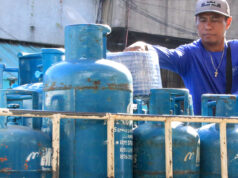
“This relief is focused on the most vulnerable,” said Mr. Go, citing savings of around P36.96 per 11-kilogram cylinder for LPG and P5.56 per liter of kerosene due to the suspension.
The Philippine Statistics Authority’s 2023 Family Income and Expenditure Survey showed that 48% of total kerosene consumption is attributed to the bottom 30% of households, while 55.7% of LPG users come from the bottom 70%.
“This measured and targeted response is designed to deliver immediate relief, ensuring that support reaches those who need it most, while preserving fiscal space to sustain essential public services and respond to an unpredictable global environment,” Mr. Go said.
The Philippines is under a one-year national energy emergency, giving the government expanded powers to secure fuel supplies and shield the economy from rising oil prices amid the war in the Middle East.
FOREGONE REVENUES
The government is anticipating around P4.1 billion in foregone revenue over the next three months due to the suspension of excise taxes on LPG and kerosene, Finance Undersecretary Karlo Fermin S. Adriano told a news briefing at the presidential palace on Tuesday.
But the impact could be partly offset by about P13 billion in additional value-added tax (VAT) collections if crude oil prices average $100 per barrel over the three-month period, he said.
Mr. Adriano said the government would have incurred P43.6 billion in foregone revenues if the President had also approved the suspension of diesel and gasoline excise taxes.
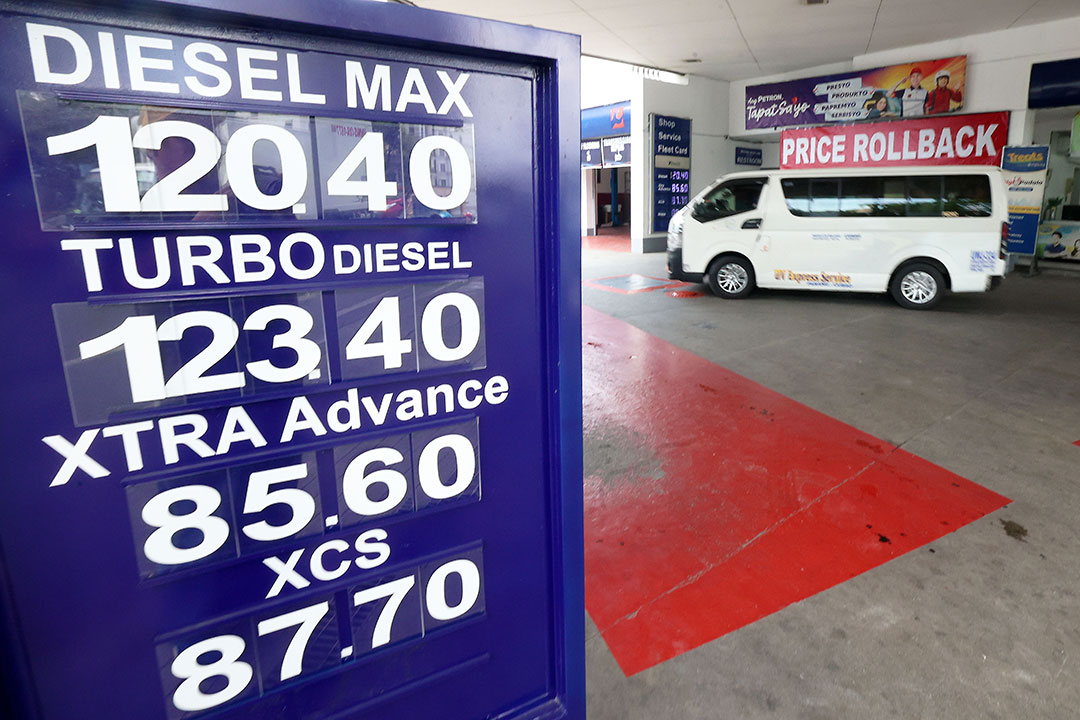
He noted the excise tax on diesel is only around P6 per liter, which would have a “relatively small” impact on the current diesel price of around P100 per liter.
“If we eliminate [excise tax on] diesel, the ones who benefit the most are the ones who consume the most, which is the richest,” Mr. Adriano added in Filipino. “That’s why the DBCC’s recommendation is P10 [diesel discount for public utility jeepneys], which is targeted at those who are most affected by our current situation.”
Francisco Cid L. Terosa, an associate professor and former dean of the School of Economics of the University of Asia and the Pacific, said that food remains the largest household expense, making tax relief for LPG and kerosene more impactful.
“From an economic standpoint, suspending excise taxes on LPG and kerosene is more effective in easing consumer costs because both are directly used by individuals and households on a daily basis,” he said in a Viber message.
While suspending excise taxes on gasoline and diesel could lower transport costs, Mr. Terosa said it would directly benefit those who drive vehicles daily.
Jose Enrique “Sonny” A. Africa, executive director of the think tank IBON Foundation, however, argued that transport costs are embedded in the prices of goods and services.
“The Finance department’s ‘economists’ are being disingenuous. They argued that the excise taxes on diesel and gasoline weren’t removed because poor households don’t consume much of these — unlike LPG and kerosene,” he said in a Viber message.
“But they didn’t mention how most fuel is consumed by commercial users like trucking, inter-island shipping, and other transport services, so the fuel tax is passed on to the price of rice, vegetables, and fish; to jeepney and tricycle fares; and to other goods and services,” he added.
Mr. Africa said that diesel and gasoline account for 73% of petroleum product demand, while LPG and kerosene account for just 13%.
“Oil excise tax collections are some P400 billion annually — there’s a 100% chance that the transport sector or poor families won’t get P400 billion in fuel subsidies,” he added.
According to IBON Foundation’s estimates, the poorest family decile pays P442 monthly in oil excise taxes, while the richest decile pays P834 monthly.
“Measured as a share of income, the burden is two to four times greater for the poorest than the richest,” Mr. Africa said.
John Paolo R. Rivera, a senior research fellow at the Philippine Institute for Development Studies, said the estimated revenue loss from the excise tax suspension on LPG and kerosene is “relatively modest and manageable,” especially as it is offset by stronger VAT collections.
“However, the key consideration is duration. If elevated energy prices persist and such measures are extended, the cumulative revenue impact could become more significant,” he said via Viber.
“The move is defensible as a short-term relief measure, but it highlights the need to balance targeted support with fiscal sustainability.”
Noel M. Baga, co‑convenor of the Center for Energy Research and Policy, said the suspension of excise taxes on LPG and kerosene will provide relief to households and small businesses dependent on cooking fuel.
“The President must now impose price ceilings on diesel and gasoline under the Price Act,” Mr. Baga said in a Viber message.
“That is where the crisis is being felt most directly by most people. Excise tax adjustments reduce prices at the margins. Price ceilings address the core problem.”