Home Blog Page 4721

Novak Djokovic returns to world No. 1; Rafa Nadal out of top 100

NOVAK Djokovic reclaimed the world number one ranking from Carlos Alcaraz after winning his men’s record 23rd Grand Slam title at the French Open, while Rafa Nadal dropped out of the top 100 for the first time in 20 years.

Mr. Djokovic, 36, began his record-extending 388th week at the summit on Monday, jumping two places in the standings after his victory in Paris at the weekend. He beat Spaniard Mr. Alcaraz in the semifinals of the tournament.

Mr. Alcaraz dropped to second place while Daniil Medvedev, who crashed out in the first round, also slid one place down to third. Roland Garros runner-up Casper Ruud remained in fourth place.

Mr. Nadal, a 14-times French Open champion, has endured an injury-plagued season and not played since January because of a hip injury sustained during the Australian Open.

The 37-year-old has dropped from 15th to 136th in the rankings due to his continued absence from the tour. He underwent surgery earlier this month and is expected to be out for five months.

In the women’s rankings, Iga Swiatek retained top spot after defending her French Open title. She has held the ranking since April 2022, moving to the summit following Ash Barty’s retirement.

Aryna Sabalenka, who won the Australian Open in January, had the chance to overtake Ms. Swiatek but lost to Karolina Muchova in the semifinals and remained in second place. French Open finalist Ms. Muchova climbed from 43rd to a career-high 16th.

Reigning Wimbledon champion Elena Rybakina, who withdrew before her third-round match in Paris due to illness, climbed up one place to third.

Jessica Pegula dropped two places to fifth, while Beatriz Haddad Maia became the first Brazilian woman to reach the top 10 following her dream run to the semifinals of the French Open. — Reuters

Golf players still in the dark about Saudi-PGA Tour deal, says Rahm

LOS ANGELES — PGA Tour players feel “a bit of betrayal” about the secrecy that preceded last week’s bombshell announcement that the circuit would partner with Saudi Arabia’s Public Investment Fund and still have plenty of questions about the future, Jon Rahm said.

The world number two from Spain stayed loyal to the PGA Tour while others defected to the Saudi-backed LIV golf circuit for huge paydays, and those players will be eligible to rejoin the tour next year.

“You want to have faith in management, and I want to have faith that this is the best thing for all of us, but it’s clear that that’s not the consensus,” Mr. Rahm said on Tuesday at the Los Angeles Country Club ahead of this week’s US Open, the first major since the news broke.

“I think the general feeling is that a lot of people feel a bit of betrayal from management.”

Mr. Rahm said he could understand the need for secrecy but said other players and he were caught completely off guard by the June 6 announcement, which led to so many incoming text messages that he thought his phone might “catch on fire”.

“It’s just not easy as a player that’s been involved… to wake up one day and see this bombshell,” Mr. Rahm said. “It’s a state of uncertainty that we don’t love, but at the end of the day, I’m not a business expert. Some of those guys on the board and involved in this are.

“So I’d like to think they’re going to make a better decision than I would, but I don’t know. We’ll see. There’s still too many questions to be answered.”

While he may have missed out on the supersized paychecks the Saudi-backed circuit offered, the 2021 US Open winner and reigning Masters champion said he was grateful for the life the PGA Tour has afforded him.

“Whether I agree with it or not, thanks to the PGA Tour, they give me a platform to play golf at the highest level, and after taking advantage of that possibility, I’m in a situation where my family and my kids don’t have to struggle financially ever, and I don’t know how many generations I can help if I do it properly,” he said. — Reuters

Trump pleads not guilty in federal documents case

REUTERS

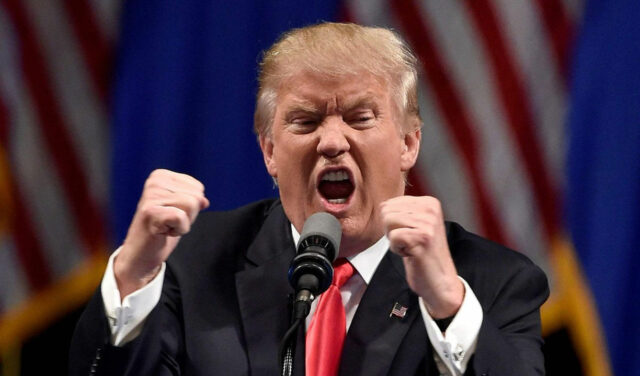
MIAMI — Former US President Donald Trump pleaded not guilty on Tuesday to federal criminal charges that he unlawfully kept national-security documents when he left office and lied to officials who sought to recover them.

Mr. Trump’s plea, entered before US Magistrate Judge Jonathan Goodman in a federal court in Miami, sets up a legal battle likely to play out over coming months as he campaigns to win back the presidency in a November 2024 election. Experts say it could be a year or more before a trial takes place.

Mr. Trump, wearing a blue suit and a red tie, frowned and leaned back in his chair but did not speak during the 47-minute hearing.

He was allowed to leave court without conditions or travel restrictions and no cash bond was required. Mr. Goodman ruled that he was not allowed to communicate with potential witnesses in the case.

Mr. Trump’s aide Walt Nauta, who is also charged in the case, appeared in court alongside Mr. Trump but will not have to enter a plea until June 27 because he does not have a local lawyer. He, too, was released without having to post bond and was ordered not to talk to other witnesses.

It was the second courtroom visit for Mr. Trump in recent months. In April, he pleaded not guilty to state charges in New York stemming from a hush-money payment to a porn star.

Mr. Trump is the first former president to be charged with federal crimes.

Authorities had prepared for possible violence, recalling the Jan. 6, 2021, attack on the US Capitol, but Miami Mayor Francis Suarez told reporters that there had not been any security problems.

Mr. Trump has repeatedly proclaimed his innocence and accuses Democratic President Joseph R. Biden’s administration of targeting him.

“Today we witnessed the most evil and heinous abuse of power in the history of our country,” Mr. Trump told supporters at a rally at his Bedminster, New Jersey golf club, where he returned after the court appearance. “This day will go down in infamy.”

Mr. Trump said he would appoint a special prosecutor to target Democratic President Joseph R. Biden.

Special Counsel Jack Smith, who is handling the case, accuses Mr. Trump of risking national secrets by taking thousands of sensitive papers with him when he left the White House in January 2021 and storing them in a haphazard manner at his Mar-a-Lago Florida estate and his New Jersey golf club.

Photos included in a grand-jury indictment released last week showed boxes of documents stored on a ballroom stage, in a bathroom and strewn across a storage-room floor.

Those records included information about the secretive US nuclear program and potential vulnerabilities in the event of an attack, the indictment said.

The 37-count indictment alleges Mr. Trump lied to officials who tried to get them back.

It also alleges Mr. Trump conspired with Mr. Nauta to keep classified documents and hide them from investigators. Mr. Nauta has worked for Mr. Trump at the White House and at Mar-a-Lago.

REPUBLICAN VOTERS, RIVALS LINE UP BEHIND TRUMP
Mr. Trump’s legal woes have not hurt his standing with Republican voters.

A Reuters/Ipsos poll released on Monday showed Mr. Trump still led rivals for the Republican nomination for the 2024 presidential election by a wide margin, and 81% of Republican voters viewing the charges as politically motivated.

“Back in November I was predicting a civil war in the Republican Party. I had no way of knowing it would turn so quickly into an unconditional surrender,” said Robert Jeffress, a prominent evangelical pastor who was among the Mr. Trump supporters at his New Jersey club.

Most of Mr. Trump’s Republican presidential rivals have lined up behind him and accused the FBI of political bias, in a sharp turn from the party’s traditional support for law enforcement.

Vivek Ramaswamy, one of those candidates, said outside the Miami courthouse that he would pardon Mr. Trump if he were elected.

ESPIONAGE ACT CITED IN CHARGES AGAINST TRUMP
Mr. Trump faces charges that include violations of the Espionage Act, which criminalizes unauthorized possession of defense information, and conspiracy to obstruct justice. He would serve a maximum of 20 years in prison if convicted.

Legal experts say the evidence amounts to a strong case, and Mr. Smith has said Mr. Trump, who will turn 77 on Wednesday, will have a “speedy” trial.

The judge assigned to the case, Aileen Cannon, was appointed by Mr. Trump in 2020 and issued a ruling in his favor during the investigation last year that was reversed on appeal. Goodman, the magistrate judge who conducted Tuesday’s hearing, is not expected to play an ongoing role.

Experts say the complexities of handling classified evidence and legal maneuvering by Mr. Trump’s lawyers could delay a trial by more than a year. His defense team is in flux after two lawyers quit the case on Friday.

In the meantime, Mr. Trump is free to campaign for the presidency and could take office even if he were to be found guilty.

Mr. Trump accuses Mr. Biden of orchestrating the federal case to undermine his campaign. Mr. Biden has kept his distance from the case and declines to comment on it.

In his first presidential run in 2016, Mr. Trump called for imprisoning Democratic rival Hillary Clinton for using private email while serving as secretary of state, leading to chants of “lock her up” at campaign rallies. Then-FBI Director James Comey criticized Ms. Clinton for carelessness but did not recommend criminal charges. — Reuters

US pushing India to seal big armed drone buy for Modi visit

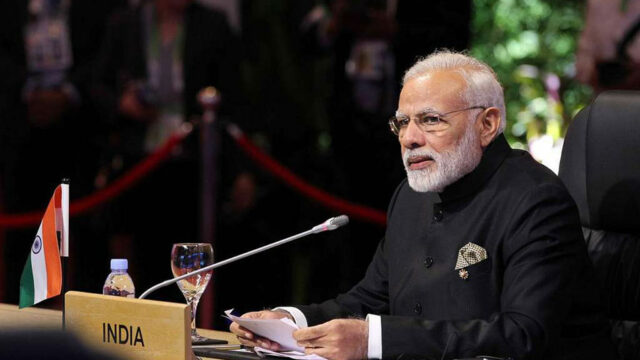
INDIAN PRIME MINISTER NARENDRA MODI — PHILLIPINES GOVERNMENT VIA PICRYL.COM

WASHINGTON/NEW DELHI — Ahead of Indian Prime Minister Narendra Modi’s state visit to Washington, the Biden administration is pushing New Delhi to cut through its own red tape and advance a deal for dozens of US-made armed drones, two people familiar with the matter said.

India has long expressed interest in buying large armed drones from the United States. But bureaucratic stumbling blocks have hampered a hoped-for deal for SeaGuardian drones that could be worth $2 billion to $3 billion for years.

US negotiators are counting on Indian Prime Minister Narendra Modi’s White House visit on June 22 to break the log jam.

Since the date for Mr. Modi’s visit was fixed, the US State Department, Pentagon and White House have asked India to be able to “show” progress on the deal for as many as 30 armable MQ-9B SeaGuardian drones made by General Atomics, two sources said.

Mr. Modi and Mr. Biden are also expected to discuss co-production of munitions and ground vehicles, like armored personnel carriers, while Mr. Modi is in Washington, the sources said.

Spokespeople for the White House, Department of State and the Pentagon declined to comment on the negotiations.

US President Joseph R. Biden has made deepening ties with India a cornerstone of his policy to counter China’s growing influence, placing special attention this year on collaboration between the world’s two largest democracies on advanced military technologies, despite their lack of a formal security alliance.

New Delhi, which often prizes its non-alignment in conflicts between great powers abroad, has frustrated Washington by maintaining some defense and economic ties with Russia after the invasion of Ukraine.

Breaking India’s bureaucratic log jam on drones hinges on an internal meeting to generate an “Acceptance of Necessity” document, an Indian precursor to a formal “Letter of Request” which kicks off the foreign military sale process. As of Tuesday, the sources did not know if the New Delhi had generated the necessary internal document.

“That’s gonna be a decision that the government of India needs to make,” said a senior Biden administration official. “We think it would be good for them to go through with the purchase of MQ-9s. But those decisions are sort of more in the hands of India than they are of us.”

The topic was expected to be on the agenda as Mr. Biden’s national security adviser, Jake Sullivan, arrived in New Delhi on Tuesday to finalize preparations ahead of Mr. Modi’s visit.

As of last week, India’s defense ministry had still not made up its mind about the number of drones it wants to buy, according to a person familiar with the discussions. Earlier, the number was pegged at 30, but that was later revised to 24, and then further down to 18 last month. Sources cautioned that none of the numbers were final.

India is also seeking components of the equipment to be domestically manufactured, something that could complicate any deal.

The Quad grouping of countries — the United States, India, Australia and Japan — all operate, or have operated, the MQ-9B SeaGuardian. Currently, India is leasing MQ-9Bs as part of an intelligence-gathering operation. — Reuters

North Korean hackers stole $100 million in recent cryptocurrency heist — analysts

PIXABAY

WASHINGTON — North Korean hackers stole more than $100 million worth of digital currency in a recent heist affecting users of the Atomic Wallet service, cryptocurrency analytics firm Elliptic said Tuesday.

In a blog post, Elliptic said that more than 5,500 digital wallets were hit by the hackers, who the firm said were part of the North Korean cybercrime gang often called Lazarus.

North Korea’s mission to the United Nations in New York did not immediately respond to a request for comment, although Pyongyang has in the past denied carrying out digital thefts. Atomic Wallet did not immediately return messages seeking comment.

The company, which says it is based in Estonia, has previously said that it “received reports of wallets being compromised” and that it hired another cryptocurrency analytics firm, Chainalysis, to investigate the incident and track down stolen funds. Chainalysis declined comment.

Lazarus has been blamed for a series of brazen thefts targeting cryptocurrency users and organizations. Elliptic said the one that targeted users of Atomic Wallet was the biggest since the hackers allegedly stole around $100 million worth of digital coins from a tool developed by the US cryptocurrency firm Harmony last year.

Earlier this year, the United Nations reported that North Korea had stolen more cryptocurrency assets in 2022 than in any other year. International monitors have said that the stolen money has been pumped into North Korea’s sanctioned nuclear and missile programs.

The Federal Bureau of Investigation did not immediately respond to a request for comment on the latest theft. Estonian police officials did not immediately respond to an email sent after hours. — Reuters

Fewer people trust traditional media, more turn to TikTok for news, report says

SOLEN FEYISSA-UNSPLASH

NEW YORK — The number of people globally who initially access news through a website or app has dropped by 10 points since 2018, and younger groups prefer to access news through social media, search or mobile aggregators, according to a report released on Tuesday.

Audiences pay more attention to celebrities, influencers, and social media personalities than journalists on platforms such as TikTok, Instagram, and Snapchat, the Reuters Institute for the Study of Journalism said in its annual Digital News Report. TikTok is the fastest growing social network in the report, used by 20% of 18- to 24-year-olds for news, up five percentage points from last year. Fewer than half the survey respondents expressed much interest in news at all, down sharply from 6 out of 10 in 2017.

“There are no reasonable grounds for expecting that those born in the 2000s will suddenly come to prefer old-fashioned websites, let alone broadcast and print, simply because they grow older,” Reuters Institute Director Rasmus Nielsen said in the report, which is based on an online survey of roughly 94,000 adults, conducted in 46 markets including the US.

Less than a third of the survey’s respondents said that having stories selected for them based on their previous consumption is a good way to get news, a 6-point decline from 2016, when the survey last asked the question. Yet people still slightly prefer to have their news chosen by algorithms than by editors or journalists.

Trust in the news has fallen by 2 percentage points in the last year, reversing gains made in many countries at the peak of the coronavirus pandemic. On average, 40% of people say they trust most news most of the time. The United States has seen a 6-point increase in trust in news, to 32%, but remains among the lowest in the survey.

Across markets, 56% of people say they worry about identifying the difference between real and fake news on the internet — up 2 percentage points from last year.

The survey found that 48% of people say they are very or extremely interested in news, down from 63% in 2017.

The Reuters Institute for the Study of Journalism is funded by the Thomson Reuters Foundation, the philanthropic arm of Thomson Reuters. — Reuters

PHL consumers favor data sharing but wary of breaches — study

PHILIPPINE STAR/WALTER BOLLOZOS

Filipino consumers ranked first in the Asia-Pacific (APAC) region for their willingness to share data for personalized experiences with trusted brands, while also expecting clear data privacy measures, according to a consumer study.

In Twilio’s recent report on consumer data revolution in APAC, 92% of Filipino respondents were open to share personal data with brands, inclined to tailored consumer experiences. 

On one hand, 31% of consumers in the Philippines expressed the same willingness even amid a major data breach from a brand.

On the other hand, the brand’s transparency and proactiveness in data privacy increased the amount to 68%, the study noted.

“Today, consumers expect brands to protect their data and be upfront about how their data is being used,” said Nicholas Kontopoulos, vice president of marketing for APAC and Japan at Twilio. 

“The combination of skepticism towards third-party data, along with the willingness to share data with trusted brands, is forging the pathway to a healthy and sustainable data-sharing ecosystem in the Philippines and across the region,” he added. 

The government has responded with legislations such as the Data Privacy Act and SIM Card Registration Act to deter digital fraud and cybercrime. 

The central bank also kicked off the year with a “Check-Protect-Report” information drive to educate and protect financial consumers. 

Moreover, the National Privacy Commission (NPC) signed a memorandum of understanding with leading telecommunications companies last May to strengthen urgent data protection measures. 

A joint task force will be established to work toward a ‘joint information dissemination campaign’ on educating the public regarding existing fraud schemes and how to report them, the NPC said. 

More than just legal compliance and cybercrime response, data transparency and privacy initiatives from brands are increasingly becoming business imperatives — standards that drive business value.

64% of Filipino consumers expect brands to provide clear information on how their data will be used, while 69% call for brands to ask for consent first, the study said. 

Twilio’s State of Customer Engagement Report 2023 also noted that 46% of Filipino consumers stopped purchasing from a brand after their expectations for data transparency were not met. 

“Following phases of hype and skepticism, it is evident that clear and concise communication, together with trust, will underpin the next phase of growth for the digital consumer experience,” the study noted. — Miguel Hanz L. Antivola

China e-commerce shipments would lose US tariff exemption under proposed law

NEW YORK – A bipartisan group of US lawmakers planned to introduce a bill on Wednesday to eliminate a tariff exemption widely used by e-commerce sellers to send orders from China to US shoppers, one of the sponsors said.

The exception, known as the de minimis rule, exempts imports valued at $800 or less from tariffs if the items are shipped to individual consumers. The bill would ban such shipments from China immediately upon enactment, sponsor Republican Senator Bill Cassidy said.

Ecommerce sellers such as China-founded, Singapore-based Shein and Temu, a rival owned by PDD Holdings Inc. that operates the Chinese ecommerce site Pinduoduo, are big beneficiaries of the exemption. A federal brief in April said the companies “exploit” de minimis to avoid duties and import illegal items such as those made in China’s Xingiang region with forced Uyghur labor.

A Shein spokesperson said Tuesday the company has no manufacturers in Xinjiang. Temu did not immediately respond to a request for comment.

De minimis shipments have drawn attention at least since 2019, when the U.S. Consumer Product Safety Commission reported it struggled to catch unsafe imports because of the heavy volume of low-value packages. Such shipments rose to 685.5 million in 2022 compared with 410.5 million in 2018, US customs data showed.

The bill’s other sponsors are Republican Senator J.D. Vance and Democratic Senator Tammy Baldwin. It was unclear how much traction the proposal would gain. A separate but similar bill by Democratic Representative Earl Blumenauer failed to pass Congress last year.

Under the bill, countries other than China and Russia could keep the exemption by adopting the $800 threshold for their own tariff-free imports. The bill would only allow private shippers like FedEx, UPS and DHL to transport de minimis packages and exclude postal services. – Reuters

Global level of forced displacement climbs to record 110 million: UN

GENEVA, June 14 (Reuters) – The number of people forcibly displaced around the world has climbed to a record 110 million people, the head of the UN refugee agency (UNHCR) said, with conflicts in Ukraine and Sudan spurring millions of people to flee their homes.

The increase of around 19 million people to 108.4 million by the end of last year is the biggest annual jump on record, UNHCR said in a report released on Wednesday. That number has since risen further to 110 million, mostly due to Sudan’s eight-week-old conflict, the UN High Commissioner for Refugees Filippo Grandi told journalists.

“It’s quite an indictment on the state of our world to have to report that,” he said at a Geneva press conference.

“Solutions to these movements are increasingly difficult to even imagine, to even put on the table,” he said. “We are in a very polarised world, where international tensions play out all the way into humanitarian issues.”

For the two decades before the Syria conflict in 2011, the global level was roughly stable at about 40 million refugees and internally displaced people, the Forced Displacement report showed. But they have risen each year since and have now more than doubled. More than one in every 74 people is now displaced, the report said.

Grandi blamed “the usual package of causes” which he said were conflict, persecution, discrimination, violence and climate change. Of the total refugees and those needing international protection, about half of them came from just three countries: Syria, Ukraine and Afghanistan.

Grandi raised concerns about tougher rules on admitting refugees and push-backs, without naming countries.

“We see increasingly a reluctance on the part of states to fully adhere to the principles of the (1951 refugee) convention, even states that have signed it,” Grandi told Reuters on the sidelines of the briefing.

However, he was upbeat about some developments, namely a deal reached by EU ministers last week on sharing responsibility for migrants and refugees.

“There are issues of some concern. By and large however, I think it’s a positive step,” he said. “We’re so happy that the Europeans agree on something.”

He also praised Kenya which he said is looking for new solutions for the half million refugees it hosts, including many who have fled poverty and drought in the Horn of Africa. – Reuters

Toyota to face governance challenge at shareholder meeting

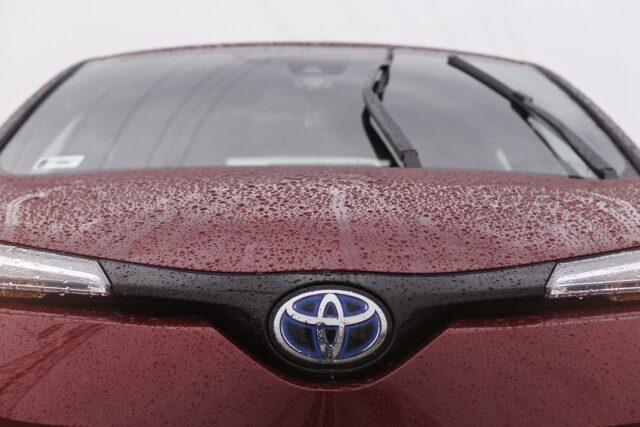
TOKYO – Toyota faces an unprecedented challenge at its annual shareholder meeting on Wednesday, with some pension funds voting against Chairman Akio Toyoda on governance issues, while seeking more disclosures on the Japanese automaker’s climate lobbying.

The world’s top car maker has become a target in recent years for activists and green investors, who say it has been slow to roll out battery electric vehicles (EVs). Now, some investors have taken aim at the independence of its board.

The two largest US public pension funds – California’s CalPERS and CalSTRS – as well as New York City’s pension system and other asset managers have said they are voting against Toyoda.

Two prominent US proxy advisers have flagged concern about Toyota’s board independence.

The step comes as companies across Japan face more pressure from investors, especially on environmental, social and governance (ESG) issues. Shareholders have made a record number of proposals at annual meetings this year.

Governance code revisions make clear that boards are to provide oversight, not just advice, but some Japanese companies “seem reluctant to accept the conclusion” and still regard boards as advisory, said Kentaro Shibata, a lawyer and corporate governance expert.

In some ways Toyota is an unlikely target, having long set Japan’s enviable standard for quality and innovation. It has also done well for investors, returning 62% over the last five years, including dividends, versus a 57% return in the Nikkei 225.

Its shares got another boost after the company unveiled big plans on Tuesday for new battery technology and EV innovation.

The strong financial performance has meant concerns about board independence have largely been shrugged off, said Kazunori Suzuki of Waseda Business School.

“The question is, which is better, a company with perfect governance and bad earnings, or one with a governance framework that is imperfect, but has strong earnings?”

Toyoda, who took over as chair in April after more than a decade as chief executive of the company his grandfather founded, is unlikely to lose his seat.

He enjoys strong support from individual investors and the many suppliers and Toyota group companies among its shareholders.

Last year he was re-elected to the board with 96% support.

“Based on our principles of corporate governance, we don’t think someone should go directly from being chief executive to being the chair of a company. It’s a matter of the independence of the chair,” said Anders Schelde, chief investment officer of Denmark’s AkademikerPension, which is a shareholder.

“That, combined with the global climate issue, makes us vote against Mr. Toyoda.”

The automaker says Toyoda was nominated to the board for his ability to drive the transformation from manufacturing to providing a range of mobility services.

It says its board meets Tokyo Stock Exchange governance standards for independent oversight.

Toyota is taking a multi-path approach towards clean cars that includes hybrids and fuel cells, along with standard EVs.

It says this strategy is better for reducing carbon emissions and more practical, since customer needs, EV infrastructure and clean energy supplies differ by country.

ENGAGEMENT

Denmark’s AkademikerPension has been engaging with Toyota over EV strategy for 2-1/2 years. This year it and two other European asset managers submitted a proposal for greater disclosure by Toyota about lobbying around climate change.

Toyota’s board has recommended that shareholders vote against the resolution.

A Toyota spokesperson said the company believed it had the support of the proposing shareholders for its multi-pathway strategy.

AkademikerPension’s Schelde said he agreed there could be markets where hybrids may have a bigger role to play.

Toyota views the shareholder proposal as an opportunity to eliminate misunderstanding about its strategy, which is also in shareholders’ interest, the spokesperson added.

Last month, proxy adviser Institutional Shareholders Services (ISS) said it viewed three of Toyota’s four outside directors as not independent, citing ties to groups such as the International Paralympic Committee, a Toyota mobility partner, and Sumitomo Mitsui Financial Group 8316.T, its main bank.

Toyota does not disclose the size of its business ties with board nominees’ organisations, preventing shareholders from assessing the “materiality” of those relationships, ISS said.

Toyota’s transactions with those organisations are not material, the automaker said.

Many Japanese companies classify some board members as independent despite existing or past affiliations with the company.

Japan’s non-binding Corporate Governance Code says boards should set up and disclose their own independence standards, which Toyota does not appear to have done, said Nicholas Benes, a governance expert at the Board Director Training Institute of Japan.

The automaker appears to have decided that certain candidates are independent without any yardstick, Benes said.

Rival automakers Nissan Motor 7201.T and Honda Motor 7267.T both have detailed independence guidelines for their directors.

These include limiting their firms’ transactions with the company and excluding people who conduct business for the company’s major creditors.

Speaking to Reuters before Tuesday’s announcement, AkademikerPension’s Schelde said there were also causes for optimism.

“They have a lot of potential if they make the right changes. And that’s also why we remain invested.” – Reuters


SMFI’s farmer’s training kicks off in Rizal

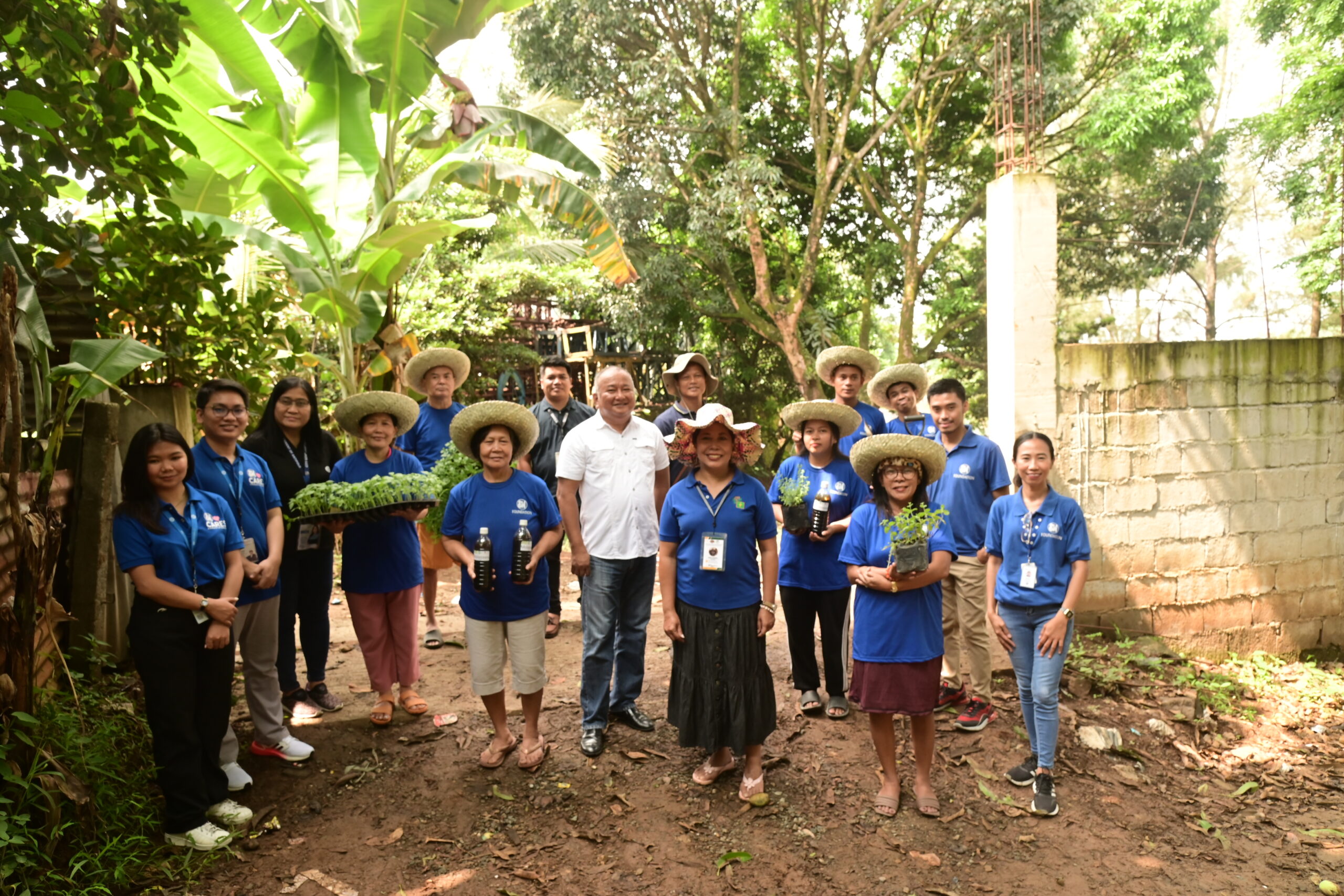
SM Foundation continues to expand the reach of the Kabalikat sa Kabuhayan on Sustainable Agriculture Program (KSK-SAP) to help build empowered farming communities across the Philippines.

Joined by its partners, Moca Family Farm, TESDA, DSWD, DA, DOST, DTI, DOT, SM City Masinag and continuing the recent launches in multiple locations across Calabarzon and other regions in the country, the recently launched SMFI’s KSK-SAP in Antipolo, Rizal, the program aims to produce quality, safe, fresh fruits and vegetables and to to prepare farmers in becoming entrepreneurs.

Farming hope together

Together with its partner school, the KSK-SAP trainees will undergo a two-phase program. The learning sessions kick off with a 14-week training program with topics on modern agri-technology, capacity building, financial literacy, values formation, product development, and market opportunities.

SMFI also assists the farmers in formalizing their respective groups through the assistance of partner government agencies. This phase aims to help increase their learning capacity and enable them to contribute to economic growth.

To cap the first phase, KSK-SAP farmers will join the SM Sunday Market, an SM Supermalls initiative that helps marginalized farmers. By actively engaging in such market opportunities, they will not only receive additional training in the crucial areas of sales and marketing for their agri-businesses but also gain a platform to exhibit their remarkable products. This collaborative effort not only empowers them to earn a substantial income but also enables them to showcase their dedication, talent, and the exceptional quality of their produce to a broader market.

Since its inception in 2007, KSK-SAP has helped more than 28,500 marginalized farmers from rural and urban areas across the country, fueling their entrepreneurial and farming capabilities. As a result, some of the program’s graduates become seasonal suppliers for the SM group and other local markets, and exhibitors at government-led programs such as DTI’s One Town, One Product (OTOP).

SM Foundation’s KSK-SAP is conducted in partnership with SM Supermalls, TESDA, DA, DSWD, DOST, DTI, DOT, and partner farm schools.


Spotlight is BusinessWorld’s sponsored section that allows advertisers to amplify their brand and connect with BusinessWorld’s audience by enabling them to publish their stories directly on the BusinessWorld website. For more information, send an email to online@bworldonline.com.

Join us on Viber at https://bit.ly/3hv6bLA to get more updates and subscribe to BusinessWorld’s titles and get exclusive content through www.bworld-x.com.

FDI plunges on global recession fears

PEXELS-PIXABAY

By Keisha B. Ta-asan, Reporter

FOREIGN DIRECT investments (FDI) in the Philippines fell in March as recession fears and slower global trade dampened investor sentiment, the Bangko Sentral ng Pilipinas (BSP) said on Tuesday.

FDI net inflows declined by 30.7% to $548 million in March from $792 million a year earlier, data from the central bank showed.  These were 47.6% lower than $1.05 billion in February.

It was the lowest monthly FDI net inflow since $448 million in January.

Net Foreign Direct Investment“The decline resulted from lower net inflows across all major FDI components amid investor concerns over subdued global growth prospects,” the BSP said in a statement. 

Analysts attributed the decline in FDI net inflows to recession fears.

“The European Union has entered a technical recession already, which could affect companies’ interest in expanding,” China Banking Corp. Chief Economist Domini S. Velasquez said in a Viber message. “Likewise, conditions remain tight in export-driven economies such as Singapore.”

The gross domestic product (GDP) in the European Union fell by 0.1% in the first quarter after contracting by 0.1% a quarter earlier.

A country enters technical recession when it posts two straight quarters of economic contraction.

ING Bank N.V. Manila Senior Economist Nicholas Antonio T. Mapa said investment pledges made in the past months likely haven’t materialized yet, causing the decline in FDI inflows.

BSP data showed nonresidents’ net investments in debt instruments of local affiliates plunged by 37.2% from a year earlier to $389 million in March.

Investments in equity and investment fund shares also dropped by 7.3% to $159 million.

Nonresidents’ net investments in equity capital, excluding reinvestment of earnings, fell by 11.7% to $94 million.

Equity capital placements inched down by 2.5% to $115 million, while withdrawals surged by 80.3% to $21 million.

The equity placements were mainly from Singapore, Japan and the United States. These were invested mostly in the manufacturing, information and communication, and real estate industries.

Reinvestment of earnings slipped by 0.1% to $65 million year on year in March.

For the first quarter, total FDI net inflows fell by 19.6% to $2.04 billion from $2.54 billion a year earlier.

Foreign investments in debt instruments dropped by 22.1% year on year to $1.58 billion.

Investments in equity and investment fund shares likewise declined by 9.9% to $463 million.

Net foreign investments in equity capital went down by 15.9% to $261 million. Equity capital placements inched up by 6.9% to $377 million, while withdrawals more than doubled to $115 million.

Most of these placements were from Japan, Singapore and the United States.

Reinvestment of earnings dipped by 0.7% to $202 million during the quarter.

“Even with lower net FDI in the first quarter, we remain hopeful that hard-earned structural reforms will eventually boost investments to the country,” Ms. Velasquez said.

The government last year amended the Public Service Act to allow companies in sectors such as telecommunications, airlines, railways and shipping to be fully owned by foreigners.

Other measures that seek to attract more foreign investments into the Philippines include changes to the Retail Trade Liberalization Act and Foreign Investment Act.

“Even if 2023 and the first half of 2024 will be driven by bleaker-than-expected investor sentiment, investment potential in the Philippines remains strong in the medium to long term,” Ms. Velasquez added. 

Mr. Mapa expects a turnaround in investment inflows in the coming months as the Philippine economy remains robust.

Economic output grew by 6.4% in the first quarter, slower than 8% a year ago. Still, it was within the government’s 6-7% target for the year.

The central bank expects FDI net inflows to reach $11 billion this year.