Home Blog Page 461

BSP intervention remains minimal — Remolona

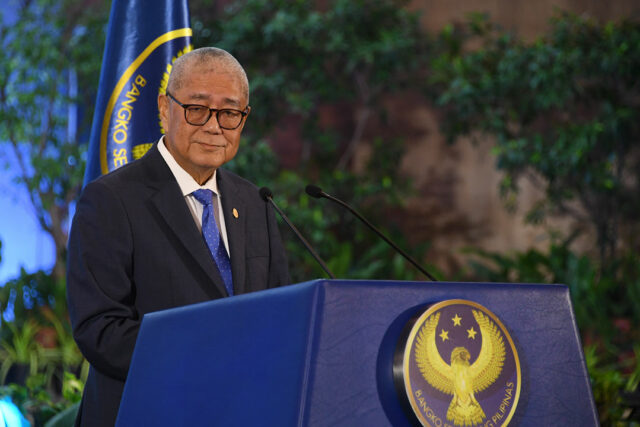
BANGKO SENTRAL ng Pilipinas Governor Eli M. Remolona, Jr. — COURTESY OF BANGKO SENTRAL NG PILIPINAS

THE PESO’S recent slide against the dollar puts pressure on the Bangko Sentral ng Pilipinas (BSP) to intervene to prevent inflationary risks, but its chief reiterated that they remain present in the market only to smoothen out sharp swings.

“There’s tremendous pressure to defend the peso and we’ve resisted that pressure,” BSP Governor Eli M. Remolona, Jr. told reporters on the sidelines of an event on Thursday.

On Wednesday, the peso plunged to a fresh record low of P59.355 versus the dollar. It recovered on Thursday, closing at P59.17.

The BSP chief said they make “minimal” interventions in the foreign exchange market to ensure that movements are not too sharp.

Asked what the central bank would do if the peso touches P60 or P61, Mr. Remolona said: “Wala (Nothing). It’s just a number.” 

“The economics doesn’t warrant defending the peso,” he said. “I feel the pressure, but the economics of it is we shouldn’t. In the old days, I would have not defended the peso, but promoted depreciation when we still had a significant manufacturing. It affects manufactured exports. Our neighbors who are of export-led growth, they like to purposely weaken their currencies.”

Analysts said easing dollar inflows amid weak investor sentiment could put more pressure on the peso and give the BSP a reason to defend it.

“I think there could be a lot more pressure… After the remittances inflows in the seasonal period of December, the source of dollars is probably easing a little bit now, and we don’t see much inflows because I think, based on my conversation with foreign investors, inflows are also lacking because of negative sentiment on the back of the corruption scandal,” Nomura Chief ASEAN Economist Euben Paracuelles said on Money Talks with Cathy Yang on One News on Thursday.

“So, I think there’s some reason to believe that there could be more pressure, and this is why I think BSP is on guard.”

Philippine Institute for Development Studies Senior Research Fellow John Paolo R. Rivera said the BSP’s intervention will likely remain strategic.

“It (the peso’s weakness) increases the likelihood of BSP intervention, but it would likely be measured and tactical than aggressive. The BSP typically steps in to smoothen excessive volatility, especially if peso moves risk feeding into inflation or destabilizing expectations,” he said in a Viber message.

For his part, Bank of the Philippine Islands Lead Economist Emilio S. Neri, Jr. said in a Viber message that the peso’s latest decline has not been excessive enough to warrant heavy intervention.

However, he said that while a recovery to the P57-58 level remains possible, the currency could sink to the P60 level by the second semester as the country’s current account deficit will likely continue to widen, with financial and capital accounts to remain volatile due to external risks.

“The downtrend can persist while the dollar stays firm, but it is not one way. There is upside if inflation remains contained, the BSP maintains policy credibility, and remittances and investment inflows pick up, which could allow a stabilization and modest recovery later on,” Mr. Rivera added. — Katherine K. Chan and Aaron Michael C. Sy

PLDT eyes broader rollout of AI across key sectors

FREEPIK

PLDT INC. is stepping up efforts to expand the use of artificial intelligence (AI) across the Philippines as part of its push to boost participation in the global AI ecosystem and support inclusive digital growth.

“As adoption of AI accelerates across the Philippines, it is crucial to ensure that the benefits of this technology reach as many sectors as possible to enable inclusive digital growth,” the company said in a statement on Thursday.

The Pangilinan-led group said its investments in AI-ready infrastructure include its integrated fixed and wireless networks as well as its hyperscale data center VITRO Santa Rosa.

The 50-megawatt (MW) facility allows enterprises to deploy AI applications without the need to build or manage their own infrastructure.

PLDT Enterprise, PLDT’s corporate arm, is also developing AI use cases for industries such as banking and financial services, insurance, business process outsourcing, healthcare, government and utilities, PLDT Senior Vice-President and Enterprise Business Head Patricio S. Pineda III said.

“With our AI-ready ecosystem and our investments in infrastructure and in our people, the PLDT Group is ready to help more Filipino communities, businesses, and enterprises embrace and harness the benefits of AI to boost productivity, competitiveness and innovation,” he said.

Meanwhile, PLDT’s wireless unit Smart Communications, Inc. is working to bring AI solutions to micro, small and medium enterprises, as well as government agencies, schools and universities, and nongovernment organizations.

Last year, Smart deployed remote-controlled robotic arms at cell site towers to support network optimization and improve coverage in underserved areas, the company said.

PLDT shares closed at P1,279 apiece, up 1.27% or P16, on the Philippine Stock Exchange.

Hastings Holdings, Inc., a unit of the PLDT Beneficial Trust Fund subsidiary MediaQuest Holdings, Inc., holds a majority stake in BusinessWorld through the Philippine Star Group. — Ashley Erika O. Jose

Stuff to Do (01/09/26)


Attend Kundirana’s first concert for 2026

KUNDIRANA, the award-winning music ministry of La Salle Green Hills (LSGH), is set to hold its first concert of the year this weekend. Performances are scheduled for Jan. 9 and Jan. 10, with shows at 7 p.m. They will be held at the Br. Donato Center for Performing Arts at La Salle Green Hills, Ortigas Ave., Mandaluyong City. For ticket (P150) reservations, e-mail is.principal@lsgh.edu.ph.


Watch Tron: Ares on Disney+

THE action-adventure film Tron: Ares has arrived on Disney+. It is the newest chapter in the Tron saga, directed by Joachim Rønning. The film centers on the clash between artificial intelligence and humanity, following the release of a highly sophisticated program named Ares which is sent from the digital world into the real world on a dangerous mission. It is also the latest film available in IMAX Enhanced on Disney+, featuring IMAX’s exclusive expanded aspect ratio.


Play at Venice Grand Canal Mall’s Timezone

TIMEZONE has just opened new attractions and an expanded space in its Venice Grand Canal Mall branch in Taguig. The new venue features attractions suited for all ages, including Short Lane Bowling, a virtual reality paraglider, billiards, a deluxe music room, and a larger prize shop with more redemption items. It is located on the second floor of the mall.


Watch The Pitt season two

MAX ORIGINAL series The Pitt has premiered its second season, starring Emmy winner Noah Wyle. The series sets each season as a single 15-hour shift of the emergency department staff as they attempt to overcome the hardships of working at the fictional Pittsburgh Trauma Medical Center, all while having to navigate staff shortages and underfunding. Each episode covers approximately one hour of the shift. Season two is now available on HBO Max.


Attend Anko’s next decluttering workshop

WHILE Anko’s decluttering and storage workshop, scheduled for Jan. 11 at their TriNoma branch in Quezon City, is now fully booked, interested attendees can sign up for the next session instead. Those who register on their membership app can be added to the priority list for the next event, with details to be announced. They will also receive event highlights and tips shared by Christine Dychiao during the first workshop.

Pueblo de Oro eyes Cagayan de Oro expansion

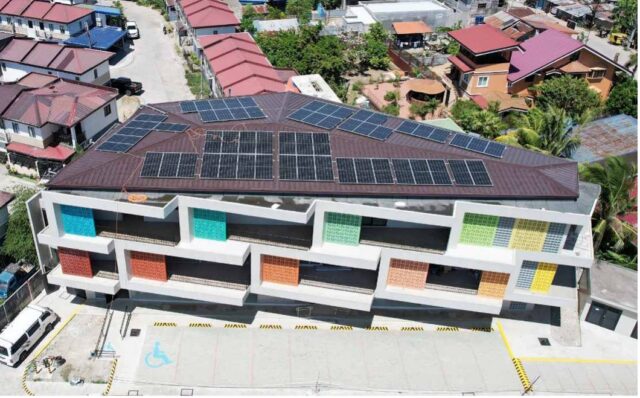
Solar panels at Pueblo de Oro Townsquare

PROPERTY DEVELOPER Pueblo de Oro Corp. (PDO) plans to expand its real-estate footprint in Cagayan de Oro City, citing the city’s strong macroeconomic fundamentals, rapid urbanization and growing appeal as a regional investment hub.

“With strong economic fundamentals, a resilient middle class, expanding infrastructure and visionary leadership, Cagayan de Oro is positioned to become the Philippines’ next major metropolitan center,” it said in an e-mailed statement.

PDO Chairman and Chief Executive Officer Guillermo D. Luchangco said the company’s upcoming residential and mixed-use projects in the city are expected to strengthen its competitiveness as a destination for long-term investments.

Among its key developments is Southridge, a 31-hectare township envisioned as a “Silicon Valley-type” community. The project is set to feature office spaces, business process outsourcing facilities, residential units, leisure areas and retail components.

PDO is also studying the construction of a World Trade Center hall within the township to support business events and exhibitions.

PDO is likewise developing Masterson Mile North, a high-end residential project consisting of five towers in Cagayan de Oro City. The towers will range from 22 to 26 storeys, with the entire project carrying an estimated development cost of P13.5 billion. The complex was designed by Gensler and Associates, a San Francisco-based architectural firm.

Cagayan de Oro City in Misamis Oriental in southern Philippines, has emerged as one of Mindanao’s most competitive investment centers, driven by sustained economic growth and a diverse talent pool. In 2024, London-based think tank Oxford Economics identified the city as the sixth-largest urban economy in the Philippines.

Data from the Philippine Statistics Authority showed that Cagayan de Oro City posted a real gross domestic product growth of 6.8% in 2024, accounting for 28.3% of Northern Mindanao’s total economic output, making it the region’s biggest contributor.

PDO said these factors have increased the city’s attractiveness to property developers, foreign hotel operators and outsourcing firms, citing assessments by Colliers Philippines.

The company also cited infrastructure developments supporting the city’s growth, including the planned expansion of Laguindingan International Airport, which is expected to reinforce Cagayan de Oro’s role as Northern Mindanao’s main gateway.

The proposed creation of the Metro Cagayan de Misamis Development Authority (MCMDA) is seen as another catalyst for urban development. The proposed body aims to coordinate transport, zoning, sanitation and public safety across the metropolitan area.

House Bill No. 5362, which seeks to establish the MCMDA, remains pending at the committee level.

Beyond Cagayan de Oro, PDO has housing projects in Batangas, Pampanga and Cebu. The company is the property development arm of Investment & Capital Corp. of the Philippines, a medium-sized group with interests spanning investment banking, venture capital and real estate. — Beatriz Marie D. Cruz

One Battle After Another and Sinners lead Hollywood’s Actor Award nominees

One Battle After Another (2025)

LOS ANGELES — The action-packed political satire One Battle After Another and the vampire tale brimming with blues music Sinners, topped the list of nominees unveiled on Wednesday for Hollywood’s Actor Awards, formerly known as the Screen Actors Guild (SAG) Awards, a key foreshadowing of films likely heading to the Academy Awards.

Both films will compete for the SAG honor of best movie cast. Their competitors are the Shakespeare-inspired drama Hamnet, the ping-pong picture Marty Supreme and the Gothic science fiction film Frankenstein.

The Actor Awards are closely watched because winners are chosen by the Screen Actors Guild-American Federation of Television and Radio Artists (SAG-AFTRA) actor union members, the largest voting bloc for the Oscars, which will be awarded in March.

Nominated SAG actors include Leonardo DiCaprio for his role as Bob in One Battle After Another, Michael B. Jordan for his dual roles as twin brothers Smoke and Stack Moore in Sinners, and Jessie Buckley for her role as Agnes Hathaway in Hamnet.

In SAG’s TV categories, dark comedy series The White Lotus will compete with medical drama The Pitt and psychological thriller Severance.

Meanwhile, culinary comedy The Bear will compete with The Studio, Abbott Elementary, and Hacks.

The Emmy-winning limited series Adolescence also received several nods.

The awards ceremony was renamed in January 2025.

Winners of the Actor awards will be announced on March 1 at a ceremony that will stream live on Netflix.

In 2025, organizers of the SAG awards canceled a planned live announcement of the SAG nominees because of wildfires in Los Angeles. Nominations were announced online instead.

President of SAG-AFTRA, Sean Astin, recognized the impact of the fires before Wednesday’s nominations began.

“I want to acknowledge that this is the one-year anniversary of devastating Los Angeles wildfires,” he said. — Reuters

Buying from the broadsheets

PHILIPPINE STAR/RYAN BALDEMOR

Some 13 years ago, Nobel Laureate Joseph E. Stiglitz published The Price of Inequality. He anticipated that readers might be surprised to encounter a chapter on macroeconomics — growth, inflation, interest rates, and employment — in a book ostensibly about inequality. Yet the connection is fundamental. Macroeconomic instability is not socially neutral. When inflation accelerates, growth falters, jobs become scarce, or interest rates rise, the burden falls most heavily on those at the bottom. With no savings to draw on and little margin for error, they live perpetually on the edge — isang kahig, isang tuka.*

This reality provides the proper lens for interpreting last Tuesday’s announcement by the Philippine Statistics Authority (PSA) that headline inflation in 2025 averaged a nine-year low of 1.7%. We do not question the credibility of official statistics. What deserves scrutiny is the narrative that often accompanies them. For millions of Filipinos, especially the bottom 30%, this headline number offers little comfort. Low inflation does not necessarily mean affordable living.

The reason is straightforward but frequently overlooked. Inflation measures the rate of change in prices, not the absolute level at which prices already stand. An economy can register low inflation and yet remain a very expensive place to live. This is precisely the Philippine condition today. Price pressures may have slowed, but prices themselves remain elevated, particularly for the essentials that dominate the budgets of poor households.

Former Agriculture Undersecretary Fermin D. Adriano articulated this clearly in his recent Manila Times column. Under the 2018-based consumer price index, food and non-alcoholic beverages account for 39% of total household spending. For the bottom 30% of Filipinos, the share rises dramatically to about 70%. This implies two things. First, Filipino households already devote an unusually large share of income to food compared with their regional neighbors. Second, any increase, however small, in food prices disproportionately erodes the welfare of the poor.

Even in periods of low inflation, purchasing power remains under severe strain because incomes lag behind already high prices. Comparative data makes this stark. Average retail chicken prices in Vietnam are nearly 40% lower than in the Philippines. Pork prices here are roughly 50% higher. In Thailand, refined sugar sells for around P30 per kilo, compared to no less than P80 locally. Jasmine rice costs P35-P37 per kilo in Thailand but Filipinos pay at least P60.

What renders these comparisons especially troubling is that daily wages in the Philippines are not dramatically higher than those in Thailand or Vietnam. When prices are far higher but incomes broadly similar, the result is inevitably weaker purchasing power. As Mr. Adriano correctly observes, a nutritious diet becomes unaffordable for a large segment of the population or roughly half of Filipinos. This explains the persistence of malnutrition and stunting, and why inflation remains the top concern in public opinion surveys even when headline figures appear benign.

The persistence of high prices is not accidental, cyclical, or purely market driven. It is structural and policy induced. Adriano identifies three deep-rooted causes: low agricultural productivity due to fragmented landholdings and weak technology adoption; an inefficient marketing and logistics system marked by multiple layers of intermediaries; and a protectionist regulatory framework governing agricultural trade. These constraints interact and reinforce one another, raising domestic prices well above regional benchmarks.

These are not new diagnoses.

What is striking is their persistence. For nearly three-quarters of a century, policy responses have failed to meaningfully dismantle these constraints. Congress and successive administrations share responsibility for preserving a system that protects producers and intermediaries at the expense of consumers — particularly poor consumers. Leadership changes, slogans evolve, but the underlying policy architecture remains largely intact.

Recent inflation data underscore the fragility of the current situation. While December inflation slowed to 1.8% year on year, it rose from 1.5% in November, hinting at renewed price pressures into 2026 and 2027. Food and non-alcoholic beverages, housing and utilities, and restaurants and accommodation services together accounted for more than one percentage point of inflation in December. These same components dominated inflation dynamics throughout 2025, underscoring that the inflation problem remains concentrated in basic necessities.

Rice, as the single most important item in the consumer price index (CPI) basket, remains pivotal. Prices are unlikely to fall meaningfully and may rise further. Even under a liberalized import regime, cartel-like behavior appears to have persisted despite government enforcement efforts. Compounding this risk is the likely upward adjustment of rice tariffs from 15% to 20%. While framed as support for farmers, higher tariffs effectively tax consumers and entrench inefficiency. The long-standing failure to separate farmer support from consumer price stabilization continues to distort policy choices.

Monetary policy enters this picture with sharply limited tools. With growth momentum stalling and the Bangko Sentral ng Pilipinas (BSP) signaling a dovish bias, interest rates are expected to drift lower. However, monetary easing in an economy constrained by supply-side rigidities risks producing adverse side effects. Lower rates may weaken the peso, amplify imported inflation, and fuel speculative rather than productive activity. The peso’s depreciation to P59.21 per dollar last Tuesday, potentially a prelude to sustained weakness near P60, illustrates the sensitivity of prices to exchange rate movements in a heavily import-dependent economy.

The Philippines imports a significant share of its food, fuel, and intermediate goods. Peso depreciation therefore transmits quickly into higher domestic prices, especially for rice substitutes, meat inputs, fertilizer, fuel, and transport. In this context, aggressive rate cuts could undermine price stability rather than support real incomes. Monetary policy cannot offset the inflationary consequences of weak agriculture, protectionist trade rules, and inefficient logistics.

More fundamentally, the binding constraint on growth today is not the cost of credit but the collapse of confidence. Unresolved governance failures, most notably allegations of corruption in flood control and infrastructure spending, have eroded trust. Infrastructure disbursements slowed last year as congressional investigations and institutional reviews produced a chilling effect across implementing agencies. In such an environment, cheaper money alone will not induce investment. Businesses hesitate not because borrowing costs are high, but because policy credibility and institutional integrity are in question.

This underscores a central policy lesson: inflation and high price levels in the Philippines are overwhelmingly structural in origin. Monetary policy can smooth cycles, but it cannot substitute for reforms in agriculture, trade, competition, and governance. There is space for the BSP to balance growth support with currency and inflation risks, while the real work of price reduction occurs elsewhere.

If the disconnect between low inflation and high prices is to be resolved, policy must move beyond optics and tackle fundamentals:

1. Accelerate agricultural productivity reform through land consolidation, irrigation expansion, and technology adoption.

2. Reform food marketing and logistics by reducing intermediaries, improving storage, transport and logistics, and fostering competition.

3. Rebalance trade and import policy by replacing blunt protectionism with targeted, time-bound farmer support while keeping borders sufficiently open to discipline prices.

4. Strengthen competition and anti-cartel enforcement, particularly in rice, meat, and sugar markets.

5. Restore governance credibility to revive business confidence and unlock investment.

6. Align monetary policy with structural reform, recognizing its limits in the face of supply-side constraints and exchange rate risks.

Ultimately, the persistent gap between official inflation headlines and lived experience explains the cynicism heard on the streets. When people are told inflation is low and growth outperforms regional peers, yet they continue to pay exorbitant prices for rice, meat, and sugar, trust erodes. In such moments, Filipinos wryly conclude that perhaps the most affordable goods are not found in the markets — but in the broadsheets.

* A Filipino saying on life’s difficulties that literally means “one scratch, one peck.”


Diwa C. Guinigundo is the former deputy governor for the Monetary and Economics Sector, the Bangko Sentral ng Pilipinas (BSP). He served the BSP for 41 years. In 2001-2003, he was alternate executive director at the International Monetary Fund in Washington, DC. He is the senior pastor of the Fullness of Christ International Ministries in Mandaluyong.

Finance chief Go joins BSP’s Monetary Board

Bangko Sentral ng Pilipinas Governor and Monetary Board Chair Eli M. Remolona, Jr. (left) administered Finance Secretary Frederick D. Go’s (right) oath of office in a ceremony on Jan 8, 2026. — BANGKO SENTRAL NG PILIPINAS

FINANCE SECRETARY Frederick D. Go was sworn in as a Monetary Board member on Thursday, the Bangko Sentral ng Pilipinas (BSP) said.

BSP Governor and Monetary Board Chair Eli M. Remolona, Jr. administered Mr. Go’s oath at the BSP head office in Manila.

He joins the other Monetary Board members Benjamin E. Diokno, Romeo L. Bernardo, Rosalia V. De Leon, Jose L. Querubin and Walter C. Wassmer.

“I am honored to accept my appointment to the Monetary Board and sincerely thank the President for his continued trust and confidence,” Mr. Go said in a statement.

“I will pursue the strategic alignment of fiscal and monetary policies in support of the Board’s mandate to maintain price stability and safeguard our financial system. I look forward to working with my fellow Monetary Board members in building an economy that is resilient, robust, and inclusive for every Filipino,” he added.

Mr. Go replaced former Finance chief and now Executive Secretary Ralph G. Recto as the representative of the Cabinet in the BSP’s policymaking body.

He was appointed as Finance secretary in November last year. Prior to that, he served as the special assistant to the President for investment and economic affairs.

This year, the Monetary Board is set to have six policy meetings, with the first one to be held on Feb. 19. The other reviews are scheduled for April 23, June 18, Aug. 27, Oct. 22 and Dec. 17. — Katherine K. Chan

Aboitiz Renewables unit plans P512-M facility for solar link

BW FILE PHOTO

SOUTH CLEANERGY, INC. is seeking to build a P512-million transmission facility to link its major solar farm and battery energy storage system in Cadiz, Negros Occidental, to the Visayas grid.

In a filing with the Energy Regulatory Commission (ERC), the Aboitiz Renewables, Inc. unit said it aims to develop, own, operate and maintain a dedicated point-to-point facility.

The company said the final cost might vary depending on engineering, procurement and construction agreements.

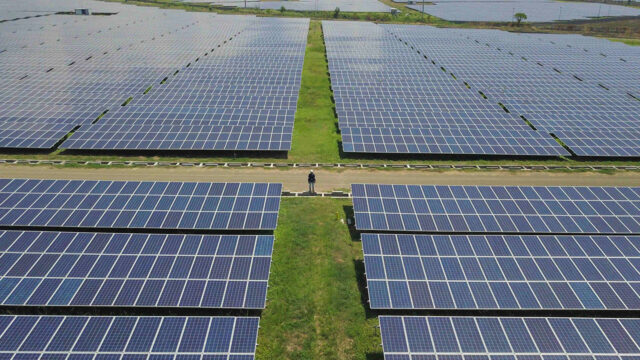
The transmission project will support the P13.85-billion Luna Solar Power Project (SPP), which comprises a 239.56-megawatt direct current (MWdc) solar power plant paired with a 65-megawatt (MW) battery energy storage system.

Construction is expected to start this quarter, with commercial operations targeted for the fourth quarter of 2027.

South Cleanergy plans to connect the project to the 230-kilovolt Cadiz Substation operated by the National Grid Corp. of the Philippines. The company said this substation is the closest interconnection point, about 4.98 kilometers from the site, making it the most efficient option.

“[South Cleanergy] needs to immediately test, commission and dispatch the Luna SPP upon its completion to avoid unnecessary delays that can lead to opportunity costs and contribute to the rising demand growth,” the company said.

Aboitiz Renewables, the holding company of Aboitiz Power Corp.’s renewable energy assets, has an attributable net sellable capacity of 1,418 MW from 34 renewable facilities. The group aims to reach a total renewable energy capacity of 4,600 MW by 2030, supporting the country’s transition to cleaner energy. — Sheldeen Joy Talavera

Net zero: Ambition without architecture in the Philippines

STOCK PHOTO | Image by Frimufilms from Freepik

Net zero has become one of the most frequently invoked phrases in sustainability conversations, from annual reports and investor briefings to policy forums and business conferences. In the Philippines, however, it occupies an uneasy space. It is neither rejected nor fully embraced. It is spoken of with confidence, pursued selectively, and yet never formally owned as a national destination.

From a sustainability lens, the question is no longer whether net zero is desirable. That debate has largely passed. The more pressing question is whether the Philippines has built the architecture required to turn ambition into action.

At present, net zero in the Philippines is possible in theory, constrained in practice, and deferred in policy.

The technical foundations are stronger than critics often assume. The country has substantial renewable energy potential, particularly in solar and wind, complemented by hydro resources and rapidly maturing battery energy storage systems. Over the past few years, private capital has flowed into utility scale solar farms, wind corridors, and storage projects. These investments are not ideological experiments. They are rational responses to volatile fossil fuel prices, rising import dependence, and growing demand for cleaner power from corporate buyers.

From a purely technical standpoint, decarbonizing large portions of the power sector by mid-century is achievable. Add to this the Philippines’ natural advantage in forests, mangroves, and coastal ecosystems, and the ingredients of a net zero pathway clearly exist.

But sustainability is never just about technical feasibility. It is about systems, incentives, and governance.

This is where the Philippine challenge becomes clear.

Unlike several of its neighbors, the Philippines has not declared a formal net zero target year. Instead, it operates under an emissions reduction commitment through its Nationally Determined Contribution, a large portion of which is conditional on international finance and technology transfer. This reflects legitimate development realities, but it also means the country lacks a single long-term anchor that aligns policy, capital, and institutions toward a shared endpoint.

In the absence of that anchor, energy planning follows a familiar hierarchy. Energy security comes first. Affordability follows closely. Reliability is nonnegotiable. Decarbonization, while acknowledged, often comes last. This sequencing explains why coal remains embedded in the system, why natural gas is framed as a prolonged transition fuel, and why grid modernization struggles to keep pace with renewable ambition.

The result is a gradual slowing of emissions rather than a decisive decline. Sustainability progress, yes. A net zero trajectory, no.

Ironically, some of the strongest momentum toward net zero is coming from the private sector.

Large Philippine corporations, banks, and developers are making voluntary net zero or near zero commitments, often driven by investor pressure, global supply chain requirements, and ESG disclosure standards. Alliances and coalitions have emerged to help companies measure emissions, share knowledge, and explore transition finance. For many firms, net zero has become less about idealism and more about a license to operate in global markets.

Climate risk is increasingly discussed alongside financial and operational risk in boardrooms. Banks are reassessing portfolio exposure. Developers are experimenting with greener designs. Conglomerates are aligning sustainability narratives with long term competitiveness.

Yet this corporate momentum has limits.

Voluntary commitments fragment easily. Targets differ. Scope 3 emissions are postponed. Accountability is reputational rather than regulatory. When decarbonization begins to threaten margins or competitiveness, companies hesitate and wait for policy signals that remain unclear. Private capital can accelerate transition, but it cannot substitute for a coherent national direction.

A comparison with neighboring countries highlights what is missing.

Singapore offers one reference point. Despite severe land and resource constraints, it has committed to net zero by mid-century and embedded that goal into economic planning. A carbon tax, climate aligned financial regulation, and sustained investment in green finance provide institutional clarity. Net zero there functions not as aspiration, but as economic strategy.

Vietnam provides another instructive example. Its net zero by 2050 commitment sent a clear signal that unlocked capital and accelerated renewable deployment at scale. While grid stability and financing challenges remain, the direction is unmistakable. Investors respond not only to incentives, but to certainty.

Indonesia presents a more complex but still telling case. Deeply reliant on fossil fuels, it has nonetheless articulated a long-term low-emissions strategy and is actively pursuing early coal retirement through international transition finance partnerships. The path is uneven and contested, but the intent is increasingly explicit.

In each of these cases, net zero operates as a coordinating mechanism. It aligns ministries, markets, and messaging. It reduces uncertainty even when execution is difficult.

The Philippine sustainability landscape, by contrast, remains fragmented. Corporate ambition is rising. Technical capacity is improving. Nature-based solutions offer genuine support through forests, mangroves, and blue carbon ecosystems. But without a unifying national commitment, these elements do not cohere into a system level transition.

There is also a growing temptation to over romanticize nature-based solutions. Mangroves, forests, and blue carbon are real strengths and must be protected and scaled. But they cannot compensate for continued fossil fuel dependence. When offsets become the plan rather than a complement, net zero turns into narrative rather than transformation.

From a sustainability perspective, this is the core risk facing the Philippines. Not that net zero is impossible, but that it becomes performative. A language of ambition without the architecture to deliver it.

So, is net zero an elusive dream or close to impossible?

Neither.

It is better described as a decision deferred.

The tools exist. The private sector is partially mobilized. Regional examples show that transition is feasible even under constraint. What is missing is a clear, binding signal that net zero is not merely a conversation, but a destination.

Without that signal, progress will remain incremental and uneven. Emissions may peak, but they will not collapse. Sustainability gains will be real, but insufficient. Net zero will continue to function as rhetoric rather than roadmap.

With it, net zero becomes difficult but achievable. Not heroic. Not miraculous. But disciplined, deliberate, and grounded in reality.

In the end, sustainability is not about ambition alone. It is about alignment. When policy, capital, and institutions move in the same direction at the same time, transition accelerates. Until then, net zero in the Philippines remains within reach, but without the architecture to carry it forward.


Dr. Ron F. Jabal, APR, is the CEO of PAGEONE Group (www.pageonegroup.ph) and founder of Advocacy Partners Asia (www.advocacy.ph).

ron.jabal@pageone.ph

rfjabal@gmail.com

Actor Gerard Butler bets he would not survive real Greenland 2

Greenland 2: Migration (2026)

LOS ANGELES — In the soon-to-be-released movie Greenland 2: Migration, Scottish actor Gerard Butler portrays John Garrity, who leads a group through a post-apocalyptic world to try to find safety.

In reality, Mr. Butler said, he does not have confidence in his abilities to survive such a world.

“I would be one of the first ones going down,” he said with a smile.

The movie, which arrives in theaters on Friday (it opens in the Philippines on Jan. 14 with an MTRCB rating of PG. – Ed.) is a sequel to 2020 thriller Greenland, in which Mr. Butler’s Atlanta, Georgia-based character tries to head with his family to the safety of a bunker in Greenland when he hears a comet is about to hit Earth.

It connected with audiences, paving the way for its 2026 sequel, said Mr. Butler.

“It felt like it resonated a lot, especially, you know, coming out during the pandemic,” he said in an interview. “And sometimes you go, okay, that’s enough. Leave it alone. And then other times you think, well, where could we take this?”

Greenland 2: Migration, continues the survival story.

The film follows John, his wife Allison, portrayed by Morena Baccarin, and their son Nathan, played by Roman Griffin Davis, as they flee Greenland in hopes of finding safety in France.

Could the story go even further? Possibly, said Mr. Butler.

“Now we’ve seen where they’ve gone from there, but what would happen after that? How does the world actually start to rebuild?” he said. — Reuters

Governance is the tie-breaker

President Marcos signed the P6.793-trillion 2026 national budget on Jan. 5, signaling strong intent by vetoing P92.5 billion in unprogrammed appropriations. It was a decisive move to protect our fiscal trajectory and restore market discipline. However, capital markets act much like banks evaluating borrowers: they do not judge intent based on a single transaction. They judge consistency.

Institutional investors are now watching what comes next. Scrutiny is fixed on the remaining P150.9 billion in unprogrammed funds — specifically, whether its utilization will strictly adhere to the release conditions and transparency commitments laid out by the government. They want to know if technocratic efficiency can survive the weight of recurring political noise.

Six months into the unresolved flood control controversy, governance scandals continue to drag sentiment. While our investment-grade ratings remain intact, anchored by a commendable fiscal consolidation plan, both the World Bank and S&P Global Ratings have cited corruption concerns in trimming growth forecasts. Even as manufacturing purchasing managers’ index edged up to 50.2, Bangko Sentral ng Pilipinas data show foreign direct investment net inflows dropped 25.8% year on year to $320 million, dragged by lower debt flows.

These macroeconomic pressures are not unique to the Philippines. Elevated global interest rates, ongoing trade tensions, and regional supply chain shifts have also made capital more expensive and selective across emerging markets. We must also acknowledge the structural realities: Vietnam and Indonesia often beat us on “hard costs” like subsidized electricity and logistics.

But this structural disadvantage is exactly why governance is nonnegotiable.

The government’s recent pivot to shift its primary metric from investment pledges to actual “realization” is the correct strategic move. The private sector has long clamored for shovels in the ground rather than signatures on a press release. Likewise, operationalizing “green lanes” for strategic investments is a vital counter-move to our high operating costs. If we cannot be the cheapest place to do business, we must be the fastest.

Yet a green lane fails if it leads to a toll gate of corruption. Speed cannot bypass integrity. If an investor chooses Vietnam for cheap power, they might choose the Philippines for transparency, but only if we offer it. When fundamentals are tight, governance becomes the tie-breaker.

So what must happen?

The vetoed P92.5 billion, welcomed by FINEX and other business groups, must not stand alone. The remaining P150.9 billion must be guarded by strict adherence to clear and legal release “triggers,” independent validation before disbursement, and full public reporting. However, safeguards on paper are insufficient. To bridge the trust gap, we urge the adoption of a Unified Transparency Dashboard covering the entire P6.793-trillion budget, granting the public and markets real-time, granular data access from the National Treasury down to the last mile of implementation. Crucially, this standard of integrity must extend to the “Anti-Epal” provision under Section 19 of the 2026 General Appropriations Act, which must move from intention to strict enforcement to ensure public funds are never again treated as campaign war chests.

A CALL FOR SUSTAINED PARTNERSHIP
In response, the business sector must remain the vigilant partner it has always been. We are not passive observers or mere political watchdogs; we are active technical evaluators. This commitment underpins the FINEX thrust for 2026: to catalyze confidence by leading with capital, integrity, and innovation.

We stand ready to deepen our collaboration with government, multilaterals, and industries to advance fiscal prudence, institutional credibility, and a modern capital market. Specifically, we continue to support the operationalization of the shift from pledges to “realization.” We can provide data on the specific regulatory bottlenecks, ranging from local government unit permits to national requirements, that continue to stall capital flows. Beyond regulatory feedback, we are prepared to work in collaboration to identify and champion targeted investments that need prioritization, spanning education, healthcare, infrastructure, food security, climate resilience, and technology in underserved areas. Simultaneously, we strongly advocate for a broad initiative to reduce frictional costs in our capital markets. Just as importantly, we support the aggressive digitalization of the Bureau of Customs and Bureau of Internal Revenue to solve corruption as an efficiency problem. Furthermore, as the CREATE MORE Act is implemented, we must advocate for clear, unchangeable rules on incentives to end “interpretation risk.”

In all these areas, the private sector offers its expertise to benchmark performance, ensuring that policy intent translates into credible execution.

THE LONG GAME
The 2026 budget execution will be watched closely: by investors, capital markets, and business leaders deciding where to place their next ASEAN investment. The veto was the first move. What matters now is the disciplined, unglamorous work of credibility-building.

Capital flows favor three conditions: efficient allocation, transparent execution, and credible oversight. Every peso transparently accounted for sends a message: this government is serious, capable, and stable.

In markets, credibility is the only currency that compounds. Let’s ensure we are investing it wisely.

The views expressed herein are the author’s own and do not necessarily reflect the official policy or position of FINEX.


Carlo Enrico B. Lazatin is the 2026 president of the Financial Executives Institute of the Philippines (FINEX) and the Philippine Finance Association (PFA). He is the president and CEO of DES Financing Corp. He advocates for fiscal transparency and closer collaboration between policymakers and capital markets to strengthen the Philippines’ investment climate.

January power bills may climb on RE fees, weak peso

PHILIPPINE STAR/ MICHAEL VARCAS

MANILA ELECTRIC Co. (Meralco) expects a slight uptick in electricity rates in January, as higher generation costs driven by peso weakness and the start of renewable energy (RE) fee collection may outweigh lower spot market prices.

“We are still awaiting the billings from our power suppliers but very initial indications show that there may be minimal movement in the electricity rates this month,” Joe R. Zaldarriaga, Meralco vice-president and head of corporate communications, said in a statement on Thursday.

He said the depreciation of the peso is putting upward pressure on generation charges, as a significant portion of power supply costs is denominated in US dollars. The peso closed at P58.79 a dollar on Dec. 29, weaker by P0.145 from its P58.645 close on Nov. 28.

Generation charges typically account for more than half of a customer’s monthly electricity bill.

Meralco said it is hoping that lower spot market prices will help cushion the impact of higher generation costs. During the December supply period, the average price in the Wholesale Electricity Spot Market (WESM) fell 15.4% month on month to P2.98 per kilowatt-hour (kWh), driven by a higher supply margin.

Adding to the potential rate increase is the collection of the green energy auction allowance, which amounts to an additional P0.0371 per kWh. The charge will appear as a separate line item in customers’ electricity bills starting this month.

Last month, the Energy Regulatory Commission approved the application of the National Transmission Corp. to collect the allowance, which serves as an incentive for renewable energy projects that were awarded contracts under the government’s previous green energy auctions.

“Nonetheless, we remain optimistic that the decrease in demand and consumption of customers will help manage the electricity bills this January,” Mr. Zaldarriaga said.

In December, Meralco’s overall electricity rate declined by P0.3557 per kWh to P13.1145 per kWh from P13.4702 per kWh in November, due mainly to lower transmission and generation charges.

Meralco is the country’s biggest power distribution utility, supplying electricity to Metro Manila and nearby provinces. Its franchise covers 39 cities and 72 municipalities, serving about 8 million customers.

Beacon Electric Asset Holdings, Inc. is Meralco’s controlling shareholder. Beacon is partly owned by PLDT, Inc. Hastings Holdings, Inc., a unit of PLDT Beneficial Trust Fund subsidiary MediaQuest Holdings, Inc., has an interest in BusinessWorld through the Philippine Star Group, which it controls. — Sheldeen Joy Talavera

ADVERTISEMENT
ADVERTISEMENT