Home Blog Page 462

‘Most countries would dream of’ PHL debt-to-GDP levels, WB says
REUTERS

By Aubrey Rose A. Inosante, Reporter

THE sustainability of Philippine debt is not currently a matter of serious concern, the World Bank (WB) said, noting however that the government still needs to rebuild fiscal buffers to prepare for future shocks.

“There is no cause for serious concern (over debt sustainability… Most countries would dream of having the kind of debt-to-GDP (gross domestic product) ratios we have here,” World Bank Senior Economist Jaffar Al-Rikabi told reporters last week on the sidelines of an event.

Philippine debt-to-GDP was 63.1% at the end of the third quarter, rising from 60.1% a year earlier.

The rule of thumb for healthy levels of debt for developing countries is 60%, which the government has informally abandoned in favor of a new 70% benchmark.

Asked if the record P17.65-trillion debt stock at the end of November poses concerns for debt servicing, Mr. Al-Rikabi said it is “normal” for such levels to increase with inflation and fiscal deficits.

The Bureau of the Treasury will release the fourth-quarter debt-to-GDP ratio when the Philippine Statistics Authority (PSA) reports full-year and fourth-quarter GDP.

“We still don’t have Q4 data, but in our projection, if you looked at the outlook slides, we are generally reassured that the fiscal situation is very sustainable,” he said.

In its Philippine Economic Update, the World Bank said it expects sovereign debt to start declining after 2026.

National Government debt is projected to peak at 62.5% of GDP in 2026 before declining to 61.4% by 2028.

Mr. Al-Rikabi also noted that public debt remains “sustainable,” noting that the majority of the debt is long-term and peso-denominated.

“Because if debt held (is) non-peso-denominated or short-term, that usually is much more volatile and is exposed to external shocks instead of just domestic shocks,” he said.

He also noted that the debt ratio was low at 40% leading up to the COVID-19 pandemic, when the government had to take on much more debt to fund the pandemic containment effort and stimulate the economy.

“What we want to see on public debt, on servicing costs, is fiscal consolidation program being implemented,” he said.

“We want to rebuild fiscal space so that the country can act for future crisis. You had a lot of fiscal space back then. You’ll have fiscal space in the future,” he added.

Mr. Al-Rikabi said the government should take control of rising interest payments to avoid squeezing out productive spending.

“You want to spend more of your budget on education, on health, on effectively implementing infrastructure projects. You don’t want it to go increasingly on interest expenditure, which has grown over the last few years,” he said.

For 2026, the government has budgeted P2.01 trillion for debt service, with P1.06 trillion going to amortize principal and P950 billion to interest payments.

Mr. Al-Rikabi said the bank expects the economy to expand 5.3% in 2026 and 5.4% in 2027.

“We do see deceleration for this year. We’re projecting around 5.1% (in 2025). Maybe with fourth-quarter data, it ends up being weaker. I don’t know. Or maybe around the same,” he said.

The revised government target is 5-6% for 2026 and 5.5-6.5% for 2027.

Jonathan L. Ravelas, senior adviser at Reyes Tacandong & Co., projected a faster economic growth for the Philippines at 5.3% in 2025.

“Mainly because we’re a consumption-driven economy. We have one of the longest Christmases. People tend to forget when the calendar starts the ber-months it’s Christmas,” Mr. Ravelas said in a John Clements Consultants, Inc. event on Jan. 8.

“People talk about spending. This has been a major driver over the last two weeks of December. I think that could probably prop up the fourth quarter,” he said.

Mr. Ravelas sees the economy growing by 5.6% in 2026 and 5.8% in 2027.

Economy Secretary Arsenio M. Balisacan has said that GDP growth likely slowed to 4.8-5% in 2025 due to the flood control corruption scandal, prompting economic managers to temper their goals through 2027.

“We may have seen peak negative sentiment, unless somebody gets jailed (over the corruption scandal),” he said.

Mr. Ravelas said the peso may settle between P61 and P65 over the next three years, after the currency fell to a record low of P59.35 on Jan. 7.

“A weaker peso should be good for the Philippines even though we’re a net importing country, because we need to sell the Philippines as an investment destination,” he added.
Supermarket ‘mainstreaming’ to drive cold chain growth

PHILIPPINE STAR/ MICHAEL VARCAS

By Justine Irish D. Tabile, Reporter

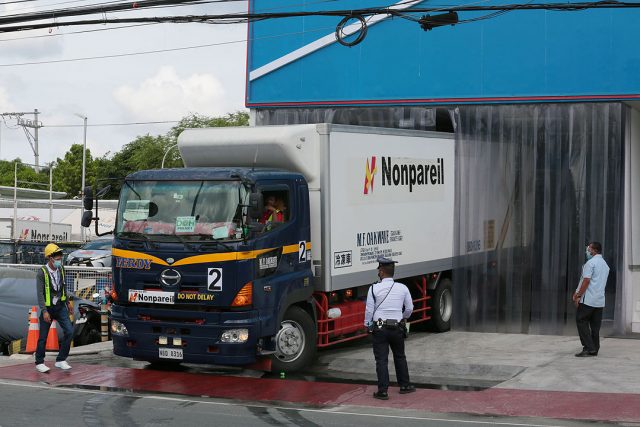
THE cold chain industry is expected to grow by at least 8% each year over the next five years with frozen or chilled food becoming more mainstream and shedding its luxury image, the Cold Chain Association of the Philippines (CCAP) said.

CCAP estimated a growth range of 8-10% annually, making it among the fastest-growing segments within the logistics and food supply ecosystem.

“As consumers become more aware of food safety and quality, chilled and frozen products are no longer viewed as premium or niche — they are becoming mainstream,” President Anthony S. Dizon said in a statement over the weekend.

“This shift is pushing demand for cold chain capacity across storage, processing, and especially transportation,” he added.

In particular, the shift from traditional wet markets to supermarkets and retail outlets offering chilled and frozen products is expected to reshape demand for cold storage facilities and refrigerated transport.

CCAP said post-harvest food losses remain significant in the Philippines, especially in regions with limited access to cold chain infrastructure.

“Improving refrigerated transport is widely seen as one of the most effective ways to preserve product quality, stabilize prices, and extend market reach for farmers and food producers,” CCAP said.

However, the association sees last-mile and regional refrigerated delivery as a key bottleneck as food distribution expands into provincial and inter-island routes.

“This challenge is compounded by the Philippines’ tropical climate and relatively high electricity costs, which place a premium on energy-efficient cooling solutions,” it said.

For this reason, Mr. Dizon said that the next phase of cold chain growth will demand higher operating efficiency and reliability.

“The industry has embraced state-of-the-art technologies because sustainability of investment is critical,” he said. “Operators are looking for solutions that reduce spoilage, manage energy costs, and perform consistently across longer and more complex delivery routes.”

Farm job volatility seen as structural, not just result of seasonality

BW FILE PHOTO

By Vonn Andrei E. Villamiel

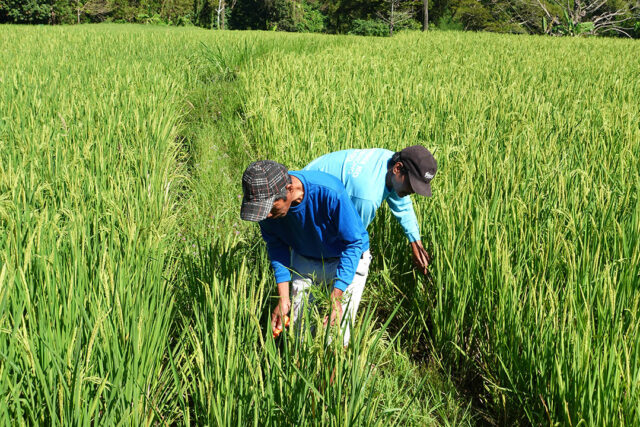
PERSISTENT month-to-month employment swings in agriculture point to structural weaknesses beyond seasonal factors, analysts said, after the industry lost more than half a million jobs in November even as overall employment expanded.

Employment in agriculture fell 5.7% month on month in November, equivalent to 594,000 jobs lost, according to results of the Labor Force Survey issued by the Philippine Statistics Authority (PSA). Total employment rose 1.34% from October to 49.27 million.

On a year-on-year basis, agricultural employment declined 0.71% to 9.85 million in November, shedding 69,000 jobs.

Former Agriculture Undersecretary Fermin D. Adriano said agriculture jobs typically taper off in November due to the close of the rice harvest, a time when vegetable and orchard farmers also cannot harvest because this is still peak typhoon season,” he told BusinessWorld via Viber.

According to the PSA, agriculture employment typically peaks in the May to June and September to October periods, coinciding with the main planting and harvest cycles, before falling sharply because of typhoons.

During the offseasons, agricultural workers are absorbed by other industries, like services.

In December, the Philippine Institute for Development Studies reported that such off-season employment tends to be informal and low value.

“The continuing decline of agricultural employment, without a commensurate rise in high-productivity industry jobs, suggests a risk of premature de-industrialization, where labor shifts to low-value services rather than high-value manufacturing,” the study found.

Mr. Adriano said another key issue is whether other industries are generating enough jobs to absorb workers displaced from agriculture.

“The main concern should be employment in manufacturing…” he said. “If you don’t see increases in employment in those sectors as we near the peak Christmas season, then we really do have a serious employment problem.”

Mr. Adriano added that manufacturing and services are generally preferred by workers because of higher and more stable wages, but weak investment inflows have limited their capacity to generate jobs.

Meanwhile, some analysts said the scale and recurrence of employment losses in agriculture suggest structural problems.

Jose Enrique A. Africa, executive director of think tank IBON Foundation, said the decline in agricultural employment on both a monthly and year-on-year basis indicates more than routine seasonal adjustments.

“The structural weakness is even clearer if we look at how agricultural employment has fallen steeply in recent years, dropping by 627,000 from an annual average of 10.7 million in 2021 to just 10 million in the first eleven months of 2025,” he told BusinessWorld via Viber.

Mr. Africa also pointed to extreme volatility in agricultural employment over the past five years, with year-on-year changes ranging from losses of as much as 2.3 million jobs in August 2024 to gains of up to 1.9 million in July 2022.

Month-on-month swings are even more severe due to seasonal factors, with employment falling by as much as 3 million in January 2024 and increasing by as much as 2.2 million in August 2023.

Mr. Africa said the huge swings in agricultural employment reflect structural joblessness, rather than a voluntary shift to better jobs in other industries, including the services sector, which is also plagued by pervasive informality.

To arrest this trend, Mr. Africa said interventions must focus on stabilizing farm incomes and protecting farmers from market distortions.

“Farm incomes have to be stabilized with price support and procurement mechanisms, curbing monopolies in input and trading markets, and cheap public credit and insurance,” he said.

Jayson H. Cainglet, executive director of the Samahang Industriya ng Agrikultura, said government commitment is critical to rebuilding confidence in farming.

“Reversing this trend requires the farming community to clearly see that government is on their side: increasing public investment in agriculture and protecting the market against unfair competition,” he told BusinessWorld via Viber.

Mr. Cainglet added that ensuring farmgate prices are consistently 20% to 30% above production costs is essential to attract and retain farmers. He said inadequate subsidies, unimpeded imports, and reduced tariffs are hurting agricultural workers.

“Farmers are ultimately discouraged when, after months of hard work and investment, they are wiped out by cheaper imports and collapsing farmgate prices,” he said.

Former Agriculture Secretary William D. Dar said the industry’s vulnerability to extreme weather events must also be addressed to increase employment stability.

“The agriculture sector is badly impacted by extreme weather events like strong typhoons and flooding. We need to enhance resilience of the agriculture sector, including upskilling our agriculture labor,” he said.

Mr. Africa said substantial public investment must be poured into climate-resilient irrigation, post-harvest facilities, and marketing infrastructure. He said industrialization must also be realized to increase overall productivity and generate viable employment outside farms.

“Industrialization is critical for productive rural non-farm employment in agro-processing, food systems, and rural manufacturing, as well as for a more modern high-technology, high-productivity, and job-creating economy overall,” he said.

Contestable power customers saved P19 billion in first 9 months — PEMC

ROBERT LINDER-UNSPLASH

POWER CONSUMERS who chose their preferred electricity suppliers saved about P19.25 billion in the first nine months of 2025, according to the Philippine Electricity Market Corp. (PEMC).

The savings estimate exceeded the P16.76 billion in estimated savings over the full year of 2024, the PEMC said in a retail market assessment report.

The PEMC, the governance arm of the Wholesale Electricity Spot Market (WESM), said in third quarter, estimated savings for contestable end-users at about P9.93 billion — the highest level to date, with retail weighted-average generation rates ranging from P5.68 per kilowatt-hour (kWh) to P5.75 per kWh.

The corresponding average generation rates charged by distribution utilities ranged from P6.12-P6.66 per kWh.

Through the competitive retail electricity market (CREM), contestable customers are those qualified to choose their supplier of electricity, while captive customers are required to stay within their respective distribution utilities.

“Market participation continued to expand in the third quarter of 2025, with total registered contestable end-users increasing to 2,412, up from 2,290 in the previous quarter,” PEMC said.

The savings estimate covers over 64% of all eligible end-users, it said.

Luzon accounted for 86% of all contestable end-users, while the Visayas and Mindanao represented 12% and 3%, respectively. — Sheldeen Joy Talavera

Business chamber cites urgent need to reform laggard tourism industry

PHILSTAR FILE PHOTO

THE Federation of Filipino Chinese Chambers of Commerce and Industry, Inc. (FFCCCII) said the government needs to reform the tourism industry, which it said continues to lag its regional peers.

Victor R. Lim, FFCCCII president, said immediate, decisive, and comprehensive reforms are needed for the Philippines if it is to reap the benefits of the robust tourism recovery seen elsewhere in the Association of Southeast Asian Nations (ASEAN).

“Our nation is blessed with unparalleled natural beauty and resources. Yet, as our ASEAN neighbors celebrate a robust tourism recovery, the Philippines is charting a dissimilar and concerning course,” he said in a statement on Sunday.

“We are at a pivotal time where decisive, comprehensive reform is not just an option — it is an urgent economic imperative,” he added.

Citing the Department of Tourism, FFCCCII said international arrivals totaled 5.24 million in the first 11 months, down 2.2% from a year earlier and 37% below pre-pandemic levels.

“This Philippine tourism decline is a direct blow to our national economic well-being,” Mr. Lim said.

“Tourism is our economy’s low-hanging fruit. It is the most accessible engine for inclusive economic growth — a sector that directly creates jobs and sustains the micro, small and medium enterprises (MSMEs),” he added.

He said some of the challenges faced by the industry are congested gateways, logistical hurdles, and unreliable connectivity.

“(These) create a barrier deterring the mainstream traveler, limiting our appeal to only the most adventurous,” he said.

He said the Philippines should continue modernizing primary airports and improving inter-island travel infrastructure.

“This is non-negotiable. The first and last impression must be one of efficiency and ease,” he added.

He also cited the need to streamline the visa issuance process and better promote the country’s culture, history, and cuisine.

Mr. Lim proposed a visa regime competitive with the rest of ASEAN.

“We must immediately benchmark and match the most visitor-friendly visa policies in our ASEAN region, making the choice to visit the Philippines an easy one,” he added.

Meanwhile, he said that tourism promotion should move beyond scenery.

“We must train our industry and tell stories that connect our landscapes to our living heritage, our flavors, and our famed hospitality,” he added. — Justine Irish D. Tabile

With PFRS, sustainability disclosures can become a competitive edge

IN BRIEF:

• The SEC’s new guidelines require companies to report sustainability and climate-related financial information starting FY 2026, specifically disclosures on governance, strategy, risk management and metrics and targets.

• Effective reporting and sustainability practices can enhance corporate governance, attract investors, and improve long-term business resilience by integrating sustainability into core business strategies.

In today’s fast-changing business environment, the demand for consistent, comparable, and transparent sustainability reporting is crucial for investment decisions. The International Sustainability Standards Board (ISSB) has introduced IFRS S1 General Requirements for Sustainability-related Financial Information and S2 Climate-related Disclosures, which provide crucial sustainability-related information alongside financial statements, catering to investor demands for transparency.

These standards offer businesses a chance to enhance corporate governance and investor protection through globally aligned regulations.

Following the adoption of IFRS S1 and S2, on Dec. 22, the Securities and Exchange Commission (SEC) issued Memorandum Circular No. 16, Series of 2025 requiring publicly-listed companies (PLCs) and large non-listed companies (LNLs) to adopt Philippine Financial Reporting Standards (PFRS) on Sustainability Disclosures starting in FY2026 with limited extensions of transition reliefs under a tiered approach.

Mandatory external limited assurance of Scope 1 and Scope 2 Greenhouse Gas (GHG) emissions by an independent assurance practitioner will also be required two years after the initial implementation of these standards for each tier.

The standards focus on four core areas:

Governance: governance processes, controls and procedures a reporting entity uses to monitor, manage and oversee sustainability- and climate-related risks and opportunities

Strategy: approach the entity uses to manage sustainability- and climate-related risks and opportunities

Risk Management: processes the entity uses to identify, assess, prioritize and monitor sustainability- and climate-related risks and opportunities

Metrics and Targets: information used to manage and monitor the entity’s performance in relation to sustainability- and climate-related risks and opportunities over time

Adopting the standards allows companies to shift sustainability from a mere compliance requirement to a fundamental part of their corporate strategy, driving long-term value and resilience. These reporting obligations can serve as a catalyst for organizational improvement and bolster investor trust.

Organizations often struggle to integrate sustainability across all levels. According to EY’s 2023 Sustainable Value Study, only half of Chief Sustainability Officers (CSOs) feel empowered to hold C-suite peers accountable for sustainability initiatives. Furthermore, 41% of organizations aim to strengthen collaboration between the C-suite and the board to effectively implement climate strategies.

With the new reporting obligations, effective sustainability disclosures can influence corporate governance structures and strategic decision-making processes. In their disclosures following the PFRS on Sustainability Disclosures, companies need to set out their governance processes, controls and procedures that they use to monitor, manage and oversee sustainability-related and climate-related risks and opportunities. This includes considering trade-offs associated with sustainability risks and linking remuneration policies to performance metrics. In addition, companies need to identify responsible governance bodies and ensure they have the necessary competencies.

In addition, the standards ask the board to disclose how sustainability-related and climate-related risks and opportunities are considered when overseeing overall strategy, the company’s decisions on major transactions and its risk management processes and related policies. With these obligations, organizations that have not yet integrated environmental, social, and governance (ESG) factors into their strategies will need to reassess their approaches to meet these new expectations. By doing so, they can enhance governance, meet stakeholder expectations, and leverage sustainability for revenue growth.

Local adoption of the IFRS Sustainability Disclosure Standards paves the way for a consistent sustainability reporting framework applicable across companies, making it easier for companies to communicate their sustainability efforts. Standardized disclosures on climate-related risks can also enable investors to assess how well companies are managing these risks. Between companies who disclose their exposure to extreme weather events in a similar manner, investors can better evaluate which company has a more robust risk management strategy.

Mandatory and standardized disclosures help ensure comparability of company data, improving understanding of performance and potentially financial information that translates towards better capital access. When companies disclose the financial implications of their sustainability initiatives, stakeholders can better understand how these initiatives contribute to overall financial performance, improving investor confidence and potentially lowering capital costs.

Transparent sustainability practices have the potential to attract a broader range of investors, including those focused on ESG criteria. Companies that can outline sustainability goals, progress, and metrics consistently can foster trust and attract investors who prioritize ESG criteria. Reporting under the standards, in compliance with the SEC Memorandum Circular, provides covered entities the opportunity to inform senior-level decision-making while enabling them to hold themselves accountable over their sustainability targets — and be held accountable by others.

To truly realize the value of sustainability, boards must adopt a long-term perspective. Sustainability should not be treated as an isolated initiative; it needs to be seen as an essential pathway for successful businesses. By effectively integrating sustainability strategies into their operations, companies and boards can enhance performance. Sustainability and business must work hand in hand and should not treated as a separate endeavor.

Adopting PFRS on Sustainability Disclosures allows companies to shift sustainability from a mere compliance requirement to a fundamental part of their corporate strategy, ultimately driving long-term value and resilience in an increasingly unpredictable environment.

To prepare for the adoption of the new sustainability standards and related reporting developments, companies can consider the following actions:

Integrate sustainability into governance frameworks. Ensure a shared vision at the leadership level for integrating sustainability into business practices. Governance roles should oversee strategy, major transactions, and risk management, setting the tone for the organization.

Build capacity. Develop capabilities across different functions to meet the new standards. Every department should understand the importance of sustainability and its business benefits.

Adopt a mindset of continuous improvement. Embrace a culture of continuous improvement in sustainability practices and reporting. The company’s initial report does not need to be perfect; however, as capabilities, skills, and resources improve over time, so too should the quality of the report.

Regularly monitor and assess the evolving risk landscape through tailored board insights and discussion sessions. In addition, be prepared to revisit sustainability targets based on the latest scientific data, and leverage insights from peers to drive innovation. This proactive approach enables leadership teams to make informed decisions and implement strategies effectively.

This article is for general information only and is not a substitute for professional advice where the facts and circumstances warrant. The views and opinions expressed above are those of the authors and do not necessarily represent the views of SGV & Co.


Crystal Aleli Cornell, Joyce Anne Soriano And Zoe Aurora Romero are managers from the Sustainability Team of SGV & Co.

Analysts: Marcos veto curbs standby funds but deeper budget flaws persist

PHILIPPINE STAR/EDD GUMBAN

By Chloe Mari A. Hufana, Reporter

PRESIDENT Ferdinand R. Marcos, Jr.’s veto of P95.5 billion in unprogrammed funds from the 2026 General Appropriations Act has eased some concerns over discretionary spending, but analysts said the move only partly addresses deeper weaknesses in budget planning and oversight.

While the decision trimmed standby allocations, it left intact a system that allows large sums to be set aside without detailed projects or assured funding, an issue now before the Supreme Court (SC) and one that could shape future fiscal policy.

“The continued presence of large unprogrammed appropriations points to deeper issues in planning and coordination that need to be addressed more systematically,” Ederson DT. Tapia, a political science professor at the University of Makati, said in a Facebook Messenger chat.

He added that striking out items from the budget should not be treated as a substitute for broader reform.

Mr. Marcos signed the P6.793-trillion spending plan on Jan. 5, vetoing seven unprogrammed items worth P95.5 billion but retaining about P150.9 billion in standby funds.

He said this was the lowest level of unprogrammed appropriations since 2019. The retained amounts include P97.306 billion for support for foreign-assisted projects, P3.6 billion for a risk management program, and P50 billion for the Armed Forces of the Philippines’ modernization.

Unprogrammed funds are meant to be released only when excess revenues or foreign financing materialize. Critics, however, have long argued that they give the Executive branch wide discretion and weaken Congress’ power of the purse because projects are not fully specified at the time of approval.

Mr. Tapia said unprogrammed appropriations are not inherently flawed and are meant to provide flexibility in the face of uncertainty. The problem arises when they become a routine feature of the budget and discretion replaces careful planning.

The issue has taken on greater urgency after a multibillion-peso graft scandal involving flood control projects rattled public trust and investor confidence. Mr. Marcos has alleged that senior officials colluded with private contractors in kickback schemes linked to overvalued and underbuilt infrastructure.

Against this backdrop, minority lawmakers from the House of Representatives filed a petition before the Supreme Court last week questioning the constitutionality of unprogrammed appropriations.

The plaintiffs argued that authorizing spending without clearly defined projects or assured funding sources undermines legislative control over the budget.

Beyond the veto itself, analysts said attention is likely to turn to how such items entered the spending plan in the first place. Weak planning, political accommodation or forecasting gaps may all be contributing factors, Mr. Tapia said, adding that understanding these origins would be key as Congress and the Executive consider changes to future budget cycles.

Civil society groups said a court ruling could help settle longstanding issues. Judicial review of unprogrammed appropriations is important because questions persist over transparency, constitutionality and planning, Alce C. Quitalig, a senior budget specialist at Social Watch Philippines, said in a Viber message.

Mr. Quitalig said civil society had already scored a win after pork-linked allocations were stripped from the 2026 budget, pointing to the zero allocation for the Strengthening Assistance for Government Infrastructure and Social Programs.

He also raised concerns over the widening gap between unprogrammed amounts proposed by the Executive and those eventually approved by Congress. Between 2022 and 2024, the approved unprogrammed appropriations exceeded what was originally proposed, Mr. Quitalig said, echoing arguments raised in the SC petition filed by former congressman Edcel C. Lagman, Sr.

Such practices, he said, risk weakening fiscal discipline, especially as government spending continues to grow faster than revenues. Reliance on volatile nontax revenues to justify these allocations creates what the Supreme Court itself has called “artificial revenue surpluses,” Mr. Quitalig said, warning this could lead to higher deficits and borrowing.

Still, he acknowledged that the courts have recognized limited use of unprogrammed funds. They are not automatically unconstitutional, but reforms are needed to impose clearer limits on financing and releases, require itemized project listings and prevent Congress from shifting fully funded programs into unprogrammed items, he added.

“Ultimately, if certain programs are indeed a priority, these should be allocated under programmed appropriations,” Mr. Quitalig said. “Contingencies can and should be covered by programmed appropriations already available in agency budgets and special purpose funds.”

Marcos may face ouster raps over flood control scandal, says lawmaker

PILIPPINE STAR/MIGUEL DE GUZMAN

By Kenneth Christiane L. Basilio, Reporter

PRESIDENT Ferdinand R. Marcos, Jr. may face an impeachment complaint as critics prepare a case against him, a lawmaker said, in a move that reflects growing discontent over his administration’s handling of a widening multibillion-peso corruption scandal.

House Senior Deputy Minority Leader Edgar R. Erice said a group approached him last week seeking his endorsement for an impeachment complaint against Mr. Marcos. He did not identify the group, describing them only as the President’s “usual critics.”

“Some people called me, inviting me to endorse it,” Mr. Erice said by telephone. He said he declined, adding that he prefers to remain impartial.

The potential complaint would center on allegations of betrayal of public trust, Mr. Erice said. Under the 1987 Constitution, grounds for impeachment include culpable violation of the Constitution, treason, bribery, graft and corruption, other high crimes, or betrayal of public trust.

Any Filipino may file an impeachment complaint at the House of Representatives. However, at least one-third of all lawmakers must endorse it before the case can be transmitted to the Senate, which convenes as an impeachment court.

Palace Press Officer Clarissa A. Castro said Mr. Marcos respects the constitutional process of impeachment but is confident lawmakers will be guided by facts rather than politicking.

“The President remains committed to leading and producing results for the Filipino people” she told BusinessWorld in a Viber message. “He respects the existing constitutional processes and believes that any actions taken by members of Congress will be driven by facts, the law and national interest.”

The impeachment talk comes as Mr. Marcos grapples with what analysts describe as the most serious political crisis of his six-year term. Several government officials, politicians and private contractors have been accused of diverting billions of pesos from funds meant for flood control projects in a country frequently hit by typhoons.

Mr. Erice said the corruption scandal is likely fueling ouster efforts against the President. He criticized the administration’s response, saying the probe lacks credibility and direction.

“The way it is being handled is really messy,” he said. “There is no direction and it is confusing.”

He added that the fact-finding commission has limited backing and that the appointed anti-graft official is seen as a close ally of the President, raising doubts about the investigation’s independence.

Public sentiment toward the President has also weakened. Mr. Marcos’ net trust rating turned negative in a December survey by Social Weather Stations, falling to -3 from +7 in September, as more Filipinos said they had little trust in his leadership amid the corruption controversy.

In November, Mr. Marcos said those involved in the kickback scheme would be jailed before the end of 2025. So far, authorities have arrested some contractors and lower-level officials from the Department of Public Works and Highways, while politicians linked to the issue remain free.

Mr. Erice said Vice-President Sara Duterte-Carpio could also face a fresh impeachment attempt once a Supreme Court ruling barring further ouster moves against her lapses on Feb. 6.

“There will also be groups who will file impeachment cases against the Vice-President,” he said.

The Office of the Vice-President did not immediately respond to a request for comment.

Possible impeachment bids against both the President and Vice-President could test a Supreme Court ruling issued in July that tightened rules on impeachment proceedings. The court said due process and fairness must apply at every stage of the process.

Ms. Duterte is the first Philippine Vice-President to be impeached. However, the high court halted further action after ruling that the process used by the House was unconstitutional. Lawmakers had sent the complaint directly to the Senate without a hearing after more than one-third of House members endorsed it.

The Supreme Court said officials facing impeachment must be given the chance to respond to allegations, and that the House must be given reasonable time to decide whether to elevate a case to the Senate.

“That’s better, that way both sides could be heard,” Mr. Erice said. Still, he warned that simultaneous impeachment efforts against the country’s top two officials could hurt political and economic stability.

House Assistant Majority Leader Ziaur-Rahman Alonto Adiong said any attempt to impeach Mr. Marcos must be backed by solid evidence.

“Anything less will not pass constitutional scrutiny,” he said in a statement. “Impeachment should never be used as a political tool. It exists for grave and provable offenses, not for creating noise.”

In a separate statement, Davao City Rep. Paolo Z. Duterte urged lawmakers to reject any impeachment move against the Vice-President, his sister, saying such efforts are politically driven.

“Some say impeachment is the voice of the people. But the question is — when did you last speak to your constituents?” he said in a Facebook post.

Ms. Duterte is widely seen as a frontrunner for the 2028 presidential election. A conviction in the Senate would permanently bar her from holding public office.

The tensions underscore the deepening rift between the Marcos and Duterte camps, once allies who won the 2022 elections by a landslide. Their political split last year over policy differences has since reshaped the country’s power dynamics and raised the stakes of the unfolding corruption scandal.

Resignations fuel skepticism over Marcos corruption fight

PRESIDENT FERDINAND R. MARCOS, JR. FACEBOOK PAGE

By Erika Mae P. Sinaking

THE recent resignations of key commissioners from the Independent Commission for Infrastructure (ICI) have cast doubt on the Marcos administration’s anti-corruption efforts, analysts said, raising questions about the body’s independence and effectiveness.

Household names among the exits include Rossana A. Fajardo and Rogelio L. Singson, whose departures come as the ICI works to investigate irregularities in flood control and other infrastructure projects. Reports of a potential dissolution of the commission have further fueled skepticism.

“It appears that most of the commissioners already recognize that their ability to act is limited, given the institution’s lack of independence and the capacity needed to carry out its role effectively,” Arjan P. Aguirre, a political science lecturer at the Ateneo de Manila University, said in a Facebook Messenger chat.

He added that some commissioners might have encountered the influence of powerful figures, further eroding credibility.

Anthony Lawrence A. Borja, an associate professor at De La Salle University, noted that the ICI “was already weak and limited to begin with.” He said the Marcos administration focused on a separate body for infrastructure to contain corruption within that sector rather than strengthen existing anti-corruption agencies.

As commissioners began leaving, whatever sense of seriousness the body once evoked quickly faded, he said, citing lack of support, occupational risks and diminished confidence in the commission’s effectiveness.

“From the public’s perspective, this is unsurprising — even if disappointing,” Mr. Borja said. “The probable collapse of the ICI will reinforce the perception that corruption is an irresolvable problem voters would rather excuse than condemn.”

The ICI’s remaining commissioner, Andres B. Reyes, Jr., described Ms. Fajardo’s resignation as occurring at a “natural point” and said the body would focus on finalizing remaining cases for the Ombudsman to pursue in court.

Carl Marc L. Ramota, a professor at the University of the Philippines Manila’s Department of Social Sciences, said the resignations have eroded the ICI’s credibility and, with it, public confidence in the administration’s ability to deliver on its promises.

“The timing reinforces the public’s negative perception and fuels discontent,” he said, noting that the declining net trust ratings of top government officials and reports of former Department of Public Works and Highways (DPWH) officials allegedly recanting only exacerbate the problem.

Under Executive Order No. 94, which created the ICI, the commission may be dissolved by the President or upon fulfilling its mandate. The commission “was never meant to last — it was a band-aid given the urgency, and it could also just have been political theater,” political analyst Jesus Nicardo M. Falcis III told BusinessWorld via Messenger.

Public confidence has been further shaken by reports that former DPWH official Henry C. Alcantara had recanted parts of his testimony on “ghost” flood control projects, though the Department of Justice said no formal recantation had been filed.

President Marcos’ net trust rating fell to -3 in November 2025 from +7 in September, reflecting broader concerns over governance, according to a Social Weather Stations survey commissioned by Stratbase Group.

Recent developments do little to bolster the administration’s anti-corruption credentials, Mr. Ramota said, highlighting the challenge the government faces in restoring public trust.

Revised military modernization plan sought

PHILIPPINE STAR/EDD GUMBAN

A PHILIPPINE congressman on Sunday urged Congress to approve a successor to the country’s military modernization law, set to expire in 2027, saying early action is needed to maintain defense readiness amid South China Sea tensions.

House Minority Leader and Party-list Rep. Marcelino C. Libanan said enacting a follow-up modernization framework now would ensure a smooth transition to the next phase of the armed forces’ buildup.

“Congress should enact a successor modernization framework ahead of the current program’s expiration,” Mr. Libanan said in a statement. “By acting early, we can ensure the military remains capable, credible and responsive while maintaining a stable and coherent modernization strategy.”

The Philippines’ military modernization program, known as Horizon, was launched in 2012 after a naval standoff with China at Scarborough Shoal. Manila has earmarked roughly $35 billion over the next decade to upgrade its forces, including advanced warships, aircraft and missile systems in a bid to counter China’s growing military presence in the region.

Manila and Beijing have overlapping claims in the South China Sea. While a 2016 United Nations-backed arbitral tribunal ruled that China’s expansive claims under the so-called “nine-dash line” are illegal, Beijing has rejected the decision.

The sea dispute has sparked repeated confrontations at sea, including reported ramming and water cannon incidents against Philippine vessels.

The modernization law was first enacted in 1995, initially funding the military for five years with P50 billion. A 2024 report by the Congressional Policy and Budget Research Department highlighted a P2.1-trillion shortfall in funding for the program, with about P348 billion spent on hardware upgrades since 2002.

Under the 2026 budget, the Marcos administration allocated P40 billion for defense modernization. Defense Secretary Gilberto C. Teodoro, Jr. has urged Congress to amend the law to better adapt the modernization framework to changing threats and modern warfare technology.

Mr. Libanan’s call underscores the administration’s challenge to balance upgrades with fiscal planning, as Manila faces regional security pressures and a pressing need to maintain a credible military posture. — Kenneth Christiane L. Basilio

PAGASA: LPA may form next week

DOST-PAGASA

THE Philippines may see a low-pressure area (LPA) form later this week, potentially adding to rainfall over the eastern parts of the country, according to the state weather bureau on Sunday.

According to a 5 a.m. weather forecast, the Philippine Atmospheric, Geophysical and Astronomical Services Administration (PAGASA) said a “potential” LPA could develop between Wednesday and Friday, bringing scattered rains over the eastern sections of the Visayas and Mindanao, including the Bicol Region.

As of Sunday, no LPAs were monitored inside or outside the Philippine area of responsibility, it added.

Ilocos and the rest of Central Luzon will see partly cloudy to cloudy skies with isolated light rains, also due to the amihan, or northeast monsoon.

The shear line will cause cloudy skies with scattered rains and isolated thunderstorms over Quezon, Cagayan, Isabela and Aurora.

Meanwhile, easterly winds will bring cloudy skies with scattered rains and thunderstorms over Bicol, Eastern Visayas, the Dinagat Islands, and parts of Surigao, while the rest of the country may experience isolated rain showers or thunderstorms. — Chloe Mari A. Hufana

Mayon still under Alert Level 3

MAYON Volcano spews ash and lava as seen from Legaspi City, Albay on June 11, 2023. — PHILIPPINE STAR/EDD GUMBAN

THE Mayon Volcano in Albay Province remains restless, with intensified rockfalls and lava emissions, the state seismology agency reported on Sunday.

In a bulletin, the Philippine Institute of Volcanology and Seismology (Phivolcs) said that the volcano has continued to emit lava, with a visible crater glow.

The agency has also logged 256 rockfall events and 41 pyroclastic density currents (PDCs) or “uson” in the past 24 hours.

It also warned of possible hazards, including landslides or avalanches, ballistic fragments, lava flows and lava fountaining, moderate-sized explosions, and potential lahar flow during heavy and prolonged rainfall.

The agency added that the volcano continues to emit moderate ash plumes seen reaching 200 meters high. The ash column was reportedly drifting in a northeast direction.

It also reported that the volcano has been emitting 777 metric tons of sulfur dioxide flux a day since Jan. 10.

Phivolcs said that Alert Level 3 remains in effect over the volcano, warning of potential increased lava flows, rockfalls, pyroclastic density currents, and ash emissions.

The seismology agency has warned the public not to enter the six-kilometer radius Permanent Danger Zone and the Extended Danger Zone without vigilance.

It had also prohibited flying of any aircraft close to the volcano. — Adrian H. Halili

ADVERTISEMENT
ADVERTISEMENT