Home Blog Page 4415

The power of the mind camera

Movie Review
Aftersun
Directed by Charlotte Wells

By Brontë H. Lacsamana Reporter

ONLY recently did I get to watch what I now call the best film from last year — Charlotte Wells’ Aftersun, a sincere yet haunting look back at a long-gone father-daughter relationship. It’s a film that takes a while to understand but hits you like a ton of bricks once you do, hence why I saw it for a second time a month after the first.

In many ways, it really does take time to properly get to things that matter. This is definitely true for the film’s director Wells, who was inspired by her own final holiday with her father 20 years earlier.

Aftersun follows Sophie Paterson (played by charming newcomer Frankie Corio), an 11-year-old girl from Ireland who is happy to be on holiday with her father at a beach resort in Turkey. The film uses MiniDV footage interspersed with 35mm-shot scenes of laughter, silence, fun, awkwardness, and brief sadness, as the present-day Sophie tries to reconcile the father she knew with the man that she never did.

The loving yet troubled father, Calum Paterson, is brought to life by Paul Mescal (breakout star of Irish drama Normal People), who eventually garnered an Oscar nomination for Aftersun. He brings a subtle, caring nature to the role, despite the flawed and unpredictable aspects of his character.

Both leads play their parts to perfection, showing a believable chemistry and connection that a close father and daughter would have. This makes the events that come all the more painful, harnessing the raw power of old home video footage that either of the pair casually wielded during their vacation, as anyone would have before the invention of camera phones. The memories depicting Sophie’s coming-of-age mixed with the nurturing yet sometimes turbulent interactions with her fun-loving father convey a painful honesty that doesn’t feel like fiction.

However, the film is more poignant and hits much harder on a second viewing than on the first. By then, you’ll have processed the vague bundle of emotions and unresolved threads presented onscreen. Having reached the end and realizing that it isn’t a straightforward telling of what happened and what to feel about it makes you better able to read the little details the second time around (and feel the pain more when it comes).

My first viewing was online, on my little laptop screen, while my second viewing was on the big screen, care of the A-List Series curation of acclaimed films being shown in the Philippines. I am pleased and grateful that I chose to rewatch this on a bigger screen, so as to appreciate the details more.

(The Film Development Council of the Philippines’ World Cinema Festival is screening this film, along with other acclaimed world cinema titles from 2022, at various Ayala Malls Cinemas until Aug. 29.)

When I first watched Aftersun, I wasn’t immediately compelled to rank it as my favorite or as the best film of last year. It takes a while to understand what Wells is trying to convey, given the mismatch of certain moments with others being an interesting puzzle to work out. In a way, it’s what anyone who has lost someone inevitably feels, rewinding memories to try to understand what it means, went wrong, what could have been.

Sophie even gives it a name in what seems to be a regular small moment in their vacation. She is filming her unwilling, somewhat agitated dad using the miniDV camera, asking him personal questions. Calum refuses to answer, so Sophie turns off the camcorder and says she will instead record him with her “mind camera.”

Aftersun is, in effect, a film from Wells’ own “mind camera.” Though it’s produced with a relatively decent budget and fictionalized to a great extent, it is her output from recording and rewinding her own memories, a beautiful take on how the people we’ve lost live on in fragmented, complex, elusive, and frustratingly incomplete ways. And, in my opinion, it is a blessing to cinema that she shares it with us.

I cried in a certain scene near the end, one that ties the film together by blurring the line between what’s real and what’s imagined. It’s the scene that convinced me to eventually watch it on the big screen. You’ll know it when “Under Pressure” by Queen and David Bowie starts playing and continues in a gradual crescendo towards a stunning needledrop, maybe the best use of the song in any film.

Make no mistake; this isn’t a typical tearjerker. It’s a quiet film that recreates how people immortalize both the romanticized traits and the imperfections of loved ones who have passed and come to terms with how a joyful time can actually hide a deep melancholy that makes the memories bittersweet.

It’s phenomenal, how Wells was able to make a tender yet cohesive work — her debut film! — on such an emotionally charged subject matter with such restraint, careful not to oversell the tragedy. Its brilliance shines through when it fills in the blanks as we, along with Sophie, sift through the rare moments captured years and years ago, both on old home video clips and on her own little mind camera.


Italpinas unit signs joint venture for P1.2-billion project in Cagayan De Oro 

ITALPINAS.COM
ITALPINAS.COM

A MAJORITY-OWNED subsidiary of listed construction firm Italpinas Development Corp. (IDC) has signed a joint venture agreement for a P1.2-billion property development in Cagayan de Oro City to grow its project portfolio.

In a stock exchange disclosure on Thursday, IDC said its majority-owned subsidiary IDC Prime, Inc. had agreed with a certain Gilda Go on Aug. 23 for the development of her 6,790-square-meter property along Rosario Limketkai Ave. in Brgy. Lapasan into a mixed-use project.

IDC Prime’s board approved the execution of the joint venture with Ms. Go on Aug. 2. 

“Ms. Go is contributing a prime property, consisting of 6,790 square meters,” IDC said, adding that its unit will develop the property into a mixed-use development.

“IDC will provide management and technical oversight. Total project cost is estimated to be P1.2 billion,” it added.

“IDC intends to grow its project portfolio by farming out the development to its subsidiaries, leaving IDC free to explore new locations, negotiate additional joint ventures, and tap diverse funding sources,” the company added.

“The agreement was negotiated by IDC, but the development of the project was assigned to IDC Prime in order to disperse operations, and leave IDC free to make the strategic decisions, and pursue more projects,” it added.

According to IDC, Ms. Go will be entitled to 20% of the number of sellable units with a value not less than P100 million at the pre-selling price, while IDC Prime will be entitled to the remaining 80% of the sellable units.

IDC said IDC Prime, Inc. had estimated a gross profit margin of 59.40%.

On Thursday, shares of IDC rose one centavo or 1.28% to end at 79 centavos each. — Revin Mikhael D. Ochave

Rolling Stones fans see signs of new album in local newspaper ad

Rolling Stones — PHOTO FROM ROLLINGSTONES.COM

LONDON — Have the Rolling Stones just announced the release of a new album? The band’s representatives say “no comment” but the fans, who have been waiting for a new LP for almost two decades, think they might be about to get some satisfaction.

Their hopes have been raised by an innocuous-looking advert in a small London newspaper heralding a new glass repair store called “Hackney Diamonds.”

The brightly colored promotion in the Hackney Gazette said the business was established in 1962 — the same year the Rolling Stones formed — and the new store would open in September.

“Our friendly team promises you satisfaction. When you say gimme shelter we’ll fix your shattered windows,” the advert said in the newspaper’s Aug. 17 edition, referencing some of the group’s best-known hits.

It directs readers to a website where users are asked to register their interest, with privacy terms signed off by the groups’ label Universal Music Group (UMG).

“The Rolling Stones are poking fun at themselves,” read one message on the Facebook fan page The Rolling Stones Sessions. “Creative publicity has started on the long-awaited new album.”

“I am one of those fans that craves new music, so I just can’t wait to hear the album. I’m really excited and ready,” wrote Jack Q Frost Jnr on messaging site Reddit.

Last year, The Rolling Stones marked their 60th anniversary with a European tour, covering 10 countries including Britain.

An album by the Rolling Stones featuring new original music would be their first since 2005’s A Bigger Bang. — Reuters

Inchcape-CATS to distribute Changan vehicles in PHL

THE JOINT venture company of global automotive distributor Inchcape and CATS Group of Companies was appointed by Changan International Corp. to distribute its vehicles in the Philippines.

“With global partnerships firmly embedded in Changan’s history, this agreement with Inchcape is a landmark step in Changan’s mission to pioneer auto culture and benefit human life,” said Tom Yin, vice-general manager of Changan International.

Inchcape Philippines, the joint venture, will operate the distributorship of Changan vehicles in the country.

“Combined with Inchcape’s excellence in market expansion and distribution, it is our shared ambition that more Filipinos enjoy the lasting safety that Changan automobile can provide,” Mr. Yin said.

Alex Hammet, managing director of Inchcape for South Asia and Pacific, said the partnership will allow the distribution of extensive and high-quality vehicles in the Philippines.

“This is an exciting milestone for us as we see strong growth potential in the Philippines and opportunities for shared success with Changan International. This is a great example of our strategy in action, accelerating the performance of our mobility company partners, and Inchcape being the automotive distributor of choice,” Mr. Hammet said.

Inchcape said the deal will expand its growing presence within the Asia-Pacific region with the added footprint in the Philippines. The distribution will start this month across 25 dealerships and sales outlets in the country.

The partnership covers Changan’s products such as the Alsvin Sedan, CS35 Plus compact crossover, CS55 Plus compact SUV, UNI-T, and UNI-K.

Inchcape said Changan’s continued investments in new energy vehicle platforms have the potential to expand its electric vehicle offering.

In turn, Changan “will enjoy the benefits of Inchcape’s strong track record of successful original equipment manufacturer market entries and industry-leading capabilities for data, digital, and technology service,” it added.

Inchcape Philippines’ existing brand partners are Mercedes-Benz, Chrysler, Dodge, Jeep, Ram, Jaguar, and Land Rover. It operates dealerships for Mazda and Harley-Davidson motorcycles. — Justine Irish D. Tabile

Anna of the North heads southeast

AS PART of her instinctive nature to connect with people and explore new heights, Norwegian singer-songwriter Anna Lotterud, known as Anna of the North, will be performing for her Filipino fans for the very first time. Her upcoming Crazy Tour will include a show slated for Sept. 29 at the Samsung Hall in SM Aura, Taguig.

“I’ve never been to the Philippines before so I’m super excited to visit for the first time and share my music there,” she told BusinessWorld in a virtual interview.

The indie-pop soloist said that her Filipino fans are extremely warm and friendly, with one even reaching out to her and supporting her since 2014.

“I’m from Norway but it’s really cool to see how I’ve connected with people around the world,” she added.

Crazy Life, her latest album released last November for which the tour is named, displays her emotional yet artful songwriting mixed with pop and funk sensibilities. Fan favorites include “Bird Sing,” “Nobody,” and “Meteorite.”

For Ms. Lotterud, producing these kinds of tracks boils down to a very personal instinct or feeling, regardless of who can relate to it.

“My music writing is very honest. Like if I were an actor, I would play a lead role close to myself. I have to write in a way that’s close to me, and only then do I invite everyone to play a lead role as well through my music,” she said.

“My previous album, Lovers, was more of an outer journey, so Crazy Life was in turn more about my inner life.”

However, the two remain connected, with the alternative pop singer eventually deciding to venture beyond her inner life and bring her concert tour to Asia. She will be making several stops at places she’s never been to before, from Korea and Japan to Hong Kong and the Philippines.

Her first album and first tour since the pandemic began also gives more meaning to everything, according to Ms. Lotterud.

“There was a lot of time spent by ourselves at home and a lot of loneliness. I feel inspired by that time,” she said. “As a songwriter and musician, I’m now more secure in my choices and more stable in the music industry.”

As Anna of the North, she has collaborated with many other indie pop figures since the early 2010s like Alina Baraz, Dua Lipa, Gus Dapperton, HONNE, Rex Orange County, Prep, Snake Hips, Steve Lacy, and Tyler The Creator.

“After all this is done, I’m looking forward to making more music, whether it’s on my own or with a collaborator,” she said.

Anna of the North’s upcoming concert will take place on Sept. 29, 7 p.m., at the Samsung Hall in Bonifacio Global City, Taguig. Tickets are available via SM Tickets. Gold tickets cost P2,200 each while VIP tickets are priced at P3,900 each. — Brontë H. Lacsamana

Multi-feedstock biomass power plant planned for Brooke’s Point

BROOKE’S POINT Power Generation Inc. (BPPGI) is building a 7-megawatt multi-feedstock biomass power plant in a municipality in Palawan province for Palawan Electric Cooperative (Paleco) via an agreed power supply deal.

In a statement, Paleco said the power supply agreement (PSA) is for 20 years and is intended to provide electricity to Brooke’s Point and a nearby municipality.

The cooperative said the multi-feedstock biomass power plant will be using agricultural waste such as rice husks, corn husks, coconut shells, and banana peel.

According to Paleco, it received in May a certificate exempting it from holding a competitive selection process after its request through a board resolution and submission of endorsement to the Department of Energy.

The engineering, procurement, and construction contract has been awarded to Power Engineering and Consulting for the final design of the turbine and generator.

Based on the project overview, the excavation and backfilling works have been started along with the construction of facilities such as fuel storage, access roads, an administrative building, and a control cable trench.

BPPGI is coordinating with Paleco, National Transmission Corp., National Power Corp., and National Electrification Administration for the interconnection scheme design.

It also engaged the local community in buffer feedstock planting and site development activities.

The commercial operation of the power plant will commence after the Energy Regulatory Commission has approved the PSA.

The PSA was signed by the Paleco Board Chairman Efren B. Abejo, General Manager Rez L. Contrivida, BPPGI Chairman and President Rodrigo S. Ko, and Corporate Secretary Jose L. Co.

Government representatives who witnessed the signing include Marissa P. Cerezo, director of the Renewable Energy Management Bureau, and Ed Lacandazo, municipal administrator of Brooke’s Point. — Sheldeen Joy Talavera

Entertainment News (08/25/23)


Ayala Malls Cinemas presents World Cinema Festival

AYALA Malls Cinemas’ latest A-List Series, which is ongoing until Aug. 29, exclusively presents feature films from prestigious festivals around the globe, in partnership with the Film Development Council of the Philippines (FDCP). The latest in the A-List Series is composed of films that have won multiple awards in the Cannes Film Festival, the BAFTA Awards, the Oscars, and the Asia Pacific Screen Awards. The films are: Aftersun, a BAFTA winner for Outstanding Debut by a British Writer and Director (Charlotte Wells), which takes viewers through the lens of memories between father and daughter; Close, the winner of the Grand Jury Prize at the Cannes Film Festival (2022) it follows two 13-year-old best friends whose seemingly unbreakable bond is suddenly, tragically torn apart; Corsage, a fictional account of one year in the life of Empress Elisabeth of Austria (played by Vicky Krieps who won the Best Performance in the 2022 Cannes Film Festival), when she turns 40 and is officially deemed an old woman; and, Return To Seoul, about an impulsive travel decision by an adoptee raised in France to visit friends at South Korea (Park Ji-Minwon 2022’s Best New Performance at the Asia Pacific Screen Awards along with Davy Chou who also bagged the Best Director award). Tickets can be booked at the Ayala Malls Cinemas at Manila Bay Cinema, Greenbelt 3, Trinoma, Solenad, Capitol Central, Central Bloc, Centrio Cinema, Abreeza and Harbor Point. Admission prices at P250 in Metro Manila and P200 in provinces.


The Flash premieres Aug. 25 on HBO GO

Coming to HBO GO on Aug. 25 is Warner Bros. Pictures’ The Flash. Directed by Andy Muschietti (IT films, Mama) the film sees Ezra Miller reprise their role as Barry Allen in the DC superhero’s first standalone feature film. Worlds collide when Barry uses his superpowers to travel back in time in order to change the events of the past. But when his attempt to save his family inadvertently alters the future, Barry becomes trapped in a reality in which General Zod has returned, threatening annihilation, and there are no superheroes to turn to. That is, unless Barry can coax a very different Batman out of retirement and rescue an imprisoned Kryptonian… albeit not the one he’s looking for. The Flash ensemble includes Sasha Calle, Michael Shannon, Ron Livingston, Maribel Verdú, Kiersey Clemons, Antje Traue, and Michael Keaton. The Flash can be streamed or downloaded on HBO GO starting Aug. 25.


2-part Rebel Moon debuts on Netflix in December

THE SCIENCE fiction story Rebel Moon will debut on Netflix in December, with the second part streaming in April 2024. Created by Zack Snyder, the filmmaker behind 300, Man of Steel, and Army of the Dead, Rebel Moon is about a peaceful colony on the edge of a galaxy which finds itself threatened by the armies of a tyrannical ruling force, and Kora (Sofia Boutella), a mysterious stranger living among the villagers, becomes their best hope for survival. She assembles a small band of warriors — outsiders, insurgents, peasants and orphans of war from different worlds who share a common need for redemption and revenge against the Mother World. Rebel Moon stars Sofia Boutella, Djimon Hounsou, Ed Skrein, Michiel Huisman, Doona Bae, Ray Fisher, with Charlie Hunnam and Anthony Hopkins as the voice of “Jimmy.” Part 1 will be released on Dec. 22, and Part 2 on April 19, 2024. For details visit www.netflix.com/RebelMoon.


JAIN goes global with her viral smash

French pop singer JAIN is the latest addition to the international acts who have experienced resurgence in popularity, thanks to her global hit “Makeba,” which has recently peaked at No. 8 on Spotify’s Viral 50 — Philippines a few weeks ago. Originally released in 2015 as part of her debut album, Zanaka via Spookland Records and Sony Music France, the track is spreading across the world. Its traction in short video app, TikTok even inspired a dance trend with Filipino celebs and influencers Regine Tolentino, Kitty & Kakai, and Fabe Twinz hopping on the viral wave. With 4 million creations and 6 billion views on TikTok over the past three weeks, the track is now rising in charts across the board. “Makeba” has just reached No. 1 on the Global Shazam Chart, and it’s charting across 152 markets worldwide. The track has also entered the Top 200 Global Chart and is currently charting in 23 countries on Spotify, as well as in 36 markets on Apple Music. Combining odes to South African singer and civil rights activist Miriam Makeba with throbbing club-beats and fade-outs, the distinctive “ooohe” vocal hook became a powerful gimmick that spearheaded the trend. Born in France and primarily raised in the United Arab Emirates and Congo, JAIN released her debut album Zanaka in 2015. The album sold over 1 million copies worldwide, and the singles “Come” and “Makeba” from the LP quickly climbed the charts. The latter earned JAIN her first Grammy nomination for “Best Music Video” in 2018. In 2018, her sophomore album Souldier (2018) reached No. 1 in France and achieved double platinum status, while the single “Alright” was certified diamond. That same year, Rolling Stone named JAIN an “Artist You Need To Know.” Earlier this year, JAIN released her new album The Fool, an international pop and folk album which chronicles the various stages one experiences during a fresh start: fear, excitement, innocence, doubts, letting go and epiphany. JAIN’s “Makeba” is out now on all digital music platforms worldwide via Spookland Records and Sony Music Entertainment.


Steve Aoki announces 10th studio album

ARTIST and producer Steve Aoki has announced his 10th studio LP HiROQUEST: Double Helix which will be released on Nov. 17. Featuring collaborations with Paris Hilton, Akon, Ángela Aguilar, Danna Paola, Greeicy, Galantis, JJ Lin, Hayley Kiyoko, Galantis, Timmy Trumpet, and John Martin, the album is an extension of the genre-expanding universe Aoki introduced on 2022’s HiROQUEST: Genesis. Recorded primarily in Las Vegas and Miami, HiROQUEST: Double Helix embraces a sense of nostalgia for the early days of Aoki’s career while also pushing dance music into the future. Arriving alongside the announcement is a remake of Akon’s 2003 hit “Locked Up” with French producer duo TRINIX. Aoki and Akon hit the studio to create a modernized version of the club classic, integrating Akon’s freshly cut vocals and Aoki’s signature dancefloor-ready electro production. The song is also accompanied by a new claymation music video. For more information visit SteveAoki.com.

Waiting for economic transformation to begin

PHILIPPINE STAR/KRIZ JOHN ROSALES

What is the likelihood that the Government would succeed in delivering what it pledged to Congress when the 2023 Philippine budget of P5.268 trillion was proposed last year? The Government’s agenda for prosperity, the 2023 budget was submitted with the call: “Let the economic transformation towards inclusive and sustainable growth begin.”

Of course, the goals were rather ambitious. In times past we used to call these aspirational but we could not really afford to grow less because the Filipino people’s poverty and misery even worsened during the health pandemic.

Economic growth was targeted at 6.5-8% between 2023-2028, fiscal deficit to gross domestic product (GDP) ratio of 3% by 2028; less than 60% of government debt to GDP ratio by 2025; and 9% or single-digit poverty by 2028. The Government also embraced the previous administration’s goal of attaining upper middle-income status. Only the Philippines among the original ASEAN 5 remains in the lower middle-income category.

So far, the signs are not good enough even for the adjusted 6-7% growth for this year and the fiscal targets.

No less than the Bangko Sentral ng Pilipinas (BSP) in its latest Monetary Policy Report issued a few days ago projects that “economic headwinds, along with the impact of the cumulative monetary policy adjustments, could result in GDP growth settling below the DBCC’s target of 6-7% for 2023, and 6.5-8% for 2024 and 2025.”

Thus, we believe the Development Budget Coordination Committee (DBCC) is most likely to revise the targets further down.

The first half could only yield a real GDP growth of 5.4% following the disappointing 2nd quarter performance of only 4.3%, representing a quarter-on-quarter actual decline of nearly 1%. UK-based Pantheon Macroeconomics described it as an “utter disaster.” If the 3rd quarter mimics the previous quarter in terms of quarter-on-quarter drop, Pantheon estimates that we might be seeing a “modest technical recession.”

True, some observers have argued that the Philippines has the most dynamic and resilient growth based on its decent 5.4% growth despite the high base in 2022. Many of the comparable economies were weaker last year and higher growth could have been easily attained.

We have a different reading of this trend.

The United Arab Emirates (UAE) and China were cited as prime examples of what may be described as less resilient. But the quarterly trend may be actually showing that the UAE and China are gaining momentum: the UAE from a negative 4.4% in the 1st quarter 2022 to 8.5% in the 2nd quarter 2023, and China from 0.4% in the 2nd quarter 2022 to 6.3% in the 2nd quarter 2023.

In the case of the Philippines, we seem to be losing steam. Growth rates in the 1st and 2nd quarters 2022 and 2023 trace a decelerating path: 8%, 7.5%, 6.4%, and 4.3%, respectively even as our deep, successive declines in 2020 through the 1st quarter 2021 were reversed during the 4th quarter 2022. But such a trend brings us away from the economy’s pre-pandemic growth trajectory.

The challenges are just awesome. Given the first half real GDP growth of 5.4%, we need to grow by 6.7% for the last two quarters of this year just to catch up with the low end of the official target of 6-7%. To jump back to the pre-pandemic groove, current estimates require us to grow by more than 9% until 2028.

As the Australians would say, this may not likely eventuate.

For there is a good probability that the slowdown of the 2nd quarter might spill over to the 3rd quarter. The reason is weak public spending. What is sad is that we should have better control over it, but we failed to spend as programmed. This was explained to the Philippine Senate last week. The problem is that it’s not unique in the last quarter; this has been a recurring trend over the last few years. Both the finance and budget departments have also issued circulars to mandate higher spending to government agencies.

So, what will motivate higher spending in the next quarter?

Secretary Amenah Pangandaman explained that “the primary reason for (underspending) is that government agencies are still in the process of implementing and procuring resources for their programs and projects in the first six months of the year.” But we thought these government agencies have been told time and again about their low absorptive capacity and that their share of the budget has been adjusted for this weakness to spend? Early procurement has been one of those initiatives in the past to boost government to spend more. Whatever happened to the other mitigation measures such as frontloading and faster fund releases, updating government rules on procurement and various capacity building initiatives?

We recall that in 2018, the Philippine Government actually overspent by over 1% over the program, reversing 12 straight years of underspending. Then Budget Secretary Ben Diokno went as far as declaring that “underspending is a thing of the past.”

To be sure, underspending in an emerging country like the Philippines is almost a crime. Our people are in serious need of infrastructure and social services for unemployment and poverty remain rampant. Underspending will not help in closing the large infrastructure gap following the long years of neglect on our roads, bridges, mass transport systems, and infrastructure.

But there’s another perspective to underspending. Dr. Toby Monsod of the UP School of Economics wrote in December 2016 that underspending in the last five years “has less to do with apathetic or incompetent bureaucrats and more to do with inertia and indigestion in the face of ambitious targets.” That is, after a long period of restrained spending, high growth targets are assigned higher levels of spending. Inertia and indigestion set in.

But will this explain the broad issue raised by former Senate Minority Leader Frank Drilon about the unused funds in both the Philippine International Trading Corp. (PITC) and the Procurement Service of the Department of Budget and Management (PS-DBM) “that remained dormant for years” and are kept with these agencies? During the pandemic, the DBM itself reported that more than P100 billion of the P717 billion appropriated for the pandemic response was left unspent.

In the annual Commission on Audit (CoA) audit reports, this observation is not limited to the PITC or PS-DBM.

For Monsod, the challenge is how to deal with the coordination problems and other structural bottlenecks related to budget design and execution process. It would also be useful if devolution is further strengthened with greater fund control by local governments.

We expect the economic slowdown to continue through next year as funds are allocated in a bigger way to travel, confidential and intelligence funds, as well as to a new expense item called the Maharlika Investment Fund (MIF). In fact, with the remittance of the seed fund from the Land Bank and the Development Bank of the Philippines, as well as from the dividends of the BSP, the government will have to start sourcing funds outside the budget.

In fact, as former BSP Governor Philip Medalla remarked at the UP School of Economics, the country will likely take on additional borrowing as there is “no wealth to manage.” The diversion of funds from the budget that is partly financed by debt means the MIF is debt-financed.

On top of this potentially huge drain from the budget, the allocations of some key items stand to be cut back. One is education through a lower budget of the University of the Philippines and 30 out of 117 state universities and colleges. Two is health through the reduction in the budget for the prevention and control of non-communicable diseases, the four major specialty hospitals, and the Medical Assistance for Indigents Fund even as the cancer fund was allocated P1 billion.

While the government is talking about investing for the future, the broadsheets also reported on its on-going talks with many countries as potential loan sources for future projects. Among them are Sweden, France, England, and Italy in an attempt to “diversify” the country’s funding sources. If this should happen, we would be investing in fixed income, equities, projects, even in joint ventures through the MIF on the one hand, and borrowing money for our infra and social services, on the other hand. Why, at the least, this is bad fiscal management.

We are all waiting for economic transformation to begin.


Diwa C. Guinigundo is the former deputy governor for the Monetary and Economics Sector, the Bangko Sentral ng Pilipinas (BSP). He served the BSP for 41 years. In 2001-2003, he was alternate executive director at the International Monetary Fund in Washington, DC. He is the senior pastor of the Fullness of Christ International Ministries in Mandaluyong.

Allied Care Experts (ACE) Medical Center-Legazpi, Inc. to hold 2023 Annual Stockholders’ Meeting on Sept. 28


Spotlight is BusinessWorld’s sponsored section that allows advertisers to amplify their brand and connect with BusinessWorld’s audience by enabling them to publish their stories directly on the BusinessWorld website. For more information, send an email to online@bworldonline.com.

Join us on Viber at https://bit.ly/3hv6bLA to get more updates and subscribe to BusinessWorld’s titles and get exclusive content through www.bworld-x.com.

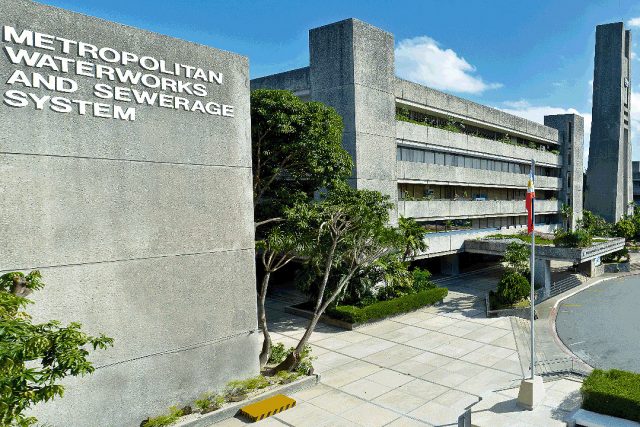
MWSS: Collection from water concessionaires is legal

THE Metropolitan Waterworks and Sewerage System (MWSS) on Thursday said the supposed “excessive” amount collected from its regulated water concessionaires is legal.

“We emphasize that any increase in tariff is subject to the review of the MWSS Regulatory Office, as they determine reasonable rates in the delivery of safe drinking water supply and environmentally safe sewerage services,” the agency said in a media release.

In its 2022 annual audit report, the Commission on Audit (CoA) said the MWSS billed and collected the share of Maynilad Water Services, Inc. and Manila Water Co., Inc. for the costs and expenses involving the New Centennial Water Source-Kaliwa Dam Project.

According to the agency, it explained to the CoA on June 16 the legal background of the collections.

It said it is allowed to collect local counterpart costs under its tripartite memorandum of agreement (MoA) with the two concessionaires. The collection covers the loan equity of the commercial contract amount, the cost of permits and clearances, and a standby cost, among others.

The CoA said that with the collections covering the dam project and the Bantay Gubat Fund, the fees received from the concessionaires were in “excess of the limitations set under the concession agreement.”

The MWSS addressed the concerns, saying the collection is under the same tripartite MoA that requires the funding of the salaries and wages of the Bantay Gubat personnel.

“The MWSS shall continue to exercise prudent collections from the water concessionaires, prioritize building its water resources, and ensure the welfare of Bantay Gubat, our partners in protecting our watershed,” the water administrator said.

“We assure the public that our Agency’s actions are aligned with legal requirements, the Philippine Development Plan, and the future water needs of the Filipino people,” it added. — Sheldeen Joy Talavera

Hollywood writers’ union says new proposal from studios not enough

NATHAN DEFIESTA-UNSPLASH

HOLLYWOOD studios and streaming services on Tuesday released the terms of a revised proposal to striking writers, but the union urged members to continue picketing as the new offer failed to address all their concerns.

The Writers’ Guild of America (WGA) had walked off the job on May 2 after negotiations reached an impasse and were later joined by members of the Screen Actors Guild, halting productions across Hollywood and costing the California economy billions of dollars.

The Alliance of Motion Picture and Television Producers (AMPTP), which negotiates on behalf of companies including Walt Disney and Netflix, changed its offer to include new details about critical issues like compensation, minimum staffing, residual payments, and curbs on artificial intelligence (AI).

According to the latest proposal, the WGA will get a compounded 13% pay increase over the three-year contract, and AI-generated written content will not be considered “literary material.”

The streaming platforms also offered to provide the WGA, which represents around 11,500 film and television writers, with the total number of hours viewed for each made-for-streaming show in confidential quarterly reports.

“We have come to the table with an offer that meets the priority concerns the writers have expressed. We are deeply committed to ending the strike and are hopeful that the WGA will work toward the same resolution,” AMPTP President Carol Lombardini said in a statement.

WGA received the counterproposal from AMPTP on Aug. 11 and on Tuesday met with Walt Disney CEO Bob Iger, Warner Bros. CEO David Zaslav, NBCUniversal Studio Group Chair Donna Langley and Netflix Co-CEO Ted Sarandos, to discuss the new offer.

“But this was not a meeting to make a deal. This was a meeting to get us to cave,” WGA said in a message to its members.

The union said it explained in the meeting why the offer fell short and “failed to sufficiently protect writers from the existential threats that caused us to strike in the first place,” but AMPTP released details of the proposal anyway.

WGA plans to continue picketing and said it would share with members more details on the state of the negotiations.

“And we will see you all out on the picket lines and let the companies continue to see what labor power looks like,” it said. — Reuters

Hanging over the world, a second Trump term

RAWPIXEL.COM

THE same question that hangs over American democracy also casts a shadow over all of world politics: What if Donald Trump walks back into the White House in 2025?

He may or may not. But if he does, he’ll feel unshackled from even the few fetters that restrained him in his first term, and will try to bring all branches of federal government under his personal control in order to go after his domestic enemies.

Just as ominously, Trump would also revert to his foreign policy of chaos, driven by instincts and complexes rather than interests and principles. John Bolton, Trump’s former national security advisor, describes the result as “an archipelago of dots, unconnected by chords of logic.”

There are those around the world who’d be giddy — the populists, strongmen, and autocrats, the type Trump befriends, admires, and emulates. One is Victor Orban, prime minister of Hungary and darling of America’s MAGA right. Another is Benjamin Netanyahu, the Israeli prime minister who channels Trump in weaponizing the institutions of democracy to gain personal power — and stay out of jail.

The most sinister foreign fan, though, is Vladimir Putin, the Russian president who rooted for Trump in 2016, authorized Russian influence operations for him in 2020, and would love to strike a deal with The Donald in 2025 — about carving up Ukraine and much else. The administration of US President Joe Biden now assumes that Putin will therefore keep up his bloody but stalled assault against Ukraine at least until the American election.

For that same reason, Ukraine is terrified about a second Trump term. Recall that Trump’s first impeachment centered on his withholding of aid to Kyiv to pressure it into going after the Biden family. In Trump’s mind, Putin’s brutal war of aggression is little more than a territorial dispute in which the US and its allies have little at stake. Whereas Biden has held together the West in support of Kyiv, Trump would probably abandon the Ukrainians to their fate, or force them into negotiations against their will.

That prospect also spooks America’s partners. In his first term, Trump made clear how little he thinks of alliances, even NATO, the mutual-defense bloc that has deterred the Kremlin since 1949. He cast doubt on America’s resolve to honor NATO’s Article 5 — which says that an attack against one is an attack against all — and threatened to pull out of the alliance altogether. In his second term, he just might.

Whether he would or not, the mere possibility unsettles NATO members such as Estonia, Latvia, and Lithuania — post-Soviet nations that would feel most threatened by Russia if it succeeds in Ukraine — and non-NATO allies such as South Korea and Japan. Meeting with Biden at Camp David last week, they took a first step toward a NATO-lite alliance in East Asia to deter China. With Trump in the White House, they may conclude that America’s word is not to be trusted. That same thought may tempt China to attack Taiwan or seize more of the South China Sea.

At a more general level, Trump would bury whatever remains of the notion that America, a fading superpower that’s nonetheless the closest thing the world has to a hegemon, should lead internationally to maintain order. In place of principles, Trump would make policy with a brute and opportunistic transactionalism — a commercial deal here and a trade war there, a photo-op with a dictator here and the snub of an ally there. That archipelago of dots again.

What can America’s allies do to prepare? The logical conclusion for blocs such as the European Union (EU) would be to finally pool military strength in the form of a “European Army” that can deter aggression even without American might. French President Emmanuel Macron, who likes to talk up Europe’s “autonomy,” ought to favor that path, even putting his country’s nuclear arsenal at the service of the whole EU.

In practice, he won’t. Nor will the EU, a fractious bunch, compensate for American withdrawal by becoming a United States of Europe. The more likely result of Trumpist isolationism is that Europe’s regional powers would again drift apart. The Poles, if they still have their populist government, might flirt with Trump for special deals. The Germans might revert to historical type and negotiate with the Kremlin over the heads of their eastern neighbors. The French would try to stay aloof in Gaullist hauteur.

Such fragmentation and disorder would manifest in other regions. International politics is inherently anarchical and requires either a hegemon or a balance of power to maintain order. Without the first — which took the form of a Pax Americana since World War II — the world would probably revert to searching for the second. This path tends to lead through a series of wars, especially as China will vie with the US for supremacy in the nascent global system.

America’s allies are well aware of these scenarios. So I asked Michael Link, the coordinator for transatlantic relations at Germany’s foreign ministry, how they’re preparing. Germany and its European partners should use the time until the election to seal as many pacts as possible with the Biden administration, he told me via e-mail. Simultaneously, the Europeans should build “good, robust relationships” with Republicans in Congress and elsewhere. If Trump then tries to leave NATO or close US bases in Germany, America’s allies could “mobilize these contacts … to work around Trump.”

Forgive me, but that’s it? Indeed it is. Neither Europe nor East Asia or any other region of the world knows how to step up to the challenge of Trump 2.0 and the associated forfeiture of American leadership. The best they can do is talk to other Republicans and hope that the better angels within the GOP save the world from disaster.

Here’s hoping that those better angels still exist in the erstwhile Party of Lincoln. Tonight’s debate among Trump’s challengers for the Republican nomination, which he is ghosting, may offer some clues. One glimmer of optimism came out of the Senate last month, when it passed a bipartisan bill that would prevent any president from pulling out of NATO without two-thirds approval in the Senate or an Act of Congress. Getting it past Republicans in the House will be harder though.

US elections are almost never decided on foreign policy. But US voters, and especially Republicans, must be aware that what’s at stake in 2024 is the future of not only the country but also the world. Nuclear non-proliferation, the fight against climate change and other forms of international cooperation, as well as the struggles between autocracy and democracy and disorder and order — all this will in effect be on the ballot.

Will Trump walk back into the White House? America’s foes hope so. Its friends pray he won’t.

BLOOMBERG OPINION

ADVERTISEMENT
ADVERTISEMENT