Home Blog Page 4248

Judge halts SPAC dissolution after law firm sues for fees from failed merger

A Delaware judge is temporarily blocking a special purpose acquisition company’s plan to dissolve after its former law firm Schulte, Roth & Zabel sued to recover more than $1.9 million in legal fees for work on a now-failed merger with the Philippines’ largest casino.

Vice Chancellor Travis Laster of Delaware Chancery Court on Wednesday granted Schulte’s motion for a temporary restraining order to prevent its former SPAC client 26 Capital Acquisition Corp from liquidating and dissolving before it pays its legal fees.

Schulte advised 26 Capital on its planned $2.5 billion SPAC merger with an affiliate of Japan’s Universal Entertainment that owned the Okada Manila casino resort.

Laster earlier this month refused to order Okada Manila to complete the merger in part because of disclosure failures in the deal, finding that 26 Capital “engaged in conduct that should not be rewarded” by forcing the merger to close.

The blank-check company said last week that it would dissolve entirely, liquidating its trust account and distributing its assets to its stockholders by Oct. 13.

Such a move would prohibit Schulte from recovering any unpaid legal fees, the firm alleged in its lawsuit on Tuesday.

Laster’s order said the temporary restraining order will expire Oct. 11. He granted the law firm’s bid to expedite the case and said he would hold a hearing within 10 business days.

26 Capital said in a statement that it will “fight against these unfounded legal actions.” It said it was “deeply troubled that SRZ has sought to interfere in the timely and orderly liquidation and distribution of investor capital back to its rightful parties.”

Schulte, which has more than 300 lawyers in New York, Washington, D.C., and London, said it has devoted hundreds of hours to finance and merger-related legal work for 26 Capital.

A Schulte spokesperson said Thursday the firm does not have additional comment beyond its prior statement, which said the “law is clear” that the firm is entitled to fees for the work it did on behalf of 26 Capital. — Reuters

US commends PHL on removal of Chinese barrier in South China Sea

NAVY.MIL

WASHINGTON – The Philippines’ removal of a Chinese floating barrier near the Scarborough Shoal in a disputed part of the South China Sea was “a bold step in defending their own sovereignty,” a senior US defense official said on Thursday.

Manila had expressed outrage over China’s placement of a long, ball-buoy barrier near the rocky outcrop, some 200 km (124 miles) from the Philippines. It has seen years of intermittent flare-ups over sovereignty and fishing rights.

The Philippines coast guard said on Monday it executed a “special operation” to remove the barrier, calling it a violation of international law and a hazard to navigation.

During a congressional hearing, US Deputy Assistant Secretary of Defense for South and Southeast Asia Lindsey Ford commended the Philippines’ action and reaffirmed Washington’s security commitments to its Asian ally.

“The department has been incredibly clear that when it comes to our treaty commitments to the Philippines, we believe an armed attack against Philippine Armed Forces, public vessels, aircraft, apply to the South China Sea. That includes the Philippine Coast Guard,” Ms. Ford told a House of Representatives subcommittee on foreign affairs.

“We stand by those commitments absolutely,” she said.

The Chinese coastguard late on Wednesday disputed the Philippine version of the events, saying the Chinese side had retrieved the barrier on Saturday after deploying it a day earlier when a Philippine vessel “illegally” entered the area.

China’s foreign ministry has defended the actions of its coast guard as “necessary measures” after a Philippine bureau of fisheries vessel “intruded” into its waters on Friday.

The incident highlights the strained relations between China and the Philippines at a time when Manila is rapidly strengthening military ties with Washington.

Ms. Ford said the US was “thrilled” about the implementation of the Enhanced Defense Cooperation Agreement, a deal reached earlier this year between Manila and Washington that gives the US access to four more military bases in the Philippines.

Control of the strategic Scarborough Shoal, seized in 2012 by China, is a sensitive issue as it formed part of a legal case filed by the Philippines at the Permanent Court of Arbitration in the Hague. The court ruled in 2016 that Beijing’s claim to 90% of the South China Sea had no basis under international law.

China has refused to recognize the landmark ruling. — Reuters

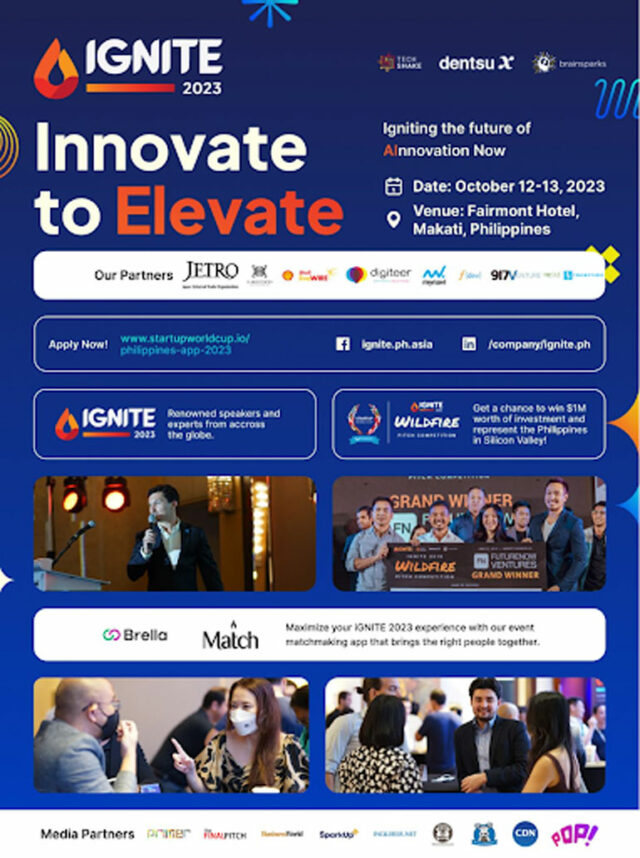
IGNITE 2023: Innovate to Elevate — Igniting the Future of AInnovation Now

For nearly half a decade, IGNITE, powered by the collaborative efforts of TechShake, dentsu X, and Brainsparks, has been a catalyst for connecting startups, corporations, and investors. Together, they have built bridges, fostered collaboration, and unleashed the power of innovation. Prepare to be immersed in a dynamic blend of online and offline experiences, as they bring you the biggest event yet!

IGNITE 2023 is a two-day event from Oct. 12-13, 2023 at Fairmont Hotel in Makati City, Philippines.

This year, IGNITE goes global, transcending borders to unite visionaries from all corners of the world. Participants can look forward to an exciting and enriching program of activities. These include workshops, panel discussions, and speaker sessions with well-known speakers from across the globe; and pitch events featuring the top startups in the region.

The conference will kick off with the Shell LiveWIRE Acceleration program where the Top 3 Tech Startups: Farmvocacy, Lithos, and Lycan will pitch to select a grand prize winner. The Top 6 Community Enterprise of the program: Agri-VINO, DLR Foods Supply Trading, OSCFO, Philia, and Samada will also be present during the program. Also, the Top 10 Japanese companies will pitch onsite at the X-Hub Tokyo Demo Day.

The second day is the WILDFIRE X Startup World Cup Pitch Competition. The grand winner will represent the Philippines at the Startup World Cup 2024 in Silicon Valley and have the chance to win $1,000,000! Also, the second day will feature speakers and workshop sessions in collaboration with Young Founders Summit.

Join the event on Brella and share their hashtags #IGNITE2023 and #IGNITEPH.

Check out IGNITE PH’s website for more details and get your tickets at a special rate! Visit now at https://www.ignite.ph/. 

This event is made possible through the continuous support of their partners: Japan External Trade Organization (JETRO), X-Hub Tokyo, Shell LiveWIRE, Digiteer, Mynavi, f(dev), Sprout Solutions, Penbrothers. They would like to thank the rest of their community and media partners including Primer, The Final Pitch, Business World, When in Manila, Sparkup, IINQUIRER.net, Be an Inquirer, Cebu Daily News, POP!


Spotlight is BusinessWorld’s sponsored section that allows advertisers to amplify their brand and connect with BusinessWorld’s audience by enabling them to publish their stories directly on the BusinessWorld website. For more information, send an email to online@bworldonline.com.

Join us on Viber at https://bit.ly/3hv6bLA to get more updates and subscribe to BusinessWorld’s titles and get exclusive content through www.bworld-x.com.

Shang Properties bags three awards at the 11th PropertyGuru Philippines Property Awards

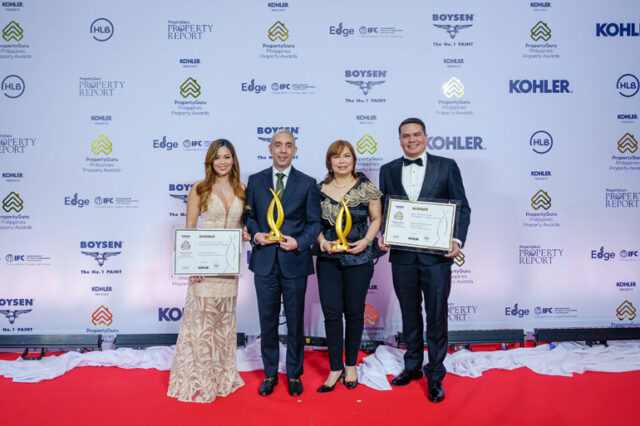
From left to right: SRPI Sales Director Nicole Amponin, SPI Sales Director Martin Gallaga, SPI Senior Director for Group Sales Rose Morales, and SPI Broker Director Joe Brimer receive the SPI’s and SRPI’s awards at the 11th PropertyGuru Philippines Property Awards at Shangri-La The Fort, Manila.

A leader in luxury property development, Shang Properties brought home three awards from the PropertyGuru Philippines Property Awards held last Sept. 22, 2023 at Shangri-La at The Fort, Manila.

Decided by an independent panel of expert judges, PropertyGuru Philippines Property Awards annually celebrates the finest in real estate from the country’s urban and provincial property market. In the 11th edition of said event, Shang Properties was awarded as the Best Ultra Luxury Condo Development in Metro Manila and Best Condo Development in the Philippines for Aurelia Residences (under Shang Robinsons Properties, Inc., a joint venture between Shang Properties and Robinsons Land Corp.) and Best High End Condo Development in Metro Manila for Shang Residences at Wack Wack.

Rose Morales, SPI Senior Director for Group Sales, proudly accepts the award for Best Ultra Luxury Condo Development in Metro Manila.

“We are very honored to have our properties recognized by Southeast Asia’s leading property technology company. This is a testament to our company’s vision to provide luxury products which are thoughtfully designed with unmatched services and amenities intended to cater to our clients’ needs,” says Wolfgang Krueger, Shang Properties’ Executive Director.

These wins mean that Shang Properties is eligible to advance to the 18th Property Guru Asia Property Awards Grand Final on Dec. 8, 2023 in Bangkok, Thailand. They will be competing against other nations across Southeast Asia and other countries including China, Japan, India, and Australia.

Leaders in luxury real estate

As part of its continuous commitment to delivering exemplary spaces and experiences, Shang Properties recently launched their newest property, Laya by Shang Properties, in Pasig City. It is a canvas, thoughtfully designed modern space for self-expression, a community for human connection, and a space for cultural enrichment. With a wide range of unit types and sizes, Laya gives the owner freedom to create a space that’s uniquely their own.

The real estate developer had also unveiled another exciting property in the up-and-coming neighborhood of Bridgetowne, Pasig City, together with Robinsons Land, earlier this year. Inspired by the Filipino word for imagination, Haraya Residences is a luxury vertical village composed of two stunning towers that boldly reimagine modern living through its unique design, layout, and array of indoor and outdoor amenities — all thoughtfully curated for the most discerning urban dwellers.

For the complete list of winners and more updates, visit Asia Property Awards at asiapropertyawards.com, @asiapropertyawards on Instagram and Facebook, and @asiapropawards on X (formerly Twitter).

To learn more about Shang Properties, visit the website at www.shangproperties.com and follow Shang Properties on its official social media pages: @ShangProperties on Instagram and Facebook, @ShangPropertiesOfficial on YouTube, and Shang Properties on LinkedIn.


Spotlight is BusinessWorld’s sponsored section that allows advertisers to amplify their brand and connect with BusinessWorld’s audience by enabling them to publish their stories directly on the BusinessWorld website. For more information, send an email to online@bworldonline.com.

Join us on Viber at https://bit.ly/3hv6bLA to get more updates and subscribe to BusinessWorld’s titles and get exclusive content through www.bworld-x.com.

Remarkable accolades for the shapers of Philippine real estate’s future

Diversified developers across the nation make their mark at 11th PropertyGuru Philippines Property Awards

Last Sept. 22, the 11th PropertyGuru Philippines Property Awards, organized by property technology company PropertyGuru Group, presented by Kohler, and supported by Boysen Paints and Dongpeng Ceramic, feted the archipelago’s finest real estate in a celebration that drew the nation’s most accomplished and up-and-coming developers and industry leaders.

Held for the first time at Shangri-La The Fort, Manila in Bonifacio Global City, Taguig, the annual black-tie gala dinner and presentation ceremony recognized excellent companies and projects from the country’s most exciting urban and provincial property markets. Around 71 winners earned golden statuettes across 65 categories, representing the finest real estate sprawled across Luzon, Visayas, and Mindanao.

“The PropertyGuru awards provide a powerful international platform to showcase their achievements, which include some of the region’s most exceptional industrial developments, mixed-use communities, smart urban projects, and hospitality portfolios,” Jules Kay, general manager of PropertyGuru Asia Property Awards and Events, said in a statement congratulating this year’s winners.

Mr. Kay added that this year’s winners “continue to shape the future of real estate in the dynamic metropolitan and provincial regions of the Philippines.”

For Jeremy Williams, managing director for marketplaces at PropertyGuru Group, the excellence the winners showcased through their developments represent remarkable growth and progress in the country.

“The awardees’ commitment to innovation, sustainability, and quality truly serves as an inspiration to the real estate industry, as we build the cities of tomorrow. We hope that the winners, with their commitment to ESG and sustainable design, will contribute to a better world in the years to come,” Mr. Williams added.

Rewarding and inspiring

Besting high-quality entries from across the country, Robinsons Land Corp. (RLC) was judged the Best Developer in the Philippines for the second consecutive year. It also won the title of Best Developer (Visayas), in addition to a Special Recognition in ESG; while RLC Residences was named Best Lifestyle Developer.

Furthermore, RLC Residences’ Sierra Valley Gardens won the Best Condo Development (Luzon); Woodsville Crest received the Best Smart Home Development; and The Residences at The Westin Manila was hailed the Best Luxury Condo Development in Metro Manila.

In his acceptance speech, RLC Residences Senior Vice-President and Business Unit General Manager John Richard Sotelo expressed his gratitude not only to PropertyGuru but also to the people comprising RLC Residences’ team for their hard work.

“[W]e launched the brand in 2021 — smack in the middle of the pandemic. Despite the challenges, the whole team made all the efforts to bring RLC Residences to where it is now and is continuously bringing the idea to life. So, to the whole RLC Residences team, thank you for all the hard work and congratulations to us. Looking forward to more years to come,” Mr. Sotelo was quoted as saying.

With a strong hotel roster, Robinsons Hotels and Resorts garnered the Best Operational Hospitality Portfolio award, supported by multiple wins for Fili Hotel Cebu. Robinsons Offices was honored for its office developments GBF Centers 1 & 2 and Cybergate Iloilo Towers 1 & 2. Aurelia Residences, a project of Shang Robinsons Properties, Inc., won the prestigious Best Condo Development (Philippines) award.

The titles of Best Developer (Luzon) and Best Mixed Use Developer were both presented to Federal Land, Inc. (FLI), which also won for its development The Grand Midori Ortigas. Sunshine Fort North Bonifacio Realty Development Corp. and North Bonifacio Landmark Realty and Development. Inc., both subsidiaries of FLI, clinched winning titles for their developments Mitsukoshi BGC and Grand Hyatt Manila Residences South Tower, respectively.

The developer attributes these awards to its devotion to designing homes that are remarkable and fit the needs of their intended residents and community. These recognitions also inspire FLI to continue creating innovative and well-built developments in the country.

With many of its properties built through collaboration, FLI is also notable for its strategic partnerships with trusted names both in the local industry and the international scene. Rooted in the philosophy of FLI’s founder George S.K. Ty on partnerships, FLI collaborates with global giants to improve its own standards and abilities. FLI, in turn, shares with partners their keen understanding of the local market and the company’s value for excellence and discipline.

Also, Cebu Landmasters, Inc. (CLI) was hailed Best Developer (Mindanao), supported by various wins for its projects Casa Mira Towers Bacolod; Casa Mira Homes Danao; Casa Mira Iloilo; Costa Mira Beachtown Panglao; and DGT City Center.

Honored for the project Royal Oceancrest Mactan, Primary Homes, Inc. won the Best Sustainable Developer title and received a Special Recognition in Sustainable Design and Construction.

Torre Lorenzo Development Corp., accoladed for the projects 3Torre Lorenzo and lyf Malate Manila, was named Best Boutique Developer.

Reaffirming commitments

Aboitiz InfraCapital Economic Estates (AIC Economic Estates) gained the Best Industrial Developer award, in addition to Special Recognitions in ESG and Sustainable Design and Construction, plus winning titles for the projects LIMA Central Business District, LIMA Estate, and West Cebu Estate.

For Cyel Auza, vice-president for Cebu Operations at AIC Economic Estates, being recognized as the best industrial developer in the country reflects AIC Economic Estates’ commitment to driving economic, social, and environmental progress in the countryside.

“This distinction is a direct result of our unwavering commitment to advancing industries and enhancing the quality of life in the communities we serve,” Ms. Auza said, adding that their team has consistently pursued its mission over the past three decades.

On top of such commitments, AIC Economic Estates also notes that its special accolades underscore its dedication to sustainability, understanding the crucial role that sustainable practices play in ensuring the long-term prosperity of their business.

“Our projects, including LIMA Estate, which was honored as this year’s Best Green Development in the Philippines, are meticulously designed with sustainability as a central focus, aligning with both global and local sustainability objectives,” Ms. Auza said.

Ms. Auza also noted that the accolade the West Cebu Estate received as the Best Industrial Development shines a well-deserved spotlight on Balamban, Cebu — the estate’s location — and its neighboring communities.

“For the past 30 years, we have been dedicated to manufacturing world-class shipping vessels right here in this region, and it gives us great pride to know that what is produced here in Balamban, goes on to be seen around the world,” she said.

“West Cebu Estate has played a transformative role in elevating Balamban from a fourth-class municipality to a first-class one,” Ms. Auza added. “Our success story underscores the immense potential that exists within our nation, and we’re excited to continue championing this cause, driving progress, and nurturing the talents of our local workforce.”

Shang Properties, Inc. (SPI) also joined this year’s roster as its Shang Residences at Wack Wack was awarded Best High End Condo Development (Metro Manila).

Wolfgang Krueger, executive director of SPI, shared that this recognition reaffirms their commitment to excellence and innovation in real estate and, moreover, validates their vision to redefine luxury living in Metro Manila and beyond.

“The winning factor behind our company’s strategy is our unwavering dedication to three core principles,” Mr. Krueger added. “Quality is at the heart of everything we do, from selecting prime locations to designing and constructing high-end properties that exceed expectations. Innovation drives us to constantly evolve, incorporating cutting-edge technology and sustainable practices into our projects. Most importantly, our customer-centric approach ensures that we prioritize the needs and desires of our clients at every stage of development. By adhering to these principles, we create enduring value and elevate the standards of luxury living.”

Sustainable developments

Another developer that bagged several awards, among others, is ISOC Land, Inc. Its I-Land Residences Sucat won the Best Affordable Condo Development (Metro Manila) and Best Eco Friendly Condo Development. It also received a Highly Commended citation under the Best Condo Architectural Design category.

ISOC Land Vice-President and Business Unit Head May Lopez considers this award as a testament to the developer’s efforts of “providing unbeatable value with all the benefits of comfort, convenience and wellness that our carefully designed communities offer.”

Ms. Lopez also attributes this accolade to the developer’s brand pillars of innovation, sustainability, operational excellence, and customer focus, which guide them in making sustainable living a reality to more and more Filipino families.

“The success of I-Land Residences Sucat affirms that Filipino home seekers these days truly recognize the importance of a sustainable home — one that provides more than just physical or financial value,” Ms. Lopez added.

Pueblo de Oro Development Corp. (PDO) gained recognitions for PDO Townscapes Malvar, which won both Best Township Development and Best Lifestyle Development awards.

Prim Nolido, President and COO of PDO, attributes their success not only to the dedication and hard work of its team, but also to a philosophy that goes beyond aesthetics.

“We aspire to be a developer that not only constructs impressive structures but also cultivates sustainable communities and townships. Our approach is marked by thoughtful consideration for the environment and the well-being of our homeowners and future residents,” Mr. Nolido said.

This inclination to sustainability, for Mr. Nolido, has been the winning factor behind their company’s strategy.

“Our design concept celebrates open garden spaces, symbolizing the cycles of life, and serving as common areas for the community to come together,” Mr. Nolido explains. “Also, we take advantage of the landscape and we base our designs on the area’s natural topography. This approach promotes ecological balance, reduces water consumption, and enhances the resilience and biodiversity of the environment.”

Its winning development, PDO Townscapes Malvar, exemplifies this commitment to sustainability as it embraces the principles of “new urbanism,” by offering a holistic “work-live-play-learn” lifestyle.

“Envisioned as a sprawling, premier, eco-friendly community and safe haven with stunning views, green pockets, and unique outdoor amenities, the development is part of a 286-hectare mixed-use complex together with PDO’s sister company, Science Park of the Philippines,” Mr. Nolido shared. “Another distinguishing feature is its remarkable 50% allocation of its total area to open spaces and wide roads.”

Aboitiz Land, Inc. won the prestigious Best Housing Development (Philippines) award for Seafront Residences, plus winning titles for the projects Ajoya Cabanatuan and The Villages at Lipa.

SM Development Corp. (SMDC), another recipient of the Special Recognition in ESG, gained a wide range of winning titles for its projects Bloom Residences, Glam Residences, Light 2 Residences, and Sands Residences.

In addition, Jose R. Soberano III, chairman, president, and CEO of CLI, was chosen as the Philippines Real Estate Personality of the Year by the team of Property Report by PropertyGuru magazine, for achievements that include leading the expansion of the homegrown Metro Cebu developer to more markets throughout the archipelago.

Mr. Soberano joins the elite ranks of past winners Henry Sy, Sr. and family, Ramon S. Ang, Manny Villar, and last year’s winner Lourdes Josephine Gotianun-Yap.

Meanwhile, the inaugural Rising Star award was presented by media partner Bridges to brothers Kyle Tan, president and chief executive officer of Eton Properties, and Lucio Tan III, director of LT Group, Inc., for their notable arrival in the real estate scene.

Fresh motivations

The main country winners of the PropertyGuru Philippines Property Awards will be eligible to advance to the 18th PropertyGuru Asia Property Awards Grand Final on Dec. 8 in Bangkok, Thailand. These winners will compete for honors against their peers from other nations across Southeast Asia and including China, Japan, India, and Australia.

“We are truly honored to be recognized along with the best in the country and be one of its representatives in the regional awarding ceremony in Bangkok,” Mr. Sotelo of RLC Residences said. “We are also equally proud to be part of Robinsons Land and its quest to bring to life world-class real estate developments here in the country.”

More than this representation in a bigger scene, nonetheless, the accolades are motivating developers anew to meet what their specific markets within the growing property space need from them.

Ms. Auza of AIC Economic Estates reiterated their company’s commitment to advance industries, uplift communities, as well as positioning the Philippines as an appealing investment hub in Asia.

“Moving forward, as the leading Industrial Developer in the Philippines, we plan to continue our journey as a techglomerate by continuously investing in cutting-edge technologies, fostering a culture of innovation, and nurturing partnerships with tech disruptors,” she said.

Banking on their recognitions for sustainability, Ms. Lopez of ISOC Land said their team will continue to prioritize comfort and wellness and ensure that natural resources are used and conserved prudently for the benefit of future generations.

Mr. Nolido also aims for PDO to continue embracing sustainability as it seeks to develop more projects that are centered on harmonious designs that will benefit the whole community.

“We will forge ahead by crafting more sustainable communities that promise higher financial returns for both investors and homebuyers alike. If it is any indication, PDO Townscapes Malvar is already experiencing sales at a much faster rate, compared to those in traditional communities.”

For Mr. Krueger of SPI, their commitment to quality will remain as SPI seeks to diversify its portfolio, expand its reach, and innovate its offerings.

“As we move forward, our plans include continued innovation in design and sustainability, investing in smart technologies, and expanding our presence in key growth areas. We will also focus on nurturing strategic partnerships to bring unique offerings to our customers,” he said.

Fueled by inspiration from its latest awards, FLI continues to bring new spaces in the market through its new joint venture with Nomura Real Estate Group, Federal Land NRE Global, Inc. (FNG). FNG plans to introduce best-in-class developments built on the strength of Japanese innovations and smart living concepts.

Behind the awarding

The list of awardees was decided by an independent panel of expert judges consisting of Cyndy Tan Jarabata, chairperson of the awards in the Philippines and president of TAJARA Leisure & Hospitality Group, Inc.; Carlo Cordaro, president and CEO of Atelier A; Jaime A. Cura, PhD, vice-chairman of The RGV Group of Companies; Jean Jacquelyn Nathania A. de Castro, CEO of ESCA, Inc.; Kathleen P. Obcemea, principal interior designer of KPO Beyond Designs Co.; Luis Enrique T. Mangosing, CEO of Metro Development Managers, Inc. (MDMI); Michelle Barretto, founder and CEO of Vitamin B, Inc.; Philip Mareschal, head of property and asset management of JLL Philippines; Raymond Rufino, CEO of NEO; and Richard Raymundo, managing director of Colliers Philippines.

Diaz Murillo Dalupan and Company — HLB Philippines upheld the fairness, transparency, and credibility of the selection process under the keen supervision of Ofelia S. Barroga, Lloyd T. Tan, Margaux Zarah Casihan, and Remedios Ducay.

The 11th PropertyGuru Philippines Property Awards was supported by platinum sponsor Kohler; gold sponsor Boysen Paints; silver sponsor Dongpeng Ceramic; official magazine Property Report by PropertyGuru; official newspaper The Philippine STAR; official publicity partner Ripple8; supporting association IFC — Excellence in Design for Greater Efficiencies; and official supervisor HLB. BusinessWorld is among the event’s media partners.


Spotlight is BusinessWorld’s sponsored section that allows advertisers to amplify their brand and connect with BusinessWorld’s audience by enabling them to publish their stories directly on the BusinessWorld website. For more information, send an email to online@bworldonline.com.

Join us on Viber at https://bit.ly/3hv6bLA to get more updates and subscribe to BusinessWorld’s titles and get exclusive content through www.bworld-x.com.

Designing the offices of the future

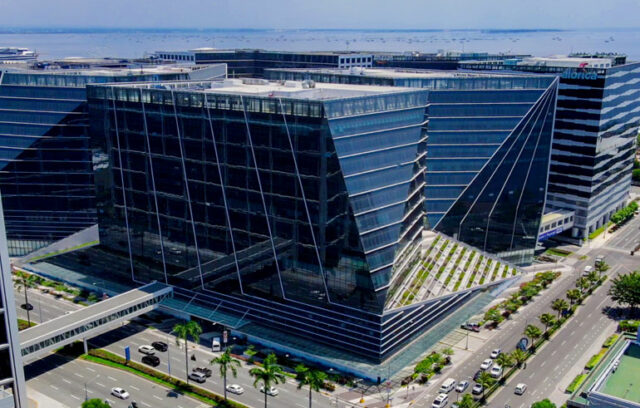
FourE-com Center

A few decades ago, the most advanced cities of the world were imagined to be those of steel-and-granite skyscrapers, towers of glass and cement, neon-lit highways, and asphalt roads. The concept of sustainability, or even simple greenery in the architectural landscape, is rarely registered as “progress.”

Now, in a world that has dealt with the impact of COVID-19 and is grappling with climate change, sustainable buildings are not only gaining traction but are becoming the norm. They represent a paradigm shift in urban planning and design.

These innovative structures integrate environmentally friendly practices, renewable energy sources, and advanced technologies to create a harmonious balance between human needs and the natural world. With their potential to redefine urban landscapes, these buildings are set to shape the cities of the future.

As our world grapples with the challenges of climate change and environmental degradation, the concept of sustainability has become more crucial than ever. In this pursuit, property developers have an obligation to focus on sustainable buildings that aim to minimize their ecological footprint while maximizing efficiency and occupant conveniences.

SM Prime Holdings, Inc., one of the largest integrated property developers in Southeast Asia, aims to do just that as it expanded its premium office portfolio with the launch of FourE-com Center in the SM Mall of Asia Complex.

“Situated in the less-congested Bay Area, FourE-com Center is the latest addition to SM Prime’s portfolio of high-quality, world-class office spaces, catering to both the growing corporate and BPO market in the Philippines. Today, it stands as the latest architectural landmark and an integral component of SM Prime’s E-com Office Block in the larger Mall of Asia mixed-use master plan, providing generous and flexible office solutions within a sustainable environment that rivals other international business hubs,” Alexis Ortiga, Vice-President for Commercial Properties Group at SM Prime, said in an interview.

Arquitectonica Director David Zaballero expounds, “The architecture of the towers creates a striking image which allows companies to project their corporate identity. FourE-com Center’s sculpted forms also create different floor-plate sizes, which allow BPO tenants a wider choice of continuous leasable areas. Finally, the different chamfers also allow for varied views, avoiding some direct views into other offices, while creating view corridors to the waterfront and bay.”

“Arquitectonica were the designers for all of the Mall of Asia E-com Centers,” he added. “Part of SM Prime’s brief was to ensure that each E-com Center, while relating to each other, still has its own strong identity. Thus, the previous E-com Centers involved monumental arches, moving slabs, and curving, counter-posed tower forms.”

“For FourE-com Center, which was a much larger site, Arquitectonica created three crystalline tower forms that rise out of the ground in dynamic angles, emphasized by the all-glass façade and the feature fins/lights that zip across its surface. At the same time, the podium deck is connected to the ground plane via broad landscaped terraces, while grand monumental stairs entice pedestrians to explore the buildings’ multiple levels. The idea was to create a dynamic composition with its own strong identity, while still meeting the needs of the market and the client.”

The new FourE-com Center presents approximately 100,000 square meters (sq.m.) of leasable area across three towers with 15 floors each and is the latest Pre-LEED Gold-certified office building in the SM Mall of Asia Complex.

“FourE-com Center’s LEED Gold Pre-certification presents the market with a highly sustainable office solution that adheres to both local and international companies’ growing ESG requirements. And as has become an integral feature of the E-Com Series, FourE-com Center has a fifth level sky garden open-air amenity for employees and guests to rejuvenate and enjoy the great outdoors within a secured setting, while the office floors offer air-condition provided flexible open-lay out spaces that range from 90 sq.m. to 3,200 sq.m.,” Mr. Ortiga added.

FourE-com Center will be connected to the meticulously-planned Mall of Asia Complex via a series of elevated pedestrian bridges to other essential destinations within the Complex, enabling tenant-partners and their employees to enjoy the benefits of walking to and from other E-Com offices, transport terminals, world-class hotels, and of course, the Mall of Asia.

FourE-com Center’s sustainable design features include a double-glazed glass curtain to allow natural light to permeate into office spaces, use of LED lighting, water-saving fixtures and aerators, pressure-operated escalators, and recycled water for irrigation. Other building elements also include bike racks, shower rooms, and inter-connected elevated walkways to encourage a reduction in carbon footprint.

“We continue to build green buildings with world-class amenities and sustainable features that provide an inspiring work environment for our tenant-partners and stakeholders,” Mr. Ortiga said.

Mr. Ortiga noted that SM Prime is aiming to expand its office portfolio on the back of a growing momentum and optimism in the real estate industry. Their plans, he said, were “supported by return-to-office policies; take-up of office spaces driven by e-commerce, BPOs (business process outsourcing) and data centers; and demand for innovative and sustainable office solutions that necessitate growth in the real estate sector.”

SM Offices’ other LEED-certified buildings include ThreeE-com Center in the Mall of Asia Complex, Mega Tower in the Ortigas CBD, Aura Tower in Bonifacio Global City, and North Towers in Quezon City.

FourE-com Center’s East and West towers began operations in July 2019 and are currently occupied by some of the most recognizable and illustrious names in the fintech and e-commerce industry.

Completed earlier this year, FourE-com Center South Tower is now ready to accept tenants that may need either multiple contiguous floors or bespoke spaces for their daily operations.


Spotlight is BusinessWorld’s sponsored section that allows advertisers to amplify their brand and connect with BusinessWorld’s audience by enabling them to publish their stories directly on the BusinessWorld website. For more information, send an email to online@bworldonline.com.

Join us on Viber at https://bit.ly/3hv6bLA to get more updates and subscribe to BusinessWorld’s titles and get exclusive content through www.bworld-x.com.

The fintech-driven revolution in banking

Image from Tumisu/PIXABAY

The banking industry has been around for centuries, but the rise of fintech has completely changed how banks operate.

Financial technology, or fintech, has brought about a revolution in the delivery, consumption, and management of financial services. In the Philippines, the rise of the digital economy has created a greenfield market for digital finance, presenting opportunities for traditional banks to grow and expand their services.

According to a report published by McKinsey & Company this year, the bankable population of the Philippines is projected to grow by 30%, from 65 million in 2022 to 85 million by 2030. Consequently, financial institutions are increasingly adopting modern technology to ensure more customer-centric, efficient, and convenient services.

Fintech has ushered in a new era of banking that is more accessible, especially for those who were previously unbanked or underbanked. The Bangko Sentral ng Pilipinas (BSP) aims to achieve 70% digital banking inclusion among Filipino adults and a 50% increase in digital retail transaction volume by the end of 2023.

Moreover, fintech delivers on what many millennials and Gen Zs demand — more pay options and convenience. Users can enjoy a seamless experience across all channels, including mobile, online, and in-person banking.

Enhancing convenience

The fintech industry in the Philippines is driven by the country’s booming digitalization and the ongoing efforts to promote financial inclusion. This factor raised expectations, including customers who demand fast-paced banking solutions.

According to McKinsey, 44% of the adult population in the Philippines remains unbanked. With the rise of fintech, individuals now have greater access to financial services, which promote economic growth and reduce poverty.

The growth of financial technology has led to the development of digital banking, which allows customers to access banking services through their mobile or computer devices. The Philippines follows suit from giant Asian countries, with several digital banks approved by the BSP before 2021.

Digital banking allows customers to perform transactions and manage their finances anywhere at any time. People can now open bank accounts, apply for loans, and make transactions online without visiting a physical bank.

Digital banking emerged with heightened consumer demands for more efficient ways to access banking records and complete financial transactions outside of local branches.

For instance, EastWest Bank, one of the traditional financial institutions in the Philippines, has been an early adopter of digital banking.

Komo by EastWest, launched in 2020, is the first exclusively digital banking service offered by a local bank in the country. Unlike traditional banking, Komo does not require maintaining balance. Komo also offers a savings account with a 2.5% interest rate, Visa debit cards, and digital checking accounts. Users also have unlimited free withdrawals at any EastWest automated teller machine (ATM) and up to four free monthly withdrawals for other BancNet ATMs.

This innovation gives customers greater control over their finances through self-service and real-time monitoring, which are significant benefits of online banking.

In addition, fintech opens opportunities for digital payments, allowing users to pay bills, transfer money, and buy goods online.

According to World Bank, the pandemic has led to an increased use of digital payments globally, with over 40% of adults in low- and middle-income economies making merchant in-store or online payments for the first time since the start of the pandemic.

In the Philippines, digital payments are fast gaining currency as consumers are starting to ditch cash after the pandemic.

According to a report by the BSP in 2022, digital payments have become increasingly popular, with a 42.1% growth of all retail payments by volume. In terms of value, digital payments represent 40.1% of all retail payments, amounting to US$78 billion.

The smartphone penetration rate and increasing internet users also drive the growth of digital payments in the Philippines. These trends are likely to continue as more people are expected to adopt mobile technology in the future.

Furthermore, innovation in the banking sector is a catalyst for the growth and success of the finance industry in the Philippines.

EastWest Bank has developed a digital payment channel with EastWest Pay App, a mobile payment application that allows EastWest Visa credit cardholders to pay by hovering their phone over a merchant’s point-of-sale terminal. The EastWest Pay App is the Philippines’ first mobile application that turns an NFC-capable Android device into a VISA EMV contactless card.

Unlike other mobile payment applications, the EastWest Pay App allows customers to pay in-store from their credit card account without loading the application before making a transaction. The mobile app also allows customers to access their credit balance, spending limit, and available credit limit.

This development proves that banks and financial institutions have increased their spending on technology to keep pace with consumer demand and provide efficient financial services.

The new financial system brought by EastWest Bank, alongside those from other players in the banking space, is the beginning of a change for the industry — opening opportunities to improve processes, grow revenue through expanded product offerings, and further inspire new strategies.

Therefore, a key element in fostering innovation in banking is the adoption of digital tools that enable advancements in both core processes and cultural innovation — implementing concrete measures to build more responsible and sustainable alternative models.

Maximizing opportunities

The onslaught of fintech and the recent pandemic has forced an increase in technology spending and adoption.

Moreover, financial technology speeds up transactions in the country, thereby hastening capital recovery and income generation.

According to McKinsey, weak information infrastructure and limited risk appetite have discouraged traditional banks from courting new market segments, especially with thin-file customers with small ticket sizes. However, traditional banks are increasingly maximizing the value of financial technology to improve their operations and customer experiences.

Since digital technologies has driven gains in financial access in emerging market, traditional banks are diversifying their product portfolios and offering technology-based services to improve their agility and competitiveness.

Based on a report published by the Asian Development Bank, improving platforms by leveraging newer technologies is the simplest form of attaining financial inclusion. Therefore, fintech can accelerate a broad-based economic growth and resilience towards financial inclusion and literacy. — Mhicole A. Moral

Defining what makes ‘smart’ banking

Image from AhmadArdity/PIXABAY

‘Smart’ is being integrated into a lot of words nowadays — from smart cities to smart homes — indicating the intelligent development of these areas through technologies. In the banking sector, several innovations are being adopted, especially with the rise of financial technology (fintech). But how do such technologies make banking smart?

There are several descriptions as to what makes a thing incorporated with technological advancements a smart one, ranging from the ability to collect data, to connect with other devices, to the ability to improve efficiency, among others. With the help of technologies, banking is thus becoming smart through enhancing banking operations and customer experience.

Banks in the Philippines, particularly the traditional ones, have adopted digital transformation with the further development of their mobile applications. But this is still deemed far from implementing digital finance’s more revolutionary features.

“To date, their (established banks) efforts have largely focused on creating mobile apps for existing customers and digitizing legacy processes,” management consulting firm McKinsey & Company remarked in an article published on its website. “However, mounting pressure from fintech firms is spurring innovation in the traditional banking sector.”

Operating in the cloud and leveraging emerging technologies such as artificial intelligence (AI) and blockchain were seen to hold significant potential to transform banking.

“Smart banks” are expected to migrate their core systems to the cloud, Accenture Managing Directors Nicole Lanza and Keri Smith noted. This is to keep pace with, as mentioned, the rise of new players in the market that are already harnessing cloud technology to provide financial services.

The cloud enables data storage and access over the Internet. However, to bring the core processes of banks like account transactions to the cloud might appear challenging for them.

“Core systems are both the engine and the heart of a bank, so it’s not surprising that banks can get nervous about making significant changes to them,” Ms. Lanza wrote in an article published in Accenture’s website.

“Banks make decisions based on risk — and smart banks will consider the risk of moving to the cloud too slowly,” she also noted.

By allowing core processes to operate in the cloud, it is anticipated that banks, especially their employees, could put further attention to producing more innovations.

Aside from the cloud, harnessing technologies to make banking smarter could be made through AI.

AI is thought to disrupt various industries, including the banking sector. McKinsey prospected AI technologies to bring an additional value of up to $1 trillion annually for global banking.

Banks could utilize AI to enhance the experience of their individual clients through personalization. For instance, McKinsey envisioned banking’s transformation through AI by being able to understand the previous behavior of customers and leverage this to deliver offers and money management solutions to them.

The firm also perceived AI’s potential to improve the banking experience of enterprise clients, among which are through customizing lending solutions, assisting in inventory and receivables management, and having a virtual adviser powered by AI.

Apart from customer experience, McKinsey sees AI’s potential in helping banks in their office operations. The technology could provide support in their processes such as employing facial scanning for transactions or biometrics for authentication, as well as furthering cybersecurity by identifying fraud patterns or potential attacks through machine learning.

Another emerging technology especially seen to revolutionize financial services is blockchain. While it is usually associated with cryptocurrency, blockchain technology is also touted for its potential to provide several benefits for banks such as improving transaction and security.

Since its utilization involves automating processes, blockchain can provide better efficiency for banks. And through applying cryptography, it enables a secure collection of transaction information.

Moreover, being a chain, one of the notable advantages seen from blockchain technology is bettering traceability, which could help in addressing fraud. Another benefit of blockchain is that the technology makes it too complex for data to be altered or removed, thus furthering transparency as well.

From traceability to transparency, which then could further accountability, harnessing an emerging technology like blockchain can enhance the security of banks in fulfilling their processes.

As financial institutions are among the industries most at risk for security concerns, especially with the accelerating digitalization in the sector, boosting their defense through innovations that provide not only better efficiency but also security could be another smart move to make for banks. — Chelsey Keith P. Ignacio

Tech trends reshaping the finance space

Image from TheInvestorPost/PIXABAY

The finance sector is among those at the frontline in marking a new era of digital transformation. The digital transformation of the financial sector has become a rising trend that opened the door for individuals and businesses to access and manage their finances in new and often more convenient ways.

Currently, most banks and financial institutions are using financial technology (fintech) and have transitioned to a digitalized finance landscape that helps provide financial services, including paying bills, insurance, and investments, with a tap on the consumers’ devices.

Fintech is paving the way to a more convenient, accessible, and more efficient financial ecosystem. The following fintech trends are seen to be shaping the market this year and largely contribute to financial inclusion and economic development.

Embedded finance

Embedded financing creates a seamless customer experience that integrates financial services into customers’ daily lives. Thus, embedded financing enables businesses to offer financial services more efficiently. The collaboration of technology companies and banks to integrate financial products into convenient and user-friendly products that will meet the financial needs of customers becomes a continuous trend that improves customer experience.

According to McKinsey & Company, any scenario where end users engage in digital interaction with any digital platform continues to give rise to embedded financing. Embedded financing provides a solution for financial and non-financial institutions to improve customer experience and develop revenue streams.

Artificial intelligence

To thrive in a digital-centric age, banks are adopting artificial intelligence (AI) technologies and its capabilities to deliver “personalized solutions and distinctive experiences in real time.”

In the past years, banks and financial institutions are now becoming AI-powered. Due to AI technologies, there is reduced data storage and processing costs, increased access and connectivity among financial services, and higher automation. Financial services are gradually becoming AI-powered.

“Building the AI bank of the future will allow institutions to innovate faster, compete with digital natives in building deeper customer relationships at scale, and achieve sustainable increases in profits and valuations in this new age. We hope the following articles will help banks establish their vision and craft a road map for the journey,” Renny Thomas, senior partner at McKinsey, said.

Neo-banks

Neo-banks are banks that are entirely run online and on the cloud. Neo-banks are well-known for using AI technologies and data analytics to provide hyper-personalized solutions for different consumer groups.

Moreover, neo-banks have also been collaborating with traditional banks to develop personalized products and services for end users, as well as integrate financial services and products, including banking, payments, and lending, among others.

According to professional services network Ernst & Young (EY), neo-banks have helped expand income opportunities and improve customer experience through the digital ecosystem.

Digital lending

Banks have so much to gain from digitizing its lending process for various reasons; namely, enhanced customer experience, quality decision-making, and significant cost-savings.

With recent modernization, EY explained, digital lending comes with modernized tools such as machine learning-based models and unified dashboards and data, among others. What makes digital lending more unique is that it offers advanced automation from application processing to data analysis.

Insurtech

Insurance has also been revolutionized by digitalization, paving the way to “insurtech” as another rising trends to keep watching for. With the adoption of technology in the sector, insurance services are now modified by utilizing digital technologies such as AI, machine learning, deep learning, artificial neural networks, and blockchain technology.

In addition, EY shared, insurance companies can provide insurance protection for businesses against cyber threats while allowing customers to tailor their plans to their specific needs. — Angela Kiara S. Brillantes

EastWest Pay: One step forward towards a cashless society

The financial sector is continuously evolving as technology makes financing more convenient. As we live in an age where people prefer doing everything online, including shopping, paying bills, financial and cashless transactions, and so on, banks are revolutionizing financing by adopting digital solutions at the heart of their operations.

An established universal bank, EastWest has successfully adopted digital banking innovations to make it easier and more convenient for every customer. The Bank’s digital shift aims to transform its operations, making them stronger and more capable of providing banking and financial services. For instance, EastWest’s new and upcoming digital banking platform promises “enhanced security, intuitive design and better performance with improved features and capabilities,” which are designed to cater to their customers’ needs and behavior.

In the Bank’s pursuit to provide more innovative solutions, EastWest has partnered with Visa to provide customers an alternative way to pay and transact easily, safely and securely. This partnership resulted in EastWest Pay, the country’s first near-field communication (NFC)-powered mobile payment application that enables EastWest Visa credit cardholders, such as Visa Infinite, Visa Platinum, Visa Gold, and Visa Classic, to use their Android smartphones instead of their physical credit cards for cashless and cardless transactions.

They simply need to download the EastWest Pay app, register or link their EastWest Visa credit cards and tap to pay at merchant’s Point of Sale (PoS) — here and abroad or wherever the Visa payWave/NFC symbol is available. Unlike other mobile wallets, there’s no need to load or cash-in anymore, since users can spend up to their EastWest Visa credit cards’ available credit limit.

Another great thing about this mobile app is that it ensures security for its users by requiring mobile verification and assignment of a 6-digit passcode upon registration. Moreover, users have the option to safely log in via biometrics (i.e., fingerprint and facial recognition). Transactions made through EastWest Pay are tokenized for added security, where it uses token numbers instead of the credit card’s actual card number.

“EastWest Pay takes banking to a whole new level of simplicity and efficiency. Your life is dynamic and fast-paced, and we want your banking experience to bring you to even greater heights,” says EastWest President Jacqueline S. Fernandez. “With EastWest Pay, you will discover that there’s an even easier way of doing things,” she adds.

In addition to being a mobile wallet that enables users to pay for everything with a device that they carry around everyday, EastWest Pay also lets users manage their EastWest Visa credit cards. For instance, they can access their account details and transaction history, track their spending behavior, and also temporarily lock and unlock their card.

With EastWest Pay, EastWest has provided a tech-innovative solution that promotes a cashless society. This is just one of several innovations from EastWest in their commitment to continuously improve products and services and promote easy banking for their customers. Jerry Ngo, EastWest’s CEO shares that the Bank has “unlocked new possibilities, redefined the banking landscape, and embarked on a journey of continuous innovation.” He reveals, “we are only just beginning, and you can expect more from us in the coming months.”

The EastWest Pay app is available for download on Google Play store for NFC-capable Android devices and exclusive to EastWest Visa credit cards.

East West Banking Corp. (EastWest) is a Filipino-owned universal bank. EastWest is a subsidiary of Filinvest Development Corp. (FDC), one of the country’s leading conglomerates with a diverse range of interests including real estate, banking, hospitality & tourism, infrastructure power generation, and sugar. It is not affiliated with any foreign financial institution which may bear the same name.

For inquiries and feedback, you may chat with EastWest System Tech Assistant chatbot at www.ewlend.com/esta, call the EastWest 24-Hour Customer Service Hotline at (+632)8888-1700, or e-mail cards@eastwestbanker.com. EastWest is regulated by the Bangko Sentral ng Pilipinas. https://www.bsp.gov.ph.


Spotlight is BusinessWorld’s sponsored section that allows advertisers to amplify their brand and connect with BusinessWorld’s audience by enabling them to publish their stories directly on the BusinessWorld website. For more information, send an email to online@bworldonline.com.

Join us on Viber at https://bit.ly/3hv6bLA to get more updates and subscribe to BusinessWorld’s titles and get exclusive content through www.bworld-x.com.

BSP to lower RRR ‘when time is right’

BW FILE PHOTO

THE BANGKO SENTRAL ng Pilipinas (BSP) is looking to further reduce banks’ reserve requirement ratio (RRR) when the time is right, possibly as early as 2024, its governor said on Thursday.

“For 2023, (yes), it’s off the table. Maybe the soonest would be 2024,” BSP Governor Eli M. Remolona, Jr. told reporters late on Thursday when asked when the central bank would consider RRR cuts.

“When the time is right, we will try to lower the RRR even more, but the time is not yet right,” he said.

The RRR is the portion of reserves that banks must hold onto rather than lending out.

In June, the BSP slashed the ratio for big banks and nonbank financial institutions with quasi-banking functions by 250 basis points (bps) to 9.5%. The BSP has brought down the RRR for big banks to a single-digit level this year from a high of 20% in 2018. 

“I think it’s not low enough, 9.5% puts us among the highest in Asia, among our neighbors,” Mr. Remolona said.

Asked about the possible terminal rate, Mr. Remolona said that the central bank is still studying this.

“The reason we had such a high reserve requirement is when we were still very old school it was a way to control money supply, nobody does that anymore… Right now, it’s just a distortion in financial intermediation, it drives a wedge between lending rates and deposit rates unnecessarily,” he added.

Last week, the Monetary Board extended its hawkish policy pause for a fourth straight meeting, keeping the key interest rate at 6.25% — the highest in nearly 16 years. 

The BSP has raised borrowing costs by 425 bps from May 2022 to March 2023 to tame inflation. 

Meanwhile, Mr. Remolona said the high interest rates do not appear to have impacted economic growth so far this year.

“In our estimate, it hasn’t yet affected GDP growth, but what we try to do is balance supply and demand. In our own models, the outcome is 0%, which means we are just at the right level,” he said.

The Philippine economy grew by a weaker-than-expected 4.3% in the second quarter, its slowest growth in more than two years, reflecting the impact of weaker consumption and government underspending.

For the first half of the year, GDP growth averaged by 5.3%, below the government’s 6-7% full-year target. — Luisa Maria Jacinta C. Jocson

NEDA chief expects better Q3 growth

Philippine gross domestic product (GDP) expanded by 4.3% in the April-to-June period, the slowest in two years. — REUTERS

ECONOMIC GROWTH likely rebounded in the third quarter as the government addressed underspending, National Economic and Development Authority (NEDA) Secretary Arsenio M. Balisacan said.

Asked if third-quarter gross domestic product (GDP) would be better than the second-quarter print, Mr. Balisacan told reporters on Wednesday: “That’s what we’re expecting.”

Philippine GDP expanded by 4.3% in the April-to-June period, the slowest in two years. This was weaker than the 6.4% growth in the first quarter and 7.5% in the same period last year.

The disappointing second-quarter growth was mainly attributed to weaker consumption and a decline in government spending. Government spending contracted by 7.1% in April to June, a reversal of the 6.2% growth in the first quarter and 10.9% a year ago.

“The contribution (to the economy) that we were expecting from government spending did not fully materialize in the second quarter, it can be recovered in the third or fourth quarter. It was not completely lost,” Mr. Balisacan said.

Government agencies have been flagged for their low budget utilization in the first half of the year. Data from the Budget department showed that the cash utilization rate of government agencies hit 93% as of end-August, behind the year-earlier pace of 95%.

Budget Secretary Amenah F. Pangandaman earlier said that the economy could have expanded by 5.3% in the second quarter if not for underspending.

Agencies have been ordered to submit catch-up spending plans to address low utilization. Mr. Balisacan also said that the economic team has been reporting the state of these catch-up plans to the President.

The NEDA chief is unfazed by recent growth downgrades by multilateral lenders and institutions, saying this is expected amid continued global headwinds.

“Let me just put in context that the reduced growth forecast by the Asian Development Bank (ADB) and other institutions is true for almost every country because of what they’re seeing in the global market. There are still quite upside risks there. It’s not just us,” he said.

The ADB recently lowered its Philippine GDP growth forecast to 5.7% this year from 6%; while the ASEAN+3 Macroeconomic Research Office cut its projection to 5.9% from 6.2% previously. The Organisation for Economic Co-operation and Development trimmed its GDP outlook to 5.6% from 5.7% earlier.

“If you look at the first-half growth of the country, we are still better than most countries in Asia, particularly in our ASEAN (Association of Southeast Asian Nations) region. Our first half is very respectable. I think that if we come close to that first-half (figure), we should be okay,” Mr. Balisacan added.

For the first half, GDP growth averaged 5.3%, lower than the government’s 6-7% target.

“As I said earlier, we need to grow 6.6% (in the second half) to achieve the lower growth (target), but even if that’s a little lower, I’d still be happy considering what has happened in the world and you can see that such performance will still make us quite a respectable country,” he said.

Mr. Balisacan said inflation remains the government’s biggest challenge.

“That’s why we (the economic team) are so focused on addressing the inflation issue because that high inflation as we all know reduces domestic demand, so we are incessantly monitoring the situation,” he said.

Inflation quickened to 5.3% in August from 4.7% in July. This marked the 17th straight month inflation breached the Bangko Sentral ng Pilipinas’ (BSP) 2-4% target band.

Headline inflation averaged 6.6% in the first eight months, still above the BSP’s revised 5.8% full-year forecast.

The Philippine Statistics Authority is set to release preliminary third-quarter GDP data on Nov. 9. — Luisa Maria Jacinta C. Jocson

ADVERTISEMENT
ADVERTISEMENT