Home Blog Page 4240

IT-BPM sector on track to hit revenue goal, boost GDP share

BW FILE PHOTO

By Justine Irish D. Tabile, Reporter

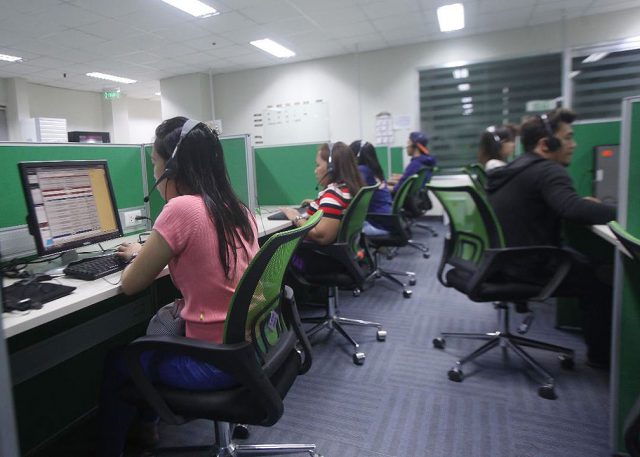
THE PHILIPPINE information technology and business process management (IT-BPM) industry is on track to hit its $35.4-billion (P2- trillion) revenue target by yearend, propped by US outsourcing companies, a talent gap in North America and strong government support, according to the IT and Business Process Association of the Philippines (IBPAP).

“The P$35.4 billion will be the likely number at the end of 2023,” IBPAP President and Chief Executive Officer Jack Madrid told reporters on the sidelines of an industry summit on Wednesday. “Hopefully, we will hit it or even slightly exceed it.”

If the goal is hit, the industry will post an 8.8% annual growth and surpass the global industry growth rate of 7.7%.

Mr. Madrid said this would allow the industry to increase its gross domestic product (GDP) contribution to 8.4% from 7% a year ago. The share of India’s IT-BPM industry in its economy pales in comparison at 3-4%, he added.

Meanwhile, the Philippine IT-BPM sector has surpassed the global industry’s performance in terms of headcount as the number of full-time employees reached 1.7 million, 8.7% higher than last year.

“The Philippines is a world capital in IT-BPM and we seem to be the first choice whenever there is an opportunity for offshoring and delivering customer experience,” Mr. Madrid said.

This is because Filipinos have a reputation of being able to deliver complex business services and diverse functions across vertical industries, he added.

The Philippine government has played a crucial role in the industry’s growth story by supporting remote and hybrid work policies.

“These policies have not only helped companies adapt to the changing work landscape but have also attracted foreign investments,” Mr. Madrid said.

He said growth is also evident in the IBPAP’s membership and the multinationals that have set up offices in the country and are aiming to expand even more.

“It is important to emphasize that most of the world is already here,” he said. “And those that are here, most of them want to grow their presence even more, because they’re happy with the results so far.”

The IT-BPM sector expects to add 257,000 full-time workers and $5.9 billion in revenues in the two years until the end of this year.

“These numbers indicate that the industry is set to achieve 23% of the 1.1 million jobs it needs to create and 20% of the $29.5 billion it needs to generate by 2028,” Mr. Madrid said.

The IT-BPM industry’s growth was also mirrored in the countryside, where development was robust as companies committed to expand to more locations outside Metro Manila, he said.

Cagayan de Oro, Cebu, Clark, Davao and Iloilo are now the favored locations of IT-BPM companies, the IBPAP chief said.

“This commitment not only contributes to economic growth but also spreads the benefits of the industry to regions that need it and across other sectors like food, logistics, real estate, retail and transportation,” he added.

The Philippines ranked second in the top global IT-BPM players after India, which remained No. 1 due to its population advantage, Mr. Madrid said. “We are not the biggest, but I’d like to occasionally say that we are like the Swiss Bank of the IT-BPM industry — not the biggest, but I think we’re the best in delivering customer experience.”

There is a chance for the country to overtake India “to a certain extent” as the “whole world wants a Filipino agent to take care of their query or concern.”

House recalls ratification of PPP bicameral report

PHILIPPINE STAR/ MICHAEL VARCAS

THE HOUSE of Representatives on Wednesday recalled the ratification of the Bicameral Conference Committee report that reconciled disagreeing provisions of a bill that seeks to boost private sector participation in state infrastructure projects.

The House withdrew the approval shortly after 5 p.m. and named several more congressmen as members of the committee. Congressmen ratified the report past midnight.

Bukidnon Rep. Laarni Lavin Roque moved for the reconsideration of the ratification without giving a reason in plenary. Albay Rep. Jose Ma. Clemente S. Salceda, who had pushed for the approval of the measure, did not immediately reply to a Viber message seeking comment.

The Senate redesignated its representatives to the bicameral committee that will meet again to review the consolidated report.

Senate Majority Floor Leader Emmanuel Joel J. Villanueva asked Senate President Juan Miguel F. Zubiri to name senators to the bicameral committee.

The proposed Public-Private Partnership (PPP) Code seeks to ensure an “open, fair, transparent and competitive selection as the central tenet for securing private investment in PPP projects,” according to a copy of the bicameral report.

The bill seeks to ease bottlenecks and challenges in the PPP process and improve the framework for unsolicited project proposals.

Senators and congressmen who discussed the bill in a conference agreed to “elevate the PPP law into a code so that future amendments will be made to the code instead of in a scattered way,” Mr. Salceda said in a statement earlier in the day.

The proposed code will cover all contracts between a state agency and its private partner to finance, design, construct, operate and maintain infrastructure or development projects and services.

PPP projects may also be financed partly by the government or through official development assistance (ODA) from foreign governments.

ODAs will include blended finance, where the partner government, bilateral or multilateral agency or international or multilateral lending institution can mobilize financing from private or commercial institutions for a loan or grant.

The proposed code will also cover joint ventures, agreements on toll construction, operation and maintenance, and lease agreements.

It will not apply to infrastructure projects under the Government Procurement Reform Act, management and service contracts, divestments or dispositions, corporatization, incorporation of subsidiaries with private sector equity, onerous or gratuitous donations, and joint venture agreements that are purely commercial in nature.

In developing a PPP project, an agency must consider the legal, technical, financial and commercial feasibility of the project; the value for money of the project; optimal risk allocation; affordability of fees and tariffs; climate resilience and sustainability; and social and environmental safeguards.

Under the bill, national PPP projects that cost P15 billion must be approved by the Investment Coordination Committee of the National Economic and Development Authority (NEDA), while those costing below P15 billion must be approved by the agency head.

Local PPP projects must be approved by local councils.

The head of an agency undertaking PPP projects will create a PPP pre-qualification, bids and awards committee in charge of all pre-bidding and bidding processes in solicited proposals or the comparative bidding process in unsolicited proposals. The final contract will be reviewed by the head of the agency.

The bill also seeks to create a PPP governing board that will oversee policies related to public-private partnerships.

The board will be headed by the NEDA secretary, with the Finance secretary as vice chairman.

The Commission on Audit will issue guidelines on auditing PPP projects.

The Senate approved the PPP bill on Sept. 25, while the House passed its counterpart measure in Dec. 2022.

As of Sept. 1, there were 104 PPP projects in the pipeline worth about P2.521 trillion ($44.3 billion). About 180 projects worth P2.639 trillion are being implemented, according to the Department of Finance. — Beatriz Marie D. Cruz and John Victor D. Ordoñez

Stablecoin issuers risk disrupting funding markets, JPMorgan says

COINWIRE JAPAN-UNSPLASH

STABLECOIN issuers vying for assets in the short-term funding space risk disrupting the market after the US Federal Reserve limited access to a key facility, according to JPMorgan Chase & Co.

The central bank decided in April that money funds created for the sole purpose of accessing its overnight reverse repo facility, or ON RRP, were deemed ineligible as a counterparty. That means stablecoins, seeking to park cash in liquid assets and unable to access the Fed facility, will likely have to compete with the $5.64-trillion money-market fund industry for assets like Treasury bills, potentially pushing those rates below the offering level on the RRP — currently at 5.3%.

“While prohibiting access to non-standard money-market funds makes sense from a financial stability perspective, it risks potentially disrupting the already-soft floor for money market rates that the Fed’s ON RRP currently provides,” strategists led by Teresa Ho wrote in a note to clients on Tuesday.

The RRP is a safe and attractive place for money-market funds, banks and other counterparties like government-sponsored enterprises to stash money overnight. It offers a steady known rate that’s linked to Fed policy benchmarks that is oftentimes higher than many other money-market alternatives like Treasury bills or market-based repo.

Until Treasury unleashed a deluge of bill supply beginning in June, counterparties parked more than $2 trillion at the Fed’s facility. Since then, usage has declined by roughly $723 billion as money-market funds shifted cash to higher-yielding T-bill and private repo markets. That shift slowed in the middle of July as other investors, enticed by the 5% yield on bills, piled into the very front end, crowding out the money funds.

So far this year, the total value of the crypto market has jumped around 30% to about $1.05 trillion, while the stablecoin sector has actually shrunk. It was down about 8% to around a two-year low of $127 billion in late July, according to researcher CCData. 

The combined reserve portfolios of the two largest stablecoins — Tether and USDC — was $114 billion as of June 2023, with over 60% in T-bills and 25% in repo. Even though they only represent 2% of the bill market, the strategists said additional growth in stablecoins could crowd out other buyers and intensify the supply-and-demand imbalance in the money-market space, leading to shortages in T-bills and repos, pushing rates even lower.

As the number of stablecoin issuers grows and enter short-term funding markets, there’s also an increasing exposure of the traditional financial system to turbulence in the crypto space.

For example, the collapse of TerraUSD in May 2022 underscored how quickly a run could occur in the short-term rates space. That’s because a swift and massive liquidation of other high quality liquid assets such as Treasury bills by one stablecoin issuer could impact the net asset value of other issuers and money-market funds holding T-bills, prompting even more liquidations.

“While it is a tail risk, the cryptocurrency market seems to be more prone to it,” Ho wrote. “Furthermore, any massive liquidation would likely be constrained by dealer balance sheets and their limited capacity to intermediate, which could also impact the NAV of other stablecoin issuers and other liquidity holders.” — Bloomberg News

AboitizPower, Vivant set to build Samar wind farm

MATT ARTZ–UNSPLASH

THE units of Aboitiz Power Corp.  (AboitizPower) and Vivant Corp. along with a Singapore-based energy firm are set to develop a 206-megawatt (MW) wind power project in San Isidro, Northern Samar.

In separate disclosures to the stock exchange on Wednesday, the two listed companies said Aboitiz Renewables, Inc. (ARI), Vivant Energy Corp., and Vena Energy had agreed on Tuesday to create a joint venture called Lihangin Wind Energy Corp. to develop, construct, and operate a wind power plant.

The renewable energy (RE) project is expected to reach financial closing before the fourth quarter of 2023, start construction in November this year, and be ready for commercial operations in the first quarter of 2025.

“We welcome this opportunity to partner with two leaders in renewable energy development which share our vision of helping the country attain energy security while promoting renewable energy and contributing to countrywide development,” Vivant Energy President and Chief Operating Officer Emil Andre M. Garcia said.

“We are privileged to have gained the trust of Vena Energy, a leader in RE in the Asia Pacific region. We’re glad that our long-time partnership with [AboitizPower]  has become stronger and has expanded to the RE space,” he added.

Mr. Garcia said the partnership brings the company closer to its goal of expanding its RE portfolio to 30% by 2030.

Vena Energy’s renewable energy portfolio consists of onshore and offshore wind, solar, and stationary and transportable energy storage projects totaling 45 gigawatts.

Asked about the total project cost, AboitizPower said the amount is still being determined by the parties.

Emmanuel V. Rubio, president and chief executive officer of AboitizPower, said that the project will contribute to the company’s wind energy portfolio and energy transition, as well as help address the country’s power supply needs.

“This undertaking demonstrates ARI’s progress in growing its renewable energy capacity to 4,600 MW, and is another momentous step in realizing our 10-year strategy of achieving a 50:50 balance in our renewable and thermal portfolios,” ARI President and Chief Operating Officer James Arnold D. Villaroman said.

On Wednesday, shares in AboitizPower rose 4.55% of P1.50 to finish at P34.50 each while those of Vivant Corp. dipped by 0.13% or two centavos to close at P15.48 apiece. — Sheldeen Joy Talavera

When data says chicken wings sell better than burgers, you pivot

FOODEE Global Concepts COO Eric Thomas Dee gave a sneak peek into the spicy wings challenge for Pound.

WITH all the new branches of FooDee Global Concepts’s restaurants comes a new way of working. To their brands, they’re adding new menu items — but how would you like a side of data served with your wings?

“I think the pandemic really helped to push forward all the technologies,” said FooDee’s COO Eric Dee during a media tour of their restaurants at the new Gateway Mall 2 in Quezon City’s Araneta City on Sept. 25.

While there are hand sanitizers on tables (holdovers from the pandemic), mostly the changes he’s seeing are increased reliance on technology and data, noting the importance of online payments and ordering. He does point out that since the world reopened, “Everyone’s back in dining, and then deliveries are kind of fizzling again.”

As for data, for example: looking into records with their POS (point of sale) as well as their partnership with online platform Booky, they’ve discovered that they go through 100 kilograms of chicken wings in a day at their Pound stores (the branch at Gateway Mall 2 is No. 11), hence the pivot from burgers.

“As an entrepreneur, I deal with a lot of gut feel. But gut feel cannot be taught,” said Mr. Dee. “The only way to do it is through analysis and decision-making through facts.
“If we didn’t use these analytics, we wouldn’t have made the decisions that we’ve made today,” he said.

FROM PORK FLOSS TO HOT SAUCE
Pound, the former burger joint turned wings purveyor, is just one of FooDee’s restaurants in the Gateway Mall expansion, many of which have added menu items or are holding promos to celebrate their presence in the new mall.

There is Tim Ho Wan (a Hong Kong chain with its original bearing a Michelin star; its master franchise acquired by Jollibee), to which they added Tofu pork floss, and other chef’s specials to its menu. In Hawker Chan, another chain bearing a Michelin star in its country of origin (in this case, Singapore), they’ve added new treats like laksa, char kway teow, and duck, as well as merienda bowls and platefulls (new serving sizes).

For Pound, in the Gateway Mall 2 branch especially, they’re holding a Hot Wings challenge (hot sauces from the Philippine Hot Sauce Club, ranging in heat levels from one to six). Plus, until Sept. 28, guests can pay what they want for a second burger.

Finally, there is Spanish yogurt chain Llao Llao (the Gateway Mall 2 branch is store No. 36) which will offer a fast pass option — a way to skip the long lines, due to the viral fame Llao Llao got on social media.

EXPANSION
Llao Llao and Hawker Chan are expanding quite rapidly, thanks to franchising deals FooDee has made. Hawker Chan will have 17 stores by the end of the year, while Llao Llao is on track to get to 50. Most of these franchises will open outside Metro Manila, and Mr. Dee points out that their Iloilo branch for Llao Llao makes six figures a day. “Provincial is the growth for us.”

After mentioning the brands that they have sourced from all over the world, Mr. Dee talked about why bringing them here is important for the industry. “The spotlight’s always going to our neighboring countries. I think the Philippines has a food industry that’s just clamoring for all these brands.”

To that end, he hinted at concepts they’re working on for next year: a Japanese concept present in Japan, Hong Kong, and Singapore, a milk tea brand, and a famous steak joint. — Joseph L. Garcia

SEC and BIR to scrutinize corporations’ data on beneficial ownership to support tax enforcement

THE Securities and Exchange Commission (SEC) has partnered with the Bureau of Internal Revenue (BIR) in a plan to look into corporations’ beneficial ownership in tax enforcement.

In a statement on Wednesday, the SEC said beneficial ownership data could be used to promote tax integrity by revealing individuals who ultimately control legal entities.

The corporate regulator conducted a focus group discussion on Sept. 22, participated by BIR officials, which sought to facilitate cooperation in using beneficial ownership data to boost tax integrity and transparency.

According to the SEC, a beneficial owner is a natural person who “ultimately owns or exercises ultimate effective control over a corporation.”

Different from legal owners, that person might directly or indirectly have the power to vote or influence a company’s transaction decisions even without being reported as a stockholder, member, director, or officer.

Under SEC Memorandum Circular No. 15, series of 2019, the commission mandates the declaration of beneficial owners in the general information sheet, a required document submitted by corporate entities.

“Taxation is an important element of ensuring the economic stability of a nation,” SEC Chairperson Emilio B. Aquino said.

Meanwhile, the SEC said in a separate statement that it partnered with the United Nations Office on Drugs and Crime (UNoDC) and Open Ownership to tap the potential of using beneficial ownership data to fight corruption in the government procurement process.   

On Aug. 31, the SEC and UNoDC organized a focus group discussion on beneficial ownership data use in public procurement. The activity was participated by officers from the Philippine Competition Commission, House of Representatives, Office of the President, Office of the Ombudsman, Philippine Government Electronic Procurement System, and Government Procurement Policy Board Technical Support Office (GPPB-TSO). 

The discussions focused on the application of beneficial ownership in public procurement, highlighting the importance of data in mitigating corruption and improving the decision-making process of the procurement cycle.

“Beneficial ownership plays an important role in detecting indicators of bid rigging and conflicts of interest during the procurement process,” Mr. Aquino said.

“As such, it is important that we ensure there are few avenues for corrupt individuals to take advantage of the system,” he added.

In 2022, the SEC and GPPB-TSO signed a data-sharing agreement to improve public procurement and beneficial ownership transparency. — Revin Mikhael D. Ochave

FiestaKucha highlights Davao Region Creative Industry Roadmap 2024

DAVAO CITY — The regional office of the Department of Trade and Industry (DTI 11) launched the first-ever Davao Region Creative Innovation Summit, dubbed FiestaKucha Kadayawan 2023, on Sept. 26 at the Philippine Women’s College in Juna Subdivision, Davao City.

The first in Mindanao, this is the Davao Region’s celebration of the Philippine Creative Industries Month, which aims to celebrate and promote innovation, creativity, and collaboration within the Davao Region’s rapidly growing creative industries. The event showcased the region’s creative talents, fostered networking opportunities, and encouraged cross-disciplinary exchange to drive economic growth and cultural enrichment.

Among the highlights was the presentation of the Davao Region Creative Industry Roadmap 2024.

DTI 11 director Maria Belinda Q. Ambi said that the roadmap is a milestone through the collaborative efforts, consultations, planning, and validation sessions of the Davao Creative Industry players from the private and government sectors.

She said the roadmap aims to foster the vision for Davao to be a sustainable, culture-centered region of diverse, innovative, and world-class creative industries.

It can be recalled that the Regional Development Council (RDC 11) adopted the Davao Region’s Creative Industries Roadmap (DRCIR), 2024-2030 during the Council’s 3rd Quarter Regular Meeting at the Dusit Thani Lubi Plantation, Municipality of Mabini, Davao de Oro on Sept. 15.

The six-year roadmap will also serve as the common blueprint for public and private sector stakeholders to achieve the vision of “a sustainable, culture-centered, Davao Region of diverse, innovative, and world-class creative industries.”

It covers the goals, strategies, policies, as well as programs, activities, and projects (PAPs) for the nine creative industry domains, namely: Audiovisual Media, Digital Interactive Media, Creative Services, Design, Publishing and Printed Media, Performing Arts, Visual Arts, Traditional Cultural Expressions, and Cultural Sites, with Education as a transversal or cross-cutting domain.

Aside from the presentation of the roadmap, the FiestaKucha Kadayawan 2023 also presented the Philippine Creative Industries Act (PCIDA) and the DTI Malikhaing Pinoy Program.

The activity showcased the works and aspirations of the creative industries through exhibits, special settings of products, and designs promoting the weaves and products of the local artisans, designers, artists, and emerging communities.

The summit featured keynote speakers and panel discussions led by industry experts, and successful creative entrepreneurs who will share their insights, experiences, and innovative ideas.

It was highlighted with experimental workshops, art exhibitions and performances, and networking opportunities.

“We shall be honoring our national artists for dance, painting, and visual arts as outstanding creative industry players. This event marks a significant milestone in the region’s creative landscape and is poised to bring together visionaries, innovators, artists, and entrepreneurs from various creative sectors,” Ms. Ambi said.

Ms. Ambi said the summit was substantive in terms of forms and content.

“We take inspiration and encouragement for all these efforts to the Creative Industries Development Act of 2022 providing the policy and governance’s framework in enhancing the global competitiveness of the Philippine creative industries,” she said. — Maya M. Padillo

Ayala Land board OK’s appointment of new officials 

THE board of listed property developer Ayala Land, Inc. (ALI) has approved the appointment of new officials and the promotion of existing officers to bolster its corporate leadership.

In a stock exchange disclosure on Wednesday, ALI said its board authorized the appointment of Mariana Beatriz Zobel de Ayala as senior vice-president effective Oct. 1 following a special meeting on Sept. 26.

Ms. Zobel, daughter of Ayala Corp. Chairman Jaime Augusto Zobel de Ayala, will also be a part of ALI’s management committee. She is also a member of the company’s board of directors. 

ALI also announced other appointments effective Oct. 1 such as that of Pauline Clarisse K. Feria as vice-president, concurrent to her role as Ayala Corp.’s head of strategy.

The company’s board also appointed Roscoe M. Pineda as chief information officer, while Isabel D. Sagun was appointed chief human resources officer.

ALI also said that Jeremy U. Sy was appointed vice-president, taking effect on Sept. 1.

Meanwhile, ALI announced the promotion of four officers, also effective Oct. 1.

The company said Enrique B. Manuel, Jr. was promoted to vice-president from assistant vice-president, while Joseph Carmichael Z. Jugo, Raquel S. Cruz, and Christopher B. Maglanoc were all promoted to senior vice-president from vice-president. 

For the first half, ALI logged a 41% increase in its attributable net income to P11.39 billion due to higher revenues.

Shares of ALI at the local bourse closed unchanged at P29.50 apiece on Wednesday. — Revin Mikhael D. Ochave

Kitchen beautiful

SMEG marks 16 years making PHL kitchens colorful

WHO knew that last week’s hottest party would be for a refrigerator?

On Sept. 20, SMEG, a line of luxury appliances but mostly known for their refrigerators (in several bright colors and a sleek mid-century design) celebrated its 16th anniversary in the Philippines with a grand party in Ayala Museum. To emphasize the artistry that goes into each appliance, the brand, brought here by Mondo Cucina, Inc. (MCI) in 2007, held private after-hours viewings of Juan Luna’s rediscovered masterpiece, Hymen, oh Hyménée!, which is on view at the museum.

Downstairs, SMEG set up a garden with their appliances on display, for one night. Guests were invited to peek into these fridges or touch and feel mixers and espresso machines.

SMEG (an acronym emblazoned on their fridge doors meaning Smalterie Metallurgiche Emiliane Guastalla; in English, “Emilian Metallurgical Enamelling Works Guastalla”) was founded in 1948 by Vittorio Bertazzoni. The mid-century retro fridges (called the FAB line) came about in the 1990s, and since then have been seen in the homes of cool individuals.

Ton Concepcion, president of MCI, told BusinessWorld during the event about how they’re found all over Metro Manila, Cebu and Davao. “Most of the new buildings now in the Philippines — actually, 10,000 condominium units and 40 buildings — [have SMEG kitchens]. We’re very proud that a brand that was not known 16 years ago now has become a household name.”

Because he is part of the Concepcion family which is best known for the cooling business (bringing in and creating brands such as Carrier, Condura, Otis, Kelvinator, and Midea, among others — although MCI is independent from the group), Mr. Concepcion discusses family values when talking about the brand. “It’s like a partnership between family and family,” he said. The Bertazzoni family has controlled SMEG since its founding. “We both have this shared passion for excellence. The Italians are known craftsmen… and us, with my family, it’s about service, about giving the best customer service. It’s a marriage made in heaven.”

At the end of the day, it’s still an expensive refrigerator. (Mr. Concepcion points out that they have other products too, with SMEG investing a lot in coffee machines and other small appliances.) The fridges range in price from P76,000 for the smallest size to P200,000 for the largest. Mr. Concepcion’s spouse, Karen (who also serves as MCI’s Creative Director), said, “I won’t justify or defend why it’s expensive. But it’s really the kind of product that you get, it’s quality. We’re very particular about the service and the parts. We know our customers invest so much money into the product.”

The product is smart and pretty: it combines features like inverter technology, fan-assisted cooling, multi-flow cooling, humidity regulation, and electronic temperature control in an enamel package. Ms. Concepcion talks about style and substance. “It’s the Italian way. Style and technology. It’s not over the top. It’s just what it is: it’s beautiful.”

“It’s really eye candy in your kitchen. It becomes a conversation piece. People now, their attention is in the kitchen. They wanted their kitchens… to be more beautiful,” she said. — Joseph L. Garcia

Citicore Renewable seals supply contract with CEDC

CREIT.COM.PH

CITICORE Renewable Energy Corp. (CREC) said on Wednesday that it had forged a contract with Clark Electric Distribution Corp. (CEDC) to supply the latter with 7.5 megawatts (MW) of power.

In a media release, CREC said the power supply agreement with CEDC is through its local retail electricity supplier (LRES) arm Cogent Energy, which will source energy supply from the company’s solar power plants in Tarlac City.

The contract is effective until December 2024, or upon commercial operations of CREC’s upcoming Bato Solar Power Plant in Palauig, Zambales, it said.

The partnership will transition into a 10-year power supply contract once the solar power plant is operational to provide 30 MW of CEDC LRES’ electricity needs.

“Our partnership with CEDC, among others, is another step in Citicore’s continued commitment to support the government in their renewable energy transition target,” said CREC Executive Vice-President Manolo T. Candelaria.

“We’re very excited and honored to have CEDC join our growing list of long-term partners,” he said, as he thanked CEDC for trusting the Citicore group.

Cogent Energy Officer-in-Charge Manager Erickson Montes said the partnership would help the government achieve its goal of increasing renewable energy share in the country’s energy mix to 35% by 2030 and 50% by 2040.

He said the retail energy supplier would help make the Department of Energy’s aspiration happen “through our partnership with Citicore, a well-known renewable energy supplier in the Philippines.”

He also said that the long-term partnership would help the company reach its “dream of being the best renewable energy supplier” not only in the Clark Freeport Zone but also in Central and Northern Luzon.

CREC President and Chief Executive Officer Oliver Y. Tan has said that the company is targeting to conduct an initial public offering next year and is preparing the necessary registration statement.

With CREC’s current installed capacity of 284 MW, Mr. Tan said the company is planning to roll out a total of 1,000 MW of new solar projects that will come online before the end of 2024 to bring its total installed capacity to 1.3 gigawatts. — Sheldeen Joy Talavera

Dining In/Out (09/28/23)


The Great Indian Festival street fair in Makati

MERCATO CENTRALE has organized The Great Indian Festival in celebration of the 75 years of friendship between India and the Philippines. The event will feature women-led micro-small-medium enterprise (MSME) businesses and will take place on Sept. 30 and Oct. 1, from 10 a.m. to 10 p.m., at Paseo De Roxas Street, Makati City, directly behind the Ayala Triangle. The street will temporarily be closed for this occasion. Admission is free.


Locavore opens new branch in Estancia

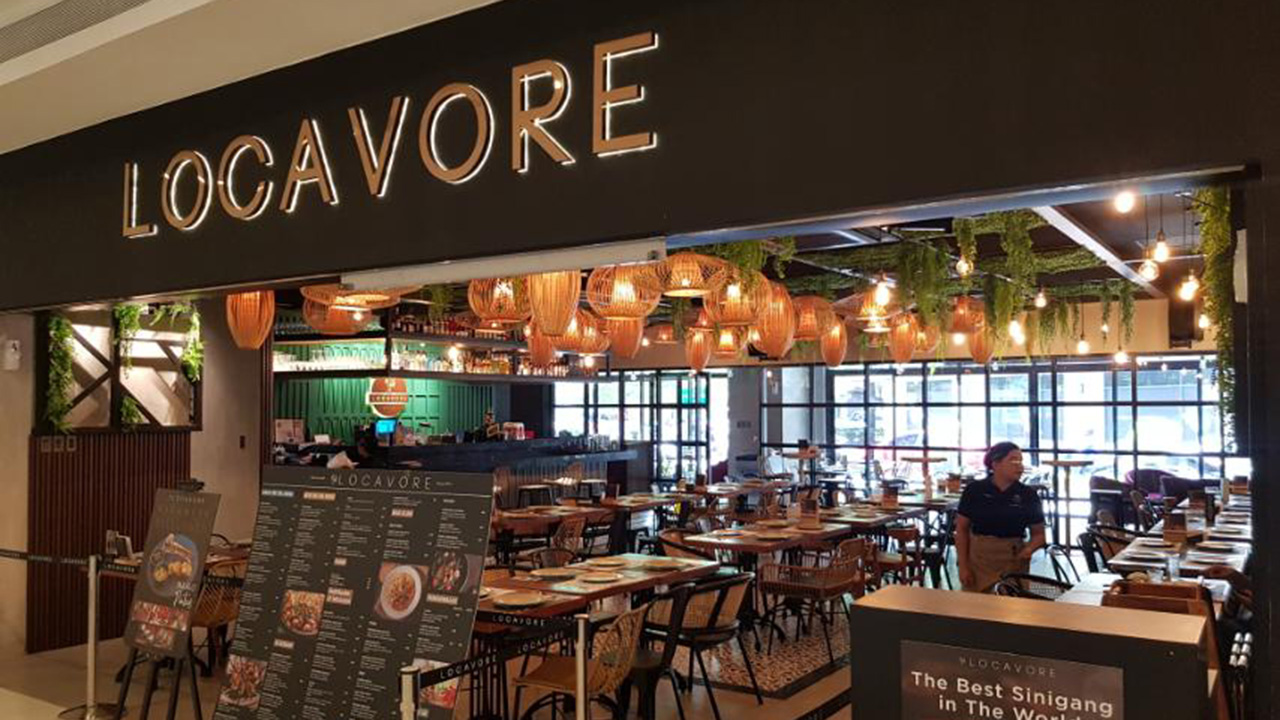
LOCAVORE, known for serving Filipino comfort food with a creative twist, will open its newest branch in Estancia in Pasig. The new branch will feature an expanded menu, showcasing locally sourced ingredients and innovative flavor combinations. “Estancia’s vibrant community and diverse food scene perfectly align with our vision of celebrating the rich cuisine of the Philippines while also infusing it with a fresh twist,” said a press statement. The new branch will also showcase the craftsmanship of the restaurant’s mixologist, said the statement. The branch will feature a new line of seven cocktails, created by veteran mixologist Lee Watson, each utilizing different flavors such as citrus juice, honey, and ginger. Locavore’s other branches are at Brixton Barrio Kapitolyo in Pasig; Forbestown in Taguig; Valero St. in Makati; S’Maison in the MOA Complex, Pasay; Eastwood Mall in Quezon City; SM City Bacoor; and now Estancia Mall in Pasig. Locavore dishes are also available through Grab Food and Pickaroo.


Int’l Coffee Day takes a week at Newport World Resorts

THE RESTAURANTS at Newport World Resorts have expanded International Coffee Day to a week, from Sept. 25 to Oct. 1, with the 7 Days of Coffee experience. Different restaurants are offering special coffees and promos on different days of the week. For the second half of the week, Madison Lounge & Bar at Hilton Manila offers Bites and Brew on Sept. 28. Get a cup of Madison’s Specialty Coffee with a pastry for P350 nett or with a cake for P384 net. Casa Buenas at the Newport Grand Wing will served Kape y Bibingka on Sept. 29. The Filipino street food and holiday-staple bibingka is paired with a choice of cappuccino or americano made with locally sourced-Benguet beans for P736 net. Try a Coffee Bingsu from Oori at Sheraton Manila Hotel on Sept. 30. The Korean-classic dessert gets dressed with a local coffee blend and homemade dalgona coffee candy for P750 net. Finally, have a nightcap on the actual Coffee Day on Oct. 1. Wind down with The Whisky Library’s special coffee cocktail, The Identity, made with The Woodsman Blended Scotch, Toffee Nut, and espresso for P490 nett. For more information on Newport World Resorts’ 7 Days of Coffee, visit www.newportworldresorts.com.


COD’s Crystal Dragon offers Mid-autumn Festival menu

Crystal Dragon — City of Dreams (COD) Manila’s award-winning restaurant specializing in Cantonese and regional Chinese cuisine — presents a special ala carte menu in celebration of the Mid-Autumn Festival. Available until Sept. 29 for lunch and dinner, the special menu offers this season’s specialties: Braised Conpoy with crab meat and fish in thick broth; Wok-fried prawns in Chef’s Special Kam Heong-style (a golden, fragrant sauce); Roasted farm duck in black truffle sauce; and Wok-fried Hor Fun with sliced Angus beef and XO sauce. As partaking of mooncakes is a time-honored Mid-Autumn tradition as it signifies togetherness and harmony, Crystal Dragon highlights its snow skin mooncake featuring traditional and exotic renditions: Lotus paste with yolk and Durian. Crystal Dragon is open daily from 11 a.m. to 11 p.m. For inquiries and reservations, call 8800-8080, or e-mail guestservices@cod-manila.com.


Hyatt Regency Manila reopens The Café buffets

THE CAFÉ — Hyatt Regency Manila, City of Dreams’ interactive show-kitchen restaurant — is again offering lunch and dinner buffets. In addition to the popular buffet breakfast, the return of the lunch and dinner services showcases a selection of local and international cuisine in one hefty buffet spread. Prices are inclusive of free-flowing juices, local draft beer, and red and white house wines at dinner and lunch. Dishes are prepared à la minute at the cooking stations, each of which reflects a destination, a regional produce, or culture. Evolving menu cycles ensure a different dining experience during the week. The buffet stations consist of the classics and chefs’ innovations, including Italian and other Western favorites, Asian comfort fare such as dim sum, popular Filipino and Southeast Asian dishes, a selection of Japanese staples, and a Carving of the Day, which is a dinner exclusive. Charcuteries, cheeses, breads, a variety of noodles and rice options, healthy choices such as seafood, soups, salads, and an array of pastries and other sweets complete the spread. The spacious 345-seat restaurant offers a range of seating options at the main and elevated sections. Two private dining rooms that each seat 10 guests are also available. The Café’s buffets cost P2,350 net for dinner; P1,250 net for lunch, and P1,150 net for breakfast. The breakfast rate is inclusive of free-flowing coffee and tea. The Café buffets are available from 6:30 to 11 a.m. for breakfast, noon to 3 p.m. for lunch, and 5:30 to 11 p.m. for dinner. For inquiries and reservations, call 8691-1234 local 1163 or 8800-8080, or e-mail guestservices@cod-manila.com.


Dining at Lanson Place Mall of Asia

LANSON Place Mall of Asia introduces thoughtfully designed living areas that capture a panoramic view of the city, complemented by five dining venues with distinct offerings. In CYAN Modern Kitchen, Lanson’s main restaurant which features an interactive open kitchen, both buffet and a la carte menus pay homage to Filipino delicacies and classics with a Pinoy touch. Think classic Eggs Benedict with alugbati (Malabar spinach) and coconut aminos from local farms instead of imported spinach and balsamic glaze. Thanks to Cyan’s floor-to-ceiling windows, guests at the main dining hall have front-row seats to the Manila Bay sunset. Meanwhile, its private room has a view of the MOA Eye and, on a clear day, even Mount Samat. Meanwhile, guests can sample home-grown herb flavors at Madeleine High Tea, a cozy high tea lounge that offers tiered high tea menus with tea selections from Agusan del Norte served as traditional and cocktail teas. Guests can have a sip of perfectly brewed coffee made with premium beans sourced from both local and international growers at the BLK12 Café|Bar. This versatile café stands as a cozy lounge in the morning and transforms into an upbeat and stylish wine bar at night. Then there is Bytes, a grab-and-go counter which offers freshly prepared meals for busy people. Nestled in the courtyard, it is the perfect place to grab a healthy meal and a quick breather. Bytes’s healthy snacks are made mostly from local ingredients that are vegan, vegetarian, gluten-free, and keto-friendly. On the other hand, the Edge Pool Bar is made for a day of lounging and relaxing. It has a 180-degree scenic view of Manila Bay and the Metro’s skyline. For more information about Lanson Place Mall of Asia, visit the official website at www.lansonplace.com/mallofasia or follow its official social media pages (Facebook and Instagram).


Shangri-La The Fort, Manila offers daily lunch experiences

SHANGRI-LA The Fort, Manila, offers its Bonifacio Global City neighborhood an array of dining destinations for lunch featuring diverse flavors and culinary traditions from around the world. The Raging Bull Chophouse and Bar offers premium Josper-grilled steaks, seafood, vegetables, and New York classics, like Maryland Crab cakes and desserts like Blueberry New York Cheesecake. Fresh, delicate, and flavorful dim sum, accompanied by a steaming bowl of Canton Road’s fragrant signature fried rice, is the picture of lunch at the city’s authentic Chinese food destination. It also offers Canton Road-style Xiao Long Bao, Fried lobster wonton, Crispy wasabi coated prawn balls, Fried duck meat, and Mingnan five spiced pork belly for lunch. High Street Café is a food hall lined with an array of offerings from the different stations or neighborhoods which include The Garden, The Grazing Table, Raw Bar, Noodle Station, Rustic Kitchen, The Grill Station, Asian Wok, and Sweets Selection station. To complete the High Street Café dining experience, select dishes are prepared à la minute in front of the guests. Samba at the Level 8 poolside offers authentic Peruvian fare like Chef Carlo’s Arroz con mariscos (seafood rice), Antichucho de pulpo (grilled, sustainably farmed octopus) or Antichucho de corazon (grilled beef heart). Raging Bull Burgers along 30th Street serves quality, freshly ground premium beef patties off the grill. It also serves a mean vegetarian burger and a grilled chicken alternative. For corporate lunch bookings or meetings, guests may book the private and semi-private dining rooms of each restaurant. For inquiries and reservations, call 8820-0888 or visit https://www.dineatshangrilathefort.com/.


Ride, Dine and Explore Bataan with The Oriental

MOTORCYCLE aficionados can ride and dine in style and rediscover the countryside of Bataan province with the Explore Bataan promo of The Oriental Hotel and Resort in Mariveles, Bataan. Riders can enjoy the room rate promo of P3,888 for deluxe cellar and P4,888 for deluxe executive rooms, which include breakfast for two and a 10% discount at the Cocoon Restaurant and Forest Grill. They can pamper themselves at the circular pool and get signature massages at the Asian-themed spa after a long ride. The Oriental’s partner tour operator, Aura Mosca has unique itineraries for guests, or customized tours which combine nature, adventure, culture, and cuisine. For more information, log on to www.bataan.theorientalhotels.com for follow The Oriental Bataan on Facebook or Instagram.


2GO readies for increase in cargo movement

LOGISTICS COMPANY 2GO Group, Inc. is preparing its major hubs outside Metro Manila as it expects cargo volume to rise in the coming months in time for the holiday rush.

“[We are] anticipating the increase in logistics movement during this joyous time of year,” Frederic C. DyBuncio, president and chief executive officer of 2GO, said in a media release on Wednesday.

He added that the company is consistently investing in “supply chain preparedness by establishing a foothold in our hubs and maintaining a capable workforce.”

2GO said it had committed to fortify its network of “strategic hubs” across the country as it is expecting cargo demand to further increase.

“We prioritize customer satisfaction and continue to deliver on our commitments to our customers and partners, ensuring success regardless of the season,” Mr. DyBuncio said.

2GO is speeding up its less-than-container-load (LCL) offering by starting to operate these hubs in Manila, Cebu, Iloilo, Zamboanga, and Cagayan de Oro.

LCL services are present in 2GO’s 17 ports of call, the logistics firm said, noting that these serve as important gateways for dry goods and temperature-controlled cargo.

“With LCL, 2GO extends logistics support to MSMEs and entrepreneurs, ensuring that businesses of all sizes benefit from our comprehensive solutions,” 2GO said.

The company aims to strengthen its presence in Visayas and Mindanao to streamline deliveries for industries, businesses, and personal deliveries, it added.

“2GO has embarked on a proactive initiative to collaborate with key stakeholders in important logistical regions across the Philippines. Reinforcing our presence in major gateways not only provides us with efficient forwarding and cargo services but helps our partners and clients increase market reach, find more opportunities, and bridge logistical requirements,” Business Unit Head for Express and Forwarding Faye Alonzo said.

2GO is an end-to-end transportation, logistics, and distribution provider in the country under Sy-led conglomerate SM Investments Corp.

It offers multimodal transportation, warehousing and inventory management, distribution, special containers, project logistics, and e-commerce logistics. It also provides sea travel, freight forwarding, import and export processing, and customs brokerage services. — Ashley Erika O. Jose