Home Blog Page 41

Unsolicited pipeline reflects keen interest by private sector investors — PPP Center

PPP.GOV.PH

By Justine Irish D. Tabile, Senior Reporter

THE Public-Private Partnership Center of the Philippines (PPP Center) is projecting a healthy flow of unsolicited proposals this year, reflecting sustained interest from private investors, who may have been spurred to play a bigger role in infrastructure after last year’s massive corruption scandal.

PPP Center Executive Director Rizza Blanco-Latorre said the growing number of unsolicited proposals submitted to the PPP Center also reflects a desire to sidestep delays inherent in solicited proposals.

“What happens (with solicited projects) is that the government develops the project. Maghihintay ’yung private sector kailan ipapabid (This will force investors to wait until projects are bid out). There are a lot of  private investors (who) cannot wait for the government,” she told BusinessWorld.

“Since they have the resources and technical expertise, they develop the project and then submit it to the government to evaluate,” she added.

She is expecting more unsolicited proposals to be submitted in the remaining months of the year.

Ms. Blanco-Latorre said prospective investors have not been deterred by the infrastructure corruption scandal, judging by the volume of proposals filed in the last six months.

“I believe that the private sector has so much faith and trust in the PPP framework here in the Philippines, especially that we now have the new PPP code and its implementing rules and regulations,” she added.

She said the corruption issues surrounding last year’s flood control projects have actually increased private sector interest in major government projects.

“Because (of the corruption concerns), the private sector now wants to be part of infrastructure projects,” she added.

As of April 8, the PPP Center said there were 251 projects in the pipeline valued at P3.3 trillion.

Of the total, 195 or 78.3% are solicited projects worth P1.96 trillion, while the remaining 54 projects are unsolicited projects worth P1.34 trillion.

Most of the projects are in property development (46 projects), maritime (45 projects), and information and communications technology (23 projects).

By value, the top categories are railways (P1.97 trillion), property development (P361.89 billion), and land transport (P274.06 billion).

Of the pending projects 223 are under development, and 18 have reached the approval stage.

Meanwhile, the remaining 10 projects are advancing through bidding or comparative challenge processes, depending on whether they are solicited or unsolicited.

The PPP Center said 167 projects worth P3.16 trillion will be implemented by the National Government, while 84 projects worth P136 billion will be overseen by local government units.

World Bank PHL inflation scenario projects 0.62 ppt rise for every $20 crude move

REUTERS

EVERY $20 rise in the price of crude, persisting for six months, is expected to raise Philippine inflation by 0.62 percentage point (ppt), the World Bank said.

It added that Thailand is even more sensitive, with inflation there rising 0.67 ppt for the same crude price movement.

Thailand and the Philippines were described as “among the more exposed economies given their reliance on imported oil,” the bank said in its East Asia & Pacific (EAP) Economic Update 2026.

Philippine inflation surged to a nearly two‑year high of 4.1% in March, breaching the 2-4% target band set by the Bangko Sentral ng Pilipinas, amid rising rice, fuel and electricity costs.

According to the World Bank, in the Philippines,“rising fuel costs are straining the transport sector and driving up logistics and commuting expenses for businesses and households alike.”

“Higher energy and fertilizer prices are likely to feed through to food costs and lower household purchasing power,” it added.

The Philippines is a net importer of oil and sources most of its needs from the Middle East, making it vulnerable to crude price swings.

According to the report, imported inflation via rising oil prices hurts poorer households more, making the effect regressive.

“Household expenditure data from the Philippines … demonstrate that lower-income quintiles allocate a disproportionately larger share of their total consumption to fuel and related transport costs, rendering them highly vulnerable to energy price shocks,” it said.

“Across the region, a sustained 50% increase in fuel prices could lead to a 3-4% loss in income for households in the region through both direct and indirect effects,” it added.

After the Iran war broke out in early March, the government declared a one-year state of national energy emergency to shield the economy from the impact of the crisis.

“The government’s declaration of an energy emergency underscores the severity of the situation. Growth is projected to remain below potential at 3.7%,” the World Bank said.

This projection represents a downgrade of the bank’s January estimate of 5.3%.

If realized, the downgraded projection will fall below the post-pandemic low of 4.4% in 2025 and end up missing the Philippines’ 5-6% GDP target range for 2026.

The 2026 projection for the Philippines was also below the average for the EAP.

“Growth in developing EAP is projected to moderate to 4.2% in 2026, as the conflict in the Middle East raises commodity prices, trade barriers and economic policy uncertainty remain elevated, and the boost from export front-loading ahead of higher tariffs fades,” the World Bank said.

Meanwhile, the World Bank raised its GDP growth projection for the Philippines to 5.6% in 2027 from 5.4% previously.

World Bank Vice-President for EAP Carlos Felipe Jaramillo said that the region’s growth still outperforms much of the world, even in uncertain times. 

“Yet, sustaining growth levels requires countries to confront structural challenges and seize the opportunity of the digital age to increase productivity and create more jobs,” he said.

The report said artificial intelligence could lead to higher productivity.

However, it said that regional adoption remains limited because of gaps in connectivity and skills. — Justine Irish D. Tabile

Mindanao Rail pre-feasibility study completed for project’s third phase

JOHANNES PLENIO-UNSPLASH

THE Department of Transportation (DoTr) is moving to the full feasibility study stage of the P100.64‑billion Mindanao Railway project Phase 3, according to the Public‑Private Partnership (PPP) Center.

“The PPP Center through its Project Development and Monitoring Facility (PDMF), completed the pre‑feasibility study (pre‑FS) for the Mindanao Railway Project, Phase 3,” PPP Center said via Viber on Wednesday. 

It said the project is undergoing further preparation at the DoTr the railway’s implementing agency.

The DoTr will move to a comprehensive feasibility study to assess and refine the project’s technical, financial, and economic viability, the PPP Center said.

Only phase three of the Mindanao Railway is being put forward for a solicited PPP.

Phase 3 is a 61-kilometer high-capacity, inter-city passenger and cargo railway system linking the industrial and commercial centers of Cagayan de Oro, according to the PPP Center website.

Phase 3 has an estimated project cost of P100.64 billion.

The rail line will link Laguindingan International Airport, the port of Cagayan de Oro City, and the Mindanao Container port.

Transportation Undersecretary Timothy R. Batan said the DoTr and the Asian Development Bank are also updating the feasibility study for the first phase of the Mindanao Railway project. 

The Philippines dropped China as a funding source for the first phase, the South Long-Haul railway, and the Subic-Clark Railway, due to lack of progress on financing decisions by Beijing.

The DoTr is revising Mindanao Railway’s original study to make the project more modern and environment-friendly. — Ashley Erika O. Jose

Fertilizer supply seen adequate until year’s end if blended with biofertilizer

ATLASFERTILIZER.COM

THE Department of Agriculture (DA) said stocks of inorganic fertilizer will be sufficient until the end of June, but can stretch to the end of the year if blended with  biofertilizers.

Agriculture Secretary Francisco P. Tiu Laurel, Jr. said industry groups have assured the government that current inventory can cover near-term demand.

“I talked to the Fertilizer Association of the Philippines. Practically, we have enough supply until the end of June. They are confident that unless there is another terrible event, supply will continue to come in,” Mr. Laurel told reporters.

He said fertilizer shipments are arriving steadily, though prices are expected to remain elevated.

Mr. Laurel added that combining fuel-derived and alternative inputs could ensure adequate supply for the rest of the year.

“We have enough fertilizer. If we combine biofertilizer and inorganic fertilizer… we have enough if we use them as a blend,” he said.

The DA has been promoting alternative fertilization technologies to help farmers manage rising input costs, particularly for urea, now one of the most expensive fertilizers on the market.

Mr. Laurel said urea prices have risen to between P2,600 and P2,800 per bag following supply disruptions linked to the war in the Middle East, a key source of fuel-derived inputs.

Among the options being introduced are biofertilizers, soil inoculants, and liquid nitrogen products, which can substitute for traditional inputs at lower cost.

“That is what our farmers need to try — alternative fertilization technologies and techniques. We need to convince them to adopt these so they can protect their income,” Mr. Laurel said.

“We need to convince our farmers to try this and shift so that they can protect their income,” Mr. Laurel added. — Vonn Andrei E. Villamiel

Cloud seeding planned for Negros Occidental

SOUTHCOTABATO.GOV.PH

THE Sugar Regulatory Administration (SRA) said it is preparing to seed clouds in Negros Occidental due to the dry conditions, with El Niño possibly developing in the coming months.

In a statement on Thursday, the SRA said it is working with local government units to prepare for cloud seeding.

The United Federation of Sugarcane Farmers (UNIFED) urged the government to seed clouds in the province due to the threat to crop yields and farmer livelihoods.

“The sugar industry, which plays a vital role in our local economy and sustains the livelihood of many farmers and workers, is currently facing significant challenges due to the dry season,” UNIFED President Manuel R. Lamata said in a letter to the SRA.

He said insufficient rainfall is hampering crop development and raising the risk of substantial economic losses in the country’s top sugar-producing province.

UNIFED said that without immediate intervention, water scarcity could further disrupt irrigation systems and reduce output in the coming harvest cycles.

“Immediate cloud seeding intervention is crucial to help alleviate water scarcity, support irrigation needs, and mitigate the negative impact of drought on sugarcane production,” Mr. Lamata said.

The federation added that early action would not only help preserve current crops but also ensure the continuity of sugar farming operations in the coming months.

The government weather service, known as PAGASA ((Philippine Atmospheric, Geophysical and Astronomical Services Administration), has raised its El Niño Watch, citing forecasts that indicate an increasing likelihood of the warming phenomenon emerging as early as July.

The Philippines typically experiences below-normal rainfall during El Niño episodes, which can significantly affect agricultural production, particularly for water-intensive crops such as sugarcane. — Vonn Andrei E. Villamiel

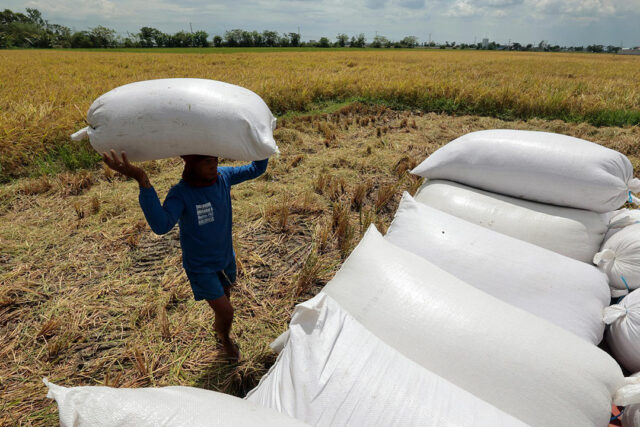
Rice wholesale prices rise sharply in March

PHILIPPINE STAR/KRIZ JOHN ROSALES

THE wholesale price of rice rose sharply year on year in March, according to preliminary data from the Philippine Statistics Authority (PSA).

The PSA said the national average wholesale price of well-milled rice rose 12.6% to P50.06 per kilo. The average was the highest since the P50.08 per kilo recorded in July 2024.

The biggest decline in the well-milled wholesale price was logged in Soccsksargen, where it rose 26.8% year on year to P49.55 per kilo.

Wholesale prices of well-milled rice in the National Capital Region rose 18% from a year earlier to P56.45 per kilo.

The average wholesale price of regular-milled rice in March rose 12.2% year on year to P44.71 per kilo. The national average was the highest since the P44.79 per kilo posted in October 2024.

The Central Visayas posted the biggest increase in the wholesale price of regular-milled rice, with the regional average rising 36.7% year on year to P51.01 per kilo.

The wholesale price of regular-milled rice in the National Capital Region rose 13% year on year to P48.44 per kilo.

Premium and special rice posted wholesale price increases in March, with their national averages rising 13.2% and 10.2% year on year, respectively.

Meanwhile, the national average wholesale price of yellow corn grains in March rose 16% year on year to P25.39 per kilo. The corresponding price for white corn grains rose 37.1% to P25.34 per kilo.

The wholesale price of yellow corn grits in March  rose 10.5% year on year to P32.60 per kilo, while the price of white corn grits surged 40.7% to P41.29. — Vonn Andrei E. Villamiel

PHL urged to stock up on petroleum, fertilizer while Strait of Hormuz remains open

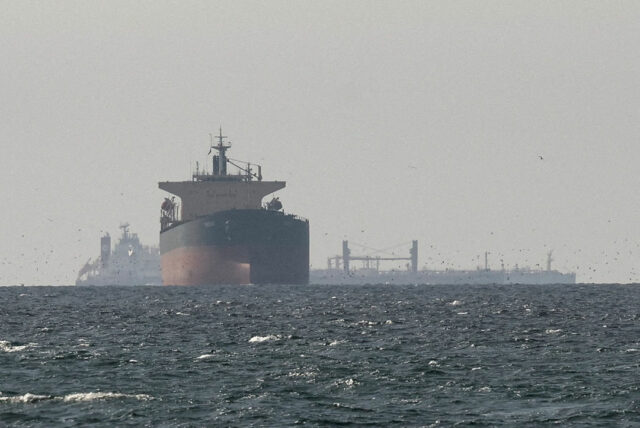
Tankers sail in the Gulf, near the Strait of Hormuz, as seen from northern Ras al-Khaimah, near the border with Oman’s Musandam governance, amid the US-Israeli conflict with Iran, in United Arab Emirates, March 11, 2026. — REUTERS

BUSINESS GROUPS urged the government and industry to obtain stocks of oil and fertilizer during the two‑week Iran War ceasefire, during which cargo ships are expected to be allowed to transit the Strait of Hormuz.

In a statement late Wednesday, the Philippine Chamber of Commerce and Industry (PCCI) called the ceasefire “an opportunity for the Philippines to secure vital imports. We need a buffer stock for any possible disruptions,” PCCI President Ferdinand A. Ferrer said.

“We see this temporary opening as a critical to stabilizing global oil prices,” he also said.

Nearly 20% of the world’s oil and liquefied natural gas transit the Strait of Hormuz, which closed in March when fighting broke out in Iran following attacks by the US and Israel.

The reopening of the strait provides an opportunity for exporters and importers to stabilize logistics schedules, clear backlogs, and mitigate further cost escalations, Philippine Exporters Confederation, Inc. (Philexport) President Sergio R. Ortiz-Luis, Jr. said.

However, it will provide only temporary relief to exporters, he said in a statement on Thursday.

“The two-week reopening may help temper these pressures, but the organization cautions that volatility in fuel prices and insurance premiums for vessels transiting high-risk areas may persist beyond this period,” Philexport said.

Uncertainty about the accessibility of key trade routes underscores the vulnerability of global supply chains to disruption, Mr. Ortiz-Luis said. In particular, exporters are concerned that freight rates and delivery timelines remain unpredictable, directly impacting competitiveness, he noted.

“We urge government economic managers to take proactive steps to cushion the impact on exporters and the broader economy,” Mr. Ortiz-Luis said.

This includes monitoring fuel price movements; exploring targeted support for affected sectors; and boosting engagement with international partners for the continued flow of trade, he noted.

President Ferdinand R. Marcos, Jr. said on Wednesday that the Philippines will “take full advantage” of the two-week Middle East ceasefire, as it looks to increase fuel stocks and ease costs. — Beatriz Marie D. Cruz

Oil exploration talks with China spark transparency calls; House probe urged

BW FILE PHOTO

PLANS to revive talks for a joint oil and gas exploration with China in the South China Sea have prompted lawmakers to call for greater transparency, warning the move risks “rewarding bad behavior.”

“Any agreement forged without transparency raises serious red flags,” Party-list Rep. Jose Manuel T. Diokno said in a press briefing on Thursday, streamed live on Facebook, noting that closed-door negotiations will breed suspicion.

“As such, we will ask Congress, particularly the House Committee on the West Philippine Sea, together with other relevant committees, to exercise oversight over these oil talks to ensure transparency, accountability, and adherence to the Constitution.”

Citing the Philippine Constitution, Mr. Diokno said the state is mandated to have full control and supervision of any exploration and utilization of natural resources and to notify Congress of all contracts entered by the Philippines with foreign entities within 30 days from execution.

The Foreign Affairs department last week said the Philippines and China have started initial exchanges on oil and gas exploration, following President Ferdinand R. Marcos, Jr. earlier remarks where he cited the Middle East war, which has threatened the country’s oil supply, as the impetus to reviving talks.

Details on the gas development talks between the Philippines and China have yet to be disclosed.

“We therefore remind Malacañang, transparency should be a governing principle in our foreign and energy policies. Any discussion involving our natural resources is a public matter,” Mr. Diokno added.

Senate President Vicente C. Sotto III and Senate President Pro Tempore Panfilo M. Lacson have earlier said they support a joint oil and gas exploration with China, but only if arrangements strictly comply with the 40% foreign ownership limit under the Constitution.

Energy cooperation between the two countries has stalled in recent years. In 2023, the Philippine Supreme Court ruled unconstitutional a tripartite agreement among the Philippines, China and Vietnam to conduct marine seismic surveys in the disputed area, complicating efforts at joint resource exploration.

In the same briefing, Party-list Rep. Percival V. Cendaña denounced the possible agreement, warning that it may set a precedent for the Philippines, which sits as chair of the Association of Southeast Asian Nations this year, and send a message that the country will cave into maritime pressures if foreign countries pushed hard enough.

He said entering into an agreement with China risks “rewarding bad behavior.”

“Entering a joint energy deal under these conditions effectively says if you push hard enough, you get a seat at the table,” Mr. Cendaña said, noting that the negotiation might encourage countries to escalate tensions for resources.

The South China Sea remains one of Asia’s most volatile geopolitical flashpoints. China claims almost the entire waterway, a position rejected by a 2016 ruling by a United Nations‑backed arbitral tribunal that voided Beijing’s sweeping claims. China has refused to recognize the ruling.

Relations between Manila and Beijing have soured in recent years due to repeated confrontations between Chinese and Philippine vessels near disputed features, prompting Manila to deepen defense ties with the US and other allies.

Akbayan President and Atin Ito co-convenor Rafaela David also denounced oil deal plans, noting China’s tussle with Filipino fisherfolk and officials in the disputed area.

“Any talks with China on oil is unacceptable unless it only recognizes our 2016 ruling victory, withdraws from the West Philippine Sea, ends their illegal occupation and militarization, and stops harassing Filipino fishers and frontliners,” Ms. David said during the Akbayan Party-list joint forum.

She added that the energy crisis must not be a justification for joint gas negotiations with China, urging the government to protect the country from “predatory agreements.” — Kaela Patricia B. Gabriel

DFA hopeful ceasefire will end US-Israel war on Iran

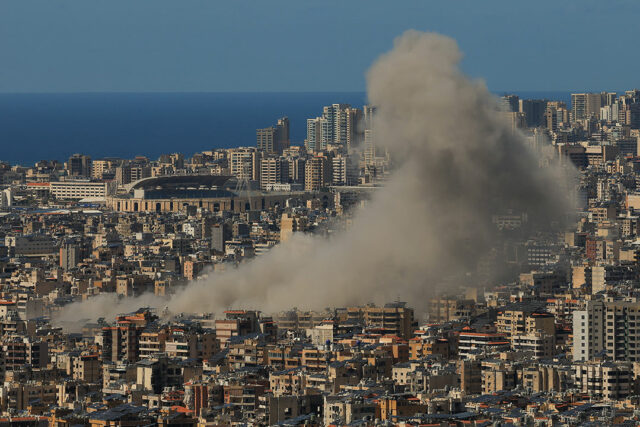
SMOKE RISES after an Israeli airstrike, amid escalating hostilities between Israel and Hezbollah, as the US-Israeli conflict with Iran continues, in the southern suburbs of Beirut, Lebanon, March 31, 2026. — REUTERS/RAGHED WAKED

By Kaela Patricia B. Gabriel

THE DEPARTMENT of Foreign Affairs (DFA) on Thursday said it is hopeful that peace talks will permanently conclude the war in the Middle East as the agency welcomed the two-week ceasefire between the United States and Iran.

In a statement, the DFA said it hopes for all parties to resolve their differences through diplomacy, noting that the conflict has disrupted the global economy and led to loss of lives and infrastructure.

“We hope that the negotiations will lead to the permanent end of the conflict and lasting peace,” the DFA said.

Pakistan mediated the talks between the US and Iran which ended with an agreement to a two-week ceasefire, expected to be followed by discussions between the two parties on Friday, Reuters reported.

Analysts said the ceasefire amplifies the development between the Philippines and Iran in relation to the passage of Philippine-flagged vessels in the Strait of Hormuz.

“Even before the ceasefire, the DFA has confirmed that it has secured safe passage for Philippine-flagged vessels into the Strait of Hormuz, so this ceasefire greatly amplifies that development,” Francis M. Esteban, a faculty member at the Far Eastern University Department of International Studies said in a Facebook Messenger chat.

Josue Raphael J. Cortez, a lecturer at the De La Salle-College of St. Benilde School of Diplomacy and Governance, said the ceasefire positively affects the country’s trading, seafarers and overseas Filipino workers.

“This two-week gap may be said to be the most opportune time for Filipinos in the Middle East to decide whether or not they would wish to be back in the country,” Mr. Cortez said in a Facebook chat.

He added that the Philippines’ independent foreign policy has been working in ensuring dialogues and diplomatic ties with both the US and Iran amid the conflict.

TOO EARLY
However, the two analysts said the ceasefire does not automatically translate to full de-escalation of the US-Israel and Iran tensions, noting that the ceasefire does not warrant the confidence of the international community.

“It is too early to say if this signals a long-term de-escalation as we can observe how [President Donald J.] Trump seems to be more erratic over time,” Mr. Esteban said, acknowledging that the ceasefire is “better than nothing.”

Less than a day after the ceasefire agreement, Israel launched strikes against Lebanon on Wednesday, killing hundreds, Reuters reported.

For Mr. Cortez, this development demonstrates the instability of peace talks.

“It may cause an abrupt collapse of what Islamabad is trying to broker, hence such a ceasefire is not something that the international community may fully be confident of,” Mr. Cortez said. “The Philippines should continue the initiatives it is presently undertaking, both bilateral and regional. Our diversification strategy for oil and gas must continue given the unpredictability of the situation.”

PHL exit unlikely to shield ex-Pres. Duterte from ICC, analysts say

PHILSTAR FILE PHOTO

By Erika Mae P. Sinaking, Reporter

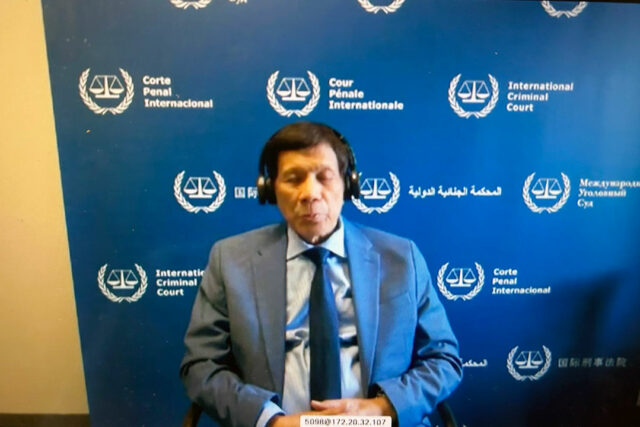
THE TIMING of the Philippines’ withdrawal from the International Criminal Court (ICC) may not be sufficient to shield former President Rodrigo R. Duterte from prosecution, experts said, as the court moves toward a jurisdiction ruling that could cement The Hague-based tribunal’s authority over the deadly war on drugs.

The ICC Appeals Chamber is set to decide on April 22 whether the tribunal retains the authority to investigate Mr. Duterte’s alleged crimes against humanity committed during the war on drugs, despite the country’s formal exit from the Rome Statute in 2019. This upcoming judgment follows a series of legal challenges filed by Mr. Duterte’s defense team after his arrest by Philippine authorities and transfer to the court on March 12, 2025.

“The stronger argument in the Duterte defense is whether the ICC can exercise jurisdiction (vis-à-vis whether it has),” Maria Kristina C. Conti, ICC assistant to counsel representing victims, told BusinessWorld in a Viber message.

“Clearly, the Philippines was a member state at the time the crimes were committed. But did the ICC exercise its jurisdiction when it was still a member? Defense argues that the formal investigation phase came only after the Philippines withdrew,” she added.

The defense team has maintained a sharp distinction between “jurisdiction stricto sensu” — the court’s inherent power over certain crimes — and the actual “exercise of jurisdiction.” They argued that while the court might have had the former, the preconditions for the latter were not met because the formal investigation was only authorized in 2021, two years after the 2019 withdrawal.

However, the ICC’s Pre-Trial Chamber I rejected this view in its Oct. 23, 2025 decision. The chamber cited Article 127(2) of the Rome Statute, which stipulates that a withdrawal “shall not prejudice in any way the continued consideration of any matter which was already under consideration by the court prior to the date on which the withdrawal became effective.”

Ephraim B. Cortez, president of the National Union of People’s Lawyers, expressed confidence that the Appeals Chamber would uphold this interpretation.

“The ICC will definitely rule in favor of the Prosecution,” Mr. Cortez said in a separate Viber chat. “There is no basis in the argument that the ICC can no longer take cognizance of the case since the authority to investigate was issued only in 2021.”

“We have to consider that the Prosecutor initiated the preliminary examination into the Philippine situation in February 2018, more than a year before the Philippines’ withdrawal from the ICC became effective,” he said.

Mr. Cortez added that the withdrawal itself was a response to the court’s initial actions.

“The withdrawal was a reaction to the initiation of the preliminary examination,” Mr. Cortez said. “But the withdrawal came in too late, since the proceedings had been initiated through the preliminary examination, and the jurisdiction of the ICC had already attached.”

COMPLEMENTARITY PRINCIPLE
While jurisdiction remains the primary legal hurdle, the principle of complementarity, the idea that the ICC only steps in when national systems are unable or unwilling to prosecute, remains a point of contention among legal observers and the defense.

Salvador S. Panelo, former Presidential Chief Legal Counsel, criticized the court’s stance as an infringement on Philippine independence.

“I’m not optimistic given that there are external considerations that may lead the ICC into confirming the charges and setting the case for trial,” Mr. Panelo said via a Viber message.

“The ICC assumed jurisdiction over the Philippines and over the person of [Mr. Duterte] despite the fact that it has absolutely no jurisdiction over them because it has not followed the principle of complementarity,” he said, adding it violated the country’s jurisdiction and assaulted Philippine sovereignty and territorial integrity.

Mr. Panelo said that the local judiciary is fully capable of handling any necessary legal proceedings.

Lawyers representing the victims argued that domestic efforts have been insufficient because they failed to target the “masterminds” of the drug war.

“The question is, is there any domestic prosecution against Duterte? There is none,” said Joel R. Butuyan, an ICC-accredited lawyer serving as the Common legal representative for victims.

“Kian and other cases are prosecution against ordinary police. ICC only prosecutes the most guilty, the masterminds,” Mr. Butuyan said, referring to the murder conviction of three police officers in the 2017 killing of 17-year-old Kian delos Santos, which was upheld by the Supreme Court.

“ICC does not prosecute those who pulled the triggers, but those who ordered the triggers to be pulled,” he added, noting he is confident the court will uphold jurisdiction over the case.

Mr. Cortez shared this view, suggesting that the local system has spared those at the top of the command chain.

“These are indications that the Philippine justice system is not working, and the ICC will affirm its jurisdiction over the case,” Mr. Cortez added.

The Pre-Trial Chamber’s earlier ruling underscored that establishing jurisdiction is “fundamental to the proceedings.” The judges noted that if they lacked jurisdiction, they would have no competence to rule on any other issues, including Mr. Duterte’s fitness to stand trial.

The defense had previously requested a postponement of the jurisdiction ruling until Mr. Duterte’s fitness was resolved, but the chamber denied this, stating that a prompt ruling on jurisdiction “can only promote the efficiency and expeditiousness of the proceedings.”

“This is an issue of first impression, so there is very little jurisprudence to rely on,” Ms. Conti said. “Theoretically, if the Appeals Chamber affirms jurisdiction, the case and investigation proceeds — i.e., Duterte’s case keeps to its schedule, we wait for the confirmation decision and so on; we also wait for investigation and possible warrants etc.”

“If the Appeals Chamber declines jurisdiction, then any action of the ICC with regard to the Philippines will terminate. But there should be a clear order in the decision (or it could be made by the PTC in a separate order) to release Duterte, for orderly proceedings,” she added.


Marcos orders 20% fare discount, P10-per-liter fuel subsidy for drivers

PHILIPPINE STAR/WALTER BOLLOZOS

PRESIDENT Ferdinand R. Marcos, Jr. ordered a fresh round of transport subsidies under the government’s service contracting program, including at least a 20% fare discount for commuters and a fuel subsidy of P10 per liter for public utility vehicles.

Under the program set to roll out on April 15, commuters will receive a 20% fare discount on routes connected to rail lines and major bus lanes.

The renewed fuel support, capped at 150 liters per week for three months, will be piloted in Metro Manila next week starting along major corridors such as Commonwealth Avenue, Quezon Avenue, España Boulevard, Zapote Road, A. Bonifacio, Rizal and Marcos Highway before expanding nationwide.

“The fuel subsidy will be implemented only through legitimate gasoline stations approved and monitored by the Department of Energy to ensure it is properly allocated and not abused,” Mr. Marcos said in a video message in Filipino.

The service contracting program will be implemented nationwide, covering around 50,000 public utility vehicles, 1,000 operators, and up to 15 million passengers.

The Department of Transportation will oversee the initiative, which will pay operators and drivers between P40 and P100 per kilometer on top of passenger fares.

Routes will prioritize links to rail systems and key bus corridors to improve reliability, with deployment focused on off-peak hours to ensure transport availability beyond rush periods.

“This is important because we are not only addressing transport costs; we are also helping prevent increases in food prices and other basic goods,” Mr. Marcos added.

All participating vehicles will be subject to global positioning system monitoring to verify trips and service quality.

The development comes as the UPLIFT Committee convened in the Presidential Palace last Tuesday to discuss measures to cushion Filipinos from the economic fall out of the war.

The Philippines, an import-dependent economy, is in a year-long energy emergency as the Middle East crisis threatens its fuel supply.

Pump prices have been rising steadily since the Iran war broke out on Feb. 28 though the temporary two-week ceasefire brought relief as prices in the global oil market started easing.

JOB PROTECTION MEASURES
Meanwhile, the Private Sector Advisory Council (PSAC) on Thursday endorsed a suite of measures, aimed at protecting jobs and accelerating workforce upskilling amid the ongoing Middle East conflict, which has sent fuel prices and supply chain costs soaring globally.

In a statement, PSAC said it is recommending “targeted interventions to mitigate the impact of global volatility on Filipino workers and enterprises,” following the council’s fourth Education and Jobs Sector Group meeting at Malacañang on April 8.

The PSAC, convened by Sabin M. Aboitiz, president and chief executive officer of the Aboitiz Group, outlined a multi-pronged strategy focused on rapid job matching, workforce redeployment, and accelerated project execution to absorb displaced workers.

“Our focus is twofold: immediate job preservation and long-term workforce transformation. By investing in skills, accelerating job matching, and supporting enterprises, we can help ensure that Filipinos remain productive and competitive despite global headwinds,” Mr. Aboitiz said.

Among the council’s proposals is the expansion of nationwide job fairs and fast-tracked hiring across both government and private sectors. PSAC also urged the immediate resumption of stalled infrastructure and school construction projects to provide employment opportunities for affected workers.

For overseas Filipino workers at risk of displacement, the advisory body recommended streamlined redeployment processes, micro-credential training programs across critical industries, and enhanced support for entrepreneurship and micro, small, and medium enterprises.

“With fuel prices driving operating costs higher, PSAC recommended targeted subsidies delivered through digital platforms as well as the possible extension of tax incentives for export-oriented firms,” the PSAC said.

“With workers relying on public transport, the council recommended subsidies or financial assistance for public utility vehicle operators to keep jeepneys and buses running. At the same time, it called for accelerated digital infrastructure rollout to enable remote work and reduce dependence on physical mobility,” it added.

Mr. Marcos, who attended the session, noted that discussions with industry leaders highlighted a shared direction between the government and private sector in responding to economic disruptions.

“We are very much in agreement with the private sector advisors on what needs to be done to mitigate the effects of what is happening in the Middle East. So, both (government and private sector) are thinking right… we are on the same page,” Mr. Marcos was quoted as saying in Filipino.

The council said it also proposed the rollout of AI Upskilling para sa Digital Asenso, a rapid reskilling program designed to move displaced workers into digital and remote jobs such as data annotation, virtual assistance, analytics, and online entrepreneurship. It said the initiative builds on private sector efforts such as the Aboitiz Foundation’s Elevate AIDA program, which trains Filipino women for artificial intelligence-related work and connects them with opportunities in the digital economy.

PSAC added that longer-term measures should include more flexible learning arrangements, faster release of subsidies for students and institutions, and regulatory adjustments that would allow schools and training providers to respond more quickly to labor market shifts. — Chloe Mari A. Hufana and Erika Mae P. Sinaking

DepEd allows flexible setup

PHILSTAR FILE PHOTO

THE DEPARTMENT of Education (DepEd) allowed private schools to adopt more flexible class arrangements and teacher training modalities as they brace for higher electricity costs under a national energy emergency triggered by the Middle East crisis.

Under memorandum No. 24 dated April 7, the department outlined measures enabling schools to continue operations while managing rising expenses.

Schools shifting to hybrid formats will no longer require prior approval, as long as they inform their respective Schools Division Offices at least five days in advance and detail how they will meet required learning standards.

“We want to give them the flexibility to manage rising operational costs while protecting the quality of learning,” Education Secretary Juan Edgardo M. Angara said in a statement on Thursday.

Younger learners will remain mostly in face-to-face settings, with remote classes limited to one day per week for Kindergarten to Grade 6 students.

For older students, schools may implement up to two days of remote learning weekly for Grades 7 to 10, and up to three days for senior high school.

The agency also expects schools to increasingly move teacher training and professional development online or into hybrid formats to curb travel and energy use. — Chloe Mari A. Hufana

ADVERTISEMENT
ADVERTISEMENT