Home Blog Page 368

PEZA confident of hitting 2026 target even as approvals fall 57% in Jan.

THE PHILIPPINE Economic Zone Authority (PEZA) said that it is confident in achieving its target this year, despite seeing a 57.4% decline in investment approvals in January.

In a statement on Tuesday, PEZA said that it approved 18 new projects in its first board meeting for the year worth P12.86 billion.

These comprise of seven manufacturing projects, five ecozone developments, and two information technology and business process management projects. Also approved were a domestic enterprise, utilities project, logistics project and tourism project.

However, the January approvals are only less than half of the P30.156-billion investments approved a year ago.

Despite the decline, PEZA Director-General Tereso O. Panga said that the agency remains confident in achieving its P300-billion investment approval target for the year.

“We are realistic about the environment, but we are equally confident in our direction,” he said.

“With a robust pipeline and consistent investor engagement, PEZA is well-positioned to work toward achieving our target for the year,” he added.

PEZA said it recognized the evolving investment strategies as part of a “period of measured adjustment” rather than a “withdrawal” on the investors’ part.

“Investors remain engaged in the Philippine market, taking a more thoughtful approach to timing and scale while continuing to prioritize efficiency, export capability, and long-term positioning,” it added.

In particular, this month’s approvals are expected to generate $59.74 million in exports and around 1,000 jobs.

Trade Secretary and PEZA Board Chair Ma. Cristina A. Roque said that the approved projects in January reflect a geographically balanced investment footprint.

“By encouraging investments that are export-oriented and geographically diverse, we are strengthening the foundations for inclusive growth and ensuring that more regions benefit from global trade and economic opportunities,” she added.

The projects are expected to be set up in Laguna, Cavite, Batangas, Parañaque City, Quezon City, Marikina, Cebu, Camarines Sur, Misamis Occidental, and General Santos City.

Meanwhile, Japan was the top source of approved PEZA investments in January, accounting for P296.94 million.

The other top sources were the Netherlands (P216.31 million), Hong Kong (P177.03 million), Singapore (P110.39 million), and China (P48.52 million).

“Investors today are taking a more deliberate approach — prioritizing resilience, efficiency, and long-term value,” said Mr. Panga.

“What is encouraging is that the Philippines continues to offer stable fundamentals that allow export-oriented investments to move forward with confidence,” he added.

This month’s approvals were anchored on three large-scale projects, which include the tourism ecozone enterprise in Parañaque City worth over P5 billion, and the ecozone developments in Misamis Occidental and Batangas worth a combined P5.9 billion.

Sought for comment, Michael L. Ricafort, chief economist at Rizal Commercial Banking Corp., said the new investment approvals show the attractive demographics and economic fundamentals of the country.

“If governance standards as well as ease and cost of doing business further improve, it will improve investor confidence in the country,” he said in a Viber message.

“This is on top of the incentives provided under the Corporate Recovery and Tax Incentives for Enterprises (CREATE) Act and enhanced by the CREATE to Maximize Opportunities for Reinvigorating the Economy (CREATE MORE) Act, among other reforms implemented in recent years,” he added.

John Paolo R. Rivera, a senior research fellow at the Philippine Institute for Development Studies, said that the P300-billion target is still within reach for PEZA given its momentum last year.

“In 2025, PEZA surpassed its target in approved investments showing resilient investor interest despite macro uncertainty,” he said in a Viber message.

However, he said that continued approvals “will depend on how many projects in the pipeline actually finalize and proceed to board approval.” — Justine Irish D. Tabile


Manila Water taps up to P27-B BDO loan for Wawa project

PHILIPPINE STAR/WALTER BOLLOZOS

RAZON-LED Manila Water Co., Inc. has secured a loan facility of up to P27 billion from BDO Unibank, Inc. to finance a portion of its acquisition of the Wawa Bulk Water Supply Project.

In a regulatory filing on Wednesday, the east zone concessionaire said the facility will fund the purchase of a 92.97% equity stake in WawaJVCo, Inc., the project’s operator.

Last year, Manila Water acquired the Wawa Bulk Water Supply Project from its parent company, Prime Infrastructure Capital, Inc. (Prime Infra), for P37.8 billion, gaining full control of the facility.

The term loan allows the company to refinance part of the purchase price and manage cash outflows over 15 years.

WawaJVCo, originally a joint venture between Prime Infra and San Lorenzo Ruiz Builders & Developers Group, was established to develop, operate, and maintain the Wawa Bulk Water Supply Project in Rizal province.

The project is a key raw water infrastructure program designed to augment Metro Manila’s water supply, which remains heavily reliant on the Angat Dam for roughly 90% of its requirements.

Prime Infra acquired a controlling stake in Manila Water in 2021 as part of broader efforts to modernize water infrastructure in the Philippines.

Following the Wawa acquisition, Manila Water now wholly owns WawaJVCo and will operate both the Tayabasan Weir and the Upper Wawa Dam, which together have a combined design capacity of 790 million liters per day (MLD).

The Tayabasan Weir, with a capacity of 80 MLD, has been operational since 2022. The Upper Wawa Dam, expected to be fully commissioned by the end of 2025, has a design capacity of 710 MLD.

WawaJVCo has a 30-year bulk water supply agreement with Manila Water for the delivery of 518 MLD until 2050.

Manila Water said the acquisition will allow more efficient allocation of water resources, greater operational flexibility, and improved cost management across the bulk water supply facilities.

The company serves the east zone of Metro Manila, covering Marikina, Pasig, Makati, Taguig, Pateros, Mandaluyong, San Juan, portions of Quezon City and Manila, and several towns in Rizal province.

At the local stock exchange on Wednesday, Manila Water shares declined 0.25% to close at P39.90 apiece. — Sheldeen Joy Talavera

Hann Philippines pushes ahead with Clark integrated resort expansion

Hann Reserve in New Clark City, Tarlac. — HANN PHILIPPINES, INC.

INTEGRATED RESORT developer Hann Philippines, Inc. is advancing its expansion in Central Luzon, developing residential, educational, and wellness projects within its 450-hectare Hann Reserve in New Clark City, Tarlac.

“In 2030, hopefully, we get to finish all this; it all depends on the market,” Hann Philippines, Inc. Vice-President Agnes “Neki” A. Liwanag said in a briefing on Wednesday.

“Building on what we have achieved in Clark, Hann Reserve represents the next phase of our growth,” she added.

Scheduled to open in March, Hann Reserve is expected to complete its first phase this year. This includes an 18-hole mountain golf course by Nicklaus Design, a golf and country club, and the initial phase of a public park.

Next year, the company plans to open an 18-hole valley course designed by South Korean professional golfer KJ Choi.

Hann Philippines aims to complete the second phase by 2030, which will include residential, retail, and golf entertainment developments, an international school, phases two and three of the public park, and a river golf course designed by professional golfer Nick Faldo.

The company is also planning its second integrated resort within Hann Reserve.

The property is expected to strengthen the Philippines’ position as a competitive destination for tourism and golf, Hann Reserve General Manager Timothy John Neil said.

Hann Reserve is a 15-minute drive from the 11-hectare Hann Casino Resort, the first integrated resort in the Clark Freeport Zone, Pampanga.

Last December, the company opened an expansion of the Hann Casino Resort, adding a 1.2-hectare gaming area with 584 slot machines and 34 table games. The resort also features three food and beverage outlets — The Canyon, Three Woks, and Pearl.

Hann Casino Resort hosts five-star hotel brands including Marriott International, Swissôtel, and Widus International Leisure, Inc.

Ms. Liwanag said the company’s ongoing expansions reflect its confidence in Central Luzon, despite declining visitor arrivals, particularly among Korean tourists. — Beatriz Marie D. Cruz

Exemption from audits seen to encourage MSME growth

STOCK PHOTO | Image by DC Studio from Freepik

By Beatriz Marie D. Cruz, Reporter

A MOVE to exempt Philippine micro enterprises from submitting audited financial statements is expected to encourage the creation of more micro, small, and medium enterprises (MSMEs), analysts said, but it should be paired with increased funding and training to help these businesses scale.

“Policies that incentivize and create a more conducive environment for MSMEs in terms of regulation, compliance, taxation, easier doing business/requirements, lower cost of doing business, among others, would encourage the creation of more MSMEs in the country as a major economic driver/player,” Rizal Commercial Banking Corp. Chief Economist Michael L. Ricafort said in a Viber message.

In the Philippines, MSMEs are classified based on assets and number of employees. Micro enterprises are those with assets of P3 million or less, excluding land, and typically employ fewer than 10 people. Small enterprises have assets between P3 million and P15 million and employ 10-99 workers, while medium enterprises have assets between P15 million and P100 million and employ 100-199 workers.

Under the Securities and Exchange Commission’s (SEC) Memorandum Circular No. 4, Series of 2026, stock and non-stock corporations with total assets or liabilities not exceeding P3 million are exempt from submitting audited financial statements. Previously, stock and non-stock corporations with total assets or liabilities under P600,000 were exempt from a mandatory audit. The new threshold primarily benefits micro enterprises, reducing compliance costs and encouraging formalization.

John Paolo R. Rivera, senior research fellow at the Philippine Institute for Development Studies, said the regulation “reduces compliance costs and administrative burden, freeing up time and resources for core operations and potentially improving their cash flow and survival rates.”

“It also lowers barriers to formalization, making it easier for very small firms to stay in the regulated economy without heavy reporting costs,” he added in a Viber message.

Under the SEC circular, those below the new threshold must submit certified financial statements accompanied by a Statement of Management’s Responsibility (SMR).

Beyond regulatory changes, micro enterprises would benefit from simplified tax and licensing processes, access to affordable credit, digital adoption support, and targeted business development services such as bookkeeping, marketing, and skills training, Mr. Rivera said.

The government must also ensure proper implementation of the Barangay Micro Business Enterprises (BMBE) Act of 2002, Philippine Chamber of Commerce and Industry Chairman Emeritus of PCCI George T. Barcelon said.

Under Republic Act No. 9178, or the BMBE Act, micro enterprises with assets under P3 million (excluding land) are entitled to tax exemptions and simplified registration.

“It aims to foster growth in the informal sector, provide training, and improve access to finance,” Mr. Barcelon said in a Viber message.

MSMEs account for more than 99% of Philippine businesses and contribute around 40% of the country’s economic output. Of the total, 90.66% of 1.13 million are micro enterprises, 8.6% or 106,799 are small, and 0.37% or 4,633 are medium-sized businesses, according to 2024 data from the Department of Trade and Industry.

4-hand dinner kicks off The Pen’s culinary plans in 2026

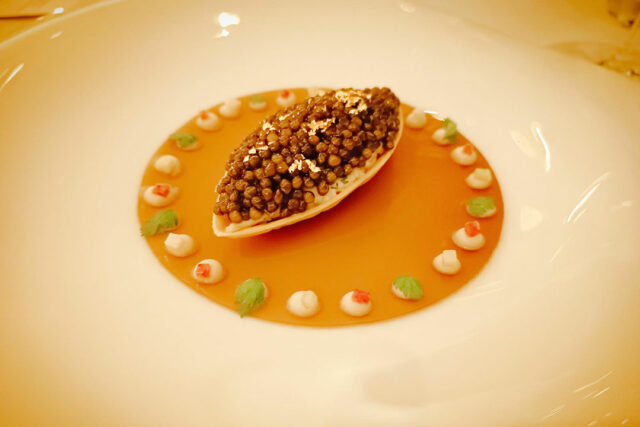
LE KING CRABE: a tart of king crab, caviar and lobster jelly. — JOSEPH L. GARCIA

More collaborations in the works, plus a certain star is twinkling in Chef Carmignani’s eye

THE Peninsula Manila’s new Executive Chef, Remy Carmignani, has only been in his position for six months, but he already has a few tricks and big plans up his sleeve.

On Jan. 23, he hosted a two-night four-hands dinner at The Pen’s Old Manila with his former colleague in Paris, Anne-Sophie Nicolas, now chef de cuisine at Gaddi’s, the historic French restaurant at The Peninsula Hong Kong. Standing since 1953, Gaddi’s is one of the first restaurants in Hong Kong to serve haute French cuisine.

Combined, the pair has decades of culinary experience between them. Ms. Nicolas’ resume includes locations such as Le Meurice Paris, L’Atelier de Joël Robuchon Étoile, Restaurant Guy Savoy, and Ritz Paris, polishing her craft over 15 years. As for Mr. Carmignani, he can say that he’s worked with Philippe Groult (Assistant Culinary Arts Director and Head of the Cuisine Department at Le Cordon Bleu institute in Paris), Guy Savoy (Gordon Ramsay’s mentor), and Daniel Boulud (a celebrity chef with fame in New York’s Upper East Side) on his resume, with around 23 years of experience under his belt.

For the amuses-bouche, Mr. Carmignani came out with a tarama (a roe dip) stuffed in a cannoli with caviar, while Ms. Nicolas made salmon with a bavarois of Jerusalem artichoke. These were paired with a Barons de Rothschild Concordia Brut Champagne NV. The tarama was robust and earthy for a fish dish, and almost bitter in its powerful smokiness; the Champagne gave it some levity. The salmon was divine, and served as a counterpoint for Mr. Carmignani’s dish: as light as Monsieur’s was dark and heavy. The salmon was stretched over the paste of artichokes, and it felt like biting on a cloud. The salmon snapped with a bite like the skin on a drum, while the Champagne only highlighted the dish’s lightness.

Next came her Le King Crabe, a navette tart of king crab and caviar and lobster jelly. This was paired with a Grand Bateau Bordeaux Blanc Sec 2023 (the joke that the wine’s name means “big boat” paired with a little boat-tart wasn’t lost on us). The flavors of the seafood were very much alive, but otherwise elegantly restrained and not jumping out of the plate. The pairing, softly fruity, enhanced the dish’s elegance.

His Les Fagottini d’Agneau (that’s not a slur; it’s a filled pasta resembling a dumpling) was stuffed with lamb made a la Marocain (Moroccan-style), lightly simmered in a bath of lamb consommé, with winter truffles and splashed with coriander oil. It summarized all of the flavor of a tender lamb in a spoonful, and gave meaning to “tender” if it pertained to taste and not texture. The wine, a Chateau Branas Grand Poujeaux “Les Eclats de Branas” Moulis-en-Medoc Bordeaux 2017, rich with the scent of wood and incense and tasting heavily of spice, was a bit too strong for the dish; pairing it with the Grand Bateau gave the dish some hints of cream and butter.

Next came another of his dishes, Le Turbot, with the fish arriving poached with seasonal mushrooms, celeriac textures, cockles, and the Binchotan-grilled fish barbels. The fish was divine; the flesh creamy in taste and texture. This was paired with a juicy Domaine de Vernus Regnie Cru de Beaujolais 2022, amplifying the fish’s creaminess.

Her main dish was Le Pigeon, a roasted pigeon breast, a confit of the bird’s leg, and a red wine sauce made with the bird’s liver and heart. Very indulgent, and the bird tasting strongly (pleasantly) of innards, it had a very robust flavor. This was paired with a Troplong Mondot Saint Emilion Bordeaux 2021, also a bit too strong for our taste, but the wine paired with the lamb tempered the more forward qualities of the pigeon.

Due to all this indulgence, we contented ourselves with moving around the dessert, Ricotta di pecora gelato, Sicilian pistachio Chantilly, meringue drops, and lemon gel around our plate. The few spoonfuls we had were paired with a Pizzolato Moscato Dolce Muse Veneto NV (far too rich and sweet to go together, in our opinion), but it paired beautifully with the initial Champagne.

DISCUSSING PLANS FOR THE PEN
After dinner, we talked with Ms. Nicolas about her experiences working at Gaddi’s, one of Hong Kong’s most-storied restaurants. “You get a little pressure, and a push to do better,” she said. “I try to keep the style as French as possible.”

French women are said to have “je ne sais quoi”: a quality hard to pinpoint that completes them. What she brings to the kitchen might be able to answer what is there to “sais” (know). “When I create a dish, I use my memory to find the inspiration,” she said.

As for Mr. Carmignani, he told us about his plans for the hotel: he’s tweaking the menus for Old Manila, Spices, The Lobby, and completely revamping the menu at the Pen Boutique. His big plans include improving the in-room dining selections. “All of the outlets available in in-room dining,” he said, with challenges such as logistics — some dishes just don’t travel well.

He’s looking forward to more collaborations: “I’m always learning something new,” he said in a group interview. “If you don’t learn, especially in the kitchen, you can’t go that far.”

More collaborations planned this year, as part of a series, are with chefs from Peninsula properties around the region: forthcoming are collaborations with chefs from Tokyo and Bangkok.

At the same time, he’s busy planning for The Pen’s 50th anniversary this year (he’s keeping it under wraps, but old names might make a comeback).

That should help in his goal for this year: earning a Michelin star for Old Manila. “We want to get the star,” he said, but that shouldn’t arrive at the expense of the real job at hand. “The most important part is for the guests to come back. If our guests come back, for us, it’s a big win — meaning, we have done the job well.”

Still, “I think it’s the right moment in the Philippines to come and express yourself.” — Joseph L. Garcia

Kia Philippines eyes more models after 16.7% sales growth in 2025

KIA PHILIPPINES

KIA PHILIPPINES, a subsidiary of ACMobility, is planning to introduce more models this year after reporting 16.7% growth in retail sales in 2025.

“2025 was a defining year for Kia Philippines, as we achieved 16.7% year-on-year growth and emerged as the fastest-growing mainstream established automotive brand in the country,” said Jaime Alfonso Zobel de Ayala, chief executive officer of ACMobility, in a statement on Wednesday.

“This milestone reflects the strength of our product portfolio, our customer-centric approach, and our commitment to offering mobility solutions that meet the evolving needs of Filipino motorists,” he added.

In 2025, Kia Philippines sold 7,810 units, up from 6,692 units in 2024, after its core models — Kia Carnival and Kia Sonet — ranked second in their respective segments.

“The Kia Carnival ranked second in the premium midsize multi-purpose vehicle segment, posting 30% year-on-year growth,” the company said.

“The Kia Sonet emerged as a key growth driver, ranking second in the entry subcompact sports utility vehicle (SUV) segment with a remarkable 54% year-on-year increase,” it added.

The company also credited its growth to the models introduced in 2025, which expanded its lineup to include fuel-powered, fully electric, and hybrid options.

“The addition of the Turbo Hybrid options, such as the Kia Sorento 7-seater hybrid SUV and the Kia Carnival Turbo Hybrid, played a key role in broadening Kia’s market reach and driving overall growth,” it said. 

Jay Lopez, managing director of Kia Philippines, said the brand’s 2025 performance reflects how Filipino motorists perceive its cars, service, and people.

“The momentum we have built gives us confidence in the road ahead,” he said.

“Our focus now is on expanding our lineup, elevating the customer experience, and making innovative, high-quality, and reliable vehicles more accessible to Filipino drivers.” — Justine Irish D. Tabile
Family-style

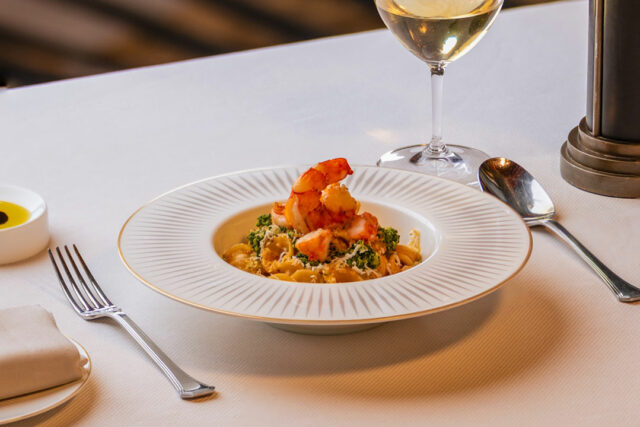
ARTISANAL ORECCHIETTE with king prawns

The menu at Solaire Resort North’s Finestra gets revamped

WE LOVE a chef who is in touch with his roots: and from a chef born in what was once a Phoenician settlement, those roots run deep.

Finestra at Solaire Resort North invited us over for dinner on Jan. 26 to introduce its chef de cuisine, Joel Manchia, who hails from Olbia in Sardinia, and seems to love his family a lot judging from his food.

The antipasti at the newly revamped bar area included a Mortadella open-faced sandwich, with excellent homemade bread, the cheese blending into the bread as if they had always been one, the union interrupted by the richly porky mortadella. We made bites out of Portuguese sardines, which he served with capered butter and pickled onions. We also had great fun with his octopus, breaded and served with an aioli: just the right texture. This he uncovered last: cottony soft meatballs in a cheesy tomato sauce — a recipe from his very own mother.

We washed all of this down with sparkly Bellinis, and their version of a Negroni: the Pecoroni. It’s made with Bulldog Gin, Pancetta-fatwashed Bianco Vermouth, campari, and Pecorino foam: all this combined made us think we were drinking a multicourse dinner.

They had to extract us from the bar for more treats: there was an amuse-bouche of Wagyu Carpaccio on a potato millefeuille fried in Wagyu fat: it had a very intense taste, and little of it from the relatively mild Carpaccio. Next came platters of antipasti: there was a slow-braised Wagyu ragu poured on top of a Roman risotto suppli — the ragu was almost fully liquid after a braise of 12 hours, lending all those hours of flavor to the rice. He takes a little bit from his adventures outside the hotel, channeling the sour vinegar from Pinoy street food calamari with a tart lemon-parsley sauce and sharp pickled onions, complementing that with a black garlic aioli further blackened with squid ink.

While he served several pastas — there was a filling and creamy orecchiette with king prawn and broccoli, and handmade tortelli stuffed with Parma ham and balsamic — the star no doubt was his version of Pomodoro, arguably the baseline for all Italian pasta dishes. He made this by cooking the pasta in tomato water, making a tomato salsa to rest at the bottom, and a tomato coulis on top: then sprinkling it with powdered tomato skin. It had a very intense tomato taste and captured the essence of a tomato, slowly turning ripe and juicy on a vine. Uniformly, the pasta dishes are heavily textured but have a light taste and touch.

For the mains, he brought out a very tender roasted lamb with pumpkin cooked in the lamb’s fat, an Australian Wagyu Carrara M9 Ribeye (surprisingly light for a steak; its chimichurri accompaniment gave it a nice lively grassiness). While we liked all of the mains, we couldn’t stop thinking about the Yellowfin Tuna, lightly charred and served with pickled lemons. The fish itself was very aggressive, but paired with the pickles, it was almost like eating something that cleansed the palate.

As for the desserts, Mr. Manchia channeled his own grandmother with My Nonna Hanni’s Brown Sugar Tart, wonderfully creamy and rich, served with coffee gelato. The Chocolate Pudding, very rich and warming, was served in a little cast-iron pot, and was made with the wagyu’s tallow (ensuring no waste).

SAME NAME, DIFFERENT DIRECTIONS
While the Finestra restaurants in Solaire Resort North and Solaire Resort Entertainment City down south share a name, Mr. Manchia is taking his northern base in a different direction.

Finestra down south is known for its fine-dining, degustacion-portioned opulence. As one can see from the selections above, opulence and excellence still take precedence, but up north “We want to give the kind of celebration that we used to have in my hometown, or with my family,” he said. “If I come with my family at the restaurant, nobody will order one dish each. We’ll all have a feast in the middle.” So up north, the dishes and serving sizes are geared more towards sharing (and what a difference it makes!).

As for his hometown in Olbia — when the Romans came there, it was already bustling with Greeks, taking off from what the Phoenicians left behind — he said that the flavors there come from both the land and sea: hence the prominence of seafood in the menu. However, he pointed to the roast lamb, one of the most important dishes in Olbia. “We eat a lot of sheep. If you think about it, there are one million people in Sardinia — and two and a half million sheep,” he said with laughter (we like him, he’s funny).

As for sharing his family recipes, he talked about his mother’s meatballs: “She wasn’t really a good cook. She made two things, and they were really nice.” As for his Nonna, that heroine of all Italian tables, he said that she had passed 10 years ago. “Sometimes, there are little treats of things, and I get the memory of her,” which is why he served up her tart for dessert.

“They deserve a place here, because, well, they made me,” he said, again with laughter. “Everything is thanks to them.”

For reservations and inquiries, visit sn.solaireresort.com/dining/finestra, call 8888-8888, or e-mail snrestaurantevents@solaireresort.com. — Joseph L. Garcia

DigiPlus receives SEC exemption approval for employee stock option plan

DIGIPLUS.COM.PH

LISTED DigiPlus Interactive Corp. (PLUS) said it has received Securities and Exchange Commission (SEC) MSRD Resolution No. 1, granting approval for an exemption from registration of its employee stock option plan (ESOP B).

An employee stock option plan allows a company to grant shares to employees as part of their compensation and incentive program.

The plan covers 220,382,958 common shares allocated to qualified officers and employees, following the terms outlined in the corporation’s ESOP framework.

The exemption allows DigiPlus to issue the shares to employees without going through the usual public offering registration process with the SEC.

“The ESOP aims to recognize the contributions, as well as attract and retain key individuals, directors, officers, and employees who are essential to the overall growth of the business and the long-term strategic goals of the Corp.,” the company said in a disclosure on Wednesday.

In an October disclosure, the company said its board approved filing a second application for an SEC-exempt transaction and an additional listing with the Philippine Stock Exchange.

This covers ESOP B, the second tranche of 220,382,958 shares under the company’s ESOP pool of 528 million shares approved in January 2023.

Shares issued under ESOPs are typically granted over time as part of employee compensation and do not directly raise fresh capital for the company.

In September 2025, the SEC issued Memorandum Circular No. 11, introducing standardized forms and procedures for exempt transactions under Sections 10.1 and 10.2 of the Securities Regulation Code.

This includes Form 10.1 for optional confirmation of Section 10.1 exemptions and Form 10.2 for mandatory applications on employee stock option plans.

At the local bourse on Wednesday, DigiPlus shares fell by 0.58% to P13.68 apiece. — Alexandria Grace C. Magno

Dining In/Out (01/29/26)


Waterside at Solaire presents Latin Nights

WATERSIDE at Solaire Resort Entertainment City invites guests to savor, dance, and fiesta while celebrating the rich culinary heritage of Latin America. Guests are welcomed with a Mojito, Caipirinha, or Piña Colada infused with a modern twist, the perfect sip to start the night. The culinary journey begins with Waterside’s buffet, led by chef Sherwin Reyes. There is a variety of appetizers such as Seabass Tiradillo, fresh fish lightly cured with citrus and herbs; charcuterie selections of Bresaola, Salami Milano, and Prosciutto, paired with cheeses. The evening unfolds with interactive highlights, including a roving nachos trolley serving freshly made guacamole. Guests can savor Latin-American specialties and premium roast meats, from Bourbon barbecue pork ribs and Chimichurri chicken to Herb-crusted lamb rack and Salt-crusted baked salmon. Signature Latin dishes such as Pastel De Fideo, the traditional Andean corn delicacy of Humintas, and Arroz Con Queso (a creamy, cheesy rice dish celebrated across the Andes) showcase the region’s flavors and culinary traditions. Desserts include Tres Leches Cake, Rice Pudding, and Churros with rich chocolate dip. Latin Nights at Waterside runs every Thursday to Saturday, from 5 to 11:30 p.m., until March 30. For more information, contact 8888-8888 or visit https://sec.solaireresort.com/offers/dining/waterside-latin-nights.


Breaking out The Macallan Harmony

THE MACALLAN breaks out its latest Harmony Collection, inspired by rare single garden teas sourced by JING, The Macallan reimagines the hosting experience through flavor, ritual, and artistry. Drawing from the aromatic elegance of Phoenix Honey Orchid Tea, the limited-edition Macallan Harmony reveals a layered profile of honeyed sweetness, floral nuance, and bright tropical character.


Araneta City announces pet-friendly restaurants

ONE CAN BRING their pets to several restaurants in Gateway Mall 2, thanks to al fresco dining options at some of the restaurants at the Coliseum Plaza (Nono’s, Shake Shack, SaladStop, and Manam). At the Ground Floor’s Lagoon, pets are welcome at Botejyu, a mano, Grace Park, Mamou at Home, Mango Tree Cafe, Choi Garden, Abe, Tokyo Milk Cheese Factory, Starbucks, UCC, and Paper Moon.

BPI hopes to beat 2025 results as rate cuts drive loan demand

BPI/BW FILE PHOTO

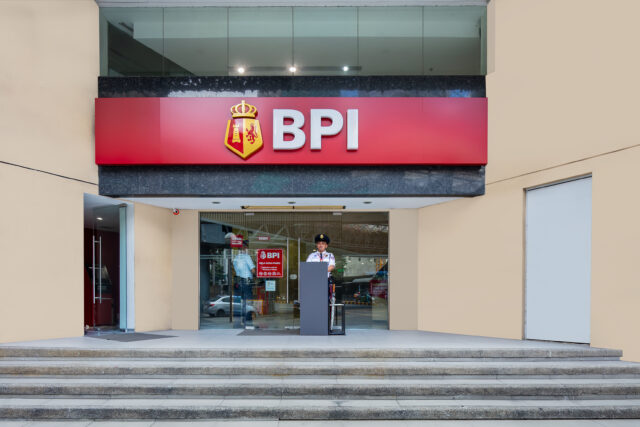
BANK of the Philippine Islands (BPI) hopes to beat its 2025 performance this year as further monetary easing could help drive loan demand despite weakening investor confidence amid domestic and global uncertainties.

“It should be a fairly decent year for us. We’re looking at hopefully outperforming last year’s results. But I think there are a couple of things that we need to be aware of. There’s a bit of hesitancy due to some of the global tensions and some local noise, if you will. But as far as we’re concerned, the demand should come back,” Bank of the Philippine Islands (BPI) President and Chief Executive Officer Teodoro K. Limcaoco told reporters on the sidelines of a central bank event on Friday.

BPI’s attributable net income inched up by 0.6% to P17.526 billion in the third quarter of 2025. This brought its nine-month profit to P50.48 billion, rising by 5.21%.

Mr. Limcaoco said their net profit will likely grow by “high single digits” this year, while their loans could expand by 10%-15% year on year.

“We will continue to push the consumer end, which I think is still buoyant. There’s an underserved market and there’s demand.”

He also expects corporate sentiment to recover, with further cuts by both the Bangko Sentral ng Pilipinas (BSP) and the US Federal Reserve likely to spur demand for credit.

“You want confidence that things are clear both globally and domestically, right?… It’s all about confidence. Confidence is when you look around and say, okay, maybe it’s okay, and then the first person goes and the second person follows, and so forth. I think it could turn very fast. But I don’t know when it could be. So, you have to be prepared for it,” he said.

“There is cash in the system. The banks will have capacity to lend. We just need the demand, and I think that could come. The sentiment could turn very good. So, I’m hopeful for the year, especially when you look at what the BSP might do in terms of monetary policy. If the Fed cuts, they’ll probably cut as well, right?… That would be good for business.”

The Fed was set to conclude its two-day meeting overnight, where it was expected to pause its easing cycle and keep benchmark borrowing costs at the current 3.5%-3.75% range. Still, markets expect the US central bank to resume its cuts by mid-year — likely after Fed chief Jerome H. Powell ends his term.

Economic data since the last meeting in early December has shown little change in either labor market or inflation trends, offering scant impetus for guidance on when rates might fall again, Reuters reported. Job growth has been weak, but the unemployment rate dipped in December to 4.4%, amid strong economic growth and consumer spending. The Personal Consumption Expenditures Price Index the Fed uses for its 2% inflation target was slightly higher than expected at 2.8% in November.

Meanwhile, the Monetary Board will hold its first policy meeting for this year on Feb. 19.

Last week, BSP Governor Eli M. Remolona, Jr. said that another cut remains uncertain, adding that inflation is their primary concern and weaker-than-expected economic growth wouldn’t automatically warrant further policy accommodation.

The BSP has lowered borrowing costs by a total of 200 basis points since its rate cut cycle started in August 2024, bringing the policy rate to 4.5%.

Analysts believe that the central bank could ease further to support domestic demand as inflation remains benign, as governance concerns due to a corruption scandal involving state infrastructure projects have dragged both public and private investments, causing growth to slump to a downward-revised 3.9% in the third quarter of 2025. 

The government will release fourth-quarter and full-year Philippine gross domestic product data on Thursday (Jan. 29).

The economy likely expanded by 4.2% in the fourth quarter, based on a BusinessWorld poll of 18 economists and analysts. This would put full-year growth at 4.8%, below the government’s 5.5%-6.5% target.

Meanwhile, Mr. Limcaoco said they expect to secure the necessary regulatory approvals for the merger of its thrift bank subsidiaries BPI Direct BanKo, Inc., A Savings Bank and Legazpi Savings Bank, Inc. within this year.

He added that the integration of Robinsons Bank Corp. into BPI will likely be completed by June as they finish the rebranding of all remaining Robinsons Bank branches.

BPI shares rose by 40 centavos or 0.35% to end at P115 apiece on Wednesday. — Aaron Michael C. Sy

Clark airport traffic seen up 15% as NAIA flight transfers, new routes drive growth

CLARKINTERNATIONALAIRPORT.COM

CLARK INTERNATIONAL AIRPORT expects passenger traffic to grow by 15% this year, driven by the transfer of some flight operations from the Ninoy Aquino International Airport (NAIA) and the expansion of international and domestic routes, its operator said.

“[We are expecting] 15% traffic growth based on actual 2025 (figures). 2026 will be driven predominantly by strengthened connections to Southeast Asia countries and domestic hubs,” Luzon International Premiere Airport Development Corp. (LIPAD) Chief Executive Officer Noel F. Manankil said in a Viber message on Wednesday.

Growth at Clark is also being supported by a government order to relocate turboprop operations from NAIA, part of broader efforts to decongest the country’s main gateway and redistribute air traffic across Luzon.

The transfer, originally set for last year, is now slated for full implementation by March 2026.

For the first half, Mr. Manankil said traffic expansion will be fueled by the shift of turboprop flights to Clark and the addition of new international routes, including services to Vietnam.

Budget carrier Cebu Pacific is further boosting its Clark hub by launching direct flights to Hanoi by May.

The airline will operate Clark-Hanoi flights three times a week, every Tuesday, Thursday, and Saturday, with return flights from Hanoi departing every Wednesday, Friday, and Sunday.

“Launching direct flights from Clark to Hanoi is an exciting milestone for Cebu Pacific as we continue to strengthen Clark as a hub. This route enhances travel options from Clark, allowing passengers from north and central Luzon to reach Hanoi more easily,” Cebu Pacific President and Chief Commercial Officer Alexander G. Lao said in a media release.

Hanoi will be Cebu Pacific’s fifth international destination from Clark. The airline currently operates flights from the airport to Bangkok, Hong Kong, Tokyo, and Singapore. Systemwide, Cebu Pacific also serves other Vietnam routes from Manila and Cebu.

Clark handled 2.75 million passengers in 2025, up 15% from 2.40 million in 2024, LIPAD said.

Domestic passenger traffic rose by 23.06% to 1.04 million, while international passenger traffic increased by 9.62% to 1.71 million.

Airline capacity at the airport also expanded, with total available seats climbing by 12.2% to 3.77 million in 2025 from 3.36 million a year earlier, supported by additional flight frequencies on existing routes.

“2025 was a year of steady growth for Clark International Airport. The increase in passenger traffic and improved load factors were supported by stronger airline partnerships. Looking ahead to 2026, we remain optimistic as airline operations continue to expand at Clark,” Mr. Manankil said in a separate statement. — Ashley Erika O. Jose

Mattel taps into KPop Demon Hunters fan craze with new doll line

MATTEL

NUREMBERG, Germany — Mattel teased fans of KPop Demon Hunters on Tuesday with a new lineup of dolls to be rolled out later this year after it failed to cash in on the success of the runaway Netflix hit over the holiday shopping season.

KPop Demon Hunters is Netflix’s most popular film ever, hitting over 500 million views since its June release. Mattel, however, did not foresee its crossover appeal, a source told Reuters last year.

The new toys will start rolling out this summer, roughly a year after the film’s release, as Mattel hopes merchandise can stoke its continued popularity.

“We really believe that this brand and this franchise has evergreen potential,” Roberto Stanichi, Mattel’s chief global brand officer, told Reuters at the International Toy Fair in the southern German city of Nuremberg, where the toys were unveiled.

“We’re going to be staging different collections, different assortments throughout the year,” he added.

FROM TOYMAKER TO ENTERTAINMENT PLAYER
Facing declining retail sales, the Barbie and Hot Wheels maker is repositioning itself as a global entertainment player, giving new life to its intellectual properties through Hollywood partnerships.

With more than 14 films in the pipeline, Mattel hopes to repeat the success of 2023 blockbuster Barbie with a live-action version of Masters of the Universe in June and will release a new He-Man toy line soon to build buzz.

While no announcement has yet been made, industry publication Deadline reported that a KPop Demon Hunters sequel is in the works for a possible 2029 release.

“We have ambitious plans for the franchise, but I’m not able to share them yet,” Filippo Zuffada, senior director of consumer products at Netflix, told Reuters. “Merchandise is essential to extend the life of an IP like this.”

Netflix, which was already offering KPop Demon Hunters apparel, accessories, and collectibles through its online shop, announced a licensing partnerships with Mattel as well as Hasbro in October.

Mattel’s Mr. Stanichi said the process of developing a product from an idea to commercial launch typically takes around 18 months, and, for the KPop Demon Hunters line, it worked with Netflix to speed that up without sacrificing details.

SINGING DOLLS, POLLY POCKETS PLANNED
The dolls inspired by Rumi, Zoey and Mira — the film’s girl band members by day, demon hunters by night — will initially be available with two looks, including dolls who sing their Billboard No. 1 hit “Golden.”

The HUNTR/X stars along with frenemy boy band Saja Boys members and other characters will be released across Mattel’s Polly Pocket, UNO, and Little People Collector brands.

The dolls will sell for around $40 to $45, while Polly Pocket tiny capsules, featuring the girl band’s favorite ramen cups, will retail for about $8.

Some products will not be available until autumn. — Reuters

ADVERTISEMENT
ADVERTISEMENT