Home Blog Page 2611

Alternergy keen on green energy auctions this year

ALTERNERGY Holdings Corp. may participate in the Department of Energy’s (DoE) green energy auction (GEA) program this year, the company’s president said.

“We are working with industry players, with our colleagues in the industry, together with the DoE, to make sure that all the policies are in place, the mechanics are very clear,” Alternergy President Gerry P. Magbanua said during a briefing last week.

Mr. Magbanua said the attractiveness of the third round of the green energy auction would depend on the price set by the Energy Regulatory Commission.

“We will see if GEA-3 would be more attractive to us depending on what prices will be made available. And of course, there’s always the possibility of entering into a bilateral agreement with a potential off taker,” he said.

The DoE is planning to stage two green energy auctions by the fourth quarter.

GEA-3 involves geothermal, pump-storage hydro, run-of-river hydro, and impounding hydro worth a total capacity of 4,399 megawatts (MW).

Meanwhile, GEA-4 will cover integrated renewable energy and energy storage systems and possibly liquefied natural gas.

Mr. Magbanua said that there was a “huge gap” in the subscribed capacities compared to what was offered during GEA-2 due to the price signals that the government has set.

“Hopefully that provides also feedback to the regulators that they have to change the pricing structure or the pricing levels at which they set the reserve price,” he said.

Alternergy is targeting to increase its renewable energy capacity to 500 MW by 2026.

For the fiscal year 2024, the company reported a consolidated net income of P130 million, nearly four times higher than the P38 million reported last year.

It attributed the increase to the surge in revenues, which grew by 60% to P275 million, particularly from its operating assets. — Sheldeen Joy Talavera

CTA favors DMCI in P103.68-M tax appeal

THE Court of Tax Appeals (CTA) ruled in favor of DMCI Holdings, Inc. in the company’s appeal against the Bureau of Internal Revenue (BIR) regarding over P103.68 million in deficiency income tax assessment for 2014, citing erroneous audit calculations and a lack of substantial evidence.

The tax court’s first division, in a decision publicized on Sept. 23, rejected the BIR’s computation of the company’s taxable income for 2014.

“Finding that petitioner has no more deficiency income tax liability for [the] calendar year 2014, the Formal Letter of Demand dated 01 September 2020 and the Final Decision on Disputed Assessment dated 27 December 2021 are canceled and set aside,” the 35-page ruling penned by Associate Justice Jean Marie A. Bacorro-Villena read.

DMCI initially faced a P159.18-million assessment from the BIR, which was eventually reduced to P103.68 million.

The assessment covered alleged deficiencies in income tax, value-added tax (VAT), and other tax categories for the 2014 fiscal year.

In ruling in favor of DMCI, the tribunal said that there was no factual basis for the BIR to determine and set DMCI’s taxable income per income tax return (ITR) as zero, as records showed DMCI suffered a net loss of over P159 million.

The tribunal added that DMCI was correct in arguing that the BIR’s method of computation would result in double disallowance.

Based on the report of the independent certified public accountant, DMCI arrived at a net loss of over P159 million.

DMCI also claimed stock issuance costs of over P92 million as part of its other deductions, arriving at a net loss of more than P159 million.

The court noted that if the stock issuance costs were disallowed, DMCI’s net loss would decrease to more than P66 million, but this would not create any taxable income for a deficiency.

However, under the BIR’s method, disallowing the stock issuance costs would generate a taxable income of P92,922,746, resulting in a deficiency of P27,876,823.80.

“This tax liability is expectedly arrived at since the respondent used zero as the tax base, and again deducted the same expense based on the finding of his or her disallowance,” it said.

“However, in this method, the respondent had seemingly disallowed all the expenses that the petitioner had claimed as deductions for [year] 2014 without any evidence to support its action. Simply put, this transgresses the petitioner’s right to due process.” — Chloe Mari A. Hufana

MPTC unit to seek TRB nod for CAVITEX segment expansion

CAVITEX.PH

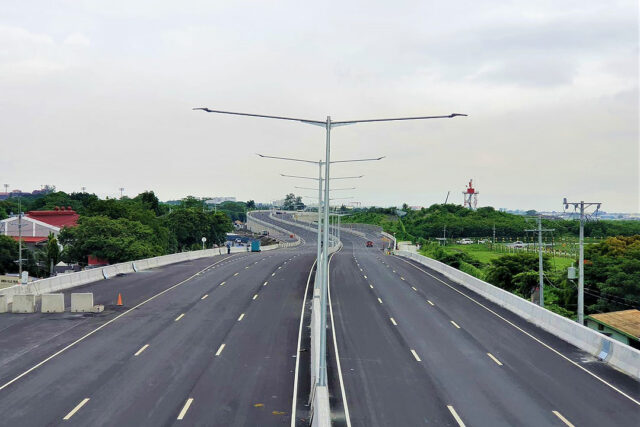
MPT South Corp., a unit of Metro Pacific Tollways Corp. (MPTC), will seek approval from the Toll Regulatory Board (TRB) to expand Segment 4 of the Manila–Cavite Expressway (CAVITEX), the company’s president said.

The company is planning to expand Segment 4 from the current 2×2 lanes to 3×3 lanes, Raul L. Ignacio, MPT South president and general manager, said during a roundtable discussion with reporters last week.

“We are submitting to the TRB the expansion of that section,” he added.

According to its website, Segment 4 is a 7.4-kilometer, 2×2 expressway lane from Zapote Interchange in Bacoor to Kawit Toll Plaza. The Segment 4 extension starts 330 meters from Kawit Toll Plaza, passes south, and ends 720 meters after Tirona Highway, connecting CAVITEX and Cavite-Laguna Expressway (CALAX).

The CAVITEX Segment 4 has a projected average daily vehicle count of 55,773, marking a 10.2% increase from this year’s 50,603 average daily traffic.

For 2025, MPT South is setting aside PHP 14 billion for its capital expenditure (capex) budget to fund key projects slated for completion next year.

MPT South expects a combined average daily vehicle count of 344,514 for next year, marking a 32.6% increase from the current 259,815.

MPTC is the tollways unit of Metro Pacific Investments Corp., which is one of three key Philippine units of Hong Kong-based First Pacific Co. Ltd., the others being Philex Mining Corp. and PLDT Inc.

Hastings Holdings, Inc., a unit of PLDT Beneficial Trust Fund subsidiary MediaQuest Holdings, Inc., has a majority stake in BusinessWorld through the Philippine Star Group, which it controls. — Ashley Erika O. Jose

Paris Fashion Week: Controversial leather at Hermes, light and breezy at Beckham, a masculine note at Saint Laurent

HERMES

PARIS — For her spring summer runway show, Hermes designer Nadege Vanhee sent out a parade of mesh crop tops and calfskin coats in tan hues on Saturday, a lineup that was briefly interrupted by three animal rights activists.

The show was kicking off with a series of light, beige looks — loose trousers, sheer tops, and a suede coat cinched in the back — when the first protestor from the People for the Ethical Treatment of Animals (PETA) group burst on to the catwalk, wielding a sign calling for the label to stop using exotic skins. (Watch the show — sans protestors — here: https://tinyurl.com/mseetadf)

She was wrestled out of a side door by security guards just before the next model arrived, dressed in a buttery leather bomber jacket paired with a high waisted culotte.

Security guards nabbed another protestor who jumped on the catwalk shortly after, rushing her out the same side door in time for the next look — a sheer top in ivory that matched the model’s trousers and handbag.

The parade continued, featuring long sheer skirts unzipped to the thighs, bright pink dresses and belted outerwear.

When a third protestor suddenly appeared, the audience gasped. Her appearance was also brief, and the show continued.

It is not the first time PETA protestors have targeted the French label, known for its highly coveted Birkin bags, with versions in exotic skins famous for fetching prices reaching as much as several hundred thousand dollars in auctions.

PETA also targeted the Dior show earlier this week for the brand’s use of feathers, with just one protestor very briefly entering the catwalk.

Paris Fashion Week, which started on Sept. 23, wraps up Oct. 1.

VICTORIA BECKHAM
For the spring-summer collection of her namesake label, Victoria Beckham showed a lineup of minimalist dresses and deconstructed tailoring on a runway set up in the outskirts of Paris. (Watch the show here: https://tinyurl.com/25rutb36)

Models emerged from a neoclassical chateau in the sprawling Bois de Boulogne gardens after dark, the trains of their skirts trailing behind. The audience sat in a courtyard under a clear, plastic tent, huddled in blankets left on each seat, while rows of candles flickered under the sphinx statues nearby.

Models paraded by in skimpy, shoulder-baring tops, and asymmetric dresses, while trousers had slightly bulky cuts, adding volume, made of fabric pressed with wrinkles.

SAINT LAURENT
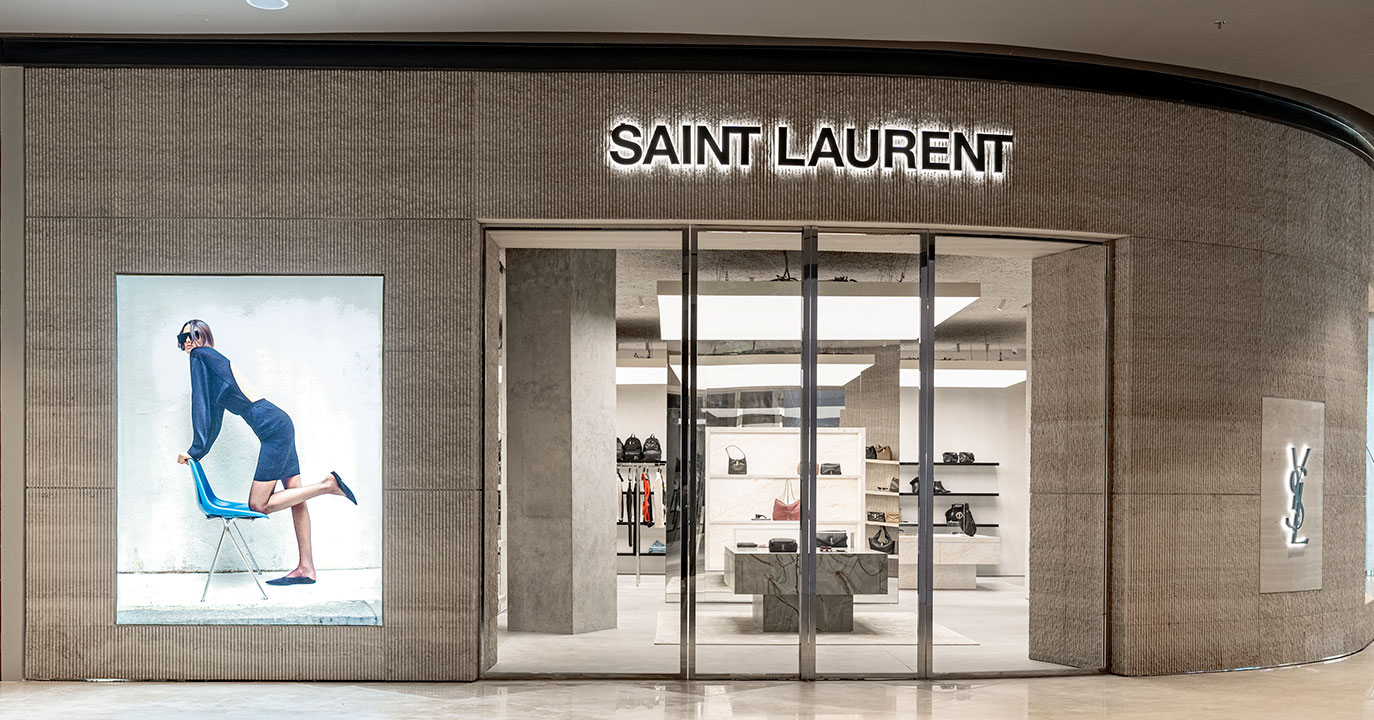
Saint Laurent creative director Anthony Vaccarello offered a lineup of ample, masculine suits for the Parisian label’s spring-summer 2025 collection, with prominent shoulders and matching ties. (Watch the show here: https://tinyurl.com/w3rcx8dc)

Models made their way steadily around an open-air runway set up in the central courtyard of the Kering-owned fashion house’s Left Bank headquarters.

They wore thick, studious glasses or aviator shades.

Bomber jackets added heft to the silhouettes, while chunky jewelry and pointy stilettos brought extra glamour to the looks, which were closely fashioned after the personal style of the house founder, Yves Saint Laurent.

Part way through the show, Mr. Vaccarello shifted to more feminine, bohemian styles, sending out flowing skirts in paisley motifs and shimmery brocade jackets covered with flowers and paired with short skirts. — Reuters

Disney Store opens in Manila

SM Mall of Asia now houses the only Disney Store in Southeast Asia, launched by International Toy World, Inc. (ITWI), an affiliate of SM Retail, Inc.

Located on Level 1 of the North Main Mall at SM Mall of Asia, the store opened on Sept. 27.

“In bringing Disney Store to one of the largest shopping malls in the Philippines, we aspire for it to become a welcoming retail destination where guests look forward to creating memories with their loved ones,” said Rose Marie Dylim, president of International Toy World, Inc., said in a press release last week.

“Disney characters from Disney, Pixar, Star Wars, and Marvel hold a special place in many people’s hearts and in minds. We are proud to partner with SM to bring the magic of Disney closer to home,” said Disney Consumer Products Asia-Pacific Retail Vice-President Sara Grewal.

Ms. Grewal said shoppers can find many original products, including toys, collectibles, fashion, and homeware.

SM said guests can visit photo spots and life-size sculptures of characters in the store, including Disney princesses, Queen Elsa, Winnie the Pooh, Mickey Mouse & Friends, Darth Vader, and Spider-Man. — Aubrey Rose A. Inosante

How Jetour and Camille Prats found common ‘electric’ ground

Camille Prats-Yambao, husband VJ, and their kids Nolan and Nala flank their Jetour Dashing i-DM. — PHOTO FROM JETOUR AUTO PHILIPPINES

The celebrity is now a proud Jetour Dashing i-DM owner and brand ambassador

By Joyce Reyes-Aguila

SURELY, like many car browsers, celebrity and businesswoman Camille Prats looked into electric vehicles during her family’s search for their next ride. “I was impressed not only by the EV designs but also their features,” she tells “Velocity” in an exclusive e-mail interview. “My husband (VJ) and I (were) looking into electrified vehicles. In particular, we found the Jetour Dashing Lightning i-DM (intelligent dual motor) to be very appealing.”

The actress and television host acquired the SUV recently, and was additionally introduced as the new brand ambassador specifically for the aforementioned Jetour Dashing variant. Jetour Auto Philippines, Inc. (JAPI) formally forged the deal last Sept. 10, and Camille received her own unit of the i-DM, also known as the Dashing PHEV (plug-in hybrid electric vehicle). The contract signing ceremonies were led by JAPI Managing Director Miguelito Jose and Marketing Director Cherry May De Los Santos.

“Camille reflects what every parent prioritizes in a home — qualities that can also be found in Jetour vehicles: safety, comfort, and convenience,” asserts Mr. Jose to “Velocity” in a phone interview. “Her vlog shows her audience how practical, modern, and aware of high tech she is. The Jetour Dashing Lightning i-DM exudes these same qualities.”

The executive continues: “Camille was impressed to learn that the vehicle has up to 1,000 kilometers of range, combining battery and gasoline resources. It demonstrates how practical the SUV is. There is good sound insulation inside, and it has a filtration system that protects the health of its occupants. It also boasts advanced driver assistance systems (ADAS), its gearshift is on the steering column for added safety, and it features Jetour’s very famous voice control system: Hello, Jetour. We found commonalities. Camille is looking out for her family, while Jetour offers all the features families look for in vehicles.”

The Dashing PHEV, which can shift between electric and gasoline modes, is equipped with an electric motor and a traditional internal combustion engine. “Practicality is very important for moms, which is why I decided to jump on the EV bandwagon,” shares Camille, who has been in the industry for three decades. “Gas prices are unpredictable, so we highly considered trying out an electrified vehicle for its reliability, practicality, and efficiency. The space is also very generous, especially if you’re a mom running errands with your kids. The ride is very smooth and luxurious for its price.” The celebrity’s point of view is consistent with Jetour’s
#DriveBeyondBoundaries initiative that values sustainability, innovation, and driving beyond limitations.

According to the brand’s site, the Jetour Dashing Lightning i-DM delivers 545Nm of torque, with a standstill-to-100kph time of seven seconds. The PHEV’s system is 80% electric-driven, reducing fuel use, and offering cost savings.

In terms of the SUV’s features, Camille reveals that her “kids love the sunroof,” adding that her favorite features of the vehicle include “the all-in-one infotainment system (that) consolidates all the features in one place, including a cable-free charging station and the ‘Hello Jetour’ voice command.

“The design, the ride, and the high-tech features on the i-DM are truly impressive,” she shares with “Velocity.” “I was genuinely surprised to find that features typically found in expensive European luxury cars are now available at a reasonable price.”

For more information about Jetour, log on to its official website https://jetourauto.ph/ or contact Jetour’s authorized dealerships nationwide.

Luxury brands bet on Cebu

WHERE the money is, the luxury brands go. A recent visit to Cebu’s latest star development, NUSTAR, seems to say that the money’s in Cebu.

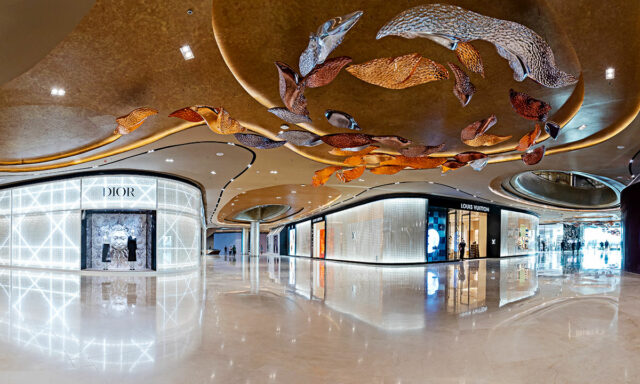
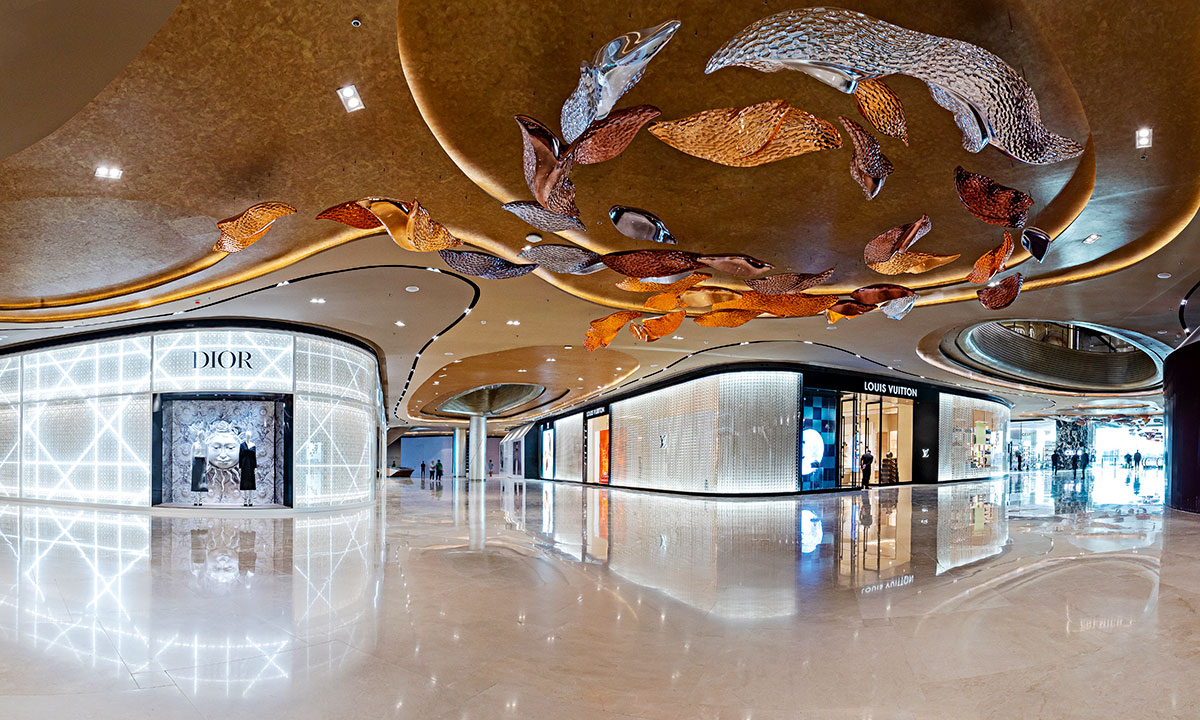
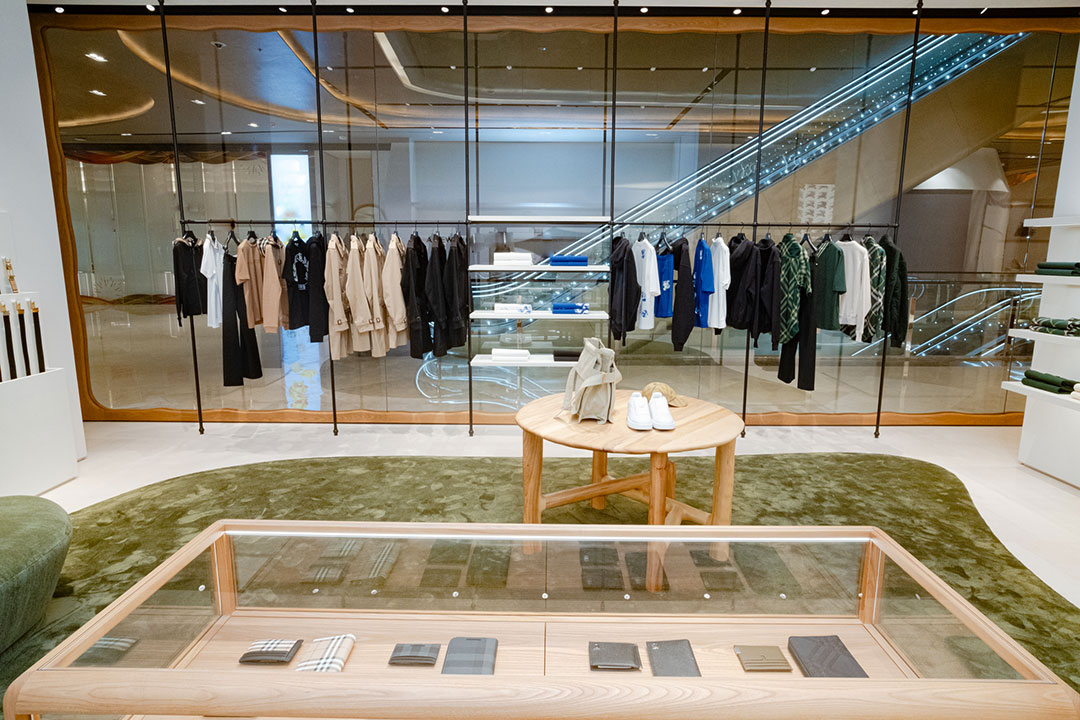
A walkthrough at NUSTAR’s mall (stylized The Mall | NUSTAR; which opened in 2023) was a recitation of some of the world’s most coveted brands, finding their first outposts outside Manila.

NUSTAR Resort & Casino is the five-star integrated resort development by Universal Hotels and Resorts Inc. (UHRI). UHRI is a privately owned company by the Gokongwei Group and is the estate owner and operator of NUSTAR in Cebu. Robinsons Land Corp. is a partner of UHRI in the Hotel Management and Operations and The Mall management and operations of NUSTAR Resort Cebu.

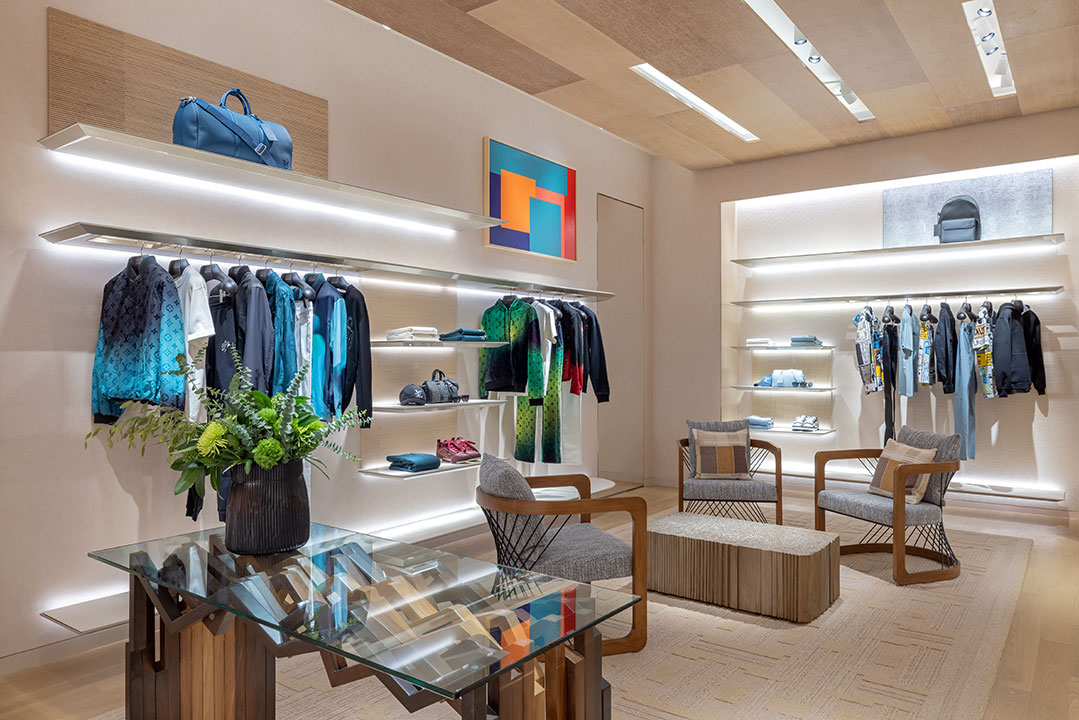
Media guests were taken to some of the stores in the area on Sept. 25 and were treated to these brands’ Cebu-only privileges. For example: Louis Vuitton’s latest bag, the Neverfull Inside Out (a reversible version of its famous tote, but now the lining was made to be exposed; but one can have it in leather), was already there, just a few days after its September launch. Guests were taken to the Very Important Customer (VIC) dressing room, featuring some bags made of exotic leathers like ostrich, available to view only for those willing to pay the price. Louis Vuitton also has a stamp for travel goods that’s only available in Cebu.

Gucci’s store had bags with lime-green leather detailing — something found only in Cebu, not in Manila.

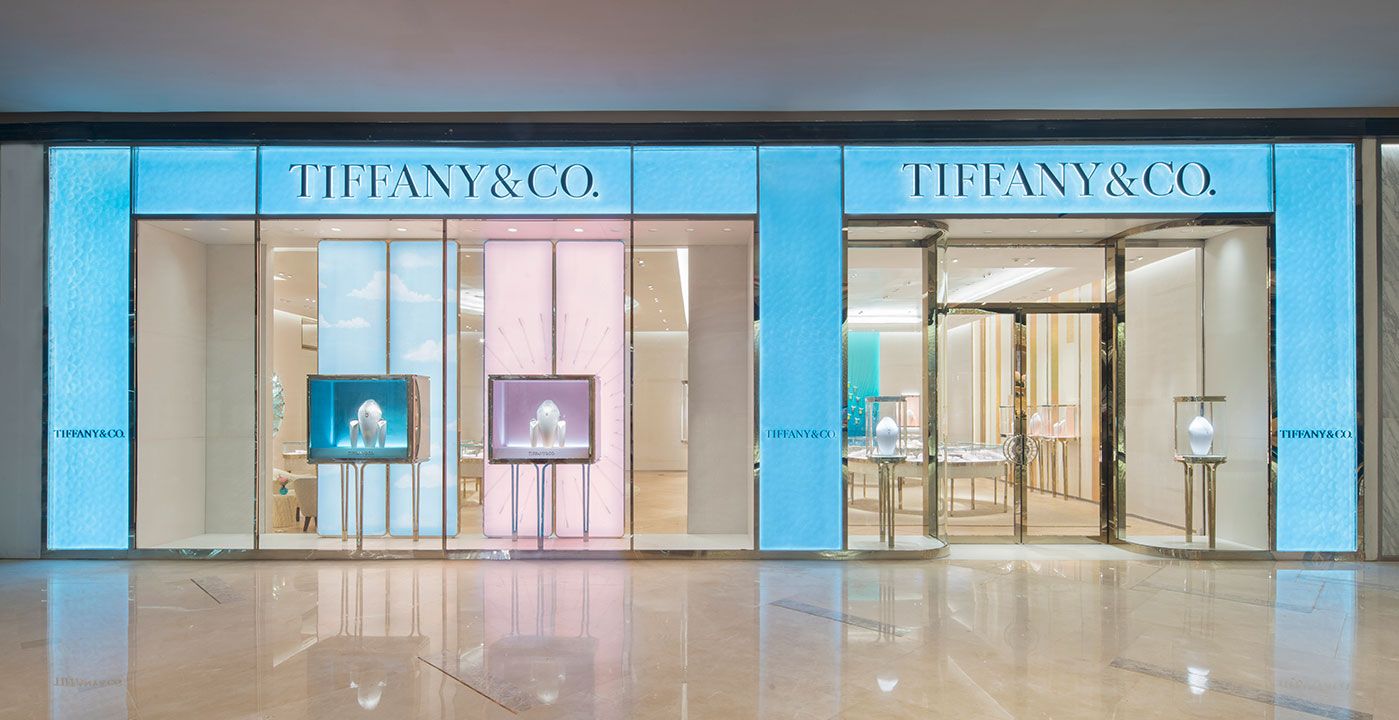
NUSTAR’s Tiffany’s is the biggest in the Philippines at 255 sq.m. and is the first store in the country showing off the new more feminine store design currently rolling out around the world. A bright chandelier reflected on the jewels right below, creating a brighter illusion of sparkle and fire.

Artsy favorite Univers also has its Cebu home in NUSTAR, featuring “if you know, you know” brands like Phillip Lim, Alexander Wang, Fiorucci, Helmut Lang, Thom Browne (among others). Victoria Beckham has a display in the store, featuring items from glam to quirky: a slinky black bodice jostled for space next to a shirt proclaiming herself as being David’s Wife (as in her husband, celebrity David Beckham).

Meanwhile, store assistants at Céline whispered that Artistic Director of Céline Hedi Slimane himself curated the store’s furniture and finishes, which were then flown to Cebu —in fact, some of his favorite books were at the store. Other guests gamely tried on some of the clothes and accessories in the Cebu store (because they said the Manila store had run out of some of the best finds; the Cebu store is just a plane ride away).

NUSTAR Resort and Casino Marketing Manager Joanna Salazar told BusinessWorld that the mall has a total gross leasable area at 20,000 sq.m. Of the 80 establishments (including restaurants and such) at the mall, only a few spaces have not yet opened, although their boards are already up (the fourth floor is forthcoming). While the ultra-luxury NUSTAR Hotel — joining Fili, Robinsons Land’s homegrown five-star hotel, where we were billeted — is to open before the end of the year, a third hotel, the Grand Summit, is set to open in 2026. (There are plans to open a Fili in Manila, although there are no details available.) A sky deck, a water park, and a theater are also in the works.

NUSTAR | The Mall’s General Manager May Adolfo said in a speech, “Our concept was simple yet ambitious. To make a destination that redefines luxury in the Philippines, offering a carefully curated mix of global brands and experiences catering to the taste of our clientele.

“This strengthens our position to bring Cebu to the world,” she said. “This has become their home in this side of the Philippines — and it’s their first outside Manila.

“We are creating something extraordinary: Cebu has finally arrived.” — Joseph L. Garcia

Upholding the standard for corporate governance in PHL

On Sept. 19, the Institute of Corporate Directors (ICD) hosted the annual Golden Arrow Awards along with the first Global Governance Summit at the Manila Ballroom, Marriott Hotel Manila, in Pasay City.

The summit celebrated the 25th anniversary of the ICD, established by visionary business leaders, including Dr. Jesus P. Estanislao, in response to the financial crises that have historically plagued economies.

Themed “Global Governance Summit: Leading the Future, Strengthening Unity,” the summit brought together distinguished speakers, industry leaders, policy makers, and experts to discuss the vital integration of good governance in public service and business practices.

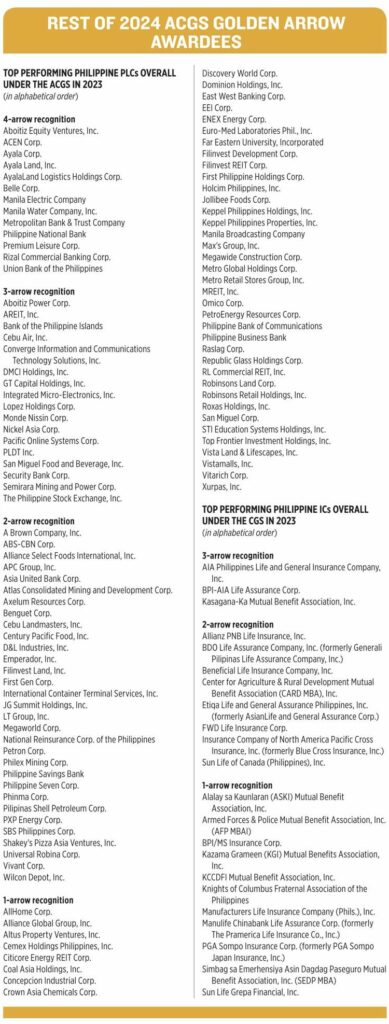
Following the summit, ICD honored top-performing Philippine publicly listed companies (PLCs) and insurance companies (IC) for their excellence in corporate governance through the 2024 Golden Arrow Awards.

The event recognized organizations that demonstrated outstanding performance in the 2023 ASEAN Corporate Governance Scorecard (ACGS) and Corporate Governance Scorecard (CGS) Assessment based on key governance principles, including equitable treatment of shareholders, transparency, accountability, and strategic board oversight.

The Golden Arrow Award is presented to companies that score at least 80 points in the ACGS assessment. Each arrow represents a level of achievement: one arrow for 80 to 89 points, two arrows for 90 to 99 points, three arrows for 100 to 109 points, four arrows for 110 to 119 points, and five arrows for 120 to 130 points.

This year, 136 companies received the coveted Golden Arrow, reflecting the continued efforts of Philippine organizations to improve corporate governance practices.
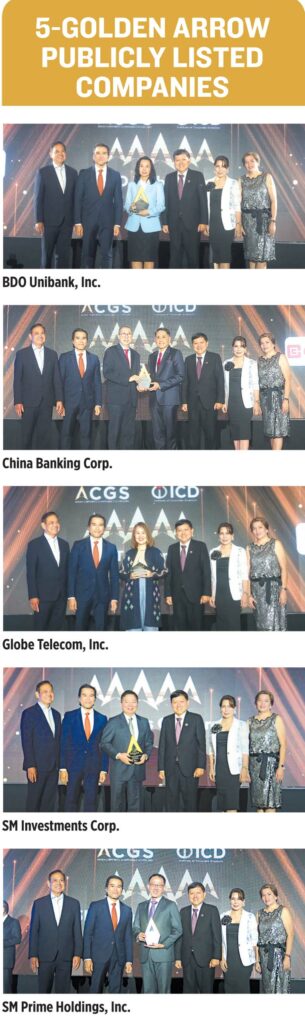
The five-arrow award, the highest level of excellence in corporate governance, was awarded to BDO Unibank, Inc., China Banking Corp. (Chinabank), Globe Telecom, Inc., SM Investments Corp. (SMIC), and SM Prime Holdings, Inc.

“This recognition reflects the commitment and hard work of our entire organization,” said SMIC Chairman Amando M. Tetangco, Jr. “From the board, management, our leaders, and teammates — everyone consistently works to ensure we continue to adopt and uphold the highest standards in good corporate governance.”

SMIC’s governance approach prioritizes long-term growth and sustainability by maintaining transparency and accountability in all stakeholder interactions. This philosophy ensures that SM companies remain both profitable and socially responsible, according to SMIC Executive Vice-President and Chief Risk and Compliance Officer Elizabeth Anne “Lizanne” C. Uychaco.

“We recognize the rising global attention on corporate governance and sustainability as part of companies’ business strategies. Beyond compliance, SM’s operations are anchored on fairness, integrity, accountability, transparency, and stakeholder engagement,” she added.

The PLCs that garnered four-arrow distinction include Aboitiz Equity Ventures, Inc., Ayala Corp. (AC), Manila Electric Company (Meralco), Metropolitan Bank & Trust Company (Metrobank), and Philippine National Bank (PNB), among others.

Notably, Meralco, which earned three-arrow award in 2021 and 2022, stepped up its efforts and secured the four-arrow award this year. This marks Meralco’s second time receiving the four-arrow ranking.

The three-arrow recognition includes Aboitiz Power Corp., AREIT, Inc., Bank of the Philippine Islands, Cebu Air, Inc., and Monde Nissin Corp., among others.

Furthermore, the two-arrow award recognized firms such as A Brown Company, Inc., Alliance Select Foods International, Inc., First Gen Corp., and Wilcon Depot, Inc.; while those in the one-arrow award category included Megawide Construction Corp. and Philippine Business Bank (PBB), among others.

Meanwhile, the Golden Arrow Awards recognize top-performing ICs under the CGS assessment. Insular Life Assurance Company, Ltd., and Pru Life Insurance Corp. of the U.K. earned the four-arrow distinction.

Firms like AIA Philippines Life and General Insurance Company, Inc., BPI-AIA Life Assurance Corp., and Kasagana-Ka Mutual Benefit Association, Inc., received three-arrow recognition.

According to ICD, companies that meet these high standards attract investors as they continuously demonstrate their commitment to ethical business practices and long-term sustainability.

Fostering long-term growth and sustainability

The Golden Arrow Awards not only recognize the accomplishments of individual companies but also symbolize collaborative efforts to raise corporate governance standards in the Philippines.

The recognition of 136 companies stems from their performance under the ASEAN Corporate Governance Scorecard (ACGS), a system that assesses and benchmarks corporate governance practices according to the globally accepted principles of the Organization for Economic Cooperation and Development (OECD).

The OECD Principles of Corporate Governance, which form the foundation of the ACGS, enjoy widespread acceptance among policy makers, investors, and stakeholders. These principles establish standards for effective corporate governance and encompass five critical areas: the rights of shareholders, equitable treatment of shareholders, the role of stakeholders, disclosure and transparency, and board responsibilities.

With an increasing emphasis on sustainability, Environmental, Social, and Governance (ESG) issues, and ethical business practices, the ACGS promotes higher standards of accountability within the industry.

Many of the ACGS criteria go beyond the minimum requirements of national legislation, encouraging companies to adopt international best practices.

Thus, the awardees have embraced these principles, achieving high scores in the evaluation process and demonstrating their dedication to ethical leadership, transparency, and accountability.

With the 2024 rating process currently under way, optimism surrounds the prospect of even better performance in future assessments.

“We look forward to much better ratings this year as companies moved from mere compliance to firm commitment to good corporate governance practices. We look forward to the day when good corporate governance and ratings of 100 points will be the norm rather than the exception,” said Atty. Pedro H. Maniego, Jr., chairman of ICD.

The 2023 corporate governance assessment

Since its creation, the corporate governance scorecard has enabled publicly listed companies and insurance firms to adopt best practices in corporate governance, helping them meet the evolving demands of investors, regulators, and the public.
The 2023 ASEAN Corporate Governance Scorecard (ACGS) assessment evaluated 276 publicly listed companies in the Philippines. The average score for all PLCs was 75.71 points, slightly lower than the 76.64 points recorded in 2022. The assessment, however, also revealed positive trends, particularly in PLCs resilience during the post-pandemic recovery.

A total of 111 companies scored 80 points or higher, indicating steady progress toward corporate governance excellence, up from 109 in 2022.

Additionally, the top 100 PLCs by market capitalization maintained an average score of 90.64 points, unchanged from 90.68 points in 2022.

Despite minor declines in overall scores, the findings suggest that PLCs in the Philippines have sustained a high level of corporate governance and continue to adapt to new industry challenges.

The results also indicate that PLCs’ boards of directors actively drive improvements in corporate governance. Their focus on sustainability and corporate responsibility helps companies address emerging trends and challenges, ensuring adherence to best practices.

In the insurance sector, corporate governance has significantly improved over the past seven years, with companies consistently striving to enhance their practices.

However, the 2023 Corporate Governance Scorecard (CGS) assessment indicates a slight setback for the industry. The total average score for insurance companies was 54.90 points, down from the 2022 average of 55.13.

Despite this dip, progress in specific areas of the scorecard, such as Part C (Role of Stakeholders in Corporate Governance), Part E (Responsibilities of the Board), and the Bonus and Penalty sections, shows improvement.

A significant portion of insurance companies scored below 50 points, with many scoring between 30 and 40 points. This figure indicates a broad disparity in corporate governance practices across the sector, highlighting the need for companies to elevate their performance. Only 25 insurance companies achieved a score of 80 points or higher. — Mhicole A. Moral


Bangko Sentral ng Pilipinas: Declaring Independence

(This article is based on the research undertaken by the Research Team of Regina Capital Development Corp., a member of the Philippine Stock Exchange.)

On Aug. 15, the Bangko Sentral ng Pilipinas (BSP) declared its independence. No, not from the Philippine government. The charter of the BSP mandates that the BSP operate as an independent and accountable body that enjoys fiscal and administrative autonomy despite being a government corporation. Both our executive and legislative bodies have scrupulously and wisely respected this mandate.

We are referring to the US Federal Reserve Board (US Fed). By lowering the interest rate ahead of the US Fed, the BSP declared that henceforth Philippine monetary policy will be decided by the Philippine Monetary Board and not by the US Fed.

Ever since the US Fed started raising interest rates to combat inflation, the BSP has followed slavishly except for one instance. In that one instance, the peso rapidly depreciated and the BSP immediately followed the US Fed in raising interest rates.

It is therefore initially puzzling that based on this incident and despite the warnings of several economists, the BSP still reduced interest rates ahead of the US Fed. This puzzle was cleared when BSP Governor Eli Remolona, Jr. declared that delaying the easing of interest rates would dampen economic growth.

This declaration of the BSP Governor meant that:

1.) The objective of the BSP has shifted from containing inflation to stimulating growth (that the BSP recently reduced the Reserve Requirement Ratio or RRR from 9.5% to 7% thus releasing an additional P300 billion for the banks to lend further proves that the BSP is focused on stimulating growth); and that,

2.) In pursuit of this objective, the BSP is willing for the peso to depreciate and for inflation to increase.

As background, the famous economist John Maynard Keynes was the first to suggest that government should intervene in managing the economy. Previous to that the conventional wisdom was for the government to do nothing as the economy will sort itself out. The Great Depression and Keynes challenged that assumption.

According to Keynes, the government could intervene through its monetary and fiscal agencies. The monetary agencies, led by the Chairman of the Monetary Board as well as its members, would stabilize the monetary situation by deftly managing the interest rates, the exchange rates, and the inflation rates. The fiscal agencies, led by the Treasury Secretary, could stimulate the economy by targeting a fiscal deficit to stimulate the economy or restrain the economy by targeting a fiscal surplus.

In reality, while the monetary authorities could move promptly and decisively, the fiscal authorities, who need the approval of Congress, are not in a position to do so. Not only will it take time to explain the need for fiscal action but also to obtain its approval. More so, given the tendency of Congress to approve expenditures in excess of revenues, the chances of achieving a fiscal surplus are nil. Nay, there is even the risk, as argued by some economists, that President Biden went into deficit spending even when the economy had already recovered, thus fueling inflation. In the case of the Philippines, Finance Secretary Ralph Recto projects fiscal deficits up to 2028 no matter the condition of the Philippine economy.

For this reason, the job of stimulating or restraining the economy has fallen to the monetary authorities. This is in addition to maintaining monetary stability. They do this by lowering interest rates to stimulate the economy and by raising interest rates to restrain the economy. (In the case of the Philippines, the BSP also has the option to increase or decrease the RRR of the banks.)

Our BSP Governor is therefore faced with two major, sometimes conflicting objectives, restrain inflation and stimulate the economy. By his decision to lower interest rates despite the fact that the July inflation rate of 4.4% was above the target rate of 2-4%, he has accepted a possible higher inflation rate.

The inflation rate could increase due to two factors. One is that if the US Fed does not lower their interest rate, the peso could depreciate against the dollar, thereby causing inflation. The other is that the economy overheats and inflation ensues.

This willingness to weaken the peso also reflects the thinking of a certain group of economists.

These economists cite the economic success of Japan, China, and, most recently, Türkiye (or Turkey) in growing their economies by weakening their currencies. In an article in the Economist dated July 21, 2022, the paper asks: “How has Turkey’s economy kept growing despite raging inflation?” (Türkiye’s economy grew by 11% in 2021.) And the answers of the Economist article are echoed by these economists. They include, among others, Türkiye being a consumer driven economy, and Türkiye having overseas workers mostly in Germany and a surging tourism industry. Türkiye is the only European country where Russian tourists are welcome.

A devalued peso will benefit our Overseas Filipino Workers (OFWs). The dollars that they remit to their families will be exchanged for more pesos, thus fueling consumption. This is of course based on the assumption that the peso depreciation rate will be higher than the inflation rate.

Depreciation’s effect on our BPOs, in addition to their higher peso earning, is that it will also make them more competitive with BPOs from other countries especially India. There was a time when our BPOs became uncompetitive when the peso appreciated. From being at the same level as the Philippine peso, the India rupee is now trading at 84 rupees to the US dollar.

Just as a depreciating Japanese yen stimulated the Japanese tourism industry, so will a depreciating Philippine peso stimulate the Philippine tourism industry. These economists point out that tourism is labor intensive and develops in the hinterlands rather than in the cities, i.e., Boracay, El Nido, and Panglao rather than Metro Manila. In fact, they attribute the recent decline in unemployment and under employment rates to the revival of Philippine tourist arrivals to pre-pandemic levels.

When the interest rate is decreased by the BSP and higher inflation ensues, the real interest usually turns negative. The real interest rate is the nominal interest rate minus the inflation rate. When the nominal interest rate is lowered and the inflation rate increases, the real interest rate does not adjust correspondingly and so turns negative. This situation encourages companies to expand as their cost of borrowing is negative. This expansion stimulates the economy, raising the GDP.

Real negative interest rates favor borrowers considering that they, in effect, are paid to borrow. Not only that, inflation also lowers the real value of their debt. The main beneficiary is the Philippine government as it is the biggest borrower in the Philippines. Of the estimated P15.48-trillion debt of the Philippine government, 70% or P10.84 trillion is denominated in pesos. This debt will now pay a lower interest rate contributing immensely to reducing the fiscal deficit. Moreover, the real value of the nominal debt of P10.84 trillion will be eroded by inflation. (With respect to the foreign debt of the Philippine government, there are no clear indications on whether the impact will be neutral or negative.)

Moreover, inflation benefits governments like the Philippines as inflation increases the tax collection of the government given those goods will be priced higher for the same products. In addition, inflation also bumps taxpayers up to higher income brackets. Thus, even if they are earning the same based on real income consideration, they now pay higher taxes.

Inflation also encourages consumers to consume more. Anticipating the prices for durable goods and real estate to rise due to inflation, they advance their purchasing decisions and so stimulate the economy. Moreover, the probability that real interest rate will be negative allows them to obtain loans to finance their purchases.

By the way, disinflation has the opposite effect; consumers postpone their buying decisions expecting prices to decline in the future. Thus, disinflation leads to recession. Economists consider fighting disinflation much more difficult than fighting inflation. Thus, their inflation targets are always above zero (0-2% for the US Fed and 2-4% for the BSP), just to avoid the fight against inflation becoming too successful and leading to disinflation.

For these reasons, the BSP Governor could confidently pursue lowering interest rates given that the adverse consequences of such a move may be more than offset by the beneficial consequences.

Be that as it may, the BSP Governor, as the Chief Monetary Officer of the Philippine economy, has made a major public policy decision. It is then up to us, the financial players, to craft the appropriate financial or investment strategy under an environment of reduced interest rates, a depreciated currency, elevated inflation, and, hopefully, a higher economic growth rate.


Dr. Victor S. Limlingan is a retired professor of AIM and a fellow of the Foundation for Economic Freedom. He is presently chairman of Cristina Research Foundation, a public policy adviser and Regina Capital Development Corp., a member of the Philippine Stock Exchange.

Austrian tennis ball maker taps Mindanao for raw materials

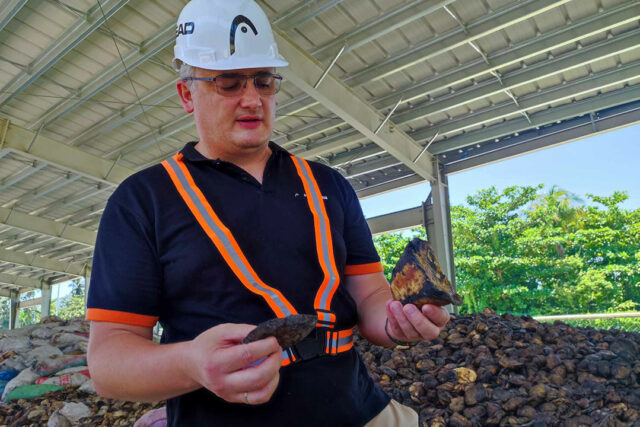
Vasyl Goshovsky shows to the media the rubber cup lumps they collected from some areas in Mindanao

PANABO CITY — Austrian tennis ball producer Head Sports will be sourcing its rubber cup lumps, the main ingredient for producing tennis balls, from some areas in Mindanao, according to its project consultant.

Head Sports is eyeing to start operating and producing tennis balls in a couple of weeks on a five-hectare property at the Anflo Industrial Estate (AIE) in Panabo City, Davao del Norte.

Vasyl Goshovsky, the project consultant, said in an interview last week that the company will produce two million dozen tennis balls per year in the first phase, with production increasing to 14 million dozen per year in the final phase within two years.

He said the company will source its raw materials, specifically rubber cup lumps, from Cotabato, Zamboanga, and Davao de Oro.

“The Philippines is a very huge rubber producer in the world, and the Mindanao is producing almost half of all the rubber of the Philippines. We will find here a local produce of rubber from the farmers, and cooperatives. The provinces of Cotabato and Zamboanga are the biggest rubber producers in Mindanao and the Philippines. Also, we have some local suppliers from Davao de Oro and other provinces, and they are producing cup lumps of good quality so we will buy from them also,” Mr. Goshovsky said.

He said the initial volume requirement for the rubber cup lump is 300 tons per month to produce tennis balls.

“I think we will be growing and growing up, and we will finalize our production, and we will produce more tennis balls up to 500 tons per month,” he said.

Mr. Goshovsky said 60% of the tennis balls produced will go to their market in North America and the remaining 40% will be for the rest of the world such as Europe, Asia, New Zealand, and Australia.

“So, you can see our tennis balls all over the world, and you can buy it in any market in any continent,” he said.

He also said that the company chose to locate at AIE due to its proximity to the Davao International Container Terminal.

“We’re exporting plenty of our production 99% from the Philippines, which is very important to us and also it is a very good location, all the infrastructure already exists here. It is under the PEZA authority, which provides us with very good tax incentives and support, so that is why we chose AIE,” Mr. Goshovsky said.

AIE is a 63-hectare special economic zone accredited by the Philippine Economic Zone Authority and is owned and operated by Damosa Land, Inc. — Maya M. Padillo

Autohub scoots into Segway, too

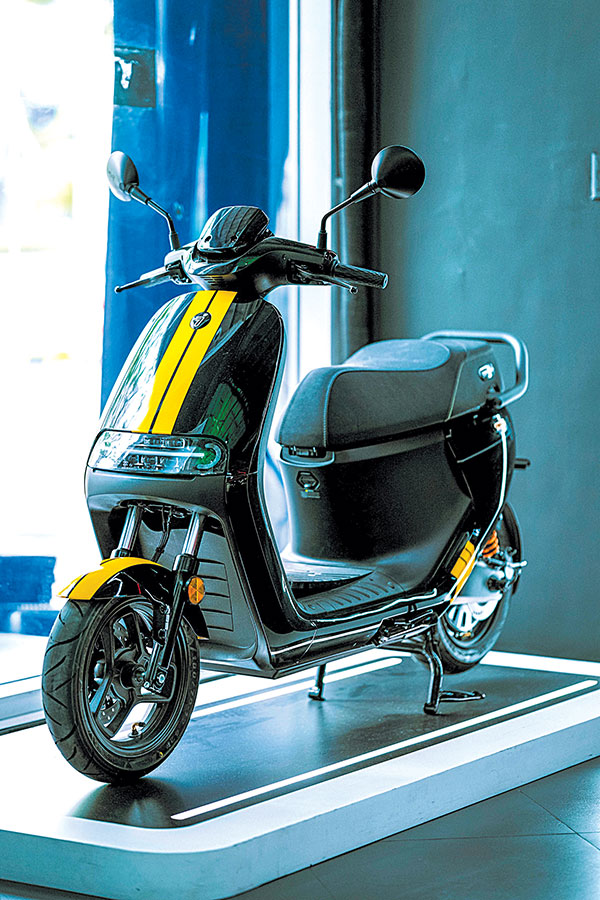
Segway E110 L — PHOTO FROM AUTOHUB GROUP

I’M SURE there are many people who, like myself, associate the Segway brand with the popular, two-wheeled, upright, self-balancing scooters with handlebars that we’ve seen people use in urban areas, especially since the pandemic. As in my case, it may come as a surprise to many that the Segway brand actually includes a whole line of proper (i.e., more traditional) e-scooters that are just as well-designed and equipped with eco-friendly electric motors.

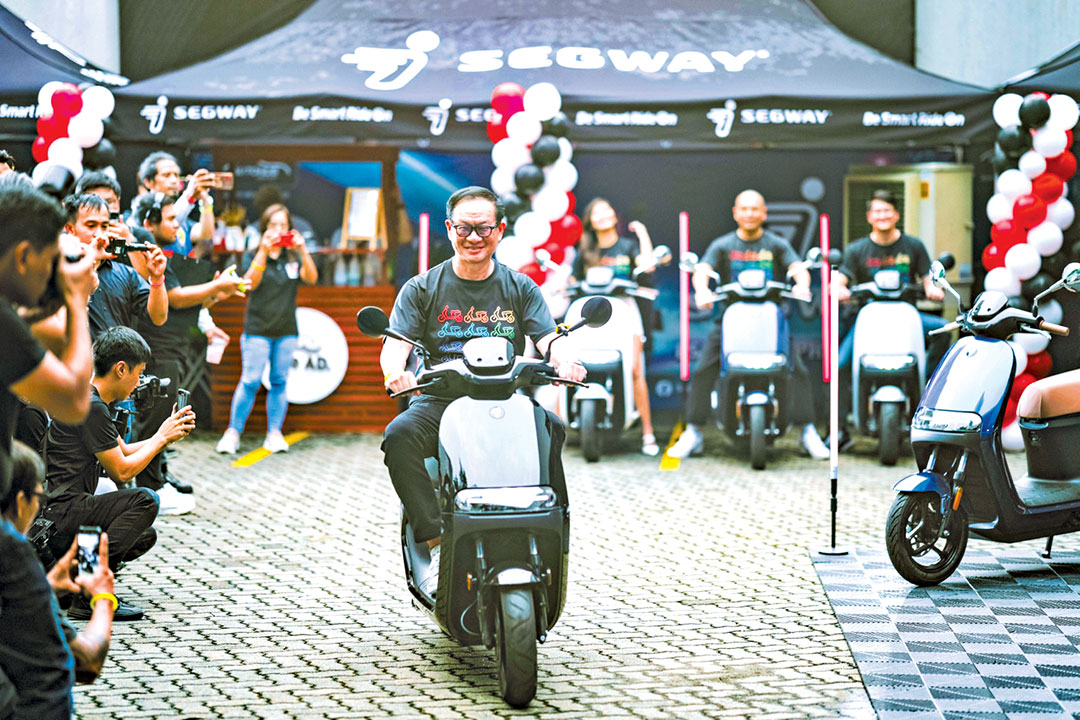
Well, these modern Segway e-scooters are now easier to acquire in Metro Manila, with the recent grand opening of the brand’s showroom within the Autohub complex at 32nd Street corner Rizal Drive, in Bonifacio Global City, Taguig. Segway Escooters Philippines — the official distributor of Segway Motors in the country — is now the latest addition to the large and ever-growing Autohub Group, spearheaded of course by automotive tycoon Willy Tee Ten.

Segway is a pioneer in personal transportation, and certainly transformed the landscape of urban commuting. Its electric scooters offer powerful performance, extended battery life, and impressive range — all the qualities that are perfect for managing travel on congested city streets.

Of course, one of the most obvious strengths of Segway products is a package of portability and power. They are generally lightweight and easy to store, making them ideal for people who zip through confined urban environments often laced with traffic congestion.

Most of all, Segways are also designed to be very user-friendly and fun, so they can cater to both curious novices and experienced riders. And as they are equipped with intelligent battery management systems, they also allow their users to track their charging status and battery health. This is usually done through an app, so riders are kept well-connected to their scooters.

During the official store launch, Segway Philippines also showcased three of its electric scooter flagship models: the Segway E300 SE, E110 L, and N100. The N100 is the entry-level model, which capitalizes on offering a lot of value for its price point. Meanwhile, the E110 L is the mid-range product, which combines energy efficiency with more prominent style. And the E300 SE is currently the top-of-the-line scooter, bestowed with more advanced features and is one that is meant for riders who crave for more power and performance. All three models have removable batteries (for maximum convenience) and can be charged directly via any standard outlet. Segway Escooters Philippines is also offering test ride opportunities and exclusive introductory promotions for all offerings.

“We’re not just offering a product,” explained Segway Escooters Philippines General Manager Kenneth Rosales at the Segway showroom grand opening. “We’re offering a solution to the increasing challenges of urban living — whether it’s combating rising fuel prices, reducing traffic congestion, or simply making your daily commute more enjoyable. This showroom is not just a place to see our products… it’s a space where innovation meets lifestyle.”

For more information, check out the company’s Facebook account, www.facebook.com/SegwayEscootersPhilippines. Ride on!

‘Secret’ luxury furniture store in Quezon City

The Opera Contemporary sofa set and Cyrano marble table offering a captivating blend of modern aesthetics and classic charm.

IN ONE of the mid-rise buildings along the Scouts area is a furniture showroom showing off millions of pesos in Italian furniture. Frankly, while there’s no sign (yet), we kind of like the air of mystery that surrounds it, and the fact that you have to know where it is to get there.

Enter Moda Interni, a furniture showroom featuring pieces from three Italian brands: Turri, Pedini, and Opera Contemporary.

Turri’s in-store selection shows off chic living room sets, and a glam dressing table, low and sexy — the lines make sense when one learns that the brand was founded smack in the middle of the Roaring Twenties.

“Curves are the game for Pedini, the pioneering manufacturer of curved modular kitchens — but they also make walk-in closets.”

We do, however, have a soft spot for Opera Contemporary, showing off a luxurious bed, and a glamorous salmon living room, and an opulent study setup with a desk carved with diamond patterns — the business was founded in the 1800s, with some of their pieces still seen in the royal palaces they furnished then.

These brands are distributed under Moda Interni by Goldwin Sison, who has been in the furnishing business for 13 years. While dabbling in locally produced modular cabinetry, he had been visiting Milan’s world-famous furniture shows for inspiration and research.

However, Mr. Sison really began his dive into luxury furniture during the pandemic. He had anticipated terrible sales during those years, but, he was wrong. “We experienced the highest growth in sales.”

“People stayed at home for far longer hours… [Before] gabi lang tayo nasa bahay (we’d only stay at home at night). But during the pandemic, we spent the whole day (at home),” he said in a group interview during a store tour on Sept. 19.

In a mix of English and Filipino, he said, “People realized that their homes no longer served them. We want to provide havens. When you enter your house, you’ll feel really at home.”

CENTER OF DESIGN
All the brands in the store are from Italy: a recent addition is Lago, built in 1976, which uses X-Glass to create illusions of floating furniture. Mr. Sison said about the store’s selections: “Italy is the center of design in the whole world. Milan is the center of design in the whole world, and art. And culture.”

“My considerations are how good the research and development (of these brands) is. I believe (that) in a business, innovation is key.”

Speaking with BusinessWorld, he elaborated about his thoughts on Italy and Italian design: “It’s really the character of the people living there. A place without people is just a place, but Milan’s population is so well-connected to the arts,” said Mr. Sison.

While he demurs from naming any of his celebrity and political clients for reasons of privacy, he did talk about the ways his clients can customize their furniture. The baseline for the furniture is walnut wood, but one can choose other materials. Sofas can be upholstered in cashmere, but if one should be tickled by a fabric from, say, luxury brand Loro Piana, that can be done as well. He pointed to what he said was the most expensive item in the room: a marble-topped table from Turri, costing P4 million. That wasn’t enough for one client who wanted a bigger version able to seat 22 people, blowing up the table’s cost to P20 million.

They also have after-sales care. Of course, the brands have warranties (if your Pedini kitchen unit, for example, is registered with the brand, that means one gets a 10-year warranty). They’ve also partnered with a Japanese brand for maintenance, with services like shampooing and other treatments for the furniture, with the first maintenance service given for free.

Responding to a question about the meaning of luxury, “In my opinion, price has nothing to do with it. The price is just a (result) of what you use… if you use good leather, then the price will be higher.”

While we’re talking millions and celebrities and royals, at the core of Moda Interni is the goal to simply to provide a good home. “The home is the first place we mold our character. We grow in there, we get inspired; we celebrate success,” said Mr. Sison.

“If a lot of Filipinos can (get) to that goal, then I can say Moda Interni is successful.”

Moda Interni is located at the fifth Floor, Bonavida Center, Diliman, Brgy. Ugong Norte, Quezon City. Contact sales@modainterni.ph, or call +639177256456 to schedule an appointment. — Joseph L. Garcia

ADVERTISEMENT
ADVERTISEMENT